







Abstract
• Summary: Social work has developed to meet the needs of an industrializing society. As environmental concerns have increased, national, and international social work organizations have called on social workers to incorporate issues of the environment into their professional practice. Although there is a small body of literature related to social work and the environment, the profession has not fully embraced the need to incorporate these issues into social work education or practice. This cross-sectional survey in the United States of a random sample of National Association of Social Workers (NASW) members (n = 373) was designed to gauge the environmental knowledge and attitudes of social work professionals.
• Findings: Though social work shares many of the same underlying tenets of groups interested in environmental justice, results suggest that social workers as a profession are no more, nor less, environmentally friendly than the general population.
• Applications: By failing to incorporate ecological issues facing the United States and abroad, our current social policies are at best not sustainable, and at worst dangerous for our continued social well-being. Social workers can play a leading role through an understanding of the interrelationship that exists between people and the environment, the integration of environmental issues into their social work practice, and advocating for vulnerable populations.
Concern for the health of the environment has increased substantially over the last several decades. We are beginning to understand the extent of human effects on the natural environment and the impact of these effects, such as the loss of habitats for animals due to sprawl, flooding and landslides caused by deforestation and attempts to contain rivers, air and water pollution caused by exhaust, runoff and inadequate storage of toxic substances, and global warming, to name a few. It is becoming ever more apparent that the natural environment cannot be ignored.
Recent data from several polls suggest that people are not satisfied with the environmental status quo. A 2005 US Gallup poll found that 63 percent of respondents in the United States believed that environmental quality was getting worse, not better (up from 57% in the 2003 poll) (Saad, 2005). In the United Kingdom, a 2007 national survey found that 82 percent of respondents feel that humans are severely abusing the environment (Hayward, Turtle, Carpenter, & Hanson, 2007). A global survey of 22,000 people in 21 countries by the British Broadcast Corporation found that overall, 79 percent of respondents agree that human beings are affecting the environment (BBC, 2007). These results suggest that people are concerned about the natural environment and believe that more should be done to help alleviate society’s strain on the environment.
The field of social work was developed to meet the needs of a rapidly industrializing society. One of the profession’s founders, Jane Addams, utilized a holistic view of the life experiences of people in relation to where they lived and worked to examine the environmental causes of poverty and uncover methods to improve life for people in their neighborhoods (Leiby, 1978). The Settlement House movement identified many of the problems facing the poor not as individual problems, but as systemic issues that needed to be addressed and reformed. Settlement houses, like Hull House in the United States, used survey research to assess the needs of individuals in their neighborhoods and then moved to address those needs through political activism, community organizing, and the provision of needed services. The activities and social advancements that have their roots in the settlement house movement had positive impacts on the natural environment for people living in urban areas. Some advances that came out of the settlement houses include: child labor laws; worker safety regulations; public health reforms (clean drinking water); inner-city sanitation; the establishment of the juvenile court system; widows’ pensions; and social insurance (Leiby, 1978; Reisch & Andrews, 2001). Though social welfare has a history of working with vulnerable populations, the profession has moved away from issues relating to the natural environment and environmental justice. Several social welfare scholars have again begun to explore the links between social welfare and the natural environment (Berger & Kelly, 1993; Besthorn, 1997; Cahill, 1994; Cahill & Fitzpatrick, 2002; Coates, 2003; Estes, 1993; Fitzpatrick, 1998; Hoff & McNutt, 2000; Mary, 2008; Midgley, 1995; Pandey, 1996, 1998; Park, 1994; Rogge, 1993, 1996; Rogge & Combs-Orme, 2003; Shaw, 2008). The topic has not yet received widespread attention in the field of social welfare, however, there is evidence that this trend might be changing. Recently, in the United States, the National Association of Social Workers (NASW) adopted a policy statement on the natural environment stating: … social workers have a professional interest, beyond the personal vested interest everyone shares, in the viability of the natural environment, including the noxious effect of environmental degradation on people, especially oppressed individuals and communities, and they have a professional obligation to become knowledgeable and educated about the precarious position of the natural environment. (NASW, 2003a)
The International Federation of Social Work is even more direct in calling social workers and professionals in the social sciences to become aware of, and integrate, issues of environmental responsibility into their practice, calling on social workers to: … recognize the importance of the natural and built environment to the social environment, to develop environmental responsibility and care for the environment in social work practice and management today and for future generations … and to ensure that environmental issues gain increased presence in social work education. (IFSW, 2004)
Based on the increasing concern surrounding environmental issues, the disproportionate environmental effects felt by individuals likely to be served by social workers and the lack of attention to environmental issues in social work, coupled with the social work professions call for social work involvement, it is important to assess social workers’ knowledge and attitudes regarding the environment.
This study seeks to contribute to the literature regarding social workers’ knowledge and perception of the natural environment through an exploration of social worker attitudes towards the environment. It can be argued that social workers share many of the same traits as those found to be more environmentally friendly (politically liberal, primarily female, and not as socio-economically well-off) (Albrecht, Gordon, Hoiberg, & Nowak, 1982; Dunlap & Van Liere, 1978; Dunlap, Van Liere, Mertig, & Jones, 2000; Geller & Lasley, 2000; LaTrobe & Acott, 2000; NASW, 2003b; Tarrant & Cordell, 1997; Tarrant, Bright, & Cordell, 1997). Additionally, the similarities between the goals of environmental justice and the mission of social work suggest that social worker attitudes and perceptions of the environment should more closely resemble those of environmental justice organizations than the population as a whole. This question will be explored by comparing the results of social workers on the New Environmental Paradigm Scale (included as a part of the survey instrument) with past results in the literature that focused on the general population and environmental groups in the United States.
The examination of the environmental attitudes and perception of social work professionals will lead to a better understanding of the relationship between social work and the environment. A dialogue in the field of social work needs to begin regarding the similarities between the goals of environmental justice and the mission of social work. As the preamble to the NASW Code of Ethics states, the profession of social work actively works to promote social justice (NASW, 1999).
Literature related to social work and the environment
Several prominent social welfare scholars have written about the intersection of the natural environment and the profession of social work. These can be separated into distinct areas of social welfare according to the focus of their scholarly work: social work practice, and education and social policy.
Social work practice and social work education
Social work in the West has long prescribed to a person-in-environment perspective. However, the definition of person-in-environment is still a somewhat contentious issue. Rogge and Cox (2001) note there is disagreement and some confusion concerning the expansiveness of the person-in-environment construct. A narrower conceptualization of person-in-environment looks at environment as referring to the social environment only (Brower, 1988; Rogge & Cox, 2001). A broader conceptualization would allow social work professionals to provide a more holistic assessment and intervention and would mirror the eco-social approach in European social work (Matthies, Narhi, & Ward, 2001). The broader conceptualization also mirrors the activities of the settlement houses where personal and physical issues were examined. This perspective stretches the meaning of environment to encompass the social environment, the physical environment, and the potentially harmful physical and mental effects of environmental pollution on individuals.
Berger and Kelly (1993) explain that human activity has altered the environment in ways harmful to humans and other species. The greatest impacts are: increasing human population; the introduction of synthetic compounds that accumulate in the human body (through air, water, and food consumption); and changes in the surface of the planet (building of dams and deforestation) (Berger & Kelly, 1993). Geographic displacement caused by war, poverty, and disease affect a large section of the developing world. Berger and Kelly (1993) suggest that social work professionals are in a good position to facilitate societal acceptance of these realities and to develop means to address the root causes. Social work as a profession needs to develop a meaningful ecological policy that can be incorporated into all levels of social work practice. Park (1994) agrees with the need to incorporate the natural environment into social work practice calling for the use of the natural environment as a teaching tool. Germain and Gitterman (1987) introduced the ecological model of social work practice more than 30 years ago. The ecological perspective requires that people and environments (physical and social) be viewed as a single system. The person and the environment are understood in terms of their relationship upon each other (Germain & Gitterman, 1987). Social work educators and practitioners should expand their understanding of the ecological perspective, like the person-in-environment perspective, to include the natural environment.
Bartlett (2003) addresses the means of incorporating issues of environmental justice into social work practice. Social work assessments can include questions relating to a client’s awareness of any health hazards they might be exposed to (including occupational hazards or proximity to hazardous sites in their community). These assessments can lead to community empowerment activities (Bartlett, 2003).
Social policy
Several social work scholars have been calling for movement away from current growth-based models of social policy to policies more inline with the social and environmental realities of our time. Hoff (1998) points out that traditional models of social welfare are based on models of the economy that do not take into account the key role of finite natural resources base. These models do not offer the stability needed to move toward a sustainable society and have outlived their usefulness for guiding social policy-making. Hoff (1998) calls for a new social policy integrating the three pillars of environmental protection, social development and environmentally and socially sustainable economic development. Carrilio (2007) presents a global perspective by stating that social work with its unique person-in-environment focus can play a key role in international sustainable development efforts. Midgley (1994, 1995) puts forward Social Development Theory, the synthesis of economic and social development, as a workable alternative to the traditional growth based theories of social welfare. Shaw (2008) agrees with this assessment and suggests a means of incorporating ecological ideals into Social Development.
Dominant social paradigm
The dominant social paradigm in many Western countries and certainly in the United States over the last several decades includes acceptance of free markets, a belief in a strong individual work ethic, the belief in economic growth, and an acceptance of science and technological advancements as a means to overcome problems. This dominant social paradigm (DSP) is defined by Smith as ‘a cluster of beliefs, values, and ideals that influence our thinking about society, government, and individual responsibility’ (Smith, 1995, p. 6). Milbrath (1994) agrees that the DSP is centered on a rational economic model and its priority is economic growth and development and states that the DSP ‘emphasizes immediate materially oriented gratification; hierarchy and authority; competition, domination, and patriarchy; and freedom as long as it serves economic priorities’ (p. 279). The pursuit of immediate gratification and continuous economic growth suggests that all other issues (including the natural environment) are, at best, of secondary importance.
New Environmental Paradigm
The environmental justice movement is an attempt to break away from the DSP and move into a New Environmental Paradigm (NEP) (Novotny, 1995). According to Milbrath (1994), the NEP places emphasis on the sustainability of the natural environment to continue to meet the needs of society. NEP moves away from the DSP by emphasizing ‘simplicity and personal enrichment, cooperation, partnership and egalitarianism, and freedom so long as it serves ecological and social imperatives’ (Milbrath, 1994, p. 279).
In social work, the movement away from the DSP and towards NEP is exemplified through the call for the incorporation of environmental concerns into the field of social welfare (Berger & Kelly, 1993; Besthorn, 1997; Cahill, 1994; Cahill & Fitzpatrick, 2002; Coates, 2003; Estes, 1993; Fitzpatrick, 1998; Hoff & McNutt, 2000; Midgley, 1995; Pandey, 1998; Park, 1994; Rogge, 2000; Rogge & Cox, 2001; Shaw, 2008).
There have been numerous studies attempting to measure environmental attitudes. These studies have relied on four main scales: 1) the Environmental Attitude and Knowledge scale developed by Maloney and Michael (1973); 2) the New Environmental Paradigm scale (NEP) developed by Dunlap and Van Liere (1978) and updated in 2000 by Dunlap et al. and renamed the New Ecological Paradigm Scale; 3) the Environmental Concern scale developed by Weigel and Weigel (1978); and 4) the Awareness of Concern scale by Stern, Dietz, & Kalof, (1993). Of these instruments, the New Environmental Paradigm Scale has been used most often in studies of environmental attitude (Albrecht et al., 1982; Dunlap & Van Liere, 1978; Dunlap et al., 2000; Geller & Lasley, 2000; LaTrobe & Acott, 2000; Tarrant & Cordell, 1997; Tarrant et al., 1997).
The Environmental Attitude and Knowledge scale, however, was the only instrument used in a study on a population specifically including social workers (Benton, 1994). This study was designed to compare the environmental attitudes of faculty members in the areas of Business, Social Work, and Education. Using a self-administered questionnaire with a 31 percent response rate, Benton (1994) concluded that non-business faculty (including social work) were more knowledgeable and had more ecologically friendly attitudes than did the business faculty. These results suggest that business schools lag behind non-business schools in educating their students of the importance of environmental factors. Unfortunately, Benton did not break out the non-business faculty by discipline, so no specific information on social work faculty attitudes is available.
The New Environmental Paradigm Scale (NEPS)
The New Environmental Paradigm scale (NEPS) is the most often used measure of environmental attitudes. The NEPS has been used to compare the environmental attitudes of environmental organizations to the general population (Dunlap & Van Liere, 1978; LaTrobe & Acott, 2000), to compare farmers to the general population (Albrecht et al., 1982), to compare hunters to non-hunters (Tarrant et al., 1997), and to examine the change in environmental attitudes of the general population between 1978 and 1990 (Dunlap et al., 2000). Most of the studies using the NEPS have been done in the United States using mailed questionnaires with response rates ranging from 50.1 percent to 70.1 percent. The exception is the study by Tarrant et al. (1997) that used a telephone survey with a participation rate of 48.3 percent.
The original NEPS was found to have internal consistency reliability (Cronbach alpha = 0.81) (Dunlap & Van Liere, 1978). The updated NEPS (the New Ecological Paradigm Scale) was found to have slightly higher internal consistency reliability (Cronbach alpha = 0.83) (Dunlap et al., 2000). The NEPS was found to have predictive validity in all of the studies comparing the general population to a more environmentally conscious group (Albrecht et al., 1982; Dunlap & Van Liere, 1978; LaTrobe & Acott, 2000). The NEPS was also found to have construct validity with other measures of environmental attitudes (Dunlap et al., 2000; Tarrant et al., 1997).
Of the studies above, two in particular bear mentioning based on their inclusion of a general population category: the Dunlap et al. (2000) study and the LaTrobe and Acott (2000) study. Dunlap et al. (2000) conducted a follow up of the Dunlap and Van Liere (1978) study of 676 residents of Washington State. In the 14 years between the two studies, there had been a general increase in the population scores on the NEPS. However, because the 2000 study utilized the updated 15 question NEPS instead of the original NEPS, the authors were unable to compute if these differences were statistically significant. LaTrobe and Acott (2000) compared a group from the general population of Gillingham, England (n = 92) to a random sample of members of environmental organizations (n = 171). The authors found a significant difference between the groups in their mean scores on the NEPS, with the members of the environmental group having the higher (and more pro-environmental) score.
In the literature, several socio-demographic characteristics have been suggested as having an effect on environmental attitudes. The following characteristics have been found to be predictors of a pro-environment attitude: liberal political beliefs (Dunlap & Van Liere, 1978; Hodgkinson & Innes, 2000; Tarrant et al., 1997; Uyeki & Holland, 2000); higher education (Dunlap & Van Liere, 1978); and female (Dunlap & Van Liere, 1978; Hodgkinson & Innes, 2000; Loges & Kidder, 2000; Tarrant et al., 1997). However, there has been some disagreement on the relationship between income and environmental attitudes (Tarrant et al, 1997; Uyeki & Holland, 2000) and on the relationship between ethnicity and environmental attitudes (Dietz Stern, & Guagnano, 1998; Kalof, Thomas, Gregory, & Paul, 2002; Uyeki & Holland, 2000). The disagreement in the relationship between ethnicity and environmental attitude rests in the whether minorities (Blacks in particular) are more pro-environmental then Whites, or not. In a national telephone survey of 722 people using random digit dialing, Kalof et al. (2002) found that there was a race difference in environmental beliefs. However, the only significant difference in environmental beliefs reported were between Whites and Hispanics, where the Hispanic respondents had significantly higher pro-environmental beliefs. However, Kalof et al. (2002) utilized a reduced version of the NEP consisting of 10 questions instead of the full 15. Using the 1993 General Social Survey, Dietz et al. (1998) found there is a complicated relationship between ethnicity and environmental attitudes. In some indicators Blacks held more pro-environmental attitudes than Whites, while in others the reverse was true. Uyeki and Holland (2000) also used the 1993 General Social Survey (GSS) and verified that the complicated nature of the relationship between ethnicity and environmental attitudes. However, Uyeki and Holland (2000) posit that in general Blacks have a more pro-environment attitude that is somewhat mediated by a pro-growth slant. However, the GSS was not designed to measure overall environmental attitudes and does not contain several of the constructs discussed above; therefore, there is some question as to the ability to infer environmental attitudes from the GSS.
Methods and sample
This study is based on a cross-sectional survey using a geographically based random sample of National Association of Social Worker (NASW) members in California. For the purpose of this study, a survey instrument containing a broad range of questions relating to the natural environment was constructed. This study was reviewed and approved by the University of California, Berkeley Institutional Review Board (IRB). This questionnaire contains the New Ecological Paradigm scale (Dunlap et al., 2000) as well as items designed to probe respondents understanding and knowledge of the natural environment. This questionnaire was used to assess social workers’ attitudes toward the environment; in particular, two main sub-questions are explored: 1) are social workers cognizant of the extant NASW’s environmental policy statement?; and 2) do social workers, based on their adherence to the tenants of social justice espoused in our code of ethics, have a more pro-environmental attitude than does the population as a whole.
Study population
This study targeted 1000 randomly selected social workers currently residing in California. The most complete list of social workers in California is available through the National Association of Social Workers (NASW). NASW consists of a broad spectrum of social workers and social work students in all areas of practice. In April 2005, there was an estimated 152,308 members of NASW nationally, and 12,063 NASW members in California (NASW, 2005). Two waves of surveys were mailed out to each participant and a third wave consisting of a postcard asked respondents to return their surveys if they had not already done so. Twenty-nine surveys were excluded because of invalid addresses producing an overall number of possible respondents of 971 California NASW members. A total of 373 usable surveys were returned giving a response rate for this survey of 38.4 percent. Based on a trend toward lower response rates for mailed surveys (Benton, 1994; Dillman & Carley-Baxter, 2000; Miller, 1991) the goal of this survey was for a response rate of 30 percent.
Measures/operationalization of concepts
The scores derived from the New Ecological Paradigm Scale will be used as the dependent variable in this study. The New Ecological Paradigm Scale (NEPS) has been shown to have good predictive and construct validity (Dunlap et al., 2000; Tarrant et al., 1997) and good internal consistency reliability (Chronbach’s alpha = 0.83) (Dunlap et al., 2000) in measuring environmental attitudes. The NEPS measures five different dimensions of environmental attitude: the balance of nature (whether respondents feel nature can handle the impacts of modern society); the limits to growth (whether respondents feel there is a limit to the amount of growth nature can handle); anti-anthropocentrism (whether respondents believe that humans are the central concern on Earth); the interconnectedness of humans and nature (whether respondents believe that humans rely on nature); and the possibility of an ecological catastrophe (Dunlap et al., 2000). Each dimension can be examined individually or taken together as a measure of overall environmental attitude.
Demographic frequency of survey responses

Additional frequency examination of survey response
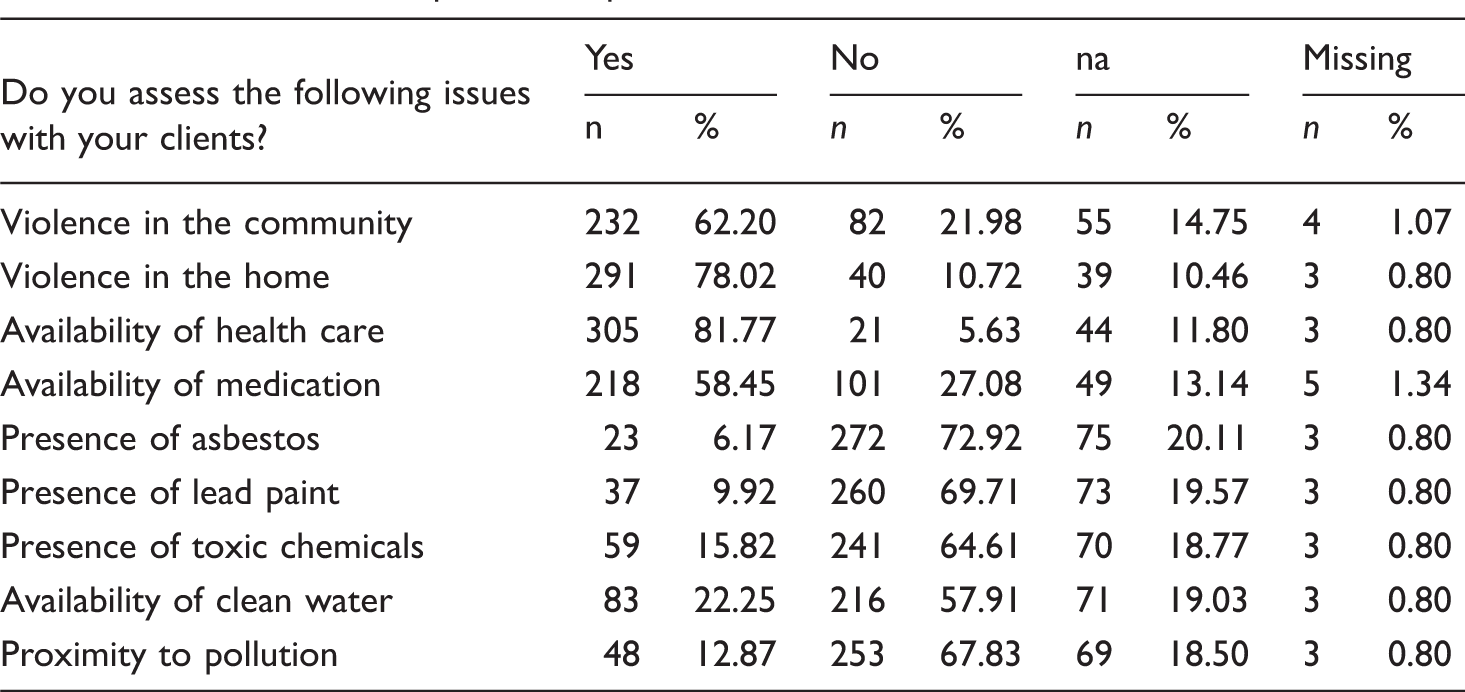
Social worker responses to question on assessments
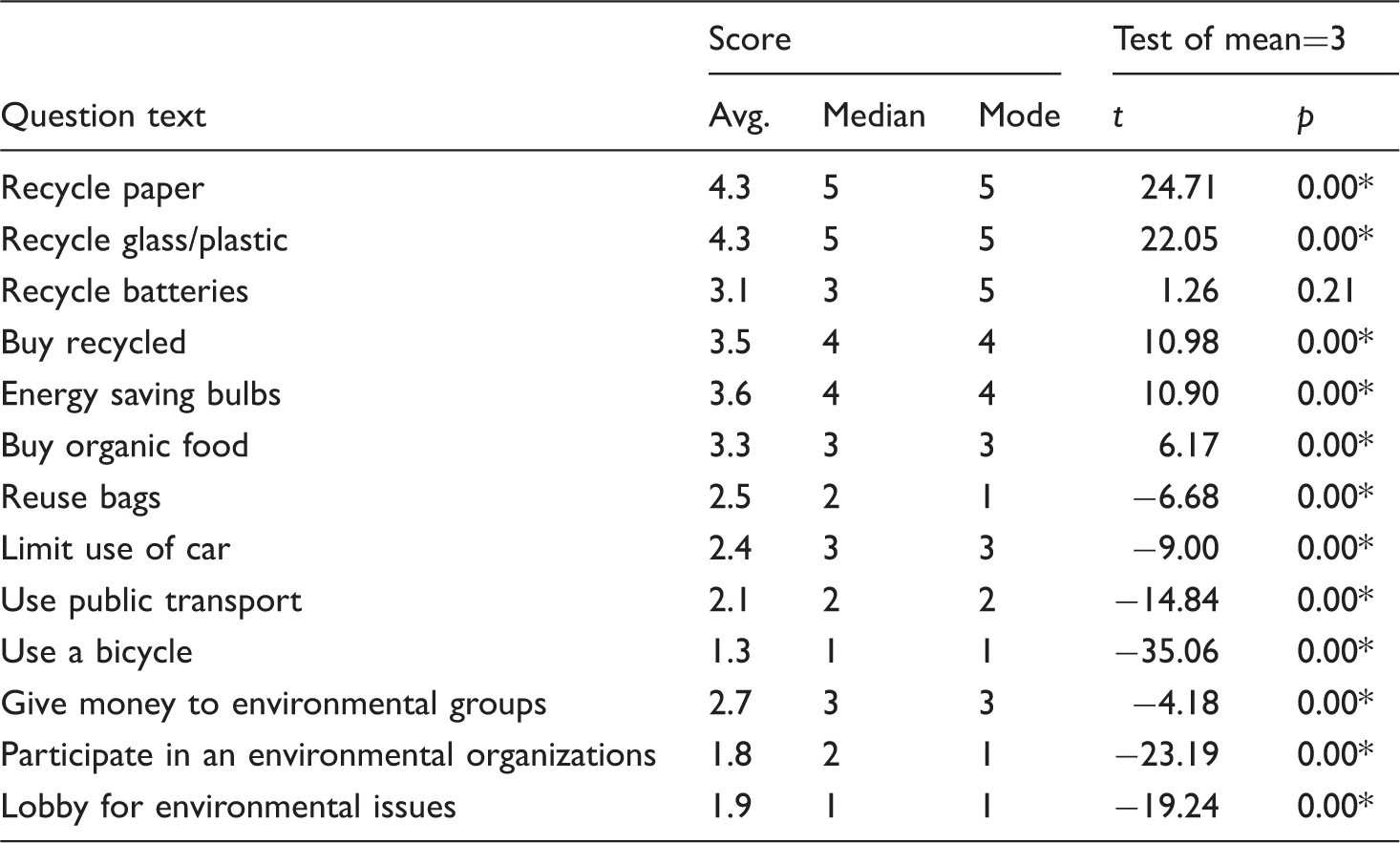
Responses to questions related to respondent activism
Results
Basic frequencies by demographic categories can be seen in Table 1. Several demographic characteristics of survey respondents can be compared to the most recent NASW member survey conducted by the NASW Practice Research Network (NASW, 2003b), including ethnicity, gender, education attainment and licensure status. Survey respondents identified themselves primarily as White (71.31%), followed by Hispanic (13.14%), Asian/Pacific Islander (6.43%), and Black (5.63%). The NASW member survey found that 87% of NASW members identify themselves primarily as White, followed by Black (5%), and then Hispanic and Asian (each at 2%) (NASW, 2003b). While respondents identifying themselves as White are the vast majority in both surveys, it is not surprising that the ethnic proportions are different between this survey (California specific) and the national survey, as California is a very large and diverse state with large Hispanic and Asian populations.
Almost 82 percent of survey respondents identified themselves as female (81.77%). This is very similar to the national survey results that found over 79 percent of respondents identifying themselves as female (NASW, 2003b). Some 88.74 percent of survey respondents have a Masters degree or higher. This is slightly lower than the national results of 91 percent (NASW, 2003b) and most likely due to the exclusion of students from the NASW national survey results. Most respondents were between the ages of 25 and 65 (85.25%) with 2.41 percent of respondents less than or equal to 25 years of age, 9.65 percent of respondents over the age of 65, and 2.68 percent of respondents not listing an age. The average age of respondents was 47.8 years. This is a few years younger than the median age of 51 years as reported in the NASW member survey (NASW, 2003b). Again, this difference may be related to the fact that the national survey excluded students from their analysis. Table 1 lists responses to the survey questions related to social work salary, spirituality, political identification, and responses to specific questions on social work and the environment. The salary categories 40,001–50,000; 50,001–60,000; and 60,001–70,000 all have equal representation among survey respondents (59 responses, 15.82% each). Similarly the results of the NASW national survey found that the annual median salary for a social worker was 51,900 in 2003 (NASW, 2003b). Respondents identified themselves as overwhelmingly spiritual (86.6%) and having primarily liberal political leanings (66.8% Democrat and 8.6% Green).
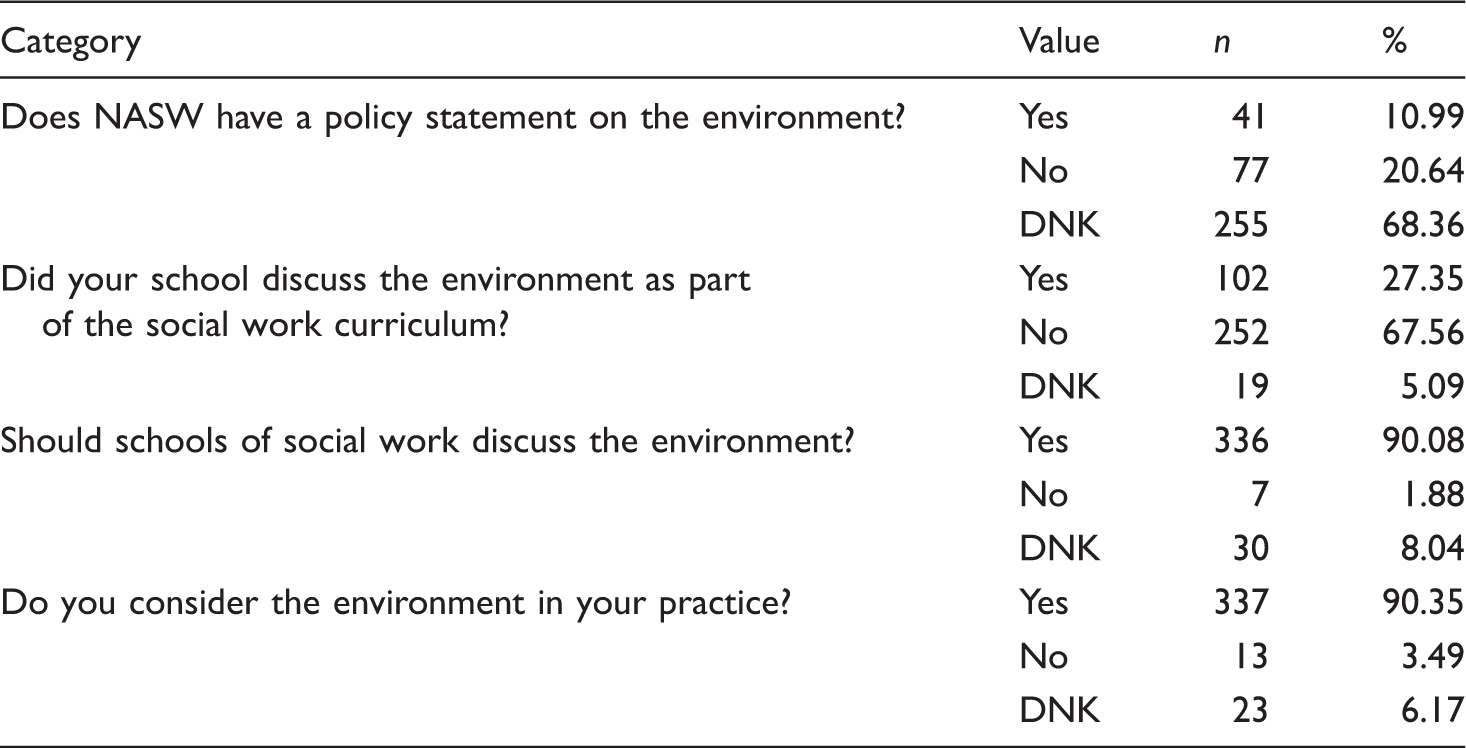
Related to the question about California social workers knowledge of the current NASW environmental statement, over two-thirds (68.36%) of respondents were not aware that NASW has a statement on the natural environment, while 41 (10.99%) respondents correctly reported that NASW does have such a statement, and 77 (20.64%) incorrectly stated that such a statement does not exist. Over two-thirds of the respondents (67.56%) stated that their social work education did not include discussions of the natural environment, 27.35 percent of respondents said that the natural environment was discussed, and another 5 percent did not remember if there had been discussions on the environment during their social work education.
When asked if respondents believe that issues related to social work and the natural environment should be discussed in schools of social work an overwhelming majority (90.08%) responded affirmatively, only 1.88 percent (seven respondents) responded negatively and 8.04% did not have an opinion on the matter. Interestingly, 90.35 percent of respondents said that they currently consider issues related to the natural environment in their social work practice. It seems difficult to believe that social workers are already incorporating issues of the natural environment into their social work practice given that most of them (67.56%) did not have any formal social work education on the topic. However, if we examine the response to the question on whether respondents currently consider issues related to the natural environment in relation to the results shown in Table 3, there appears to be a pattern in how respondents view the natural environment. As can be seen in Table 3, the majority of respondents stated that they assess for community violence (62.20%), violence in the home (78.02%), the availability of health care (81.77%), and the availability of medication (58.45%). However, this trend of positive assessment is reversed when moving beyond what might traditionally be considered the social workers practice and into areas that require a broadening of the definition of environment. Relatively few respondents assess for the presence of asbestos in a client’s living area (27.08%), the presence of lead paint in a client’s living area (30.29%), the presence of toxic chemicals in a client’s living area (35.39%), the availability of clean water (42.08%), or a client’s proximity to a source of pollution (32.17%).
Respondents were asked a series of questions on the level of environmental activism in their own lives. Table 4 reports these responses compared to the category designated as ‘sometimes’ (the responses are from a five-point Likert type scale with a response of 5 meaning ‘always’, a response of 3 for ‘sometimes’, and 1 for ‘never’). Respondents generally incorporate recycling (except for batteries), and efforts to buy organic food into their daily lives. Other levels of activism that would involve more lifestyle changes such as limiting the use of a car, use of alternative transportation (such as public transportation or a bicycle), and participating in the environmental movement (either through giving money or actively participating) are generally not part of respondents’ experiences. The modal and median responses for using a bicycle and lobbying for environmental issues was designated as ‘never’.
Results from the New Ecological Paradigm Scale
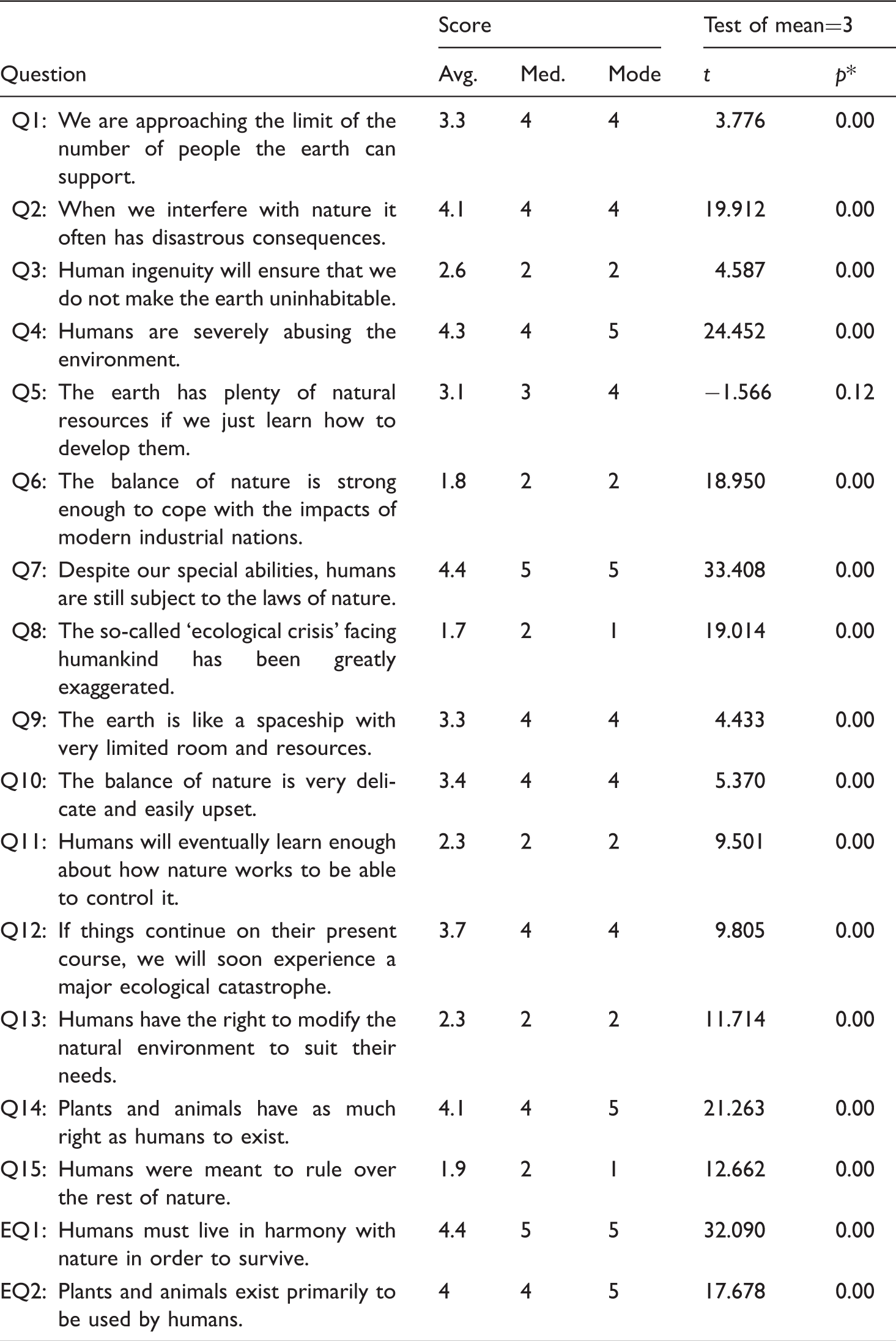
Responses to the New Ecological Paradigm questions
Responses to the New Ecological Paradigm Questions: Environmental organization supporters vs non-supporters
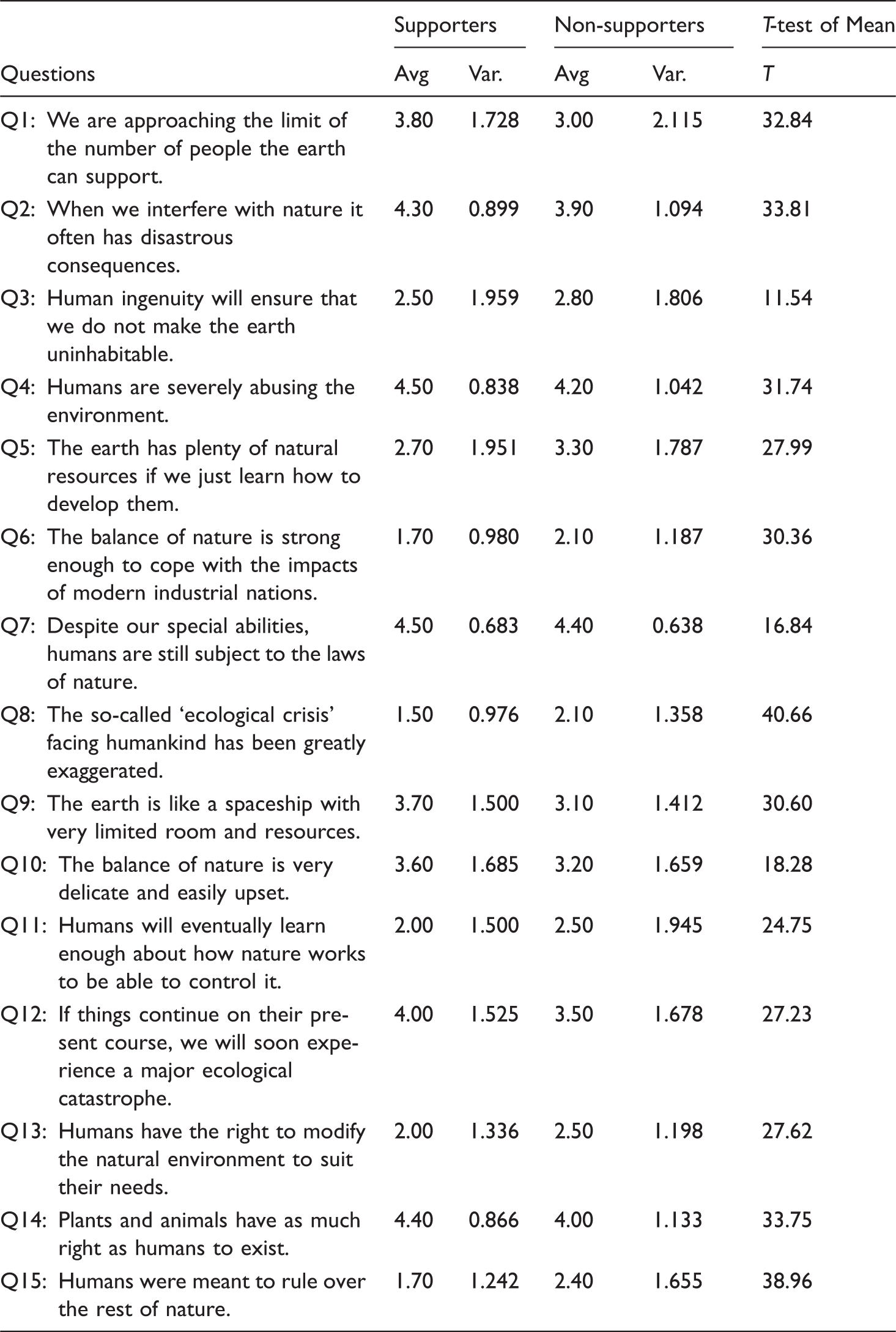
For every question, respondents who self-identify as environmental supporters score higher on the NEPS. This difference is particularly noticeable in the question, ‘The earth has plenty of natural resources if we just learn how to develop them.’ All of the other instances show a similar trend toward agreement or disagreement, with the environmental supporters feeling more strongly, on average, than the non-supporters.
Comparing overall NEPS scores
Comparison of NEPS scores
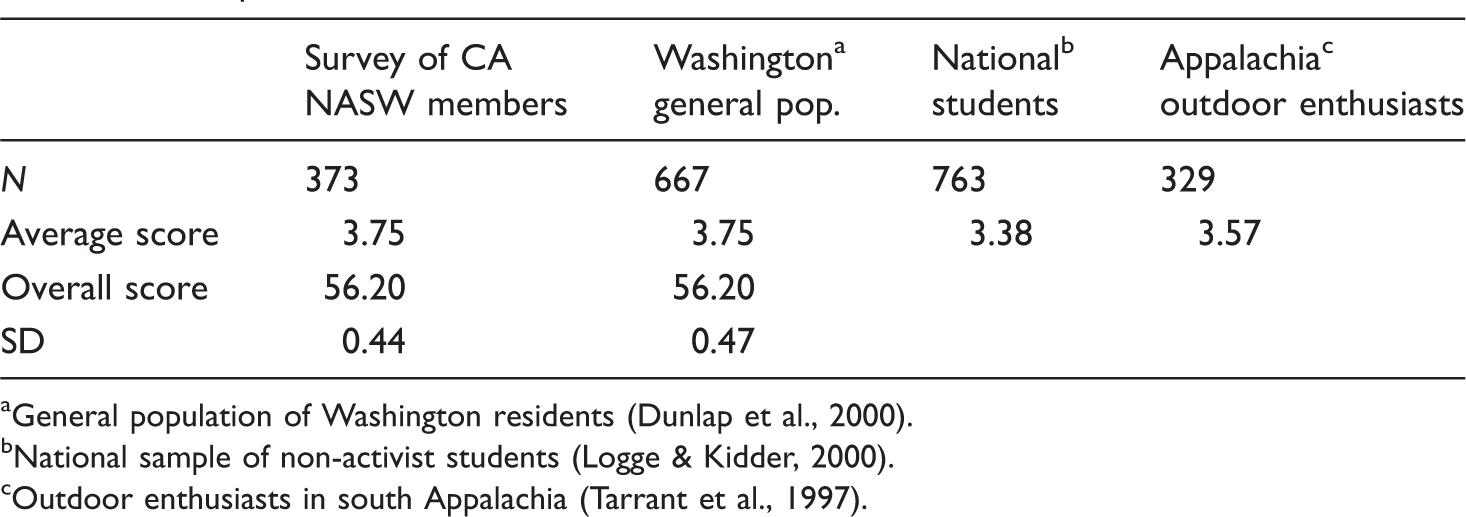
aGeneral population of Washington residents (Dunlap et al., 2000).
bNational sample of non-activist students (Logge & Kidder, 2000).
cOutdoor enthusiasts in south Appalachia (Tarrant et al., 1997).
Analysis of variance is a common statistical tool to test for differences in the mean values of the dependent variable across the levels of a single independent variable. It is typically used when the independent variable has more than two levels or groups to be compared. In this instance, each set of questions from the survey were assessed to see if differences in the mean score on the NEPS exist between the levels. The SAS software general linear modeling procedure (PROC GLM) was used to calculate the analysis of variance results. The null hypothesis being tested is that there are no differences in the NEPS score between groups. Therefore, a p-value of greater than 0.05 suggests that the F-value was not large enough to reject the null hypothesis; the results would then suggest that there are no differences between groups.
There are only two groups indicating an F-value large enough to reject the null hypothesis: self-reported political affiliation; and the question relating to whether the respondents believes that issues related to social work and the environment should be discussed in schools of social work. These results suggest there might not be significant differences between sub-groups in any of the variables of interest (aside from self-reported political affiliation, and the question relating to whether issues relating to the environment should be taught in schools of social work). In order to examine the effects that each sub-group has together on the NEPS score, a logistic regression was performed.
Regression analysis

Examining the bivariate results first it appears that significant effects can be seen in practice type, social work salary, political affiliation, and the question relating to whether respondents believed that schools of social work should discuss the natural environment. The results suggest that researchers have a somewhat significantly higher score on the NEPS then do respondents in private practice (OR = 1.63, chi-square = 3.71, p = 0.054). The results from salary are interesting as it suggests that the salary categories of 40,001 to 50,000, over 90,000 and missing are all somewhat less likely to score as well on the NEPS as respondents with a salary between 50,001 and 60,000 dollars.
The strongest effect by far appears to be in the political party. The results suggest that, compared to respondents who identified themselves as Democrats, respondents identifying themselves as Republicans are significantly more likely to score lower on the NEPS (OR = 0.47, chi square = 13.49, p < 0.001). This same pattern is true, to a lesser extent, for respondents who did not respond to the question or listed a political group other than Democrat, Republican, or Green (OR = 0.74, chi square = 5.78, p = 0.016). Finally, respondents who stated that they did not know or had no opinion on whether schools of social work should discuss the natural environment were significantly more likely to score lower on the NEPS than respondents who agreed with the question (OR = 0.56, chi square = 11.22, p = 0.001). No other effects were shown to be significant at the 0.05 or 0.10 level.
Turning to the Full Model, there are a number of items are shown to be significantly different than the baseline values. Respondents 65 or older are significantly more likely to score higher on the NEPS than the baseline age group (OR = 1.43, chi square = 3.59, p = 0.058). Respondents who listed research as their primary practice type remain more likely to score higher on the NEPS (OR = 1.59, chi square = 3.32, p = 0.068). In the full model, highest level of education completed becomes significant at the 0.10 level. Respondents with a doctorate score significantly lower on the NEPS (OR = 0.71, chi square = 2.82, p = 0.093) while respondents with bachelors degrees score significantly higher (OR = 1.4, chi square = 3.09, p = 0.079) than the comparison group (respondents with a Masters degree). The higher salary range, as well as the missing salary, remained significantly different from the baseline salary (50,001 to 60,000 dollars annually); although, in the full model the effect is more significant than in the bivariate model.
As in the bivariate model respondents identifying themselves as Republicans scored significantly lower on the NEPS than did respondents identifying themselves as Democrats (OR = 0.41, chi square = 19.83, p < 0.001). It is important to point out that there were few respondents who self-identified as Republican (n = 21, 5.61%) and the small numbers could affect the results. Respondents listing their political identification as other than Democrat, Green and Republican also scored significantly lower on the NEPS than did respondents identifying themselves as Democrats (OR = 0.81, chi square = 2.95, p = 0.086). There remained no significant difference between respondents identifying themselves as Green and those identifying themselves as Democrats. No differences were found between the baseline response (‘Yes’) and other responses on the questions probing whether social workers’ self-identified as spiritual or in social workers experience with the natural environment except for the question asking respondents if schools of social work should discuss the natural environment. For that question, respondents who stated that they did not know were much more likely to have a lower NEPS score than respondents giving an affirmative answer (OR = 0.59, chi square = 7.65, p = 0.006).
Summary of results
The average respondent to this survey was a White Female over the age of 35 with at least a Masters degree in social work. She had an LCSW, made between $40,000 and $70,000 annually as a social worker, and identified as a Democrat. The average score per question on the 15 question NEPS for this population was 3.75 out of 5, which was similar to the general US population. These results suggest that social workers as a profession are no more, nor less, environmentally friendly than the general population. One differentiating factor in the survey population was whether respondents self-identified as supporting an environmental organization or not. Environmental supporters self identified as ‘Always’ or ‘Almost Always’ participating in an environmental organization and non-supporters self-identified as ‘Sometimes’, ‘Rarely’, or ‘Never’ supporting environmental organizations. The average score per question on the NEPS for environmental supporters (n = 117, 31%) was 4.05 out of 5 and for non-supporters (n = 256, 69%) it was 3.57 out of 5. The results of an analysis of variance test found there were only two groups were the results on the NEPS differed significantly: self-reported political affiliation; and the question relating to whether the respondents believes that issues related to social work and the environment should be discussed in schools of social work.
Implications for social work
As society begins to gain an understanding of the implications of ignoring the environment, it is becoming more apparent that the natural environment can no longer be safely ignored. By failing to incorporate ecological issues facing the United States and abroad, our current social policies are at best not sustainable, and at worst dangerous for our continued social well-being. Social workers have a history of assisting vulnerable populations and a documented ethical responsibility to assist these communities in need. Jane Addams utilized a holistic view of the life experiences of people in relation to where they lived and worked to examine the environmental causes of poverty and uncover methods to improve life for people in their neighborhoods (Leiby, 1978). Following in these footsteps, social workers can play a leading role through an understanding of the interrelationship that exists between people and the environment, the integration of environmental issues into their social work practice, and the call for the government to include environmental safeguards in policy decisions and enforce existing environmental regulations.
The person-in-environment perspective and the ecological systems theory that it is based on can both be expanded to include environmental issues. An expansion of the person-in-environment perspective to incorporate the social environment, the physical environment, and the potentially harmful physical and mental effects of environmental pollution on individuals would allow for a more holistic assessment of our clients’ situations. The ecological systems framework is entirely capable of incorporating issues of the environment into all levels (Microsystem, Mesosystem, Exosystem, Macrosystem, and Chronosystem) of the existing structure and would be a stronger base for holistic social work practice if such environmental ideas were to be incorporated into the model.
The IFSW call on social workers to ‘… recognise the importance of the natural and built environment to the social environment, to develop environmental responsibility and care for the environment in social work practice and management today and for future generations’ (IFSW, 2004) and the NASW statement on the environment states that ‘… social workers have a professional interest, beyond the personal vested interest everyone shares, in the viability of the natural environment … and they have a professional obligation to become knowledgeable and educated about the precarious position of the natural environment’ (NASW, 2003a). These can be seen as recognition of the importance of the natural environment to the profession of social work and the profession now needs to move forward. In fact, world leaders reached an agreement to the Millennium Development Goals (MDGs) which aims to promote sustainable human development globally by targeting achievement of environmental sustainability, among other things, by 2015 (Pollack, 2007). These statements show that professional social work organizations believe that there is an obligation to incorporate environmental issues into social work, and the results of this survey show that California NASW members think these issues should be included in social work and social work education.
