







Abstract
• Summary: Domestic violence agency administrators struggle to incorporate the Internet safely and effectively into their intimate partner violence (IPV) services. This study utilizes two data gathering tools to identify administrative concerns and web content in the 91 Texas shelters. The first research stage employed a mixed-methods questionnaire (89% response rate) to identify managers’ Internet use patterns and managerial needs. In the second stage, all shelter web sites (65) were submitted to a multi-context content analysis.
• Findings: Overall, findings indicate that administrators see a serious need for basic administrative support tools (e.g. policies and training materials) and the development of cyber-safety resources (e.g. online stalking tips). Administrators view the Internet’s potential for increasing staff efficiency and clients’ sense of self-efficacy as worthwhile. Questionnaire findings indicate that 66 percent of directors need a means of helping clients learn to do their own information-seeking, only 54 percent have a written policy, and 46 percent have no in-house training at all. Web site findings indicate that 61 percent of the sites lacked minimal cyber-safety information despite administrative concerns about cyber-stalking.
• Applications: IPV shelter administrators’ two Internet utility criteria, service priorities and resources, privilege implementation barriers and ignore the embedded expectations of communication and resource support. By shifting from a shelter-based Internet perspective to a user-generated perspective, administrators can integrate clients’ expectations with the shelter’s options. The resultant conceptual framework for Internet integration posits the lived information experience as managers’ basis for shaping social communication, resource generation, information seeking, and decision-making.
Information studies (IS) scholars analyze the human and technological components of information interactions. Monitoring the ethical (Carbo & Smith, 2008) and humanistic (O’Brien & Toms, 2008) aspects of information priorities (Johnson, 2009) and products entails the development of the concept of social responsibility in Internet infrastructure design. IS has recently begun to focus more deeply on the information concerns (Brody, 2008) of vulnerable populations (Beverley, Bath, & Barber, 2007; Williams, 2008). Moving that analysis into action means that the design of digital structures must focus on social needs (Graham, 2008; Schwartz & Iobst, 2008). Intimate partner violence (IPV) agency information needs certainly require socially responsible development of Internet opportunities. Through a statewide study in one US state of shelter web sites and the concerns that shelter directors have about use of the Internet, this research informs the design of a coherent conceptual information infrastructure in the IPV community.
The information experiences of IPV survivors
Mapping the information landscape of IPV survivors is far from complete. The germinal research was completed in Canada in, essentially, a pre-Internet context (Harris & Dewdney, 1994). Results identified resources that were inappropriate (e.g. taxis), inadequate (e.g. the telephone book), or uninformed (e.g. police). Even as information tools were slowly being developed, the negative affect from responding individuals and agencies actually minimized or even negated information utility (Harris et al., 2001).
Survivors must integrate information from agencies with significantly differing roles, an effort that can cause confusion, and sometimes leads to information myths. Such myths may be overly positive (e.g. a restraining order is an effective safety tool in all situations) or overly negative (e.g. shelters expect clients to get divorced in order to get long-term services) (Westbrook, 2009a). The information access problems of survivors can be profound (Westbrook, 2009a). These include naïve understandings of cyber-safety issues, undue reliance on inaccurate information from biased sources, lack of basic reading skills, local access to sufficient information resources, and inadequate information management techniques (Westbrook, 2009b). Nevertheless, research indicates that IPV survivors make effective use of information in all formats (print, digital, interpersonal, telephone, and media) on a wide array of issues (e.g. legal, medical, social service, housing, employment, and child care) (Westbrook, 2008a).
The information environment of IPV survivors includes both formal and informal information resources. The formal resources include government agencies (e.g. local police, state aid agencies, and federal justice agencies) and non-government agencies (e.g. domestic violence shelters, legal aid societies, emergency rooms, and public libraries) (Westbrook, 2007a, 2008a). Staffed by people who have some degree of professional responsibility for responding to IPV issues and consequences, the local agencies have formal obligations and an infrastructure that provides support for meeting those obligations. The state-level agencies tend to conceptualize IPV as a criminal justice issue with relatively little focus on the social and medical factors involved (Davenport, Richey, & Westbrook, 2008). Law enforcement agencies, the only government agencies required to consistently give information to survivors, have difficulty in doing so effectively. Even those who genuinely want to help by distributing information find it difficult since they have no standards, models, or guidelines to use in their work (Westbrook, 2008b).
The informal resources include known individuals, for example, family, friends, co-workers, and pastors. Usually untrained in counseling and only minimally familiar with the most effective techniques for supporting IPV survivors, these individuals respond from the basis of their own life experiences although they may, in some cases, seek information to improve their understanding and support of IPV survivors. Social network members who provide empathetic support encourage survivors to cope by returning for assistance (Sullivan, Schroeder, Dudley, & Dixon, 2010), thus providing additional opportunities for information provision. Similarly, negative reactions encourage avoidance coping (Sullivan et al., 2010), which shuts down information seeking.
Finally, IPV survivors’ experiences with and expectations of the Internet are almost binary in their impact. The dangers of cyber-stalking and web-access control are matched by the emotional and cognitive support of online communities and effective resource collections. For the ‘born digital’ generation, who take Internet interaction as an essential component of daily life, stalking is just as likely to involve cyberspace attacks as physical attacks (Buhi, Clayton, & Surrency, 2009). The use of pseudonyms and character names in developing social interactions with strangers who share, or appear to share, a casual common interest is an actively promoted and socially sanctioned means of interpersonal interaction. This norm provides a perfect breeding ground for stalking (Salter & Bryden, 2009).
On the other hand, survivors utilize the Internet to find and support each other’s search for housing, legal aid, employment, and other life essentials. As exemplified by the discussion list of the ‘Broken Spirits’ network (Broken Spirits, 2010), members of these communities recommend books, provide advice, problem-solve, identify formal support services, and evaluate resources on each aspect of daily living (Westbrook, 2007b). Additionally, web-based consultation sites, such as the ‘Able2Know’ abuse forum, have attracted survivors seeking information and advice on divorce, finances, and other daily life essentials. Electronic mail is familiar to many survivors, most of whom know to use computers outside their home (Rothman, Meade, & Decker, 2009). Initial research indicates that about 30 percent of homeless drug users have computer access (Redpath et al., 2006) and most survivors have more access opportunities than does that population. Although correlating with education and income, both access to and use of electronic mail continues to move towards becoming a social norm (Smith, 2010). Electronic mail, cell phones, and web sites are conduits to emergency services, social support, and essential resources but they can also leave an activity trail for abusers (Southworth, Finn, Dawson, Fraser, & Tucker, 2007).
The ability to design and deliver effective information resources across the ever varying contexts in which survivors function (Dunne, 2002) is neither intuitive nor regularly taught. Understanding the emotional and motivational factors in IPV survivor experiences (Burkitt & Larkin, 2008) does not necessarily transfer into an understanding of the affective role in information interactions (Nahl, 2007). As with many high-need information users (Belkin, 2005), IPV survivors sometimes struggle to express their own understanding of information needs. The ‘everyday life information seeking’ (ELIS) model, of particular value in understanding this complicated environment, posits that social, cognitive, and psychosocial capital drive the information choices that individuals make in their ‘mastery of life’ efforts (Savolainen, 2005). In the information-impoverished (Chatman, 1996) ‘small worlds’ (Savolainen, 2009) in which IPV survivors function, trust and empathy are essential for productive information interactions (Fugate & Landis, 2005). The information landscape of intimate partner violence requires further study, but even initial efforts highlight the need for planned, theory-based resource development.
Internet’s role in IPV agencies
The Internet requires considered, deliberate incorporation into the toolkit of IPV agency resources for five reasons. First, government services and resources are increasingly available only via the Internet. Most states have communities that lack reliable Internet service provider companies; many individuals who need state services lack the financial support required for home computer access. Nevertheless state services are moving steadily to the digital platform (Bertot, Jaeger, Langa, & McClure, 2006). Fortunately, most public libraries provide access to this information. Second, IPV survivors are already making use of the Internet to locate shelters, find online support communities to provide emotional support, and to construct their own escape paths. They may need help in doing this safely and effectively but many are not waiting for support. Third, the next generation will take that expectation of ready access to Internet-based information to an even higher level. Growing up with the Internet in their classrooms and smart phones as a norm, today’s middle school students in even the most disadvantaged communities (Meyers, Fisher, & Marcoux, 2009) will expect to ‘Google’ their social service support. Fourth, given proper support and training, information literacy (Kuhlthau, 2003) (i.e. the ability to identify, locate, retrieve, use, and manage information) can be an empowering, strengthening experience for anyone. For IPV survivors, information literacy can reinforce a growing sense of self-efficacy. Finally, overworked shelter staff already choose among the tools at hand to make the most appropriate recommendation for each client. Adding a properly prepared Internet infrastructure to that array can maximize their expertise, helping them work more effectively and more efficiently. Focused work on the Internet environment of IPV survivors has the potential to smooth their path towards safer living and to augment the well-established information strategies of shelter staff who support them.
Research questions
Within the IPV Internet information context, this study examined the most essential component of information support for community shelters, namely Internet access. Through the questionnaire and web site analysis, we sought answers to the following research questions regarding Texas shelters.
What level of Internet access was available to which members of the shelter community? What uses were made of that access? What administrative infrastructure was in place to support that access? What needs and concerns did administrators have regarding Internet utility? What cyber-safety, usability, and content elements were available on shelter web sites? What is the relationship between the elements of shelter infrastructure and shelter web sites?
The socioeconomic, political, religious, and cultural diversity represented in Texas shelters provided rich data sources for all six questions.
Research methods
The purpose of this study was to analyze the Internet access and use concerns of Texas domestic violence agency administrators. The study triangulates two data gathering methods to generate data on agency Internet activities and agency web sites – a questionnaire and web site content analysis.
Every shelter in the state was included in the study. The state’s 254 counties encompass highly rural, densely urban, and established suburban municipalities. A state shelter can serve a single town or six large counties, few non-English speakers or a large Chinese population, a multi-generational Mexican culture or a homogeneous Anglo culture, and so on. Shelter history, funding, staffing, Internet access levels, and online community resources create an additional layer of diversity. Therefore, correlating the results across shelters would be meaningless. Just consider the differences between a 30-year-old, professionally staffed shelter in a small, affluent, Baptist community and a 12-year-old, shelter serving Mexican-Americans across four counties with a volunteer staff and Internet service providers that have changed three times in the last two years. The diversity that makes these shelters so valuable also makes inferential data analysis inappropriate. The characteristics would, if forced into an inferential analysis, lead to identification of specific shelters without creating transferable findings. Using the entire population provides a robust, descriptive analysis of a variable state shelter network.
In consultation with staff of the Texas Council on Family Violence (TCFV), we constructed a questionnaire designed to minimize the time required of respondents while generating substantive data. Three staff at the TCFV reviewed the questionnaire and their suggested minor changes were adopted. Given the small size of the population, this step was used in lieu of a pre-test.
Approved by the university’s Institutional Review Board, the 15-item questionnaire was sent via postal mail to the administrators of all 91 TCFV agencies under a cover letter from the TCFV with return envelopes included. The letter offered an online Survey Monkey version as well; responses were in both formats but primarily the former. At each of the five rounds, those agency directors that had responded were dropped from the succeeding mailing, achieving an 89 percent response rate with 81 agencies participating.
In the second step, the 65 respondent-agency web sites were examined on 22 points related to cyber-safety, usability, and site content elements. Each item was analyzed from the perspective of a survivor with no specialized skills seeking information, that is, the links on each homepage were followed but no searching or site-map browsing was employed. Both researchers coded five web sites independently, compared the resultant coding, clarified coding category definitions, and then repeated the process until the coding category definitions were applied consistently. After three rounds, an inter-coder reliability rate of 97 percent was achieved, surpassing the 93 percent standard for this type of content analysis (Miles & Huberman, 1994). The remaining sites were then divided and coded in full.
Limitations
Two limitations must be acknowledged as context for the study’s findings. First, only one state was studied and, as with any single state, the socioeconomic, political, and criminal justice history of Texas certainly influences the information context in which shelter administrators must function. This limitation is somewhat offset by the sheer size of the state, which provides a variety of community demographics including the long-established, newly formed, well-funded, rural, urban, heterogeneous, and other community characteristics. Second, the questionnaire data are entirely self-reported with no on-site visits or interviews. This limitation is greatly offset by the well-informed support of the TCFV staff. Their long-term work with every agency and their knowledge of each service community honed the questionnaire’s content so that administrators could answer questions both readily and accurately. The choice to leave the definitions of essential terms (e.g. information and Internet) to the respondents was strongly advised by TCFV staff. The high response rate attests to the effectiveness of their input.
Questionnaire findings
The questionnaire examined three elements of agency Internet context: a) resources, b) uses, and c) support needs. The resources change continually because the technology and funding that support agencies impact effective Internet access. Although this study provides a single snapshot of the late 2007 situations, the contrast between what agencies have and what is available speaks volumes, and probably has not changed significantly since the data were collected. Still, the uses change continually because individuals’ expectations and skill levels are impacted by society’s incorporation of the Internet into daily life. Each agency subpopulation (e.g. volunteers and clients) reflects the Internet education, funding, and access provided in their communities. Finally, the support needs change continually because administrators must balance maximizing positive Internet use with minimizing dangerous Internet use. The findings on all three elements of agency Internet context are reported below.
Resources
The majority (64) of responding agencies had DSL access, 18 had wireless, and five still had dial-up access. (Some agencies reported two different types of access in different buildings with, for example, wireless in the administrative offices and DSL in the shelter.)
Only 46 percent reported having sufficient computers for most staff, and many reported insufficient funding to update their equipment. ‘On average, our computers are from 1999 up to 2002’, one administrator wrote. ‘We are beginning to have significant problems with memory and capacity from these computers to support web-based technology.’
Satisfaction or lack of satisfaction with the Internet access could, of course, encompass anything from computer equipment to the reliability of the local Internet service provider (ISP). Leaving the precise definition to the respondent, the questionnaire addressed satisfaction in terms of ‘meeting agency needs’ and found that only 37 percent were ‘very satisfied’. Comments indicated that most needed better ISP support, newer equipment, and/or better software. Faster and more reliable Internet access may eventually reach those parts of rural Texas that still lack an established ISP but the funding to pay for it is far less certain.
As indicated in Figure 1, at most agencies, administrators and staff had full access to the Internet. Volunteers, clients, and their children had significantly less access, and comments indicated that staff often mediated such access.
Internet access by agency position.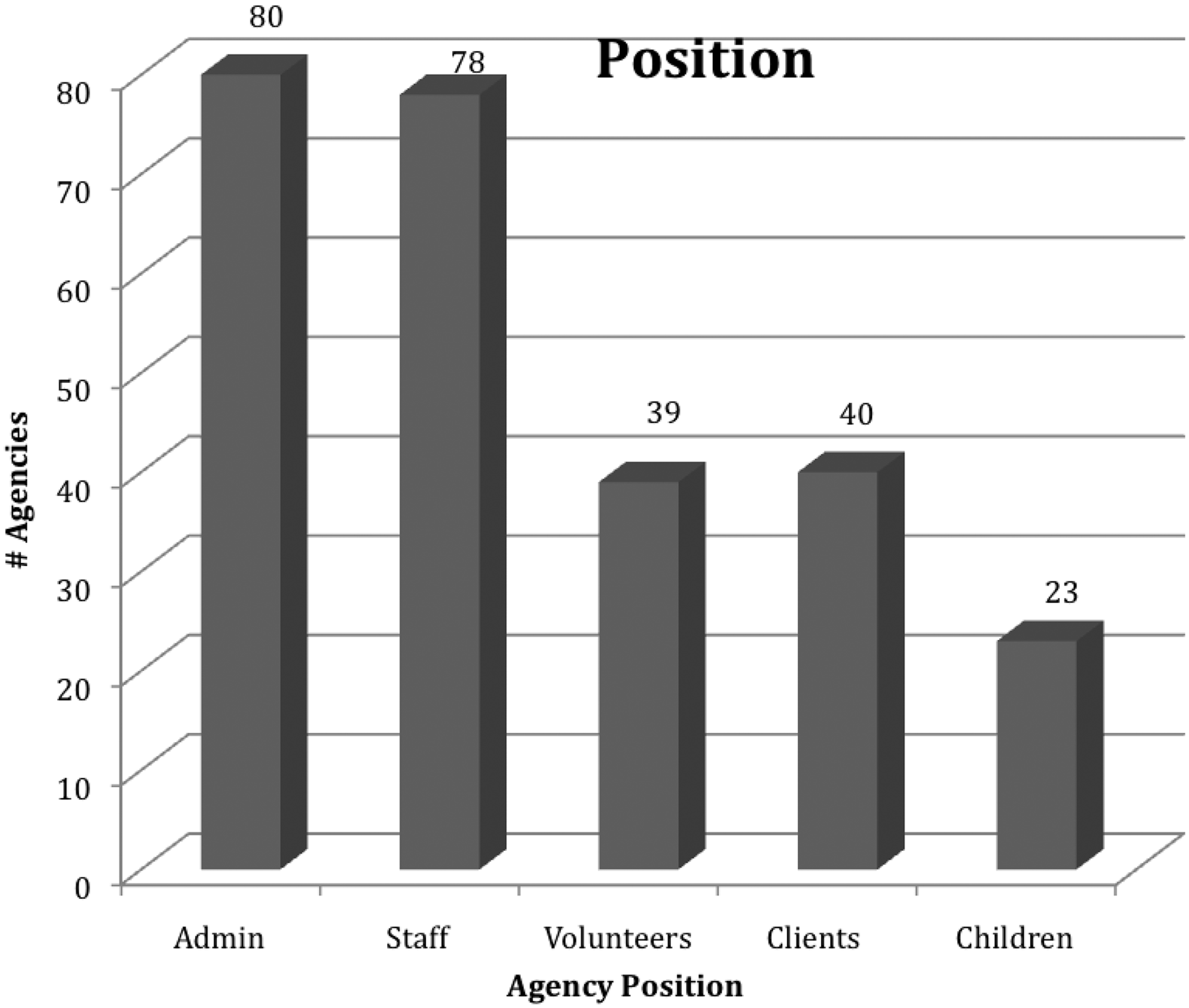
A few short-term plans included additional access for staff, clients, and/or children while several two-year plans included additional access for volunteers, clients, and, in some cases, children.
Overall, access is substantial but far from ideal. That some shelters still have nothing better than dial-up access coupled with the real possibility that the 10 non-responding agencies might have no Internet at all indicates a noticeable gap in basic access. Nevertheless, agency administrators have clearly committed to using the Internet for administrative and staff functions with steady movement towards the incorporation of volunteers, clients, and even the clients’ children. Well versed in making the most of few resources, agency directors are generally satisfied with their access although most see the need for some improvement. As the following section indicates, few are maximizing the Internet’s potential for social networking (e.g. chat rooms that provide ongoing support for post-agency contact), training (e.g. online tutorials in cyber-safety), and computer literacy for employment (e.g. web sites that help develop keyboarding and other data input skills). This level of satisfaction is likely to plummet if resources remain stable while use rises.
Uses of the Internet
Only 30 of the 81 agencies (37%) reported that all agency-related Internet use was done solely at the agency. Comments indicated that, for agencies without client Internet access, trips are sometimes arranged to the nearest public library or social service agency (e.g. Texas Workforce site) with Internet access. In addition, staff, volunteers, and clients go elsewhere to use the Internet for information and support. They do so at home (49%), at libraries (37%), at work (15%), and at local businesses that provide access (4%). As reported below, the cyber-safety skills necessary to use computers at any location are generally insufficient. Client use of the Internet at non-agency sites was described broadly, and included looking up legal information about their abusers, utilizing divorce software, and taking online GED or college classes. Overall, however, administrators report that clients use the Internet primarily for job searches, email, benefits, housing, and helping children with homework, as indicated in Figure 2.
Client Internet uses.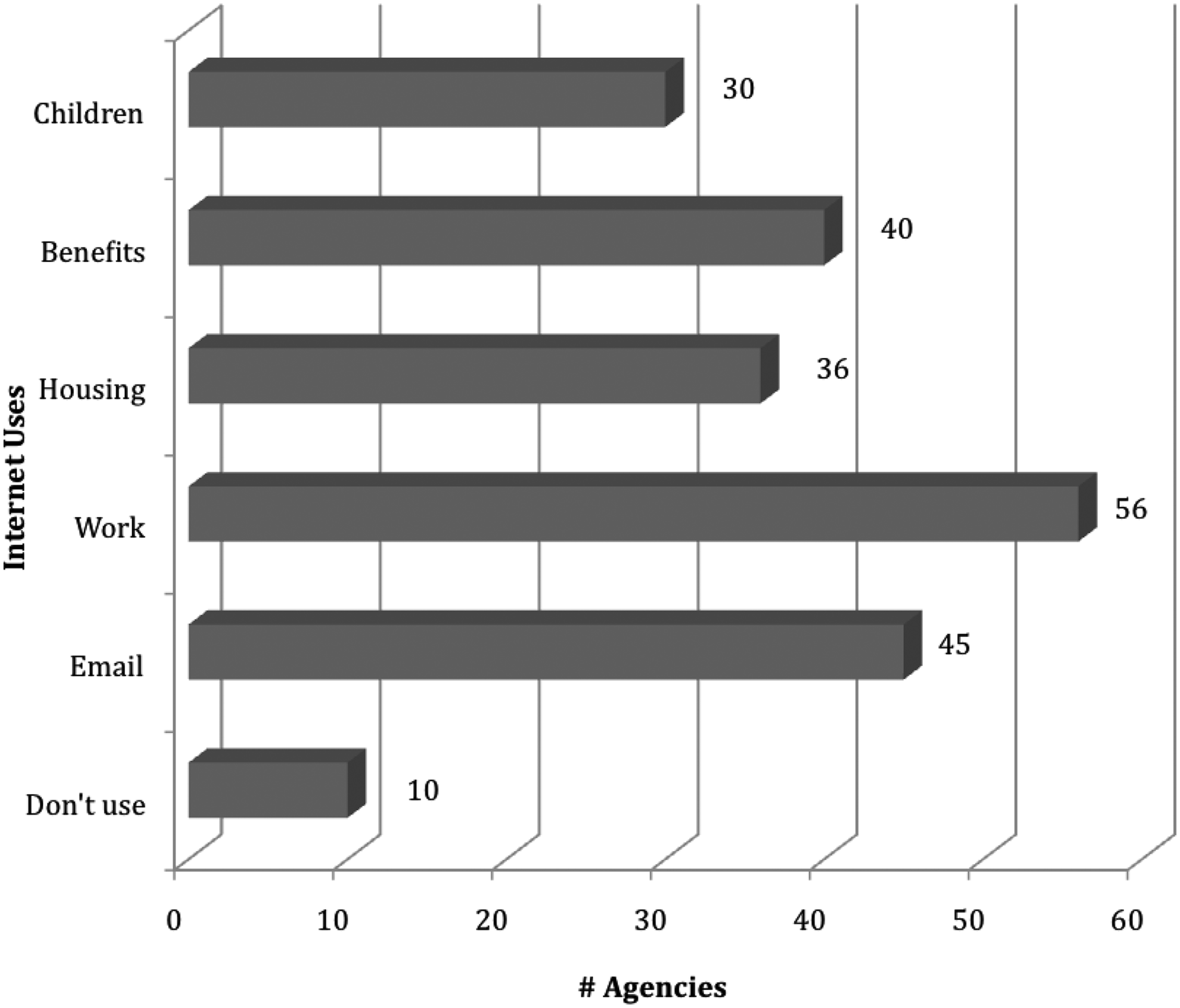
As more local governments move towards e-government service development, Internet access becomes increasingly necessary for benefits, housing, criminal justice, and unemployment support. Schools are also making increased use of the Internet for both homework support and parent/teacher communication.
Certainly training needs and Internet fears could be mitigated through well-structured instructional programs. Client training needs focus on finding information (77%), practicing cyber-safety (66%), and utilizing electronic government services (58%). Administrators reported that their clients are concerned that their own Internet use could lead to abusers finding them (46%), to the temptation to rekindle a relationship (44%), and to abuser intimidation of themselves and/or their children (38%).
Agency staffs are primarily using the Internet to receive and send information; the social support and networking options were not mentioned. Training clients was the least common use while distributing agency information to both in-house and telephone clients occurred in 54 (66%) of the agencies. As Figure 3 indicates, finding information for themselves, volunteers, and clients was a bit more common than sending required, aggregated data to reporting agencies.
Staff Internet uses.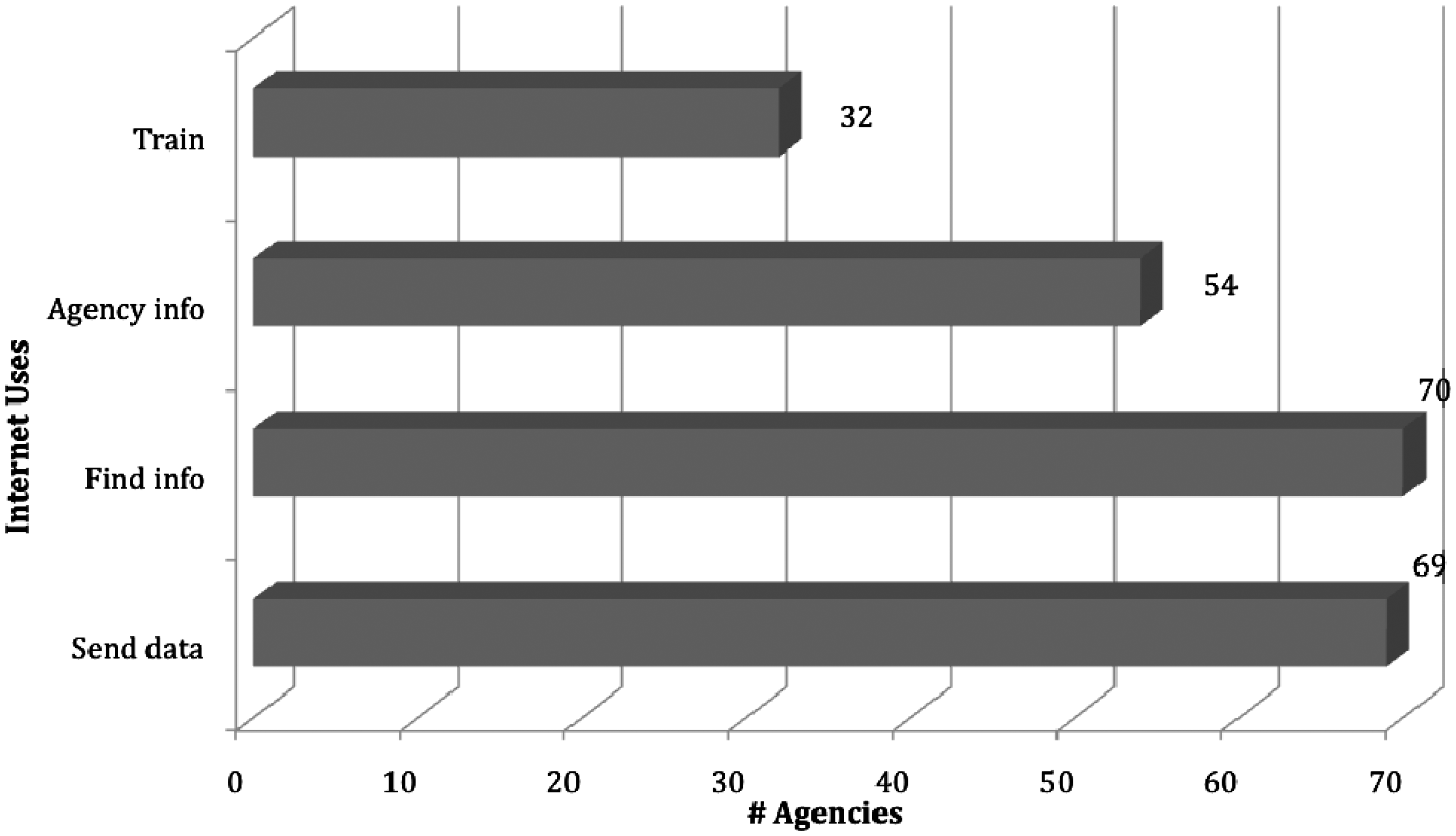
Infrastructure for these activities was often informal. While 54 percent had written policies on Internet use, 14 percent had only verbal policies, 14 percent had verbal honor codes, 6 percent were working on policies, and 10 percent were neither using nor planning to develop any policy. Training was similarly under-developed. Comments indicated that many staff and volunteers enter with sufficient understanding of the issues to mitigate any need for training; however, objective testing of that understanding might be a useful means of identifying any additional training needs that do exist. Forty-six percent provide no training at all, cyber-safety training was not provided by 27 agencies, and email training was not provided by 17 agencies. Five agencies plan to add training.
Administrators’ concerns are somewhat similar to those of their clients, for example, 66 percent were concerned about abusers using the Internet for stalking. Additionally 54 percent had concerns about abusers finding staff online and 43 percent had concerns about staff inadvertently violating client privacy. Several administrators noted that they were addressing all of these problems to whatever extent was possible but the concerns remain substantial.
Internet use might be characterized as functionally minimal. Clients are frequently characterized as making almost casual use of the Internet – due to a lack of computer skills, interest, literacy, and/or access. Administrators envision their staff using the Internet only to the extent required for daily functioning and inter-agency communication. At the other end of the scale, several administrators reported plans for expanding use when time, funding, training, and other infrastructure essentials permit. Using the Internet’s potential holistically is simply not an option that administrators have had the luxury of considering.
Support preferences
Administrators want to provide services that are currently unavailable or rarely available. Fully 66 percent want to be able to help clients do their own information searching – either by teaching them how to do it or by providing Internet access to those who are already capable of the task. Getting agency information out, particularly to those who never make in-person contact with an agency, is also a highly valued service that 51 percent would like to provide. As indicated in Figure 4, the use of a discussion board or chat service as a means of helping survivors who may not be able, willing, or ready to make in-person contact is already of interest to 23 percent of respondents.
Services agencies would like to provide.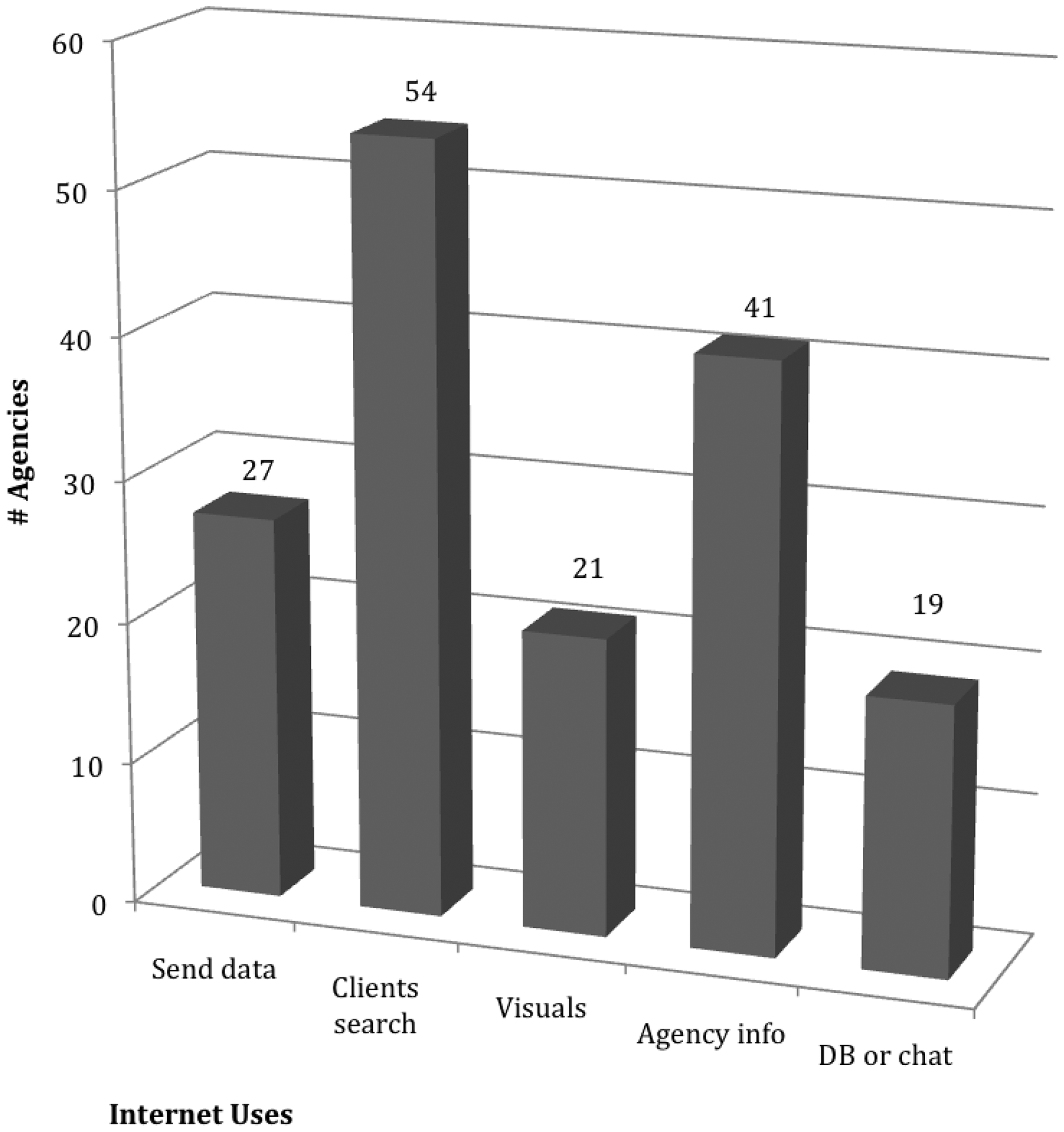
When created with safety as a top priority, visuals of the agency’s interior rooms, staff, volunteers, public activities, and so on can help alleviate client fears sufficiently to make contact or deeper involvement possible; 26 percent were interested in that possibility.
Agency administrators value the utility of training programs and policies as much as increased equipment. As Figure 5 indicates, 56 agency managers (69%) reported wanting to train their staff and 51 (63%) wanted support for training clients. Whether the training is formatted as online materials or a local workshop is of less interest. The opportunity to participate in grant seeking on technology matters was of substantial interest for 48 administrators as was the need for model policies.
Resources wanted by agencies.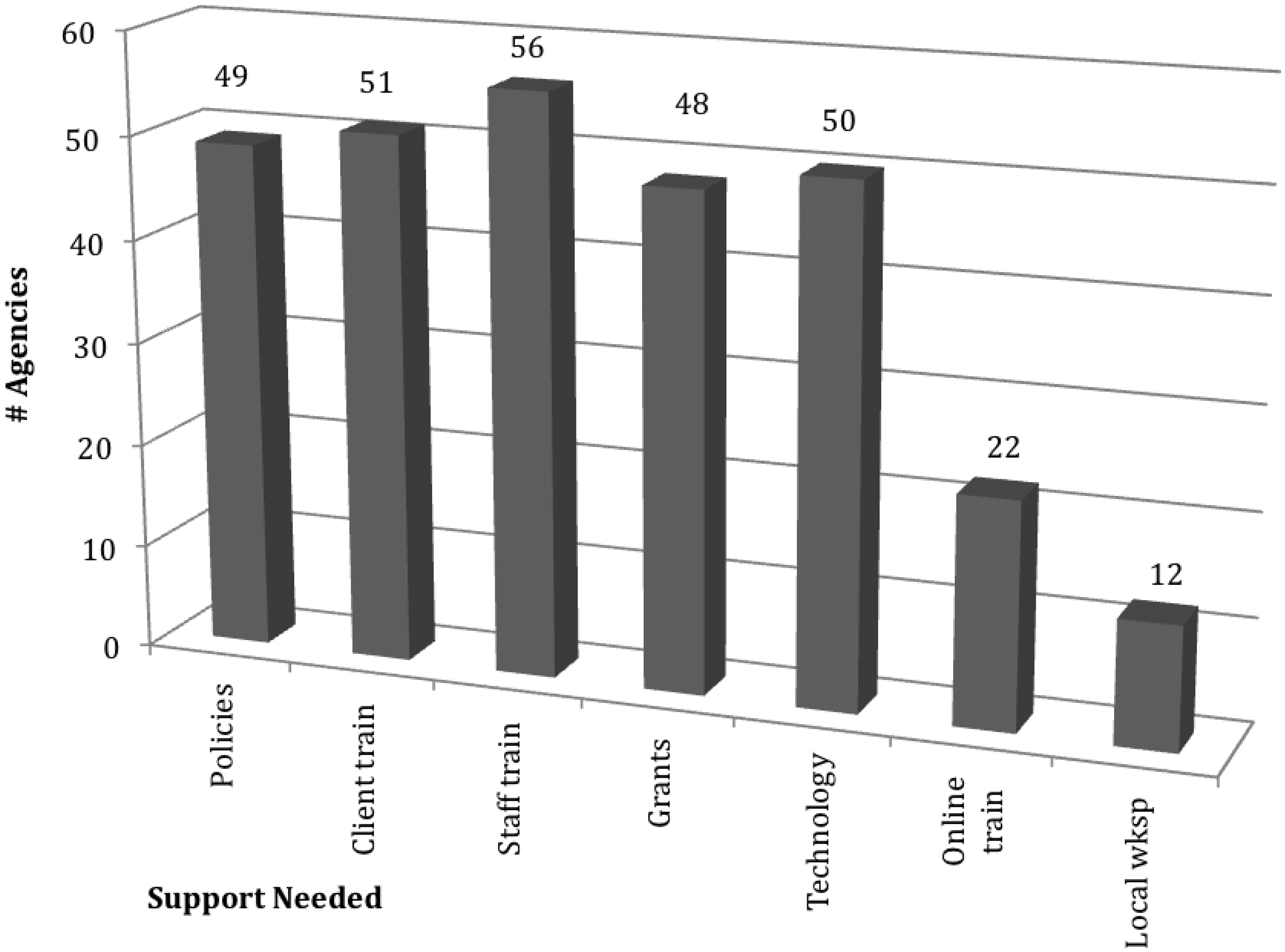
Finally, the nature of Internet use limitation, as denoted in Figure 6, was revealing. Funding was the top priority, reported by 64 percent (52) of the administrators. Technology concerns (35 agencies), cyber-safety (30), and training (28) carried similar weights. Administrative issues were least often a limiting factor (13).
Agency Internet use limitations.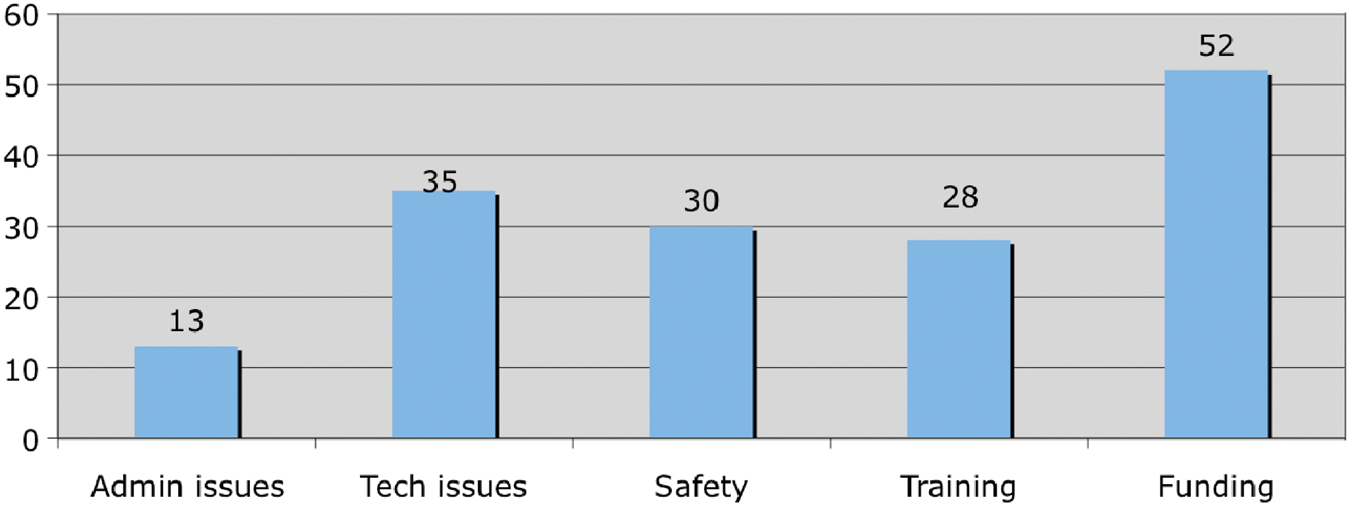
Most of these use limitations and support preferences could be more effectively resolved on a statewide level than in a piecemeal, agency-by-agency approach.
Web site analysis findings
Content analysis of the 65 agency web sites examined four components: cyber-safety, usability, agency accessibility, and content. These components were considered from the general perspective of a survivor seeking information rather than an expert with special knowledge of search algorithms and similar Internet design tools.
Cyber-safety techniques are increasingly available as a means of a) limiting abuser access to a survivor’s search history and b) teaching survivors about the dangers of using the Internet for information or social support. Usability, although potentially quite complex, was analyzed herein at its most basic level, that is, functionality, such as dead links. Agency accessibility, mentioned as a goal by many administrators, included basic means of reaching the shelters. Finally, content examined the most fundamental components required for minimal progress, such as safety plans. Overall, the web sites could be characterized as somewhat useful with significant but easily resolved concerns.
Cyber-safety
Seven agencies have clearly labeled Escape buttons on their front page, generally redirecting survivors to a neutral site (e.g. Google’s homepage or CNN.com). Twenty-six agencies offer a warning telling visitors that their web activity can never be completely erased and a safer computer (e.g. a library computer or a computer at a friend’s house) is most useful. Thirteen agencies explain how to clear the computer history after visiting a site. Six agencies explain what cookies are, how they work, and/or how to clear them from one’s computer. Other cyber-safety indicators would include an explanation of the use of spyware or a referral to a local service for computer protection but neither of these elements is present on the 65 front pages analyzed.
Usability
Agencies generally had working links on their sites (94%), with only a handful that had more than eight non-working links at any time (6%). Seven agency web sites would require fine motor skills in order to access drop-down menus from the front page; this requirement hampers online access for those with certain types of injuries or physical disabilities. Sites that appeared to be exclusively dedicated to families or an adult demographic sometimes refer to IPV as ‘family violence’. Survivors of a dating, live-in, or same-sex relationship may not feel certain their situation fits under the rubric of ‘family violence’ and may, therefore, hesitate to apply for aid. Forty-four web sites referred specifically to IPV or domestic violence, making their agency appear accessible to a wider range of clientele.
Agency accessibility indicators
Four agencies indicated that they had updated their agency web site, usually within the last year. Such update notices commonly indicate professionalism, authority, and quality. Less than half of all agency web sites – 24 – showed some indication of a second language or a language gateway. Site translators like Babelfish or Google Translate provide some support for survivors whose first language is not English. Sixty-four agencies prefer direct contact from clients via phone calls; 34 agencies posted street addresses on their sites, usually for administrative offices, with instructions for survivors to call first if they were looking for a residential agency. Thirty-four agencies give only their mailing address to survivors; 52 had an email address. Only one agency has a chat or IM capability as a point of contact with clients.
Web site content
Web site content, as noted in Figure 7, should always include basic descriptions of agency services but 17 percent did not. Protective orders (PO) and safety plans are at least mentioned at each site; 38 agencies explained the utility of POs and how they might be obtained.
Web site content.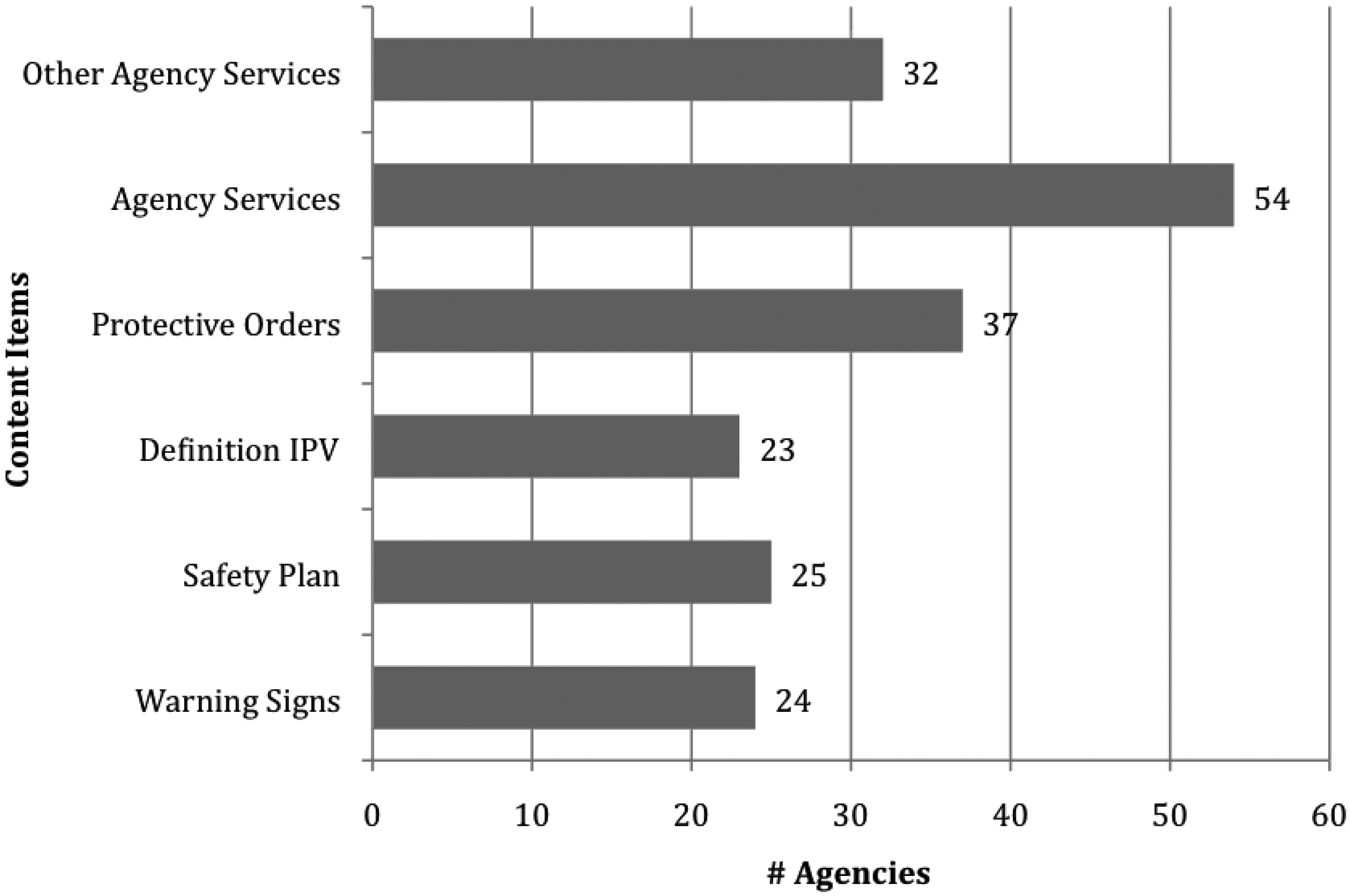
Safety plans are available as a PDF or as a general list on 26 sites. They range from short lists of items survivors should collect as preparation for leaving to detailed activity checklists. An agency’s definition of Intimate Partner Violence, evident on 24 sites, is not necessarily the same as a legal definition of domestic violence in a particular county or jurisdiction but can be very helpful to survivors first coming to grips with their situation. Agency visuals, available on 18 sites, can provide significant reassurance to survivors who expect a human warehouse and/or judgmental staff. The services offered, including legal counseling and child-care assistance, were available on 55 sites.References to additional resources agencies and general information agencies (e.g. the National Network to End Domestic Violence, which serves administrators who then serve clients) were each available on 33 sites.
Findings discussion
Managers have a real concern that clients are insufficiently prepared for Internet risks. ‘I don’t think they (the clients) are concerned, but staff is’, one administrator wrote. Another said, ‘We are generally more concerned than (the survivors) are’ about cyber safety. Agency administrators expressed concern that inadequate Internet education could lead clients or staff to accidentally lose control of confidential data.
The social aspects of Internet use (e.g. online dating, e-Harmony, FaceBook) could leave survivors open to re-victimization, stalking, or being located by abusers. Many clients are not sufficiently skeptical of or prepared for such relationships. Some may actually choose to seek out these relationships or renew relationships with the abusers via social networking sites in the mistaken belief that the computer provides safety. These possibly predatory relationships require a heightened level of cyber-safety awareness.
Sophisticated, targeted training is required to give staff and clients a minimal understanding of cyber safety and a basic skill level in information searching. Currently, training largely occurs as one-on-one support between peers on an as-needed basis. ‘I’d like to know how to get government information’, one administrator said. ‘Clients are further along than the staff.’ In some settings, teenage children are called on to fill an adult role as they provide a human bridge to the Internet at the agency or local library.
Funding is a challenge for managers who want to expand their online services but need updated equipment, software, and staff-heavy support. ‘Keeping up to date on equipment is always an issue.’ Physical practicalities are a significant limitation. ‘We would like to get staff computers, but we don’t have enough space for them.’ As information technology continually evolves, funding for hardware, software, and access is often viewed as a black hole by funders.
Clearly all of these Internet concerns are contextualized by their IPV setting – a setting which is squarely under the purview of social work. Many agencies lack the financial resources needed to hire social workers so that these administrators often lack the most appropriate educational background. Their continuing education needs are, to a limited extent, met by a patchwork of non-profit agencies. For example, the US National Center on Domestic and Sexual Violence provides workshops on ‘grantsmanship’, ‘the use of technology in intimate partner stalking’, and ‘digital evidence’ (National Council Against Domestic Violence, 2009). Social work principles are essential to their work but not always integral to their education.
Shelter directors can certainly benefit from the professional and scholarly literature of social work that speaks directly to the type of management issues examined in this study. Managing communication technology, agency infrastructure, and staff training are skills with which the professional social worker is quite familiar.For example, recent studies recommend that minors must be taught Internet safety (Mishna, McLuckie, & Saini, 2009) and report that domestic violence survivors benefit from repeated reminders of meetings (Martinez & Wong, 2009). Agency infrastructure requires community-embedded work that receives full evaluation (Frahm & Lawrence, 2009; Ming-Sum & Cheung, 2009; Richardson, 2010). Staff training for social service support staff working on intimate partner violence issues can help increase early detection of and effective interventions in the abuse (Flaherty, 2010). Whether or not domestic violence shelter directors receive formal or continuing education in social work, advances in the field can strengthen their management of information use within their agencies.
Conceptual framework
The ‘everyday life information seeking’ (ELIS) model, as noted before, posits that social, cognitive, and psychosocial capital drive the information choices that individuals make in their ‘mastery of life’ efforts (Savolainen, 2005). Certainly some survivors function through avoidance coping, characterized by such steady, conscious avoidance of information that self-identity formation is stunted (Berzonsky & Neimeyer, 1994), but those who interact with formal or informal resources are making some effort to control their lives. Whether that leads to remaining in an abusive relationship or moving directly into filing charges, the focus on choosing a life direction involves the internal and external resources of ELIS to some degree.
IPV shelter administrators incorporate the Internet based on two criteria: their own service priorities and their administrative resource opportunities. Neither criterion recognizes the ELIS essentials of survivor life choices. Quite naturally, administrators view the Internet just as they view bed space, intake staff skills, and the other concrete components of a shelter’s daily functions.
The service priority criterion for Internet incorporation is rooted in the well-established balance between the population the shelter is mandated to serve and the potential for actually reaching that population. For example, about one in every three women who apply to Texas shelters is turned away due to lack of space (Legislative Budget Board, 1997). If those shelters met their potential for reaching particularly vulnerable pockets of survivors, such as immigrants from countries in which severe physical abuse is fully sanctioned, they only exacerbate the problem. Certainly some administrators do reach much of their mandated population but others must make regular use of ‘Greyhound therapy’ in which survivors are given a bus ticket to some out-of-state destination that could provide safer living. In terms of service priorities, an Internet program that reaches more of the mandated population simply raises false expectations of effective service.
The administrative resource criterion moves from that strategic analysis to tactical managerial responsibilities. Three constants feature on a daily basis: measurable training, formal administration, and funding requirements. Volunteers, clients, and, to a lesser degree, staff are in such constant flux that scalable instruction on essentials must be relatively stable. Teaching such a changing population about a moving target, that is, the Internet, is simply not an option. Unlike the concrete elements of daily shelter functions, such as the number of available beds, the Internet continually develops unexpected capabilities, unfamiliar venues, and potential dangers, formal administration requires documentation of adherence to governmental and funding agency standards, report schedules, and development criteria. Policies, procedures, training, and evaluation of shelter functions are subject to external reviews with funding implications. Resource allocation entails the known (e.g. amount of funding provided in a single grant), the known trends (e.g. amount of funding a county generally provides), and the unpredictable (e.g. the sharp rise in demand following a natural disaster). The Internet becomes a potential hazard from this tactical perspective in that its continual evolution renders almost any effort’s result outdated, thereby wasting scarce resources.
IPV shelter administrators’ two Internet utility criteria, service priorities and resources, highlight implementation barriers and ignore the embedded expectations of communication and resource support. The Internet is a socially constructed phenomenon that is quickly moving towards a saturation point in terms of both community and individual access. Media assume its role in daily life, economic interests push its new tools, and the law always lags behind its growth. Administrators who work from the survivor’s perspective, rather than from their own, recognize its pervasive role in shaping social communication, resource generation, information seeking, and decision-making.
The Internet is not a resource and not a drain on resources; it’s not even a shelter’s option. The Internet is one more facet of each survivor’s individual situation.Survivors bring it into the shelter with them, just as they bring their work history and abuse traumas. Their experiences, expectations, and rejection of it influence their ability to make informed choices. Their sense of self-efficacy and their array of options respond, in some measure, to their ability to socially construct their own understanding of the Internet. Like any other socially embedded component of daily life, the Internet is part of the ‘everyday life information seeking’ required for life mastery. Shelter administrators working from that ELIS perspective have different decisions to make.
Shelter administrator decisions
Individuals’ information resource priority is almost always people. In the ‘small world’ of the information-impoverished (Chatman, 1996) members of the community sanction information tools and trust indicators. This is the basis for survivors’ tendency to believe other survivors, to trust their sources, and to seek information from recommended web sites. Shelters are part of a second tier in that small world. Survivors trust each other most but shelter staff can have the experience, empathy, and knowledge that generate trust. Information behaviors privilege interpersonal connections as well as experience with information resources. Administrative decisions involving the Internet must start from that basis by identifying, clarifying, developing, and modeling information competence.
Identifying survivors’ understanding of the Internet should be part of the initial counseling session. Staff need to ascertain simple but essential components of survivors’ information seeking and communication: cyber-safety, social communication, and navigation. For example, they may not know how to identify spyware but they should know its possibilities. They may use email easily for contacting family but have trouble using the email forms required by some government agencies. Finally, they need to be able to navigate the shelter’s web site to locate their preferred resources. Identifying this basic knowledge should primarily enhance self-knowledge and encourage Internet awareness; shelter staff will, as a by-product, get useful insights to help shape their interactions. Even those who practice ‘Greyhound therapy’ can send their clients off with a somewhat strengthened awareness of the Internet’s potential. Survivors who call on non-residential services, including those who only visit the web site, can complete a minimal self-assessment. An engaging, brief quiz with instant feedback is readily created and can even serve as a bridge to in-person shelter services and/or public library instructional options.
Clarifying misconceptions about the Internet is certainly a series of ‘teachable moments’ but can also be incorporated into almost any topical meeting. A common misconception is that the most relevant hits on a Google search are the first ones or, at least, those on the first screen. Actually, economics and social norms drive those hits to such an extent that survivors’ perspectives are not likely to surface readily. This misconception can be clarified in a coaching session on resume writing or in a small-group class on parenting skills. The act of running a search will almost always present useful illustrations. Staff members with extended client contact need to be able to identify and clarify common misconceptions, and that, of course, requires staff training and/or knowledge measurement. Fortunately, this content is relatively stable and can also be shared with non-residential clients.
Developing effective information gathering and managing abilities is a process which, like coping with abuse, can be reiterative, move forward in small steps, and can strengthen self-confidence. IPV survivors get information from direct communication with abusers, family, shelter staff, police, court advocates, counselors, emergency room staff, religious leaders, and more. They can get computer-mediated information, customized or pre-packaged, from all of those and more. Gathering information skills does not refer to simply obtaining information. For those who have the physical, fiscal, social, psychological, and logistical freedom of movement to accept or actively seek information, the sheer quantity can easily overwhelm even the most well prepared individual. These skills refer not to obtaining but to a) seeking strategically appropriate content and b) applying appropriate evaluation criteria. For example, most mothers cannot get a job until they have childcare but they cannot afford childcare until they have a job. Gathering information on the two needs in tandem is more effective than working on the problems in sequence but it takes more skill. Likewise, appropriate evaluation criteria for a job notice can vary from requirements (e.g. will a GED suffice or is a high school education required) to tone (e.g. highly formal, almost legal language or casual, colorful language). Only the survivor can determine what is ‘appropriate’ but developing the ability to think critically about those determinations has benefits far beyond any single application. Managing the resulting information supports personal growth and enhances productive applications to social, educational, economic, and governmental resources.
Shelter choices are models for survivors. They learn from staff who can articulate their search paths, explain their evaluation criteria, manage their own information, and genuinely acknowledge their own learning experiences. The shelter web site should support the critical use of information in making effective life choices as well as the responsibilities of personal information management. Direct connections to public libraries, recommendations for self-paced learning, and explicit approval of active information engagement should be woven into the service patterns.
Shelter administrators prioritize the subsets of their mandated populations. Everyone who has the facilities to accept residential clients identifies them as the top priority for the duration of their residence. Three other population subsets garner varying degrees of commitment: post-residential clients, survivors who use only the non-residential services, and those ‘invisible’ clients who use resources without contacting any staff member (e.g. using the web site to learn about the cycle of abuse). Administrators have the opportunity to recognize and make full use of the Internet’s role in survivors’ lives – regardless of these service priority levels. Identifying, clarifying, developing, and modeling information competence can be woven into the fabric of each interaction.
Statewide support for shelter administrators
Each shelter director needs practical tools with which to identify, clarify, develop, and model information competence. Re-creating local versions of the same tools is obviously inefficient but development of a statewide Internet infrastructure for IPV agencies could pool general resources and training materials while supporting local control. Coordination of resources in funding, policy development, and model web design would be relatively easy to establish. Funding needs could be supported by pooling joint grant application opportunities and successful application documents. A single web-based repository of policy models and well-reviewed policy development resources would be useful without abrogating local autonomy. Simple agency web sites, tested to maximize secure and effective support of clients and staff, could be provided to low-technology shelters that need ‘pre-fabricated’ sites. Plentifully supplied with feedback and input opportunities, such a site could garner new information needs from clients and staff to keep ahead of the constantly changing information evolution. Training materials can be carefully selected to address high-priority needs, for example, cyber-safety, through use of multi-modal instructional tools, for example, online tutorials and materials for in-person, small-group workshops.
Most states already have an overarching network to which shelters belong. While that organization provides coordinated structure, maintaining and even controlling such an extensive Internet infrastructure in a top-down mode loses that survivor-centered information understanding. The actual users must be seriously supported in their efforts to contribute to and even control primary content. The life experience and ground-level application of IPV resources require the rapid, practical, and convenient distribution of the network’s coordination but requests for content, new formats, and interactive connections should reach more than a digital suggestion box.
This infrastructure should include communication channels in addition to content. IPV survivors already use social networking to share advice on how best to move towards safer living (Westbrook, 2007b). A coordinated examination of additional communication opportunities would include the use of social networking to reach those survivors who currently do not come into shelters and to follow up on those who have moved on from shelter residency/service. Communication tools (e.g. blogs) and review tools (e.g. tagging) would enhance these online communities.
Given the potential value of bibliotherapy, art therapy, and writing therapy, a social networking outlet for creative and introspective products (e.g. poetry, book reviews, sketches) could contribute to building a community of support for survivors. Control over the management of this interactive, dynamic content requires effective tools that function at the individual level. Each community member needs the ability to make decisions about sharing, revising, and integrating content. That ability includes capability; that is, implementation must be practical. Currently information technology provides such control only for experts but the infrastructure’s robust design would incorporate new developments such as the ‘web-traveler policies’ that allow individuals to attach their use policies to materials that leave their immediate control (Squicciarini & Sundareswaran, 2009).
Conclusions
This statewide study of IPV shelter administrators’ use of and concerns about the Internet revealed several hesitations, interest in content, and minimal awareness of the communication potentials. IPV shelter administrators view the Internet just as they view bed space, intake staff skills, and the other concrete components of a shelter’s daily functions. This article proposes an alternative to that common understanding in a new conceptual framework which identifies the Internet in terms of the survivors’ expectations rather than as a shelter’s tool. The Internet is a facet of each survivor’s individual situation much like their work history and abuse traumas. They bring their experiences and expectations of the Internet into the shelter as one piece of their ability to make informed choices. Their sense of self-efficacy and their array of life choices respond, in some measure, to their ability to socially construct their own understanding of the Internet. Like any other socially embedded component of daily life, the Internet is part of the ‘everyday life information seeking’ required for life mastery. Shelter administrators working from that ELIS perspective have the potential to remake the ethos of information engagement throughout the survivor’s interaction with shelter staff. People who master information’s role in their life mastery progress have a powerful tool with which to shape their independent choices. Shelter administrators using the ELIS model support survivors’ development of that tool.
Research ethics
The University of Texas at Austin Office of Research Support and Compliance Institutional Review Board, chaired by Prof. Jody Jensen, gave ‘exempt’ approval for this study. The study’s IRB Protocol number is 2007-09-0073.
Footnotes
Acknowledgments
Ann Williams and other members of the staff of the Texas Council on Family Violence have been most generous with their time, expertise, and advice. This project would not have been possible without the thoughtful responses of the 81 agency administrators who gave some of their invaluable time to complete the questionnaire. Both groups helped shape the focus and analysis of this study thereby increasing its potential value to shelter administrators who are facing digital design dilemmas. I certainly appreciate the excellent Master’s student, Joshunda Sanders, who completed her research internship on this study. Her work in helping to manage the data and participant recruitment was invaluable.
Funding
This work was supported by the Temple Teaching Fellowship as awarded by the University of Texas School of Information.