







Abstract
Summary
Little is known about the contribution made by social workers to empirical evidence on substance use disorders treatment, especially interventions for African Americans. This article presents a systematic review of 23 articles, presentations, and dissertations written by social workers that focus on substance use disorders treatment interventions with African Americans. The aim of this review is to estimate the extent of contribution made by social workers to the research knowledge base on substance use disorders treatment interventions that are effective among African Americans, and to assess the methodological quality of those studies.
Findings
The review shows social workers’ contributions to research examining substance use disorders treatment interventions with African Americans is inadequate and the methodological rigor of these studies is slightly below average. Of the 23 articles examined, few studies included only African American samples, and most investigated substance use disorders treatment interventions in samples with a small percentage of African American participants. Moreover, most of the reviewed studies were published between 1994 and 2010 in non-social work journals and were cited an average of 6.67 times.
Applications
The social work profession must increase its contribution to the empirical knowledge base on substance use disorders intervention research with African Americans because it is essential to the provision of culturally sensitive, evidence-based practice to African Americans. More quasi-experimental and experimental designs are needed to compare multiple evidence-based treatments across diverse populations, and to determine causality between treatment processes and outcomes.
Keywords
Nearly 22.5 million Americans older than age 11 are diagnosed with substance abuse or dependence (Substance Abuse and Mental Health Services Administration [SAMHSA], 2010). Substance abuse poses a significant public health problem because of its direct and indirect impact on individuals, families, and society. For example, substance use disorders have been linked to an array of physical and mental health problems as well as socioeconomic impacts. Considerable research has demonstrated a link between substance use disorders and incidence of cancer, sexually transmitted infections, cardiovascular disease, stroke, overdose, hepatitis, injuries, mood disorders, and other health problems (National Institute of Drug Abuse [NIDA], 2003). Adolescents and adults presenting for substance use disorders treatment often have co-occurring mental health disorders (Chan, Dennis, & Funk, 2008), which can complicate differential diagnoses, assessment, treatment, and relapse prevention (American Psychiatric Association, 2000). Moreover, substance use disorders negatively affects academic performance, socioeconomic status (SES), labor market participation, and is associated with criminal-justice involvement and aberrant behaviors (NIDA, 2003). Another frequent consequence of substance abuse and dependence is family instability (NIDA, 2003) that is the result of substance use disorders affecting an individual’s ability to fulfill his or her familial roles (Austin & Wagner, 2010). As a result, substance use disorders contribute to significant social, financial, and disease burdens (Cartwright, 2008).
Although the consequences of substance abuse and dependence are evident across all racial/ethnic and economic strata, some racial/ethnic groups are disproportionately affected by these disorders. For example, the outcomes of substance use disorders tend to be more negative, long-term, and pervasive for African Americans as compared with outcomes of other racial/ethnic groups. Although African Americans report lower rates of substance use disorders for alcohol and illicit drugs (8.8%) than American Indians/Alaskan natives (15.5%), those who are biracial or multiracial (13.2%), Hispanics (10.1%), and Whites (9.0%; SAMHSA, 2010), African Americans are more likely to experience disproportionately high rates of negative consequences associated with substance use disorders (Rounds-Bryan, Motivans, & Pelissier, 2004), including higher relapse potential and chronicity. In addition, justice-involved African Americans with substance use disorders are more likely than other race/ethnicity defendants to receive the harshest sentences for drug-related offenses (Stuntz, 2008). Other pervasive disparities in the African American community, including poverty, health care inequalities, unemployment, and low educational attainment, contribute to African Americans’ increased morbidity and mortality from substance use disorders (Finzen, 2005; Rounds-Bryan et al., 2004; Wells, Klap, Koike, & Sherbourne, 2001). Moreover, when compared with Whites and Hispanics, African Americans were more likely to report greater unmet needs, less access to care, and less active engagement in substance abuse treatment (Wells et al., 2001).
Many treatment options exist for those suffering from addiction disorders but access and availability are largely predicated on economic and environmental factors (McAuliffe, LaBrie, Woodworth, Zhang, & Dunn, 2003). Substance abuse and dependency treatment settings include inpatient and outpatient treatment centers and day programs. Traditional substance abuse methods include 12-step programs, cognitive behavioral therapy, motivational interviewing, drug therapy and, in some cases, hospitalization. Goals for substance abuse treatment range from abstinence to harm reduction (Osilla & Stern, 2008). Historically, therapeutic models involving the 12 steps or a change process for substance abuse treatment have been supported (Simpson, 2004). However, with new support for tailoring programs to the client, there has been a shift away from therapeutic models as one-size-fits-all (Simpson, 2004).
Despite the availability of treatment options, research pertaining to best practices for substance abuse treatment for racial/ethnic minority is limited. The limited research is because most substance abuse treatment research has been tested primarily with White men (Alegria et. al., 2006; Lopez & Guarnaccia, 2000). In general, African Americans are slightly less likely to receive substance abuse treatment (Wells et al., 2001) and residential treatment (Bluthenthal, Jacobson, & Robinson, 2007) but more likely to report dissatisfaction with the services they received (Tonigan, 2003; Wells et al., 2001). The existing literature suggests that differences in treatment between racial/ethnic minorities exist but it is unclear which substance abuse treatment options are most effective for African Americans.
Given the disproportionate negative impact of substance abuse and dependence among African Americans and other marginalized populations and the limited research in this area, substance use disorders treatment and research need to be a priority for social workers. Although social work is the largest occupational group of mental health professionals (Manderscheid et al., 2004), little is known about social work’s contribution to empirical evidence on substance use disorders treatment interventions that are effective for African Americans. Given the commitment of the social work profession to using culturally sensitive, evidence-based practices, it is important for social workers to generate and use empirical knowledge reflecting this value. Therefore, social work research on substance use disorders and mental health must inform and support culturally competent evidence-based practice, and practitioners must implement treatment interventions that are culturally and developmentally appropriate for individuals and their families.
The present study was undertaken with the aim of conducting a rigorous systematic review of published research articles written by social workers focused on substance use disorders treatment interventions that included African Americans. The objective was to estimate social work’s contribution to the research on substance use disorders treatment interventions for African Americans, and to assess the methodological quality of those studies.
Method
This study was grounded on the systematic review methods proposed by Cooper (2010); Cooper and Hedges (1994); and Littell, Corcoran, and Pillai (2008). The systematic review team consisted of an assistant professor, three masters level social work research assistants, and a university librarian. This team met weekly during protocol development. In addition, a systematic review advisory group was established that included social work researchers and practitioners with expertise in substance use disorders treatment interventions. The advisory group helped to outline study parameters during the initial stages of the study.
The articles for the systematic review were selected using the following broad inclusion criteria: (a) any research that examined treatment interventions for substance abuse, substance dependence, alcohol abuse, alcohol dependence, tobacco abuse, tobacco dependence, or addiction treatment among African Americans; (b) scholarly literature published in any period; (c) grey literature from published conference proceedings, dissertations, and theses; and (d) relevant literature from any culture, including non-English language studies. However, studies examining caffeine abuse and dependence were excluded.
Databases and protocol search strategies were developed in consultation with a university librarian with expertise in systemic review; the librarian completed the search for electronic and grey literature. The following databases were searched in November 2010: PsycINFO via EBSCO (1800s to date), Web of Science from ISI (1955 to date), PubMed (1949 to date), EMBASE via Elsevier (1947 to date), CINAHL (Cumulative Index to Nursing and Allied Health Literature) via EBSCO (1981 to date), Social Services Abstracts via CSA Illumina (1970 to date), Sociological Abstracts via CSA Illumina (1952 to date), Social Work Abstracts via EBSCO (1965 to date), and Dissertations and Theses via Proquest (1861 to date). Additional searches in PAIS (Public Affairs Information Service) International via Proquest (1972 to date), Conference Papers Index via CSA Illumina (1982 to date) did not produce any relevant manuscripts. No language or publication date limits were applied to the searches.
The search strategies for all databases included three sets of broad terms developed to encompass the relevant aspects of the research question: African Americans, substance abuse and dependence, and treatment intervention. The strategies capturing these broad terms found all words related to the study topics (e.g. Black, Negro, drug dependence, opioid abuse, and cognitive behavioral therapy). The use of truncation (i.e. the asterisk symbol) to capture alternate word endings was modified as needed. Controlled language thesaurus terms were added to these sets as appropriate.
Given this effort was a discipline-specific systematic review, additional search terms were included to determine whether publications were authored by social workers. The search strategy encompassed all terms related to social work or social welfare to limit the search to authors affiliated with social work. These terms were added to all database searches except Social Work Abstracts, for which the option was unavailable. In addition, the authors’ affiliation was searched for all authors in PsycINFO, Web of Science, and EMBASE, whereas other databases limited the affiliation search to the first author (i.e. PubMed, CINAHL, Social Services Abstracts, and Sociological Abstracts). Affiliation in Dissertation and Theses often included only the university, rather than the department or school. In addition, the reviewer team assessed whether authors had a social work or social welfare degree (e.g. BSW, MSW, DSW, PhD). If the article did not explicitly list the authors’ degrees, the review team performed Google Scholar searches to determine whether at least one author had a social work or social welfare degree.
A dedicated RefWorks (an online information management system) account was established for the systematic review. The review team created unique RefWorks user accounts for all searched bibliographic databases, requested e-mail alerts when new research with relevant keyword matches entered the databases, and increased the breadth of search terms by entering all keywords into the databases’ thesauruses. In addition, several methods were used to identify relevant articles that may have been missed by the database searches. Journal coverage of the core databases was checked against a list of identified relevant journals. This step revealed The Journal of African American Studies, a journal not indexed in the databases and thus searched separately. A Google Scholar search retrieved an additional online indexed bibliography of articles published in social work journals (Shorkey & Grant, 2006); however, all relevant articles in this bibliography had previously been identified by the database searches. Additional sources were identified by conducting so-called reverse searches in which the citations and references of the articles identified through the database searches were examined. This study also included grey source literature.
To be included in the review, studies had to include at least one African American participant. We purposefully imposed such a liberal requirement because we expected to find relatively few interventions designed primarily for African Americans.
Coder training
In preparation for the systematic review, two reviewers and two master coders participated in an 8-week training on research methods and coding protocols. This included conducting literature searches, reviewing research designs and methods, reviewing the data extraction forms and processes, pilot testing the coding instrument, conducting preliminary coding of relevant articles, and discussing and resolving discrepancies. To achieve reliable results, the research assistants were tested on their abilities to complete initial study screenings and enter information onto the data extraction forms. The statistical measure of Cohen’s κ was used to determine interrater agreement. Cohen’s kappa is useful in measuring reliability because it adjusts for the chance rate of agreement (Cooper, 2010).
Article inclusion
Following the best practice recommendations of the Cochrane Collaboration, at least two reviewers independently examined all studies (Littell et al., 2008). As noted by Cooper (2010), a double-review approach can substantially improve the rigor of a review: ‘Double coding can greatly reduce potential bias, make evident different interpretations of questions and responses, and catch mechanical errors’ (p. 102). The initial screening process consisted of reviewers independently examining articles to determine whether the article met study inclusion criteria, and marking articles as include, exclude, or uncertain. When articles were labeled uncertain, the master coder reviewed the articles to make a final determination. In total, 65 manuscripts were included out of the 710 publications identified in the original search.
These results were compared using Cohen’s κ to determine interrater agreement. Interrater agreement exceeded 90%. In cases of disagreement or uncertainty whether an article met inclusion criteria, a master coder reviewed the studies to achieve a consensus. A second master coder was consulted as needed.
Coding
Following the initial review to determine study inclusion, reviewers used a data extraction form to independently code each study. Each study was double coded. The data extraction form gathered article-specific information such as the database source, study design, research method, interventions, participant characteristics, setting, and outcome measures (Littell et al., 2008). To clarify key terms, the data extraction form had a companion codebook. Both were developed by the research team in consultation with the advisory team to provide definitions and examples. The data extraction form was pilot tested by three research assistants, who later served as reviewers on this study, and an assistant professor who participated in this systematic review. Cohen’s κ was used to determine interrater agreement for coding; discrepancies in coding were resolved by a master coder.
Results
Scientific contribution
Systematic review overview (N = 23).

Overall, the analysis revealed that social work researchers were less likely to publish research that examined substance use disorders treatments among African Americans in social work journals (7; 30%) than in non-social work journals (16; 70%) journals (see Table 1). Over the past 10 years, social work researchers modestly increased their contribution to the study of African American substance abuse treatment interventions and social work journals. For example, of the articles published in social work journals, 71% were published after 2001. Table 1 contains information on publication by journal.
Although a few articles did not report the study’s funding source (6; 26%), 14 (61%) articles indicated that their studies were supported by federal funding, four (17%) were funded through universities, and two (9%) were supported with state funding. A few studies (4; 17%) received funding from multiple sources.
Participant demographics
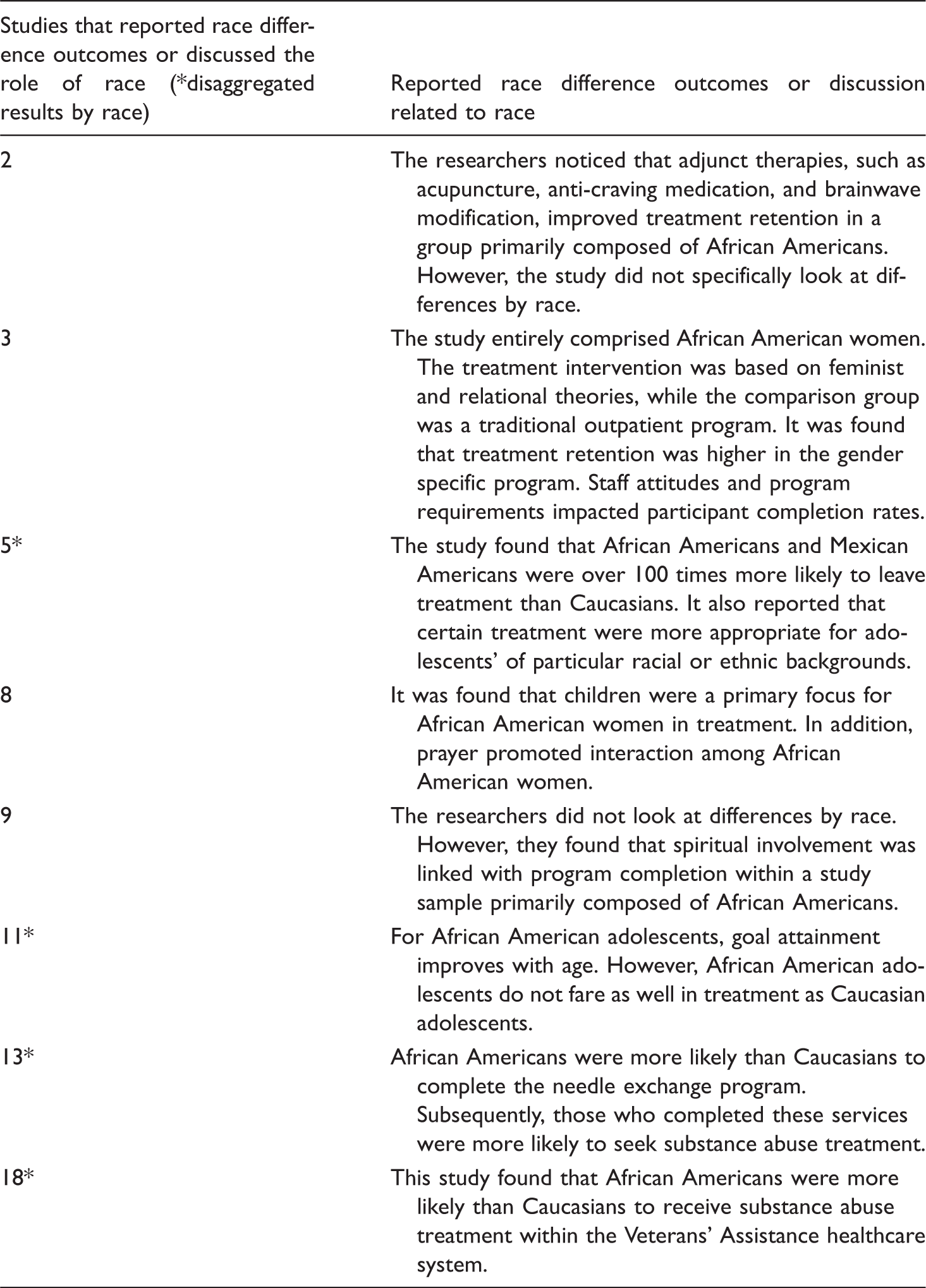
Reported race difference outcomes.
Study methodology
Table 1 contains study methodology demographics. Over half of the studies (57%) performed a secondary data analysis. Studies were classified as secondary analysis if the research team responsible for authoring the manuscript used data collected by another research team. A majority of studies (16; 70%) employed nonprobability sampling, and the most common study design was preexperimental (11;48%). Generally, studies employed only one intervention (15; 65%). When two services were evaluated, the most common comparison group was an alternate service (6; 26%), such as a 12-step program.
Treatment modalities varied from counseling to drug therapy to acupuncture. However, some of the studies (8; 35%) did not define how study participants qualified for treatment (e.g. DSM or ICD criteria). It was found that most studies examined treatment in an outpatient setting (16; 70%). Of the treatments employed, the most common forms were cognitive behavioral therapy (CBT) (5; 22%); motivational interviewing (MI) or motivational enhancement therapy (MET), used in 22% (5); and gender-specific programs for women (5; 22%).
Overall, it was difficult to determine the qualifications of treatment professionals. Also, few studies reported information about program implementation practices. For instance, only five (22%) studies reported the qualifications (e.g. paraprofessionals, LCSWs) of persons implementing treatment interventions. Similarly, nearly half of the studies (11; 48%) failed to report whether research staff or agency program staff implemented treatments.
Information about study rigor was also underreported. Only four (17%) studies reported information on program adherence and fidelity. Similarly, less than half of the studies (10; 43%) reported differences between program completers and dropouts or baseline differences between intervention and comparison groups. Ultimately, none of the studies reported their measures were valid for use among African Americans.
Impact assessment.
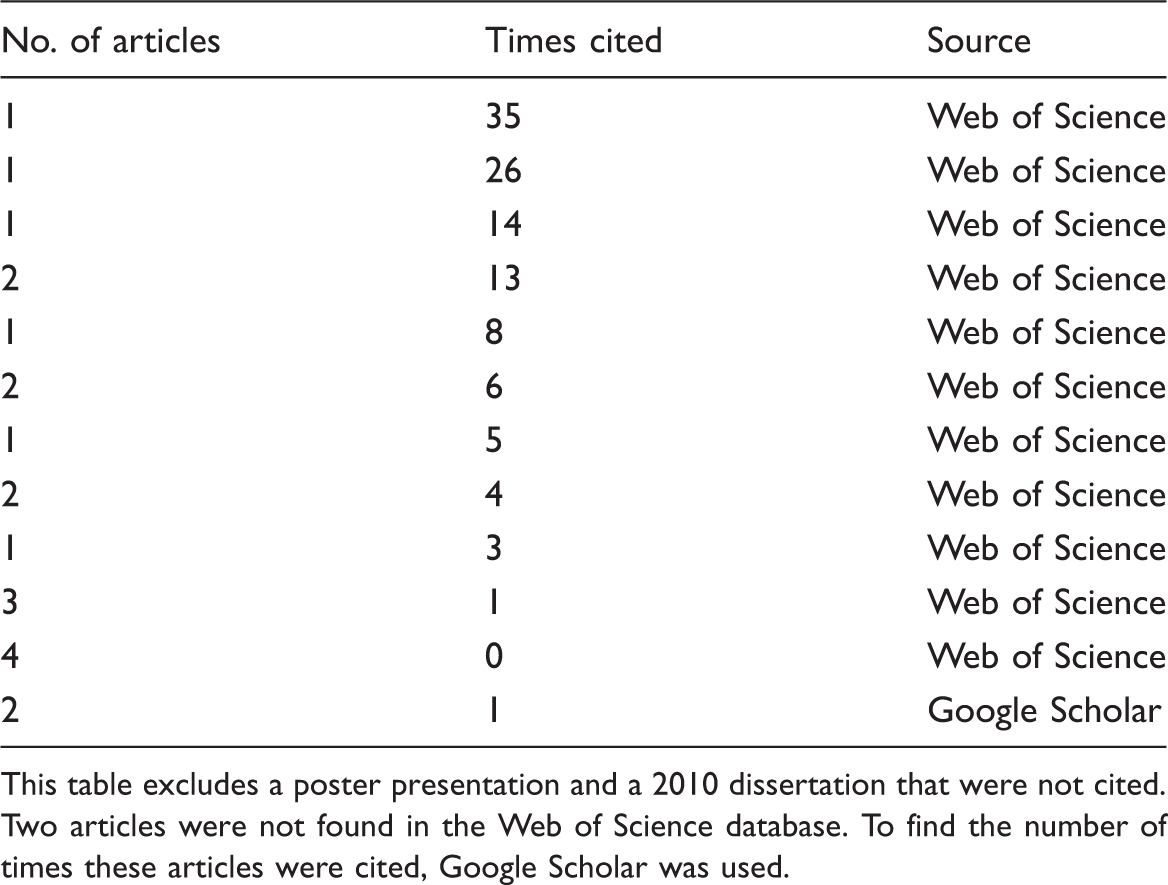
This table excludes a poster presentation and a 2010 dissertation that were not cited. Two articles were not found in the Web of Science database. To find the number of times these articles were cited, Google Scholar was used.
Methodological characteristics
Methodological quality rating scale.
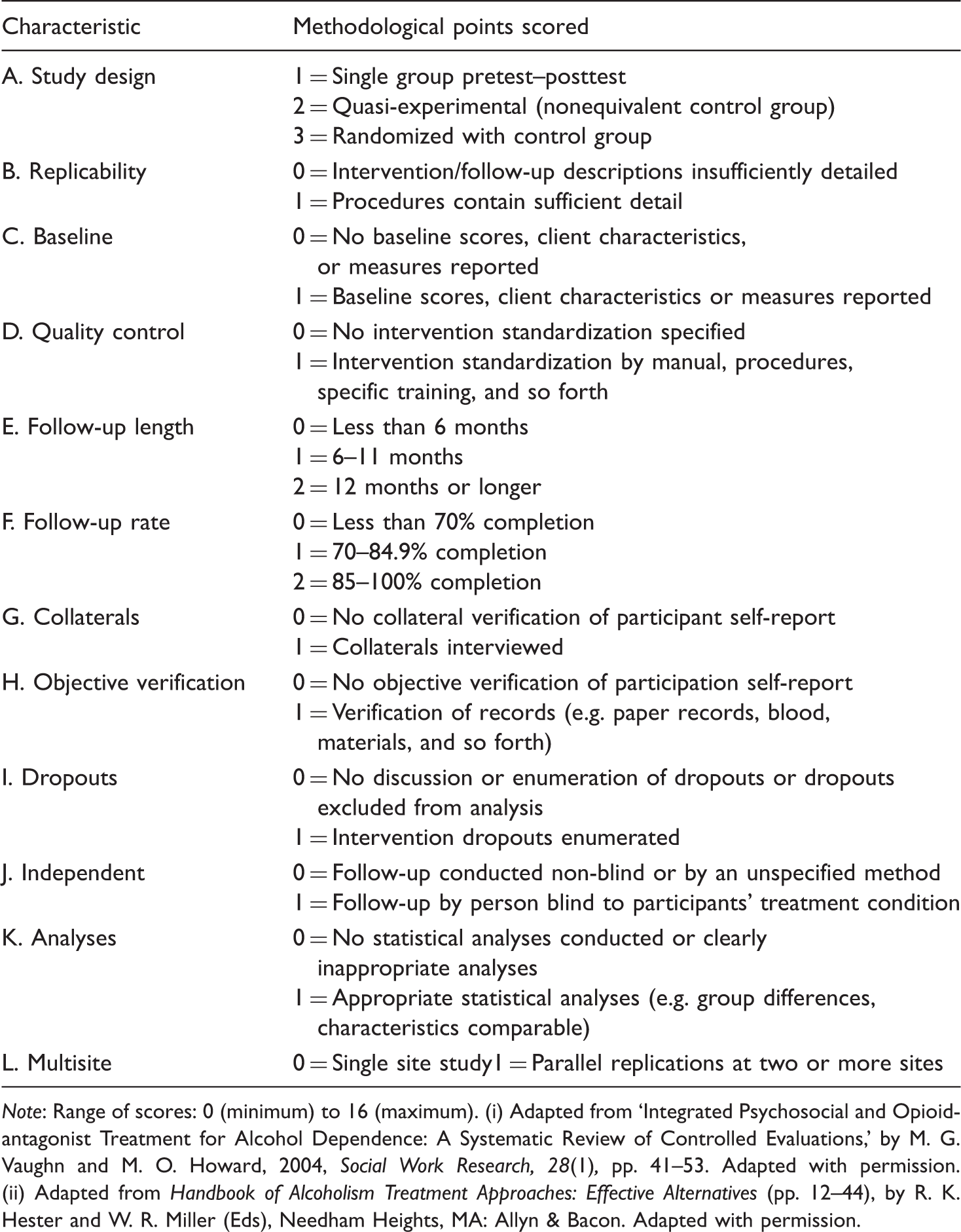
Note: Range of scores: 0 (minimum) to 16 (maximum). (i) Adapted from ‘Integrated Psychosocial and Opioid-antagonist Treatment for Alcohol Dependence: A Systematic Review of Controlled Evaluations,’ by M. G. Vaughn and M. O. Howard, 2004, Social Work Research, 28(1), pp. 41–53. Adapted with permission. (ii) Adapted from Handbook of Alcoholism Treatment Approaches: Effective Alternatives (pp. 12–44), by R. K. Hester and W. R. Miller (Eds), Needham Heights, MA: Allyn & Bacon. Adapted with permission.
MQRS scores range from 0 (low quality) to 16 (high quality). The scores for the included studies ranged from 1 to 11 (M = 7, SD = 2.35). The mean score indicated the methodological quality of the studies reviewed was slightly below moderate. The MQRS findings support the detailed overview of the descriptive and methodological rigor of the 23 included studies presented in Table 1.
Discussion
This study appears to be the first systematic review to examine social workers’ contribution to the empirical knowledge base examining substance use disorders interventions among African Americans. Such a study is salient because it highlights areas of growth and gaps in the field related to research with African Americans, particularly research focusing on substance use disorders treatment interventions.
The findings indicate that social workers’ contribution to this area of research is inadequate and the methodological rigor of existing studies was slightly below average. At the time of this review, social workers published 23 studies focused on substance use disorders treatment interventions among African Americans. Most of these studies were published in non-social work journals between 1994 and 2010. More studies focusing on this topic area were expected, but we suspect the low number may be related to the historically limited number of studies including African Americans in their samples. Another finding was that the average number of times the studies were cited was 6.67 times. The articles with the highest number of citations published were in discipline specific high impact journals (i.e. American Journal of Public Health, Social Work).
An adapted version of the MQRS was used to assess the methodological characteristics of the included studies. When considering the scale’s variables, such as research design, reliability, follow-up length, and multisite design, the findings indicate that the quality of studies was slightly below average. For instance, only ten (43%) studies reported the researchers performed statistical analysis to determine if baseline differences existed between participants completing the study and those who dropped out. Social workers need to use more rigorous research methods when implementing and evaluating interventions to increase the validity of findings regarding the effectiveness of their interventions. Social workers are recommended to also include enough detail in articles regarding implementation practices to allow for study replication and greater ease in reader evaluation.
Another finding of this review is that while studies included African Americans in their samples, none reported the study measures were valid for use with African Americans. Further, most studies (15; 65%) did not disaggregate results by race/ethnicity. This lack of attention to cultural diversity is problematic because it is both unethical and antithetical to social work practice. In the United States, most measures have been standardized using middle-class Whites. Therefore, many measures have been criticized as being inappropriate and invalid for use with African Americans (e.g. Barbee, 1992).
The results of this systematic review validate these suggestions. Among reviewed studies that disaggregate results by race, findings suggest race influences treatment outcomes (Hunter, 2010; Lundgren et al., 1999) (see Table 2). Further, according to the studies reviewed, certain treatments are more appropriate for persons of certain racial and ethnic backgrounds (Lundgren et al., 1999; Springer, Rivaux, Boham, & Yeung, 2006). These trends were also present among studies that did disaggregate results by race (Richard, Montoya, Nelson, & Spence, 1995; Roberts & Nishimoto, 2006; Washington & Moxley, 2001; Wolf-Branigin & Duke, 2007).
Social work researchers must remember that the person-in-environment philosophy necessitates acknowledgment of cultural differences. Therefore, using culturally invalid measures and treatments does not follow social work philosophy. Social work researchers need to use measures normed with African Americans and assess the validity and reliability of those measures with their samples. Further, social work researchers may contribute to the knowledge base by developing culturally relevant substance abuse measures for African Americans. Finally, researchers must disaggregate results by race/ethnicity to help determine whether differences in treatment effects exist across and within racial/ethnic groups.
Strengths and limitations
This study has several notable strengths. First, an expert advisory committee composed of substance use disorders practitioners and researchers provided guidance and consultation to the research team. The committee advised in the development of the protocol, including study variables and extraction and coding variables. Second, to capture relevant literature from all periods and to establish a broad, representative body of knowledge regarding social work’s contribution to the area of focus, time parameters were not imposed on the literature searches. Third, this study used electronic and manual searches that included grey literature and encompassed a wide range of journal articles, doctoral dissertations, master’s theses, books, conference proceedings, and poster sessions. The expansive nature of this review provided a particular strength given this study was the first effort to perform a rigorous systematic review of the social work profession’s contribution to the assessment of substance use disorders treatment interventions with African Americans. Fourth, to further consider social workers contributions to the knowledge base, impact was assessed using Web of Science and Google Scholar to capture the number of times each article was cited.
This study also has limitations. Although the search strategies aimed to include the greatest number of relevant studies, arguably, some publications were overlooked or excluded from the review. Relevant literature may have been published after the database searches were conducted, rendering the review subject to updating. It is also likely the search terms, while broad, may not have captured all publications relevant to the review. Last, the design of PubMed, CINAHL, Social Services Abstracts, and Sociological Abstracts databases permit an affiliation search for only the first author. Given this search limitation, articles may have been omitted that were available only in these databases and coauthored (but not first authored) by social workers.
Implications for practice
The findings of this systematic review have important implications for social work practice with African Americans. Social work is unique in its approach to addressing complex, intertwined social and health problems. Substance abuse and dependence are multidimensional problems requiring a biopsychosocial spiritual approach to assessment and treatment. Encouraging increased social work research on substance use disorders interventions is essential to the provision of culturally sensitive, evidence-based practice to African Americans. Rigorous evaluation of substance use disorders treatments is critical to the identification of individual, social, and treatment factors associated with effective treatment processes and outcomes. Based on empirical evidence, social work practitioners need to develop and modify interventions to meet the sociocultural needs of African Americans, and evaluate the effectiveness of those interventions using various treatment modalities (e.g. individual, group). Social workers with expertise in the treatment of addiction disorders need to collaborate with social work researchers in designing and conducting evaluation research, as well as advocating for increased diversification and representation of African Americans in substance use disorders intervention research.
Cognitive behavioral therapy, motivational interviewing, motivational enhancement therapy, and multisystemic therapy are effective evidence-based substance use disorders treatment interventions (Beck, Wright, Newman, & Liese, 1993; Carroll et al., 2006; Henggeler, Clingempeel, Brondino, & Pickrel, 2002; Tevyaw & Monti, 2004). However, little research exists regarding the effectiveness of these interventions for African Americans. Research comparing these treatments in multiple modalities (i.e. individual, group) is critical to determining the differential effectiveness of treatment processes and outcomes between and within African American samples.
Many other areas also urgently need further research to guide the development and implementation of substance abuse and dependence awareness, prevention, and outreach in African American communities. Thus, it is critical to encourage research that will develop empirical evidence on treatment engagement, adherence, completion, attrition, and relapse prevention among African Americans. Filling the knowledge gaps around the correlates of treatment adherence, attrition, and post-treatment abstinence (e.g. family substance abuse history, religiosity; Austin & Wagner, 2010; Stewart, Koeske, & Pringle, 2007) is essential to promoting African American community engagement, identifying effective program incentives to encourage treatment completion, and developing therapeutic alliances that facilitate relapse prevention. To achieve these goals, social work practitioners must engage in ongoing critical examination of substance use disorders treatments to identify effective intervention models with African Americans.
Implications for research
Findings of this systematic review have several implications for research within the social work field. Most important, the social work profession must increase its contribution to the empirical knowledge base on substance use disorders intervention research with African Americans. Because the social work profession is committed to culturally competent, evidence-based practice, greater effort is needed from social work researchers to generate empirical evidence that can facilitate the development and modification of substance use disorders treatment interventions for African Americans. Austin and Wagner (2010) found that African American youth were at greatest risk for attrition from substance use disorders treatment programs, and that attrition rates varied considerably within subgroups of African American adolescents. Social work researchers need to be diligent in their recruitment and retention of African American research participants and examine racial/ethnic group differences in treatment adherence, completion, attrition, relapse initiation, and relapse prevention.
The focus of social work on the person-in-environment makes it an ideal profession to conduct translational research on substance use disorders interventions among African Americans and other diverse populations. Dissemination of substance use disorders intervention research to social service agencies can improve the translation of research into practice. Given increasing racial/ethnic diversity nationally and internationally, this area of research is an important contribution for the social work profession.
More quasi-experimental and experimental designs are needed to compare multiple evidence-based treatments (e.g. CBT, MI, MET) across diverse populations, and to determine causality between treatment processes and outcomes. Adequate documentation of demographic characteristics (e.g. age, race, ethnicity, socioeconomic status) and methodological details (e.g. inclusion and exclusion criteria, reliability, validity, study location, type and training of interventionists, treatment fidelity) are needed for comparisons to the larger body of substance use disorders intervention research. A recent study found differences in substance abuse and dependence patterns within and between African Americans and Caribbean Blacks, specifically related to age, gender, education, SES, and immigration status (Broman, Neighbors, Delva, Torres, & Jackson, 2008). New research efforts must also address the diversity of the African and African American populations by critically examining the associations of substance use, dependence patterns, and treatment outcomes for various ethnic groups of African descent to determine the efficacy of substance use disorders interventions for each subgroup. In addition, social work researchers need to publish their work in social work journals because practitioners may be more likely to read or have access to these journals. It is likely that one reason social workers publish in nonsocial work journals is because publishing in some social work journals may have a slower lag time between article acceptance and actual appearance in print. Hence, the public may be able to access research articles more quickly if published in nonsocial work journals. Moreover, although publishing in non-social work journals is thought to legitimize the profession, the professional social work journals are devalued when the majority of social work research is published in journals serving other disciplines.
Conclusion
Substance abuse among African Americans is an under-researched and under-treated public health problem. Given that the social work profession has moved to evidence-based practice, social work researchers need to pursue more rigorous research on African American substance use disorders and publish more frequently in social work journals. This will better serve to help keep social work practitioners aware of emerging evidence on culturally sensitive interventions with African Americans.