







Abstract
Summary
This study adopts a comparative perspective to present a descriptive analysis of the state of social pedagogy training at universities in different countries. It arises out of an interest to construct a global, current and integrated perspective of social pedagogy. The study uses a quantitative methodology to analyse the content of social pedagogy curricula based on the principal dimensions that shape them, which have been defined by academic experts in previous search (Janer & Úcar, 2016).
Findings
The results indicate that in most of the universities analysed social pedagogy is a subject within other social and educational science studies rather than a degree or specialization in its own right. There is coherence between what the academic experts point out and the specific content of university studies in social pedagogy as regards the political, ethical and social dimension of the context and, regarding the varied scope of intervention and use of methodologies. However, the epistemological, professional, historical and functional dimensions have little presence in social pedagogy university studies.
Applications
The theoretical and practical field of social pedagogy is complex and subject to multiple and varied interpretations. This study contributes to the theoretical debate on the nature of social pedagogy. This analysis is relevant from both a scientific and a social perspective. It’s necessary to working towards building a common and universal theoretical core for social pedagogy to achieve a transmission of knowledge regarding all of the analysed dimensions clearer and help unite its theoretical, educational and professional spheres.
Keywords
For years now, the social professions in higher education have appeared as a recurrent theme for analysis, discussion and research. However, unlike specific professions such as Social Work, which is firmly established and accepted, or Social Education, which is becoming so, social pedagogy has not managed to construct itself as an academic field and practice in many countries. Possible reasons for this are the complexity inherent in it becoming institutionalized as a sole profession in different countries and the lack of a unified, homogeneous and universally agreed theory.
Although the concept of social pedagogy is still very new to the English-speaking world (Cameron & Moss, 2011), the publication of a large number of works in this language over the past fifteen years (Schugurensky, 2016) has led to its expansion and dissemination (Eriksson, 2010; Hämäläinen, 2003). The theoretical and practical field of social pedagogy is complex and subject to multiple and varied interpretations both between different countries and within the same country (Lorenz, 2008). The academic and practical fields have gone their separate ways (Kornbeck & Rosendal, 2009), making the task of providing an integrated definition of social pedagogy work even more difficult (Coussée, Bradt, Roose & Bouverne-De Bie, 2010). Throughout its history, social pedagogy has not only appeared, disappeared and reappeared, but it has also assumed different forms depending on the country in which it has operated. It is also confused, identified or contrasted with other social disciplines and professions in different ways depending on the country. Ultimately, it does not appear to be entirely clear on what it is, what it is trying to achieve and what its social function might be (Úcar, 2012).
Although few comparative studies have addressed this diversity (Kornbeck & Rosendal, 2009), analysis of the state of social pedagogy from a comparative perspective has gained force in recent years, especially in the European and in Latin American contexts (CGCEES, 2013; Eriksson, 2014; Hämäläinen & Eriksson, 2016; Janer & Úcar, 2016; Kornbeck & Rosendal, 2012; March, Orte & Ballester, 2016; Ribas Machado, 2013).
Lorenz states (2008, p. 625) that ´In today’s debate, it is common that social pedagogy is considered as a particular professional field like ‘a member of the social professions’, ‘a method’, ‘a paradigm’, ‘a set of social policy institutions’. Meanwhile, Ortega, Caride and Úcar (2013) suggest that the status of social pedagogy at universities is fully linked to its progressive institutionalization as a profession. The creation or validation of knowledge, practices or new methodologies in the field of social pedagogy corresponds to the academy and the profession, on the basis of their respective pedagogical, educational and social potentials. It is within this context that training plays a fundamental role.
A general overview of the situation reveals that in most of Europe and Latin America, social pedagogy is present in universities either as a discipline with its own studies (Smith, 2012) or as a field of study within other social education degree subjects (Němec, 2016). It is interesting to note that in some countries, although interest in social pedagogy and academic research in the field is very high, the courses on offer at university level do not reflect this (Ezechil, 2015). England is in this situation and justifies this absence by the fact that in this country the social worker assimilates many of the roles associated to a practical social pedagogy. Also, in Finland – a country with important concerns and results in the field – social pedagogy is not a profession, and there is no corresponding professional title (e.g., ‘social pedagogue’) – according to Hämäläinen, J. (2012). (Ezechil, 2015, p. 15) Historical: it originates from the need to respond to the individual and social problems facing individuals, groups and communities. Epistemological: it is a science, a practice and an art. Contextual: it has particular features for its specific definition and implementation in each particular context. Methodological: it uses qualitative, quantitative and creative methodologies. Professional: it is a knowledge that is articulated as an academic discipline and in different professional spheres. It has a direct relationship with the professions of Social Work, Social Education, Pedagogy, Work with children, Young people and Adults and Socio-community Intervention. Normative: its mission is to act and intervene in different situations and contexts using criteria to guide decision-making and social pedagogical action in favour of what is deemed necessary and desirable to improve the lives of people and social cohesion. Ethical and political: the political and ideological frameworks of each country influence the position awarded to social pedagogy in developing the welfare state, social policy and education policy. Functional: its functions are the systematizing of knowledge relating to social pedagogy, contributing to academic and scientific development and providing educational solutions to social needs and problems via actions and intervention projects.
These dimensions have been defined by academics, and they must therefore be analysed and compared with the specific training being offered by universities. The question is to what extent university training does or does not adhere to these dimensions.
It is within the above context that this study has been carried out with the aim of conducting a comparative analysis of the range of social pedagogy training on offer within higher education and its content. As social pedagogy academic point out (Janer & Úcar, 2016), social pedagogy is a form of knowledge that develops training processes and projects knowledge then articulated in an academic discipline. Therefore, social pedagogy training at universities can act as a bridge between theory and practice, promoting dialogue between the university and the profession. It is important to institutionalize the discipline on an academic level, as this could result in a more positive social perception of the social pedagogy professional, as well as contributing to the creation of multidisciplinary groups in the education and social fields (March et al., 2016), and moving towards a common idea uniting the academic, professional and training spheres.
We begin by presenting the general aim of the study and its research questions. We then describe the methodology used, the sample, data processing and variables for analysis. The third section presents the most important results of the comparative study, and finally, we present the conclusions and a discussion of the findings.
General framework for the investigation
This study forms part of a broader investigation into comparative social pedagogy aimed at conducting a thorough and rigorous analysis of the discipline’s conceptualization, university training and professionalization from an international perspective.
This article is part of the second of three phases that comprise the investigation: an analysis of the educational field of social pedagogy in higher education. The research questions for this phase are as follows: What type of social pedagogy training is offered at universities? Which countries have a specific interest in this training? What is included as training content in each country? Does this content include the most important dimensions of social pedagogy defined by academics? The aim of this phase consists in conducting a comparative study between universities in different countries in order to analyse current university training in relation to social pedagogy.
For this phase, the world’s best universities were selected, as defined by the QS World University Rankings. This ranking allows universities to be compared for a specific field, in this case, the social field in specific relation to education. An analysis was carried out of universities where the concept of social pedagogy appears and by category: as a degree, an individual subject, a specialization, a seminar, conference or event, university professor or research interest, or other. We also analysed the content of the curriculum for degrees, individual subjects and specializations in social pedagogy. This content was analysed using the results obtained in a previous study (Janer & Úcar, 2016). The categories used for analysis of the social pedagogy curricula at the different universities were the eight key dimensions of social pedagogy defined in the aforementioned previous study by academic experts: historical, epistemological, contextual, methodological, professional, normative, political and ethical, and functional.
In the last phase of the investigation, which is still to be carried out, the aim is to conduct an in-depth analysis of the professional field of social pedagogy in different countries and thereby combine the views of social pedagogy training and social pedagogy as a discipline with that of it as a profession on an international level.
Research methodology
We employed a quantitative methodology with a descriptive approach, which had no inferential purpose. The aim was to provide a descriptive analysis of current university training in social pedagogy at various universities worldwide in order to analyse whether it includes, studies and analyses the eight most important dimensions of social pedagogy according to academic experts.
The sample
We must begin by pointing out that there is a very broad range of universities that deal with social pedagogy in some way around the world. This hinders the development of a comparative international study due to the fact that there is no cartography available to determine the relevant population. The sample has therefore been taken from the world’s best universities in Social Sciences and Education according to the QS World University Rankings for 2015. This means that some countries had a greater sample of universities than others (such as the USA and the UK), and that some countries do not appear. We attempted to address this limitation by adding universities from a Google keyword search. 1 Only the top 50 hits were considered from the search, which was done for all five continents.
The final sample was as follows:
Universities analysed from the QS ranking: 200 Universities obtained from the Google search: 66 Total sample: 266 universities from 50 different countries
2
Data processing and analytical tools
Data were collected by analysing the universities’ websites. For universities where training in social pedagogy is offered, we analysed the various curricula found on the website. The data were encoded using quantitative variables and processed via the statistical program SPSS.
Analytical variables
The analytical variables used for data collection in this study were grouped into two blocks:
Variables related to academic structure, that is, offering qualifications in the Social Sciences Variables related to how content is organized, or specific characteristics of social pedagogy training
The relevant variables can be seen in Table 1.
Analytical variables.
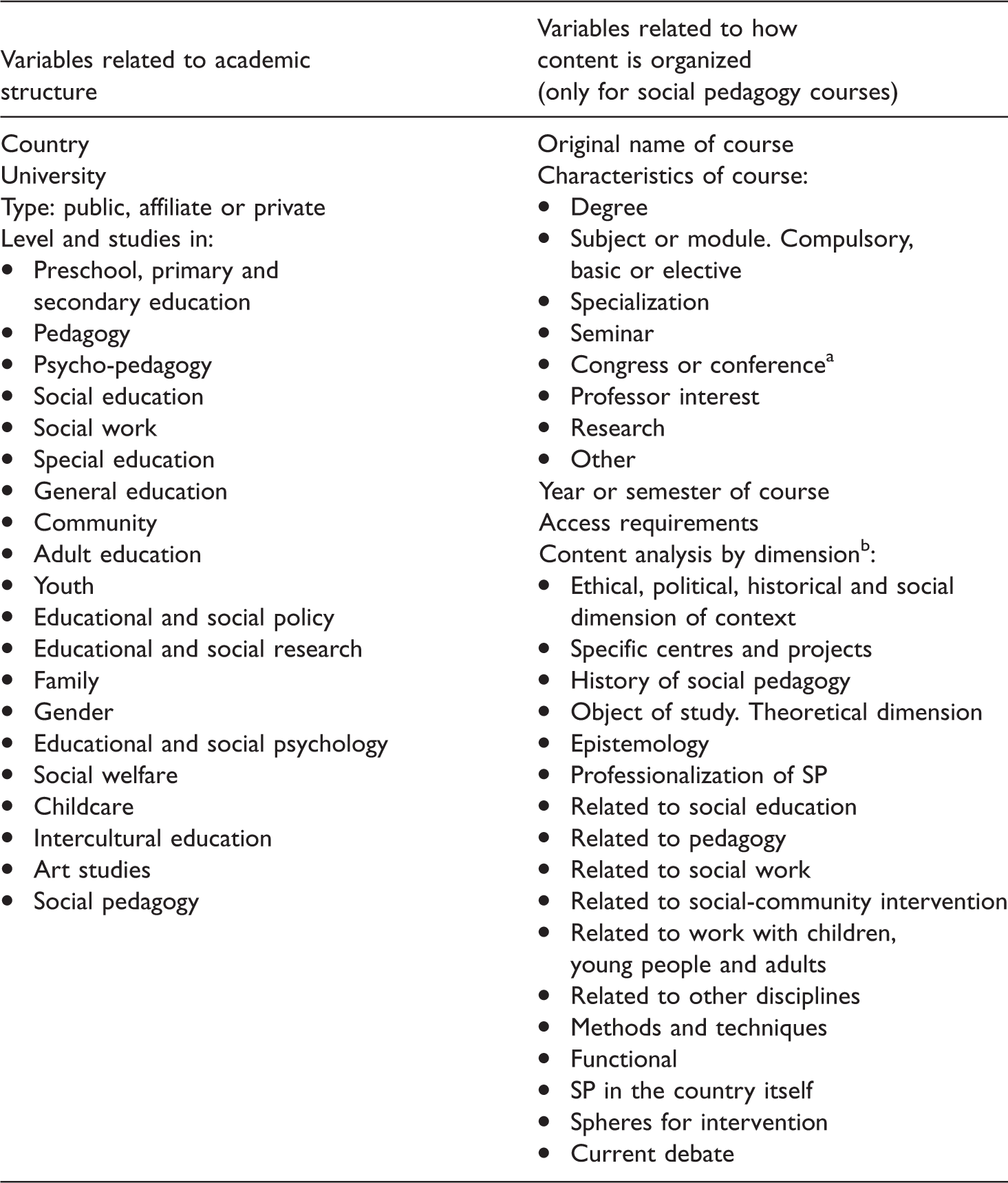
aCongresses and conferences organized by universities in the last 10 years.
bIn order to work with the data more accurately, the eight key dimensions according to academic experts (Janer & Úcar, 2016) were broken down into the 17 categories listed in the table.
Source: Author’s own work.
Research findings
The main findings of this research are presented in two sections. The first covers the range of university courses available in social pedagogy. The second shows the results of the content analysis carried out for the curricula we were able to access for degrees, individual subjects and specializations in social pedagogy.
The data analysed were taken from the studied sample, and it must therefore be taken into account that the number of universities analysed is higher in some countries, such as England or the United States, than in others. This is due to these countries having a higher percentage of leading universities according to QR World.
Range of university courses available in social pedagogy
We analysed a total of 266 universities from 50 different countries. Studies related to the field of social education were found in most of the universities studied. Specifically, studies in social work (59.8%), social welfare (51.5%), social and educational policy (48.9%) and social pedagogy (41.4%) had a strong presence in the universities of different countries.
The concept of social pedagogy appeared in 38 different countries (76%) and a total of 110 universities (41.3%). 81.8% of the universities with social pedagogy studies are public and 12.7% private universities. Map 1 shows that social pedagogy courses are found at universities in America and Canada, much of Europe, Russia and Ukraine, Australia and New Zealand, and a small part of the Asian continent, specifically Hong Kong.
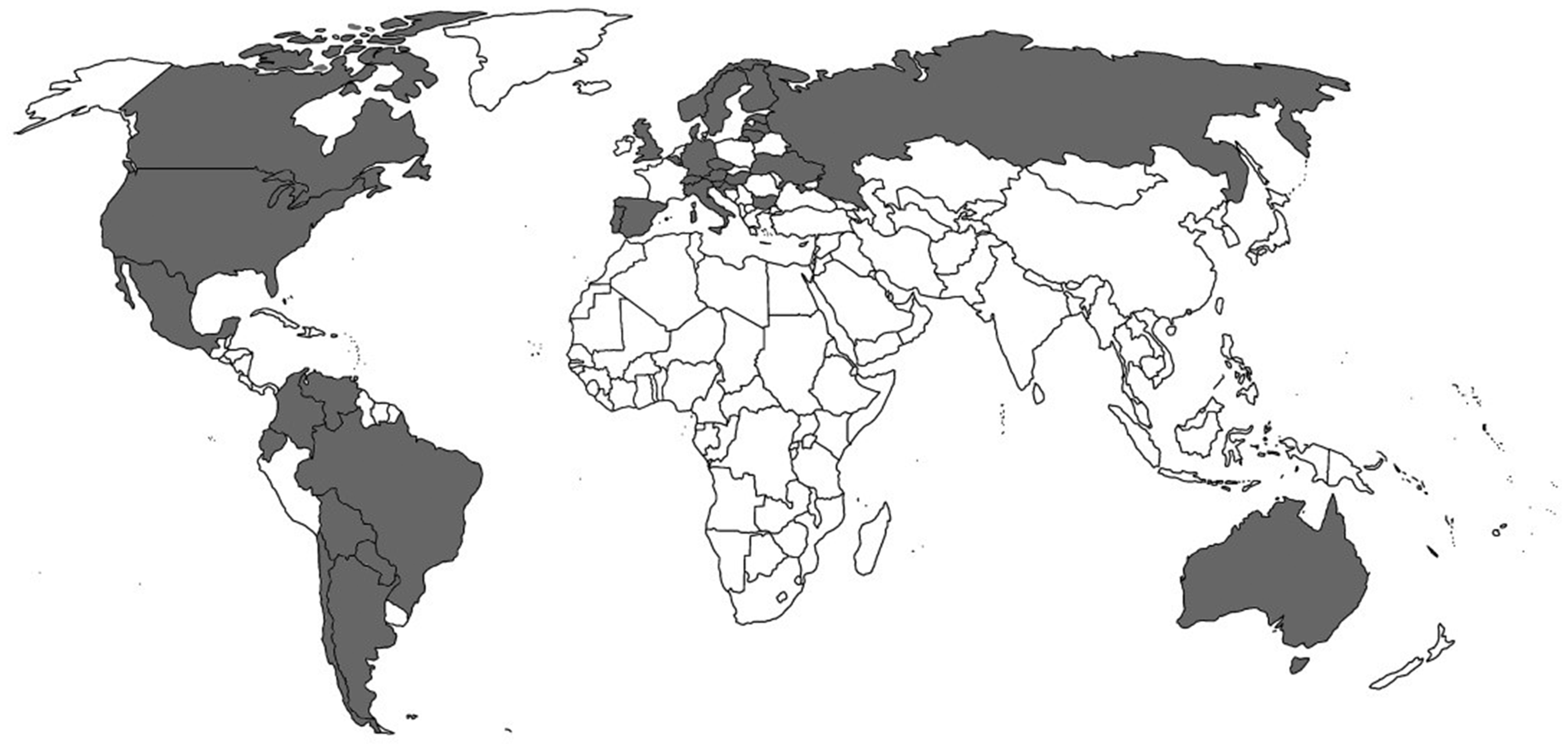
Countries where the concept of social pedagogy appears at universities. Source: author’s own work.
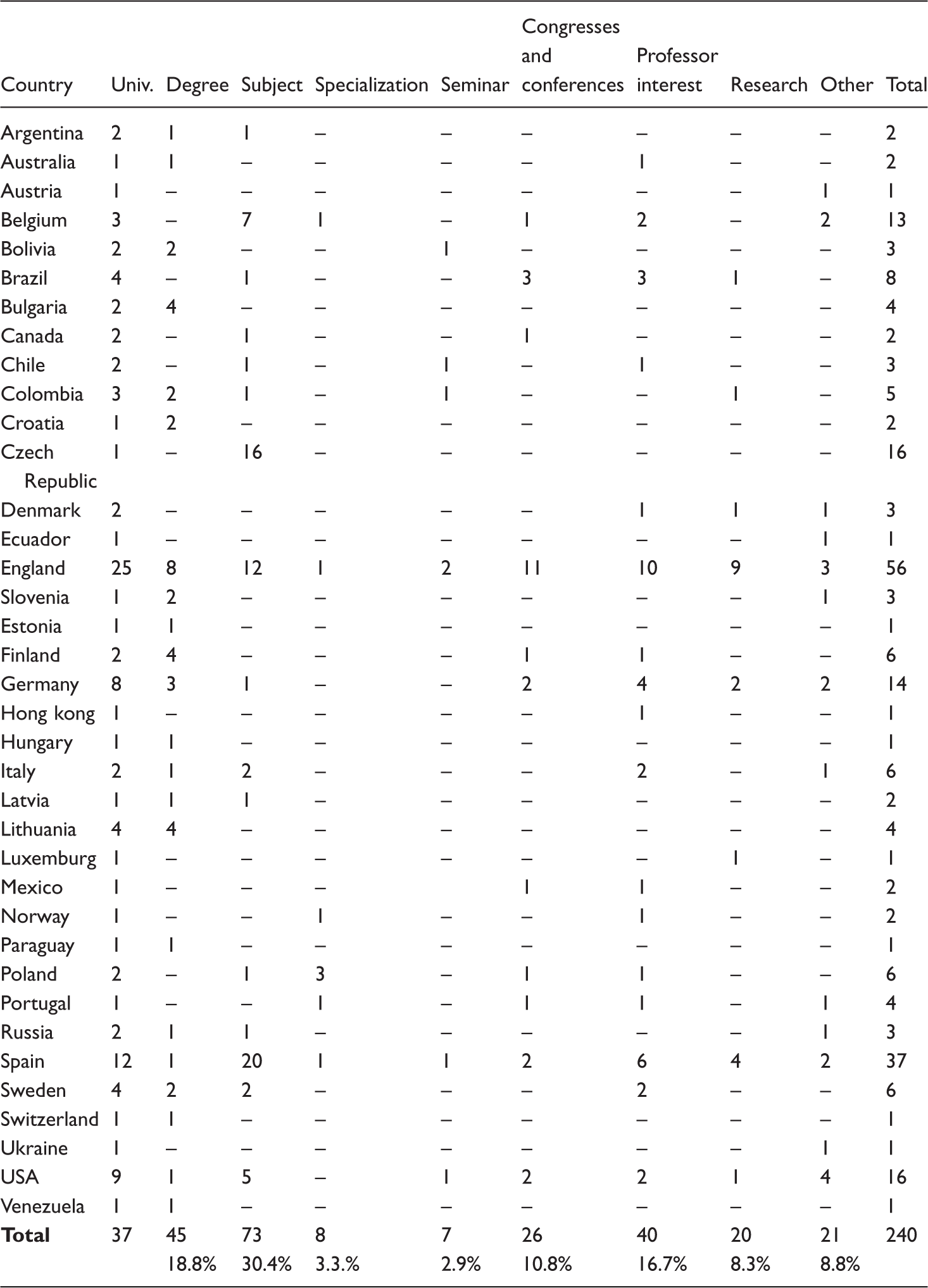
We also observed, however, that social pedagogy does not have the same weight in university education in all countries. We therefore analysed the concept of social pedagogy according to eight categories referring to the different roles it may have in the universities studied: degree, subject, specialization, seminar, congresses and conferences, professor interest, research and other.
In Table 2, we see that social pedagogy has a greater presence as a subject (30.4%), and then as a degree course (18.8%).
Social pedagogy by country and university according to the eight categories.
Source: author’s own work.
With regard to seminars and conferences on social pedagogy, we can say that these are held (1) at universities in countries where the discipline has been studied for years and efforts are being made to disseminate and institutionalize it (Spain, Germany, Portugal, Belgium and Finland); and (2) in countries where the emergence of social pedagogy in the last 15 years has increased interest in these types of events (England and Latin America).
Regarding professor interest, we observe that this exists at various universities in different countries but does not then clearly exert an influence on research. Only few research groups exist at universities where social pedagogy is studied and analysed and once again these are located mainly in the European, English-speaking and Latin American contexts. Some universities have a social pedagogy department (Belgium, Spain, Germany, Slovenia, Ukraine and Austria) whereas at others social pedagogy is merely mentioned among the objectives of other social education courses but does not form part of the curricular content (Portugal, Belgium, England, USA, Italy and Denmark).
As already noted, interpretation of these findings should take into account the sample of universities analysed. The data reveal, for example, that England has a total of 25 universities where the concept of social pedagogy appears, a higher number than Germany or Spain, countries with a much longer history of studying and researching social pedagogy. Although this is linked to a strong interest to study the discipline in the UK (Bengtsson, Chamberlain, Crimmens & Stanley, 2008; Petrie & Cameron, 2009; Petrie et al., 2009; Smith & Whyte, 2007), it should be noted that the sample of leading universities in England is higher than in other countries according to the QS World University Ranking.
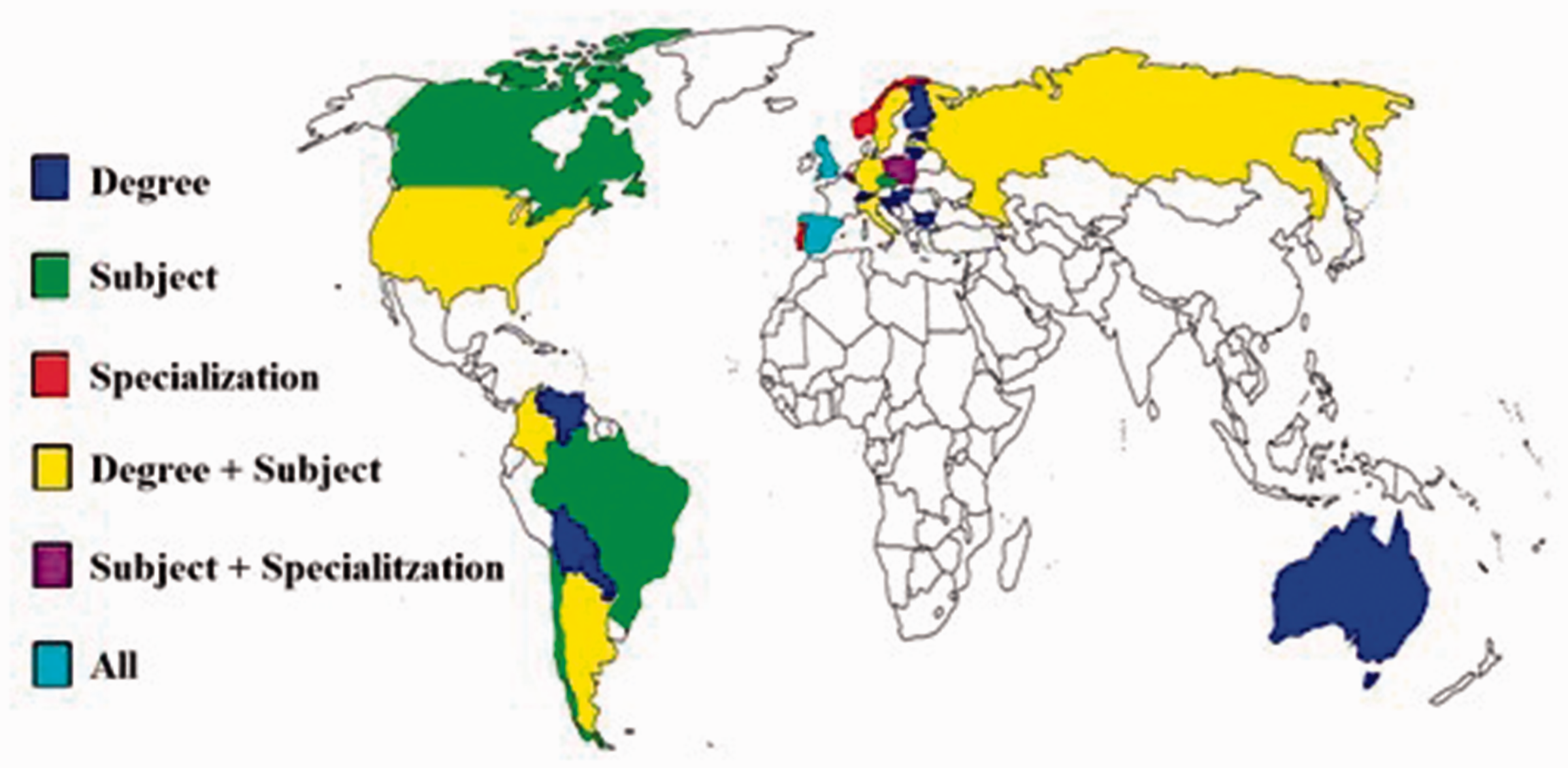
Countries with degrees, subjects and specializations in social pedagogy. Source: author’s own work.
Content analysis of degrees, subjects and specializations in social pedagogy
For the content analysis of social pedagogy curricula, we used only cases where social pedagogy was a degree, subject or specialization. The map below (Map 2) shows the distribution of degrees, subjects and specializations in social pedagogy by country.
Social pedagogy only appears as a degree at universities in Australia, a small part of Latin America (Bolivia, Paraguay and Venezuela), Switzerland, Finland and some countries of Eastern Europe (Lithuania, Hungary, Croatia, Slovenia, Estonia, and Bulgaria); and as a subject mainly in Canada and Latin America. As a specialization, it only appears at universities in Portugal and Norway.
We also find countries where social pedagogy is present in both categories, however. At universities in the US, Argentina, Germany, Sweden and Russia it is studied both as a degree and an individual subject, whereas it only appears as both a subject and a specialization at universities in Belgium and Poland.
It is only found as a degree, a subject and a specialization at universities in England and Spain. Of the 39 universities analysed in England, social pedagogy is taught at 12 of them. The findings show a total of 8 degrees, 12 subjects and one specialization. These data are important from an international perspective and demonstrate the strength with which social pedagogy has entered the English-speaking world (Boddy & Statham, 2009; Eichsteller & Holthoff, 2012; Hatton, 2013).
In Spain, on the other hand, although social pedagogy appears in all three categories, its presence is most prominent as a subject within other studies in the social and educational field, such as Social Education and Pedagogy. We found a total of 20 subjects at 12 different universities, but only one degree and one specialization. This is related to the long time social pedagogy has been studied in this context and its long struggle to become institutionalized as a science and a profession (March et al., 2016; Mínguez Álvarez, 2004; Ortega et al., 2013; Quintana, 1986; Torío, 2006).
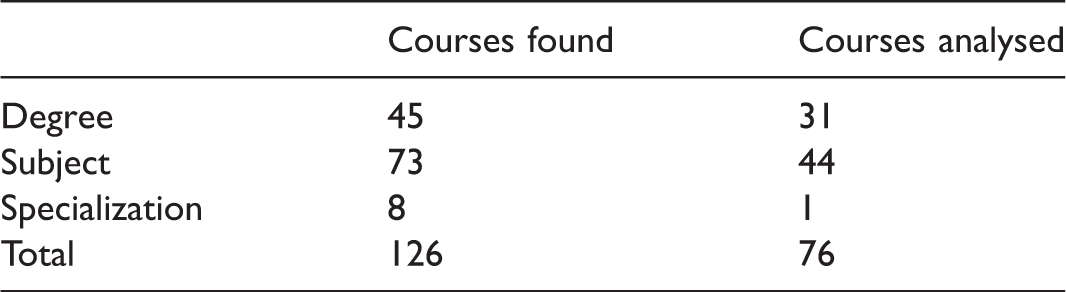
Of the 126 social pedagogy courses (degree, subject and specialization) found, it was possible to analyse the curriculum of a total of 76 of them. The content of these studies was analysed using the eight key dimensions defined by academic experts from the study referred to earlier (Table 3).
Total courses found and analysed.
Source: author’s own work.
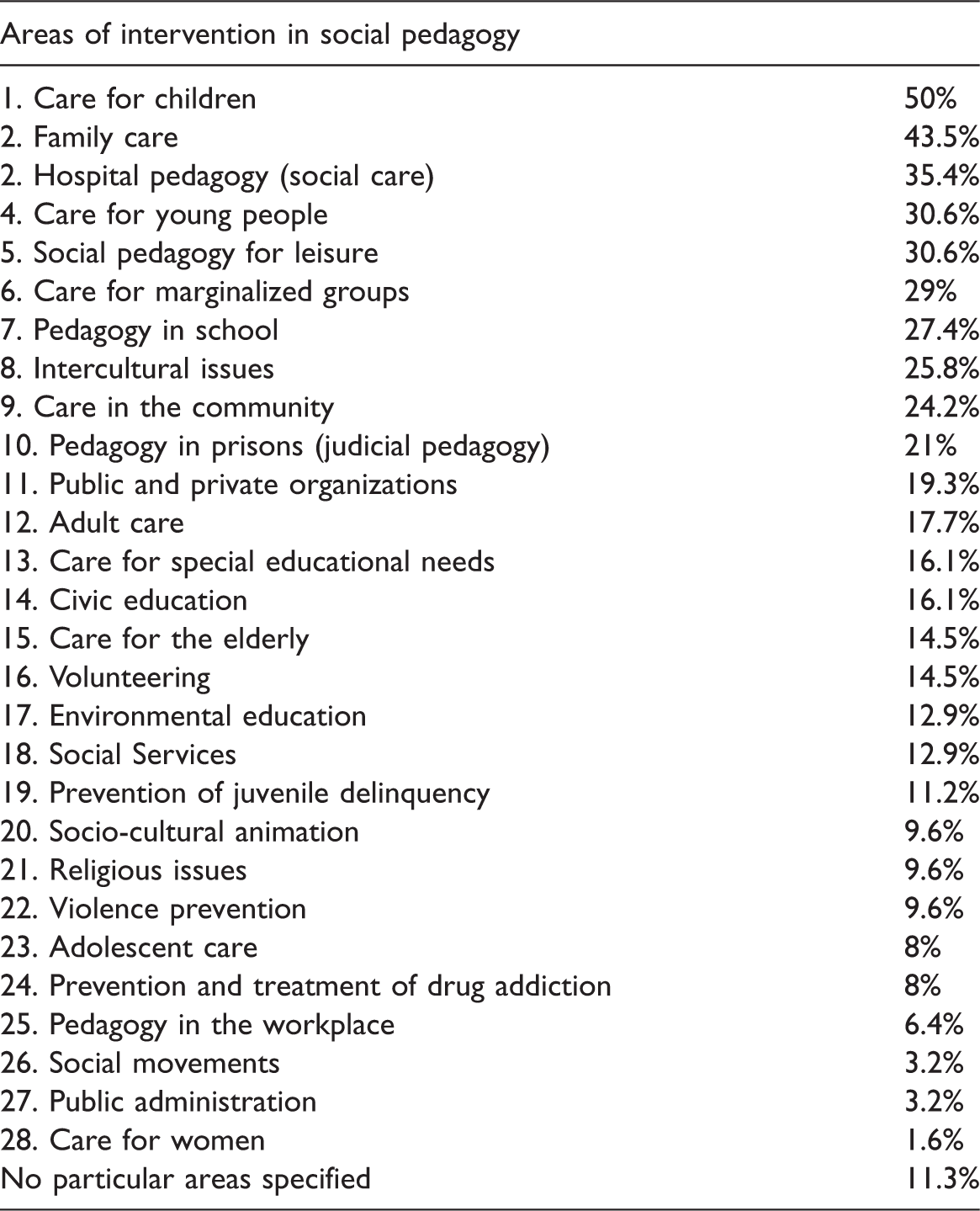
Areas of social pedagogy intervention.
Source: author’s own work.
The analysis was based on the aims, competences, content and learning outcomes specified in the curriculum. Therefore, the results should be interpreted taking into account that the website data may be incomplete or outdated. Little information was provided for the various curricula and in many cases there was very likely more course content than that reflected in the analysis. This is a limitation of our study.
With this analysis we gleaned information for some European countries, 64.2% of the total (Belgium, Bulgaria, Croatia, Czech Republic, England, Slovenia, Estonia, Italy, Latvia, Lithuania, Portugal, Spain, Sweden and Switzerland); the Latin American context, which represented 12.8% (Argentina, Bolivia, Chile, Colombia and Paraguay); the US (1.4%); and Australia (1.4%). We did not have access to the curricula of universities in some South American countries (Brazil and Venezuela), Canada, Russia and countries in northern and eastern Europe (Finland, Norway, Germany, Hungary and Poland).
The contents of the curricula were analysed according to the eight key dimensions of social pedagogy defined by academic experts, broken down into 17 categories. The main results obtained (see Appendix 2) are presented here by category and according to level of importance within the curriculum. Figure 1 shows the percentage of curricula that deal with each dimension.
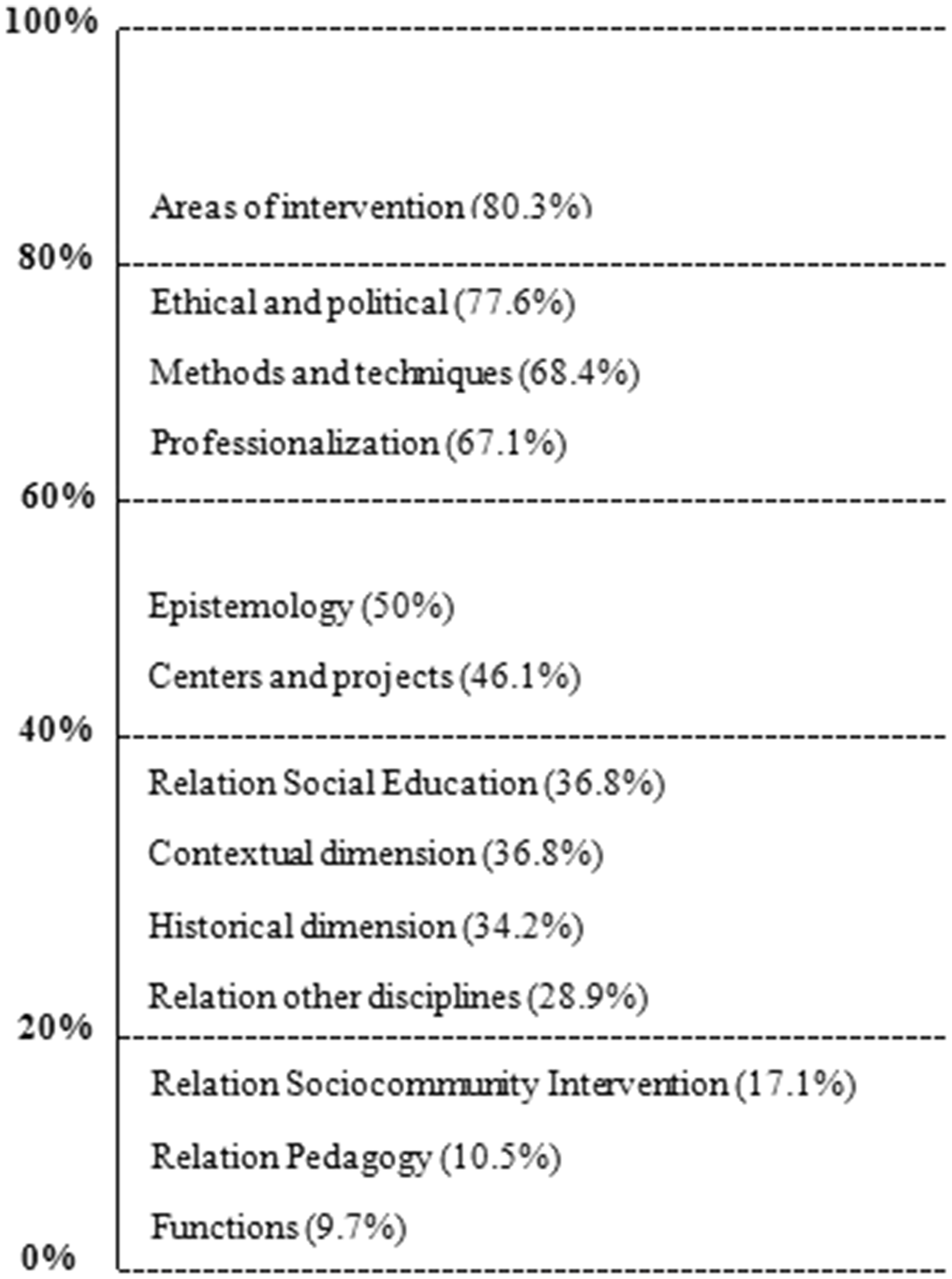
Percentage of curricula dealing with each dimension. Source: author’s own data.
Areas of intervention: From the total of 76 curricula analysed, 80.3% refer to the different areas where the social pedagogy professional can act or intervene. Following and amplifying Quintana’s classification (1996), the specialities comprised within the disciplinary field of social pedagogy and present as content on university curricula are given in Table 4. As can be seen from Table 4, the areas of intervention dealt with most in social pedagogy curricular content are care for children and families.
Ethical and political dimension: 77.6% address topics on social, political and cultural considerations, and social needs deriving from this. This topic is found on degree courses, subjects and specializations in most of the universities analysed.
Methods and techniques: Training in social pedagogy methodologies and techniques that can be used in research and intervention is present in 68.4% of the curricula analysed, at degree, subject and specialization level. It is dealt with in most of the universities studied.
Professionalization of social pedagogy: 67.1% of the curricula analysed include aspects related to social pedagogy practices, preparing and managing socio-educational action projects, the responsibilities of professionals during intervention, reflection on professional practice, agents of socio-educational action, etc. This dimension is present in most of the countries analysed, on degrees, subjects and specializations.
Theoretical dimension: 64.5% of curricula deal with content related to the conceptual and theoretical framework of social pedagogy. This dimension is not found on the curricula of universities in eastern Europe countries (Bulgaria, Estonia, Latvia, Italy) or in the Latin American contexts of Colombia and Paraguay.
Dimension of Epistemology: Content relating to the epistemology of social pedagogy, its recognition as a science theory and practice, and its scientific status within the social sciences can be found on 50% of the curricula at universities in Latin American countries (Argentina and Colombia as a degree, and Chile as an individual subject), the US, eastern Europe (Latvia, Lithuania and the Czech Republic), England, Belgium, Spain and Portugal.
Centres and projects: 46.1% of the curricula provide training on specific plans, projects and centres where the social pedagogy professional works. This content is closely related to areas of intervention in social pedagogy, focused more specifically on individual institutions and practices. No reference is found to this dimension at universities in Bulgaria, Slovenia, Spain, Switzerland, Sweden or Colombia.
Relation with Social Education: Only 36.8% of the curricula, and specifically those in Latin American countries, Spain, Lithuania and the Czech Republic, consider it important to study the bond between social pedagogy and Social Education. It is worth remembering that Social Education does not exist as a discipline in all countries and the relationship with social pedagogy is therefore not covered at all universities.
Contextual dimension: Only 36.8 of the curricula address aspects of social pedagogy in their country compared with other countries. This dimension was found in the Latin American, US and European contexts.
Historical dimension: Aspects related to the origins and evolution of social pedagogy and its authors and historical references comprise only 34.2% of the content of the curricula analysed, and more for individual subjects than degree courses (20 subjects, six degrees). As content for individual subjects, these aspects are present at universities in Spain, Latvia, the Czech Republic, Sweden and Chile. By contrast, as content on university degree courses they are present in countries such as Bulgaria, Latvia, Lithuania, England, Colombia and the United States.
Relationship with other disciplines: 28.9% of the curricula analysed address the connection between social pedagogy and other disciplines such as psychology, sociology, politics and philosophy. This is more true of universities in English-speaking and Latin American contexts, and at some eastern Europe universities.
Relationship with other social professions: Social pedagogy is mainly related to Social Work (English-speaking and European contexts), although this does not have any great relevance on the curricula studied (23.7%). The link with other social professions related to caring for children, young people and adults (22.4%) and the community (17.1%) are studied more as specialities within social pedagogy than as other professions. Curricular content addressing the relationship between social pedagogy and Pedagogy is practically nonexistent on the curricula studied (only 10.5%). Another point is also worth considering in this regard: these professions may have particular names in each country (Janer & Úcar 2016), and the study of social pedagogy in relation to them must therefore be evaluated according to each country and the social professions practiced there.
Functions and current controversy: Dimensions relating to issues on the controversy among academics and practitioners regarding the status of social pedagogy in the current context and its consideration as a profession (9.7% of the curricula studied) and the functions of a social pedagogy professional (7.9%) are practically nonexistent within the content of the curricula analysed. Greater interest is particularly displayed in them in the context of English-speaking and Spanish universities; in the former case, possibly due to the current growing interest in social pedagogy, and in the latter, due to its long tradition.
Conclusions and discussion
In this study, a descriptive approach was adopted to analyse the reality regarding social pedagogy training at universities around the world. Although the results cannot be generalized due to the sample of universities not being representative in many countries (the principal limitation of this investigation in addition to the lack of access to many curricula), they do provide an international overview of the current state of university education in social pedagogy compared to previous views expressed by academic experts. In this respect, the study represents a first step in building an up-to-date global map of university studies in social pedagogy.
Our data reveal that social pedagogy is present on the curricula of higher education institutions in the area of Social Sciences in more than three-quarters of the countries analysed, although it should be noted that it is present on less than half of the curricula analysed for these countries. That said, we can state that interest in social pedagogy has increased in many countries in recent years (in almost all European and Latin American contexts, Australia, Russia, Hong Kong, Japan and the US) 3 and many universities have introduced it onto their curricula. This is the case in Uruguay, where social pedagogy currently acts as a discipline that provides the main basis for the work done by social educators, as well as promoting and allowing for reflection of the social aspect of formal and non-formal education proposals, and doing the same with regard to education in relation to social programmes and projects (Camors, 2016).
The data show that it occupies a secondary position, mostly as a subject within other studies, rather than a degree in its own right. Furthermore, social pedagogy only exists as a university subject, degree and specialization in England and Spain.
In general terms, professors have little interest in the discipline and there is no firm research path. However, it seems that interest is growing, as evidenced by some recent publications. 4 Yet there is still some distance with regard to the presence of social pedagogy in those countries where it has been studied for years (Germany, Spain and the Nordic countries); those where it is a very new subject (England and the Latin American context); and, finally, those where interest is just beginning (the US, Canada, Russia, Australia, South Africa and some Asian countries).
Nevertheless, the last 10 years have seen numerous social pedagogy conferences and seminars being held in different countries in Europe and Latin America, and an increasing number of organizations and research groups are promoting and expanding knowledge in this disciplinary field (Úcar, 2012). Comparative studies and scientific publications in English have facilitated this diffusion (Cameron & Moss, 2011; Eriksson, 2010; Hämäläinen, 2003) and the results have provided an up-to-date international perspective. Organizations such as SIPS (Sociedad Iberoamericana de Pedagogía Social) in Spain or Thempra in England work to build and defend social pedagogy inside and outside the university sphere.
Overall, we found a total of 45 social pedagogy degree courses in Germany, Spain, Italy, England, and Switzerland; in eastern European countries such as Bulgaria, Croatia, Slovenia, Estonia, Hungary, Latvia and Lithuania; in Nordic countries such as Finland and Sweden; in Paraguay, Colombia, Argentina, Bolivia and Venezuela in the Latin American context; and, finally, in Australia, the US and Russia.
We can confirm that there is a consensus between the perspective of academic experts and the university training analysed in considering that social pedagogy: 1. is directly related to politics (Lorenz, 2008; Kornbeck & Rosendal, 2012; March et al., 2016). The socio-educational relationship promoted, registered, produced and reproduced in ideological fields of each context (Ethical and political dimension); 2. can intervene in a wide variety of spheres. The idea that social pedagogy focuses only on social needs and welfare is beginning to disappear (Janer & Úcar, 2016). Community education and care for children, young people, adults and families (Cameron & Moss, 2011; Coussée et al., 2010; Storo, 2013) are gaining in importance in the field of interventions included as content in social pedagogy training at universities. School and leisure are appearing as relevant contexts for action (March et al., 2016) (Professional dimension); 3. employs a specific methodology and techniques (Mátel & Preissová, 2016). According to academic experts (Janer & Úcar, 2016), these methodologies are: (1) qualitative: ethnography, interviews, participant observation, action research, comparative studies, case studies, socio-biographical methods; (2) quantitative: official statistics, comparative studies, questionnaires; and (3) creative: artistic and recreational workshops (theatre, art, photography, dance, music), action research; Many of the curricula analysed do not specify particular techniques, meaning we cannot know with any precision which are the most studied, but in general terms, they include: ethnography, participatory techniques, action research, case studies, socio-biographical methods, fieldwork, quantitative data processing and creative methods. Academic experts consider social pedagogy to be a science, a practice and an art (Janer & Úcar, 2016), whereas the epistemological dimension has no great relevance in the curricular content. Only half of the curricula analysed provide training in epistemology. One possible cause of this could be current problems regarding its scientific status. This confirms the lack of a common and universally accepted theoretical model for the discipline, one in which the theoretical, academic and professional converge. Following Hämäläinen (2013), science (research), education (discipline) and employment (professional work). Aspects related to its origins, evolution and historical references have little relevance within the curricula content studied. According to academics, social pedagogy was born out of the need to respond to the individual and social problems faced by people, groups and communities (Janer & Úcar, 2016). The literature review confirms that social pedagogy has undergone processes of transformation and externalization in various countries, and it is precisely this that justifies the effort to understand social pedagogy’s emergence and transformation in the world. According to the content analysed, little research has been done into how social pedagogy is practiced in specific contexts (contextual dimension): the specific centres and infrastructures where it is practiced (centres and projects); the resources used; socio-educational intervention projects adapted to the specific characteristics of each context or the specific professions or occupations in which it is embodied. According to academics (Janer & Úcar, 2016), social pedagogy is specified and practiced with its own particular features in each specific context, and these need to be determined. This does not affect training, however, which is further reason for the need to conduct more comparative studies to analyse the similarities and differences in each country (Kornbeck & Rosendal, 2009). According to academic experts, social pedagogy consists of formative knowledge that is articulated in different professional fields most directly related to the professions of social work, social education, pedagogy, work with children, young people and adults, and socio-community intervention. From our analysis, we can affirm that the views of academics and content on different university curricula do not match. Numerous studies point out that analysing social pedagogy in relation to its professionalization necessarily involves references to social work and the divergence or convergence between the two professions (Hämäläinen, 2013; Janer & Úcar, 2016; Kornbeck, 2014). Recent studies highlight that ‘there are three possible views on the relationship between the two disciplines: 1. in German-speaking countries, there is a unification of both disciplines; 2. typical of English-speaking countries, there is a clear differentiation between the two fields (if social pedagogy is even mentioned); 3. based on integration while maintaining a certain independence of both disciplines (this approach is typical for Slovakia, and in a certain sense, Poland)’ (Kraus & Hoferková, 2016, p. 63). And this does loosely translate into curricular content. Moreover, there is a problem with terminology. Some of these professions may have specific names in each country where they are practiced and the link will therefore vary depending on the country and the social professions practiced in it (Kornbeck & Rosendal, 2012). For example, in some cases we speak of “socio-community intervention” and in others of “community education” or “community development” (Janer & Úcar, 2016). The functional dimension has no relevance within curricular content; this may be related to the fact that social pedagogy has its own particular features in each country, meaning it can have different functions. That said, social pedagogy has two main functions according to experts: as a discipline, it systematizes knowledge in the form of theory, contributing to its academic-scientific development based on its theoretical-conceptual, epistemological and methodological foundations; and as a practice, proposing educational solutions to society’s needs and problems via action and intervention projects (Janer & Úcar, 2016).
Working towards building a common and universal theoretical core for social pedagogy (Eriksson, 2014) could make the transmission of knowledge regarding all of the analysed dimensions clearer and help unite its theoretical, educational and professional spheres (Hämäläinen, 2013).
In addition, social pedagogy does not have much presence at university level either as an academic pathway or a specialization. It only enjoys this status in some universities in Portugal, Norway, Belgium and Poland. This is important if we understand, in accordance with what has happened gradually over recent decades, the need to move towards its institutionalization as a theoretical and practical science (Ortega et al., 2013).
Having access to more curricula from more universities and amplifying the international sample would allow these data to be compared with other studies recently published on social pedagogy training. For example, at Finnish universities, content focuses on strengthening the scientific identity of social pedagogy, and it has its own theoretical body aimed at the other social professions (Hamalainen, 2003, 2012; Ikonen, 2008; Nivala, 2008). In Sweden, on the other hand, social pedagogy has little visibility.
The discipline has little presence at university due to an official education policy that promotes more general education programmes for the social welfare professions (Hämäläinen & Eriksson, 2016). Meanwhile, other countries are beginning to see a growing interest in social pedagogy. In Japan it is related to social education (Matsuda, Kawano & Xiao, 2016); in Greece, to new social needs arising from the current crisis (Mylonakou-Keke, 2015; Kyridis, Christodoulou, Vamvakidou & Pavlis-Korres, 2015) and in South Africa it is focused on adult education (Ismail & Cooper, 2016).
The results show that content related to the more epistemological and functional parts of social pedagogy and its relationship with other social disciplines is very diffuse. It is therefore necessary to focus attention on the need to institutionalize social pedagogy and accredit it in the university sphere with well-defined content that responds to a common and shared framework, but always taking into account the specific features of the social, political and educational context in each country.3,4
Footnotes
Funding
The authors received no financial support for the research, authorship, and/or publication of this article.