






Abstract
Summary
Although Latinx families comprise the largest growing population in the United States, research has not examined how the lack of social inclusion (e.g., multidimensional term comprising economic, political, and cultural dimensions, among others) influences the lives of low-income Latina mothers. Social inclusion, which is a term born as a counterpart to social exclusion, has been overlooked as an alternative construct that allows the development of personal agency. Contrary to social exclusion paradigms which often focus on deficits, social inclusion focuses on recognizing inherit strengths among vulnerable families. The first purpose of this research is to explore social inclusion (a strength perspective) as a much-needed alternative to social exclusion (deficit view). The second is to describe the experiences of low social inclusion among low-income urban Latina mothers via two interviews, a focus group, recollection of artifacts from participants, and reflective journaling, which were documented within a context of a feminist action research intervention. Participants consisted of 12 low-income Latina mothers (N = 12) who participated in a financial literacy intervention.
Findings
Via thematic analysis, findings confirmed two new dimensions of low social inclusion not found in traditional literature: low language and technological inclusion.
Applications
Recommendations for social work practitioners and future research include developing culturally relevant interventions among minoritized communities and families, for instance, by promoting bilingual curricula and implementing technology in current interventions, which can have significant positive effects on the social inclusion of vulnerable communities.
Introduction
In the United States, Latinx families are the largest growing ethnic minority, with ∼62.5 million people as of 2020 (Pew Research Center, 2021). Although there has been ample research on the barriers low-income Latinx families face (Macartney et al., 2013), there has been less attention to social exclusion (i.e., multidimensional concept that limits life opportunities and encompasses economic, societal, cultural, and political dimensions; Riva & Eck, 2016) and social inclusion (i.e., strength view that promotes pathways toward developing integration and empowerment among vulnerable families; Cedeño, 2023). Among marginalized communities, paths from social exclusion to social inclusion are challenging, in particular among women. For instance, Latinas in the United States are at higher risk of economic exclusion, as they are twice as likely as non-Latina women to live in low-income conditions, even though 44% are the primary breadwinners of their households (U.S. Census Bureau, 2021). Moreover, several studies have evidenced the barriers Latinas face within the U.S. labor market, including employer discrimination and gendered differences (Nadal et al., 2014), which are linked with depression and other detrimental outcomes related to mental health and education (Richman, 2015).
However, financial interventions, which are typically programs that focus on improving financial literacy, economic capability, and decision making (Kaiser et al., 2022), have been found to positively influence economic planning and practices, such as how to save and create family budgets (Cedeño et al., 2021).
Exploring social inclusion is important because social workers often work with marginalized families and communities who experience forms of discrimination and oppression resulting in social exclusion (Lee, 2020). The international definition of social work (International Federation of Social Workers [IFSW], 2014) makes clear that the role of the profession is to encourage social change through focusing practice on human rights, well-being, and social justice, all factors closely aligned to social inclusion. Thus, this study expands current research by focusing on the experiences of low-income Latina mothers and their development toward social inclusion via a feminist action research, which is a framework that focuses on changing power relationships, while including women whose voices are typically marginalized by research processes (Reid, 2004).
Finally, the concept of intersectionality is a feminist view that asserts that women's lived experiences are not based on one identity; rather, they are recognized as multidimensional (Crenshaw, 1989). This is key to understanding social inclusion among low-income Latinas in the United States, as their intersection of race, ethnicity, gender, and immigrant status, among other identities, shapes their life opportunities and inclusion (Syed, 2022). The first purpose of this study is to present social inclusion as an alternative to social exclusion. The second is to explore how low-income Latina mothers understand and act toward social inclusion while participating in a feminist action research evidence-based financial intervention program. This study was guided by the research question: How do Latina mothers develop their own understanding of social inclusion during a feminist action research intervention program?
Paths toward social inclusion
Critical review of social exclusion
There cannot be a clear understanding of social inclusion without describing its origin, which is linked to the appearance of social exclusion, understood as a phenomenon characterized by a lack of socioeconomic opportunities, creating diverse challenges for vulnerable families (Riva & Eck, 2016). Currently, both social exclusion and inclusion are conceptualized as multidimensional constructs that interrelate across several dimensions, often catalogued as economic, societal, and political (Cedeño, 2023). Recent research focuses on economic exclusion (i.e., limited economic participation) and to a lesser degree societal inclusion, which mostly represents barriers toward social safety nets and insufficient social integration (van Bergen et al., 2014). Although ample studies have used the concept of social exclusion when focusing on marginalized communities, this view promulgates a deficit view as social exclusion centers on what families and individuals lack rather than their strengths (Riva & Eck, 2016). Deficit models suggest that the cause of underachievement lies within the individual rather than the individual's environment (Silverman, 2011), which produces problematic views because such views can have negative personal and social consequences, as well as impeding scientific and philosophical progress in our understanding of social phenomena. Additionally, social exclusion has been widely researched in Europe (Riva & Eck, 2016; Social Exclusion Unit [SEU], 2004); however, it has not been explored as much in the United States among minoritized families. Finally, studies on the topic have been quantitative and often use secondary data (van Bergen et al., 2014), while qualitative paradigms have been less explored, which limits our understanding on the lived experiences of socially excluded families.
Due to the emphasis on economic exclusion as a defining factor in well-being, social work researchers have proposed the use of financial interventions in order to improve the economic opportunities of minoritized families (Cedeño et al., 2021). Moreover, research has found that financial interventions are an important component in recovering from financial difficulties, by focusing on economic knowledge, capabilities, and behaviors among impoverished families (Rothwell et al., 2016). Notably, there is an important body of work exploring the role of financial interventions in Latin America, which are typically aimed at promoting economic and consumer protection knowledge (Hernández, 2017) and are mostly delivered via presentations, seminars, and training programs (Grifoni et al., 2020). Although there has been limited work regarding financial interventions among Latinx families, Richman (2015) found that Latina mothers are eager to engage in financial education, having a strong desire to save because often they are the primary administrators of their home finances.
Social inclusion
Social inclusion has mainly been studied within a refugee context. For instance, Mahoney and Siyambalapitiya (2017) described a systematic review on interventions for building social inclusion among refugees and asylum seekers in Australia. They found evidence that community-based programs positively increase social inclusion and connectedness. However, they also found that social inclusion was rarely defined and described as multidimensional, thus limiting the effectiveness of programs. International organizations such as the World Bank (2013) define it as “the process of improving the terms for individuals and groups to take part in society” (pp. 3–4). The Commission of European Communities (2003) defines social inclusion as: The process which ensures that those at risk of poverty and social exclusion gain the opportunities and resources necessary to participate fully in economic, social, political and cultural life and to enjoy a standard of living that is considered normal in the society in which they live. It ensures that they have greater participation in decision making which affects their lives and access to their fundamental rights. (p. 9) Social inclusion is a strength-based perspective characterized by an awareness of diversity and identities. It is a multidimensional phenomenon and comprises resources, rights, and the ability to participate in relationships and activities available to other members of society, with an emphasis on economic and societal well-being. It involves recognizing structural inequality while taking actions towards social change. It is a form of integration and implies resilience, with the goal of shifting excluding policies and practices.
The above definition stems from a juxtaposition of the various definitions of social exclusion and proposes a strength view rather than focusing solely on family vulnerability. This research proposes the conceptual expansion of social inclusion by means of constructing on current theory and applying this perspective via a feminist action research intervention with low-income Latina mothers, a population that is often overlooked in both social exclusion and inclusion research. This new definition is based on a strength-based view and includes a focus on resilience and socioeconomic well-being, while proposing a new understanding of social inclusion. Finally, feminist action research (Reid, 2004) was applied as a conceptual and methodological framework that enabled a critical understanding of women's multiple intersections and opened the path toward social inclusion via participation and action. Examples of feminist action research interventions include understanding meaningful participation while researching the experiences of criminalized women (Harding, 2020), and in other contexts, it has been applied toward developing leadership skills (Liu, 2021). However, there is still a gap in the literature regarding how feminist action research can help us understand social inclusion experiences of low-income Latina mothers in the United States from a social work perspective.
Methodology
Design
After approval was obtained from the university Institutional Review Board (IRB), 12 mothers were recruited (N = 12) to participate in an established evidence-based financial literacy program called Money Smart for Adults (MSA). All mothers were given pseudonyms, and any potential identifiers were redacted during the research process. During this research, participants attended sessions twice a week for an hour and a half, for 3 months. Guided by intersectionality, the goal throughout the intervention was to recognize the perspectives and experiences of the mothers, including multiple dimensions of their lives (Crenshaw, 1989). The reason for the financial driven intervention is because prior research explains that economic exclusion is often the dimension that has the most influence among families and communities (Madanipour et al., 2015). MSA was developed by the Federal Deposit Insurance Corporation (FDIC), an independent agency created by the U.S. Congress to continue the stability and public assurance in the financial system. Importantly, research has found that the program positively influences financial decision making and general banking knowledge (Lee et al., 2021). MSA is available in both English and Spanish and was developed with the goal of helping families enhance their financial skills and create positive banking relationships, with an emphasis on real-life financial skills and choices (FDIC, 2018). Generally, the goal of the MSA program is to help adults outside the financial mainstream build knowledge and positive relationships with financial institutions (FDIC, 2018). There has been research linking MSA interventions with meaningful outcomes among low-income families, mostly related to acquiring tools that support their financial decision making (Lee et al., 2021). For more information on MSA, visit: https://www.fdic.gov/resources/consumers/money-smart/teach-money-smart/money-smart-for-adults.html.
The MSA curriculum consisted of 12 modules focused on diverse topics related to economic knowledge (e.g., identifying financial products, services, and providers and describing the steps of opening a checking account). Although the curriculum included Power Point materials and worksheets for each module, each lesson was adapted to the needs of the mothers, and these changes were guided and suggested by the mothers themselves. Typical activities included engaging activities, such as role play scenarios (e.g., how to open a checking account and how to ask for credit options at a bank) and brainstorming exercises. For instance, participants used flip charts or large pieces of paper to write ideas on diverse topics covered in the sessions and then discussed what was learned as a group, which often allowed mothers to solve problems that they encountered in their daily lives. This dual approach applied the feminist action research principles of participation and action, as mothers would often learn via group discussions, practice and apply the knowledge acquired, and then they shared their experience with their peers. Participation was also applied via curriculum negotiation, as participants chose the topics that they were more interested in learning. As the intervention progressed, participants shared experiences and developed an understanding of social exclusion and acted toward social inclusion as it applied to their own experiences and goals. Cultural and linguistic factors were considered in the design of this intervention, which included providing the program in participants’ preferred language and allowing family members to be present. The intervention was taught bilingually (Spanish/English).
Recruitment and sample
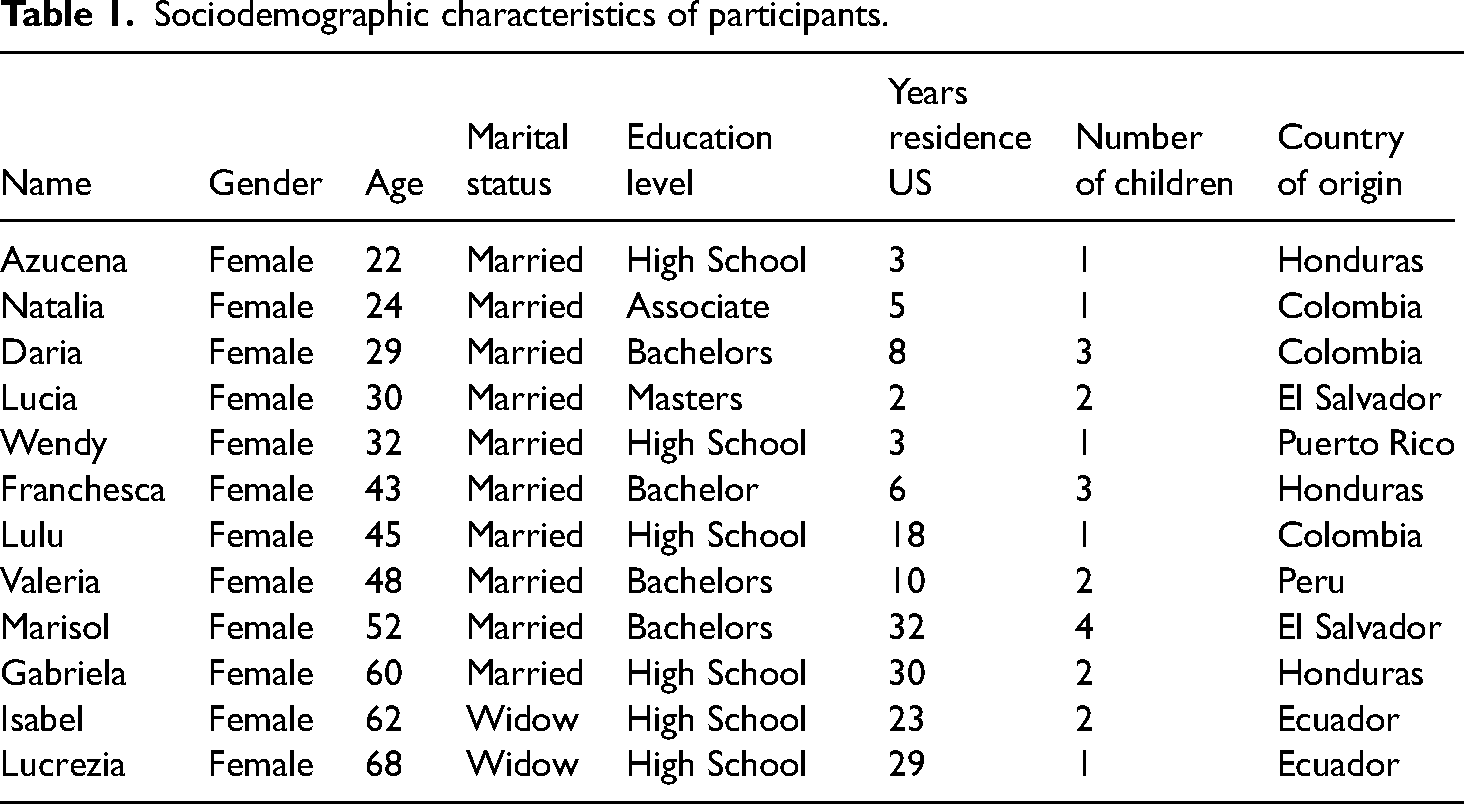
A purposive sample (Merriam & Tisdell, 2016) of women that sought assistance from a community center in the Northeast region of the United States was assessed. Consent from the center itself was received after several meetings between the center's director and the first author of this study. The principal investigator (PI) had several meetings with the director of the center to assess characteristics of the mothers, such as their available schedule, family composition, and home responsibilities, among others. Such discussions were pivotal in understanding the community at hand and assisted with the planning and design of the intervention itself (e.g., schedules and amount of mini assignments). Then, the PI conducted an information session for interested Latina mothers that lasted 1 h and included questions the mothers had about the intervention. A bilingual electronic presentation was created and developed specially for the information session. As an incentive, all participating mothers received a US$25 gift card. The mothers’ ages ranged from 25 to 64 (M = 37.4; standard deviation [SD] = 11.25). Participants consisted of 12 Latina mothers originally from Central and South America, including the Caribbean. Most participants were married (n = 83%), and others were widowed or separated (n = 17%). Family size varied, with participants reporting between one and four children. All mothers from this study were first generation immigrants. For more demographic information, please see Table 1.
Sociodemographic characteristics of participants.
Data collection and analysis
Data were collected through two in-depth semistructured interviews per participant, one focus group, recollection of artifacts from participants (e.g., written materials from the sessions) and the sessions (e.g., Power Point presentations), and reflective journaling by both participants and the PI. Data collection, including interviews, was conducted bilingually (Spanish/English). Following Seidman (2019), the first interview focused on the past, the focus group on the present, and the final interview on the future. The PI conducted all interviews lasting from 48 to 73 min in a private office at the community center and at participants’ homes. All participants signed a consent form, and all interviews were recorded. The PI began interviews by asking participants to describe their experiences and understanding of social exclusion in diverse dimensions, for instance, how they understood economic exclusion (e.g., lack of full-time jobs) and if they have witnessed it themselves. Sample questions of inclusion included: What are some economic barriers that you have confronted? What do you do when you face a challenge you think you might not be able to resolve? Triangulation was achieved through reflective journaling and artifact collection (from participants and researcher), anecdotal records (i.e., observations), two formal in-depth semistructured interviews, and a focus group (Lincoln & Guba, 1985). Reflective journaling created transparency and explored the impact of critical self-reflection on research design (Ortlipp, 2008). Anecdotal records were used as part of the triangulation method via extensive postobservations, and all written materials (assignments, comments, emails, thank you notes, etc.) were collected. In addition, credibility (Lincoln & Guba, 1985) was ensured through my prolonged engagement in the field working with Latinx communities, which allowed for a better understanding of the participants’ experiences.
Data were analyzed using a thematic analysis (Creswell & Miller, 2000), and interpretations were based on an emic insider's perspective (Merriam & Tisdell, 2016). The PI was the first member of the research team, who, although not a mother, had a similar transnational background as the participants. The second coder was an experienced Latino faculty member of a higher education institution in the Northeast United States with a transnational background, and the final coder was a Latina mother and scholar with ample experience in qualitative work within Latinx communities. All three were bilingual (Spanish/English). First, we read all the written data and made notes using N-Vivo software. Data analysis included translation of materials (Spanish/English). Second, open coding (Saldaña, 2015) was applied while taking detailed notes of each piece of data. I, the first author, read all the written data and made notes using N-Vivo qualitative analysis software. The research team analyzed the information gathered through interviews, anecdotal records, the reflective journal entries, and artifacts from participants, following a systematic Tesch's (2013) process of analyzing textual data. Then, we read all the data and then made a preliminary codebook and clustered together similar topics. After, we went back to the data and developed codes. Finally, we identified the most descriptive wording for the topics and turned them into categories in an iterative process (Tesch, 2013). Via thematic analysis (Creswell & Miller, 2000), patterns were identified in order to compare themes across Latina mothers in a way that illuminated agreements and discrepancies.
Findings
This study uncovered two previously undocumented social inclusion dimensions: language and technological inclusion. Regarding language inclusion, mothers reported either low English language use or an absence of confidence while speaking, which made them more likely to feel frustrated and withdrawn. The first modules of MSA targets knowledge toward understanding financial terminology. During this stage, participants started to voice concerns about their own ability to communicate financial ideas accurately in English. Participants also reported technological inclusion, and older mothers tended to have the lower digital skills compared to younger mothers. However, technological inclusion was discussed by all participants as a limitation, mostly faced when unable to utilize technology. This theme is connected to Module 6 of the MSA intervention, aimed at understanding the usage of credit cards, and understanding related financial reports. As conversations emerged as to how to log into electronic devices to check credit card information, mothers required assistance with the process. Due to the look-think-act nature of action research (Stringer, 2013), these two themes had two subthemes characterized by mothers’ engagement in both reflection and action. Below are selected examples that best exemplify both language and technological inclusion among low-income Latina mothers.
Theme 1: Language inclusion
Language inclusion was the theme that was cited the most (N = 12), as all participating mothers discussed the challenges of low language inclusion. Mothers brought up the challenge of low language inclusion during the first information session when they asked if the intervention would be taught in Spanish or bilingually, in both Spanish and English.
Language inclusion reflection: “Everywhere where there's English, there I am.”
During the first information session, mothers inquired about both language use and learning, as some mothers asked if we were going to cover financial terms in English. All mothers were interested in improving their English across the duration of the intervention. Mothers who experienced low language inclusion saw themselves at a social disadvantage, which created stress and impacted their ability to fully interact in economic, societal, political, and technological contexts. They also reported that their children were fluent speakers, and because of this, they would often help the mothers translate in their daily lives. Azucena stated, “I often come with my children to places where they can help me translate, but I want to speak and learn and do it myself.” Mothers expressed their efforts toward learning English, from attending local English as a Second Language (ESL) workshops and other community programs to downloading language learning cell phone applications. However, some felt they could not learn it properly, creating a feeling of not being able to achieve a knowledge and skill that was important for them. As Lucia explained, Everywhere where there's English, there I am, but I always feel that I don’t advance, I take exams [and] they put me in third and fourth level … but when the time comes for the blah blah blah [actually talking English] … I can’t do it. (Lucia) In libraries here at [this area] there's not a problem because they speak Spanish, but when I wanted to go to another library where they spoke a lot of English, then I would go, but I did not interact much, and also if there were people who spoke English, I tried to talk [to them], but I was not very open. (Marisol) I don’t blame anyone, not the teachers, nor anyone else. I attend classes on Wednesdays from 11:00 a.m. to 1:00 p.m. and there they only speak English, very cool and all that, not that I want to make excuses, but I feel that I have dyslexia with English. (Lulu) I almost always wait for the Spanish [events] and I limit myself with the English ones. At the same time, I have a desire to have this contact, to be able to learn and do something, but I cannot because I am limited by my fear. (Wendy) I’m hungry to learn English, I downloaded the application on my cell to learn English, like we saw in last week's class, it's called the Duolingo and has 98 classes. I’m hungry! I’m on the fourth level and I'm missing one class to finish. (Natalia)
Action toward language inclusion: “If I see a word that I don’t understand, I’ll look for it.”
The action research design allowed for spaces for learning opportunities to emerge, which provided Latina mothers with the tools necessary to develop their critical thinking on language inclusion and created a comfortable atmosphere. In other words, the intervention allowed mothers to acknowledge their low language inclusion and provided the opportunity to motivate each other, which was translated into confidence and then actions, where participants took risks toward acquiring higher language inclusion. During one session, the PI invited the president of the local bank to have a presentation about its services to the mothers. This was an important event, as Isabel expressed: With the visit of the president of the bank, I started doing that [speaking more in English]. Last weekend I went out and spoke in English, I greeted someone at a store, it's not much, I know, but I felt good. (Isabel)
Other participants found smaller strategies to improve their English proficiency, sometimes due to new ideas from the other mothers. The discussions during our sessions allowed for a space for new ideas to emerge because mothers faced similar challenges with language. Daria stated that she heard Lucrezia give some helpful recommendations during our class discussion on improving low language inclusion, which she started to apply in her daily life, Our classmate said that she was with a dictionary all the time, and I downloaded the dictionary application and I’m using it more often when I watch the news and television—now I try to put it in English. So, if I see a word that I don’t understand, I’ll look for it. (Daria)
Theme 2: Technological inclusion
All mothers reported some form of low technological inclusion (N = 12), and older mothers tended to have the lowest. After completing a module that covered banking and technology, the focus shifted toward efforts on learning how to further apply technology to develop personal banking services and budget spreadsheets. The initiative of the mothers to deepen their applied technological knowledge also emerged among middle-aged and younger mothers, who also started to report challenges and interest in learning more about the use of digital technology when applied to finances.
Reflection on technological inclusion: “I have technological challenges.”
During the middle of the intervention, some mothers proposed using of technology in the context of the intervention itself. Natalia was the first to offer this idea, as she explained how intrigued she was when she saw how other people outside the program used bank applications on their cell phones. Although she asked at her local bank about the application, she was not given much information. Here, we can understand that low technological inclusion is not just a matter of personal capabilities but is also influenced by structural forces as well. Therefore, I was intentional in including activities that utilized technology within the remaining sessions, in order to promote technological inclusion. During one session, which typically started with a personal written reflection, mothers were asked about technological inclusion and to share possible challenges and barriers that they could recognize. For instance, Lucrezia shared in written form how she often had technological challenges, such as understanding technical or unknown terms, while Gabriella stated during a group discussion how she would like to learn how to use email and cell phone apps. These statements exemplify the mothers’ awareness of their low technological inclusion. Similarly, to language inclusion, the Latina mothers recognized the challenges they encountered with technology.
There were different levels of technological inclusion among the Latina mothers and naturally, also diverse challenges among them. Although younger mothers were able to help the older mothers with the bank application session, they still faced challenges of their own. For instance, Daria would ask questions related to how to work with laptops and antivirus programs. After the exercise on using cell phone applications, the mothers reflected on the reasons for their low technological inclusion. Some mothers suggested that their low-income background influenced their technological challenges, while other mothers reflected on the topic by relating technological use directly to their education and available resources.
Action toward technological inclusion: “Feministval”
Mothers confronted different technological needs in the form of digital challenges, which were evident when covering the module on searching for financial products, which required the use of digital devices, such as laptops and/or smart phones. Therefore, some sessions addressed ways to learn and utilize diverse technologies (e.g., calculators, banking apps, and downloading programs such as Microsoft Excel for monthly budgets). Lucrezia introduced the idea at the beginning of the intervention when she asked if we could take some time to practice using cell phone apps. The idea was echoed by others, such as Natalia, who was also interested in learning about cell phone apps, while Daria and Azucena were more interested in learning about computer software.
Developing a session focused on technological inclusion opened the door for the creation of an online community that was developed and led by the mothers themselves. This online community further developed their learning and solidarity among each other. In the technological session, all participants (particularly older mothers) achieved a better sense of how to use technology, as Lulu stated, “I liked that class because we were able to learn about apps but also help each other figure things out.” Indeed, the more technological literate mothers helped other mothers that were struggling with the exercises. This might have been due to a generational divide, as the younger mothers were more prone to use their cell phones properly or actively when compared to the older mothers. However, the younger mothers also felt they needed more digital knowledge, as they expressed they importance of learning more about technology.
Unexpectedly, the technology session invoked the mothers’ motivation to maintain contact with one another through a network of support that represents female solidarity. As the main researcher, I reflected in my journal on how Franchesca started asking for everyone's phone number and how she wanted to start an online group. Indeed, after the technological inclusion session, Franchesca took initiative to collect and organize the contact information for all group members to create an electronic chat group, using the messaging application WhatsApp, allowing them to create a permanent medium of communication that is still functioning at the time of this writing. For instance, during the final week of the intervention, Daria shared information on a free seminar on cyber security, which was a topic covered during the intervention. Other messages were related to community events, available family resources, uplifting messages, and events focused on children's activities,
These findings describe how this intervention allowed space where mothers were able to reflect on their own social exclusion and, in the process, develop pathways toward social inclusion. Participants reflected on their own language strengths and often took small but important steps toward achieving confidence in their own abilities to learn and communicate in English. The development of their technological knowledge culminated in the form of daily messages, videos, and texts, which were often bilingual. The action research intervention allowed for the mothers to develop inclusion at their own pace in a space that they felt was safe.
Discussion
This research uncovered that Latina mothers experienced low language and technological inclusion, two new dimensions not found in traditional literature. This study also builds on existing research by focusing on social inclusion as a strength perspective that addresses the social inequalities of social exclusion. Low language inclusion was linked to feelings of anxiety, stress, discrimination, and hindered economic opportunities, while low technological inclusion (i.e., few technological skills) was perceived not only as a barrier but also as an important skill to continue to develop beyond the intervention. Although these vulnerabilities were recognized as barriers, experiences of learning and social bonding emerged during each session. These findings also provide a glimpse into the experiences, challenges, and opportunities of low-income Latina mothers and how a feminist action research intervention provided a space to develop solidarity and harness personal agency.
Language inclusion among minoritized families has been often overlooked, with most studies focusing on language barriers within the health care system. However, within the social exclusion literature, Cruz-Saco and López-Anuarbe (2013) analyzed financial support and inclusiveness among Latinx families in Connecticut and described the importance of familism in the form of financial support and obligation to family, along with structural challenges related to poverty, low English proficiency, immigration status, and a lack of voice and political representation. Although social exclusion is an important indicator of inequality, listing the vulnerabilities of underdeserved communities under a social exclusion paradigm limits the possibilities of understanding social inclusion. As social work practitioners, developing practices that focus on social inclusion among minoritized individuals does not only require carefully developing targeted culturally relevant interventions but should also address discrimination, prejudice, and oppression, which are often embedded within our cultural norms and social structures (Lee, 2020).
In this research study, language inclusion was the most salient theme that was interconnected with the other dimensions of social inclusion described by all participants in the study. Often, mothers described how low language inclusion would hinder their economic opportunities, for instance, by not being able to communicate ideas confidently during a job interview or having challenges understanding the responsibilities of a particular employment opportunity via job postings. Research by Larson et al. (2020) demonstrated that language-focused interventions impact the receptive and expressive language skills of children, showing the importance of language inclusion for families as a whole. Although current research has described language integration in terms of understanding the contemporary and historical transformation of immigrant communities (Schrover & Schinkel, 2013), current views do not offer an in-depth perspective of current challenges faced by minoritized women, such as its relationship with personal agency, employment opportunities, or active political participation. Participants in this study described ways to navigate through such challenges when they were unsatisfied with how they were able to communicate with others (e.g., gain more confidence and improve fluency).
The second theme of low technological inclusion is often liked with poverty, as research has linked low-income conditions with challenges in the access, use, or impact of information and communication technologies, in particular among older adults (Ragnedda & Muschert, 2013). In fact, according to O’Connell et al., (2022), the coronavirus pandemic (COVID-19) has highlighted these challenges among older adults, where the main barrier is often described as a “fear of technology.” Friemel (2016) explored technological challenges in Switzerland among older adults age 65 and older and found that internet use was strongly skewed in this particular age group. This led to a partial exclusion of older seniors because they were unable to use services such as social media or banking applications that could facilitate and enrich their daily lives. From a practitioner's view, it is important to contextualize technological challenges under the social inclusion paradigm, as it allows a more in-depth view of personal experiences and how it relates to other dimensions (e.g., economic inclusion). Additionally, although extant research focuses on older populations and adults, this research found evidence that low technological inclusion occurs within younger individuals too, leaving a gap in our understanding of this phenomenon. Finally, although participants reported low levels of technological inclusion, resources such as digital applications and creating an online learning community dissipated some challenges and created learning moments during the intervention. Such achievements would have not been possible without using feminist action research as a tool for agency. Importantly, feminist action research in this study was characterized by an intentional and constant self-reflection of my own positionality, which was pivotal toward understanding power relations. As Reid (2004) reminds us, reflexivity requires high standards of openness and transparency about the choices made in any empirical study. In this research, reflective journaling proved to be a tool that helped the PI recognize her own “conceptual baggage” (Kirby & McKenna, 1989) and aided in breaking down power relationships, which proved essential to ensuring authentic participation that yielded social inclusion benefits to participating mothers.
Implications for practice
The findings from this study have various practice implications in the field of social work. First, bilingual interventions deserve more attention given the growing diversity of current societies, and it is an opportunity to develop culturally relevant practices with minoritized families, which can have significant positive effects on the language inclusion of vulnerable communities (McKinley et al., 2019). Practitioners must consider how to develop programs that incorporate bilingualism as a language inclusion strategy. For instance, a practitioner that develops and delivers a culturally appropriate intervention to linguistically minoritized communities must be intentional in the use of code-switching (i.e., altering between languages in the same conversation event) as a strategy for an intervention. In this research, code-switching was used throughout the sessions, for instance, to present financial products in English (e.g., mortgages and savings accounts) to participants. Intentionally using code-switching allowed mothers the opportunity to improve their language abilities and engage with their community.
Similarly, technology should be included in the development and implementation of interventions. Practitioners should incorporate electronic resources for intervention sessions among minoritized communities, for instance, providing online resources (e.g., creating a web page for the intervention) and using email or phone communication apps as a means of communication. Previous research on technology use among parents of infant children has found that parents show positive gains in knowledge and more confidence in their parenting after using an online library with relevant resources (Spencer et al., 2020). Moreover, the use of technology among community members should be incorporated within the curriculum of any intervention targeted at bilingual low-income families. A meta-nalysis by Hall and Bierman (2015) examined the use cell phones as a tool to enhance family interventions and found that only one study evaluated mobile devices for “stand-alone” intervention delivery. Therefore, practitioners should explore digital outlets and be intentional about their use to improve participants’ technological inclusion. In this intervention, mothers were asked to find and download bank applications, budget apps, and digital calculators. Given differing levels of technological knowledge, the mothers offered each other support and were able to build an online learning community and develop their personal agency, which in turn increased their technological inclusion. Finally, building reciprocal relationships of mutual respect is pivotal toward developing a culturally appropriate intervention among minoritized communities. Building rapport brings up the importance of developing authentic relationships and creating open and nonjudgmental spaces when working with clients. In this regard, the client's informed consent and confidentiality play an important role in a client feeling comfortable sharing information about their own experiences of social exclusion and the opportunities for social inclusion.
Finally, from a policy perspective, community initiatives should also be explored as an alternative to alleviating the exclusion of vulnerable families. Such initiatives should include recognizing the importance of taking dynamic steps to decrease structural barriers, such as developing community connections with local organizations and increasing educational resources and employment opportunities among vulnerable communities. In particular, immigrant-serving organizations can serve as buffers against unwelcoming policy environments (Negi et al., 2020). In the absence of such organizations, social workers should connect with community stakeholders that have already earned (or are developing) the trust of immigrants. Partnering with these entities is pivotal toward strengthening vulnerable families and building coalitions to drive social inclusion policy initiatives.
Limitations of the study
Although this study has important implications for practice, it had several limitations. First, this was a case study that relied on participants’ perceptions of their challenges within their context and environment, where social exclusion and inclusion were topics the mothers were sometimes reluctant to disclose due to their own experiences (Merriam & Tisdell, 2016). Second, although the sample may be considered small, similar sample sizes of low-income Latina mothers, a difficult to reach population, have been utilized in other qualitative studies (Gonzalez et al., 2020) and are able to provide rich evidence.
Conclusion
In this article, I argued that the current understandings of social exclusion prolong a focus on shortfalls and vulnerabilities, and such perspectives shape how policy and community initiatives are developed, based on a conceptualization that often does not recognize inherent family and community strengths. Therefore, I proposed a new definition of social inclusion, based on a strength view that recognizes resilience and the goal of social change. Latina mothers in this study both reflected and acted on low language and technological inclusion, two dimensions not found in traditional literature. Despite structural barriers, Latina mothers professed their desire to improve their knowledge and opportunities and acted toward their own inclusion. Although furthering research on social inclusion and its impact on minoritized women is a task that is part conceptual (e.g., paradigm shift) and sociological (e.g., economic), a practitioner perspective is needed as interventions provide an alternative to empower vulnerable families and communities. This study lays the groundwork for future research for and with similar populations.
Footnotes
Ethics
Ethical approval for this project was given by: This study was approved by the Montclair State University IRB committee #FY17-18-899.
Funding
The author received no financial support for the research, authorship, and/or publication of this article.
Declarations of Conflict of Interests
The author declare that there is no conflict of interest.
Acknowledgments
Thank you to all the Latina mothers who participated in this research.
