







Abstract
Summary
This study examines the impact of gender-sensitive group supervision on social workers through a pretest–posttest experimental design. The program was conducted over 8 months, comprising 16 sessions, with 20 social workers aged 25 to 39 from diverse fields in Istanbul. Participants completed pre- and post intervention assessments, including the Personal Information Form, Vocational Interest Scale, Professional Satisfaction Scale, and Power Equity Scale. The supervision program integrated traditional approaches—administrative, educational, and supportive supervision—while emphasizing gender-equality-based practices through case analyses and evaluations.
Findings
Results indicate that social workers who participated in the gender-sensitive group supervision program experienced significant improvements in their Vocational Interest, Professional Satisfaction, and Power Equity Scale scores. These outcomes demonstrate that addressing gender-sensitive practices in supervision contributes positively to key professional metrics.
Applications
The findings suggest that integrating gender-sensitive practices into group supervision has the potential to enhance professional satisfaction, equitable power dynamics, and vocational interest among social workers. This approach can be implemented in social work practices to foster more inclusive and effective supervision methods, potentially improving service delivery and professional well-being.
Introduction
Concept of Supervision
Supervision in mental health involves the monitoring and evaluation of professionals by experienced and trained individuals to enhance both individual and group intervention processes (Allan et al., 2017; Holmes et al., 2021). It serves as a platform where an experienced professional helps a less experienced colleague navigate challenges in handling cases, facilitating knowledge and skill development. Supervision is especially vital for mental health counselors during the early stages of their careers, making it an essential practice (Alfonsson et al., 2018; Milne et al., 2011).
In social work, supervision is categorized into three types; administrative, educational, and supportive (Kadushin & Harkness, 2014). Administrative supervision focuses on tasks such as recruitment, work planning, monitoring, and evaluation. Educational supervision involves guiding employees in acquiring necessary knowledge and skills, offering techniques for effective social work, and enhancing competencies through training and advice. Supportive supervision, meanwhile, aims to boost motivation and reduce stress factors that might hinder social workers’ performance.
Social workers often experience higher work-related stress compared to other professions (Kabunga & Muya, 2014; Wang et al., 2023). Without proper coping mechanisms, stress can adversely affect their health (Tamiolaki et al., 2024), job performance, and organizational effectiveness, potentially leading to job dissatisfaction or turnover (Finklestein & Laufer, 2021). Supportive supervision, like its administrative and educational counterparts, seeks to optimize the performance of social workers and the institutions they represent, ensuring effective client services.
Group Supervision
Administrative, educational, and supportive supervision can be effectively utilized in group interventions within the social work profession (DiMino & Risler, 2012; Kadushin & Harkness, 2014). Group supervision involves training, managing, and supporting a group of employees while ensuring they fulfill their responsibilities. It encompasses both structured practices led by the supervisor and dynamics arising during group interactions (Ülker Tümlü & Ceyhan, 2023). These groups are intentionally formed with specific goals in mind, aligning with the overarching objectives of supervision.
A notable benefit of group supervision is its efficiency, saving time and effort. It allows supervisees to share common challenges and collaboratively explore solutions. Through group discussions, a broader range of cases and social issues can be examined, offering valuable learning opportunities. This format also fosters reflection on biases and multicultural practice, enhancing supervisees’ competencies (Alschuler et al., 2015).
Sharing workplace challenges within a supportive group serves as a therapeutic outlet, boosting morale and fostering a sense of belonging. Participants often realize that their struggles are not unique, discovering that colleagues face similar challenges. Emotional support from peers, including empathy and mutual encouragement, further strengthens morale and group cohesion.
Group supervision also promotes professional growth by improving relationships among colleagues and with the supervisor (Amanvermez et al., 2020). It offers training in client communication, effective interview techniques, and relationship-building skills. This collaborative environment ensures both individual and collective development, enhancing the overall effectiveness of social work practice.
Gender-Sensitive Intervention
Gender inequalities persist across societies, manifesting in areas such as education, employment, health services, and politics (OECD, 2023). Gender-sensitive interventions are essential for reducing these inequalities and promoting gender justice. These interventions encompass strategies and practices designed to address gender differences and inequalities, aiming to prevent discrimination based on gender identity, roles, sexual orientation, and gender characteristics (Alston, 2018; Kara & Serpen, 2023a). However, personal identities are complex and shaped by the intersection of multiple social categories, such as race, class, ethnicity, ability status, and migration background, in addition to gender and sexuality. Therefore, addressing gender inequalities requires an intersectional approach (Crenshaw, 1989), which recognizes how these overlapping identities influence individuals’ experiences of oppression and privilege. Social work, as a profession committed to enhancing individual welfare, achieving social justice, and protecting the rights of marginalized groups, relies on both gender-sensitive and intersectional interventions to fulfill its mission. Social workers assess clients’ needs by considering their gender identity, sexual orientation, and other social determinants, tailoring interventions accordingly. Such practices align with the core values, ethics, and responsibilities of the profession.
In Türkiye, while progress has been made in improving the quality of life for marginalized groups like children, youth, the elderly, and individuals with disabilities, efforts addressing issues related to sexual orientation, gender identity, and gender characteristics have historically lagged. Moreover, studies indicate discriminatory attitudes toward LGBTQIA+ people among some social work academics and students (Kara, 2018; Pak & Cankurtaran, 2024; Yildirim, 2018). Given this context, integrating gender-sensitive interventions into group supervision is vital. This approach can help social workers address their biases, enhance their professional practices, and ensure more equitable service delivery for diverse populations.
Supervision Practices in Türkiye
In Türkiye, there is no mandatory supervision process for social workers; participation in supervision remains voluntary (Şahin Taşğin, 2019). This absence of structured supervision in social work education and practice can create challenges for social workers in their professional roles. Özkan's (2016) thesis, the first study addressing the need for supervision in Türkiye's social work practices, highlights the lack of an officially structured and defined supervision process. Özkan found that social workers rarely mentioned supervision as a method to address professional difficulties, indicating an informal and unnamed supervision process. The study revealed that social workers desired structured supervision, preferably conducted regularly through group supervision or case study methods. Similarly, Karabenk's (2018) research found that professionals in the field experienced moderate levels of burnout and expressed a strong need for supervision.
The challenges within Türkiye's social work field have intensified in recent years, with cases becoming increasingly complex (Şahin Taşğin, 2019). However, social work in Türkiye has often been reduced to social assistance, with limited development of new social service models. The rapid expansion of social work departments in universities, coupled with declining education quality, has further strained the field. Field education, a cornerstone of social work training, has become increasingly inadequate. Many social workers and academics acting as institutional advisors for students lack the necessary training and competence in field education supervision as defined by social work literature. This inadequacy hampers both professional satisfaction and the implementation of critical practices, such as gender-sensitive interventions. These challenges underscore the urgent need for structured, comprehensive supervision in Türkiye's social work field.
When the literature both in the world and in Türkiye is examined, no study has been found that aims to develop vocational interest, professional satisfaction, and gender-sensitive interventions for social workers and focuses on supervision. Based on this, this study has the potential to fill an important literature gap both in the world and in Türkiye, and aims to improve group supervision's vocational interests, professional satisfaction, and gender-sensitive interventions of social workers working in different fields in Türkiye. The research questions within the scope of this research are as follows:
Method
The research aimed to improve social workers’ vocational interests, professional satisfaction, and gender-sensitive practices through group supervision. Data were collected by experimental method with pretest–posttest control group in a quantitative design. In the pretest–posttest control group design, there are two groups formed by unbiased assignment. One of them is used as the experimental group and the other as the control group. In both groups, pre-experimental and postexperimental measurements are made. In this study, 10 people were in the experimental group and 10 people were in the control group. These individuals were distributed to the groups with an unbiased assignment. This study is also an example of a randomized controlled trial (RCT).
Participants
Twenty social workers between the ages of 25 and 39 (10 participants in the experimental group, 10 participants in the control group) were included in the study. Social workers who expressed a willingness to participate in gender-sensitive group supervision were identified through institutional announcements distributed via email and professional networks in various social work organizations across different districts of Istanbul. From this volunteer pool, 20 participants were randomly selected using a computer-generated randomization process. Twenty social workers from various fields and districts of Istanbul who volunteered for the study were included.
Data were collected using a control group, pretest–posttest experimental design. In this design, pre-experiment and postexperiment measurements are made to two groups (one control and one experiment) created by unbiased assignment. In this study, experimental and control groups were created, and measurements were made before and after the experiment in both groups. In addition, a supervision-based group intervention consisting of 16 sessions for 8 months was applied to the social workers participating in the experimental group, while no intervention was applied to the control group for 8 months.
All participants were informed in advance about the study's aims, procedures, duration, and ethical considerations, including confidentiality and voluntary participation. Participants in the study were randomly selected for each group and assigned to experimental and control groups. This study included an RCT with randomization, no detection bias, and analysis for the purpose of the intervention. Randomization was carried out with random numbers generated in the computer environment. Methods and techniques that increase the risk of bias such as date of birth, order of application, registration number were not used. With the randomization made in the computer environment, the participants were distributed to the experimental and control groups. Assignments made in the computer environment were made by an assignment office other than the researchers of this study.
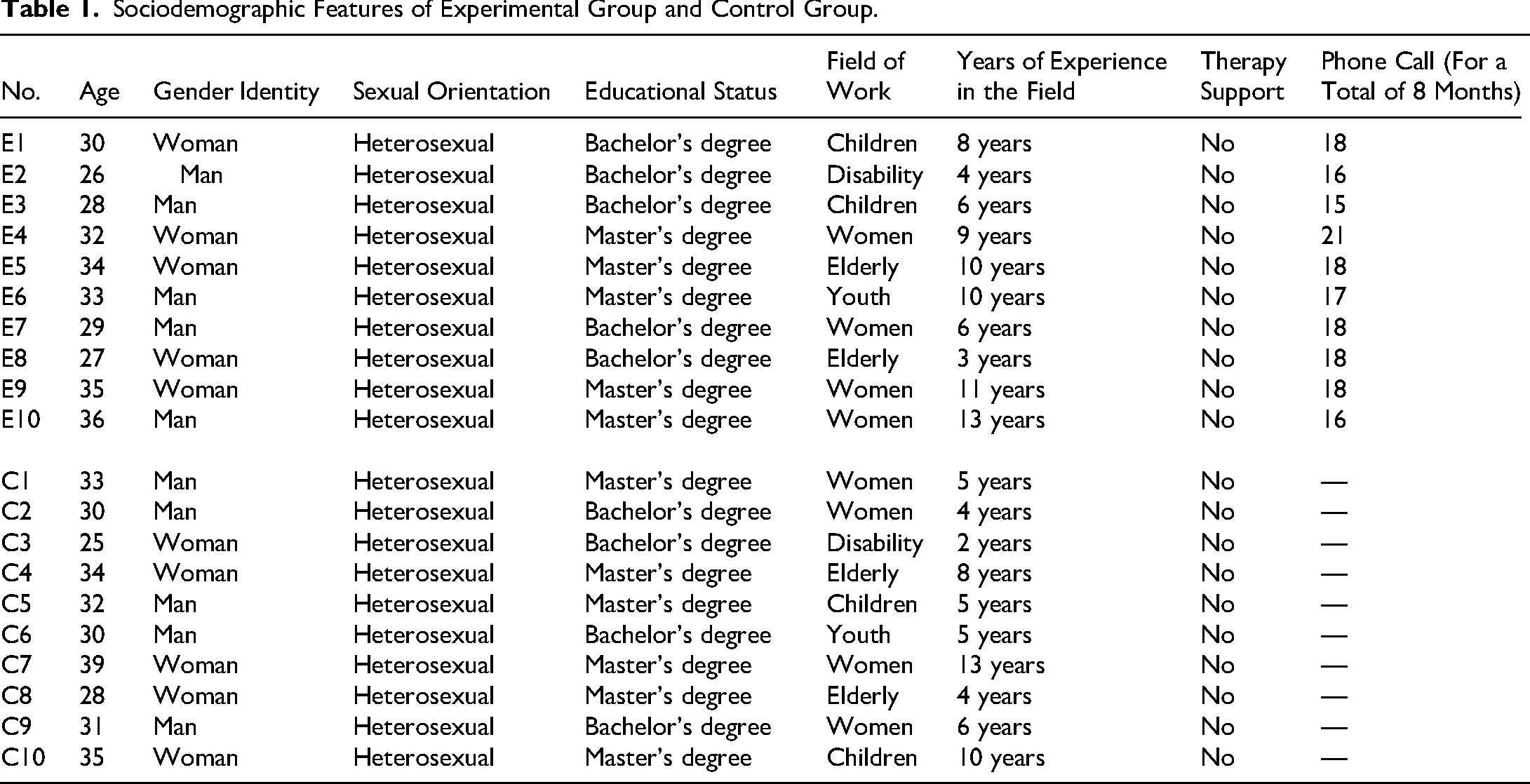
The content and scope of the group study were explained to all participants who wanted to participate in the research. Additionally, information was given about the purpose of the study and the content, time, duration, location, participants, and anonymity of the group sessions. Sociodemographic characteristics of the experimental group and control group are presented in Table 1. Two weeks after the completion of the group intervention, all participants in the control group were given at least 6 hr of training on gender-sensitive practices.
Sociodemographic Features of Experimental Group and Control Group.
Data Collection Tools
Three instruments were used to assess the effects of group supervision on social workers: (a) a demographic questionnaire, (b) the Vocational Interest Scale, (c) the Professional Satisfaction Scale, and (d) the Power Equity Scale. In addition to these instruments, participants’ feelings, thoughts, and experiences were noted in writing by the group leader during group supervision sessions. Some of these notes were included in the discussion section of this article.
In this study, a demographic questionnaire was used to determine the participants’ age, gender identity, sexual orientation, educational status, working field, working time in the field, and therapy support. The Vocational Interest Scale, developed by Kaysi (2021), is a scale consisting of four factors and 19 items. The factors of the scale are classified as professional readiness, self-improvement, career choice awareness, and recommending one's profession to others. High scores from the scale indicate that individuals have a high interest in their profession. Cronbach's Alpha coefficient of the scale is also expressed as .92.
The Professional Satisfaction Scale, developed by Kuzgun et al. (1999), is a scale consisting of two factors and 20 items. The factors of the scale are suitability for qualifications and opportunity for development. When the scores obtained from the scale are high, it is assumed that the satisfaction with the essence of the job is high, and the individual's job satisfaction is evaluated as high. Cronbach's Alpha coefficient of the scale is also expressed as .90.
The Power Equity Scale, developed by Serpen et al. (2024), is a scale consisting of 19 items. The scale aims to evaluate whether the therapy/counseling processes carried out or are being carried out by professional staff are sensitive to gender. The lowest score that can be obtained from the scale is 19, while the highest score is 95. High scores obtained from the scale indicate that practitioners carry out feminist/gender-sensitive practices which are sensitive to equality of power; while low scores indicate that this sensitivity is not present in the conducted feminist/gender-sensitive practices. Cronbach's Alpha coefficient of the scale is also expressed as .98.
Data Collection Process
The gender-sensitive group supervision lasted 8 months and there were 16 sessions in total in this group intervention. Two group sessions were held on determined dates every month. All participants in the experimental and control groups filled out the scales used in the research at the end of each month. Monthly measurements monitored participants’ progress.
The group supervision was held between January 14, 2023 and August 13, 2023, in the meeting room of a counseling center in Istanbul. Before starting the study, a detailed program about the gender-sensitive group supervision was communicated to the participants. Each session in the group supervision lasted an average of 180 min. Reporting of the group sessions was made by the group leader at the end of each session. A total of 16 sessions were applied to the experimental group.
The activities included in the gender-sensitive group supervision were created in the light of the researchers’ knowledge and experience. In each session, attention was paid to understanding, expressing, and interpreting emotions and experiences, and activities were created within this scope. Additionally, activities were held on topics such as coping strategies, empowerment, and secondary trauma. In addition, case discussions and role-plays were held, especially focusing on gender-sensitive intervention (inclusive practices for LGBTQIA+ people, people living with HIV and sex workers). Supervision (supportive, educational, and managerial) support was also provided to the participants in all group sessions. Apart from the group sessions, participants also made phone calls to the group leader to receive supervision support regarding any case. At the beginning of each session, snacks, tea, and coffee (these meals prepared and brought by the participants themselves contributed significantly to ensuring harmony) accompanied warming up and breaking the ice. Each session was organized as follows:
Month 1. The first session of the first month included meeting the participants, determining group rules, determining group expectations, explaining the group process, giving information about group supervision and gender-sensitive practices, and distinguishing the similar and different aspects of group members. The aim was for group members to introduce themselves, talk about people/situations/things they like, and share their own characteristics. The group session continued with an anonymous meeting game to allow the participants to get to know each other and express themselves. Anonymous meeting game involves allowing individuals to talk without identifying identities such as sexual orientation, gender identity, gender expression, socioeconomic status, race, disability, age, religious belief, and political preference. In the second session of the first month, participants were allowed to express the issues they had difficulty with in their professional lives. Difficult topics were noted, and an in-depth conversation was held about each topic. Participants were asked to make an evaluation, taking into account the individual approach within the context of the issues they were having difficulty with, and at the same time, space was made available to express their feelings within the framework of these issues.
Month 2. The first session of the second month aimed to discover why the participants chose their profession and the motivation for these choices. The activity called “What Would You Recommend?” was played. With this activity, participants were tried to determine and understand their internal and external motivations for their profession, and to reveal at what points they would recommend their profession to others. In the second session of the second month, participants were asked to discuss a case story and make evaluations about how they could solve this case. The story of this case was about a lesbian girl in institutional care who was bullied by both her peers and institutional staff. The resolution of this case has been accomplished. At the point of solving the case, the questions asked by the participants about gender concepts were answered. In addition, it was aimed to reveal the issues that they had difficulty with in the case and to resolve these issues.
Month 3. The first session of the third month aimed for participants to review and reframe their professional duties and responsibilities. An activity called “Reframing Professional Responsibilities and Duties” was carried out. This activity enabled the participants to become aware of the burdens brought by their duties and responsibilities in their professional processes and to determine the level of fulfillment or nonfulfillment of all these duties and responsibilities. Participants stated their duties and responsibilities in diagrams and evaluated the impact of these duties and responsibilities on their professional lives. In the second session of the third month, participants were asked to conduct a case analysis. This case involved a 65-year-old gay client seeking counseling from a social worker regarding whether he should choose institutional care. In this case, self-determination was an important phenomenon, and the participants had to analyze their duties and responsibilities in detail to discover what they could or could not do.
Month 4. The first session of the fourth month aimed for participants to explore and describe the milestones of their professional years. In this context, an activity called “What are my Milestones?” was carried out. Milestones covered facts and situations that participants deemed important in their professional lives, which could include positive or negative experiences. Participants were also asked to visualize these milestones. Visualizing milestones reinforced participants’ sense of their professional lives. For the second session of the fourth month, each participant was asked to create a case story. These case stories were wanted to parallel the participants’ experiences with the milestones as closely as possible. Case histories were also expected to include gender-sensitive practices. The analysis and analysis of the created case stories were carried out together.
Month 5. In the first session of the fifth month, the aim was for the participants to discover their own characters and professional aspects through the storytelling technique. Storytelling can facilitate the reflection of personal values and experiences. Another point is that this technique is effective in expressing the participants’ current situation or existing problems. In this context, an activity called “Take a Look at the Career Story” was carried out. This activity allowed the participants to look at their positive or negative feelings and experiences about their profession from a different perspective and new solutions. The story in this activity included the process of professional practice of a social worker working in the field of gender. In the first step of the story, the sociodemographic information of the social worker was introduced. In the second step, the problem experienced by the social worker was mentioned. In the third step, the social worker's conversations with people who could support them in solving the problem were discussed. In the fourth step, the people who supported the social worker created a new perspective on them. In the fifth step, the social worker examines alternative situations and reaches some conclusions. Within the scope of this story, participants were expected to seek answers to the following questions: “What might be your similarities and differences with the social worker?,” “What would the social worker say to you if they saw you? What would you say?,” “If this story gave you a message, what is a message? “What would this story have taught you?,” “If this story taught you anything, what would it be?,” “What would it be if there were something new you could try?,” “What might this story have set in motion in your life story?.” In the second session of the fifth month, cases where participants had recently had difficulty in their professional practice were discussed. In these cases, topics such as what the participants could or could not do, who they could get support from, and what kind of information they might need were discussed.
Month 6. The first session of the sixth month was aimed at participants discovering their strengths regarding their professional practices and interventions. In this context, an activity called “What are the things I am grateful for?” was carried out. Within the scope of this activity, participants were first asked what came to their mind when gratitude was mentioned. Then, they were asked what the meaning of keeping a gratitude diary and writing down the things you are grateful for in life could be. Participants were asked whether there were situations in the last month when you thanked yourself on behalf of your profession. Participants were also asked whether the situations in which they thanked themselves affected their professional performance. Additionally, answers were sought to the following questions: “If I were asking your best friend, what would they say they could thank themself for professionally in the last month?,” “What would your best friend say they could thank themself for socially?.” Afterward, the gratitude table was introduced to the participants. This table included participants exploring and writing about the contexts they felt grateful for in the last month. Participants were asked to fill out this table within the framework of their own professional lives. In the second session of the sixth month, participants were asked to analyze a case history. This case story included the interventions of a social worker for a bisexual client living with HIV. This case story, which was based on the client's inability to benefit from health services when they had transitioned to the AIDS phase, explained that the client's biopsychosocial health improved with the professional interventions carried out by the social worker. In this case, the participants were asked to empathize with the social worker and were expected to identify points for which they could be grateful, as well as the difficulties they experienced.
Month 7. In the first session of the seventh month, participants were asked to analyze their relationships with institutional systems that were deemed important in improving their professional interests and satisfaction. In this context, an activity called “My Power Map” was carried out. As part of this activity, participants were asked to work together and prepare a map. This map included listing and visualizing institutions and organizations in the participants’ cities related to the areas in which they work. It was aimed to determine whether institutions and organizations are particularly sensitive to gender issues, as well as their relationship with the field of study. With this activity, institutional systems from which participants could receive support were determined, and participants discovered institutions and organizations in different fields that they did not have in-depth knowledge of. In the second session of the seventh month, the aim was for the participants to discover their strengths, both about themselves and their social environment. In this context, an activity called “What is your source?” was carried out. This activity was important for the participants to discover their internal and external resources. Additionally, the scope of this activity has been expanded. Participants were asked to carry out this activity by considering their professional lives, and internal and external resources were also revealed within the framework of professional practices and interventions.
Month 8. In the first session of the eighth month, the aim was for participants to discover the connections between the sources of motivation and power they have today and their possible sources of motivation and power in the future. In this context, an activity called “Today's Painting and Future Design” was held. In the first step of the activity, participants were asked to close their eyes and think about the sources of power they have or feel motivated about their profession today. Participants were reminded to think about the resources they currently have and then a picture of them would be drawn. The opinions of the participants were taken about the drawn picture. In the second step of the activity, the participants were asked to close their eyes again and think about the power sources that they do not have now, but would like to have, dream of, or could have in their future professions that could motivate them. Participants reflected on the power sources they currently lack but aspire to attain, envisioning how these resources could enhance their professional growth and motivation in the future. The opinions of the participants were taken about the drawn picture. In the last and third step of the activity, participants were asked to bring both pictures side by side. Participants were asked to think about the answers to the following questions: “What could be the similarities and differences between these two pictures?”, “What would the transition be like if there was a transition between these two pictures?”, “What would you need to move to the second picture?”, “What steps can you take to move on to the second picture?”, “How supportive would those you have be to help you take the career step you want? What would their contributions be?” In the second session of the eighth month, the entire study was summarized, and participants were asked to evaluate the entire process. In this context, an activity called “What did you change?” was held. Participants were asked to describe what they had changed in themselves cognitively, emotionally, and behaviorally. It was also aimed for the participants to express whether their social environment had changed or not.
Data Analysis
The data obtained within the scope of the research were analyzed using the SPSS 22.0 statistical package program and the necessary arithmetic averages and percentage values were calculated. Average scores were calculated to determine the equivalence of the experimental and control groups and to examine the pretest–posttest results. Since the data were not normally distributed, the Wilcoxon signed-rank test, a nonparametric analysis, was used. Although reflective notes were taken by the researcher after the group supervision sessions, these were not sufficient for qualitative analysis. Due to some participants’ refusal of audio recording, in-depth qualitative data could not be collected.
Results
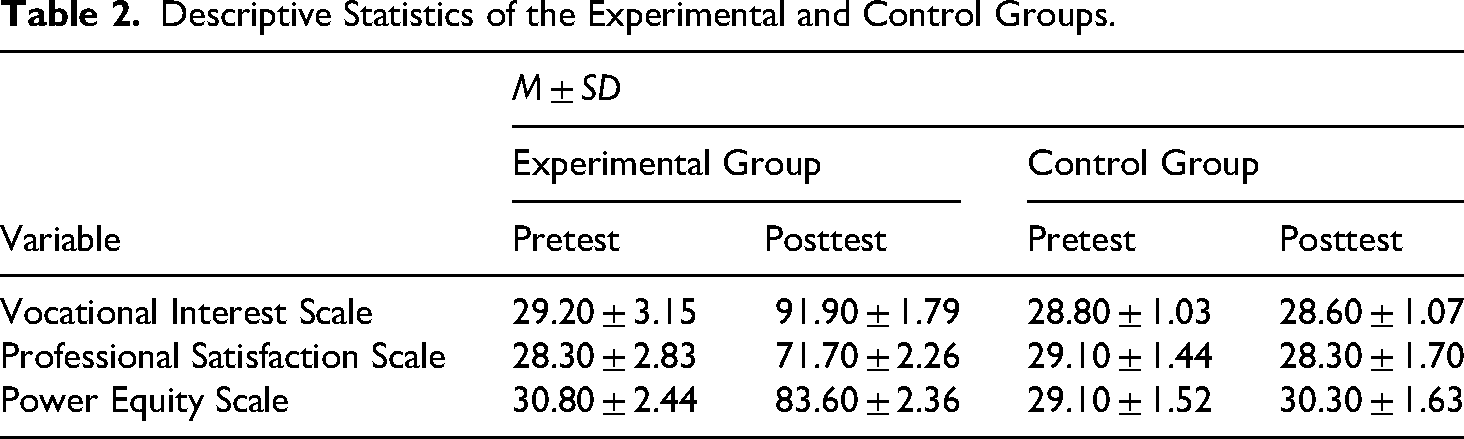
The findings are included within the framework of the three research questions of this study. In order to answer these three research questions, first the arithmetic average scores of the experimental and control groups from the pretests and posttests were examined. According to the analysis results, a difference was observed between the arithmetic average scores of the experimental and control groups (Table 2). It was observed that the arithmetic average scores of the experimental group continued to increase throughout the gender-sensitive group supervision process, while the arithmetic average scores of the control group did not increase.
Descriptive Statistics of the Experimental and Control Groups.
In order to verify the three research questions of this study, the Wilcoxon signed-rank test was used to test whether there was a significant difference between the scores obtained through The Vocational Interest Scale, The Professional Satisfaction Scale, The Power Equity Scale between the experimental and control groups. As a result of the analysis, significant differences were found between the arithmetic average scores (Table 3). In other words, at the end of gender-sensitive group supervision, the vocational interests, professional satisfaction, and level of gender-sensitive intervention of the participants in the experimental group increased.
Wilcoxon Signed Rank Test Results for Postsupervision Pretest–Posttest Scale Scores of Experimental and Control Groups.
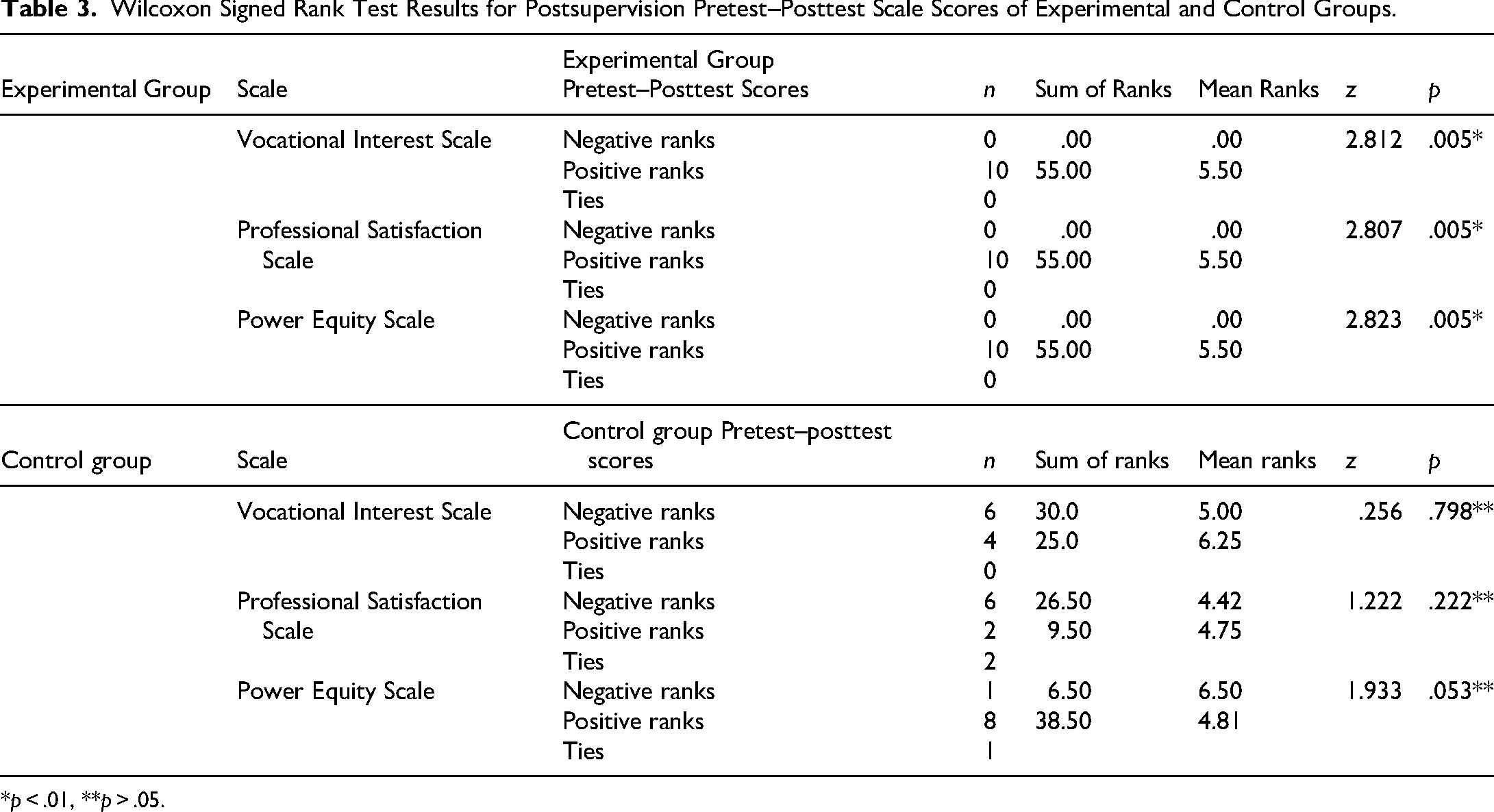
*p < .01, **p > .05.
Discussion
This research examines to improve social workers’ vocational interests, professional satisfaction, and gender-sensitive practices through group supervision. The results of this study showed that the professional satisfaction and vocational interest of social workers in group supervision increased, and they became more sensitive to gender-sensitive issues in their practice.
It is stated that the role of the person providing group supervision is important (Dolace, 2022). A study examining the experiences of 671 supervisees and 109 supervisors showed that holding group sessions an average of twice a month and regularly scheduled meetings established a good relationship between supervisees and the supervisor (Shulman, 1982). In this study, group supervision facilitated learning of interview techniques and case management, particularly in gender-sensitive practices.
Wilbur et al. (1994) presented a 7-year pilot study on the structured group supervision model. The study investigated the effectiveness of group supervision on skill development for 194 postgraduate psychological counseling students who participated between 1983 and 1990. The results indicate that group supervision supports personal and professional skill development, intellectual-cognitive activities, and the ability to reflect emotional reactions. Findings regarding the positive effect of group supervision on empathy skills also align with other research (Blane, 1968; Lambert, 1974). Additionally, a 2-year study in Israel compared the experiences of 59 students receiving group supervision with 245 students receiving individual supervision. Self-evaluation surveys revealed findings related to interaction with clients, internalization of professional values, supervision experiences, learning, and overall satisfaction (Zeira & Schiff, 2010).
Hoese (1987) examined the behavior of peers receiving group supervision and found that peers tended to support each other in creating a mutually comfortable group environment. Supervision practitioners set goals and provide feedback to help group members evaluate their work and offer direct assistance or advice regarding client contacts. Similarly, a study on group supervision conducted over 18 months showed significant increases in psychotherapeutic skills (Ögren & Jonsson, 2003). Another study found that group supervision was effective in all subdimensions of counseling self-efficacy, including discovery, insight, action, relationship conflicts, and client problems (Bakalim et al., 2018). Choi (2017) examined the effects of high-level supervision on the professional competencies of 229 social workers in a community welfare center, analyzing administrative, educational, and supportive supervision effects. Findings indicated that social workers under supportive supervision had the highest professional competence scores and that supervision positively impacts practice, skills, and client support. However, supervision's influence on research activity can be both positive and negative. Tu et al. (2023) investigated the relationship between negative affect, psychological distress, supervision support, and job demands among 489 social workers. Results showed that supervision reduces negative affect and psychological distress, while high job demands increase them. Social workers receiving both individual and group supervision showed lower negative affect and distress compared to those receiving only individual supervision under high job demands. Frazier (2020) studied the relationship between burnout perception and perceptions of supervision and organizational support among 115 social workers. The study found that supervision support significantly predicted emotional exhaustion, while organizational support predicted both emotional exhaustion and depersonalization. Neither supervision nor organizational support predicted personal accomplishment.
Walter and Young (1999) conducted a qualitative study comparing students’ satisfaction with group supervision and individual supervision during child welfare internships. In individual supervision, students managed their own learning process, improved clinical skills, and benefited from the supervisor's individual attention and case-specific knowledge. Group supervision allowed for broader perspective evaluations of cases and long-term goals. Additionally, group supervision facilitated mutual verification, peer support, and identification of important intervention points.
Yaroshenko and Semigina (2023) reviewed components of social workers’ gender competence and developed a 72-hr pilot training program aimed at integrating gender-sensitive and feminist social work theories and methods. The program consisted of four modules: commitment, practice, participation, and support. The pilot results indicated that building gender competence was associated with increased knowledge, internalization of gender equality as a value, and supervisor support for gender-sensitive practice.
Luke and Goodrich (2013) examined the applicability of the LGBTQ+ Responsive Group Work Supervision Model—a trans-theoretical supervision framework addressing LGBTQ+ needs—in school group supervision. Fifteen school counselors participated in 60-min group supervision sessions every 3–4 weeks. The most common role and focus combinations were consultant-awareness and supervisor-knowledge and skill. The model was found to provide a systematic framework for understanding knowledge, awareness, and skills, supporting its use in advocacy consultancy education. The study partially supported the model's applicability with school counselors in training.
Most group supervision interventions in this study focused on mindfulness at the group level. Another study indicated that gender-sensitive group work can enhance social workers’ empathy toward LGBTQIA+ people and reduce homophobia, preparing them to better serve LGBTQIA+ communities (Kara & Serpen, 2023b).
Limitations of Study
This study has several limitations that should be acknowledged. First, the sample size was relatively small, which limits the generalizability of the findings to a broader population of social workers. Additionally, the diversity of participant needs within the group sessions posed challenges in addressing all perspectives adequately. The relatively large number of participants in the group supervision sessions extended the time required to cover and discuss topics in depth. To address this, future research could consider reducing the number of participants per group or extending the duration of the sessions to allow for more thorough engagement. Second, participant self-selection may have introduced potential biases, as those who volunteered for the study might differ in motivation or characteristics from those who did not participate. This factor should be taken into account when interpreting the results. Third, while the study incorporated some qualitative data through participant statements, the analysis primarily focused on quantitative findings. Employing mixed-methods approaches in future research would allow for a more comprehensive evaluation of the supervision process, capturing both measurable outcomes and richer experiential data. Finally, participants expressed a desire for ongoing group supervision and more extensive case analysis, indicating the need for longer intervention periods. Future studies could benefit from increasing the duration of group supervision to accommodate these needs and enhance the depth of case discussions.
Conclusion and Implications for Future Social Work Practices
This study set out to enhance the vocational interests, professional satisfaction, and gender-sensitive practices of social workers through the implementation of group supervision. The intervention included activities such as exploring professional identity, meaningful expression of emotions and experiences, identification of individual strengths, learning about gender-sensitive approaches, and engaging in case analyses. The results demonstrated statistically significant improvements in the experimental group compared to the control group across all measured outcomes, underscoring the positive impact and effectiveness of group supervision as a developmental tool in social work practice.
Supervision, while widely recognized as an essential component of social work education and professional development internationally, remains an underexplored and underutilized practice in Türkiye. In countries with advanced social work systems, approaches to supervision may vary due to differing historical, political, and economic contexts, but there is broad agreement regarding its critical role in promoting reflective practice, ethical standards, and practitioner well-being. In contrast, Türkiye currently lacks a structured, formalized supervision system, resulting in various challenges, including inconsistent quality of services and ethical vulnerabilities. The employment of nonsocial work professionals in supervisory or managerial roles within social services further complicates this issue and underscores the urgent need for a comprehensive and regulated supervision framework tailored to the local context.
The challenges are particularly acute in relation to services for individuals with diverse gender identities, sexual orientations, and expressions—areas where service provision remains underdeveloped and supervision could serve as an important mechanism to improve both sensitivity and effectiveness. The absence of systematic supervision contributes to risks of human rights violations, ethical breaches, and inappropriate interventions, especially concerning LGBTQIA+ people. Thus, social work supervision should not only aim to support practitioner development but also to function as a critical tool for monitoring and upholding ethical practice standards across diverse and sensitive client populations.
At present, supervision practices in Türkiye are predominantly voluntary and lack institutionalization, and there is a notable gap in systematic research focusing on group supervision in the social work profession. Expanding access to and integrating group supervision into routine social work practice across various fields is essential for enhancing the professional competence, resilience, and overall well-being of practitioners. Establishing a formalized supervision infrastructure would also contribute significantly to service quality improvement and ethical governance. National professional organizations such as the Association of Social Workers in Türkiye are well placed to spearhead efforts to design, pilot, and institutionalize such supervision systems, drawing on international evidence-based models while adapting them to local needs.
To build upon the current findings, future studies should adopt longitudinal research designs to assess the durability of group supervision's effects on social workers’ professional development and practice over time. Moreover, research should explore tailored supervision interventions adapted to different social work specialties, client groups, and organizational contexts to identify best practices and contextual facilitators or barriers. Utilizing mixed methods approaches would provide a more comprehensive understanding by integrating quantitative outcome measures with qualitative insights into practitioners’ experiences and perceptions of supervision processes. Additionally, future research should prioritize recruiting larger and more diverse samples to improve the external validity and generalizability of results. Exploring the impact of supervision on client outcomes, including those related to services for marginalized and gender-diverse populations, would further strengthen the evidence base. Investigating how supervision practices can effectively address intersectional issues and systemic barriers within social work practice is another critical avenue for research development.
The study's findings have important implications for social work policy and practice in Türkiye and similar contexts. Policymakers should prioritize the development and institutionalization of structured supervision frameworks as a standard component of social work education and professional regulation. This includes formal incorporation of group supervision into undergraduate and graduate curricula, as well as mandatory continuing professional development requirements for practicing social workers. Furthermore, policies must ensure that supervision roles are held by qualified social work professionals with appropriate training, to safeguard ethical standards and enhance service quality. Support mechanisms such as supervision training programs, resource allocation, and organizational policies that encourage and facilitate regular supervision sessions are essential for sustainable implementation.
Professional organizations play a pivotal role in advocating for and supporting the institutionalization of supervision, including the provision of training, certification, and supervision networks. Cross-sector collaboration among academic institutions, professional bodies, and service providers is vital to creating a coherent system that supports social workers’ continuous learning and accountability. Finally, strengthening supervision infrastructure contributes directly to more effective, ethical, and culturally competent services for clients, particularly marginalized groups such as LGBTQIA+ populations. By investing in supervision, the social work profession can enhance practitioners’ capacity to respond sensitively to complex client needs and promote social justice more broadly.
Footnotes
Acknowledgements
The authors would like to thank the participating social workers for their valuable contributions and the Association of Social Workers for their support throughout the research process.

Ethical approval and informed consent statements
This study was conducted in accordance with the ethical standards of World Medical Association Declaration of Helsinki. At the same time, ethics committee permission was obtained from the Association of Social Workers in Turkey.
Funding
The authors received no financial support for the research, authorship, and/or publication of this article.
Declaration of conflicting interests
The authors declare that there is no conflict of interest in the publication of this article.
Data availability statement
The data supporting the findings of this study are available from the corresponding author upon reasonable request.