







Abstract
In the wake of the global economic crisis in 2008, the Cambodian government responded actively to the impact of the crisis by initiating various policy measures for social protection. Most importantly, it launched a National Social Protection Strategy (NSPS) in 2011 with a major focus on social assistance targeted at the poor, children and the disabled. How did this social protection policy come about? Was it driven by international influence or is it an outcome of national policy ownership? In order to answer these questions, this article analyses the interactions among global and national actors in the policy dynamics of Cambodia’s NSPS; it is intended to disentangle the complex politics of global social policy at the national level.
Introduction 1
Cambodia is one of the poorest countries in the world, with tragic historical events that remain vividly in the minds of its people. Its economy is predominantly agricultural and depends on a small but young population. The country faces many development challenges. In 2009, Cambodia ranked 139 out of 187 countries in the United Nations Development Programme’s Human Development Index (HDI; UNDP, 2009). Malnutrition in rural areas is widespread with relevant indicators stagnating since 2005 (World Bank, 2009). A large number of donor agencies, both bilateral and multilateral, have worked together with Cambodian partners to promote economic and social development. As a result, from 1998 to 2007, Cambodia’s annual economic growth averaged 9% and the economy has continued to grow – except during the peak of the financial crisis in 2008–2009. Such growth has largely been generated by the garment and tourist industries (Hun, 2009). Although the country has achieved impressive poverty reduction, poverty still poses a major challenge, with 22.89% of the population living below the new official poverty line of 3871 riel (about US$1) per day (Ministry of Planning, 2013: 10), and a large portion still lingering just above the poverty line of US$1.25 per day (World Bank, 2009).
In the wake of the global economic crisis in 2008–2009, Cambodia’s economy suffered a significant downturn. Several industrial sectors – such as textiles and construction, which had been the key driving forces of economic development in Cambodia – were affected, displacing approximately 13,000 workers (International Labour Organization [ILO], 2012). The food and oil shocks had a greater direct impact, with the country experiencing negative rates of growth as food and general consumer prices reached their peak in 2009.
The Cambodian government responded actively to the impacts of the crisis, initiating various policy measures for social protection. In 2008, it removed restrictions on food imports to avoid inflating food prices. In addition, the World Food Programme (WFP) provided 3000 metric tons of rice to support the effort of the Cambodian government. More importantly, a National Social Protection Strategy (NSPS) was launched in April 2011 with the aim of mobilising government efforts to ensure better social protection for the Cambodian people; it covers a wide range of policy initiatives for social protection in Cambodia, with a major focus on social assistance targeted at the poor, at children and at the disabled. National plans that emphasise social assistance on a comprehensive scale are not very often devised in less developed countries, and the study into the Cambodian case will not only enable us to understand the dynamics of global social policy at the local level, but also provide policy implications for other developing countries such as Myanmar which contemplates similar measures.
How did this strategy for social protection come about? What was the policy rationale for the social protection strategy? To what extent was it driven by international agencies, and what was the role of the Cambodian government? This article sets out to answer these questions by analysing the policy dynamics of Cambodia’s NSPS. By answering them, the article aims to disentangle the complex politics of global social policy, especially at the national level. By bringing deeper understanding of the dynamics of bureaucratic politics, the article will show the limit of global social policy discourse, which has a strong normative over-tone and call for further research on the real politics of social policy in developing countries.
In the literature on global social policy and development, we can identify competing strands of argumentation regarding social policymaking in developing countries. One strand emphasises the global influence on national social policymaking, while another sees national initiatives as the main driver of social policy. Since its transition to the current constitutional settlement in 1993, Cambodia has been a focus of international development assistance, with so many international and bilateral agencies active that some commentators have described it as a donor playground (Fforde and Seidel, 2010). In this context, it is plausible to put forward an argument that Cambodia’s NSPS might have been an outcome of global policy influence. In contrast, previous studies of social policy in East Asia place strong emphasis on the efforts of national governments to pursue economic development in general and in particular to steer their countries through global crisis (Kwon, 2005). In recent years, there have been concerted efforts to enhance the control and responsibility of developing country governments – an agenda that is referred to as policy ownership (Booth, 2011). In the 2005 Paris Declaration on Aid Effectiveness, development partners agreed that developing countries should exercise effective leadership over their growth policies and strategies, and coordinate development actions, while donors should commit to respecting partner country leadership and helping to strengthen their capacity to exercise it (OECD, 2005). The concept of national ownership was proposed as one of the norms of international development cooperation.
At the same time, some donor agencies complained that they were losing influence over the Cambodian government (McCargo, 2005). Such efforts and observations lead to the second interpretation, which was based on the idea of national ownership. Is Cambodia’s NSPS a policy consequence of national ownership or another example of global influence? In this article, we will analyse the interactions among global and national actors in social policymaking in Cambodia. Before analysing the case, we will elaborate on these two competing contentions, which this article will examine with reference to Cambodia’s NSPS.
Global influence and national ownership
In the 1990s, when the wave of globalisation discourse reached its peak, some commentators argued that market-driven globalisation would render the role of actors and institutions of national governments marginal in making public policy (Ohmae, 1995). National governments would have less space for implementing social protection measures due to the power of transnational corporations (Strange, 1996). International agencies such as the International Monetary Fund (IMF) and the World Bank pursued policies of public sector liberalisation and welfare retrenchment, while some developed countries also reduced their social spending in order to remain competitive in the global market – in this vein, for instance, New Zealand carried out rigorous public sector reform in the 1990s (OECD, 1999). Nevertheless, some national governments and local interest groups such as trade unions and civil society organisations resisted the wave of neoliberal reform (Yeates, 2002). East Asian countries such as South Korea and Taiwan strengthened their social policy as a way to navigate through the East Asian economic crisis (Chen, 2005; Kwon, 2007). In South Korea, the government improved social protection programmes with strong support from trade unions and civil society organisations. 2 In these cases, the national policy for social protection stood against the global influence of retrenchment.
Following the global economic and financial crisis in 2008, there has been a significant shift in the global paradigm of social protection from neoliberal orthodoxy towards a more inclusive social policy framework. Deacon (2011) argues that an epistemic community has emerged around global social policy that recognises the positive relationship between social protection and economic development and has strengthened its persuasive power. Taking advantage of the opportunity that arose in the wake of the global financial crisis, international agencies convened global conferences to push the social agenda forward. Influential international organisations such as the ILO and the United Nations Children’s Fund (UNICEF) have argued for and pushed forward policy initiatives for social protection, resulting notably in ILO Recommendation 202 on the ‘Social Protection Floor’. United Nations Department of Economic and Social Affairs (UNDESA) and the ILO, together with global civil society organisations, convened international conferences such as on ‘A New Deal for People in a Global Crisis: Social Security for All’ (Ortiz, 2009). The keynote presentation of the conference argued for income support through non-contributory pensions for the elderly and the disabled, universal child benefits, universal access to essential health care and food security (Ortiz, 2009), premised on the human right to social security. Apart from those traditionally socially conscious agencies, the World Bank and the IMF have also shifted their position to some degree, now seeing social protection as an essential part of development and concurring that national governments can take advantage of the developmental attributes of social policy for economic purposes.
Following the Asian financial crisis, an emerging policy consensus is becoming visible at the global level that strengthening social protection in developing countries is necessary for protecting the poor while also steering economies through crisis. Nevertheless, it is less clear whether and how the emerging global idea of social protection is influencing policymaking in developing countries. Are national policymakers in developing countries willing to accept global policy ideas? Or do they only passively receive them? Alternatively, have they in fact shaped this global consensus? Here, we recognise the possibility of the reverse direction of influence – that global ideas are shaped by national innovation – as in the case of conditional cash transfers (CCTs) in Mexico. It is true that international agencies and financial institutions have expertise and funding, but national policy stakeholders have their own interests and motivation to resist or accept external influence and pressure – although they may lack financial resources and policy skills to do so. What are the political strategies of the national actors in the face of global influence? Those who emphasise changes in the global idea of social protection, such as Deacon (2011), do not elaborate on how it is transferred to national policymaking. There are other important questions regarding the transfer of policy ideas – vis-à-vis the flow between the North (donors) and the South (recipients), and between global, regional and national levels – but this article is mainly concerned with global influence on national policymaking (Dolowitz and Marsh, 2000).
Before, we examine the argument of global influence in the national context, we discuss the idea of national ownership as a contrasting perspective. Despite the range of different interpretations and understandings of national ownership, essentially this refers to the control over policymaking and implementation exercised by the national government to achieve its development objectives (Whitfield and Fraser, 2009). The discussion of national ownership stems from criticisms of the effectiveness of international development cooperation. Mosley (1986) highlights the problem of what he calls the ‘micro-macro paradox’ in which successful aid projects at the micro level do not necessarily lead to economic development at the macro level. Burnside and Dollar (2000) explain how global ideas of development policy failed to produce the desired outcomes in developing countries. Based on econometric analyses, they argue that international aid to developing countries fails to achieve policy objectives unless certain institutional conditions are met within those countries – such as sound fiscal management and trade openness. While this line of research points to the lack of institutional conditions for aid effectiveness or ineffectiveness, other lines of argument also exist. Some argue that nationally conceived development policy would better address challenges than ideas imported from outside (Tujan, 2008), while others question the underlying intention of global agencies and donors participating in international development cooperation. For instance, Moyo (2009) argues that the reason why aid has not worked is that it serves the interests of donor countries rather than those of recipients.
In response to such criticisms of international aid, the High Level Forum on Aid Effectiveness – supported by the Development Assistance Committee of the Organisation for Economic Co-operation and Development (OECD DAC) – strongly emphasised in its 2005 Paris Declaration that the developing countries should exercise policy ownership (OECD, 2005). In the declaration, policy ownership is defined in two ways. First, developing countries should exercise effective leadership over their development policies and strategies, and coordinate development actions, and second, donors should respect partner–country leadership and help strengthen their capacity to exercise it (OECD, 2005: 5). The Paris Declaration requires developing countries to carry out broad consultative processes in the promotion and implementation of national development strategies, and to translate those strategies into prioritised result-oriented operational programmes.
The notion of policy ownership based on the Paris Declaration is a complex and somewhat unwieldy concept. A number of efforts have been made to define policy ownership, emphasising its different components. For example, from the perspective of the relationship between stakeholders, Whitfield and Fraser (2009) define policy ownership as the ‘control’ that a government has in formulating its own policies. The IMF (2002) defines ownership as ‘a willing assumption of responsibility for an agreed programme of policies by officials in the recipient country’ (p. 8). The United Nations Conference on Trade and Development (UNCTAD) states that a country has policy ownership when available resources are used for the recipient country’s own priorities, rather than for the priorities of donors (UNCTAD, 2007), such understanding of international organisations emphasises the importance of political and financial commitment from the national government side.
Despite the complexity of the concept, since the Paris Declaration, efforts have been made by global agencies, bilateral donors and governments of developing countries to strengthen national ownership. When policy strategies such as medium-term development plans are launched, national governments often claim that they have exercised ownership over those policies. With such emphasis on national ownership, are national policymakers less likely to be influenced by global ideas? Or has it led to different dynamics through which global ideas are transferred to national policymaking – in particular if national ownership implies the financial commitment of national governments?
We have discussed two strands of arguments about the link between global ideas and national policymaking. However, in order to examine these arguments more closely, we need to answer a certain number of questions. How do policy actors at the national level respond to global influence? Are national policymakers in developing countries willing to accept global policy ideas or do they resist them? What are the underlying motivations of those political strategies when they accept global policy ideas? To answer these questions in relation to Cambodia’s NSPS, we examine national-level policy dynamics and how global and national policy actors interact.
This article will consider the role of policy actors focusing on their ideas and motivation in shaping the policy process. In doing so, it takes a historical institutional approach, analysing the institutional settings within which actors interrelate (Deacon and Stubbs, 2013; Hall, 1986). Although formal rules are weak in many developing countries, including Cambodia, there are established procedures and practices in which international and national actors engage in the process of policymaking. International agencies do not just come to the national policy setting and put forward their policy proposals, but need to follow certain rules and practices in the national context. Thus, it is very important to identify those procedures and practices at the national level.
The political context and institutional setting in Cambodia
Since the end of France’s colonial rule, Cambodia has undergone decades of tragic turbulence. Until 1975, the fragile government had received aid and assistance from foreign donors to secure political neutrality and restore the country’s war-torn economy (Kim, 2012). In the subsequent 4 years, during which Pol Pot and the Khmer Rouge took power, however, Cambodia experienced one of the most unfortunate episodes in its history (see Figure 1). Amid persisting war, the Khmer Rouge intended to eradicate all traces of capitalism, resulting in massacres in various ‘killing fields’ across the country. 3
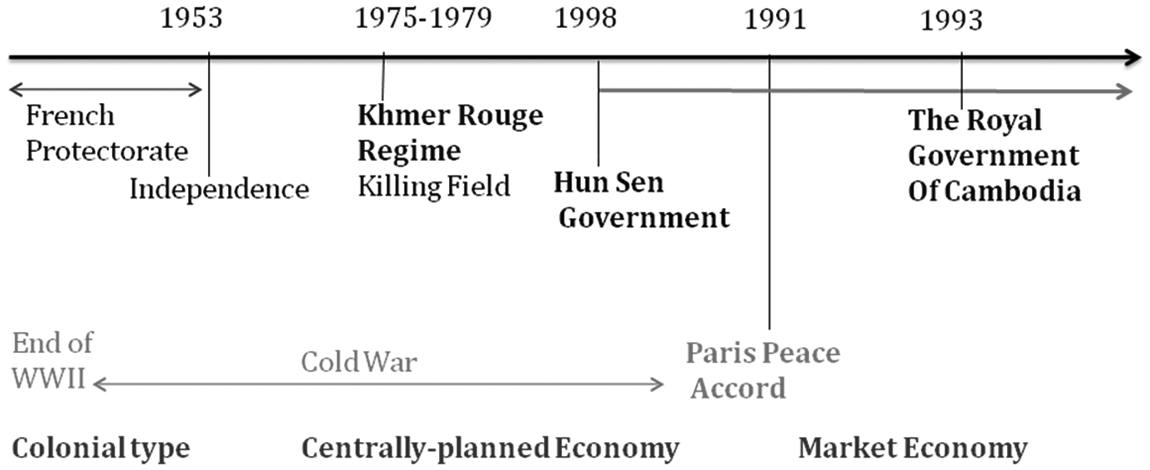
Timeline of Cambodia’s contemporary history in the 20th century.
Due to the historical turbulence and prolonged isolation from the international economy, Cambodia remained one of the poorest countries in the world, and was forced to rely greatly on foreign donors (Godfrey, 2002). The United Nations Transitional Authority in Cambodia (UNTAC), in particular, facilitated the creation of a new and modern government. Following general elections and the introduction of a new constitution, the Kingdom of Cambodia was restored in 1993. At the same time, major international agencies were also actively engaged in the development process. In 1996, soon after the establishment of an International Committee on the Reconstruction of Cambodia, which was in charge of overseeing the rehabilitation process, a Consultative Group (CG) chaired by the World Bank was set up. In 2007, the government decided to transform the CG into the Cambodia Development Cooperation Forum (CDCF).
The government presided over the Forum – although in practice it was the Ministry of Economy and Finance (MEF) that exercised chairmanship on behalf of the government (DFID, 2007) – which was expected to provide the government with an opportunity for dialogue with its development partners and civil society in the context of preparing a National Strategic Development Plan Update for 2009–2013 (NSDP Update). Together with a number of foreign donors, the new government set its priority on sustainable socioeconomic development and combating poverty. While dialogue with international donor agencies is an important task for the government, internal coordination among policymakers of different political factions and ministries of the government is an equally difficult task.
Prime Minister Hun Sen, who has been in power since 1985, is currently the longest serving leader in the South-East Asian region, having reassumed his position as Prime Minister in 1998. The political settlement continues to be fragile, however, making it difficult for the government to embark on any ambitious plans that might upset the political compromise. In the current Cambodian government, headed by the Prime Minister, there are 10 Deputy Prime Ministers, 16 senior ministers and 26 other ministers, many of whom belong to diverse political factions. There are also inter-ministerial bodies under the Council of Ministers, such as the Supreme National Economic Council, the Council for Administrative Reform and the Council for Agricultural and Rural Development (CARD). As Cambodian politics is based to a great extent on patron–client relations, compromise and consensus are the two important currencies of the government (Kim, 2012). However, the ministries – and the bureaucrats working within them – are keen to keep outsiders away from their areas of work. Development policies, including the NSPS that the Cambodian government has tried to implement need to be analysed against such quite rigid backdrop of bureaucratic politics.
The structure of the NSPS and policy rationale
Given the social and economic hardship facing the poor in developing countries, social protection systems for them are often very inadequate. Social insurance and other formal social policies are limited to only a small section of the population – primarily government officials and large-scale industrial workers. The poor have been left outside the state social protection system, and even the social assistance available to them tends to be very limited. In this context, the NSPS launched by the Cambodian government is very important since it is intended to provide social protection for the poor and vulnerable. The main rationale of the NSPS comprises three approaches:
Protecting the poorest and most disadvantaged who cannot help themselves;
Preventing the impact of risks that could lead to negative coping strategies and further impoverishment;
Promoting the poor to move out of poverty by building human capital and expanding opportunities – including the access to health, nutrition and education for poor households (Royal Government of Cambodia [RGC], 2011).
In a nutshell, it aims to strengthen the developing human capability with social protection measures. More importantly, the NSPS is intended to resolve the problems of fragmented social assistance programmes that have been implemented by different line ministries and international agencies, and is set to rearrange existing schemes and create a synergistic effect among programmes operated by different ministries (see Figure 2). 4
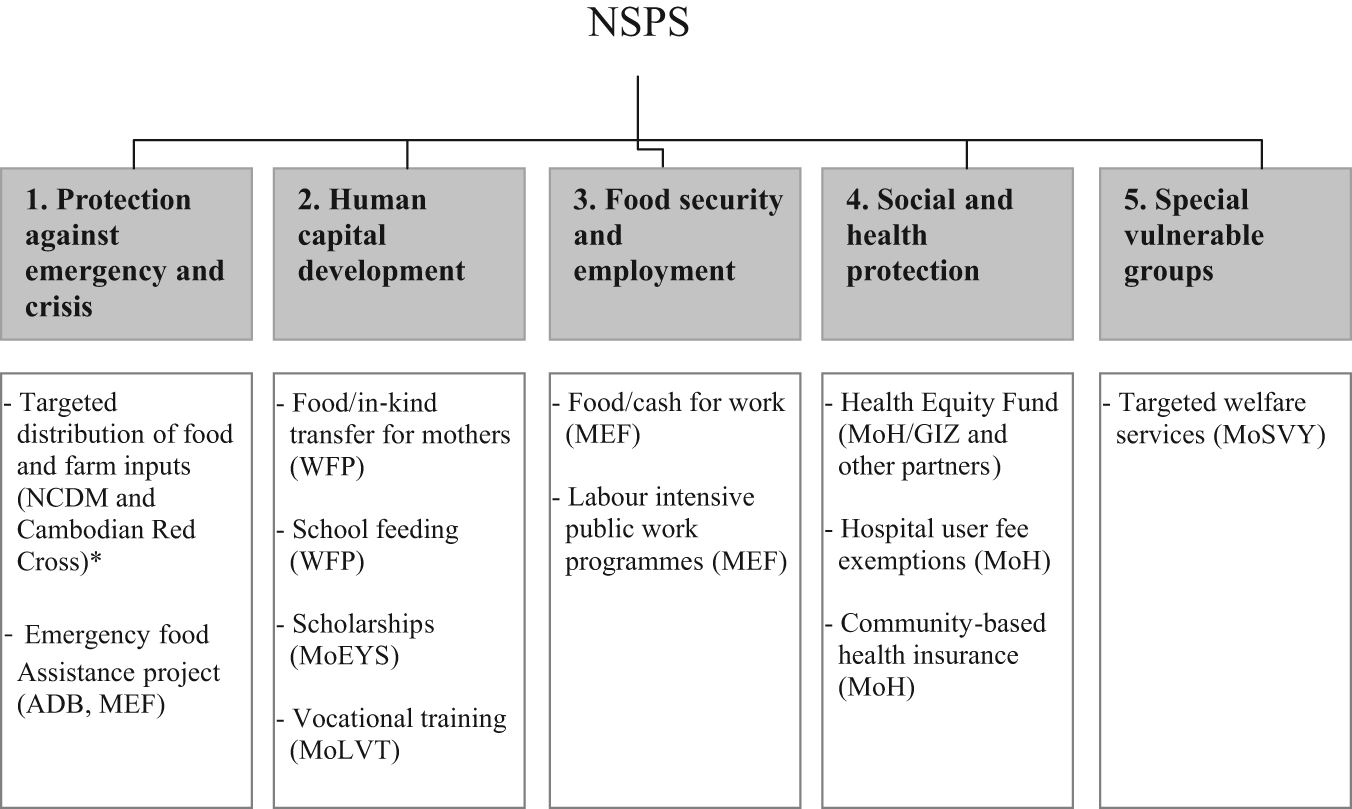
Five objectives of the NSPS. *The acronyms in brackets represent the agencies in charge of each programme.
How did this strategy for social protection come about? Many of the social assistance programmes within the NSPS are at a considerably basic level. Nonetheless, considering the various difficulties with which Cambodia has been faced, the NSPS is indeed an important breakthrough in the development of social protection. In order to analyse the process of creating the NSPS, it is necessary to begin with Cambodia’s national development plans since the 1990s, since the NSPS forms part of the national plans for development. The article will pay attention to the three aspects of the dynamics of NSPS policymaking in particular – the interaction between government policymakers and international agencies, their interest and motivation, and the institutional settings in which those policy actors interact with each other.
Influence of global agencies and changing motivations of national policymakers
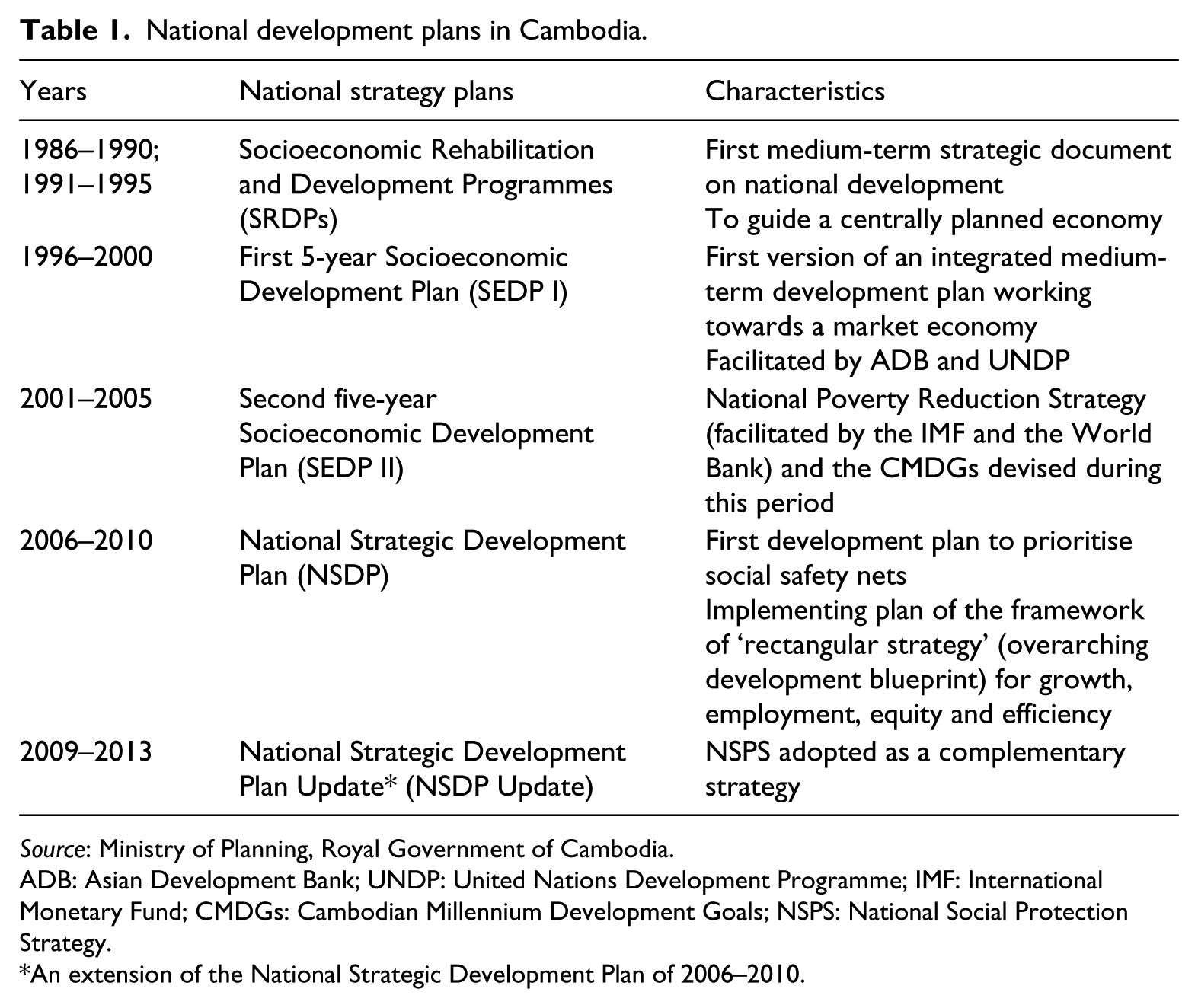
Let us begin with the evolution of the national development plan, which subsequently set the context for the NSPS. The international agencies played a prominent role in the preparation of the 5-year socioeconomic development programmes after the peace settlement. They continued to play an active role in the preparation process until the National Strategic Development Plan Update (NSDP Update) 2009–2013, the latest long-term development plan, was introduced (see Table 1).
National development plans in Cambodia.
Source: Ministry of Planning, Royal Government of Cambodia.
ADB: Asian Development Bank; UNDP: United Nations Development Programme; IMF: International Monetary Fund; CMDGs: Cambodian Millennium Development Goals; NSPS: National Social Protection Strategy.
An extension of the National Strategic Development Plan of 2006–2010.
During the initial period of preparing a national development plan in the late 1990s, it was obvious that rehabilitation and reconstruction would be top policy priorities, no matter who took the initiative. The plan placed primary emphasis on macroeconomic growth, social development and poverty reduction. With respect to its deliberation and preparation, there were numerous actors involved, both internal and international. Key actors involved in preparing the plan included the MEF, sponsored by the World Bank and the IMF; the Cambodian Rehabilitation and Development Board, supported by UNDP; and the Ministry of Planning, assisted by the Asian Development Bank (ADB). Although the development plan appears to have been proposed by the Cambodian government, considerable foreign assistance was involved in its creation (see Table 1).
International agencies worked together with various government ministries, according to their respective scopes of work. ADB assisted the Ministry of Planning by funding a team of consultants to design Socioeconomic Development Plan II (SEDP II), which was completed in 2001. SEDP II was not only centred on the reduction of poverty but also reflected the long-term objectives prioritised by ADB – economic growth, social and cultural development and sustainable use of natural resources. Meanwhile, IMF and the World Bank requested the government to produce an additional strategy document as a condition for receiving concessional loans (Nagasu, 2004). The two international agencies assisted the Council for Social Development – an inter-ministerial body presided over by the Minister of Planning – in preparing the National Poverty Reduction Strategy, a Cambodian version of the Poverty Reduction Strategy Papers (PRSPs), which stresses objectives similar to those in SEDP II. Here again, while the PRSP draft was drawn up by officials from the MEF, the experts and consultants from the World Bank played prominent roles during the work (World Bank, 2004). The Ministry of Planning presented the Cambodian Millennium Development Goals (CMDGs) in 2003 as a follow-up in the elaboration of blueprints for the country’s development. However, the contents of the CMDGs were by and large similar to the United Nations Millennium Development Goals, with only a few changes added to fit them into a national context.
In putting these medium-term plans together, the Cambodian government was willing to receive influence from the global agencies and bilateral donors. In 1999, Prime Minister Hun Sen spoke about the donors’ request for reform:
We welcome any well-thought suggestions and consider them as common concerns by one partner in development for the difficulties, welfare and progress of another partner. All reform measures designed and currently implemented by us are Cambodia’s own needs. . . . We welcome and accept all these suggestions and recommendations, for they respond to our needs for reforms. Moreover, as an aid recipient country Cambodia should assure donors about its transparency. (Ear, 2009: 164)
The statement clearly indicated that the Cambodian government was willing to accept the donors’ request for reform, and is clearly consistent with the argument of global influence in policymaking. As McCargo (McCargo, 2005) points out, it was also in Cambodia’s interest as the government was keen to see the flow of foreign aid pouring in continually. Since the establishment of the Royal Government of Cambodia in 1993, foreign assistance has accounted for more than 50% of the government budget. Working with donors on medium-term plans and on the MDGs would imply further inflow of foreign aid. There was also a political reason why the Cambodian government was willing to work with global actors. According to Ear (2009: 162), it was the desire of Cambodia’s political leadership for external political legitimacy that induced the government to accept global influence. Having been a ‘pariah state’ throughout the 1980s, the Cambodian government was eager to be recognised and accepted by the international community.
By the mid-2000s, the Cambodian government started to express explicitly its ambition to assert sovereignty over policymaking for national development. During the first cabinet meeting of the new government in 2004, Prime Minister Hun Sen presented a ‘Rectangular Strategy’ for economic development, which emphasised growth, employment, equity and efficiency. Nevertheless, the core theme of the strategy was good governance, a term favoured by global institutions. 5 Built on the subsequent Rectangular Strategy Phase II, a new development plan was drawn up for the following 5-year period. The NSDP 2006–2010 stipulated the development of social safety nets as its priority, claiming the government’s full ownership of the national planning process, while also calling upon external development partners for further assistance with funding. In elaborating the NSDP Update 2009–2013, the Cambodian line ministries undoubtedly played a more substantial part than they had previously done. Even so, the role of the external development partners was hardly diminished in the process, particularly in terms of technical assistance.
Still, the government began firmly to resist some of the demands from donors. For instance, the recommendations by donors on transparency and corruption were rebuffed by the Cambodian government as interference. In 2005, Hun Sen was reported as saying,
I request that donor countries give Cambodia back her sovereignty. Because I think that Cambodia loves herself more than others love her. . . . It appears to me that the government of a sovereign country is under pressure from donor countries. (Kong, 2005)
This change in attitude towards donor influence was related to the political consolidation of Hun Sen’s government. It was also linked to the new ‘emerging donors’ among the international development community, most notably China. In 2004, China was Cambodia’s largest foreign investor, with more than US$80 million flowing into the country through the investment of private firms. With this investment, Chinese policymakers such as President Hu Jintao, Premier Zhu Rongji and Foreign Minister Li Zhaoxing visited Cambodia to secure collaboration between the two countries. These official visits often coincided with major investments, such as the US$280 million hydropower plant built by the Chinese in Kampot province. Prime Minister Hun Sen described Chinese development assistance as being ‘without strings’ (Yun, 2006) – which is understandable, as China is typically known to be a less demanding partner among developing countries. Backed by assistance from China, the Cambodian government gradually revealed its desire to assert policy ownership and expressed antagonism towards some of the policies requested by global agencies. Such changing attitude of the government led to uneasy tension over certain development policies between the Cambodian government and the international agencies. For instance, in 2011, the World Bank blocked new projects to Cambodia in a dispute over the forced relocation of thousands of residents near Boeung Kak Lake in the centre of Phnom Penh. This tension between the Cambodian government and the World Bank, which have yet to recover, and constitutes an example of tension between a government and donors over the control of development policy. As we discussed in the next section, such tension influenced the underlying dynamics of interactions between the policy actors involved policymaking in social protection.
Alliance for social protection and veto power
Although poverty reduction has always been a major concern in Cambodia, the policy emphasis has changed over the years. Following the 1991 Paris Peace Agreements – and particularly with the worsening situation of food supply – the main challenge for social protection was food security as the mainstay of basic livelihood. In the early 2000s, policymakers began to explore ideas of social safety nets for the poor as well as investment of human capital – such as education and health care – as vital components of both economic and social development. Nevertheless, instead of being implemented within a systematic framework, the social protection policies were rather instant responses to social and economic contingencies.
The significant impetus for a systematic policy framework came from the global food and financial crisis of 2007–2008. In 2008, the government implemented emergency measures, while the WFP led food relief by mobilising rice for the poor. The pilot projects and provisional programmes for social protection implemented during the crisis turned out to be ineffective. For the top officials of the government, it was necessary to establish a better system of social safety net. The immediate task identified was to structure the existing programmes that were scattered around in different line ministries. Recognising the problems of coordination among line ministries, the Prime Minister requested CARD – an influential inter-ministerial body in the government – to coordinate the government’s social protection work. He also invited donors, who acknowledged the limitations of the existing system, to participate in this effort. It was at the second CDCF meeting in 2008 that the government and development partners agreed to create a social safety net on a national basis that would more effectively cover a wider population. Within the CDCF, an Interim Working Group on Social Safety Nets (IWG-SSN) was instituted. 6 It became an influential policy-making institution for social protection and at the same an important channel for global influence.
The interaction between internal and internal policy actors in the IWG-SSN in preparing the NSPS was far more complex to assert simply that it was influenced by the global agencies. The IWG-SSN was officially chaired by the Cambodian government, and it had power to control of agenda and made final decision. Nevertheless, due to the weak technical capability, the officials of the Cambodian government could not exercise a strong influence over the technical decisions, while policy actors from the international agencies provided such expertise. There was no particular international donor agencies which participated in the IWG-SSN – including ADB and the World Bank, and UN agencies such as UNICEF, United Nations Educational, Scientific and Cultural Organization (UNESCO), World Health Organization (WHO) and WFP – had an overwhelming influence on the work of the IWG-SSN because they had different areas of expertise. At the beginning of the IWG-SSN, the WFP was influential because of their work in the economic crisis of 2008–2009, and at a later stage, the World Bank and ADB were actively involved in direct consultations as well as financial support. As the progress of preparing the NSPS went to the final stage, the role of the World Bank was gradually limited to that of financial supporter and occasional provider of technical advice, while ADB participated consistently in active consultations on scaling up the existing social protection schemes.
Contrary to the expectation either from the perspectives of global influence or national ownership, what emerged from working of the IWG-SSN was an alliance between several Cambodian government officials and global agencies that shared a commitment to social protection. Key members of CARD and the interior ministry who participated in the IWG-SSN increasingly began to share the idea of social protection with global agencies (see Figure 3). As an example, a few government officials, such as the Deputy Minister of Interior and the Deputy Secretary General of CARD, were increasingly aligned with participants representing the donors. These officials were eager to carry out the idea of reinforcing the social protection framework and augmenting the role of the government in the provision of necessary services. 7 This small number of high-ranking officials became something akin to policy entrepreneurs for social protection within the government, while Chairman of CARD and Deputy Prime Minister, Dr Yim Chhay Ly, became the guardian of these officials within the government.
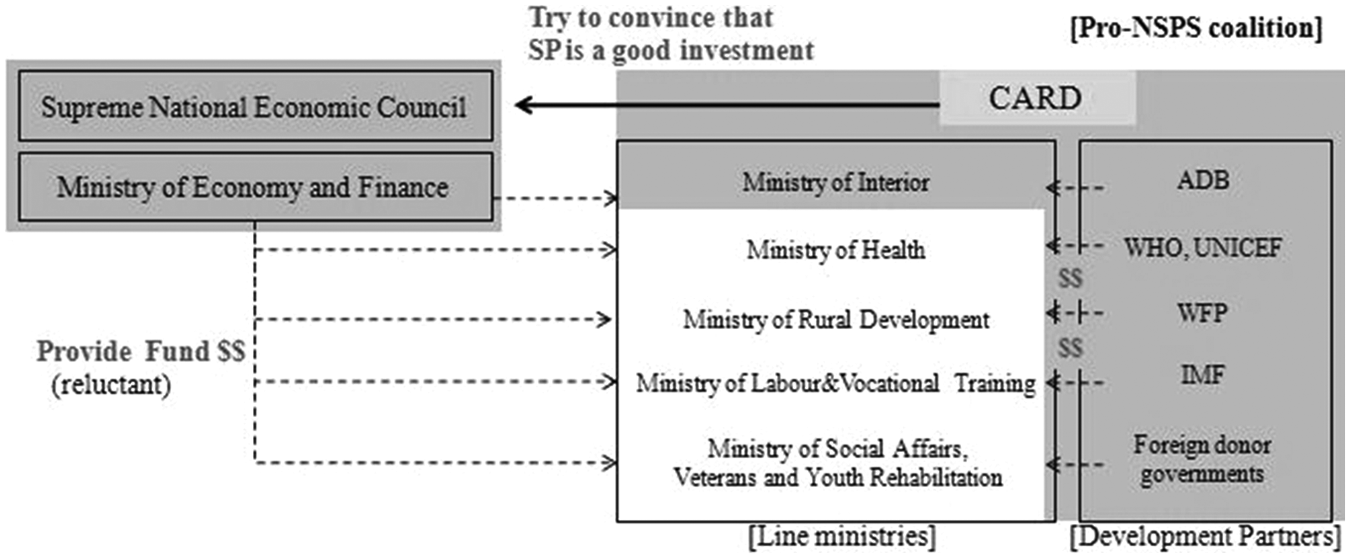
Various actors and alliance in support of social protection.
Although they were not the only contributors, the outcome of their efforts – the NSPS – was marked by unprecedented progress in the field of social protection in Cambodia. The NSPS was promoted within the context of the CMDGs and constructed to fit the long-term vision of the NSDP Update. Its chief goal was to provide an affordable and effective social safety net as well as a contributory social security scheme at national or subnational levels for all Cambodians, concentrating in particular on the poor and vulnerable (RGC, 2011). These main themes of the NSPS, clearly expressed in the report, were shared by these Cambodian officials and donor agencies. In this sense, the NSPS was an outcome of shared ownership between the government and international actors. The Vice Chairman of CARD states clearly,
The social sector has been regarded as a burden on the government budget and has never been the government’s top priority. CARD wants to look at it from a different perspective. Productivity comes from the workers of the real world and actual people from the rural areas. We need to invest in human capital for the nation: training real people and protecting the poor to make them more capable. . . . Social protection, sustainable development and equity will help Cambodia to become a middle-income country.
8
Nevertheless, despite the determination of both CARD and the Ministry of Interior to take full responsibility in the arena of social protection, the issue of financing posed a great challenge for the NSPS. Most importantly, officials from the MEF remained reluctant to make a clear commitment to providing funding for the future. In fact, the MEF had little intention of giving full financial commitment to social protection programmes, preferring instead to have donors to provide the additional funds for protection programmes promoted by the NSPS. 9
In the meantime, donors were only committed to short-term financial responsibility, mainly for the handful of programmes they were involved in during the initial stage. 10 They now wanted the Cambodian government to take over these programmes and manage them through independent financing. Under the NSPS scheme, each programme had its lead ministry, which was also assigned to take charge of its finances and management, as set out in Table 2. However, not only did the ministries responsible for the programmes have limited sources of funding, but they also lacked sufficient influence over the MEF to allow them to demand the budget necessary. The Ministry of Social Affairs, Veterans and Youth Rehabilitation (MoSVY) and the Ministry of Labour and Vocational Training (MoLVT) were the two main providers of social protection, but they were also the actors with the weakest voice among the line ministries. Acknowledging these shortcomings, the next project for CARD – the coordinating agency – was to convince top officials at MEF and on the Supreme National Economic Council to regard social protection as a promising national investment and to increase the government funding allocated for it. However, MEF remained cautious about the responsibility for financing social protection, while the pro-NSPS alliance formed by CARD, the Ministry of Interior and the donor agencies urged MEF to assume shared responsibility.
Financing social protection programmes.
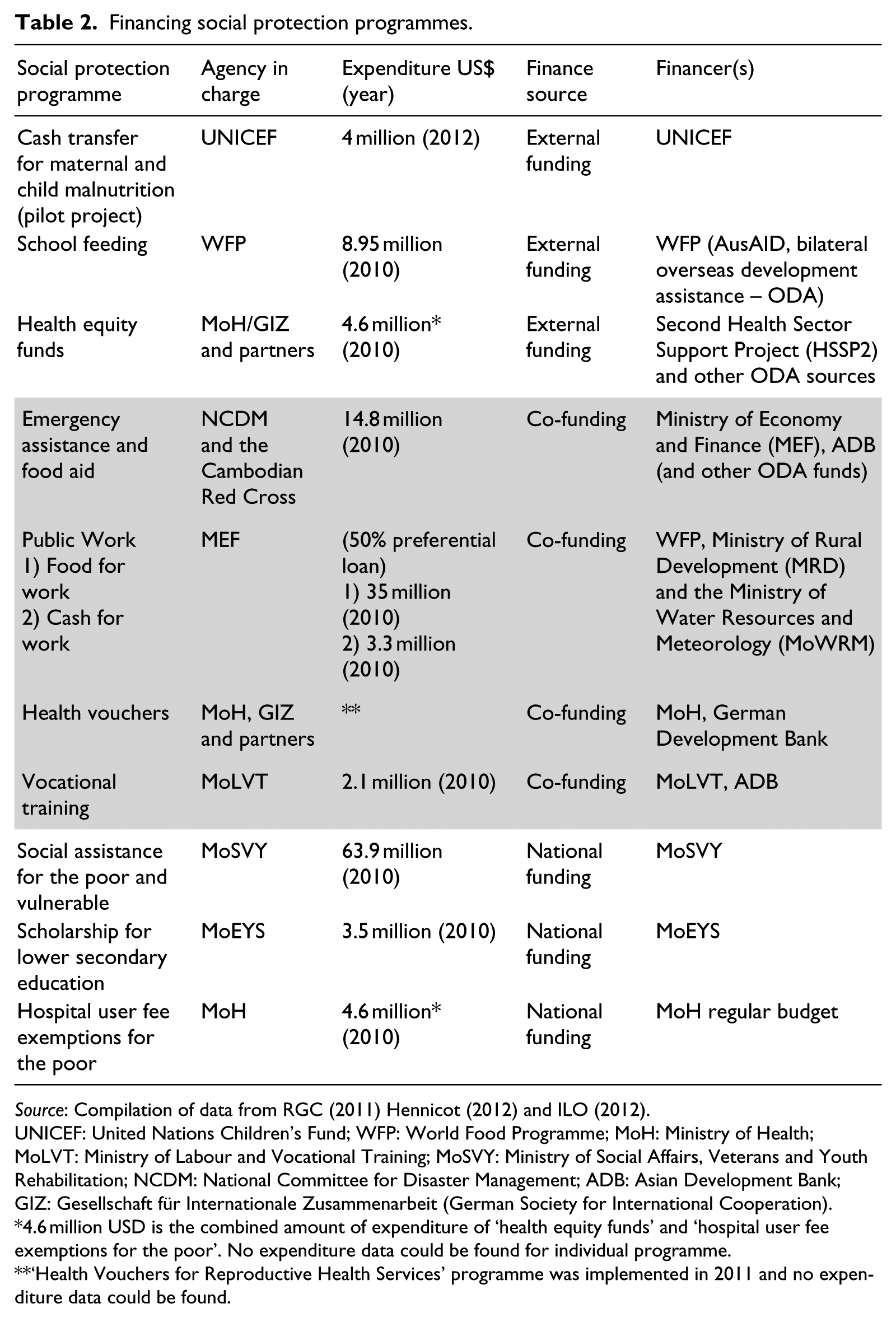
Source: Compilation of data from RGC (2011) Hennicot (2012) and ILO (2012).
UNICEF: United Nations Children’s Fund; WFP: World Food Programme; MoH: Ministry of Health; MoLVT: Ministry of Labour and Vocational Training; MoSVY: Ministry of Social Affairs, Veterans and Youth Rehabilitation; NCDM: National Committee for Disaster Management; ADB: Asian Development Bank; GIZ: Gesellschaft für Internationale Zusammenarbeit (German Society for International Cooperation).
4.6 million USD is the combined amount of expenditure of ‘health equity funds’ and ‘hospital user fee exemptions for the poor’. No expenditure data could be found for individual programme.
‘Health Vouchers for Reproductive Health Services’ programme was implemented in 2011 and no expenditure data could be found.
The issue of financing also shows us the quite different dynamics of global social policy from the expectations that could be drawn on the policy discourses of global influence and national ownership. Instead of asserting the policy ownership, neither global agencies nor national policy actors were reluctant to make a financial commitment to the NSPS. Global influence without substantial monetary support had only limited impact. The Cambodian government, especially the MEF, did not want to have policy ownership if it also meant financial responsibility.
Problems and prospects for the NSPS
Due to these difficulties, the overall progress of the NSPS remained slow. In terms of technical ability, there were three significant constraints for the Cambodian government to implement the NSPS effectively. First, the capacity of local governments to implement social protection was inadequate, with programmes often being carried out by global agencies and non-governmental organisations, bypassing local governments due to their ineffectiveness. However, without strengthening the ability of local governments to deliver social protection programmes, long-term sustainability cannot be ensured. Second, targeting was not based on systematic information on poor households, and social assistance programmes rest on an ad hoc targeting procedure. These practices were likely to create inefficiency and ineffectiveness. Third, Cambodia lacked rigorous monitoring and evaluation systems for programmes that are implemented (RGC, 2011).
Yet, there has been considerable advancement in terms of devising a targeting system. The NSPS has sought to enhance efficiency by avoiding overlaps among existing programmes while increasing effectiveness by extending its limited coverage. In particular, the NSPS identified as major challenges the importance of extending the geographic coverage of health facilities and improving the quality of education and vocational schools. In this regard, the Identification of Poor Households Programme (IDPoor) made a significant move forward. It will be very useful to identify poor households so that social services such as health care, which are financed by Health Equity Funds, can be effectively delivered to the target population. The programme has been designed as a basic institutional framework for future social protection systems promoted by the NSPS, as it is vital to implement schemes that adequately identify destitute households. IDPoor was started in 2005, prior to the NSPS process, and the Ministry of Planning implemented the procedures that determine these households. After the procedures, which comprise seven stages, the elected village representatives are consulted regarding the accuracy of the list of poor households. Once the households are finally determined, they are issued with Health Equity Cards that enable them to use the local health centres free of charge; the cards are also useful in seeking out services and support when necessary. In terms of the execution of these social protection programmes, the IDPoor database is expected to assist policymakers to plan ahead for better social protection. The Ministry of Planning intends to update the list of poor households every 3 years (Table 3). 11
IDPoor coverage.
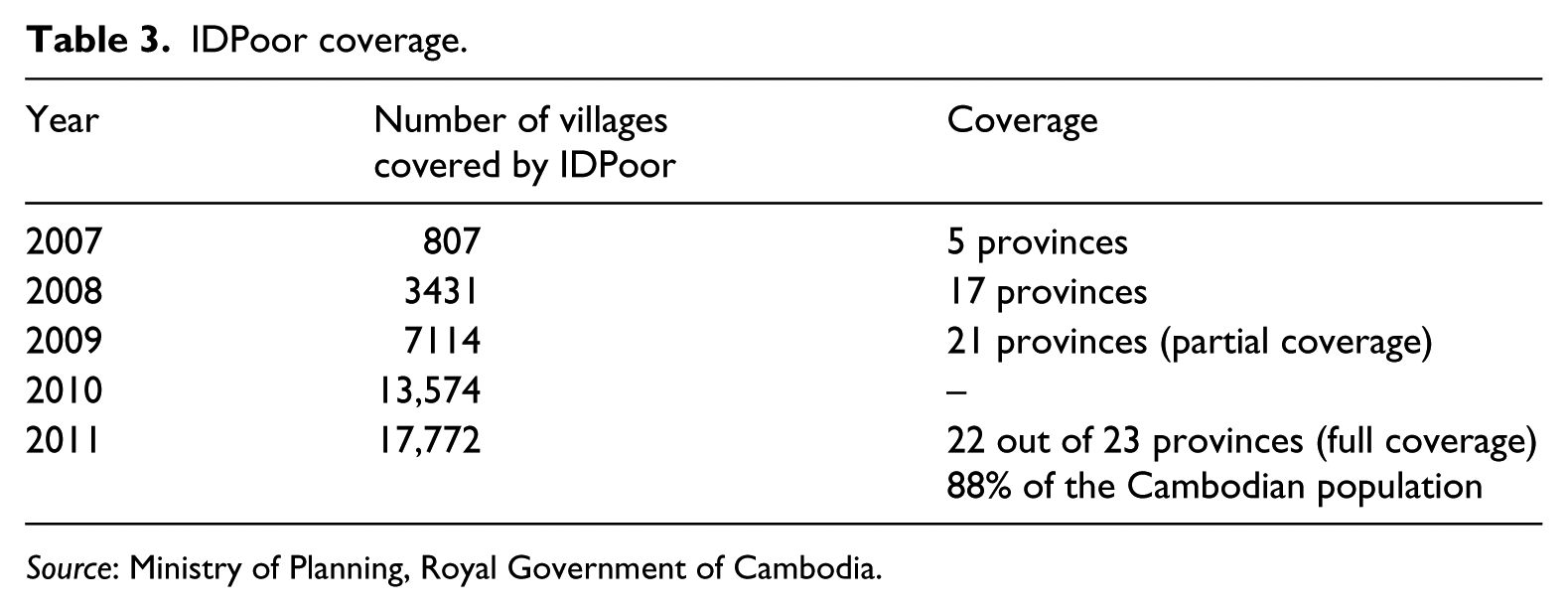
Source: Ministry of Planning, Royal Government of Cambodia.
There is a setback as well as progress. Efforts to introduce a cash transfer programme in Cambodia began in 2009 − long before NSPS was introduced – with initiatives coming from the World Bank. The unfortunate clash between the World Bank and the Cambodian government caused plans to adopt the programme to be suspended and CARD struggled to actualise the plan based on the government budget. Finally, UNICEF volunteered to develop the initiative linking it with the agenda of child protection and maternal health. With support from UNICEF, a pilot cash transfer programme targeted at mothers and children with malnutrition problems was introduced in 2012. From 2013, the programme is expected to be implemented and expanded on a national scale. In the meantime, CARD was cautious about the cash transfer programme being managed by UNICEF – preferring to have the government to take the lead – and wanted other partners, including the World Bank, to collaborate and to provide technical support such as developing an operation menu instead of being donors and managers of the programme. 12
Discussion and concluding remarks
Despite the economic and political downturn, Cambodia managed to introduce a comprehensive strategy for social protection – the NSPS. It is a significant breakthrough for an impoverished developing country such as Cambodia. This article has examined the policy dynamics in which this strategic policy for social protection came about against the background of two plausible arguments – global influence and national ownership. In order to examine the case, the article has examined policy actors, their motivations and the institutional setting, following the historical institutional approach.
The article has pointed out that, in introducing the NSPS, the Cambodian government relied heavily on technical and financial support from global agencies. Throughout the process, there was quite a substantial amount of evidence confirming the global influence argument, while there were conscious political efforts for the Cambodian government to have policy ownership. In terms of the institutional settings in which global and national actors interacted with each other, they utilised frameworks for consultation and coordination such as the IWG-SSN to design the NSPS. Although it has long been established since international reconstruction efforts began in the 1990s, the practice of consultation was very much a pertinent and practical approach to the NSPS. This was not only because there were so many global and national actors involved but also because such a framework provided a forum in which none of the participants could dominate the discussion. During our interviews, it became clear that there had been conscious efforts by both global and national actors to give the impression that no single agency dominated the policymaking process.
Was the role of national actors then only symbolic? This was certainly not the case since there were a vivid and genuine sense of purpose in establishing a systematic social protection framework among high-ranking policymakers in the Cambodian government – especially in CARD and the Ministry of Interior. Their motivation was strengthened through the NSPS process, as the article has shown that policymakers and public officials of the Cambodian government were eager to work with global actors. This article has also highlighted the alliance they formed with global agencies who were willing to push forward a comprehensive social protection framework. If the notion of national ownership denotes an exercise in leadership, it would be fair to say that the Cambodian government has shared ownership.
At the same time, however, it is important to note that there were other tendencies within the government to resist certain global influences. For the MEF in particular, as long as the NSPS was an effective way to secure financial assistance from global agencies, it supported the programme. If extra financial resources were not forthcoming from global agencies, the MEF was reluctant to provide any for social protection programmes. From the viewpoint of the global agencies, however, it would be far more desirable for such programmes to be financed by the Cambodian government once the agencies had helped the government set up the programmes through technical assistance and financial support. If the notion of ownership means financial commitment, it is fair to say that the agencies wanted someone else to own the NSPS. In fact, the contention lies not between global influence and national ownership but rather between the two blocks of policy actors with their different views on social protection and financial responsibility. The issue of financial responsibility presented us a quite different dynamics of global social policy at the local level. In fact, global influence without substantial financial commitment had only limited impact on the national government. The national government, despite their eagerness for policy ownership, would rather have others take financial responsibility. It turned out to be a serious challenge for the progress of national social protection policy in Cambodia. This article shows the limits of the perspective of both global influence and national ownership, which have a strong normative over-tone and calls for further research on the real politics of global social policy.
Footnotes
Acknowledgements
The authors wish to express their sincere gratitude to the following contributors, based in the Cambodian capital, for their assistance with this research through the interviews they granted as well as the indispensable comments and information provided: H.E. Ngy Chanphal (Secretary of State in the Ministry of Interior, Royal Government of Cambodia, and 2nd Vice Chairman of Council for Agricultural and Rural Development – CARD); Dr. Karin Schelzig Bloom (a social sector specialist at the Asian Development Bank – ADB – Cambodia Resident Mission); Dr Vathana Sann (Deputy Secretary General of CARD); Dr Kim Sedara (Research Fellow, Democratic Governance and Public Sector Reform Programme, Cambodia Development Resource Institute – CDRI); Mr Julian Hansen (Consultant to Gesellschaft für Internationale Zusammenarbeit – GIZ – and Former Team Leader of Identification of Poor Households Programme – IDPoor); Ms Usha Mishra (Chief of Policy, Advocacy and Communication, United Nations Children’s Fund – UNICEF – Cambodia); Mr Jean-Pierre de Margerie (World Food Programme – WFP – Cambodia Country Director); Mr Chamroen Ouch (Senior Programme Officer – Governance, ADB Cambodia Resident Mission); and Ms Chou Putheany (IDPoor Programme Manager, Ministry of Planning).
Funding
This article is part of research funded by the Global Research Network NRF-2010-220-B00027.