







Abstract
Most African countries implemented measures to contain the spread of COVID-19 during 2020, such as restrictions on business activity and travel, school closures and stay-at-home lockdowns for several months. These restrictive policies had adverse economic and social consequences that triggered a follow-up wave of expansionist public interventions intended to mitigate these effects. ‘Shock-responsive’ social protection measures included increased benefits to existing beneficiaries (vertical expansion) and registration of new beneficiaries on existing programmes (horizontal expansion). These approaches had the advantages of being quick and administratively simple, but the disadvantage of bypassing people who were made most vulnerable by COVID-19, notably retrenched and informal workers with no access to social insurance. On the other hand, setting up new humanitarian relief or temporary social assistance programmes was slow and susceptible to targeting errors and corruption. COVID-19 also prompted a reassessment of the social contract regarding social protection, with some governments recognising that they need to become better coordinated, more inclusive and rights-based.
Introduction
COVID-19 is a global pandemic that precipitated wide-ranging public health responses, but the actions taken by governments to control its transmission – specifically, lockdowns imposed on populations that disrupted livelihoods and prohibited economic activity across the world – inadvertently created hardship for millions of people. Employees who could work from home or were given paid leave were less affected than low-income workers such as street traders, whose livelihoods depend on daily interactions with other people. Since this was a direct consequence of government-imposed policies, most governments felt compelled to provide support to their affected populations. Although COVID-19 lockdowns displayed several characteristics of humanitarian crises – as a sudden-onset covariate shock that threatened the well-being of large groups of people – governments and international agencies used mainstream social protection mechanisms to deliver support, wherever possible.
One explanation might be that social protection is designed to deliver social assistance to poor people, as well as social insurance to working people during periods of unemployment (e.g. sickness, maternity leave or retirement), so these instruments were well suited to address the temporary spikes in poverty and unemployment that lockdowns created. This also resonated with ongoing efforts to strengthen linkages between social protection and emergency responses: following humanitarian principles in delivering social protection, and harmonising instruments and platforms for delivering short-term emergency relief and longer-term social assistance. Specifically, COVID-19 lockdowns provided an opportunity to apply ‘shock-responsive’ principles – using existing social protection programmes and platforms for horizontal expansion (registering more beneficiaries) or vertical expansion (temporarily increasing benefits) – which have recently gained traction, especially in Africa, as a way of scaling up support rapidly during a crisis (Collaborative Cash Delivery Network, 2020).
This article explores social protection responses to COVID-19 in Africa, drawing on published research to date, online resources, and the author’s research and advisory work in three countries: Ethiopia, Botswana and South Africa. Beyond the immediate programming responses, COVID-19 prompted a reconsideration of the social contract around social protection in many countries. The conclusion identifies wider implications of the COVID-19 crisis for social policy in Africa.
Social protection responses to COVID-19 in Africa
The two main branches of social protection are social assistance and social insurance. In Africa, social assistance in the form of regular cash or food transfers targets non-working vulnerable groups (persons with disability, older persons), complemented by labour-intensive public works for working adults, mostly in rural areas. Social insurance reaches mainly formally employed workers. In a continent with high levels of informal employment, self-employment and unemployment, this means that the majority of Africans have no access to any formal social protection (International Labour Organization [ILO], 2017).
The economic consequences of COVID-19 lockdowns impacted severely on low-income informal workers, mainly in urban areas, who are unable to work from home and were not protected by existing social assistance or social insurance schemes (WIEGO, 2020). COVID-19 therefore highlighted systemic gaps in social protection systems throughout Africa. Nonetheless, many governments scaled up existing social protection programmes to deliver income support (cash and food transfers) to affected people. Other programmes were modified; for example, ‘school feeding at home’ replaced meals at school for many children (World Food Programme [WFP], 2020). Also, many new programmes were introduced, tailored to COVID-19 circumstances. These measures are reviewed below. 1
Social solidarity funds
Several governments, mainly in West and Central Africa (Chad, Côte d’Ivoire, DRC, Gabon, Mauritania, Senegal), but also in North Africa (Morocco) and Southern Africa (Botswana, Lesotho, Mauritius, South Africa), established special funds to raise ring-fenced resources to mitigate COVID-19 impacts. Governments appealed to a sense of national crisis and the need for collective action, partly as a way of depoliticising the pandemic. These funds were co-financed, with tax-deductible donations solicited from the private sector and individuals in addition to government seed money. Especially in West and Central Africa, these funds compensated for generally limited spending and inadequate provision of social assistance pre-COVID-19. Côte d’Ivoire established four funds: a National Solidarity Fund for affected households, and Support Funds for the informal sector, small and medium enterprises, and large companies. In Rwanda, South Africa, and São Tomé and Príncipe, a ‘solidarity tax’ was imposed on senior government officials and civil servants, as a gesture of state commitment.
Social assistance
The most widespread intervention to compensate individuals and households for income losses associated with COVID-19 lockdowns was cash transfers. In Africa, social assistance accounted for 86% of all responses recorded, and more than half of these were cash transfers (Gentilini et al., 2020). These interventions took many forms, including two ‘shock-response’ mechanisms – increase benefits to existing beneficiaries and register new beneficiaries on existing programmes; new COVID-specific cash transfer programmes; temporary waivers on utility payments; and relief on debt and taxes.
Vertical shock-response: increased cash transfer benefits
Vertical expansion of social protection programmes is a simple administrative function – existing beneficiaries are authorised to receive additional benefits for a prescribed period of time – and for this reason, it was a popular response across Africa. Many governments (including Algeria, Angola, Cameroon, Côte d’Ivoire, Egypt, Gambia, Lesotho, Liberia, Mozambique, Nigeria, Sudan, Tunisia) increased cash transfers paid to poor and vulnerable households, for the duration of their lockdowns. In South Africa, higher payments were made for 6 months on several social grants, directly benefitting one-third of the population. In Cameroon and Zanzibar, social pension payments were raised by 20%. In Malawi, Social Cash Transfer Program benefits were ‘fast-tracked’, with a 4-month lump-sum payment delivered in April 2020.
Horizontal shock-response: new cash transfer beneficiaries
In general, horizontal expansion of existing programmes is more complicated than vertical expansion, because new beneficiaries need to apply or be identified, vetted and registered, which is always a challenging process but even more so under the conditions imposed by COVID-19. In Ethiopia, efforts to register additional households on the Productive Safety Net Programme (PSNP) in 2020 were compromised by the PSNP’s use of community-based targeting, since restrictions on movement prohibited community gatherings (Abay et al., 2021: 7). Nonetheless, across Africa, coverage of ongoing cash transfer programmes was expanded to include newly vulnerable families (Cabo Verde, Egypt, Kenya, Lesotho, Malawi, Rwanda, South Sudan and Togo). In Nigeria, more than a million households were enrolled on the National Social Safety Nets Project and became eligible for regular social assistance plus COVID-19 emergency relief. In Morocco, poor households that did not benefit from the national health insurance scheme could register online and claim cash support from the state. Sierra Leone implemented a vertical and horizontal scale-up of the Ep Fet Po programme, doubling monthly benefits and adding 70,000 households to receive COVID-19 Social Safety Net Cash Transfers, both for 9 months.
New cash transfer programmes
Temporary income support was delivered to millions of African households in 2020. Often the recipients were conventional pre-COVID-vulnerable groups, reflecting an assumption that they faced ‘COVID-intensified’ vulnerabilities: poor families (Algeria, Benin, Congo, Guinea, Madagascar, Malawi, Mali, Niger, South Africa, Zambia, Zimbabwe); older persons (Cabo Verde, Mauritania); persons with disability (Mauritania, Tunisia); homeless people (Tunisia); female-headed households (Mauritania). Other new programmes targeted working people who faced ‘COVID-specific’ vulnerabilities, especially low-income informal workers (Cabo Verde, Mauritius, Morocco, Sierra Leone, Togo). Sometimes, specific livelihoods enjoyed special attention, such as informal fruit and vegetable sellers (Burkina Faso) or people engaged in livestock markets (Somalia).
Food transfers
Many governments chose to protect household food security by delivering food rather than cash, often supported by agencies like WFP. Food was popular throughout West Africa (Burkina Faso, Cabo Verde, Chad, Gabon, Ghana, Guinea-Bissau, Liberia, Mali, Niger, Nigeria, Senegal, Sierra Leone), East Africa (Djibouti, Kenya, Madagascar, Rwanda, Sudan, Uganda) and southern Africa (Botswana, Eswatini, Mauritius, South Africa). The governments of Botswana, Rwanda and Uganda delivered food from house to house in urban areas. In Rwanda, rice, beans and flour were delivered every 3 days. However, food parcels distributed in Uganda were small and low quality.
The government of Madagascar set up markets where rice and oil were sold at half price, and provided necessities such as rice, sugar, oil and salt to ‘people who earn a living day by day: laundry workers, rickshaw pullers, prostitutes, university students who live on campus, and old people’ (Gentilini et al., 2020: 309). In Sudan, basic food baskets were sold to poor families at discounted prices.
In response to panic buying and hoarding, some governments tried to control food supplies and prices. Algeria banned exports of several food commodities. Other countries waived import duties and tariffs. Botswana restocked its grain reserve. In Burkina Faso, food prices were monitored. Gambia and Libya regulated prices of essential commodities (rice, meat, vegetables, cooking oil). In South Africa, retailers that profiteered by raising prices of food and other essential goods during the lockdown were prosecuted. 2
School feeding
School closures threatened the nutrition of an estimated 370 million children across the world who previously received a daily meal at school (WFP, 2020). Some African governments took steps to protect the food consumption of affected schoolchildren in other ways. After all schools in Nigeria were closed in March 2020, the government supported some of the 9 million children who benefit from Home-Grown School Feeding by distributing food vouchers door-to-door. 3 In Lesotho and Liberia, school meals were replaced by take-home meals. In Cabo Verde, 30,000 vulnerable children received food assistance at home. In Congo and Libya, the WFP (2020) in collaboration with the Ministry of Education launched ‘school feeding at home’ initiatives that provided take-home rations to schoolchildren.
Public works
A few countries responded to COVID-19 by introducing or expanding temporary work opportunities for unemployed adults through labour-intensive public works. Guinea implemented a new public works project, while Kenya and Uganda expanded their cash-for-work projects in urban areas, both targeting unemployed youth. But this option was not widely used, partly because it was difficult to enforce social distancing on labour-intensive employment programmes. In other countries, public works activities were suspended. In Ethiopia, Rwanda and South Africa, the work requirement on public works was waived, but participants continued to receive cash or food transfers as a form of income support throughout the lockdown period.
Utility subsidies and fee waivers
Subsidies and waivers have the effect of increasing the disposable income of beneficiary households. At least 12 African countries waived payments temporarily for government-provided utilities – mainly electricity and water – either for all citizens or for targeted social groups, who effectively received free water and electricity, usually for 2 or 3 months. This form of COVID-19 relief was especially popular in francophone West and Central Africa (Burkina Faso, Cameroon, Chad, Côte d’lvoire, DRC, Gabon, Guinea, Mali, Mauritania, Niger, Senegal, Togo), possibly because this was the easiest way for governments to deliver relief in countries that lack comprehensive social assistance systems.
Eswatini reduced the price of fuel, as did Nigeria. Gabon suspended rent payments for low-income people during lockdown. The government of Mauritius waived market fees payable by traders. Another innovative intervention was a temporary suspension of fees for mobile money transfers (Cameroon, Ghana, Kenya, Rwanda, Zambia).
Tax relief and VAT exemptions
Tax relief is a form of social assistance, insofar as it increases the disposable income of low-income households. Many governments offered temporary tax holidays for firms, to minimise losses to the economy, and tax relief to low-income taxpayers. Kenya granted full income tax relief for persons earning less than USD 22. Madagascar announced a package of tax relief, suspension of government fees and waiver of social contributions. South Africa gave a means-tested tax subsidy to workers whose income falls below a threshold. Algeria and Tunisia postponed income tax payments.
Somalia gave a 3-month tax holiday for some basic commodities and a 50% reduction in consumption tax for others. Comoros reduced import taxes on food and medicines by 30%. Chad, Mali and Mauritania made food and other imported necessities exempt from import taxes.
Reductions or exemptions on VAT payments have the effect of reducing costs of essential goods for consumers, amounting to an income transfer. Temporary VAT exemptions were given on basic commodities (DRC, South Africa), electricity and water tariffs (Mali), food and medicines (Mozambique), while Kenya reduced its standard VAT rate from 16% to 14%.
Debt relief and interest-free loans
Debt relief was offered mainly in North and West Africa. The Egyptian government offered debt relief for individuals at risk of default, if they repaid 50%. In Morocco, employees registered with the national pension fund who became temporarily unemployed could defer debt repayments. Microfinance institutions in Cabo Verde received support from government to offer interest-free loans to vulnerable households. In Nigeria, traders with loans from the Government Enterprise and Empowerment Programme (GEEP) were given a 3-month moratorium on repayments.
Social insurance
Social insurance covers a small proportion of the workforce in Africa. Many governments either extended eligibility for unemployment benefits, or established wage subsidy programmes for firms and workers who became temporarily or permanently unemployed by COVID-19.
Unemployment benefits and employment protection
Governments in North Africa provided unemployment benefits to irregular workers in severely hit sectors (Egypt) or to workers who became temporarily unemployed (Tunisia), provided they were registered with the national pension fund (Morocco).
In South Africa, the Unemployment Insurance Fund (UIF) provided income support to temporarily furloughed workers, while unemployed workers who do not receive UIF could apply for the specially created Temporary Employee/Employer Relief Scheme (TERS). This might provide a foundation for extending social insurance to informal workers on a permanent basis. The government of Eswatini was prompted by COVID-19 to establish its first national UIF.
Namibia’s Economic Stimulus and Relief Package to mitigate the impact of COVID-19 included wage subsidies and an Emergency Income Grant for formal employees and informal workers who lost their jobs. Neighbouring Botswana paid a 50% wage subsidy to COVID-affected businesses for 3 months. The Seychelles government introduced wage subsidies for companies in distress. The government of Mauritius introduced a Wage Support Scheme and Self-Employed Assistance Scheme that provided financial support to workers who were temporarily unemployed, self-employed or working in the informal sector.
Some income support initiatives targeted country-specific vulnerable sectors. The government of Lesotho paid a 3-month wage subsidy to workers in textile factories. The government of Comoros established a fund to support employees working in airports, after flights were suspended.
A few governments introduced incentives to private sector employers to retain their employees and continue paying them during the period of business inactivity. Eswatini, for instance, offered tax refunds to small and medium-sized enterprises that did not retrench workers but retained them on full pay for the duration of the lockdown.
Health insurance
In most countries, health care is rationed by ability to pay or unequal access to health insurance. Waiving fees and subsidising health insurance are two measures to ensure that the most vulnerable are not excluded from essential health care.
Rwanda amended its community-based health insurance scheme, mutuelle de santé, to make access easier for the poor and eliminate the waiting period between registering and becoming eligible for medical services (UNDP, 2020a). In Morocco, households that benefit from non-contributory health insurance (RAMED) received a once-off cash transfer worth USD 80–120 (International Monetary Fund [IMF], 2020). In South Africa, COVID-19 reignited policy debates about plans for a National Health Insurance scheme (Reid, 2020).
Three-country case studies
Ethiopia, Botswana and South Africa each illuminate interesting aspects of COVID-19 impacts and responses, and each generates important lessons. The three countries were chosen purposively: they reflect instructive differences in their social protection histories and current capacities, and the author worked on the COVID-19 responses adopted by each country during 2020.
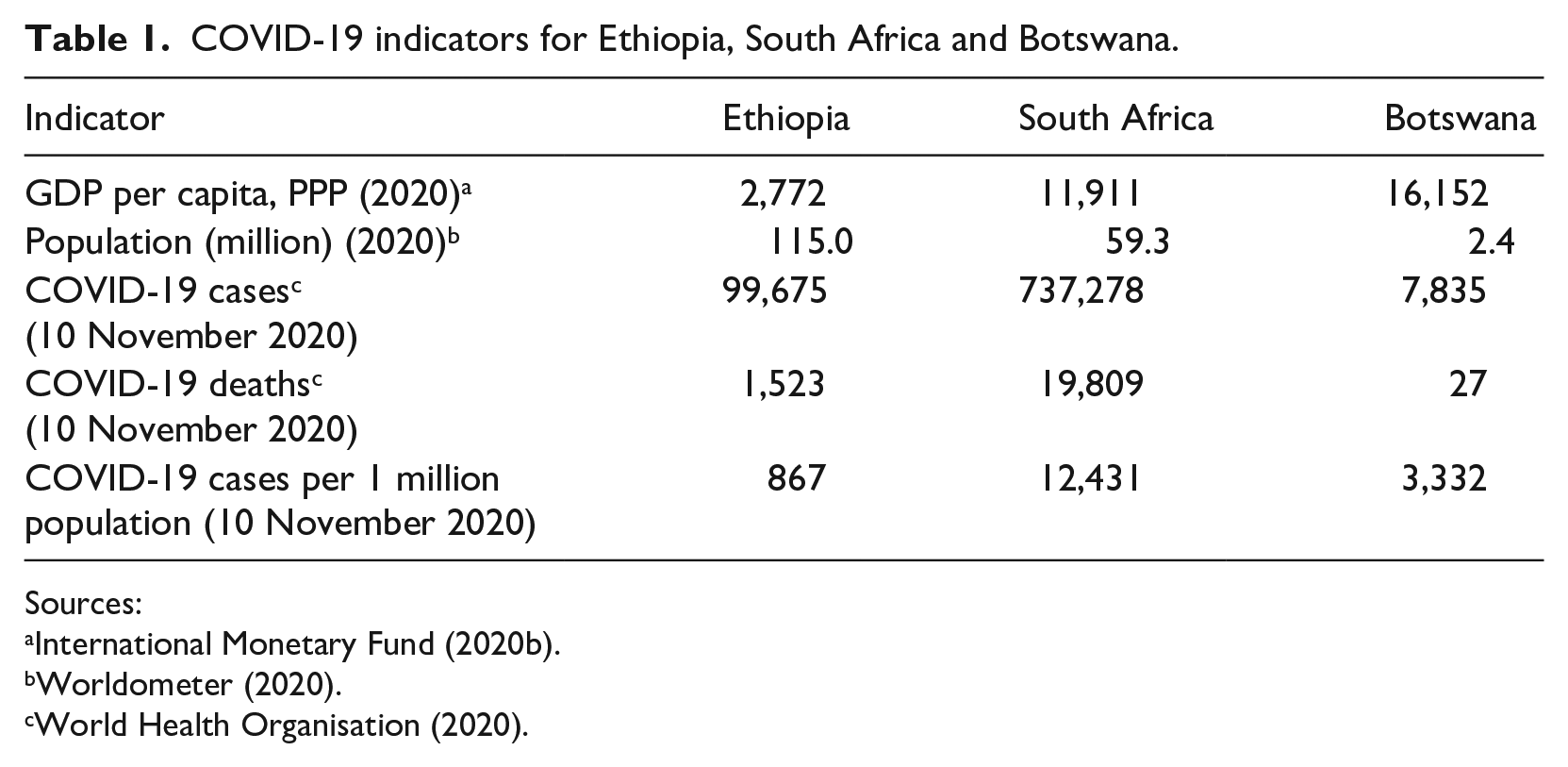
Ethiopia is a low-income country in East Africa, with a population above 100 million. Despite recording almost 100,000 COVID-19 cases as of November 2020, this was the lowest prevalence rate among our three case studies, at less than 1000 cases per 1 million population. South Africa is an upper-middle-income country with a population approaching 60 million. In August 2020, it had the fifth highest number of reported cases in the world and the highest in Africa. At close to 20,000 cases per million people, this was by far the highest prevalence rate among our three countries. Botswana is the richest case study country. It had reported only 27 COVID-19 deaths by early November 2020, but its prevalence rate was higher than Ethiopia’s because Botswana has a very small population (Table 1).
COVID-19 indicators for Ethiopia, South Africa and Botswana.
Sources:
The first COVID-19 case in Ethiopia was reported in mid-March 2020 and a national state of emergency was declared on 8 April (Oqubay, 2020). Strict lockdown measures were imposed for the next 5 months. South Africa declared a national state of disaster on 15 March 2020 and imposed a nationwide lockdown on 26 March. Botswana’s President declared a State of Public Emergency and a lockdown from 2 April.
The ‘COVID-19 Stringency Index’ (Hale, 2020) illustrates how strictly lockdown restrictions were enforced in each country. The index is compiled from Oxford University’s COVID-19 Government Response Tracker, which monitors indicators that include workplace and school closures; cancellation of public events and restrictions on gatherings; stay at home requirements; restrictions on internal movement and international travel; facial coverings policy; testing and contact tracing; fiscal measures; and COVID-specific income support programmes.
The stringency index in all three countries jumped from close to zero in early March to above 80 by early April. The index remained around 80 in Ethiopia and South Africa until September, when it started dropping as lockdown restrictions were gradually eased, including a relaxation of internal and international travel bans. The index in Botswana started falling in June, when some schools re-opened after 2 months, in contrast to Ethiopia where all schools remained closed for 6 months (Figure 1).
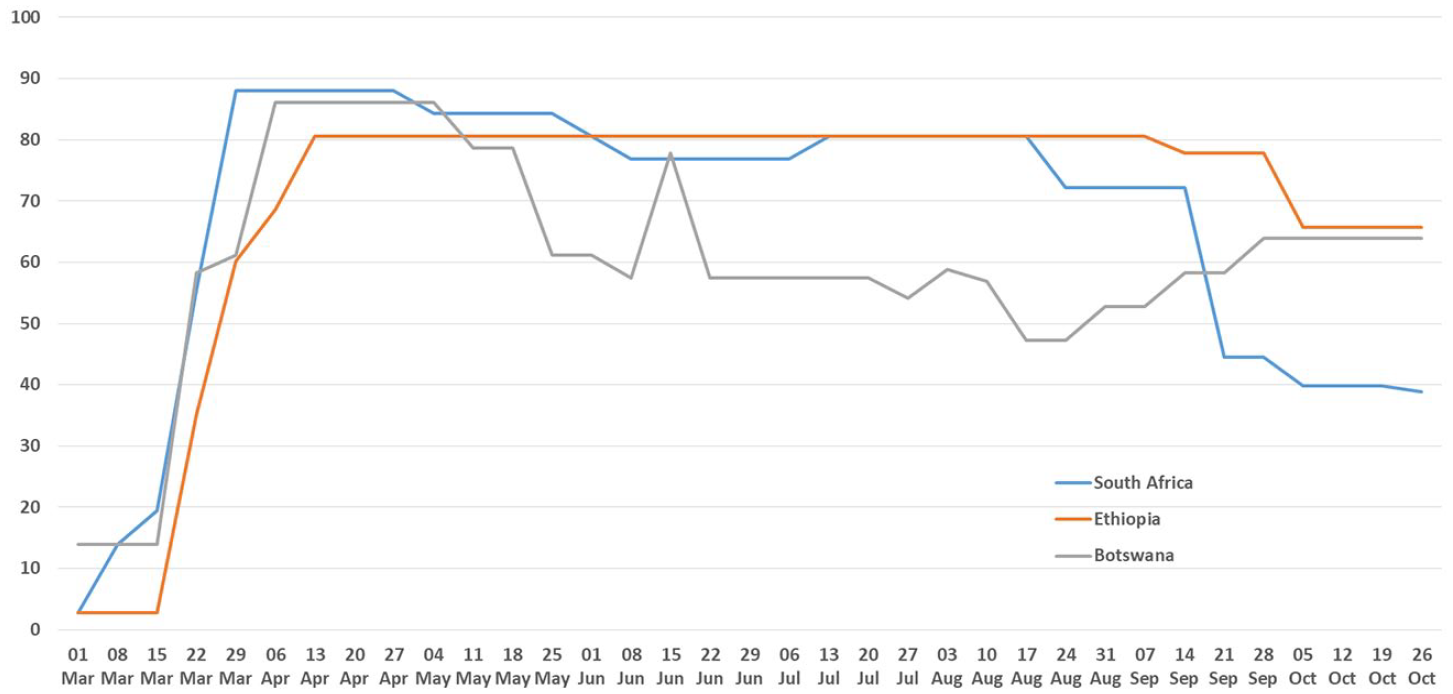
COVID-19 Stringency Index, Ethiopia, Botswana and South Africa (March–October 2020).
The economic shocks caused by lockdowns were severe from national to household levels, with reductions in economic activity, exports, imports and tourism; disruptions to food systems and social services; increases in unemployment; and projected rises in poverty and food insecurity, especially among people sitting at home with no work and no pay, with little savings and no access to social assistance or social insurance. Below, we examine the social policy responses adopted in each country.
Ethiopia
Following several years of strong economic growth, Ethiopia’s gross domestic product (GDP) was projected to contract by 10.5 percentage points in the 2020–2021 fiscal year, due to COVID-19 lockdown measures. Although retrenchments by private employers were forbidden during the state of emergency, the Jobs Creation Commission estimated that 61%–74% of workers in the manufacturing, construction and services sectors would be laid off if stringent COVID-19 conditions persisted for 6 months or longer (Jobs Creation Commission Ethiopia [JCC], 2020). Most of this employment is urban-based, much of it is informal, and these unskilled or semi-skilled informal workers are not covered by social security. The National Disaster Risk Management Committee (NDRMC) estimated that 30 million people could experience food consumption gaps. In rural areas, food insecurity was expected to worsen among households that rely on market purchases, because of possible disruptions to food supply chains.
The COVID-19 National Emergency Response Plan committed the government to implement ‘comprehensive fiscal stimulus packages to revive the economy and social spending in the form of cash transfers, government subsidies, and tax relief to support citizens and businesses most affected by the crisis’ (Federal Democratic Republic of Ethiopia [FDRE], 2020: 4). The government estimated that 24 million people were food insecure in Ethiopia pre-COVID-19, of whom 8 million were receiving social protection support mainly through the PSNP and 6 million were receiving cash or food transfers as humanitarian relief, leaving 10 million whose needs were not being addressed (FDRE, 2020: 22). The Response Plan made provision for 3 months of emergency food distribution to 15 million people.
Social protection in Ethiopia
Ethiopia’s social protection system must be understood in the context of the country’s centuries of history of humanitarian crises. Weather shocks and civil insecurity trigger frequent humanitarian crises, generating large caseloads of Internally Displaced Persons (IDPs) (1.8 million in 2020), hosted refugees (735,000 in 2020) and annual humanitarian appeals (6 million relief food beneficiaries in 2020). However, in recent decades, Ethiopia has elaborated large-scale programmes and systems for mitigating the effects of these crises. Following the 1984–1985 famine, humanitarian relief became institutionalised in Ethiopia, with 4–6 million people receiving emergency food aid each year until the early 2000s, when the Ethiopian People’s Revolutionary Democratic Front (EPRDF) government initiated a shift towards regular, predictable support for chronically food insecure rural Ethiopians, in the form of cash rather than food wherever feasible. This led to the launch in 2005 of the PSNP, which was heavily donor-supported but wholly government-run. Not only did the PSNP aim to break the cycle of dependency on annual food aid appeals, it was also aligned with the government’s aversion to ‘welfare’ and its preference for ‘productive’ social assistance, where participants provide labour in exchange for state support, thereby avoiding ‘dependency syndrome’ and producing useful assets (Lavers, 2020). This explains the dominant role on the PSNP of Public Works (temporary employment on community infrastructure or agriculture projects for working adults), with only a small proportion allocated to Direct Support (free cash or food transfers to households that have no labour capacity). About 10% of participants also receive livelihood grants and training, in pursuit of the programme’s developmental (‘productive’) goals.
The PSNP was aligned with the strategy of Agricultural Development-Led Industrialisation (ADLI), which aimed to build popular support for the government by promoting resilient rural livelihoods and ‘graduating’ rural households out of poverty and food insecurity. A secondary objective was to inhibit rural–urban migration, which explains why very little social assistance targeted the urban poor until relatively recently. However, the PSNP failed to achieve large-scale graduation, and over time its safety net role came to dominate over its productivist ambitions. As Lavers (2020) explains, Ethiopia’s shift in the mid-2000s towards a ‘developmental state’ model failed to prevent rising levels of both rural landlessness and urban unemployment. In the mid-2010s, this was compounded by anti-government protests in urban centres, which led to the introduction of the Urban Productive Safety Net Programme (UPSNP) (Lavers, 2020: 87-88).
When COVID-19 provoked a national lockdown in April 2020, therefore, these two pillars of social assistance – the rural PSNP and the urban PSNP – were in place and ready to be mobilised as part of the social policy response.
Social protection responses to COVID-19
The Ethiopia Economics Association argued that the response capacity of Ethiopia’s social safety net could be overwhelmed if lockdown conditions persisted for several months (Goshu et al., 2020), particularly in urban areas, where the economic and social effects of the pandemic were concentrated and where government social protection programmes are more limited than in rural areas. On the contrary, despite being a low-income country, Ethiopia was well placed to implement a shock-responsive scale-up of social protection, because large numbers of Ethiopians are already covered and because much effort has focused in recent years on harmonising the humanitarian relief programme and the rural PSNP, precisely to make the system more agile and scalable. COVID-19 in effect provided an opportunity to test the system’s shock-response capacity.
Rural PSNP
For a range of reasons, from the fragile natural environment to implementation challenges, the PSNP has evolved after 15 years from a ‘graduation’ programme into a quasi-permanent rural social welfare programme, increasingly closely linked to the humanitarian relief system (as discussed below). It therefore had the potential to play a crucial role in the emergency response to COVID-19.
The current phase of PSNP pursues three inter-related objectives: a scalable or shock-responsive safety net; harmonisation with Humanitarian Food Assistance (HFA); and the ‘cash first’ principle – replacing food aid with cash transfers wherever possible. Operationalising these principles is expected to result in a better coordinated and more efficient system for addressing both chronic and acute food insecurity.
The shock-responsive component of the PSNP, financed through a contingency budget, was designed in expectation of regular droughts and other natural disasters (such as desert locusts in 2020) that undermine rural livelihoods that depend on rain-fed agriculture. The contingency budget offered a mechanism for scaling up support to people affected by COVID-19, either by providing additional support to current beneficiaries and/or by registering new beneficiaries.
In the Ministry of Agriculture’s (MoA, 2020) ‘Concept Note for Mobilising Resources to Respond to COVID-19’, a number of precautionary measures were identified to ensure that cash and food transfers continued during the lockdown while minimising disruption and health risks – for example, by enforcing social distancing in queues – to PSNP beneficiaries as well as staff. Direct Support payments were not adversely affected by COVID-19, as there was no change in the delivery of the programme. On Public Works, the work requirement was waived for the duration of the lockdown, but payments continued: ‘lump sum payment was allowed to help beneficiaries cope with possible food gap’ (MoA, 2020: 2). Since this was paid out of planned expenditure, there were no budgetary implications. As a social protection tool, Public Works is primarily a mechanism for transferring income to rural households, so the only cost to the programme was the loss of physical assets that would have been created by public works projects.
There is evidence that the rural PSNP provided effective protection against the adverse impacts of COVID-19. A survey of 2,626 rural households found that food insecurity increased significantly among non-PSNP participants during 2020, but hardly at all among PSNP participants, and that participants were much less likely to adopt damaging coping strategies such as reducing their spending on health and education, compared to non-participants (Abay et al., 2021).
UPSNP
Since 2016, the rural PSNP has been complemented by the smaller UPSNP, implemented by the Federal Urban Job Creation and Food Security Agency with financial support from the World Bank. By 2020, the UPSNP reached 600,000 people in 11 cities and will eventually extend social protection to the urban poor in 77 cities and towns across Ethiopia. Cash payments are made by electronic transfer each month into the bank accounts of urban Public Works and Direct Support beneficiaries. Public works participants also receive life skills and financial training as well as livelihood development grants. Direct Support beneficiaries (e.g. older persons, persons with disability) are referred to relevant social services such as health insurance, education, housing and reintegration of homeless persons.
The Government of Ethiopia developed a Multi-Sectoral Preparedness and Response Plan (MSPRP) in response to COVID-19 (FDRE, 2020), which recognised the vulnerability of three groups of urban households to the direct and indirect impacts of COVID-19. First, the chronically poor who already struggle to meet their basic needs were vulnerable to food price rises and disrupted access to food. Food prices in Addis Ababa and other urban centres spiked in the early weeks of the lockdown, due to disruptions in the food supply chain. Second, households directly affected by the virus faced unplanned expenses related to sickness and possibly death. Third, urban formal and informal workers faced loss of employment and livelihoods for at least the duration of the lockdown. Informal workers (daily labourers, street vendors, etc.) were particularly vulnerable because they typically have no savings and no access to social security.
The UPSNP was identified as a viable platform for delivering support to COVID-vulnerable groups in urban areas, applying shock-responsive principles. A ‘vertical expansion’ was implemented in May 2020 in the form of cash transfer top-ups to existing UPSNP Direct Support beneficiaries. The top-up was intended to enhance market access to food and was calculated as sufficient to purchase 2,100 calories per person per day for 6 months. A ‘horizontal expansion’ of UPSNP was also announced by the government in May 2020. Poor urban households who were not yet registered in the 11 UPSNP cities, plus 16 new urban centres, received 3 months of unconditional cash transfers (UNDP, 2020a). Again, standard shock-response procedures were followed. Existing UPSNP targeting, registration and payment platforms were used to register new beneficiaries, allowing the programme to be temporarily scaled up to extend coverage to those made newly vulnerable by COVID-19.
The advantages of applying shock-responsive mechanisms to expand the UPSNP were clear. Using existing platforms to deliver assistance was convenient for administrators and beneficiaries, because no new targeting, registration or payment systems were needed. Also, electronic transfers rather than manual collection meant there was no requirement to queue for benefits, thereby ensuring compliance with social distancing protocols.
Lessons from Ethiopia
In 2017, the Government of Ethiopia and development partners decided to introduce a single scalable safety net as a mechanism that would respond to both chronic and transitory food insecurity, serving humanitarian caseloads (drought-affected people, IDPs, refugees), social welfare needs (PSNP Direct Support beneficiaries) and development ambitions (PSNP Public Works participants). According to the implementation guideline for Ethiopia’s Integrated Cash-Food Response Plan (ICFRP, 2019), A scalable safety net is one which can rapidly change its scale (size). The core of the safety net is permanently in place to meet chronic needs and to support development, but it is also able to expand and contract in a timely and effective manner in response to transitory needs and crises.
Several interrelated shifts in programming are needed to make Ethiopia’s social protection system more comprehensive, resilient and shock-responsive. Some of these are already planned or underway, but COVID-19 highlighted the urgent need to accelerate these processes.
Extension of urban social protection programming to all urban areas
Under-coverage compromised the shock-response capacity of the UPSNP. There are 77 cities and towns across Ethiopia but the UPSNP is currently only operational in the 11 largest cities. Extending social protection coverage to the urban poor and vulnerable in the other 66 urban centres will contribute to building a comprehensive and scalable safety net at national level.
Unification of rural and urban safety nets
The PSNP and the UPSNP are currently run as two separate and unconnected parallel programmes, so people who move between rural and urban areas in search of viable livelihoods (e.g. during future crises) risk losing their PSNP benefits. Linking the two programmes and unifying both beneficiary lists into a single national registry will make benefits portable for migrants.
Harmonisation of humanitarian relief and social protection programming
‘Linking relief and development’ (LRD) or ‘relief to development’ (R2D) has been attempted in Ethiopia since the 1970s. Shock-responsive social protection or scalable safety nets is the latest incarnation of this conceptually simple but operationally challenging idea. Harmonisation implies using the same payment modality (either cash or food, based on local market assessments), paying the same amounts to both categories of beneficiaries and using the same payment mechanism. Systems that are duplicated by both PSNP and humanitarian relief interventions will be replaced with single unified systems that can respond promptly to both sets of needs. These include needs assessments, targeting, registration, payment and complaint mechanisms (ICFRP, 2019). Harmonisation improves the efficiency, accuracy and timeliness of response to humanitarian needs, through using social protection platforms.
Transition from manual to electronic modalities
The rapid development and adoption of new information and communication technologies (ICT) has allowed registration, delivery and monitoring systems to be transferred from manual (paper-based) to electronic (computer-based), though with only partial coverage across the country to date. One goal is to develop a single national beneficiary registry with biometric registration and a computer-based management information system (MIS). The shift to electronic payment of cash transfers or food vouchers has also started. In 2019, 38% of PSNP beneficiaries received e-payments, managed by banks, microfinance institutions or agents such as shop-owners, especially in rural areas where PSNP beneficiaries receive notification of payment on their phone and redeem their cash or food voucher at the local retail shop (Joint Review and Implementation Support (JRIS) Mission, 2019). Although network connectivity limits further expansion in remote rural areas, mobile phone ownership in Ethiopia is rising rapidly, and network coverage had reached 90% of the population by 2016. 4 Electronic payment became more relevant in the context of the COVID-19 lockdown, when manual deliveries of food packages were compromised by restrictions on imports, travel, business activity and crowds. ‘Top-ups’ in electronic cash payments could be made immediately and at low cost, with no logistical burdens or delays, and reduced fiduciary risk.
Continue the shift from food aid to cash transfers
Whereas humanitarian relief in Ethiopia generally delivers food aid, the PSNP has followed a ‘cash first’ principle since its inception and favours cash transfers as the default payment modality wherever possible. It was argued that decades of food aid had disincentivised food production and trade in rural Ethiopia. Conversely, cash transfers create demand for local produce and stimulate rural markets. Currently about 70% of PSNP transfers are made in cash. The harmonisation of social protection and humanitarian relief accelerated the shift towards cash transfers. Even in emergencies, food is delivered only if cash is not available or not appropriate; for instance, if local markets are too weak to respond to sizable injections of cash.
Botswana
The United Nations (UN) estimated that Botswana’s economy would shrink by 13% due to COVID-19, with the critical mining and tourism sectors projected to contract by 34% and 32%, respectively (United Nations Botswana, 2020). Most small, micro and medium enterprises (SMMEs) such as street vendors, taxi operators, sex workers, bars, gyms, clubs and salons lost all their income when workers and customers were locked down at home (Mphoeng Mphoeng, 2020). Self-evidently, a humanitarian or social protection response to this unprecedented situation was urgently needed.
Social protection in Botswana
In many respects, Botswana’s social protection history falls between South Africa’s and Ethiopia’s. Although it is now an upper-middle-income country, like neighbouring South Africa, when the British Protectorate of Bechuanaland achieved independence in 1966 most of the population was extremely poor, rural and famine-prone – more similar to Ethiopia. Being arid and drought-prone meant that food aid delivered as emergency relief was the dominant social safety net, given either for free or through community-based public works projects, which were preferred by the government for the same conservative ideology as in Ethiopia: people should work in exchange for state support. In his review of famine prevention experiences in Africa, Drèze (1990) applauded Botswana for its highly effective drought relief programmes in 1979–1980 and 1982–1987. In 1985, two-thirds of Botswana’s population received food rations.
Interestingly, Drèze’s reflection on the lessons of Botswana’s experience anticipate contemporary discussions about the harmonisation of emergency responses with social protection programming, or what is now labelled, some 30 years later, as shock-responsive social protection.
A number of components of the drought relief programme, such as the distribution of food to certain vulnerable groups, the rehabilitation of malnourished children, and the provision of financial assistance to the destitute, have acquired a permanent status and are now an integral part of Botswana’s social security system. In the future, therefore, it can be expected that famine prevention measures will perhaps take the form of an intensification of social security measures in ordinary times. [. . .] This approach to the protection of entitlements during crises has, in general, much to commend it, in terms of administrative flexibility, likelihood of early response, simplification of logistic requirements, and ability to elicit broad political support. (Drèze, 1990: 157–158)
While Drèze credits the government of Botswana with implementing these humanitarian relief interventions, Seekings (2020) draws attention to the role of the WFP. In the 1960s, WFP supplied food aid as drought relief to more than one-third of the population, and it subsequently supported the establishment of school feeding schemes, food rations for ‘vulnerable groups’ (pregnant women, persons with disability and older persons) and food-for-work programmes for working adults. These programmes formed the basis of the social protection system that Botswana has today. For example, following the 1978–1979 drought, the government promulgated a National Policy on Destitutes, which provided for registered destitute persons to receive ‘a minimum but adequate diet’ (Ministry of Local Government Lands [MLGL], 1980: 2).
Chinyoka and Ulriksen (2020) argue that international donors have had limited influence on the evolution of social protection in Botswana. This appears to contradict Seekings (2020), but it should be noted that WFP effectively withdrew from Botswana in the 1990s – for instance, school feeding has been run by the government since 1997 – due to Botswana’s rapid economic growth and transition from low- to middle-income status. Chinyoka and Ulriksen argue that donors have failed to shift the Government of Botswana’s approach to social protection away from a residual familial model towards an individual, rights-based model. They cite the failure of pressure from UNICEF to introduce child benefits as evidence of Botswana’s resistance to the ‘cash transfer’ advocacy agenda of several donor agencies post-2000. In 2010, the Cabinet rejected a proposal, led by UNICEF, to introduce a Child Support Grant (CSG) along the lines of that in South Africa (Devereux et al., 2010), on the grounds that it ‘will cause dependency and laziness which is against government policy that is encouraging graduation and self-reliance’ (government official, cited in Chinyoka and Ulriksen, 2020: 259).
Social protection responses to COVID-19
Botswana’s social protection responses to COVID-19 included both new programmes introduced to meet COVID-specific needs and adaptation of existing programmes to minimise disruption of benefits to pre-COVID-19 beneficiaries. In April 2020, the government launched a COVID-19 Relief Fund to mitigate the economic impacts, and a COVID-19 Food Relief programme to mitigate the social impacts. Food Relief delivered food parcels to two-thirds of all households nationally.
Most of Botswana’s social protection programmes continued to function during the COVID-19 crisis, with some adaptations.
The national
The
Similarly, the
COVID-19 also re-opened the national dialogue about Botswana’s social protection system, which had evolved, as noted above, out of its history of humanitarian crisis responses. Although the government has always been reluctant to introduce entitlement-based social welfare schemes, the patchwork of programmes in place in 2020 proved inadequate to meet the challenge of COVID-19 lockdowns, and the response was therefore dominated by old-style food aid distributions. The UN stepped into this space by leading a policy process, together with the Ministry of Local Government and Rural Development that produced the National Social Protection Recovery Plan (NSPRP) (Freeland et al., 2020).
The UN argued that, Post-pandemic, a new social contract will be needed, featuring greatly reduced inequalities and strengthened resilience to shocks. The pandemic has exposed the vulnerabilities and inadequacies inherent in current systems [. . .] Social protection and investing in people, especially those left behind, needs to figure high on the agenda. (United Nations Botswana, 2020)
With UN support, the government of Botswana commissioned three recovery plans to ‘build back better’ after COVID-19: for the formal private sector, the informal sector, and social protection.
A well-functioning social protection system has a range of coordinated programmes, adequate and sustainable financing, robust systems, and mature institutions. Instead of a comprehensive system delivering social assistance and social insurance to all who need it when they need it, Botswana has a number of targeted programmes that were introduced over several decades for different reasons (in response to drought, or poverty, or HIV and AIDS). COVID-19 revealed that the social protection system is not well aligned with Botswana’s resources, administrative capacities and aspiration to become a high-income country by 2036 (Republic of Botswana, 2016).
The NSPRP recommended rationalising and consolidating 29 social assistance programmes into five that are structured around the life-course, to deliver income support as needed ‘from cradle to grave’. This life-course focus is consistent with the ILO’s Social Protection Floors Recommendation, which envisages that all states should guarantee ‘basic income security, at least at a nationally defined minimum level’ for all children, persons in active age and older persons (International Labour Conference, 2012). Key recommendations included
an
the
an
a
a new
In his State of the Nation Address on 9 November 2020, the President endorsed these proposals.
The recently approved National Social Protection Framework (NSPF) will deliver a Single Registry System with the aim of consolidating and harmonising the existing twenty-nine (29) Social Protection programmes across Government into five Life Course programmes. The consolidation will forge coherence and synergies between these programmes to assist Government in building a stronger, more responsive, efficient and resilient social protection system. (Republic of Botswana, 2020: 34)
Lessons from Botswana
Social protection systems are more than projects and programmes; they also require frameworks and institutions, which are underdeveloped or absent in Botswana.
Monitoring and evaluation
The NSPRP notes that most social protection programmes in Botswana have never been rigorously evaluated, and their monitoring is inadequate. Regular process monitoring and impact evaluations are recommended for all sizeable programmes, to improve their design, delivery and effectiveness.
Legal framework
No constitutional right to social protection exists in Botswana, and no legislative framework underpins its programmes. A justiciable right to social protection should be underpinned by constitutional provisions or laws that empower citizens to claim their entitlements from the state through the courts (as in neighbouring South Africa).
Social protection institutions
The NSPRP proposed the creation of two new institutions – a Ministry of Social Development and a Botswana Social Benefits Agency – for improved coordination, oversight and delivery.
South Africa
South Africa’s GDP was projected to decline between 5.1 and 7.9 percentage points as a consequence of the COVID-19 lockdown (UNDP, 2020b). The economy lost 2.2 million jobs between the first and second quarters of 2020, pushing its already high unemployment up from 39% to 42% (Statistics South Africa, 2020). Another 1.5 million employees were furloughed, 40% of whom did not get their jobs back after the economy re-opened. Women, manual workers and the poor were significantly more likely to lose their jobs than men, professionals and the non-poor (Jain et al., 2020).
Low-income workers who were forced to stop working and stay home during the lockdown were at greatest risk. They include 1 million domestic workers (mostly women); 650,000 farm workers, especially seasonal workers without permanent contracts (also mainly women); service sector workers such as waitrons and taxi drivers; self-employed workers such as car guards and hawkers; and beggars whose livelihood depends on daily interactions with the public (Devereux, 2020b).
Poverty and hunger increased in the first months of the lockdown, according to surveys conducted by Statistics South Africa and the Human Sciences Research Council (HSRC). The HSRC found that almost half (46%) of the people living in informal settlements had gone to bed hungry during April, while nationwide this self-reported indicator had increased from 28% to 34% (Nicolson, 2020).
Social protection in South Africa
Social assistance in South Africa has a long history, dating back to the colonial period. Social pensions were introduced, albeit on a racially discriminatory basis, in the 1920s (Devereux, 2007). After the democratic transition in 1994, the incoming ANC government inherited a set of social assistance schemes which it reformed, to eradicate racial and gender inequalities and extend support to the previously disadvantaged Black majority, as part of the political settlement. Significantly, the State Maintenance Grant was replaced in 1998 with the Child Support Grant (CSG), which now reaches two-thirds of all children and is one of the most effective social policy responses to South Africa’s extremely high levels of poverty, unemployment and inequality (Leibbrandt and Levinsohn, 2011). Civil society has successfully lobbied the government to expand coverage and increase benefits paid by the CSG and other social grants, to make them more pro-poor (Proudlock, 2011). The social assistance system is now acknowledged as the most comprehensive in Africa.
When COVID-19 arrived in South Africa in early March 2020, followed in late March by the declaration of a stringent national lockdown, civil society (academics, activists, nongovernmental organisations [NGOs]) immediately mobilised to demand a social assistance or humanitarian intervention (Devereux, 2020a; Heywood, 2020; Senona, 2020). The government responded by building on the existing social assistance and social insurance programmes, and by setting up new quasi-unemployment insurance schemes.
Social protection responses to COVID-19
On 21 April, President Ramaphosa (2020) announced a R500bn (USD 3bn) social relief and economic support package in response to COVID-19, amounting to 10% of GDP. Measures to protect businesses included a loan guarantee scheme to assist 700,000 large, small and medium enterprises employing 3 million workers, and a Temporary Employee/Employer Relief Scheme (TERS) to minimise job losses. Retrenched formal sector workers were entitled to claim unemployment benefits from the UIF. Measures to protect the poor and vulnerable included top-ups to existing social grants, the introduction of new temporary social grants and the distribution of food parcels.
South Africa’s extensive set of social assistance schemes pay unconditional cash transfers to 17 million people every month, almost one-third of the population. These long-established social grants provided a set of instruments and platforms for increasing and extending support to vulnerable citizens and residents during the COVID-19 lockdown period. Vertical shock-responsive expansions were applied in the form of top-ups to all social grants. New social assistance schemes included the TERS, a Special COVID-19 Social Relief of Distress (SRD) grant for 6 months, and the distribution of food parcels by the Department of Social Development.
It soon became apparent that interventions that built on existing programmes were more effective than the new programmes, which were slow to get established and deliver benefits, prone to delays and susceptible to mismanagement, corruption and fraud.
Eligibility for the Special COVID-19 SRD grant was defined as any adult who was unemployed, not earning any income and not receiving any social grant or unemployment insurance. When it was announced on 21 April, an estimated 12–15 million people were eligible. One month later, 5.1 million people had applied, 2.6 million applications were being processed, 11,000 were ‘about to be paid’, but just 9 people had actually been paid. By 15 July, 3 million people had been paid, but this was more than 3 months into the lockdown and there was still a large backlog to process. Many unsuccessful applicants were rejected for invalid reasons, and very few successful applicants received payments every month – two or three payments during the programme’s 6 months duration was common (Bhorat and Köhler, 2020).
The reasons for these delays and erratic payments were technological and administrative. With all government offices closed from April, applications had to be made electronically by WhatsApp, sms or email. Literally millions of applications were made by WhatsApp, which crashed the platform repeatedly. Officials of the South African Social Security Agency (SASSA) then had to do verification checks before approving or rejecting each application, which took time given limited staff numbers. The delays translated into rising spending on the grant from month to month, rather than consistent spending each month. R12 billion was allocated to the grant, but only R36 million was spent in May, rising to R1 billion in June. By September, almost R5 billion (only 40% of the budget) had been paid to 5.5 million applicants (Bhorat and Köhler, 2020).
Corruption compromised the delivery of food relief during the lockdown. In 2018, SASSA delivered 500,000 food parcels and vouchers under its SRD programme. But in 2019, SASSA mismanaged the tender process for service providers in six of South Africa’s nine provinces, causing the tender to be cancelled. Although eligibility for SRD was extended as part of the COVID-19 relief measures, by late May, SASSA had delivered only 73,000 food parcels in 2020. The Department of Social Development admitted that SASSA food parcels had reached only 12% of people who were eligible to receive them (Heywood, 2020). With NGOs and other government agencies stepping up to provide food to an estimated 3 million people, SASSA contributed less than 10% of all food parcels delivered during the lockdown (Ritchie, 2020). In April, Corruption Watch (2020) reported numerous cases of government officials, especially local councillors, stealing food parcels intended for the poor or diverting them to relatives and politically connected constituents. President Ramaphosa responded with strong words, but little action. ‘We are deeply disturbed by reports of unscrupulous people abusing the distribution of food and other assistance for corrupt ends. We will not hesitate to ensure that those involved in such activities face the full might of the law’ (Ramaphosa, 2020).
Given the diversion of food parcels and delays in the Special COVID-19 SRD grant, the top-ups in existing social grants became crucial pillars of support to poor households. Increases in payments were implemented immediately. Risks of corruption were low, because payments were made electronically into beneficiary bank accounts. Also, because the beneficiaries had already been verified and registered, no application procedures were needed so there were no processing delays. However, the social grants target non-working vulnerable groups such as children, older persons and persons with disability, whereas working adults were worst affected by the stay at home regulations and business closures.
An analysis of the relationship between social grants and occupation status of working household members found a strong positive correlation between receipt of social grants and the presence of informal workers (Bassier et al., 2020). The largest cash transfer programme is the CSG, which reaches 12 million of South Africa’s 18 million children every month. The CSG is well targeted at the poor: 84% of poorest decile but only 1% of richest decile households receive it. Moreover, informal workers are low-paid, so they are disproportionately found in poorer households. Among the three poorest deciles, 19%–30% of households had an informal worker and received the CSG, and only 4%–5% of these households had an informal worker but did not receive a CSG. Conversely, among the three wealthiest deciles, 0%–5% of households had an informal worker and received the CSG, and 9%–17% of households had an informal worker but no CSG (Figure 2). It follows that a vertical expansion of the CSG was an effective response to the economic shock of COVID-19. Social grants reach most low-income households with informal workers and few wealthy households, so inclusion error and exclusion error by this measure are both relatively low.
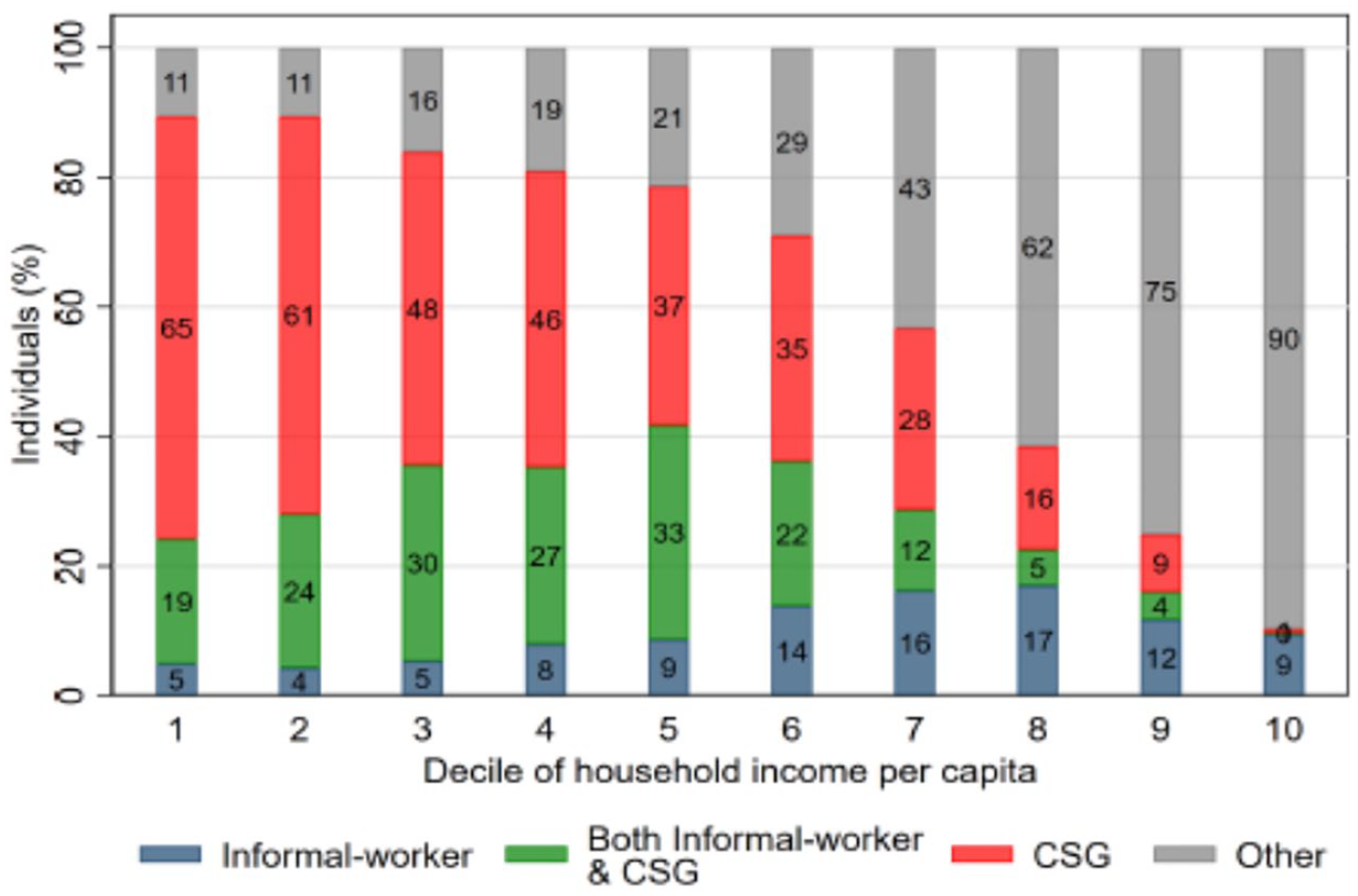
Child Support Grant and informal workers in South Africa, by income decile.
Lessons from South Africa
South Africa was well placed to respond promptly and generously to the social impacts of COVID-19, because of its long-established and well-administered social protection system. Nonetheless, there were significant delivery failures, and the limitations of the system in terms of both coverage and adequacy were glaringly exposed. Emerging lessons include the following.
Extend the duration of COVID-19 emergency relief
The temporary social grants and top-ups were initially introduced for 6 months only, from May to October 2020. During this period, a public debate started about whether this was long enough – should these measures be extended or even made permanent? Under immense public pressure, the government agreed to extend the new and topped-up social grants by 3 months, until January 2021. This would help poor South Africans to get through the expensive Christmas season, with school fees due early in the new year. January has been identified as a month when food insecurity among poor South Africans spikes each year (Devereux and Tavener-Smith, 2019).
Extend social protection to informal workers
As in many other countries, COVID-19 highlighted the gap in social protection coverage for informal workers, who are not eligible for either social assistance (which targets non-working vulnerable groups) or social insurance (which covers registered workers with contracts). Several options have been considered for closing this gap, including establishing a National Social Security Fund (NSSF) and making contributions into the NSSF mandatory for informal as well as formal workers; creating a voluntary social security scheme for self-employed workers with matching funds from the government to incentivise participation; and formalising informal social protection mechanisms such as savings clubs and burial societies (Devereux and Conradie, 2017).
Address the range of implementation failures in South Africa’s social contract
Some observers leveraged the national state of disaster to remind the government that COVID-19 ‘intensified three other existing disasters: poverty, unemployment and inequality’ (Devereux et al., 2020). COVID-19 also exposed serious deficiencies in South Africa’s health and education services and food systems, and persistent governance failures in the form of rampant crime and corruption. ‘The social contract we entered into to defeat COVID-19 is not over’ (Heywood, 2020). Most of these social challenges should have already been addressed in terms of South Africa’s progressive post-apartheid Constitution (Republic of South Africa, 1996). Instead, they were spotlighted by COVID-19, and the relatively generous – albeit flawed – government response reveals that public action to address them and to deliver on the social contract is possible when the necessary political will and financial resources are mobilised.
Building back better
Devereux et al. (2020) identify four priorities for social protection in South Africa to ‘build back better’ after COVID-19. First, make the emergency relief measures permanent, including the social grant top-ups and the caregiver and SRD grants. Second, introduce Basic Income Support for low-income and unemployed adults aged 18–59 (Senona, 2020), to fill the life-course gap in social assistance between the CSG and the Older Persons Grant. (In July 2020, the Minister of Social Development announced that the government was considering introducing a Basic Income Grant, and in December, the Department held an online public consultation about this proposal.) Third, overhaul the social protection system, from eligibility criteria and registration systems to accountability mechanisms, to improve its efficiency and fairness. Fourth, launch a national conversation about social protection, to clarify the parameters of this constitutional right and progressively realise universal coverage, at levels adequate to ensure that all people in South Africa can live in dignity at all times.
Conclusion
COVID-19 exposed deep inequalities in countries across the world, especially in neoliberal economies pursuing austerity policies, where decades of underinvestment in the social sectors left poor and marginalised people most vulnerable to the economic hardship associated with lockdowns (Sachs, 2020). COVID-19 highlighted the importance of having well-functioning social services in place, but it also exposed weaknesses and gaps, especially in terms of humanitarian relief capacities, health services and social protection systems. In many cases, including the three countries discussed in this article, COVID-19 opened a policy window for civil society and others to re-examine the social contract around the state’s duty of care towards its citizens.
Unlike mainstream welfare debates – where left-of-centre governments typically prefer to expand welfare provisioning whereas right-of-centre governments try to cut welfare budgets, invoking tropes about ‘dependency’ and the ‘undeserving poor’ (Tihelková, 2015) – COVID-19 was different. First, it was a shared crisis: everybody was affected by lockdown restrictions on their mobility and activities. Second, COVID-induced impoverishment was a direct consequence of government decrees; no public debate or media speculation was triggered about people choosing unemployment to secure state support. Third, it followed that governments, having precipitated a subsistence crisis among large proportions of their populations, were obligated to address this as a matter of urgency, by introducing compensation mechanisms to replace lost incomes, at least up to subsistence levels, and at least until lockdowns were lifted and people who had not lost their jobs permanently could return to work. Globally, therefore, the imposition of lockdowns was followed by unprecedented increases in spending by governments and non-government organisations on emergency relief and enhanced social protection. This response is common during times of crisis, and in 2020, it was adopted by governments of all ideological persuasions.
Seekings (2020) points to the importance of path dependency in explaining how social protection systems emerged and continue to evolve (pre-COVID-19) in South Africa and Botswana, and this also applies to COVID-19 responses. The concept of shock-responsive social protection in itself reflects a notion of path dependency: governments respond to shocks by building on instruments and platforms that are already in place. One important learning is that countries with comprehensive, well-functioning and well-funded social protection systems were better able to implement ‘shock-responsive’ interventions promptly and effectively (Alderman, 2020).
In Africa, wealthier countries with long-running social protection schemes, like South Africa, were well placed to implement scale-ups of their existing programmes, to introduce new social assistance schemes and to mobilise humanitarian relief, using government’s fiscal resources and by borrowing. South Africa’s experience confirmed that the simplest and most effective interventions were vertical expansions – transferring more cash to beneficiaries already registered for social protection programmes, using existing payment mechanisms. Conversely, setting up new programmes was slower – at a time when rapid response was essential – and susceptible to problems such as targeting errors and corruption. In low-income countries with less comprehensive and heavily donor-funded social protection schemes, like Ethiopia, development partners undertook COVID-19 impact assessments, budgeted for needs and mobilised international resources to assist the government’s efforts to support the additional caseloads created by COVID-19.
At a more fundamental level, COVID-19 also instigated a re-evaluation of the social contract around social protection. What legitimate expectations can citizens and residents have (as claims-holders) that the state will support them in times of crisis? What obligations do governments have (as duty-bearers) to guarantee the subsistence needs and dignity of all citizens and residents, not only during crises but at all times? In all three case study countries discussed above, the social contract was actively debated and arguably modified during 2020.
In Ethiopia, responses to COVID-19 accelerated a trend towards harmonisation of humanitarian relief and social protection programming, as well as the incorporation of previously excluded urban areas into the nascent national social protection system.
In Botswana, development partners seized the policy space to initiate reforms to the social protection system that should have lasting benefits at the policy and institutional levels, beyond the COVID-19 pandemic. This included the consolidation of multiple fragmented programmes into a coherent, more efficient National Social Protection Framework.
In South Africa, COVID-19 highlighted the gap in the social protection system faced by informal workers and triggered a high-level policy debate about introducing either a universal Basic Income Grant or at least Basic Income Support for unemployed 18- to 59-year-olds.
One positive side-effect of COVID-19 is that it confirmed the effectiveness of comprehensive, coordinated and inclusive social protection systems for delivering humanitarian interventions against shocks. Two lasting impacts could be that governments invest more in building these systems, and that citizens and residents feel more empowered to claim social protection as their human right. Whether COVID-19 led to an irreversible expansion of state welfare provisioning, or only a short-term spike in income support for poor and vulnerable populations, to be followed by austerity and cutbacks as governments recoup the costs of their COVID-19 relief packages, remains to be seen.
Footnotes
Funding
The author(s) received no financial support for the research, authorship and/or publication of this article.
