







Abstract
Numerous scholars have examined how governments in particular times and places have classified their populations by ethnicity, but studies that are both cross-national and longitudinal are rare. Using a unique database of census questionnaires, we examine state practices of ethnic enumeration over a 50-year period (1965–2014) in the 24 countries and areas that comprise Oceania. The region’s extraordinary linguistic and cultural diversity, combined with its complex colonial history and indigenous politics, make it an ideal site for comparative analyses. We find a shift from biological conceptions of difference to a more cultural understanding of group identity, exemplified by a sharp rise in language questions and the decline of race-based inquiries. While local identity labels have largely displaced colonial categories, the imprimatur of previous regimes still lingers, particularly in Melanesia. These shifts in official constructions of ethnoracial differences reflect a gradual lessening of colonial influences on demographic practices.
Introduction
Social scientists have long viewed the counting and classifying of populations as an intrinsically political exercise and no more so than when it involves making ethnic distinctions. Numerous studies have shown how official practices of ethnic enumeration have been used to support diverse state agendas from nation building (Arel, 2002) and ethnic cleansing (Uvin, 2002) to remedial action to reduce intergroup inequalities (Morning and Sabbagh, 2005). The general consensus is that the distinctions used by governments to count and classify populations by ethnicity are socially constructed, ideologically revealing, and inherently political. This sociological understanding of ethnic classification contrasts sharply with the commonplace perception of official enumeration as a scientific process that records an objective snapshot of society.
Despite a burgeoning literature on ethnic enumeration, little attempt has been made to theorize or empirically study state practices of ethnic counting and classification in a global or regional context (for exceptions, see Kukutai and Thompson, 2007; Morning, 2008). Numerous case studies have furnished valuable insights into how and why ethnic enumeration is pursued in particular times and places (e.g., Arel, 2002; Hirschman, 1987; Nobles, 2000; Rodríguez, 2000). Less well understood, however, are the common factors that impede or encourage census-based inquiries into ethnicity across different national contexts and the variable forms that such practices take.
Using a unique database of census questionnaires, we examine state practices of ethnic classification over a 50-year period (1965–2014) in the 24 countries and territories that comprise Oceania. The region’s extraordinary linguistic and cultural diversity, combined with its complex colonial history and indigenous politics, makes it an ideal site for comparative analyses. Oceania has long been a favored site for anthropological inquiry and an historical testing ground for the development of racial theories (Anderson, 2009; Douglas and Ballard, 2008). Over the last century, France, Great Britain, the United States, Germany, Japan, Spain, Australia, and New Zealand have all occupied positions of colonial dominance in the region and, while the process of decolonization has dramatically altered sociopolitical arrangements, Oceania still accounts for a large proportion of the world’s remaining non-self-governing territories. The politics of indigeneity (Maaka and Fleras, 2005), and an increase in migration-driven diversity in New Zealand and Australia, add further layers of complexity to ethnic relations in the region.
To understand how ethnic enumeration in Oceania has changed over time, we undertake a joint analysis of the concepts used to distinguish population groups, and the collective identity categories made available to them. With respect to the former, we are interested in whether biological notions of group difference have been usurped by a more culturally informed understanding of ethnicity. Although the idea of biologically distinct races has long been scientifically discredited (Cornell and Hartmann, 2007), it is unclear how deeply this conceptual shift has permeated state practices of ethnic enumeration. We also explore whether the colonial categories used to count and classify local populations have been displaced by groupings that reflect postcolonial identities and concerns. In particular, we explore whether the racial hierarchies that emerged out of colonization still persist.
Our study considers these questions through a careful comparative content analysis of both the terminology and response categories used in census questionnaires. To conceptually ground our investigation, we begin with a discussion of state practices of ethnic enumeration and provide a brief historical and sociodemographic overview of the region.
Ethnic counting and classification
Defining what counts as ethnic counting
Any analysis of state classifications of racial or ethnic identities is complicated by the vast literature seeking to define or characterize these terms. Modern theories of race had their genesis in the colonial context of the Americas (Selod and Embrick, 2013), and were primarily concerned with defining and explaining assumed biological differences between groups. “Race theories” connected physical phenotypes such as skin color with supposed objective and immutable differences between groups. These theories formed the basis of racial hierarchies, which both legitimized and naturalized European domination through acts of enslavement and colonization (Omi and Winant, 1994). The concept of ethnicity gained popularity after World War II, partly as a rejection of the race-based thinking that underpinned the atrocities of genocide. Ethnicity is typically understood as shared ancestry, culture, and history, though not necessarily implying hierarchical relations (Cornell and Hartmann, 2007; Morning, 2008). Regardless of the terminology used, there is a general consensus among social scientists that neither concept represents fixed, primordial identities but are more fruitfully understood as processes and attachments that are socially constructed and historically contingent (American Anthropological Association, 1998; Anderson, 1991; Barth, 1969).
State practices of ethnic counting and classification provide a fascinating window into the social and political processes, which give ethnic categories their institutional form (Omi, 1997). In the absence of a global standard of ethnic classification, states have a wide range of concepts at their disposal with which to define difference (United Nations Statistics Division, 2003). In different times and places, the terms ethnicity, ethnic origin, nationality, race, descent, indigeneity, tribe, color, language, mother tongue, and religion, among others, have all been used to define and categorize individuals into population groups. Attempts to find a common definition of ethnic enumeration are further complicated by the multiple meanings that may be attributed to a single term. Nationality, for example, is interpreted in France as a civic, legal identity akin to citizenship, but in Eastern Europe and the former Soviet states is more closely aligned with cultural identity derived from ethnic origins (Kertzer and Arel, 2002).
Morning (2008) acknowledges the importance of local nuance, but argues that the diversity of ethnic terminology should not preclude the identification and analysis of cross-national similarities. Her comparative research has shown that much of the diverse nomenclature used to describe collective identities is underpinned by the common concept of descent. Thus, while each concept “relies on a different type of proof or manifestation of those shared roots …. they all aim to convey an accounting of origins and ancestry” (2008: 242). In keeping with Morning, we define ethnic enumeration in its broadest sense to include all of the foregoing terms, but distinguish between those that rely on a biological, race-based conception of “shared roots,” versus those that connote an ethnocultural understanding.
Ethnic counting and colonialism
Numerous scholars have examined how governments have classified their populations by ethnicity in particular times and places, but studies that are both cross-national and longitudinal are rare. Rallu et al. (2006) provide a useful framework within which to examine ethnic enumeration in a regional context. Their typology identifies four dominant paradigms of ethnic counting, each characterized by different political goals: (1) for political control (e.g., colonial censuses); (2) to support a discourse of national hybridity (e.g., Latin America); (3) for antidiscrimination policies (e.g., United States); and, (4) nonenumeration in the name of national integration (e.g., France). Implicitly, their typology frames enumeration as a top–down process, influenced by internal conditions such as migration and interethnic relations.
Given the history of colonialism in Oceania, the model of ethnic counting for political control is particularly germane. Where demography was part of the colonial project, state imperatives to dominate and exclude local peoples clearly influenced decisions about who, how, and what to count. In these contexts, ideas about race were used to justify colonial dominance and to disqualify the full participation of indigenous populations in economic and political life (Hirschman, 1987; Ittmann et al., 2010). In many contexts, demographic practices and issues related to racial and ethnic differentiation assumed far greater significance in the colonial state than in the metropole. The complexity of indigenous and local groupings posed a major challenge for imperial governance and the development of classificatory grids of race and ethnicity. The result was a deliberate “restriction, compression, and simplification of differences and ambiguities” in the identity categories recognized by colonial governments (Ittmann et al., 2010: 6). Rarely did these simplified and compressed categories reflect local understandings of human difference. Nevertheless, integrated systems of knowledge, such as census classification, sometimes come to be accepted and internalized by subordinated groups (Bowker and Leigh Star, 1999; Hau’ofa, 1993). In colonial India, for example, British census-taking practices came to shape how the caste system was understood by both colonizer and colonized (Cohn, 1987, 1996). In Rwanda and Burundi, Belgian colonial practices radically altered understandings of the traditionally fluid and sociocultural categories of Tutsi and Hutu, with far-reaching consequences (Uvin, 2002). In colonial Oceania, a primary concern for the nascent state was to develop classification systems that clearly distinguished indigenous peoples from the dominant group. The homogenizing of diverse local and tribal identities enabled the more efficient management of “natives” by colonial authorities. In contexts where policies of racial or cultural assimilation were favored over segregation, the size and characteristics of the so-called half-caste population was of great interest. In New Zealand, for example, the relative proportion of “half-castes” to full-bloods was seen as an important indicator of the rate of amalgamation (Kukutai, 2012).
The intent and use of census identity classifications have shifted dramatically over time, as racial ideologies, power structures, intergroup relations, and political alignments have changed. Kertzer and Arel note that when the state’s motivation for counting by ethnicity changes (e.g., from a focus on exclusion to remedial action), a shift in the “locus of power” can occur (2002: 27–31). This provides new opportunities for previously marginalized groups to negotiate with the state over the form that ethnic categorization will take. Nobles (2000) details this shift in the United States from a top–down approach where census categories were crafted by political elites, to a bottom–up process involving minority politics and contestation (also see Morning and Sabbagh, 2005). In Oceania, such shifts are most likely to be observed in the Anglo settler states 1 of Australia and New Zealand where indigenous activism, coupled with high rates of immigration and ethnic inequality, has focused attention on the collection and use of ethnicity data. The longitudinal nature of our questionnaire data enables us to determine what shifts have occurred in enumerative practices in postcolonial Oceania. First, we provide a brief overview of the regional context.
Ethnicity and colonialism in Oceania
The 24 countries 2 that comprise Oceania are characterized by considerable geographic, economic, and political diversity (see Table 1). Australia and New Zealand are both migrant-receiving nations and home to politically active indigenous minorities. In 2013, their foreign-born populations were estimated at 28% and 25%, respectively, significantly higher than in the traditional countries of immigration, the United States (14%) and Canada (20%) (United Nations Population Division, 2013). New Zealand and Australia gained independence well before their Pacific Island neighbors, but a form of internal colonialism persists in so far as indigenous Māori, Aboriginals, and Torres Strait Islanders are concerned.
Beyond Australasia, the region includes 22 smaller island countries and territories spread over some 30 million square kilometers of the Pacific Ocean (Haberkorn, 2007/2008). In describing subregions with the Pacific, the spatial categories of Melanesia, Polynesia, and Micronesia are often used. Melanesia includes Papua New Guinea (PNG), Fiji, and the Solomon Islands, which are the three most populous islands in the Pacific. Melanesia is known as much for its political instability and extractive industries, as for its tremendous linguistic and cultural diversity. PNG alone has more than 800 distinct languages in a population of approximately seven million (Rallu, 2010). The smaller islands and atolls of Micronesia and Polynesia are more culturally homogenous, with one national language being the norm.
Since the mid-1960s, many of the island countries have achieved some measure of political sovereignty. Some former territories of the region maintain relationships of “free association” with former colonial powers, maintaining citizenship and other rights while typically ceding responsibility for foreign affairs. These include Niue and the Cook Islands (with New Zealand) and the Federated States of Micronesia, Palau, and the Marshall Islands (with the United States). Others remain the possessions of the United States and France, maintained primarily for advancing strategic and military interests. These include the US territories of American Samoa, Guam and the Northern Mariana Islands, and the French collectivities of French Polynesia, Wallis and Futuna and New Caledonia (Fisher, 2013; Shigematsu and Camacho, 2010). Though motivated less by strategic considerations, political sovereignty over Tokelau is also maintained by New Zealand. While heavily dependent on the patronage of their metropoles, economic conditions tend to be more favorable in these remaining territories. Other local economies are often heavily reliant on remittances from their diaspora populations (Rallu, 2010). Migration from many of the island territories to more developed states of the Pacific Rim has been significant; for example, more than 85% of Cook Islanders live offshore (Cook Islands Government, 2012).
Although useful in a geographic sense, labels such as Polynesian have a fraught racial history and mask a great deal of internal diversity. During the 19th and early 20th century, the Pacific was a key site in the development of European understandings of race. French explorer Dumont d’Urville developed the raciogeographic typology of Melanesian, Micronesian, and Polynesian, which became widely accepted by the end of the 19th century (Douglas, 2008). Like all racial typologies, the categories were overtly evaluative rather than merely descriptive. According to d’Urville, Melanesians were smaller, darker, and “generally very inferior” to the “copper-colored” Polynesians (d’Urville, 1832: 11, as cited in Douglas, 2008: 10). Micronesians were largely dismissed as irrelevant, in part because of the small size of their island homes. The greatest contempt was reserved for indigenous “Australians” and “Tasmanians” who were described as “the primitive and natural state of the Melanesian race” (d’Urville, 1832: 14–15, as cited in Douglas, 2008: 10). These pseudoscientific imaginings of racial difference influenced administrative structures in Oceania throughout the colonial period. In the 1920s, the Foreign Office handbook on British Possessions in Oceania made explicit comparisons between Pacific Islanders on the basis of perceived racial differences. Solomon Islanders were “a Melanesian race, still largely in a state of barbarism” and “naked savages scarcely beyond the head-hunting stage of development.” By contrast, Tongans were described as “a branch of the Polynesian race,” and “a highly advanced native race who have accepted Christianity” (as cited in Douglas, 2008: 12). Compared to other indigenes, Māori were generally held in high regard and seen as ideal candidates for “Europeanization.” Until the 1950s, census reports included lengthy commentaries about their supposedly Aryan and Asiatic origins (Kukutai, 2012).
These race-based understandings of difference were fundamentally at odds with local understandings of belonging and identity. Linnekin and Poyer argue that ethnic group organization was absent in the precolonial Pacific (1990: 10–11). Although gemeinschaft (“community”) kinship relationships were always an important organizing principle, wider gesellschaft (“society”) groupings such as ethnicity did not exist as meaningful categories until after European contact and colonialism. While cultural distinctions always existed between the region’s inhabitants, these were traditionally fluid and transmutable, and cross-cultural links between islands and groups were more the norm than the exception (Campbell, 2011; Hau’ofa, 1993).
Since 1962, when Samoa gained independence, the process of decolonization has unfolded across large parts of Oceania. The rise of indigenous activism challenging colonial structures in the settler states has also reconfigured sociopolitical relationships (Maaka and Fleras, 2005). In New Zealand and Australia, Indigenous aspirations for self-determination have largely been expressed as an adjunct, rather than alternative, to state citizenship (O’Sullivan, 2006). It is unclear whether, and by how much, these new formations have changed state practices of ethnic classification. In the following analyses, we examine whether there has been an observable shift from colonially imposed conceptions of difference to ones more closely aligned with local understandings of belonging.
Data and method
Key demographic features of independent and dependent Oceanic countries.
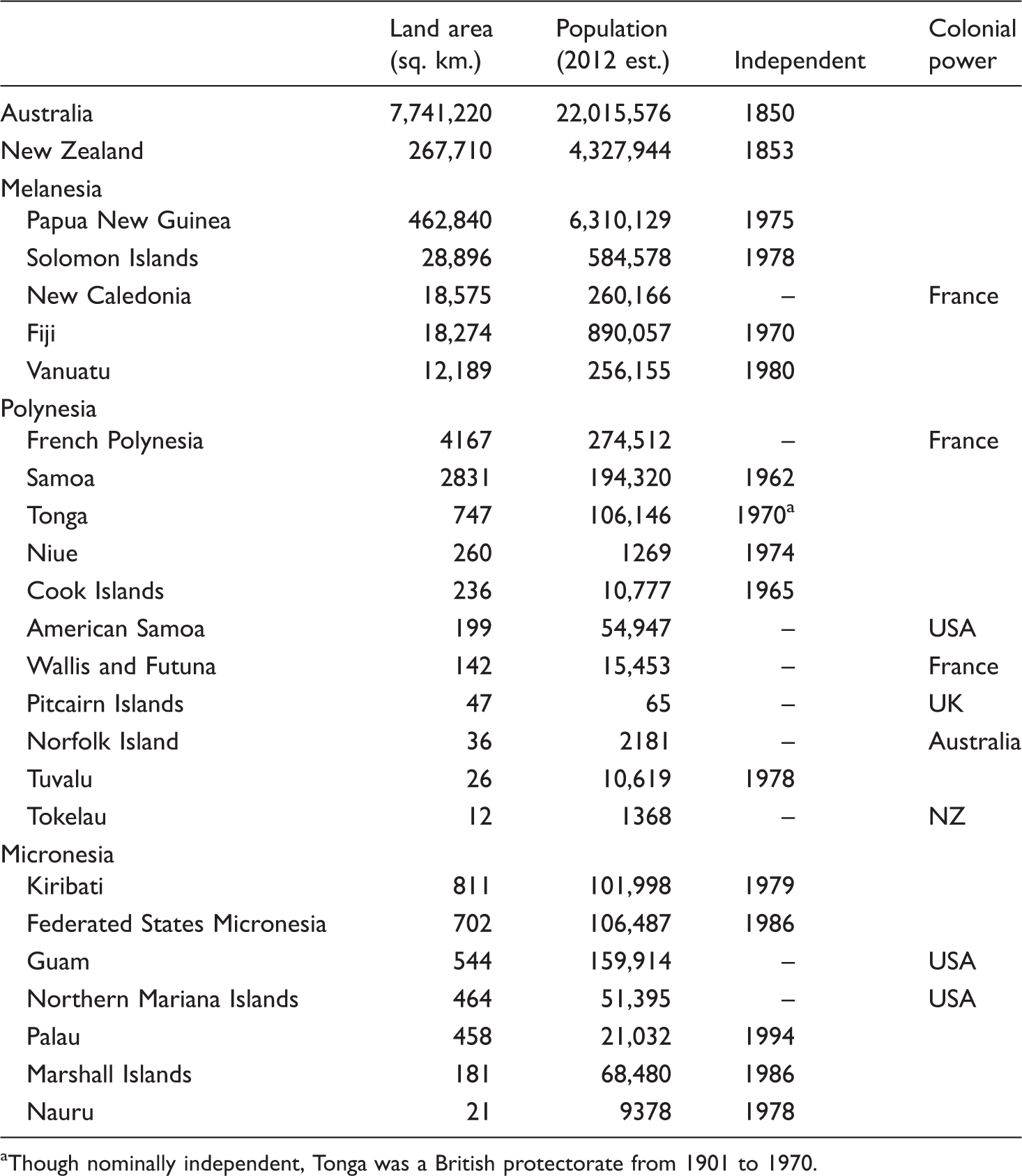
Though nominally independent, Tonga was a British protectorate from 1901 to 1970.
Number of census questionnaires located in Oceania, by round.
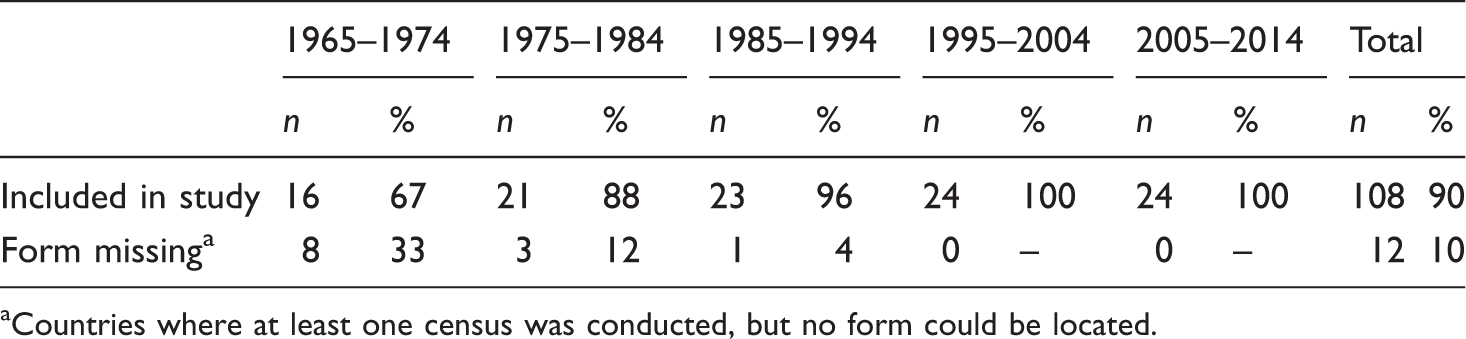
Countries where at least one census was conducted, but no form could be located.
Questions related to citizenship, civic nationality, birthplace, and parental birthplace are excluded from this study as they primarily relate to civic–legal bonds between individuals and the state. We only include nationality where it is asked separately from citizenship, or where the use of an ethnic signifier clearly indicates the term is intended to exact an ethnic response. 4 With respect to religion and language, Morning’s (2008) cross-sectional study excluded both on the basis that they were poor proxies for ethnicity. In Oceania, religion is not generally indicative of cultural difference, given the ubiquity of Christianity, except perhaps in Fiji which has also has a significant population of Indian origins. Language, however, often functions as a marker of ethnic difference in the region, both with regard to indigenous peoples as well as migrants and their descendants, and is thus included in our study.
For each census round, the population universe is based on contemporary political boundaries rather than the historical formation of countries and territories. Over the study period, the British colony of the Gilbert and Ellice Islands reformed into independent Kiribati and Tuvalu, and the US-administered Trust Territories of the Pacific Islands (TTPI) 5 split into four successor states (Palau, Marshall Islands, Micronesia, and the Northern Marianas). As such, the 1968 Gilbert and Ellice form is counted twice, and the 1970 and 1980 TTPI forms are counted four times in each round. This maximizes comparability between census rounds and follows the methodology employed in other cross-national, time-series studies (e.g., Czaika and de Haas, 2013). Finally, while some countries in Oceania have followed a decennial program, many have aligned with imperial British practice of five-yearly censuses. Several countries alternated between the two approaches although none carried out more than two censuses in any one census round. For comparability, we include each country only once in any given census round. 6 For countries that undertook two censuses in a round, we select the first one unless only the second form was located. To ensure that our analysis is current, we adjust this selection process in the 2010 round to focus on the second census. While limiting our analysis to a single census in each decennial period risks missing change occurring within a round, we anticipate that any such shifts will be captured in the following round.
Findings
Prevalence and scope of ethnic enumeration
We begin by examining the prevalence and scope of ethnic enumeration in Oceania and how these have changed over time. For clarity, we only present aggregate data, a more detailed list of ethnic enumeration by country and round can be found in the appendices (Table A2). Table 2 shows that census-based inquiries into ethnicity clearly increased over the focal period. Of the 16 countries for which a form could be located in the 1970 round, 38% did not count by ethnicity. By the year 2000 round, only one country in the entire region, PNG, did not engage in ethnic enumeration. This near-universal commitment to ethnic counting is consistent with Morning’s (2008) finding that, of all the regions in the 2000 census round, ethnic enumeration was most widespread in Oceania. By taking a longitudinal view, we can see that the cross-sectional result observed in Morning’s study was due to a process of incremental change occurring over decades. While the level of missing data in the 1970 round is relatively high (at 33%), we are confident that the general trend of increasing prevalence is robust. Of the eight countries excluded from the 1970 round, only four undertook some form of ethnic enumeration in the subsequent round. Even if we count these countries as ethnic enumerators in the 1970 round, the overall proportion not asking any form of ethnicity question was still relatively high, at 30%.
As some countries moved to introduce ethnic enumeration in their national census, others expanded the reach of their inquiries. In the 1970 round, the mean number of ethnicity questions was 0.8, increasing to 1.80 questions by the 2010 round. This occurred despite concerns globally over the rising costs of census taking and fiscal imperatives to only include questions considered absolutely vital for the exercise of governance (Prewitt, 2005). New Caledonia was the first in the region to ask three questions capturing different dimensions of ethnicity, with Australia and Nauru following suit in 1986, and New Zealand in 1991. Because we count only the first census in any given round, this change is not picked up for New Zealand until the 2000 round. In the most recent round, Tuvalu also expanded its approach to include three ethnicity questions.
The ethnic classification strategies used in New Zealand, Australia, and New Caledonia are distinctive and warrant discussion. In the 2010 round, all three countries included at least one question dedicated to indigenous identification. 7 New Zealand was unusual in including four questions which referenced, in some way, the indigenous Māori (ethnic group, Māori descent, tribe, language). Over the decades, governments in all three countries have employed various policy approaches to incorporate indigenous peoples into the national polity. Historically the focus was on biological absorption, cultural assimilation, and other coercive measures. In more recent decades, the focus has been on economic integration through “Closing the Gaps” policies aimed at reducing socioeconomic inequalities between the indigenous and nonindigenous populations (Gorohouna and Ris, 2013). The special attention paid to indigeneity in these countries also reflects indigenous political activism that began in the 1970s and resulted in a range of measures from financial redress for past injustices, to increased political representation and language revitalization programs. The growing recognition of indigenous rights in a global context may also have been an influencing factor although it should be noted that New Zealand and Australia (along with the United States and Canada) were among the last nations in the world to sign the United Nations Declaration on the Rights of Indigenous Peoples (Davis, 2008). In both countries, the capacity to identify, assess, and monitor the size and composition of the minority populations, both indigenous and migrant, is seen as important to the functioning of liberal democracy. Indeed, the Māori ancestry question was introduced in the 1991 census to meet statutory requirements for calculating the Māori electoral boundaries.
In contrast to the settler states, most of the smaller island countries and territories tended to ask only one, or at most two, ethnic questions. This likely reflects the lesser importance that governments in those countries place on issues of ethnic equity. Indigenous people in those countries are typically a demographic majority with localized sociopolitical dominance, albeit with continued economic dependency upon former or emerging overseas powers. 8
Number of ethnicity questions in Oceanic census questionnaires, by census round.
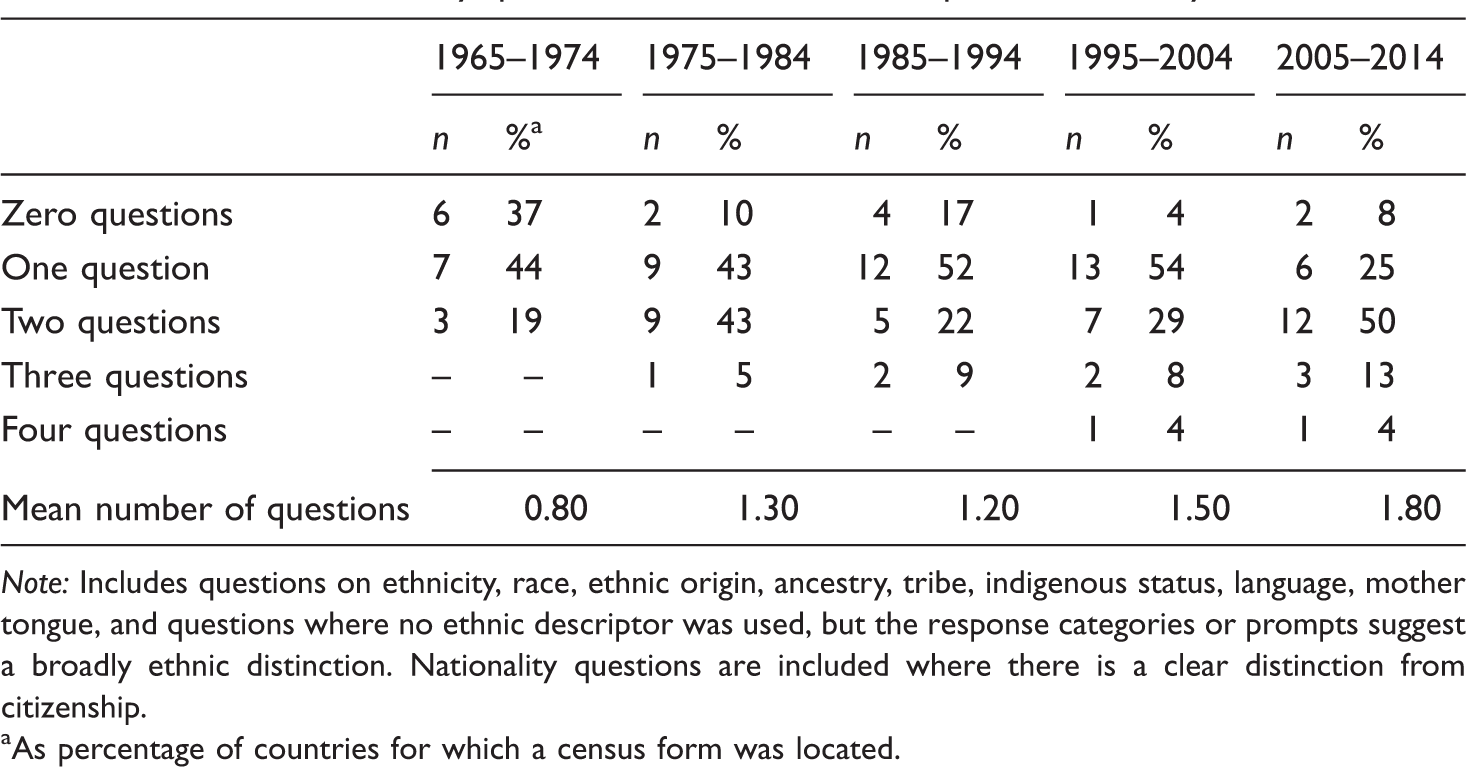
Note: Includes questions on ethnicity, race, ethnic origin, ancestry, tribe, indigenous status, language, mother tongue, and questions where no ethnic descriptor was used, but the response categories or prompts suggest a broadly ethnic distinction. Nationality questions are included where there is a clear distinction from citizenship.
As percentage of countries for which a census form was located.
Ethnic terminology in the census
Terminology used in ethnicity questions in Oceania censuses, by round.
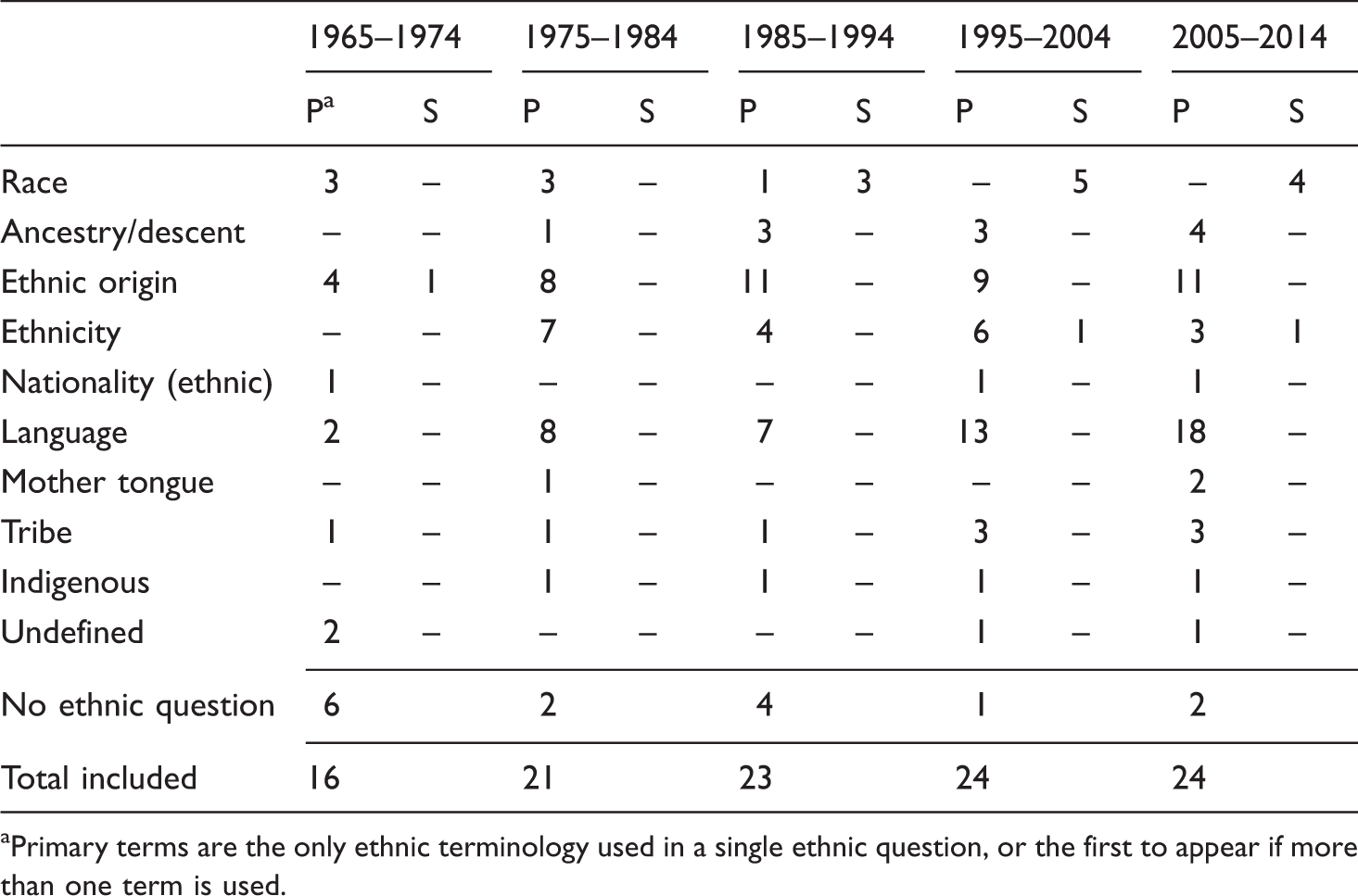
Primary terms are the only ethnic terminology used in a single ethnic question, or the first to appear if more than one term is used.
From 1965 until 1995, ethnic origin was the term most frequently used, consistently accounting for around half of the countries enumerating by ethnicity. The durability of ethnic origin as a way of distinguishing between groups reflects the importance of kin as an organizing concept in the Pacific where extended families, clans, and lineages remain key features of the social fabric. For example, the matrilineal clans of Nauru and the Māori whānau (family), hapū (sub-tribe), and iwi (tribe) persist as meaningful ways of structuring and experiencing the social world.
While the terminology of ethnicity or ethnic group was relatively popular in the early rounds, the frequency with which it appeared in the census declined over time. By the 2010 round, only 3 of the 22 countries in the region which undertook some form of ethnic enumeration used the terms ethnicity or ethnic group (New Zealand, Tuvalu, and Fiji). A decline in the nomenclature of race is also apparent; after the 1980 round, it did not appear as a primary term in any census. Interestingly, however, race continued to be used as a secondary term although always in concert with ethnic origin and only in territories and former territories of the United States (American Samoa, Guam, the Northern Mariana Islands, and Palau). The use of race as a secondary term undoubtedly reflects the ongoing salience of race in the metropole, a distinctive feature of American society which has been observed in other studies of ethnic enumeration (Nobles, 2000; Omi, 1997; Rodríguez, 2000). A surprising trend shown in Table 4 is the recent and rapid increase in the number of countries enumerating by language. In the 1970 round, only two countries included a language or mother-tongue question in the census; by the 2010 round, this had increased to 20 countries. For the most part, these questions supplement other, more direct ethnic questions. Only in the Marshall Islands, Wallis and Futuna and French Polynesia did it constitute the sole ethnicity question.
Transforming ethnic categories: From the colonial to the local
To generate a more theoretically fruitful and empirically robust account of changing classification practices, we undertake a joint analysis of the terminology and categories used to enumerate ethnicity. For terminology, we distinguish between terms that are conceptually grounded in a biological understanding of difference and terms that signify a cultural distinction. Racial–biological terms include questions based on race, color, ancestry, descent, and race/ethnic origins combined. While ancestry is not as overtly biological as race, and has fewer racist connotations, it is nevertheless connected with an understanding of identity as inherited and immutable. Questions using the nomenclature of ethnicity, nationality (when used in an ethnic sense), and language are treated as cultural distinctions in that they emphasize the subjective sociocultural basis of group differences. Ethnic origin is a difficult concept to characterize according to this binary typology. Like ancestry, the word origin references a historical connection to an ethnic group vis-à-vis an ancestor. In the Pacific, however, ethnic origin is generally understood in terms of cultural relationships based on kin connections. The exception is the US dependencies and territories where the concepts of ethnic origin and race are tightly coupled within the census context.
Biological–cultural concepts and colonial–local categories used in main ethnicity questions in Oceanic censuses.
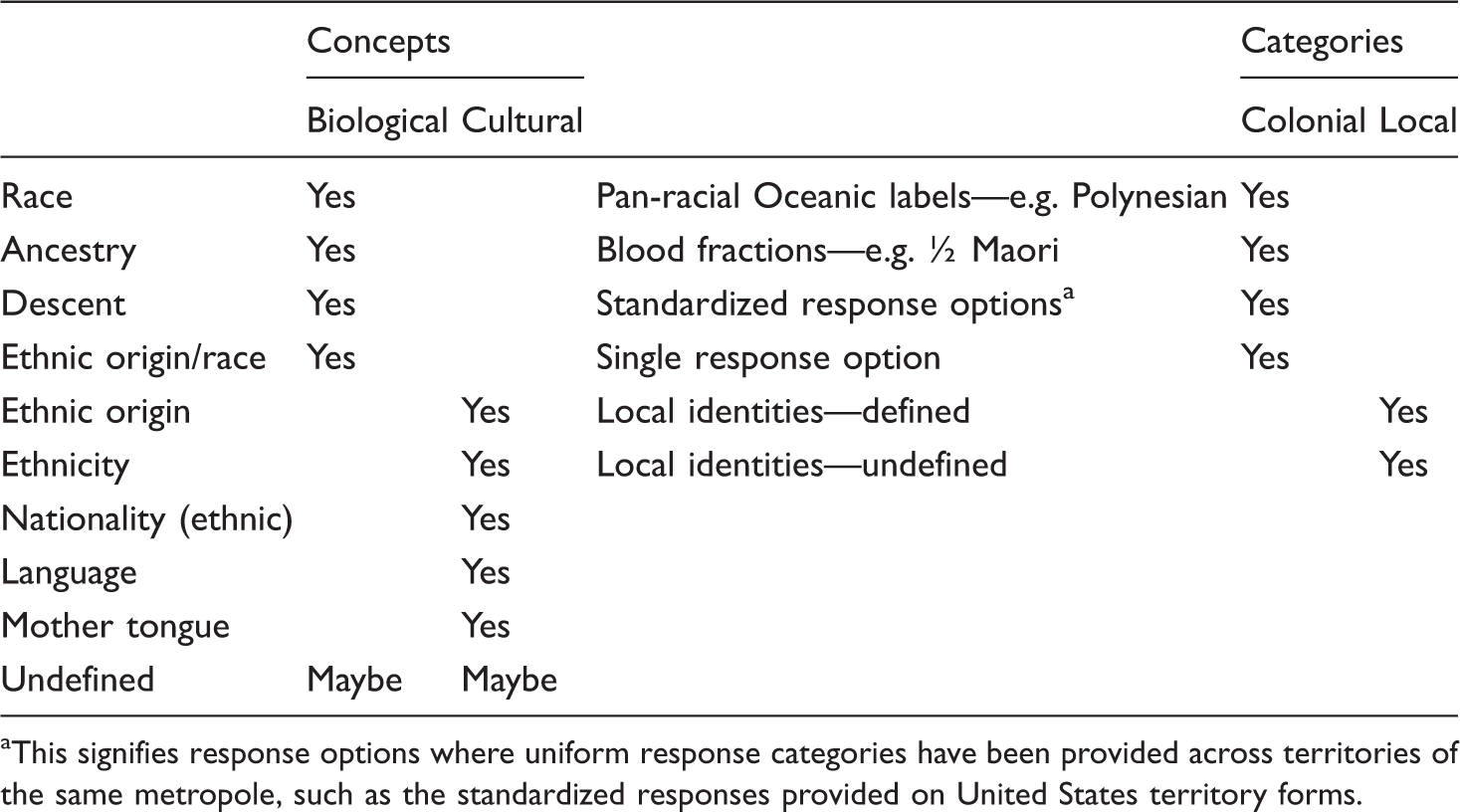
This signifies response options where uniform response categories have been provided across territories of the same metropole, such as the standardized responses provided on United States territory forms.
Drawing on the colonial–local and biological–cultural distinction, Figure 1(a) and (b) locates every country in Oceania within one of the four quadrants of a Cartesian plane. Figure 1(a) represents the earliest round for which a census form could be located (see appendices, Table A1). Figure 1(b) captures the question featured in the most recent census which, in all cases, was from the 2010 round. For the purpose of clarity, we limit our analysis to the first-appearing ethnicity question in any given census, which we designate as the “main” ethnicity question. Undefined questions, which do not utilize any specific ethnic term, are plotted on a case-by-case basis. In the case of New Caledonia, for example, the 2009 census question “Which communities do you feel you belong to?” clearly indicates a cultural (versus biological) conceptualization.
(a) Biological–cultural and colonial–local patterns of ethnic enumeration in Oceania censuses, 1965–2014, earliest round. (b). Biological–cultural and colonial–local patterns of ethnic enumeration in Oceania censuses, 2010 round.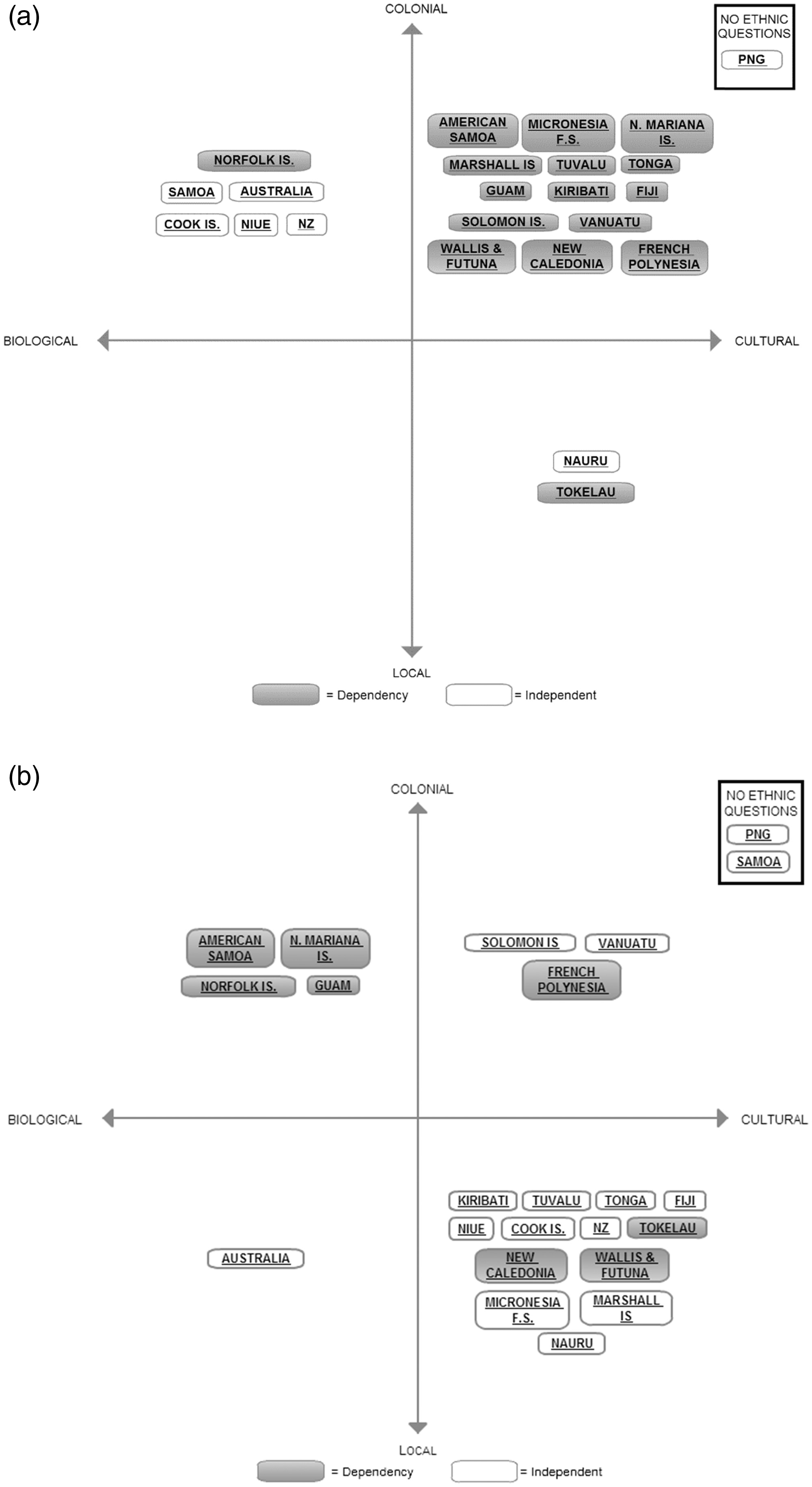
The key point to be made when comparing Figure 1(a) and (b) is the shift from the upper right corner of the quadrant (cultural–colonial) to the bottom right (cultural–local). At the earliest time point, only two countries utilized a cultural–local approach to ethnic classification. By the 2010 round, it had increased to more than half of the countries in the region. While the primary transformation has been in relation to the categorical distinctions used to describe groups, there has also been a cultural turn in the conceptualization of difference and a general shift away from the use of nomenclature of race, ancestry, and descent. The colonial and postindependence censuses of Tuvalu and Kiribati, formerly Gilbert and Ellice Islands, exemplify the shift that has occurred in the categorization of group identities. In 1968, the ethnic origin question listed categories that included Gilbertese, Ellice Islander, European, Chinese, European/Gilbertese, European-Ellice, and Chinese-Gilbertese. By 1979, Ellice had gained independence as Tuvalu and the categories included were Tuvaluan, Tuvaluan-Gilbertese, Tuvaluan-Other, Gilbertese, European, and Other. By 1991, the forms had adopted the localized i-Kiribati identity and dropped specific mention of Europeans altogether, with only Tuvaluan, Part-Tuvaluan, i-Kiribati, and Other (specify) as response options. These shifts in official constructions of ethnoracial differences reflect a gradual lessening of colonial influences on demographic practices closely involved in the exercise of power.
The US territories of American Samoa, Northern Mariana Islands, and Guam stand out as rare examples of countries that moved from a cultural-based definition of ethnicity to one with a biological–racial connotation. The 1980 census of these territories asked “What is your ethnicity?” In the 2010 census, however, the question was framed in terms of “ethnic origin or race” and included the White and Black categories alongside local Chamorro, Samoan, and Carolinian identities. Norfolk Island was the only country in the region that consistently employed a biological–colonial approach to enumeration, reflecting an enduring interest in the descent of the population, but in strictly binary terms. The most recent census (2011) simply asked, “Is this person of Pitcairn descent?” Another noteworthy feature is the continued presence of colonial categories in Melanesia. In the 2010 round, the Solomon Islands and Vanuatu censuses continued to include Melanesian as a response category, long after having gained independence. The persistence of colonial categories in the part of Oceania where racial logics were most pernicious is perhaps unsurprising. French Polynesia also continued with a colonial–cultural approach, although the use of Polynesian as a response category to a question on language represents a somewhat softer version of colonial logics.
In the 2010 round, neither Samoa nor PNG engaged in ethnic enumeration. For Samoa, it was a recent change, but PNG had long adopted a position of nonenumeration. The inaugural colonial census in 1966 was the only one in which a question on ethnicity was included. In it, enumerators were instructed to “State whether the person’s race is Indigenous, European, Chinese, Malay, etc., regardless of where born,” with the option of reporting racial fractions for those with multiple affiliations. There are many possible reasons for why successive governments in PNG have not pursued ethnic enumeration, including its extraordinary cultural and linguistic diversity and the ongoing challenges this has posed for governance and social cohesion. The geographic remoteness of much of the population, combined with low levels of development (PNG has among the lowest gross domestic product per capita in the region) also makes it difficult to conduct even a rudimentary census. Of all the forms collected for this study, the PNG census questionnaires were consistently among the shortest.
Finally, while colonial categories may have been largely purged from national censuses in Oceania, vestiges of colonialism remain in a more nuanced form. One way in which this continues is through the determination of who represents the significant “Other.” In Wallis and Futuna, for example, metropolitan France and New Caledonia are listed as salient categories in a nationality question in the census, but the neighboring islands of Samoa, Fiji, and Tokelau are invisible. Postindependent Kiribati censuses continue to reference Tuvalu (its former colonial counterpart), but not neighboring Tokelau, while the US territories census questionnaires use a standardized list of response options that reflect US governance priorities. Overall the findings suggest that, while significant transformations have occurred in the counting and classification of populations by ethnicity in Oceania, the imprimatur of previous regimes and practices have not been completely erased and may well linger for some time yet.
Conclusion
This study has gone some way toward heeding the call of Morning (2008) and others (Kertzer and Arel, 2002) for research that examines ethnic counting on a regional scale, combining breadth and depth for theoretical insight. By applying a regional lens to ethnic classification, we have been able to identify important breaks and continuities in enumerative practices across multiple countries, and over a reasonably long time span. The transformation of census-based inquiries into identity, from colonial configurations to more localized understandings, suggests that macro-level changes in ideologies of racial thinking have influenced official practices of ethnic enumeration in the region. In terms of continuities, our study has clearly identified the importance of ethnic origin as a dimension of state-defined difference, particularly from the 1990 round onward. In considering the vast lexicon of ethnicity-related terms, the concept of ethnic origin is interesting as it sits somewhat uncomfortably between a rigid biological conception of inherited identity and a more sociological understanding of ethnicity. This ambiguity is clearly evident in New Zealand where the concept of ethnic origin appeared briefly in the 1976 and 1981 censuses, before being replaced by the term ethnic group in 1986. Ultimately it served as a transitional concept to move from an official schema based on the reporting of racial fractions, to the current concept of ethnic group with the option for multiple affiliations (Kukutai, 2012). Finally, the expansion of ethnic enumeration in the settler states through the use of multiple ethnicity questions is noteworthy and reflects, among other things, the influence of indigenous politics and migration-driven diversification. Our regional-level findings are consistent with the observation that governments in multicultural contexts have shifted from a model of enumerating to dominate or exclude, to an approach more concerned with addressing inequities and documenting diversity (Morning and Sabbagh, 2005; Nobles, 2002; Simon and Piché, 2011).
These regional changes are of theoretical and substantive interest and demonstrate the limitations of the prevailing national-level case study approach. At the same time, they provide a macro-level validation of some of the key arguments that case studies have made. For example, previous studies have noted a shift from ethnic counting for explicitly exclusionary ends to an approach that is more inclusive and emancipatory (Morning and Sabbagh, 2005; Simon, 2005). As Simon and Piché argue (2011: 1360), on a global scale ethnic data “are (almost) no longer collected to preserve racist social systems, or to reinforce hierarchies among social groups, but to describe objective and subjective group realities in order to facilitate the enforcement of generally progressive social programmes.” Our regional approach also has implications for policy and practice in that it allows for a comparison of national practices in a wider context. Statistics agencies are increasingly seeking to harmonize and standardize their practices at regional levels in an effort to promote optimum comparability (see, e.g., Secretariat of the Pacific Community, 2002). Our findings suggest that little scope exists for ethnic standardization in Oceania. Despite a general trend toward a cultural conception of ethnic difference, the ongoing heterogeneity in ethnic terminology, as well as the growth of highly localized and national context-specific identities, suggests that any attempt to standardize ethnic classification in the region would be futile. Indeed, such an attempt might represent a retrograde step akin to the pan-racial categories of the past. Ongoing work connected with this project will further help us understand what types of states enumerate by ethnicity, how they enumerate, and under what conditions they do so. While it is not the purpose of this study to explain the observed shifts, the common trends identified suggest that ethnic enumeration practices are not merely the by-product of what happens inside states, but that state-level factors might also be generalized across different national contexts.
Footnotes
Acknowledgments
We would like to thank Victor Thompson and Teresia Teaiwa, along with the anonymous reviewers, for their instructive comments. Any errors of fact or omission are ours alone.
Declaration of conflicting interests
The author(s) declared no potential conflicts of interest with respect to the research, authorship, and/or publication of this article.
Funding
The author(s) disclosed receipt of the following financial support for the research, authorship, and/or publication of this article: This research was supported by a Royal Society of New Zealand Marsden Fast-Start grant.