







Abstract
Young people of African descent from the suburbs surrounding Paris are in a state of crisis and are feeling increasingly ostracised from a majority French society that marginalises them via institutional and structural racism. With little hope of ever being considered as equal partners, and increased societal and media scrutiny placed upon them, some of these youths of African descent are either ‘checking out’, whilst others choose to express their anger against State institutions via protests and riots. Our study surveyed youths from many peripheral communities of Paris on questions relating to identity, language, racism and inclusion. The findings of our research demonstrate how this group of young people of African descent navigate the duality of their dual societal paradigms by analysing topics of identity, language, racism and inclusion.
Je suis nègre de la pègre pour l'éternité.
La BNP m'appartient, Banque des Nègres de la Pègre.
Très bien dangereusement dans les rouages de l'État.
Je tire dans le tas (…), c’est moi et alors?
Je brise les chaînes et dégaine quand les sirènes s’amènent.
Pourquoi j’ai tant de haine? Négro, la France nous prend pour des cons.
Elle sera notre paillasson; La seule solution pour que tu t'intègres.
[I’m a negro of the underworld for eternity.
The BNP belongs to me, Bank of the Negroes of the Underworld
Dangerously well in the wheels of the State.
I shoot in the piles (…), it’s me and so what?
I break the chains and draw [my weapon] when the sirens sound.
Why do I have so much hatred? Negro, France takes us for fools.
It [France] will be our doormat; The only solution [for us to survive] is to integrate yourself.]
Nègres de la pègre by Ministère AMER
Paris is a city that features beautiful architecture, famous museums, upscale shopping, a romantic vibe, chic restaurants and a certain joie de vivre that attracts more tourists than any other place in the world. At the same time, few visitors to the French capital are aware of the type of life that exists in the numerous communities that surround the City of Lights. This sort of sanitised view of Paris is misleading, as the city is surrounded by suburbs that are plagued with a variety of socioeconomic issues that are nourished by institutional racism. Some visitors to the city may only be familiar with the peripheral banlieues (suburbs) based negative media reports that focus on crime, terrorism and despair. Furthermore, the very name ‘suburb’ may itself be ambiguous when compared to elsewhere. For example, when North Americans conceptualise ‘the suburbs’, one visualises quiet, leafy, homogenised communities with broad spaces that are in stark contrast with the more multicultural and often culturally segregated city. In France, an opposite descriptive portrayal applies. The word banlieue (suburb) as defined in the French context differs greatly from this artificially sanitised model. Suburban municipalities around Paris are populated with high concentrations of working-class individuals, of which people of colour make up a very substantial percentage (and often a majority) of residents. Socially and economically, the suburbs are underdeveloped, many are crime-ridden and jobs are few in number. Many who live in suburban communities suffer from impoverished conditions and struggle due to a lack of upward mobility. Youth of colour are especially affected by the realities of this spatial construct. In regard to adolescents and young adults of African descent in the Paris suburbs, they are vulnerable to systematic racism, exclusion and marginalisation. To navigate the reality of their space, these youths frequently move between two often-contrasting paradigms: A host society that views them suspiciously (i.e. French) and a heritage one that may not reflect their unique needs and daily lives living in France. This concept of duality and how it affects these youths serves as the emphasis of this present research. Our study analyses a diverse sample of adolescents and young adults of African and Caribbean origins from the Paris suburbs on subjects relating to identity, racism and language use. Due to increased scrutiny placed upon young people of colour in France, since the terrorist attacks in Paris during 2015 (males in particular), investigations such as this are increasingly important so as to understand how these youths see themselves and evaluate their sense of belonging in a country that is becoming increasingly more hostile towards them. Thus, this investigation examines how a large sample of young people of African descent juxtapose the duality of the social hybrids available to them, including the ways in which they are used or navigated. Although many issues negatively affect black youths in France (as well as young people from other ethnocultural communities, notably those of Arab descent), for the purpose of our current work, we focus solely on topics relating to self-identity, language shift, racism and a sense of belonging as they concern an association with mainstream French society.
Methodological considerations and scope
The present research examines a small number of important key cultural challenges faced by young men and women of African and Caribbean descent living in Paris or its surrounding suburbs. Our analysis focuses on topics related to one’s self-perceived identification, connections to majority French society regarding linguistic issues, racism directed to them, and their feelings of inclusion. We deliberate on the above-mentioned subjects as they concern a small, but wide-reaching, sample of 120 young women (n = 60) and men (n = 60) of African descent (aged 15–25 years of age). We chose to centre our research on youths (instead of older adults) due to their unique bi-national social and familial positioning (host versus heritage societies/cultures, with neither being absolute nor exclusive). Although the suburbs are also inhabited by residents of other ethnocultural groups (South Asians, poor whites and especially people of Arab descent), we chose to centre our study exclusively on the black community to measure their feelings on several key subjects relative to identity and integration.
In terms of our research location, we worked on a wide range of peripheral municipalities of Paris because these communities have endured a long history of societal, structural and institutional racism from the central government and majority society. 1 We also worked within the City of Lights by locating ourselves primarily at the busy shopping mall and transit hub known as Les Halles, which is the location where all of the major suburban Réseau Express Régional rail lines converge in the centre of the city. This bustling area of Paris represents a sort of safe space for suburban youths of colour hailing from all ethnocultural groups. This multicultural blend of young people from throughout the Île-de-France region come to Les Halles to gather, shop and stroll. In terms of methodology, we enumerated surveys at all hours of the day and evening. We were present during the entire enumeration process for each respondent, so as to explain the purpose of our research and answer any questions that might be posed to us about the study to ensure that the results were not skewed.
Regarding our targeted sample, we identified potential respondents based on the theory of Afrocentricity that has been long furthered by Asante (2003) and Mazama (2012). Although we strongly acknowledge that some elements encompassing the black experience will differ according to one’s national origin (e.g. sub-Saharan African countries versus Caribbean départements), an Afrocentric model is important for this study. Throughout their research, Asante and Mazama have argued that geography issues aside, people of African descent are connected historically and culturally through their collective experience and history. A research approach based on Afrocentricity means that blacks living throughout the Diaspora are African despite any other Eurocentric-influenced designators or identifiers. In regard to France, the major issues facing Africans do not differentiate these individuals according to place of origin, status, citizenship or background. In other words, despite a more privileged status as non-immigrant citizens (when compared with immigrants), Caribbean residents living in metropolitan France share a more common history with their African cousins residing in the hexagon than with their co-citizens from the French majority group. Beriss (2004) endorses this thought when he argues that, despite French citizenship, Caribbean migrants who go to mainland France are also faced with downward mobility and are marginalised due to issues relating to their Africanness. Beriss (2004: 37) states that ‘colour often serves as a marker of difference from a putative French ideal’ and further argues that people from the majority culture ‘cannot tell an Antillean from an African’. Thus, instead of focusing on the dislocation of African people as defined geographically or culturally in the Euro-linear definition, our study relocates all youths of African descent in France as one people who face similar issues. 2 In terms of data analysis, we codified our responses by using a Likert scale in order to measure statistical significance. To commence our investigation of suburban youths of African descent, we must give a brief overview of the spatial construct of the banlieues and the myriad of ongoing problematic social conditions found with them that affect African youths.
Banlieues: Creating the other
France’s constant dysfunctional relationship with its former colonies in Africa and its dealings with its current possessions in the Caribbean are described by Mbembe (2009: 48) as being ‘paternalistic’ or ‘monstrous when necessary’, or ‘accommodating in its post-colonial version’. This sort of mentality also exists within France itself as it concerns migrants from the Caribbean and Africa, and longstanding French imperialist attitudes and racism can be juxtaposed with the current crises in the suburbs. Mbembe (2009: 51) further makes this point when he states that ‘the Republic is being asked to take seriously the question of the plurality of memory’. Migratory movements of people of African descent from throughout the Diaspora to mainland France are the by-product of French colonialism. Over the past 60 years, the ghettoisation of these migrant populations into housing estates known as cités that are located throughout the periphery suburbs (and the lack of investment in those municipalities) and a reluctance to (fully) integrate Africans into French society as equal partners nourish the feelings of alienation that occasionally boil over into violent acts of frustration against institutions of the State. France’s neo-colonialist policies in Africa and the Caribbean are the root cause of the social malaise, rioting and anger in the suburbs over the past three decades. Even in those suburban communities, where people of colour form the majority of inhabitants, their presence has been marginalised, and their existence as equal citizens under the law has been put into question under the guise of security and order (Thomas, 2007).
Although it is difficult to know the exact population numbers due to the lack of official statistical data collected by the State based on race, visitors to many suburban communities will denote that many communities on the periphery of Paris are majority–minority in demographics. Additionally, these same suburbs are also the home to underfunded schools, high unemployment, a lack of basic services, elevated crime rates and a notable deficiency of adequate infrastructure. Upward mobility is almost impossible for the residents of many suburbs, despite their proximity to wealthy Paris. Youths of colour are particularly vulnerable to deviance and other social problems because of this divisive dichotomy. Bleich (2004) and Marlière (2007) argue that people of colour from the suburbs feel ignored by mainstream society, with many believing that they have no hope of ever being considered as fully French despite any of their efforts to integrate into or being accepted by the majority culture. In terms of unemployment rate in the banlieues, joblessness amongst young people represents a percentage of 40–60% or higher across many communities (Kokoreff, 2008; Marlière, 2007). However, this statistic can be deceiving, as it measures all youths looking for a job without regard to ethnicity, and it does not take into account those who have given up on the search completely. Marlière (2007), Kokoreff (2008) and Lapeyronnie (2009) posit that this severe elevated rate of unemployment lends to a mood of despair which, in turn, radicalises young males of colour due to the constant harassment directed towards them by the police. At times, this radicalisation may be demonstrated as taking on a sort of oppositional identity to mainstream culture via self-identification or even one’s choice of their everyday vernacular. For example, this may be manifested in terms of one’s dress style or even by speaking a coded suburban-youth-created language (verlan) that differs from the linguistic standard (French). That said, it can also express itself more seriously. Feelings of hopelessness and despair sometimes serve to drive others towards petty crime or more deviant behaviour. Examples of this include the social unrest in the suburbs since the 1970s as well as the intense riots that occurred across many areas on a much wider scale in 2005 and in the subsequent years. In regard to 2005, following the death of two adolescents at the hands of police in the suburb of Clichy-sous-Bois, the worst riots to hit France in 40 years engulfed many banlieues for several days at a final cost of millions of euros worth of damage. Politicians from across the gamut of opinions were quick to place the blame on those from within those marginalised communities instead of taking a deeper look at the structural racism and societal despair that nourishes feelings of malaise and despair. In fact, youths of colour were fully blamed for the unrest as the State exempted itself from any responsibility. Silverstein and Tetrault (2006) posit that the 2005 riots (as well as those that occurred before then) are not the result of violence carried about by young people from visible minorities, but rather fully stem from the constant State violence directed towards those same youths. Mohammed and Mucchielli (2007) posit that, for some young males of colour, an engagement in criminal behaviour represents a means in which to navigate and fight against the divisive contours of a French society that increasingly turns against its citizens of colour. Other researchers, such as Tchumkam (2015), maintain that further institutional, structural, educational and media stigmatisation of suburban youths may result in even more serious consequences in the future, such as a motivation to commit violence against the State in the form of terrorism. The reasons for violence against State institutions are numerous. Mbeme (2009: 51) analyses these circumstances when he states ‘the threefold system of identity checks, screening, and expulsion, then with its procession of brutal acts, of physical violence and psychological warfare, is being inflicted once again, as under slavery, on the black body’.
The suburbs of Paris are also characterised in overtly sensationalised ways by the print and broadcast media. For example, Garcin-Marrou deconstructed headlines from all of the major newspapers in France over the past few years and found that youths of colour are now being described more frequently as a new ‘dangerous class’ of people who have become enemies of the State. Bernault (2009) argues that even banlieue social service organisations and movements working to improve life in the suburbs (or those organisations that fight against injustice against people of colour in those areas) are not immune from negative portrayals by the media, including those outlets with a left-of-centre slant. One such suburban protest group (Indigènes de la République) was labelled by various print and broadcast outlets as a ‘sect’ whose ideals ‘trash the country and its values’ (Bernault, 2009: 128). Other designations are more disguised. Faure and Garcia (2005: 42–43) examine how descriptions of banlieue communities by the French media have evolved over the years. For example, the suburbs surrounding Paris went from first being known as working-class neighbourhoods that soon were labelled as ghettos. Over the past two decades, many suburbs of Paris have been described in a more sinister fashion as quartiers sensibles (sensitive areas) or even quartiers d’exclusion (no-go zones). Silverstein and Tetrault (2006) take this a step further when they characterise life in banlieue communities as a sort of ‘postcolonial urban apartheid’. Each of these designators further differentiates the periphery banlieues and the people within them from the chic neighbourhoods of Paris. Suburban youths, referred to as the gens de cités suffer from a variety of negative characteristics that differentiate them from the majority culture in a pejorative sense. More specifically, Faure and Garcia (2005: 42–43) examine what they call a vide de socialisation amongst these forgotten suburban youths that that feeds into a manqué de sens that is full of insecurities, which in turn may foster delinquency. Eventually, over time, the environment in which they live causes many of these youths to be classified as some sort of forgotten lost cause or désoeuvrés. Even the innocent and simple descriptive noun banlieusard (suburbanite) takes on a negative or pejorative connotation when used by many people in France. Amongst others, Kokoreff (2008), Boubeker (2009) and Thomas (2013) found that, due to the lack of economic investment in the suburbs, as well as societal exclusion faced by youths of color in terms of belonging to a French State that does not want them, deviance may be seen as the only option for some. This sort of societal ostracism and societal exclusion of banlieusards from majority society is also echoed by vocabulary that is also uttered by politicians for electoral gain, including from a former president of France who labelled them as ‘scum’. Thomas (2007) maintains that characterisations of young people of African and Arab descent are rarely positive, no matter the circumstance, nor how, when, or where they are presented (real or fiction, in film or literature, in schools or by politicians).
Regarding matters of security, successive governments on both the Left and Right have passed legislation to address what they label as the new global war against France carried out by youths of colour from the suburbs. This sort of State-sponsored divisiveness has directed further negative attention and suspicion towards young people of Arab and African descent, and it is occurring under the guise of safeguarding the country from those who threaten to dilute or disrupt the cherished notion of French values. To address this, laws in the name of protecting the notion of laïcité (secularism) are adopted, such as a ban on Muslim hijabs (headscarves). In addition to legislation that unfairly targets suburban populations, a more heavy-handed police presence has become the norm within the confines of many communities surrounding Paris. As shown in the most recent French presidential elections, fear amongst many in France of a sort of ‘anti-white racism’ is often included in the platforms of the country’s major political parties (e.g. witness the recent popularity of the nationalist party the Front National and presidential runner-up Marine Le Pen) and is rhetorically incorporated (in coded language) into speeches made by politicians from across the ideological spectrum. Moreover, in 2007, a controversially named governmental ministry was created (Ministère de l’identité nationale), whose mission was to address issues of identity, integration and other social problems emanating in the suburbs by promoting French values whilst denying or nullifying any connections to one’s heritage history.
For example, there is a growing disconnect between the suburbs and mainstream French society in relation to a growing national obsession in France to pit its citizens against one another. For example, Mohammed and Mucchielli (2007) and Belmessous (2010) investigated the militaristic infiltration of State institutions into the banlieues (police and civic), with the latter research featuring interviews of high-ranking officials who discussed and outlined police readiness in terms of addressing and aggressively acting upon large acts of deviance in rioting, looting or any other actions deemed a threat to security as defined by political authorities. In other words, Belmessous (2010) argues that the suburbs (and the youth populations living within them) are now considered by the State as a severe threat to France’s national identity and should be treated as the enemy instead of citizens whose issues have been ignored or dismissed by governmental institutions. After an analysis of official documents, orders and other administrative edicts that have already been planned out and are awaiting execution by the Police nationale and the French Special Forces (the ‘National Guard’ of L’Armée française), Belmessous (2010) further states that the banlieues are now deemed by authorities as a war zone. Interestingly, this exhaustive investigative work was published before the terrorist attacks of November 2015 in Paris and Saint-Denis. Since then, further planning and militarisation have occurred (to be proactive against further deviance against the State) in the peripheral communities of Paris under the guise of national security. A notable example of this is the application of a law in France known as Code 49.3, which was used in former French colonies such as Algeria in order to suppress opposition, apply curfews, arrest anyone without warrants and to suspend rights. Interestingly, this law had not been used for more than five decades until the unrest in 2005. Furthermore, this heavy-handed approach has continued in more recent years. For example, the national State of Emergency that was enacted following the 2015 terrorist attacks at the Bataclan and Stade Saint-Denis that was supposed to have lasted around two weeks has yet to be fully rescinded. Suburban youths of colour have been especially affected by this ‘temporary’ measure despite their French citizenship. Legislative actions such as this provide the police with the power to search, seize and arrest at will, all without a warrant. Even social service agencies designed to help banlieue residents are designed to marginalise populations of colour. On this subject, Marlière (2007) researched whether or not French citizens of visible minority groups are considered as equals or adversaries by non-governmental agencies working in the suburbs, and he found that these types of supposed well-intentioned organisations are increasingly being used as tools of the State regarding the very vulnerable populations with which they are working.
The topics of race and identity are complex subjects in France, both of which are routinely ignored or intentionally minimised in the national discourse. Official State Secularism decrees that no one in the country should be categorised on the basis of their ethnicity. This means that even a simple breakdown of unemployment numbers as determined by one’s race or origins is neither available, nor categorised by the French government in any official statistics. Due to limitations such as these, it is very difficult for researchers to investigate social problems and their factors as they relate to one’s ethnicity because data that could analyse groups based on these criteria are non-existent. Without any sort of numbers, social service agencies are unable to work as effectively as they could with more specific statistics that delineate issues of need.
Paradoxically, at the same time, that official government policy refuses to categorise anyone on the basis of race or ethnicity, many within France are already classifying residents into various categories. Bernault (2009) found that differentiating designators are highlighted repeatedly via official and popular rhetoric that describes the banlieues as ‘no go zones’ (zones sensibles) and their residents as ‘immigrants’. Although many newcomers to France live in the banlieues, this erroneous generalisation and assumption that most suburbanites are ‘foreigners’ is repeated even though the majority of people from those areas are French citizens, often third generation or beyond. Despite contemporary governmental objectives towards banlieue residents, the root cause of the continued marginalisation of suburban youths is a constant fear amongst many in the France of the ‘postcolonial other’. In his research, Boubeker (2009) argues that, despite encouraging immigration to France from the former French colonies of the Maghreb and sub-Saharan Africa, few politicians and pundits expected the children of these migrants to remain in the country over a long period, much less become French citizens. Whilst people hailing from these areas were once the foreign ‘other’ due to their migratory status, they remain ostracised now due to opportunities denied to them based on their racial and ethnocultural status. Thus, Arab and African citizens of France are made invisible because of their status as visible minorities and thereby are denied any sort of equal representation due to the structural racism that they face. Boubeker (2009: 71) describes this conflicting duality well when he states: The paradox of invisibility for those living in these neighbourhoods is that they are still subject to total public visibility. The paradox assumes an existential dimension for the heirs to immigration in the media spotlight: Poor kids acculturated in the early 1980s, victims of economic and social disaster a decade later, and now cast as dangerous members of the deviant sect of ‘communitarianism,’ an Islamist, sexist Mafia. In short, as the bogeymen in a monstrous figuration of the ghetto American style.
It should be noted here that these issues are not limited to the black community of France, for the same can be said of French citizens of Arab descent. Thus, the very notion of citizenship is contested and called into question as many from within the majority culture view French citizens of colour with suspicion. As these marginalised populations increasingly demand to be heard and their rights recognised, their status as the ‘other’ is further emphasised by State institutions and the media. Moreover, when it comes to the societal issues that plague the suburbs of Paris, young people of colour are also classified daily, based on ethnicity, in the form of racial profiling, unemployment, police brutality, lack of investment in their communities and more. In his research, Boubeker mentions that this reality confuses suburban youths of colour who are navigating two distinct and conflicting realities: that of citizen and indigène. First, it is expected that youths from the suburbs view themselves as fully functioning and accepted citizens of the French Republic, and any mention of the history of people from outside of France that may result in some sort of hyphenated citizenship is non-existent in educational texts and pedagogies in favour of one solid French construct. Thus, young people of colour are reduced to being the ‘other’ in a country that constantly questions their loyalty. Moreover, since the terror attacks in Paris in November 2015, this sort of contradictory and enigmatic ‘us against them’ type of rhetoric in regards to young people of colour has only intensified. Moreover, oft-repeated claims featured on headlines from around the world suggest that youths of colour from the economically marginalised Paris suburbs are nothing more than fertile targets for recruitment by extremist groups, and this rhetoric places young people of African and Arab descent under intense scrutiny. That said, extremist organisations such as the Islamic State (DAESH) do seek to exploit racism and marginalisation in France as a means in which to recruit young French citizens of Arab and African descent to commit acts of terror against a country where they argue people of colour will never be accepted as equals. The perpetrators in all of their recent terrorist attacks across France were citizens of the country (or an adjacent one, such as Belgium). Paradoxically, recent gains by the white ethno-nationalist political party known as the Front National further serve to ostracise and place even greater suspicion on young Africans and Arabs in France.
Despite inflammatory headlines and stereotypical rhetoric, few politicians and professionals in France consider the root cause for social problems in the suburbs. Unemployment statistics, high drop-out rates and a lack of development as they affect young Africans and Arabs as well as their general feelings of malaise are topics rarely discussed by political pundits, and helpful policies in which to address these topics are generally missing from the national discourse. Researchers such as Beriss (2004), Winders (2006), Marlière (2007), Thomas (2013) and others have long argued that socioeconomic stress, structural racism, police harassment and economic marginalisation have plagued these youths for years, and French governments from every political persuasion have done little to address underlying issues that extend beyond the cosmetic or banal. It is under this divisive backdrop where all suburban youth of colour are assumed to be condamnés à l’échec (condemned to fail) by mainstream society in France. Although the aforementioned issues about exclusion and marginalisation fully apply to youths of Arab descent as well, the present study focuses on populations of African descent so as to examine whether or not the black community’s issues are distinct from those faced by other suburban youths of colour, or if they mirror the larger sense of malaise as faced by suburban youths from visible minority groups. Thus, to begin this narrower study on one segment of young people of colour in the Paris suburbs, we explore the question of how these adolescents identify themselves.
Self-identification
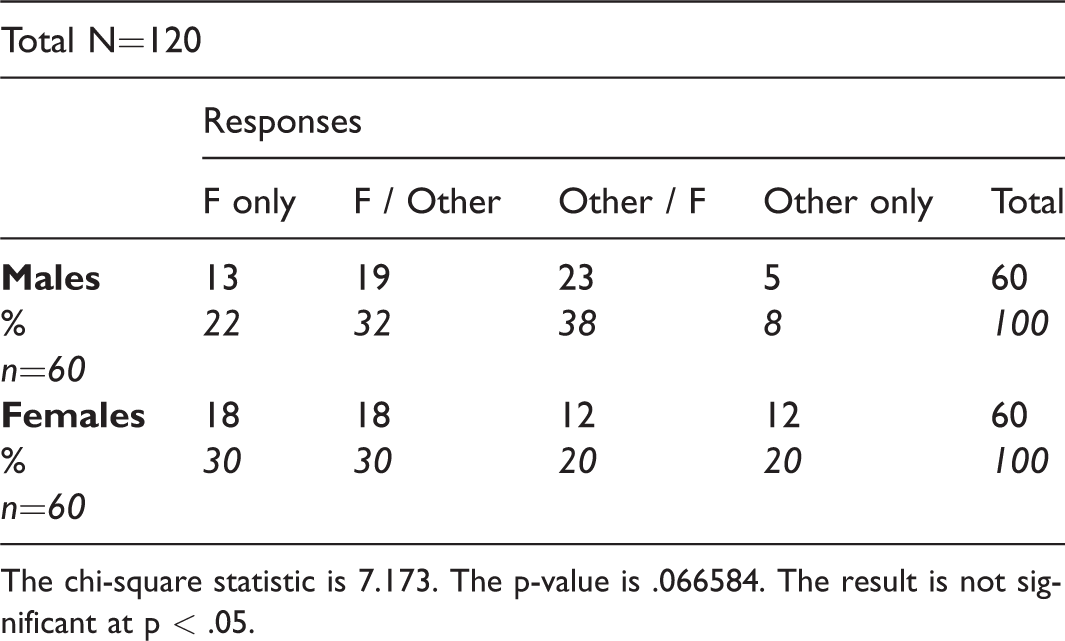
Despite official State Secularism, the subjects of race and one’s identity are complex issues in France. Therefore, one of the first things that we sought to discover is how African youths chose to identify themselves. This question is also important to examine because adolescents and young people from minority communities are often classed with their older peers when analysed by researchers. We believe that this sort of categorisation is not fully representative because young people from visible minority groups will not identify themselves or align with the host society in the same manner as their parents due to their increased invisibility and stigmatisation by the French State. On this note, respondents were asked the question ‘How do you identify yourself?’ and they were given four categories from which to choose, with each person making the selection that best fit their individual situation as defined by them (French only; French first/Other ethnicity second; Other ethnicity first/French second; Other ethnicity only). Table 1 shows the results of this inquiry:
Self-Identification.
The chi-square statistic is 7.173. The p-value is .066584. The result is not significant at p < .05.
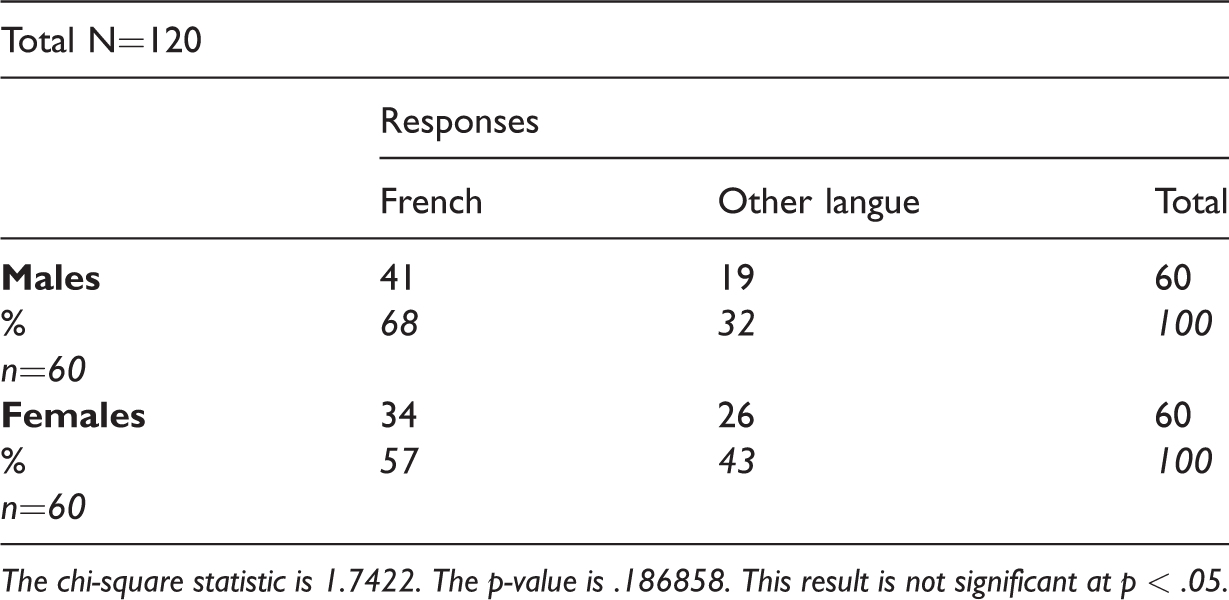
Language most-spoken at home.
The chi-square statistic is 1.7422. The p-value is .186858. This result is not significant at p < .05.
Whilst our data indicate that none of the four possible answers formed the majority of responses, this question yielded some noteworthy findings worth noting, according to gender. More females (30%) than males (22%) indicated that they identified themselves as ‘French only’. In a country that has long ostracised young males of African origin, this result was not surprising. The split designator of ‘French first, other second’ was selected by 32% of males and 30% of females. Moreover, when switched (‘Other first, French second’), a higher percentage of males (38%) than females (20%) identified themselves in this manner. Perhaps, the most interesting answer in regard to self-identification is the result that showed more females (20%) identifying themselves as ‘Other ethnicity only’ than males (8%). This latter designator can be explained due the marginalised position of women of colour in France, where they are exploited or discriminated against by both the heritage and host societies on the basis of their gender.
Home language
Language and culture are intricately linked together and the Africans who have migrated to France as immigrants or relocated there as residents (e.g. from the Caribbean) come from a diverse array of linguistic groups. However, language maintenance may be minimised due to the strength of the dominant culture in France. According to Mazama (2012: 87), the French have long viewed their language in the ‘highest linguistic form’, as being ‘pure’. French curricula in schools continue to propagate this mind-set. This means that any links to one’s Africanness in terms of language may not be strong due to assimilation into majority society via the Euro-linear curricula present in French schools. Mazama (2012) further argues that, even in countries where African languages are spoken by the cast majority of the population, a symbolic and perhaps mythical view is placed upon French. To discern this question amongst our sample of African youths, we asked our respondents the question ‘What language do you speak most at home?’ Although we are cognisant of the bilingual nature of many households, no two languages will be used equally all of the time. Because of this, respondents were instructed to choose the one that was spoken more often than the other: the heritage or the host language. Table 2 categorises our findings in regards to this inquiry:
Consider the French as being “racist”.
The chi-square statistic is 0.1339. The p-value is .714393. This result is not significant at p < .05.
Our findings to this inquiry show that more males (68%) than females (57%) indicated that they speak French in the home more frequently than their heritage language and/or dialect (e.g. Créole). This is a curious result when one considers that linguists such as Labov (1990) and Tannen (1990) argue that females are the ones who initiate linguistic shift.
French racism
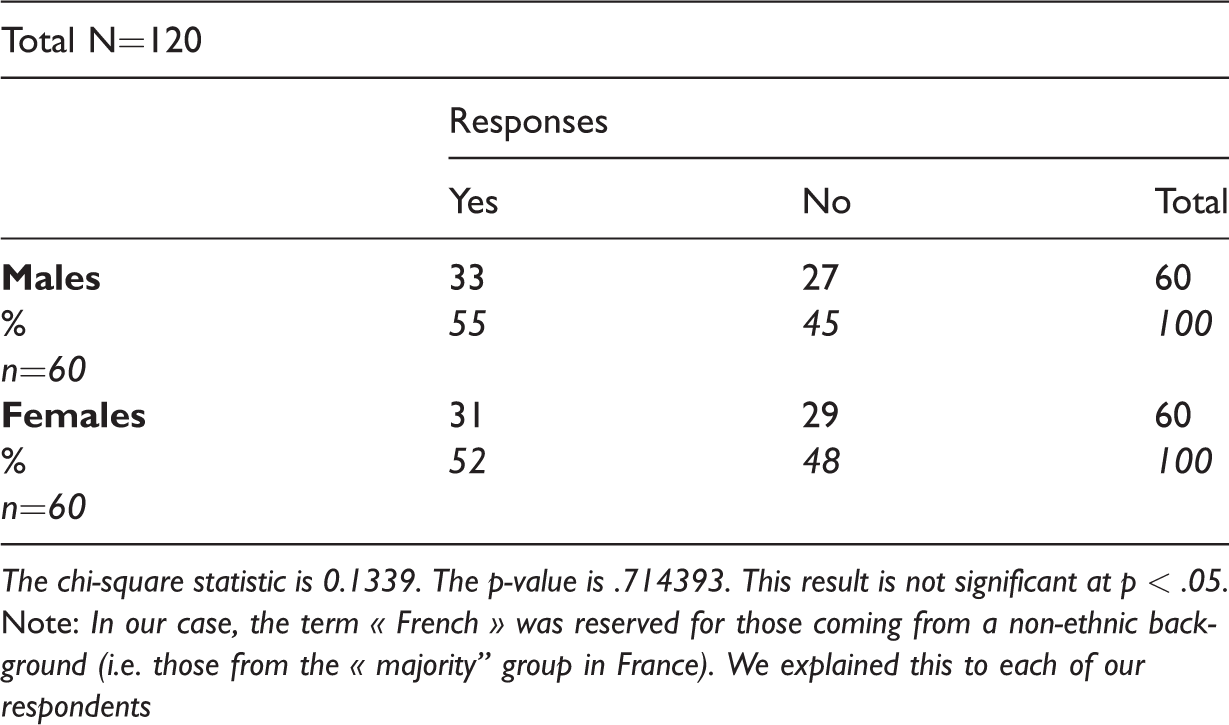
Due to the spatial geographic divisions of the suburbs from the wealthy Arrondissements of Paris, as well as the persistent social and structural racial problems that plague France, we asked our respondents: ‘Do you think that the French are racist?’ and they were to answer either ‘Oui’ or ‘Non’. 3 We chose to be as direct as possible with the wording of this question as to maintain full clarity. The results of this question are observed in Table 3.
Our findings regarding this inquiry show that slightly more males (55%) than females (52%) feel that the French are racist, with a slight majority of both agreeing affirmatively. However, almost half of both genders also indicated the opposite, which means that youths are divided on this topic.
Inclusion
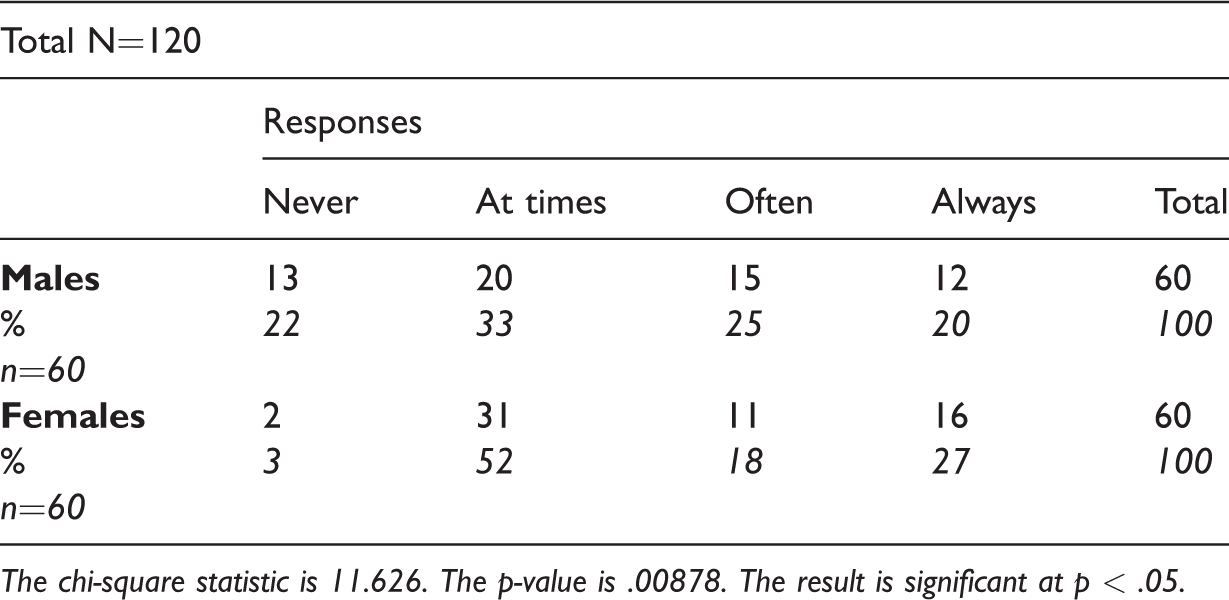
In addition to examining whether or not youths of colour feel that the majority culture is racist towards communities of colour in France, we also sought to discern if our respondents felt included whenever they heard politicians (or anyone else) utter the words ‘the French people (le peuple français)’ or ‘we the French (nous les Français)’ where it was assumed by listeners that the speaker would be talking about or referring to all citizens of the République. To discern this, we asked the question ‘Whenever you hear “We French” or “the French people” [etc.], do you feel like you are included as well?’ Our respondents were given four categories from which to select one answer: ‘Never; At times; Often or Always’, responses can be seen in Table 4.
Considered or included as being “French”.
The chi-square statistic is 11.626. The p-value is .00878. The result is significant at p < .05.
More females (27%) than males (20%) stated that they always feel included. However, the result was the contrary in the ‘often’ category (males 25% to females 18%). When we examine the ‘at times’ selection, a slight majority of all females chose it as their answer (52%) versus about a third of all male respondents (33%). To the answer ‘never’, only 3% of females indicated this answer versus 22% of males. We expected that males and females would diverge in regard to this inquiry due to ongoing issues of harassment and police brutality that targets black men. Indeed, the results of this question were statistically significant when the data were analysed based on gender.
Loss of values
Researchers of immigrant or migrant communities around the world frequently state that, by the third generation in a new country or society, the descendants of migrants and immigrants will have blended into majority society in many ways as one’s heritage designators dissipate. Because youths are caught in the middle in terms of these evolving cultural shifts in favour of the majority group, we asked the question ‘Does living in France mean losing your cultural values’ (with term ‘cultural values’ defined by each respondent, as s/he saw fit). Our subjects were instructed to answer ‘Oui’ or ‘Non’ to this inquiry, and Table 5 shows our results.
Loss of cultural values from living in France.
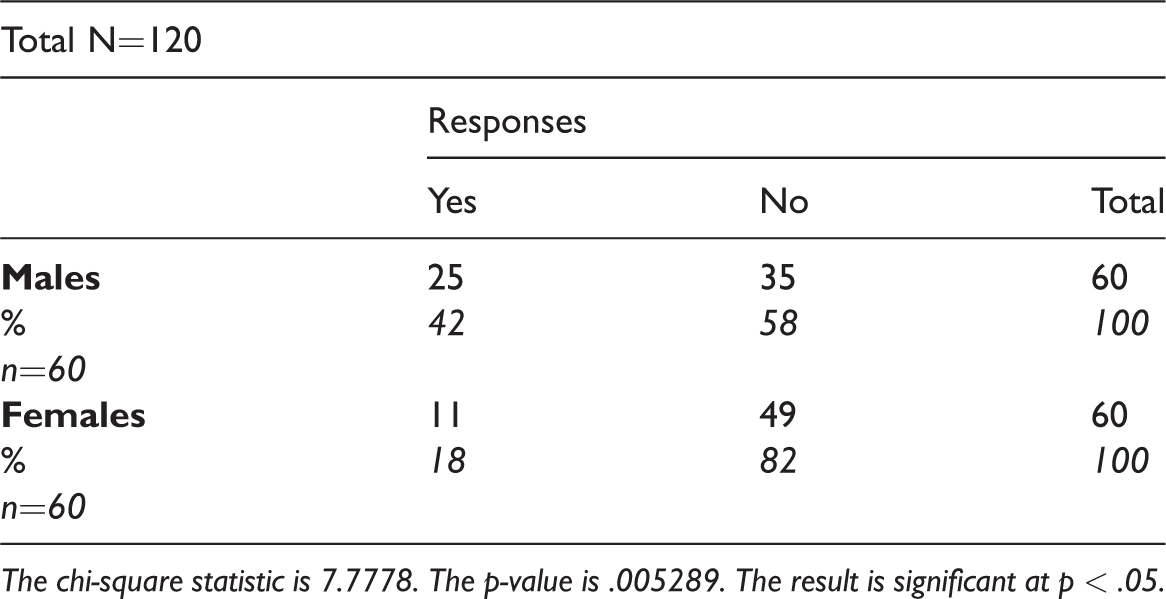
The chi-square statistic is 7.7778. The p-value is .005289. The result is significant at p < .05.
Our data show a majority or both genders indicating that their cultural values are not under threat. However, the answers from this finding display a notable difference with regard to gender. More females (82%) than males (58%) feel that their heritage ethnocultural values are not lost by living in France, and this result based on gender is statistically significant.
Analysis
Whether they are of Arab or African descent, youths of colour are in crisis in France and our findings on young people from the latter community show that they believe that the country does not care about them. Due to recent terrorist attacks in Paris and Nice, further suspicion and unwanted pressure have been placed on France’s visible minorities, and negative feelings or societal pressure that discredits or labels youths of colour as suspicious is sure to continue. We found that most young people of African descent do not identify themselves strongly with the majority culture, as their connections to the heritage group remain strong. This can be partly explained due to the constant inflow of new residents from the Caribbean and Africa as well as other transnational factors. This is emphasised in research by MacGaffey and Bazenguissa-Ganga (2000) and Thomas (2007). Should further external pressure continue to ostracise these younger members from minority cultures, even deeper ties to the heritage group (and lesser connections to majority French society) will occur. This sort of oppositional positioning was highlighted in Ogbu’s many studies on social and linguistic behaviour amongst young African-American males in the United States. What Ogbu (2008) defines as an ‘oppositional cultural theory’ means that African-American boys tend to disassociate themselves from mainstream American society because it is perceived by the former that the majority culture does not care about them or their needs. Since racism in terms of cultural invisibility in school curricula marginalises or minimises African or Caribbean history to France in favour of a Western European narrative, these young men will resist by forming an oppositional culture, where they maintain certain cultural codes that differentiate them from those associated with the majority, such as having distinct speech patterns, dress, etc. Since young Africans in France are also marginalised racially, some of Ogbu’s previous arguments regarding the formation of opposing identifiers can be applied to these youths as well.
Our inquiries show that less than one-third of our respondents identify themselves as French only. This finding rejects the longstanding policy with which France expects its citizens to associate; one where any sort of dual-identifiers or ‘hyphenated’ allegiances are openly and strongly discouraged. Thus, from the point of view of the State, everyone is French only and equally, with no outlying secondary distinctions to minimise or mitigate that concept. Our findings contradict this policy. Whilst for some, equal status constitutionally is an appealing strategy and dogma on paper, the reality is far different for many people of colour. In other words, their historical classification as being the ‘other’ continues to permeate all parts of French society. Even a simple gesture such as applying for any sort of employment can serve to categorise people negatively. One such example of this is the custom (and often requirement) of affixing one’s photograph to a job resume (CV), which can lead to a candidate being rejected for even the simplest type of employment (e.g. an entry-level restaurant position) based on their visible minority status. As described earlier, young people of African and Arab descent in France also suffer from a higher prevalence of harassment by the police in the Paris suburbs, and they feel a general malaise towards the French government due to the joblessness, extreme poverty and an overall lack of opportunity that plagues their communities. Due to these detriments, African youths (male or female) do not self-identify as French alone, with substantial numbers from each gender choosing a split-heritage designator at a far higher rate than the exclusive host one. Moreover, Boubeker (2009) argues that these youths are made invisible by their status as visible minorities and are forced by structural racism to create a resistance model for themselves as a means of survival in a country that does not acknowledge their presence or historical contributions.
An examination of one’s self-identity is one such way to gauge feelings of inclusion into a particular society. We discovered that one-quarter or fewer of our respondents believe that they are always included when they hear someone from the majority culture refer to ‘the French people’. Moreover, a majority of females stated that they either never feel considered as part of ‘the French people’ or they do only part of the time. Moreover, the data is statistically significant in relation to this query when broken down by gender. This distinction can be tied to a few different factors, starting with the subordinate position of women in France in general, as the country lags behind other developed countries in terms of gender equity determiners. Young African females are particularly affected and vulnerable to being marginalised for at least five reasons: as women; as females of colour; as members of immigrant or migrant group differing from the majority; being a visible minority and coming from a different language group than the country’s principal language. Each of these considerations serve as barriers that block any possible feelings of inclusion amongst black females in France, even if they choose to self-identify with the host culture, either wholly or partially.
In terms of language use, the youths whom we queried indicate that they speak French at home at a higher rate than a heritage language or variant (e.g. a Créole language from the Caribbean). This finding reflects usual linguistic trends where children of migrants by and large use the language of the majority culture at a higher percentage than their heritage tongue. However, upon further analysis, one result is noteworthy. Females speak less French at home than do males (57–68%). This finding is noteworthy because, as noted linguists such as Labov argue, women are generally the initiators and drivers of linguistic shift. There are a few reasons for this differentiation. First, the French have long viewed their language as a vehicle in which to demonstrate power, and in the patriarchal society, that is France, men have been in a more privileged position. This means that African men are quicker to favour the language of power (French) as they shift linguistically. This finding runs in contrast to Tannen’s long-time findings (1990 and subsequent) that show that women tend to initiate linguistic shift, no matter their race or social status. Our own research on the subject of language and gender found that black women in France are moving slower overall to shed their heritage language, perhaps due to their marginalised status as females in a triple or quadruple minority position (their migrant status; their ethnicity; maternal language and finally being limited as women living in a patriarchal society). Furthermore, because French women in general have never been as visible as men in France in terms of political or economic power, the need for African females to follow usual linguistic trends is less than what one typically observes in other places where language shift is one manner in which women use to align themselves more closely with the majority society (thus reducing one of the barriers that limit them). Based on our informal conversations with adolescent young black females in France, as we undertook our surveys, as well as a data analysis of our question with regard to self-identity along gender lines, we believe that females of African descent wish to maintain closer ties with the heritage community as a means of comfort and protection because of the numerous barriers that they face in mainstream French society. Previous sociolinguistic research on topics such as this (Tannen, 1990) indicates that young women are typically the first to initiate linguistic change. Adolescent females behave in this way (linguistically speaking) so as to eliminate one of the barriers that limit them vis-a-vis the majority society in which they find themselves. Consequently, this shift towards the language spoken by the majority occurs without regard to racial or ethnocultural ties. We hypothesised that males would prefer to speak the heritage language over the host one at a greater rate than females. However, this was not the case amongst our respondents, and this can be explained quite simply. In a country as patriarchal as France, one where women still have a large and thick glass ceiling that has yet to shatter, language represents a deep and important cultural tie amongst young African females, and this bond is strong enough to slow the tide of linguistic shift that is traditionally the norm relative to gender and sociolinguistics. However, despite social marginalisation towards youths of colour in France in a general sense, the sexist power balance in the country means that males of African descent are moving towards French at a faster rate than females, even if the French State views these same young men from visible minority groups with much suspicion. In other words, in France, young males of colour have one advantage afforded to them not possessed by adolescent females: They are men in a society where women are subjugated to a secondary status across racial and ethocultural lines.
Related to the query about language is an examination of heritage ties. For example, MacGaffey and Bazenguissa-Ganga (2000) state that connections to one’s cultural background can be present via a variety of ways, such as religious influences or beliefs, social or family traditions, transnational links, clothing choices, etc. Thus, one could hypothesise that children of immigrants and migrants would possess some of these ties, to varying degrees. However, in the context of France, where State Secularism is not only celebrated as policy, but expected amongst citizens and newcomers to the country, one could also assume that that adolescents from ethnocultural communities are far more assimilated into French culture than their parents (whether or not they were born in France, or the length of time since their arrival in the country). On this subject, we discovered the contrary to be true. Young people of African descent favour heritage indicators at a higher percentage than we expected. This is due to a few key reasons. Youths of African descent in the Paris suburbs suffer from various forms of disconnect from the majority culture due to their marginalised status in the country, and our findings mirror this particular detachment. For example, as we previously mentioned, few of our respondents exclusively self-identify with the majority culture (i.e. as ‘French only’), and most also do not feel included as part of ‘the French people’. Additionally, adolescents of African heritage do not believe that, by living in France, their cultural values are negatively affected. Perhaps, more interestingly, females overwhelmingly reject an assimilation thesis when it comes to cultural loss, with 82% stating that their heritage values remain intact (versus 58% of males indicating the same). Upon further analysis, these data are statistically significant when broken down by gender. As with the previous queries in terms of self-identification and feeling included, we believe that this particular finding is a result of the sexism and patriarchy as experienced by women in France, with females of colour having additional layers of discrimination attached to them due to their status as at least a quadruple minority. Since women from ethnocultural communities are confronted with many barriers when it comes to being full and equal partners in France, tighter connections to heritage identifiers are the result of being limited from assimilating without encountering restraints. Although young black males are also vulnerable as visible minorities in France, their gender provides them with a certain amount of protection and privilege as men.
Adolescents of African heritage do not feel attached to France in the ways perhaps politicians and others would hope for them to be. This type of ostracism could be considered dangerous in a certain way because it causes youths to disassociate themselves completely from the majority culture. In turn, this may foster antipathy towards France that manifests itself in more serious ways, sometimes with tragic results. For example, the recent terror attacks in Paris and Nice were principally carried out by young French citizens who lived in the disadvantaged suburbs of those cities, and African youths were also involved as perpetrators and victims. In the case of the Paris attacks, a young police officer from Martinique (Clarissa Jean-Philippe) was killed by Amedy Coulibaly who was a young adult of Malian origins. Although they chose different paths in life, both of these individuals lived in the banlieues, which put them in contact with the outer realities that plague these areas. Whilst the reasoning for the radicalisation of young Africans and Arabs is varied and complicated from political or religious perspectives, some young people on the margins are vulnerable to external influence and intimidation put forth by international organisations that use terror as a means to an end.
Although we did not make reference to acts of terrorism in France when we conducted our surveys, we did wish to gauge whether or not youths of African descent felt that majority society held racist attitudes against them. We found that nearly half of all of our respondents believe the French (in this case, defined as those from majority society) to be racist. Much of the resentment felt by our respondents is generated from a general ignorance of suburban problems, police harassment and brutality, French educational criteria that dismiss any contributions that contradict a Euro-linear logic and longstanding xenophobic policies and practices directed towards youths of colour by French politicians from across party lines. Few young people of African descent feel completely included as part of France, despite their own feelings on the matter. Moreover, supporting our argument, in a previous study of youths from the suburbs, Maurin (2004: 110–126) found that 77% of young people surveyed stated that they were very attached to their cultural origins; with fewer than 30% having any close friends from the majority culture, and more than half (59%) believing that they did not have the same opportunities for success as the majority culture in France.
Summary and suggestions for further research
Young people of African descent from the banlieues of Paris are in a state of crisis vis-a-vis the French State. Year after year, the suburbs continue to be plagued with a myriad of social problems that are never fully addressed, and at times, frustrations felt by suburban youths come to a boiling point in the form of massive protests that result in riots. The unemployment rate amongst young Africans remains far higher than their peers from the majority society, and incidents of harassment by the police remain a repetitive and unsolved issue. Whilst stories of those young people who escape the despair of the banlieues to succeed in employment, education, the arts, sports, etc. are celebrated by all, the reality remains that the suburbs of Paris continue to be marginalised. Due to factors such as these, we demonstrate that young people of African descent, by and large, do not consider themselves as equals in the country. The exclusion and alienation felt by these youths is not helpful at a time where external organisations use the internet to recruit and to influence some Muslim French residents of colour to engage in acts of deviance, whilst others just decide to ‘check out’ due to the lack of realistic opportunities which would enable them to move up the economic or educational ladder.
It should be noted that the present research is not exhaustive, and much work remains in regards to this subject matter. It is our hope that this study and others like it serve as introductory springboards to further sociolinguistic investigations on the l’expérience africaine/noire in France as it parallels with (or stands distinct from) the experience of young Arabs and youths from other visible ethnocultural communities in the Paris suburbs. We believe that further targeted research on one or all of these groups could analyse similarities and differences on additional detailed questions in terms of one’s gender, birthplace, time in France and even one’s cultural origins. Although our surveyed sample of black youths as Africain(ne) is grounded in the Africanist principles as designed and researched by Asante (2003) and Mazama (2012), other researchers may choose to investigate this diverse community differently. Additionally, one may wish to measure the present findings against results found in further research conducted amongst youths from the suburbs without respect to their ethnocultural or heritage background. 4
The black community of France is not monolithic, and differences based on one’s generational status should be both expected and investigated. Whilst examinations that encompass the entirety of the African community are as important without regard to age, we maintain that it should not be assumed that young people will share the same feelings as their elders about their surrounding paradigms. In many cases, youths of African descent will have conflicting thoughts at best, especially as when it comes to the host culture. In fact, the present research highlights some of these often-paradoxical feelings, as we demonstrate that these youths of African descent are becoming more disconnected in a France that increasingly (in their view) is neither inclusive nor responsive to their daily experience.
Finally, the black community in France deserves more than constant bigoted and sensationalised negative media coverage as well as the consistent false piety and/or outright hostility shown towards it by French politicians and the discriminatory policies they enact. The same can be said of other marginalised suburban populations (especially youths of Arab descent) in terms of topics such as these. If the cherished ideals of the French Republic apply to all of the country’s citizens and residents, the time is long overdue for authorities to comprehend how continued structural racism (in addition to a whitewashing or minimising of one’s history and culture) will only continue to disassociate many from the majority culture. In an era where France’s citizens of colour are feeling more pressure than ever from the police as well as externally, a realistic acknowledgement of their place within the French mosaic, which includes genuinely addressing and understanding the unique needs of youths in the Paris banlieues, is long overdue. 5
Footnotes
Declaration of conflicting interests
The author(s) declared no potential conflicts of interest with respect to the research, authorship, and/or publication of this article.
Funding
The author(s) received no financial support for the research, authorship, and/or publication of this article.