






Abstract
Human-wildlife conflict has become a challenge in global biodiversity conservation. Existing studies mainly view tourism as an economic instrument for mitigating conflict, with limited attention on the embodied aspects of living with dangerous wildlife for the residents. Drawing on embodiment as the theoretical framework and multispecies ethnography as a methodological approach, this study explores how tourism reshapes resident-elephant conflicts in Xishuangbanna, southwest China. Ethnographic fieldwork reveals three processes. First, tourism facilitates sensory rewilding by systematizing residents’ embodied knowledge of elephant behavior through training and monitoring systems. Second, tourism catalyzes the construction of physical fortresses that provide ontological security. Third, tourism creates conditions for entangled empathy, enabling residents to recognize elephants as intelligent, social, and sentient beings, although the empathy is not uniformly distributed across occupational positions. By situating these findings within China’s distinctive context of conservation and poverty alleviation, the study reveals that tourism is not a panacea but a partial, stratified, and dynamically negotiated intervention into human-wildlife relations.
Keywords
Introduction
Human-wildlife conflict (HWC) has become a pressing problem, severely threatening the wellbeing of communities adjacent to protected areas. Wildlife-caused incidents such as human injuries, fatalities, crop raiding, livestock depredation, infrastructure damage, and opportunity costs fuel resentment among residents toward wildlife (Barua et al., 2013; Nyhus, 2016). This hostility, in turn, undermines conservation efforts, creating a destructive cycle that endangers both people and animals (Dickman, 2009). Hence, HWC mitigation is important for biodiversity conservation across the globe.
Residents trapped in HWC face not only economic losses but also the constant risk of physical harm from unexpected encounters with wildlife (Gulati et al., 2021). For example, in China’s Yunnan Province, wild elephants have caused more than 100 human fatalities from 1990 to 2017 (Hu et al., 2021), with four deaths occurring in the second quarter of 2025 alone (Department of Emergency Management of Yunnan Province, 2025). In Japan, bear attacks in 2025 resulted in at least 13 deaths and nearly 200 injuries (Britannica, 2025). In Africa, large carnivores and herbivores such as lions and elephants frequently clash with farming communities, increasing the dangers posed to people, livestock, and crops (Di Minin et al., 2021). These incidents often take place in villagers’ familiar living and working environments, instilling profound fear and driving them to learn about wildlife behavior and develop coping strategies. Much of this ecological knowledge stems from villagers’ direct, embodied experiences with wildlife.
Existing research has predominantly addressed HWC mitigation through the economic perspective (Cui et al., 2021; Mackenzie, 2012). Developing wildlife tourism is recognized as a significant approach (Cui, 2021), as many wild animals possess inherent charisma that generates tourism appeal and economic value (Arbieu et al., 2017; Lorimer, 2007). When residents affected by wildlife damage benefit from tourism, animals may be redefined as contributors to local livelihoods, thereby fostering more positive attitudes toward them (Spenceley et al., 2019).
It has been examined that how tourism benefits can reach conflict-affected communities. First, revenue-sharing schemes can fund local infrastructure and compensation programs (Adams and Infield, 2003; Snyman and Bricker, 2019). For instance, between 2005 and 2012, Rwanda allocated USD 1 million from tourism revenues of Volcanoes National Park to surrounding communities to help fund infrastructure construction (Munanura et al., 2016). The second way involves employment and entrepreneurial opportunities that diversify local income (Snyman, 2013). Safari tourism in Cameroon’s Bénoué National Park employed 40% of men from nearby villages, with 18% relying entirely on tourism-based livelihoods (Yasuda, 2011). Using tourism income as compensation for wildlife damage enhances local tolerance and support for conservation (Glikman et al., 2019; Kansky et al., 2016). However, critical scholarship questions the effectiveness of these economic approaches. Tourism benefits are often unevenly distributed. Revenue primarily flows to regional elites or communities near tourist destinations. Those most affected by wildlife damage receive minimal shares (Laudati, 2010; Matheka, 2008; Nelson, 2010: 218). These existing critiques highlight the limitations of economic approaches to HWC mitigation. However, the embodied dimensions of HWC remain underexplored.
Living with wildlife involves more than material losses and financial compensation, rather, it is also a profoundly bodily experience. Residents may endure chronic fear, disrupted sleep from nocturnal vigilance, and constrained mobility in shared landscapes (Barua et al., 2013; Jadhav and Barua, 2012). Meanwhile, through repeated encounters, people develop practical bodily knowledge by learning to read environmental traces, interpreting animal behaviors, and adjusting their routines accordingly (Boonman-Berson et al., 2016). The embodied knowledge of residents who live with wildlife does not receive enough attention (Choudhury et al., 2023; Hansson and Jacobsson, 2014), although this knowledge can be more attuned to local dynamics than external scientific models (Gazing Wolf et al., 2024). If HWC is fundamentally embodied, then tourism’s role cannot be oversimplified as economic compensation. Tourism may also reshape the embodied conditions under which people encounter wildlife.
To explore how residents involved in tourism develop an embodied understanding of animals, this study takes embodiment as its theoretical framework and multispecies ethnography as its methodological approach. Embodiment foregrounds the body as the primary medium through which humans perceive, interpret, and negotiate their relations with non-human others (Charles et al., 2024; McLauchlan, 2021). It directs analytical attention to sensory practices, bodily dispositions, and the affective dimensions of interspecies encounters (Dashper, 2020; Hartigan, 2021). In turn, multispecies ethnography provides a mode of inquiry attentive to non-human agency and to the entangled realities of human and non-human life (Kirksey and Helmreich, 2010; Pooley et al., 2017). Multispecies ethnography also denotes a set of ethnographic practices, which are inseparable from a relational ontology that refuses dualisms between nature and culture, human and non-human (Locke and Münster, 2015), making it a fitting methodological companion to an embodied theoretical framework. Embodiment and multispecies ethnography enable this study to attend to how residents’ bodily practices register and respond to non-human agency in the shared landscape.
We studied Wild Elephant Valley and the nearby Xiangyanqing Village in Xishuangbanna, Yunnan Province, China as the cases to focus on resident-elephant conflict. Human-elephant conflict (HEC) is a classic example of HWC, an unavoidable biodiversity conservation issue in both Asia and Africa (Shaffer et al., 2019). The intensity of China’s HEC and long-term governance makes it a notable case within this global challenge. Research on how tourism can mitigate HEC in China can offer valuable insights for other regions. This study addresses three research questions. (1) How do residents learn and employ embodied knowledge in human-elephant encounters? (2) How does tourism development shape the acquisition and application of such embodied knowledge? (3) How do these embodied experiences influence residents’ attitudes toward elephants?
Literature review and theoretical framework
Embodiment as a theoretical framework
As developed in phenomenology and social theory, embodiment conceptualizes the body as the foundation through which subjects perceive, act upon, and are shaped by their world. This framework treats the body simultaneously as the source of subjective experience and as a socially cultivated instrument bearing the imprint of repeated practice (Anderson, 2003; Dempsey and Shani, 2013; Spackman and Yanchar, 2014). From this view, to know the world is inseparable from inhabiting it bodily, and bodily dispositions cultivated through repeated practice become a second nature that guides perception and action (Bourdieu, 1977).
Applied to human-wildlife relations, embodiment foregrounds sensory engagement with animal presence, bodily vulnerability in shared landscapes, and affective responses that emerge from sustained interspecies encounter. This reframing finds empirical support in a growing literature on the hidden dimensions of HWC. Barua et al. (2013) synthesized these hidden costs, identifying dimensions such as diminished psychological well-being, opportunity costs, and transaction costs, which are often borne by the body. Communities living near wildlife frequently experience chronic fear, anxiety, and disrupted sleep from nocturnal vigilance (Jadhav and Barua, 2012; Sampson et al., 2021). Critically, these burdens are disproportionately borne by impoverished and marginalized populations (Ogra and Badola, 2008). When adult male laborers are incapacitated due to wildlife-related injuries, women and children are frequently obliged to assume their productive responsibilities (Ogra, 2008). In such circumstances, children may be withdrawn from school, thereby forfeiting educational opportunities and perpetuating cycles of disadvantage (Jadhav and Barua, 2012). These unevenly distributed costs across bodies and lives are what an embodied theoretical framework brings into focus and what economic compensation alone cannot address.
This framework also has direct implications for methodology. If the body is the primary site at which subjects know their world, then any inquiry into residents’ understanding of wildlife must attend to bodily practices and felt experience rather than to representations alone. As McLauchlan (2021: 403) argues, ‘bodily attunement with other beings is a vital avenue for gaining insight into our relationships with other animals’. However, attending to animal subjectivity presents challenges (Boonman-Berson et al., 2016), because it is difficult for animals who cannot ‘speak’ to become ‘subjects’ in the social sciences (Birke, 2009). How can people understand the subjectivities of beings who do not communicate through human language? Multispecies ethnography addresses this question.
Multispecies ethnography as a methodological approach
Multispecies ethnography refers to an emerging set of ethnographic practices that attend to non-human lives. It explores ‘how a multitude of organisms’ livelihoods shape and are shaped by political, economic, and cultural forces’ (Kirksey and Helmreich, 2010: 545). Although the term denotes a methodological orientation, it is inseparable from a broader effort in the social sciences and humanities to replace nature-culture dualist ontologies by relational perspectives and to recognize the meaningful agency of nonhuman others (Locke and Münster, 2015; McLauchlan, 2021; Ogden et al., 2013). The blurred boundary of nature and culture has profound implications that humans and wildlife share the same space and co-produce the landscape through relationships playing out in complex actor networks (Evans and Adams, 2018). Conflicts and coexistence emerge through the entanglement of human practices, animal behaviors, and environmental conditions (Perry, 2024). From this perspective, resolving HWC implies mutual adjustment by both humans and wildlife.
In practice, multispecies ethnography addresses the challenge of animal subjectivity through two complementary pathways. First, it synthesizes ethnographic methods with ethological insights to approximate non-human perspectives (Hartigan, 2021; Lestel et al., 2006). For instance, ethno-primatology leverages primatologists’ behavioral studies of primates to explore the mutual influences between animals and humans. Brotcorne et al. (2020) observed macaques near Indonesia’s Uluwatu Temple stealing tourists’ belongings and bartering them for food, illustrating how human and animal behaviors interact to form new natural-cultural realities.
Second, it turns to embodied methodologies. Rather than claiming direct access to animal experience, Despret (2013) addresses this through ‘partial affinities’, incomplete yet meaningful connections that allow for experiences of being-with other species without assuming full comprehension of their worlds. The field necessitates a methodological pivot from detached observation toward embodied immersion, relying on somatic experience to interpret non-human life worlds (Dashper, 2020; Hartigan, 2021). Case studies demonstrate that researchers must alter their bodily expressions including gestures, posture, and gaze to navigate interspecies social conventions (Charles et al., 2024; Smuts, 2001). Through such embodied attunement, the body becomes a medium of interspecies negotiation (Hartigan, 2021; McLauchlan, 2021). By actively engaging in the shared environment, knowledge is thus co-produced through participant sensing, a visceral understanding that exceeds purely cognitive or observational methods (Fox et al., 2023). Such embodied engagement is essential for recognizing the entangled realities of other species and establishing a less anthropocentric mode of inquiry (Charles et al., 2024). It is in this second pathway that multispecies ethnography aligns with the embodied theoretical framework. The methodology becomes the vehicle through which embodied theory does its empirical work.
While existing studies often detail the ethnographer’s embodied field experiences, this approach risks positioning the researcher’s body as the primary source of legitimate knowledge (Turner, 2007). Echoing this concern, Parreñas (2018: 16) warned that ‘privileging a primatologist’s perspective over all others limits our imagination to those with technoscientific expertise’. Safe coexistence with wildlife necessitates that local communities acquire protective knowledge through repeated embodied encounters with animals. In this process, the body also serves as a critical medium and instrument for understanding animal behavior and generating situated knowledge. For example, research on human-bear relations illustrates that cohabitation is not merely about spatial management but involves a process of common sensing (Boonman-Berson et al., 2016). Residents learn to read sensory cues and material traces left by bears, adapting their bodily practices to navigate encounters and negotiate safety in shared landscapes. The profound embodied knowledge of communities who share long-term, everyday lives with wildlife is frequently marginalized (Choudhury et al., 2023). The knowledge is, however, often more attuned to local dynamics than external scientific models (Gazing Wolf et al., 2024).
Embodied encounters in multispecies tourism research
Recently, tourism scholars have paid much more attention to multispecies relations in tourism and leisure contexts, positioning non-human animals as co-constructors of tourism experiences (Usui et al., 2025). Accordingly, tourism is increasingly conceptualized as a fluid socio-material assemblage, where the body serves as the primary site of encounter.
To investigate these entangled realities, scholars have proposed ‘animal ethnography’ as a methodological framework. For example, Bertella et al. (2026) describe moments when pilot whales approached so closely that they turned the observer into the observed and fostering ‘embodied immersion’. This highlights the importance of understanding animal sensory systems and how researchers’ bodies can disrupt these processes. Similarly, Yang (2025) elucidates how wildlife spectatorship, ferality, and pastoral affect collectively weave a multispecies social network based on ethnographic research from the Tibetan Plateau. In tourism contexts, the researcher’s body acts as an instrument to trace how environmental uncertainties reconfigure movements like ‘jostling for views’ (Ong et al., 2023), and even when the physical animal is absent, its agency persists through embodied memories (Ong and Mah, 2025).
Such research underscores the significance of embodied attunement and mutual trust among interspecies relationships, which are negotiated through shared sensory experiences and communication, transcending the traditional definition of tourism (Dashper, 2020). In this context, embodiment is an ongoing, multisensory dialogue in which human and non-human actors continuously recalibrate their presence within a shared and precarious landscape. However, existing studies predominantly trace the embodied experiences of researchers or tourists, while the impact of tourism on residents’ embodied knowledge of wildlife coexistence remains largely underexplored. Even less is known about how this knowledge is differentially shaped by occupational position within tourism economies.
Methodology
This study focuses on HEC in Xishuangbanna, Yunnan Province, China. China currently has over 300 wild elephants, primarily inhabiting the southern regions of Yunnan Province (Chen et al., 2016). Among these, the Xishuangbanna Tropical Rainforest Nature Reserve serves as the main habitat for wild elephants. This reserve is mainly divided into three parts: Mengyang, Mengla, and Shangyong. The tourism area and village we studied are located within the Mengyang sub-reserve (Figure 1). Over the past 50 years, the Asian elephant population in Yunnan has shown steady growth, highlighting successful conservation efforts (Tang and Huang, 2023). However, this growth has also introduced escalating HEC. From 2011 to 2017, conflicts resulted in 30 deaths and 153 injuries, with 13 deaths and four injuries in 2019 alone (Hu et al., 2021).
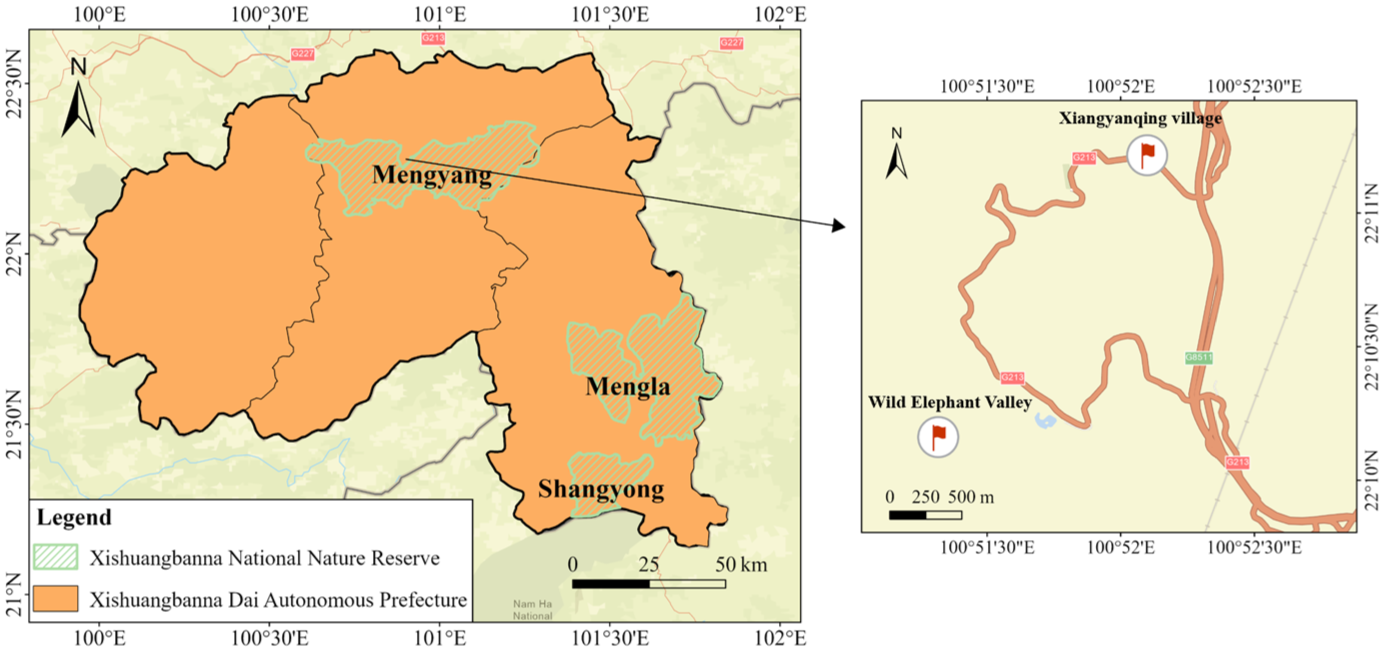
The study area.
With support from World Wide Fund for Nature (WWF), Wild Elephant Valley was built within the Mengyang Sub-reserve in the 1990s (Hathaway, 2013: 162). Now a National 4A-level tourist attraction hosting approximately 1.4 million visitors annually, the valley offers tropical rainforest landscapes with potential wild elephant sightings. To ensure reliable wildlife viewing, the valley maintains over a dozen captive elephants imported from Southeast Asia for behavioral shows (Hathaway, 2013: 182). This unique establishment remains the only tourist destination in China where visitors can observe wild Asian elephants in their natural habitat.
Wild Elephant Valley sources 70% of its employees from the surrounding villages. The nearest is Xiangyanqing Village, a community of 23 households and around 90 people, located about 4 km away. Relocated in 2015 under the Targeted Poverty Alleviation Initiative, the village receives dedicated support from the scenic area, which provides at least one job per household. Promoted as the ‘Most Representative Village of Human-Elephant Harmony’, Xiangyanqing serves as a prime case study for understanding tourism’s potential to mitigate HEC.
Data collection
This study operationalizes the embodied theoretical framework outlined above through multispecies ethnographic fieldwork. Following Hammersley (2015), we understand ethnography broadly as a mode of inquiry based on sustained engagement in the field, combining participant observation with other methods such as in-depth, relatively unstructured interviews. This approach enables researchers to immerse themselves in participants’ lifeworld and attend to embodied, sensory, and relational dimensions of experience.
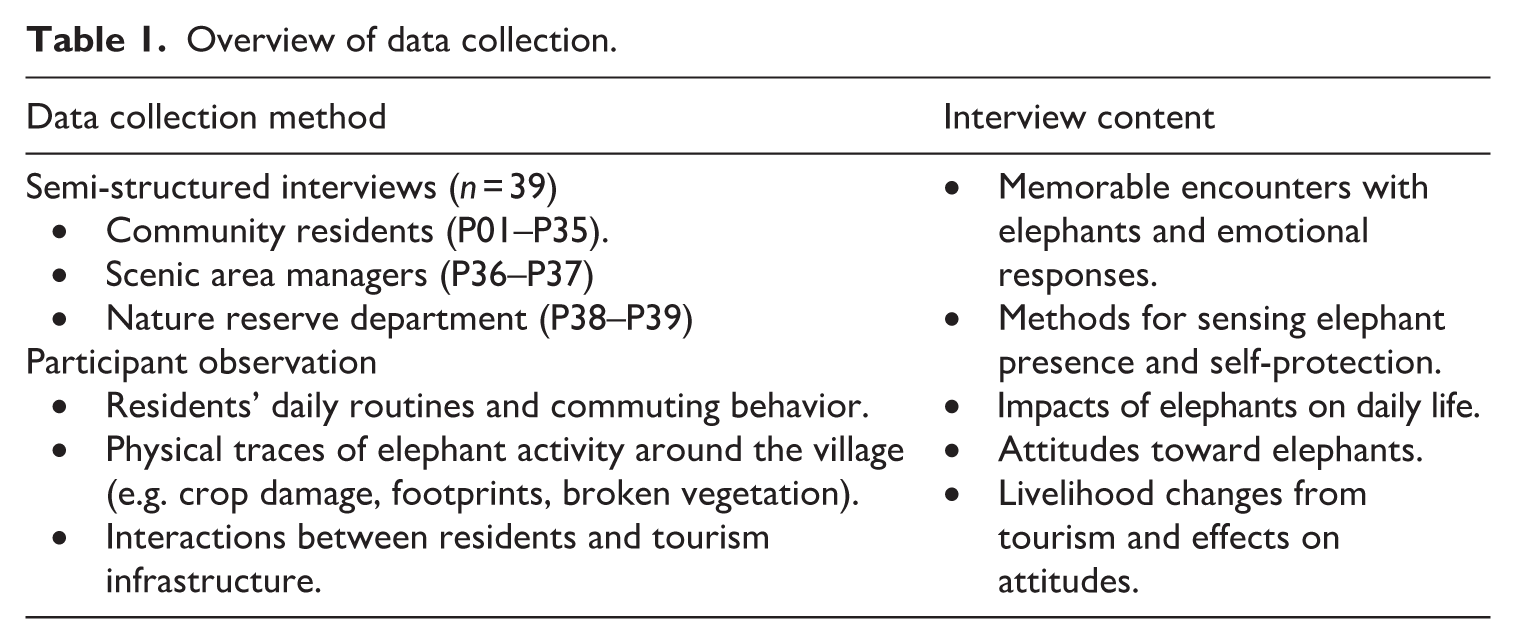
Fieldwork was conducted in Xiangyanqing in two rounds: January 17–28, 2024, and June 29–July 24, 2025. During this period, the first author lived in the village, participating in residents’ daily routines and sharing their socio-natural environment shaped by elephant presence. Data were collected through participant observation and semi-structured interviews with 39 respondents (Table 1). Our sample intentionally included residents with varying degrees of involvement in tourism to capture potential differences in embodied experiences and attitudes toward elephants. Among the 35 community residents interviewed, 18 individuals hold direct employment in Wild Elephant Valley or start a tourism relevant business, while others remain outside the tourism economy, continuing to rely on rubber tapping, farming, or migrant labor, as well as several students. All participants were anonymized and assigned numbers.
Overview of data collection.
It is crucial to acknowledge that wild Asian elephants in Xishuangbanna are not domesticated spectacles but highly mobile agents possessing unpredictability and potential aggression. For both the researcher and residents, direct outdoor encounters pose an immediate, potentially lethal threat. This inherent bodily vulnerability renders traditional participant observation involving direct co-presence with the herd neither feasible nor ethical. In addition, access negotiations with the local government and the scenic area permitted only short, researcher-escorted visits during operating hours. Sustained shadowing of staff during their working shifts was not granted.
Consequently, this study adopts a strategy of methodological distance. The combination of participant observation and semi-structured interviews serves our multispecies ethnographic approach in complementary ways. During the fieldwork, the authors followed the residents on their commute to and from the Wild Elephant Valley and to and from their friends’ homes. Employees’ embodied experiences at work were elicited through extended, on-site interviews, during which they recounted and demonstrated how they interpret elephant presence in real time. Guided by the residents, the authors observed, photographed, and recorded material traces of elephants during the research period, including their tracks, dung, feeding damage, and temporal patterns. Following Boonman-Berson et al. (2016), we approach elephants as present through the ‘writing’ they leave in the environment and through villagers’ accumulated embodied knowledge of their behaviors. This participant observation enabled the researcher to develop embodied familiarity with the landscape, its risks, and the rhythms of human-elephant cohabitation.
Meanwhile, semi-structured interviews provided access to local embodied knowledge of elephants that would be inaccessible through brief researcher observation alone. Field notes, timestamps, and photographic records were maintained for triangulation with interview data. By centering residents’ accounts of sensing, interpreting, and responding to elephant presence, we access elephant agency as it manifests in human bodily practices and perceptions.
Data analysis
Thematic analysis was used to analyze the data (Braun and Clarke, 2006, 2021). The thematic analysis involves organizing and coding the collected texts to extract the themes related to the research questions.
Three themes emerged from the analysis: (1) Sensory Rewilding, which captures the reactivation and retraining of bodily senses through tourism, enabling villagers to perceive environmental cues, anticipate danger, and coexist with elephants in a shared living environment; (2) Bodily Fortress, which refers to a form of physical, infrastructure-based protection by enclosing human living and activity spaces with material barriers, thereby compensating for sensory limits, information gaps, and human inattention to ensure continuous bodily safety; and (3) Entangled Empathy, which refers to an embodied and relational form of empathy through which villagers, via sustained tourism-mediated encounters, cognitively and emotionally recognize elephants as intelligent, social, and sentient beings, thereby fostering tolerance and a moral willingness to coexist with them.
An embodied perspective on tourism and human-elephant conflict in China
As previously discussed, HWC extends beyond quantifiable economic losses and compensatory mechanisms. It also possesses an embodied dimension. According to the daily reality of residents living with elephants, people face the constant threat of unexpected encounters in spaces that should be safe for work and life.
For example, after a full day of labor, they cannot enjoy relaxed evenings but must remain vigilant or stay indoors. The crops they worked hard to cultivate are often destroyed by elephants. These experiences create embodied burdens expressed through fear, anxiety for family safety, and frustration that may develop into hostility. Such burdens cannot be resolved through financial compensation alone. It is therefore necessary to examine tourism’s potential to reshape the bodily conditions under which residents encounter elephants. The following findings reveal three processes through which tourism reconfigures human-elephant relations in China.
Sensory rewilding
As Merleau-Ponty (2002: 172) argues, people are bodily beings-in-the-world. For residents in HEC zones, elephants are actors that profoundly shape their lived experiences. Wild elephants can be aggressive. As one villager P04 noted, ‘Elephants are like sprinters; they can outrun humans over a short distance’. A sudden encounter thus places a person in grave danger. To survive, villagers must rely heavily on their senses to navigate the perpetual threat.
This adaptive process to the Umwelt of wildness can be described as ‘sensory rewilding’. In urbanized settings, our innate capacity to perceive and survive in the wild gradually diminishes. However, for those living with elephants, there is a critical need to reawaken ancestral senses. Just as the resident P09 told, ‘if we go to the mountains, we must smell, see, and listen carefully to keep our sensory organs sensitive’.
Vigilant habitus: mobilizing senses to escape elephants
For residents who depend on rubber tapping or farming, elephants threaten both bodily safety and livelihoods. People therefore learn to mobilize multiple senses to avoid direct encounters. First, smell serves as an early-warning system, as elephants emit a distinctive scent, especially during mating season. As resident P01 noted, ‘When an elephant is in mating season, it gives off a strong smell that carries with the wind, allowing you to be prepared in advance’.
Second, hearing becomes paramount in low-visibility conditions, especially at dawn when many residents harvest rubber and elephant activity peaks. Given the elephants’ near-silent movement, listening intently becomes critical. As one resident (P15) recounted: ‘I went to the rubber groves at dawn, and an elephant was behind me. I turned my head and was scared to death . . . Elephants have soft soles and do not make much sound when they walk’.
Third, vision also plays a crucial role in defending against elephant attacks. By examining elephant dung, residents assess danger. As one interviewee (P11) explained, ‘If it is soft and moist, that means an elephant has been here recently. If it has dried out, it means they have been gone for some time’. Moreover, residents also learn to interpret elephants’ body language to gauge their emotional state. Respondent P17 told, ‘When an elephant’s tail rises, it indicates a state of agitation and alertness. They make a whirring sound and rapidly flap their ears when angry’.
When direct encounters occur, locals advise running uphill in a zigzag pattern, though fear often impedes this response. These embodied strategies reflect elephant agency, as their scent, activity patterns, and body language become inscribed in villagers’ bodily practices: We know the areas where wild elephants frequently roam. When passing through those spots, we instinctively exercise caution, slowing down in advance, listening intently, observing carefully, and staying alert to any signs. (P07)
The long history of HEC in Xishuangbanna has cultivated a shared vigilant habitus: embodied forms of environmental alertness passed across generations. Children learn from elders how to read elephant signs and neighbors share warnings and survival strategies. As one elder (P22) explained, ‘We have lived with elephants for generations. We learned how to smell them, hear them, and escape from them . . . my son does not know that elephants sometimes make sounds like dogs barking. But for his safety, I must tell him’. The presence of elephants has produced distinctive bodily practices shared across the community.
Tourism facilitates sensory rewilding
While villagers have obtained insights through their own lived experience, tourism development has systematized this knowledge and enhanced the community’s collective capacity. Wild Elephant Valley operation is frequently disrupted by elephant appearances (Cui, 2023; Cui and Xu, 2012). Located near eight elephant corridors to maximize wildlife viewing, the scenic area is highly vulnerable. Prior to 2010, fatal incidents occurred involving both a tourist and an employee.
In response, to enhance elephant activity monitoring and early warning capabilities, Wild Elephant Valley established a dedicated Asian Elephant Monitoring Team in 2005, composed primarily of local young adults. Their duties include patrolling the periphery, tracking elephant movements, and alerting management when elephants approach to ensure the safety of tourists and community residents. As the manager explained: Visitors may encounter wild elephants on the road, which is extremely dangerous. Our scenic area must ensure visitor safety. This is precisely when the monitoring team becomes crucial. If they detect the elephants’ location and movements in advance, we can implement traffic control measures to keep visitors at a safe distance from the elephants. (P37)
The scenic area provides comprehensive training for its employees on elephant encounter protocols, serving as a critical source of embodied knowledge for villagers in Xiangyanqing Village on practical elephant deterrence. Additionally, Wild Elephant Valley organizes outreach teams to disseminate elephant response expertise to neighboring communities, with several villagers selected as team members. Compared to villagers’ self-acquired elephant knowledge, the scenic area’s expertise is derived from more structured practices and extensive real-world experience, thereby proving far more effective. ‘We are trained every year. We know the safe distance between people and wild elephants and how to escape when encountering them. Through systematic drills, we will not panic when suddenly encountering an elephant. Otherwise, many people would fall into panic and unsure of what to do’. (P11)
Yet this knowledge does not reach all residents equally. Training, drills, and outreach programs concentrate on those with formal ties to Wild Elephant Valley, while residents who continue to depend on rubber tapping, farming, or migrant labor still rely largely on the informal vigilant habitus. The sensory rewilding tourism produces is therefore as much a story of selective enrichment as of community transformation.
Bodily fortress
While sensory abilities help villagers cope with elephant encounters, the spatial scope of their perception remains constrained. Encountering an elephant at corporally sensible range typically means the risk of attack is extraordinarily high. As a result, local governments, protected area authorities and tourism industry have pursued a range of strategies to minimize human-elephant encounters.
Informational fortress
Currently, the Yunnan Provincial Forestry and Grassland Bureau has partnered with a technology firm to develop a drone-based wild elephant monitoring system. Monitoring teams use drones equipped with high-resolution and infrared cameras to collect real-time data on elephant movements, translating these outputs into early-warning information disseminated through WeChat applications, group messaging, and mobile alerts. As a conservation station chief, P38 has extensive experience working with monitoring teams to track elephants and issue early warnings. ‘If we find elephants moving around the village or farmland, we activate the infrared warning system in the village, and the horns will beep. We also communicate through WeChat and phone calls so people could go to safe places’.
This technology exemplifies how technologies extend human perception, creating new forms of bodily engagement with the environment (Pink et al., 2017). Drone-based surveillance expands visual reach across otherwise inaccessible terrain, while digital communication platforms enhance the speed, scale, and precision of information transmission. Villagers now routinely check smartphones to view elephants’ real-time movements before traveling. A villager (P31) who makes a living growing rubber mentioned: ‘Now we mentally prepare ourselves before heading to the rubber fields, because drones alert us in advance where wild elephants are. We use this information to determine which times are unsafe for going out. Unlike before, when we could only constantly scan our surroundings with flashlights or keep sniffing the air to gauge whether it was safe’.
Through embodied extension technology, a flexible informational fortress has been established. By extending human sensory and communicative capacities, it enables individuals to proactively adjust their decisions and behaviors to prevent bodily encounters with wildlife, thereby achieving a flexible form of human-wildlife coexistence without relying on physical isolation.
Tourism and physical fortress
The informational fortress is not infallible, and its benefits are unevenly distributed. Elderly individuals unfamiliar with smartphones may fail to receive timely warnings, while those working in remote fields often lack stable network coverage. Moreover, not all elephants can be monitored in real time, particularly during late nights. One villager (P22) recounted the terror of finding an elephant standing in his courtyard when he used the outdoor bathroom in the middle of night: At 1:00 a.m., I was going out to take a bath when I realized an elephant was in my yard. I was stunned and quickly ran back upstairs. Drone monitoring cannot fully guarantee safety. Elephants have their own behavioural patterns, and staff members cannot provide 24-hour supervision of every area because they also need to rest.
Practices that are taken for granted by urban dwellers are fraught with risks. The home, which ought to provide ontological security, has instead become a place of danger.
The scenic area faces similar challenges. Its southern sector accommodates staff dormitories and canteens. Historically, this zone was a regular nighttime foraging ground for elephants, instilling profound fear among the staff (Cui and Xu, 2012). Around 2010, an employee was trampled to death by an elephant after encountering it while attending to a midnight bathroom call. Wild Elephant Valley features a 4 km hiking trail that winds deep into the rainforest, where notifying every tourist in time has proven difficult. Notably, a tourist was attacked and killed by a wild elephant in the trail, as the scenic area failed to promptly alert him. Ultimately, the informational fortress depends on constant collection and analysis of elephant data to maintain human-elephant separation. Yet the cognitive demands of this system are incompatible with human biological rhythms, making flexible emergency protocols insufficient for ensuring 24-hour safety.
In response, management strategies have shifted from flexible information protocols to rigid physical infrastructure: constructing a ‘bodily fortress’. Through years of iterative practice, the scenic area has erected iron fencing to enclose most of its premises. Elevated walkways were built in non-enclosed sections. As the manager (P37) noted: ‘Safety remains top priority. We actively recalibrate these facilities based on changing elephant patterns. For example, by installing reinforced barriers in areas with increased human-elephant overlap’. Critically, the fencing specifications are calibrated to elephant behavioral traits as disclosed by the scenic area’s manager: early four-rail designs failed to block a juvenile elephant that squeezed through, prompting an upgrade to five-rail specifications (Figure 2).
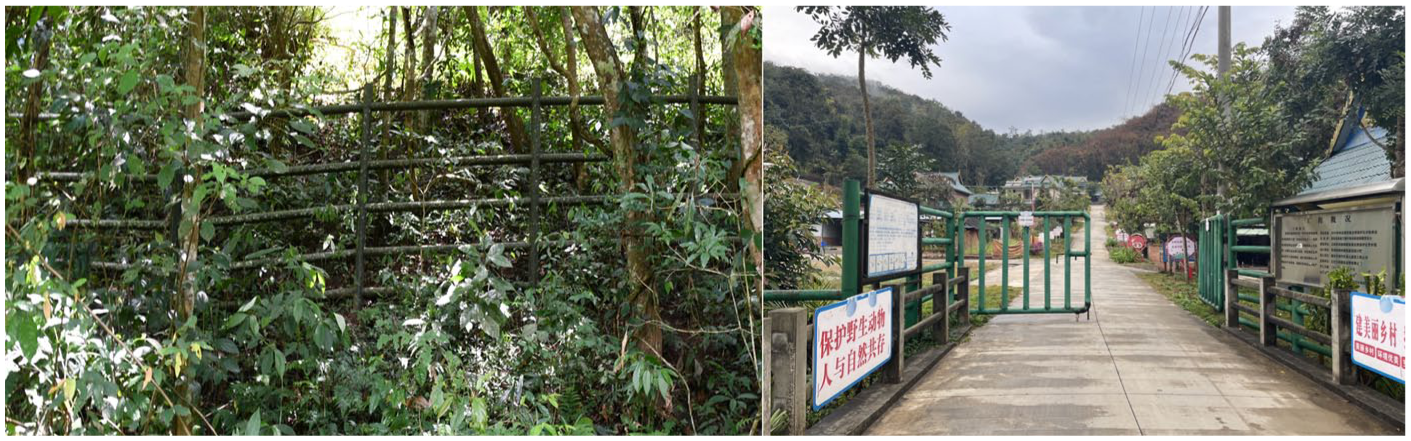
The iron fences around Wild Elephant Valley and Xiangyanqing.
This infrastructure practice has spread to surrounding villages. Xiangyanqing, paired with Wild Elephant Valley for targeted assistance, incorporated fencing during its relocation phase (Figure 2). This illustrates how tourism development serves as a catalyst for infrastructure that reshapes residents’ embodied security. As noted by a resident (P14), the fencing provides a tangible sense of security: We did not let our children go out at night when we had no fences here. It is much safer now and social activities after dinner are back. Generally, the elephants cannot get into our village if we lock the gate of the fence. Sometimes, we see wild elephants moving around outside. Still, we are not scared because we know they cannot come in.
However, physical barriers are not widespread adopted. Elephants can adapt to human-modified environments and devise adaptive strategies. As monitoring team member P01 observed: ‘Wild elephants are very smart. If there is a tree next to the fence, some elephant can roll up the tree, sticks with its trunk, steps on the fence with its feet, and turns over’. Consequently, thick trees cannot be left near fencing. Furthermore, widespread fencing is constrained by ecological concerns about habitat fragmentation. The bodily fortress is not a static human imposition but an ongoing multispecies negotiation, in which elephants’ adaptive intelligence, people’s uneven access to physical infrastructure, and broader conservation imperatives together shape what bodily security can mean in practice.
Entangled empathy
Tourism participation not only equips villagers with sensory risk-assessment skills and physical fortress, and may further foster a deeper, embodied empathy toward elephants. Yet, access to these transformative encounters is unequally distributed across the community.
Tourism-mediated encounters and entangled empathy
Residents employed in tourism’s core positions have prolonged, safe, and intimate opportunities to observe elephants. These sustained encounters allow them to witness elephants’ intelligence, social behaviors, and emotional capacities firsthand, fostering entangled empathy, which is ‘a moral and caring perception that involves an intertwining of emotion and cognition in which we recognize we are in relations with others’ (Gruen, 2015: 16–17).
Those in caregiving and monitoring roles develop even deeper emotional connections. The nature reserve has established an Asian Elephant Rescue and Breeding Center in Wild Elephant Valley to rehabilitate injured elephants rescued from the wild, and several villagers have been recruited as caregivers. One elephant caregiver expressed his deep affection. Elephants as emotional beings are capable of forming social bonds and mutual trust with humans: I am not afraid of elephants. On the contrary, I have grown to like them deeply. I look after one elephant in particular; he is just like a child to me. He plays with me, trusts me implicitly, and always comes running when I call his name. (P04)
Meanwhile, unlike ordinary farmers who must flee from elephants, villagers working in the Asian Elephant Monitoring Team of Wild Elephant Valley are trained to track and observe them, allowing for detailed engagement with elephant behavior. As one monitor shared: ‘Sometimes, you can really understand them. If you get too close when they have babies, they will attack to protect their young. They are just like us humans’. (P09) In this interpretation, elephant aggression becomes understandable as a protective response rather than irrational violence, dissolving simplistic resentment.
Another monitoring team member (P01) described witnessing maternal care among elephants: When the baby elephant is sleeping, and the mosquitoes bite it, the mother elephant will pick up the leaves with her trunk and repel them. Their behaviors have changed my view of them. Why would it attack humans? Because it too must protect its family.
Such observation provides undeniable evidence of sentience, creating an emotional empathy (Figure 3). This connection represents a kind of vicarious sharing of emotion (Smith, 2006), where the observer experiences an affective response that is congruent with the animals’ condition. Through years of tracking, observing, and caring for elephants, villagers increasingly interpret elephant behaviors through analogies to humans.
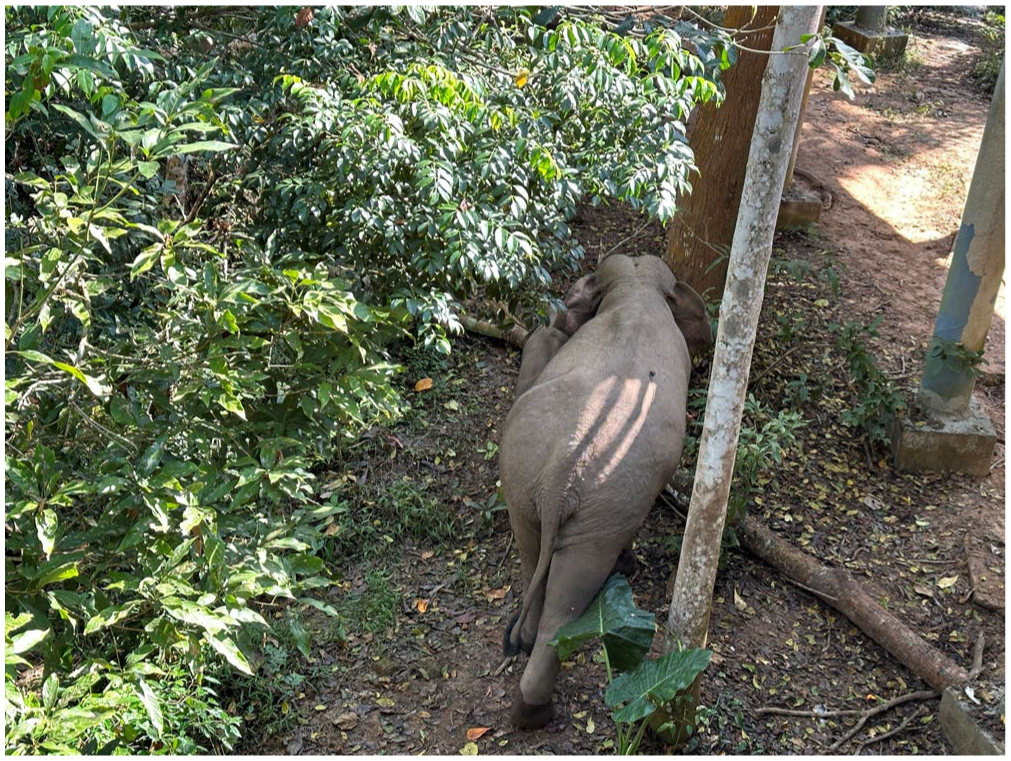
An adult elephant with a baby elephant traveling in Wild Elephant Valley.
Differential pathways to empathy
While tourism-mediated encounters facilitate entangled empathy among caregivers and monitors, residents in other positions develop different relationships with elephants, shaped by their distinct bodily positioning within the tourism system. For general tourism employees, such as restaurant servers and vendors, friendly attitudes stem from economic gratitude combined with occasional safe observation. Unlike caregivers or monitors, they lack opportunities for close contact with elephants. Instead, their episodic and physically distanced observations cultivate a pragmatic perspective. Consider a cable car ticket agent (P02), who reported: ‘Working at the scenic area is safe, and the income is relatively stable. The presence of elephants is a good thing because it provides job opportunities for us’.
Even within general tourism positions, opportunities for observation vary. A cleaner (P08) who regularly patrols elevated walkways reported that the safety buffer has transformed elephants into objects of appreciation: I have observed that when an elephant eats corn, it peels off the husk first. It also refuses to eat dirty food, rolling the corn in its trunk and rubbing it against a tree to clean it. (P08)
However, the meaning of such observations is shaped by bodily position. The same behavior in elephants can elicit opposite attitudes in those who lack the safe, mediated opportunities for observation. As P07 said, he is a farmer who makes a living by tapping rubber or doing part-time jobs: ‘Elephants know exactly when the corn we plant will be ready. Whatever we plant, the elephants eat it. Now we cannot even farm anymore’. Another elderly farmer (P16) approaching 80 spoke even more vehemently: ‘I absolutely hate elephants. I wish there were no elephants at all. They have devoured all my corn and rice crops, and the insurance payouts are both meager and slow’! For P07 and P16, elephants are experienced primarily through repeated loss and vulnerability, and compensation mechanisms fail to address their embodied experience. Consequently, there is no space for affective appreciation.
The stratification reveals that attitudes are shaped not simply by income, but by the nature of bodily contact with elephants. Those in tourism positions involving regular observation and interaction may develop understanding and affection, even though monitoring team salaries are not particularly high. However, those who remain exposed to hazardous working conditions primarily treat elephants as threats. Without the safety shield of tourism infrastructure and the structured observation opportunities it provides, the profound empathy found among caregivers and monitors remains inaccessible.
Importantly, even residents outside tourism acknowledge broader community shifts. P30, a rubber farmer whose wife works at Wild Elephant Valley, mentioned: ‘I have a love-hate relationship with them. Xishuangbanna’s tourism thrives largely because of their presence’. While entangled empathy emerges most strongly among those with intimate, sustained encounters, a gentler attitude shift that is grounded in collective benefits and shared harmony narratives extends beyond individual embodied experiences to shape community identity.
Conclusion and discussion
This study employed an embodied theoretical framework and a multispecies ethnographic approach to examine how tourism reshapes residents’ embodied experiences in HEC. Findings reveal tourism as a partial, stratified, and dynamically negotiated intervention into human-elephant entanglements in China. Some key processes emerged.
First, people have cultivated a bodily habitus of human-elephant coexistence through routine embodied interactions. Elephants have the agency to ‘write’ some signals. The residents ‘read’ the signals through multisensory rewilding. Tourism systematizes this knowledge through safety training, monitoring technologies, and infrastructural interventions, empowering residents to manage their bodily presence in shared landscapes with greater confidence. Second, tourism has facilitated the construction of a bodily fortress that safeguards residents’ ontological security. Iron fencing provides embodied protection independent of human vigilance, mitigating the limits of technological surveillance and enabling residents to reclaim domestic and social spaces previously permeated by fear. Third, tourism creates conditions for entangled empathy. However, this empathy is not uniformly distributed. Core tourism positions cultivate deep interspecies understanding through sustained, safe observation. General tourism roles produce appreciation mediated by economic security. Residents outside tourism remain in embodied competition with elephants. This stratification demonstrates that attitude change is not merely about income but about the nature and quality of bodily contact with wildlife.
This study makes two theoretical contributions. The first advances the embodied theoretical framework by decentering the researcher’s body and placing residents’ embodied knowledge at the heart of multispecies inquiry. Existing scholarship focuses on researchers’ embodied attunement with animals as a methodological resource for accessing non-human subjectivity (Despret, 2013; Turner, 2007). While valuable, this approach risks privileging technoscientific expertise over the situated knowledge of those who share long-term lives with wildlife (Parreñas, 2018). Our study provides empirical proof that residents’ embodied knowledge is a distinct form of situated expertise (Choudhury et al., 2023) and offers a more equitable and ecologically grounded path for embodied multispecies research.
We also advance tourism mitigating HWC research by proposing an embodied framework that moves beyond economic reductionism. Existing literature has emphasized tourism’s economic benefits for conflict mitigation (Adams and Infield, 2003; Snyman, 2013) while acknowledging the unevenly distribution (Matheka, 2008). Our study demonstrates that tourism can function as a critical transformative space for reshaping human-wildlife embodied interactions. We uncover the embodied burdens of conflict that cannot be remediated by financial means, which explains why attitude change varies across occupation. It is not income but the transformation of bodily positioning that enables empathy. Even monitoring team members with modest salaries develop deep interspecies understanding through their embodied working conditions, while farmers receiving compensation remain hostile. Thus, sustainable coexistence requires moving beyond compensation and physical barriers toward a foundation of mutual, interspecies understanding (Boonman-Berson et al., 2016).
These processes are shaped by the specific natural-cultural and political context of China. Xishuangbanna is the only remaining habitat of wild Asian elephants in China, and the species holds Class Ⅰ national protection status. HEC is jointly shaped by state-funded compensation schemes, government-led monitoring systems, and targeted poverty alleviation programs linking Wild Elephant Valley with the case community. The harmony discourse functions both as local sentiment and as political representation of national ecological conservation, under which the case village has been promoted as an ecotourism product. This configuration creates possibilities for embodied transformation but produces uneven outcomes: empathy and conservation awareness are stratified across occupational positions, and some residents still hold resentment over ongoing crop losses and unexpected encounters. In the Chinese context, tourism should therefore be understood not as a universal solution but as a state-mediated, uneven, and partial intervention into the embodied conditions of human-elephant coexistence.
The study has some insights for global wildlife conservation. First, HWC is fundamentally an embodied issue, not merely an economic one. People’s attitudes toward wildlife are shaped by tangible and embodied experiences (Manfredo, 2008). Future mitigation efforts should shift from prioritizing financial incentives to investing in safety embodied interaction infrastructure construction to change human-wildlife embodied relations. Second, conservation strategies should therefore formally recognize the sensory-based knowledge held by local communities. Integrating this embodied knowledge with modern monitoring technologies can yield more effective and resilient systems for conflict mitigation. Third, tourism managers should move beyond spectacle and focus on storytelling that emphasizes the shared biological and emotional rhythms of humans and elephants. Finally, the differential distribution of empathy across occupational positions highlights a critical concern. Tourism programs should create opportunities for broader community engagement with wildlife beyond direct employment. This may ensure that the transformative potential of embodied encounters is more equitably distributed.
There are some limitations. First, a single village may limit generalizability, so comparative studies across different HWC contexts would strengthen theoretical claims. In addition, while we attended to residents’ occupational differentiation, future research should more systematically examine how gender, age, and other social positions shape embodied experiences of wildlife. Finally, our methodological design centered on residents’ embodied experiences across multiple life-spaces rather than on sustained participant observation of human-elephant interactions due to security and policy reasons. Future research could productively complement the findings by conducting in-situ observation at tourist attractions, tracing how embodied scripts of care, vigilance, and interpretation unfold during the working day.
Footnotes
Acknowledgements
Gratitude is extended to the management staff of Xishuangbanna Tropical Rainforest Reserve and Wild Elephant Valley Scenic Area, as well as the villagers of Xiangyanqing Village. This research would not have been possible without your selfless assistance. We are also thankful to Lan Feng for his support during the field investigation.

Funding
The authors disclosed receipt of the following financial support for the research, authorship, and/or publication of this article: This study is supported by National Natural Science Foundation of China (No. 41901161), Guangdong Basic and Applied Basic Research Foundation (No. 2023A1515012786), Humanities and Social Science project of the Ministry of Education of China (No. 23YJAZH020), Special Project for Key Fields of Institutions of Higher Education, Department of Education of Guangdong Province (2024ZDZX4004).
Declaration of conflicting interests
The authors declared no potential conflicts of interest with respect to the research, authorship, and/or publication of this article.