







Abstract
Indacaterol (IND), 5-[2-[(5,6-Diethyl-2,3-dihydro-1H-inden-2-yl)amino]-1-hydroxyethyl]-8-hydroxyquinolin-2(1H)-one, is an active pharmaceutical ingredient (API) which is used to treat chronic obstructive pulmonary disease (COPD). We followed the International Council for Harmonization (ICH) guide lines to study the degradation behavior of IND under various stress conditions. Stressed degradation of the drug was performed under hydrolytic (alkaline, acidic and neutral), photolytic, oxidative and thermal conditions. Identification and characterization of IND and its forced degradation products (DPs) were demonstrated by using LC-HRMS and MS/MS method. A total of three DPs (DP1-DP3) were identified and characterized. The IND was found to be stable under photolytic, oxidative and thermal conditions, whereas it produced three DPs in acidic, basic and neutral hydrolytic stress conditions.
Introduction
Chronic obstructive pulmonary disease (COPD) is an acute lung disease that typically worsens over time and the damage is irreparable. The only option thus is prevention. COPD is largely caused by continual exposure of noxious matter or things that irritate the lungs.1,2 The current drug therapy for COPD includes symptomatic relief without comprehensively modifying the cardinal inflammation or changing disease advancement. In a progressive development for treating COPD, a combination of indacaterol and glycopyrronium was introduced recently.1,3
Indacaterol maleate (IND), 5-[2-[(5,6-Diethyl-2,3-dihydro-1H-inden-2-yl)amino]-1-hydroxyethyl]-8-hydroxyquinolin-2(1H)-one, is a long acting β2-agonist (LABA) that stimulates β2-receptors, with increased intracellular cyclic adenosine monophosphate (cAMP) levels. 4 This results in improvement of muscle smoothness surrounding the bronchial tubes. It is a once-daily treatment with approved dose long acting β-adrenoceptor agonist (LABA) that improves health status in people with breathlessness, and exacerbation of patients with COPD.5–7
Stability is a very preeminent factor for quality of any drug substance or drug product. The stability is influenced by various environmental factors (temperature, humidity etc.) during the storage period. Hence, the ICH guidelines 8 prescribes the requirement of conducting stress testing studies that involve stability studies of drug products and drug substances. The stability study at varied stress conditions aids in generating degradation products (DPs) in a much shorter span of time, i.e. few hours to days. These studies provide crucial information about the intrinsic stability of the drug candidate, degradation pathways of APIs and drug product. Additionally, the difference between drugs related degradation and excipient interferences can also be determined. The stability or stress degradation studies are carried out to develop the stability indicating method using various chromatographic techniques. Structural characterization of DPs benefits in predicting the side effects of drugs. Moreover, the biological evaluation of DPs forming above 0.15% is necessary as per regulatory guidelines.9–14
Preceding published reports reveal few spectrophotometric15,16 and HPLC methods for IND.4,17 However, none of the above studies reported the characterization of DPs of IND. Hence, the current study focuses on the characterization of IND and its stress degradants by using UPLC/DAD/ESI-QTOF and MS/MS method.
Experimental
Chemical and reagents
IND was obtained as a gift sample from M/S. ZunaChem Pvt. Ltd, Hyderabad, India. LC-MS CHROMASOLV® grade and HPLC grade methanol (MeOH) and acetonitrile (ACN) were procured from Sigma Aldrich (Bangalore, India). Analytical reagent (AR) grade ammonium acetate, ammonium formate, formic acid, hydrochloric acid (HCl), sodium hydroxide (NaOH) and acetic acid were purchased from S.D. Fine Chemicals (Mumbai, India). 30% v/v AR grade hydrogen peroxide (H2O2) was purchased from Merck (Mumbai, India). Deionized water (18 MΩ) was obtained from a Milli-Q apparatus (Millipore, Bedford, MA, USA) and used for prepare all the solutions.
Stress degradation
The hydrolytic and thermal stress degradations of IND were carried out using a high precision water bath and hot air oven equipped with a digital temperature controller to maintain the temperature within the range of ±2°C and ± 1 °C, respectively (Osworld Scientific Pvt. Ltd, India). For oxidative stress degradation, the drug was dissolved in 3% H2O2 and kept the solution at room temperature under dark condition.Photo degradation was conducted by exposing drug (solid form) to UV-light in photo stability chamber (Osworld OPSH-G-16-GMP series, Osworld scientific Pvt. Ltd. India). 18 The optimized stress conditions of IND are given in Table S1 (Supporting information).
Sample preparation
As the drug was soluble in an admixture of water and methanol (1:1, % v/v), all the stress samples were prepared using the same diluent.13,19,20 The samples were filtered using a 0.22 µm membrane filter and final concentrations of 50 ppm of the samples were prepared in methanol and water (1:1 v/v) before injecting (1 µL) into the UPLC/DAD/ESI-QTOF system.
Development and optimization of chromatographic conditions
The chromatographic separation of IND and its degradants was carried out on a UHPLC (1290 infinity II, Agilent Technologies, Germany) using an Accucore C18 (4.6 × 150mm, 2.6 μm) (Thermo Scientific, North America) column. The chromatographic method was optimized by varying different factors such as pH of the mobile phase, the ratio of organic solvent, flow rate etc. Finally, an acceptable separation was achieved using 0.1% formic acid in water (A) buffer and acetonitrile (B) as an organic modifier with a flow rate of 0.3 mL min−1 in gradient elution mode. The following linear gradient elution was used: (Time/%B); 0/20, 10/80, and 20/20. The column was equilibrated with 20 column volumes of mobile phase at the initial gradient composition prior to sample injection. The injection volume was 1 μL and all the stress samples were analyzed by using a DAD (200–400 nm) detector. The chromatograms of the drug under different stress conditions are shown in Figure S1.
Mass spectrometry
The mass spectrometric analysis was carried out on 6545 a Q-TOF LC/MS (Agilent Technologies, Germany). The eluent of UHPLC was directed into the mass spectrometer through an electrospray ionization (ESI) interface and operated in the positive ionization mode. The mass spectrometer was calibrated before analysis using the manufacturer’s calibration solution. The mass spectrometric operating conditions were optimized as follows: gas temperature 280 °C, gas flow rate 8 L/min, nebulizer 30 psig, sheath gas temperature 300 °C, sheathgas flow 11.8 L/min, VCap 3200 V, nozzle voltage 1000 V, fragmentor 80 V, skimmer 160 V. Nitrogen was used as the sheath gas. The mass spectra were recorded over the range 50-1700 m/z. MS/MS experiments were carried out by collision induced dissociation (CID) and ultra-pure N2 gas was used as collision gas. DAD, MS and MS/MS data were processed using Mass Hunter Workstation software (version B.07.00).
Results and discussion
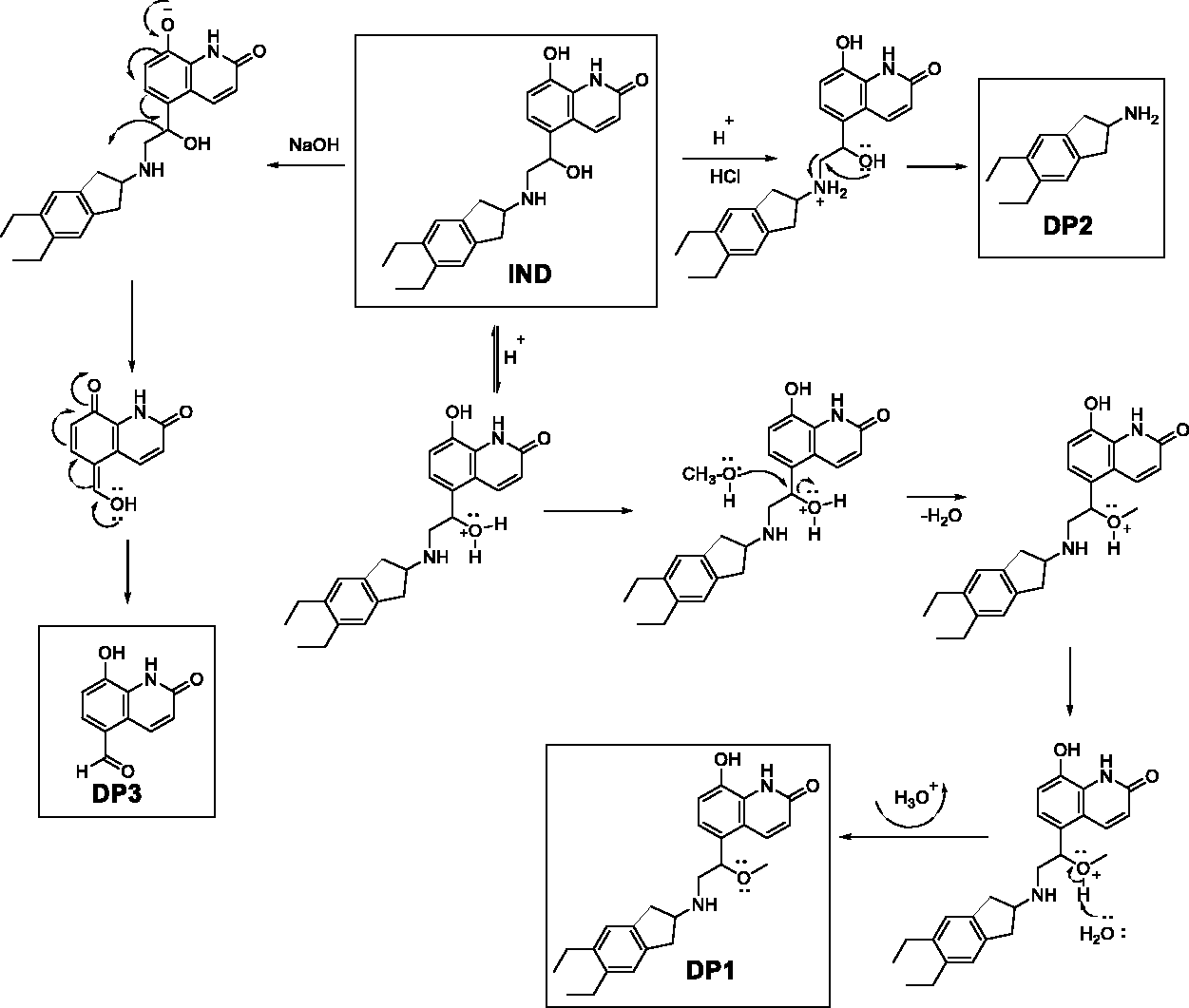
IND was degraded under acid, base, and neutral hydrolytic stress conditions whereas it was quite stable under photolytic, thermal and oxidative stress conditions. A total of three DPs (DP1-DP3) were observed for IND (Figure 1). Among these, DP1 and DP2 were yielded commonly under all the hydrolytic stress conditions where as DP3 was produced only in base hydrolysis. The UV chromatograms (UHPLC/DAD) and extracted ion chromatograms (EICs) of IND and its DPs are presented in Figures S1 and 2, respectively.
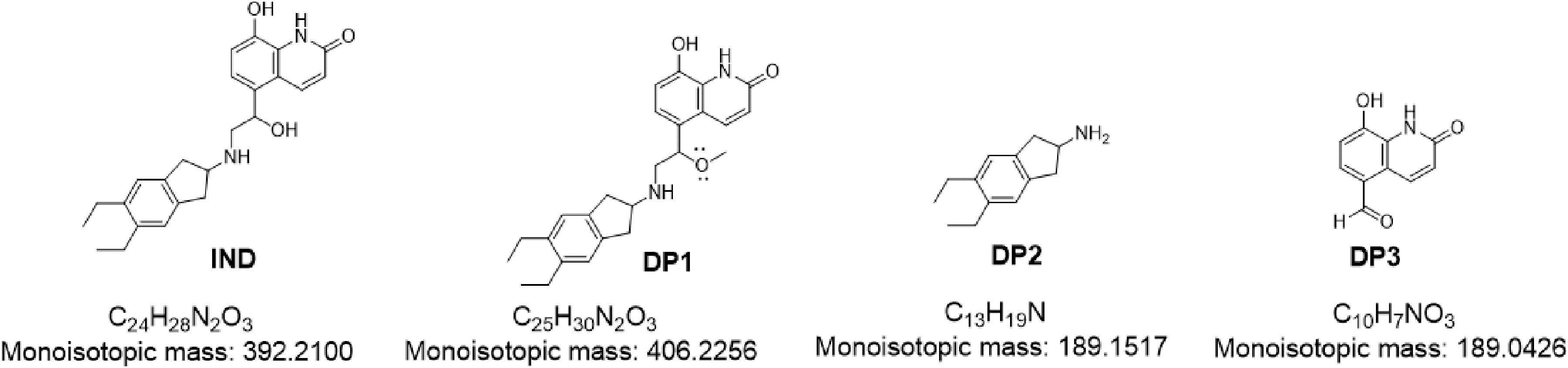
Chemical structures of IND and its DPs.
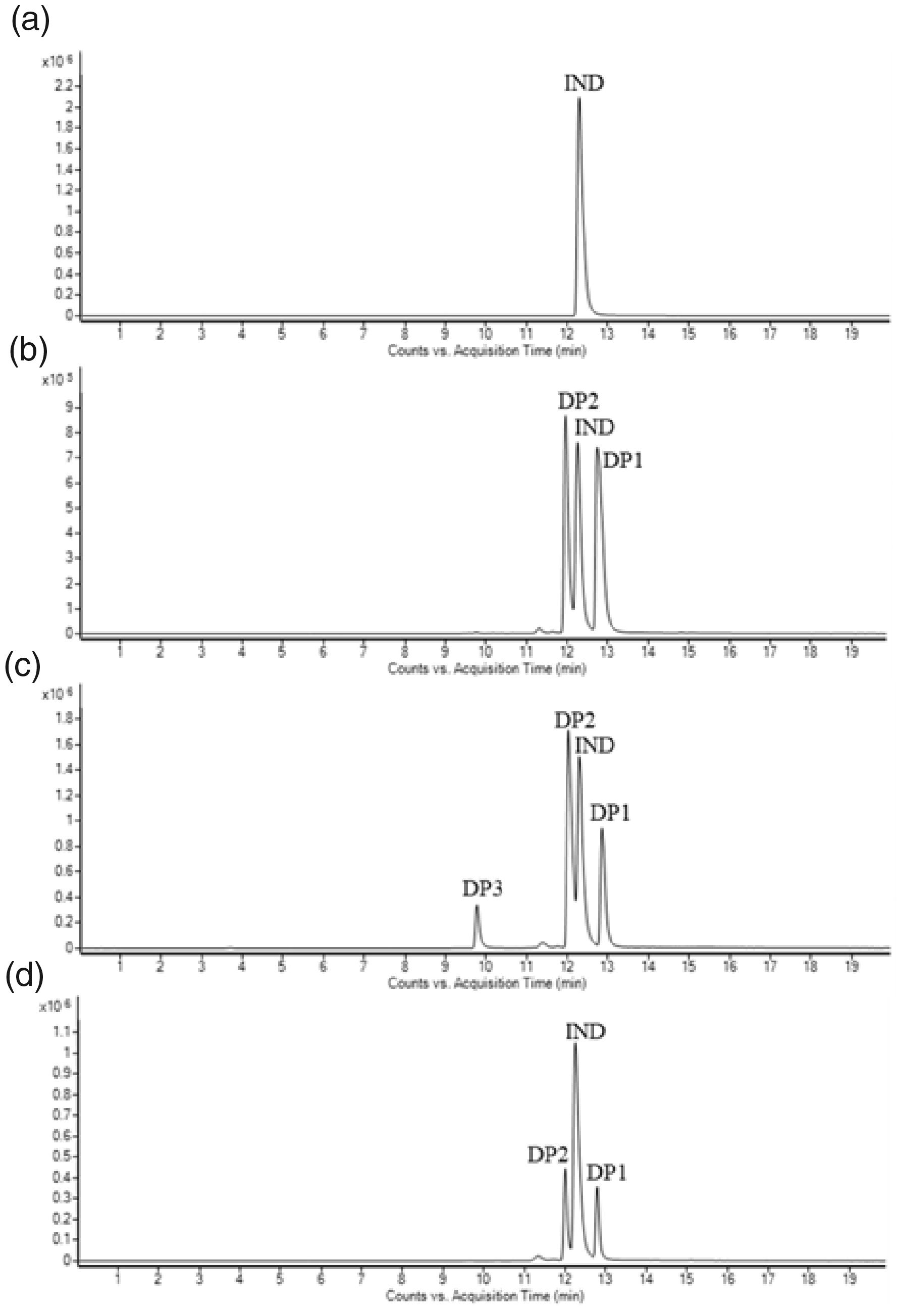
Extracted ion chromatograms (EICs) of (a) standard, (b) acid hydrolysis, (c) base hydrolysis, and (d) neutral hydrolysis stress conditions.
The mass spectrum of IND showed a protonated molecular ion, [M + H]+, at m/z 393.2164 (retention time (Rt)=12.21 min) with an elemental composition of C24H29N2O3. The mass spectral fragmentation behavior of [M + H]+ ion of IND was assessed by a tandem mass (MS/MS) experiment. The MS/MS spectrum of IND (Figure 3(a)) showed ions at m/z 375 and m/z 232 that were formed due to the loss of H2O and C9H7NO2 moieties from the [M + H]+ ion, respectively. Further, the formation of ions at m/z 203 (loss of C13H16) and m/z 173 (loss of C11H10N2O2) from the ion at m/z 375 through the ion-neutral complex intermediates (Scheme 1) were observed in the mass spectrum. The ions at m/z 375 and m/z 203 were found to be characteristic for hydroxyquinoline ring. The product ion spectrum of IND also showed ions at m/z 145 and m/z 117 that were yielded by the sequential elimination of ethylene moieties from the ion at m/z 173 which indicates the presence of diethyldihydroindene ring in the structure. In addition, the ion at m/z 117 showed expulsion of ethylene moiety yielding a low abundant ion at m/z 91. The proposed fragmentation pathway of IND was confirmed by the elemental compositions that were obtained from the high resolution mass spectral data (Table 1).
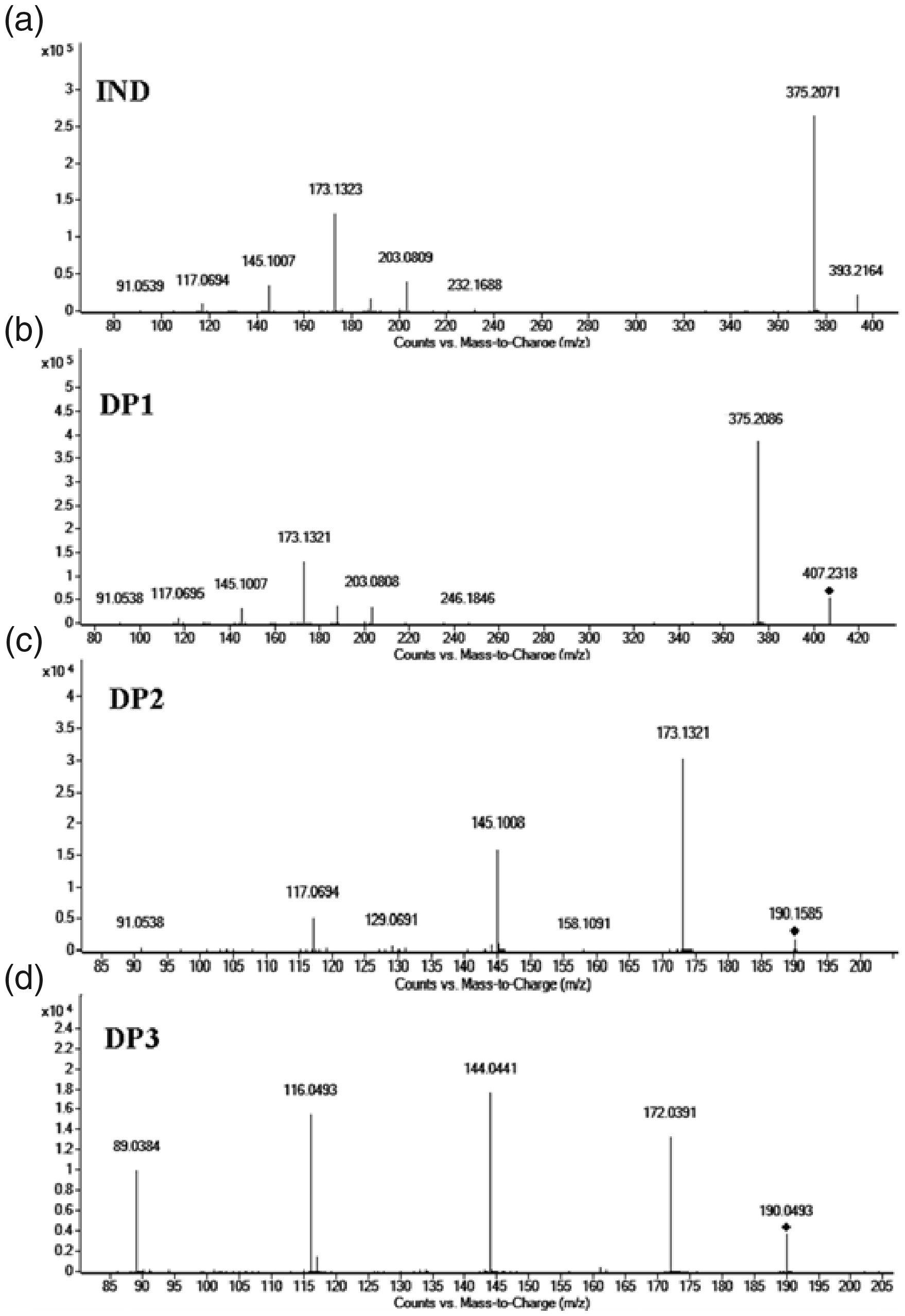
UPLC/QTOF/MS/MS spectra of [M + H]+ ion of (a) IND (b) DP1, (c) DP2, and (d) DP3.
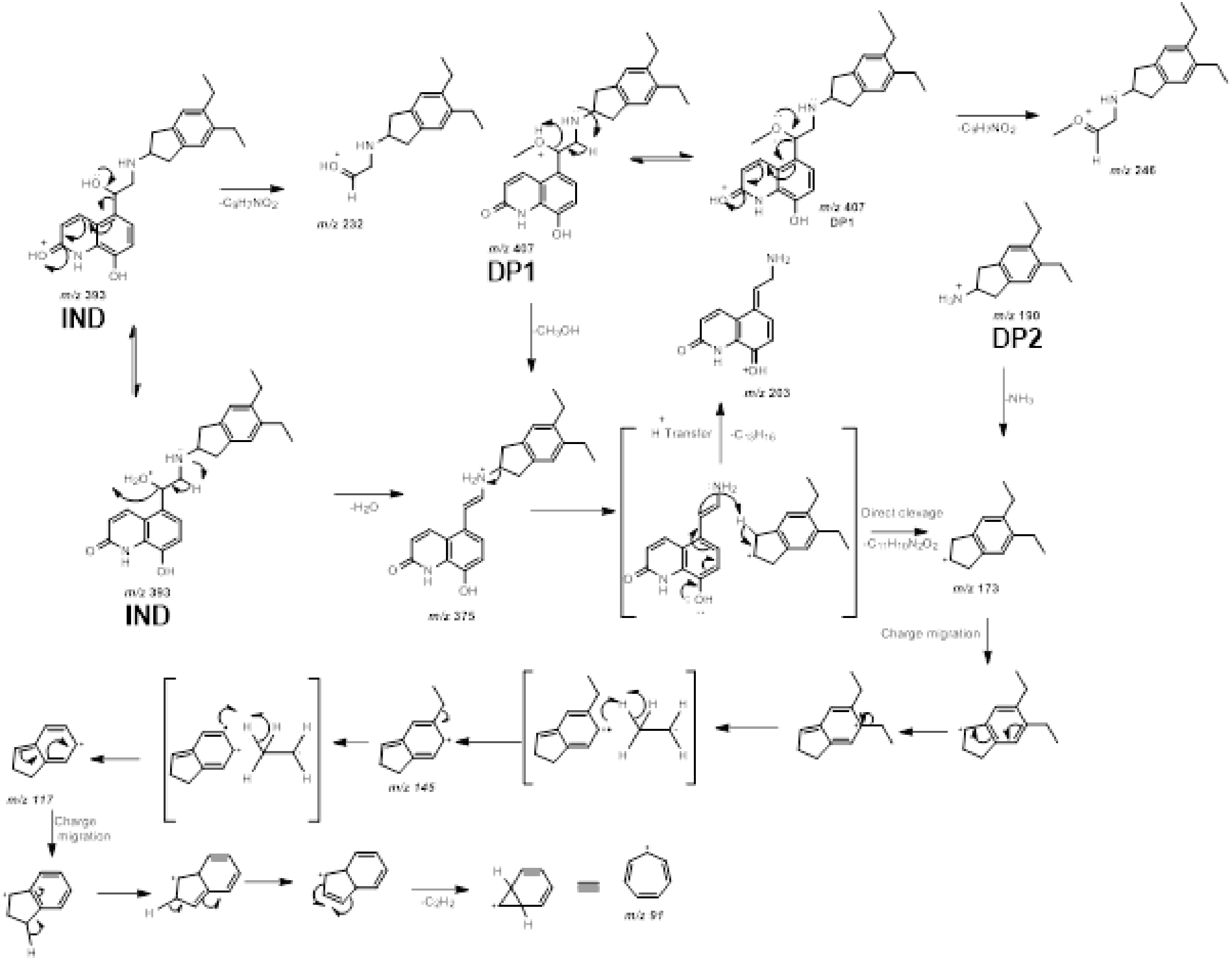
Proposed fragmentation pathway of [M + H]+ ions of IND, DP1 and DP2.
HRMS data of IND and its degradation products (DP1-DP3).
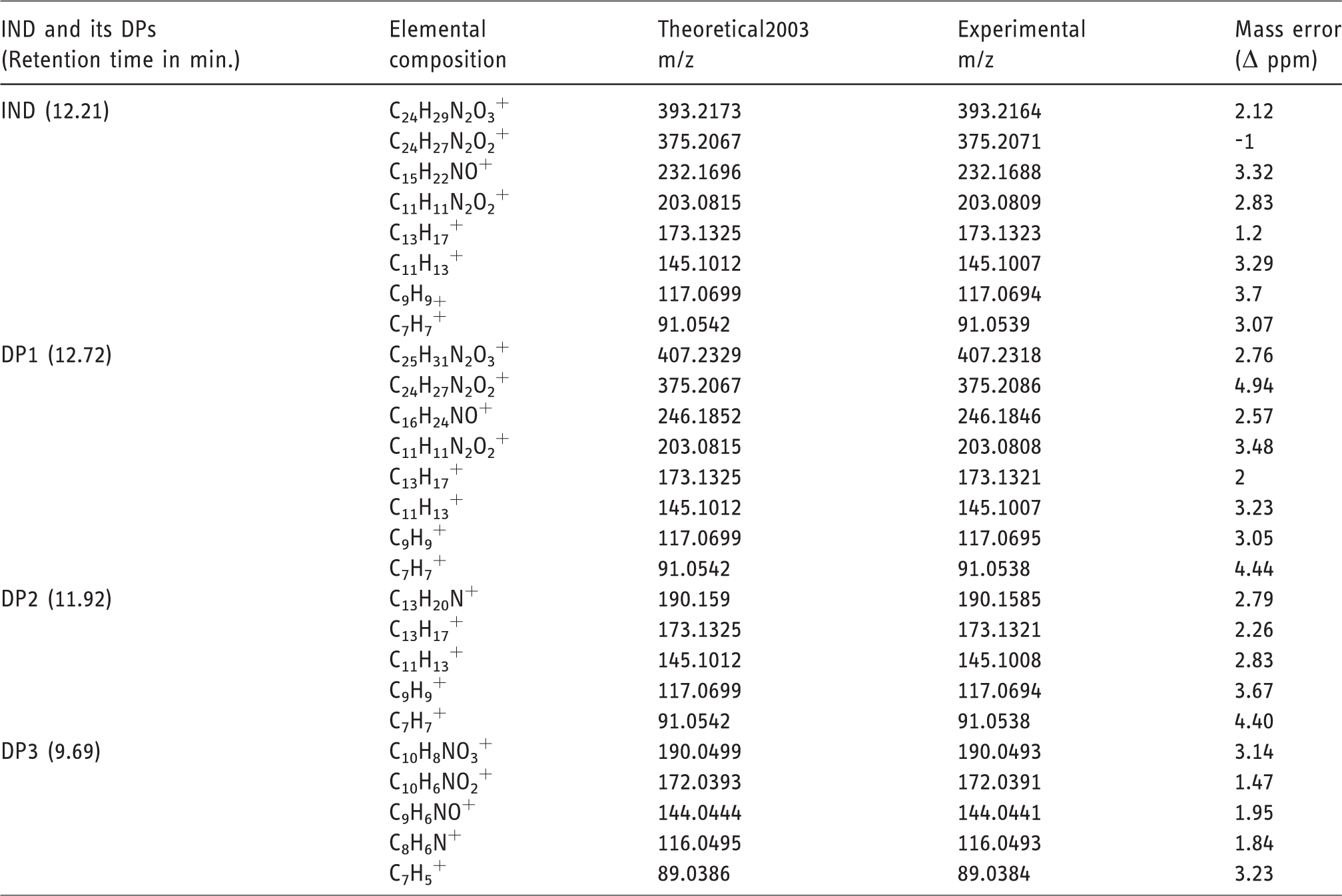
The ESI/Q-TOF mass spectrum of DP1 displayed a [M + H]+ ion at m/z 407.2318 (Rt =12.72 min), which was 14 Da more when compared to IND molecular ion (m/z 407 > m/z 393). The [M + H]+ ion showed an elemental formula of C25H31N2O3 with mass error 2.76 (Δ ppm). The product ion spectrum of DP1 (Figure 3(b)) showed ions at m/z 375, m/z 203, m/z 173, m/z 145, m/z 117 and m/z 91 (Scheme 1) that were analogous to IND (Figure 3(a)). In addition, the characteristic product ion at m/z 246 was found due to the loss of the C9H7NO2 moiety from [M + H]+ ion. The ion at m/z 246 was 14 Da more than the observed product ion at m/z 232 of IND, and HRMS data provided its elemental composition as C16H24NO. It indicates, methylation had occurred on the aminohydroxyethylhydroxyquinolone ring containing moiety of IND under basic hydrolysis conditions in water/methanol solvent system. In addition, the formation of ion at m/z 375 by the loss of CH3OH moiety from the [M + H]+ ion confirms that the methylation had taken place on the aliphatic hydroxyl group of IND as shown in Scheme 1. On the basis of the above analysis with high resolution mass spectral data (Table 1), the DP1 structure was denoted as 5-(2-(5,6-diethyl-2,3-dihydro-1-inden-2-ylamino)-1-methoxyethyl)-8-hydroxyquinolin-2-one. The most reasonable mechanism for the formation of DP1 (pseudo DP) from IND in the presence of MeOH is shown in Scheme 2.
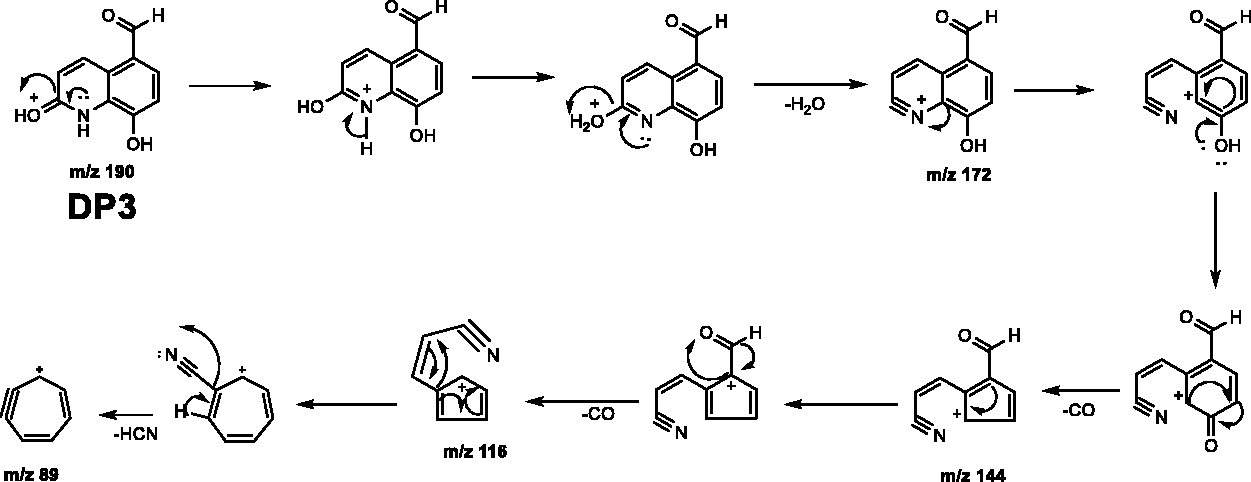
Proposed fragmentation pathway of [M + H]+ ions of DP3.
A chromatographic peak at Rt = 11.92 min represents hydrolysis product DP2 and it showed [M + H]+ ions at m/z 190.1585 in the ESI-MS spectrum. As per the nitrogen rule, the DP2 contains an odd number of nitrogen atoms and this was supported by elemental composition of C13H19N that was derived from the HRMS data. Further, the [M + H]+ ions of DP2 was subjected to tandem mass analysis for the structural characterization. The DP2 (Figure 3(c)) showed fragment ions at m/z 173, m/z 145, m/z 117 and m/z 91, that were analogues to IND and DP1 (Figure 3(a) and (b)). These ions designate the presence of indane containing moiety for DP2. The ion at m/z 173 could be resulted by the loss of NH3 from the [M + H]+ ion of DP2 (Scheme 1). On the basis of the above interpretations and the HRMS data (Table 1), the structure of DP2 was established as 5,6-diethyl-2,3-dihydro-1-inden-2-amine, Further, we isolated DP2 from basic hydrolysis degradation sample of IND by using normal phase column chromatographic method and the structure of the DP2 was unambiguously confirmed by H1NMR (Figure S2). Scheme 2 shows probable reaction pathway for the formation of DP2 from IND.
The alkaline hydrolytic product DP3 was identified at Rt = 9.69 min in the chromatogram. The mass spectrum of the DP3 showed a protonated molecular ion at m/z 190.0493 with a derived chemical formula of C10H8NO3 which indicated a structural difference when compare to the DP2. The [M + H]+ ion was 203 u less than that of IND, which suggested that the elimination of indane containing moiety by the C-C bond cleavage during the hydrolysis process as shown in Scheme 2. The product ion spectrum of DP3 showed ions at m/z 172, m/z 144, m/z 116 and m/z 89, which were formed by the sequential elemination of H2O, CO, CO and HCN moieties from the [M + H]+ ion (Scheme 3 and Figure 3(d)). On the basis of proposed fragmentation pattern with high resolution mass spectral data (Table 1), DP3 was characterized as (5-formyl-8-hydroxyquinolin-2(1H)-ylidene)oxonium.
Probable mechanism for the formation of DP1, DP2 and DP3.
Conclusions
Here, we identified and characterized IND and its forced degradation products by LC-MS and MS/MS methods. The IND was quite stable under photolytic, oxidative and thermal conditions, whereas it yielded three DPs in acidic, basic and neutral conditions. The degradation products DP1 (pseudo-DP) and DP2 were present in all the hydrolytic conditions, whereas DP3 was found only in base hydrolytic conditions. The proposed method can be effectively used for the identification of IND and its possible DPs in the drug production process.
Supplemental Material
sj-pdf-1-ems-10.1177_1469066720971550 - Supplemental material for Identification and characterization of degradation products of indacaterol using liquid chromatography/mass spectrometry
Supplemental material, sj-pdf-1-ems-10.1177_1469066720971550 for Identification and characterization of degradation products of indacaterol using liquid chromatography/mass spectrometry by Naga Veera Yerra, S Babu Dadinaboyina, LSSN Vigjna Abbaraju, MVN Kumar Talluri and Jagadeshwar Reddy Thota in European Journal of Mass Spectrometry
Footnotes
Supporting information available
Stress degradation conditions of the IND, UHPLC-DAD chromatograms of standard, acid hydrolysis, base hydrolysis, and neutral hydrolysis stress conditions.
Acknowledgements
The authors thank the Director, IICT, Hyderabad, for facilities. NVY and SDB are grateful to CSIR, New Delhi, for the award of Research Fellowship. The authors also thank M/S. ZunaChem Pvt. Ltd for providing IND sample. This is CSIR-IICT Communication Number: IICT/Pubs./2020/155.
Declaration of conflicting interests
The author(s) declared no potential conflicts of interest with respect to the research, authorship, and/or publication of this article.
Funding
The author(s) received no financial support for the research, authorship, and/or publication of this article.

Supplemental material
Supplemental material for this article is available online.
References
Supplementary Material
Please find the following supplemental material available below.
For Open Access articles published under a Creative Commons License, all supplemental material carries the same license as the article it is associated with.
For non-Open Access articles published, all supplemental material carries a non-exclusive license, and permission requests for re-use of supplemental material or any part of supplemental material shall be sent directly to the copyright owner as specified in the copyright notice associated with the article.
