






Abstract
A series of N'-trimethylsilyl (TMS) derivatives of N,N-dialkylacetimidamides (amidines) (
Introduction
Chemical warfare agents (CWAs) represent some of the most toxic substances ever created, designed specifically to kill, injure, or incapacitate through their chemical properties. The global effort to eliminate these weapons is led by the Chemical Weapons Convention (CWC) and its implementing body, the Organisation for the Prohibition of Chemical Weapons. It is a multilateral treaty that bans the development, production, stockpiling, and use of chemical weapons.1,2 Due to these factors, analytical laboratories around the world have been consistently working to develop methods for their direct detection and that of their associated degradation products.3,4 In terms of organophosphorus nerve agents, most of us are accustomed to the G- and V-series and are well informed with their use in a number of events; particularly during the Iran–Iraq war, the Aum Shinrikyo subway attack in Tokyo, Japan, and chemical attacks in Damascus, Syria, to name a few.5,6 In 2018, the world witnessed first-hand the use of a new kind of nerve agents, designated as A-series or Novichoks, when these were used in the attempted assassination of Sergei and Julia Skripal in England. And then, in 2020, these were at the center of another assassination attempt, this time of Alexei Navalny, Russia.7,8
Novichok agents are thought to operate as binary systems, where comparatively less dangerous precursor compounds are combined to generate a toxic active agent. Their mechanism of toxicity is based on acetylcholinesterase inhibition, leading to disruption of nervous system function, respiratory paralysis, and death.9,10 Some members of this class have been described as more toxic than VX, making them a serious challenge to international chemical security and necessitating the advancement of analytical and forensic detection capabilities. 11
Novichoks are now recognized as a highly lethal fourth generation of CWAs. 12 Given their extreme toxicity, the comprehensive characterization and identification of these compounds, including both their starting materials and their environmental markers, is of critical importance for treaty verification and decontamination. 13 Specifically, N,N-dialkylacetimidamides (amidines) have been identified as key chemical signatures because they serve a dual role as both the precursors used in the synthesis of these agents and the primary degradation products formed after their breakdown. 14 These compounds are categorized under Schedule 1.A.13 and 1.A.14 and are listed among additional non-scheduled reportable chemicals in accordance with the CWC. 15
Liquid chromatography-mass spectrometry is well-suited for the detection of polar and semipolar precursors and degradation products of CWAs. However, analysis of these compounds by gas chromatography-mass spectrometry (GC-MS) requires prior derivatization to enhance analyte volatility and thermal stability. The resulting derivatized mass spectral data can be incorporated into established reference libraries, such as the National Institute of Standards and Technology database and the OPCW Central Analytical Database (OCAD), thereby facilitating the identification of these analytes in aqueous, organic, and environmental matrices in future investigations.16,17
Recent advancements in GC-MS and its tandem mass spectral analysis (MS/MS) have significantly improved trace-level detection of CWAs, providing the analytical robustness necessary for CWC verification and global security. This high-quality data is essential for successful performance in OPCW proficiency tests, which utilize spectral libraries like OCAD and Validation Group Working Database for definitive chemical identification.18,19 In our earlier reports, we systematically examined amidines using ESI-HRMS, and studied amidines along with their methylated derivatives under EI conditions.19,20 Recently, Ataş thoroughly studied mass spectral behavior of N’-trimethylsilyl (TMS) derivatives of a set of isomers: N-methyl-N-propylethanimidamide, N-methyl-N-isopropylethanimidamide, and N,N-diethylethanimidamide, under different mass spectral conditions. 21 Building on these prior investigations and recent findings, we have extended the scope to examine the EI mass spectral characteristics of a series of silylated amidine derivatives.
Experimental procedure
Chemicals and reagents
Following established procedures, the N,N-dialkylacetimidamides investigated herein were prepared in-house.22–24 Their structures were confirmed by 1H NMR spectroscopy and mass spectrometry, and GC analysis indicated >90% purity. The amine precursors—dimethylamine, methylpropylamine, isopropylmethylamine, diethylamine, ethylmethylamine, ethylisopropylamine, ethylpropylamine, diisopropylamine, isopropylpropylamine, and dipropylamine were purchased from TCI Chemicals (Hyderabad, India). NaOH was obtained from M/s. S.D. Fine Chemicals (Mumbai, India). Deionized water (18 MΩ·cm) from a Milli-Q system (Millipore, Bedford, MA, USA) was used throughout. N,O-Bis(trimethylsilyl)trifluoroacetamide (BSTFA) was purchased from Sigma-Aldrich (Steinheim, Germany), and all solvents for GC-MS analysis were obtained from E. Merck (Mumbai, India).
Silylation by N,O-bis(trimethylsilyl)trifluoroacetamide
The TMS derivatives (
Gas chromatography-mass spectrometry
GC-MS (EI) analyses were performed using an Agilent 8890B gas chromatograph coupled to an Agilent 7000D triple-quadrupole mass selective detector. Separation was achieved on an HP-5MS capillary column (30 m × 0.25 mm i.d., 0.25 µm film thickness). EI at 70 eV was employed for detection. The oven temperature was initially set at 50 °C and held for 2 min, followed by a ramp of 10 °C/min to 280 °C, which was maintained for 10 min. The injector and GC-MS transfer line temperatures were maintained at 280 °C. Helium served as the carrier gas at a constant flow rate of 1.0 mL/min. A 1 µL aliquot of the sample was injected in a 1:2 split mode. Mass spectra were acquired over an m/z range of 29–600 at a scan rate of 1 s/scan. Data processing and analysis were conducted using Agilent MassHunter software.
Results and discussions
The N′-TMS derivatives of amidines yield characteristic fragmentation patterns under EI conditions, facilitating robust structural elucidation and identification. A homologous series of 10 TMS derivatives of amidines (
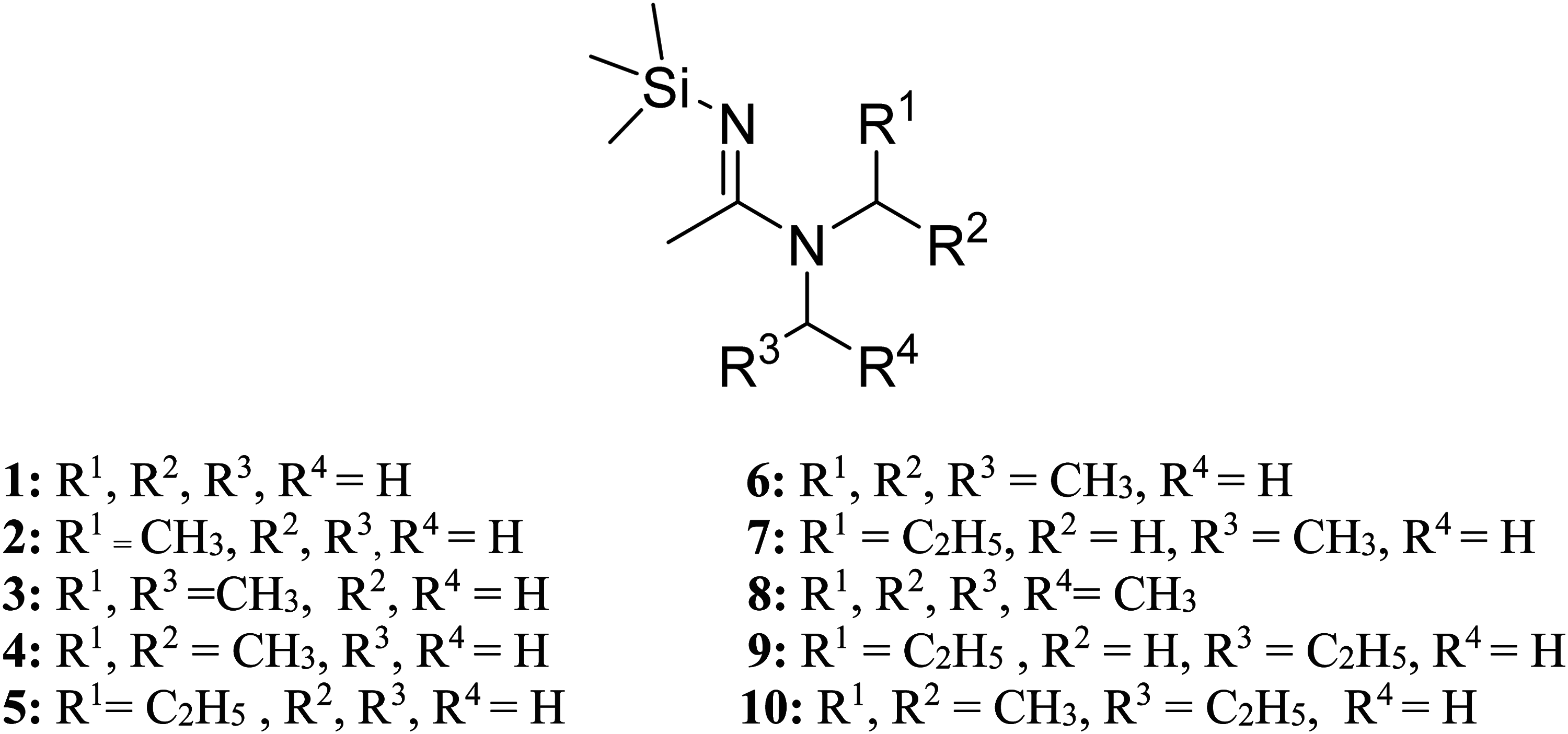
Molecular structure of N’-TMS derivatives of N,N-dialkylacetimidamides
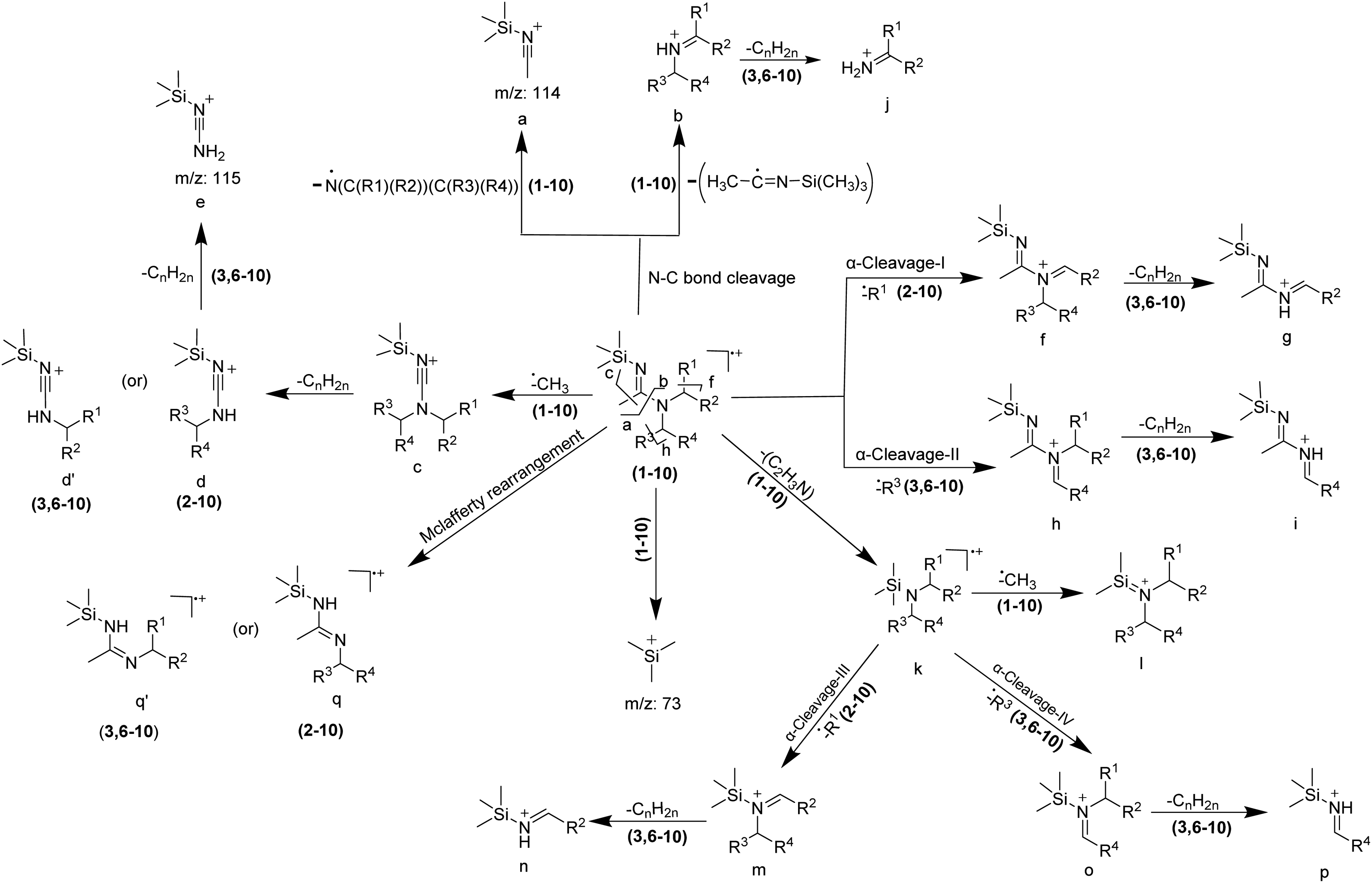
Proposed possible α-cleavages and further fragmentation pattern for compounds
All the compounds showed a common characteristic fragment ion at m/z 73 corresponding to the TMS cation. In addition, compounds
EI mass spectral data for compounds
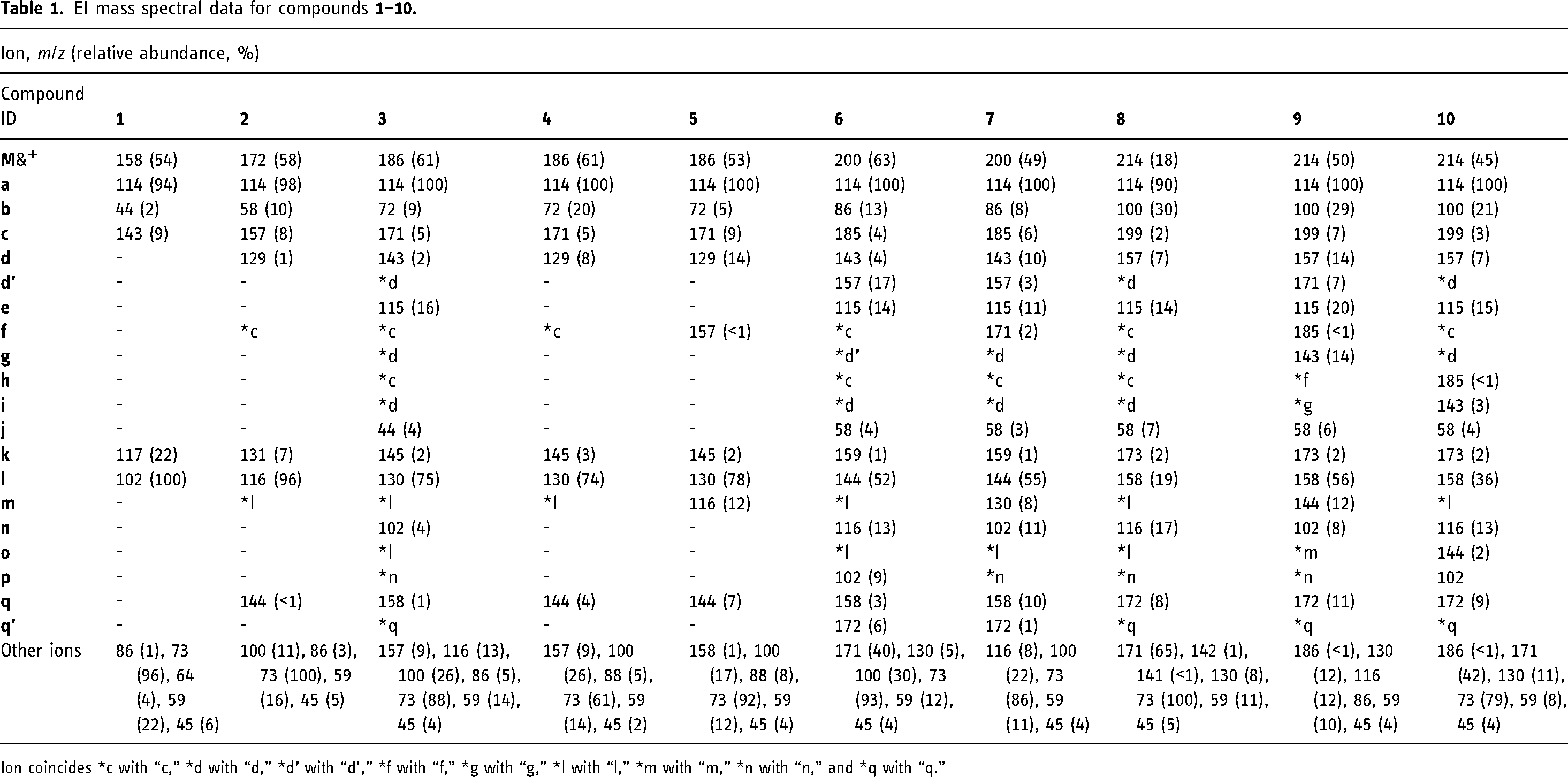
Ion coincides *c with “c,” *d with “d,” *d
Isomeric compounds 3–5
The EI mass spectrum of compound
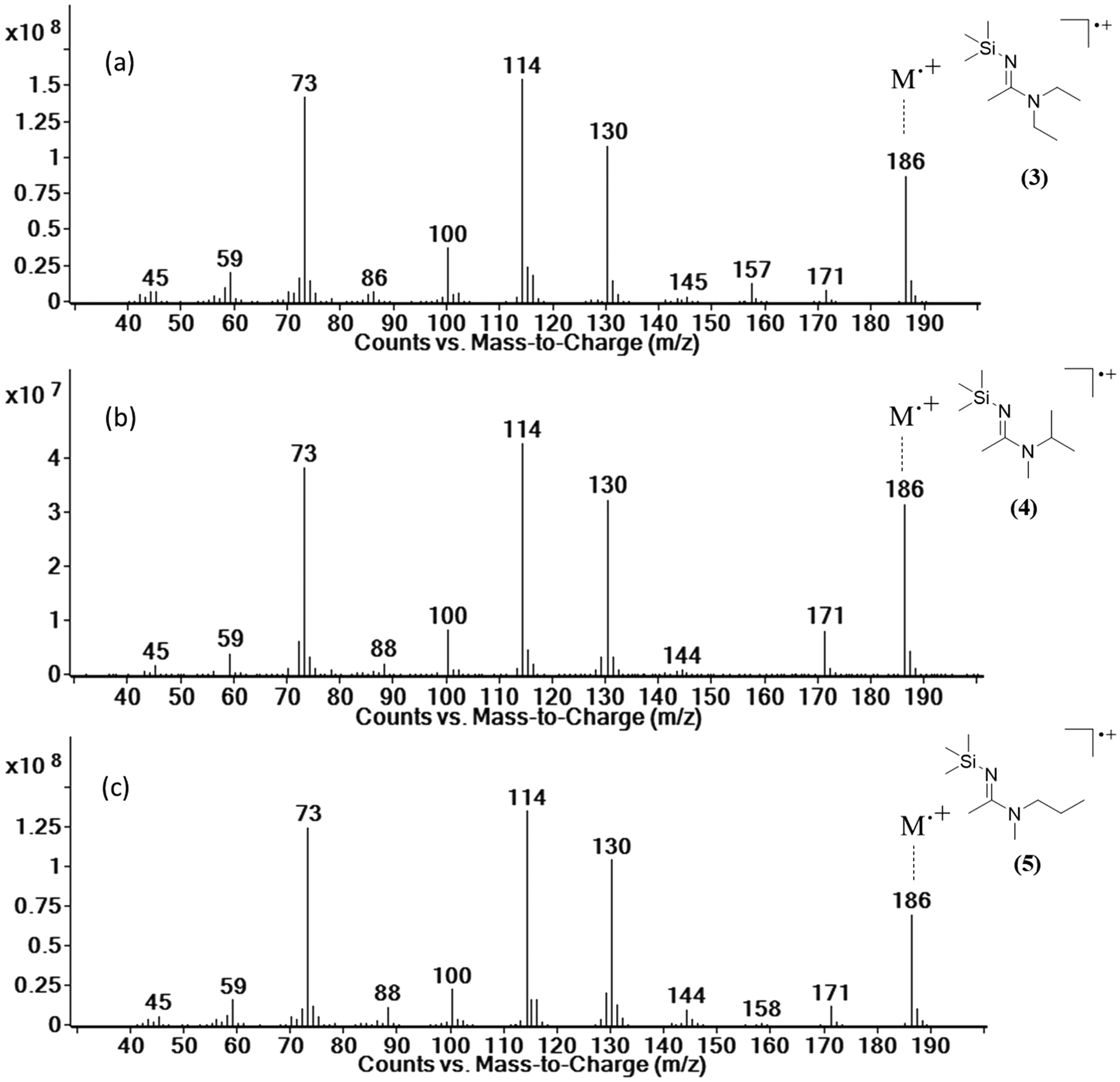
EI mass spectra of N’-TMS derivatives of: (a) N,N-diethylacetimidamide (
Isomeric compounds 6 and 7
Compounds
Isomeric compounds 8–10
The EI mass spectra of isomeric compounds
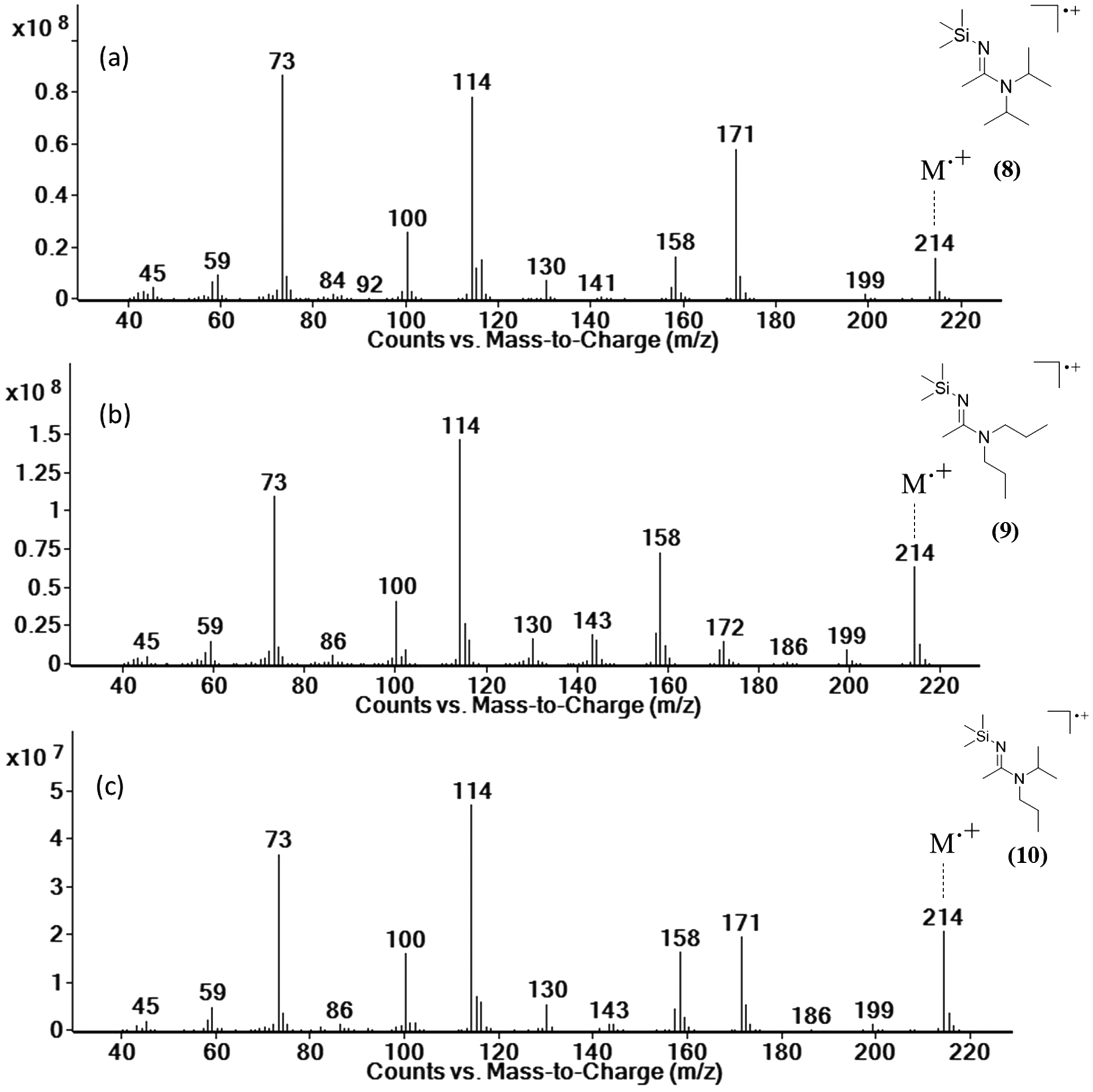
EI mass spectra of N’-TMS derivatives of: (a) N,N-diisopropylacetimidamide (
Retention indices
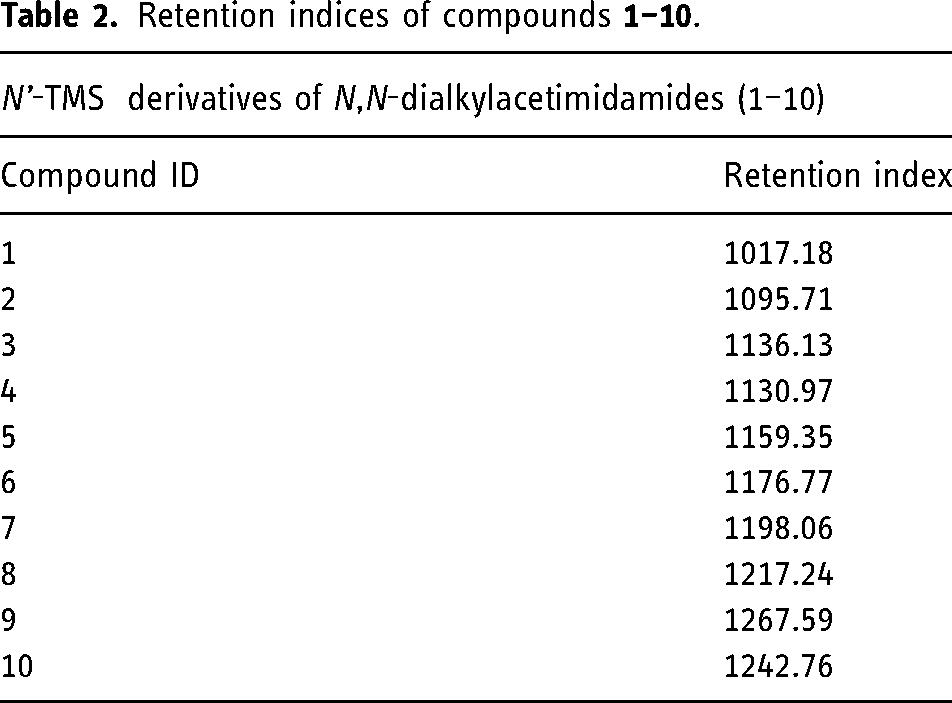
In this study, the retention indices for compounds
Retention indices of compounds
Conclusion
This study provides a systematic evaluation of the EI mass spectral profiles for a series of TMS derivatives of amidines (
Supplemental Material
sj-docx-1-ems-10.1177_14690667261460791 - Supplemental material for Electron ionization mass spectral studies of a series of N'-trimethylsilyl derivatives of N,N-dialkylacetimidamides
Supplemental material, sj-docx-1-ems-10.1177_14690667261460791 for Electron ionization mass spectral studies of a series of N'-trimethylsilyl derivatives of N,N-dialkylacetimidamides by Manasa Masna, S. Babu Dadinaboyina, Sandhya Bobbali, Ramunaidu Addipilli, Srinivas Kantevari and Jagadeshwar Reddy Thota in European Journal of Mass Spectrometry
Footnotes
Acknowledgements
The authors thank the Director of CSIR-Indian Institute of Chemical Technology for Facilities (IICT Communication Number: IICT/Pubs./2026/085). MM acknowledges ICMR, New Delhi, for the fellowship. SB acknowledges DST, New Delhi, for Senior Research Fellowship.
Declaration of conflicting interests
The authors declared no potential conflicts of interest with respect to the research, authorship, and/or publication of this article.
Funding
The authors received no financial support for the research, authorship, and/or publication of this article.

Supplemental material
Supplemental material for this article is available online.
References
Supplementary Material
Please find the following supplemental material available below.
For Open Access articles published under a Creative Commons License, all supplemental material carries the same license as the article it is associated with.
For non-Open Access articles published, all supplemental material carries a non-exclusive license, and permission requests for re-use of supplemental material or any part of supplemental material shall be sent directly to the copyright owner as specified in the copyright notice associated with the article.
