







Abstract
This article, which centers upon the Neo-Assyrian empire of the early first millennium BCE, presents agriculture as a field of political intervention and transformation in the creation of imperial subjectivities. As part of the expansion process into territories of Upper Mesopotamia, Neo-Assyrian rulers (ca. 900–600 BCE) relied on settled agriculture to produce and promote imperial subjects bound to the authorities for whom they tilled and toiled. However, archaeobotanical data from Tušhan, a provincial capital of the empire, reveals that people under Neo-Assyria’s control did not fully conform to the idealized agrarian lifeways construed by officials to uphold Assyrian power and dictate subject conduct. Evidence for semi-nomadic pastoralism at Tušhan exposes the slippage between ideal agrarian subject and actual agrarian practice in the Neo-Assyrian empire, wherein lies the contestation over politically oriented subjectivities and their instantiation through land-use.
Introduction
Standard treatments of ancient agriculture provide information on subsistence and economy, but archaeologies of agriculture can also engage with politics in the past. This approach requires theorizing the role that environmental practices play in constituting political associations, and appreciating land-use as a ubiquitous and therefore integral social locus for the negotiation of political relationships. In the argument to follow, I present agriculture as a field of political intervention and transformation in the production of imperial subject identities. I claim that rulers of the Neo-Assyrian empire (ca. 900–600 BCE) manipulated the environmental politics of settled agriculture in the provinces of Upper Mesopotamia to disseminate a normative concept of Assyrian subjectivity that fomented political allegiance to the empire. In particular, Neo-Assyrian kings invested in large-scale programs of deportation, resettlement, and “agricultural colonization” (Parker, 2001: 82) to discipline newly absorbed locals and deportees into political subjects, “people who recognize authority and recognize themselves as subjects to authority” (Kosiba, 2015). I assert that, in northern Mesopotamia, agriculturists tied to the empire through sedentarized farming embodied ideal subjects of Neo-Assyrian imperialism.
Alongside intensive agrarian ventures in the empire’s provinces, Neo-Assyrian officials also fixated on and valorized settled crop agriculture in their discursive practices. Assyrian administrators’ veneration of sedentary cultivation deprecated the legitimacy of other socio-political identities and land-use lifestyles in the region. With a broad brush, Neo-Assyrian authorities painted those resistant to Assyrian rule as mobile non-agriculturists, and therefore as disreputable neighbors who threatened imperial order and control in Upper Mesopotamia. I link the empire’s declarative disregard for itinerant lifestyles and non-intensive forms of crop agriculture with an imperial desire to command lands and people historically affiliated with defiant, semi-nomadic pastoralists, exemplified by the Aramaeans of the Late Bronze Age (ca. 13th–10th centuries BCE). Even though by the eighth century BCE Aramaeans had become significantly sedentarized agro-pastoralists (Liverani, 1997; Schwartz and Nichols, 2006; Szuchman, 2007) and integrated members of Assyrian society (D’Agostino, 2009; Kühne, 2009; Tadmor, 1982), Neo-Assyrian officials took pains to maintain the menace of incivility lurking in transhumant, non-agrarian lifeways. Minimally, the effects of this political stance were twofold. In the first place, the repudiation of peripatetic land-use practices helped extoll settled agriculture as the productive realization of subject fealty. Second, the empire’s attempt to legitimate only certain kinds of agricultural regimes fed into a larger political endeavor to distinguish and advance only certain kinds of political actors. In this case, by wielding agriculture as an instrument of statecraft, Neo-Assyrian authorities not only maligned regional rivals, they also further indoctrinated imperial agriculturists, Aramaean or otherwise, as Assyrian subjects.
To recuperate land-use lifeways elided by Assyrian officials, and unveil the political force of their project, I examine archaeobotanical data from the Neo-Assyrian provincial capital of Tušhan in Upper Mesopotamia (the present-day site of Ziyaret Tepe in southeastern Turkey, Figure 1(a)). Plant remains from ancient Tušhan index a range of productive practices besides intensive crop cultivation, including mobile forms of livestock grazing and pasturing. These findings betray the empire’s dedication to semi-nomadic pastoralism, and destabilize Neo-Assyrian representations of an ideal agrarian subject and an essential non-agrarian enemy. Such contradictions reveal the political stakes of this land-use project: agriculture was a charged domain of human–environment interaction through which Neo-Assyrian authorities attempted to forge particular political positions and orders. Settled permanent agriculture was not the only means by which Assyrian monarchs realized their imperial aims, but it was an important apparatus of empire that is worthy of critical archaeological scrutiny.
(a) Map of Ziyaret Tepe in its modern geographical context (after Ronayne, 2005). (b) Map of Ziyaret Tepe’s location within the Neo-Assyrian empire (after MacGinnis, 2013).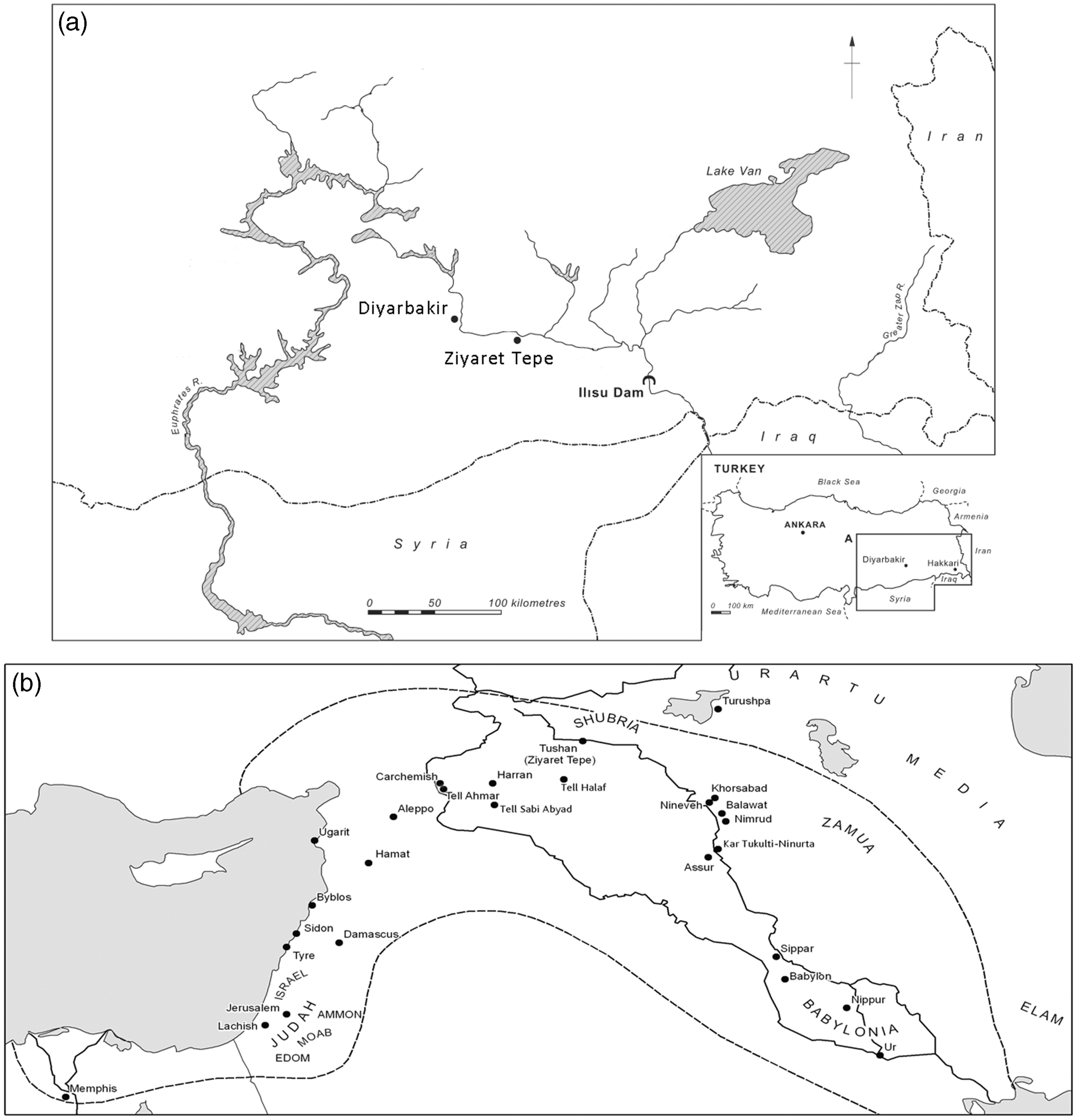
Neo-Assyrian agricultural colonization
In the first millennium BCE, Assyria became an expansionary empire of unprecedented proportions. While rulers of Middle Assyria (ca. 1300–900 BCE) had contented themselves with new holdings in northern Mesopotamia and southern Anatolia, the ambitious kings of Neo-Assyria proceeded to lead major campaigns into Iran, Anatolia, Syria, the Levant, and Egypt (see Figure 1(b)). Agricultural colonization, “the founding of new rural villages and the settling of people deported from various parts of the empire for the purpose of agricultural production” (Parker, 2001: 82), typified imperial occupation in Upper Mesopotamia. In archaeological surveys, this resettlement and land-use program appears as an increase in nearly 300 new small sites in northern Mesopotamian countrysides in the Neo-Assyrian period (Rosenzweig, forthcoming). These findings complement the empire’s own census records on resettlement in the region (Fales, 2014). While earlier Near Eastern powers had practiced deportation (Oded, 1979: 2), the imposition of settled agriculture signaled a change in the formation of political landscapes. No previous Near Eastern polity had systematically set out to dictate the agricultural contours of its territories or inhabitants with such bureaucratic vigor or expense.
Archaeological and historical studies have largely approached Neo-Assyrian agricultural colonization as an economic necessity of empire, required to meet the growing food supply demands of the heartland’s burgeoning urban centers 1 (Liverani, 1988; Oded, 1979: 67–74; Parker, 2001, 1997; Postgate, 1974; Wilkinson et al., 2005). While agricultural colonization certainly accommodated the infrastructural needs of imperialism, Neo-Assyria’s agrarian resettlement projects also imposed new relations of production and interdependence that entwined agriculturalist and empire. In addition to heralding environmental and economic innovations in centralized governance (Altaweel, 2008; Bagg, 2000; Barbanes, 2003; Fales, 1990a; Kühne, 2010; Morandi Bonacossi, 1996; Parker, 2001, 2003; Ur, 2005; Wilkinson, 1994), Neo-Assyria’s agricultural campaigns introduced new opportunities for aggrandizing political platforms and structuring subject-state relationships (Liverani, 1979; Postgate, 1992). Viewed as a project of social re-engineering (sensu Scott, 1998), agricultural colonization reformulated deportees’ affective ties to place (Harmanşah, 2012), established new-found reliances upon Assyrian land-use techniques and practices (Rosenzweig, 2016; Wilkinson and Rayne, 2010), and thrust agriculturists into surplus economies of taxation and conscription (Parker, 2001; Postgate, 1974). Relocated people found themselves physically ensconced in an agrarian system scaffolded by inequality and relations of dependence generated by geographical dislocation, provincial production, and imperial consumption. Thus, in material, symbolic, and embodied ways, agricultural colonization contributed to the emergence of new relationships between rulers and the ruled.
The ideal agrarian subject
Agricultural colonization had the ability to mask social disparities as acceptable elements of participation in the empire by fostering a sense of inclusion. By most textual accounts, imperial officials counted deportees among the “citizens” of Neo-Assyria (Galil, 2007; Miller, 2009; Oded, 1979; Parpola, 2004). With this designation and a stretch of land to cultivate, conquered people may have accepted resettlement as a facet of benevolent imperial rule capable of distributing shared rights of personhood and property to its constituents (Gallagher, 1994; Masetti-Rouault, 2010: 131). But this political membership conferred onerous obligations upon its titleholders, not the least of which included displacement and taxation. Consequently, Neo-Assyrian administrators sought strategies for coaxing subjects into framing their socio-political values and identities around empire, even though those choices took place in contexts of coercion, constraint, and disparity. One provincial officer of the empire called upon expressions of kinship to suggest the salubrious effects of forced agriculture: The city Turmuna where the king [Tiglath-pileser III] appointed me is well. The land has been subjugated. They are cultivating the fields and plastering roofs. We are standing in the city like one family. (Luukko, 2012: 24; SAA 19, no. 21)
Another epistle demonstrates how Neo-Assyrian administrators construed forced resettlement and agriculture as a form of civic duty that molded subjugated people into exemplary subjects: [I said]: “Do your work, each in [his house and] field, and be glad; you are now subjects of the king [Sargon II].” They are peaceful and do their work. (Radner, 2000: 238; SAA 5, no. 210)
Consequently, coerced cultivation provided Neo-Assyrian officials with opportunities to engender attitudinal changes toward authority through participation in centrally organized land-use and management. Rather than an epiphenomenon of empire, permanent agriculture was in fact an implement of Neo-Assyrian expansion, a “soft hammer of self-regulation” that capitalized on crop production’s prosaic qualities to infiltrate and alter peoples’ subject-state relationships (Agrawal, 2005: 15). Alongside other imperial methods that included bodily force (e.g. mandatory resettlement) and blunt inequities (e.g. taxation), large-scale, compulsory farming was a ubiquitous and mundane apparatus of political control that normalized obedience to the empire. Put another way, the program of agricultural colonization attempted to sow subject conformity as assuredly as it sought to reap agrarian harvests. By using particular modes of agrarian production to naturalize and incentivize the reconfiguration of socio-political relationships along asymmetrical axes of control and access, Neo-Assyrian administrators devised a system for cultivating political subjects through cultivation itself.
The essential non-agrarian enemy
The inclination to fashion an archetypal Assyrian subject out of agrarian lifeways was neither arbitrary nor wholly economic. Historical rivalries with semi-nomadic and agro-pastoral peoples in Upper Mesopotamia, exemplified by the Aramaeans, undergirded Neo-Assyrian officials’ promotion of settled crop husbandry, and their concomitant devaluation of non-agrarian practices, be they forms of transhumance or livestock rearing. During the period in which Middle Assyria attempted to assert itself in territories between the Tigris and Euphrates Rivers, ca. 1300–900 BCE, Aramaeans living in northern Syria had begun assailing Assyrian settlements in Upper Mesopotamia and the Assyrian heartland (Lipiński, 2000: 36). The Aramaeans resisted Assyrian incursion and staged attacks that successfully dislodged Middle Assyrian land holdings. By the time of Aššur-dan II’s reign around 930 BCE, Assyria had lost most of its outlying territories to Aramaean forces (Roaf, 2001: 358). The kings of Neo-Assyria dedicated themselves to recapturing these forfeited lands.
The Aramaeans first appear in the annals of the Middle Assyrian king Tiglath-pileser I (r. 1114–1076 BCE) as pastoral nomads and enemies of Assyria, and in this form they largely remain throughout the Neo-Assyrian corpus: I took my chariots and warriors and set off for the steppe. I marched against the Ahlamû Aramaeans, enemies of the god Aššur, my lord. (Grayson, 1991: 23; A.0.87.1: 44–49)
In truth, however, the essential non-agrarian enemy was as much a political creation as the ideal agrarian subject. Research has shown that by the Neo-Assyrian period, Aramaeans in Upper Mesopotamia had become settled agro-pastoralists engaged a range of social practices that Assyrians would have found familiar (Szuchman, 2007). For example, the Neo-Assyrians’ emphasis upon the Aramaeans’ itinerant ways misrepresented their opponents’ significant sedentary presence. The Aramaean state included capitals and large cities in Syro-Anatolia at Zincirli, Tell Halaf, Tell Ta’yinat, Arslan Tash, and Tell Ahmar (Mazzoni, 1995: 181). In addition to living in urban centers (Kepinski, 2009; Morandi Bonacossi, 2009; Soldi, 2009), Aramaeans conducted sedentary agriculture (Liverani, 1997; Schwartz and Nichols, 2006) and coalesced into organized polities (Rouault, 2009; Szuchman, 2009). Culturally, the Aramaeans and Assyrians shared mythological traditions (D’Agostino, 2009), common artistic styles (Kühne, 2009), and the use of Aramaic (Kwasman, 2000; Tadmor, 1982). Demographically and politically, people of Aramaean descent were present throughout Neo-Assyria, including in its heartland (Postgate, 1989a), and we know that Assyrians promoted Aramaeans to positions of authority in the empire (Bunnens, 2009: 81; Kühne, 2009: 54; Tadmor, 1982).
In addition, the Assyrians themselves emerged from pastoral-nomadic traditions that undermine their denunciations of such people and practices. The Amorite Shamshi-Adad, a semi-nomadic “tent-dweller,” founded the Assyrian state in the early 18th century BCE (Murphy, 2004: 76; Postgate, 1989a). Leichty (2007) posits that the Neo-Assyrian king Sargon II and his successors were Aramaean. And Neo-Assyrian rulers commonly used the ancient Near Eastern epithet “king as shepherd” in their programmatic inscriptions and decrees (Karlsson, 2016: 183–184). Clearly, at times, Assyrian officials acknowledged ties to a history both Aramaean and non-agrarian.
There are a number of reasons why Neo-Assyrian rulers regularly redacted these mutual genealogies, interests, and interactions from their representations of, and dealings with, the Aramaeans. To begin with, positional discrepancies reflect the nature of idiosyncratic rulership. Inconsistencies in royal rhetoric and policy should be expected within the roughly 300 years of Aramaean and Neo-Assyrian interactions. Historiography’s hindsight has the tendency to presume and impose congruity upon the textual record and its authors, but within the broader patterns and mechanisms of Assyrian imperialism, it should not surprise us to find diverse and contradictory positions among the empire’s various monarchies and their statements. After all, Assyrian imperialism was a process, not an event, and it took place in a variety of contexts with differing exigencies. Assyrian royals utilized a range of tropes to underscore their authority and appeal to their audiences (Porter, 2000: 148), even if the political propaganda they disseminated conveyed conflicting messages. Consequently, we have rulers like Aššurnasirpal II (r. 883–859 BCE), who regularly employed the title and regalia of the shepherd-king (Karlsson, 2016: 183–184) and attempted to convert pastoral nomads into settled farmers by force (Grayson, 1991: 189–393).
Granting these inconsistencies, confrontations with the Aramaeans nonetheless spurred Assyrian imperialism and informed the overall character of the empire’s responses to resistant polities and communities in the northern provinces. Whatever histories and traditions the Assyrians and Aramaeans shared, Middle Assyria’s encroachment into Upper Mesopotamia marked a shift toward antagonistic relations. Seeking new strategies for effectively countering Aramaean sovereignty, Tukulti-Ninurta I (r. 1243–1206 BCE) and his successors began a process of “landscape infilling” (Wilkinson et al., 2005: 25), pumping settlers and settlements into territories outside the Assyrian heartland, especially in the Upper Khabur region of northern Syria, to lay permanent claim to the land through agricultural investment. During this period of incipient agricultural colonization, the ideological concept of “The Land of Aššur” emerged, and at the provincial capitals established throughout the frontier, Assyrian officials from the heartland were installed at the expense of local leaders (Postgate, 1992: 251–252). The effect was one of physical emplacement and replacement, whereby the boundaries of Assyria were proclaimed by the presence of Assyrian themselves as occupants and managers of the land. This was a significant change from preceding periods, when tribute and allegiance from local rulers marked the conquest and annexation of foreign lands (Liverani, 2001).
The politics of agricultural subjectivity
The Neo-Assyrian kings coupled their expansionary programs against the Aramaeans with a recasting of Assyrian cultural norms and their attendant deviations. Imperial dynamics, predicated as they were upon deportation, necessitated a re-conceptualization of Assyrian identity. Officials could no longer construe non-Assyrians as people from outside Assyria 2 since, after all, a great deal of Neo-Assyria’s subject-citizens now came from provinces beyond the heartland (Oded, 1979; Parpola, 2004). Rather, under empire, non-Assyrian identities materialized as the refusal to conform to newly consecrated understandings of the Neo-Assyrian subject—and farming the land was a central component of this emergent socio-political identity. As Matney (2014: 159) points out, Neo-Assyrian imperialists “required an Other, with a capital O,” in order to fashion an empire of their own making (see also Zaccagnini, 1987). Under the rubric of empire, discourses of Othering pivoted around an agricultural idiom, and non-agrarian lifestyles became antithetical to Neo-Assyrian subjectivity (cf. Van Driel, 2000: 280).
Assyrian royals vying for legitimate rule over Upper Mesopotamia found that demarcating this practice-based division, between agriculturists and non-agriculturalists, could be a powerful semantic device for authority-building. In the early first millennium, when Assyria competed with Aramaeans for control of northern Mesopotamia, Assyrian rulers promulgated biases that distinguished the urban from the rural, the settled from the mobile, the agricultural from the pastoral (Karlsson, 2016: 200). Throughout the Assyrian archive, officials represented the Aramaeans and other non-Assyrians as lawless marauders contemptuous of sedentary agriculture and the authorities who promoted it (Masetti-Rouault, 2009; Zaccagnini, 1987: 412–414).
From this perspective, the ingenuity of Neo-Assyria’s agrarian program was its ability to transform and redeem these adversaries into members of the empire. Through agricultural practice, disobedient non-agriculturalists could become loyal subjects of Assyria; Aramaeans could become imperial citizens. The forced implementation of crop husbandry could establish political ties to the empire that transhumant pastoralism could not support, and intensive, surplus farming could facilitate economic attachments that locals and deportees could not escape. Pastoral nomads’ construed disdain for urbanization, cultivation, and political oversight stood in direct opposition to the Assyrian imperial project. But as agricultural subjects, these same dissidents could be incorporated into the empire through the re-organization of communities, labor, and allegiances that agricultural colonization enabled.
The diminution of non-agriculturists in imperial narratives represents a discursive elision, engaged for political purposes, to be countered and contextualized by material sources. Agricultural colonization was part and parcel of a larger imperial initiative to orient conquered peoples ‘to Assyria’ (Postgate, 1992: 251) by coercively seeding Upper Mesopotamia with farmers and farmsteads. Analyzed through the optic of political subjectivity, agricultural production in the Neo-Assyrian provinces becomes a significant unit of analysis in the archaeological and historical study of imperial processes and relations.
The Assyrian royal annals depict a sharp restructuring of the political and environmental landscapes of northern Mesopotamia to solidify Neo-Assyrian hegemony. In particular, Assyrian officials strove to imply that non-agricultural lifeways, such as mobile animal husbandry, reached their nadir when Neo-Assyria took over Upper Mesopotamia. Neo-Assyrian rulers held this land-use change up as proof of the power of the empire to impose its will and create devoted, agricultural subjects. The following archaeobotanical analysis from Ziyaret Tepe, the ancient Neo-Assyrian provincial capital of Tušhan in the Upper Tigris River Valley, critically evaluates these assertions by bringing attention to evidence for semi-nomadic pastoralism in Neo-Assyria’s agriculturally colonized provinces. Nestled in the archaeobotanical data from Tušhan, we find testament to the ways in which people under Neo-Assyrian empire defied the ideals of agrarian subjecthood and expressed their own, alternative and non-agricultural versions of imperial subjectivity. In the exposition of the model agricultural subject as a political fiction, we also find corroboration for agriculture’s political value in Neo-Assyrian imperialism.
Tušhan, a Neo-Assyrian provincial capital
In the early ninth century BCE, Aramaean and Assyrian rulers jockeyed for control of the Upper Tigris River Valley, and the fortified site of Tušhan (Ziyaret Tepe) served as an important foothold for Assyria’s military campaigns in the region (Figure 1). In the middle of the 11th century BCE, Middle Assyrian armies marched northward, advancing as far as the Upper Tigris River in their attempts to stifle Aramaean command of the area (Szuchman, 2009: 56). But Assyrian authority in the region proved fleeting, and the Aramaean kingdom of Bit-Zamani survived and grew to preside over the Upper Tigris River Valley from its capital at Amedi (present-day Diyarbakır). It was not until the reign of Aššurnasirpal II (883–859 BCE) that Neo-Assyria was able to pry loose the Aramaeans’ hold over the area. In 882 BCE, Aššurnasirpal II consecrated Tušhan as an Assyrian provincial capital, and two years later, he boasted that, in his 880 BCE campaign into the Upper Tigris River Valley, he reclaimed fortresses along the river and captured troops fighting for Bit-Zamani (Szuchman, 2009: 57). In one inscription, Aššurnasirpal II tied these military exploits to a larger quest for agricultural security: I resettled in their [the Aramaeans’] abandoned cities and houses Assyrians who had held fortresses of Assyria in the lands [of] Nairi and whom the Aramaeans had subdued. I placed them in a peaceful abode. I uprooted 1,500 of the Ahlamû-Aramaeans belonging to Amme-ba’li, a man of Bit-Zamani, and brought them to Assyria. I reaped the harvest of the lands [of] Nairi and stored it for the sustenance of my land in the cities of Tušha[n], Damdammusa, Šinabu, and Tidu. (Grayson, 1991: 261; A.0.101.19: 95–96)
Agriculture at Tušhan
Ziyaret Tepe is a 32 hectare tell standing nearly 30 meters tall in the southern floodplain of the Upper Tigris River that runs east–west in southeastern Turkey. Situated within the Diyarbakır Basin, approximately 500–550 meters above sea level, the site is and has been part of a semi-arid environment supporting agriculture and pastoralism for thousands of years (Van Zeist and Woldring, 1978; Yakar, 2000: 446–449). For the residents of ancient Tušhan, over 400 mm of yearly rainfall, coming primarily in the winter months, would have supported dry farming, while the rich alluvial soils surrounding the settlement were ideal for permanent cultivation (Matney et al., 2003: 176–177). At the same time, hot and dry summers, with temperatures exceeding 100° F on a regular basis, would have exposed their crops to extreme heat and water evaporation (Erinç, 1950), and inclined the land managers of Tušhan to build irrigation canals. Just beyond the floodplain, herders could take their livestock into the terraced foothills that rise another 150 meters and border the river valley. Steppe vegetation suitable for grazing animals cover these limestone bluffs, which run alongside the course of the Upper Tigris River before giving way to the Tur Abdin Plateau roughly 25 kilometers to the south and the Southeastern Taurus Mountains that begin their rise 100 kilometers to the northeast.
Settlement at Ziyaret Tepe began in the Early Bronze Age (ca. 2600 BCE) and stretched into the Ottoman period (Matney et al., 2009), but the site reached its zenith in the Neo-Assyrian period as the imperial provincial capital Tušhan (ca. 900–600 BCE). Features of this frontier center (see Figure 2) included a fortified city wall, large administrative buildings on the acropolis (Operation L), a governor’s palace overlooking the river valley (Operation A/N), and a treasury for collecting and redistributing agricultural tithes to state personnel (Operation G/R) (MacGinnis and Matney, 2009; Parpola, 2008). Cuneiform texts found at the site also confirm that military units, agrarian goods, and resettled deportees moved in and out of Tušhan as they circulated through the empire (MacGinnis, 2013; Parpola, 2008).
Map of Ziyaret Tepe’s Neo-Assyrian occupation, indicating the location of the Khabur Gate in Operation Q (image courtesy of the Ziyaret Tepe Project).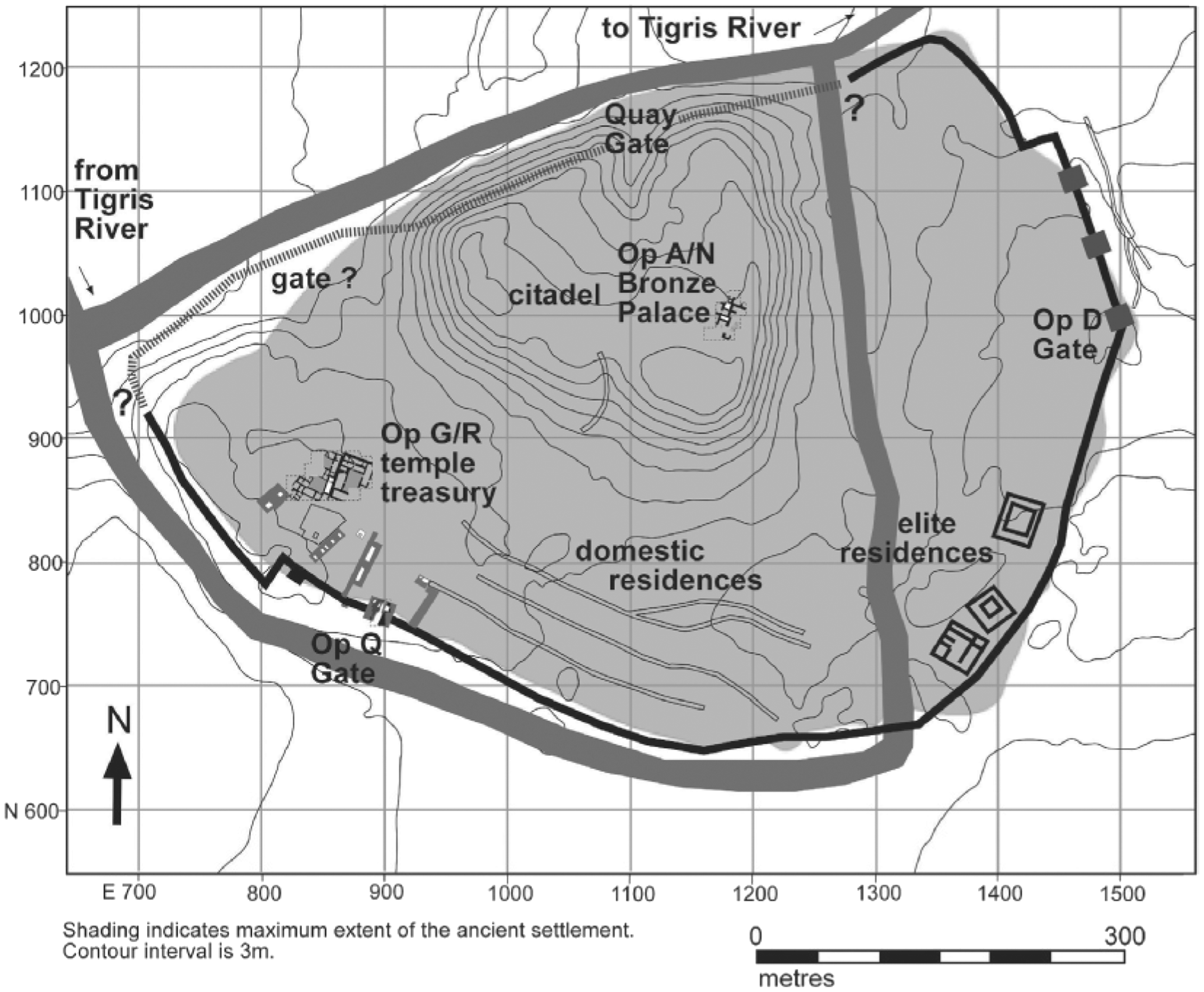
South of the treasury lies one of Tušhan’s city gates, referred to by excavators as the “Khabur Gate” (Operation Q, Figure 2; Figure 3(a)). This guarded entryway into the settlement served as a major corridor between the provincial center and the lands lying south of the city, which included farmsteads situated along the Tigris floodplain and pasturelands in the foothills beyond (Schachner, 2003). These fields and pastures were the primary loci for agricultural production of the supplies to Tušhan’s treasury. Four phases of gate construction (Figure 3(b)) indicate that inhabitants used the Khabur Gate for the duration of Neo-Assyrian occupation (Matney et al., 2009: 61), up until residents abandoned the city in the face of potential attack by Babylonian and Median armies around 611 BCE (Grayson, 1975: 95, 53–55).
(a) Plan of the Phase III Khabur Gate in Operation Q. (b) Plans of the four phases of the Khabur Gate in Operation Q, with black dots marking the locations of the soil samples taken. (c) Pie chart illustrating the relative abundance of plant groups within the composite gate assemblage. (Gate images courtesy of the Ziyaret Tepe Archaeological Project.)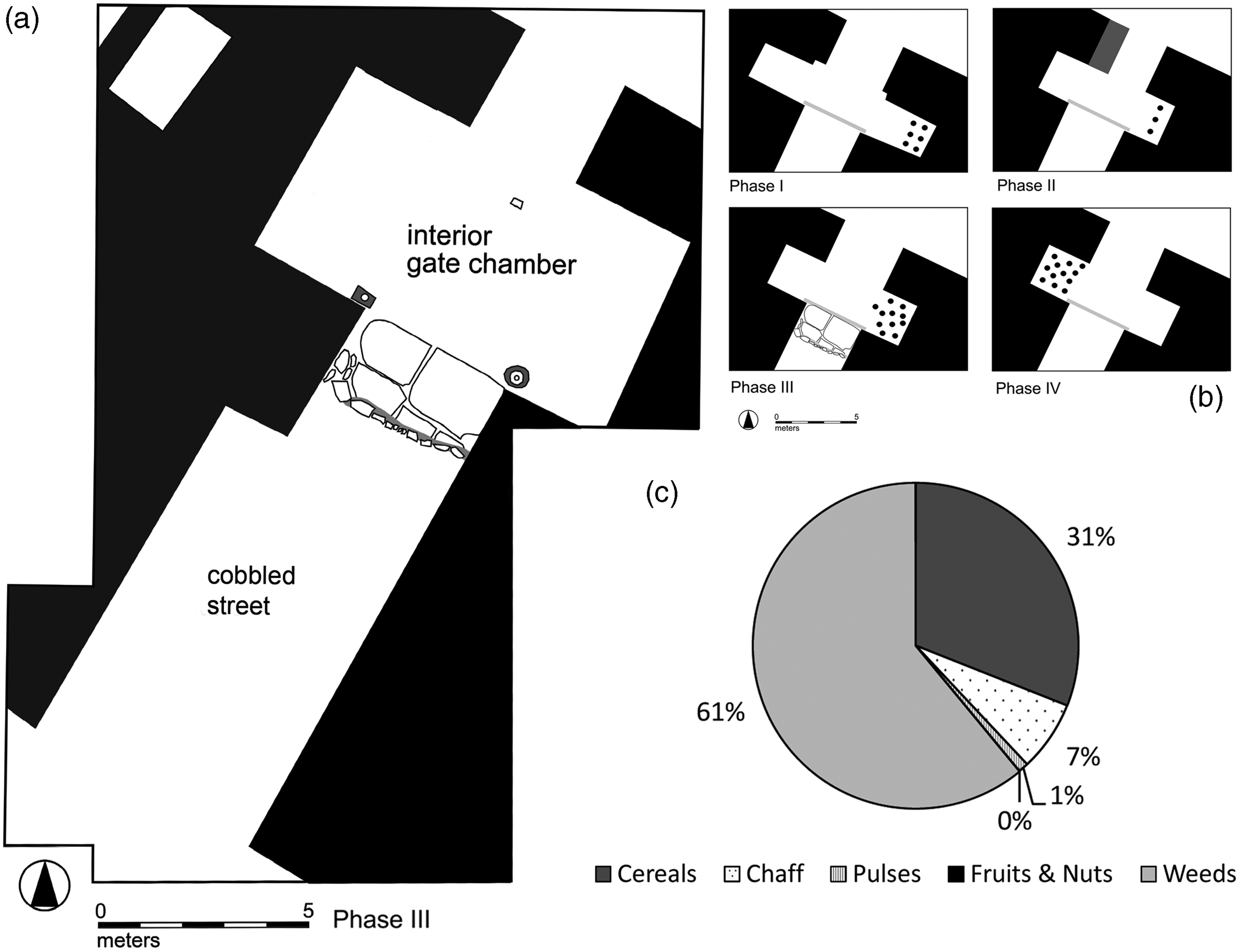
Absolute counts of archaeobotanical remains from the Khabur Gate (Operation Q), along with their ecological contexts.

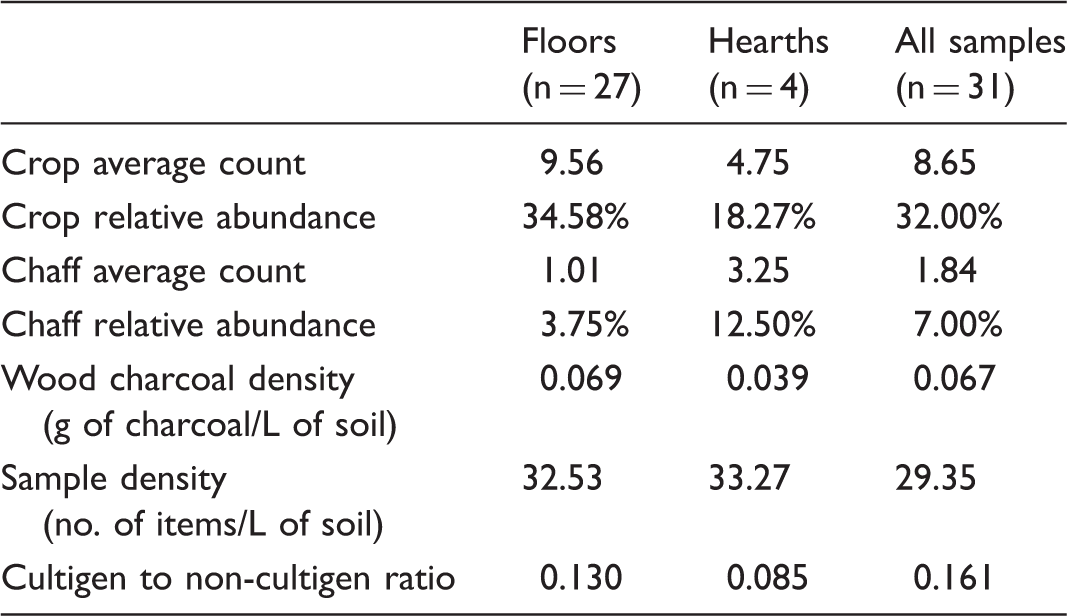
Statistical comparisons of the floor and hearth samples from the Khabur Gate.
The cereal finds in the Khabur Gate register the significance of fodder production in an agrarian system supporting both human and animal members of the empire. Most (38%) of the cultivated plants recovered from the Khabur Gate consist of grains and chaff of barley (Hordeum sp.) and wheat (Triticum sp.). Generally, the remains of such cereals are understood as elements of crop husbandry for human sustenance. But, as explained above, the taphonomy of the Khabur Gate assemblage points to an archaeobotanical collection generated primarily by animal consumption. Consequently, the cereals found in the gate assemblage designate fodder reserves that would have provisioned pack animals in the frontier capital. In the gate, barley grains and chaff outweigh wheat remains 2.5 to 1, delineating barley’s important role as feed for livestock. A salt- and drought-tolerant crop, barley would have been both a reliable human staple as well as a practical silage to cultivate in and around the semi-arid river valley (Riehl, 2009). Meanwhile, wheat varieties, with their greater water requirements, would have been reserved principally for human diets.
Counting fodder cropping among the cultivation strategies at Tušhan nuances the picture of agricultural colonization in the provinces by demonstrating just how greatly Neo-Assyria’s agrarian economy incorporated and depended upon animal husbandry, a practice that Assyrians had come to pejoratively associate with the Aramaeans. The size and scale of the livestock economy in fact necessitated careful management of agrarian supplies, an ironic indicator of the impact stockbreeding had on the empire’s agricultural pretensions. In Neo-Assyrian texts, administrators distinguished between “fodder for pack animals” and “stored grain for men,” and collected barley for both (Fales, 1990b: 25; Postgate, 1974: 189). And within another inscription commemorating the founding of Tušhan, Aššurnasirpal II dedicated the city to the storage of barley and straw: I brought back the enfeebled Assyrians, who, because of hunger and famine, had gone to other lands, to the land Šubru. I settled them in the city of Tušha[n]. I took over this city for myself and stored therein barley and straw from the land Nirbu. (Grayson, 1991: 243; A.0.101.17: ii25–ii29)
Animal husbandry at Tušhan, however, does not in and of itself contradict the political aspirations of Neo-Assyrian agrarianism. After all, Assyrian officials located misanthropic tendencies not in people who handled animals or enjoyed their benefits, but rather, more specifically, in regional pastoralists who presumably repudiated settlement in arable lands for a life of mobility in environments off the grid of imperial control. Moreover, foddering, as an agrarian technique associated with stabling and on-site provisioning, circumscribes livestock and their keepers, and thus stands alongside other components of agricultural colonization intended to tether and socialize Assyrian subjects. Therefore, it remains to elucidate practices at Tušhan specific to animal husbandry against which the Neo-Assyrian regime railed; namely, mobile pastoralism.
Pastoralism at Tušhan
Neo-Assyrian administrators had a limited capacity to alter or reduce semi-nomadic pastoralism as an agricultural strategy for the empire. Even with the advent of large-scale foddering, pastures and grazing lands remained critical components of the imperial provincial landscape. A calendar based on the flowering periods of plant species found in the Khabur Gate demonstrates the integrated scheduling of foddering and pasturing that would have been necessary to provision Tušhan’s animals throughout the year (Figure 4). In addition to cereals that could serve as silage, the Khabur Gate contained a variety of weedy plants that would have been available as graze from late spring through early fall (i.e. April–September). As the remnants of animal dung fuel, this vegetation must have been consumed by livestock entering and leaving Tušhan during these months. Neo-Assyrian officials would have counted upon pastoralists to take herds out to pasture for these six months of the year to relieve Tušhan’s treasury of demands on its grain supplies, especially in the winter months when stores grew low, and to keep maturing harvests in the floodplain safe from browsing animals.
Foddering calendar for Tušhan based on the presence of identified plant taxa from the Khabur Gate. The dark gray shading indicates the flowering period for each species represented. The light gray shading indicates months of foddering.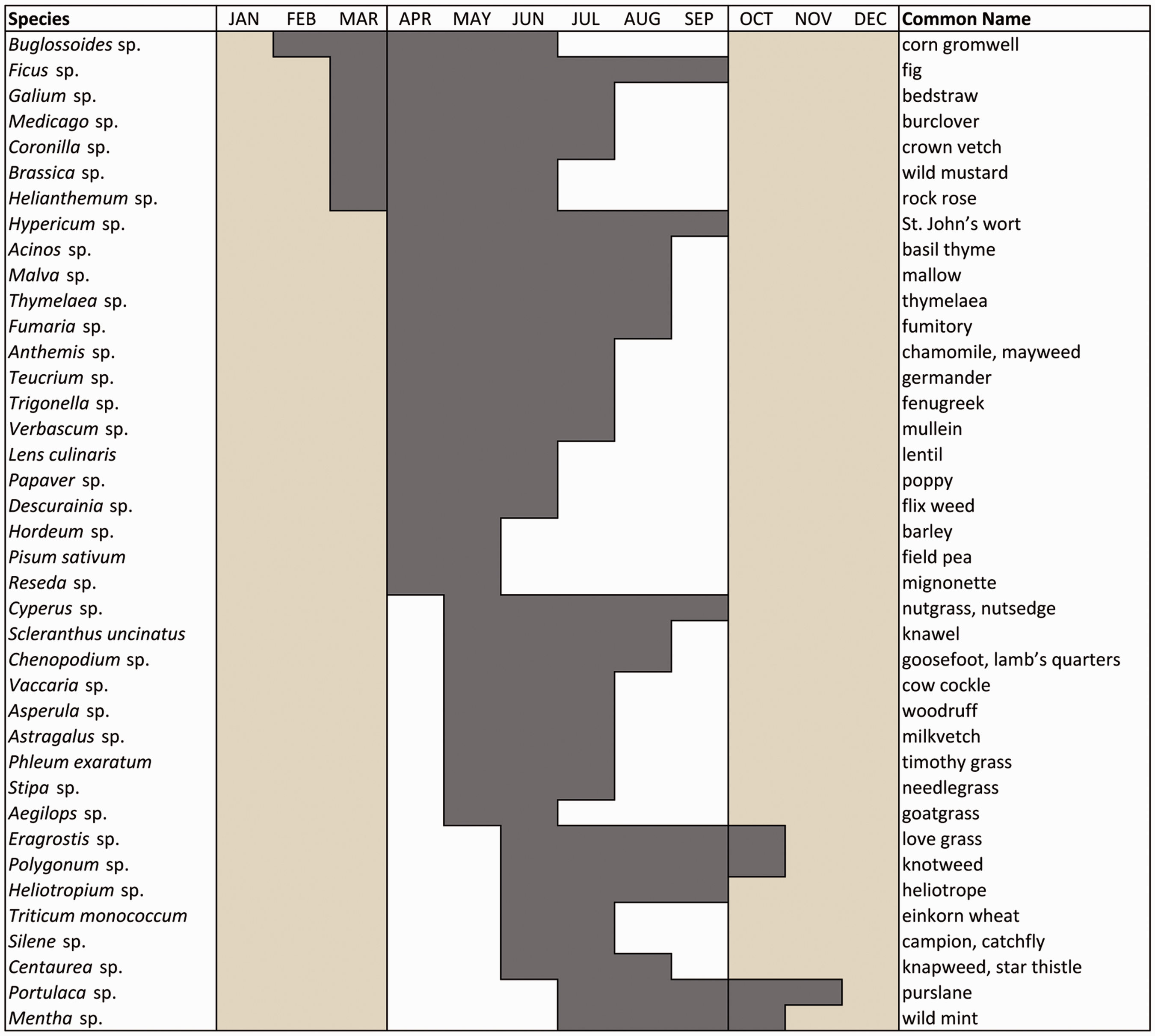
The presence of spring-summer weeds in the city gate attests to the Neo-Assyrians’ dependence upon pastoralism to complement and buttress foddering practices, which alone could not produce enough feed to sustain Assyria’s livestock. In fact, provincial outposts of the empire suffered numerous shortages in animal feed supplies, making state authorities keenly aware of the need to maintain grazing lands. Letters appear throughout the Neo-Assyrian corpus from anxious officials decrying the lack of provisions for pack animals. For example, a worried provincial governor writes to Tiglath-pileser III: Surely the king, my lord, is planning to send me pack animals but I am not able to take care of the pack animals. All the available food and grain is for the people the king gave me. (Luukko, 2012: 56; SAA 19, no. 51) The king, my lord, gave pack animals into my care but I am not able to take care of them; they will die of hunger. I have used up the grain rations that the king, my lord, gave me, having given them to the local people, the specialists in the service of the treasurer, and the quartermaster corps of the Palace. (Luukko, 2012: 169; SAA 19, no. 167)
Because the empire could not accumulate the necessary fodder, administrators had to turn to grazing and pasturing, and these practices are further intimated in a land-use profile derived from the weedy plants found in the Khabur Gate (Figure 5). Herds moving through Tušhan supplemented their diet with field weeds by grazing on the stubble and fallow from harvested fields and consuming additional seeds retained in the coarsely sieved straw they received as silage. These weeds include plants ecologically associated with grain fields, such as bedstraw (Galium sp.) and goat grass (Aegilops sp.), as well as vegetation that grows in a variety of habitats but flourish on arable land, like cow cockle (Vaccaria sp.) and campion (Silene sp.). The presence of field weeds in the Khabur Gate (5%) are a reminder of the fallow system used by Tušhan’s agriculturists (Postgate, 1989b: 144), and the symbiosis that agro-pastoralism promoted: livestock benefitted from grazing harvested and dormant fields, while farmers profited from tilling the animal manure into their cultivated soils.
Pie chart illustrating land-use based on the representational abundance of different plant ecologies from the Khabur Gate’s assemblage of weedy plants.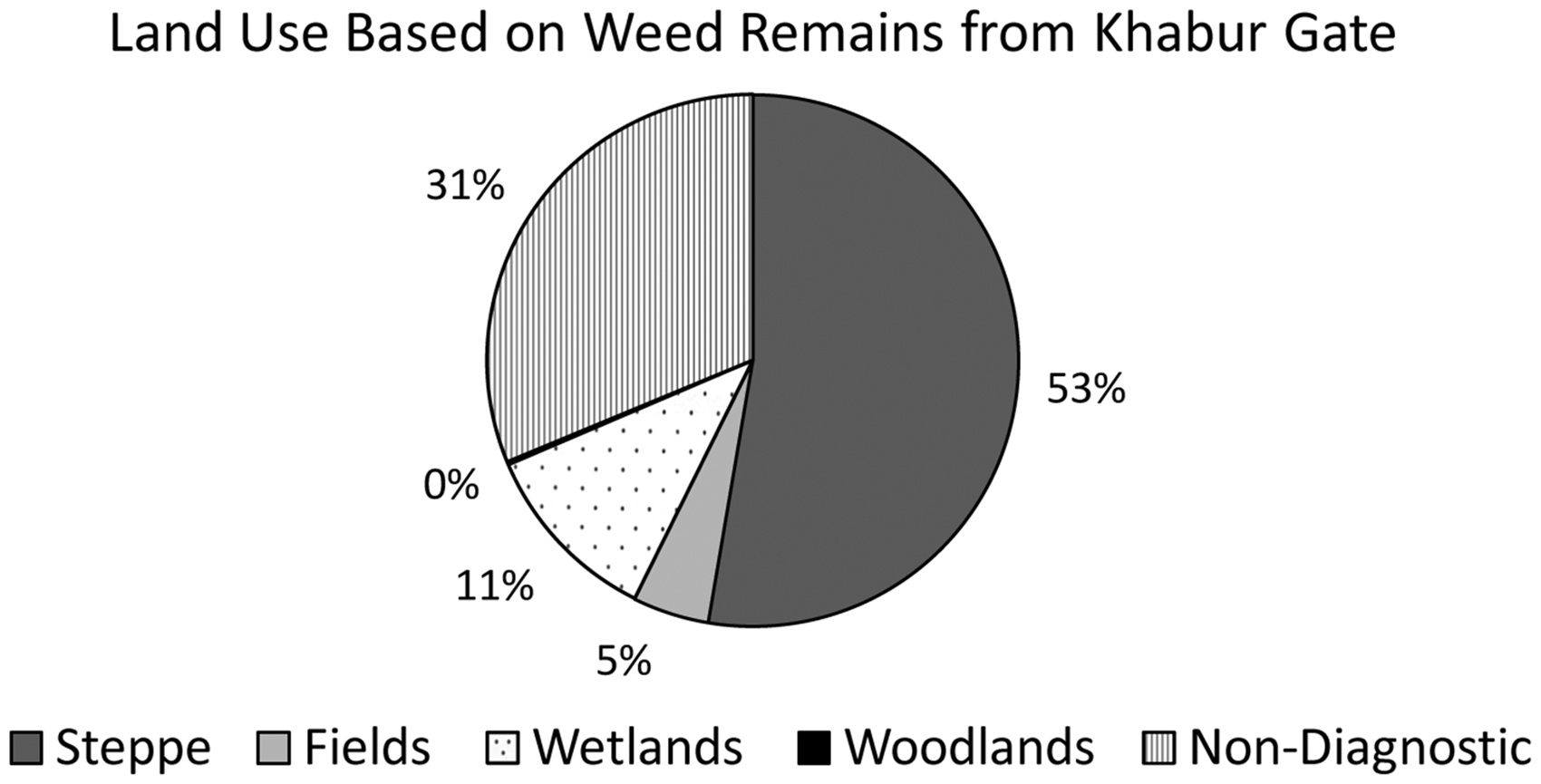
Small herds also would have fed off plants growing along the Tigris River’s edge and in the seepage zones of irrigation canals. These grazing resources are represented by wetland species in the Khabur Gate (11%), which include purslane (Portulaca sp.), knotweed (Polygonum sp.), wild mint (Mentha sp.), and nutgrass (Cyperus sp.). To date, archaeological excavation and survey have not uncovered any ancient water conduit systems in or around Ziyaret Tepe, but on the basis of previous research into the extensive canal-building activities of the Neo-Assyrians (Bagg, 2000; Dalley, 2002; Ur, 2005; Wilkinson et al., 2005; Wilkinson and Rayne, 2010), it is reasonable to suspect that irrigation was part of large-scale agricultural production at Tušhan. Purslane, in particular, is a plant found alongside irrigation canals in Near Eastern agricultural contexts (Zohary, 1966: 78), and so its abundance (n = 32) in the city gate assemblage is quite conspicuous as a signal of Neo-Assyrian irrigation. The annual succulent can still be found around Ziyaret Tepe today, in fields that now rely upon artificial water systems for cultivation.
Most importantly for the argument at hand, the archaeobotanical record from the city gate also indicates that, despite disparaging Assyrian remarks about ruminant pastoralists, Tušhan’s herders continued to move outside the settled floodplain and utilize steppe lands containing grasses, shrubs, and herbs as vital grazing and foraging resources for animals. After cereal fodder, plants of the steppe make up the penultimate resource (53%) used to sustain Tušhan’s livestock. Steppe land taxa from the Khabur Gate include small legumes like milkvetch (Astragalus sp.), burclover (Medicago sp.), and fenugreek (Trigonella sp.). These are herbs and shrubs resilient in dry and sometimes saline environments that would have been dependable forage for livestock in the hot, summer months. Additional graze consist of mayweed (Anthemis sp.), sagebrush (Artemisia sp.), mallow (Malva sp.), and germander (Teucrium sp.). Mullein (Verbascum sp.) is also present in the Khabur Gate assemblage, and this plant, which thrives in over-grazed pastures, alludes to the Assyrians' sustained use of pastoralism.
It is also worth noting that southeastern Anatolian varieties of all these steppe plants are capable of growing at altitudes higher than 700 meters above sea level, and therefore beyond the floodplain, into the foothills, and even within the Tur Abdin and Taurus Mountains. Consequently, the steppe weed profile argues for the continuation of semi-nomadic practices by Tušhan’s pastoralists. Matney (2011) suspects that with winter’s end, non-Assyrian pastoralists traveled with their herds from the Syrian Jazirah in the south through the steppe lands of the Upper Tigris River Valley, all the way to the Taurus Mountains further north for summer pasturing. Based on the archaeobotanical data from the Khabur Gate, there is no reason to preclude the shepherds of Tušhan from engaging in similar forms of seasonal transhumance, and thus preserving nomadic practices that so typified the enemies of Neo-Assyria.
From the steppe plant assemblage, it also emerges that the maintenance or expansion of endemic grasslands might have been a key element of agricultural administration among Tušhan’s land managers. Timothy grass (Phleum exaratum) makes up 77.9% of the steppic taxa (n = 229) from the gate. Timothy grass is a popular forage among livestock, especially for horses (Figure 6).
3
The preponderance of this grass may be the result of its small size (<1 mm), and therefore its ability to avoid breakage and destruction in archaeological contexts. However, it is also plausible to see a connection between this abundant graze and the Neo-Assyrians’ dependence upon horses (and other pack animals) in the frontier. Although excavations at Ziyaret Tepe did not unearth archaeological evidence for stabling, the historic record from Tušhan refers to horses as a critical component of the province’s administration in the Upper Tigris River Valley. In particular, a cuneiform letter was recovered from the treasury at Ziyaret Tepe, wherein an official dramatically pleads with the treasurer for more horses, troops, and support, otherwise, “Death will come of it!” (Parpola, 2008: 86–95). Additional cuneiform tablets from Tušhan speak of provisioning horses, horse-trainers, chariot corps, and charioteers (Parpola, 2008). Rather than unconditionally colonizing the steppe with farmsteads and relying solely on fodder, as royal inscriptions suggest, the Neo-Assyrians might have reserved some lands for dedicated, managed pasturing, in order to sustain their prized cavalries and crucial livestock resources.
Images of timothy grass (Phleum exaratum) seeds recovered from the Khabur Gate. (1) Dorsal-lateral view of the seed using SEM. (2) SEM magnification of the seed coat patterning. (3) Drawings of the seed, by Hayley Monroe.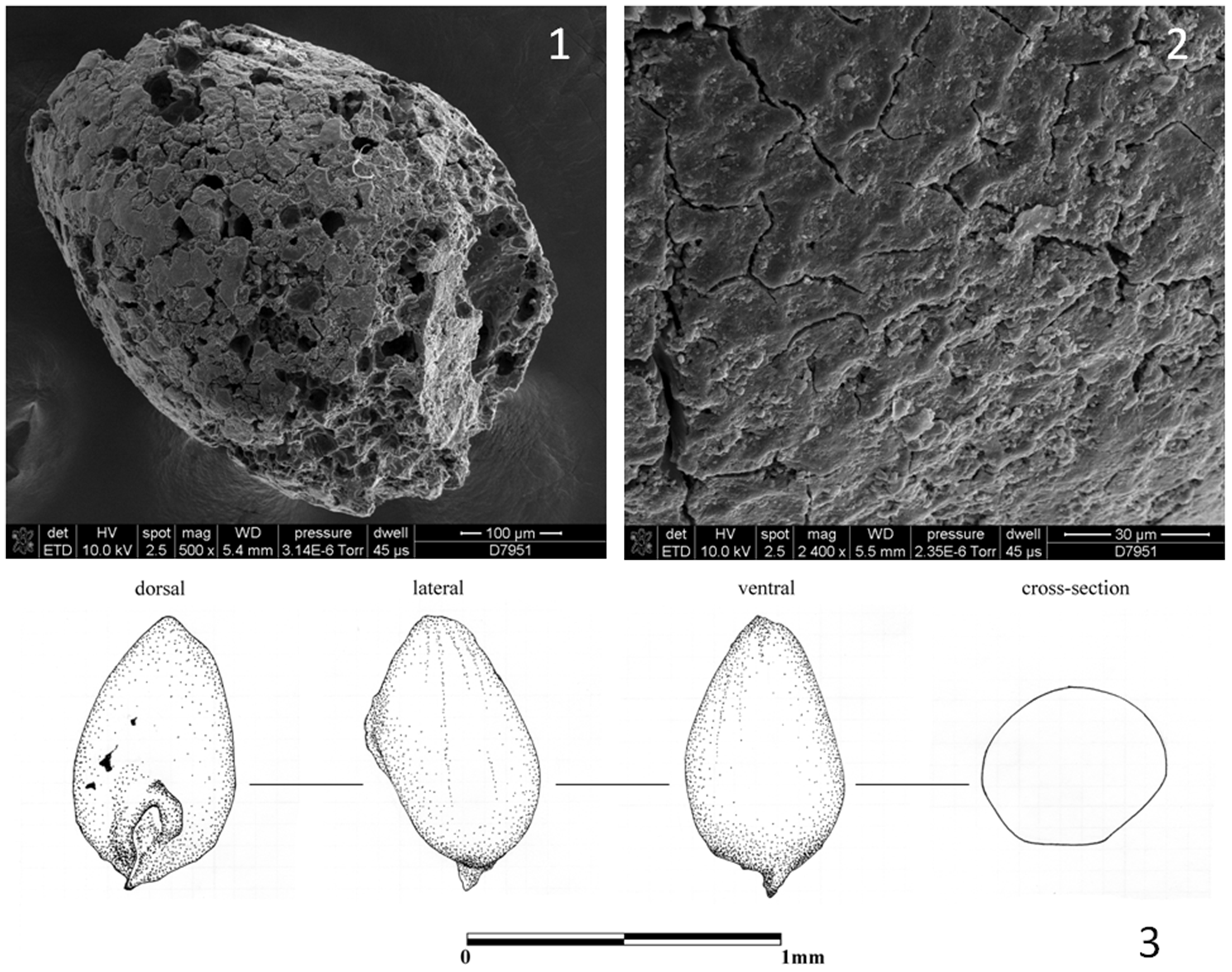
Neo-Assyrian agriculture, reconsidered
In sum, the archaeobotanical assemblage from the Khabur Gate at Tušhan alludes to a complex system of semi-nomadic pastoralism that, integrated with crop cultivation, underpinned the material conditions of Neo-Assyrian empire in the Upper Tigris River Valley. These findings fly in the face of Neo-Assyrian rulers’ own material and discursive campaigns to exalt agriculturists as true embodiments of Assyrian subjectivity, and castigate pastoralists as saboteurs of the imperial project. The environmental data from Tušhan complicate the stability and sharp edges of the ethno-political identities found in Neo-Assyrian historical sources, especially as they relate to land-use. Rather than advocating for the ability of subjects to achieve Neo-Assyrian ideals of proper, agrarian socio-political life, the archaeobotanical analysis presented underscores the empire’s reliance on semi-nomadic pastoralism—the ways in which Neo-Assyrians were themselves non-Assyrian. In making this claim, it should be evident that the categories of “Assyrian” and “Aramaean” derive from a historically situated accounting of subjectivity that is intricately tied to environmental practice and intimately related to the political. Consequently, in order to understand why Neo-Assyrian monarchs went through so much trouble to proselytize agrarian lifestyles, we have to recognize how integral agricultural practices were to Neo-Assyrian political subjectivity, conformist, or otherwise.
On the one hand, agricultural colonization provided the Neo-Assyrian empire with numerous opportunities to condition the suitable imperial subject through agrarian discourse and practice. The aims and propaganda of this project are readily apparent in the Neo-Assyrian texts, and these sources help explain how cultivation aided in aligning subjecthood with Neo-Assyrian allegiance. On the other hand, though, the very constructedness of this political positionality emerges in the disjuncture between imperial discourse and provincial practice. Despite, or precisely because, the concept of an Assyrian agrarian subject was a political fiction, Neo-Assyria never truly abandoned pastoralism or the integration of people who remained non-Assyrian by virtue of their land-use lifestyles. This fissure might elucidate why some resettled subjects ran away or rebelled (Postgate, 1974; 195–196): nested in an agrarian regime that Neo-Assyrian officials framed as reformatory, communal, and prosperous was a political violence that sought to naturalize inequalities and silence alternative subject positions. Even though agricultural colonization offered Neo-Assyrian imperialists a novel strategy for proliferating power, the agrarian program could not completely adhere to its own environmental alibi.
Conclusion
In this article, the celebration and implementation of settled crop husbandry in the Neo-Assyrian empire is disclosed as a political project of subject inculcation and regulation. When the Neo-Assyrian textual accounts of agricultural colonization are compared with archaeobotanical data on agriculture in and around Tušhan, a provincial capital in Upper Mesopotamia, the agrarian resettlement project emerges as an imperial tactic to manage both the environment and the people who inhabited it. The intersections of land-use and political subjectivity appear most clearly in the material and discursive disenfranchisement of non-agriculturalists like the Aramaeans, who epitomize the negation of both legitimate authority and model subjectivity in the empire. Rather than treating agricultural colonization as an inevitable phenomenon of imperial power and growth, this study of Neo-Assyrian cultivation underscores the critical role that environmental practice and rhetoric played in creating and sustaining subject-empire relationships.
Elsewhere (Rosenzweig, forthcoming), I address more specifically a crucial element of the study of Neo-Assyrian agricultural politics—the expression of subversive agrarian practices and subjectivities. With a tighter grasp on Neo-Assyria’s imperial agenda, it is important that archaeologists recover what could be considered seditious forms of land-use and environmental subjectivity within the empire, and this requires case studies that contrast subject lifeways with imperial expectations. It also remains a topic of future scholarship to determine whether or not the manipulation of settled agriculture described here for Upper Mesopotamia and Aramaean populations applies equally well to other provinces and peoples of the empire, or includes the subjectification of vast numbers of deportees living in the Assyrian heartland. This research will require further exploration into the environmental tropes resonant in Assyrian sources, as well as a re-examination of the agricultural data retrieved and currently coming from Neo-Assyrian sites. If cultivation is inextricably drawn into the politics of Neo-Assyrian empire, as claimed here, then archaeology is capable of elucidating these ties.
Footnotes
Acknowledgements
I would like to thank Lynn Meskell for shepherding this article to publication. The original manuscript for this piece was written with generous support from the National Endowment for the Humanities while enjoying the hospitality of the Albright Institute for Archaeological Research in Jerusalem, Israel as a research fellow. Several individuals deserve thanks for providing feedback that improved the final version of this article, including Emily Hammer, Amanda Logan, Deborah Lyons, John MacGinnis, Zoltan Niederreiter, and three anonymous reviewers. Deborah Lyons provided help with some of the translations. The research presented in this article would not have been possible without funding from the National Science Foundation, the American Schools of Oriental Research, and the American Research Institute in Turkey; as well as the devoted work of Timothy Matney and the entire Ziyaret Tepe archaeological team.
Declaration of Conflicting Interests
The author(s) declares no potential conflicts of interest with respect to the research, authorship, or publication of this article.
Funding
The author(s) disclosed receipt of the following financial support for the research, authorship, and/or publication of this article: Funding for portions of the research and writing presented above was provided by the National Endowment for the Humanities, the National Science Foundation, the American Schools of Oriental Research, and the American Research Institute in Turkey.