







Abstract
Since 1945, most fascist monuments have disappeared or been deactivated in Western Europe. There is one in Spain, however, that remains fully operative: the Valley of the Fallen. The complex, devised by the dictator Francisco Franco, celebrates the Nationalist victory in the Spanish Civil War (1936–1939), keeps the bodies of thousands of victims of the conflict, as well as the leading fascist ideologue and the dictator himself, and provides a material narrative that exalts the dictatorship. With the advent of democracy in 1978, the Valley remained unchanged, untouchable, and an important focus for fascist and extreme right celebrations, both national and international. However, with the new progressive government that came to power in 2018, it has become the object of an ambitious program of resignification in which archaeology has an important role to play. In this article, I describe how archaeological work undertaken at the Valley of the Fallen is contributing toward destabilizing the dictatorial narrative by opposing the monumental assemblage of fascism to the subaltern assemblage of those who built it.
Keywords
Introduction: Archaeology against dictatorship
From northern Europe to South America, the history of the 20th century was decisively shaped by dictatorship. Authoritarian regimes left a complex political and material legacy, which is being reactivated these days by reactionary populism. If only for this, it is vital to examine critically the materiality of dictatorship. For a very long time, however, archaeologists were complicit with dictatorial regimes: they produced legitimizing narratives, constructed exclusionary nationalist and ethnonationalist discourses, and participated in institutional work (Díaz-Andreu, 1993; Galaty and Watkinson, 2004; Junker, 1998; Legendre et al., 2007). Times have changed and now archaeologists do not normally work to support dictatorship, but rather the opposite: parallel to the development of the archaeology of the contemporary past, communist, fascist, and other authoritarian regimes have been the object of much research during the last 15 years that has exposed their crimes (Bernbeck, 2018; Dezhamkhooy and Papoli-Yazdi, 2020; Funari et al., 2009; Symonds and Vařeka, 2020; Theune, 2018). The material technologies of oppression, repression, disappearance, and propaganda deployed by such regimes have been explored and important data have been retrieved in a variety of elements, most notably in the case of spaces of detention—prisons, concentration camps, and forced labor camps (Myers and Moshenska, 2011)—and mass graves (Ferrándiz, 2013), but also monuments (Burström and Gelderblom, 2011).
Totalitarian regimes of the 1920s–1940s invested heavily in producing a sublime self-image, which was materialized in megalomaniacal architectural projects: public buildings, housing developments, monuments, and infrastructural work (Hagen and Ostergren, 2019). Monumentality was, in fact, a key aspect of these regimes, inseparable from their ideological and practical functioning, as it helped seduce the masses in an age of mass politics and politics as spectacle. Although they were busy constructing—literally—an impressive public image, the same regimes were engaged in a work of political cleansing, which was undertaken through a diversity of material technologies: from prisons to euthanasia centers (Sturdy Colls, 2015: 199–224). Not surprisingly, the division of labor in the study of totalitarianism has had art historians working on the architecture of political spectacle and archaeologists on the architectures of repression. This is logical, as many of the latter were not just concealed, but often destroyed and buried underground. Yet we should not be too quick in separating public spaces and spaces of punishment: camps and monuments were part of the same “monumental building economy” (Jaskot, 1999).
The purpose of an archaeological program on fascism, then, should aim not so much at deconstructing totalitarianism as at reassembling it. Because what fascism and other totalitarian regimes carried out was an operation of institutional disassembling: specific parts of the system were separated from the whole, hidden, and made to disappear after use, thus concealing the actual work of the totalitarian power machine while in use and fostering negationism afterward. This is the case with clandestine detention centers in South America (Zarankin and Salerno, 2011) and extermination camps in Nazi Germany (Theune, 2018: 72–84), as well as human remains that have been destroyed or disarticulated (Kobiałka et al., 2021). The archaeological work of visibilizing and reassembling can be understood as part of a redistribution of the sensible, sensu Rancière (González-Ruibal, 2019: 97–102; Rancière, 2000), through which people and objects that have been considered unworthy of attention are given care and reincorporated into the public realm of the visible, and their specific forms of suffering revealed (Pollock and Bernbeck, 2016). Jacques Rancière (2000) traces the redistribution of the sensible that challenges established hierarchies of value to Dutch and Flemish art of the 17th century, when the humble material culture of the peasant and the everyday first appeared as matter worthy of esthetic representation. In the case of fascist materialities, the irruption of the subaltern assemblage means more than challenging social and esthetic hierarchies. If the friction between the subaltern and the monumental assemblage works, it can potentially create a crisis of representation in the visual economy of dictatorship.
In this article, I intend to show through a specific case study how this crisis can be provoked by archaeology. My example is a fascist monument, but not one that has been abandoned, resignified, or faded from memory, as happens with other dictatorial monuments still standing in Western Europe. It is a fascist monument that is still very much alive and attracts hundreds of thousands of national and international visitors every year, many of them guided by an extreme right or overtly fascist agenda: the Valley of the Fallen in Spain.
The Valley of the Fallen
The Spanish Civil War, which lasted from 1936 to 1939, ended with the defeat of a democratic regime—the Second Spanish Republic—and the imposition of a fascist-style dictatorship, headed by a leader with absolute powers: General Francisco Franco. Immediately after the end of the conflict, plans were prepared to erect a colossal monument to the dead near Madrid—but not all the dead: when the monument was devised in 1940, it was officially presented as a mausoleum for those killed fighting “for God and for Spain,” that is, the Nationalist faction who fought against the Spanish Republic or those who were murdered in the Republican rearguard (Solé Barjau, 2017). Meaningfully, the project was originally referred to as “Monument for the Heroes and Martyrs” (Olmeda, 2009: 41), only later taking its current name: the Valley of the Fallen.
The site selected for the monument was the mountains outside the capital. Its enormous size and the economic problems that plagued post-war Spain meant that it took much longer than expected to be completed: works started in 1940 and only ended in 1959—for a detailed account see Sueiro (2019 [1976]) and Olmeda (2009). When finished, the complex included a rock-hewn basilica that was larger than Saint Peter’s in Rome, the tallest Christian cross ever erected (150 m), and an abbey (Figure 1). In the crypts inside the basilica were buried the remains of some 33,000 people killed in the war. In the center of the transept were placed the grave of José Antonio Primo de Rivera—Spain’s main fascist ideologue and leader of the fascist party Falange Española—who was executed in 1936, and, in 1975, the grave of the dictator Francisco Franco. Entrance to the basilica of the Valley of the Fallen.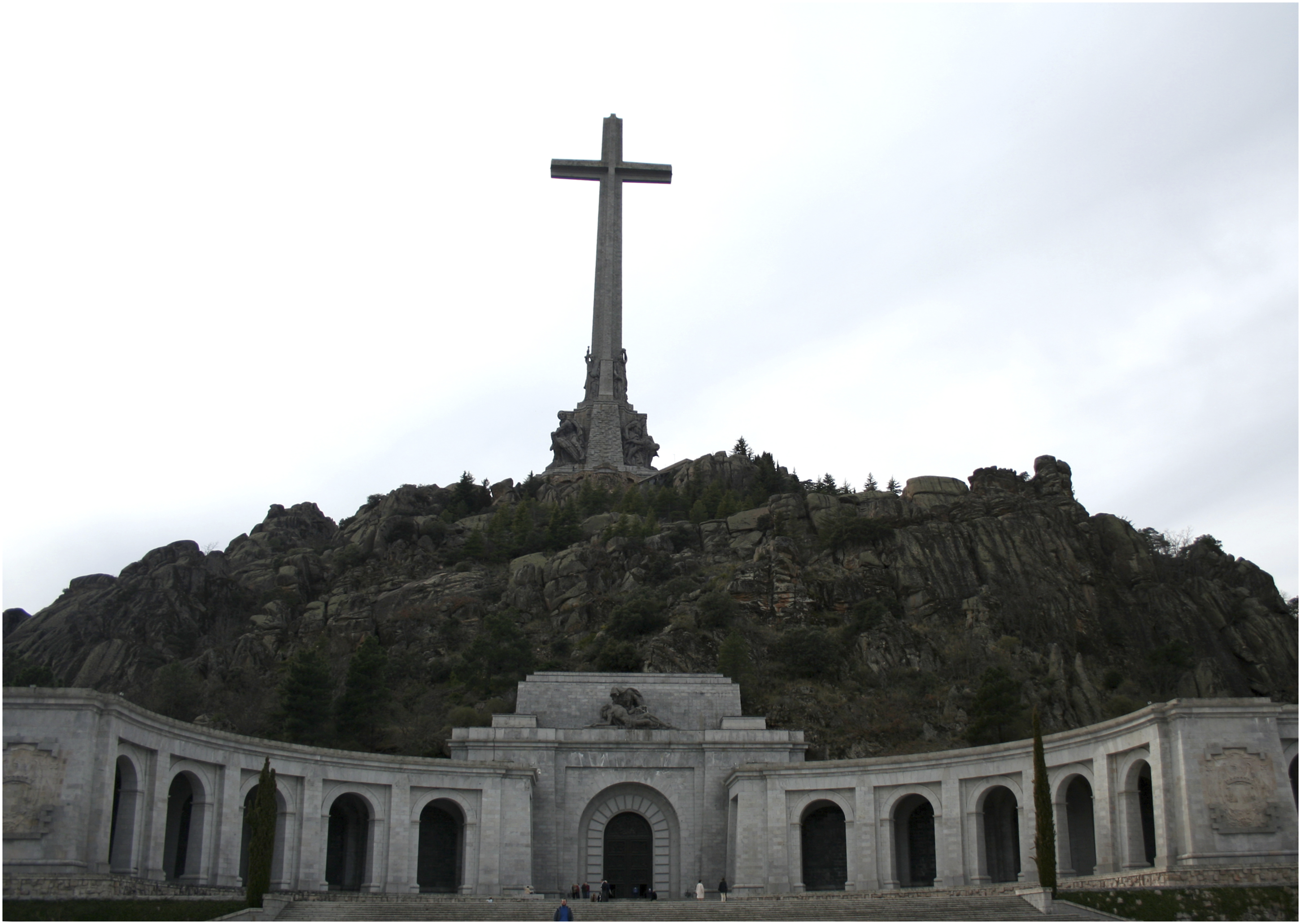
The ideology of the Francoist regime has been described as national-Catholic, as it blended a reactionary, authoritarian strand of Catholicism and ultranationalism. Nevertheless, its relationship with the fascist ideologies of the 1930s and 1940s was more than obvious. It was, in fact, made explicit by the regime itself: the dictator publicly expressed his desire to build a totalitarian regime in Spain (Andrés-Gallego, 1997: 28) and fascist ideologues, politicians, and intellectuals acknowledged the inspiration of Nazi Germany and Mussolini’s Italy (Janué i Miret, 2015), which were Franco’s allies during the war. The years between 1937 and 1943 are those in which fascism had greater sway in Spain and this was materialized in monuments and public buildings. Thus, the conceptualization of the Valley of the Fallen as a landscape of memory (Delso et al., 2018) was influenced by Nazi landscape notions (Hagen and Ostergren, 2019; van der Laarse, 2014) and the monument’s gigantic dimensions are typical of the fascist architecture of the period: a committee of Nazi leaders even visited the works in May 1942 (Olmeda, 2009: 50). At the same time, the Valley incorporated elements that are typically local, such as Renaissance references and iconography—the style of the Spanish Empire, which the regime regarded as its role model.
As with many other totalitarian monuments, the Valley was constructed with the help of forced labor provided by political prisoners. In 1942, penal battalions with Republican war prisoners were mobilized to work in the Valley and, when it was realized that they were not enough, three forced labor camps (destacamentos penales) were established in 1943 (Olmeda, 2009: 44, 54). The camps, however, marked a shift from a typically fascist paradigm of punishment to one that can be more adequately described as national-Catholic. In this new paradigm, the central concept was “redemption”: prisoners were not to be killed through labor, but to atone for their sins by being productive (Lafuente, 2002). The move was not only ideological, but also practical: Spain was bankrupt and in ruins and had an enormous prison population. By putting inmates to work, the country could be reconstructed without the state having to feed tens of thousands of people in exchange for nothing. People sentenced to long terms in jail were granted freedom after four or five years of forced labor, often in remote and difficult places, such as the Valley of the Fallen, where it was difficult to enroll free workers. Although workers volunteered to go the Valley, this kind of labor can be considered forced, as they had no real choice (either hard work for a few years or spending long terms in insalubrious prisons). Prisoners at the beginning were only political; they came from different social backgrounds and included doctors, lawyers, teachers, high-ranking military officers, university students, and manual workers and agricultural laborers—the latter two being the larger majority of the inmates. This created a sort of classless community in which new solidarities emerged—also material, as we will see.
The labor camps in the Valley operated between 1943 and 1950. Political prisoners were tasked with the hardest part of the construction work: perforating the granite outcrop to build the subterranean basilica and breaking up stones for the road. Although not many died during the construction itself (the number is, however, unknown), many of those who labored in the basilica died of lung diseases, namely silicosis, a few years after leaving the Valley, since they had to work in the dusty environment with no protection.
In the almost 20 years it took to build the monument, the global context changed; the regime evolved and so did the political factions within the regime. This had repercussions in the conceptualization of the Valley. Shortly before it was completed, the authorities decided to present it as a monument to national reconciliation. For this, they took the bodies of some 8000 Republican victims and buried them inside the basilica, in most cases without the consent of their relatives (Gallego Vila and Queralt Barjau, 2020). The discourse of reconciliation was only that: a discourse. In practice, the monument continued celebrating the Francoist victory in the war. The architecture and the iconographic program were unambiguous, and the words of Franco himself on the day of its inauguration, too.
Yet the discourse of reconciliation was manipulated by the Francoist and post-Francoist elites in the later period of the dictatorship and during the transition to democracy and was accepted by many (Ferrándiz, 2019: S71). Today this discourse is still used to thwart any attempt at transforming the monument, despite blatant evidence of its use as a focus of fascist commemoration and its divisive effects in Spanish society: it is a case of negative heritage (Meskell, 2002) whose very negativity is denied. In 2018, a new progressive government decided to undertake a radical transformation of the complex. The first move was the exhumation of General Franco, who was reburied in a family mausoleum elsewhere in Madrid. Other plans include the exhumation of some of the Republican victims, who have been reclaimed by their relatives, the displacement of José Antonio Primo de Rivera to a less prominent place within the basilica, and the resignification of the monument, through artistic and heritage interventions (Ferrándiz, 2019). It is this context in which archaeology intervenes.
Excavating the Valley
Is it possible to excavate a fascist monument that is still very much alive and in use? It is, literally. The Valley of the Fallen is in fact being excavated in two different ways: on the one hand, exhumations in the crypts of the basilica were scheduled for December 2021, but they have been planned since 2016, when a firm legal ruling authorized the disinterment of anarchist brothers Manuel and Antonio Ramiro Lapeña, executed in 1936 and transferred to the monument in 1959. The families, however, encountered a Kafkaesque labyrinth of religious, bureaucratic, political, and legal obstacles, which have prevented the exhumations from being carried out (Ferrándiz, 2019: S69). Along with the Lapeña brothers, 84 more demands for exhumation (all from Republican victims) have been filed that will be attended to. These will be carried out on humanitarian grounds: the relatives have the right to recover the bones of their beloved ones to bury them in a dignified manner. But the exhumation is also a powerful performance: a way of disassembling the monument and revealing its true nature—a necropolitical machine that violates the rights of the living and of the dead.
On the other hand, the spaces associated with work and punishment can also be investigated through archaeological methods, including excavation. It can be argued that this is not literally digging the monument, but it is, because the Valley of the Fallen, as the name implies, is not only the basilica, the cross, and the abbey, but the entire valley of Cuelgamuros, where the memorial was constructed. Although it is now perceived as natural, the landscape is in fact anything but that: it was carefully engineered and includes a panoramic road, a Way of the Cross (which combined Catholic and fascist ideas of pilgrimage), stone-paved paths, stone crosses, and an artificial forest that erased and concealed the forced labor camps. Thus, excavating them is a way of literally peeling off the surface of the monument and finding an older, hidden layer underneath. As in the case of exhumations, work in these spaces can have a powerful subversive effect on the narrative of the dictatorship and, more importantly, on the narratives that have been crafted afterward to defend the regime.
The archaeological intervention that my team and I carried out in the spring of 2021 focused on the forced labor camps and on the improvised settlements that emerged on their periphery, in which their relatives—women and children—lived. This emphasis had less to do with stressing the terrible living conditions in the Valley and more with making subaltern existences visible. Therefore, the goal was to remove the focus from the monument, which is the part of the Valley that the regime wanted us to see, and place it on the spaces used by prisoners, workers, and families, which the regime did not want to be seen.
The methodology consisted of the systematic survey and excavation of the three forced labor camps that were in operation in the valley of Cuelgamuros, which were known by the names of the companies that managed them (Molán, San Román, and Banús). Their state of preservation differed: the one established for the construction of the abbey (Molán) had been completely razed to the ground and very little remained, so no excavations were conducted there. Of the labor camp tasked with the construction of the monument, San Román, many remains survived, of both the camp and the shacks that were erected around the barracks. The problem here was that the place continued in operation until 1959 and housing was later constructed for the workers in the Valley. We excavated several structures in two different places, which provided materials from the 1940s to the 1980s. Finally, Banús, the camp in charge of the construction of the road and the viaduct, was almost completely abandoned in 1950, when the forced labor camps were shut down. The barracks and the shanties were demolished, but they left substantial remains. This was particularly the case of the huts erected by the prisoners for their relatives (Figure 2). The forced labor camp of Banús as revealed by survey. 1. Unknown; 2. Warehouse; 3. Commissary, refectory, blacksmith; 4. Kitchen, infirmary; 5. Prisoners’ barracks; 6, 9. Septic tanks; 7, 8. Free workers’/employees’ barracks.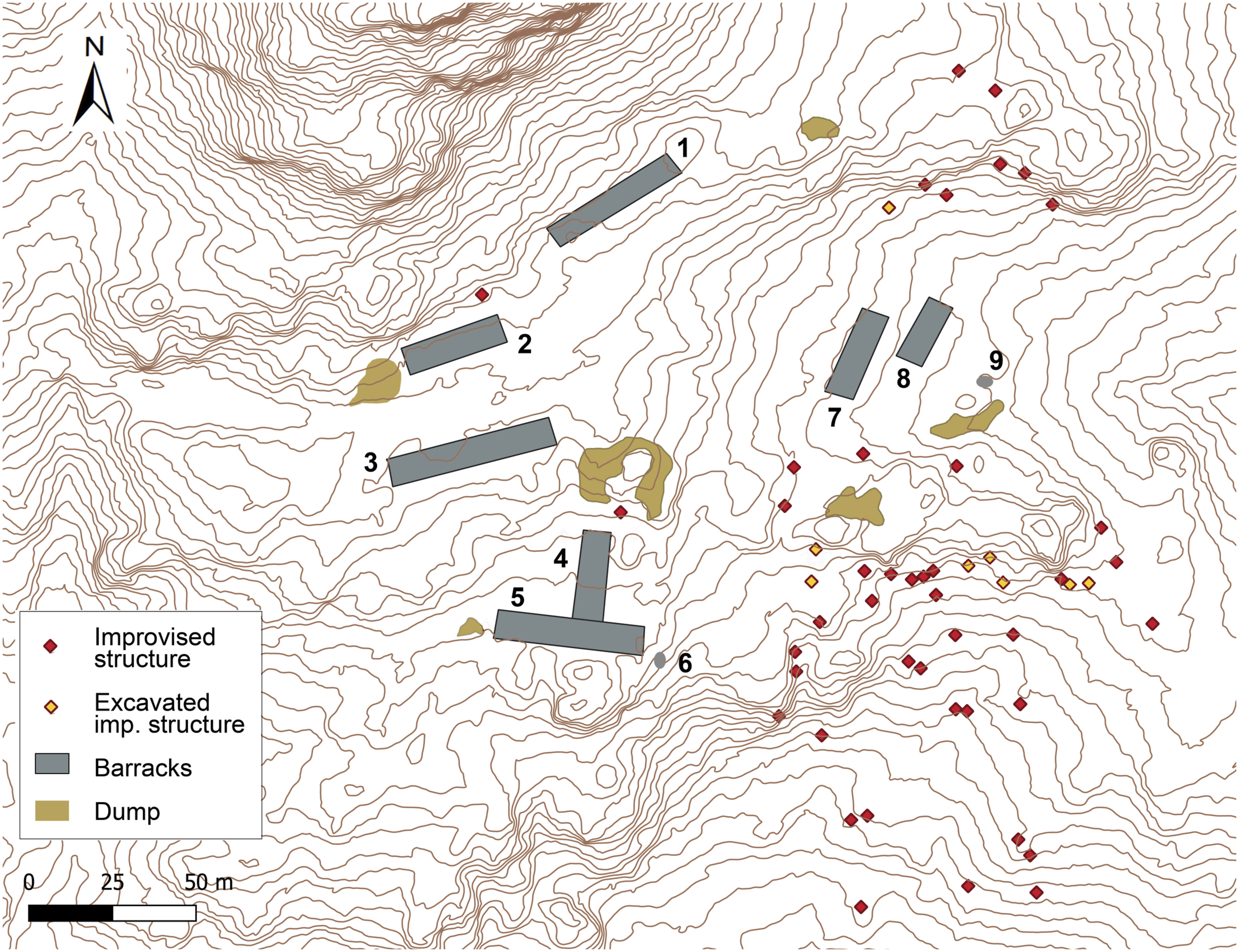
Shacks, huts, and houses
It might sound striking, but at some point the camp authorities started allowing relatives to stay in the vicinities of the prisoners’ barracks. This happened in most forced labor camps and it fulfilled different goals: first, it chimed with the regime’s paternalistic and Catholic ideals, which emphasized the relevance of families in the social system; second, it solved a social problem, as many relatives were totally dependent on the meager income that the prisoners received (a fraction of their salaries; the rest went to the state). Finally, the presence of wives and children discouraged evasions: as one of the former prisoners stated “although they were not watched over, they watched over themselves” (Sueiro, 2019: 79).
In our research, we put more emphasis on the shacks than on the barracks. There were two reasons for this. The first reason is that there is sufficient historical information on the barracks. We located the plans in the archive, there are photographs taken by visitors, they can be glimpsed in aerial images of the time, and they are often referred in the testimonies of former inmates (Olmeda, 2009; Sánchez-Albornoz, 2012; Sueiro, 2019; Tuero, 2015): thus, we know how internal space was organized, how cold it was inside in the winter, how personal possessions were kept, and how the bunks were in which the prisoners slept. However, the barracks were prefabricated and were easily disassembled after the camps were closed, thus leaving very scant material traces (only the concrete foundations).
The huts erected by prisoners are the reverse of the barracks: there is virtually no data about them; they do not appear in the archival documentation, they cannot be seen on photographs or maps, and testimonies are extremely scarce. As far as we know, only two shanties were ever photographed (in 1947). Although archival and photographic documentation is almost non-existent, archaeological remains are abundant, since the improvised huts were made of stone (at least the more permanent ones; see below). Exploring the improvised settlements, thus, is like working in a prehistoric site: we depend almost exclusively on the archaeological record to tell the story—similarly to what happens with the Cold War, albeit for different reasons (Schofield, 2005: 39–40). The second reason for delving into the improvised settlements is that if the huts were forgotten and hidden, so were the people who lived in them—women and children. They are the forgotten among the forgotten. Virtually all oral testimonies that have been published come from adult men (prisoners or free workers) who refer to their world (of work and barracks). By looking at the huts we wanted to explore those lives that had been erased from history—those of women and children—and revalue their role as genuine historical actors.
The magnitude of the remains surpassed our expectations—to start with, the sheer size of the unofficial settlements. Although they are invisible to all effects, they occupied more terrain than the official area of the forced labor camps. Thus, in San Román, the barracks and other planned structures (including a church) covered 1.8 ha, whereas the shacks and other makeshift elements extended for 2.4 ha. The difference is even greater in Banús, where the barracks occupy 0.5 ha and the improvised settlements 1.65. 1 This leaves us with 4.05 ha of unofficial constructions versus 2.3 of planned features, meaning that 64% of the space that was actually built up and used during the 1940s can only be studied archaeologically. Invisibility happened in different ways: to start with, the settlements were often located in areas out of view from the camp. This was particularly obvious in Banús, where the majority of the huts extended along a slope that was separated from the barracks and the road by a rocky outcrop. In all forced labor camps that we have studied (Falquina Aparicio et al., 2008), huts were erected in quarries, which means that there were orders from above indicating the zones where settlements could be established: this is why it is better to call them improvised or unofficial rather than spontaneous. These orders were never written down, as far as we know (more on this below).
Our expectations were low when we started the project, because we knew that the shacks had been demolished in the 1950s and 1960s (Bárcena Pérez, 2013: 563). However, except in Molán, the demolition actually helped preserve them. In Banús alone, we documented 52 makeshift structures, the large majority forming an agglomeration in the southeast of the site. We were able to identify different types of constructions. Using the vocabulary employed by the prisoners and the camp authorities, we distinguished chabolas (shacks, shanties, or lean-tos), casitas (small houses), and casas (houses). There is some overlap between them and the distinctions are not always clear-cut. Based on archaeological, documentary, and witness evidence, it seems that the first improvised structures were shanties, which were followed by casitas perhaps as late as 1947 (although both coexisted); casas as such do not seem to appear before 1950.
We identified as chabolas tiny (2–4 m2), ephemeral huts made with perishable and reused materials and few or no stones. They were usually occupied for relatively short periods of time and, as soon as it was possible, they were replaced by casitas. Because of their flimsy materiality, chabolas are difficult to locate in the archaeological record. It is very likely that we only documented a fraction of those actually existing. Thus, in San Román, of 29 makeshift structures that we documented, only 12 are chabolas. They can be identified at times as dugouts or by concrete adherences to rocky outcrops, indicating the former location of a lean-to. We excavated four of these shacks. Two yielded no meaningful remains (one in San Román, another in Banús). A third one in San Román was transformed into a more durable structure with a stone wall, but was later demolished and filled up with garbage from the 1960s to 1980s. The most interesting shack was excavated in San Román, too: it was a tiny space of just 2 m2 amid two boulders, which had been covered with a roof made with branches and some salvaged tiles. The floor was not of packed earth, as in the other examples, but of low quality, sandy cement (Figure 3). A typical shack (chabola) after excavation in San Román: a crevice between two rocks.
Casitas, small houses, are actually shanties with low stone walls, plastered with a sandy mortar and usually attached to a boulder or rocky outcrop. The roofs, which were low (some 1.5 m), were made of branches, sometimes pieces of salvaged metal sheet or fibrolite. Their layout and size are very similar: they are square in plan, with a door and no windows, and never have more than 9 m2 of usable space (Figure 4). Five out of nine excavated huts have between 7.5 and 9 m2 of floor space and the remaining four between 4 and 5 m2. This tiny space was divided into two zones, but with no material separation: one for sleeping and another for cooking and eating. The space for the bed can be made out because the floor was not paved. No toilets existed, neither individual nor collective. People had to solve their needs behind the rocky outcrops and pine trees outside the built area. During survey and excavation we found remains of metal and ceramic chamber pots. The huts had a hearth that was used for heating and cooking. Temperatures in the Madrid sierra during the winter are harsh, often dropping below −10°C, and snow was common. Only one testimony has been published that describes these casitas in some detail: We were allowed to build a small house [casita] there, tiny, bedroom and kitchen, and we all slept there, in a small room that had three by three [meters]. At least, it was not a shack [chabola], as the first one we had, which was made of branches, some brushes [ramajos] on top to drain the water. (Testimony of Mariano Romero Sánchez, published by Sueiro [2019: 101]) Two of the shacks excavated at the forced labor camp of Banús.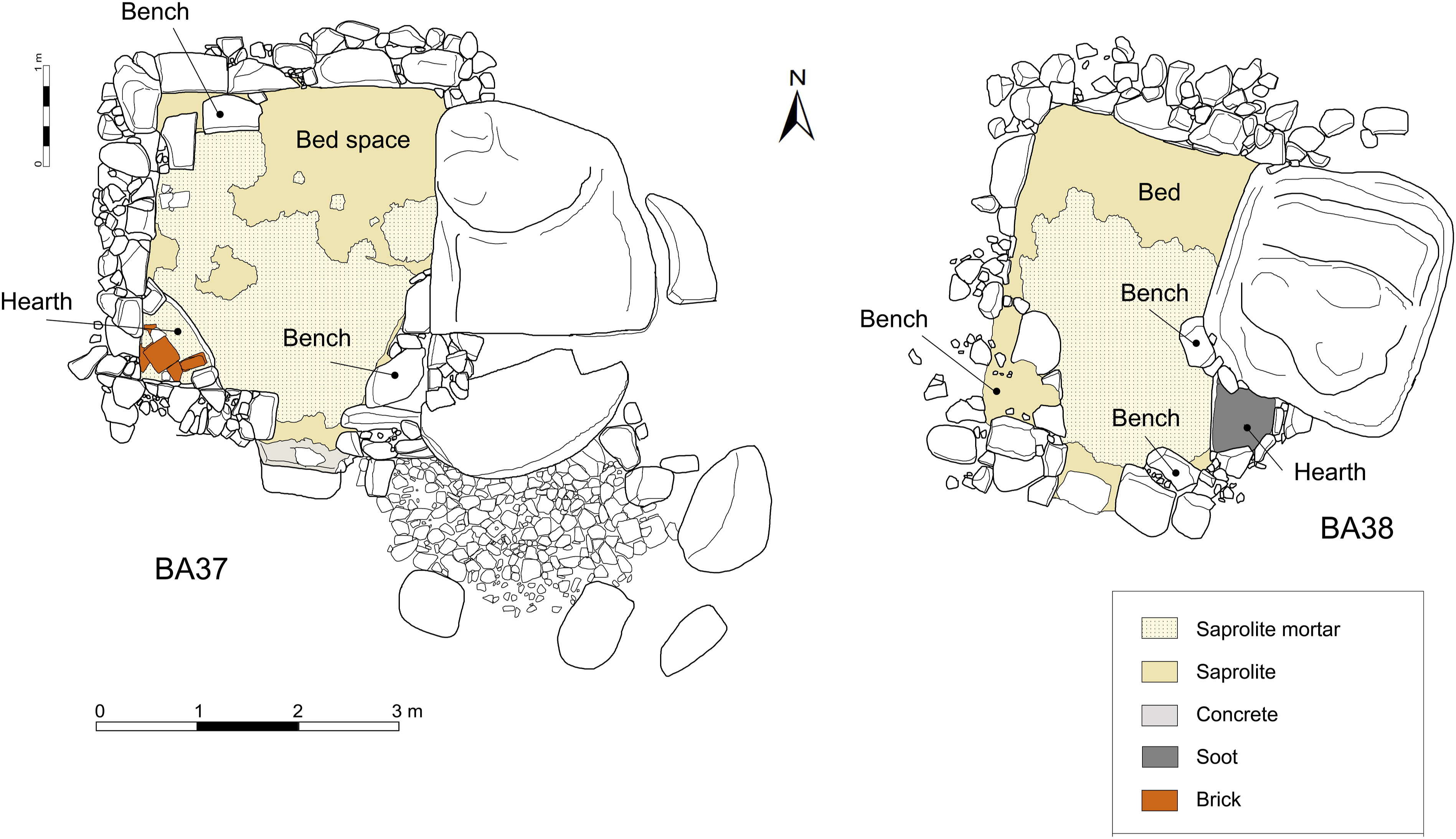
The miniscule size of the huts alone already belies the benevolent account of the Valley recently spread by some defenders of the dictatorship. They argue that people living in shanties in Madrid were much worse off (Bárcena Pérez, 2013) than those working to build the monument.
However, the archaeological record proves the opposite: the chabolas that proliferated in the capital at the time, while small, were roomier, 20 m2 being a common size, and had better materials and a diversity of sizes and shapes, evincing more freedom of choice. The minuscule size and standardization observed in the Valley, instead, has been documented in other labor camps in the Madrid region during the 1940s, which means that, as in the case of the location of the settlements, strict orders, which have not survived (or were never written down), were issued regarding the dimensions and shape of the huts (Falquina Aparicio et al., 2008: 189–192; González-Ruibal, 2020: 300–306). Here, the patterning of the archaeological record is the only way of approaching these missing orders.
Finally, casas appear in the documentation and they seem to have been erected mostly in the 1950s by free workers and employees, based on the existing archival documents (Bárcena Pérez, 2013: 556 ff.). However, Bárcena confuses the houses of free workers with the earlier shacks that the prisoners were building for their families and reaches the false conclusion that “the houses to which they [the prisoners] applied for themselves and their families provided living conditions that thousands of free Spaniards could not afford.” Yet the applications that he presents as evidence were all dated in the 1950s, when no political prisoners remained in the Valley (only former prisoners). Archaeology even casts doubt on the quality of those houses made by free workers. Plans of these houses only exist for those built by the authorities, not by the workers themselves, and it is archaeology, again, that allows us to have the whole picture. On the one hand, it is quite likely that some of the applications for houses actually resulted in free workers building shacks of the kind we call casitas.
On the other hand, we excavated a proper house or casa: the home of an employee and his family that was in use throughout the 1950s. It was larger and better made than the shacks, but it was still small and miserable: the floor space was 12 m2 (the minimum legal size for an apartment in Madrid is currently 25 m2) and there were only two rooms: a kitchen and a bedroom, in this case, however, separated by a partition wall. The house did have windows, a concrete floor, and electricity, but no running water or toilet. Materials associated with the building indicated that the owner was a member of the security forces who lived there with his wife and at least two children, including at some point a one-year-old girl. The structure and the associated dumps provided a meaningful counterpoint to the shacks where the prisoners’ families lived during the previous decade.
The making of a subaltern community
The rich archaeological record provided by the structures and dumps allows us to reconstruct everyday life in the Valley of the Fallen during its construction. The remains talk eloquently of the people who lived in the improvised settlement. Whereas the space of the barracks was a male-dominated world (prisoners, workers, guards, and foremen), the space of the shacks was overwhelmingly a female world. Density of finds varies from one shack to the other (and the associated dumps), but artifacts associated with women are very common in all of them. Their presence is attested in several ways: the soles of women’s shoes, a coin purse, and the material culture related to gendered activities, mainly cooking. Objects unambiguously associated with men (shoes, soles, and mason’s tools) are much less common. The role of women in maintenance activities should not be underestimated (Montón-Subías and Romero, 2008): they prepared food, washed clothes, cleaned the house, looked for firewood, and looked after the children. Many children, in fact, lived in the Valley, often for years. Their presence is again attested through the soles, at times so small that they could only have fit toddlers. Other elements associated with children include a can of talcum powder for babies, treatments against malnutrition, writing equipment (there was a school in the Valley run by a political prisoner), and toys. Toys are very scarce (only two items recorded for the 1940s) and only appear in some numbers from the 1950s onwards, in association with the houses of free workers and employees.
The materials that can be dated to the 1940s are eloquent about the dire conditions in Spain at the time, which were aggravated in the Valley of the Fallen. Post-war poverty, exacerbated by the Second World War and the autarkic policies of the Franco regime, which aspired to a completely self-sufficient Spain, sank the economy and cut the country from international trading networks, while unwittingly fostering the recovery of traditional crafts. This is very clear in the material record of the Valley: 99% of the artifacts that we have documented for the 1940s were produced locally, including foodstuffs, wares, medicines, and tools. The only exceptions are two medicine flasks of Eparema (a remedy for constipation) imported from Brazil, at the time an ally of Francoist Spain.
As for the recovery of local crafts, traditional pottery was still very much alive in Spain in the 1930s, but the post-war crisis seems to have been a boost for this declining industry. Thus, a minimum number of 41 vernacular, wheel-turned vessels (cooking pots, storage jars, and jugs) were recovered in Banús alone versus 35 industrial items (mainly dishes), dated to the 1940s (Figure 5). In the employee’s house of San Román and associated dumps, dated, as mentioned above, to the 1950s, we located instead 35 items of industrial ware (dishes, saucers, coffee and tea cups) versus only eight traditional pots. Industrial wares were all produced in Spanish factories, so the difference has not to do with the more or less autarkic economy of these decades, but with purchasing power (greater for the employee than for the prisoners and in the 1950s than in the 1940s). Ceramic cooking vessels were cheaper than industrial, enameled metal wares, so the prisoners’ relatives were using both ceramic pots and reused cans to prepare meals. The ceramic repertoire of the shacks, in fact, is reminiscent of Spanish villages of the 19th century, rather than of urban contexts of the mid-20th. The scarcity of whiteware meant that prisoners and their families had fewer opportunities of reproducing the genteel life that was already characteristic of Spanish homes in the first third of the 20th century. It is important to bear in mind that some of them, as noted above, came from the urban middle classes, so renouncing bourgeois habits made life necessarily harder for them. Pottery from one of the huts (BA01) and one of the refuse areas (Dump 7) of the forced labor camp of Banús. Traditional wheel-turned wares (in earthy colors) dominate the assemblage.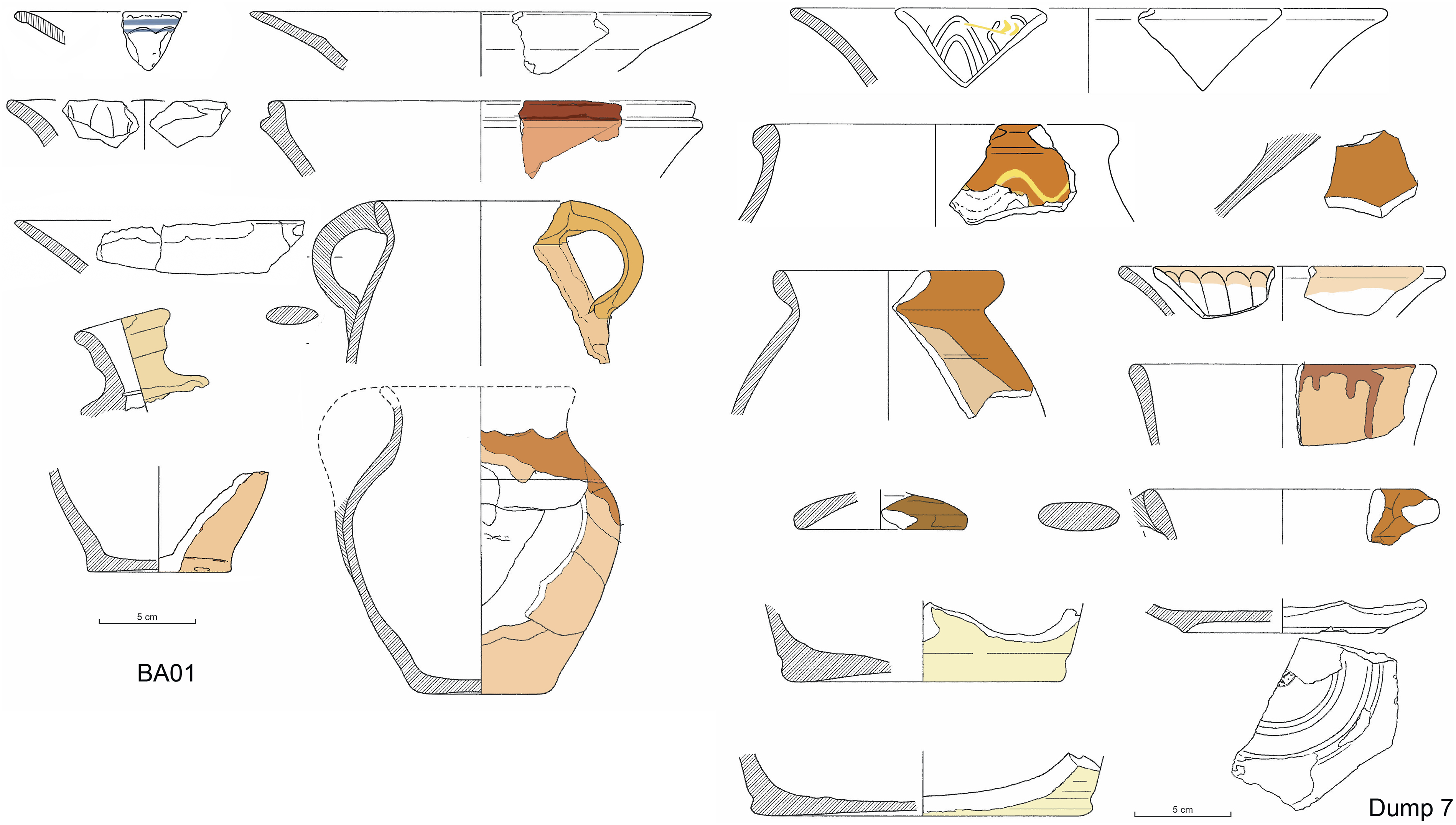
Lack of access to consumer goods also explains the systematic reuse of things. As Reilly (2016: 337) has noted, “archaeology can reveal the material manifestations of poverty as well as innovation and ingenuity seen through material reuse.” In the Valley, tin cans were transformed into virtually everything: we have documented braziers, strainers, skimmers, lamps, toys, and saucepans made out of cans (Figure 6). Tires, in turn, were systematically turned into soles, which were used by the inmates and workers. Relatives, instead, used commercial shoes, which is indicative that the best footwear was reserved for women and children. In addition, reused artifacts were mended repeatedly. Some of the soles, for instance, show repairs made with rubber cuts and nails. The metal sheet that covered the prefabricated barracks was also salvaged and employed for reinforcing roofs. A sample of objects made out of scrap by prisoners or relatives in the Valley of the Fallen: 1. Bird and rabbit traps; 2. Brazier; 3. Saucepan; 4. Skimmer; 5. Tire sole.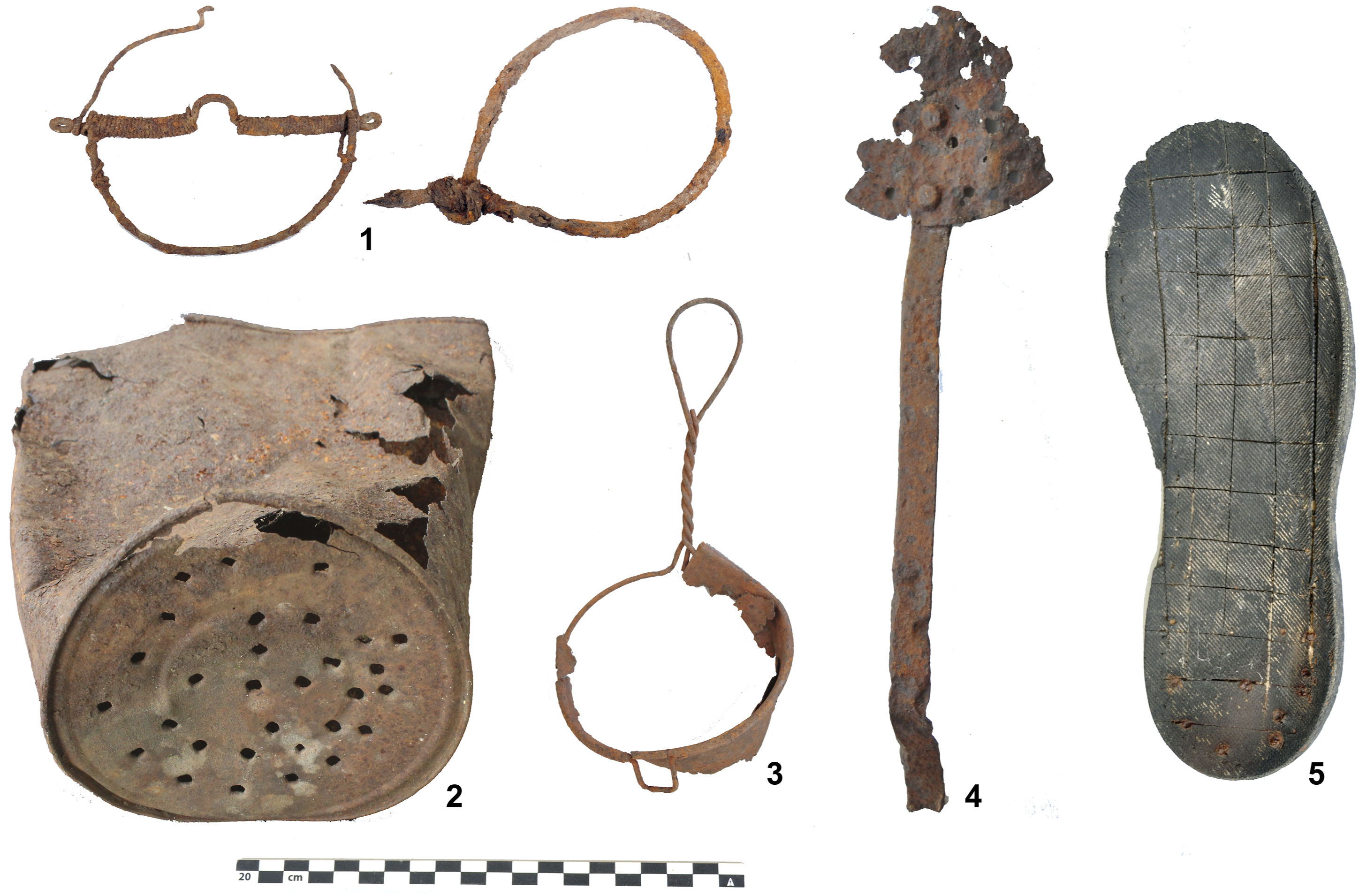
Recycling and makeshift artifacts were associated, as is often the case, with low class, rusticity, and destitution (Reilly, 2016). Like the shacks themselves, they were part of the materiality of poverty that stigmatized the prisoners and their families. Indeed, they helped reinforce stereotypes of the vanquished Republicans as “primitives.” This is explicitly stated by the architect of the monument, Diego Méndez, in an interview: “It is not that they had a conscience of being criminals … It is that they were so primitive, so primitive, that they did things as any bug [bicho, pejorative] could do it, without any consequence whatsoever of what they were doing … Consequence of the war and their low intellectual state, of course …” (Sueiro, 2019: 127). Jason de León (2013) has powerfully demonstrated that use wear can be more than just a way of knowing how people use objects: it can also allow us to understand the bodily experience of things, including pain. Thus, the rigid tire soles, which were slashed so as to soften them, are a materialization of physical suffering: of feet always bruised and uncomfortable, frozen in the winter, burnt in the summer. Their intense wear and their abundance (they had to be discarded often) bear testimony to the hard experience of living, walking, and working amid the granite outcrops and the quarries of the Valley. For those who had never used the tire soles before, it was an added punishment, a humiliation, a reminder of their social downgrading.
Unlike in prisons and concentration camps, inmates did not starve in the Valley, but the food that they received was insufficient, of poor quality, and scarcely varied: the diet was based on grass peas, legumes, flour, and rice, with no fresh vegetables or meat other than lard (Olmeda, 2009: 69, 89; Sueiro, 2019). Former prisoner José Américo Tuero (2015: 134) remembers with horror “those days in which temperature descended below −20°C, without heating of any kind inside the barracks, with awful food and clothing.” We know from testimonies that part of the food supplies for the Valley was often smuggled out of the site and never reached the prisoners (Sánchez-Albornoz, 2012). There were also bouts of famine, during which free workers abandoned Cuelgamuros. In the archaeological record, food scarcity is seen in the virtual absence of faunal remains. This contrasts with the dump in the employee’s house, where bones of cattle, sheep/goat, pork, and domestic rabbit and seals of cold meat were found. Out of 74 animal bones found in the Valley, 65 appeared in the employee’s dump.
The prisoners and their families could complete their meager diet in three ways: cultivating orchards, of which we found the stone enclosures in Banús, purchasing tin cans in the camps’ commissary, and hunting. Hunting has been documented in the form of traps for rabbits and birds, which appeared on the floor of a hut, along with wire and other materials used to prepare them. A rabbit bone was also found in one of the structures. Inmates invested the fraction of the salary that they actually received (the rest went to the state) in purchasing alcoholic drinks, tobacco, and tin cans in the camps’ commissaries. But few tin cans have been actually found (mostly of sardines and tuna) and not many bottles, either. A total of 49 tin cans was found in both the seven casitas that we excavated in Banús and the associated dumps. We have to bear in mind that many had been modified to make artifacts out of them, so they cannot be immediately interpreted as evidence of food consumption. As a matter of fact, the largest number of tin cans comes from a big dump associated with the kitchen of Banús. The prisoners and their relatives could mine the dump for cans to recycle and this is what they were surely doing, insofar as the most common cans found in association with shacks are large containers identical to those used in the barracks’ kitchen. In general, people, while not starving, were malnourished. Lack of sufficient and adequate food affected the children most: flasks of dietary supplements, popular in the post-war period, such as Ceregumil and Glefina, that were specifically administered to them, have been found in Banús. The presence of medicines for constipation and digestive problems (like the aforementioned Eparema) also relates to inadequate food supplies.
The casitas also talk about the efforts made by their owners to turn those tiny spaces into homes. As noted above, they are standardized in shape and size and from the outside they surely looked all the same, with their rough rubble walls and low, thatched roofs. Yet inside each family tried to make their home unique: they arranged the only available space in different ways, put in stone benches, erected chimneys, added stone-paved courtyards, and placed the sleeping area in different zones in each case. We have to bear in mind that these huts were the first real home that these families had had in a decade or more: men were separated from their families in 1936 to go to war, then they were interned in concentration camps and then prisons: when they arrived in the Valley some had not seen their families in seven years or more. These were thus the first spaces of privacy for traumatized people, where men and women had intimate relations, children spent time with their parents, families told stories and shared news, babies were born. It is worth noting that the most elaborate and distinctive element in all shacks, even the smallest, is the hearth. The word for hearth in Spanish (hogar) is the same as for home. It is not surprising that they were investing so much in the hogar. It was, in fact, the heart of the home: around it, family members gathered for dinner, to chat or spend time together. Around these hearths we found stone benches, and there were also stools made from crates and other makeshift furniture (Sueiro, 2019: 50). Ordinary family life—or a surrogate of it—was, again and after a very long time, reproduced.
A close look at the huts reveals something else: the inexperience of the people who built them. They were half dug, both to preserve the temperature inside and to reinforce the shaky walls. These were clumsily made: in most cases they were rubble walls, with stones piled one on top of the other with little skill. Significantly, there were no proper corners, the most difficult part of a stone house to build, but just walls that leant on each other at each angle. Only a fraction of the thousands of prisoners had any professional experience as masons, carpenters, or bricklayers. This partly explains why the labor camps were dissolved in 1950: once the infrastructure of the monument was built, the work of professional stonemasons was required for the facades and sculptural work.
At the same time, the strong similarities between the different huts mean that people were helping each other and learning from each other. The structures are a materialization of the networks of solidarity that emerged in the Valley, which often crisscrossed class—as mentioned above, prisoners came from very different backgrounds and there are testimonies of mutual help across social and political groups (e.g., Tuero, 2015: 134–135). Engaging in similar building activities, artifact-making, recycling, and mending fostered specific forms of cooperation between inmates and relatives. A subaltern community of practice emerged that offered opportunities for sharing knowledge and information (Wenger, 1998). The result was a characteristic material world that is not too different from other archaeological assemblages. This material world included particular landscapes, architectures, objects, and ways of making, using, exchanging, and discarding things. The shared fate of the prisoners and relatives created a sense of identity, but this was surely reinforced by the material world that they created together: a subaltern assemblage.
Discussion: Subaltern assemblages, minor architectures
Our work in the Valley of the Fallen has documented a material world that was hitherto unknown. In a sense, it has been like discovering a prehistoric archaeological assemblage. Assemblages in archaeology are today seen as made up of humans and non-humans, tangible and intangible elements: people, things, plants, animals, ideas, institutions, and biogeochemical process (Witmore, 2014). Yannis Hamilakis (2017) has argued that there are three features that are usually disregarded in discussions of archaeological assemblages: the affective/sensorial, the mnemonic/temporal, and the political. These three dimensions are crucial to understand the two material worlds—the monumental and the subaltern—that emerged and were opposed in the Valley of the Fallen, the friction between them, and their effects in the present.
The entire architecture of the Valley was devised to cause a lasting affective impression by combining natural and artificial elements: it intends to excite the senses and subdue the visitor—the vision of the colossal structure and the dramatic outcrops, the silence of the forest, the echo in front of the basilica, and the smell of pine trees. It is an excellent example of the architectural sublime, which awes and inspires terror at the same time (Burke, 1958), and of the carefully planned fascist spectacles (Falasca-Zamponi, 1997). Regarding the temporal/mnemonic dimension, the monument assembles together multiple temporalities: the geological time of the rocks and the mountains, which figure prominently in the theorization of the Valley by fascist ideologues and architects; the contemporary time of the dictatorship, as materialized in modern engineering methods and the totalitarian scale of the monument; and the period of the Spanish Empire with which the regime intended to link. This was done in a variety of ways: by building the monument next to King Philipp II’s magnum opus, El Escorial—the Valley is, still today, part of an “Imperial Route” (Delso et al., 2018: 131; Solé Barjau, 2017); by incorporating architectural and iconographic elements of the period; and by including actual objects from the 16th and 17th centuries, such as the enormous tapestries that cover the walls of the basilica. The sensorial and the mnemonic, in turn, were manipulated with political aims: to create an aggrandizing, imperial narrative of the regime. This is the assemblage that has always been visible since the inauguration of the site in 1959.
With our archaeological work, we have shown that the picture was incomplete, that there were other elements and actors that made up the Valley of the Fallen and that had been whisked away. These included barracks and disinfection chambers, kitchens and quarries, shacks, shanties and dismal houses, orchards, infirmaries, commissaries, traps, and paths. Not that they were completely unknown, but they were hidden from view and all but forgotten. We completed the picture and by completing it turned the Valley into another place.
Although the improvised settlements and the forced labor camps were part of the assemblage that was (is) the Valley of the Fallen, they also gave rise to their own material world. And this subaltern assemblage produced (produces) its own affects, memories, and political dispositions. The shacks encouraged love and intimacy, the improvised settlements a solidarity that transgressed class and party politics and that was largely sustained by women. The time of the shanties was not that of Imperial Spain, but the deep time of the vernacular, of peasant tradition—the stone walls, the wheel-turned pottery, and the makeshift objects. Not of kings and conquerors, but peasants and workers. A time of resistance.
We can also look at the improvised settlements through the prism of what Jill Stoner (2018 [2012]) has called “minor architecture.” She sees minor architectures as those which “subvert the myths of major architecture” (Stoner, 2018: 22): they are ephemeral, based on improvisation, often thriving amid the detritus of other constructions (like the quarries of the Valley of the Fallen) or within the already-built, and express a latent and powerful desire to unmake the structures of power (Stoner, 2018: 28). As such, they represent a challenge to authority and a political action that “silence heroic aspirations in favor of a collective and inclusive voice” (Stoner, 2018: 38). They disrupt authoritarian architectures not only because they defy their formal rules, but also because they are a material mode of escape, an appropriation of the prison cell (Stoner, 2018: 60). Stoner (2018: 84–86) opposes the work of the camp barrack to the work of minor architectures: the first reifies, excludes, and homogenizes; the other rehumanizes, includes, and encourages diversity. The shacks and huts of the Valley, the chabolas and casitas, are at the same time minor architecture, antimonument, and countermemory.
The friction between the monumental assemblage and the subaltern one creates today its own affects: anger and sadness and incomprehension. It brings up memories: the memories of Martín Sancho, a child who lived there in 1947 and who visited us during our dig, looking for the toys that he buried somewhere under an old tree; the memories of Pilar Barros, whose sister was born in one of those shacks; those of a member of a TV crew whose grandfather had been interned in a forced labor camp; our own personal remembrances and those of everybody who knew about our excavations through the media. Hamilakis (2017: 175) argues that an assemblage is a “deliberate act of bringing together.” The dictatorial regime deliberately brought together the Spanish Empire, geology, and fascist architecture in the Valley of the Fallen. We deliberately brought them together with huts, tin cans, and medicines for malnutrition. The subaltern assemblage subverts the sublime assemblage of fascism. Now the colossal monument has to compete with humble chabolas; the imperial tapestries with soles made of recycled tire.
Have we achieved our goals? Partly. For a while, this new assemblage circulated widely. National Heritage, the owner of the place, did not allow us to disseminate our work through social media or organize open days and guided visits, as we had planned: they were scared of both controversy and potential litigation by far right groups and they wanted us to keep a low profile. However, media were allowed on two specific days, which we used to make our work public. After 20 years of archaeology of civil war, many Spanish journalists are good at telling stories out of the archaeological remains of conflict and dictatorship. This, along with our postings on social media after the dig, put new, powerful images and words in circulation.
This provoked a crisis of representation in the visual economy of the monument serious enough for extreme right associations and lawyers to threaten us with legal action and to expose their anxieties in social media through failed attempts at counteracting the new imagery that we were producing. For the new assemblage to effectively and lastingly subvert the visual economy of the dictatorship, it has to remain—physically and virtually—and be continuously activated. This no longer depends on us alone, but on institutions, the government, and social will. Yet kick-starting a process that puts into crisis an authoritarian visual economy and memory regime is no mean feat for archaeology. And perhaps archaeologists should not be aspiring to more.
Conclusions
The Valley of the Fallen, a memorial built after the Spanish Civil War (1936–1939) using political prisoners, is the main fascist monument still fully active in Western Europe. Virtually untouched since the death of its creator, General Francisco Franco, it still attracts thousands of fascist and extreme right visitors from Spain and the world. In a time of rising reactionary populism, the dangers of allowing the monument to fulfill its totalitarian dreams are all too obvious. Several initiatives are now under way to reshape it: I have shown here how archaeology is playing an important role in the process. Our surveys and excavations have exposed what I have termed a “subaltern assemblage,” composed of the artifacts and huts—a “minor architecture”—made and used by the political prisoners who labored in the Valley and their families, who were allowed to settle near the barracks. The archaeological remains tell us of the women and children who shared the fate of the prisoners and contributed to their psychological and physical well-being. They tell us of the material and social reconstruction of a sense of home—in very difficult conditions—after the long, traumatic experience of war and repression. They unmake, with their unquestionable material presence, the myths created by the apologists of the dictatorship, past and present, and remind us of poverty, hunger, and disease. This subaltern assemblage, which survived buried underground, now offers a powerful counterpoint to the monumental assemblage, the only one visible and public so far. The friction between these two material worlds—the monument and the antimonument, the major and the minor architecture—is provoking a crisis in the visual economy of fascism and exposing its inconsistencies, including the alleged role of the memorial in bringing reconciliation to Spain. Archaeology, by exposing the subaltern assemblage, elicits new affects, memories, and politics and changes the focus: from the sublime and heroic to the humble and ordinary; from the exaltation of death to the celebration of life and resistance.
Footnotes
Acknowledgments
Research presented in this paper was funded by the Secretary’s Office for Democratic Memory, Ministry of the Presidency (Project 205-MD-2020). Paco Ferrándiz provided crucial support during the difficult process of opening up the Valley of the Fallen to archaeological research. Nicolás Sánchez Albornoz, Pilar Barros, and Martín Sancho shared personal and family memories that were key to understanding different aspects of life in Cuelgamuros in the 1940s. Research was carried out by Xurxo Ayán Vila, Andrea Espada Ballesteros, Álvaro Falquina Aparicio, Manuel Antonio Franco Fernández, Pablo Gutiérrez de León Juberías, Cristina Incio del Río, Márcia Lika Hattori, Carlos Marín Suárez, Javier Marquerie Bueno, Álvaro Minguito Aparicio, Candela Martínez Barrio, María Delgado Muñoz, Marta Gómez Hernández, Marta Hernández Giménez, Íñigo Varela Lobato, Adrián Mejías, and Antonio Rodríguez Hidalgo. Great thanks to our historian, Luis Antonio Ruiz Casero, who clarified vital issues regarding forced labor in the Valley. Two anonymous referees provided valuable comments that improved the article. Any errors remain my own.
Declaration of conflicting interests
The author(s) declared no potential conflicts of interest with respect to the research, authorship, and/or publication of this article.
Funding
The author(s) disclosed receipt of the following financial support for the research, authorship, and/or publication of this article: This work was supported by the Secretaría de Estado de Memoria Democrática, Ministerio de Presidencia, España grant number 205-MD-2020.