







Abstract
Combining nudge theory with learning analytics, ‘nudge analytics’, is a relatively recent phenomenon in the educational context. Used, for example, to address such issues as concerns with student (dis)engagement, nudging students to take certain action or to change a behaviour towards active learning, can make a difference. However, knowing who to nudge, how to nudge or when to nudge can be a challenge. Providing students with strategic, sensitive nudges that help to move them forward is almost an art form. It requires not only technical skills to use appropriate software and interpret data, but careful consideration of what to say and how to say it. In this article a nudge protocol is presented that can be used in online courses to encourage student engagement with key course resources that are integral to supporting their learning.
Student engagement
Across diverse educational settings, student engagement has long been viewed as a factor that is linked to positive outcomes, including academic achievement, student learning, student satisfaction, persistence, student health and wellbeing, retention, graduation rates, classroom motivation and institutional success (Bodily et al., 2017; Flynn, 2014; Kuh et al., 2008; Lee, 2014). At the same time, lack of engagement, or non-engagement, has been identified as a contributor to lower completion rates in online learning courses (Department of Education and Training, 2017; Kizilcec et al., 2013). Although engagement is important to any learning experience, it is particularly relevant to online learning because online students have fewer ways to be engaged with the institution and may also have greater demands on their time and attention (Meyer, 2014). In terms of the study behaviours expected and required to achieve academic success, online learning environments can place more demands on learners than traditional contexts (Lawrence et al., 2019).
Despite a growing body of research that has addressed the question of how to design courses in a manner that increases students’ engagement (e.g. Chakraborty and Muyia Nafukho, 2014; Czerkawski and Lyman, 2016), the potential of digitally delivered higher education is often still not being realised and many online courses continue to underperform in terms of expected student engagement and learning outcomes (Burton et al., 2015; Wanner, 2014). Too often students report feeling overwhelmed by their online learning experience and the need to rely on themselves. Such students typically express a desire for more structure, guidance and feedback from the instructor. They also desire packaged material to step them through the learning requirements and are generally unable to self-direct their learning (Burton et al., 2015). With the move to online learning, student engagement with online learning technologies and interfaces has become even more important. Knowing what promotes engagement in the online learning context is key to making online learning productive for students as they pursue their qualification.
Student engagement is complex and multifaceted (Kahu, 2013), which limits the ability to fully describe its impact (Blumenstein et al., 2019). While frameworks and protocols cannot capture the full complexity of student engagement and the factors affecting it, they are useful for designing interventions that are intended to impact on and modify students’ learning and engagement behaviours (West et al, 2015). Activity in the learning management system (LMS) has been used in studies as a proxy for student engagement (e.g. Beer et al., 2010; Blumenstein et al., 2019; Chaka and Nkhobo, 2019; Fritz, 2013; Henrie et al., 2018; Macfadyen and Dawson, 2010), as activity in the LMS has been found to contribute to better outcomes as measured by final grade (Fritz, 2013; Macfadyen and Dawson, 2010).
Research has highlighted the crucial nature of early engagement in supporting the probability of student success and retention. Students may not connect their choice made (disengagement) with the impact on lived experiences (Blumenstein et al., 2019), which in this case could have a potential negative impact on academic performance later during their course of study. Nudges that utilise deadlines, goal setting or reminder interventions alter the decision-making environment by imposing use of already available tools and, as a result, may help to change student behaviour through better active or passive decision-making.
Nudge theory
An approach for addressing and encouraging student engagement involves the use of ‘nudge analytics’, combining learning analytics with nudge theory (Blumenstein et al., 2019; Brown et al., 2020; Damgaard and Nielsen, 2020; Feild, 2015; Lawrence et al., 2019). Nudge theory was popularised by Thaler and Sunstein (2008) who, recognising that people do not always act in ways that serve their own best interests, suggested that in many instances individual decision-making could be improved by using simple ‘nudges’. Intersecting the key ideas of ‘choice architecture’ and ‘nudges’ in the context of behavioural economics, nudge policies are aimed at ‘alter[ing] people’s behaviours in a predictable way without forbidding any options or significantly changing their economic incentives’ (Thaler and Sunstein, 2008: 6). They are also actions which occur ‘in ways that are most likely to help and least likely to inflict harm’ (Thaler and Sunstein, 2008: 79). The power of nudges lies in their potential to modify human behaviour without coercion: by appealing to individual psychology, effective nudges increase the likelihood of people making choices that reflect their underlying interests, while still respecting their freedom to choose (Selinger and Whyte, 2011). These issues can also raise questions about a loss of independent learning based on assumptions underlying the traditional liberal values of higher education.
Applying the construct of nudge theory to education, instructors can be understood to be ‘choice architects’ who have ‘the responsibility for organising the context in which students make decisions’ (Blumenstein et al., 2019: 187). As any instructor can attest, most students say they want to earn good grades; yet, realistically, all kinds of contextual factors and behavioural barriers prevent students from fully engaging in their learning in a manner that promotes success. These might be, for example, self-control problems, limited attention and cognitive ability, loss aversion, default bias (when people do not pay adequate attention to other options because the default is the most salient option), social preferences or biased beliefs (Damgaard and Nielsen, 2020; Lawrence et al., 2019). Understanding that students do not always take appropriate action to meet their goals, an instructor can ‘nudge’ students to take certain actions. For example, if the goal is to help students prepare for assignments ahead of time, nudges could be applied by giving smaller, incremental assignments that build towards a larger assignment. Students still have the freedom to not work ahead of time, but the likelihood that they will earn a good grade on the larger assignment improves drastically with a slight ‘nudge’ in the right direction (Griffin, 2011).
One experiment that sent students personalised daily nudges via text message or through a specially designed iPhone app found that using data analytics to power behavioural nudges positively affected student success (Frankfort et al., 2012). In this study the nudges were designed to encourage certain academic behaviours and attitudes associated with student achievement, persistence and retention, for example by promoting helpful behaviours such as taking advantage of free campus tutoring, or offering relevant strategies provided by recent graduates. Others have used learning analytics data from course LMSs to identify students who had no or low engagement. Those students were then sent an email reminding them of the importance of certain resources on the LMS, or the ‘stakes at play’ from missing certain course activities (Blumenstein et al., 2019; Lawrence et al., 2019). Using nudge analytics in such a way enabled instructors to use data gathered via learning analytics to identify and support, through a nudge, students at risk of course failure. Research has also found a positive correlation between the provision of encouraging email or SMS nudges aimed at specific student groups based on predicted performance drawn from log data behaviour (Corrigan et al., 2015; Feild, 2015; Frankfort et al., 2012).
In these examples, the nudges did not push students towards particular decisions, but instead subtly attempted to influence students’ decision-making processes. They also adhered to the ‘rules’ of nudging, altering students’ behaviours in a predictable way without forbidding any options, while also providing actions or interventions that were most likely to help and least likely to inflict harm. As recognised by Blumenstein et al. (2019), with nudges in education becoming more commonplace and data-driven, it is critical to remember that beneficence/non-maleficence is also key. In the context of student engagement, there are various aspects of students’ choice architecture that educators can alter to help promote student engagement and success.
As students increasingly elect to study online, there is a need to address the problem of how to engage low or non-engaged students with key online learning materials. Although research has shown that nudges in education can be used to improve student engagement, there is little description on ‘how’ to nudge, that is, what is an effective way to communicate with students to encourage their engagement with key course resources. How can nudging be implemented in a way that increases engagement without ‘nagging’ students? Is there a protocol that can be followed to increase the likelihood that students will engage with key course resources after they receive a nudge?
Methodology
Action research was used, as it enabled an alignment with teaching practice. The research team, who were researchers and practitioners, combined theory and practice, through change and reflection, to address and respond to the problem of low student engagement with key course resources. As characteristic of action research, the research was an iterative process that involved the research team developing a nudge intervention which was designed to respond to the problems related to low engagement, followed by action intervention, and then reflective learning (Lesha 2014; Winter 1998). Figure 1 illustrates the action research process undertaken.
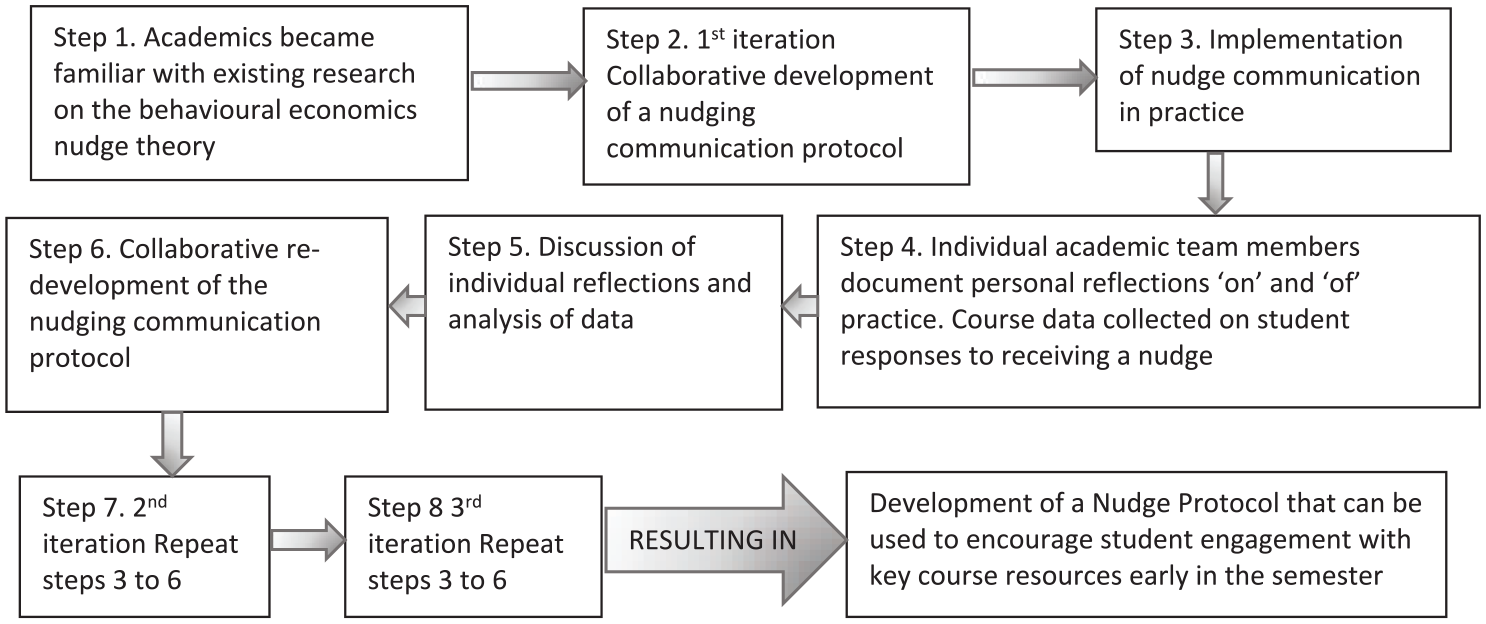
The action research process undertaken to develop the nudge protocol.
The research was conducted across three semesters (S1, 2018; S1, 2019; S2, 2019) at a regional University in Australia where the student cohort are largely mature-aged (>70%), studying online (>75%) and part-time (53%). After each semester (iteration), the data were analysed and the approach to the nudging was refined, based on both the findings and the academics’ experiences and reflections. In each iteration the approach and research were also expanded to include more courses/disciplines.
The first trial (s1, 2018) was implemented across two disciplines, a third-year undergraduate education course (n = 85) and a first-year undergraduate engineering course (n = 108). In the second iteration (s1, 2019), the intervention was implemented across three disciplines (education, accounting and science) in eight courses (n = 1176). The third iteration of the intervention (s2, 2019) was implemented in 11 courses (n = 754) across 4 disciplines (education, accounting, science and engineering).
Refining the nudge protocol over three iterations
First iteration: Design
As research has highlighted the crucial nature of early engagement in supporting the probability of student success and retention, led to the intervention being designed to be implemented in the first 5 weeks of semester. Central to the approach was the use of messages (NEWS announcements), sent via the course LMS (StudyDesk), as an attempt to alter students’ learning behaviour to help promote student engagement. The researchers used data to identify, on a weekly basis, those students who had not accessed one or more of the key weekly resources and these students were then nudged to encourage their use of the resource/s.
Key steps in the nudging process therefore included:
(1) the identification of weekly critical StudyDesk (LMS) resources;
(2) the use of StudyDesk course learning analytics data to identify non/low engaged students;
(3) the delivery of a ‘nudge’ communication for each of the targeted weekly resources, designed to try and foster engagement. Note that in this first iteration the team may have identified several resources to target in nudge communications each week. This meant that students may have received multiple nudges in a single week, with each nudge targeting a particular resource.
As well as providing students with nudges to highlight the key role that certain resource/s played in supporting their learning and course success, the researchers trialled a variety of styles, including providing extra information within the nudge communication about study suggestions and tips, prompts encouraging participation in forums or an online zoom tutorial or lecture, tips for addressing assessment pieces and prompts that shared % of students who had already engaged with key resources to ‘motivate the student’s engagement’.
First iteration: Data collection
The intervention was evaluated in three ways: (1) using data gathered via learning analytics, student click counts (the number of times students clicked on resources on a course StudyDesk) were compared for the year the intervention was implemented against the baseline data from the previous year when the intervention was not implemented; (2) students were asked to participate in a short post-study survey that asked them to consider and provide feedback on the usefulness of the nudges and (3) the research team held weekly research meetings to critically reflect on the ‘how/when/what to nudge’, as well as the successes and challenges of the intervention.
First iteration: Data analysis and reflections on findings
The first evaluation tested the success of the intervention by comparing the student click data for 2018 (the year of the intervention) against student click data for 2017 (no intervention) in both the education and engineering courses. As online engagement behaviours were the concern of the intervention, the ‘clicks’ (student interactions with the course StudyDesks) were considered evidence of an ‘engagement behaviour’. Figures 2 and 3 show this comparison. Visually, the diagrams highlight the increases in student engagement across the two courses, as evident from student click counts. Two-sample independent t-tests, excluding the outliers, were performed to test the hypothesis that mean click counts were significantly different from 2017 to 2018. This was the case for both the engineering course (t = −6.99, df = 155.49, p < 0.001, n = 108 for 2017 and n = 95 for 2018) and the education course (t = −3.23, df = 148.03, p-value = 0.001, n = 135 for 2017 and n = 79 for 2018). On average, the student click data were greater in 2018 for both the engineering course (2017: mean = 415, SD = 257.79; 2018: mean = 778, SD = 457.05) and the education course (2017: mean = 304, SD = 230.35; 2018: mean = 446, SD = 328.68).
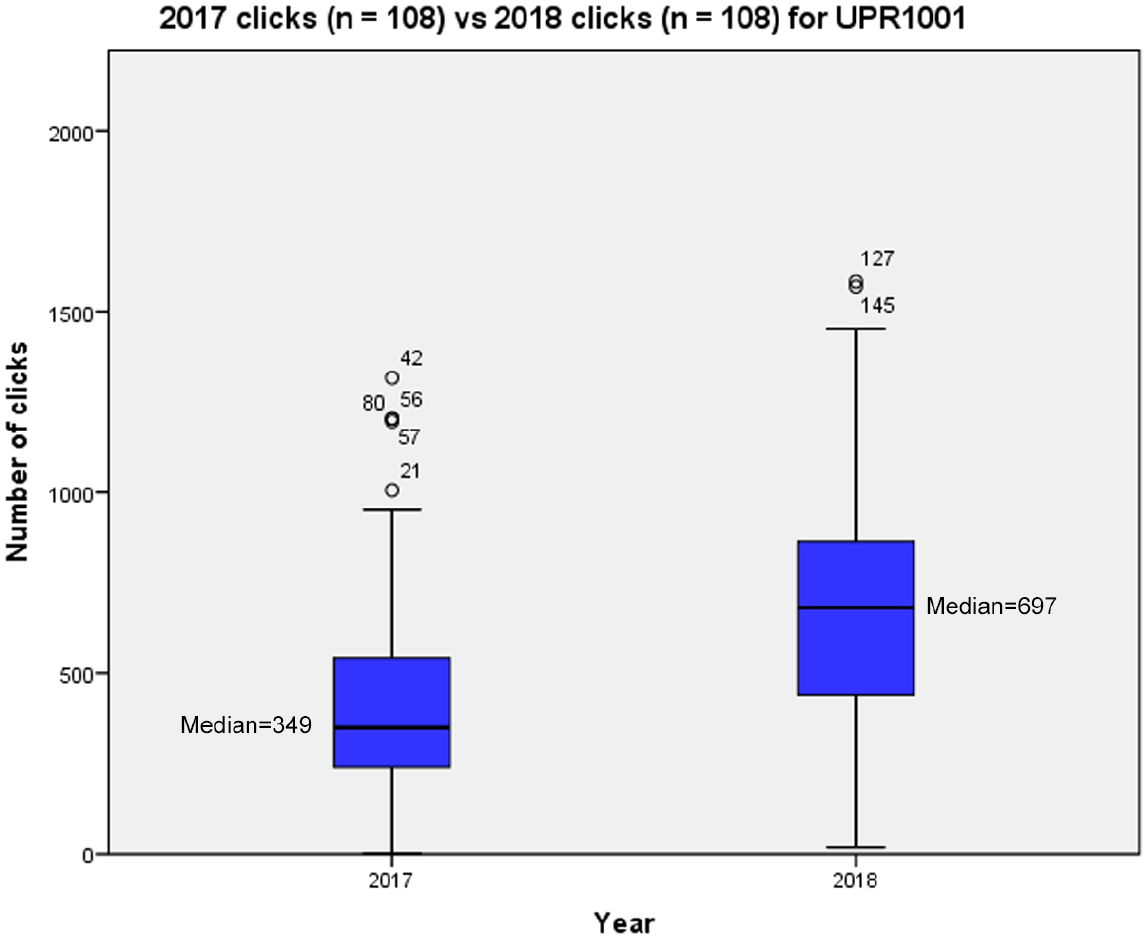
A comparison between 2017 and 2018 student click counts for the Engineering course.
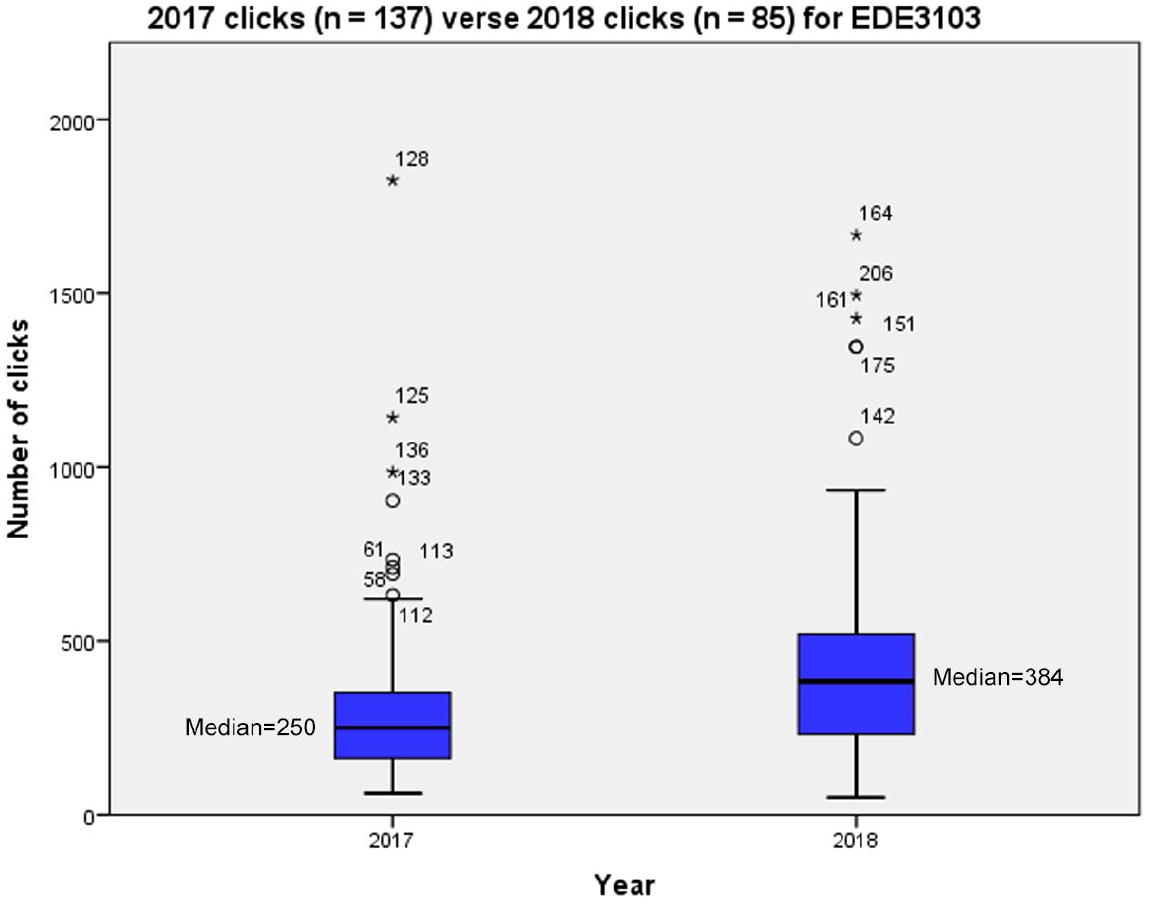
A comparison between 2017 and 2018 student click counts for the Education course.
These findings lend support to the contention that the nudge intervention influenced student engagement with critical resources. Of note also is the greater variation as captured visually in the box plots and measured via the standard deviation. This observed variation suggests that the nudge intervention was not effective for all students and this finding was considered in the evaluation process that influenced the next (second) iteration.
In the post-intervention survey students were asked to answer a mix of questions, both qualitative and quantitative in nature. Two closed-ended questions asked students to indicate on a Likert scale how helpful they found the nudges (where 1 = not helpful; 2 = slightly helpful; 3 = moderately helpful; 4 = helpful and 5 = very helpful). The first question asked students to consider how helpful the nudges were for their learning in the course; the average Likert response rating was 3.4 (n = 38, SD = 1.34). The second asked students to consider how helpful they found different types of nudges, including: prompts early in the semester with study suggestions and tips (average Likert response rating 3.9; s = 1.08); early prompts and communication by teaching staff to access key resources (4.1); prompts encouraging participation in forums (3.6, SD = 1.31); prompts encouraging participation in an online zoom tutorial or lecture (3.7, SD = 0.9); tips for addressing assessment pieces (4.4, SD = 0.79); reminders about key weekly tasks and activities on which to focus (3.9, SD = 1.23) and prompts that shared % of students who had already engaged with key resources to ‘motivate your engagement’ (3.2, SD = 1.21). These responses showed that students were most receptive to nudges that prompted them to access key resources or gave them information about the value of the resource in supporting their assessment pieces.
Two open-ended questions then asked the students to expand on their ratings by providing further comments (about nudging in general and then in relation to the different types of nudges used). Responses to the open-ended questions were largely positive, showing the intervention was useful for keeping students focused, providing a sense of support and reminding students to access key resources. Negative comments related to the tone, length or frequency of receiving multiple nudges (some students received a nudge for each of the separate critical resources in the same week). These comments showed that some students felt there were too many nudges from the educators, or that the tone of the communication was too ‘big brotherish’ and thus led to increased feelings of stress.
In this iteration data were not specifically, nor consistently recorded in relation to how many students had accessed a key course resource pre-nudge compared to post-nudge; however, the researchers anecdotally noticed that student access to nudged resources increased as a result of a nudge. They also noted that while there was an increase in the percentage of students who had accessed a resource because of an initial nudge, there seemed to be less impact when students received multiple nudges in the same week (due to not accessing several key resources). From a teaching perspective, the task of communicating several nudges per week (one nudge for each of the identified critical weekly resources) was also onerous. Further, from a student perspective, there was the potential for communication overload. as some students received multiple nudges in one week.
Second iteration: Design
In the second iteration, the intervention was extended and trialled in a larger number of disciplines and courses. Following reflexive practice, changes were made to the approach. For example, a key point of reflection from the first iteration was the importance of reducing the number of weekly critical resources to one or two per week, so that students only received a maximum of one nudge per week rather than a nudge for each resource they did not engage with. The researchers also decided that it was important to formally include a ‘promotional communication’ at the beginning of each week, to explicitly highlight the tasks and focus for the week to the entire course cohort, as well as ‘upselling’ the importance and value of the critical resource or activity. This promotional communication was sent out at the beginning of the week as a NEWS announcement, or message via the course LMS. Nudges were only communicated to students who had not accessed the promoted critical resource. This change was important as the promotion of the resource was of value to all students, not just those ‘at risk’. The use of both promotions and nudges as part of the intervention’s nudge communication was furthermore integral to distinguishing it from the relatively well-established early warning message systems (Jayaprakash et al., 2014; Brown et al., 2020).
The protocol informing the implementation of the nudge intervention in the second iteration was as follows:
(1) the team identified 1–2 (max) key resources per week, deemed critical for student success during the first 5 weeks of semester;
(2) this key resource/s was promoted to all students in a course;
(3) using course data, the researchers identified, on a weekly basis, those students who had not accessed one or more of the key resources and these students were provided a nudge (a message sent via the LMS). The students received one nudge per week related to the identified critical resource/s.
In this iteration, the style of the nudges focused on encouraging students to use the resource/s being nudged and highlighted the key role the resource played in achieving course success. As previous feedback received from students concerned the tone and length of the nudge, the researchers agreed the nudges should be quite succinct and should reinforce engagement expectations and time requirements with respect to accessing the resource, as well as the message that the educator cares and is there to support the student’s learning and course success.
Second iteration: Data collection
Data was collected in a more targeted, consistent and strategic manner in the second iteration. While the data recorded in the first iteration were StudyDesk click counts for a course (to capture whether the nudging had prompted students to increase their online engagement with the course over the semester), in the second iteration the team used data (easily accessible within the LMS) to specifically record the percentage of students who engaged with key resource/s. Data for each of resource/s were recorded at two different times. These were: (1) pre-nudge – data for a resource were recorded 1 week after the key resource/s had been promoted to students and just before the course educator provided the nudge communication to those students who had not engaged with the resource; and (2) post-nudge – data for that resource was recorded 1 week after non-engaged students had been nudged to access the resource.
In this iteration, an average of nine key resources were promoted to all students across the eight courses during the first 5 weeks of semester. A total of 92 nudges were given to students across the courses, with an average of 11.5 nudges provided per course (the highest number of nudges was 20 in a nursing course and the least was 6 in an education course).
Second iteration: Data analysis and reflections on findings
Analysis of the pre-and post-nudge learning analytics data showed that the nudge intervention had been marginally successful in increasing student access to the nudged resources: on average, 1 week after a nudge, the percentage of the cohort who had accessed each key resource increased by 6.14% (SD = 0.08). The researchers also used the data collected to investigate whether the anecdotal observations made in the first iteration of a decreasing impact of nudges when a resource was nudged multiple times were indeed reflected in the data. Twenty-two of the resources in the second iteration were nudged multiple times; that is, for 22 of the resources students who had not engaged with these resources may have received a second nudge encouraging them to access that resource (on five occasions a third nudge was also given).
Figure 4 shows the declining overall increase in students’ access to the nudged resource for each subsequent nudge provided (measured by percentage of the cohort who had accessed the resource). The first nudge led to an average 7.26% (SD = 0.09) increase in the percentage of the cohort who had accessed the resource post-nudge; the second nudge only led to an average increase of 3.98% (SD = 0.0.3) and the third nudge led to a 1.64% (SD = 1.63) increase. While this declining impact is perhaps not surprising given fewer students would have been nudged each time, it does show that the effectiveness of nudging students into action declines when multiple nudges are used for a single resource. Potentially, when students receive too many nudges for a single resource, the nudges instead become ‘nags’ which may lead to students ‘tuning out’ from any further communications from an instructor, thus eroding the potential effectiveness of the intervention.
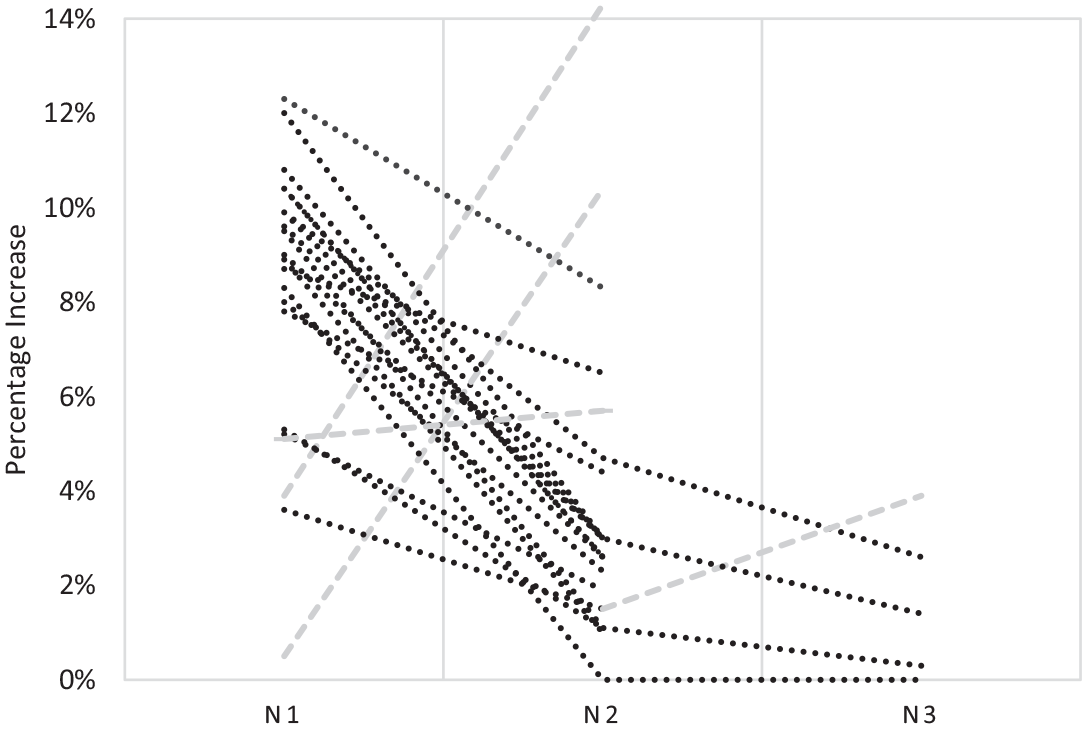
Mapping the percentage increase in student cohort access to a single resource observed for each subsequent nudge of that resource for nudge 1 (N1), nudge 2 (N2) and nudge 3 (N3). Black broken lines represent successive decrease in access to resource, where grey broken lines represent increase in access to resource.
The researchers also reflected on the number of nudges sent in each course and consider whether too many resources were nudged, which may have eroded the potential impact of the intervention and, in doing so, have become a nag. Indeed, it was found that the course in which the least number of nudges were given (six in total) also recorded the highest average increase in cohort access to a resource following a nudge (average increase was 13.9%, SD = 0.06). Figure 5 shows the number of nudges provided in a course against the average increase in cohort access to the nudged resources for the course. It demonstrates a declining impact of nudge effectiveness when the number of nudges increase in a course. This suggests there is a ‘sweet spot’ for the ideal number of nudges that are provided to students to stimulate student access to key course resources. It also suggests that nudging can potentially become a nag when the nudge communications are too frequent or too numerous.
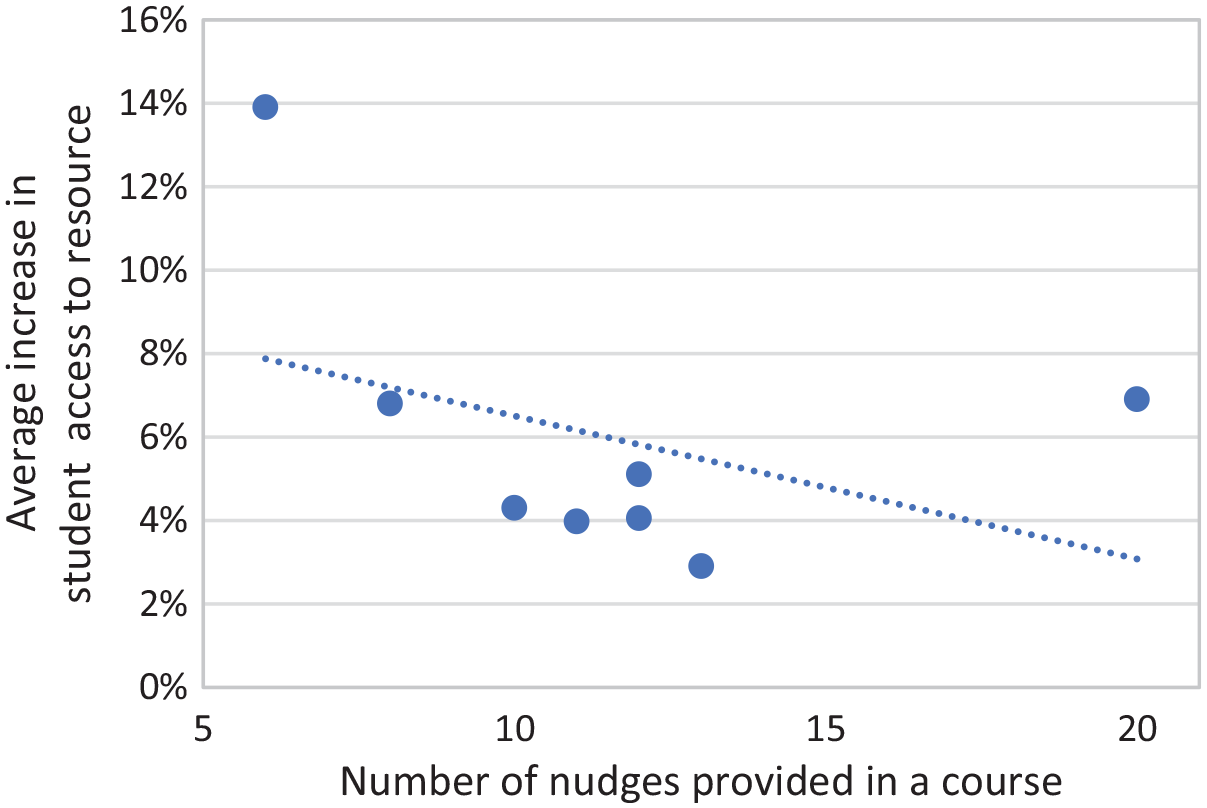
Mapping the number of nudges provided in a course against the average increase in student access the nudged resources for the course.
Third iteration: Design
The team’s reflections from the first and second iterations, as well as observations from the student engagement data were used to further refine the intervention. For example, while the first nudge was often effective in prompting an overall increase in students’ engagement in the nudged resource (measured by percentage of the cohort who had accessed the resource), any subsequent nudges led to only minor increases in overall engagement. These reflections led to the development of a more strategic approach in this third iteration. Agreed guidelines therefore defined how many resources should be nudged (no more than eight overall), as well as how many times that resource should be nudged (only once).
The protocol informing the implementation of the nudge intervention in the third iteration was as follows:
(1) identification of (5–8 key resources) – deemed critical for student success during the first 5 weeks of semester;
(2) the identified resource/s was ‘promoted’ to all students in a course in the relevant week;
(3) using course data, on a weekly basis, students who had not accessed the key resource were identified and sent a targeted nudge that encouraged their use of the resource.
As in the second iteration, the style of the nudges continued to focus on encouraging students to use the resource/s being nudged and highlighted the key role the resource played in achieving course success.
Third iteration: Data collection
Again, data were collected specifically in relation to the key resources that were promoted and nudged, with data recorded at two different times for each resource. These were: (1) pre-nudge – data for a resource was recorded 1 week after the key resource had been promoted to students and just before the course educator provided the nudge communication to those students who had not engaged with the resource; and (2) post-nudge – data for that resource were recorded 1 week after non-engaged students had been nudged to access the resource.
On average, six key resources were promoted to students in each course using the nudge protocol; and a total of 67 nudges were given to students across the 11 courses (an average of six nudges per course).
Third iteration: Data analysis and findings
Analysis of the pre-and post-nudge data showed that the nudge intervention was much more successful in increasing student access to the nudged resources. On average, 1 week after a nudge, the percentage of a cohort who had accessed each key resource increased by almost 20% (average increase was 18.77%, SD = 0.14). These findings showed that the more refined approach used in the third iteration, where fewer key resources were targeted and an average of six nudges were provided in total, was more effective in stimulating student reaction to the nudges.
Discussion and conclusion
Many students are time poor and/or do not use their study time effectively, or in a manner that leads to student success. To help students improve their chances of success, nudges can direct students to actively engage in key course materials. While research has shown that nudging can make a difference to student engagement and therefore success (e.g. Blumenstein et al., 2019; Brown et al., 2020; Damgaard and Nielsen, 2020; Lawrence et al., 2019), knowing when to use nudging – and when enough is enough – can be a challenge (Desouza and Smith, 2016). As acknowledged by Blumenstein et al. (2019), sending sensitive nudges that move students forward is almost an art form. It requires not only technical skills to use appropriate software and understand what the data is saying, but careful consideration of what to say and how to say it. If nudging is to be used effectively to achieve better online student engagement, there is a need to show how this can be achieved. As Tualaulelei et al. (2021) explain, student engagement can lead to a successful online learning experience when fit-for-purpose technology, quality instructional design, learner dispositions and skills and educator knowledge and pedagogies specific to online teaching converge. Nudges can also constitute a form of feedback literacy, a literacy which is gaining momentum as important for increasing student outcomes (Dawson et al., 2021). Feedback literacy is a capability for learning at university (Molloy et al., 2020), in the workplace (Noble et al., 2020) and for lifelong learning (Carless, 2020).
In developing a nudge strategy, it is important to first determine what to nudge. A suggested approach is to identify four to six key resources, or learning activities, that are essential to student success. Data can then be used to determine who to nudge, as well as which resources need to be nudged to a targeted group of students. This can be achieved by monitoring students who have engaged, or not engaged (in this study, this was determined by student ‘accessing’ a resource or activity via the LMS). Another important decision is determining when to nudge. Nudging early in the semester, when student engagement with critical resources is most important for early success, can help to develop early momentum and motivation for online study. In addition, communication using nudges may also occur at timely intervals, such as prior to drop dates/census and assessment dates, or to draw attention and remind students of other critical resources.
Finally, recommendations on how to nudge are based on the experiences reported in this study in learning to design effective nudge communications that led to positive student responses and engagement. In framing and structuring a nudge, an effective overall strategy is to: (i) frame the nudge in a way that promotes the value and importance of the resource/activity to successful student learning; (ii) reinforce engagement expectations and time requirements with respect to accessing the resource and (iii) reinforce that you care and are there to support their learning and course success. This supports Carless’s (2020) view that active learner roles in feedback processes can be developed by students being supported to use their own internal feedback and develop their feedback literacy. The ideal tone to use, and to which students responded more positively, was informal, similar to that of a ‘concerned friend’. It is also important to use a strengths-based, educative discourse that is persuasive and promotes the benefits gained from a resource or activity, rather than adopting a deficit approach that nags about not engaging with a resource.
The research described in this article has demonstrated the use of a nudge intervention and proposes a nudge protocol (Figure 6) that could be used to alter students’ learning behaviour to help promote engagement. It must be noted, however, there were a number of limitations. Firstly, the research was undertaken at one university in Australia that has high numbers of mature-aged students and students who study fully online. Second, the courses were undergraduate courses. Third, only one communication channel for nudging was trialled, the LMS messaging system. While the research focused on asynchronous ways to nudge students into action, it is acknowledged that engagement may be synchronous, and so future work looking at this channel may be useful. Fourthly, future work to determine whether there might be a reason why a certain student is not engaging (such as dissatisfaction with the resources offered, personal problems, depression, mental illness, etcetera) would be useful, as this was not explored in the research described in this article.
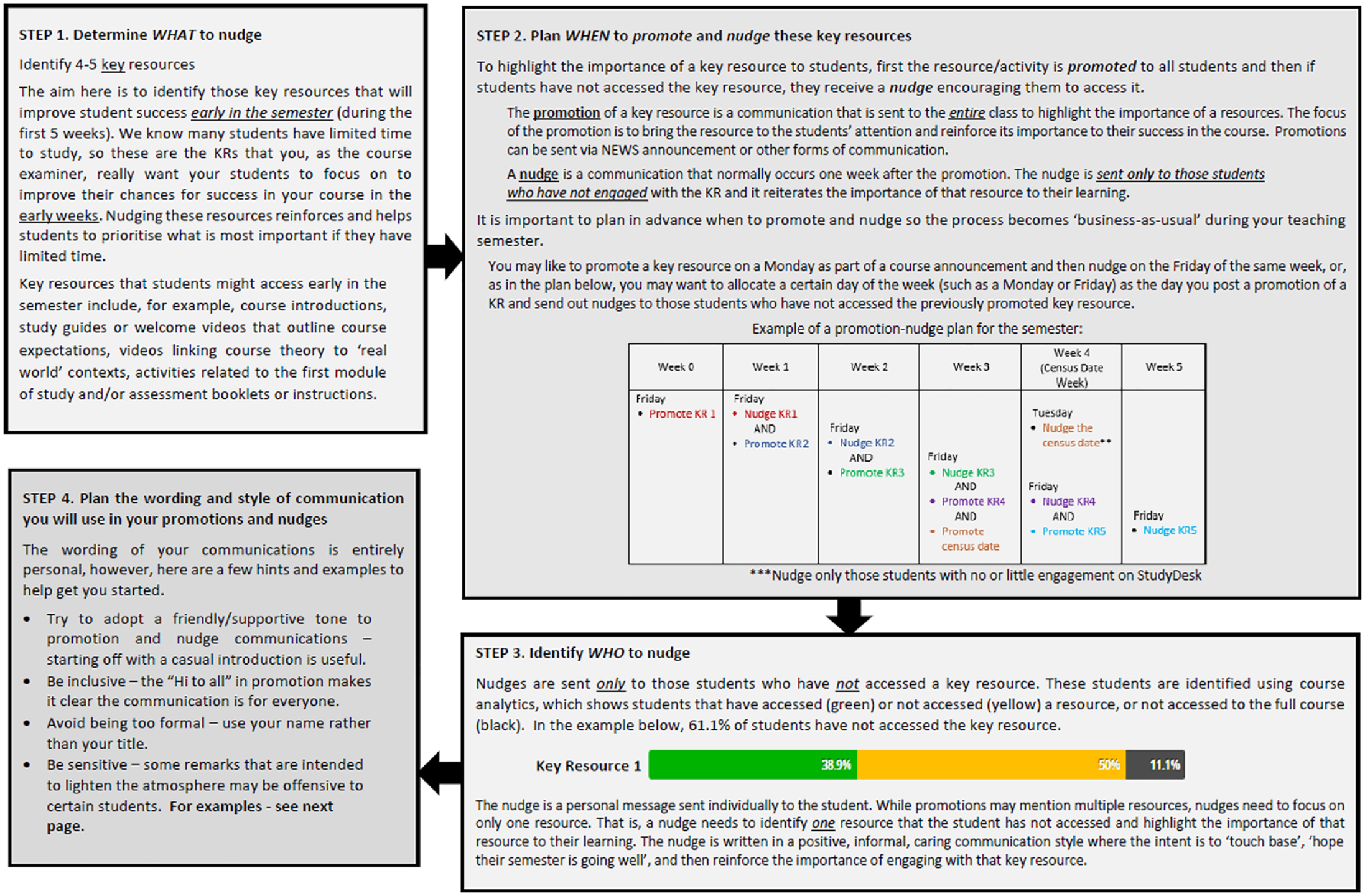
The nudging protocol.
It also needs to be acknowledged that part of the observed increase in cohort access to the nudged resources in the second and third iteration could have been a result of the natural increase in student access to a resource that occurs week-by-week as the semester progresses, rather than as a result of the nudge. In addition, while the course in which the least number of nudges were given (six in total) recorded the highest average increase in cohort access to a resource following a nudge in the third iteration, this observation was not a clear trend and would need to be tested further across different cohorts and disciplines. The ‘ideal’ number of nudges that can be sent to encourage students’ engagement without becoming a nag is perhaps a topic for future research. Future research also needs to test the application of the nudge protocol in different cultural contexts and with different student cohorts (such as postgraduates, those in different disciplines and universities whose students comprise different demographics). It could also be transferred to a high school setting, or distance education sites, to gauge its effectiveness in these contexts. Furthermore, different forms of nudging, such as text messaging or synchronous engagement, could be trialled using the protocol.
The nudge protocol presented in Figure 6 provides educators with a set of steps that articulate how to implement a nudge strategy. It has been developed for use in online courses to encourage student engagement with key resources during the first 5 weeks of the semester – a period that is crucial to student success in a course (Redmond et al., 2018).
The protocol provides educators of online courses a set of steps that articulate how to implement a nudge strategy. The four-step process includes determining what to nudge, planning when to nudge, identifying who to nudge and lastly how to communicate that nudge, that is the style (or wording) of the nudges. The intent behind the development of this protocol was to provide others that wish to implement a nudge strategy a step-by-step process that is a simple, non-onerous, non-time-consuming task in an effort to address low levels of online engagement. It is envisaged that the protocol has the potential to become ‘business as usual’ in its use as a strategy that can be easily implemented and adapted by online educators in their courses.
Footnotes
Data availability statement
The data that support the findings of this study are available on request from the corresponding author. The data are not publicly available due to (restrictions e.g. their containing information that could compromise the privacy of research participants).
Declaration of conflicting interests
The author(s) declared no potential conflicts of interest with respect to the research, authorship, and/or publication of this article.
Funding
The author(s) disclosed receipt of the following financial support for the research, authorship, and/or publication of this article: This work was supported by the University of Southern Queensland Office for the Advancement of Learning and Teaching under a Learning and Teaching Commissioned Project.
