







Abstract
The present study explored the study habits and strategies of 469 college undergraduates and their impact on GPA. Study habits that positively correlated with higher GPAs included planning one’s study schedule in advance, studying in the morning, and spacing out study sessions. Self-testing was the only reliable study strategy that was positively correlated with GPA; cramming the night before an exam was negatively correlated with GPA. To assess whether study habits and strategies varied across student groups, Latent Profile Analysis was used to identify distinct subgroups. The three groups of learners differed in age, non-traditional student characteristics, and course modality preferences. Younger, moderately nontraditional, online-oriented students were more likely to plan their study schedule. Older, nontraditional students who prefer online learning were less likely to study with their friends. Overall, the present high-powered study of diverse college students demonstrates that learning behaviors vary by student characteristics and are related to grades. Accordingly, instructors must understand their students’ needs to provide effective support for their students.
Keywords
Introduction
Schneider and Preckel (2017) reported one of the most comprehensive meta-analyses on variables associated with academic achievement among college students. Among the 105 variables they investigated, many pertained to student learning strategies and students’ self-regulated learning behaviors (i.e. study habits). The researchers reported that many of these strategies (e.g. managing one’s time effectively, engaging in elaborative learning) had a moderate effect size (i.e. Cohen’s ds around 0.5) on students’ academic achievement.
Complementing the findings of Schneider and Preckel (2017), other studies have used a more granular and comprehensive approach when investigating students’ study habits, focusing on specific learning behaviors students use (e.g. Geller et al., 2018; Morehead et al., 2016). Many of these studies have reported a correlation between self-testing and higher grades (Geller et al., 2018; Hartwig & Dunlosky, 2012; Morehead et al., 2016). Self-testing refers to the active recall of information through practice questions, quizzes, or retrieval exercises, which helps enhance memory and understanding. The benefits of self-testing on learning are both robust and replicable (e.g. Cho et al., 2017; Cho & Powers, 2019; Karpicke & Roediger, 2008; see also Adesope et al., 2017; Agarwal et al., 2021, for more recent meta-analyses).
The two most relevant previous studies to the present study are Harwig and Dunlosky (2012) and Morehead et al. (2016). In their studies, the researchers conducted a self-report survey in which college students answered questions about their use of common study strategies (e.g. self-testing, rereading) and study habits (e.g. spacing vs. cramming, time of day when they usually study); see also Kornell and Bjork (2007) and Yan et al. (2014), for similar studies. In addition to reporting that self-testing was associated with higher GPA, Hartwig and Dunlosky (2012) found that students who studied in the evening and spaced out their learning also had higher GPAs. Curiously, although Morehead et al. (2016) used the same questionnaire to assess students’ preferred time of day to study, they did not analyze whether this variable was correlated with students’ GPAs. Indeed, despite collecting data on more than 10 questions regarding students’ study habits and strategies, they analyzed only a small subset of these variables in relation to students’ GPAs. One primary goal of the present study, therefore, is to provide an updated and comprehensive analysis of students’ study strategies and habits, as well as their relationships to GPA. Understanding which strategies students use or neglect to use can provide valuable insights for both educators and learners, as they are strongly linked to academic success.
To build on prior research, the present, high-powered study also examines how study habits and strategies vary among students based on their age, nontraditional status, and course modality preference (i.e. face-to-face or online). Expanding the scope of this literature to include a more diverse student demographic is vital because it reflects the current and emerging student demographic in higher education (Radford et al., 2015).
Older and Nontraditional Students
Non-traditional students represent a growing segment of the higher education population (Radford et al., 2015). In addition to being older, these students are typically part-time students, financially independent, and single parents. In addition, they often have dependents (i.e. they are the primary caretakers of their children or parents) and work 35 hr or more a week while enrolled (Choy, 2002). Nontraditional college students have different needs and concerns that can impact their academic success compared to traditional college students. For example, Forbus et al. (2011) showed that nontraditional students reported more stress related to money and work issues. These barriers to success are more pronounced among nontraditional students from immigrant families (Hafford, 2009).
Nontraditional students exhibit distinct academic characteristics compared to their traditional student counterparts. For example, they are more conscientious and gritty (Cho & Serrano, 2020), and less likely to be discouraged by peer excellence (Cho, 2019), all of which are factors that are positive correlates of academic success (Schneider & Preckel, 2017). However, they also possess characteristics that put them at an academic disadvantage, such as coming from a lower socioeconomic background, having poor academic preparation, and experiencing greater anxiety in subjects fundamental to higher education, such as math (Cho & Kongo, 2024; Grabowski et al., 2016). Despite the substantive differences between traditional and non-traditional students that can affect their academic success, no study to date has offered a comprehensive analysis of whether their study habits and strategies differ meaningfully.
Online Learning
Due to the COVID-19 pandemic that prompted a shift to fully online instruction, many institutions have maintained or expanded their online course offerings (Barshay, 2024). These changes have been well received by many students for their increased flexibility, allowing them to balance work, family, and their studies (Barshay, 2024). Indeed, in 2023, the percentage of students enrolled in at least one online course was around 60%, with almost a quarter of students enrolling exclusively online (National Center for Education Statistics, 2023). As such, online courses are likely to continue growing.
Although one of the main strengths of online learning is increasing access to education for students, it also introduces new challenges that can be detrimental to the learning process. For example, it is challenging to replicate certain aspects of an in-person course in an online environment, such as peer interactions and regular contact with faculty members. These obstacles are noteworthy because a lack of interactions with peers and faculty is associated with a lower sense of belonging, which in turn is deterimental to students’ academic success and mental well-being (Gopalan & Brady, 2020). Another challenge with online learning that can affect students’ academic success is distracted learning. Working in a noisy environment can distract students and evoke feelings of annoyance, leading to disengagement compared to a more controlled classroom environment, which are factors that impede student motivation and learning (Xie et al., 2025; X. Yang et al., 2020). Thus, to excel in an online learning environment, students might adopt different study strategies and habits than face-to-face (FTF) learners. For example, undergraduates at urban commuter colleges preferred campus libraries for their quiet and low-distraction environment, which they found more conducive to studying than noisy homes (Regalado & Smale, 2015).
Paulsen and McCormick (2020) analyzed data from the 2015 National Survey of Student Engagement, which included over 500 institutions and 120,000 students, to examine differences in the learning strategies used by online and FTF students. They reported nonsignificant differences between these two groups. Although the data set is comprehensive, the questions that comprise the learning strategy outcome are, unfortunately, not. Specifically, learning strategy was a composite score made up of three questions that asked students how often they (a) identify key information from reading assignments, (b) review their notes after class, and (c) summarize what they learned in class from course materials. These three strategies represent only a fraction of the learning strategies students actually use and, more problematically, do not include strategies well established in the cognitive and educational psychology literature to bolster learning and retention (e.g. self-testing; Agarwal et al., 2021; Neely & Cho, 2014). Also, their 2015 data was collected before online learning was prevalent (i.e. pre-COVID-19). The prevalence and development of online learning technologies may have led to changes in students’ study habits and strategies. As such, a more updated and comprehensive investigation of online students’ study habits and strategies is warranted. This topic is especially important because numerous studies have reported that student learning and performance (e.g. course completion, course grades, success in subsequent courses) are slightly lower in online settings than in traditional FTF environments (e.g. Bettinger et al., 2017; Xu & Jaggars, 2014). Therefore, it is essential to determine whether differences in study habits and strategies contribute to this performance gap.
The present study explores student characteristics using latent profile analysis (LPA). LPA is a cluster-based, data-driven analysis used to identify groups (or classes) based on participants’ responses to the items (indicators) used in a model (Masyn, 2013). LPA uses maximum likelihood estimation to form groups that are internally homogenous and externally heterogeneous. LPA is an improvement on similar techniques such as cluster analysis and factor analysis. One benefit of using LPA is that it allows researchers to better identify configurations and interdependencies among variables compared to variable-centered approaches such as multiple regression and factor analysis. LPA has been used more commonly in the mental health literature to identify subgroups of patients with similar mental health symptoms (Petersen et al., 2019). However, this technique has also been used in both the business and education literature (Cho & Kongo, 2024; Stanley et al., 2017). This is the first study to explore differences in study habits and strategies among groups formed using LPA based on age, number of nontraditional student characteristics, and course modality preference (i.e. online or FTF).
Methods
Participants
Four hundred eighty-one participants were recruited using the UHD Psychology Participant Pool Sona System. For their participation, they received research credit toward their psychology courses. The study was approved by the University’s Committee for the Protection of Human Subjects.
Design and Materials
Measures
Study Habits and Strategy Usage
This 10-item questionnaire, adapted from Hartwig and Dunlosky (2012) and Morehead et al. (2016), assesses students’ study habits and study strategy usage. One question asks students to select all the study strategies they regularly use from a list of 10 (see Table 1 for the list of strategies). The remaining questions focus on students’ study habits, such as how they decide what to study next (see Table 4 for a list of questions and response options). One of those questions asks students to indicate why they are engaging in self-quizzing (see Table 5 for a list of options in which students can select more than one).
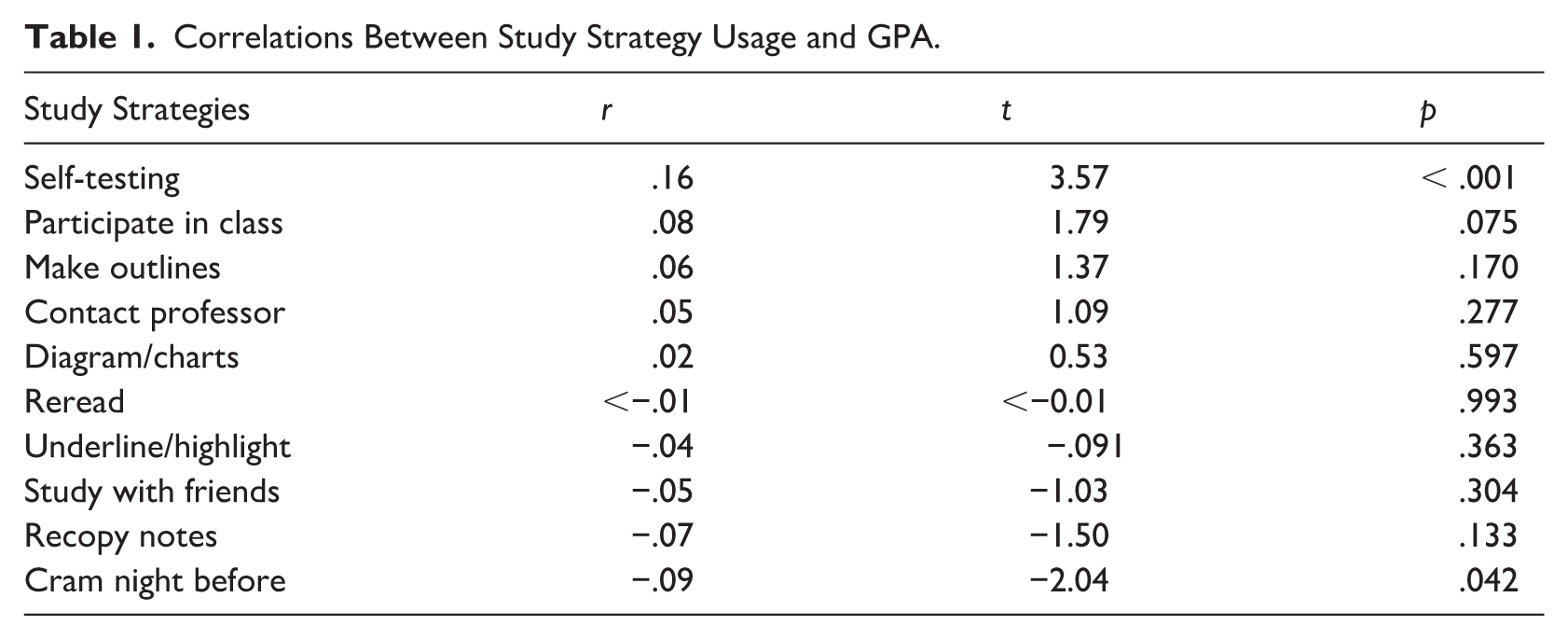
Correlations Between Study Strategy Usage and GPA.
Nontraditional Student
This questionnaire measures the extent to which the student is a nontraditional college student based on seven criteria (e.g. Are you a full-time student?)—see Supplemental Appendix A for questions, which were taken from Choy (2002). All responses were binary (i.e. Yes or No). A higher overall value indicates that the student possesses more nontraditional student characteristics.
Academic and Demographics Information
Participants were asked to indicate their preference for taking online courses over face-to-face courses using a 5-point scale: 1—I strongly prefer online classes over face-to-face classes, to 5—I strongly prefer face-to-face classes over online classes. In addition, they were asked to indicate the percentage of courses they have completed so far that were fully online. Participants’ other academic information (semester GPA [0–4 scale]), and number of credits earned) and demographic information (age, race, and gender) were obtained from UHD’s Institutional Research office.
Procedure
The data was collected online via Qualtrics. Participants completed the study at their own pace, in a location, and at a time of their choosing. Participants first completed the consent form, which included a statement indicating that the researcher was requesting permission to obtain their academic and demographic information from the University of Houston-Downtown’s Office of Institutional Research. Participants first completed the study habits and study strategies questionnaire. Following those questionnaires, they completed the non-traditional student questionnaire and then the demographic and academic information questionnaire.
Results
The data from 12 participants (2% of the sample) were excluded because they completed the study more than 1.5 IQR faster than the mean completion time of all participants, suggesting inattentive responding. Thus, the analyses reported below are based on 469 participants. The average age of participants was 26 years old (SD = 9 years); most participants self-reported their gender as female (76%), with the remaining participants self-reporting as male (24%). Participants identified as 53% Hispanic, 19% Black, 15% White, 10% Asian, <1% American Indian or Pacific Islander; the remaining participants chose not to report their race or indicated “Other.”
Overall, participants earned an average of 72 credits (SD = 42 credits), which is approximately 24 courses completed. (At the majority of post-secondary institutions in the United States, where this study was conducted, students must complete a minimum of 120 credits [approximately 40 classes] to graduate.) The average GPA was 3.07 (SD = 0.91) out of a maximum of 4.0.
The first part of the results section focuses on students’ study strategy habits, usage, and their relation to GPA. The second part examines differences in students’ strategy use and habits based on students’ characteristics (i.e. class modality preference and demographic characteristics). Supplemental Appendix B summarizes participants’ overall responses to the study habits and study strategy questions from this study, as well as from comparable studies.
GPA
Study Habits
There was a significant difference in GPA depending on the strategy students used to determine what to study next, F(3, 465) = 4.90, p = .002; η2 = .03 (see Figure 1(a)). Students who planned their schedule ahead of time had the highest GPA (M = 3.30, SD = 0.77), while those who prioritized studying whatever was due soonest or was overdue had the lowest GPA (M = 2.98, SD = 0.96; t(465) = 3.70, p < .001). The other comparisons were not statistically significant.
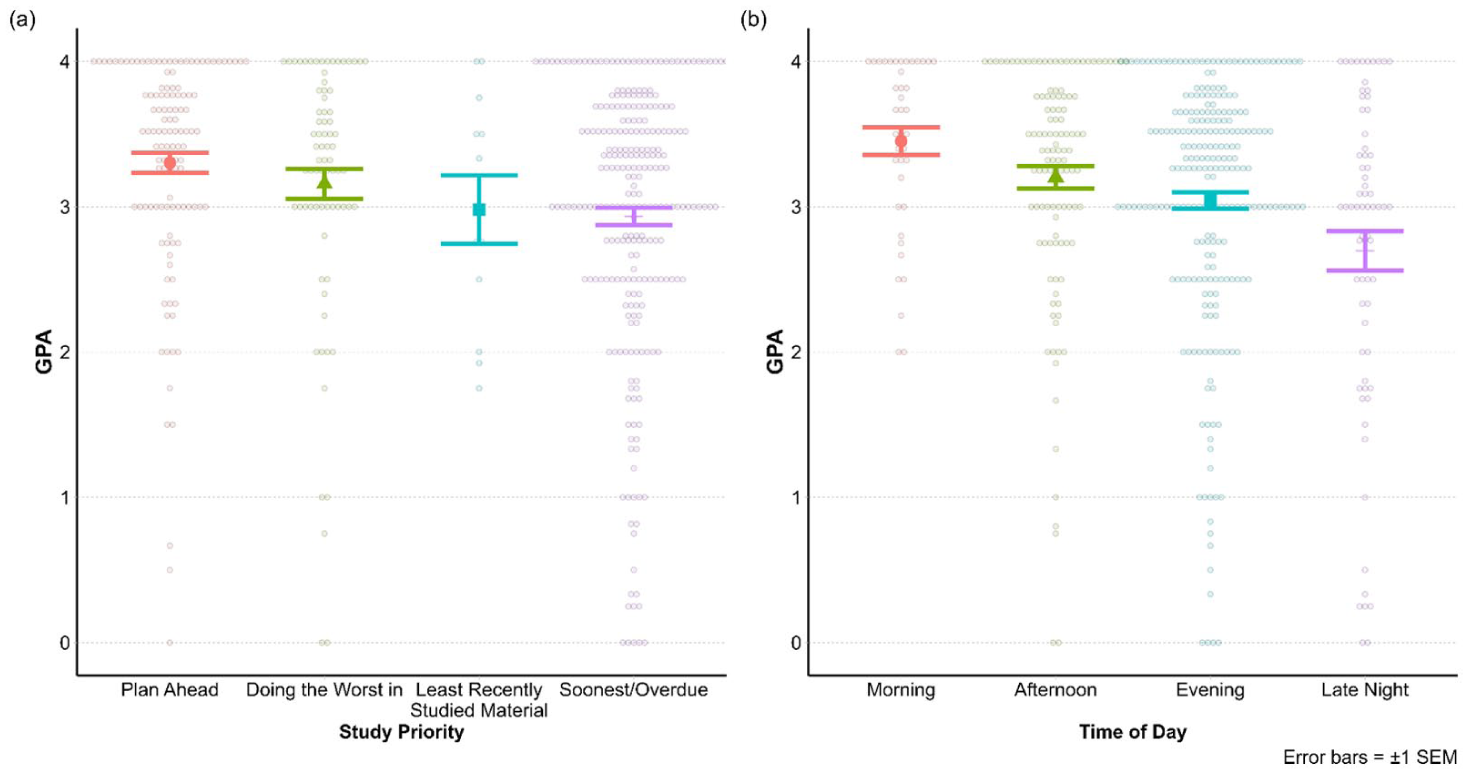
Relationship between (a) study priority with GPA and (b) time of day with GPA.
There was also a significant difference depending on the time of day students most often study, F(3, 465) = 7.32, p < .001; η2 = .05 (see Figure 1(b)). Students who studied in the morning had a higher GPA (M = 3.45, SD = 0.61) compared to those who studied during evening (M = 3.04, SD = 0.89) and late night, who had the lowest GPA (M = 2.70, SD = 1.12), ts > 2.65, ps < .009). Students who reported studying in the afternoon (M = 3.20, SD = 0.85) and evening likewise had higher GPAs than those who studied late at night, ts > 2.84, ps < .006.
Students who indicated that they often spaced their study sessions over multiple days/weeks reported a higher GPA than those who indicated they often do their studying in one session before the test, M = 3.17 (SD = 0.84) versus M = 2.91 (SD = 1.00), F(1, 467) = 9.26, p = .002; η2 = .02.
Students who reported spending more time studying for essay/short-answer exams and multiple-choice exams reported earning higher GPAs, r = .16 (p < .001), and r = .12 (p = .013), respectively. However, time spent re-reading the whole material or re-reading their annotations (e.g. highlights, underlines) did not correlate with GPA, r < .02, ps > .78. Whether students continued studying information they were convinced they knew compared to focusing on other materials did not correlate with their GPA, M = 3.07 (SD = 0.89) versus M = 3.06 (SD = 0.95), respectively, F(1, 467) = 0.02, p = .897; η2 < .01.
When asked why students chose to quiz themselves while studying, the response that it is used to test how well they have learned the material was a positive correlate of GPA, r = .17 (p < .001). The response that they never quizzed themselves was a negative correlate of GPA, r = −.14 (p = .002). Responses that they learn more from quizzing than rereading and that quizzing is more enjoyable were not correlated with GPA, rs = .05 and −.06, respectively, ps > .22.
Study Strategies
Table 1 presents the correlations of specific study strategy usage with GPA. Self-testing was a positive correlate of GPA, r = .16 (p < .001), while cramming the night before an exam was a negative correlate of GPA, r = −.09 (p = .042).
Student Characteristics: Latent Profile Analysis
Latent profiles were created based on participants’ age, level of nontraditionalness (student status), and their class modality preference. Profile enumeration (i.e. defining the number of classes or groups) was determined in a series of iterative steps starting with the specification of a one-class model and then iteratively increasing the number of classes by one and comparing it to the previous model until there was no improvement to the model or the model was theoretically unsubstantiated. The two most widely used and well-accepted fit indices to determine model fit are Bayesian information criterion (BIC), with a lower BIC indicating better model fit, and bootstrapped likelihood ratio test (BLRT) p value, where a BLRT p value <.05 indicates that a k-class model provides a significantly better fit than a k − 1 model (Masyn, 2013; Nylund et al., 2007). Entropy is also used to assess the validity of the number of classes, with higher entropy representing better group classification (Ram & Grimm, 2009). The four-class model should be selected based on the BIC and BLRT p value (see Table 2). However, when more than one model has a good fit, which is not atypical, it is recommended that researchers select the one that makes the most theoretical sense and has relatively large profiles (Masyn, 2013; Morgan, 2015). When only a small number of participants are represented in a profile, as in the case with the four-class model, where one group accounted for fewer than 5% of the sample, it is difficult to be confident that it represents a distinct grouping, thereby limiting the generalizability of the results. Based on these recommendations, the three-class model (with the second lowest BIC) was preferred and retained. Theoretically, the three-class model (see Figure 2) is more parsimonious and is grounded in theory and past research. The three classes (profiles) are as follows: Group 1 (13% of sample)—Older, Highly Nontraditional, Online-Oriented; Group 2 (52%)—Younger, Highly Traditional, FTF-Oriented, and Group 3 (34%)—Younger, Moderately Nontraditional, Online-Oriented
Fit Statistics for Latent Profile Analysis Models.
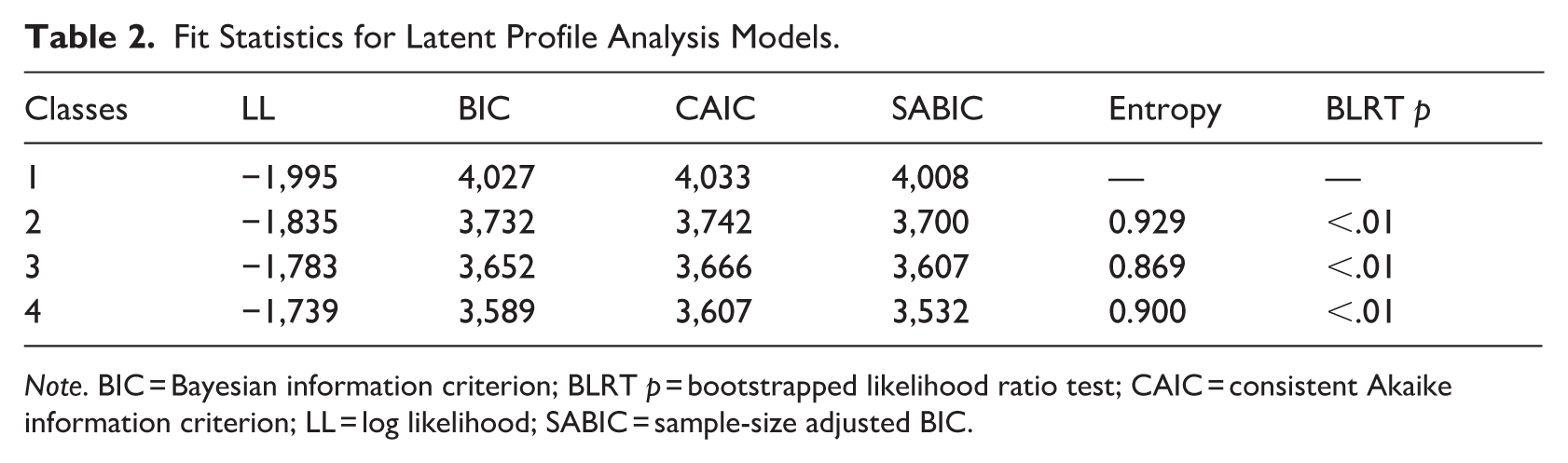
Note. BIC = Bayesian information criterion; BLRT p = bootstrapped likelihood ratio test; CAIC = consistent Akaike information criterion; LL = log likelihood; SABIC = sample-size adjusted BIC.
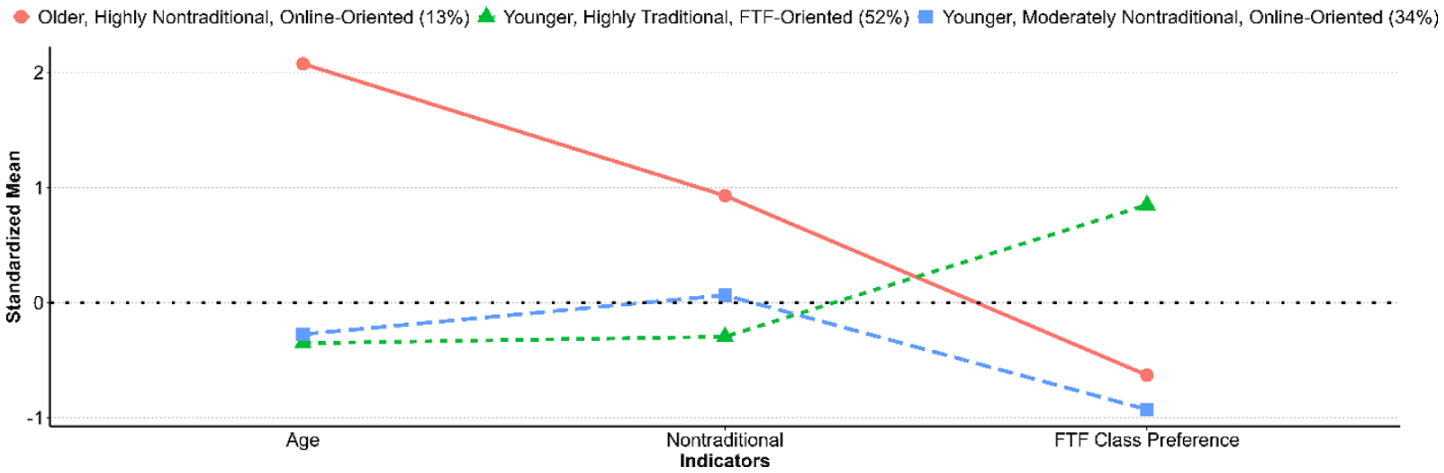
Profiles of the three profiles (% of sample size) based on participants’ age, nontraditionalness, and class modality preference.
To establish that the three profiles are clearly and sufficiently differentiated, separate ANOVAs were computed for each of the three indicators used to create the profiles (i.e. age, nontraditionalness, and course modality preference). The results are presented in the first three columns of Table 3. The average age of students in the older group was 45 years (SD = 8 years), compared to the two younger groups (23 years [SD = 4 years] and 24 years [SD = 5 years]), F(2, 466) = 506.47, p < .001, η2 = .68. The older, nontraditional age group had the highest number of nontraditional student characteristics (M = 2.87; SD = 1.57), followed by the moderately nontraditional group (M = 1.68, SD = 1.44), with the highly traditional group having the fewest (M = 1.02, SD = 1.21), F(2, 466) = 49.59, p < .001, η2 = .18. For course modality preference, the FTF group reported a greater preference for FTF courses than either of the online groups (M = 4.24; SD = 0.75 vs. M = 2.10; SD = 1.20 and M = 1.43, SD = 0.55), F(2, 466) = 695.46, p < .001, η2 = .75.
Demographic and Academic Variables of Profiles: Mean and Standard Deviations (in Parentheses).
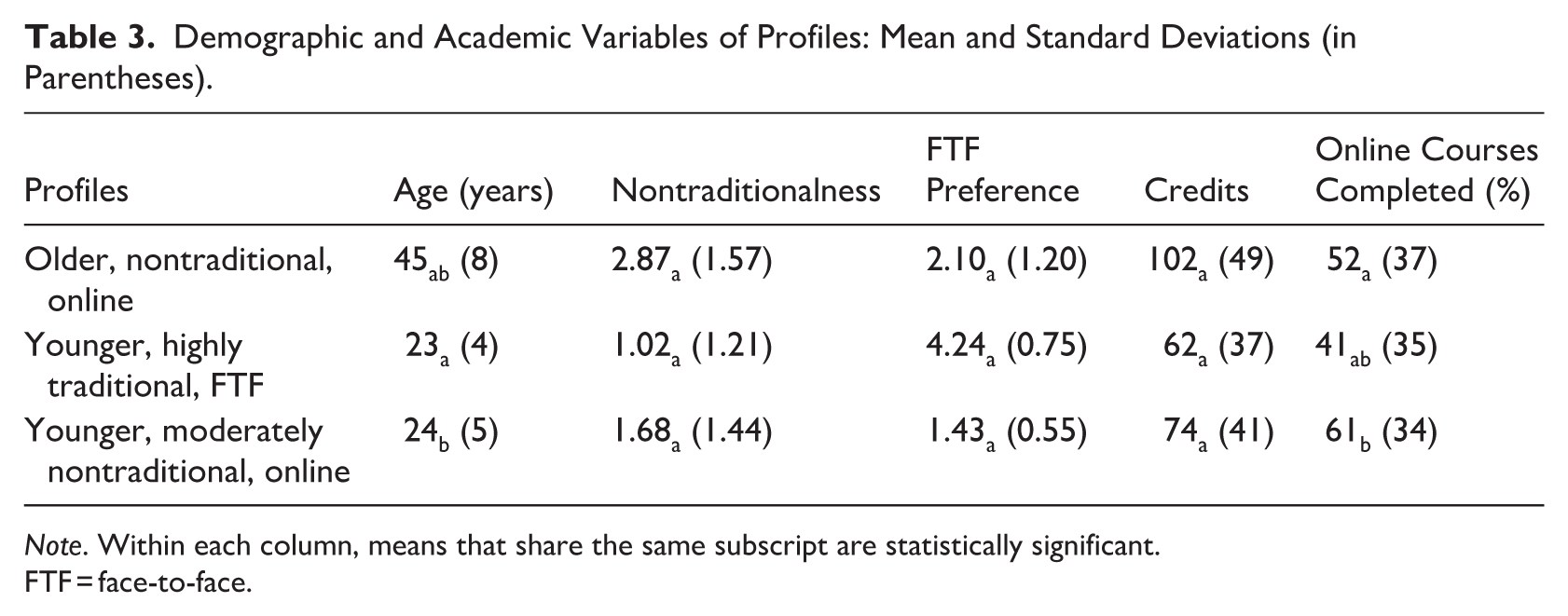
Note. Within each column, means that share the same subscript are statistically significant.
FTF = face-to-face.
To provide converging evidence of the profiles’ differentiation, the three profiles were compared on the number of credits accumulated and the percentage of online courses completed (see the last two columns in Table 3). As expected, the older students had more college course credits than either of the young groups (M = 102, SD = 49 vs. M = 62, SD = 37 and M = 74, SD = 41), F(2, 466) = 24.59, p < .001, η2 = .10. Similarly, the percentage of online courses students completed was higher among those who indicated that they preferred online courses compared to those who preferred FTF courses (M = 52%; SD = 37% and M = 61%, SD = 34% vs. M = 41%, SD = 35%), F(2, 466) = 15.62, p < .001, η2 = .06. Overall, these results provide strong evidence that the three profiles were sufficiently differentiated.
Study Habits
The data on students’ study habits, organized by student profile, are presented in Table 4. Overall, most students indicated that their decision on what to study next is contingent on whatever is due soonest or overdue (55%). However, younger, moderately nontraditional, online-oriented students were more likely to plan their study schedule ahead of time relative to the other two groups (36% vs. 21% and 20%), χ2 = 17.50, p = .008, adjusted Cramer’s V = 0.11. Participants indicated that they spend approximately a moderate amount of time studying for essay/short answer exams (M = 3.12, SD = 0.88; midpoint of scale = 3) and multiple-choice exams (M = 3.30, SD = 0.88). However, there were no group differences, Fs < 2.3, ps > .09, η2s < .01. Similarly, students indicated that they reread entire materials (M = 2.90, SD = 1.10; midpoint of scale = 3) and sections they annotated (M = 3.61, SD = 1.21; midpoint of scale = 3) to a moderate degree, and there were no group differences, Fs < 1, ps > .4, η2s < .01. A slight majority of students indicated that if they were convinced they knew the answer to a question, they would study it again later (57%), rather than putting it aside and focusing on other materials. This behavior did not vary by group, χ2 = 1.51, p = .404, adjusted Cramer’s V < 0.01. Most students reported studying in the evening (52%), with no group differences, χ2 = 5.42, p = .491, adjusted Cramer’s V < 0.01. Finally, most students indicated that they often space out their study sessions over multiple days/weeks (61%), compared to those who do their studying in one session before the test (39%); there were no group differences, χ2 = 0.30, p = .862, adjusted Cramer’s V < 0.01.
Student Characteristics and Their Study Habits: Percentages or Means (SD).
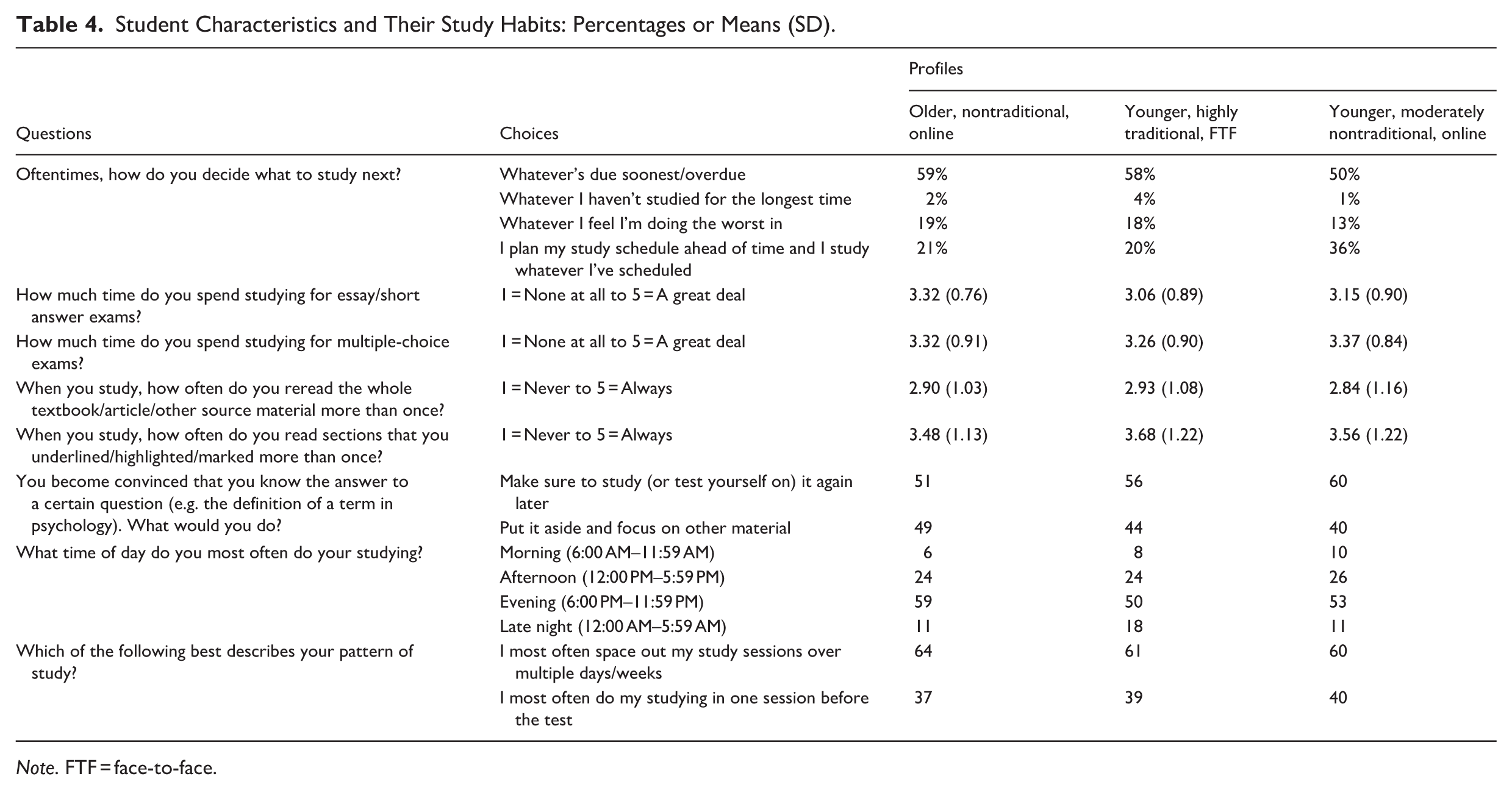
Note. FTF = face-to-face.
Study Strategies
Figure 3 shows the usage of specific study strategies among the three different groups. Overall, rereading was the most popular (71%), followed by underlining/highlighting (65%) and self-testing (59%). Moderately used strategies include cramming the night before (49%), making outlines (40%), and recopying notes (35%). The least popular strategies were participating in class (29%), studying with friends (21%), contacting the professor (20%), and making diagrams/charts (18%).
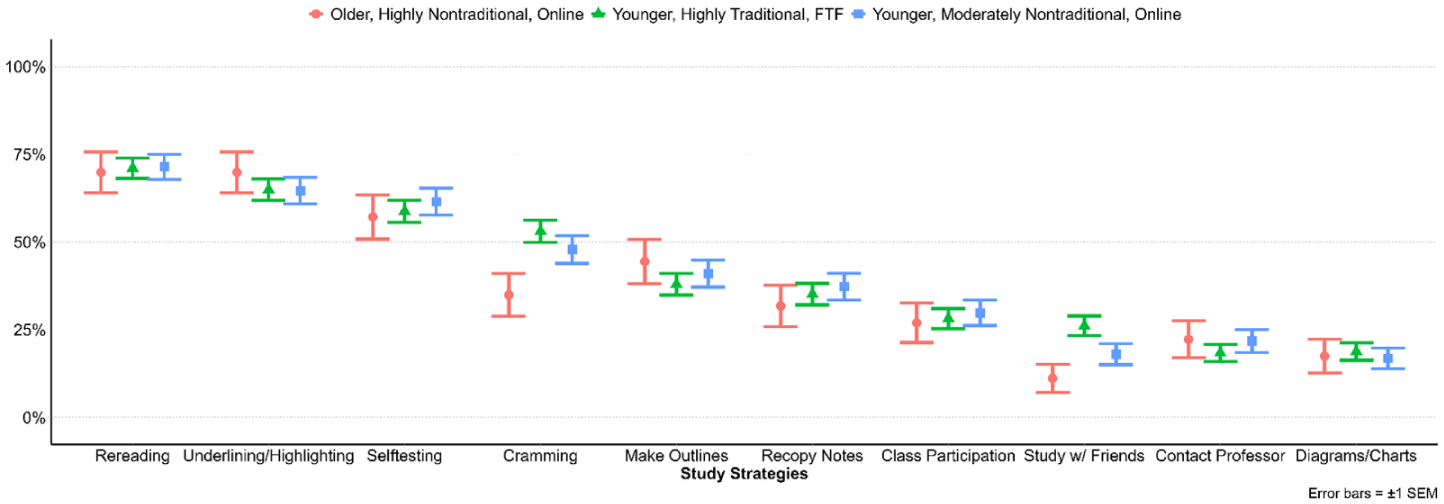
Student characteristics (profiles) and study strategies usage.
There were differences between groups who chose to cram the night before an exam, F(2, 466) = 3.38, p = .035, η2 = .01. Both groups of younger students reported a higher propensity to cram the night before an exam compared to older students (Myoung, highly traditional, FTF = 53%, Myoung, moderately traditional, online = 48% vs. Molder/nontraditional/online = 35%). Younger students were also more likely to study with friends compared to older students, F(2, 466) = 4.21, p = .015, η2 = .02, (Myoung, highly traditional, FTF = 26% and Myoung, moderately traditional, online = 18% vs. Molder/nontraditional/online = 11%).
Table 5 presents data on why students chose to engage in self-quizzing. The majority of students (68%) reported using this strategy to assess their understanding of the materials. About a third of students said they learn more from quizzing than rereading (32%), and a quarter of students said they found it more enjoyable than rereading. Fifteen percent of students indicated that they never quizzed themselves. There were no group differences in the various reasons why participants engaged in self-quizzing, Fs < 2.6, ps > .07, η²s < .015.
Student Characteristics and Their Reasons for Quizzing Themselves.
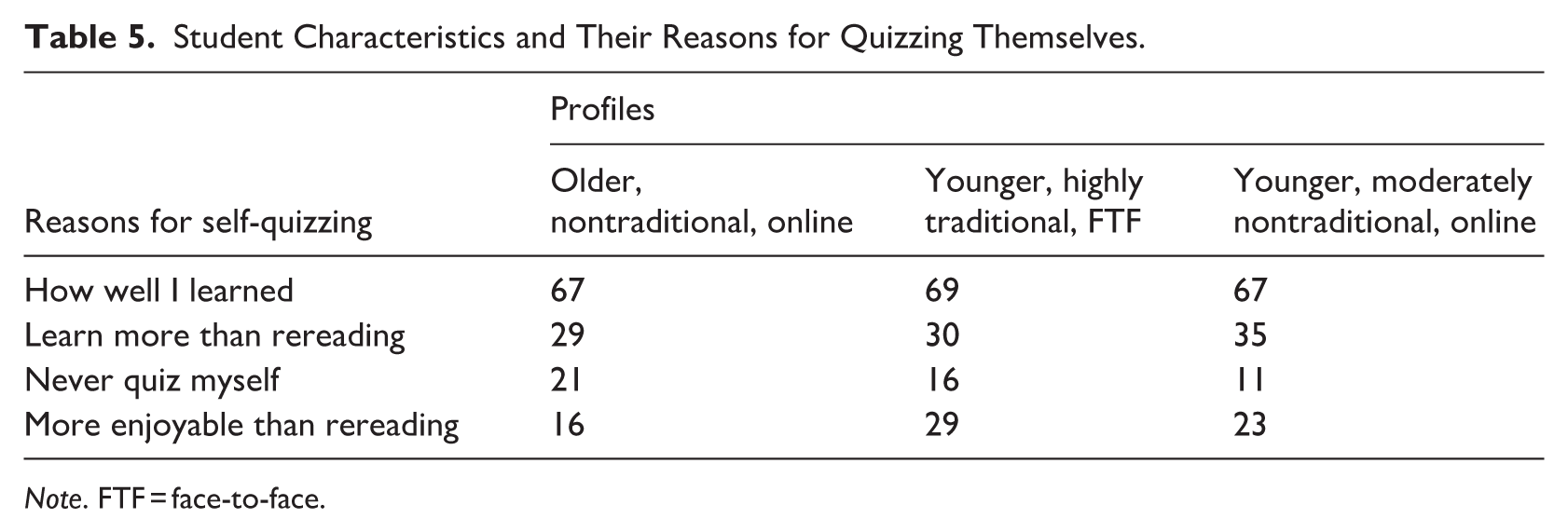
Note. FTF = face-to-face.
Discussion
The results of the present study replicated previous findings in this literature. Students who plan their study sessions ahead of time had a higher GPA than those who study whatever is due soonest or is overdue, replicating Hartwig and Dunlosky’s (2012) findings. Similarly, the present study replicated their finding that students who spaced out their study sessions also had a higher GPA. These two findings have strong support in the cognitive psychology and educational psychology literature. Specifically, planning multiple study sessions ahead of time and adhering to that plan are examples of strong time management and self-regulated learning skills, both of which are strong correlates of academic achievement (Cho & Serrano, 2020; Schneider & Preckel, 2017). Moreover, spacing study sessions (compared to massing) is one of the most robust methods to enhance learning (Carpenter et al., 2012).
Students who reported spending more time studying for exams (both essay/short answer and multiple choice) had higher GPAs, whereas re-reading the whole material or annotated parts of the material did not correlate with GPA. These findings replicate the results reported in many similar studies (e.g. Hartwig & Dunlosky, 2012, Morehead et al., 2016), as well as the testing (or retrieval practice) literature. Moreover, the present study provided convergent evidence supporting the finding that students who prioritize self-testing (or quizzing) have higher GPAs than those who do not. Specifically, quizzing to assess learning was positively associated with GPA.
Most cognitive and educational psychologists recognize self-testing as the most effective study strategy (Carpenter et al., 2022; Karpicke & Roediger, 2008). The benefits of testing have been demonstrated over a wide variety of materials and populations (Cho & Johnson, 2025; C. Yang et al., 2021). More impressive is that retrieval practice has been shown to enhance conceptual learning, sometimes referred to as the transfer of learning (Cho & Powers, 2019), as well as nontested but related materials (Cho et al., 2017); see also Chan et al. (2018) and Pan and Rickard (2018) for recent meta-analyses.
Although the results in Table 1 show that self-testing usage is the only significant positive correlate of students’ GPA, that does not mean that the other study strategies should be abandoned altogether. Indeed, many of the strategies listed in Table 1 could be used to amplify the robustness of retrieval practice. For example, while re-reading, underlining/highlighting, and recopying one’s notes may be ineffective study strategies when used by themselves, when combined with self-testing, they can amplify the benefits of testing. Re-reading can be a form of self-corrective feedback, a known moderator that boosts the benefits of self-testing (Butler & Roediger, 2008; see also Sinha and Kapur (2021), for a similar principle known as productive failure).
One finding that deviated from Hartwig and Dunlosky’s (2012) results is the time of the day students study and their GPA. Specifically, Harwig and Dunlosky found that students who studied in the evening reported the highest GPAs; however, in the present study, students who tend to study in the morning had the highest GPAs. A likely explanation for this difference rests on statistical power. There were virtually no participants (<1%) who reported studying in the morning in their study, whereas in the present study, approximately 9% of participants reported a preference for studying in the evening. Thus, one explanation for the difference is that their study was underpowered to detect any GPA differences in the morning study condition. Relatedly, the vast majority of participants in their study (69%) indicated a preference for studying in the evening. In contrast, the present study showed a more heterogeneous distribution of student study preferences. The study time preference distribution between the two studies likely reflects the more heterogeneous student population used in the present study. Specifically, older, nontraditional, and online-oriented students likely have different preferences for their study time compared to younger, traditional, FTF-oriented students, which likely comprised the vast majority of participants in Hartwig and Dunlosky (2012).
The present study found that students who preferred to study in the morning is associated with a higher GPA is supported by robust findings in the sleep literature which reported a positive correlation between morningness personality (i.e. a person’s natural tendency to wake up early, feel most alert and energetic in the morning, and prefer to complete important tasks earlier in the day) and academic achievement (see Preckel et al., 2011, for a meta-analysis). Thus, a student who chooses to study in the morning suggests that they have strong self-regulated learning skills and prioritize their academics, which, as noted earlier, is a strong correlate of academic achievement. Furthermore, morning chronotypes are also likely to report less stress, which is another (negative) correlate with academic achievement (Manjareeka et al., 2025).
Building on the findings of all previous research in this area, the present study examined the study habits and strategies of a more diverse student population. The LPA using students’ age, nontraditional student characteristics, and course modality preference indicated that there were three groups of students in the present study: (1) older students who are highly nontraditional and prefer online courses, (2) younger students who are highly traditional and prefer FTF courses, and (3) younger students who are moderately traditional and prefer online courses. The first two groups exhibit opposing characteristics, while the third represents an emerging cohort that values greater course flexibility. Indeed, this group represented more than one-third of the sample in the present study.
Two notable differences emerged between the three groups. First, and relevant to students’ study habits, younger, moderately nontraditional, online-oriented students were most likely to plan their study schedule ahead of time. This finding can likely be attributed to younger students having fewer demands outside the classroom, such as caring for dependents or working a full-time job (Barshay, 2024; Forbus et al., 2011), and therefore having greater flexibility in adhering to their preferred study schedule. However, greater flexibility also requires increased self-regulation to achieve academic success. Indeed, studies (e.g. Ariely & Wertenbroch, 2002) have shown that students tend to procrastinate, which is an indicator of lack of self-control and a negative predictor of academic success, when there are no externally imposed deadlines. Accordingly, online students might be more likely to recognize the need for a structured study schedule, rather than relying on reactive, deadline-driven studying, especially if the online course is asynchronous and therefore lacks structured, weekly course meetings.
Another difference between the groups of students concerns their study habits. Both younger groups were more likely to study with friends than older students. This difference could be due to a number of differences between younger and older students. First, older students have less flexibility in their schedules due to increased life demands and therefore will have less predictable study schedules (Barshay, 2024; Forbus et al., 2011), making it difficult to form or commit to a study group with other students. The increased life demands outside the classroom for older students would also mean they spend less time on campus, which may reduce opportunities to both establish and coordinate possible group study times. Another impediment to establishing a study group with other students is the lower sense of belonging experienced by older, nontraditional students (Dennis & Clifton, 2021). Group differences in studying with friends are consequential, as Schneider and Preckel (2017) reported in a comprehensive meta-analysis that small-group learning was associated with greater academic success than individual learning (d = 0.51). Moreover, group learning can be an effective method to increase students’ sense of belonging, which is another predictor of academic success (Gopalan & Brady, 2020). Yet, as discussed earlier, older students often report lower levels of belonging (Dennis & Clifton, 2021), suggesting that they may not experience these benefits to the same extent.
Implications for Educators
The findings from this study offer several valuable insights for educators seeking to enhance the academic support they provide to their diverse students. First, instructors should encourage students to practice optimal self-regulated learning strategies. These strategies include repeated self-testing (rather than rereading), spacing out their study sessions (rather than studying in one session), and being proactive and planning their study schedule ahead of time (rather than being reactive and studying whatever is due soonest or overdue). There are ample, student-friendly guides that teach students effective study habits (e.g. Putnam et al., 2016). Other, more comprehensive guides (e.g. McDaniel & Einstein, 2020) focus on both teaching students effective study habits and discussing how to overcome obstacles to their implementation. These more comprehensive guides, therefore, also provide students with a concrete plan to commit to and execute self-regulation strategies.
Educators should be mindful that some students (older, nontraditional) may have greater difficulty implementing more optimal learning habits and strategies due to the increased life obligations they have outside of the classroom and consider being flexible with deadlines (to a certain extent) or allowing students to choose from multiple assignments. Courses can be structured to reduce self-regulatory demands, which can help students allocate their cognitive resources more productively. For example, Berro et al. (2025) improved student success by creating a highly structured course (e.g. an unambiguous sequence of activities and a lesson plan for students to follow as they progress through the course). Another strategy is to implement gamification in one’s course (e.g. Stansbury & Earnest, 2025) to increase students’ motivation in the course and encourage them to practice optimal self-regulation skills (e.g. awarding badges for completing an assignment well before the deadline thereby avoiding procrastination).
Educators whose classes enroll many older, nontraditional students should also strive to increase peer interaction among students. The lack of peer interaction is particularly critical in online courses, where many students report low levels of collaborative learning and limited faculty interaction—factors that ultimately reduce engagement (Paulsen & McCormick, 2020). Accordingly, an instructor might consider requiring assignments that involve more interactions among students (e.g. peer-evaluations, student-led discussions) and creating activities that foster a greater sense of belonging (e.g. encouraging virtual study groups, holding virtual office hours).
Future Directions and Conclusions
The present study assessed students’ self-reported study strategies and habits. It would be informative to capture students’ rationales for their strategies and habits. Although this study gathered these data on self-testing, it did not explore students’ decisions to adopt other learning behaviors they practice (e.g. preferred study time). Another important study would be to investigate consistency in students’ study strategies and habits. These data could provide insight into the factors that lead students to adopt more optimal learning behaviors overtime.
Overall, the present, high-powered study, which collected data from a diverse student population, provides insights into the common study strategies and habits of college students and how they relate to academic performance (GPA). Furthermore, this study indicates that students’ learning behaviors vary according to their individual characteristics. Accordingly, understanding students’ diverse needs and behaviors is essential for instructors seeking to provide effective academic support.
Supplemental Material
sj-docx-1-alh-10.1177_14697874261437063 – Supplemental material for How Students Study: Who Uses What Strategies and Does It Matter?
Supplemental material, sj-docx-1-alh-10.1177_14697874261437063 for How Students Study: Who Uses What Strategies and Does It Matter? by Kit W. Cho in Active Learning in Higher Education
Footnotes

Funding
The author disclosed receipt of the following financial support for the research, authorship, and/or publication of this article: This article was supported by the Funded Faculty Leave grant from the University of Houston–Downtown
Declaration of Conflicting Interests
The author declared no potential conflicts of interest with respect to the research, authorship, and/or publication of this article.
Data Availability Statement
The data supporting this study’s findings are available from the author, KWC, upon reasonable request.
Supplemental Material
Supplemental material for this article is available online.
Author Biography
References
Supplementary Material
Please find the following supplemental material available below.
For Open Access articles published under a Creative Commons License, all supplemental material carries the same license as the article it is associated with.
For non-Open Access articles published, all supplemental material carries a non-exclusive license, and permission requests for re-use of supplemental material or any part of supplemental material shall be sent directly to the copyright owner as specified in the copyright notice associated with the article.
