






Abstract
This study examined student perspectives on flipped learning (FL), a pedagogy that shifts lectures outside the classroom to promote active, hands-on engagement during class. Twenty-four Science, Technology, Engineering, and Mathematics (STEM) faculty members from a 4-year university and a 2-year community college implemented FL after receiving professional development. The research employed a longitudinal quasi-experimental design, tracking the implementation of FL over a 4-year period. A sample of 1,466 students enrolled in these flipped courses provided feedback via end-of-course surveys. Survey data were analyzed using ordinal logistic regression to assess the impact of gender, race/ethnicity, institution type, and academic level on FL perceptions. Results revealed variations across demographics: male respondents expressed higher confidence, whereas nonbinary students strongly endorsed FL across metrics. Female students admitted having higher engagement and favorable classroom environments. The highest levels of positive perception were observed among Asian students, and non-White and senior-level (fourth-year) students reported stronger agreement on FL benefits. Perceptions were more favorable in the 2-year institution, highlighting FL’s unique impact in this environment. Overall, FL was positively associated with increased engagement and confidence across diverse student groups, suggesting that the model is a vital, resilient, and inclusive framework for STEM education.
Keywords
Introduction
Educational practice is shifting from traditional teaching methods to student-centered learning, particularly in Science, Technology, Engineering, and Mathematics (STEM) subjects (Senapati & Selvam, 2024; Shehata et al., 2024; Zhang et al., 2023). Core principles such as active learning, collaboration, reflection, and self-assessment enhance students’ problem-solving skills, communication, critical thinking, engagement, and motivation toward learning (Kerimbayev et al., 2023). The diverse instructional strategies and experiential learning opportunities in higher education contribute to the development of student skill sets (Ekkekakis et al., 2016; Hannon, 2014; Masic et al., 2020). Flipped learning (FL) is one of the student-centered educational frameworks that can be developed into a flexible pedagogy by incorporating active instructional methods to achieve effective results (Lapitan et al., 2023; R. Li et al., 2021; Selvam, 2023). In a flipped classroom model, students review course content through pre-class activities and engage in interactive or collaborative exercises during classroom sessions for deeper exploration of the subject matter (Gopalan, Daughrity & Hackmann, 2022). Research has shown that these pre-class activities reduce students’ cognitive load, allowing them to focus on problem-solving activities during in-class sessions with the support of peers and facilitators (de Leng & Pawelka, 2020; Persky & McLaughlin, 2017; Wagner-Loera, 2018; Xin & Zhang, 2024). Technological advancements have significantly enhanced FL by providing tools that increase accessibility, interactivity, and personalized instruction (Anand, 2021). Lecture capture software and video hosting platforms enable educators to create and distribute high-quality digital learning content that students can access anytime and anywhere before coming to class (Baig & Yadegaridehkordi, 2023). Learning management systems (LMS) and online collaboration tools facilitate course organization, interactive discussions, and real-time feedback (Elfeky et al., 2020).
Advanced adaptive learning technologies and mobile learning applications further personalize the learning experience, allowing students to progress at their own pace and receive targeted support (Yılmaz, 2021). These technological advancements make FL more engaging and effective, catering to diverse learning needs and improving educational outcomes (Lo, 2018). During the COVID-19 pandemic, campus closures necessitated a rapid shift to alternative teaching methods, with FL emerging as an effective solution for transitioning from in-person to online instruction (Gopalan, Onal et al., 2021; Onal et al., 2023; Divjak et al., 2022). The pandemic-driven adoption of new educational technologies and the move to online learning have significantly expanded the use of FL in higher education, demonstrating its suitability for virtual learning environments (Aidoo et al., 2022; Campillo-Ferrer & Miralles-Martínez, 2021; Lo, 2023). Research on students’ perceptions of FL shows generally positive outcomes such as greater engagement and motivation (Ruiz-Jiménez et al., 2024; Zainuddin & Attaran, 2015), though STEM studies also note concerns about workload, preparedness, and the value of pre-class materials (Gündüz & Akkoyunlu, 2019; Hao, 2016). These mixed findings highlight the need to further explore student experiences across different higher-education contexts.
A typical FL method involves three components, that is, pre-class, in-class, and post-class activities. Pre-class preparation uses instructor-recorded video lectures, reading assignments, and guided notes to prepare students for in-class discussions and problem-solving activities (Goedhart et al., 2019). To encourage students to prepare for in-class activities, formative assessment can be conducted before or early in the classroom session. In-class sessions are then devoted to higher-order thinking through quizzes and engaging activities (Selvam & Senapati, 2023). These activities, performed individually and in small groups, focus on reviewing, rehearsing, applying, analyzing, and synthesizing the knowledge gained from pre-class learning, all under the instructor’s guidance (Jovanovic et al., 2019). Post-class activities include the instructor analyzing students’ learning outcomes (Singh et al., 2018). The FL method requires students to adapt to the time commitment in processing assigned content before class. For instance, recorded lectures enable students to view the videos as often as necessary to become familiar with the material.
Clear communication from the instructor about course expectations is crucial in FL because it directly impacts student engagement and motivation toward the course. Regular formative assessments that contribute to the overall grade have been shown to improve student motivation (Kay et al., 2019). Effective instructor communication during in-class sessions fosters problem-solving and collaborative learning, which, in turn, enhances students’ critical thinking and deepens their understanding of concepts (Chang et al., 2022). This comprehensive approach allows students to maximize their learning potential through structured yet flexible educational practices. Faculty commitment, supported by high-quality professional development, further contributes to achieving positive student learning outcomes (Gopalan, Halpin et al., 2024).
There is no evidence to suggest whether students with varying levels of college experience benefit equally from the FL model. First-year (freshmen) and fourth-year (senior) students may differ in how they engage with learning experiences. For first-year college students, social and personality factors often drive academic success more than cognitive learning (Hannon, 2014). Ideally, freshmen should adapt quickly to FL, especially as it has become more common in secondary schools (Wei et al., 2020). However, a study of first-year STEM students in China found they did not complete pre-class assignments and were unprepared for in-class activities (Y. Li, 2018). Juniors and seniors, with greater experience in diverse classroom settings and instructional strategies, may adapt more easily to FL and are likely to complete pre-class assignments (Masic et al., 2020).
The effectiveness of FL at community colleges, particularly in STEM fields, remains underexplored, partly because STEM courses are often perceived as content-heavy and challenging to restructure into active-learning formats. However, FL is particularly appropriate in STEM education as it allows students to engage with foundational content before class and use in-class time for problem-solving, experimentation, and application of concepts, which aligns well with the skills required in STEM disciplines (Gong et al., 2024). Community colleges often serve a highly diverse student body, encompassing individuals of varying ages, ethnicities, and backgrounds. Many students also balance significant responsibilities, such as work and family commitments, making it challenging to tailor teaching methods to their unique needs and experiences (Dougherty, 2016; Karp et al., 2010). Furthermore, these institutions cater to students with differing academic readiness levels; although some have a strong educational foundation, others require remedial coursework to succeed (Shapiro et al., 2015). Financial constraints are another common issue, with many students managing a workload that combines academic, professional, and personal demands, thereby reducing the time available for coursework (Twigg, 2009). Flipped pedagogy is particularly well-suited to address these challenges due to its flexibility (Dove, 2013; Riedl et al., 2021). It enables students to engage with pre-class content at their convenience and revisit it as needed to build familiarity. Active learning strategies during class sessions further reinforce comprehension and application of the material (Lin et al., 2021).
In the university context, FL is equally valuable as large lecture-based STEM courses often restrict interaction and feedback (Idsardi et al., 2023). By moving content delivery outside class, FL frees in-class time for problem-solving, inquiry, and application of concepts, thus overcoming the limits of lecture-heavy formats (Lee, 2017). It also supports the development of higher-order skills such as critical analysis and independent learning, which are essential for advanced study and professional preparation (Simko et al., 2019).
Despite the documented benefits of FL, there remains a lack of large-scale, multi-institutional research that examines how this pedagogy impacts diverse student populations over an extended period. Most FL studies are limited to a single course or a single semester. Furthermore, there is a gap in the literature regarding how FL is perceived across intersecting identities—such as gender, race, and institution type (2-year vs. 4-year)—particularly when implemented by faculty who have undergone extensive professional development. Whether FL fosters educational equity or exacerbates barriers for underrepresented student groups must be examined.
Drawing on a longitudinal analysis of 1,466 STEM students across multiple institutions, this study investigates the extent to which student identity and institutional type shape the success of flipped instruction.
Research Questions
Despite the growing adoption of FL, there is limited research on how different student populations perceive this teaching method. The present study seeks to fill this gap by investigating various aspects of student perceptions towards FL. Understanding these perceptions can provide valuable insights for educators to tailor their teaching strategies effectively. Additionally, the findings may guide institutions in implementing FL in a way that maximizes its benefits for diverse student groups. Specifically, this research aimed to address the following research questions:
Methodology
Sample Population and Participant Characteristics
The study population comprised 24 STEM faculty members (n = 24) recruited from two distinct Midwestern institutions: a 4-year public university and a 2-year college. Participants were divided into two sequential cohorts (n = 12 per cohort), with each cohort maintaining an equal distribution of faculty from both institutions. The STEM faculty participants were selected by the researchers using an application process where candidates detailed their proposed courses to flip and the reasons for their interest in the project.
The participant pool was characterized by significant disciplinary and professional diversity. Of the 24 participants, 58% were female (n = 14) and 42% were male (n = 10), representing a broad range of STEM fields: Biology (29%), Chemistry (25%), Mathematics (21%), Engineering (17%), Environmental Science (4%), and Information Systems (4%). At the time of enrollment, the participants’ teaching experience averaged 12.9 years (SD = 6.85), with a range spanning from 3 to 25 years. This broad distribution ensured the inclusion of both early-career and experienced educators, providing a diverse faculty base in terms of both rank and pedagogical background. At the 4-year institution, the STEM courses included Civil Engineering, Mathematics, Biochemistry, Chemistry, Biology, Ecology and Environmental Science, and Genetics, among others. At the community college, courses included general transfer studies, including Biology, Engineering, Cybersecurity, and Software Engineering, along with other STEM-aligned programs.
Research Design
A semester-long program provided faculty with six workshops covering FL best practices, pedagogical strategies, and technical tools (Gopalan, Bracey et al., 2018). Researchers supported faculty while implementing FL and evaluated their experiences through focus groups and end-of-semester surveys. (Gopalan, Halpin et al., 2024). A peer-mentorship model supported the second cohort, with Cohort 1 members serving as mentors to ensure the sustainability of the flipped pedagogy. Cohort 1 (trained Fall 2018) and Cohort 2 (trained Fall 2019) both maintained FL implementation in their courses through the Spring 2022 semester. Unexpectedly, the global COVID-19 pandemic closed the campus in 2020, requiring these faculty participants to adapt their courses rapidly to remote learning. This provided an unanticipated opportunity for the project researchers to also observe and document faculty and student experiences during this transformative phase of instructional delivery (Gopalan, Serrano et al., 2022; Onal et al., 2023).
Student feedback is essential for project refinement, offering critical insights into pedagogical impact and highlighting opportunities to better tailor FL courses to diverse learning needs (Chen, 2024; Kim, 2016). Thus, this study evaluated learners’ perceptions of the flipped STEM courses to gain insights into how students experienced and benefited from the new instructional design.
To evaluate the students’ perspectives, the research team administered end-of-course surveys to 1,466 undergraduate students in flipped STEM courses, including 398 students at the community college, and 1,068 students at the university. Of the students who responded to questions about racial identity, 72.6% identified as White, and 27.4% identified as Multiple races or one of many non-White identities. Figure 1 illustrates in more detail the ethnoracial diversity of the non-White student population involved in this study in their own words.
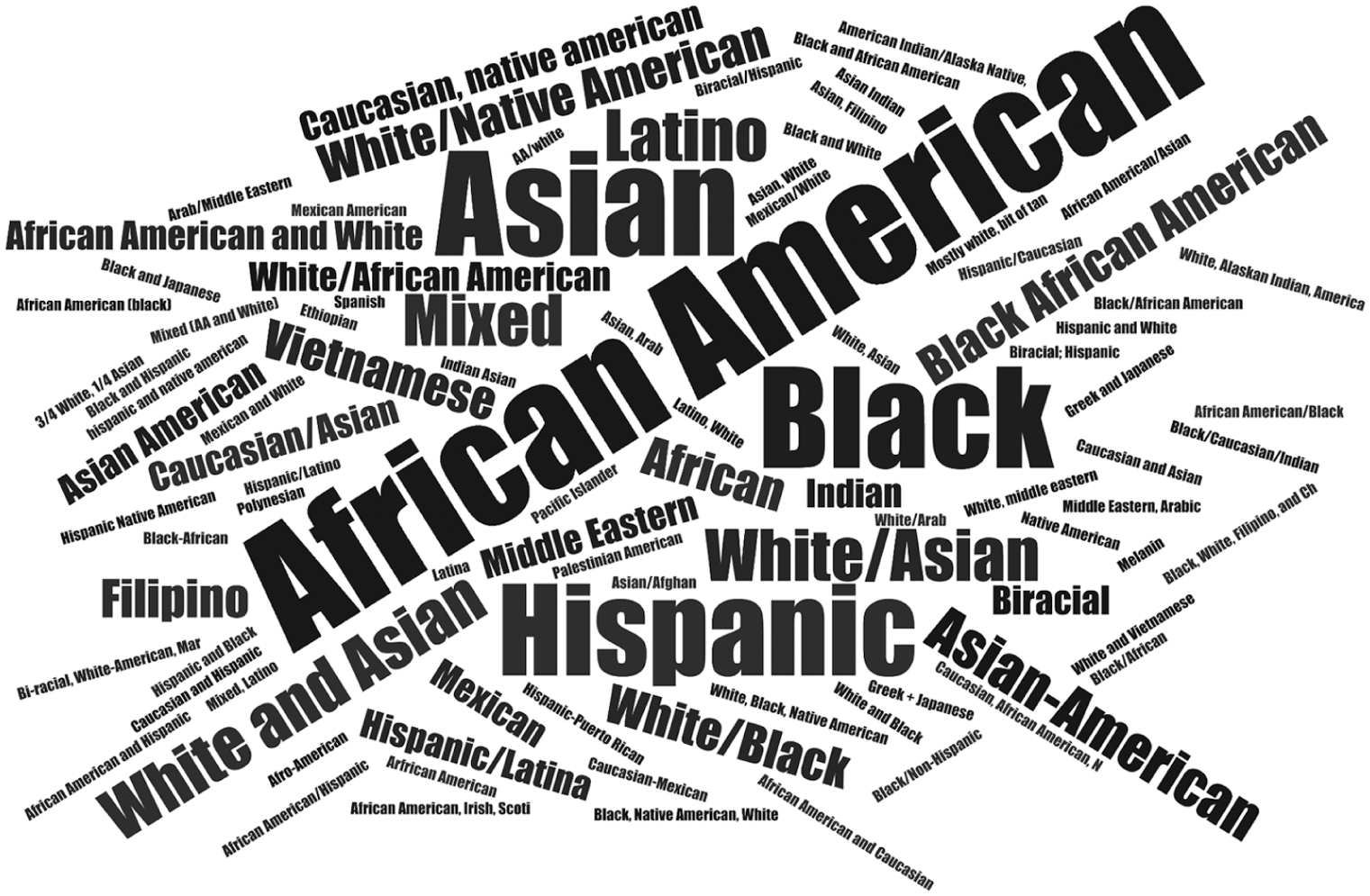
Visualizing racial and ethnic diversity through intersectional representation based on student responses.
The word cloud in Figure 1 represents the diversity of racial and ethnic identities, showcasing terms like “African American,” “Asian,” “Black,” “Hispanic,” and “Mixed” as prominent categories. Other terms, such as “Filipino,” “Vietnamese,” “Middle Eastern,” and “Biracial,” reflect additional dimensions of cultural and ethnic diversity. The inclusion of hybrid identities, such as “White/Asian,” “African American and White,” and “Black/Caucasian/Indian,” highlights the complexity of multiethnic and multicultural representation. This word cloud highlights the broad spectrum of identities present in diverse populations, emphasizing the importance of recognizing and valuing intersectionality in race and ethnicity.
Student Perception Survey and Data Collection
This study sought to examine students’ perceptions of FL in the STEM courses based on their direct experiences. The student survey consisted of 11 closed-ended questions, nine demographic questions, and one open-ended question to assess students’ perceptions toward their FL courses. The questions were adapted from surveys tested in previous studies (Gopalan, Onal et al., 2021; Gopalan, Fentem & Rever, 2020; Gopalan, Butts-Wilmsmeyer, Moran, 2021). The 11 closed-ended questions used a 5-point Likert scale, ranging from “strongly agree” to “strongly disagree.” Students were asked about their level of engagement, confidence with the course content, willingness to take another flipped course, and overall feelings towards the instructional method. The survey also included demographic questions about factors such as gender, race/ethnicity, institution type (2 or 4 years), and college year (freshman to senior). The research team, in collaboration with the participating faculty members, handed out the paper-format surveys to students during the final 2 weeks of the semester. Additionally, the open-ended question, “Any additional comments about flipped teaching?” enabled the research team to validate and confirm students’ responses to the closed-ended questions by cross-referencing and analyzing the responses for consistency. However, only a minimal number of responses were received for the open-ended question, which largely reiterated themes already captured in the Likert-scale items, and thus were not incorporated into the results.
Data Analysis
Quantitative data from the student surveys were analyzed using RStudio (version 2023.06.1). To ensure the validity of the findings, non-parametric Kruskal-Wallis tests were employed as the primary inferential tool. This statistical approach was selected because the survey utilized ordinal Likert-scale items, which do not meet the assumption of normality required for parametric tests like ANOVA. By using the Kruskal-Wallis method, the analysis remains robust against non-normal distributions and unequal group sizes. To gain an understanding of the effectiveness of FL, the data were systematically disaggregated and analyzed by gender, race/ethnicity, institution type (2-year vs. 4-year), and educational level (freshman through senior). This comprehensive demographic breakdown allowed researchers to evaluate the reliability of the FL model across diverse student populations and institutional contexts, ensuring that the results were not skewed by a single subgroup. Racial and ethnic data were not collected during the Spring 2019 semester; consequently, this cohort was excluded from the race-based analyses to maintain data integrity. For the remaining sample, a bifurcated categorization was initially employed to ensure sufficient statistical power for the Kruskal-Wallis tests: “White only” (n = 867) and a consolidated “Multiple and/or non-White” category (n = 327). To provide a more detailed understanding of student experiences, supplemental analyses were conducted by disaggregating the consolidated group into the five most prevalent racial and ethnic identities: Asian, Black, Latino/Hispanic, Multiple races, and White. This multi-level analytical approach allowed the researchers to identify broad trends while simultaneously validating findings through specific sub-group comparisons.
Results
The Cronbach’s Alpha for this study was 0.92, indicating that the instruments we used have strong validity and reliability. The data revealed insights into how different student demographics responded to this teaching approach, with the Kruskal-Wallis tests showing a significant impact of student identity on their perceptions of FL. Student perceptions of FL varied across gender, race/ethnicity, institution type, and grade level (Table 1).
Variability in Student Perceptions of Flipped Learning Across Demographics and Academic Contexts.
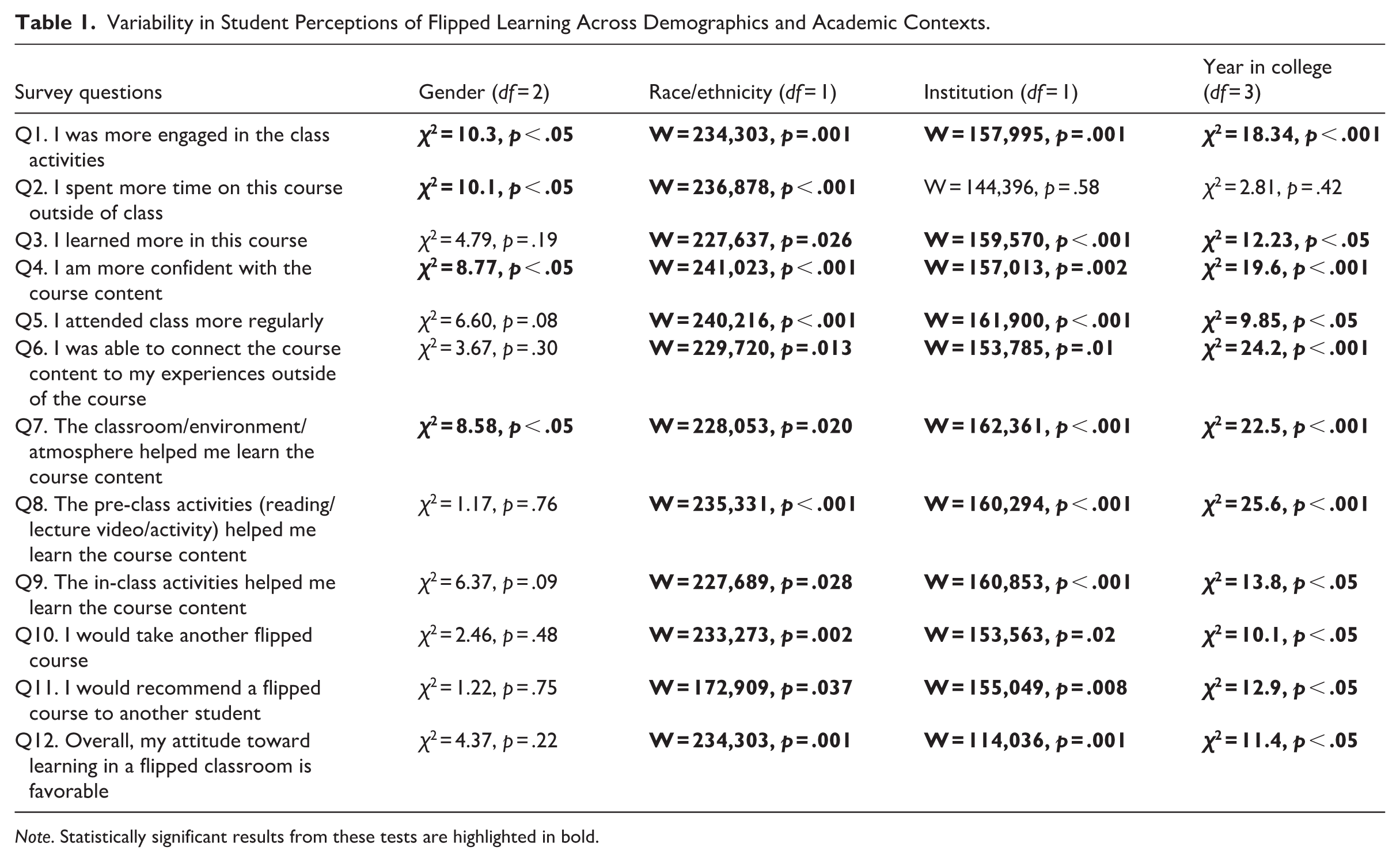
Note. Statistically significant results from these tests are highlighted in bold.
Student Perceptions of FL Across Gender
Student survey responses were analyzed for differences across genders: 734 females, 667 males, and 11 nonbinary students. The low number of nonbinary students compared to male and female participants limited the statistical significance of their responses. Statistically significant differences are seen in reported engagement, time spent outside class, confidence with course content, and the impact of the classroom environment on learning (Table 1). Survey responses indicated that male respondents reported higher engagement in class activities (Q1), confidence (Q4), and positive impacts of the classroom atmosphere (Q7) than female and nonbinary students. However, more female students reported spending greater time on coursework outside of class than male and nonbinary students.
Student Perceptions of FL Across Race/Ethnicity
Perceptions of flipped classrooms varied between students identifying as White only (n = 867) and those identifying as multiple and/or non-White (n = 327) across various metrics (Table 1). Students in both groups generally agreed on positive aspects of flipped classrooms, but multiple races and/or non-White students expressed slightly higher levels of agreement in most areas. Results for all questions are provided in Table 1, and results for Q1 and Q11 are highlighted in Figure 2. Non-white students expressed feeling more engaged in class activities (Q1, Figure 2), learning more in the course (Q3, Table 1), feeling confident with course content (Q4, Table 1), and finding the pre-class and in-class activities helpful for learning (Q8 and Q9, Table 1). Both groups similarly valued the classroom atmosphere and its learning support. However, non-White students demonstrated a stronger preference for flipped courses and higher levels of engagement in both pre-class and in-class activities compared to their White peers. Over 50% of the non-White students reported enjoying the classroom environment and finding it conducive to learning (Q7, Table 1). Multiple races and/or non-White students were also more likely to recommend flipped courses (Q11, Figure 2), report willingness to take another flipped course (Q10, Table 1), and have a favorable perception toward learning in this format (Q12, Table 1).
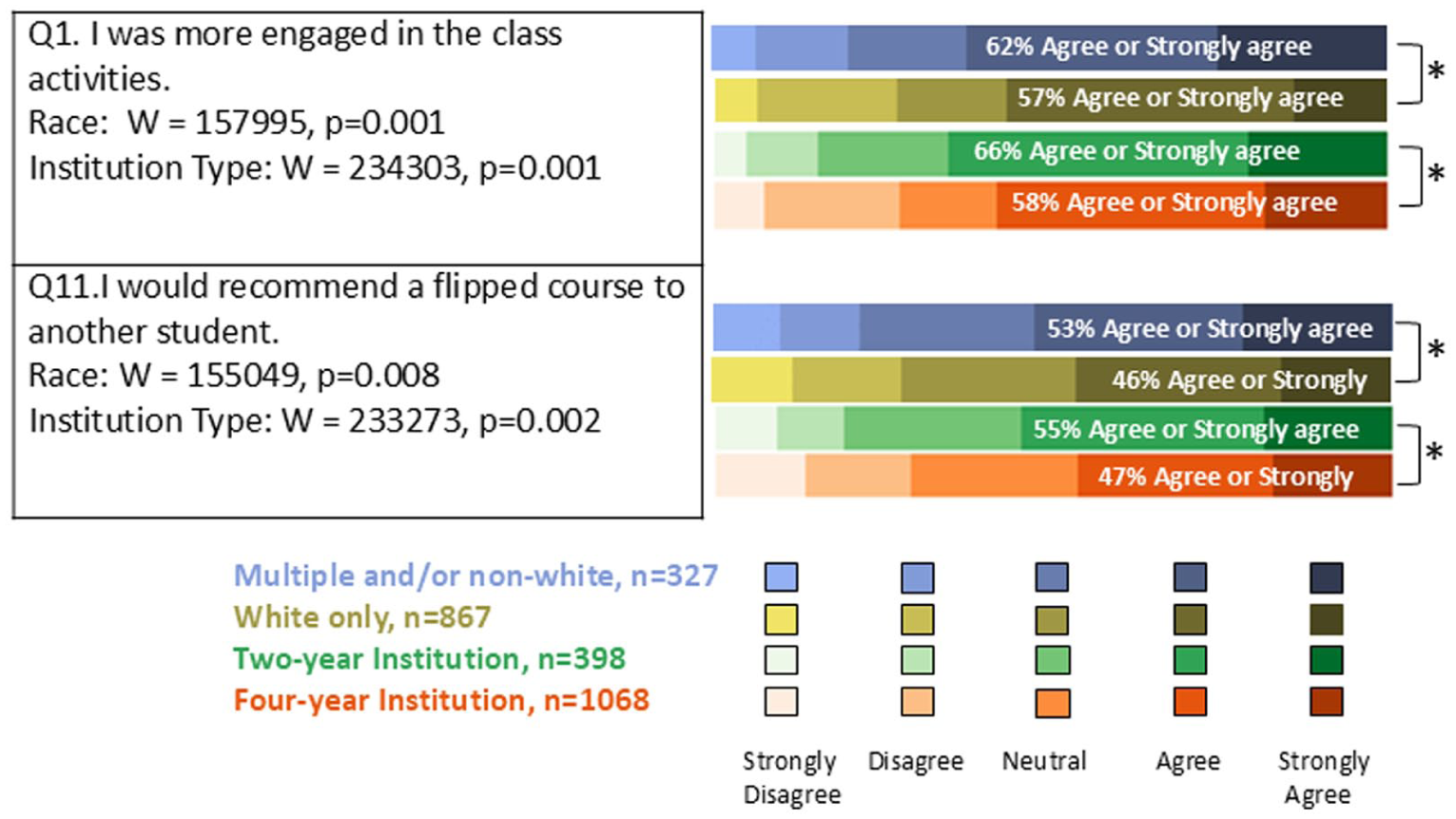
Comparison of flipped classroom perceptions between white-only and multiple and/or non-white students and between 2- and 4-year institutions. Statistical significance shown is from Wilcoxon-Mann-Whitney tests and percentages displayed are for the students who agreed or strongly agreed. For this analysis race/ethnicity responses were pooled to create only two categories, “White only” (n = 867) and an umbrella category “Multiple and/or non-white” (n = 327).
A detailed breakdown of the data highlights variations in engagement and perceptions across different racial/ethnic groups, as shown in Figure 3. The analysis considered five categories: Asian, Latino/Hispanic, Black, White, and Multiple. Asian students consistently reported the highest levels of engagement (Q1, Figure 3); on the other hand, Multiple category students reported the lowest engagement. Similarly, learning gains (Q3, Figure 3) were perceived most favorably by Asian students, followed by Latino/Hispanic and Black students, suggesting varying levels of effectiveness in FL across groups. Confidence in course content also differed (Q4, Figure 3), with Asian students and those identifying as Latino/Hispanic ethnicities expressing higher confidence than Black, Multiple, and White students.
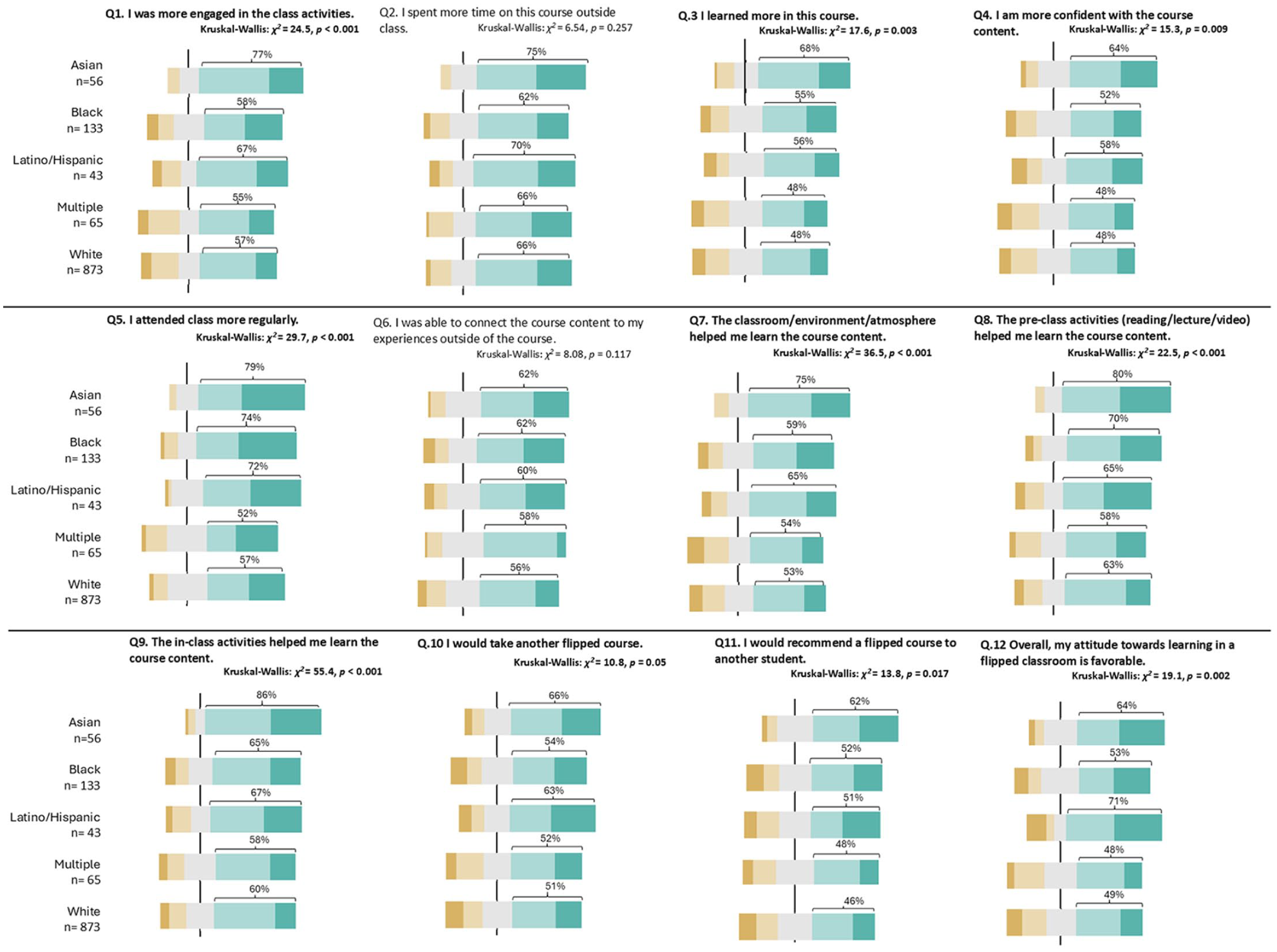
Student perceptions of FL by racial/ethnic groups. Statistical significance shown are from Kruskal-Wallis tests and percentages displayed are for the students who agreed or strongly agreed.
The perceived supportiveness of the classroom environment varied (Q7, Figure 3), with Asian students finding it the most beneficial, but White students reported the least support. Pre-class activities (Q8, Figure 3), such as course readings and videos, were seen as most helpful by Asian students Similarly, in-class activities (Q9, Figure 3) were rated most positively by Asian students who reported attending class more regularly (Q5, Figure 3), whereas students of multiple races had the lowest agreement on this metric. Willingness to take another flipped course (Q10, Figure 3) was also highest among Asian students and lowest among White students. Additionally, the likelihood of recommending a flipped course (Q11, Figure 3) followed a similar pattern, with Asian students being the most supportive and White students the least.
Student Perceptions of FL Across Institution Type
Student survey responses were compared across 2-year (n = 398) and 4-year institutions (n = 1,068). Statistically significant differences were found across all but one of the survey items (Table 1). Students at the 2-year institution reported higher levels of engagement, learning, and satisfaction. For instance, 66% of students at the 2-year institution agreed or strongly agreed that they were more engaged in class (Q1, Figure 2) compared to 58% at the 4-year institution. Similarly, more students at the 2-year institution agreed that they learned more (Q3, Table 1) and attended class more regularly (Q5, Table 1). Additionally, students at the 2-year institution found it easier to connect course content to their experiences (Q6, Table 1) and rated classroom environments as more supportive for learning (Q7, Table 1). Pre-class and in-class activities were also perceived as more helpful by students at the 2-year institution (Q8 and Q9, Table 1). Lastly, more students at the 2-year institution agreed they would recommend a flipped course (Q11, Figure 2), compared to the 4-year institution. These results suggest that flipped classrooms may be particularly impactful in 2-year institutional settings.
Student Perceptions of FL Across Grade Level
Figure 4 summarizes student perceptions of FL across academic years, highlighting statistically significant differences in their responses, with categories including senior, junior, sophomore, and freshmen. As shown in Figure 4, seniors consistently reported the most positive experiences, including higher engagement, improved learning, and greater confidence in the course content (Q1, Q3, and Q4, Figure 4), but freshmen rated these aspects the lowest. Similarly, sophomores are more likely to report that they attend class regularly (Q5, Figure 4) than other groups. Seniors reported connecting course material to real-life experiences (Q6, Figure 4) and finding the classroom environment supportive of learning (Q7, Figure 4). Pre-class activities (e.g. readings or videos) and in-class activities were also rated most favorably by Seniors (Q8 and Q9, Figure 4), whereas freshmen found them less helpful. Moreover, despite slight differences, both seniors and juniors expressed the strongest willingness to take another flipped course (Q10, Figure 4) and to recommend it to others (Q11, Figure 4), reflecting their positive perception of this learning approach. Notably, 56% of Senior students agreed that FL improved their confidence in the course content (Q4, Figure 4), suggesting that perceptions of flipped classrooms improve as students’ progress through their academic careers, potentially due to college experience or maturity.
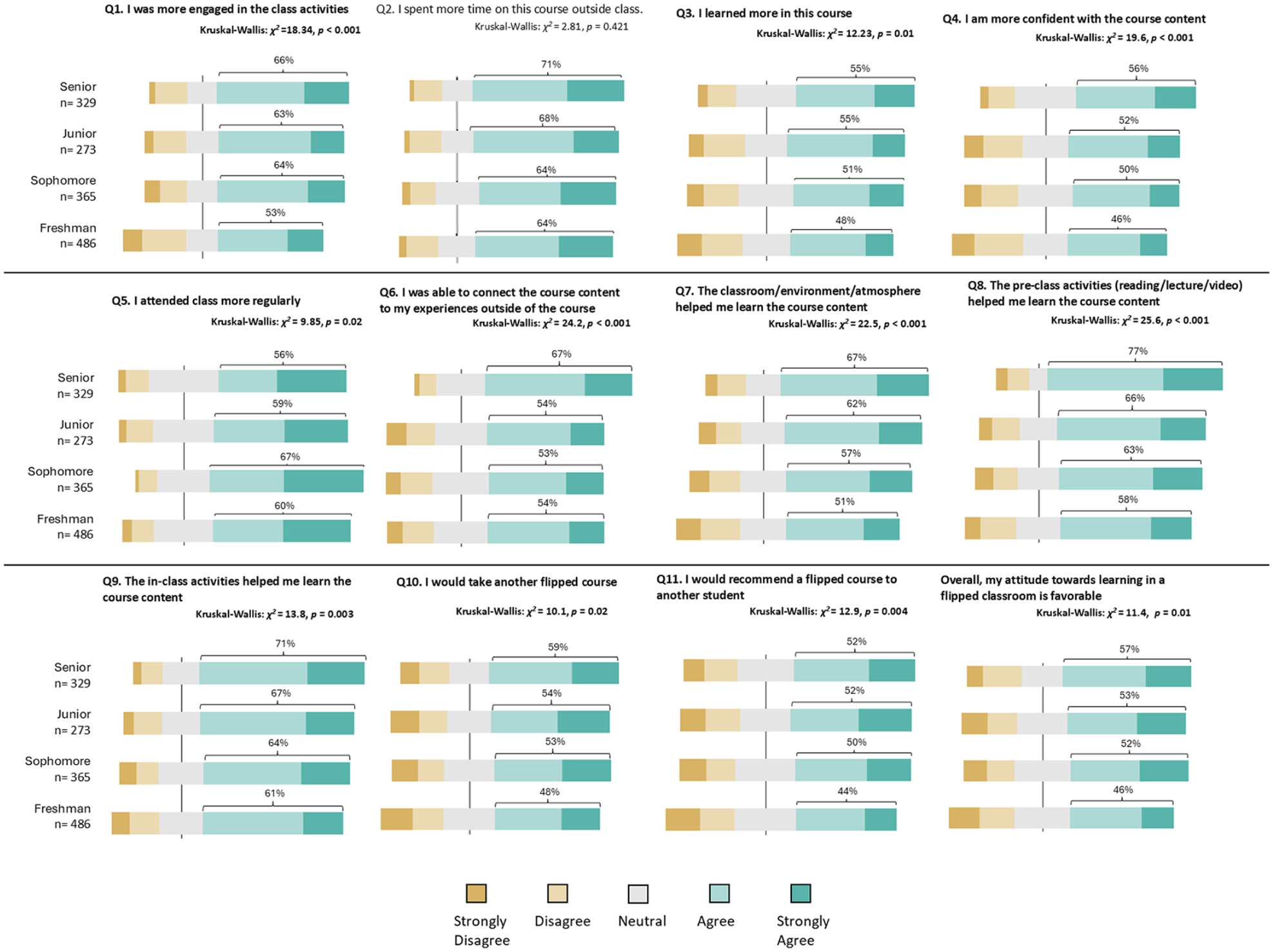
Student perceptions of flipped classrooms across academic years. Statistical significance shown are from Kruskal-Wallis tests and percentages displayed are for the students who agreed or strongly agreed.
Discussion
The study findings reveal variations in student perceptions of FL by gender, race/ethnicity, institution type, and academic grade level, emphasizing the importance of accounting for these factors when designing and assessing FL pedagogies in STEM education.
Gender Differences in Perceptions of FL
Gender showed a significant influence on questions related to engagement (Q1), time spent on the course (Q2), confidence (Q4), and the classroom environment’s role in learning (Q7), but it did not significantly affect students’ willingness to take (Q10) or recommend flipped courses (Q11) or perceptions of pre-class activities (Q8) . Male students reported higher engagement in class activities while female students spent more time on coursework outside of class, consistent with prior research suggesting that they may adopt more diligent academic preparation strategies (Wrigley-Asante et al., 2023). In contrast, male students exhibited greater confidence in course content (Q4), reflecting broader trends in gender differences in self-efficacy and confidence, particularly in STEM fields (Zander et al., 2020). These findings underscore the importance of instructional strategies that promote both engagement and confidence across all students, fostering a more equitable learning experience. Male students expressed greater agreement that the classroom environment supported their learning, whereas female and non-binary students reported relatively lower levels of agreement (Q7). This difference suggests that the classroom atmosphere may not have been experienced uniformly across gender groups. Female students may be more sensitive to aspects of inclusivity and support within the classroom. The lower ratings from non-binary students, though based on a smaller sample, highlight the need to create learning spaces where all students feel equally supported. These findings also suggest that the flipped learning environment was effective in capturing differences in student perceptions, and that attention to gender-responsive strategies could enhance engagement and support across diverse groups. Interestingly, gender did not significantly influence students’ willingness to take or recommend flipped courses or their perceptions of pre-class activities (Q8), suggesting that these aspects of the FL model may be universally appealing or neutral across genders. This aligns with findings from Egara and Mosimege (2024), who reported no significant differences in achievement and interest scores between male and female learners in a flipped mathematics classroom. Overall, these results suggest that the core structure of FL remains broadly accessible and well-received by all students, although gender differences exist in engagement and confidence within a flipped classroom setting. To maximize its benefits, educators should consider strategies that enhance confidence among female students while maintaining high engagement levels for all learners. By fostering an inclusive and supportive learning environment, flipped instruction can continue to serve as an effective pedagogical approach for diverse student populations.
The Role of Race/Ethnicity in FL Experiences
Race/ethnicity consistently demonstrated a strong impact (p < .001) on most questions, particularly on engagement (Q1) and confidence (Q4), highlighting its role in shaping FL experiences. These results suggest that FL may provide a more inclusive and supportive learning experience for students from diverse racial backgrounds. The flexibility of FL allows students to learn at their own pace, particularly through pre-class materials (Q8). It can be especially beneficial for non-White students who may face systemic challenges in traditional lecture-based settings (Goldenberg, 2014), such as gaps in prior knowledge, language barriers, or social dynamics that may hinder participation (Njue & Retish, 2010; Salerno & Reynolds, 2017). The interactive and collaborative nature of flipped classrooms also emphasizes active learning and critical thinking, which might foster a sense of empowerment and confidence among non-White students, helping them achieve better learning outcomes (Naing et al., 2023). Asian students in this study, for example, reported the highest levels of engagement and confidence, which may be influenced by cultural factors emphasizing academic rigor and self-discipline (Hsin & Xie, 2014). Conversely, students identifying as White or Multiple expressed comparatively lower levels of agreement in these areas, highlighting potential disparities in how FL is experienced by different racial and ethnic groups. This finding aligns with existing literature that emphasizes the impact of cultural and systemic factors on student engagement and confidence in active learning environments (Strayhorn, 2012). To address these disparities, institutions should consider integrating culturally responsive teaching practices and providing additional support to underrepresented groups to ensure equitable outcomes in FL classrooms.
Institutional Differences in FL Perceptions
Institution types significantly influenced attendance (Q5) and the ability to connect course content to personal experiences (Q6), though its impact was limited on aspects like time spent outside of class (Q2). For instance, students from the community college were more likely to report improved attendance (Q5) and greater ability to relate course material to real-life contexts (Q6) than their counterparts at the 4-year university. This finding might be due to the smaller class sizes and more personalized instruction often found in community colleges (Bailey et al., 2015). Additionally, these findings might be influenced by the age of the students. Although this study did not collect students’ ages, community college students generally have a higher average age than traditional university students (National Center for Education Statistics, 2023), which may contribute to their increased motivation and engagement (Q1). As per the adult learning theory introduced by Knowles (1968), older students often bring greater life experience, focus, and a clearer sense of purpose to their studies, which may enhance their receptiveness to innovative learning methods like FL. Students at 4-year universities may encounter larger class sizes and a more competitive academic environment, which could impact their ability to fully engage with FL. Additionally, the diverse academic and extracurricular demands faced by university students might limit their time and willingness to actively participate in pre-class and in-class activities (Le, 2024), potentially diminishing their overall enthusiasm for FL. For the 4-year institution, efforts to promote smaller, more interactive class settings or provide additional support for pre-class preparation might enhance the effectiveness of FL. Conversely, leveraging the existing strengths of 2-year institutions, such as closer faculty-student engagement, can further optimize the impact of FL within those environments (Q7). However, institution type had a limited impact on other aspects, such as time spent outside of class (Q2), suggesting that certain FL elements, like pre-class preparation, are universally applicable across institutional contexts.
Academic Experience of Students in FL Perceptions
Grade level consistently showed significant effects (p < .05 or p < .001) across 11 out of 12 of the survey questions, indicating that perceptions of FL varied markedly depending on students’ academic stages A similar finding is reported by Dianati et al. (2022) while comparing undergraduate and graduate students. Senior students in this study consistently reported the most positive experiences with FL, whereas freshmen tended to rate these aspects as the lowest. These findings may reflect the increased familiarity and maturity of senior students, who are more accustomed to self-directed learning and active engagement in academic activities (Grypp & Luebeck, 2015). The disparity in perceptions can also be attributed to the varying levels of familiarity and experience students have with the academic environment and teaching methods. Senior students are more accustomed to the institution, their peers, and faculty members, which likely facilitates more meaningful teacher-student and peer interactions during in-class activities. An ability to effectively manage time, utilize pre-class materials, and engage in discussions may stem from their developed academic and social skills. On the other hand, freshmen, who exhibited the least favorable perceptions, may struggle with adapting to the new academic setting, course demands, and the flipped methodology itself. Limited peer connections and a lack of familiarity with collaborative learning environments might also hinder their ability to engage fully with FL practices. Although Senior students expressed the most favorable perceptions in most of the survey questions, their regular class attendance was lower compared to the other groups (Q5). This may be attributed to competing academic and professional commitments during their final year, which could limit their classroom participation despite positive perceptions of the course. Addressing these challenges by clearly defining expectations for flipped learning, offering support and guidance, incorporating time-management strategies for pre-class preparation, and facilitating peer interaction may improve the effectiveness of FL for early-year students and help bridge this gap.
Theoretical Implications
The findings of this study contribute to the broader theoretical understanding of FL by highlighting how student identity and institutional context act as significant moderators of pedagogical effectiveness. Theoretically, this study challenges the “one-size-fits-all” assumption of active learning, suggesting that gender and racial dynamics continue to influence student engagement and self-efficacy even within student-centered environments. The observed confidence gap among female students and the varying experiences across racial groups imply that FL frameworks must integrate theories of culturally responsive teaching and academic self-efficacy to be truly equitable. Furthermore, the differences in perception between freshmen and seniors, as well as between 2- and 4-year institutional settings, suggest a developmental and environmental threshold for FL success. This points toward a theoretical model where flipped effectiveness is not just a result of course design, but is contingent upon the learner’s academic maturity and the scale of the instructional setting.
Practical Implications
From a practical standpoint, the study offers actionable strategies for educators and institutions to refine the implementation of FL for diverse learners. To address gender-based confidence gaps, instructors should intentionally incorporate structured peer discussions, self-assessment activities, and mentorship opportunities for female students. For those at 4-year institutions or in large-scale lecture environments, faculty can improve engagement by facilitating smaller discussion groups and providing robust scaffolding for pre-class preparation, effectively mimicking the personalized interactions found in community college settings. Additionally, institutions must address systemic barriers by fostering inclusive classroom cultures and integrating diverse perspectives into STEM curricula. To support early-career students, particularly freshmen who may struggle with the transition to self-directed learning, institutions should provide targeted orientation sessions and time-management workshops. By adopting these evidence-based practices, educators can ensure that the core components of FL—pre-class preparation and active collaboration—are not only accessible but also optimized to meet the specific needs of a diverse student population
Conclusions
This study captures the complex interplay of gender, race/ethnicity, institutional type, and academic experience in shaping students’ perceptions of FL. Though FL remains a broadly effective and well-received instructional approach, targeted strategies are necessary to ensure equitable learning experiences for all students. Addressing gender differences through confidence-building measures for female students and sustained engagement strategies for all learners can help balance disparities. Similarly, incorporating culturally responsive teaching practices can create a more inclusive environment that supports students from diverse racial and ethnic backgrounds. Institutional variations highlight the need for tailored instructional approaches, with the community college leveraging its strengths in faculty-student interactions and the 4-year university enhancing student engagement through structured support and smaller interactive settings. Additionally, recognizing the challenges faced by early-year students in adapting to FL, institutions can implement orientation programs, time-management guidance, and peer mentoring to ease the transition. Ultimately, by refining FL implementation to account for these diverse factors, educators and institutions can optimize its benefits, ensuring a more supportive and effective learning experience for all students.
Limitations
The current study provides valuable insights into the impact of FL across different student groups; however, several limitations must be acknowledged. First, the survey relied on self-reported data, which may be subject to biases such as social desirability or inaccurate recall, potentially affecting the accuracy of student perceptions (Tan et al., 2021; Watts et al., 2024). Additionally, the study focused on only STEM courses, meaning that the findings may not be fully generalizable to other disciplines. Different subjects may require varying levels of active learning and student engagement, which could influence how FL is received and its effectiveness. Another limitation is the unequal representation of nonbinary students, who comprised a small portion of the sample. The limited number of responses from this group prevents a thorough analysis of their experiences with FL, suggesting the need for further research with a more diverse and representative sample. Additionally, the age of students may have influenced our findings, as younger and older students might have different levels of adaptability, prior exposure to active learning methods, or technological proficiency, all of which could affect their perceptions of FL. The study did not explicitly analyze differences across age groups, which could be an important factor in understanding how FL is received. Future research should consider age as a variable to better capture its impact on students’ experiences with FL. Furthermore, although the study explored the impact of FL across gender, race/ethnicity, grade level, and institution type, it did not account for other potentially influential variables, such as socioeconomic status, prior academic achievement, or personality traits, all of which could influence students’ engagement with FL. Finally, the study’s cross-sectional design does not allow for an examination of how students’ perceptions of FL evolve. Longitudinal studies would be beneficial to understand how sustained exposure to FL influences student learning outcomes, engagement, and perceptions toward the method in the long term. These limitations highlight areas for future research to further explore and refine the implementation of FL across diverse student populations.
Supplemental Material
sj-docx-1-alh-10.1177_14697874261457090 – Supplemental material for Student Perceptions of Flipped Learning in STEM Courses
Supplemental material, sj-docx-1-alh-10.1177_14697874261457090 for Student Perceptions of Flipped Learning in STEM Courses by Chaya Gopalan, Athavan Alias Anand Selvam, Charlie Blake, Sharon Locke and Julie Fickas in Active Learning in Higher Education
Footnotes

Ethical Considerations
This study was conducted in accordance with the Declaration of Helsinki and was reviewed and approved by the Institutional Review Board (IRB) of Southern Illinois University Edwardsville (Protocol #35). The research adhered to all institutional and national ethical standards for involving human participants.
Consent to Participate
Participants provided consent to participate in the study.
Funding
The authors disclosed receipt of the following financial support for the research, authorship, and/or publication of this article: This material is based upon work supported by the National Science Foundation under Grant No. 1821664. Any opinions, findings, and conclusions or recommendations expressed in this material are those of the author(s) and do not necessarily reflect the views of the National Science Foundation.
Declaration of Conflicting Interests
The authors declared no potential conflicts of interest with respect to the research, authorship, and/or publication of this article.
Data Availability Statement
The data supporting the findings of this study are available within the article and its Supplemental Excel files. To protect participant privacy and maintain confidentiality, all data have been fully anonymized and de-identified prior to submission, as per IRB #35 requirements.
Supplemental Material
Supplemental material for this article is available online.
Author Biographies
References
Supplementary Material
Please find the following supplemental material available below.
For Open Access articles published under a Creative Commons License, all supplemental material carries the same license as the article it is associated with.
For non-Open Access articles published, all supplemental material carries a non-exclusive license, and permission requests for re-use of supplemental material or any part of supplemental material shall be sent directly to the copyright owner as specified in the copyright notice associated with the article.
