






Abstract
This study investigates the use of photovoice as an active learning pedagogy to cultivate critical consciousness among undergraduate students in a College of Education course. Drawing on Freirean pedagogy and transformative learning theory, the semester-long project engaged students in documenting and analyzing social issues through photography, peer dialogue, and personal reflection. Using qualitative content analysis of student work, the study found that photovoice supported development across three dimensions of critical consciousness: critical reflection, critical motivation, and critical action. An emergent theme of personal relevance also played a pivotal role in deepening student engagement. The findings suggest that photovoice is a powerful strategy for fostering student agency, sociopolitical awareness, and meaningful learning connections. Implications are offered for integrating participatory and multimodal methods in higher education to support deeper engagement with complex social issues.
Keywords
Educators in higher education are increasingly turning to active learning pedagogies that engage students directly in the learning process. Active learning, broadly defined as any approach that involves students engaging in learning activities that promote higher-order thinking, the development of skills, and the opportunity to reevaluate beliefs and values (Williams et al., 2022). Additionally, McNally (2024) highlights that a significant characteristic of active learning is the inclusion of students’ diverse perspectives and experiences. Photovoice is one such student-centered, active learning strategy. Originally developed as a participatory action research method, photovoice enables individuals to capture the essence of their community through photography, thereby allowing them to “identify, represent, and enhance their community” (Wang & Burris, 1997, p. 369). This method blends visual storytelling with dialogue and action, aiming to stimulate critical reflection and social change (Strack et al., 2022; Wang & Burris, 1997). In educational settings, photovoice positions students as active knowledge co-creators: by taking photographs and discussing their meaning, learners become deeply engaged in the subject matter rather than passive recipients of information.
Researchers have identified photovoice as an effective pedagogical strategy for cultivating students’ critical consciousness – a concept first articulated by Paulo Freire, referring to the ability to recognize, analyze, and take action against oppressive social conditions (El-Amin et al., 2017; Freire, 1970). In contemporary terms, critical consciousness involves three interrelated capacities: critical reflection on societal inequities, critical motivation (belief in one’s agency to effect change), and critical action to confront injustice (Diemer et al., 2016; Watts & Hipolito-Delgado, 2015). By prompting students to examine social issues through a personal and visual lens, photovoice may create opportunities for growth in all three of these areas.
Early evidence from higher education contexts suggests that photovoice can indeed foster critical awareness and engagement. In a meta-analysis of photovoice studies in undergraduate courses (2008–2013), Sanon et al. (2014) found that participating in photovoice projects positively impacted students’ capacity for critical consciousness. Similarly, Wang (2020) reported that using photovoice with graduate students in China facilitated deep dialogue and critical reflection about the impacts of globalization, noting that “photovoice-related learning was emancipatory and transformative” in motivating students toward social action (p. 112). Hernández et al. (2014) applied photovoice in a service-learning context and found it provided an empowering, student-centered learning experience for college students in early childhood education classrooms. Taken together, these studies suggest that photovoice can be a powerful active learning tool for teaching about social issues and inspiring students to become agents of change.
Despite these documented benefits, there is a noticeable lack of research examining students’ experiences across all three dimensions of critical consciousness – reflection, motivation, and action – within a single photovoice-based course. This study aims to fill that gap by exploring how an active-learning photovoice project can enhance the critical consciousness of undergraduate students in a College of Education. The research question guiding the study was: How does the use of photovoice as a teaching tool enhance students’ critical consciousness, particularly with regard to critical reflection, critical motivation, and critical action? This question aligns with transformative learning theory (Mezirow, 2000), which emphasizes critical self-reflection and perspective change as central to adult learning. We posit that photovoice, as an active learning pedagogy, provides a concrete mechanism for such transformative learning to occur in the undergraduate classroom.
Literature Review
Photovoice as Active Learning Pedagogy
Photovoice was first introduced by Wang and Burris (1997) as a participatory research technique, but it has since been adapted as a pedagogical approach across various disciplines. As a participatory, experiential method, photovoice aligns closely with constructivist and active learning principles: students learn by doing (engaging with their communities through photography) and by reflecting on those experiences through group dialogue and storytelling. This approach inherently values student agency and voice, reducing the emphasis on the instructor as the sole authority and instead positioning learners as co-creators of knowledge. Cooper et al. (2017) describe photovoice as a useful tool for promoting experiential learning and critical dialogue in an undergraduate community health course, noting that it encouraged active student engagement with real-world issues. Likewise, in a health sciences module, Haffejee (2021) found that incorporating photovoice transformed students from passive recipients into “active, participatory learners” who developed into critical thinkers, a process grounded in dialogical learning similar to Freire’s pedagogical vision. Across studies, authors commonly attribute these outcomes to structured cycles of image-making, narrative development, and dialogue. For example, Haffejee (2021) described shifts in student engagement and participation based on students’ written reflections and discussion-based learning activities; however, the strength of these claims varies across studies in terms of how explicitly “critical thinking” or “active participation” is operationalized and assessed. This underscores the need for course-based research that links specific photovoice components to observed learning processes and student-generated evidence.
The pedagogical value of photovoice has been demonstrated in diverse contexts. Photovoice projects typically involve some basic training in photography and research ethics, after which participants capture images, craft narratives or captions, and engage in collective reflection (Kramer et al., 2009). This process has been used with youth to highlight community health challenges and assets (Findholt et al., 2011), with rural villagers to identify local risk factors for HIV/AIDS (Lofton et al., 2020), and with individuals with disabilities to document everyday barriers (Dassah et al., 2017). For instance, students may move from reading about “structural inequality” as a concept to documenting local manifestations (e.g., food access, housing insecurity, school resource gaps), which can then be analyzed collectively through guided prompts.
Across higher education, these projects have been implemented in disciplines including teacher education, social work, health sciences, and biology, and have explored issues such as educational inequity, globalization, disability access, community health, and poverty in a range of international contexts (e.g., China and North America), depending on the specific study. For example, photovoice has been applied in social work programs to facilitate self-reflection and critical examination of practice (Mulder & Dull, 2014), in teacher education to engage preservice teachers in examining students’ home communities (Stanton & Hancock, 2021), and in biology courses to involve students in participatory, inquiry-based learning (Moitra, 2016). In a teacher education study, photovoice was shown to increase preservice teachers’ capacity to teach in diverse classrooms by allowing them to better understand their students’ lived experiences (Cooper et al., 2017; Miao et al., 2020). Across these examples, photovoice serves as both a research methodology and a teaching strategy that emphasizes visual exploration, dialogue, and critical thinking. By bringing cameras into the learning process, instructors invite students to connect abstract course content to tangible, observed realities, making learning an active, situated experience.
Critical Consciousness Pedagogy
The concept of critical consciousness originates from Freire’s (1970) foundational work Pedagogy of the Oppressed. Freire defined critical consciousness (or conscientização) as “the ability to perceive social, political, and economic oppression and to take action against the oppressive elements of society” (Freire, 1970, p. 29). Developing this consciousness is viewed as a path to empowerment and liberation from unjust social conditions. Freire advocated for education that goes beyond depositing information (“banking” education) and instead engages learners in dialogue, reflection, and action upon their world – an approach that is fundamentally learner-centered and socially aware. Individuals with a high degree of critical consciousness can critically examine how socio-political structures affect their lives and are prepared to work toward transforming those structures (Freire, 2000) Relatedly, scholarship on a pedagogy of discomfort highlights how difficult emotions can be mobilized as a resource for equity-oriented learning (Zembylas, 2015).
In recent years, scholars have emphasized the importance of cultivating critical consciousness within higher education, particularly in professional fields. For example, Halman et al. (2017) conducted a meta-analysis of 30 studies using critical pedagogy in health professions education and found that such pedagogies nurtured more “compassionate, humanistic, socially conscious health professionals who act as agents of change” (p. 12). The authors argue that traditional competency-based curricula should be expanded to include critical pedagogical approaches that encourage students to question power dynamics and inequities in their fields. In teacher education, developing critical consciousness is likewise seen as crucial. Pollard (2020) describes “consciousness-raising” learning experiences that help preservice teachers acquire a sociocultural lens for understanding their future students (p. 74). Unfortunately, Pollard’s research also noted a dearth of such critical learning opportunities in many teacher preparation programs, highlighting a need for pedagogical practices, like photovoice, that intentionally foster transformative, justice-oriented thinking in students.
Transformative Learning Theory
Transformative Learning Theory (TLT), introduced by Mezirow (1991, 2000), offers a framework for understanding how adults can undergo profound shifts in co through education. TLT suggests that meaningful learning occurs when a person’s habitual ways of thinking are disrupted by a disorienting experience, leading them to critically question their assumptions and potentially revise their worldview. As O’Sullivan et al. (2002) put it, transformative learning entails a deep, structural shift in the basic premises of thought, feeling, and action, which dramatically changes one’s frame of reference. According to Mezirow (2000), this process often begins with a “disorienting dilemma” – a confronting experience or new information that does not fit into the learner’s existing belief system. In response to this cognitive and emotional dissonance, learners engage in critical reflection on their beliefs, consider alternative viewpoints, and eventually arrive at a transformed understanding of themselves and the world. The outcome is not only a new way of thinking but often a commitment to act differently based on the new perspective.
Transformative learning has been documented in higher education across many disciplines. In fields like nursing and medicine, educational experiences that include critical reflection on practice have led to increased empathy and improved patient care (Hanson, 2010). In social work and theology programs, intentionally designed experiences (such as community immersions or reflective seminars) have helped students question biases and become more socially responsive (Lee & Greene, 2004). In teacher education, Meijer et al. (2012) studied a year-long curriculum aimed at helping teachers critically examine their assumptions about diversity. Participants in that study reported significant shifts in their perspectives and a greater sense of activism in their teaching roles after engaging in sustained reflection and dialogue. These examples underscore that transformative learning does not happen automatically; it often requires carefully crafted pedagogical interventions that challenge students and support them through the resulting discomfort.
Importantly, recent extensions of TLT stress the role of emotion and relationship in the transformative process. Critics of early TLT noted that it focused heavily on rational cognitive processes while overlooking how emotions and social interactions contribute to deep learning (Taylor, 2001). Taylor and Cranton (2012) argue that creating a safe, trusting, and respectful learning environment is essential for students to engage openly in critical reflection and discourse. Learners need to feel supported when confronting disorienting dilemmas, as these experiences can provoke anxiety or defensiveness. Paradoxically, those very emotions – if navigated in a supportive setting – can fuel the motivation to explore and change one’s perspective. In sum, transformative learning theory provides a useful lens for this study: photovoice, as an active learning strategy, might function as the kind of disorienting yet generative experience that prompts students to reflect, dialogue, and ultimately transform their understanding of social issues. We expected that by participating in the photovoice project, students would move beyond initial emotional reactions toward critical analysis and eventually feel empowered to take action, embodying the progression from reflection to motivation to action that characterizes both critical consciousness and transformative learning.
Methods
Course Context
This study was conducted in an upper-division undergraduate course titled “Public Policy and Professional Ethics in Child and Family Development.” The course was part of a College of Education at a large public university in the western United States. A primary objective of the course was to help students develop critical frameworks for assessing the strengths and weaknesses of policies and the delivery of youth-oriented social services through a social justice lens. Course topics included education equity, child welfare, mental health, juvenile justice, poverty, and related issues affecting children and families. The class met weekly over a 15-week semester. Due to the COVID-19 pandemic, instruction was delivered entirely online via Zoom (with supplementary materials and activities on the Canvas learning platform). Class sessions combined brief lectures with discussion and interactive activities, and a major component of the course was the semester-long photovoice project described below.
Photovoice Project Design
As a central pedagogical tool of the course, students were required to complete a multi-part photovoice project. The project was introduced as an active learning assignment meant to engage students in connecting course content to real-world observations and advocacy. Over the semester, students participated in three in-class photovoice workshops facilitated by the instructor (the author). The first workshop introduced the purpose of photovoice and positioned students as active participants in understanding and improving child and youth well-being. The second workshop provided examples of photovoice projects and discussed photographic techniques (e.g., using symbolism vs. realism in images, and considering perspective). This instruction was introductory and practice-oriented (rather than formal training in visual communication or semiotic theory), intended to support students in making intentional choices about what images communicate. The third workshop focused on how to link individual photos thematically to tell a coherent story about an issue, including how to write effective captions that convey the meaning of the photo in relation to course concepts.
The photovoice project was broken into four parts, each with specific tasks and deliverables:
Part 1: Topic Choice. Students first selected a social issue from a list of course-related topics (e.g., poverty, educational equity, special education, child abuse/child welfare, adolescent mental health, adolescent substance abuse, immigration policy). They were encouraged to choose a topic that resonated with their academic or personal interests. After choosing, each student wrote a short rationale (1–2 pages) explaining why they chose that issue and what they hoped to learn or illuminate through the project.
Part 2: Photos and Captions. Next, students took photographs to visually represent different aspects of their chosen issue. Each student captured six original photos (using a smartphone or camera) that symbolized or depicted their social issue. Students were instructed to take photographs in public or community settings relevant to their topic (e.g., neighborhoods, schools, workplaces/internship contexts when permitted, community agencies, or public spaces), while following research-ethics guidelines. They were explicitly instructed not to photograph identifiable faces or private information; when photographing individuals was necessary to convey meaning, students were required to obtain verbal permission and to avoid including identifying features. Photos containing identifying information were not used in analysis and were redacted or blurred prior to review by the research team. They inserted these images into a document and wrote a 5 to 7 sentence caption for each photo, describing the context and explaining how the image relates to the issue and concepts from course readings or lectures. This step required students to connect theoretical knowledge with concrete imagery, articulating in writing the significance of what they had photographed.
Part 3: Small Group Reflections. Students were then divided into small groups (approximately six students per group) to share and discuss their work. In a live Zoom session, each student in the group presented one or two of their most meaningful photos along with the captions. After each presentation, the instructor (as facilitator) guided the group through a series of critical reflection questions known as the SHOWeD method (Wang & Burris, 1994). The SHOWeD prompts included: What do you See here? What’s really Happening here? How does this relate to our lives? Why does this situation, concern, or strength exist? What can we Do about it? These questions are designed to spark deeper analysis of the images and the issues they represent. Following the discussions, each group collaboratively completed a short reflection form summarizing key themes from their conversation, especially noting social or structural factors affecting the issues. Group members also brainstormed ways the images and insights could be used to advocate for policy or practice changes.
Part 4: Final Reflective Essay. In the concluding phase of the project, students individually wrote a reflective essay (approximately 4–5 pages) about their chosen issue and the learning experience. In this essay, students described the issue they investigated, explained how their set of photographs collectively illustrated facets of the problem, and reflected on what they learned about the issue and about themselves. They were prompted to consider personal and professional growth: for instance, how the project affected their perspective or future approach as an educator or practitioner.
By structuring the assignment in these four parts, the course scaffolded students’ engagement with the photovoice process – from initial topic selection and personal connection, to active data creation (photos), to dialogue with peers, and finally to personal reflection and analysis. All parts of the photovoice project were completed as part of normal coursework and were later used (with student consent) as data for this study.
Participants
Participants in this study were the 60 undergraduate students (over age 18) enrolled in the course described above. Of these students, 54 were Child and Family Development or Education majors; the remaining included four Nursing majors and one Speech-Language Pathology major. Most students were in their third or fourth year of study. Gender and race/ethnicity data were not collected in order to protect student privacy and because demographic variables were not the focus of the analysis; therefore, we cannot report the demographic distribution of the class. All students in the course completed the photovoice project as a required assignment, and all 60 consented to have their coursework included in the research dataset after the semester concluded.
Ethical Considerations
This study was approved as an exempt protocol by the university’s Institutional Review Board, as it examined normal educational practices in an established instructional setting. After final grades were submitted, the lead author obtained informed consent from all students to analyze their photovoice project materials for research purposes. To ensure confidentiality, all identifying information was removed from the data. Student names were replaced with participant codes (e.g., P1, P2) and any potentially identifying details in written text or photos (such as faces, specific locations, or names on signs) were redacted or blurred. In presenting results, we refer to students generally as “participants” and use generic descriptors or codes when quoting their reflections. Given the potentially sensitive nature of the issues explored (e.g., personal experiences with trauma), we took care to report findings in an aggregate manner and to store all data on a secure, password-protected drive accessible only to the research team.
Procedure
Data collection occurred through the normal delivery of the course and the photovoice assignment. At the start of the semester, students filled out a brief questionnaire about their major and career goals, to provide context about their professional aspirations. Over the semester, students completed each part of the photovoice project as described. All project materials were submitted via the course’s online platform (Canvas). After the course ended, the researchers downloaded the complete set of student work: the topic choice essays, the photos with captions, the group reflection summaries, and the final essays. These constituted the raw data for analysis. As noted above, all materials were de-identified prior to analysis to protect confidentiality.
Data Analysis
We employed a qualitative content analysis approach, utilizing both deductive (theory-driven) and inductive (data-driven) coding techniques (Bingham & Witkowsky, 2022). The analysis team consisted of three researchers (including the instructor of the course and two additional researchers familiar with critical pedagogy). We followed a four-step analytic process:
Deductive coding (a priori themes): Based on our research question and the theoretical framework of critical consciousness, we began with three predetermined categories corresponding to the elements of critical consciousness: critical reflection, critical motivation, and critical action (Diemer et al., 2016; Watts & Hipolito-Delgado, 2015). Each researcher first reviewed the data (students’ essays, captions, and group reflections) independently and coded any segments of text that illustrated one of these three dimensions. For example, statements where students analyzed the causes of a social problem were coded as critical reflection; expressions of feeling empowered or committed to change were coded as critical motivation; descriptions of taking action or intending to act were coded as critical action.
Inductive open coding: Next, we conducted an open coding of the data to capture unexpected insights or processes beyond the initial three categories. In this phase, we paid attention to any factors in the photovoice process that seemed important to students’ learning. Each researcher noted emergent themes and patterns in the data, using a constant-comparative method (Saldaña, 2016), meaning new instances were continually compared to previously coded instances to refine the consistency and boundaries of each emerging code.
Thematic analysis and categorization: After open coding, the research team met to discuss and consolidate the inductive codes. Through discussion and comparison of examples, we grouped related codes into broader themes. We also revisited the deductive (critical consciousness) codes to see how the inductive themes intersected with or enhanced understanding of those three dimensions. In this step, a significant new theme surfaced from the data: students’ strong emphasis on personal relevance. We decided to include this as a fourth major theme given how prominently it featured in many narratives.
Synthesis with theoretical frameworks: In the final analytic step, we examined how each of the final themes related to our guiding frameworks of critical consciousness and transformative learning. We wrote analytic memos about, for instance, how the theme of personal relevance might serve as a catalyst for critical reflection, or how experiences of taking action related back to students’ sense of critical agency (motivation). This iterative writing and discussion helped ensure that our interpretation of the data was grounded in the examples while also connected to existing theory.
Throughout the analysis, reliability was enhanced by multiple coders reviewing the data. Where there were discrepancies in coding or interpretation, the team discussed differences and returned to the raw data to reach consensus. Representative quotations and examples were extracted for each theme. In reporting the findings below, we use selected student quotes (with minor editing for clarity or brevity) to illustrate each theme, and we indicate in parentheses which participant the example came from (using their code, e.g., P7 for Participant 7). Exemplars were selected to be representative of patterns observed across participants, and we also actively searched for disconfirming cases that complicated or qualified the dominant themes.
Findings
Through our analysis, we identified four major themes that characterize how the photovoice project contributed to students’ learning and development of critical consciousness: (1) Critical Reflection, (2) Critical Motivation, (3) Critical Action, and (4) Personal Relevance. The first three themes correspond to the theoretical dimensions of critical consciousness we anticipated, while the fourth theme emerged inductively as a significant influence on the other three. Below, we describe each theme in detail and provide illustrative evidence from students’ photos and reflections. Figures 1 through 7 (referenced in the text) are examples of student-produced images that embody aspects of these themes.
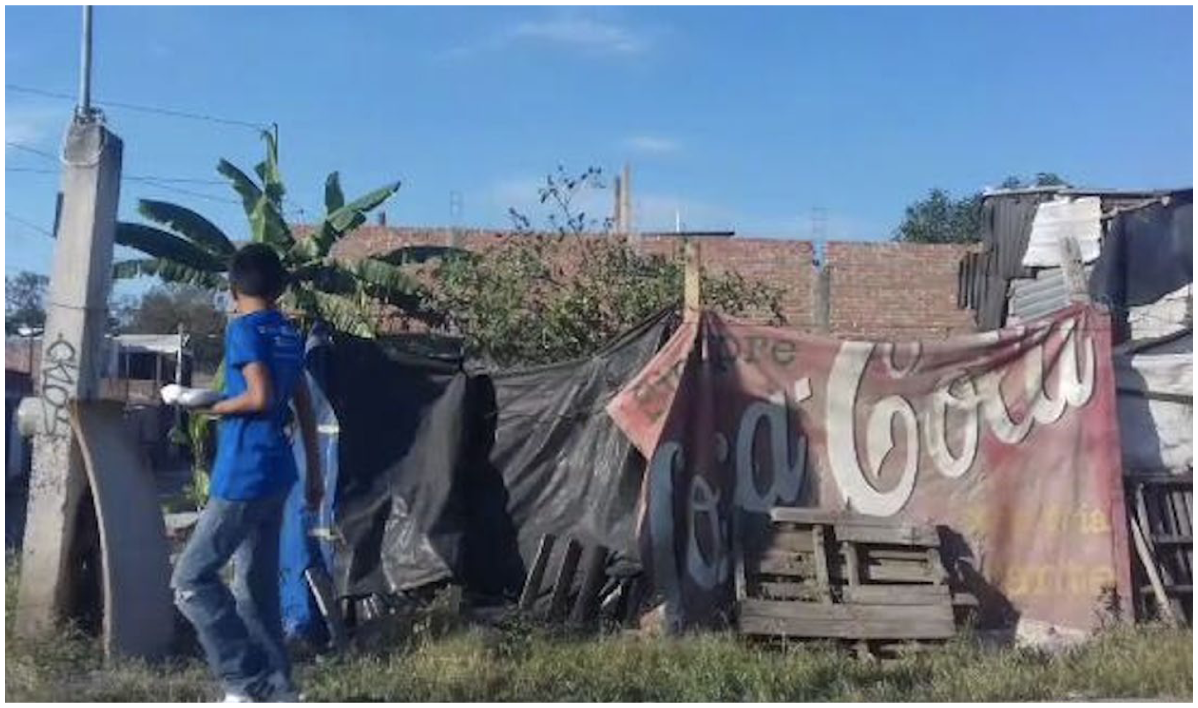
A makeshift living space comprised of a tarp, blanket, wire, and wood sticks (example of poverty).
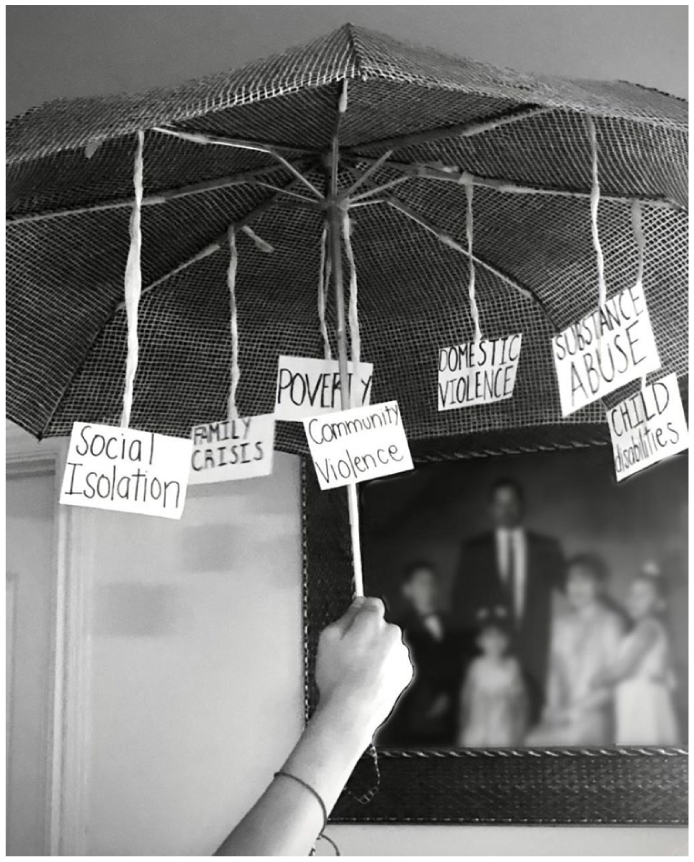
Portrayal of the risk factors for child abuse (example of child welfare: child abuse).
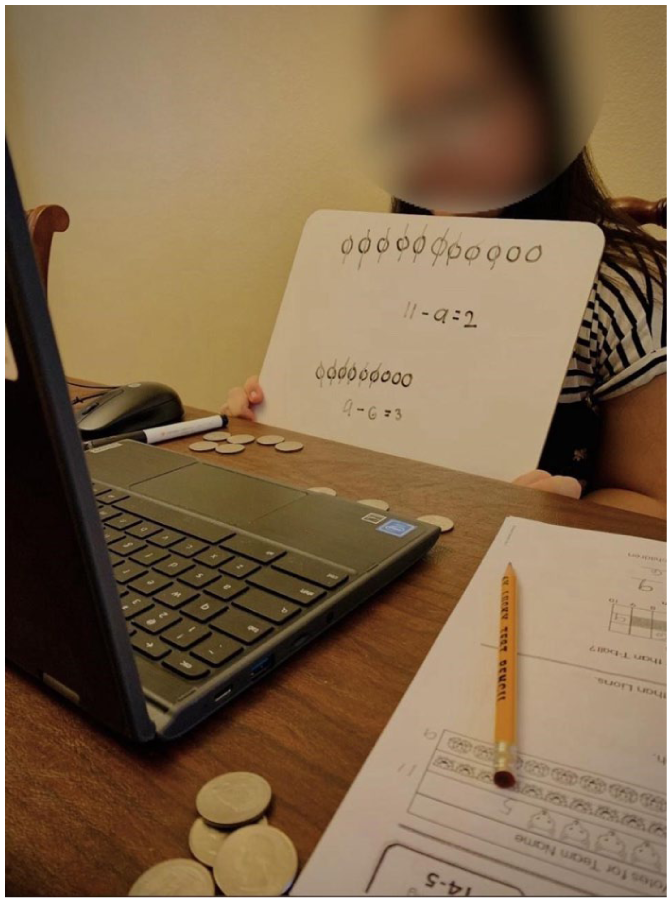
Student receiving virtual individualized instruction for math (example of special education: disabilities).

Comparison of the prices of low-quality foods to high-quality foods (example of child and adolescent health).
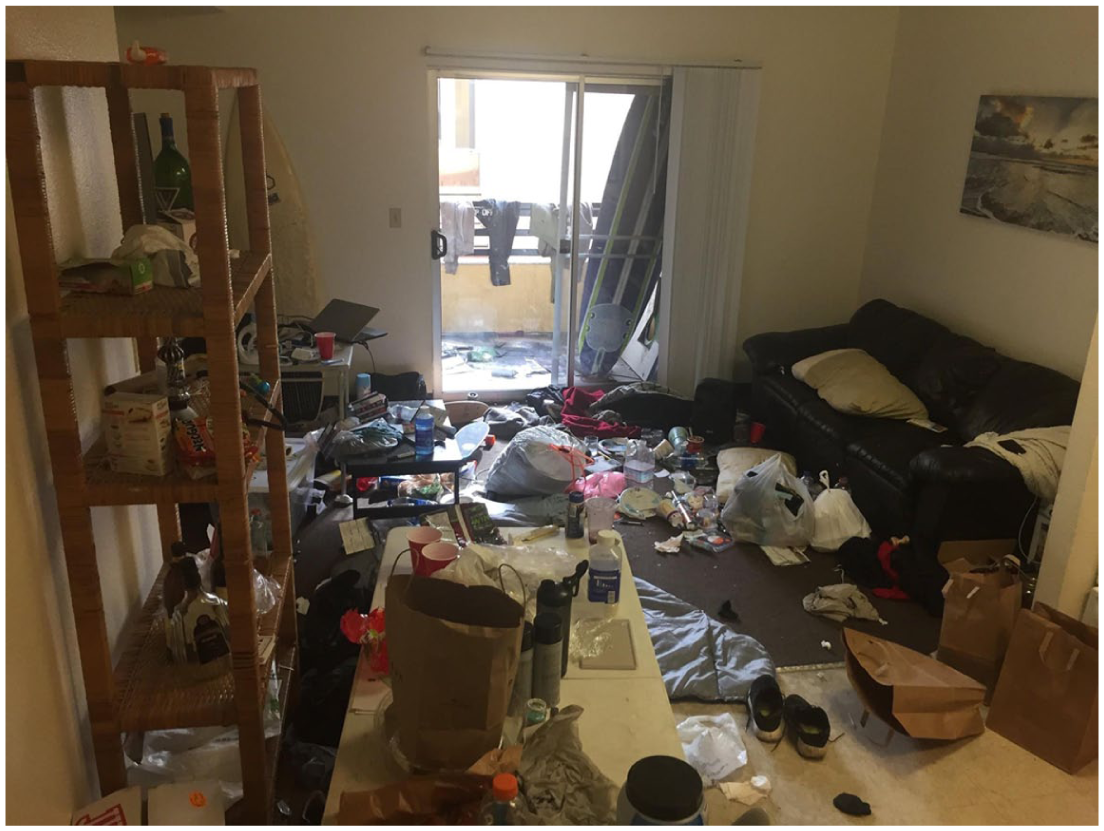
The state of an individual’s living space suffering from depression (example of child and adolescent mental health).
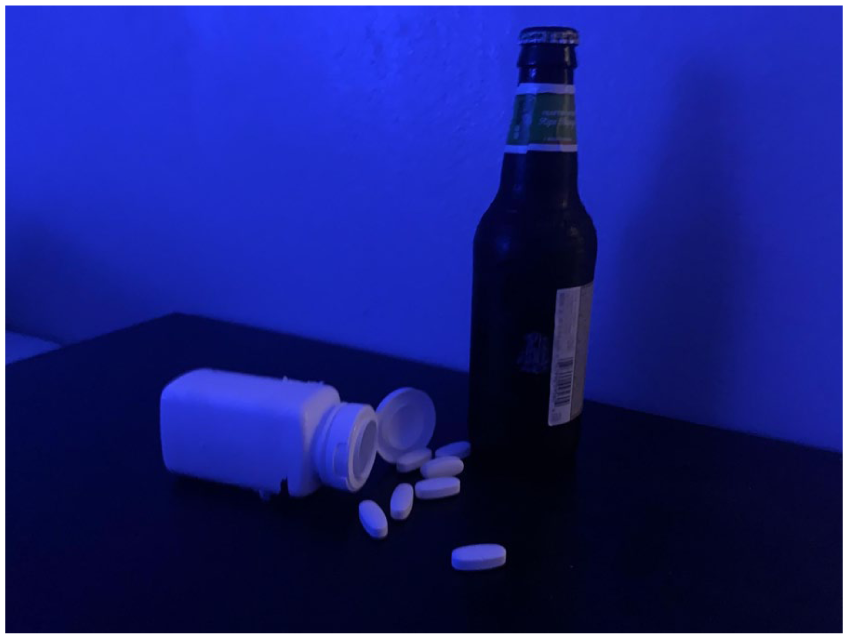
Portrays the abuse of drugs and alcohol as a coping mechanism for mental illness (example of adolescent substance abuse).
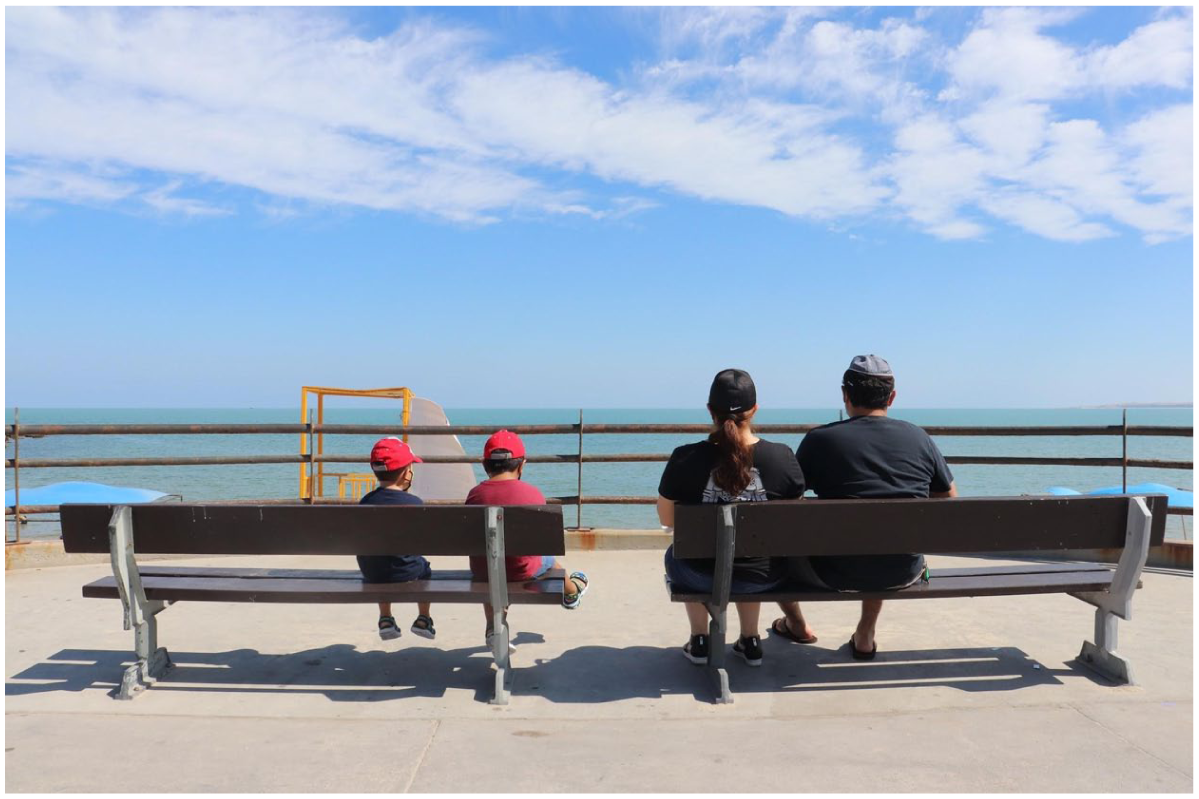
Symbolizes the physical and emotional distance created by the separation of families through deportation (example of immigration).
Theme 1: Critical Reflection
Critical reflection refers to the process of deeply examining and questioning the root causes of social injustices. In this project, critical reflection was evident as students analyzed the structural factors underlying the issues they photographed and confronted their own prior assumptions. Two notable sub-dimensions of this critical reflection experience were emotional disorientation and cognitive disorientation, which often occurred in sequence.
Emotional Disorientation
A large majority of students (about 80%, n = 48) described experiencing strong emotional responses – such as shock, anger, sadness, or frustration – when confronting the realities of their chosen issue. We use the term emotional disorientation to describe this state of feeling unsettled or shaken by new insights. Emotional disorientation occurred when students’ expectations or prior understanding did not match what they observed or learned, creating a sense of imbalance. Many students reported feelings of discomfort and confusion as they encountered evidence of injustices in their communities. For example, one student who focused on youth mental health shared her dismay: she felt “anger and devastation” upon realizing how often young people with mental health disorders are told to “just get over it” instead of being supported (P12). Another student, examining the impact of the COVID-19 pandemic on children with disabilities, said, “It makes me so sad that so many children have undiagnosed learning disabilities. Teachers need to be more educated about these disabilities and serve as better advocates for these children.” This student’s photographs highlighted the challenges of virtual learning for children with special needs; one image showed a child struggling to keep up in an online class, which the student described as “heartbreaking” (see Figure 1). In another example, a student interested in child poverty took a photo of a makeshift living space – a crude shelter of tarp, blankets, wire, and wood – to capture the extreme hardship some children endure (P7). Encountering these scenes through the camera lens evoked powerful emotions that students sometimes found overwhelming. “At first, I was disappointed in myself for not recognizing the wealth disparities in my own community,” one student wrote. “However, this disappointment drove me to take meaningful photographs to raise awareness about children living in poverty.” Such comments illustrate how emotional disorientation, though uncomfortable, served as a catalyst pushing students to investigate further rather than turn away.
Notably, the feelings of unease were not aimless; they often directed students’ attention to specific injustices. Developmental theorists like Piaget (1975) have observed that disequilibrium spurs learning. In line with that idea, our students’ emotional reactions indicated that the photovoice project succeeded in disrupting their ordinary equilibrium, prompting them to seek understanding. As one student summarized, “This project has greatly affected my personal and professional life. I now see my privilege of growing up in a middle-class family. . . I was disappointed in myself for not recognizing the wealth disparities. . . but that disappointment pushed me to learn and do something about it.” In other words, the emotional jolt opened the door for deeper critical reflection.
Cognitive Disorientation
In addition to emotions, students described moments of cognitive conflict or confusion – what we term cognitive disorientation. About 62% of students (n = 37) recounted that at some point in the project, they encountered information or perspectives that did not align with their previous understanding, forcing them to rethink their views. Often, this followed the emotional responses: the discomfort led them to question why they felt that way and what they had been missing. Cognitive disorientation is essentially the intellectual aspect of having one’s assumptions upended.
One participant explained, “This project really encouraged me to step outside my comfort zone, where I had a narrow perspective on foster care. It inspired me to explore innovative solutions to the problems of foster care.” Initially, this student realized her knowledge was limited (a dissonance between what she thought she knew and what the project revealed), which then motivated her to research and imagine new approaches.
Another student reflected on how taking photographs shifted her perspective from self-focused to systemic: “When we think about these issues, we often prioritize our own experiences. . . However, this project helped me focus on others first, especially the challenges that Black Americans face in their daily lives – challenges I will never have to confront as a White female.” (P22). This student initially had viewed racism mostly in personal terms, but through capturing images of educational inequity, she came to see the broader systemic problem. She realized her prior perspective was incomplete. In her words, “I grew up with a good education. . . However, I realize that if I had not been adopted, I might not have had access to the same opportunities. …What I had – access to a good education – is something that many children do not experience. This type of systemic racism is a form of redlining.” Here, we see cognitive reframing: the student connected her personal story (being adopted and educated in a well-resourced context) to a structural phenomenon (redlining and resource disparities). Likewise, another student who had experienced racial discrimination herself noted that the project made her recognize different dimensions of racism: “As a Hispanic woman, I know what racism feels like. . . Even now, I encounter microaggressions regularly. But I used to see racism as more of a personal issue. Through this project, I started to understand it as a systemic issue that affects education and opportunities” (P18).
Through such experiences, students’ thinking evolved from a narrow, individualized view to a broader, structural awareness. They moved from asking, “How does this affect me?” to “How are others affected and what are the larger forces at play?” One student explicitly noted this shift: “The project changed how I see myself as an advocate. . . Before, I didn’t think about how disabilities affect children’s education. Now I see that a lot of work is needed to support children in the educational system” (P33). By engaging with the images and stories of others, students developed greater empathy and a more complex understanding of social issues. Figure 2 illustrates one such perspective shift: it shows a student providing individualized virtual instruction to a child struggling with math, representing the need for tailored support in special education. The student who took this photo realized that her previous approach to helping learners with disabilities was based on assumptions that needed reexamining; she wrote that the image made her think about the unseen challenges faced by children and the additional efforts required by educators.
Students also encountered cognitive disorientation when confronting the prevalence of certain issues. Some remarked that they had underestimated how widespread or severe a problem was. “Before the project, I thought child maltreatment was rare,” one student admitted, “Now I understand it happens frequently, and the consequences are very serious” (P45). This realization came after she chose to photograph symbols of generational abuse in her own family history, an experience that revealed to her how common such stories actually are. She included a photograph representing the cycle of abuse across generations (depicted conceptually in Figure 3), and discussed how eye-opening it was to discover statistics on child abuse frequency.
Similarly, another student focusing on food insecurity noted, “I didn’t realize how hard families had to work during the pandemic to feed their children at home. Through this project, I learned about the harsh effects of food insecurity on vulnerable groups like children” (P11). These reflections show students moving from a superficial awareness (knowing of an issue) to a nuanced understanding (grasping how pervasive and impactful it truly is).
Theme 2: Critical Motivation
The second major theme, Critical Motivation, captures the extent to which students developed a sense of personal agency and commitment to social change. Critical motivation involves believing in one’s capacity to effect change and feeling a responsibility or drive to do so (Diemer et al., 2016). Just over half of the students (53%, n = 32) explicitly expressed that the photovoice experience increased their confidence and determination to engage in advocacy or problem-solving around their chosen issue. This was evident in the way students talked about their capabilities and intentions after completing the project, often using phrases like “I now know. . .,” “I can. . .,” “I will. . .,” or “I hope to. . ..”
For instance, one student noted how the project improved her ability to advocate for educational equity: “Before this project, I had not yet learned how to use my privilege, platform, or voice to help those experiencing inequalities in education. After researching various organizations advocating for educational equity, I now know where to focus my attention. I can educate other teachers about these organizations. The more I educate my community, the more people will be able to help. Although many decisions are made by government officials. . . I can organize people so that the government will notice and address these issues” (P5). She went on to recognize the intersectionality of the issue, saying, “Through this project, I also realized that class inequalities are often connected to racial inequalities. It is just as important to advocate for communities of color as it is to advocate for lower-income communities. Overall, I hope to raise awareness of educational inequalities among those who may not even recognize the issue.” This comprehensive reflection shows how the student moved from a state of inaction to feeling empowered with knowledge and strategies to influence others. The photovoice assignment not only informed her about specific advocacy organizations but also helped clarify her role as an ally and educator who can mobilize others.
Another student discussed how participating in photovoice solidified her commitment to social justice in her future career: “I realize that my role in society is to remain an ally to the African American community and to empathize with the issues they face. I am committed to doing everything I can in my future role as a teacher to foster change and promote equality” (P37). Here, we see critical motivation in the form of a personal vow in that she has linked her professional identity (teacher) with action for social change.
Similarly, students focusing on health and nutrition issues voiced new determination to advocate. One student who examined child nutrition disparities wrote: “I can share the information I learned with families and guide them to organizations like the ‘Let’s Move!’ campaign. I can also advocate for providing better snacks at school and create lessons about healthy habits and activities. This topic reinforced my values and my ethical commitment to pursuing the overall well-being of children and families. I now understand that I can make a difference in my community and in the families around me” (P19). This quote illustrates how the student internalized a sense of agency (“I can make a difference”) and outlined concrete actions to take (educating families, pushing for better school snacks, integrating health into her teaching). The emphasis on now understanding her ability suggests the project played a key role in building that self-efficacy.
Many students attributed their increased motivation directly to the act of taking photographs in their communities. By physically going out and observing issues, they became more aware of needs around them and their own position relative to those needs. Student P42, who above describes her growing self-efficacy, later added that “Now, when I take walks, I look at the people, places, and things around me and think, ‘What can I do to directly advocate for my community?’” This comment is telling because it shows a shift toward an action-oriented mindset. The student’s everyday experience (taking walks) has been transformed into an opportunity to scan for issues and consider responses, indicating that critical motivation has become a habitual lens through which she sees the world.
Figure 4, produced by a student concerned with food insecurity, provides a visual example that sparked critical motivation. It shows a comparison between low-cost, low-nutrition foods and higher-cost, healthy foods, a stark illustration of how economic barriers can drive poor nutrition. After creating this image and seeing the disparity laid out, the student wrote about feeling driven to raise awareness and work on solutions for making healthy food more accessible (P19, the same student quoted above). In general, creating visual evidence of problems seemed to instill in students a sense of responsibility; they often wrote about feeling that, having seen the issue and shown it to others, they were now obligated to do something about it.
Theme 3: Critical Action
The third theme, Critical Action, refers to the tangible steps students took (or committed to take) to fight injustices or contribute to solutions. While the course did not require any direct activism beyond the photovoice project itself, a notable subset of students (approximately 23%, n = 14) reported that they engaged in some form of action as a result of what they learned. Critical action can range from small-scale interventions to larger advocacy efforts; here we include any deliberate efforts the students made to address the social issues they studied, prompted by their participation in the project.
Many of these actions were initiated independently by the students during or after the project, indicating an internalization of the activist mindset. For example, one student wrote, “Because of this project, I began exploring opportunities to sign petitions and share information about various social justice issues with my colleagues and family members” (P8). This student took it upon herself to disseminate knowledge and encourage others to support causes, essentially becoming a conduit for awareness in her personal networks. Another student shared, “The photovoice project inspired me to volunteer at shelters and to help out in person – basically to be more engaged in the community” (P11). This is a clear case where learning about an issue (in this case, perhaps homelessness or poverty) moved the student to start volunteering in relevant community organizations, thereby directly helping to alleviate the problem.
Other students found ways to incorporate new actions into roles they already held. One participant who was volunteering with a teen mental health program described a change in how he approached that role: “The photovoice project helped me communicate more effectively with my kids about the importance of having a support system within the community, especially when they are dealing with mental health issues” (P21). He used one of his photos (Figure 5), which depicted the coping mechanisms some teens resort to, such as drugs and alcohol, in the face of depression, as a conversation piece to emphasize the need for social support and healthy coping strategies. By bringing insights from the project into discussions with the teens he mentored, he translated reflection into action in a very contextualized way. In his reflection, he noted that he also started connecting the teens with community resources, effectively taking on a small advocacy role to ensure they have support beyond the program sessions.
Similarly, another student who worked as a nursing intern in a pediatric hospital said the project motivated her to push for policy awareness in her workplace. “I’ve started advocating for programs that preserve children’s health and empower them, even in the face of substance abuse challenges in their families,” she wrote (P30). She even prepared a presentation for her nursing peers on initiatives to support mothers with opioid addictions and their infants – an issue directly related to her photovoice topic of neonatal health and family substance abuse. By educating her peers, she was taking action to spread knowledge and encourage a more compassionate, informed approach in healthcare settings.
It is important to note that these actions were voluntary and arose organically; students were not graded on activism. The fact that nearly a quarter of them took it upon themselves to engage in actions (like volunteering, campaigning, or professional advocacy) speaks to the impact of the photovoice experience. It appears that once students had reflected on the issues (Theme 1) and felt motivated (Theme 2), many naturally progressed to experimenting with actions, even small ones, to align their behaviors with their new outlooks. This progression from awareness to behavior is a key goal of critical pedagogy – moving learners from critical analysis to praxis (reflection + action).
In our data, even students who did not report taking action during the semester often mentioned future intentions to act, which is also an aspect of critical action (a commitment to ongoing engagement). For example, one student concluded her essay by saying she planned to continue working with a local nonprofit beyond the course to keep advocating for foster youth (P13). Another outlined a career plan that involved policy advocacy, explicitly crediting the project for igniting that interest (P5). Thus, the seeds of future critical action were planted in many participants, even if immediate actions were not feasible for all during the course timeframe.
Theme 4: Personal Relevance
An unexpected yet significant theme that emerged was Personal Relevance. We found that almost all students (around 85%, n = 51) deliberately chose photovoice topics that had personal significance to them, and this personal connection deeply influenced their learning process. Many students mentioned family experiences, childhood memories, or aspects of their own identity that tied into the social issue they explored. This theme speaks to the importance of lived experience as a driver of engagement – when students felt a topic was personally relevant, they appeared to invest more effort and drew more profound insights from the project.
Students often introduced their topic by sharing why it mattered to them personally. Common phrases in their essays were “I had my own experience. . .,” “In my childhood. . .,” or “I have witnessed. . .” such-and-such issue. For example, one student selected the topic of child mental health because of her own family’s struggles: “Not only have I had my own experience with mental health issues, but I have also witnessed child mental illness within my family. My brother suffered from anxiety, depression, and ADHD as a very young child. . . my parents were not educated about the signs. . . My brother did not receive the attention he needed for his mental health until later in life, when he had already turned to drug and alcohol abuse. This is why I am so passionate about this topic” (P36). Her photographs and captions were informed by this background – she depicted scenes of a child isolated and distressed, and another showing pills and bottles, narrating how neglect of early mental health can lead to substance abuse (mirroring her brother’s trajectory). For this student, the photovoice project was not just an academic task; it was a form of meaning-making around her family’s experience and a motivation to prevent it for others. She wrote that the project helped her realize “although my experiences were challenging, they have positioned me to advocate for others and develop solutions.” In other words, by analyzing her personal connection to the issue, she transformed a family hardship into a source of empathy and advocacy – a clear case of personal relevance fueling critical consciousness.
Another student discussed how growing up in a low-income community shaped her interest in educational equity: “At one point in my childhood, my mother had to lie about our home address so that I would qualify for a better school than those in our neighborhood. I would wake up two hours earlier than my peers to catch the bus. My photographs highlight this issue by depicting the struggles faced by students in low-income neighborhoods – commuting long hours, lacking resources, lying about their living situations, and taking tests for which they may not be prepared – while striving to earn their diplomas” (P44). Her firsthand experience of inequity (having to undertake a burdensome commute to access quality education) became the narrative thread of her photovoice project. She knew intimately what challenges to capture: from a photo of a pre-dawn bus stop to an image of outdated textbooks. This authenticity lent power to her analysis. It also made her keenly aware of the systems of inequality; she noted that what she went through, many other students still go through, and she expressed determination to address these systemic issues in her future career as a school counselor.
For some students, the personal relevance was rooted in current events affecting them or their families. One student shared a very immediate and painful connection to the topic of immigration policy: “I am interested in this social issue because my family is currently facing deportation. ICE accidentally deported my stepmother, and our family has been separated since that day. . . My younger brothers, ages three and five, now live in Tijuana, Mexico, and attend school there because their mother was taken across the border. . . we have witnessed the traumatic effects this experience has had on my young brothers” (P27). This student’s photovoice project became a form of testimony about the human impact of immigration enforcement. She took photos on both sides of the U.S.-Mexico border, illustrating her brothers’ new daily reality versus her own, and in her captions discussed the emotional trauma of family separation on children. Engaging with this topic was clearly a personal catharsis and a call for action for her. The personal stake she had in the issue drove her to research the legal processes and advocate (through her final essay and in class discussions) for more humane policies.
Many others echoed that having a personal stake made the project more meaningful. Some disclosed experiences of childhood abuse (“I experienced maltreatment firsthand, so this project is personal for me,” wrote one, P10) which led them to focus on child welfare reforms. Others connected to topics through identity: for instance, a student who explored healthy emotional development mentioned, “I grew up as a male, told by society to be ‘tough’ and suppress my emotions. I get what it’s like to be judged and not able to express yourself” (P39). He photographed images representing toxic masculinity norms and their impact on boys, bringing a personal understanding to academic discussions of gender socialization.
Collectively, these accounts suggest that when students saw their own life experiences reflected in a social issue, they engaged in a deeper form of reflection – one that was empathetic and often passionate. They were not merely analyzing an abstract problem; they were grappling with something real in their lives. This personal relevance often enhanced their critical reflection (Theme 1) because they could draw direct lines between individual stories and systemic issues. It also fueled their motivation (Theme 2) – as one student put it, “My personal experience allows me to empathize with the children who currently feel trapped. It makes me want to be part of the change so they don’t have to go through what I did” (P10). In some cases, positive personal experiences also inspired advocacy: one student noted she was raised by a single mother who taught her emotional openness, which drove her to want to spread that message to other children (P39, same student as above, finding strength from positive role model).
Discussion
This study explored how photovoice cultivates critical consciousness in undergraduates by promoting critical reflection, motivation, and action in an upper-division online course in a College of Education setting. The findings from students’ narratives and visual representations demonstrate that the photovoice project served as a powerful catalyst for transformative, active learning. Through the dual lenses of Transformative Learning Theory (Mezirow, 2000) and Freirean critical consciousness, several important insights emerged about how students experienced personal and intellectual growth.
First, students’ encounters with emotional and cognitive disorientation highlight the productive role of discomfort in deep learning. Many students described feelings of emotional unrest and confusion as they confronted the reality of systemic injustices, especially when those realities contradicted their prior assumptions or privileges. These experiences closely mirror Mezirow’s concept of disorienting dilemmas – critical incidents that challenge learners’ existing frames of reference and open the door for reflection and change. In our context, taking photographs of inequities made those issues vividly present for students, often evoking an affective response that demanded attention. Rather than being a hindrance, these emotional reactions were the first stage of a transformative learning process. Consistent with recent work by Green (2023) on the micro-processes of transformation, students’ narratives revealed that encountering an unfamiliar or unsettling reality (e.g., seeing extreme poverty or educational neglect up close) spurred them to ask deeper questions about the root causes of oppression and inequality. Importantly, these were not fleeting moments of shock; students used them as pivot points to investigate further, discuss with peers, and reassess their own worldviews. In educational practice, this finding affirms that creating space for students to grapple with discomfort – in a supportive way – can lead to meaningful reflection. Active learning strategies like photovoice intentionally introduce a bit of disequilibrium (through novel tasks and exposure to real-world problems), which in our study proved to be a catalyst for significant learning.
Second, the project facilitated a shift in perspective from an individualistic lens to a systemic one. Many students began the semester viewing issues like poverty, mental health, or educational failure through a personal or anecdotal lens. By the end, they were articulating much more nuanced analyses that incorporated structural factors such as racism, economic inequality, ableism, and policy shortcomings. Photovoice helped operationalize Freire’s concept of critical reflection by making the larger systems visible through imagery and dialogue. For instance, a student might start with a photo of one family’s situation but, through class discussion, connect it to historical and socioeconomic trends affecting many families. This demonstrates perspective transformation in action: learners moved from naive or surface understandings to more complex, critical interpretations of social issues. It was common to read phrases like “I realized it’s not just about individual choices; it’s about the system” in the final essays. Such shifts are precisely what educators hope for when employing active, problem-posing pedagogies. Photovoice provided a concrete means for students to see the interplay between individual stories and societal structures, thereby reinforcing the interconnectedness of personal and political realms.
Third, critical motivation emerged as a key outcome of the photovoice experience. Students reported a newfound or deepened sense of responsibility and commitment to work for social change. Not only did they become more aware of issues, but many also developed a belief in their own capacity to make a difference – a combination crucial for empowerment. This aligns with El-Amin et al.’s (2017) assertion that critical consciousness is not merely about understanding injustice intellectually, but also about nurturing the desire and confidence to act against it. In our study, the language of agency (“I can. . . I will. . .”) in student reflections signaled this shift toward what psychologists would call an agentic mindset. Students began to see themselves as active contributors to solutions, not just observers of problems. This aspect of motivation is particularly important in higher education, where we aim to graduate students who are proactive and engaged citizens. The photovoice project, by virtue of being student-driven, seemed to give students a sense of ownership over the issues – and with ownership comes a feeling of responsibility. They didn’t wait for the instructor to tell them what to do; they identified what they could do. Such internal motivation is a strong indicator of lasting impact, suggesting that the lessons of the project may carry forward into their future endeavors.
Moreover, even though the assignment did not require activism, nearly one-quarter of the students voluntarily engaged in critical action during the span of the course. They translated their reflection and motivation into real-world steps like volunteering, advocacy, or educating others. This is notable because taking action often involves extra effort and stepping outside one’s comfort zone. The fact that many did so spontaneously illustrates how an experiential, reflective pedagogy can serve as a bridge between classroom learning and civic participation. When students had the opportunity to connect coursework with their communities (even indirectly, through photos), it apparently lowered the barrier to entry for involvement – some were already knocking on the door of activism by the time the project concluded. This outcome supports the theoretical framework by Diemer et al. (2016), which posits that critical reflection and motivation, when intentionally cultivated, increase the likelihood of critical action. Our results provide empirical evidence for this: the more students reflected and felt empowered, the more likely they were to actually do something tangible in response.
Finally, the emergence of personal relevance as a theme offers insight into the pedagogical design. Students overwhelmingly chose issues that resonated with their lived experiences, and this personal connection seemed to amplify the impact of the project. When students saw themselves or their loved ones in the subject matter, learning became intrinsically motivated and deeply meaningful. The most poignant reflections came from those who had a personal stake: they not only analyzed issues academically but also processed personal emotions and memories, which in turn fueled their drive to learn and act. This finding reinforces Freire’s view that education should start from the learners’ reality – in our case, allowing students to bring their biographies into the classroom made the learning real and urgent for them. It also aligns with transformative learning scholarship that acknowledges the importance of involving the learner’s own history and affect in the process of change (Taylor & Cranton, 2012). By bridging the affective and cognitive domains, photovoice created a holistic learning experience. Students’ personal testimonies of pain, resilience, or hope – connected to systemic analysis – suggest that photovoice may be uniquely well-suited to integrate emotional learning with intellectual inquiry. This integration is especially valuable in courses about social issues, where empathy and human connection enhance understanding of abstract concepts like “inequality” or “trauma.”
In summary, the discussion of our findings indicates that photovoice pedagogy can effectively engage students in multiple dimensions of active, transformative learning. It created conditions for disorienting dilemmas and supported students through reflection to new perspectives; it empowered and motivated them; it even nudged some into action; and it drew strength from students’ own lived experiences. These outcomes are highly consistent with the goals of critical pedagogy and active learning in higher education: we want students to think critically, care deeply, and act responsibly. Our implementation of photovoice demonstrates one way to achieve that.
Pedagogical Implications
This study highlights several implications for teaching practice in higher education, particularly for instructors aiming to implement active learning strategies that foster critical awareness and engagement:
First, educators can intentionally integrate visual and experiential learning activities to cultivate critical thinking. The success of photovoice in this course suggests that “learning by doing” with a creative twist (in this case, photography) can greatly enhance student engagement. By venturing beyond textbooks and lectures, and asking students to interact with real-world environments, instructors tap into experiential learning processes that make abstract issues concrete. Photovoice required students to observe and document their surroundings, turning the community into a learning laboratory. This experiential aspect helped students form personal connections to social issues, making their learning more impactful. Additionally, the use of images introduced a visual learning dimension that benefited students who might not engage as deeply through words alone. Photographs have the power to evoke emotions and insights in ways that traditional assignments may not. Indeed, research on photo-elicitation has found that images can prompt reflections and feelings that narrative text alone cannot reach. In our classroom, the photographs served as potent discussion starters and reflection pieces, often leading to “aha” moments. Therefore, instructors in other courses might consider assignments that incorporate visual or image-based assignments to complement conventional readings and discussions. Such approaches align with theories of multimodal learning and appeal to a broader range of student strengths. In essence, photovoice demonstrates the pedagogical value of showing as well as telling – an approach that engages students’ senses, emotions, and critical faculties simultaneously. Importantly, photovoice can be implemented flexibly across course formats: in online courses through structured breakout discussions and digital galleries, and in face-to-face settings through in-class exhibits, walkabouts, and facilitated dialogue.
Second, the photovoice project underlines the importance of dialogue and a supportive learning community in active learning. A key component of our implementation was the small-group discussions using the SHOWeD method, which created structured yet open-ended opportunities for students to dialogue about what they found. These dialogic sessions were where much of the critical reflection gelled – students heard diverse perspectives on the same image, received validation and feedback, and together probed the deeper questions raised by the photos. This kind of collaborative meaning-making is at the heart of active learning: students are actively processing information, not just individually in their minds, but socially through conversation. For instructors, the implication is to build in regular forums for student-to-student interaction around course material. However, it is not enough to simply put students in groups; the teacher must also cultivate a safe and supportive environment for these dialogues. In our case, because topics like abuse, racism, and poverty can be emotionally charged, it was crucial to establish ground rules of respect and confidentiality, and to be an active facilitator during discussions. As our findings showed, students were willing to share personal and sometimes painful experiences (e.g., family trauma) when they felt the classroom environment was trusting and nonjudgmental. This echoes recommendations in the literature that teachers practicing critical pedagogy must attend to the emotional climate of the classroom (Taylor & Cranton, 2012). Creating a space where students feel heard and supported enables deeper engagement. Photovoice specifically encourages dialogue, not just between teacher and student, but among students, and our experience suggests that this dialogic learning helped students sharpen their critical thinking and also feel less isolated in their reactions. They could build on each other’s ideas and form a collective understanding that went further than any single student might have achieved alone. Therefore, educators should consider pedagogies that involve peer discussion, group reflection, or other interactive components, and they should be intentional in fostering an inclusive atmosphere where all students feel comfortable contributing. When done well, dialogic approaches can transform a classroom into a community of inquiry, which is a hallmark of active learning environments.
Third, this study illustrates the need to recognize and channel the emotional dimension of learning. Photovoice, by design, engages not only students’ intellect but also their feelings – outrage at injustice, empathy for others’ suffering, hope for change, etc. Rather than seeing these emotional responses as off-topic or problematic, educators should view them as an integral part of the learning process, especially for topics of social importance. In our project, students’ emotional disorientation was actually a gateway to transformation, not a barrier. Once we as instructors acknowledged and legitimized those feelings (e.g., in class we might say, “It’s okay to feel sad or overwhelmed; these are heavy issues”), students felt more at ease to explore why they felt that way, leading them into deeper critical analysis. The implication for teaching is twofold: pedagogical design should anticipate emotional reactions (and even aim to provoke them in constructive ways), and instructor facilitation should provide outlets for students to process those emotions. This might include reflective writing prompts about how an issue makes them feel, offering counseling resources when needed, or simply normalizing the fact that learning about injustice can be painful. By doing so, we help students build emotional resilience and empathy – qualities that are essential for the kind of socially conscious graduates our institutions aspire to develop. Active learning theory often emphasizes “engagement,” and it’s worth remembering that true engagement is not just cognitive but also emotional. Photovoice engaged students on that affective level by connecting to their lives and values, which in turn fueled their motivation and commitment. In summary, instructors using active learning strategies should be prepared to engage the “whole student.” When students laugh, cry, get angry, or feel inspired as part of a project, those emotions can be harnessed into energy for learning and action. Educators should create structured opportunities for reflection on those emotions and connect them back to course content and societal contexts, as we attempted with guided questions and discussions in the photovoice project.
Overall, the implementation of photovoice in this study demonstrates how an active learning approach can be leveraged to achieve deeper educational outcomes. The experiential component (taking photos in the community) gave students concrete experiences to reflect on. The visual component captured attention and conveyed complex ideas powerfully. The dialogic component enabled collaborative critical thinking. And the personal relevance component ensured students were intrinsically motivated. Educators in higher education can draw from these elements even if they do not use photovoice per se. Although this project occurred in a College of Education context, photovoice may also be well-suited to disciplines such as law, business, public administration, communication, and design, particularly when instructors aim to connect policy, ethics, and systems-level content to lived realities. For example, one might incorporate a mini photo-essay assignment in a sociology class, or use student-generated media as prompts for class discussion on ethical issues, or any number of adaptations that bring active, student-driven inquiry to the forefront. The guiding principle is to shift the learning dynamic: students become investigators and storytellers, and teachers become facilitators and co-learners. Such a shift is emblematic of the student-centered, active learning paradigm that research has shown to be effective in promoting retention, understanding, and critical thinking. Photovoice is a compelling model of this paradigm in action, aligning with calls for more engaged and socially relevant teaching in higher education.
Limitations and Future Research
While this study provides valuable insights into the pedagogical potential of photovoice, several limitations must be acknowledged. First, the participants were all enrolled in a course explicitly focused on public policy, ethics, and social issues. These students might have been predisposed to engage deeply with topics of inequality and injustice, given the nature of the class. Thus, the effects observed (e.g., high levels of critical reflection or motivation) might be partly influenced by a self-selection bias or the overall course context. Future research could examine photovoice in a variety of course types, including those not overtly oriented toward social justice, to see if similar outcomes in critical consciousness are observed among a broader student population.
Second, our measure of “critical action” was based on self-report and voluntary disclosures by students in their essays. We did not have a formal way to track or verify actions students took outside the classroom, and involvement in activism was not a required component of the project. Therefore, while some students reported taking steps like volunteering or advocacy, the extent and sustainability of those actions remain unclear. Longitudinal research would be valuable to determine whether participating in a photovoice project has lasting effects on students’ civic engagement or career choices. For instance, do students who experience this kind of project continue to be involved in community issues a year or more later? Do they feel it influenced their professional path or identity as change agents? Studies that follow up with students over time, or compare photovoice participants with non-participants, could shed light on the long-term impact of this pedagogy.
Third, the photovoice project in this study was implemented in an online class setting (due to the pandemic) and with a particular group size (60 students, small discussion groups of ~6). These contextual factors could affect how photovoice plays out. In-person implementations might generate even richer interaction or could pose different logistical challenges (such as conducting group discussions face-to-face or organizing a public exhibition of student photos, which is sometimes done in photovoice projects). Additionally, the group size and composition can influence individual comfort levels in sharing. Future studies could experiment with different modalities (online vs. in-person vs. hybrid), different group configurations, or even inter-institution collaborations (having students from different universities share photovoice projects) to explore the scalability and adaptability of the approach. It would be useful to document best practices for various contexts.
Fourth, although our focus was on student outcomes, future research might also consider the instructor’s perspective and the pedagogical workload of implementing photovoice. This approach required careful planning, preparation of students (e.g., ethics of photography, technical guidance), and intensive facilitation during discussions. Instructors considering photovoice would benefit from research on common challenges (such as students taking superficial photos initially, or hesitance to share personal stories) and effective strategies to overcome them. Moreover, assessing how photovoice contributes to course learning objectives relative to other assignments could help justify its use. For example, do students produce better quality reflection or analysis in a photovoice project compared to a traditional research paper? Gathering such comparative data could persuade more educators to adopt innovative active learning strategies like this.
Finally, participant positionality likely shaped topic selection, what students chose to photograph, and how images were interpreted. Although demographic variables were intentionally not collected to protect student privacy, students’ reflections suggest that identity, lived experience, and social location (e.g., race, class, immigration experiences, disability, and educational access) influenced meaning-making and the depth of personal relevance. Future research could incorporate ethically collected demographic/contextual measures and a more explicit reflexive analytic component to examine how intersectionality shapes visual interpretation and learning outcomes in photovoice-based pedagogy.
Conclusion
This study affirms that photovoice is a powerful active learning pedagogy capable of fostering critical consciousness in undergraduate education. By inviting students to document, reflect upon, and dialogue around real-world issues, photovoice bridges academic learning with personal and societal transformation. The undergraduate participants in our course not only learned about social problems in the abstract, but also experienced and analyzed them in context – and in many cases, felt empowered to respond. Through the process, students underwent shifts in perspective characteristic of transformative learning: they confronted their assumptions, engaged emotionally and cognitively with new realities, and emerged with a clearer sense of their role in effecting change. Photovoice’s blend of visual expression, storytelling, and critical discussion created a multifaceted learning experience that activated students’ intellect, creativity, and sense of justice all at once.
When implemented thoughtfully, photovoice has the potential to empower students not only to see the world differently but also to act on that new vision for a more just and equitable future. For educators seeking to promote active learning and critical engagement, photovoice offers a versatile and impactful method. It exemplifies how we can move beyond lecture-based pedagogy to a model where students are researchers, artists, and change agents in their own right. In doing so, it helps fulfill one of the highest aims of higher education – to produce graduates who are critically conscious and actively committed to improving their communities and society.
Footnotes

Funding
The authors received no financial support for the research, authorship, and/or publication of this article.
Declaration of Conflicting Interests
The authors declared no potential conflicts of interest with respect to the research, authorship, and/or publication of this article.