






Abstract
Objective:
Many patients still have high blood pressure (BP) after treatment with high-dose angiotensin II type 1 receptor blockers (ARBs) or Preminent® (medium-dose of losartan (50 mg/day)/hydrochlorothiazide (HCTZ) (12.5 mg/day)). Therefore, we analyzed whether Micombi®BP (high-dose telmisartan (80 mg/day)/HCTZ (12.5 mg/day)) could provide better results with regard to efficacy and safety for patients with uncontrolled hypertension.
Methods:
In total, 44 hypertensive patients (22 males, age 71±14 years) who showed uncontrolled BP despite the use of high-dose ARBs or Preminent® were enrolled in this study. We used a changeover design in which the patients were switched from high-dose ARBs or Preminent® to Micombi®BP. We analyzed BP, heart rate (HR), and biochemical parameters before and after treatment for 3 months.
Results:
Systolic BP and diastolic BP significantly decreased (125±15/69±11 mmHg) and 85% of the patients achieved their target BP at 3 months after changeover. Patients who switched from ARBs and those who switched from Preminent® showed similar BP-lowering effects. In addition, the reductions in BP after 3 months in patients with or without chronic kidney disease and in those with or without metabolic syndrome (MetS) were also similar. There were no significant changes in HR during the study period. Although blood levels of potassium, hemoglobin A1c and uric acid (UA) significantly increased after 3 months for all of the patients, none of the patients showed serious adverse effects.
Conclusion:
High-dose telmisartan/HCTZ therapy was associated with a significant reduction in BP and helped patients achieve their target BP.
Keywords
Introduction
Combinations of angiotensin II type 1 receptor blockers (ARBs) and thiazide diuretics are recommended by various guidelines.1,2 Most patients with hypertension require two or more drugs to achieve their target blood pressure (BP). 3 In fact, large-scale clinical trials have shown that thiazide diuretics and/or calcium channel blockers are frequently added to ARBs to achieve adequate BP control. 4 Although better BP control is associated with remarkable clinical benefits with regard to cardiovascular and renal protection, many patients still show higher BP after treatment with high-dose ARB or medium-dose ARB/hydrochlorothiazide (HCTZ). In addition, thiazide diuretics can produce adverse effects, such as hyperuricemia (HU), dyslipidemia (DL), glucose intolerance and hypokalemia. 1
Seven kinds of single-pill fixed-dose combinations of ARB/HCTZ are available for clinical use in Japan. Micombi®BP (combination of high-dose telmisartan (80 mg/day)/HCTZ (12.5 mg/day)) clearly has the strongest BP-lowering effects. 5 In Japan, maximum doses of telmisartan (80 mg/day), candesartan (12 mg/day), olmesartan (40 mg/day) and valsartan (160 mg/day) are approved for use. Micombi®BP is the only combination of high-dose ARB/HCTZ that is clinically available in Japan. Therefore, we analyzed whether a changeover from high-dose ARBs or Preminent® (medium-dose losartan (50 mg/day)/HCTZ (12.5mg/day)) to Micombi®BP provided better efficacy and safety for patients with uncontrolled hypertension.
Methods
Study design
For this study, 44 hypertensive patients who had uncontrolled BP according to the Japanese Society of Hypertension Guidelines for the Management of Hypertension 1 despite the use of high-dose ARBs or Preminent® were enrolled. We applied a changeover design, in which patients were switched from high-dose ARBs or Preminent® to Micombi®BP. After 3 months, we analyzed various parameters. We excluded patients with secondary hypertension, heart failure of NYHA grade III or IV, liver dysfunction, renal dysfunction (defined as a serum creatinine (Cr) level of more than 2.0 mg/dl), pregnancy, or a history of allergy to telmisartan and/or HCTZ. The protocol in this study was approved by the ethics committee of Fukuoka University Hospital, and all subjects gave their informed consent to participate.
Evaluation of clinical parameters
We analyzed seated office systolic BP (SBP), diastolic BP (DBP) and heart rate (HR), body weight (BW), and blood and urinary levels of biochemical parameters at baseline and after 3 months. BP was determined as the mean of two measurements obtained in an office setting by the conventional cuff method using a mercury sphygmomanometer after at least 5 min of rest. All of the blood and urinary samples were collected in the morning after the patients had fasted overnight. Data of serum levels of biochemical parameters, such as high-density lipoprotein-cholesterol (HDL-C), low-density lipoprotein-cholesterol (LDL-C), triglycerides (TG), uric acid (UA), creatinine (Cr), fasting blood glucose (FBS) and hemoglobin A1c (HbA1c), sodium (Na), potassium (K), Cr and albumin (Alb) were collected in all patients. Body mass index (BMI) was calculated as weight (kg)/height (m)2.
The characteristics of the patients, with regard to history of DL, diabetes mellitus (DM), HU, smoking status and medication use, were obtained from medical records. Patients who had a current SBP/DBP ≥ 140/90 mmHg or who were receiving antihypertensive therapy were considered to have hypertension. Patients with LDL-C ≥1 40 mg/dl, TG ≥150 mg/dl, and/or HDL-C < 40 mg/dl, or who were receiving lipid-lowering therapy, were considered to have DL. DM was defined using the American Diabetes Association criteria or the use of a glucose-lowering drug. HU was defined as a serum UA level of ≥ 7.0 mg/dl or the use of uric acid-lowering drugs.
Statistical analysis
Statistical analysis was performed using the Stat View statistical software package (Stat View 5; SAS Institute Inc., Cary, NC, USA). Data are shown as the mean±standard deviation (SD). Changes in SBP, DBP, PR, and clinical parameters following therapy were analyzed by the Student t-test. A value of p < 0.05 was considered significant.
Results
Patient characteristics
Table 1 shows the characteristics of the 44 patients, who consisted of 22 (50%) males. None of the patients withdrew from the study. The prevalence of DL, DM and HU was 57%, 18% and 16%, respectively. In addition, the percentage use of calcium channel blocker (CCB), β-blocker and α-blocker was 91%, 5% and 2%, respectively. We did not change these medications throughout the study period.
Baseline patient characteristics.
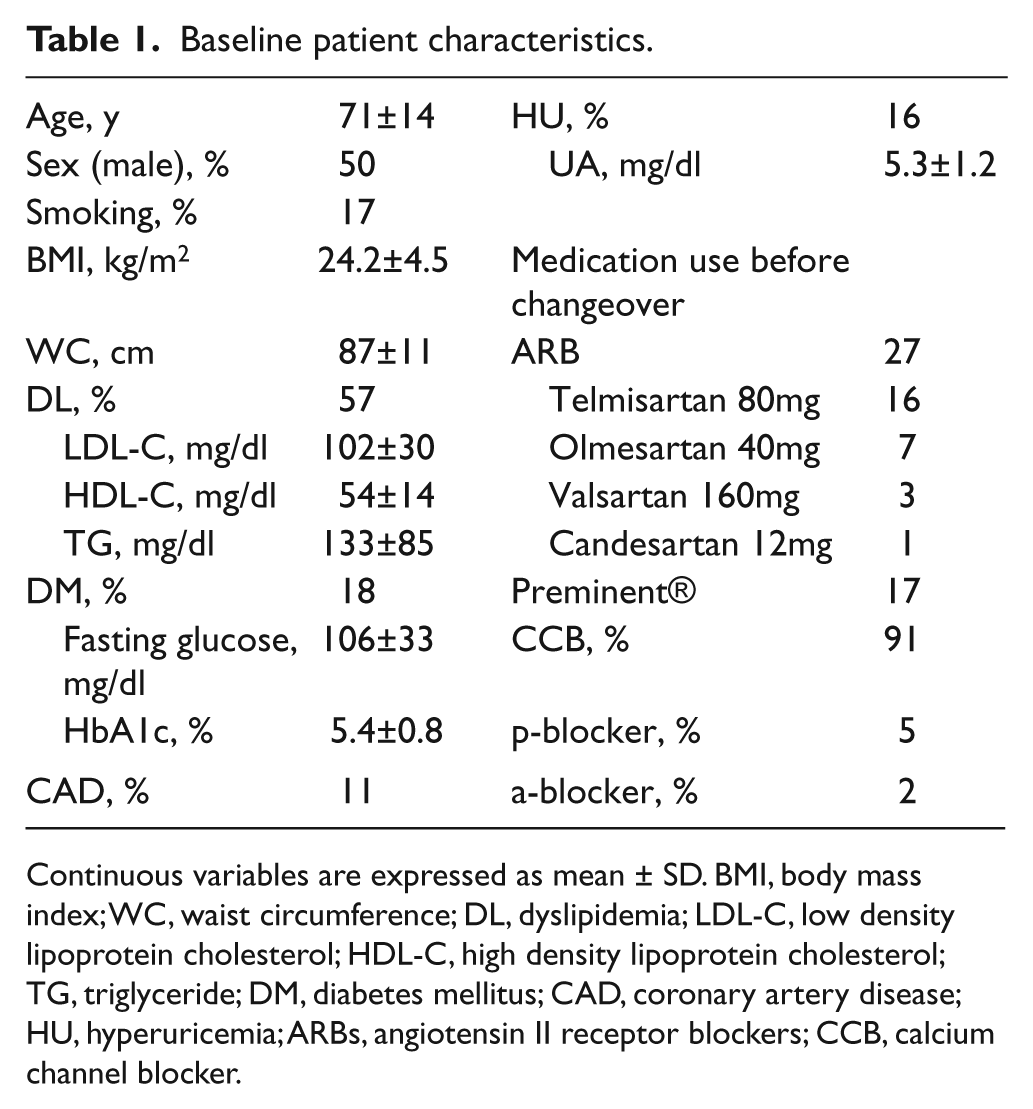
Continuous variables are expressed as mean ± SD. BMI, body mass index; WC, waist circumference; DL, dyslipidemia; LDL-C, low density lipoprotein cholesterol; HDL-C, high density lipoprotein cholesterol; TG, triglyceride; DM, diabetes mellitus; CAD, coronary artery disease; HU, hyperuricemia; ARBs, angiotensin II receptor blockers; CCB, calcium channel blocker.
Changes in BP and PR
SBP/DBP and PR at baseline were 143/78 mmHg and 73 beats/min, respectively (Figure 1). There were significant reductions in SBP and DBP, but not HR, after 3 months (125/70 mmHg) in all patients. Next, we divided the patients into high-dose ARBs and Preminent® groups. SBP/DBP were significantly decreased in both groups, and there was no significant difference in HR.
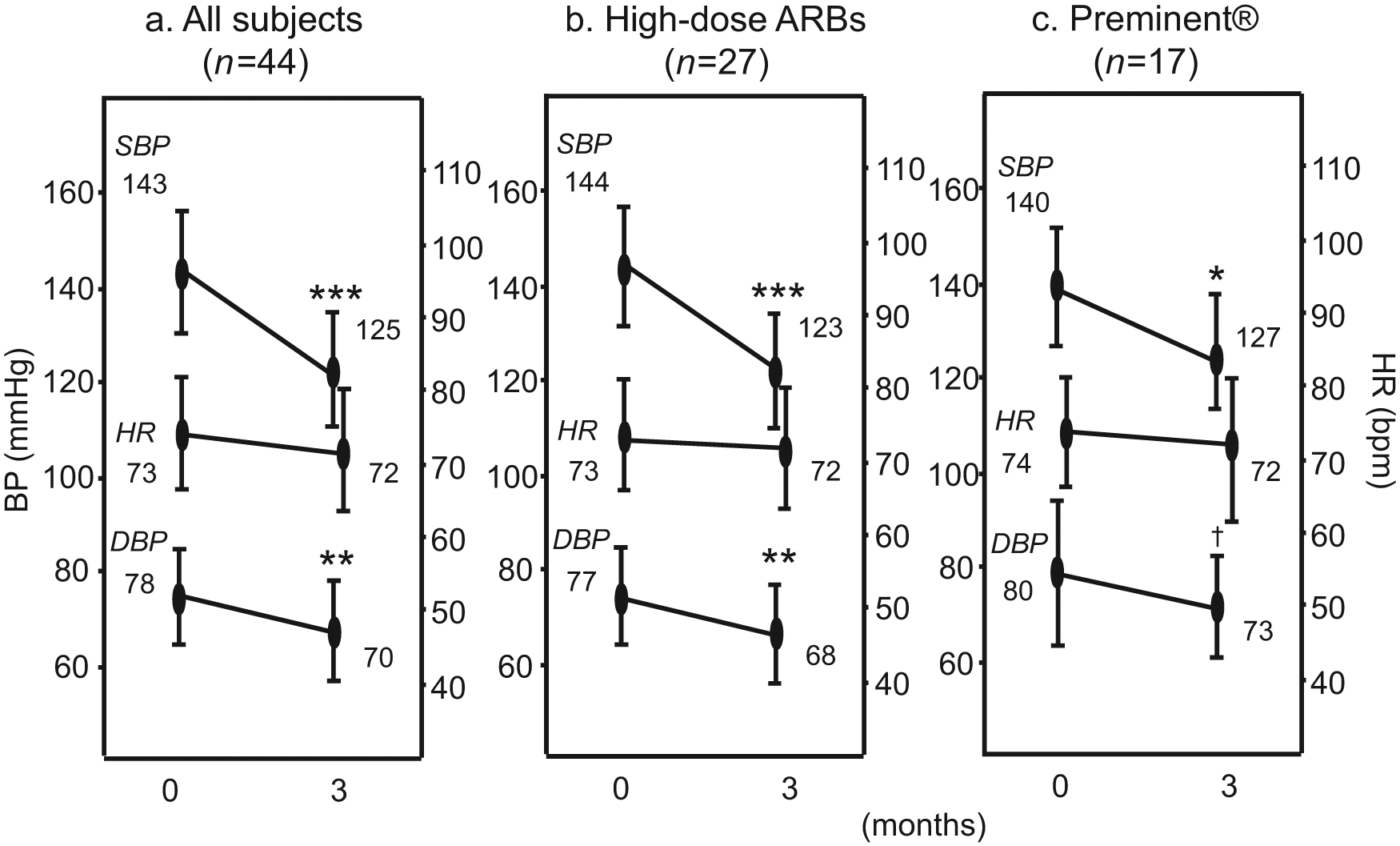
Changes in blood pressure (BP) and heart rate (HR) in all subjects (n=44), upon switching from high-dose ARBs (n=27) and Preminent® (n = 17). ***p < 0.0001, **p < 0.001, *p < 0.01, †p < 0.05 vs. 0 months.
We also divided the patients into two groups according to the estimated glomerular filtration rate (eGFR) (eGFR ≥ 60 ml/min/1.73m2 and < 60 ml/min/1.73m2 according to the guidelines for chronic kidney disease (CKD)) and the presence or absence of metabolic syndrome (MetS) in Figure 2. Again, SBP/DBP were significantly decreased in both groups, and there was no significant difference in HR. Therefore, Micombi BP® showed adequate reductions in BP independent of eGFR ≥ 60 or < 60 and the presence or absence of MetS.
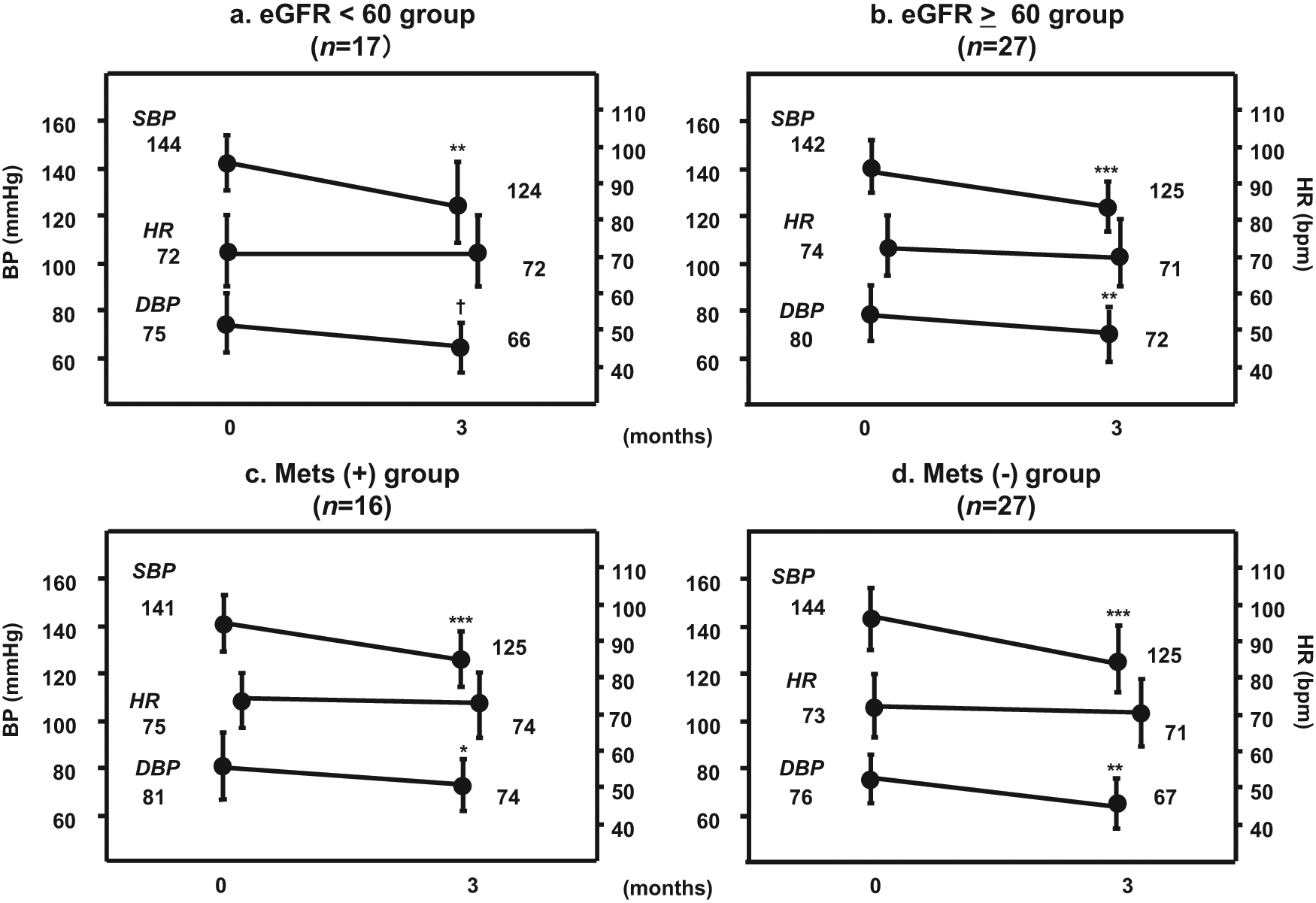
Changes in blood pressure (BP) and heart rate (HR) in the eGFR < 60 (a) and ≥60 (b) ml/min/1.73m2 groups and in the presence (+) (c) or absence (−) (d) of MetS. ***p<0.0001, **p<0.001, *p<0.01, †p<0.05 vs. 0 months.
Changes in biochemical parameters
As shown in Table 2, there were no significant changes in BMI or biochemical parameters, such as Cr, brain natriuretic peptide and lipid profile, in any of the subjects. On the other hand, Micombi BP® significantly increased serum levels of blood urea nitrogen (BUN), UA, K and HbA1c, and decreased Na after 3 months.
Change in biochemical parameters in all subjects, high-dose ARBs and Preminent® groups.

M, months; BMI, body mass index; BUN, blood urea nitrogen; Cr, creatinine; eGFR, estimated glomerular filtration rate; UA, uric acid; Na, sodium; K, potassium; TG, triglyceride; LDL-C, low density lipoprotein cholesterol; HDL-C, high density lipoprotein cholesterol; FPG, fast plasma glucose; HbA1c, homoglobin A1c; BNP, brain natriuretic peptide. ***p < 0.0001, *p < 0.01, †p < 0.05 vs. 0 months.
Next, we analyzed the changes in BUN, UA, K, HbA1c and Na in the presence or absence of MetS (Table 3). Although there were significant changes in some sub-groups, there were no significant changes in these parameters in the group with MetS (−) with switching from Preminent®.
Change in biochemical parameters in high-dose ARBs and Preminent® with or without MetS groups.

MetS, metabolic syndrome; M, months; BUN, blood urea nitrogen; UA, uric acid; Na, sodium; K, potassium; HbA1c, hemoglobin A1c. *p<0.01, †p<0.05 vs. 0 months.
Finally, we analyzed the changes in BUN, UA, K, HbA1c and Na in the eGFR ≥60 and < 60 groups in Table 4. Although there were significant changes in some sub-groups, there were no significant changes in these parameters in the group with eGFR <60 with switching from high-dose ARBs or Preminent®.
Change in biochemical parameters in high-dose ARBs and Preminent® with eGFR > 60 or < 60 groups.
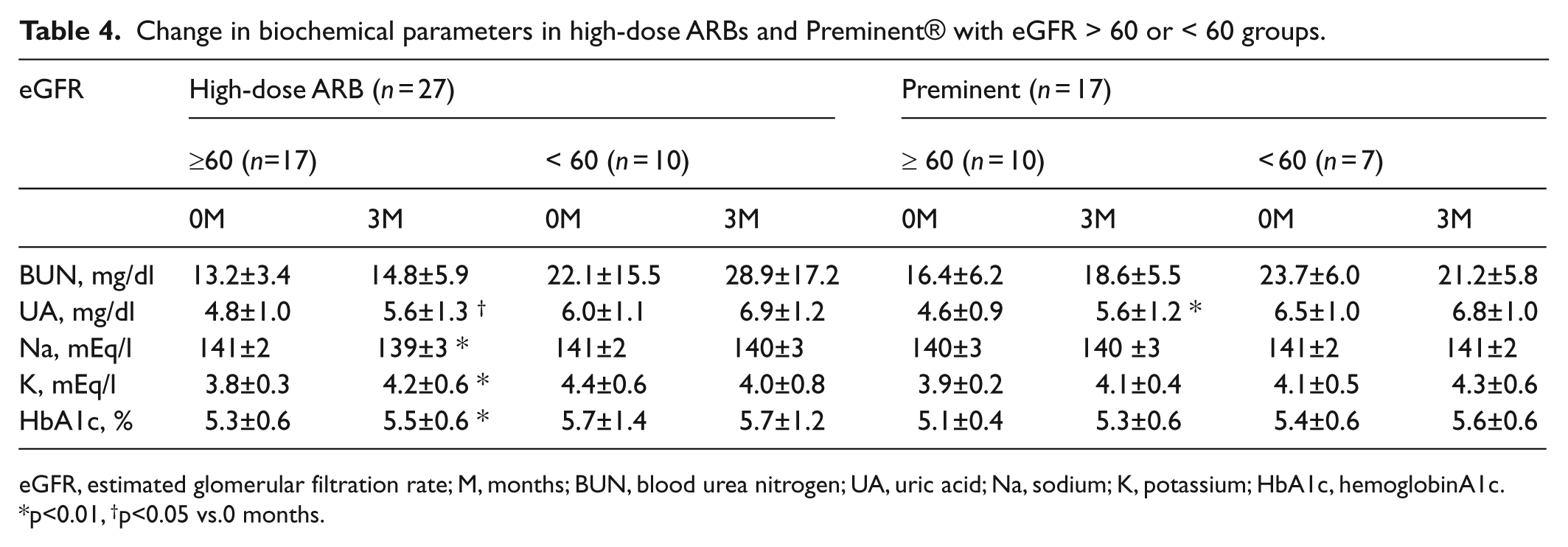
eGFR, estimated glomerular filtration rate; M, months; BUN, blood urea nitrogen; UA, uric acid; Na, sodium; K, potassium; HbA1c, hemoglobinA1c.*p<0.01, †p<0.05 vs.0 months.
Changes in UA, K and HbA1c between sub-groups
The normal UA, K and HbA1c values at our University Hospital are 5.0–7.0 mg/dl, 3.5–5.0 mEq/l and 4.6–5.6%, respectively. Therefore, we divided all of the patients into two groups according to the respective normal ranges (Figure 3). Therefore, our ‘relatively high UA group’ was defined as UA > 6.0 mg/dl, and the ‘relatively low UA group’ was defined as UA ≤ 6.0 mg/dl. Our ‘relatively high K group’ was defined as K > 4.3 mEq/l, and the ‘relatively low K group’ was defined as K ≤ 4.3 mEq/l. Our ‘relatively high HbA1c group’ was defined as HbA1c > 5.1%, and the ‘relatively low HbA1c group’ was defined as HbA1c ≤5.1%. In the relatively low UA, K and HbA1c groups, although their values at 3 months were significantly increased compared with the values at baseline, each average value was within the normal range (UA = 5.8 mg/dl, K = 4.1 mEq/l and HbA1c = 4.9% at 3 months). Moreover, there were no significant changes in UA, K or HbA1c after 3 months in the relatively high UA, K and HbA1c groups, respectively.
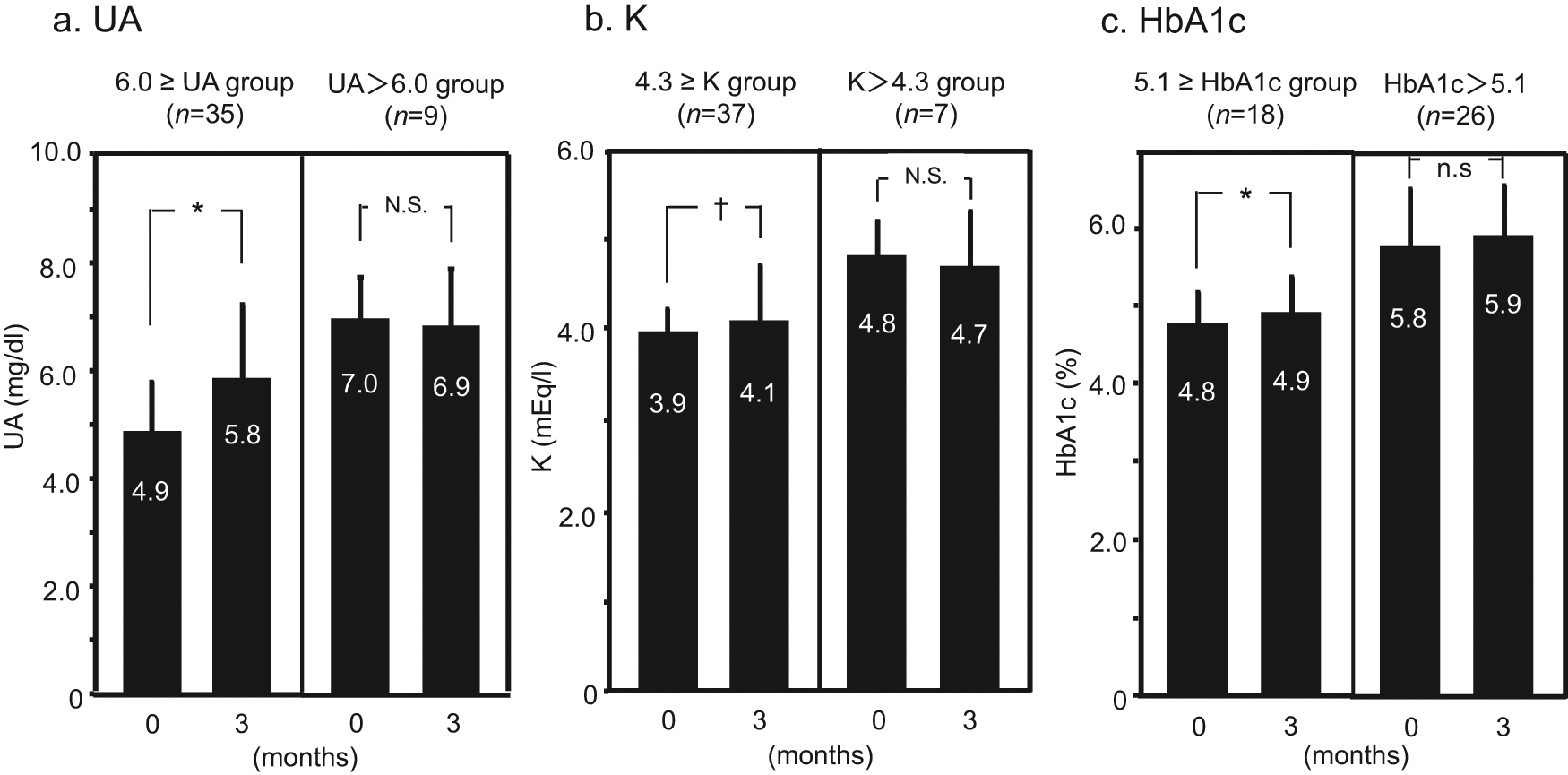
Changes in UA (a, UA >6.0 mg/dl vs. 6.0 mg/dl ≥UA groups), K (b, K >4.3 mEq/l vs. 4.3 mEq/l ≥ K groups) and HbA1c (c, HbA1c >5.1% vs. 5.1% ≥HbA1c groups). *p<0.01, †p<0.05 vs. 0 months.
Discussion
In the present study, a combination of high-dose ARB/HCTZ using Micombi® BP provided a significant reduction in BP, and patients were able to achieve their target BP after switching from high-dose ARBs and Preminent®. Although the levels of K, HbA1c and UA were significantly increased after 3 months, there were no serious adverse effects in any of the patients.
Micombi®BP showed a significant reduction in BP and a greater percentage of patients were able to achieve their target BP. BP control is the best strategy for inducing remarkable clinical benefits with regard to cardiovascular and renal protection. Since the changes in SBP/DBP using Micombi®BP were -18/-7 mmHg in all patients, such a reduction in BP should provide tremendous clinical benefits. Combination therapy with ARB/HTCZ showed a greater BP-lowering effect than high-dose ARBs due to the synergistic effects of the different compounds on BP. The synergistic effect with high-dose ARB/HTCZ is greater than that with medium-dose ARB/HTCZ. In a previous study, 12.5 mg/day of HCTZ was shown to significantly increase plasma renin activity (PRA). 6 In this case, the blockade of PRA activation induced by HTCZ using telmisartan at 80 mg/day may be stronger than that using losartan at 50 mg/day. In addition, telmisartan at 80 mg/day had significantly greater depressor effects than losartan at 50 mg/day. 7 We expect that changeover to Micombi®BP may be a useful strategy for inducing a significant reduction in BP.
In this study, Micombi®BP, which contains telmisartan, significantly increased serum levels of UA, HbA1c and K after patients switched from high-dose ARBs or Preminent®. UA levels increased after patients switched from Preminent® because losartan in Preminent® has been reported to have uricosuric action via the inhibition of urate transporter 1 in hypertensive patients. 8 In addition, the UA levels increased after patients switched from high-dose ARBs because of the added HTCZ. The K levels increased after patients switched from Preminent® because of the higher dose of ARBs. Telmisartan in Micombi®BP partially activates peroxisome proliferator-activated receptor-γ, 9 which may improve insulin sensitivity. This effect may be useful in hypertensive patients with insulin resistance or DM. 10 Nonetheless, in this study, Micombi®BP significantly increased HbA1c levels after patients switched from Preminent®. Since there were no changes in BMI and anti-diabetic therapy during the study period, we do not yet know why Micombi®BP increased HbA1c.
Patients without MetS who switched from Preminent® did not show any significant changes in serum BUN, UA, Na, K or HbA1c. In addition, there were no significant changes in these parameters in the group with eGFR <60 which switched from high-dose ARBs or Preminent®. The group with eGFR <60 which switched from high-dose ARBs showed an increased in UA from 6.0 mg/dl to 6.9 mg/dl, although there was not a significant change. Therefore, patients without MetS or eGFR <60 who switched from Preminent® received the full beneficial effect due to BP reduction following the changeover to Micombi®BP.
Interestingly, although UA, K and HbA1c at 3 months were significantly greater than those at baseline in the relatively low UA, K and HbA1c groups, each average value was within the normal range. On the other hand, there were no significant changes in UA, K or HbA1c after 3 months in the relatively high UA, K and HbA1c groups, respectively. These changes might represent an adaptation against changeover to Micombi®BP.
Study limitations
This study has two important limitations. First, the sample size is relatively small, which limits our ability to determine significance. Second, we applied a changeover design with switching from high-dose ARBs or Preminent® to Micombi BP®. However, a crossover study would be preferable.
Conclusions
High-dose telmisartan/HCTZ therapy provided a significant reduction in BP and patients were able to achieve their target BP. Although serum levels of K, HbA1c and UA increased after 3 months, there were no serious adverse effects in any of the patients.
Footnotes
Funding
This research received no specific grant from any funding agency in the public, commercial, or not-for-profit sectors.
Conflicts of interest
The authors have no conflict of interest to declare.