







Abstract
Negative perception of scientists is disquieting for the future of science and US economic and scientific competitiveness. Drawing on studies suggesting that warmth guides people’s judgments of social groups and professions, this study aims to communicate the interpersonal warmth of scientists using two non-verbal behaviors, namely, smiling and collaboration. Building on the visual communication literature, posters were used in a 2 x 2 x 3 within-subject, online experiment in the context of College of Agriculture and Natural Resources, as a test case for Science, Engineering, Technology and Mathematics (STEM) colleges. Analyses showed main and interaction effects of smile and collaboration on warmth judgments. Students who smile were perceived as warmer than those who don’t smile. Further, students who collaborate were perceived as warmer than an individual student who works alone. Finally, students who collaborate and smile were perceived as higher in interpersonal warmth than those who work alone without smiling. Implications for the use of visuals to communicate warmth and change scientists’ negative stereotypes are discussed.
Keywords
Introduction
Public attitudes toward science and scientists can have serious implications at national and global levels. While the majority of Americans recognize the achievements of scientists in key areas (National Science Board, 2016), studies show that the public stereotype scientists as competent but cold (Fiske and Dupree, 2014), as well as odd (Besley, 2015; National Science Board, 2014). These stereotypes may be disquieting for the future of science and the nation’s economic and scientific competitiveness, and thus deserve special attention.
As stereotype serves as an information source people use to make inferences about others’ motives and abilities (Schneider and Blankmeyer, 1983) and influences how perceivers act towards the stereotyped target (Cuddy et al., 2008), a prominent concern is that negative stereotypes of scientists can influence public trust in science, which may negatively influence support for science research (Besley, 2016; McComas et al., 2008). Another concern is that negative stereotypes about scientists can deter young people from choosing a field of study and a career related to STEM (Garriott et al., 2016).
Studies suggest a need to portray scientists in a positive way to encourage students to enroll, persist, and succeed in STEM (Hannover and Kessels, 2004). One viable approach tested here is built upon the literature on warmth-competence as the core traits that determine stereotypes of social groups and professions, and influence people’s judgements of whom to trust (see Cuddy et al., 2011; Fiske and Dupree, 2014). In essence, warmth refers to morality, trustworthiness, sincerity, and friendliness whereas competence refers to expertise, knowledge, and efficiency (Cuddy et al., 2008; Fiske, 2012).
Despite the wealth of existing studies that used the warmth–competence dimension to assess social groups and professions (e.g., see Cuddy et al., 2011; Fiske, 2012; Kervyn et al., 2013), we argue that further research in this area is warranted for three reasons. First, studies about warmth portrayal using non-verbal communication are scarce. Not much is known about how to use visual communication to portray warmth in general and scientists’ interpersonal warmth in particular. In this context, the distinctive feature of this research is its attempt to portray scientists’ interpersonal warmth using visuals (posters) to communicate non-verbal behaviors, namely smile and collaboration in the context of the College of Agriculture and Natural Resources (CANR) as a test case of STEM colleges. To the best of our knowledge, it is the first time that this approach has been used.
Second, as far as we are aware, prior studies used the warmth–competence dimension to assess public perceptions of social groups and professions, including scientists (Cuddy et al., 2008; Fiske and Dupree, 2014) with no interest in portraying scientists’ interpersonal warmth. Further, previous studies showed that students hold negative stereotypical views of scientists (Cakmakci et al., 2011), and we did not find a study that used the warmth–competence dimension to change students’ stereotypical views of scientists. We, therefore, sought to bridge this gap by integrating the visual communication literature in the context of science communication to best portray scientists’ interpersonal skills. This work aims to go beyond previous research by exploring different ways to convey interpersonal warmth using visuals (posters) with the ultimate goal to portray scientists positively using non-verbal communication as a novel way to attract prospective students to enroll in STEM colleges.
The results of this study can add to the extant literature of science communication by using warmth portrayals to create contemporary role models of scientists that can motivate prospective students to pursue STEM majors and careers. Further, the use of visual communication can provide new research opportunities to influence the young generation’s perceptions of scientists. Therefore, the results could inform communication efforts to recruit prospective students in STEM colleges. It is important to note that the current study does not focus on competence because it appears that most Americans already see scientists as competent (Fiske and Dupree, 2014).
Below, we review previous studies that highlight the primacy of warmth and theoretical models of stereotypes and prototypes, followed by a review about how the public in general and students in particular stereotype scientists, and the potential implications of these stereotypes on their interests in science. Then, we draw on the visual communication literature to ground our work and justify our approach to portray warmth using visuals to communicate non-verbal behaviors. Finally, we describe the method, discuss the results and the implications of the study.
Literature Review
Warmth and competence are ‘fundamental and universal’ dimensions that guide people’s judgments, affect, and behaviors (Cuddy et al., 2008: 3). Warmth–competence dimensions are used in research involving social perception (Fiske, 2012), image management and trust building (Abelson et al., 1982), stereotypes of social groups and professions (Cuddy et al., 2008; Fiske et al., 2012).
Considerable evidence shows the primacy of warmth over competence. When perceiving others, people appear to make warmth judgments faster than competence judgments (Wojciszke and Abele, 2008). As such, warmth judgements appear to be primary, which emphasizes the importance of identifying whether a person has beneficial or harmful intent (i.e. warmth) before assessing whether he or she can act upon his or her intents (i.e. competence) (Fiske et al., 2007). The importance of warmth in making judgments about others can be aptly explained by the warmth primacy hypothesis positing that people give priority to detect warmth over competence. For example, people identified warmth-related trait words faster than competence-related trait words in lexical decision tasks (Ybarra et al., 2001) and infer warmth traits (e.g. trustworthiness) in photos quicker (in one-tenth of one second) and most accurately than competence (Willis and Todorov, 2006).
Furthermore, people can infer interpersonal warmth from a person’s intentions or motives (Fiske, 2012). That is, a person’s intent to help and collaborate infers warmth (i.e. trust) whereas a person’s intent to fight and compete with others infers coldness and distrust (Fiske, 2012). That said, warmth (or lack thereof) can affect approach-avoidance tendencies. Put it differently, whether a person’s intentions are seen as benevolent or malicious shapes warmth–competence judgments, which in turn guides people’s decisions to approach or avoid that person (Peeters, 2002). Warmth therefore is an interpersonal cue that can enhance or deter social interactions by detecting the other’s perceived intent for help or hurt (Fiske and Dupree, 2014).
One important theoretical framework that explains the effect of warmth–competence dimensions in stereotyping social groups and occupations is the Stereotype Content Model (SCM) (Cuddy et al., 2008). According to the SCM, ambivalent assessments of stereotypes may imply positive assessments on one dimension (warmth) and negative assessments of the other (competence) or vice-versa. For example, lawyers and scientists are perceived as competent but not warm whereas working mothers are viewed as warm but incompetent (Cuddy et al., 2004).
To summarize, people automatically give more weight to detecting warmth over competence because the former helps them decide whether they can trust others and interact with them.
Public attitudes towards scientists
Members of the public ‒ including teachers and students ‒ acknowledge scientists’ competence but hold negative images about scientists’ interpersonal warmth. Evidence shows that the public image of scientists did not change over the last 35 years. For example, Pion and Lipsey (1981: 311) concluded that ‘The public image of scientists might be better described as stereotyped and distorted.’ Fiske and Dupree’s (2014) study also demonstrated that members of the public perceive scientists as competent but cold. In a recent study, Rutjens and Heine (2016: 5) found that people perceive scientists as ‘nerdy, robot-like, emotionless, and cold’.
Many studies provide evidence that the media, popular culture, and literature have contributed to the public’s negative stereotypical images of scientists. For example, literature often depicts a scientist as an ‘evil alchemist, foolish, absent minded professor, mad, bad, and dangerous’ (Hayness, 2003: 244). Further, scientists are portrayed as ‘eccentric, obsessed, and lonely workaholics’ (Losh, 2010: 10). Such portrayals were found to reinforce negative stereotypes of scientists, which adversely influence public trust in scientists (Nisbet et al., 2002).
Of great relevance to our study are teachers’ and students’ perceptions of scientists. In this regard, research show that elementary, middle, and high-school students stereotype scientists as socially awkward individuals who lack interpersonal skills (Cheryan et al., 2013) and prefer a mundane lifestyle (Nasser-McMillan et al., 2011). More worrying, stereotypes have been found to influence students’ identities and their attitudes towards science and scientific careers (Schinske et al., 2015; Trujillo and Tanner, 2014). Specifically, science identity reflects ‘the extent to which a person is recognized or recognizes himself or herself as a science person’ (Trujillo and Tanner, 2014: 12). This definition is closely related to the self-prototype concept, referring to the description of one person who is seen as a typical representative of one’s reference group (Hannover and Kessels, 2004). In this regard, the self-to-prototype matching theory posits that the more similar a person’s perception of self is to the prototype of another person, the more likely that person is to behave like the prototype (Niedenthal et al., 1985). Against this background, students’ perceptions of their peers who study math and science as unpopular, unattractive, less socially competent, and less emotional compared to students who study humanities (Hannover and Kessels, 2004) are more likely to influence their choice and persistence in STEM majors.
The above overview of students’ negative stereotypes of scientists and its effect on students’ prototypes and subsequent STEM career choice suggests the need to enrich the image of scientists among young generation, in general, and prospective students, in particular. The current study therefore seeks to portray the interpersonal warmth of CANR students (i.e. future scientists) by drawing on the visual communication literature.
Understanding the importance of visual messages
The visual communication literature suggests that visual means of communication provide viewers with information that can influence their cognitive and affective reactions toward an event, incident, or experience (Barnhurst et al., 2004; Dahmen et al., 2018; Iyer and Oldmeadow, 2006). For example, in the world of non-profit organizations, print advertisements were found to influence consumers’ emotions and increase their donation intentions (Bebko et al., 2014). In politics, images of political candidates influenced people’s evaluation of candidates’ trustworthiness and credibility (Lobinger and Brantner, 2015). In educational settings, visuals also were found to increase students’ knowledge about scientific issues, including physics and HIV/AIDS (Doran, 2018; Mutonyi and Kendrick, 2011). Thus, it is conceivable that ‘like linguistic structures, visual structures point to particular interpretations of experience and forms of social interaction’ (Kress and Van Leeuwen, 2006: 2).
Researchers have established that visual communication can shape how people learn about other individuals, events, and issues (Gilliam and Iyengar, 2000). For example, a photo can create an ‘imaginary’ contact between the producer, the message (i.e. what is represented in the photo), and the viewers through which they share, with regard to the photo, ‘a knowledge of the communicative resources that allow its articulation and understanding, a knowledge of the way social interactions and social relations can be encoded in images’ (Kress and Van Leeuwen, 2006: 115). The interactions and richness of meanings conveyed by visual messages can be explained by Schroeder’s (2002) idea of visual consumption, suggesting that visual means of communication are objects/materials visually consumed beyond their intended role in the communication process. For example, an advertisement can influence consumers’ perceived quality and preference of an advertised product, irrespective of consumers’ decisions to buy it.
The rich literature on visual messages involves visual discourse analysis that examines how meanings can be visually communicated. Theoretically, visual information possesses a semiotic quality that allows viewers to perceive, process, and interpret meanings (Kress and Van Leeuwen, 2006). In this regard, Kress and Van Leeuwen’s (1996) work on the grammar of visual design and the classical model of visual social semiotics emphasizes three visual meanings (or metafunctions) that can help connect, decode, and interpret visual messages. These are: (a) a ‘representational’ meaning that reflects the world, either in abstract or concrete ways by depicting people, places, or things in visual materials such as posters, paintings, magazines, or advertisements; (b) an ‘interactive’ meaning that exhibits interpersonal relations so that viewers accept and act upon the messages represented in photos; and (c) a ‘compositional meaning’, which combines the two previous meanings into a coherent, integrated frame.
Of great relevance to the current work is the effect of compositional meaning on viewers’ attitudes toward objects/persons portrayed in visuals. Compositional meaning can be derived from visual syntactic patterns such as: (a) information value (i.e. the placement of elements in a visual space: left or right, top or bottom, center or margin, in sharper focus or stronger colors); (b) framing (i.e. the presence or absence of lines or boxes that connect or separate elements in an image); (c) salience (i.e. emphasis on some elements rather than others through size, color contrasts, etc.); and (d) modality (i.e. the extent to which an image reflects reality) (for more details, see Jewitt and Oyama, 2001; Kress and Van Leeuwen, 1996, 2001).
For the purpose of this work, we drew on Kress and Van Leeuwen’s visual social semiotics (1996, 2006) to describe the stimuli (i.e. the photos and posters) we used to visually communicate students’ interpersonal warmth. Specifically, the representational meaning was communicated through posters that represented student(s) in labs or greenhouses. The interactive meaning was communicated by showing the represented student(s) work individually or collectively, which is consistent with Kress and Van Leeuwen’s idea of relations in terms of ‘doings’ or ‘happenings’. Finally, the compositional meaning was communicated by placing the represented student(s) in the focus of the posters. We describe our stimuli in more details in the method section.
Visual communication and portrayal of non-verbal behaviors
The non-verbal communication literature suggests that ‘the class of information provided by non-verbal behavior can serve to repeat, contradict, or substitute for a verbal message’ (Ekman, 1965: 242). In politics, for example, ‘the nonverbal style of a person in the political arena can and does have a tremendous effect on the way in which he [sic] is received, how much he is liked, and especially the kinds of people he appeals to’. In this regard, research showed that voters’ quick glances to candidates’ photographs influence their evaluation of the candidates’ competence (Todorov et al., 2005) and their favorability and selection of political candidates (Rosenberg and McCafferty, 1987).
Researchers found that non-verbal behaviors can communicate 1 and 1.5 times the variance as the verbal communication (Mehrabian and Ferris, 1967) and accounted for 10.3 times as much variance as verbal cues, and produced 4.3 times as much shift on relevant rating scales (Argyle et al. 1970). For example, paralingual and facial expressions conveyed 93 percent of people’s affective and cognitive attitudes (i.e. 55% for facial expressions and 38% for paralingual, respectively), suggesting the utility of non-verbal communication on social perception.
The social perception literature suggests that non-verbal behaviors (e.g. gestures and body movement) can guide how people assess others. In this regard, Mehrabian (1970) suggested that people’s perceptions of others can be influenced by the three-dimensional framework of non-verbal behaviors that includes: (a) the positiveness dimension that reflects a person’s friendliness through non-verbal cues such as smiling at somebody; (b) the responsiveness dimension that communicates a person’s interest through facial expressions, ‘e.g., eye contact’; and (c) the potency or status dimension that reflects a person’s superiority by occupying more physical space (Mehrabian and Ferris, 1967). Relatedly, Mehrabian (1969) showed that communicators’ physical proximity, body posture (e.g. forward leaning rather than backward leaning away from the addressees), and orientation of the torso (e.g. toward rather than away from the addressees) are non-verbal behaviors that can influence people’s evaluation and liking of others.
A great deal of research shows that nonverbal behaviors communicated in visual messages not only convey meanings but also establish connection with the viewers. For example, facial expressions (e.g. unflattering grimaces, smiles, frowns) and gestures (e.g. aggressive or defensive poses) can arouse different reactions on the part of the viewers (Kress and Van Leeuwen, 2006; Lobinger and Brantner, 2015). In pursuant of this idea, Kress and Van Leeuwen (2006: 123) explained that ‘When images “demand”, they demand, one could say, the “goods-and-services” that realize a particular social relation.’ This is to say that photos, for example, can create relationships with viewers using eye contact, smile, or gestures to communicate a ‘demand’ or an ‘offer’. In this context, a photo with ‘a demand’ can involve a smile or a gaze from the person(s) portrayed in the photos to stimulate viewers’ emotions whereas a photo with ‘an offer’ aims to provide information about the communicated message. For example, baby photos might ‘demand’ that viewers relate to a baby emotionally (Kress and Van Leeuwen, 2006: 123) whereas female photos in heterosexuality posters might ‘offer’ information about the availability of females for men who are sexually active (Jewitt and Oyama, 2001).
Portrayal of warmth using non-verbal behaviors
Scholars have demonstrated that visuals can communicate emotions such as irony in print advertisements (Lick, 2015), love in photographs (Schwarz, 2010), and pain in war photographs (Konstantinidou, 2008). Of great relevance to the current study is the effectiveness of visuals in communicating stereotypical ideas related to racial minorities (Maxwell, 2013), gender bias (Wagner, 2008), and discrimination against immigrants (Doerr, 2017).
Although prior work has acknowledged the effect of warmth on people’s cognitive and affective reactions (Aaker et al., 1986; Fiske and Dupree, 2014; Pelsmacker and Geuens, 1999), there is very limited research on non-verbal communication of warmth in general. For example, Bayes (1972: 337) contended that ‘interpersonal warmth does seem to be a personality dimension which can be reliably judged, and that it was possible to define and demonstrate the relevance of a number of behavioral cues for warmth.’ Nevertheless, the few existing studies examined warmth in the context of advertising rather than interpersonal communication. For example, advertising studies portrayed warmth using family, kids, and friends in TV commercials that focus on consumer products such as foods, body care, clothing, and soft drinks (Aaker et al., 1986; Pelsmacker and Geuens, 1999).
The limited literature on warmth suggests that warmth inferences can be drawn from controllable and uncontrollable signals (Cuddy et al., 2011). Controllable signals of warmth include facial expressions (e.g. eye contact and smile) and body language such as head nodding (Smith-Hanen, 1977), shoulder orientation of zero degrees and a 20o forward body leaning (LaCrosse, 1975). By contrast, uncontrollable signals of warmth include facial expression, Importantly, controllable and uncontrollable signals of warmth predict approach/avoidance behaviors. As such, smiling conveys warmth that helps people make social judgments about others and induces them to approach those who smile (Cuddy et al., 2011). We therefore use smiling as a warmth cue in the current research. In accordance with the preceding literature, we designed visuals (i.e. posters) to test the following hypothesis:
H1: Posters that portray warmth using a smile will be positively associated with higher perceived warmth compared to posters that do not feature a smile.
Another non-verbal behavior that can portray warmth can be an expression of good intentions toward others (Fiske, 2012). Social inferences about good or bad intentions can be drawn from body languages (i.e. motions) that convey cues about whether a person’s motives are to hurt or help others. Evidence from studies on intention-from-motion judgments emphasize that judgments about a person’s intentions can be inferred from his or her movements towards another person and the degree of interaction between them (Barrett et al., 2005; Blythe et al., 1999). For example, collaboration breeds trust and warmth by showing the intent to help others whereas competition breeds distrust and coldness (Fiske, 2012). It can therefore be suggested that collaboration with others (working in a group where members help each other) can portray good intentions and induce warmth. In pursuit of this view, we designed posters to test the following hypothesis:
H2: Posters that portray warmth using collaboration will be positively associated with higher perceived warmth compared to posters that do not portray collaboration.
Given that H1 and H2 examine the effect of smile and collaboration, each separately, on perceived warmth, we explored whether the combination of smiling and collaboration would increase people’s warmth judgments. We, therefore, proposed the following research question:
RQ1: Is there a smile–collaboration interaction effect such as posters that combine smiling and collaboration are associated with higher warmth judgments compared to posters that portray warmth using only smile or collaboration?
Finally, given that we tested our hypotheses using three CANR majors, namely, fisheries, food science, and horticulture, we examined whether CANR majors had an effect on warmth judgments, and therefore ventured the following RQ:
RQ2: What is the effect of CANR majors on smile, collaboration, and their combination.
Method
Materials
Photos
We chose photos because they are an ‘imprint of reality’ that can capture what can be seen with the eye (Jewitt, 1999: 21), which reflected our approach to show real situations that students can experience in STEM colleges. We recruited a professional photographer to conduct three photo shoot sessions in a naturally occurring environment (i.e. a greenhouse, fisheries lab, and food science lab) at a College of Agriculture and Natural Resources at a Midwestern university.
With the students’ consent, they posed for individual and group photos. In each major, one student (hereinafter referred to as ‘the main student’) volunteered to be the main model in the photos that featured him smiling or not smiling while working individually or with other students in a task related to his CANR major. To perform these tasks, the main student had various body postures such as slightly bending downwards to examine an equipment, leaning forward to move an object, or standing still holding an object(s). Details about the photos’ compositions and locations are shown in Tables 1 to 7.
Mean, standard deviations, and one-way analyses of variance for the effects of same warmth portrayals on warmth judgments in a food science major.
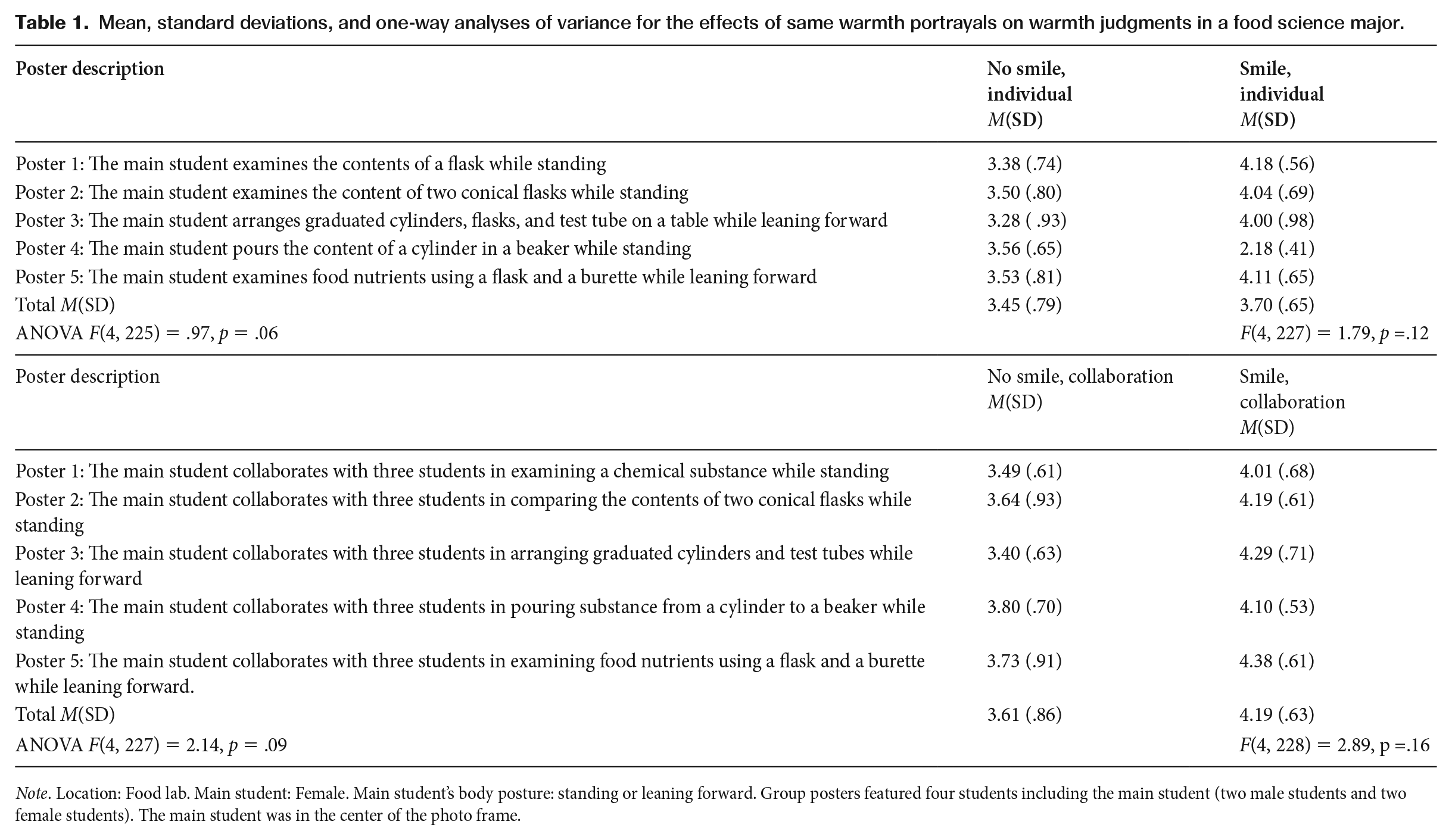
Note. Location: Food lab. Main student: Female. Main student’s body posture: standing or leaning forward. Group posters featured four students including the main student (two male students and two female students). The main student was in the center of the photo frame.
Mean, standard deviations, and one-way analyses of variance for the effects of same warmth portrayals on warmth judgments in a fisheries major.
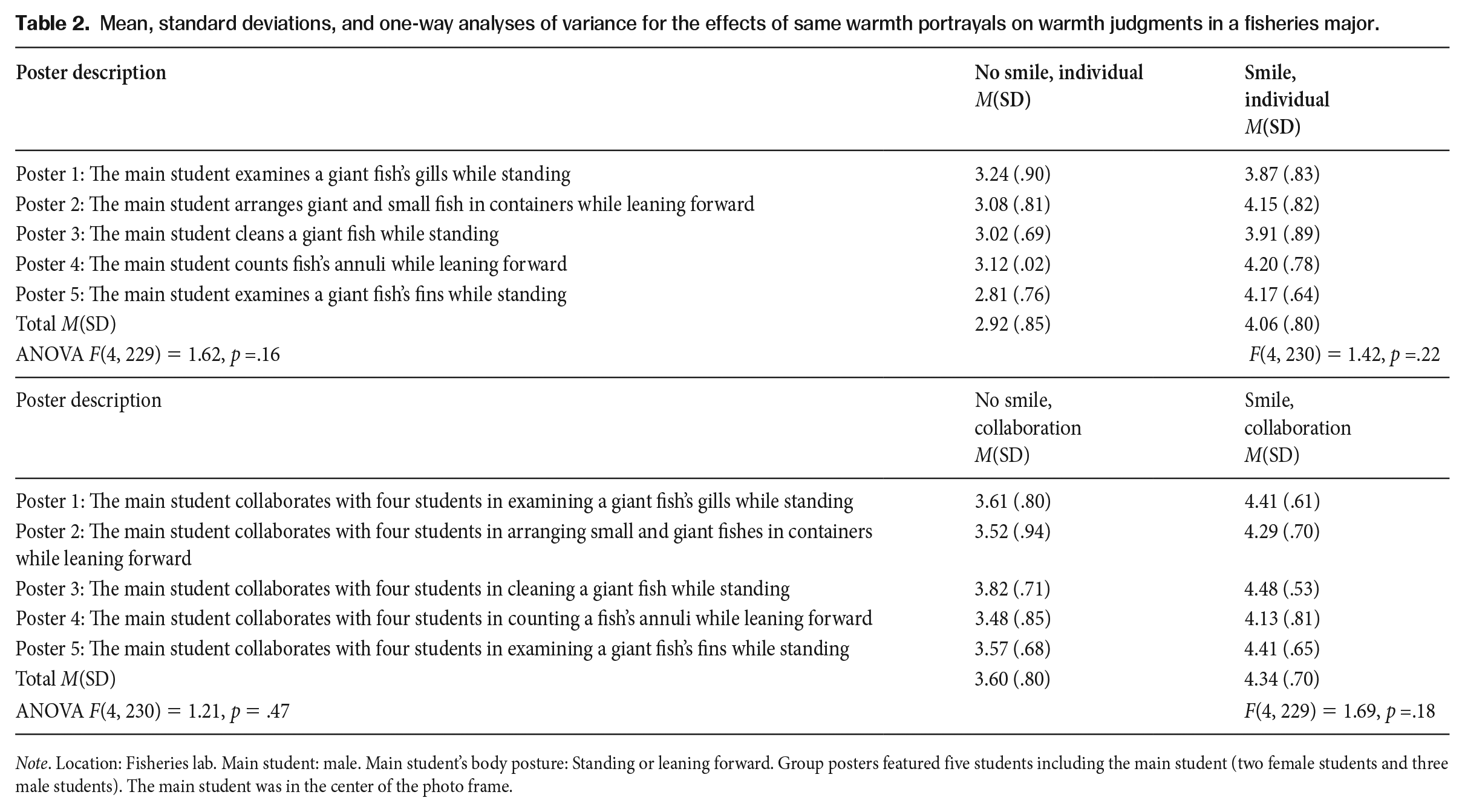
Note. Location: Fisheries lab. Main student: male. Main student’s body posture: Standing or leaning forward. Group posters featured five students including the main student (two female students and three male students). The main student was in the center of the photo frame.
Mean, standard deviations, and one-way analyses of variance for the effects of same warmth portrayals on warmth judgments in a horticulture major.
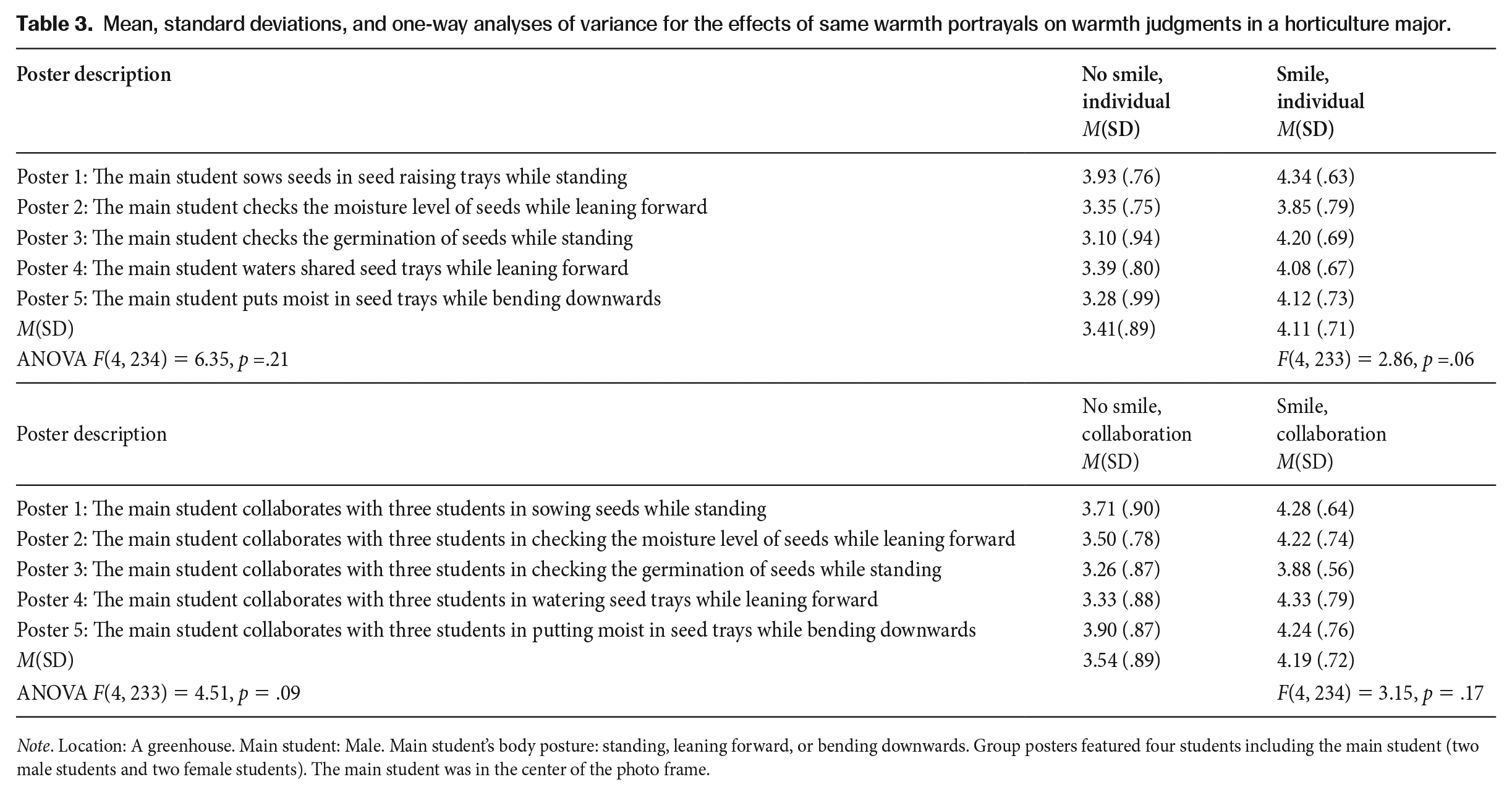
Note. Location: A greenhouse. Main student: Male. Main student’s body posture: standing, leaning forward, or bending downwards. Group posters featured four students including the main student (two male students and two female students). The main student was in the center of the photo frame.
Summary table for mixed analysis of variance for the main and interaction effects of smile, collaboration on warmth judgments across combined posters in food science, fisheries, and horticulture majors.
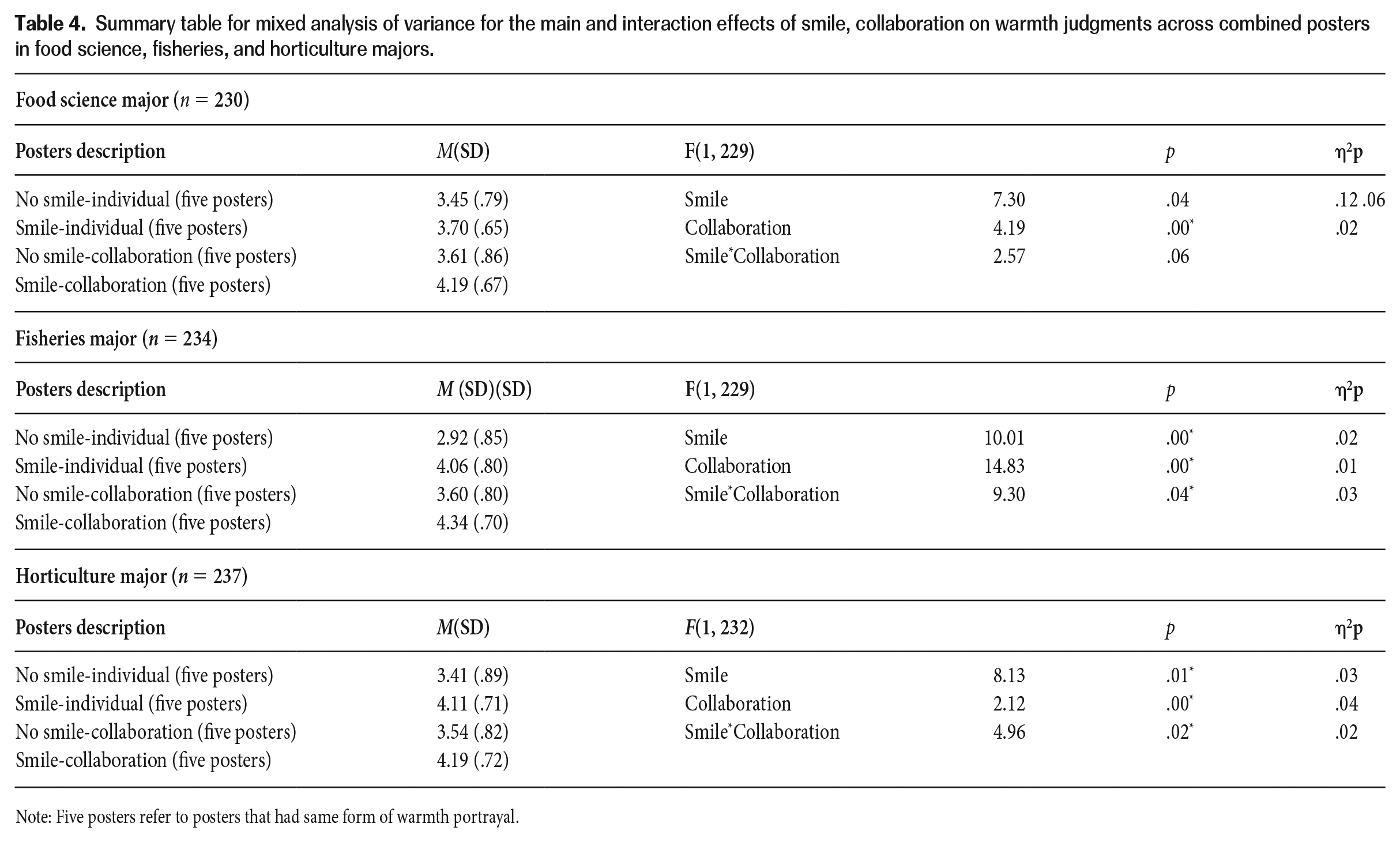
Note: Five posters refer to posters that had same form of warmth portrayal.
Mean, standard deviations, and mixed analyses of variance for the effects of different forms of warmth portrayals on warmth judgments across each poster set in a food science major.
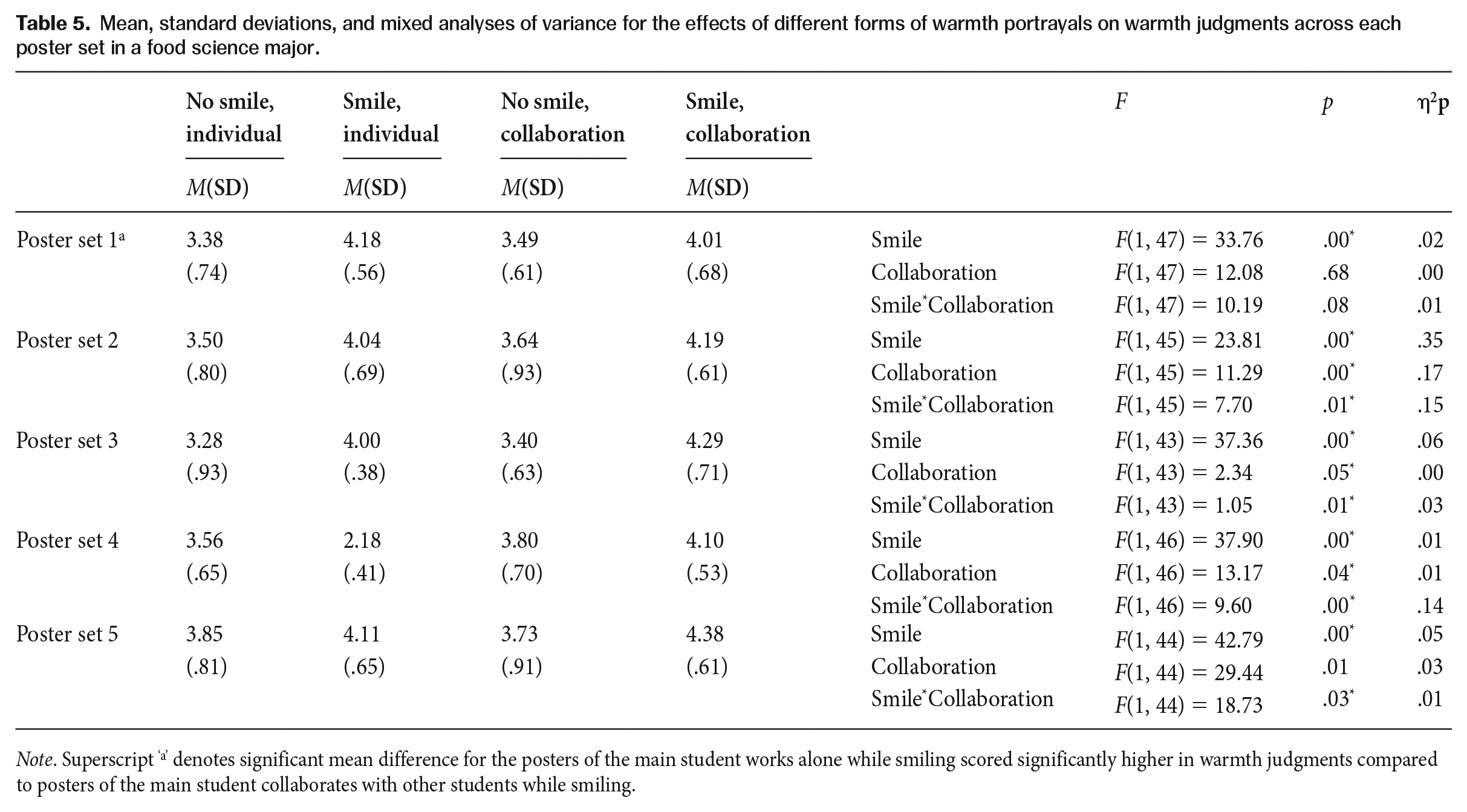
Note. Superscript ‘a’ denotes significant mean difference for the posters of the main student works alone while smiling scored significantly higher in warmth judgments compared to posters of the main student collaborates with other students while smiling.
Mean, standard deviations, and mixed analyses of variance for the effects of different forms of warmth portrayals on warmth judgments across each poster set in a fisheries major.
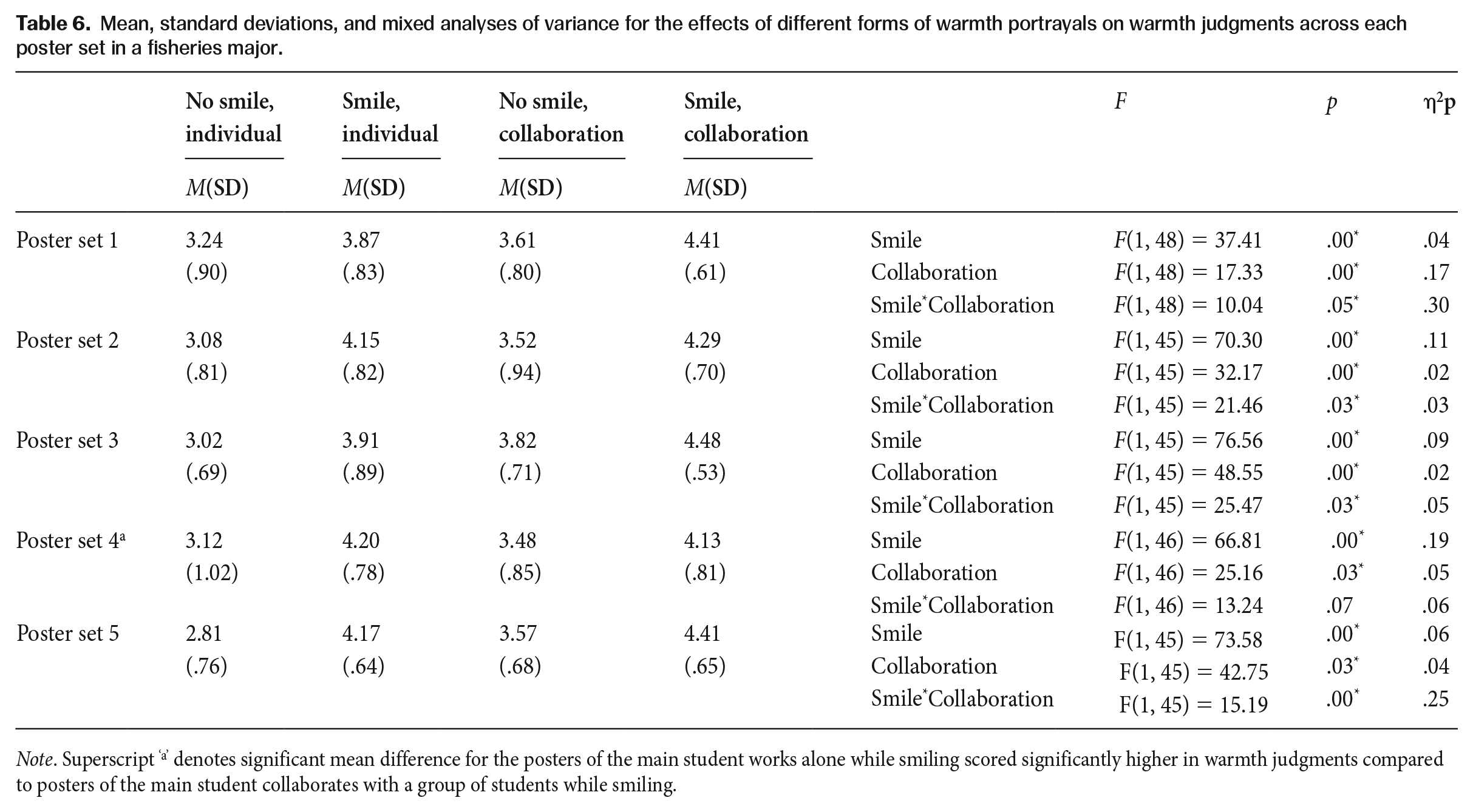
Note. Superscript ‘a’ denotes significant mean difference for the posters of the main student works alone while smiling scored significantly higher in warmth judgments compared to posters of the main student collaborates with a group of students while smiling.
Mean, standard deviations, and mixed analyses of variance for the effects of different forms of warmth portrayals on warmth judgments across each poster set in a horticulture major.
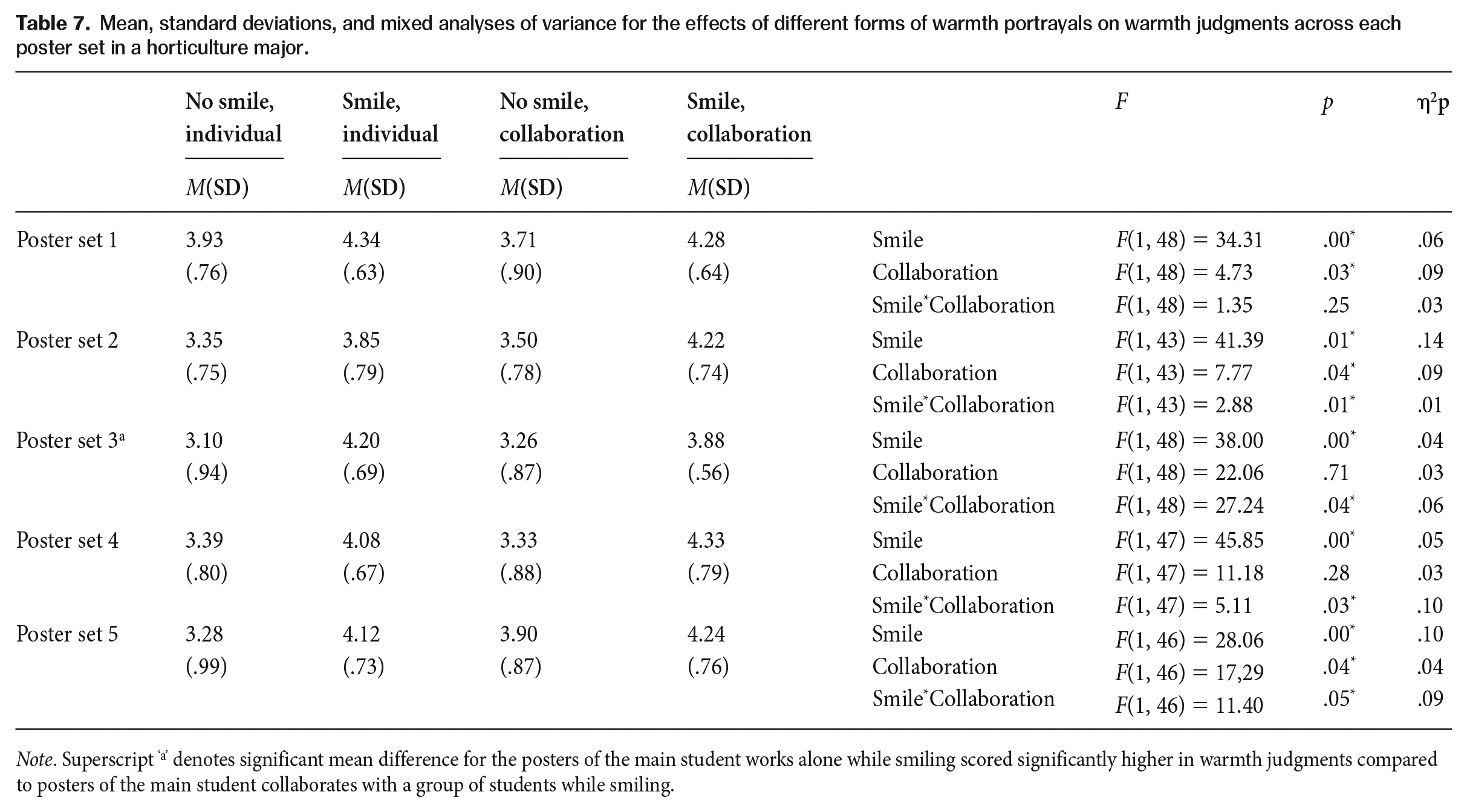
Note. Superscript ‘a’ denotes significant mean difference for the posters of the main student works alone while smiling scored significantly higher in warmth judgments compared to posters of the main student collaborates with a group of students while smiling.
The compositional structure of the photos emphasizes the main student’s non-verbal behaviors using smile and collaboration. That is, the main student and his colleagues were in sharp focus, larger than the backgrounds. We provided contextual cues by showing a natural setting that corresponds to the major portrayed in the photo (e.g. a lab for food science and fisheries majors, and a greenhouse for horticulture major).
CANR posters (stimuli)
A graphic designer used the photos to prepare 60 posters for the three CANR majors under investigation. We chose posters because they are important advertising and promotional tools that can communicate meanings while adding artistic value (Sifaki and Papadopoulou, 2015). Further, posters fit the purpose of this study that aims to recruit prospective students in STEM colleges. Examples of posters are provided in Figures 1 to 3. The visual design of the posters can be described using Kress and Van Leeuwen’s (1996) grammar of visual design emphasizing three components in decreasing order of importance: persons, place, and text. Each poster included: a banner on top spanning the entire width of the top of the poster to indicate the agricultural major in bold capital letters. To ensure salience, the photos were placed directly after the banner (i.e. in the first half of the posters). Below each photo, we added a short textual description that provided the general information about the major. This description was consistent across the three majors while only the photos and the majors’ names were varied across the posters. 1 Descriptions are shown in Figures 1 to 3.
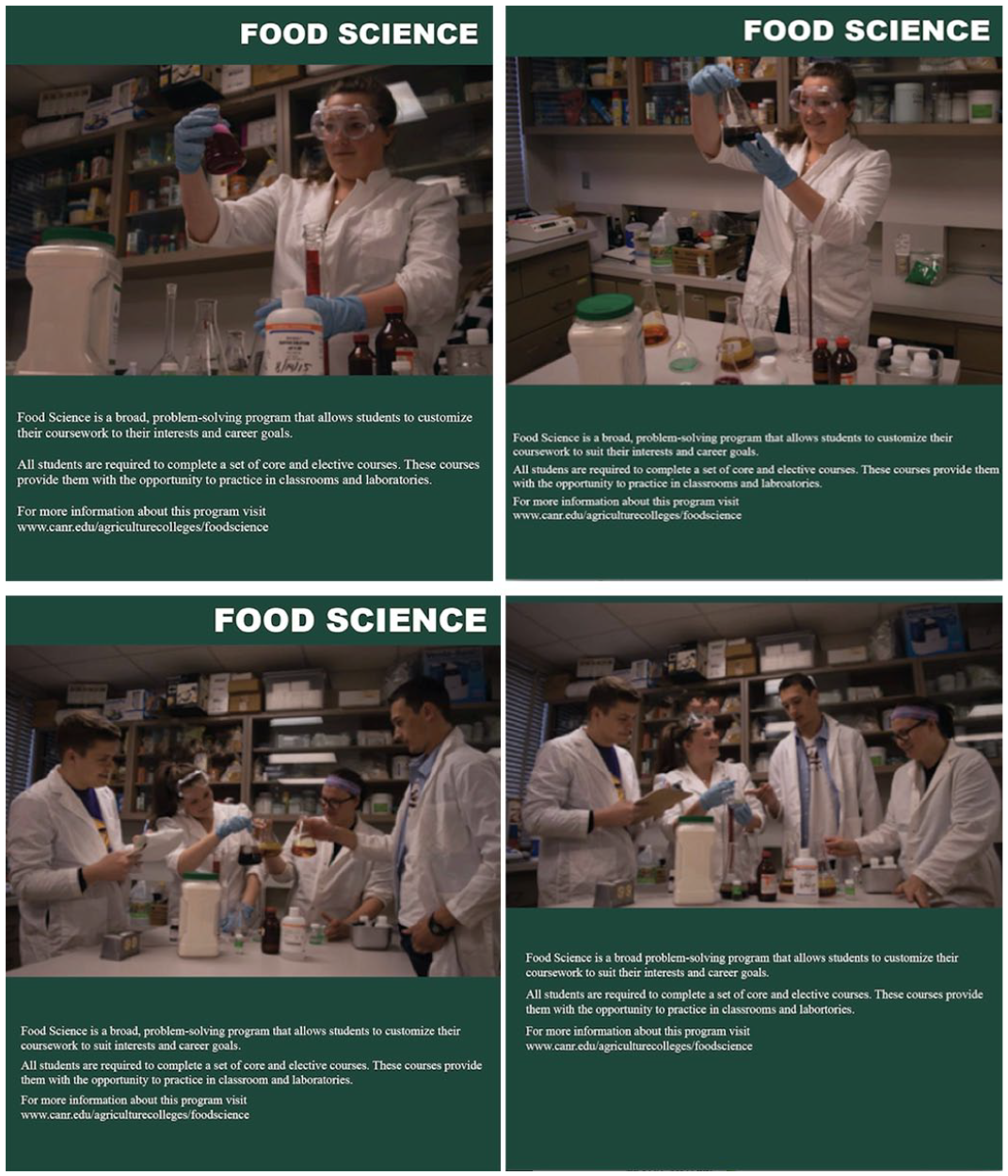
Food science major posters.
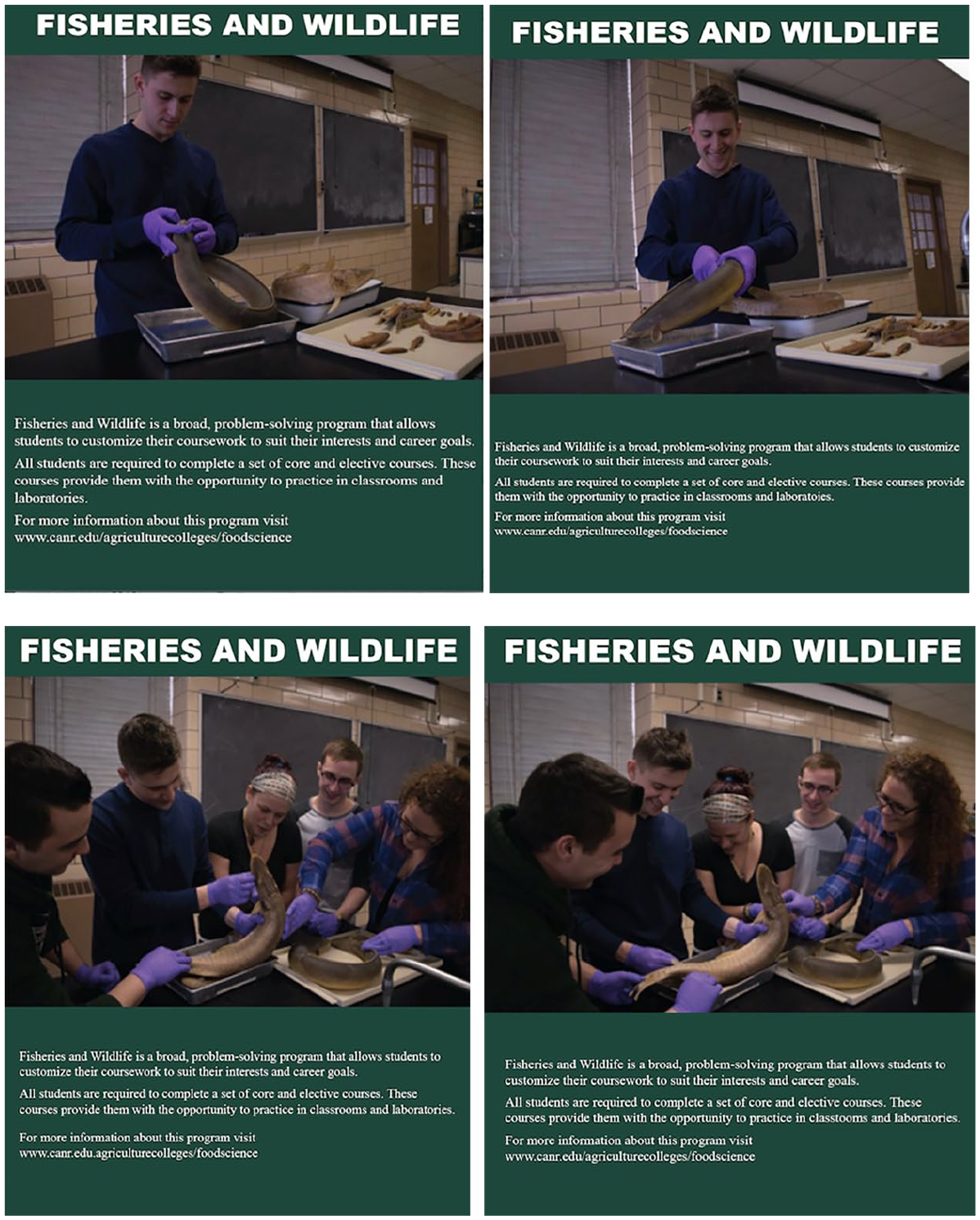
Fisheries and wildlife major posters.
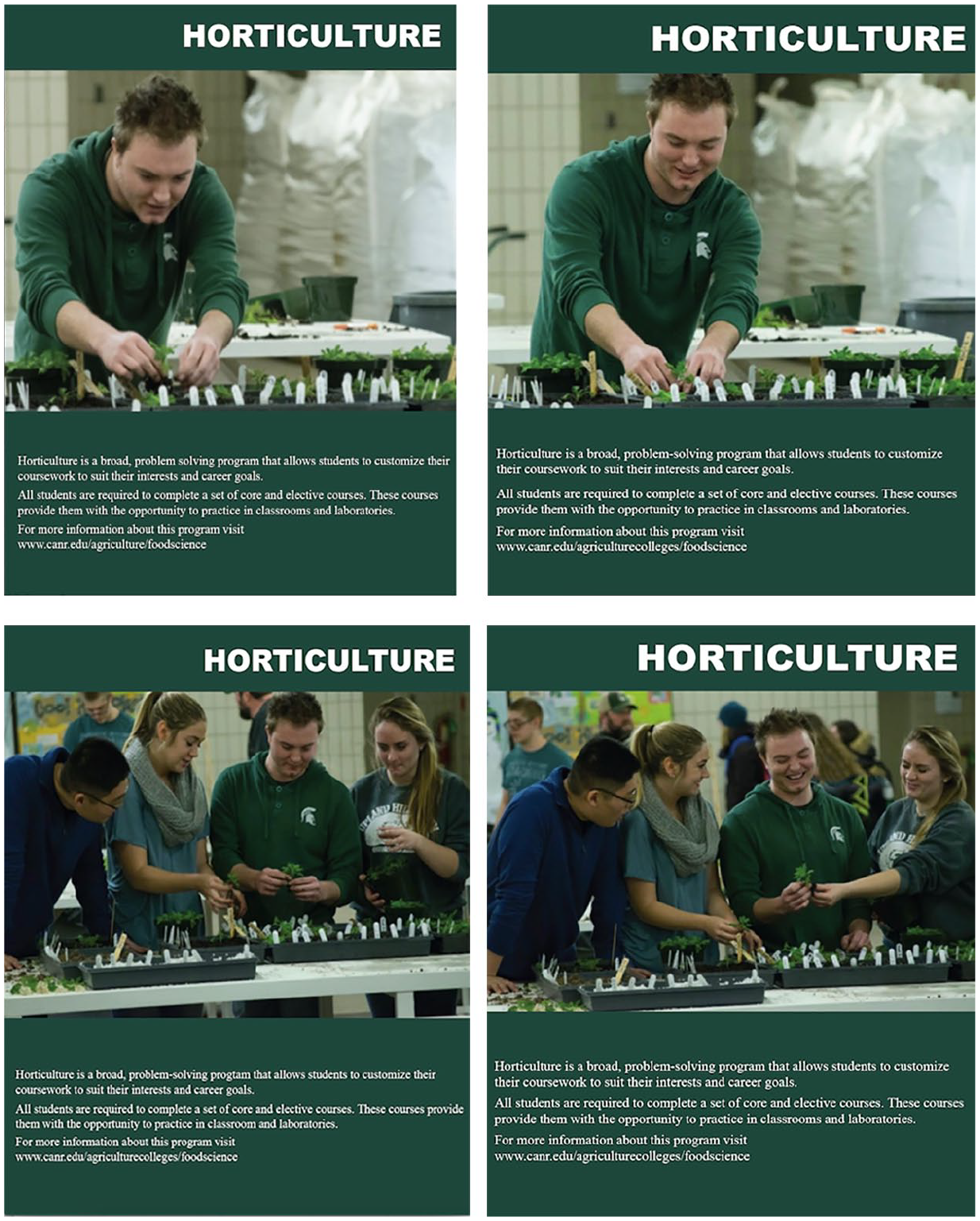
Horticulture major posters.
Of note, the visual composition of posters aimed to draw participants’ attention to the photos rather than the text. That is, photos were placed in the first half of each of the posters, in the position where they would be viewed first by our participants and would continue to dominate the page even when participants read the text. Further, at the beginning of the study, we explicitly asked participants to focus on the photos before answering the survey’s questions.
Experiment
We used a 2 (smile: smile or no smile) x 2 (collaboration: individual or group) x 3 (majors: fisheries, horticulture, or food science) mixed factorial design, whereby subjects were randomly assigned to one of the three CANR majors (between-subject variable) and then randomly assigned to one poster set that corresponded to that major (within-subject variable). This design was chosen to examine individual judgments across the four forms of warmth portrayal while reducing the error variance associated with individual differences (Charness et al., 2012). In this regard, we aimed to detect the effect of each warmth portrayal on warmth judgments by ensuring that each subject acts as his or her own control, which reduced the chances of confounding factors such as age and gender.
Specifically, participants were randomly assigned to one of the three CANR majors. Then, they were randomly assigned to one poster set comprising four posters that featured the same students portraying the following warmth portrayals:
No smile-individual. The main student works alone while not smiling.
Smile-individual. The main student works alone and is smiling.
No smile-collaboration. The main student collaborates with other students while not smiling.
Smile-collaboration. The main student collaborates with others students while smiling.
In total, we used 60 posters for the three CANR majors (i.e. 20 posters/major). For each major, we had five poster sets, each set included four posters featuring four forms of warmth portrayal.
Data collection
Participants were recruited from Amazon’s Mechanical Turk (AMT) that uses crowdsourcing to perform ‘human intelligence tasks’ (HITs) as a practical way to recruit participants (Clements et al., 2015). Participants were paid 55 cents in return for their participation. As noted earlier, one objective of the current study is to suggest novel ways to increase students’ enrollment in STEM colleges; the study therefore targeted young people (e.g. high-school students, recent graduates, college students, or young professionals). Therefore, before participating in the study, subjects were screened using one question related to age to ascertain that they were 18–35-years-old.
Measures
Immediately after seeing each poster, participants were asked to answer a multi-item measure of warmth drawn from previous studies (Cuddy et al., 2008; Fiske et al., 2002). Specifically, participants assessed the degree to which the poster they saw evoked warmth by rating how friendly, well-intentioned, and warm they perceived the main student in the poster, using a 5-point Likert semantic differential scale ranging from ‘not at all’ to ‘extremely’.
An exploratory factor analysis was carried out for the items measuring warmth for each poster. Using the maximum likelihood method of extraction and varimax rotation, a one-factor solution for warmth was obtained for each poster. The items had high loading (.81 on average) on the warmth factor. All scales had high internal reliability (α > 0.86).
The final sample included 850 respondents (53% male, 42% female, and 5% others). Participants’ average age was 25 (SD = 4.80). Respondents were 68 percent white, 10 percent black, 10 percent Asian, and 12 percent others.
Results
Given that the experiment included 60 posters for the three CANR majors, we ran the two following analyses to answer our hypotheses.
(a) One-way ANOVA
We conducted a one-way ANOVA to examine whether the main student’s body postures (i.e. leaning forward, standing, bending downwards) influenced warmth judgments across the posters that featured the same forms of warmth portrayal in each major. Analyses showed no significant difference between the five posters of the main student working alone while not smiling ‘no smile-individual posters’ (Tables 1 to 3). Further, no significant difference was found between the five posters of the main student working alone while smiling ‘smile-individual posters’ (Tables 1 to 3). Similarly, no significant difference was found between the five posters of the main student collaborating with other students while not smiling ‘no smile-collaboration posters’ (Tables 1 to 3). Finally, there was no significant difference between the five posters of the main student collaborating with other students while smilimg ‘smile-collaboration posters’. These results showed that the main student’s body postures did not influence the warmth judgments of posters that had the same warmth portrayal in the three CANR majors (Tables 1 to 3).
(b) Mixed ANOVA for combined posters
Given the results of the one-way ANOVA described earlier, indicating no significant difference between the posters that had the same form of warmth portrayal, we combined the posters that presented the same form of warmth portrayal and treated them as one unit of analysis within each major. Thus, we had the following group of posters for each major:
Group 1: Five no smile-individual posters
Group 2: Five smile-individual posters
Group 3: Five no smile-collaboration posters
Group 4: Five smile-collaboration posters
Considering that the design of the experiment is 2 (smile: smile or no smile) X 2 (collaboration: individual or group) X 3 (majors: fisheries, food science, and horticulture) mixed factorial design, we ran a mixed ANOVA between the four groups described above. We conducted a separate set of analyses for each major using a poster set (four forms of warmth portrayal) as the within-subject variable, and one CANR major as the between-subject variable.
Mean and standard deviations of the effect of different forms of warmth portrayal on warmth judgments are presented in Table 4.
Results showed the main effect of smile, collaboration, and smile-collaboration interaction effect. Specifically, there was a main effect of smile in the three majors (Table 4). As such, the posters of the main student smiling were perceived as warmer than those of the main student not smiling. This was consistent with H1.
For H2, there was a main effect of collaboration, indicating that the posters of the main student collaborating with other students were perceived as warmer than those portraying the main student working alone (Table 4). This was also consistent with H2.
For RQ1 about whether there was a significant smile-collaboration interaction effect, analyses showed that, in the smiling condition, the posters of the main student collaborating with other students while smiling were perceived as warmer than those portraying the main student working alone while smiling (Table 4). This result was consistent across the three majors.
For RQ2 about the effects of CANR majors on smile, collaboration, and their combination, results showed that there was no significant main effect of CANR majors on smile or collaboration. Further, there was no significant interaction effect of CANR majors by smile and collaboration (results are not shown, available upon request).
To sum up, our first analysis included the posters that had the same form of warmth as one unit of analysis. In this regard, results showed the significant main and interaction effect of smile and collaboration on people’s warmth judgments whereas CANR majors did not have a direct or interaction effect on smile and collaboration. In the following section, we tested our hypotheses using each poster set (i.e. four warmth portrayals) as one unit of analysis.
(c) Mixed ANOVA for each poster set
We conducted a mixed ANOVA for each poster set (i.e. four forms of warmth portrayal) using each CANR major as the between-subject variable and the poster set as the within-subject variable. Analyses continued to show the main effect of smile on warmth judgments. This was consistent with H1 (Tables 5 to 7). For H2, with very few exceptions, collaboration had a main effect on warmth judgments (Tables 5 to 7). H2 was therefore supported.
For RQ1, there was a significant smile-collaboration interaction effect, for instance the posters of the main students collaborating with other students while smiling was perceived as warmer than the posters of the main students working alone while smiling. The analyses, however, indicated a new form of interaction such as the posters of the main student smiling while working alone were perceived as warmer than those of the main student working with other students while smiling (Tables 5 to 7). This interaction showed the importance of smile, especially when portraying one person who works alone.
Discussion
This research sought to empirically examine whether it is feasible to convey interpersonal warmth using non-verbal behaviors, namely facial expression (i.e. smile) and body language (i.e. collaboration). To our knowledge, it is the first time an academic study has manipulated the interpersonal warmth of STEM students using a visual means of communication to convey different forms of warmth portrayals in the context of science communication.
The results supported our hypotheses that smile and collaboration can portray the interpersonal warmth of STEM students who are future scientists/STEM professionals. Our study showed that students who smile were perceived as warmer than those who do not smile. Also, students who collaborate with others were generally perceived as warmer than those who work individually. Further, we found that the combination of smile and collaboration increased people’s perceived warmth of others compared to when smile or collaboration are used separately.
One interesting finding is that the perceived warmth of an individual who works alone and smiles is higher than that of an individual who collaborates with others and smiles. This suggests that smile is an important non-verbal behavior to portray warmth especially when people are shown to work individually. A possible explanation is that collaboration – by itself – reflects warmth by showing a person’s friendliness and sociability. These findings may suggest that smile does not increase the perceived warmth of those who collaborate with others. Conversely, smile does matter for those who work individually.
Another interesting finding is the effect of visuals in communicating scientists’ interpersonal skills, which, in turn, influenced viewers’ perceptions of scientists’ warmth. Although this is the first time an academic study has used photographs to portray scientists’ warmth, previous studies found that the photographs of political candidates influenced voters’ perception and selection of candidates (Lobinger and Brantner, 2015; for a review, see Schill, 2012). Visuals messages, therefore, can provide new opportunities to change people’s perceptions of scientists by communicating ‘ordinariness’ and an ‘image of compassion’ (p. 127) that reflect scientists’ interpersonal warmth.
Altogether, these findings suggest that showing interpersonal warmth using visuals can be a viable way to improve views about scientists as ‘cold’ (Fiske and Dupree, 2014). As previous studies argue that science communication training can help scientists to be more focused on the value of trust to reach out to the public (Besley and Tanner, 2011), our findings can inform science communication training by showing scientists the value of using smile as a non-verbal behavior in public engagement activities. Relatedly, it can be suggested that scientists also need to show their collaboration with others. For example, scientists can present their research in teams of two or three to show that science is a platform that promotes collaborative learning and partnerships.
This work has some limitations. One limitation is that the study did not account for cross-cultural perceptions of using smile to portray warmth. This is to say that the degree and meaning of smiles vary from culture to culture. One example is that smile can be perceived as a direct sexual invitation in a medical context (Galanti, 2004) and educational settings (Farsani, 2015). Another example is that smile can express embarrassment or anger in Southeast Asian and Indonesian cultures, respectively (Mulyana, 2013). Given that visual communication reflects meaning embedded in cultural practices (Kress and Van Leeuwen, 1996), future research can explore how warmth can be portrayed in different cultures using culturally accepted non-verbal behaviors.
A second limitation can be the aesthetic quality of the posters that needs to be improved. In this regard, future work should be guided by the rich literature of visual communication to incorporate a set of meaning-making practices such as colors, body postures (including forearms, shoulders, and torso), angle and size of shots, and size of represented objects. One suggestion is to use Kress and Van Leeuwen’s (2006) work in developing visual narratives that infer meaningful interpersonal messages. For example, researchers can create visual design using vertical camera angles to show dominance and power relationships among individuals. Thus, it is important that researchers consider the interplay of different semiotic mode/resources in communicating visual messages (e.g. warmth) given that visual meanings may not be inferred from one single resource (e.g. smile).
The current research emphasizes the importance of visual communication literature in experimental research that uses visual stimuli. That is, researchers may need to consider visual theories in designing stimuli given that visual semiotics communicate messages that influence viewers’ responses. Put differently, it is important that future research integrates the language of social semiotics and visual discourse analysis as integral parts of stimuli design to ensure that visuals define and limit the scope of experiments. This raises the question of whether integrating visual communication theories may change, verify, or question the reliability of findings of prior studies that ignored, or at least, paid little attention to semiotic resources available to design stimuli. For example, experiments that explore consumers’ food-buying behaviors can benefit from Kress and Van Leeuwen’s (2001) representative, interactional and compositional functions in designing food labels, which arguably can influence viewers’ perceptions and attitudes towards food products. Furthermore, the current research stresses the need to revise visual representational strategies by looking at how visual messages can communicate social identities through the positioning of one person within groups and positioning actions (smiling, gaze) in individual and collective contexts.
The visual communication literature can guide future work in the context of science communication to construct or present scientists ’social identities. For example, the semiotics literature on the production and reception of visual messages can help design visual messages that disconfirm ‘the mad scientist’ stereotype by exploring the effects of online visuals in messaging campaigns that show scientists’ personal and professional lives on Instagram and blogs. Further, future research can respond to scholars’ calls to use eye tracking techniques to identify the visual cues (e.g. smile, collaboration, and gaze) that mostly attract students’ attention and, consequently, may influence their perceptions of scientists’ interpersonal skills (for more details, see Boeriis and Holsanova, 2012; Holsanova, 2012).
Another avenue for future research that is drawn from prior work (e.g., Zahry & Besley, 2017) would be to explore the effect of visual representation of scientists’ warmth on high school students’ behavioral intentions, including willingness to enroll in STEM colleges or recommend STEM majors to friends. Relatedly, it might be interesting to build on Sligo and Tilley’s (2011) study to develop a visual communication campaign to increase young children’s positive perceptions of scientists’ interpersonal skills using cartoon books, storytelling coloring books, and interactive games. Broadly speaking, future studies can assess whether there is an added benefit of using a multimodal approach that combines warm visuals along with a warm narrative to change people’s negative perceptions of scientists.
A take-home message is that scientists could help improve their images in people’s minds by smiling. Based on the premise that scientists need to communicate not with the ‘public’ but with ‘particular publics within local contexts’ (Davies, 2008), scientists might need to portray interpersonal warmth by smiling while talking about science in formal and informal settings. This can be communicated using a visual means of communication that emphasizes non-verbal behaviors to disconfirm scientists’ negative stereotypes.
Finally, our findings can guide communication efforts to recruit prospective students in STEM colleges. It seems important for recruitment marketing strategies to use visuals to communicate the interpersonal warmth of students who study in STEM colleges by emphasizing the academic culture of STEM colleges as a collaborative and friendly learning environment. This would help future students to think positively about science majors and develop positive stereotypical views of those who study science.
Footnotes
Funding
The authors received no financial support for the research, authorship, and publication of this article and there is no conflict of interest.

Notes
Biographical Notes
NAGWAN R ZAHRY is an Assistant Professor of Strategic Communication at the University of Tennessee at Chattanooga. Her research focuses on science communication with a special focus on verbal and non-verbal communication to portray scientists. She studies the effect of scientific information about food production on consumers’ buying behaviors.
Address: Department of Communication, University of Tennessee at Chattanooga, Chattanooga, TN, USA. (email:
JOHN C BESLEY is the Ellis N Brandt Professor of Public Relations at Michigan State University. He studies how views about decision processes affect perceptions of science and technology with potential health or environmental impacts. His research focuses on scientists’ public engagement and public perceptions of science.
Address: Department of Advertising and Public Relations, College of Communication Arts and Sciences, Michigan State University, East Lansing, USA. [ email: