







Abstract
This article analyses an award-winning film produced as part of the Chinese government’s ‘Healthy China Initiative’ to increase awareness of cervical cancer among young women. The film was designed to be social media friendly, using a more accessible popular style, and it achieved over 350 million views on Chinese social media. The aim had been to shift away from a tradition of more formal, authoritative public information content. Using multimodal critical discourse analysis in the broader tradition of critical health communication studies, the findings support other critics of Chinese public health information in relation to women’s reproductive health. Despite the accessible style, the authors find a highly conservative ideology of womanhood, where the actual nature of cervical cancer, caused by the very common Human Papillomavirus, is obscured in a highly moralized message about sexual abstinence. The film also represents a view of Chinese health services that glosses the difficulty of access for many, as well as public concerns about corruption and clientelism.
Keywords
Introduction
In China, health authorities have shown concern about growing rates of sexually transmitted diseases (STDs) (National Health Commission PRC, 2019a). This has included cervical cancer, which is caused mostly by the Human Papillomavirus (HPV), contracted largely through sexual contact. In 2018, the government launched a campaign to raise public awareness about STDs and their prevention (Zheng, 2018).
The new public information campaign was influenced by international research showing that people now seek out sexual health-related information on social media, rather than consulting health professionals (Liu et al., 2020; Moreland et al., 2015). Health authorities in China were to develop a range of targeted social media content as part of raising awareness. However, critics have argued that such content has largely failed to offer clear, comprehensive knowledge and that it has been loaded with normative, moralized notions of sexual behaviour based on abstinence, or as part of heterosexual marriage (Zheng, 2018). And such information, it is pointed out, is out of place in a society where younger generations, engaged with global cultures, have more liberalized sexual attitudes and behaviours (Lau et al., 2021).
In this article, using multimodal critical discourse analysis (Machin and Mayr, 2023; Van Leeuwen, 2008), we carry out a detailed examination of one public information film dealing with cervical cancer, produced as part of the social media STD programme. The film won the national prize of ‘2020 New Era Popular Science Works Contest’ and had over 350 million views on the Weibo social media platform. The film takes the form of a cartoon to inform young women about the risks of cervical cancer. The aim was to overcome the more formal and authoritative styles of traditional official health information content, in order to align better with other social media content, as well as being accessible to a public with a wide range of literacy levels (Wang and Li, 2019). International researchers in the field of the public communication of science have shown the clear value of such popularized styles of storytelling to distill complex information into forms that are more accessible and meaningful for target audiences (Elshafie, 2018; Dahlstrom, 2021). This film was also chosen for analysis as it allows us to show broader patterns in official information content on women’s reproductive health described by previous research, where there are highly normative ideas about sexual behaviour (Zheng, 2018).
This article follows the tradition of research in critical health communications (Gwyn, 2002; Lupton, 1995; Zoller, 2014). This is a broader, multidisciplinary tradition of scholarship, with the aim to deconstruct the taken-for-granted, underlying assumptions that govern how we understand and deal with health matters in our societies (Zoller, 2014). Here, it is accepted that aspects of health and illness are based on fundamental facts of the human body. But how these are interpreted and managed in societies, even how we as people make sense of them, must be understood as being shaped by a range of cultural and ideological factors (Lupton, 1995). Medical knowledge and practice can be based on notions that are highly gendered (Khan et al., 2018), ethnocentric (Kline et al., 2016) and even racist (Vardeman-Winter, 2017). Medical knowledge and practice can represent what has been observed as an excessive medicalization of the body and illness, in part driven by patterns of commercialization and the privatization of health and pharma companies (Gwyn, 2002). Underpinning this scholarly tradition is the idea that medical knowledge and practices can serve the interests of some groups over others, and set some people aside (Lupton, 1995). Critical health communication research has a role to play in practice and policy, since we can show what ideas, values and concepts are given prominence and which ones are silenced, and open up possibilities for new systems of meaning (Zoller, 2014).
There has also been a tradition of health communication, specifically in critical discourse studies and in multimodal critical discourse analysis, where scholars have shown the potential of these approaches to reveal buried assumptions in instances of communication. This has included a focus on both language (Tannen et al., 2015) and visual aspects of communication (Brookes and Harvey, 2016). In this article, we follow these same principles and methodologies to draw out what is called the underlying ‘discursive script’ (Van Leeuwen, 2008) carried by the film. As in critical approaches to health communication, it allows us to show what ‘knowledge’ is communicated, how causalities, identities and solutions in regard to cervical cancer are represented, and to show how this may be ideological.
The first section of the article describes the nature of cervical cancer and the specific situation of its prevalence and management in China. This material provides the context to understanding what is represented in the film and specifically how and why this is relevant in the Chinese context.
What is cervical cancer?
Cervical cancer is one of the most common cancers among women worldwide (World Health Organization [WHO], 2022) and the fourth most common cause of death of women globally (Bray et al., 2018). Nearly all cases of cervical cancer are caused by infection with HPV, which is transmitted through sexual contact (National Health Survey, 2021) and extremely common among sexually active people (Manhart and Koutsky, 2002).
Different types of HPVs are known as a cause of a variety of forms of cancer, such as cancer of the throat, penis and anus (Centers for Disease Control and Prevention USA, 2021) as well as warts on the skin (Sabeena et al., 2017). It is specifically types 16 and 18 that are related to cervical cancer, leading to progressive changes and abnormalities. In some cases, these return to normal, but in rare cases they develop into cancer (Hricak et al., 2005; Mutch, 2009). Rates are dependent on factors such as physical health and lifestyle (American Cancer Society, 2021).
HPVs can be managed through vaccinations, and cervical cancer is itself highly treatable if there is early detection through screening (American Cancer Society, 2021). Practising safe sex and using condoms are simple and cost-effective forms of protection from HPVs along with other kinds of STDs (Winer et al., 2006). In areas of the world where there is less availability of medical screening, access to condoms and lower public awareness of the nature of the disease, levels are much higher (WHO, 2022).
Cervical Cancer In China
The prevalence of HPV in China (at around 16%) is comparable to international estimates (Ma et al., 2018). However, growing incidences of cervical cancer-related mortality have led to official concerns about HPV transmission, particularly among younger people (He et al., 2021). Vaccinations were introduced in 2019 but with limited coverage due to high costs and a shortage of supplies (Shi et al., 2021). Screening programmes have also been limited due to low population cover (He et al., 2021).
Perhaps most significantly in China, there is a lack of public awareness of HPV and its relation to cervical cancer (Woo et al., 2009). This has been connected to low levels of sexual and reproductive health literacy across the population (Ma et al., 2018; Shi et al., 2021; United Nations Population Fund China [UNFPA], 2018). Attitudes to sex have remained highly conservative in Chinese society (Ma et al., 2021). Official educational material about sex is highly conservative, focusing on the biology of reproduction, but not on sexuality and desire (Ji and Reiss, 2021). This has been related to the persistence of Confucian ideology in ideas about the role of women in society as dutiful, caring and innocent (Lau et al., 2021), where sex for women is understood as related to reproduction in the context of marriage and not in regard to pleasure (Colonnello and Jannini, 2020). In this context, it is considered an extreme loss of face for a woman to have an STD (Lim et al., 2015).
On the other hand, Chinese market reform and modernization, with the import of global products and entertainment media, have led to more liberalized sexual attitudes and behaviours (Lau et al., 2021; Zheng et al., 2011), especially among the younger generation (Blair and Scott, 2019). There has been a rise in the normalization of premarital sex (Ma et al., 2021). Yet it is known that young people have a limited awareness of STDs and self-protection (Liu et al., 2020), which remain largely taboo subjects for them (Shi et al., 2021).
With growing rates of cervical cancer and STDs, health authorities have sought to increase public awareness (Ma et al., 2018) This has included programmes in schools (State Council PRC, 2021) as well as the use of social media platforms, where younger people were seeking out sexual health-related information (Colonnello and Jannini, 2020). The new content was to take a form that would be less formal and more accessible, marking a shift away from the shortcomings of traditional, formal, official content (Cai and Cai, 2022; National Health Commission PRC, 2019b; Wang and Li, 2019). Content was to use creative ways of representing knowledge, using story-telling with simplified narratives to address different levels of literacy (Chen et al., 2020; Zhao, 2020). The film analysed in this article is one example of this kind of content.
Methods
As part of a larger project on women’s reproductive health communication in China, we had collected 80 information films. We followed qualitative methods, used typically in health communications research (Green and Thorogood, 2018). Here, after a sample is gathered, the researchers go through making notes until they reach what is known as the point of saturation (Saunders et al., 2018). This is where further examples clearly follow already observed themes and patterns. In this article, we analyse one of these films created to raise awareness of cervical cancer. While the film allows us to show how such patterns are realized in our sample, it was significant for several reasons: it won a national prize in the ‘2020 New Era Popular Science Works Contest’ (National Health Commission of the PRC, 2020), an annual health knowledge popularization contest organized by China’s National Health Commission. It was viewed over 350 million times on the Chinese Weibo platform. And it ranked fourth on the Weibo trending topics billboard when it was first released (Wang and Li, 2019).
This particular film was created by the Affiliated Women’s Hospital, Fudan University, along with a social media promotional company and popular science video company. It was disseminated across Chinese social media platforms, where it received most success on Weibo with a hashtag called ‘What are high-risk groups for cervical cancer?’ It was one in a series of five films made by the team, in the same style. The other films were not shared on Weibo.
For the analysis of the film, we use multimodal critical discourse analysis (Ledin and Machin, 2018; Machin and Mayr, 2023) to draw out the ‘discursive script’ (Van Leeuwen, 2008) used to represent cervical cancer. Such methods align with wider research in critical health communication studies (Brookes and Harvey, 2016; Gwyn, 2002; Tannen et al., 2015). Here, the notion of discourse (Foucault, 1979) is used in multimodal critical discourse analysis to refer to the knowledge carried by any instance of communication. Texts are analysed to draw out these discourses, which may not be immediately apparent. They may be signified by choices in language as well as by use of what is represented in images.
‘Discursive scripts’ (Van Leeuwen, 2008) have been shown to be a useful concept as they draw our attention to the elements that comprise discourses. It is about identifying the ‘doings’ of discourse. In this case, what are the discursive scripts employed by the film to represent who is involved, what actions are involved, and also what kinds of settings, causalities and motivations. For Van Leeuwen (2008), we can ask how such scripts ‘recontexualize’ actual events and processes. In other words, are these elements in any way transformed or abstracted? Are some elements left out completely? In multimodal critical discourse analysis, we achieve this by analysing patterns of representation in language and in images. In health communication studies, this is one way in which we can draw out what is ideological in an instance of communication, raising the possibility for it to be challenged (Gwyn, 2002).
Analysis
Below, we present the analysis of the video using the following headings that allow us best to draw out the discursive script used to represent cervical cancer. These are: representing the disease (what is cervical cancer?); representing the body and medical information; who is at risk from cervical cancer (and who does the film address?); and the medical staff and their role.
Representing the disease
In the film, the HPV viruses and cervical cancer are personified visually and in language as monsters, or ‘devils’. As we show, this has consequences for how the relationship between the two becomes obscured. In Figure 1, we see cervical cancer represented as a ‘King Devil’ and HPV as smaller devils. Across its content, the video production company commonly represents bacteria, viruses and diseases as personified in the form of monsters. These are depicted as malicious and agentive, grinning as they seek to attack their human victims. In China more broadly, there is a culture of using such personifications, often in very cute forms, for a range of purposes, on products and all kinds of promotional material, including public welfare information (Ojsngg, 2016). Drawing on Japanese kawaii culture, values of cuteness, adorableness and vulnerability are represented through characters with large heads and eyes, and small bodies. This has been associated with a reaction to the more formal, harsher official culture, along with the demands of duty and obligation (Marcus et al., 2017).
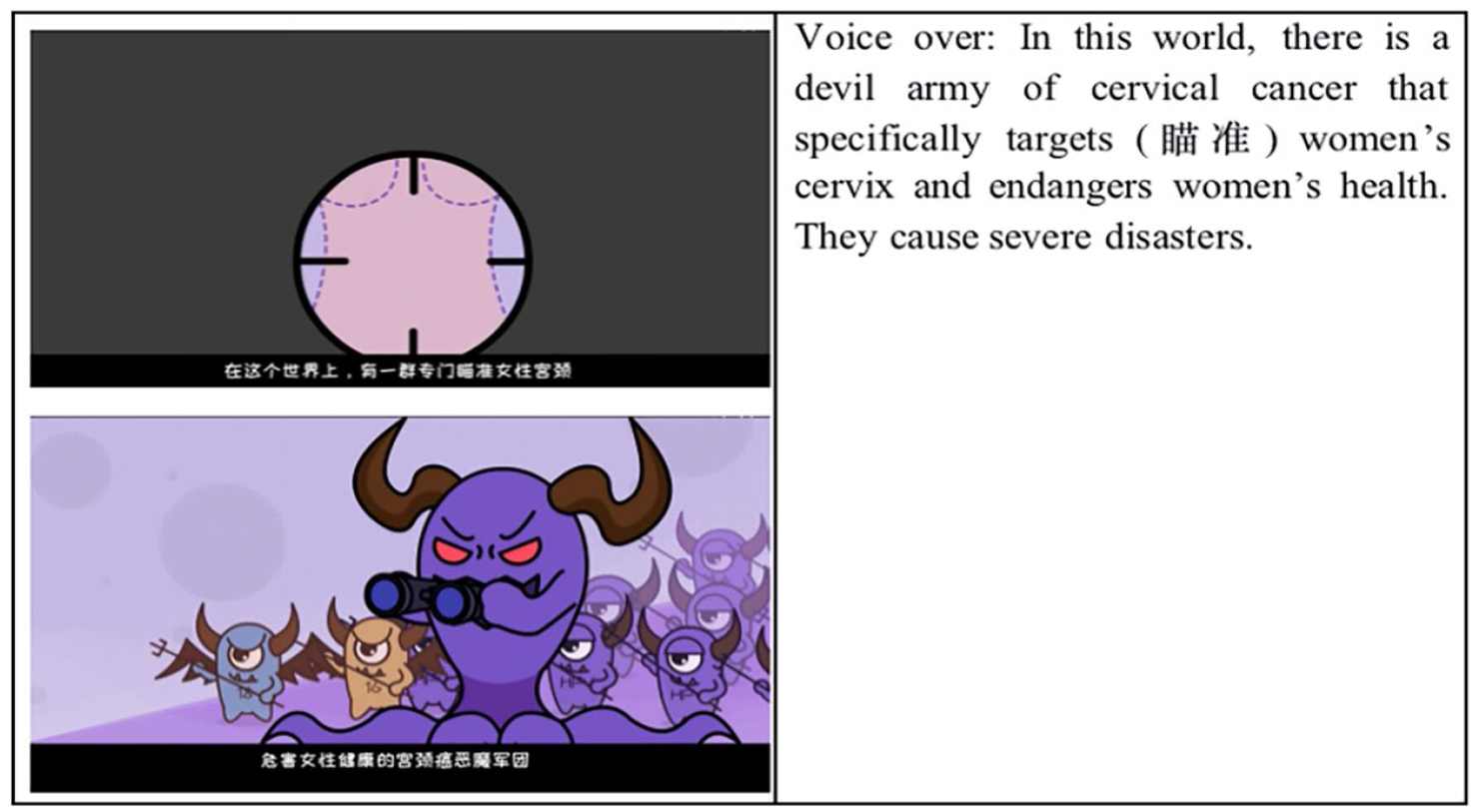
The HPV devils and cervical cancer King Devil leader.
It has been shown that personification is one way that issues can be made easier to understand in the public communication of science, especially where there may be little pre-existing literacy (Dahlstrom, 2021; Kearns and Kearns, 2020). Issues can be made more engaging when we deal with a character with a personality, rather than with technical details. Here, personification of HPV and cervical cancer as devils adds a playful, dramatic aspect, creating a story of a battle against evil.
As scholars in the field of science communication research warn, such personifications, and attribution of intentions to them, must be dealt with carefully (Elshafie, 2018). As with the use of all metaphors, where one thing is used to represent another, personification most importantly also involves a process of ‘perspectivization’ (Lakoff and Johnson, 1980: 153). Metaphors shape how we are encouraged to see and understand an issue or thing. Metaphors foreground some ideas and associations, but they can also background and conceal others, which can have an ideological effect (Charteris-Black, 2004).
The personification of HPV and cervical cancer as devils has two significant outcomes in the discursive script. First, the causality between the two is substituted for a relationship of ruler–follower, where the HPVs appear as the sidekicks of the larger King Devil. Second, personification attributes HPV and cervical cancer with the very same intentions and emotions. In Figure 1, we see them in their dark mountain abode, all looking in the same direction watching out for victims. In other scenes, such as in Figure 9, they smirk and laugh, seemingly enjoying their task.
The recontextualization (Van Leeuwen, 2008) of the relationship between HPV and cervical cancer, using these personifications of leader/sidekicks has clear consequences. First, the use of devils, living in the mountains, substitutes (see Machin and Mayr, 2023) for the very mundane and everyday nature of the HPV viruses that can be widely spread in a population, and which, of course, could lie in the body of an otherwise kind and loving college boyfriend.
Second, the causality, where HPVs can lead to cancer, is substituted for a relationship where the two appear to work together, with shared interests and even where cervical cancer, in the form of the King Devil, is leading. In Figure 1, it is the King Devil who appears to lead in identifying victims, capturing them in the sights of the binoculars and (in Figure 2) who speaks on their behalf.
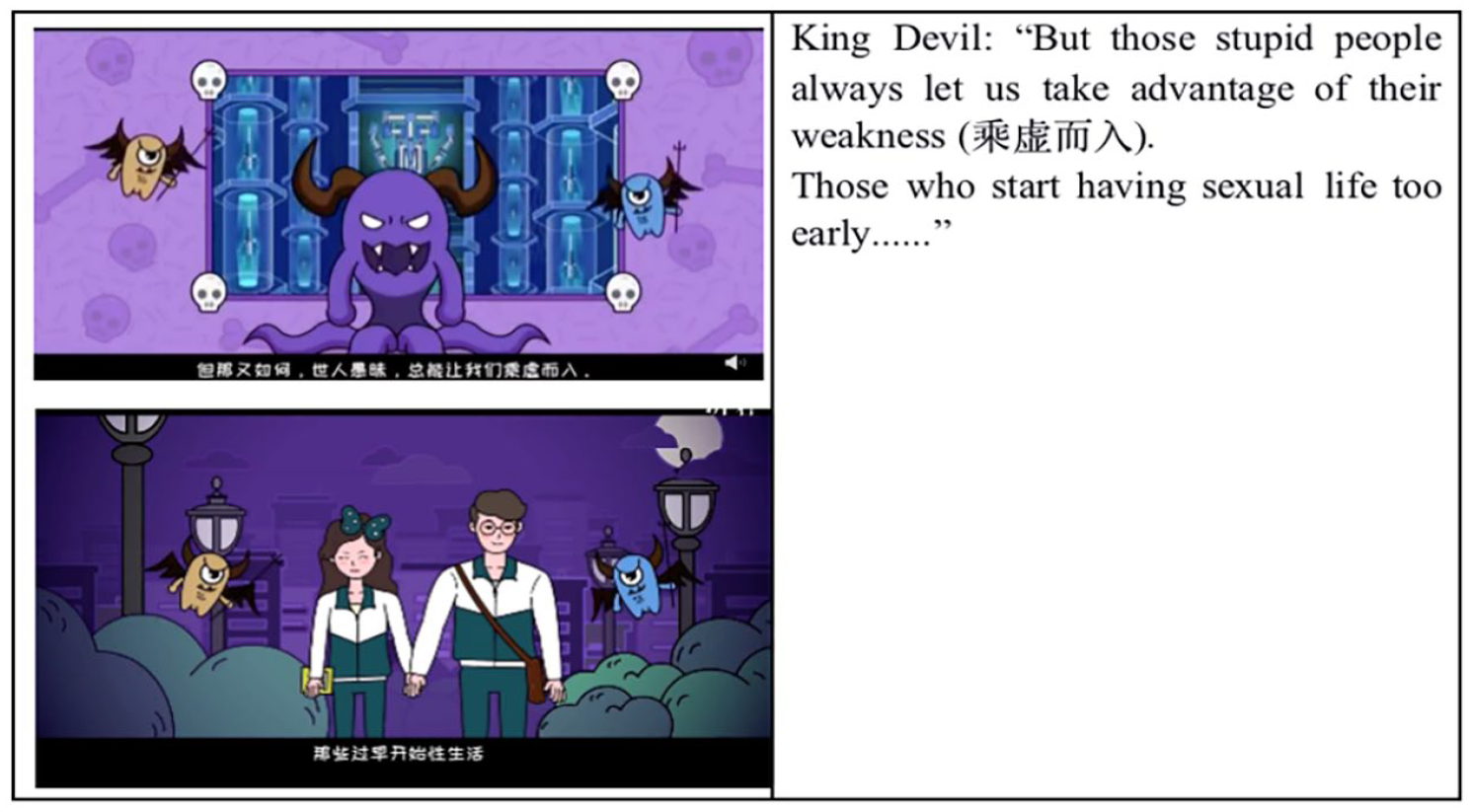
Having a sex life too early.
Representing the body and medical information
In the film we see a number of visual representations of the body and cells to show what HPV and cervical cancer do to the body. These signify technical medical information, yet obscure the nature of the relationship between HPV and cervical cancer.
One example of the representation of medical knowledge in the film is seen in the lower panel of Figure 3. We see three scans pinned to a board in Dr Hua’s office. These comprise three representations of the body: the liver, uterus and lungs. Superimposed over each of the scans we see generic representations of viruses.
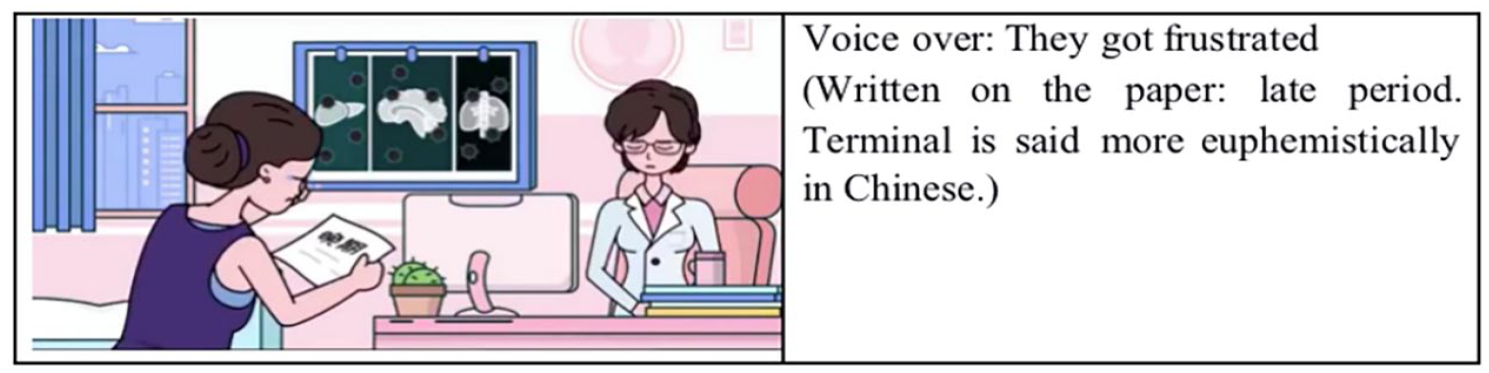
Simplified representations and Dr Hua’s personalized office.
Such simplified representations of the body and of cervical cancer could be understood as the intention to create information that is more widely accessible. As Dahlstrom (2021) puts it, such popularized accounts ‘distil’ scientific knowledge. However, no explanation is given for what we see in these scans. The connotation, simply, is that viruses are invading the body. In this case, viruses are represented in a stylized fashion, drawing on conventionalized icons.
In fact, such scans would not show the presence of viruses per se, but rather the effects of the presence of cancer in the body once it had spread from the cervix. Since no differentiation is made in this case between HPV and cervical cancer, the two become conflated. Again, in this discursive script, actual causal sequences, from acquiring HPV to later developing cervical cancer, are obscured.
Who is at risk from cervical cancer?
The discursive script used in this film provides a list of what makes women vulnerable to attack by the devils. As we see in Figure 2, the King Devil describes these as weaknesses. The list is comprised of what are represented as undifferentiated weaknesses of body, of moral judgement and of character.
The first weakness is shown in Figure 2, where the King Devil mentions ‘Those who start having sexual lives too early’. We see a young couple in a gloomy-looking park. The HPV devils float around watching. The girl is depicted with her eyes closed, as if demure and unaware.
In the next scene (Figure 4) we see the couple from behind, about to enter the Holiday Inn. Love hearts rise between them. Weakness, in this case, therefore would refer to having sex with your first love, prior to marriage. Of course, after marriage to this same boy, the risk of HPV contraction would remain exactly the same.
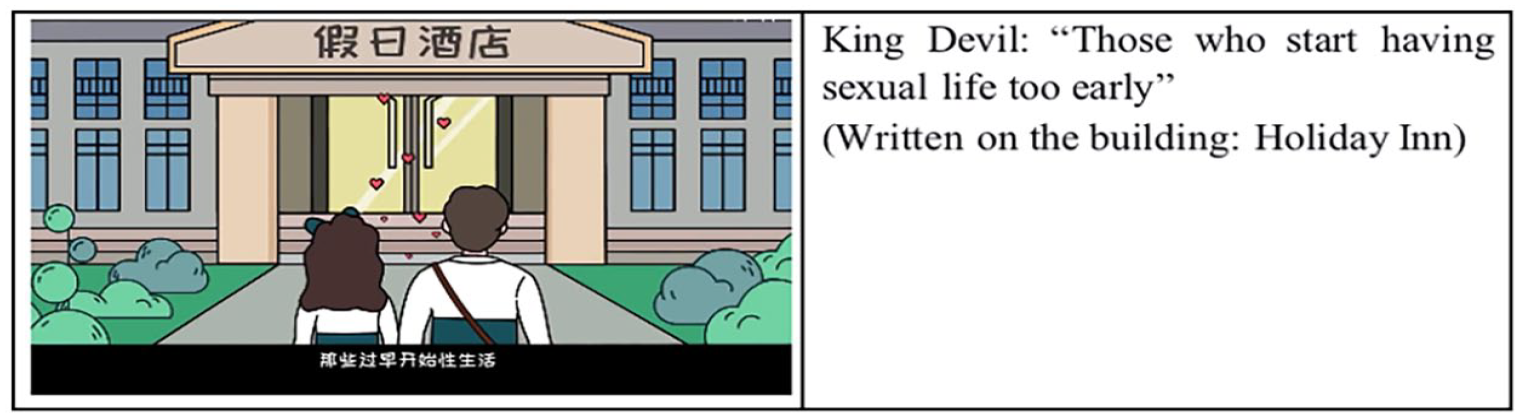
The couple enter a hotel.
After the hotel scene we see the same girl pictured as if on a dating app (Figure 5), again appearing passive and innocent, holding a love-heart and sporting a matching large red bow in her hair. Sex and desire are further evaluated visually through the background iconography that carries representations of women’s underwear and hands making a gesture to connote sexual intercourse. Rather than representing sexual desire as a natural thing among adults, it becomes infantilized and degraded.
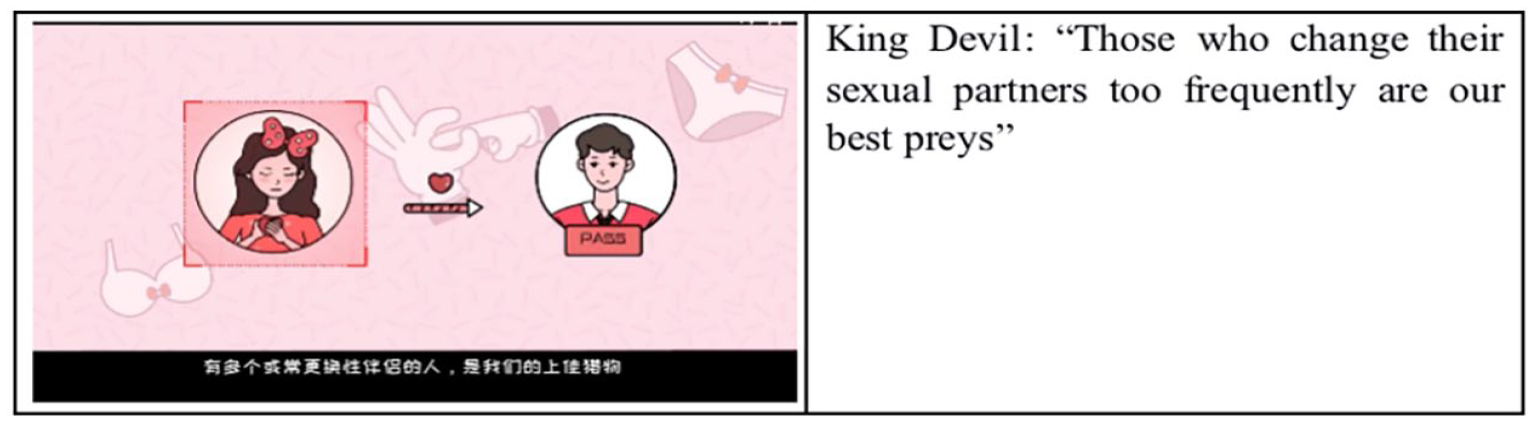
The same girl on a dating app.
Such symbolism helps to background the sense of this being a woman who is able to naturally experience sexual desire that can be explored without risk through safe sex. She could have been represented differently, where a decision to have protected sex shows an act of agency and maturity rather than of weakness. At no point does she speak or turn to the viewer in any way to offer any of her own thoughts or feelings on the situation.
The nature of this weakness becomes further evaluated by what follows. In Figure 6, the King Devil lists other categories of people who have the kind of weaknesses that the devils exploit. These are dealt with in turn and then placed together in one frame as if to emphasize that these are all of the same order. We see drug abuse, represented by a dishevelled woman in revealing clothing and, in a cut to the right, a clutter of pills and drug paraphernalia. Here an additional evaluation of her character is given, saying that she mistakes such behaviour for ‘freedom’. Next, we find a representation of HIV, where we see a person in intensive hospital care, with extensive skin lesions. To the right, we see another woman who represents those with other forms of immunity deficiency. In the next frame, we see a woman who has failed to have regular checks for cervical cancer.
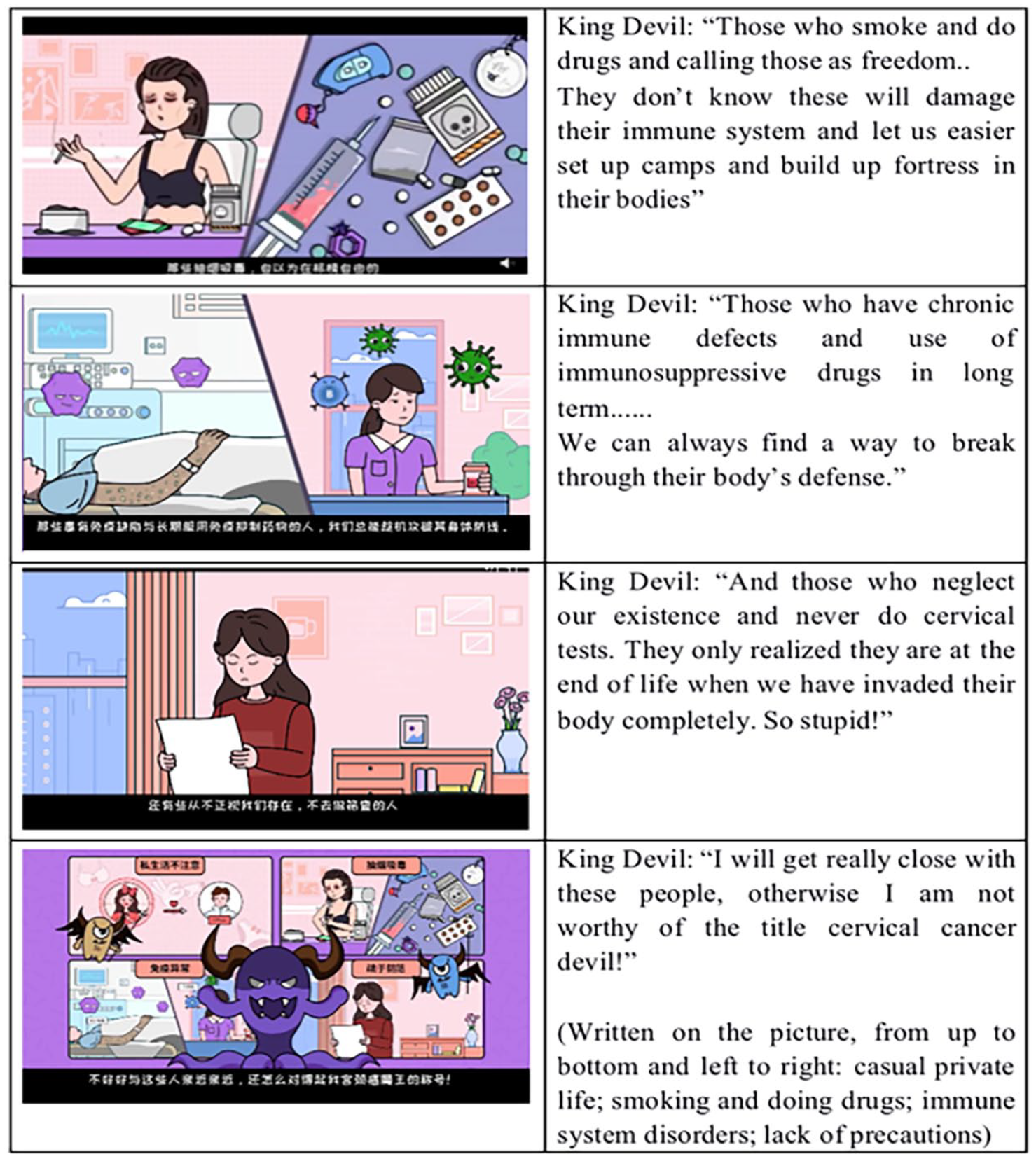
Those likely to contract cervical cancer through weakness.
These ‘weaknesses’ are then all placed together in one frame, now including the girl on the dating app. This is important as it emphasizes that these are to be classified as being of the same order (Ledin and Machin, 2018). The King Devil then appears at the centre, arms outstretched, signalling that this is the domain where they work. The naive student, in love with her first boyfriend, is classified as weak in a manner related to the later stages of HIV, or substance abuse that the protagonist mistakenly takes as an act of freedom.
The Medical Staff And Their Role
In the film we find a medical team led by Dr Hua and her two unnamed helpers, for the most part represented in the form of winged angels (Figure 7), dressed in white. Such a representation of medical staff has been observed to be common in China since the modernization of the system (Barbes, 2018: 71; Zhan, 2011). Particularly important in a climate of public distrust in health services with shortages of resources, corruption and also demoralization among health workers, these angelic representations communicate purity, caring and selflessness (Reeves, 2015). In the discursive script carried by this film, this places the medical staff as the good, pitted against the devils.
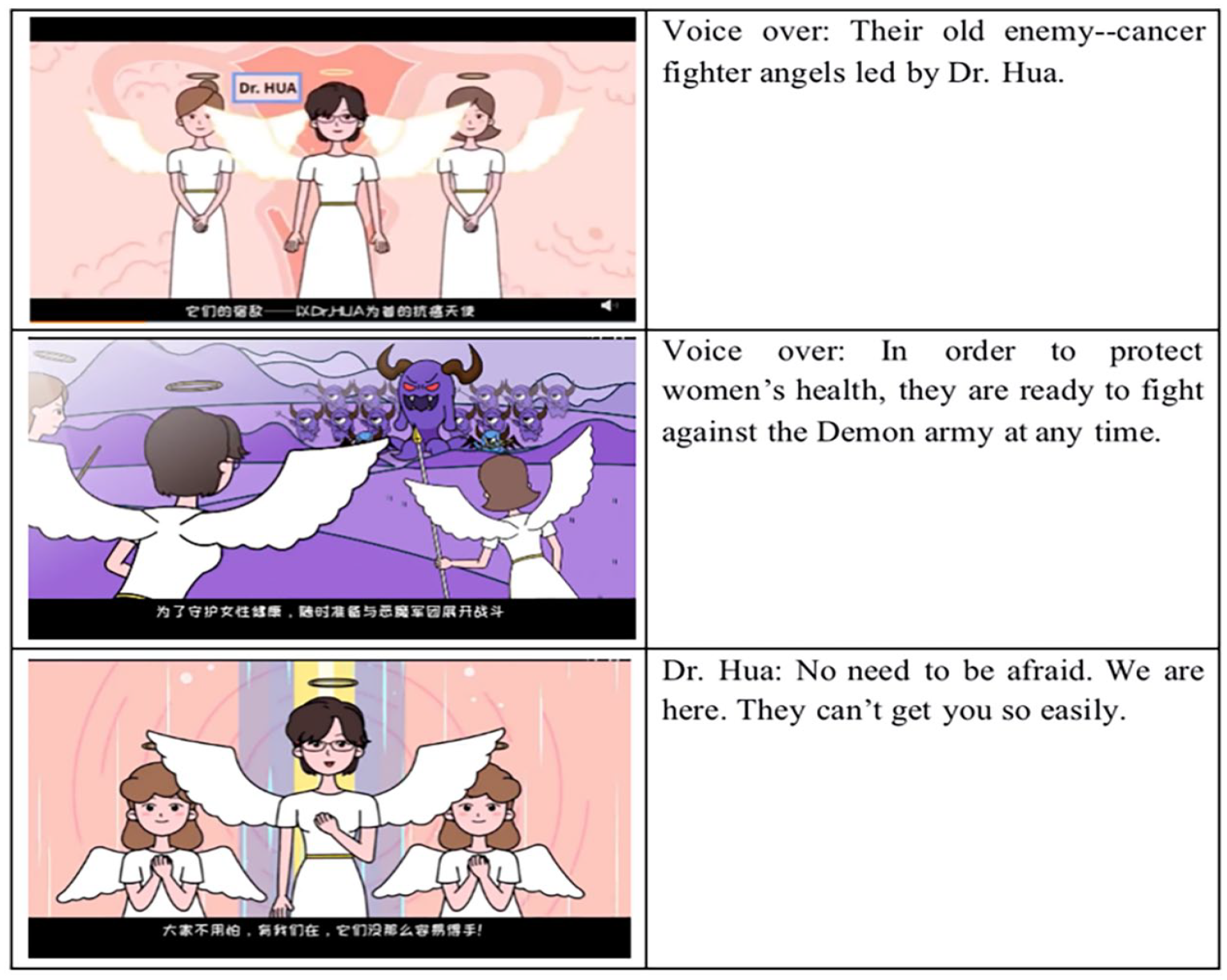
Medical staff as demure angels.
While such representations of medical staff may have been intended to create a sense of professional distance and integrity in this discursive script, this also creates a sense of remoteness from everyday matters such as the romantic and sexual desires of young women. Rather, medical staff appear otherworldly, pure, above everyday things, concerned with the wider battle to defeat the devils. This backgrounds the very grounded and practical matter of a young woman wanting to experience intimacy with her partner.
In the discursive script, the ‘solution’ that is foregrounded in the face of the collection of weaknesses that can lead to cervical cancer is one that involves space-age technology, shown in Figure 8. In the case of the student and her boyfriend, such a solution substitutes the more mundane use of a condom. In this discursive script, the space-age weapons combine with the sense of struggle against good and evil, which appears to raise the stakes beyond such smaller acts. Such an image of high-level science and resources, it could be argued, contrasts with the reality of public health care services experienced by many people in China (Munro and Duckett, 2015). While the Chinese system has gone through rapid modernization over recent decades (Ma et al., 2019) there remains a huge unevenness of services, resources and access to treatment and medicines across the system. This may mean that ordinary people can neither afford, nor have access to health care without the right connections (He and Qian, 2016).
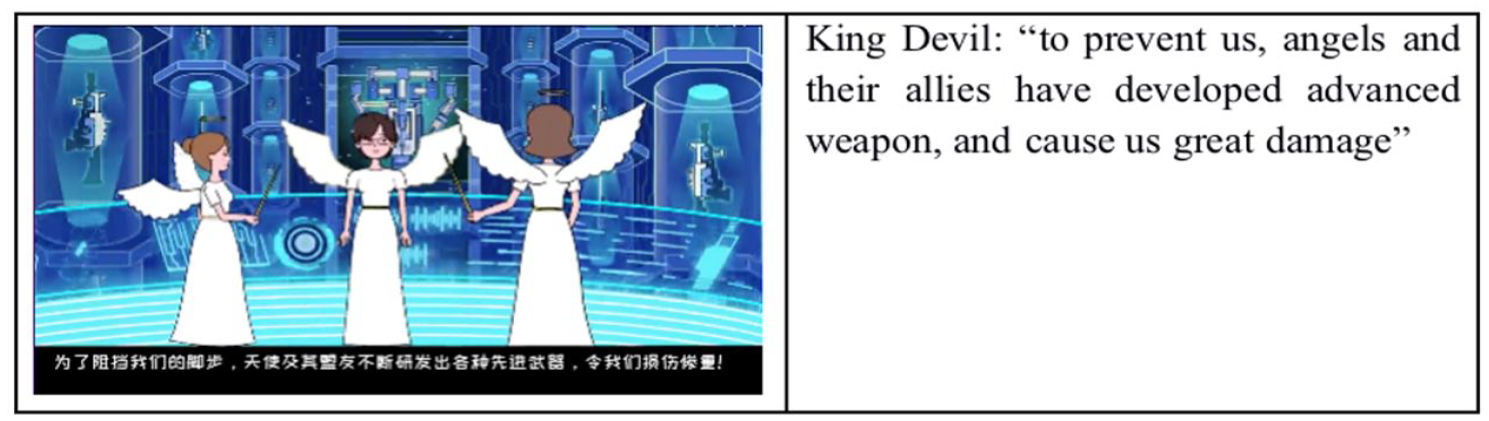
The angels with their space- age weapons.
In two scenes, we see Dr Hua as a doctor sitting in her office with different patients. The representation of the office is important as it appears to be a private office since there are personal items on the desk and on the wall behind her. Given the view from the window, there is a sense that the office is located on the upper floor of a high-rise building. Such a representation of high-level consultancy is rather different to how most in China will experience health care (He and Qian, 2016).
As for Dr Hua’s engagement with the viewer in the form of a doctor, rather than an angel, this only happens at the end of the film (Figure 9). Here her image sits within a frame, also creating a kind of detachment not seen in other shots (Ledin and Machin, 2018). Dr Hua is seen in her office where she appears smiling and making a gesture with her hand, addressing ‘you’ the viewer. This is the only fleeting moment where the viewer is given any kind of sense of social interaction with medical staff. Again, we might explain this in the context of the need to represent such staff as professionalized and disengaged from more intimate interpersonal relations. But, at the same time, this also forms part of the discursive script where the more personal feelings, needs and worries of those addressed by the film become excluded or recontextualized as risks or weaknesses.
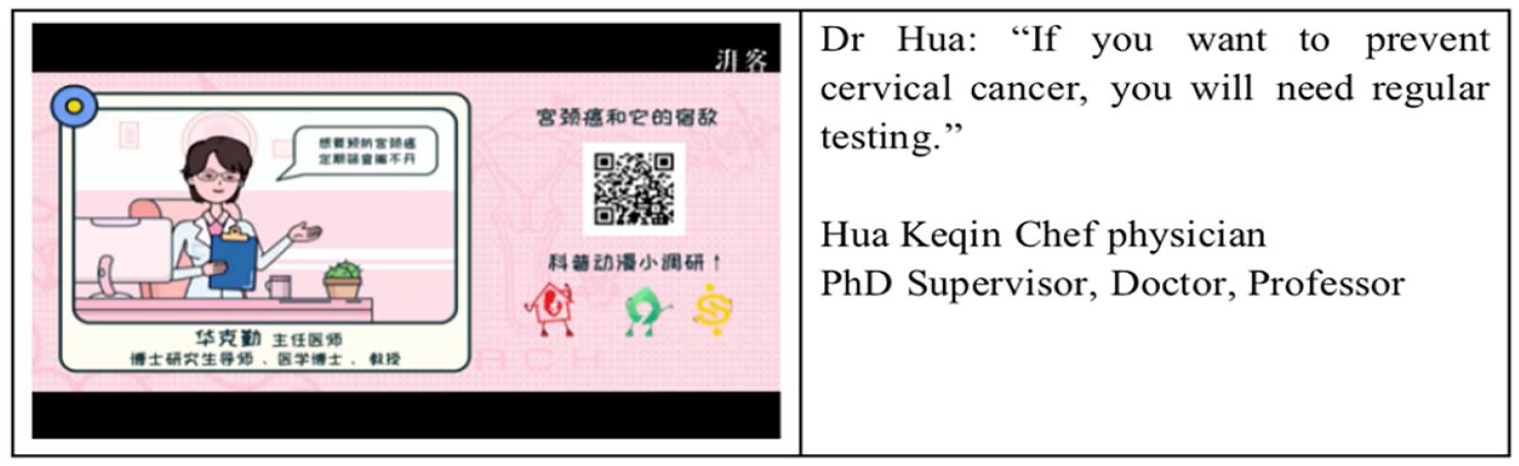
Dr Hua in a moment of direct interpersonal communication.
Conclusion
Popularizing scientific and medical knowledge has been argued to have an important role in education (Dahlstrom, 2021; Kearns and Kearns, 2020) through a process of making it more accessible and engaging. But, as Dahlstrom notes, this process can lead to misrepresentation. In this case, while this film was made in the name of accessibility and engagement, it is not so much that the popularized form leads to misinformation. Rather, like its more formal predecessors, it carries a discourse of sexuality that is highly conservative.
As scholarship in critical health communications shows, medical knowledge is never neutral but is infused with all kinds of cultural, institutional and ideological notions and interests (Gwyn, 2002; Kline and Khan, 2019; Lupton, 1995; Zoller, 2014). Here, this conservative discourse not only silences women’s sexual desires, but conflates them with other forms of ‘weakness’ such as drug abuse. And while the film targets young women, it has little to offer in regard to increasing their actual knowledge about how to protect themselves from HPVs and cervical cancer. In fact, it leaves out the simplest piece of information: that a student dating her first love can practise safe sex and significantly reduce her concerns about cervical cancer. There is no acknowledgement of the reality of experienced desires and feelings, nor that women may be able to plan and take decisions beyond simply abstaining from sex until married.
At the same time, we find another aspect to the discursive script carried by the film that points to how medical knowledge can be infused with institutional and ideological notions and interests. The discursive script foregrounds the high levels of medical facilities and research dedicated to cervical cancer, as well as the nature of the pure, selfless commitment of the health workers. These can be thought of, using a term in critical discourse analysis, as ‘overdetermined’ representations (Machin and Mayr, 2023). This is where some element in a discursive script becomes almost exaggerated or ‘over-done’, usually pointing to an issue that is of contention. In this case, ‘overdetermination’ glosses over the actual situation in the Chinese health care system in regard to resourcing, morale among health workers and public trust (He and Qian, 2016; Munro and Duckett, 2015).
The analysis of this film is, of course, one small step. Our primary aim is to contribute to research in health communication, in particular in the area of women’s reproductive health. But we also hope this helps to show the potential for further research taking a discursive approach to this kind of data.
Footnotes
Declaration Of Conflicting Interests
The authors declared no potential conflicts of interest with respect to the research, authorship and publication of this article.
Funding
The authors received no financial support for the research, authorship and publication of this article.

Biographical Notes
Address: Zhejiang University, East 5 Building, Zhejiang University (Zijingang Campus), No. 866, Yuhangtang Rd, Hangzhou City, Zhejiang 310058, China. [ email:
Address: SISU, Institute of Corpus Studies and Applications, Building No. 5 Wen Xiang Road 1550, Song Jiang District Shanghai, P.R of China, 201306. [ email: