







Abstract
In October 2019, fuelled by a collective discontent with the lifestyles and inequalities generated by the capitalist model, social protests took place in the Chilean streets. People staged massive demonstrations in every city demanding profound changes to the system. Known as the ‘Estallido Social’ (Social Explosion), the demonstrations paralysed an important part of the country and, after a few weeks of revolt, managed to initiate a new Constitution-making process. These events triggered a process in which the country was re-imagined, subjectivities were rewritten and objects and the environment were heavily transformed. This study places its focus on a set of industrially produced objects, whose original functions were subverted in the streets to enable new uses and meanings aligned with the Social Explosion. Kitchen items such as pots and ladles were used to make a lot of noise; road signs and pieces of urban furniture were re-located to block the streets; and gas cylinders and oil drums were reshaped for protection against police forces. While specialized literature generally seeks to recognize the new social forms and models that emerge from the crisis, this essay aims to reflect on the ways in which the relationship with the everyday environment is transformed in the midst of a social crisis, and how operations of resignification and reinterpretation may also be necessary to bring about more profound changes. As such, this study aims to characterize these operations of mutation (of bending, crumpling, scratching, wetting, moving, cutting, twisting, hitting, breaking, cracking, tricking, whipping, throwing, crushing, dragging, drilling and burning), and from there to move towards elucidating the practical and symbolic repercussions that this new material reality has had on the social body and daily life.
With our eyes fixed on the objects that lose their place, change their function, or contravene the rules in a context of a massive social revolt, this visual essay highlights the key role played by the material environment in the breakdown and redefinition of the foundations on which social agreements are built.
The context is October 2019. The Chilean government announces an increase in public transport fares and unleashes one of the biggest social crises since the return to democracy. The measure came after a year of economic crisis and job insecurity, and was accompanied by a series of communication misfires and episodes of impunity that ended up summoning hundreds of thousands of people onto the streets. The protests grew day by day, increasing in intensity and diversity, and so did police repression. The clashes resulted in 32 deaths, nearly 30,000 arrests, 3,383 reported human rights violations and over 500 eye injuries, which were documented in at least six reports submitted by international organizations (Amnesty International, 2020; Human Rights Watch, 2019; United Nations, 2019). The country was paralysed for weeks, until the political parties and a segment of civil society agreed to initiate a democratic process to replace the 1980 Constitution, drafted during the Pinochet dictatorship and widely perceived as the heart of the neoliberal model. The new Magna Carta that they agreed on would be written by a citizens' assembly, with gender parity and reserved seats for Indigenous communities.
From 2019 to date, the revolt has been widely analysed from multiple angles, addressing its probable causes and the outbreak itself: its actors, operations, discourses and imaginaries. Despite this variety of approaches, one aspect that has not been sufficiently explored is its material dimension. This is not unusual: rarely have the materialities of protests been a subject of study, and when they have, the focus has been placed on the symbolic role of things, whether flags (Veneti and Poulakidakos, 2023), clothes (Dittborn, 2021), pots (Blanco Esmoris and Ohanian, 2023) or umbrellas (Lim, 2015). In contrast, this article explores how, through heterogeneous practices of bricolage, pre-existing objects were reimagined and repurposed for novel counter-hegemonic functions during the Chilean revolts (see Figure 1). Within such contexts, places, actors and things were assembled in a different fashion, and this visual essay asks how the transformation of the country and its citizens was linked to these anti-hegemonic reinventions of everyday objects.
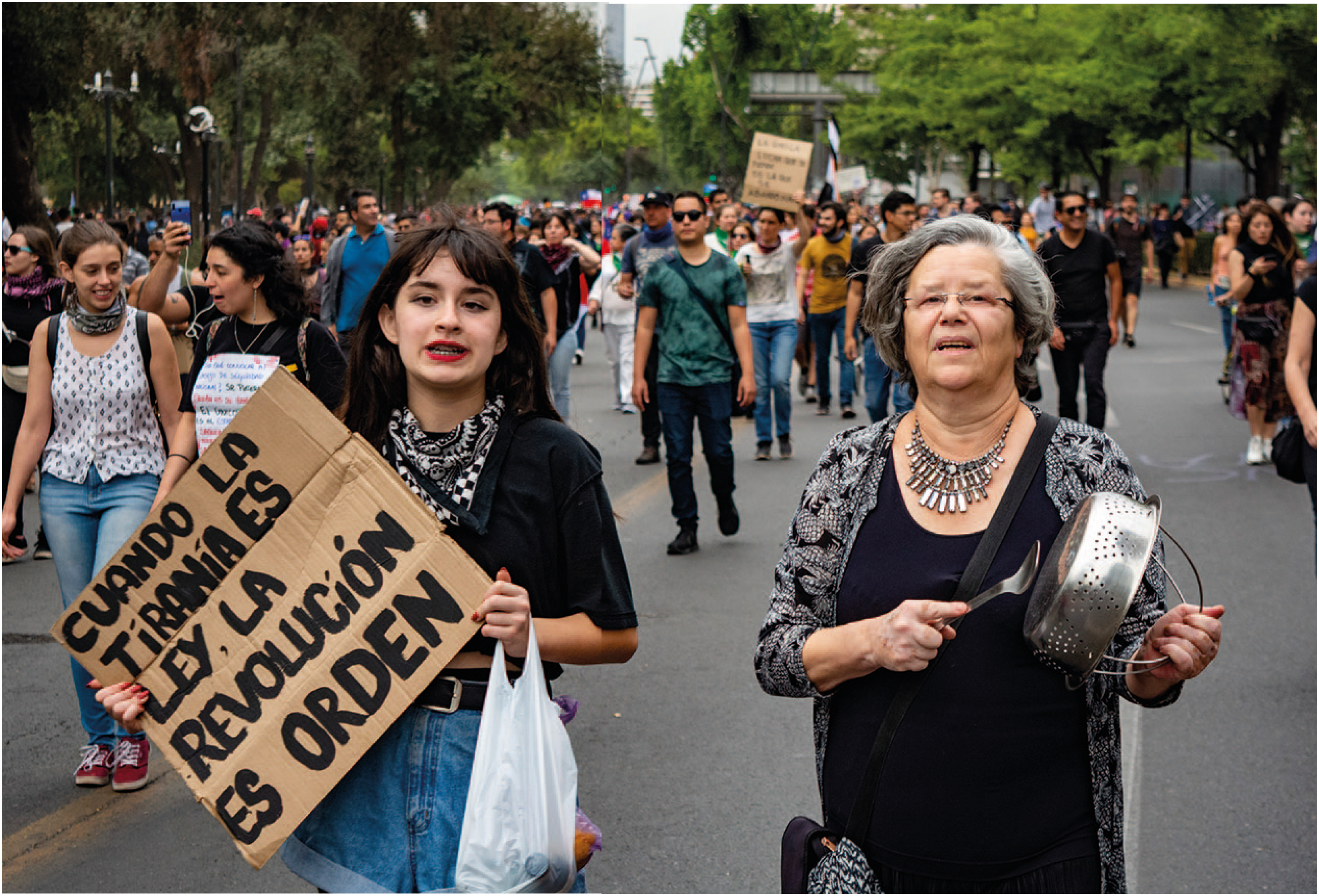
Cardboard sheet of a dismantled box used as a support as a support to write messages alluding to the context of social demands, and a metal strainer and ladle used as percussion instruments for protesting.
We carried out ethnographic and photographic fieldwork in Santiago, Chile's capital, during the protests (October to December 2019; all photos by Ricardo-Greene) to unravel the fluid landscapes in which, on the one hand, objects were transformed along the way while, on the other, the very same disobedient objects interrogated humans, shaping their actions and moulding their subjectivities. We joined the protests three to four times a week, walking the streets, documenting the objects and interviewing people in order to understand the symbiotic relationship between humans and non-humans. Objects may be 'designed, made and placed by human beings following cultural patterns that are learnt and reinforced discursively' (Dant, 2010), but at the same time they are constantly being subverted, redesigned and repurposed by its users, challenging what they mean, and how and when they are supposed to be used (Errazuriz and Greene, 2021;Oroza, 2012).
What follows is a ground-level account of ordinary things and people. Through the language of photography and a sequence of texts, this essay shows some of the forms and strategies through which citizens reinvented their everyday environment during the demonstrations. The aim is to capture the impulses that are gener- i ated when a part of the citizenry puts ' their routines on hold and decides to transform their discontent and frustration into a movement that contravenes the established order of things. All that is required is a frying pan, a lid or a saucepan, and any domestic utensil that can be used to bang it. Without distinctions of gender, age or social class, anyone can participate in the sonorous shudder that floods the atmosphere with a collective and spontaneous feeling of rejection. The 'cacerolazo (banging on pots and pans)' is a first transgression, simple and effective, through which the domestic realms are taken into the streets, demanding changes in the definition and administration of the public realm. Accompanying the incessant clatter, people multiply their messages on different media: canvases, cardboards, roofs, pavements, vehicles, walls, urban furniture and even their own bodies to share what in normal times is usually silenced.
The message is not just communicated through words. The city is constituted by layers of overlapping texts that can be questioned, subverted, and even eradicated through collective actions. The scope and legitimacy of the movement depend, among other things, on its capacity to appropriate, transform, and re-signify emblematic public spaces, even if only temporarily. For example, the heritage statue of General Baquedano, a national hero of the Pacific War, located at the epicentre of the protests, became a natural target to be seized not only for its strategic position (see Figure 2) but also because it was perceived as a symbol of 19th-century nationalism, founded as most nation-states on patriarchy and military might.
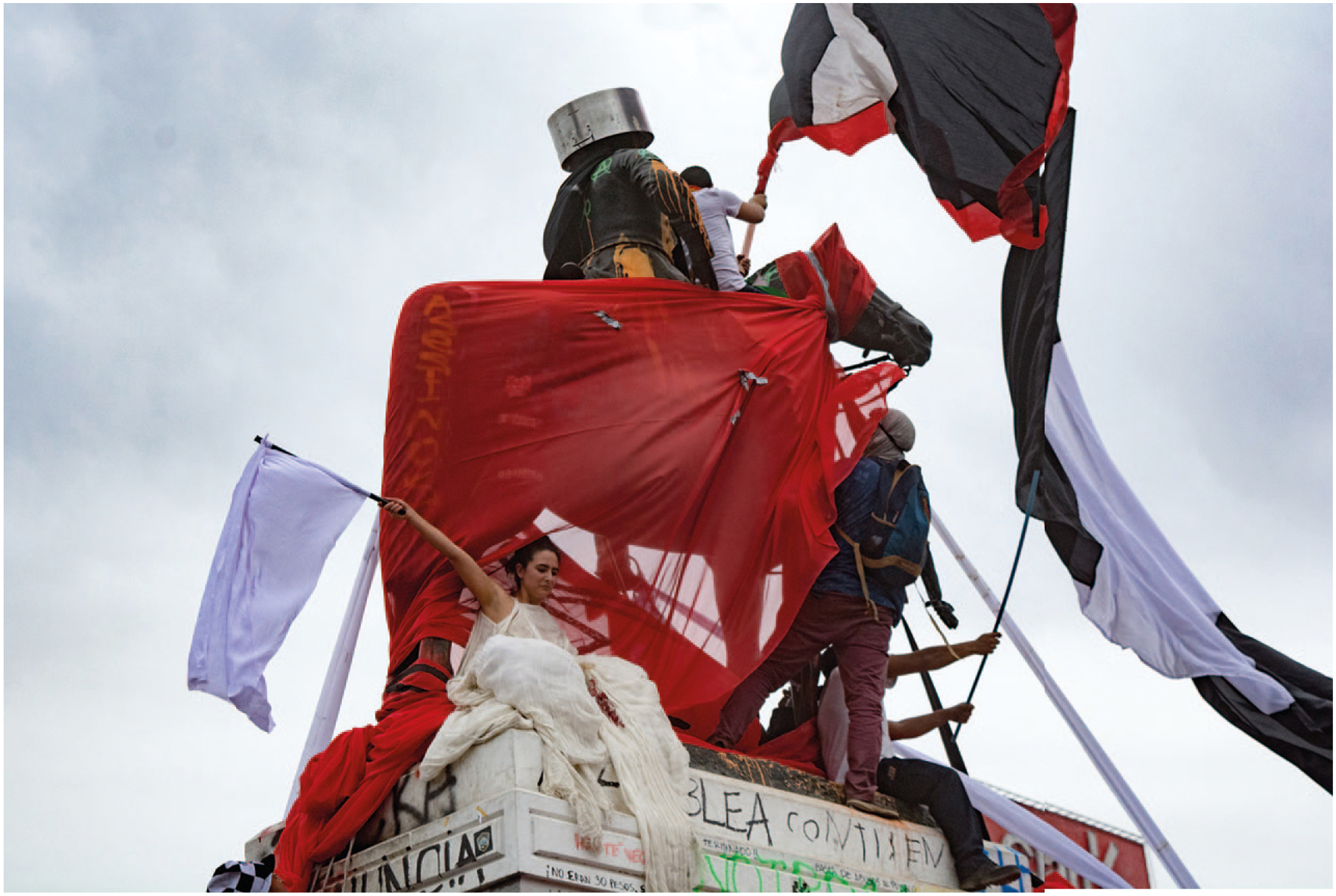
General Baquedano's monument, at the epicentre of the revolts, was day-to-day transformed and vilified by protesters.
When the demands are countless, dissimilar, and unfeasible within the existing institutional framework, it is not enough to express discontent. The city does not stop because some people want it to. The traffic lights keep alternating between green and red, the factories keep ticking over, and the weight of the working day does not diminish. Urban life is only interrupted when the pieces and parts on which it is structured dare to be sabotaged or cease to serve their original purpose. The incessant banging of kitchen utensils, the transformation of the city into a large canvas and the occupation of emblematic spaces are the initial transgressions that can open the way to greater ruptures. In the streets, materials as dissimilar as rubbish, plant.. ers, furniture, stones and wood are removed from their routine to disrupt the I urban flow (see Figure 3).
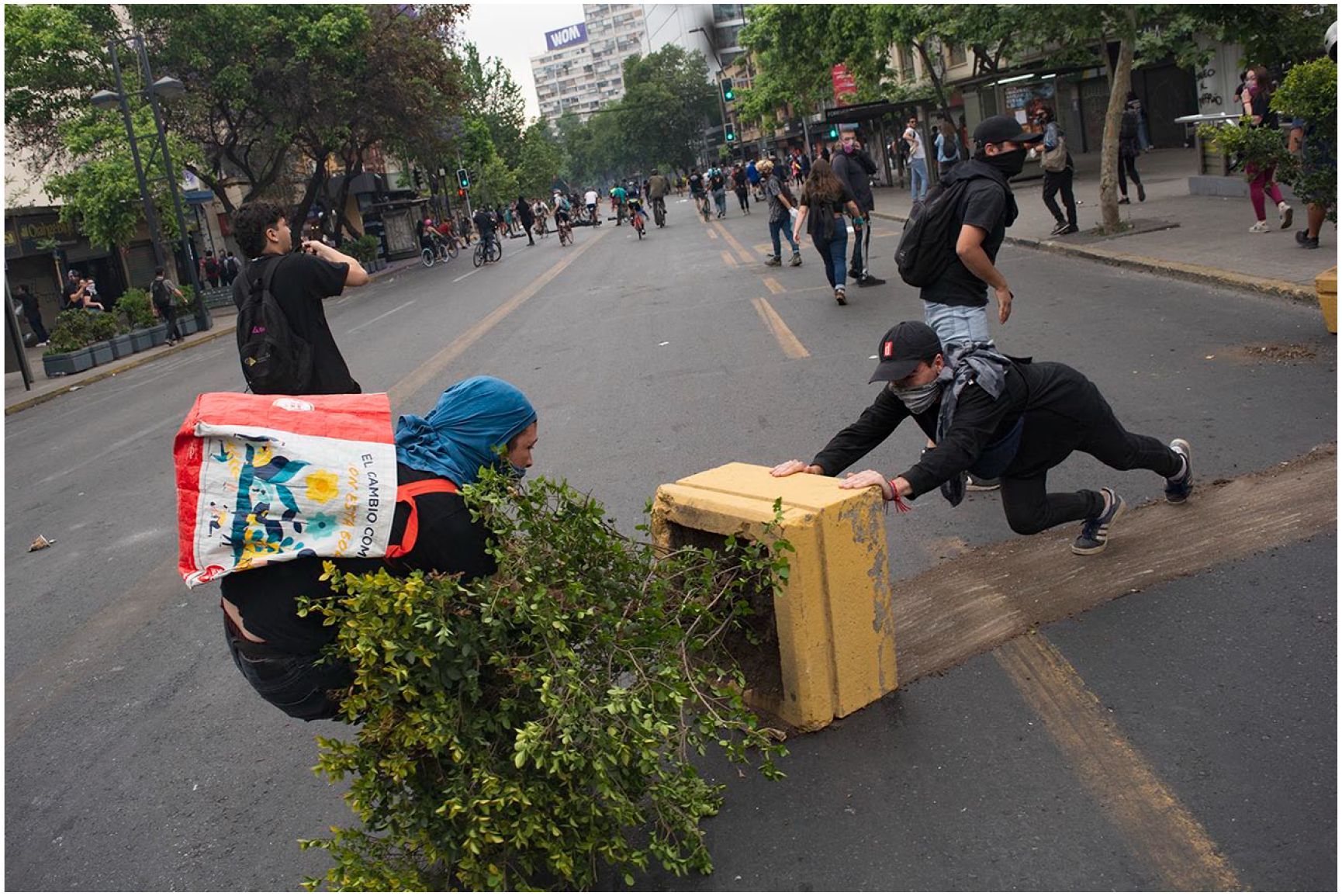
Concrete planter with ligust-rina, originally used for ornamental purposes and to prevent passers-by from crossing mid-block. Demonstrators dragged the planters to the streets to block vehicle traffic, leaving a temporary brownish footprint on the pavement.
According to Costall (1995: 473), objects exist within a moral order, and people tend to police each other's uses of objects - who, how and why they are being used. While the social movement seeks to alter everyday life, aiming at building a different reality, the imperative of the state's agents is to preserve, safeguard, and stop the insurrection. The clash between the two forces - change and status quo - is inevitable, and their agendas are revealed in their clothing and accessories: on the one hand, there are the calculation, efficiency and specialization of the devices of repression (see Figure 4), while on the other, a battery of spontaneous, intermittent, versatile, and unpredictable tactics of resistance (see Figure 5). New fissures extend across the social body and begin to crack the expected order of things.
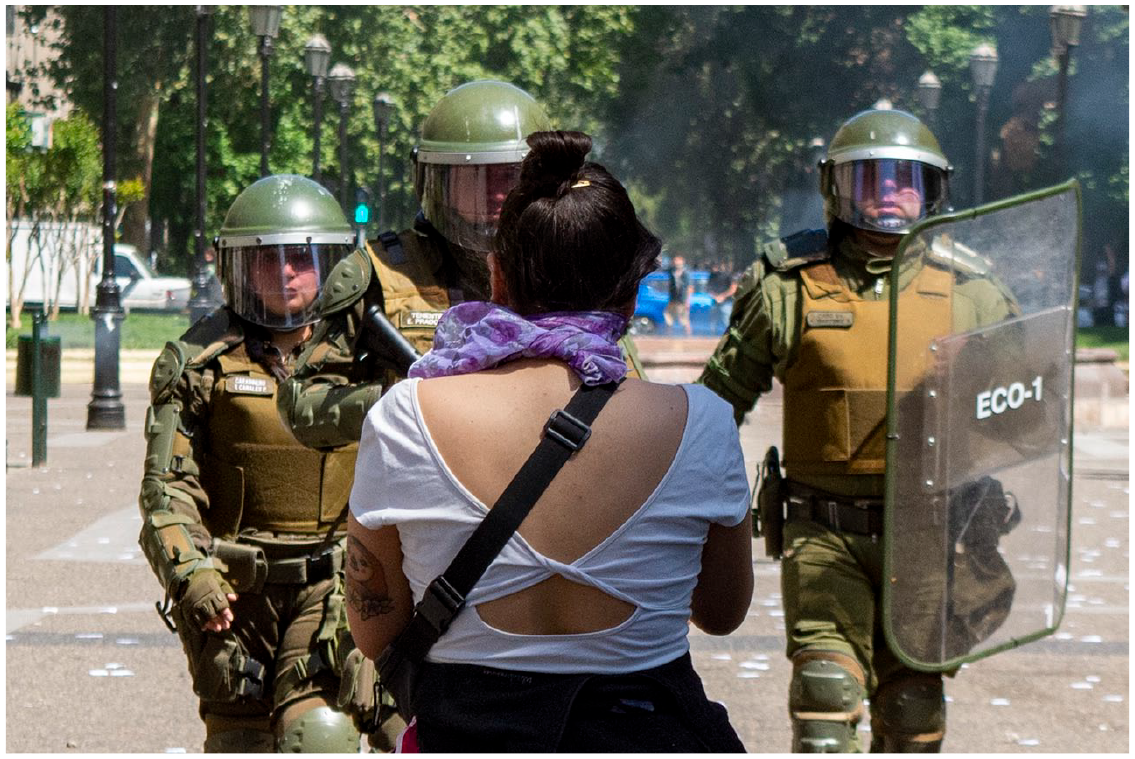
Armed with protective suits, gloves, bullet-proof waistcoats, shields, knee pads and helmets, the police confront demonstrators.
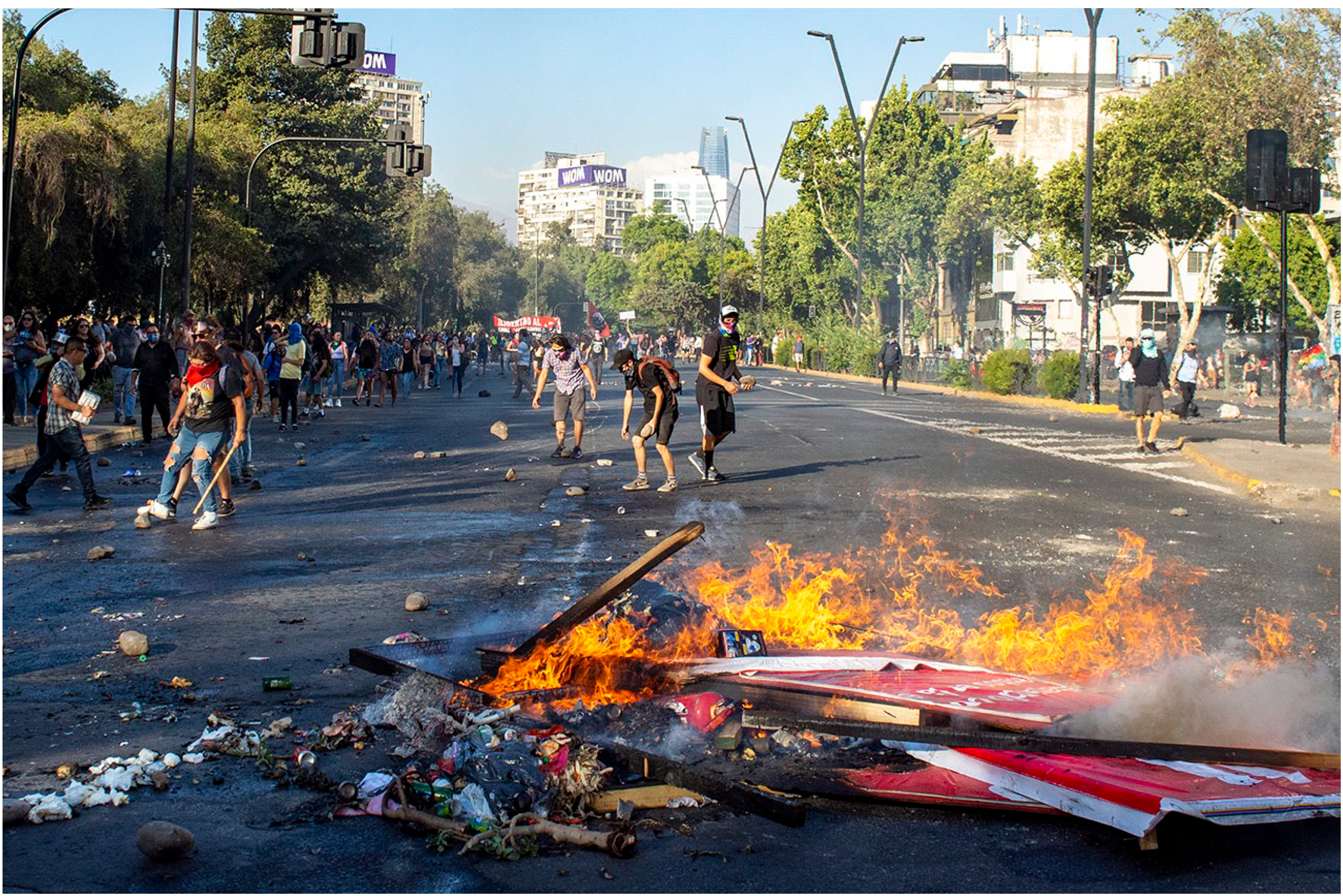
Advertising posters, parts and pieces of bus stops, urban signage, rubbish bags, notebooks and branches are re-used by protesters as combustible material to set up barricades.
At some point, matter gives way, limits are diluted and the built environment ceases to maintain its order. Past the boiling point, everything is movement, susceptible to transformation. The daily flux of people, vehicles and goods through the streets is replaced by a telluric movement that tears things out of their place (see Figure 6). The barricades massify, snatching and re-signifying pieces and parts of the city - an ephemeral environment that fulfils its new purpose of paralysing the system.
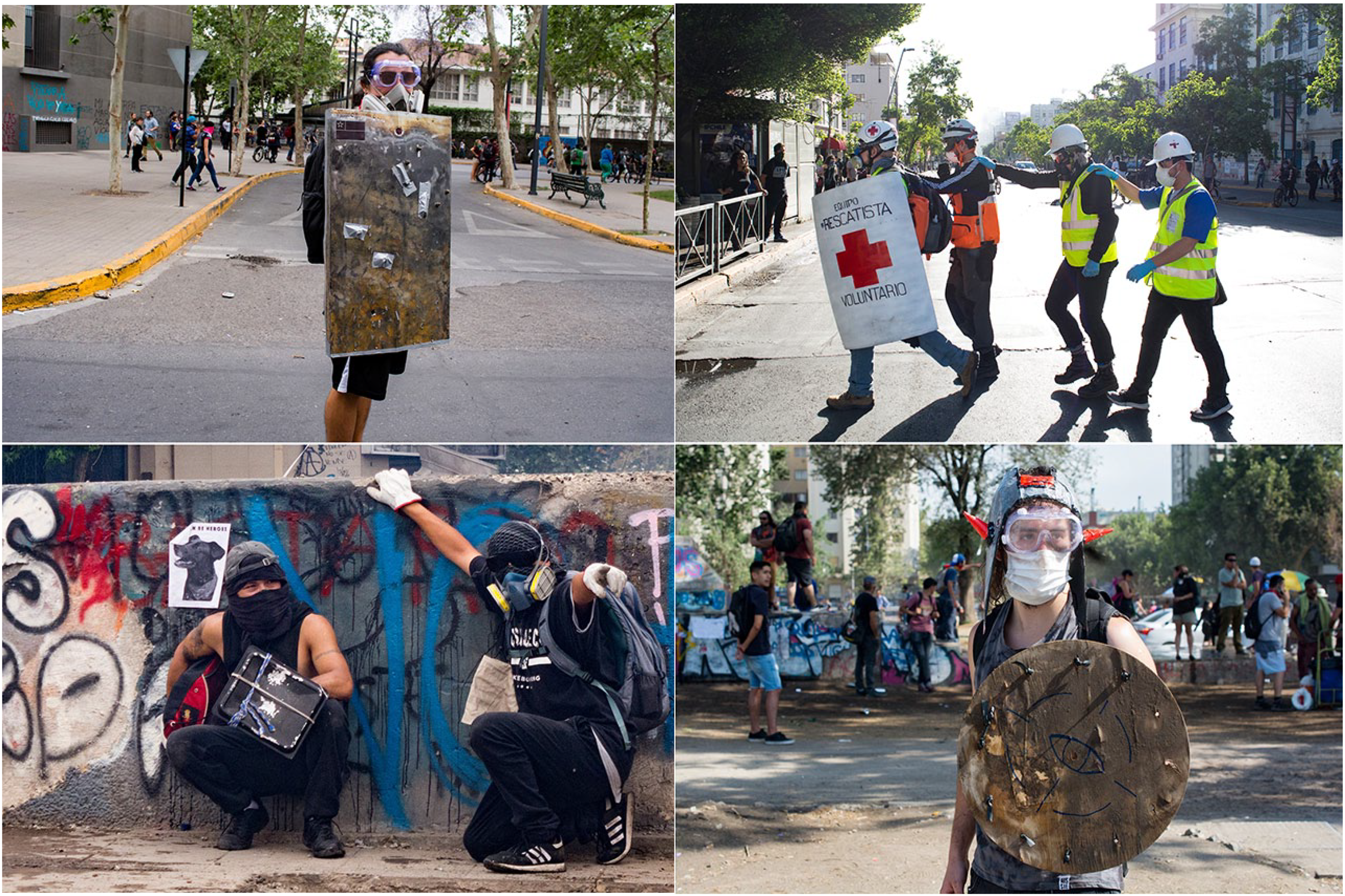
Shields improvised from a heater box, a piece of tin, a baking tray held in place by two crossed ropes, and a drum lid with a drawing of an eye held together with elastic bands.
I'We are at war against a powerful and implacable enemy' - these were the Chilean president's words referring to the avalanche of destabilizing actions that would later become known as the 'Social Explosion' (Estallido Social) or 'Social Revolt' (Revuelta Social). If the declaration of war led to a reinterpretation of the city as a battlefield, the description of the adversary as 'powerful and implacable' sought to legitimize the disproportionate use of force against it. Confronted by this force, a 'front-line' (primera linea) was constituted, made up of citizens who left their daily activities to protect the demonstrators from the police with whatever objects they could muster. Without military training or weaponry, and devoid of proper helmets, shields or specialized jackets, this supposed 'enemy' deployed unprecedented creativity in re-using available resources. A t-shirt covering the nose and mouth was the common item for simultaneously minimizing the effect of irritant gases and protecting demonstrators' identity (see Figure 7). This was followed by safety goggles or some other protection against the rubber bullets that the police fired indiscriminately, directly into the protesters' eyes. Shields were also improvised from traffic signs, household appliance cans or drum lids; football shin guards were worn to protect their bodies and laser pointers were used to obstruct the visibility of police and neutralize surveillance drones.
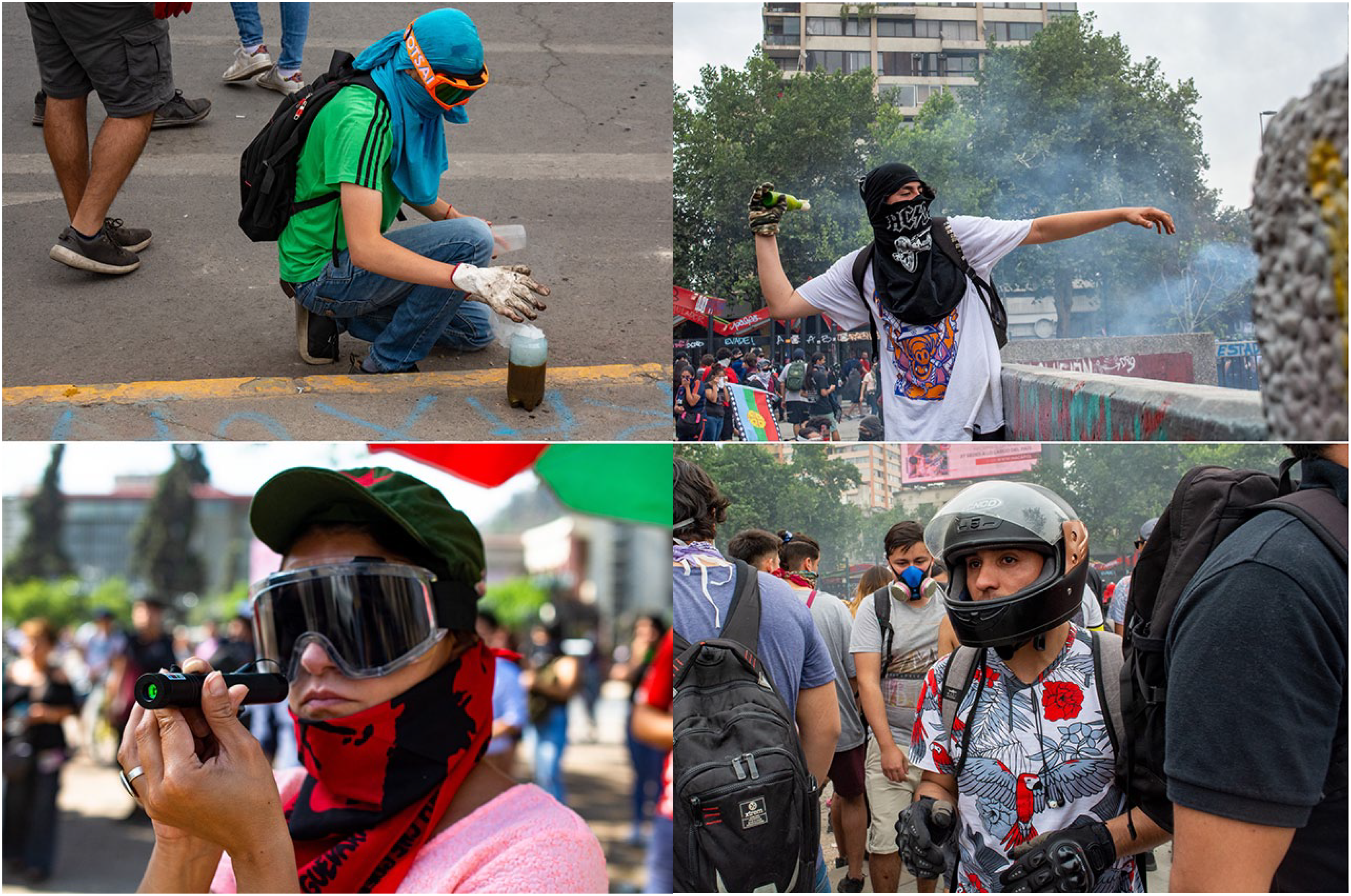
Objects used to protect protesters' airways from fumes (t-shirts, scarves, masks), their eyes from bullets (sports glasses, goggles) and their heads from blows and projectiles (motorbike and bicycle helmets); also their improvised weapons (Molotov cocktails, tear gas bomb extinguishers, laser pointers, etc.).
Defined as an object that can be thrown forward, the projectile is one of the most emblematic items re-used in human history. Paradoxically, it is the very bricks, concrete, tiles, pavement and stones from which the city was built that, during the demonstrations were torn from their places and used as weapons. Dismantling in order to attack is a single movement that repeats itself week after week erasing the traces of the city until it reaches the foundational soil. As the students said in May '68: 'under the cobblestones, there is a beach' (see Figure 8).
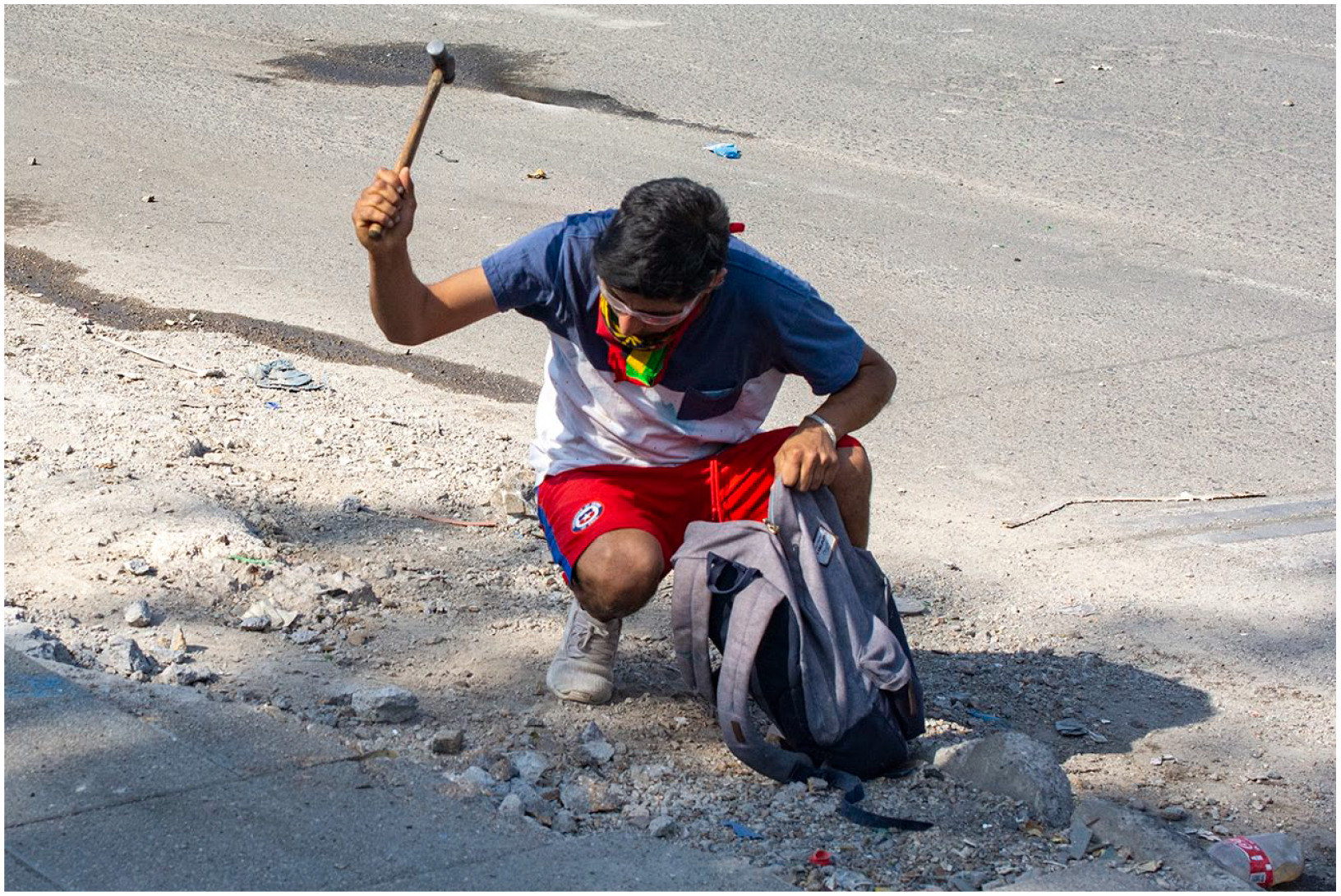
Breaking up the pavement with a hammer to obtain rocks and stones that are carried in a backpack and then used as projectiles against the police.
During the demonstrations, the inhabitants of Santiago became used to having a ground zero in the heart of the capital (see Figures 9 and 10). The authorities gradually abandoned the urge to mend, rebuild, paint, water, or re-install street furniture and signage. The rubble and emptiness would remain as long as there was no new social agreement. The pieces and parts no longer itted.
Thinking about how power is deployed and resisted, Michel de Certeau (1996: xii) proposes that, against the overcoming strategies of power, individuals can find creative ways - 'tactics', he called them - of transforming and appropriating the dominant system. According to his views, subversion is fragile and occurs fleetingly in spaces 'not of their own'. On 25 October 2020, 78.25 percent of Chileans voted in favour of changing the Constitution, and both the city and the objects began to return to what seemed to be their previous state. However, although the resistance was dismantled, it would be a mistake to think order was re-established; rather, a new order was produced, one where neither people nor objects were left untouched.
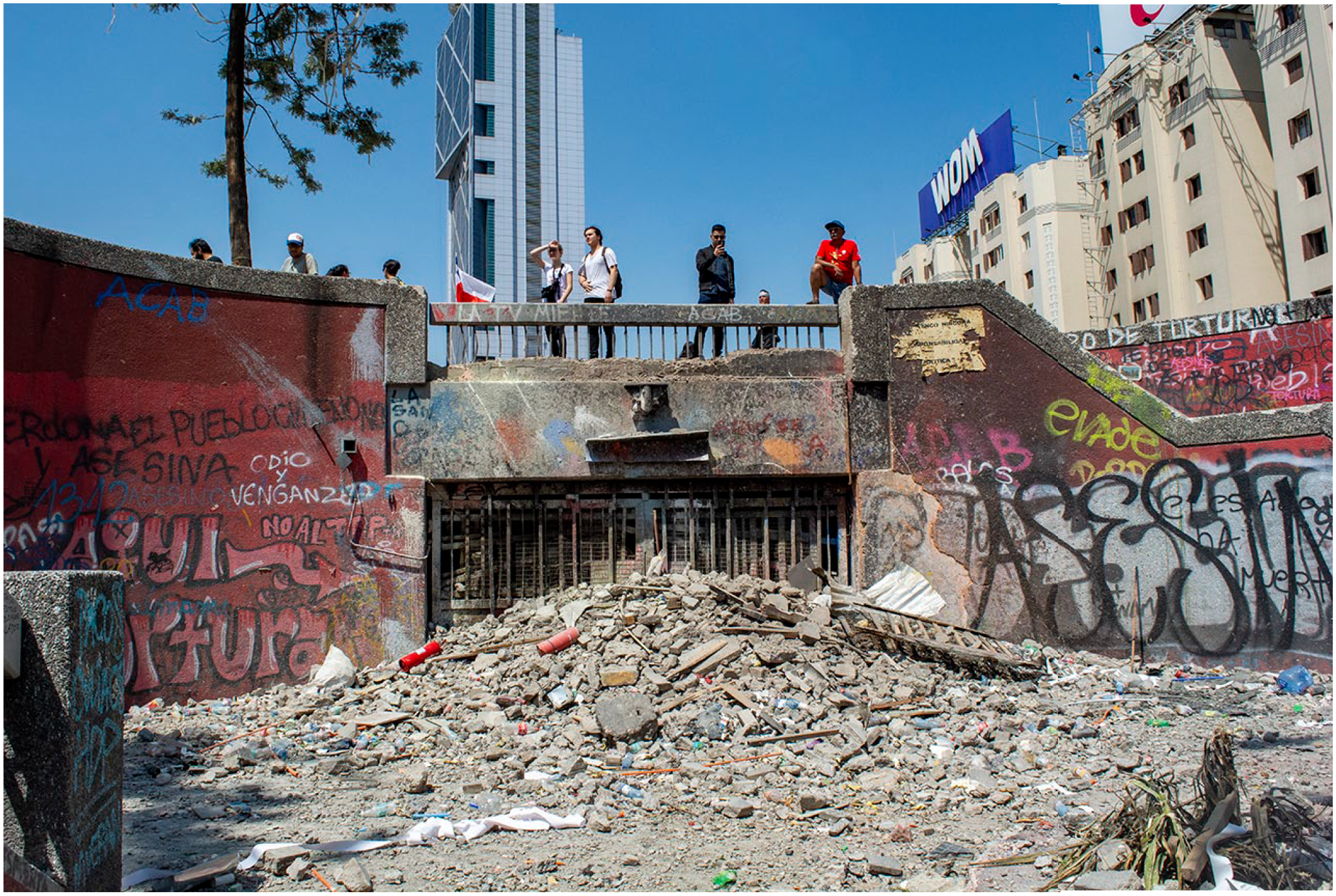
A pile of debris thrown by demonstrators during the protests to block the entrance to the Baquedano metro station, used at the beginning of the social unrest as a centre of police operations.
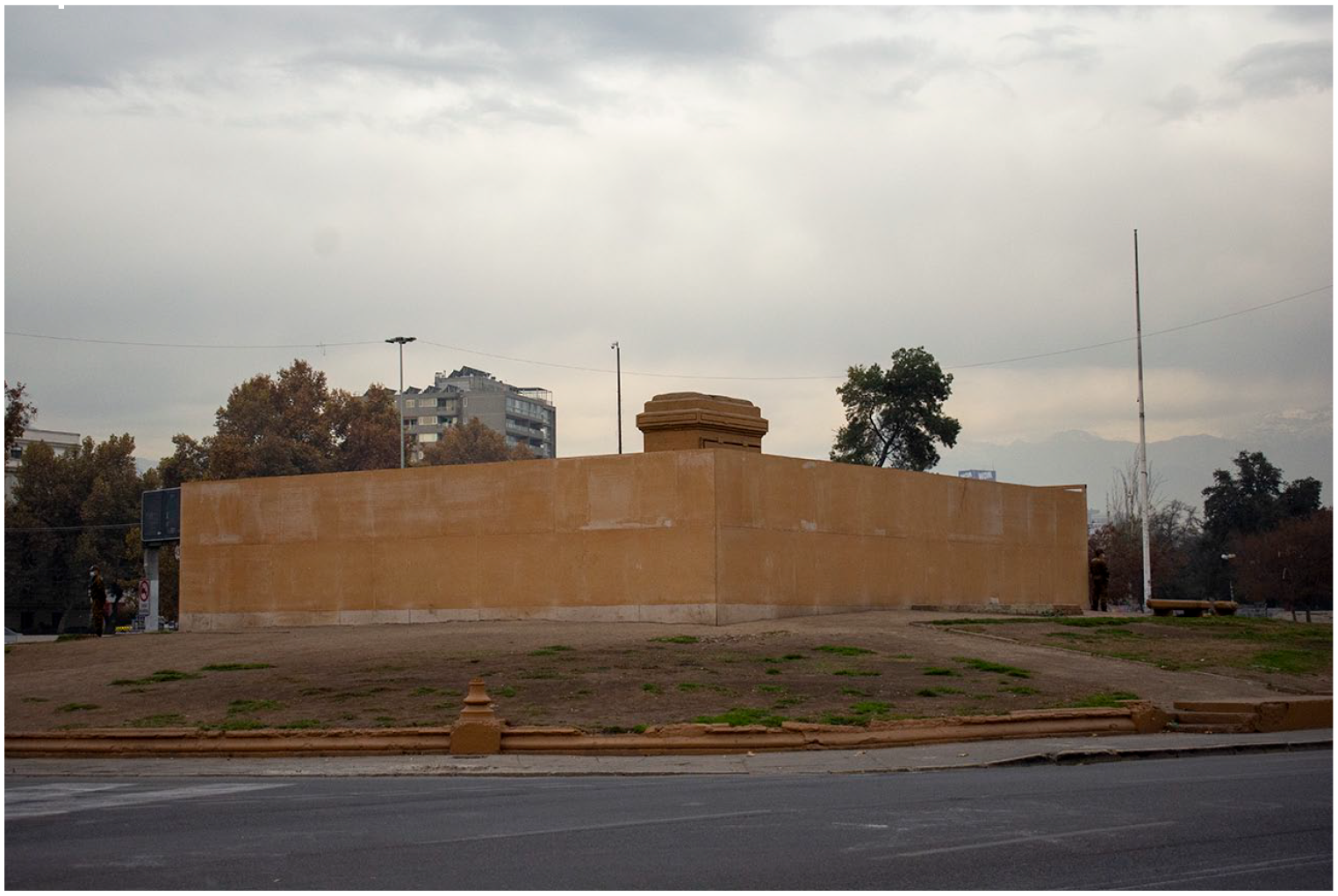
Plaza Italia, renamed Plaza Dignidad during the social unrest. In its centre stood the monument to General Baquedano which, after countless citizen interventions, was removed by the government in March 2021. A metal barrier was installed around the plinth to restrict access.
To recognize the role played by these repurposed objects in shaping the social revolt in Chile is, ultimately, an invitation to re-evaluate the role the material world has within processes of social and political crisis. Materialities, as space, should not only be conceived of as a mere setting or stage on which events take place or, eventually, as particular places where the discontent becomes visible. Instead, it plays a leading role as an agent of change. Actions such as hacking, subverting and re-shaping objects, whether maintaining or altering their original form (Corral-Verdugo, 1996; Errazuriz and Greene, 2021), are ultimately a way of disobeying the power relations and normative frameworks that these same objects carried and imprinted on social life (Dant, 2004).
Footnotes
Declaration of conflicting interests
The authors declared no potential conflicts of interest with respect to the research, authorship and publication of this article.
Funding
The authors received no financial support for the research, authorship and publication of this article.

Biographical Notes
Ricardo Greene is an Associate Professor at Universidad San Sebastián (Chile) and a sociologist with an MSc in Urban Development and a PhD in Anthropology at Goldsmiths, University of London. He is the founder and director of Journal of Urban Cultural Studies Bifurcaciones and has published articles, books and documentaries in subjects such as gated communities, segregation, elites, visual methods, domestic objects and urban culture. He is also coordinator of the Research Program in Non-Metropolitan Territories at CIECS/CONICET and co-founder and director of the collective Wonderful Things. Address: Facultad de Ingenierfa, Arquitectura y Diseno. Universidad San Sebastian, Lago Panguipulli 1390, Puerto Montt, Chile. [email: ricardogreene@gmail.com]