






Abstract
The internet has long-term aesthetic trends, one of which is Internet Ugly, a previously unnamed style that runs through many separate pieces of online culture, but especially through memetic content. Internet Ugly can be created by amateurs without specific aesthetic intention, or by creators choosing it intentionally as a dialect. It spreads on the internet thanks to the medium’s unique bottom-up architecture. Many memes (and many specific creators’ bodies of work) begin in Internet Ugly but evolve away from it. Long-abandoned forms of Internet Ugly can reappear on new platforms or from referential creators. While the style can be co-opted by corporate and political interests and sold back to many of its consumers, its core practitioners often respond to such exploitation with public outcry, or simply drop the co-opted version of the style for a new one. Internet Ugly embodies core values of many online creators and communities; therefore, understanding this aesthetic is crucial to any study of online culture.
Keywords
What Is Internet Ugly?
There’s a definable aesthetic running through meme culture, a celebration of the sloppy and the amateurish. It is eclectic and contains many visual genres. Its major techniques over time have included freehand mouse drawing, digital puppetry, scanned drawings, poor grammar and spelling, 1 human-made glitches, and rough photo manipulation. All of these techniques show up in multiple well-known memes, often in combination. While these tools are mostly computer-specific, the look they create is not at all like the New Aesthetic, which uses QR codes, pixellation, and machine-readable images to reinterpret the physical world through the eyes of computers. Internet Ugly is nearly the opposite, an imposition of messy humanity upon an online world of smooth gradients, blemish-correcting Photoshop, and AutoCorrect. It exploits tools meant to smooth and beautify, using them to muss and distort. It’s much closer to ‘trollpunk’, defined by internet-culture analyst Adrian Chen (2013) as a ‘movement focused on the drama that occurs when you fuck shit up on the internet’, but it’s found in plenty of non-trolling culture. And it creates its own standard of beauty counter to, but not exactly reversing, the mainstream values of symmetry and purity. Even when cleverly imitated by those with skill, it expresses an authenticity. Rather than a genre, it’s a cultural dialect, used not just to frame certain propositional content but to communicate things about its user, and as such it has users who can code-switch but are distinct from users who cannot naturally speak the dialect (Wallace, 2001).
Internet Ugly, although not the only core aesthetic of the internet, is the one that best defines the internet against all other media. It is certainly the core aesthetic of memetic internet content. The ugliness of the amateur internet doesn’t destroy its credibility because it’s a byproduct of the medium’s advantages (speed and lack of gatekeepers), and even its visual accidents are prized by its most avid users and creators. As opposed to media like TV or print, where the amateurish is marginalized and audience attention centers on mainstream blockbusters, the internet is built to give outsized attention to the amateurish, the accidental, and the surprise hit. Creators with no traditional skill or talent often become online celebrities for their work, and creators with skill or talent often suppress their abilities or manufacture amateurish conditions to better achieve the Internet Ugly aesthetic. But as we’ll see, such work isn’t simple cooption but a creative choice accepted and celebrated by the online audience – so long as it still retains a certain authenticity.
The aesthetic isn’t practiced by a single defined school, but it develops in certain large incubators built to encourage amateur contribution, or ‘user generated content’. For most of the last decade, the best known source of such work was 4chan (birthplace of LOLcats and rage comics), which lets users be not just pseudonymous, but absolutely, no-telling-if-you’re-replying-to-your-own-post anonymous. Every thread is deleted within days or sometimes minutes; these constantly-disappearing pages encourage rapid iteration of ideas. Users frequently make quick-and-dirty cut-and-paste photo manipulation as conversational volleys. But these images are rarely sophisticated – polish your reply in Photoshop for an hour and the thread might be done before you are.
Over the past half-decade, 4chan has been replaced in influence by Reddit, a much more organized and permanent forum with over 15 million unique visitors per month. Reddit keeps permanent archives and usernames, it’s organized into topical ‘subreddits’, and its voting system rewards effort and promotes crowd-pleasing content, all of which diminish Internet Ugly. But quick visual responses still have a significant advantage. More importantly, the site has an anti-authoritarian culture that invites parody, a genre that always leans grotesque. (Several subreddits archive notable 4chan threads, calcifying their memetic content but raising the chance of future discovery and reiteration.)
The blogging platform Tumblr is becoming nearly as influential as Reddit; its reblog system rewards iteration on others’ work, and its culture is heavy with fandoms, whose original fan art ranges from professional to stick-figure. Major aggregating sites like FunnyJunk, the Cheezburger network, BuzzFeed, and 9GAG occasionally start memes but mostly spread them to a wider population for further iteration. Another layer of thousands of bottom-feeder blogs re-aggregate these memes, dig up instances not previously caught by their major competitors, and are later aggregated in return. The aggregation process favors ugly by emphasizing quantity over quality and leaning on failure-based (or ‘FAIL’) content. All of these sites run on user-generated content (taking pains to lower the bar for participation) and frequent posting, two ways to skew content uglier. 2 Some major user-generated-content sites are not Internet Ugly incubators: Pinterest, while memetic, promotes a middle-class home-catalog aesthetic. Vimeo targets professionals and ‘artists’ rather than webcam vloggers and TV-clip uploaders, and its lack of ‘suggested videos’ prevents memetic iteration. Such sites, while filled with content by users and not a staff, are built to celebrate professional content. In general, Internet Ugly is an amateur-driven aesthetic.
Although the internet continually matures and offers slicker tools to make amateur work look professional, users will always reach beyond their technological capabilities. If, for example, software eventually enables any user to create original, professional-looking freehand sketches, some user will misuse it to create a freshly ugly kind of image. Someone else will use a different tool to vandalize the beautiful freehand sketches. Others will share amateurish sketches on platforms that don’t support the software. As you’ll see, much of Internet Ugly culture has already evolved this way. So long as some creators have more ideas than capabilities, there will always be an Internet Ugly.
Examples of Internet Ugly
To define the tools and the boundaries of Internet Ugly, I’ll analyze some specific examples. While the aesthetic can be traced back to the first images created online (including ASCII art from the pre-browser era), I’d like to focus on the last half-decade, after the explosion of social tools brought user-generated content to the front of the average internet user’s experience. We’ll see several uses of Internet Ugly: to democratize participation (as in Rage Comics and Snapchat), to give creators an excuse to practice their craft (as in Shitty_Watercolour), to innocently parody (as in the Shitty Network), to more critically satirize (as in the Bazinga comics), and to celebrate ugliness as authenticity (as in ‘Nailed It’). Because Internet Ugly can apply to content at every scale, these examples range from a platform with millions of users to a single Reddit account. Together, they help us understand why memetic culture so often works in the Internet Ugly mode, and how the aesthetic evolves as each incarnation matures.
1. Rage Comics
There’s a certain canon of ur-memes that became idioms, characteristic modes of expression used by thousands or millions of amateur creators. 3 The most successful – the formats so identified with ‘memes’ that grandmothers and advertisers recognize them as such – include LOLcats, Advice Animals, and rage comics. Of these, rage comics are the easiest way to demonstrate Internet Ugly (see Figures 1–3).
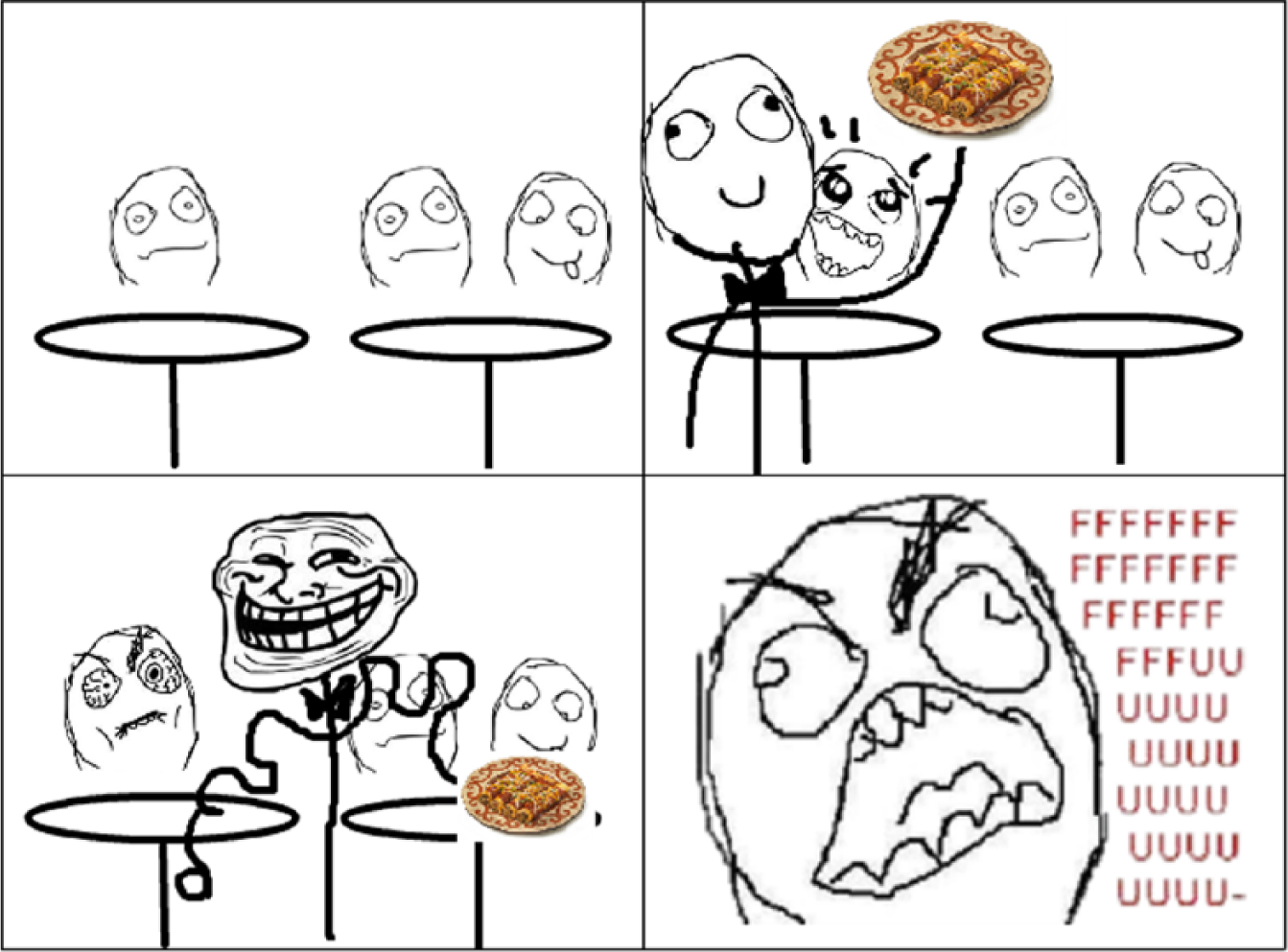
Waiter Rage, a typical four-panel ‘classic rage’ ending with the original rage face. The portrayed experience is widely relatable and non-specific, which was as necessary for early rage comics as seasonal words are for haiku, in contrast to the ‘personal story’ mode now in vogue. Note the white background left in the stock photo of the plate of food, which could have been easily erased, but was left in to subtly emphasize the ‘minimal effort’ aesthetic. URL: Note the white background left in the stock photo of the plate of food, which could have easily been erased. To leave it in is to say, ‘you get the point’. It shows that the creator is giving the minimal information needed to tell the story. http://www.reddit.com/r/classicrage/comments/ipzui/waiter_rage/
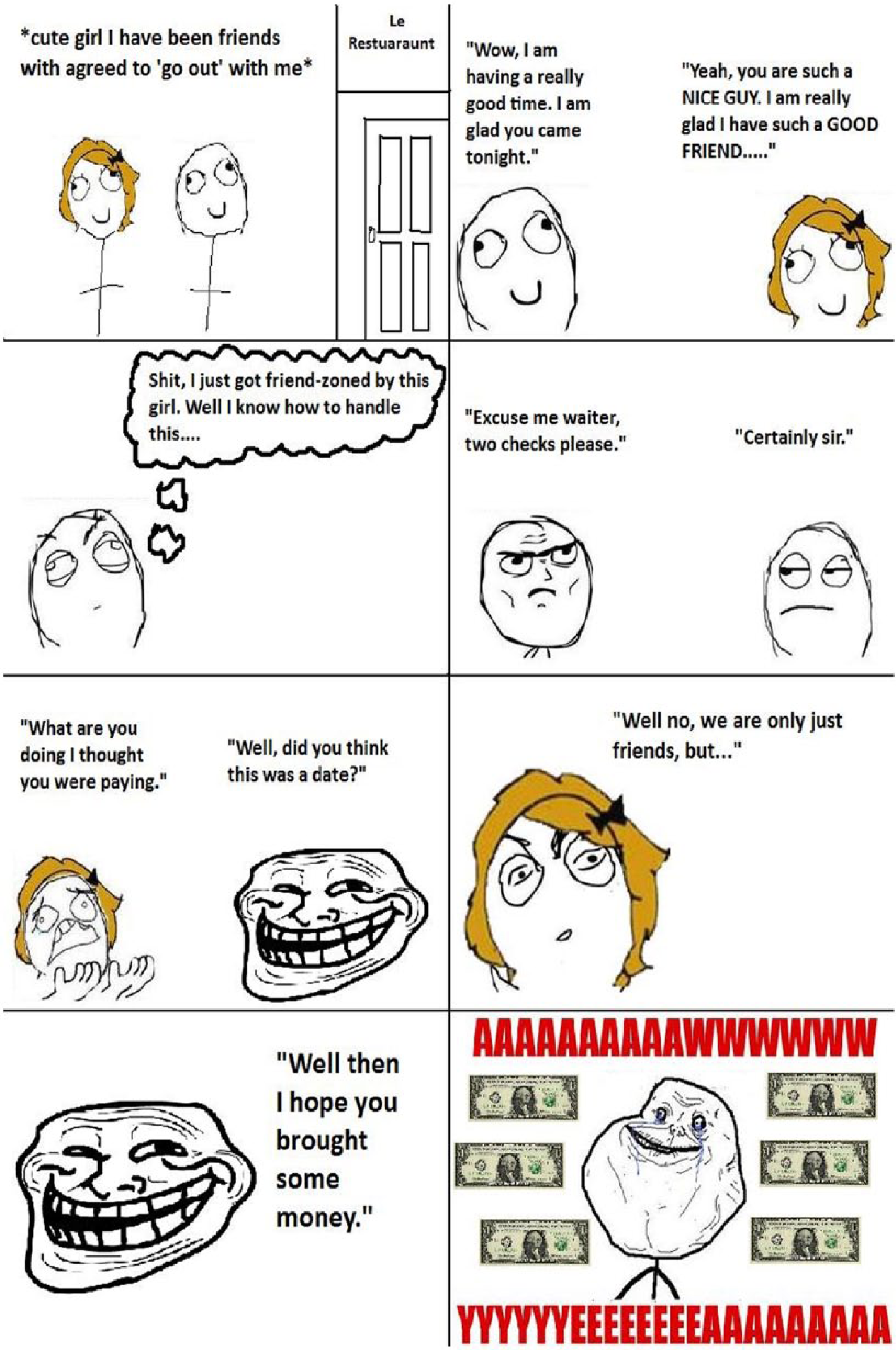
Published as ‘Forever Alone, but Rich’. Typical of ‘personal story’ comics that quickly overran the initial ‘relatable moment’ comics and now comprise almost all non-classic-format rages. The phrase ‘Aww yeahhh’ is ironically borrowed from a different rage face but placed next to ‘Forever Alone’, implying that the authors are aware their date decision was questionable. URL: http://ragecollection.com/508
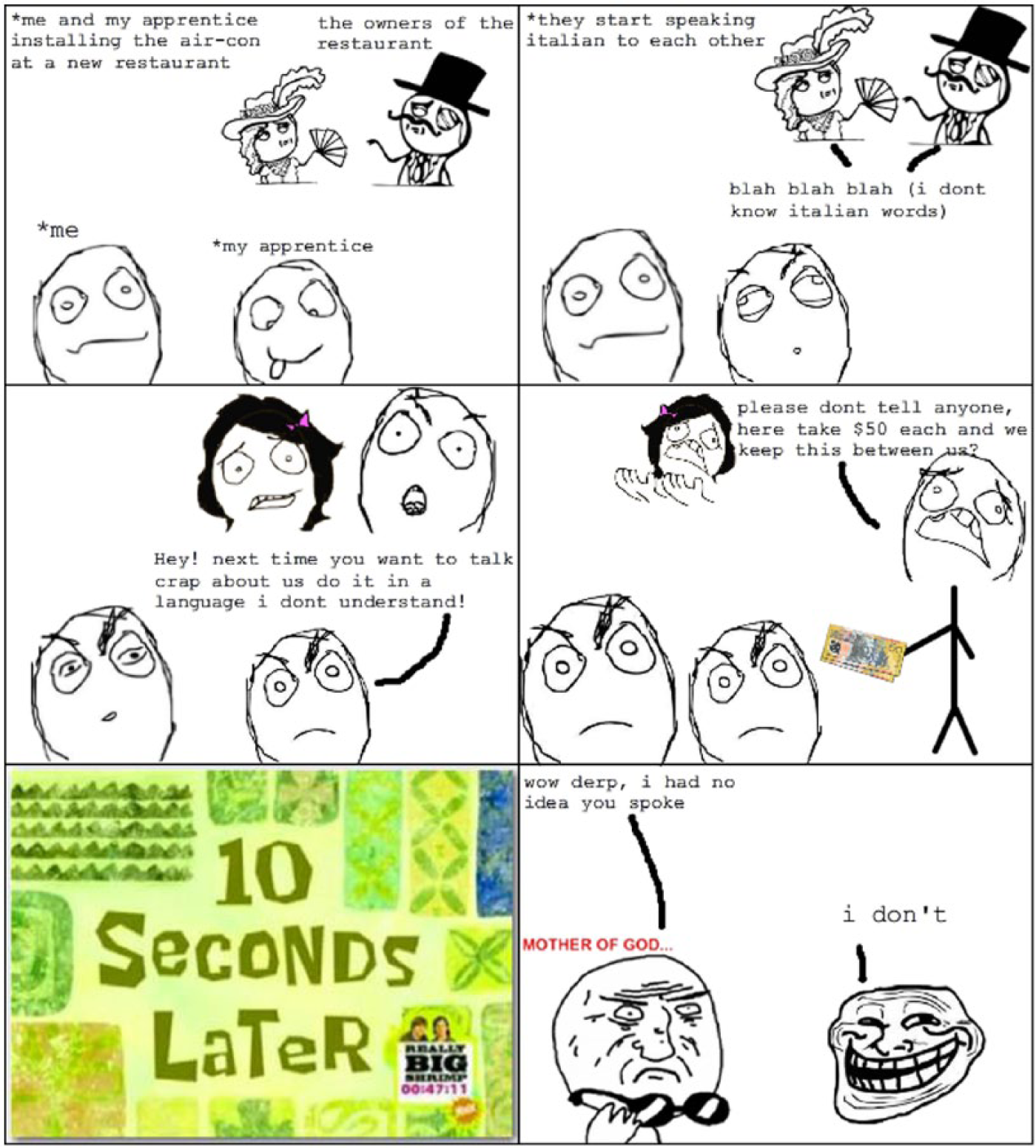
Another example of Troll Face, a trickster character who later got his own genre, ‘Troll Physics’. While every face here is pre-fabricated, the restaurant owner and ‘Mother of God’ figures are from a later, more slickly drawn generation than the rest, adding to the sloppy collage effect. URL: http://www.reddit.com/r/fffffffuuuuuuuuuuuu/comments/ulv1d/this_kid_is_a_genius/
The style is easily reproducible: stick figures, crudely drawn faces, cut-and-paste characters that anyone can slap a story onto, maybe with some original freehand sketches. The first rage comics (born on 4chan in 2008, near the height of that site’s influence), were four-panel strips ending in the same face screaming ‘FFFFUUUU-’. But once people got used to telling relatable stories with stick figures and copy-pasted faces, they expanded the form as far as possible. By 2011, 4chan and Reddit (specifically the subreddit /r/fffffffuuuuuuuuuuuu) were full of rage comics of all lengths and endings, and pure four-panel ‘FFFUUUU-’ strips were relegated to places like /r/classicrage. Several generators popped up, letting people create elaborate comics in their browsers.
The appeal is obvious: Everyone likes to tell personal stories (especially frustrations), comics are an engaging format for these stories, and the always-growing range of stock faces makes it increasingly unnecessary for the user to draw a single figure himself. The major faces form a pantheon of emotional archetypes. In 2011, an English instructor at a Japanese university had his students make rage comics as a teaching tool, citing their universal expressiveness, and created /r/EFLcomics to show his students’ work (Know Your Meme, 2013). These comics, written in beginner’s English and dramatically reinterpreting the stock drawings, doubled the corruption of communication. Reddit loved it, and other teachers noticed and joined in. Several students submitted their own work and pleasantly discussed them with the Reddit commenters (who helpfully corrected their grammar). The EFL comic below uses the traditional ‘[X] all the [Y]’ face (Know Your Meme, 2012: taken from the Internet Ugly webcomic Hyperbole and a Half, see Brosh, 2013) to indicate triumph (see Figure 4). The subreddit eventually limited submissions to certain approved users, thanks to English-fluent trolls submitting fakes. Such fakes are still authentically Internet Ugly, and, bonus, they’re trollpunk.
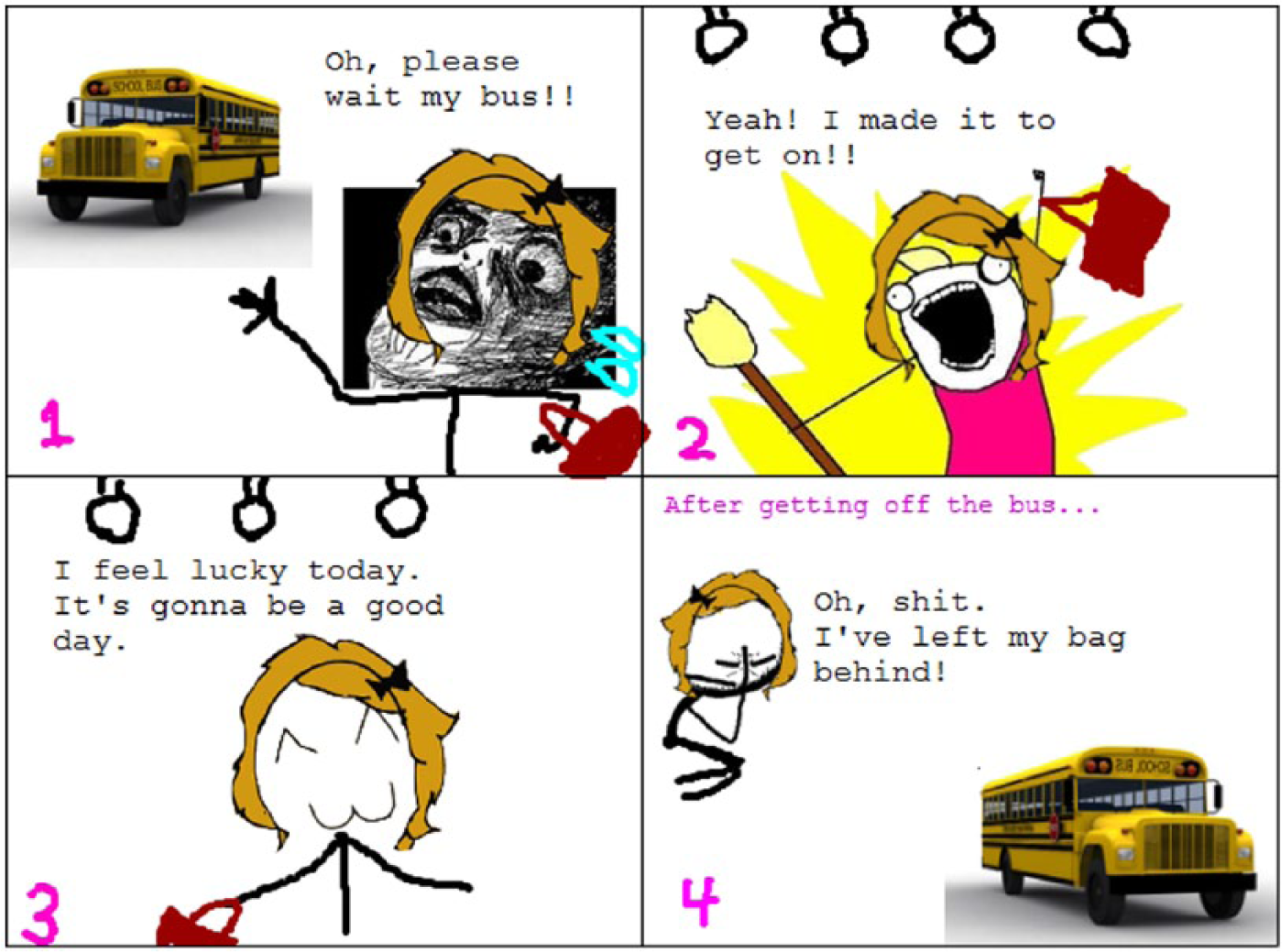
‘Careless Girl’. The broom in panel 2 and the tossed-on hair in panels 1 and 2 drive home the symbolic, barely representational nature of these comics, while the hand-drawn bus handholds in panels 2 and 3 show some unusual attention to scenery. URL: http://www.reddit.com/r/EFLcomics/comments/letv1/careless_girl/
Further layers of corruption depend on fluency in Internet Ugly. True connoisseurs will find themselves, when in the course of research, cackling at inanity like this gallery of alternate troll faces known as ‘Coaxed into a Snafu’ (see Figure 5; Caldwell and user El Ricardo, 2012–2014). This is the clearest example of how Internet Ugly contrasts with the New Aesthetic: while the latter explores how computers break down reality through pixellation and programming code, the former shows how humans corrupt ideas through imperfect reproduction. Internet Ugly could be seen as a reaction to the naturally occurring instances of the New Aesthetic. In an environment where information can easily be perfectly cut and pasted, users celebrate their human inability to make the same thing twice. These intentionally terrible rage faces express the separation of humans from machines as strongly as the analog beauty of an oil painting. (As I’ll explore later, the two approaches can be combined for a sweet-and-sour effect.)
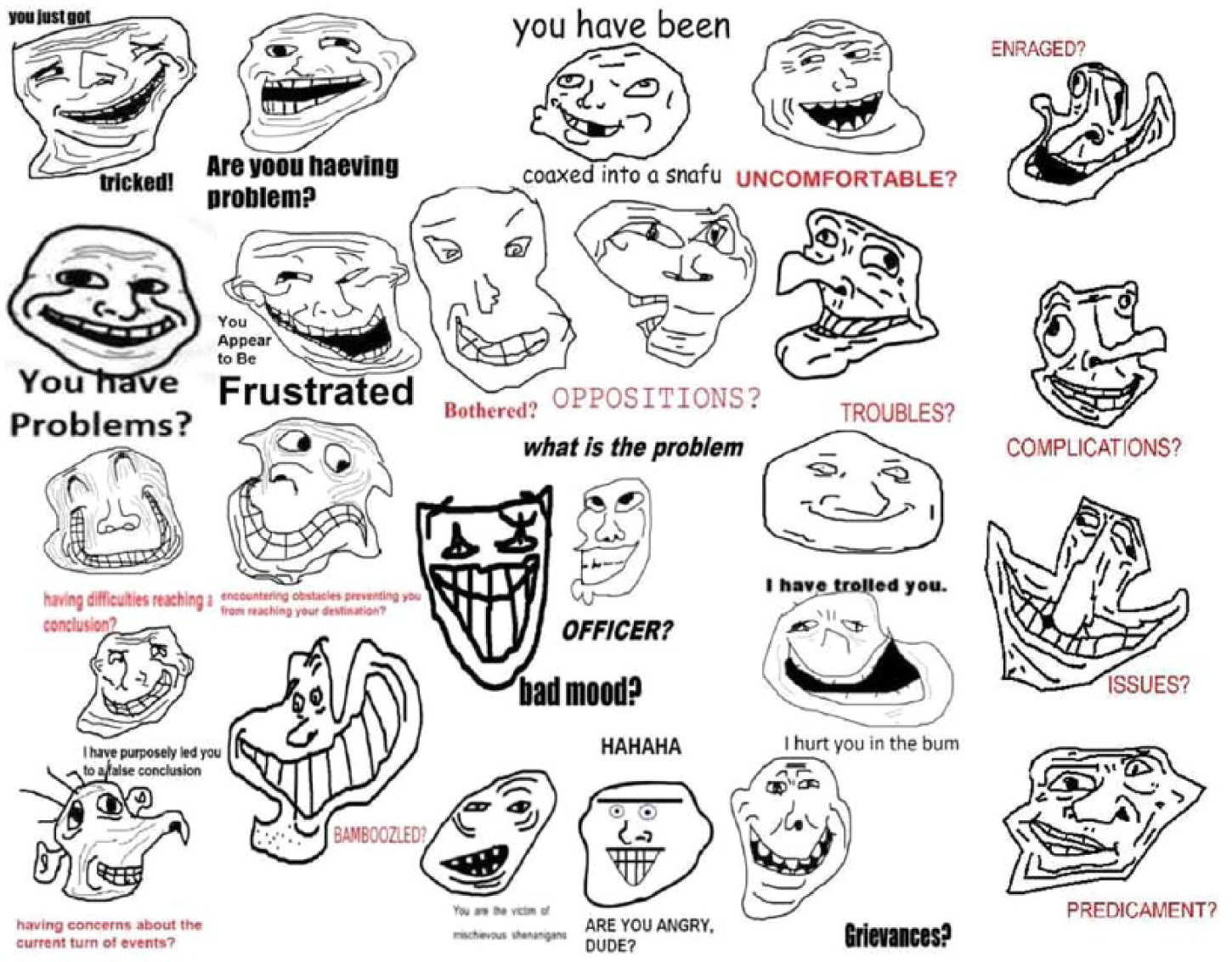
Many other popular rage faces have been similarly corrupted. URL: http://knowyourmeme.com/memes/coaxed-into-a-snafu
The stick-figure, scrawled-in-MS-Paint style isn’t limited to Rage Comics. It’s a major strain of Internet Ugly that dominates Stoner Comics, Inglip, Breaking Bad Comics, Dolan, Spoderman, Behind the GIFs, Troll Physics, Delicious Cake, Hyperbole and a Half, and many other memes that deserve further research. 4
2. Shitty_Watercolour
Internet Ugly is not just a way to let anyone participate in a meme. It’s even found in single-user internet phenomena. For example, in 2012, a Reddit user named Shitty_Watercolour (2013) started illustrating people’s comments and photos, starting with a comically bloated but recognizable Geordi La Forge (see Figure 6). The specific hilarity of this failed likeness became a constant goal, achieved with a specific process. Each painting took 20 minutes. Rather than letting each layer dry before applying the next, he took ‘one shot at doing it all in one go’ (Alfonso, 2012). He chose speed over quality. He was quickly rewarded with attention and praise on Reddit, and his work was widely covered on sites like BuzzFeed, the Daily Dot, the Huffington Post, and Wired (Pseudonym Shitty Watercolour, 2012). Shitty once battled with ShittierWatercolor, a user apparently drawing on an iPad (see Figure 7).
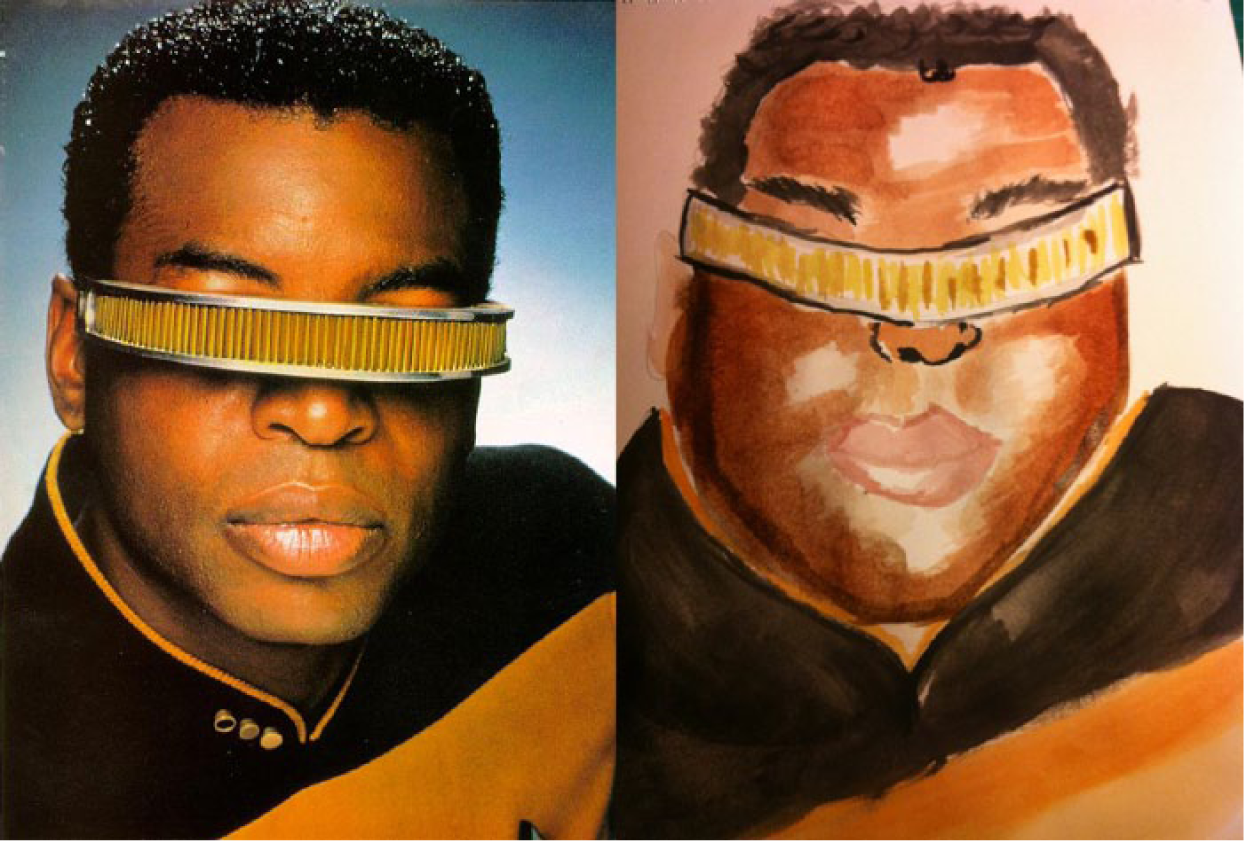
From Shitty’s first day of Reddit watercolors. He claims he has only progressed as a cartoonist and is still terrible at realism. URL: http://www.reddit.com/r/pics/comments/psdgo/happy_birthday_you_magnificent_bastard/c3rx3eo
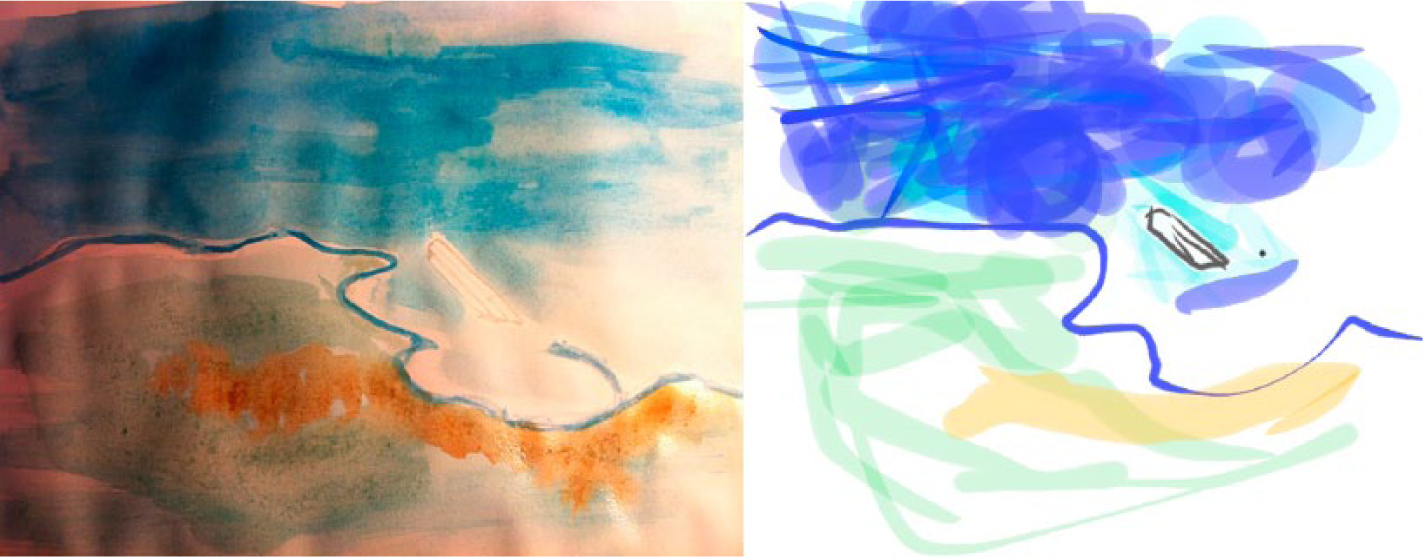
Shitty_Watercolour and ShittierWatercolor compete to fail to depict the half-sunken Costa Concordia. Out of context, the results seem abstract. Both accounts drew even more mangled versions, then switched to drawing penises and friendly insults. This is a typical exchange between Reddit novelty accounts. URL: http://www.reddit.com/r/pics/comments/pvgoo/my_friends_dad_was_flying_out_of_rome_and_snapped/c3sl20q
While Shitty’s version of Internet Ugly came from a non-computerized medium, Shittier’s sloppy use of a software tool – even one with beautifying features like fingertip input and varying opacity – was a more textbook example of Internet Ugly.
Two years later, Shitty’s work is no longer shitty, which he attributes partly to the constant practice on Reddit (User Shitty Watercolour, 2013). He’s become a very talented cartoonist, as shown in this early 2014 painting of pop star Lorde as a sloth (see Figure 8).

Shitty likes to draw people as sloths. He’s also a moderator on /r/sloths. URL: http://www.reddit.com/r/IAmA/comments/1sydlx/hey_im_lorde_ama/ce2giny
Thus Shitty_Watercolour, by embracing Internet Ugly, has practiced until he evolved out of it. As we’ll see, even when a meme is built by a group rather than an individual, it can cast off its Ugly component, often without losing its appeal to the original audience.
3. The Shitty Network
On Reddit, anyone can create a subreddit, and many of these are actively opposed to each other. There are parody subreddits (some goofy, some vitriolic) and parodies of parody subreddits and so on – a real Bakhtinian carnival. There are organized networks of parody subreddits, like The Shitty Network, which collects subreddits like /r/ShittyPoetry, /r/ShittyRageComics, /r/ShittyWallpapers, and /r/ShittyEarthPorn (Reddit, 2012–2014). From the last of those comes a post, ‘Beautiful Sunset Outside My Door This Morning’ (see Figure 9), a breathless Instagram-ready title that technically does not describe the anything-but-breathtaking photo above. The photo looks like (and maybe was) an accidental shot, made while fumbling with a phone..
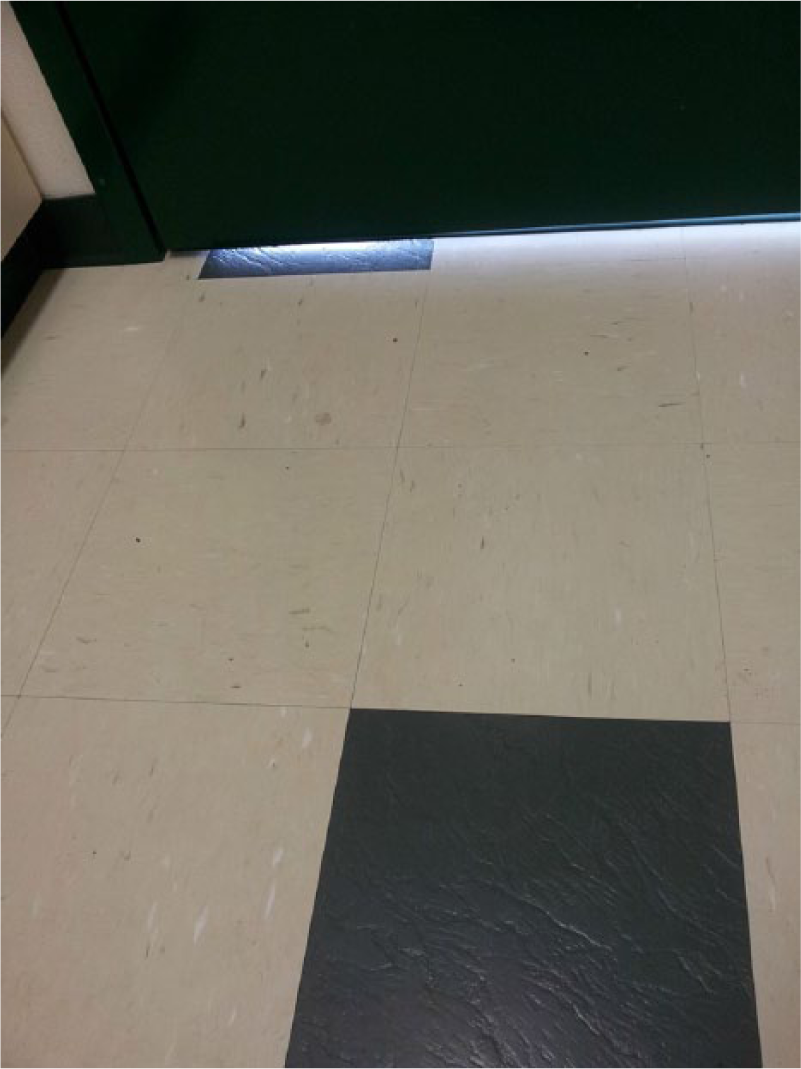
Commenters noted that a morning sunset is indeed quite a rarity. URL: http://www.reddit.com/r/ShittyEarthPorn/comments/spgbu/beautiful_sunset_outside_my_door_this_morning/
Shitty Network image posts are often captioned with ironic braggadocio or false false modesty. One /r/ShittyWallpapers entry came with the description: these are some of my custom movie walpapers please feel free to use them yes i did make them myself no i am not getting payed to do this i do it in my free time. i take requests as well they are all in 1024x768 as that is what most pc moniters are. please let me know if you want to use them. (User Fealiks, 2013)
It contained images like this Sean of the Dead wallpaper (see Figure 10). Here we see intentionally poor use of computer-only tools: an image has been stretched into the wrong aspect ratio, saved at the wrong canvas size leaving blank space, and captioned with an arbitrary title placed at random over Simon Pegg’s face in inappropriate font in a color that gets lost in the image. The creator has put painstaking attention into imitating a total lack of attention. The submission text typifies ‘nailed it’-style humor, which exploits the gap between intentions (or self-image) and reality.
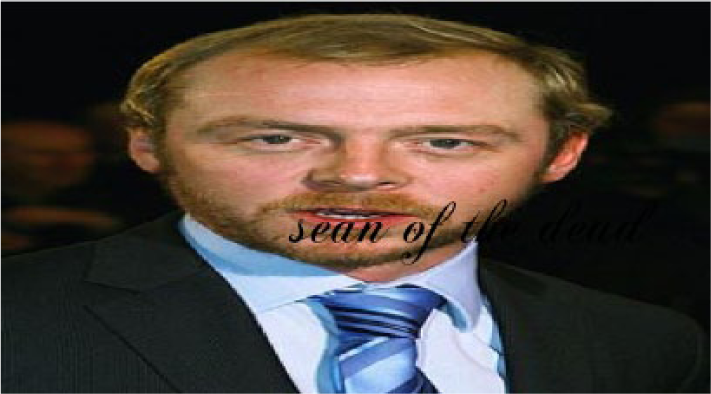
The original image includes faux-unintentional white space. URL: http://www.reddit.com/r/Shittywallpapers/comments/19vue0/these_are_some_of_my_custom_movie_walpapers/
4. Nailed It
‘Nailed It’, aka ‘Expectations vs. Reality,’ is its own meme format. Each ‘Nailed It’ image compares an intended result to an actual one (see Figure 11). Many ‘Nailed It’ images are framed as failed recreations of images from Pinterest (a site where an older, female-skewed userbase makes aspirational ‘inspiration boards’ of magazine-ready photos of beautiful products, crafts, and meals). The more beautiful parts of the internet are thus cast as less real than the parts where people are an incompetent embarrassing mess. The difference in photo quality between the two halves of any ‘Nailed It’ image drives this home: beauty is only captured with careful lighting and expensive cameras, but any idiot with a smartphone can capture reality. This message is explicitly reinforced by comparisons of images before and after dramatic Photoshop touchups. Such comparisons often go viral, and only rarely originate outside the internet.
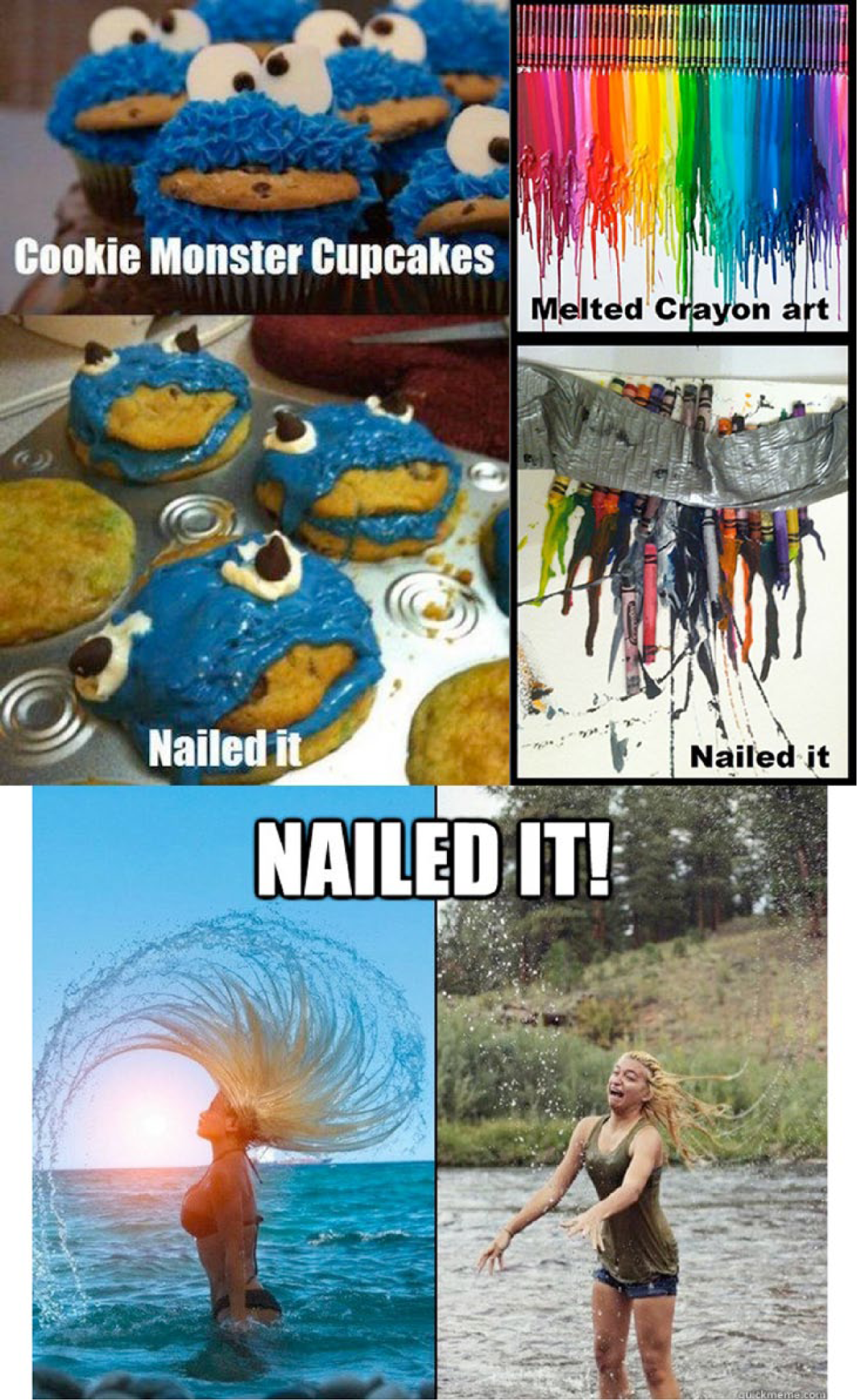
Three popular ‘Nailed It’ images sum up the human condition. The cupcakes seem like a good-faith effort, while the duct-taped crayons were clearly the work of a child or an intentional satirist. The third image shows not just a human failure but even nature’s failure to provide gleaming blue water and a glowing sky. Even natural beauty is artifice. URL: http://www.smosh.com/smosh-pit/photos/21-hilarious-nailed-its — http://knowyourmeme.com/memes/nailed-it — http://www.quickmeme.com/meme/3r0mut
‘Nailed It’ achieves a major goal of Internet Ugly: to normalize imperfection, counteracting the effect of magazines, TV shows, and corporate websites that use technical tools to build an unattainable simulacrum of the world. As consumer brands expand their social media marketing, especially the discounted marketing of social media profiles on sites like Facebook and Twitter, they try to co-opt memes while retaining a level of on-brand polish. This tends to work fine with casual users, but it often alienates the core creators of Internet Ugly content. Memes invented by corporate advertisers are rarely built in the mode of Internet Ugly. More on corporate meme use later.
5. Bazinga Comics
4chan’s ‘Big Bang Theory’ comics aren’t an especially popular meme. But they’re a perfect example of people using computer tools to create the human expressions of Internet Ugly.
The comics parody CBS sitcom The Big Bang Theory and main character Sheldon Cooper’s catchphrase, ‘Bazinga’. Like parody comic ‘Garfield Minus Garfield’ and Twitter account @Seinfeld2000, the Bazinga comics subvert formulaic popular comedy by replacing its central elements with absurdity (see Figures 12, 13). 5
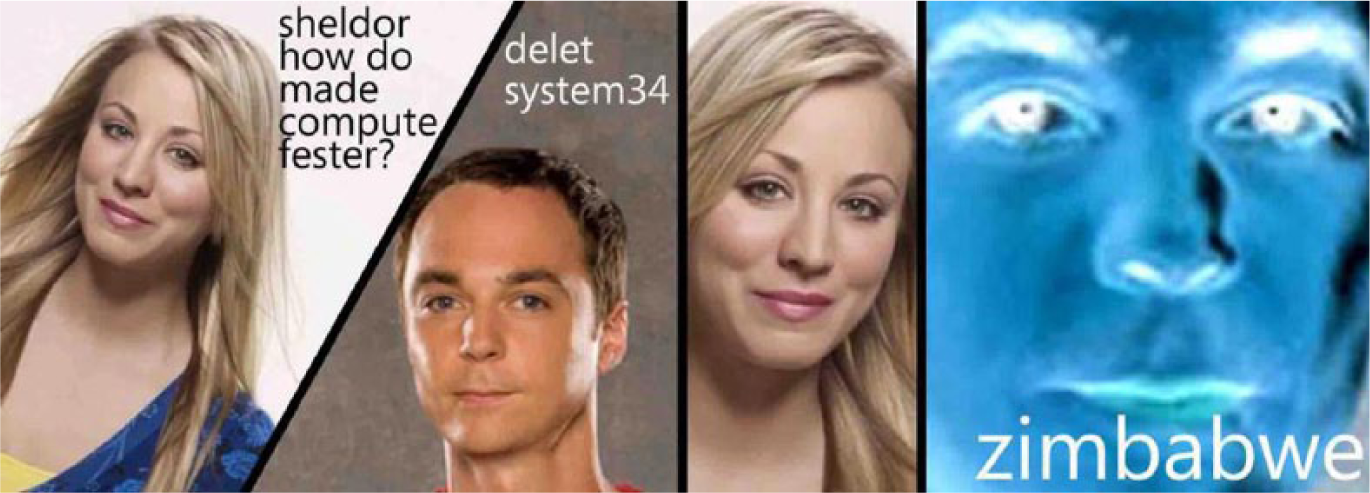
Deleting the system32 folder will render Windows unusable. Sheldon’s advice is identical to a typical low-effort, but occasionally high-reward trolling response given to anyone seeking tech support on 4chan. URL: http://imgur.com/a/qVX7b
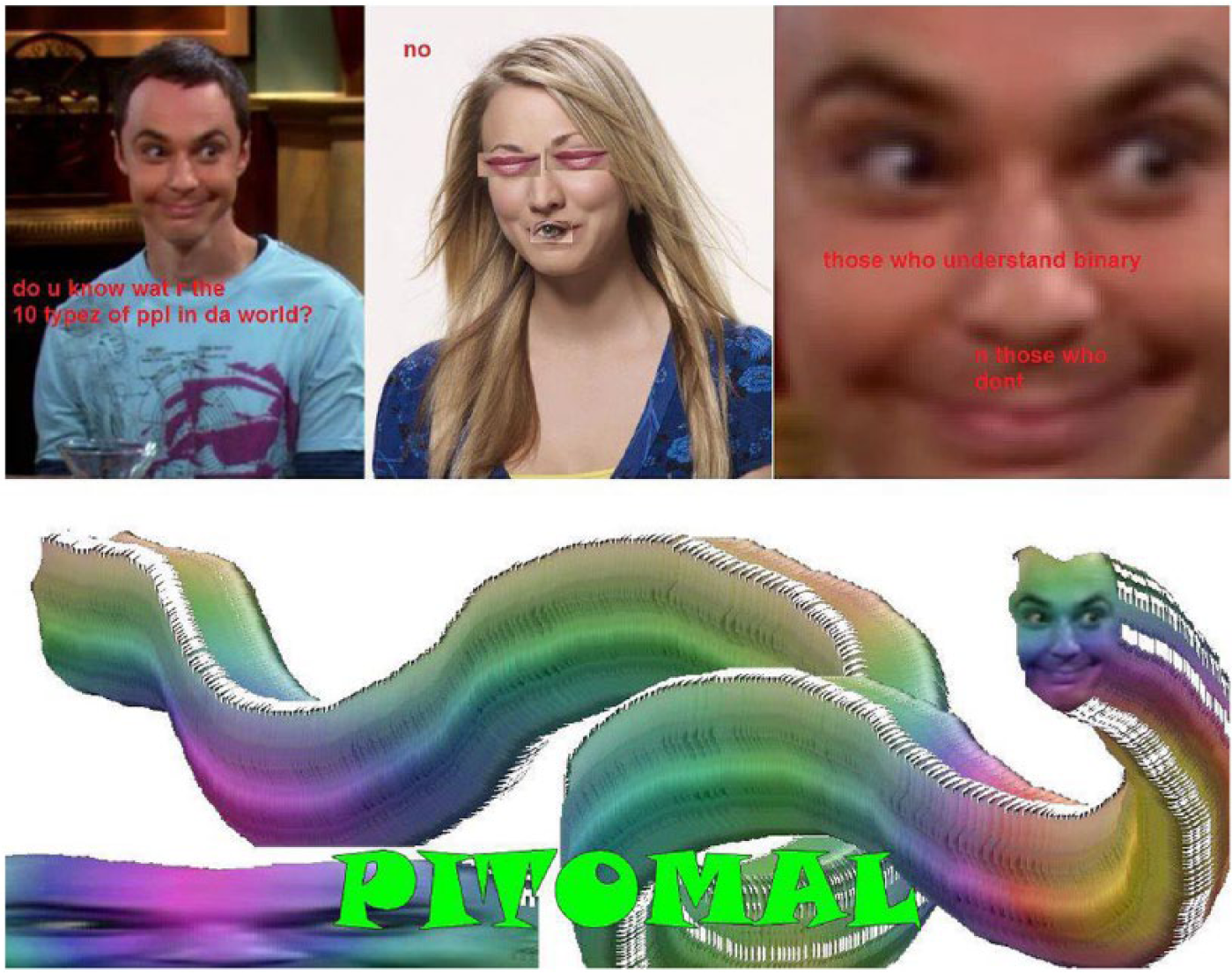
A snaking chain of copy-pasted heads is common for online trickster characters; another characteristic is wavy, impossibly looping arms. Penny’s eyes and mouth are swapped for no apparent reason beyond added chaos. URL: http://imgur.com/a/qVX7b
The copy-paste jobs and sloppy resizings here are a ‘fuck you’ to traditional standards of photomanipulation. Like datamoshing or glitch art, they draw attention to inaccuracies in reproduction or transmission, but instead of emphasizing machine imperfections, they emphasize human messiness. These techniques show up in the New Aesthetic, but here they aren’t used to comment on machine vision. They’re used for expressing a very human attitude about a very human creation. 6
These aesthetic choices effectively critique the bland, safe formulas of their subject. They rip Sheldon and his fellow characters out of their original context and refuse to provide a sensible new one. The Sheldon of these comics exists in his own universe, where he is a cackling Loki figure with powers of body manipulation and a new catchphrase for every episode.
‘Bazinga’ corruptions not shown here include ‘bronchitis’, ‘zambingo’, ‘hydrangea’, ‘bedwangles’, ‘pop-a-squat’, ‘banana’, ‘bruschetta’, ‘bartsimpson’, ‘genocide’, ‘bilbo baggins’, ‘gimbaza’, ‘monorail’, ‘souvlaki’, ‘crabapple’, ‘salamy’, ‘balogna’, ‘jumanji’, ‘bukkake’ (this one actually related to the unsavory comic it ends), ‘blopckgzor’, ‘bazzango’, and ‘cowabazunga’. Each of these is formatted in a different text style. The written dialect mimics the visual aesthetic: everything is unsettlingly mutable and contextless. While there are definable rules for making one of these comics, they can’t be traced back to The Big Bang Theory, or to nearly any source outside the earlier comics. These comics speak their own idiolect.
6. Snapchat
Snapchat is harder to analyze memetically, since it’s even more ephemeral than 4chan – each image is only visible to a handful of people for 1 to 10 seconds. The images that users screencap and publish are a non-representative sample. Much more so are the ones that make it through the churn of blog aggregation. But a rough sample of photo lists and slideshows still reveals a celebration of ugly (see Figure 14).
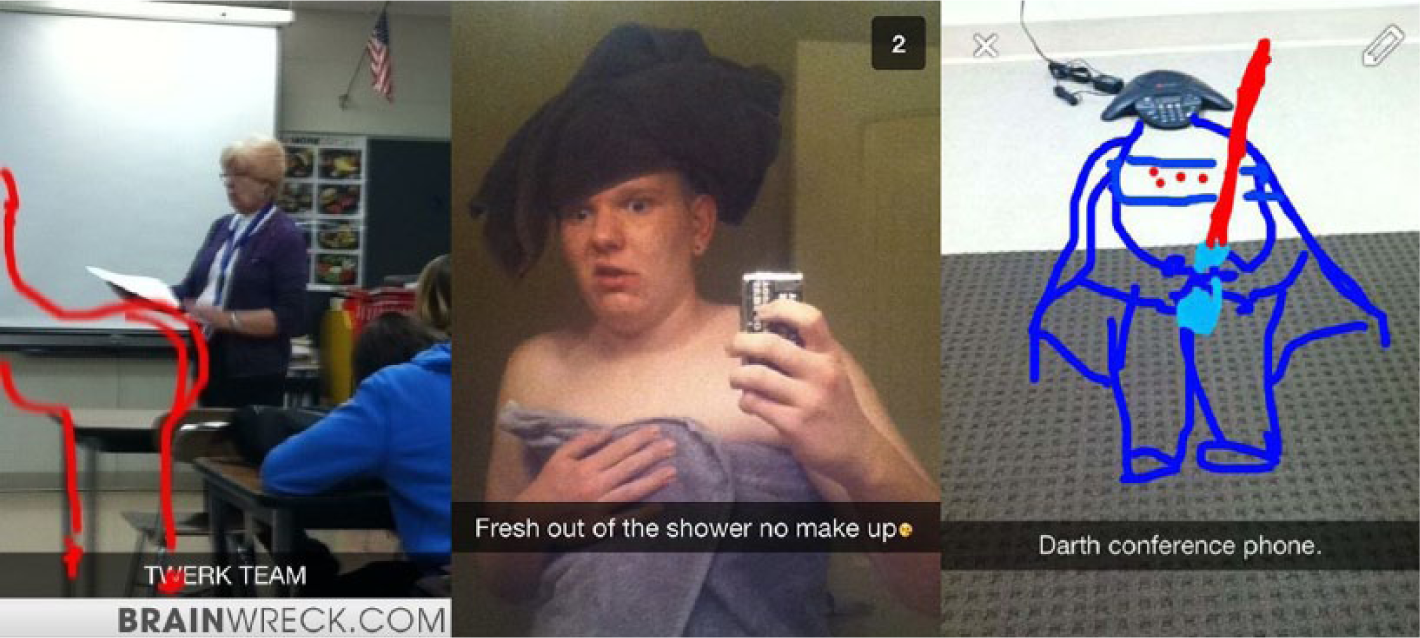
It’s typical to find the same memetic images with multiple sites’ watermarks, often overlapping on the same copy. ‘Fresh out of the shower’ is a parody of more earnest selfies taken by many young women. Each image was posted in a collection despite, or even because of, its aesthetic amateurishness. URL: http://www.brainwreck.com/lists/556/17-Pics-That-Prove-Snapchat-Is-Really-Dumb-But-Also-The-Best-App-Ever/3 — http://sneaky-snaps.com/fresh-out-of-the-shower-no-make-up-funny-snapchats/ — http://izismile.com/2013/11/18/daily_picdump_99_pics.html
Snapchat photos are firmly in the ‘reality’ half of the ‘Nailed It’ dichotomy. They’re popular because their ugliness is relatable and replicable. They’re Pinterest inspiration boards for the rest of us.
Despite its anti-memetic self-destruction feature, Snapchat is possibly the simplest, most effective meme-creator yet, and everything that makes it ephemeral encourages a lack of care, slickness, or beauty without actually preventing images from leaking to the rest of the internet. The creators advertise the app with magazine-ready pictures of beautiful young people partying at the beach, but there are already better apps for such photos. Pretty vacation pictures go on Instagram and Facebook where you can show your mom and scroll through them years later; a throwaway gross-face contest goes on Snapchat. We can only see the cream of strangers’ Snapchat exchanges, but the ones we don’t see are micromemes that disappear minutes after their inception.
Causes of Internet Ugly
The democratizing force of the internet is by now an accepted truism. But it’s important to note that previously, when someone had an idea they couldn’t elegantly execute, they were usually left without an audience. The near-zero production and distribution cost of the internet removes the barrier. Someone with a very clever idea for a comic strip can successfully spread that comic strip without a single editor deeming the art worthy. Rage Comics would never find first publication in a newspaper or on TV. So the most basic cause of Internet Ugly is that unpolished executions of good ideas can now be seen by millions.
The second cause begins with another banal truth: in addition to being a broadcast tool, the internet is home to many forms of one-to-one and small-group communications. But with few exceptions, anything created in those small groups is easily shared with different groups or the internet at large. (For example, thousands of private chats and Facebook threads are posted publicly to Reddit and Tumblr every day.) The obvious effect is that the former chaff of communication can go viral. The less obvious effect is that content previously classifiable as an unpublishable draft (a half-drawn portrait, an unshot script, doodles, 30 seconds of a song, a game with glitches) is now viable for publication. Take, for example, the fandom that sprang up in January 2014 around three color drawings from an imagined cartoon called ‘Miss Officer and Mr. Truffles’ (Ami, 2011–2014). In under a week, fans made hundreds of pieces of fan art, fanfiction, fanimation, imagined plotlines, scenes, backstory, supporting characters, theme music, audition videos, and cosplay for a cartoon that at that point didn’t actually exist. A good idea doesn’t need to be in its final draft to take off; it can still be a rough sketch. Like Rebecca Black’s ‘Friday,’ it can be something only intended for a small, forgiving audience (see Larsen, 2013) – or, in the case of Star Wars Kid (Bennett, 2010) intended for no audience. It can still be ugly. But the draft can still be treated as a draft – and in further iterations, it may shed its ugliness.
How Ugly Changes, Disappears, and Returns
As any meme grows, it may spread to more unfamiliar amateurs who uglify it. But it will also eventually reach participants with talent, time, and a love of beauty. Illustrator Sam Spratt, for example, painted elegant ‘photorealistic’ renditions of the most popular rage faces (see Figure 15). In his piece, titled ‘The Art of Internet Memes’, he retained the cartoonish features, adding baggy eyes, rough teeth, spittle and wrinkles. The effect is deliciously ugly.
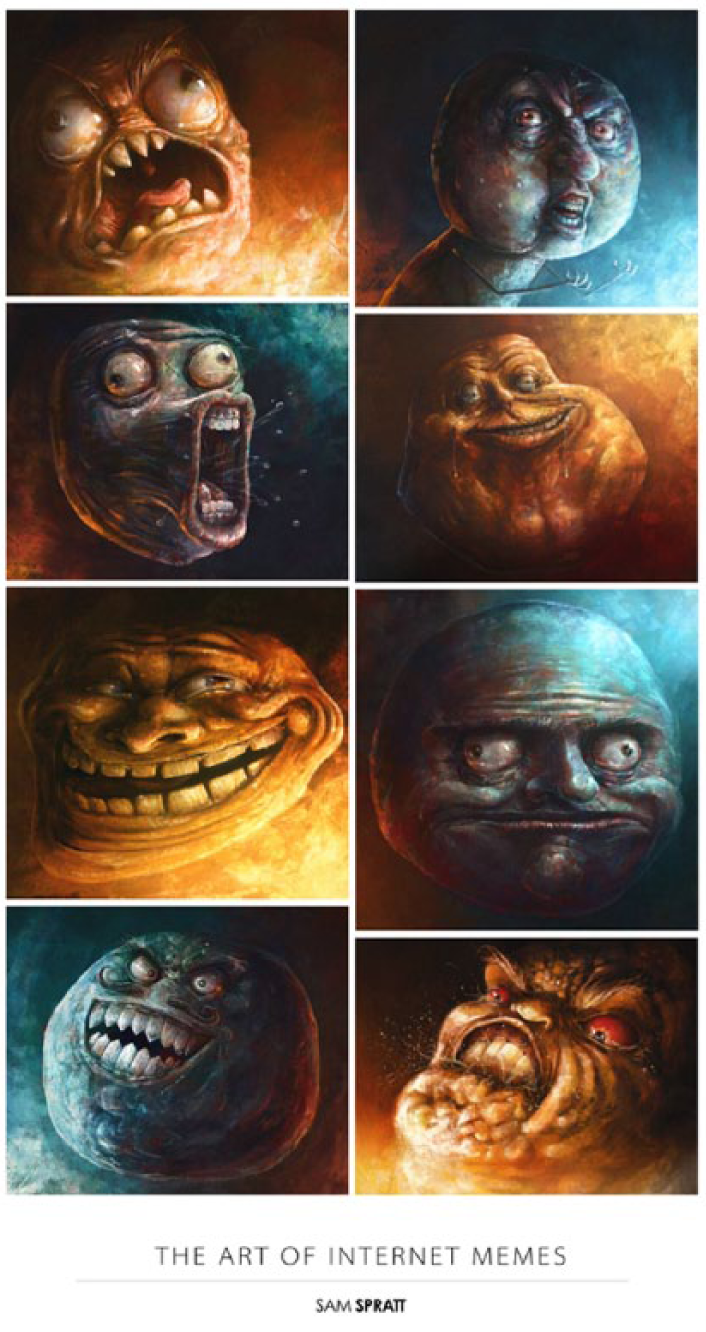
Sam Spratt’s rage faces add detail without adding information. He is canonizing the original faces as equal to the pop culture icons of film, TV and music that he draws in similar styles. URL: http://samspratt.tumblr.com/post/7763194845/the-art-of-internet-memes
Almost every popular meme has at one point been illustrated with care and talent. Others that rely on original drawings, like SFW Porn (Porn SFW 2008–2011) – where users paint over the naked bodies of porn actors so that a man is, say, simply holding a bottle of soda at waist height for two thirsty women – were first drawn by amateurs, then later iterated by talented artists. The amount of sheer effort and talent that went into such iterations was seen as a joke in itself. A novelty Reddit account called HandDrawnRage (2011–2013) earned wide praise on /r/classicrage for drawing charming original cartoons that followed the original rage comic format but looked slick, often even colored or shaded.
Memes can also go through a larger shift that affects even the most amateurish iterations. The baseline aesthetic for a meme can improve as technologies are crafted for a specific expression. For example, the standardized image macros known as Advice Animals or Advice Memes began in 2006 with Advice Dog, a choppily cropped puppy head thrown onto a color-wheel background (Kim and Caldwell, 2011). Different iterations of Advice Dog used different fonts, effects, and text placements. The next several advice animals similarly displayed non-standardized text, sloppy crop jobs, and rough color-wheel backgrounds. But over the next three years, new advice animals became more sophisticated. The popular meme Courage Wolf was redesigned with a higher-quality, better-cropped copy of the original wolf face and a flashier backdrop (see Figure 16).
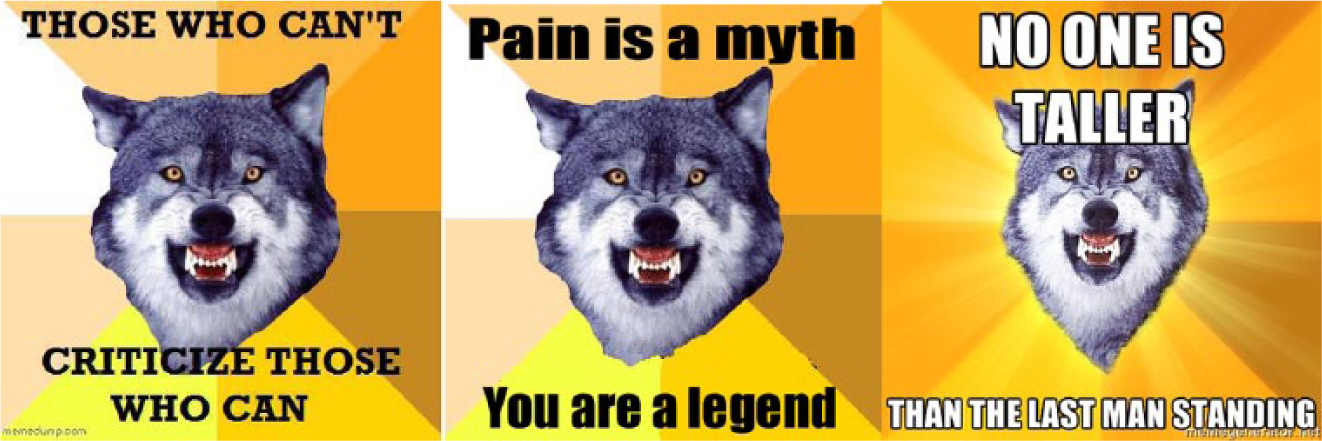
Three versions of Courage Wolf: an early version; a version with a previous caption sloppily erased; and the current standard. URL: http://memedump.com/v/courage+wolf/courage-wolf-24.jpg.html — http://goteaminternet.com/show/61616 — http://memegenerator.net/Courage-Wolf

In 2009, Meme Generator (2009–2014) launched, making Advice Animal generation extremely simple for non-Photoshop users, and locking in the aesthetic by setting default text for new memes: centered all-caps white Impact type with a feathered black border, placed comfortably below the top and bottom edges of the image. (Other than the feathering, this was already the dominant formatting for advice animals, likely inherited from older macros like LOLcats.) Competitors like Quickmeme (2011–2014) adopted the same standards, and for the past three years advice memes have been as visually clean and uniform as Facebook pages. (Meanwhile, the content has devolved into personal stories and cliché – the downside of a meme going mainstream.)
The same standardization (a zen-like beautification that deletes imperfections) happens to major internet idioms. Sometimes the change is cultural, as when MySpace’s colorful but chaotic customized user pages were replaced by the whitewashed nested boxes of Facebook. Usually the changes are the simple result of technological improvements: text-heavy flat-color blog designs were replaced by gorgeous gradient-filled Tumblr themes. Typical YouTube uploads went from 240p to 720p or even 1080p – sharper than HDTV, and with ever-improving camerawork and postproduction. The GIF image format, responsible for grainy spinning ‘email us’ envelopes and animated under-construction workers, is now used for high-resolution TV and film clips. Reddit’s /r/highqualitygifs collects massive beautiful animated GIFs, and Vimeo uses the format for video thumbnails. Photographer Jamie Beck and designer Kevin Burg co-created a genre of beautiful, cinematic GIFs called ‘cinemagraphs’ (see Flock, 2011).
But new technologies, especially new platforms, can also revert the norms of beauty to ones from years ago. Most obviously, the mobile internet has yanked us back into the world of tiny screens and awkward inputs. Games like Draw Something revived the MS Paint aesthetic. Snapchat revived sloppy photography just when Instagram had nearly filtered the whole human experience into identically beautiful sunkissed Polaroids. For millions of photo sharers, Snapchat made ugly cool again.
Machinima (animation made within video game environments) similarly rebooted computer animation by letting amateurs play with tools previously only available to professionals. Much machinima is made in officially-released ‘sandbox’ versions of mainstream games. One of the most popular machinima videos of all time is a 10-second clip titled ‘nope.avi’ (note the ‘casual’ lack of filename cleanup) with over 8 million views on YouTube (User Jimbomcb, 2010). The video is set in the beautifully designed world of the multiplayer first-person shooter Team Fortress 2, a game with a slick Tex Avery feel. The engineer character runs onscreen, but then his hardhat floats up and his neck stretches to meet it. The effect is done without polish; it feels like something has gone wrong; it’s a bit ugly. This is the essence of the TF2 machinima genre, where amateur humans replace the smooth computer-controlled animation of the game with their own awkward puppetry. It resembles the awkward art of early professional computer animators. (Such animations will inevitably become slicker, and the cycle may repeat with some not-yet-invented platform.)
As machinima demonstrates, as tools previously limited to professionals become available to amateurs, those tools are used amateurishly. Torrenting made Photoshop ‘affordable’ for anyone with an hour to spend on properly installing a pirated copy without alerting Adobe. It’s highly doubtful that every amateur participating in Fark.com’s no-finesse-required Photoshop contests paid $700 for a legal copy (Fark, 2001–2014). Unlike the more aesthetically focused contests on sites like Worth1000, where winners are often chosen for their elegant executions, Fark’s contests are won by the best ideas. In fact, the sloppy execution of such ideas can be part of the charm. In other circles, Photoshop is intentionally misused, like the gradient fills and custom brushes in ‘Bazinga’ or the use of Content Aware Fill to create body-horror patterns (User BlastedContentAware, 2010). These misuses are then incorporated into more mainstream work and accepted as intended tool uses, inspiring further tools.
Video editing has similarly trickled down to amateurs, not just through Final Cut/Premiere piracy but also thanks to relatively powerful consumer-priced tools like iMovie (free with a Mac), 7 and the built-in editing tools on online recording systems like YouTube.
Finally, old kinds of Internet Ugly can return through nostalgic affectation. Designer Catherine Frazier (2012–2014) created the blog Animated Text in 2013 to turn funny or bizarre phrases into animated word art. In animated GIFs, floating, waving, or rotating text declares, ‘help! im in love with a fictional princess’ or ‘i before e if you want the d.’
Frazier was inspired by ‘old ’90s websites on internetarchaeology.org’, according to her interview with the Daily Dot: Here were websites with people who did not consider themselves designers but felt empowered enough to make a flaming ‘My boy is hot’ text GIF or ‘The O’Neals’ text animation and put it on their family reunion homepage … That’s why I decided to make animated text requests for my followers, many of whom don’t feel empowered [by] creativity because they’re not designers. I also like the idea of collaboration on the Internet. My followers’ role in contributing text requests is just as important as my role the creator. (Fenn, 2013)
As in the offline world, this nostalgia cycle will likely continue as each generation rediscovers the tools of its youth and replicates their effects with new tools. Internet creators use nostalgia, constricted platforms, and trickled-down professional tools to invent unintended uses for tools, redevelop forgotten methods, and create internet culture outside the ‘best practices’ of professionals working with cutting-edge tools. The results are passed around and further uglified or beautified in a perpetual cycle.
When Ugly Sells Out
Part of the aesthetic cycle of internet content is its co-option by corporate and political interests, whose goals are often at odds with those of internet creators. The dialectical purposes of Internet Ugly, as we’ve seen, include glorifying the amateur, validating the unglamorous, and mocking the self-serious, formulaic, and mainstream. Its practitioners will try to punish any entity that runs counter to these or similar purposes, yet tries to hijack their aesthetic.
In 2010, Hot Topic put Rage Guy on a t-shirt. They apparently figured that since no one could identify the drawing’s rightsholder, they had a popular character without any licensing costs. Of course they miscalculated: hundreds of 4chan and Reddit users felt ownership over Rage Guy and resented its corporate exploitation. They took revenge. They turned Rage Guy into Race Guy, making new racist rage comics and posting on Hot Topic’s Facebook page threatening boycotts (see Kim B and user ArtyHaire, 2010). Two days later, Hot Topic (2010a) announced in a Facebook post that it would drop the shirt due to the ‘newest iteration’. The next day, however, Hot Topic (2010b) announced that Race Guy was a hoax and they would continue selling the shirt. Four years later, while Rage Guy is no longer available, Hot Topic (2014) sells several other rage comic characters on shirts, including Trollface, Forever Alone, and Y U NO. The faces are slightly smoothed from their original versions, but are otherwise just as they appeared online. After their initial setback, Hot Topic has successfully co-opted Internet Ugly.
This is the fate of many Internet Ugly memes: To get slicked up and diluted for use in commercials, products, and political agendas. For instance, Republican Congressional representatives Tom Massie and Steve Stockman both used Doge images for political ends in late 2013: Stockman criticized Senator John Cornyn for supporting Obamacare and disliking Rand Paul, while Massie (mistakenly applying the Advice Meme caption style rather than Doge’s Comic Sans) protested a bipartisan spending bill (see Horowitz, 2013). MNSBC reporter Adam Serwer tweeted, ‘ok so doge just died’ (Serwer, 2013), other Twitter users critiqued the correct spelling (see Pool, 2013), and the Huffington Post wrote that the representatives had ‘ruined’ Doge by ‘trying to be hip’.
The criticism of Massie and Stockman was not just over outsiders ‘exploiting’ the meme, but over their failure to understand the aesthetic they were trying to exploit. This criticism is leveled even more often within the bounds of the Internet Ugly production machine; 4chan’s userbase has long hated eBaumsWorld and the Cheezburger Network, accusing them of the same exploitation and theft as Hot Topic’s. Tumblr and 4chan had a brief war that fizzled out when Tumblr gleefully embraced 4chan. Many redditors loathe 9GAG, Cheezburger, Gawker, and often BuzzFeed (though other redditors link to those sites). Gawker writers rage against Reddit while their colleagues mine it for stories. Encyclopedia Dramatica, a meme cataloguer predating the now-dominant Know Your Meme, defends 4chan against all other contenders – its leaders have even organized harassment of Know Your Meme employees, their friends, and their families.
In any of these rivalries, the hostilities are usually lopsided. Gawker makes no claim to superiority in meme creation, and Cheezburger often credits Reddit. The accusers usually paint themselves as the true practitioners of internet culture, and the others as the pretender and exploiter. The accuser claims their culture is illegible to the outsider, whose attempt to catalog or define the subject will always grossly oversimplify it (whether through the mistakes of a hapless academic or the intentional revisionism of a cultural appropriator), then popularize the oversimplified version, to the detriment of the subject. This is why 4chan frequently reacts by spreading misinformation; the users know that outsiders seek authenticity and, if confused, may retreat. Of course, to the true outsider audience, it doesn’t matter whether a meme came from 9GAG or 4chan, and on average, this audience will choose the more palatable form of the meme. This carelessness and ‘tastelessness’ enrages the insider who feels that the outsider has ‘stolen’ and ‘ruined’ their culture.
These intramural fights show that practitioners view Internet Ugly use as an earned privilege. Newcomers can’t simply appropriate the meme, but must do the work of engaging with it on its own level. In this way, the aesthetic is a dialect: As David Foster Wallace (2001) wrote, ‘A dialect of English is learned and used either because it’s your native vernacular or because it’s the dialect of a Group by which you wish (with some degree of plausibility) to be accepted.’ And some would-be interlopers, by trying to exploit the dialect for their own agenda before they understand it, offend the community they wanted to break into.
Advertisers and politicians adopting Internet Ugly for their own agenda will inevitably come across as posers. They present their own cause in earnest terms, already a violation of most subsections of Internet Ugly, which value irony and self-deprecation. They will also prioritize their message over accurate imitation of the aesthetic, so they will inevitably mangle the aesthetic. 8 They are nakedly seeking acceptance from a social group they haven’t actually joined, one they will abandon when it’s no longer popular and desirable. They research Internet Ugly through its most accessible outlets like Know Your Meme, BuzzFeed, and Gawker. So insular sites like 4chan will always hate sites that catalogue their culture, because to them, these sites are aiding the enemy. By codifying the rules of a still-evolving meme, these sites usurp the originating site’s authority over the meme, handing it to ‘posers’ who skipped over the primary source and treat the secondary account as gospel. Of course, eventually these new users overwhelm the old, the meme is redefined, sometimes repackaged for an even more mainstream audience, and the original meme-makers move onto something new and restart the cycle.
Conclusion
The websites, apps, and communication platforms that make up the internet – in technologist David Weinberger’s (2002) words, ‘small pieces loosely joined’ – all exist somewhat independently but constantly share content and users and are thus never truly independent. They develop regionalisms, but those regionalisms spread more quickly than in the physical world, as most internet users have more than one online ‘home’. (For example, 4chan and Reddit share thousands of users; DeviantArt users tend to also have Tumblrs; nearly every internet creator has a Twitter account.) The works of Internet Ugly could be characterized as the internet’s ‘folk art’: they reflect the cultures of the sites that invent and reshape them, they have purposes outside serious aesthetics, and they’re often made by amateurs.
While it has no self-appointed school of practitioners, the Internet Ugly aesthetic is a major through-line of meme culture. It can appear and disappear from a developing meme, and these shifts can (as in the case of Advice Animals) carbon-date a meme’s spread into the mainstream. It’s a visual dialect with social and cultural implications, as it telegraphs the practitioner’s casualness, capacity for irony, and internet savvy. And it is a tool of the rebel that, like all such tools, will be co-opted by the objects of rebellion. The success of those co-options will depend on their sophistication and timeliness, and it will not preclude further rebellion.
The tools of Internet Ugly will continue to shift as new technologies become the available default. As software publishers upgrade or replace tools like iMovie and Photoshop, the standards for engineered beauty will continue to escalate, but creators will use the same new tools to question and subvert those standards. As old forums for creativity wither, new ones will crop up. New platforms will continue to reintroduce old constraints and revive old aesthetics, and new online communities will create their own voluntary constraints and affected visual carelessness.
Internet Ugly will look very different in 10 years, but it will remain distinct from most non-memetic or corporately produced content. It’s the aesthetic of the mundane conversation and idle doodlings that have always existed, but which the internet makes shareable by default. While it will evolve unpredictably, it won’t disappear as long as public ideas continue to outpace perfect execution.
Footnotes
Notes
Email: