






Abstract
This study presents a five-factor, 21-item measure of cultural intelligence (CQ), at the organizational level of analysis. This instrument builds on the conceptual model espoused by Ang and Inkpen (2008). The scale included items elicited through a literature review, the use of the Delphi technique with a panel of experts, and tested on 234 full-time employees of 10 North American nonprofit organizations. The five factors are: (a) leadership behavior, (b) adaptability, (c) training and development, (d) organizational intentionality, and (e) organizational inclusion. The findings of this study contribute to a small, but growing body of literature on organizational CQ not based on aggregate individual-level data or referent-shift data. The findings provide insights for both researchers and practitioners, and they have implications for leadership appointments and leadership development in organizations seeking to develop organizational CQ.
Keywords
In the past decade, an emerging body of literature has affirmed that leaders whom researchers have described as high in cultural intelligence (CQ) have demonstrated comparatively higher levels of effectiveness in the global arena (e.g. Diao and Park, 2011; Gelfand et al., 2008; Ng et al., 2012; Seiler, 2007; Thomas, 2006; Thomas et al., 2008). Ang et al. (2007) defined CQ as “an individual’s capability to function and manage effectively in culturally diverse settings” (p. 336). The construct of CQ emerged from the research of Earley and Ang (2003) and has been operationalized at an individual level, encompassing cognitive, metacognitive, motivational, and behavioral dimensions. Ang et al. (2007) developed and validated a measure for assessing these dimensions at the individual level. Several researchers have subsequently employed this instrument in a number of empirical studies across several disciplines (e.g. Elenkov and Manev, 2009; Flaherty, 2008; Imai and Gelfand, 2010; Ng et al., 2009; Rose et al., 2010; Shannon and Begley, 2008; Tarique and Takeuchi, 2008). However, as noted by Gelfand et al (2008), CQ “is inherently a multilevel phenomenon, requiring research attention at the individual, team, organizational, and national levels of analysis” (p. 382). Triandis (2006) also noted that organizations may be described as being culturally intelligent. Ang and Inkpen (2008), in their conceptual research on the interplay between CQ and offshore outsourcing success, called for researchers to explore the organizational level of CQ. Additionally, Chen et al. (2012) called for researchers to conduct studies on CQ at the organizational level of analysis. One important, foundational requirement to conducting research at this level of analysis includes the development of a validated scale whereby researchers can accurately measure the organizational level of CQ. Van Driel and Gabrenya (2013) suggested that “the creation of organization-level cross-cultural competence measures is a viable direction for future research” (p. 20). Therefore, the purpose of this present study included developing a scale to operationalize CQ at the organizational level of analysis by building on the conceptual model espoused by Ang and Inkpen (2008).
Theoretical basis
This study finds its theoretical basis in literature from the fields of CQ and organizational intelligence.
Cultural intelligence
While research into cross-cultural competencies does not represent a new phenomenon, and research in the areas of cross-cultural communication, cross-cultural leadership, and cultural competency spans decades, the development of the specific construct of CQ has appeared relatively recently. Earley and Ang formally introduced the specific conceptualization of such a competence as a form of intelligence in 2003, and the concept quickly gained momentum. The Academy of Management held a symposium within a year of that publication, and in 2006, Group and Organization Management dedicated an entire issue of the journal to exploring the topic of CQ and attracting a number of articles that helped CQ to receive wider acceptance. Between 2003 and 2007, the amount of CQ literature steadily increased, primarily focused on conceptualizing the construct. Topics explored in the literature in this period include the relationship between CQ and the broader intelligence frameworks (Sternberg, 1986), the credibility of such a construct (Hampden-Turner and Trompenaars, 2006), the relationship of CQ with personality correlates (Ang et al., 2006), the relevance of CQ for global teams (Janssens and Brett, 2006), and the implications for cross-cultural living and work assignments (Templer et al., 2006). While most of the early explorations of CQ included conceptually based efforts, the emphasis moved to empirical research following the development of a validated scale by Ang et al. (2007). This development ushered in a large number of empirical studies across multiple disciplines (e.g. Elenkov and Manev, 2009; Imai and Gelfand, 2010; Shannon and Begley, 2008).
In the context of globalization, CQ has provided a needed conceptual framework and an objective means by which individuals can receive assessment on their individual competence to function effectively in culturally diverse settings (Ang et al., 2011; Diao and Park, 2011; Thomas and Inkson, 2003). Both practitioners and researchers have increasingly embraced the construct of CQ. For example, in their respective reviews of the CQ literature, Gelfand et al. (2008) and Ng et al. (2012) noted that the construct provides three conceptual contributions to an otherwise fragmented field of research: a comprehensive framework, theoretical precision, and connection to the intelligence literature. The latter represents a substantial contribution that provides continuity of scientific approach across fields allowing for interdisciplinary research. Gelfand et al. (2008) specifically noted that this both broadens the intelligence literature and “opens up a wide range of possible phenomena to be studied that may be relevant to cultural adaptation” (p. 337).
The construct of CQ encompasses four dimensions: metacognitive, cognitive, motivational, and behavioral (Earley and Ang, 2003). This appears consistent with Sternberg’s (1986) conceptualization of intelligence as a complex and multi-factored phenomenon. Ang and Van Dyne (2008) described metacognitive CQ as referring to the conscious cultural awareness of an individual during a cross-cultural interaction, involving mental processes of evaluating, assessing, and “revising mental models of cultural norms” (p. 5). Cognitive CQ focuses on knowledge of cultural conventions, norms and practices, providing the basis for the metacognitive component. Motivational CQ describes the capability to give attention and focus to learning about and engaging in cross-cultural interactions. Ang and Van Dyne (2008) described behavioral CQ as “the capability to exhibit appropriate verbal and nonverbal actions when interacting with people from different cultures” (p. 7). Ang et al. (2007) established these four dimensions as qualitatively different aspects of the overall capacity to function effectively in cross-cultural contexts.
Ng et al. (2012) described the rigorous process of developing the 20-item Cultural Intelligence Scale (CQS), which included an extensive literature review that led to the development of an item pool reviewed and refined by subject matter experts and then to a series of five studies for validation. Researchers have used the individual-level, self-reporting CQS in numerous empirical studies since its development. Ang and Van Dyne (2009) included more than a dozen studies highlighting the utility of the construct and, specifically, the CQS in a variety of contexts. The CQ literature, while focused primarily at the individual level of analysis, provides the conceptual underpinnings of the construct upon which to build the organizational level of analysis.
CQ stands in direct contrast with the phenomenon of ethnocentrism. Park et al. (1993) defined ethnocentrism as “the attitude or view that one’s own group is the standard by which all other groups must be measured” (p. 275). Neuliep and McCroskey (1997) developed and validated a generalized ethnocentrism scale in order to measure this phenomenon and noted the negative impact of ethnocentrism on a person’s ability to navigate all contexts in which cultural diversity may exist. Neuliep (2002) further refined the ethnocentrism scale, and this present study includes this version of that scale.
Intelligence at the organizational level
Scholars have developed the concept of intelligence in the literature to a much broader concept than the traditional understanding, as an individual attribute akin to academic competence, and researchers and theorists have consistently applied this broader definition of intelligence at the organizational level (e.g. Akgun et al., 2007; Glynn, 1996; Kalkan, 2011). Although specific definitions vary in the literature, scholars have widely accepted the contextual perspective of intelligence when describing organizational-level intelligence (Glynn, 1996; Kalkan, 2011). Those who maintain this perspective have described intelligence as multifaceted, and they have contended that each of multiple intelligences occurs within a specific social context. That is, intelligences are moderated by context and are adaptable and flexible, rather than stereotyped and rigid. Additionally, researchers have considered organizations a significant context for intelligence to manifest (Glynn, 1996). Williams and Sternberg (1988) represent some of the first researchers to have conceptualized and measured intelligence at a collective level. The existence of multiple dimensions of intelligence, at the organizational level, has become widely accepted, similar to that of intelligence at the individual level (Glynn, 1996; Kalkan, 2011). Kalkan (2011) noted that intelligence “has been conceptualized as a critical capability of organizations” (p. 45) and that the individual intelligence literature has supported this conceptualization.
Researchers have largely confined their studies in the area of CQ to the individual level of analysis, despite recent calls for analysis across multiple levels (Gelfand et al., 2008; Ng et al., 2012). To date, five articles (Ang and Inkpen, 2008; Chen et al., 2012; Moon, 2010; van Driel and Gabrenya, 2013; Yitmen, 2013) and one dissertation (van Driel, 2008) represent the published efforts in through which researchers have sought to develop models for understanding CQ at the organizational level. Van Driel (2008) explored the concept of organizational CQ and sought to develop a measure using a referent shift model from the individual level of assessment of CQ. That is, the group-level construct was based on individual-level responses. Researchers established some support for a two-factor model, despite inherent methodological challenges that limited the utility of the scale. Van Driel’s research was extended by van Driel and Gabrenya (2013) with four studies. In each, they used individual-level data to assess organizational-level phenomenon. Chen et al. (2012) also employed a referent-shift model, specifically to the motivational CQ dimension. Their results demonstrated the validity of their organizational-level motivational CQ measure (see Ng et al., 2012), and their results also highlighted the interdependence of individual-level and organizational-level CQ.
Ang and Inkpen (2008) explored the concept of organizational-level CQ in the context of offshore outsourcing. They drew from the individual-level CQ research, as well as resource-based management theory (see Barney, 1991; Peng, 2001; Wernerfelt, 1984). From this basis, Ang and Inkpen conceptualized organizational-level CQ as consisting of three factors: managerial CQ, competitive CQ, and structural CQ. Managerial CQ has direct ties with individual-level CQ, as they recognized that organizational leaders or top management teams “embody the vision and worldview of the firm” (Ang and Inkpen, 2008, p. 343). Competitive CQ represents a conceptualization of CQ into the processes and routines of organizations—the resources unique to given organizations and that thereby provide a competitive edge. Ang and Inkpen (2008) understood structural CQ as the methods by which a given firm develops and organizes reporting structures to “harness and combine resources that reside in various parts of the organization” (p. 347). These three components in Ang and Inkpen’s model provide a helpful framework for conceptualizing organizational-level CQ and encourages empirical research in this area (Gelfand et al., 2008; Ng et al., 2012).
Moon’s (2010) exploration of organizational-level CQ built on Ang and Inkpen’s (2008) model, extending it through drawing on dynamic capability theory, which Teece et al. (1997) described as an extension of resource-based management theory. Moon proposed three factors in his framework of organizational CQ: process, position, and path capability. In his conceptualization, he referred to process CQ as patterns or routines of current practice, position CQ as specific organizational assets (such as capabilities or knowledge), and path CQ as the history and subsequent dependencies of the organization. Moon defined organizational CQ as “a set of organizational capabilities” (2010, p. 482), which incorporates these three factors.
For the purpose of the current research, Ang and Inkpen’s (2008) model offered the most developed and specific framework within which to develop the scale. It has grounding in the resource-based view of the organization, “considered to be one of the most widely accepted theories of strategic management” (Newbert, 2008, p. 747). Moon (2010) convincingly suggested that a modified or extended form of the resource-based view known as the dynamic capabilities model may offer the best fit with organizational cultural intelligence. Scholars have developed well, in the literature, the dynamic capabilities extension of the resource-based view (e.g. Barney et al., 2001; Newbert, 2005). Therefore, this present study included Ang and Inkpen’s (2008) theoretical framework, with a dynamic capabilities understanding of the resource-based view of the firm.
Statement of the problem
While theorists and researchers have well-established CQ as an individual-level construct in the literature, the field requires empirical research in order to establish the construct at the organizational level of analysis. Ang and Inkpen (2008) offered a conceptual model of organizational CQ; however, none have yet developed a scale to measure CQ at the organizational level of analysis, using this framework. This current research includes the development of an organizational CQ scale that will provide organizations with an instrument to assess their levels of potential effectiveness in the global environment. The development and validation of this scale will facilitate future empirical research in CQ at the organizational level of analysis, and it will assist global organizations seeking to increase their effectiveness.
MacKenzie et al. (2011) noted that specifically defining the concept in question serves as an essential (and often overlooked) step in the scale development process that helps to ensure validity (see also DeVellis, 2012; Nunnally and Bernstein, 1994). Consistent with the conceptual model of Ang and Inkpen (2008) and Glynn’s (1996) conception of organizational intelligence, for the purposes of this present study, the definition of organizational CQ includes an organization’s capability to function effectively in culturally diverse environments. Additionally and importantly, this definition includes the incorporation of both internal and external environments into organizational CQ. Specifically, organizational CQ will facilitate effective management of cultural diversity within the organization as well as cross-cultural environments in which the organization engages. The definitions of the three dimensions of organizational CQ, outlined by Ang and Inkpen (2008), include (a) managerial CQ, the individual-level CQ embodied by top organizational leaders; (b) competitive CQ, the levels to which processes and routines of the organization prove congruent with facilitating internal and external diversity effectively; (c) structural CQ, the levels of effectiveness to which organizational development and reporting structure and mechanisms prove congruent with facilitating internal and external diversity.
Emerging items
The literature presented in this chapter provides an initial list of items that may be useful to consider in describing the phenomenon of organizational CQ. Table 1 contains the summaries of these descriptions.
Initial items describing organizational CQ emerging from the literature.
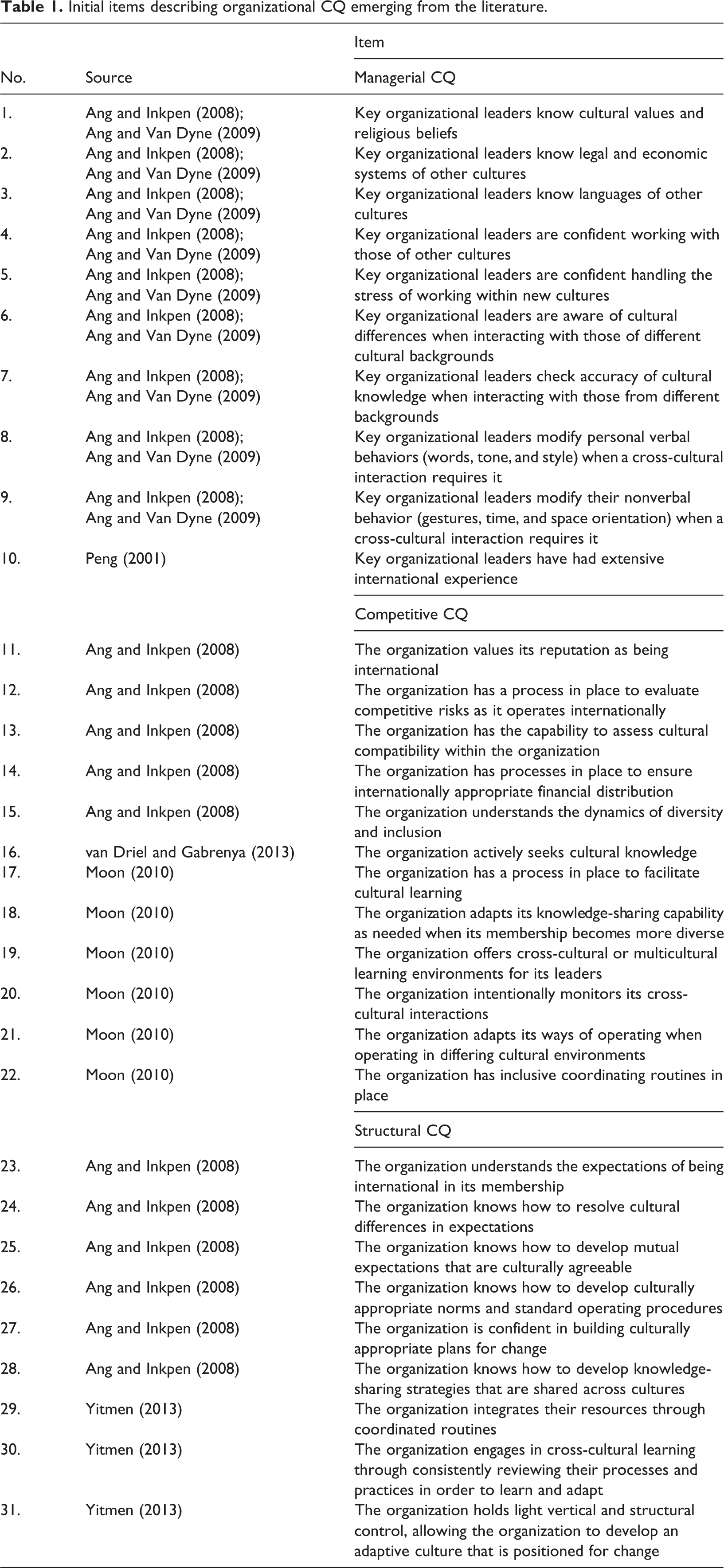
As shown in this chapter, the construct of CQ is well established and has been the subject of a great deal of empirical research at the individual level of analysis. Ang and Inkpen (2008), van Driel (2008), van Driel and Gabrenya (2013), Moon (2010), Chen et al. (2012), and Yitmen (2013) all contributed to a conceptual framework of an organizational-level understanding of CQ.
Research design
The established scale development methodology of DeVellis (2012) provided a framework to ensure the concern for validity and reliability during the organizational CQ scale development. Given that at the time of this study, the literature in the area of organizational CQ exists in its infancy, only 31 items emerged through this source. This was deemed insufficient to withstand rigorous review by experts and factor analysis. DeVellis suggested that scale developers should include as many as three or four times the number of items than may present in the final scale and that the developers ought to include those items in the early stages of scale development. Therefore, this study required a multiphased approach, with the first phase given to item generation, drawn from experts, using the Delphi technique. The process then included using two judges to review all items for clarity, face validity, and conciseness. After a small pilot study to check for understandability and technical reliability, the second phase included the use of an online survey distributed to a development sample, via the online survey host Survey Monkey.
Item generation
In addition to the items listed in Table 1, the study called for the eliciting of additional items through the use of a panel of experts, using the Delphi technique, due to the infancy of the concept and the lack of literature at the organizational analysis level. The Delphi technique consists of an iterative multistage process, through which a panel of experts may reach consensus on items for inclusion. It has been used successfully in many disciplines.
According to Sackman (1975), the Delphi method typically involves a series of interactions with a group of individuals who provide structured input and feedback. The Delphi technique allows for anonymity of input and allows for sequential input. The experts for the Delphi panel included both practitioners and scholars who presented as conversant and engaged in issues pertaining to CQ in organizations. Study efforts included ensuring a cross section of gender and ethnicity on the panel, as well as diversity of nonprofit organizations represented, in order to facilitate a broad range of perspectives. Nine experts agreed to serve on the panel, all known personally or professionally by the researchers. Eight of these experts participated in all three rounds of the Delphi process, and one expert did not submit input from the final round.
During the first round, panel participants responded to questions in two parts. Firstly, the study required panel participants to consider what might characterize organizations that they could describe as culturally intelligent and then to write brief phrases of 10 or more such characteristics. Secondly, upon completion of the first part, participants viewed items that generated from the literature. After reading the list, the study required panelists to provide any additional items that might have come to mind.
In the second round, the study required the distribution of feedback from the first round to the panel, as a list of items generated from the first round. Panel participants then rated each of the items according to a 7-point scale in order to indicate whether each characteristic/description ranked as unnecessary, maybe desirable, desirable, maybe necessary, necessary, maybe essential, or essential in a culturally intelligent organization. The definitions associated with these descriptions were provided for panel participants. The results of the second round of the Delphi panel were analyzed for median score and the 25th and 75th percentiles identified.
In the third round, panel participants received the results of the second round, with indication of the median and 25th and 75th percentile. The study then required them to rate the items in the same manner as in the second round and asked them to provide commentary if their ratings fell outside of the 25th and 75th percentiles. Comments were collated out of interest to review the reason they scored the item differently from other Delphi panel members. Participants were not provided with their original rankings.
Final item review
Items whose median scores fell below the 50th percentile were not retained in an effort to ensure that only the most important items remained included and to reduce the overall number of items. The next requirement called for the submission of the remaining 60 items from the Delphi study to two expert judges to provide feedback on clarity, conciseness, and face validity. This was accomplished by providing the judges with the working definition of the construct and asking them to assess each proposed item as to its perceived relevance to the construct. The two expert judges were also asked to comment on clarity, ambiguity, and perceived redundancy or omissions. Upon receiving this feedback from the expert panel, the next step included ascertaining needed changes to the items to support scale construction. Appendix 1 includes the resulting 40-item pool.
The scale included construction using a Likert scaling format. The scale included declarative statements and were given 5 response options to each of the 40 organizational CQ items. The scale also included (embedded) Neuliep’s (2002) 22-item generalized ethnocentrism scale (Appendix 2). Additionally, the survey included nine control variables items: (a) gender, (b) level of education, (c) age, (d) years in the organization, (e) ethnicity, (f) type of organization, (g) size of the organization, (h) age of the organization, and (i) role in the organization.
Sample
The final appropriate minimum size for the development sample was determined by the number of items that emerged from the item generation process outlined elsewhere in this study. Hair et al. (1998) recommend an ideal ratio of 10 respondents per 1 item, although they further noted that they deem a sample of five respondents per 1 item as sufficient, which aligns consistently with the positions of DeVellis (2012) and Tinsley and Tinsley (1987). For a 5:1 ratio, this study required a minimum of 200 respondents. The final sample included 230 valid responses, adequately meeting this criterion.
Sample characteristics
The sample for the development of the organizational CQS consisted of respondents from nonprofit organizations registered in North America. They further reported themselves as international in their missions. These organizations were identified through two sources. The first source consisted of a list of Canadian organizations maintained by CharityVillage, Canada’s largest online resource center for Canadian nonprofit organizations. This list contained approximately 315 organizations, both religious and nonreligious, large and small, some with specific focus on just one other country, and some with global engagement. E-mails went out to 265 of these organizations. Approximately 60 of the organizations listed on the Web site no longer operated, had incomplete contact information, or had inoperable Web sites. From the initial e-mail requests for participation, eight organizations provided positive responses, with a potential participant pool of 240 respondents. This response rate did not present as sufficient for the desired sample size. This resulted in Missio-Nexus, a network of Christian organizations providing another list of potential organizations. From this second list, an additional 40 organizations were contacted and invited to participate. Two organizations responded positively, with a potential participant pool of approximately 1500 respondents. Participation in the research was completely voluntary and an incentive offered included the possibility of winning one of two US$50 Starbucks gift cards.
Data collection and analysis
A total of 10 organizations provided consent. Upon receipt of the consent forms, the associated organizational contact person received an e-mail that contained instructions and a link to the survey for distribution to their full-time employees. Each organization received an assigned code that provided for the possibility of inter-rater assessment and allowed tracking of organizational participation. The survey was hosted online by Survey Monkey. The identities of participants remained anonymous, although they received the request to provide their organizational codes. Respondents contributed to the electronic survey, over a 3-week period, from December 15, 2013 to January 3, 2014. A total number of 234 respondents submitted surveys from a total of 10 organizations. A total of 230 surveys proved complete and usable.
The next step included analyzing for correlations and suitability for factor analysis. A one-way analysis of variance (ANOVA) followed next to assess the influence of each of the demographic factors (gender, age, nationality, organization, organizational role, years in the organization, age of the organization, and highest level of education) on the principal components. The analysis included: (a) factor analysis using the principal component method, (b) scale reliability using Cronbach’s α, and (c) discriminant validity through correlation analysis with Neuliep’s (2002) 22-item generalized ethnocentrism scale.
Description of the sample
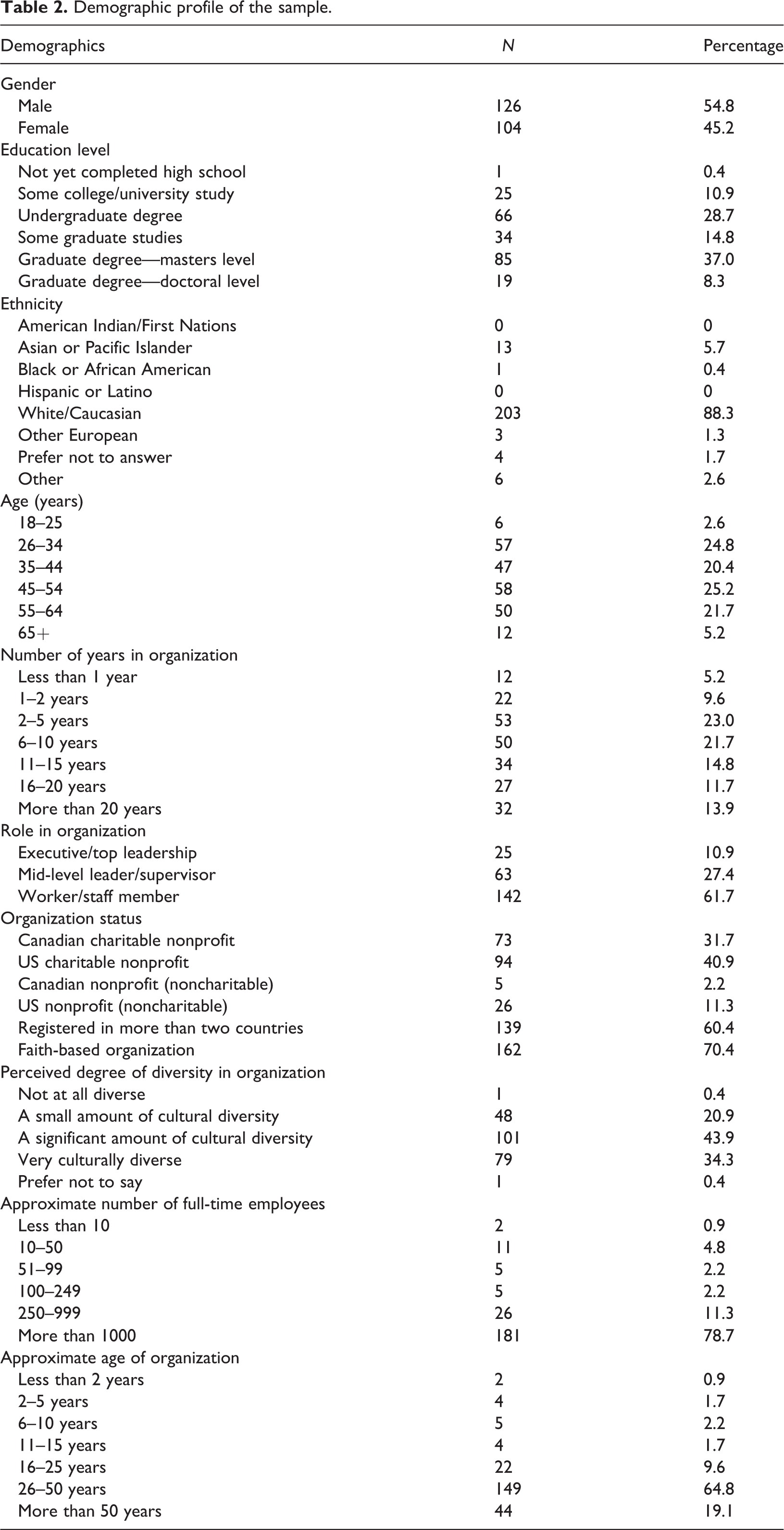
The study included a total of 10 demographic items, 6 of which pertained to the individual respondents and 4 to the organizations that employed them. A total of 234 respondents completed surveys. These represented full-time employees who chose to participate from 10 internationally focused, nonprofit organizations, registered in Canada or in the United States. Four of the surveys contained incomplete data and were removed from consideration, leaving a total of 230 surveys. This sample size met the requirement of a ratio of five responses per one item (DeVellis, 2012; Tinsley and Tinsley, 1987). Table 2 includes the results of the demographic descriptions.
Demographic profile of the sample.
The data proved suitable to undergo factor analysis through four means. Firstly, the data met the criteria of sufficient sample size (5:1 ratio of participants per item). Secondly, as shown in Table 3, the Kaiser–Meyer–Olkin (KMO) measure of sample adequacy measured 0.95, well exceeding the score of 0.60, which serves to indicate a sufficient sample size (Hair et al., 1998). Thirdly, Bartlett’s test proved significant (p = .000), providing additional confirmation of the appropriateness for conducting factor analysis. Fourthly, a review of the correlation matrix for the 40 items for measuring organizational CQ revealed a large number of high correlations (>0.5).
KMO and Bartlett’s test.
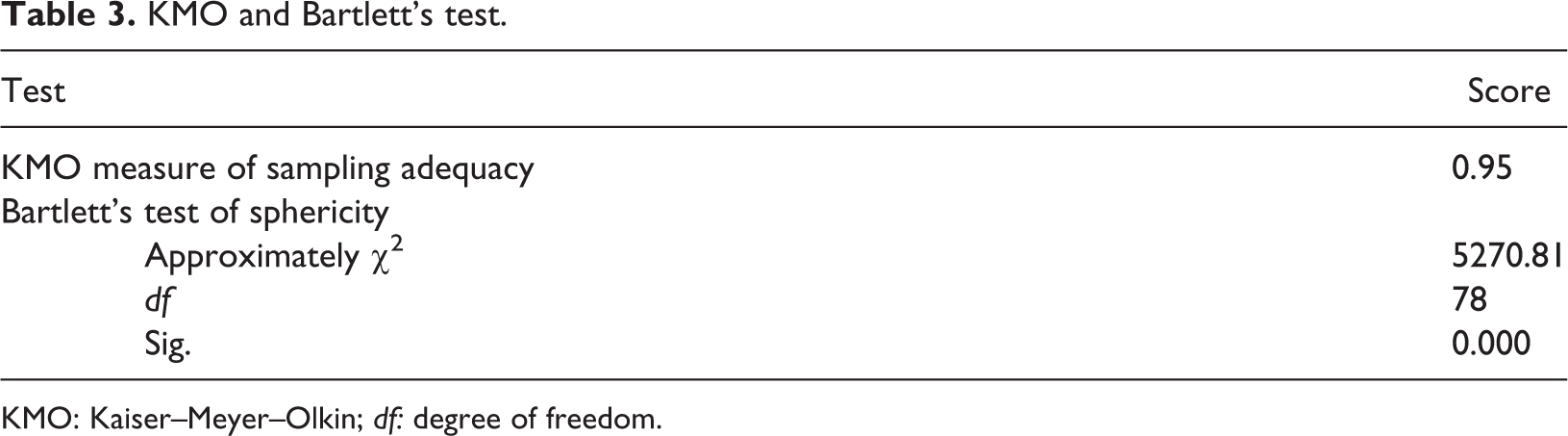
KMO: Kaiser–Meyer–Olkin; df: degree of freedom.
Determination of the number of factors
The next step included subjecting the 40 items of the organizational CQS to a principal components factor analysis (PCFA) using SPSS version 20. In order to determine how many factors required extraction, the process included conducting three examinations of the data and then comparing the results of those examination using eigenvalues, scree plots, and the pattern matrix.
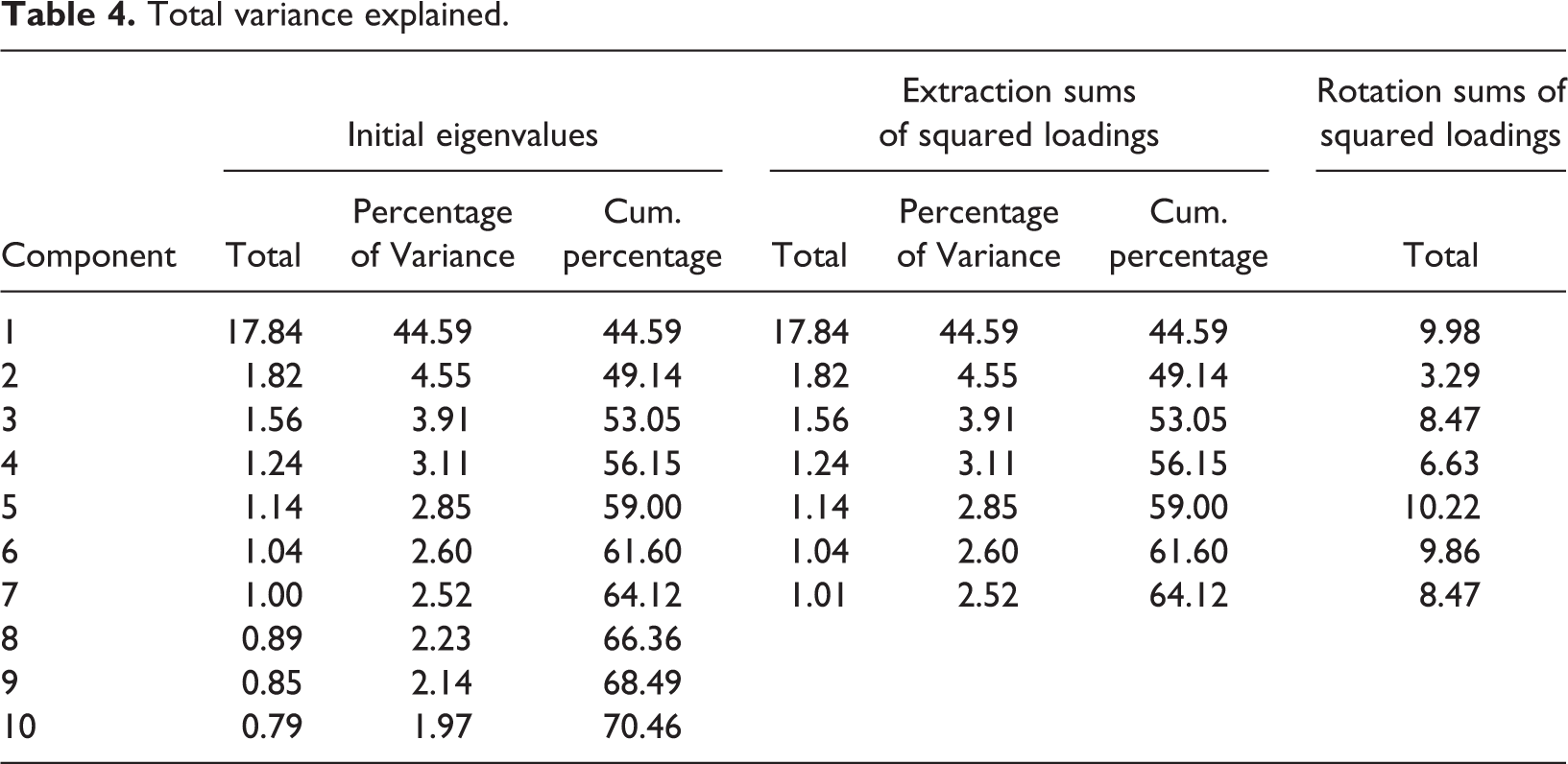
As shown in Table 4, seven factors with eigenvalues over 1.0, together account for 64 percent of variance, with the first factor accounting for 44.59 percent of that variance. The Kaiser criterion suggests that up to seven factors may prove appropriate for extraction (Hair et al., 1998). Table 4 shows the first 10 factors.
Total variance explained.
The final consideration for determining the appropriate number of factors to extract involved examining the pattern matrix, as presented in Table 5. The pattern matrix for the initial seven-factor model, using a direct oblimin rotation, reveals clusters of three or more highly rated items (>0.5) on five of the components. An oblique rotation also proved appropriate, given the high correlations found between items (DeVellis, 2012; Hair et al., 1998).
Pattern matrix.
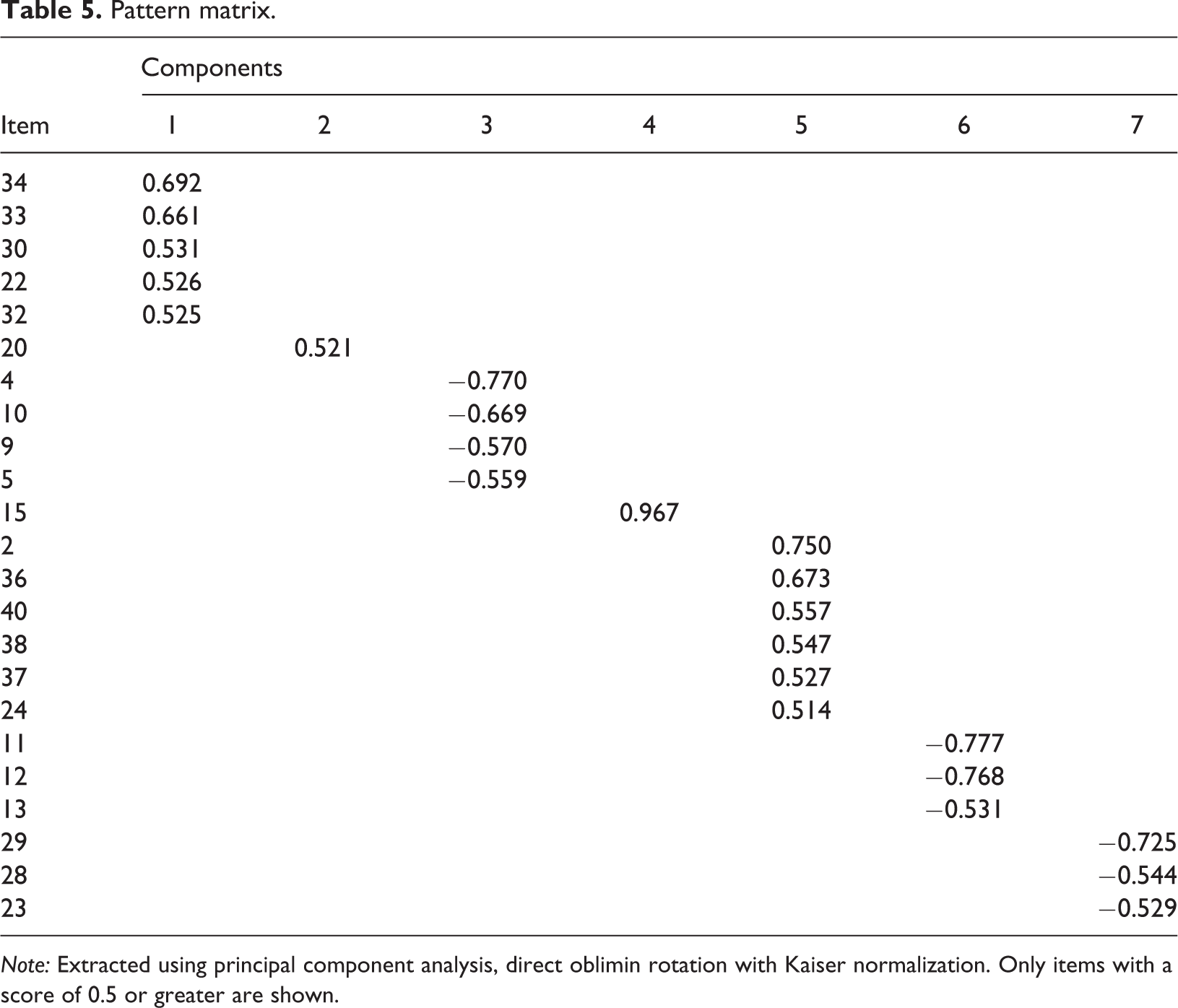
Note: Extracted using principal component analysis, direct oblimin rotation with Kaiser normalization. Only items with a score of 0.5 or greater are shown.
A five-factor model presented that accounted for 59 percent of the total variance, represented by components 1, 3, 5, 6, and 7 in the pattern matrix. These constitute usable factors with 3 or more items. Components 2 and 4 presented only 1 item each and, therefore, they did not meet the requirements for inclusion into the model.
Scale reliability
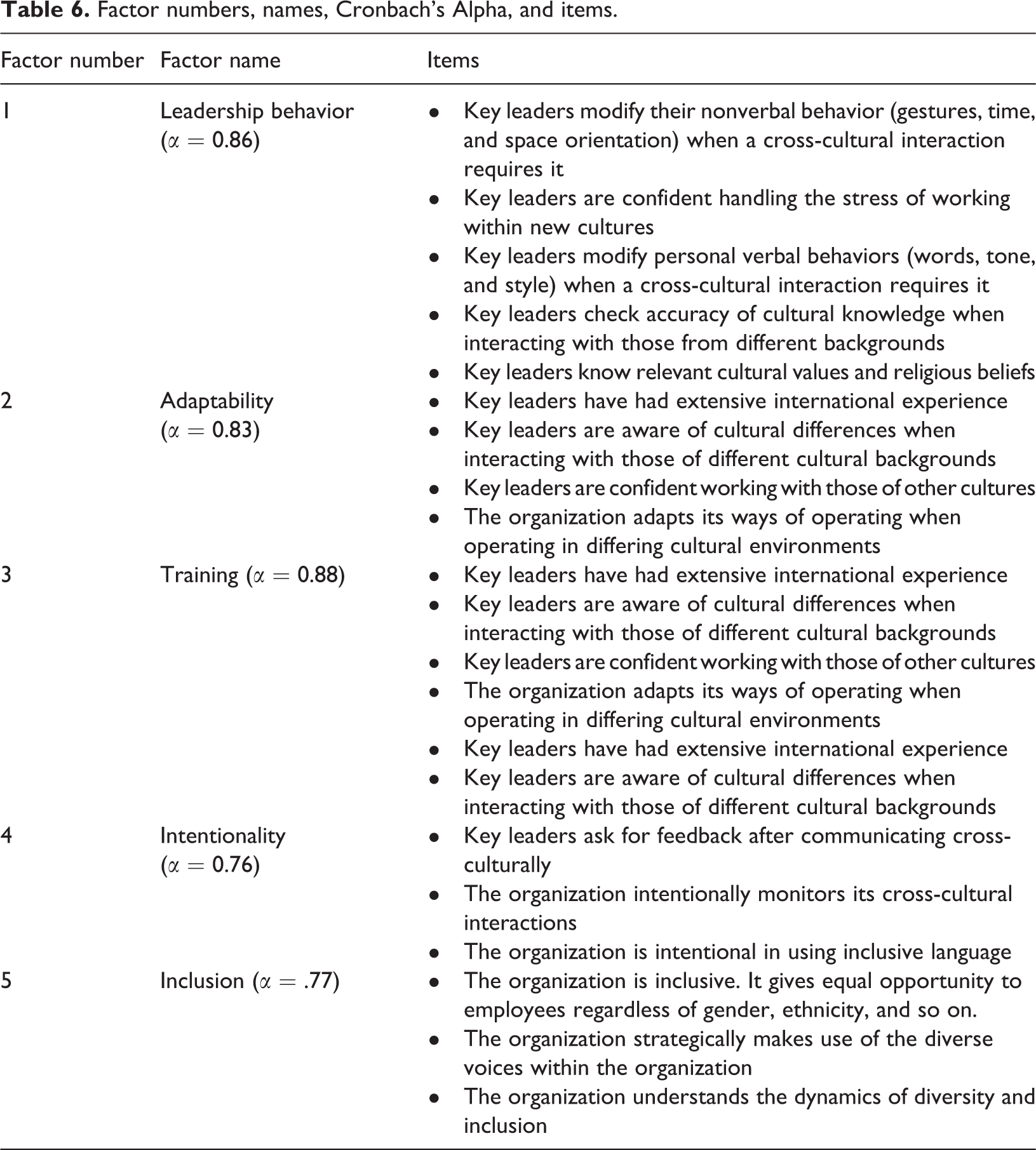
A scale reliability analysis for components 1, 3, 5, 6, and 7 included the values 0.86, 0.83, 0.88, 0.76, and 0.77, respectively. Table 6 shows the five factors, by names, Cronbach’s α, and items.
Factor numbers, names, Cronbach’s Alpha, and items.
Correlations between factors
The next step included building new variables for each of the factors by summing the scores of each of the items. Table 7 shows the results of the analysis of the correlation between the five factors, and it reveals that all five factors significantly correlate at the p < 0.1 level.
Correlations between factors.
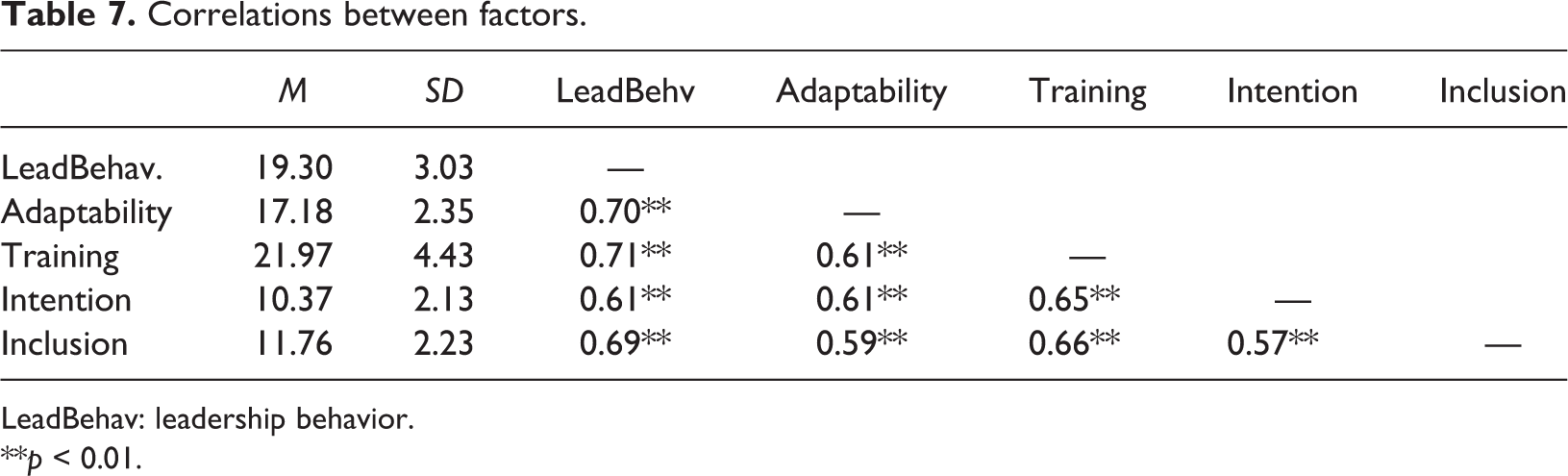
LeadBehav: leadership behavior.
**p < 0.01.
Analysis of variance
The next step included conducting an ANOVA procedure on each of the five scales to examine the effects of age, education level, ethnicity, gender, organizational role, and length of employment. Gender and age did not prove significant for any of the five scales. Post hoc Bonferroni tests did not prove significant on length of employment for three factors (leadership behavior, adaptability, and training), after an initial significant ANOVA. Education level proved significant across all scales except inclusion. A post hoc Bonferroni test showed significance at the 0.05 level for three of the scales: leader behavior, training, and intentionality.
Discriminant validity
Neuliep’s (2002) Generalized Ethnocentrism (GENE) scale was embedded in the survey in an effort to ascertain discriminant validity. The Cronbach’s α for the scale in this study measured at 0.68, slightly lower than the value previously reported in Neuliep’s study, which measured at 0.87. Each respondent completed the GENE scale. The next steps included scoring each GENE, following instructions provided by Neuliep and then checking for correlations with the five factors. GENE did not correlate with any of the factors at the p = 0.05 level.
Discussion
This study provides significant results in that a number of researchers have called for research in the area of organizational CQ (e.g. Chen et al., 2012; Gelfand et al., 2008; van Driel and Gabrenya, 2013). The development of a scale to measure organizational CQ represents an important next step for research in this area. This study represents the first known attempt to develop a scale to measure organizational-level CQ, through a means other than aggregating individual CQS data or using a referent-shift approach. As an emerging area of research, poignant for increasingly globalized organizations, this serves as a significant step forward in this area of research that may facilitate further empirical research.
Perhaps more importantly, this scale offers organizations the opportunity to objectively and empirically evaluate the degree to which they have positioned themselves to function effectively in the context of cultural diversity, both within their organization and in the marketplace. Through the use of this simple five-factor 21-item measure, organizations will have the ability to measure their level of CQ. The scale itself can provide for valuable insight and talking points for consultants and practitioners, and it can enable organizations to identify where they need further development. For example, this research has implications for the appointment of leaders, as it shows that leaders’ CQs have large impacts on overall organizational CQ. It also emphasizes the critical role that training and development play in positioning organizations to position themselves as culturally intelligent. Consequently, organizations that seek to grow in CQ will want to carefully review their leadership development and training processes to ensure that they utilize these avenues strategically. Additionally, organizations can use these leadership development and training processes to develop the individual CQ of employees and also to foster and reinforce organizational core values related to CQ. Intentionality of organizations, in carefully articulating values congruent with CQ can play a significant role in cultivating organizational CQ.
An additional area of significance for the current study includes the outcome of the Delphi process, which offers the first known collection of broadly defined characteristics of culturally intelligent organizations. This list built on the items that emerged from the literature offers a snapshot of perceptions from scholars and seasoned practitioners of what a culturally intelligent organization may look like.
Usefulness of the organizational CQ instrument
The five scales developed through this research that together form the organizational CQ instrument will prove useful for consultants who wish to assess areas in which organizations have strengths and weaknesses related to organizational CQ. Those scoring this instrument should score each subscale individually by assigning a score of 1–7 to each Likert-type item response and dividing the summated score by the number of items in the subscale. Scoring subscales in this way will allow for comparison between subscales and therefore analysis of areas requiring further development. Future research may result in the formation of associated norms, allowing organizations to evaluate their level of organizational CQ relative to other organizations.
Future research
The results of this present study suggest the need for more research to offer additional validation of the organizational CQS. Specifically, a more ethnically diverse sample from a larger number of nonprofit organizations would prove valuable. Additionally, cross-cultural studies in non-North American organizations could provide valuable insights into the cross-cultural reliability of the instrument. Furthermore, the scale needs to be validated for stability across time.
Additional qualitative research might also prove valuable in determining whether the scale might need to include additional items with which to better measure organizational CQ. While the Delphi panel proved effective in describing aspects of the culturally intelligent organization, some probability exists that not all elements of the phenomenon were captured. In particular, many of the items that Ang and Inkpen (2008) suggested as describing structural CQ did not survive the Delphi panel or the judging process. It presents that a different balance of perspectives on the Delphi panel may have put more emphasis on the structural elements. It is certainly plausible that structural mechanisms exist in organizations that strengthen organizational CQ or mitigate against it. Therefore, more research might determine whether more structural CQ items would provide for a more comprehensive scale, as suggested by the literature.
Further research would also prove valuable in order to ascertain the suitability of this scale for measuring organizational CQ in for-profit organizations. The terminology employed in the items proved conducive to nonprofits and may need modification for use in for-profit organizations.
As noted above, future research using the organizational CQS may allow for the establishment of norms that would further enhance the usefulness of the instrument.
Limitations of the study
Researching organizational-level phenomenon can prove methodologically challenging. Several limitations exist to the current study.
Firstly, while this study met the required sample size, the quality of the sample may have improved by including a larger number of organizations. Additionally, respondents from one organization constituted approximately 50 percent of all responses. Further, one organization had a single respondent. While the purpose of this research was scale development and the sample served this purpose, a different type of sample may prove appropriate for further validation purposes.
Secondly, the sample drew from North American nonprofit organizations, and although a small amount of ethnic variance presented, responses were predominantly made by Caucasians (88.3 percent). Although an ANOVA did not show ethnicity as significant, a more ethnically diverse sample may have yielded different results. This serves as an area for future research.
Thirdly, the sample was intentionally made up of full-time employees of nonprofit organizations. The perspectives of those engaged in nonprofit work may differ from those of for-profit organizations, and therefore, the findings of this study may not represent a generalizable model to for-profit organizations.
Fourthly, methodological limitations of the current study include the questionable Cronbach’s α of the GENE scale.
Conclusion
The design of this study included the outcome of developing a scale to measure organizational CQ, a phenomenon that theorists and researchers have conceptualized in several studies, including that of Ang and Inkpen (2008). Using a literature review as a guide, a Delphi panel provided items for the resulting scale. After a review of items, a scale was constructed. Full-time employees from 10 North American nonprofit organizations, with international foci voluntarily participated in the online survey (N = 234). A factor analysis (principal component analysis) presented a five-factor model that accounted for 59 percent of the variance. The labels for the five factors included leadership behavior, adaptability, training, intentionality, and inclusion, and each were shown to have high internal reliability. The 21-item, five-factor measure provides organizations and researchers a tool for assessing CQ at the organizational level. Researchers should conduct further studies to provide additional validation of the measure and to assess its generalizability to other types of organizations.
Footnotes
Appendix 1
The 40 items resulting from the Delphi Panel review.
Appendix 2
Neuliep’s (2002) revised Generalized Ethnocentricity Scale items.
Most other cultures are backward compared to my culture My culture should be the role model for other cultures People from other cultures act strange when they come into my culture Lifestyles in other cultures are just as valid as those in my culture Other cultures should try to be more like my culture I am not interested in the values and customs of other cultures People in other cultures have a better lifestyle than we do in my culture Most people from other cultures just don’t know what’s good for them I respect the values and customs of other cultures Other cultures are smart to look up to my culture Most people would be happier if they didn’t live like people do in my culture I have many friends from different cultures People in my culture have just about the best lifestyles of anywhere Lifestyles in other cultures are not as valid as those in my culture I’m very interested in the values and customs of other cultures I apply my values when judging people who are different I see people who are similar to me as virtuous I do not cooperate with people who are different Most people in my culture just don’t know what is good for them I do not trust people who are different I dislike interacting with people from different cultures I have little respect for the values and customs of other cultures
Declaration of Conflicting Interests
The author(s) declared no potential conflicts of interest with respect to the research, authorship, and/or publication of this article.
Funding
The author(s) received no financial support for the research, authorship, and/or publication of this article.