







Abstract
This article shows how knowledge transfer can be useful in the field of cross-cultural management, in particular to better understand what several authors call cultural synergy. Defined as the ability to take advantage of interactions between people from different cultures to create a dynamic of cooperation and innovation in multicultural organizations, the concept, however, lacks some empirical illustration. Through an unusual field of research, we propose to draw lessons from an artistic organization, Les Grands Ballets Canadiens de Montréal, involved in the remounting of the Kaguyahime ballet by Czech choreographer Jiří Kylián, which will require the collaboration of a Dutch artistic direction, Quebec technicians, dancers from several countries and Japanese and Quebec musicians (Canadian). The focus on knowledge sharing at the center of this encounter allowed us to identify some steps and mechanisms that could be useful both in the theoretical conceptualization of cultural synergy and, from a practical point of view, in its concrete implementation. This will allow us to highlight that, in order to promote, the individuals involved, guided by a management team, will mobilize different identities to create the contact points necessary for cultural synergy.
Keywords
Introduction
In a context where international exchanges continue to increase and in which the movement of populations increasingly diversifies the workforce, cross-cultural management is being called upon now more than ever to support, frame, and facilitate these intercultural encounters. Indeed, these encounters create a number of challenges that have traditionally been of interest to this discipline. Traditional approaches have been based on perceptions of individuals who work with each other in the same culture and who are presumed to behave in exactly the same way (D’Iribarne, 1989; Hofstede, 1980, 2001; House et al., 2004). Anchored in cross-cultural management, our approach aims to participate in a more recent movement of thinking that goes beyond traditional approaches and attempts to focus on the dynamics of the encounter (Dupuis, 2014). Rather than approaching culture as static and exogenous phenomena, we will approach it as a loose network of multiple knowledge structures that can be activated or suppressed according to the requirements of the situation (Hong et al., 2000, Markus and Conner, 2013).
We know that if the intercultural encounter can produce surprises and misunderstandings, it also consists of adjustments and adaptations on the part of individuals who come into contact with each other (Irrmann, 2013). Thus, there is a good chance that individuals do not behave quite like the national cultural model developed by earlier authors. Many will slightly or extensively modify their behavior to adapt or adjust to their culturally different counterpart, particularly in a management context where they must work together and cooperate, to achieve their goals. In fact, they will share their practices, and values, in other words, their knowledge, through these encounters. In this respect, knowledge sharing appears to be central to this intercultural encounter dynamic (Søderberg and Holden, 2002). We are thus compelled to integrate the contributions of knowledge management theory—more specifically, of knowledge sharing—into this discussion.
The case we have studied allows us to consider knowledge transfer in the context of multiple cultures since it brings together people from different countries and cultures, mainly Dutch, Japanese, and Quebec, working on the same project. It is based on an unusual field of research, a ballet company (Les Grands Ballets Canadiens de Montréal [LGBCM]), and its activity (the remounting of a ballet). Our case shows how an organization can successfully bring people from different cultures together to work on the project through a series of steps and mechanisms that allow the transfer of knowledge between the parties involved, while neutralizing the negative effects (intercultural misunderstandings and intercultural conflicts) that this cultural diversity could produce. It is in fact what cross-cultural management very often calls the creation of a cultural synergy (Adler, 1980, 2008; Harris, 2004). We could define cultural synergy in this way: taking advantage of interactions between people from different cultures to create a dynamic of cooperation and innovation in multicultural organizations.
Our case sees this meeting of cultures in terms of knowledge sharing and demonstrates that the organization achieves this, not necessarily by focusing on cultural differences but by focusing on the work practices of others. We will see that in order to create this cultural synergy, the actors will have to find common points of contact and, to do so, mobilize different identities.
In the first part of this article, we will present the theoretical framework that formed the basis of our research. We will see that, for us, cross-cultural management and knowledge transfer are two areas that can enrich each other and provide a better understanding of the issues facing today’s international companies. In the second part, we will present the elements of our qualitative research methodology centered on interviews with the main actors and on field observation. In the third part, we will present our case, the transfer and organization of a ballet from the Netherlands remounted for a separate company in Montréal, Quebec. We will thus see the fine-grained detail of interactions between the various actors and the mechanisms put in place to ensure the effective transfer of knowledge of the artistic work by Jiří Kylián. In particular, we will examine the role of the Dutch artistic team, which is the mastermind behind the transfer of knowledge, and who must ensure that the spirit of the work created in the Netherlands is communicated to the various actors in the Montréal remounting. In other words, we will see how this artistic team manages to create a cultural synergy in the organization for the remounting of the Kaguyahime ballet. Finally, we will discuss how our interactionist approach to this case contributes to the understanding of intercultural management, by focusing on the observation of knowledge transfer. In our opinion, this approach invites a more in-depth study of the processes and identities at work in organizations, as individuals move from one cultural framework or system to another in response to environmental requirements (Thomas et al., 2015). Our argument therefore proposes new ideas for creating cultural synergy in multicultural organizations.
Theoretical background
While we favor a grounded theory approach, we did not proceed atheoretically. The following discussion summarizes the literature that informed our study of the situations observed in the fieldwork.
Cross-cultural management puts national culture at the core of its research interests. A literature review reveals that cross-cultural management can be roughly sorted into two approaches, each with different epistemological projects: one approach understands culture as a code and the other understands it as a dynamic.
Approaches that understand culture as a code define culture as “mental programming” (Hofstede, 2001), and these approaches dominate the field of cross-cultural management today. They were developed in response to Anglo-Saxon managerial models that ignored the impact of culture in their aim for universality (Chanlat, 2013; Chevrier, 2012). As a result, several authors have set about to identify and define the broad dimensions of cultural differences and their influences on management practices. Hofstede’s six-dimensional model is found in the large majority of studies (Chanlat et al., 2013; Sackmann and Phillips, 2004). Schwartz (1999), House et al. (2004), and Trompenaars and Hampden-Turner (2011) are also representative of this type of approach.
In identifying the universal dimensions that determine differences in behavior, the individual is first and foremost classified by and understood through their country of birth and the broad dimensions that characterize it (Dupuis, 2013; Sackmann and Phillips, 2004). For these approaches, which are mainly interested in the distance between cultures, the challenge for management is to identify and measure the space between cultures in order to circumvent, or better understand, the presumed difficulties.
More recently, some authors (D’Iribarne, 2009; Dupuis, 2013; Witte, 2012; Ybema and Byun, 2009) have criticized this dominant perspective and have called for reframing cross-cultural management to be seen less as a question of distance between cultures, but instead as cultures meeting. These authors argue that we should free ourselves from positivism and functionalism, which conceive of culture as a code to imagine it as a reality in the making. Culture is neither static nor fixed in time and cannot be understood outside of the interactions and contexts that characterize it. This new perspective tends to take into account the increasing complexity of the postcolonial world, in which individuals in modern societies are in fact pluricultural: They may have multiple national cultures, an organizational culture, cultures related to different social groups, and so on (Sackmann and Phillips, 2004; Søderberg and Holden, 2002). The concept of a static culture, besides not taking life experience into account, also proves to be dangerous by producing stereotypes and shortcuts that limit thought (Witte, 2012).
This critical perspective challenges the view of culture as apolitical and acontextual (Ybema and Byun, 2009) to integrate a larger historical, political, economic, and social context influencing the individual’s perception of their role within a relationship (Dupuis, 2014). Indeed, for these authors (Bjerregaard et al., 2009; Søderberg and Holden, 2002; Sackmann, 2004), culture is not a deterministic and static phenomenon; it is moving and dynamic. It is changing and mixes and hybridizes.
Thus, it is no longer national culture, but actors who are at the center of research interests (Witte, 2012; Ybema and Byun, 2009), and the meaning that these actors give to their situation (Chevrier, 2012; Dupuis, 2013; D’Iribarne, 2009). Authors urge us to focus on the analysis of the interaction context and invite us to understand which mechanisms allow an individual with multiple identities to identify with one culture rather than another in certain contexts of interaction. Management’s challenge is then to choose and build shared systems of signification that will lead to behaviors in common (D’Iribarne, 2009) and allow the creation of a cultural synergy in the organization.
Looking at intercultural contact with a knowledge sharing lens will allow us to unpack the dynamics of cultural synergy as well as to highlight the context in which it takes place. We thus draw on the literature of knowledge management—more specifically, the literature of knowledge transfer—to enhance our reflection on cross-cultural management.
Knowledge management, as a discipline, has become a substantial challenge for organizations for whom knowledge assets are the guarantor of competitive advantage and performance (Nonaka and Takeuchi, 1995). Nevertheless, debates about what constitutes knowledge remain numerous. Its multiform nature sometimes renders it difficult to grasp: it is perceived as a flux or as a stock, it comes in codes or in acts, it can be distinguished as tacit or explicit, it takes the form of know-what and know-how, and so on. To attempt to apprehend its complexity, we propose to differentiate between theories that consider knowledge as either a code or a dynamic, following the same epistemological breakdown, as we did previously for cross-cultural management theories.
Strongly influenced by Cartesianism, the theories that present knowledge as a code make use of a technologist approach (Bédard et al., 2011) that presupposes an epistemology of possession (Cook and Brown, 1999). They understand knowledge as a stock that can be transferred, acquired, shared, or lost. This theoretical group is often linked to a computerized view of knowledge. It is very much related to the technological infrastructure of a business designed to store and re-share accumulated knowledge at low cost. Knowledge is considered a static object that can be formalized and codified; it becomes a transportable and manageable product (Currie and Kerrin, 2004; Pozzebon and Pinsonneault, 2012). This perspective emphasizes the individual rather than the group; it is the individual who possesses knowledge and from whom explicit, rather than tacit, knowledge can be extracted. The main managerial challenge behind this approach is to extract and capture this knowledge through specific managerial skills and structures as well as through organized information systems (Bédard et al., 2011; Pozzebon and Pinsonneault, 2012).
Theories that present knowledge as a dynamic assume an epistemology of learning (Cook and Brown, 1999) and consider knowledge to be inextricably linked to action. Knowledge is an integral part of the individual and is integrated into practice. It is no longer static but in dynamic flux as the product of ongoing negotiations. Knowledge is both localized and contextualized. Consequently, knowledge is considered less as a construction of transfer or codification, but instead as intersubjective understanding (Pozzebon and Pinsonneault, 2012). The managerial role is then to recognize individuals as carriers of cultures and to organize structures for interaction that promote consensus and mutual respect.
We have seen that it is possible to divide the literatures from cross-cultural management and knowledge management into two groups: those that perceive culture and knowledge as either a code or a dynamic. It is thus interesting to observe that when these two fields of study converge in research questions, they address the same epistemological conceptual distinctions. Thus, producers of theory conceive of both culture and knowledge as either a code or as a dynamic.
When knowledge and culture are perceived as codes, the motivation to share seems to be a response to cultural determinants such as Hofstede’s notions of collectivism or hierarchical distance (Haag et al., 2010; Jiacheng et al., 2010). This approach proposes that knowledge is more easily transferred when the provider and the recipient belong to the same context. These dimensions also apply at the interorganizational level (Bhagat et al., 2002). To optimize the chances of success, one chooses one’s partner by identifying cultural traits that influence knowledge sharing. Indirectly, one seeks compatible cultures in order to circumvent the difficulties that cultural differences would bring to collective action (Jacks et al., 2012; Li, 2010; Niedergassel et al., 2011).
When knowledge and culture are viewed as dynamics, cross-cultural management serves as the foundation for criticisms of universal models of knowledge management by calling for a necessary contextualization. Cross-cultural management’s critique has mainly targeted Nonaka’s model (Nonaka and Takeuchi, 1995). Understood as a model conceived in a cultural context (Japan) with specific values, it may be more or less relevant when applied to another context (Easa and Fincham, 2012; Glisby and Holden, 2003; Haag et al., 2010; McAdam et al., 2012). Critics have questioned the universality of the SECI model’s four modes of knowledge creation, socialization, externalization, combination, internalization, by showing how national culture affects each of these modes (Easa and Fincham, 2012; Holden, 2001; Glisby and Holden, 2003; Weir and Hutchings, 2005).
Those who view culture as a dynamic go beyond this criticism of universality. They consider cultural difference as something to no longer be circumvented, but rather as something to be understood. Culture is not a source of difference and antagonism but rather a form of knowledge that can be turned into a resource. Thus, they attempt to understand how specific cultural traits—like the idea of face in Chinese culture—or the local economic context—such as the state of the job market—can explain differences in employee behavior (Ardichvili et al., 2006). It is a finely detailed analysis of dynamics that attempts to bring out the diversity of ethnic, linguistic, economic, political, and historical contexts as well as analyzing the broad diversity in gender and profession—which has traditionally been laid aside by cross-cultural management theorists (Holden, 2001; Kohlbacher and Krähe, 2007; McAdam et al., 2012; Van Marrewijk, 2011). Cross-cultural relations cannot be preplanned because they depend on the actors in the context of their encounter. If relationships are contextualized, these authors call for a specific understanding of each specific case.
We would like to push forward the literature that considers knowledge management and cross-cultural management, by considering knowledge sharing as a central concept that is intertwined with intercultural encounter. By observing this sharing of knowledge in an intercultural context, we seek to understand what dynamics can achieve successful exchanges between culturally distinct groups. By studying the remounting of a Dutch ballet in Montréal as a transfer of knowledge, we will see that the ability of actors to play with multiple identities, including their professional subcultures, will provide the necessary meeting point for the creation of a cultural synergy. We will also present how this cultural synergy is created between all these actors (individuals and groups) through well thought-out and accepted strategies and techniques.
In our opinion, this is an interesting contribution to cross-cultural management that has produced very little empirical research that concretely illustrates how cultural synergy could actually work in a context where multiple cultures are present.
Methodological approach
As restaging a ballet for an international audience represents a transfer of knowledge in a different context, we began to follow LGBCM in August 2015 and continued to do so throughout the 2015–2016 season. The company is accustomed to inviting choreographers from all over the world to present their productions and counts more than 10 different nationalities in its own ranks (from Asia, Europe, and North America).
Through an inductive approach, data collection was conducted following ethnographic research guidelines (Patton, 2005). During an 8-month observation period, we were able to follow five ballet productions (three ballets remounted, one original production, and one guest company production). Note that each of these models used slightly different modes of operation, but all were based on similar work methods.
Research process
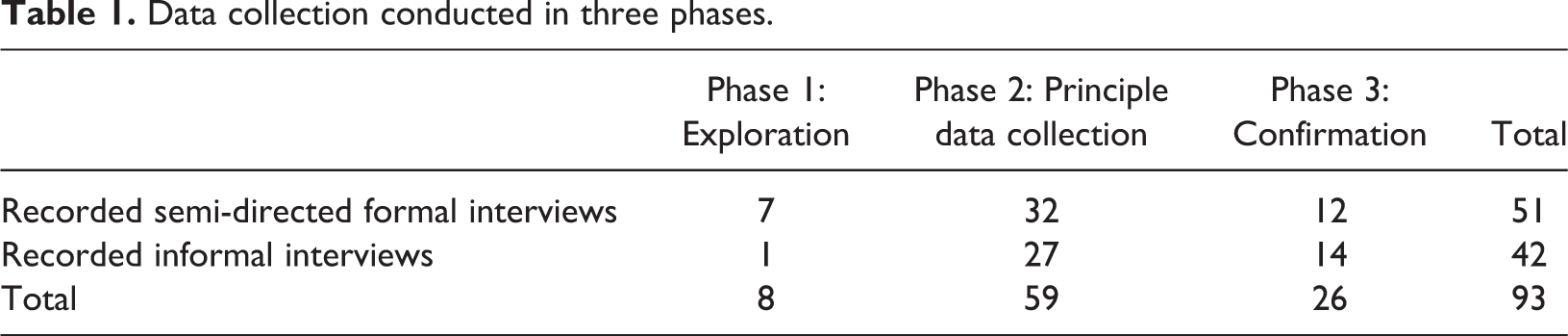
Data collection was conducted in three phases: exploration, principle data collection, and confirmation (Table 1). Each one of these phases allowed us to carry out alternate phases of data collection and data analysis. Following the rhythm of the artistic programming, we were able to create circularity between data collection and analysis.
Data collection conducted in three phases.
The first phase (July to August 2015) consisted of going on-site to become familiar with the company’s members and mode of operation. Through nonparticipatory observation and preliminary informal interviews, we were able to pinpoint the issue in question—namely, knowledge sharing in an intercultural context—and create an analytic framework for remounted shows. In terms of our methodology, this initial step also allowed us to distance ourselves from personal preconceptions of the field (Angrosino, 2007). The first step allowed us to get an overall sense of the field (Patton, 2005) and to determine how different professions and their knowledge cohere together.
The second phase (September to October 2015) consisted of collecting data on how LGBCM went about restaging Kaguyahime, which was the primary subject of our study. During the third phase of our data collection (November 2015 to March 2016), we followed three other ballet productions in order to confirm, deepen, and adjust some of our perceptions. As the analysis developed, the selection of situations and people became more precise and more varied. Throughout the study, the progressive results of our analysis directed subsequent periods of data collection, either to adjust the analysis to new data or to enrich it by following emerging theoretical developments (Charmaz, 2006; Strauss and Corbin, 1997).
For 8 months, ethnographic research was thus conducted in LGBCM’s dance studios, music rehearsal rooms, and performance halls, including the Wilfrid-Pelletier Hall and Théâtre Maisonneuve at Place des Arts, Montréal, allowing us to immerse ourselves in the daily routine of the artistic team. There, we conducted 51 semi-directed formal interviews (45 min on average) with the principal actors. These participants were selected for their diversity (cultural and professional), which gave them a unique perspective on the material under investigation.
We wanted to ensure that the formal interviews were conducted in the participants’ native language when they were not fluent in English or French. We therefore hired a Japanese translator to conduct the interviews with the Japanese musicians and were able to adapt our questions to the Japanese language and culture (Harkness et al., 2003). We then transcribed and analyzed the interviews with the Japanese interpreter. Since Japanese is a highly visual, contextualized, and codified language, the interpreter guided our literal and symbolic translations of the participants’ responses.
LGBCM provided us with an all-access pass to their workspaces (rehearsal rooms, dance studios, backstage, technical areas, etc.), which allowed us to attend their work sessions as well as their social events. Thanks to our exclusive access to LGBCM’s workspaces, we were able to conduct 42 informal interviews on-site to complement the formal interviews. The participants began their days early and finished late but often had down time. They were therefore able to talk about their work in the heat of the moment. It also helped us to notice artifacts and to have them explained by those who used them on a daily basis. On average, conversations lasted 15 min; they ranged between 50 s and 1 h 20 min.
Many observational notes were compiled in three notebooks. Notes were completed in the evenings and given contextual details, while memories were fresh. We took 400 photographs and 80 short videos (on average, 2 min long), which served to illustrate our observations and questions, but also to remind us of the context and atmosphere in the field during our data analysis.
Data coding and analysis
The transcribed interviews represent our primary data set and were coded in the data analysis software NVivo 11. Some of the photographic material was also coded using NVivo 11, allowing us to supplement and illustrate participants’ remarks.
The process of analyzing the data involved the creation of cases first of all: each profession and each show was identified to facilitate cross-referencing and to identify differences, among other things. Transcribed phrases describing the phenomena under examination—that is, knowledge sharing and/or cultural differences—were identified and designated using NVivo. Based on each participant’s understanding of his or her profession, we identified preliminary categories. We then began to bring the categories together into thematic groups that enabled us to identify new ways of seeing and understanding the phenomenon under study. The organization and integration of categories and themes allowed us to articulate them in a consistent manner and to represent broader concepts, permitting us to link knowledge-sharing practices in a cross-cultural context to real dynamics of a cultural synergy. Observational data were used to support and refine the interpretation of categories and guide their integration into a more inclusive structure.
Fieldwork presentation
Following our assumption that restaging a ballet represents a transfer of knowledge in an intercultural context, we began to follow LGBCM in August 2015 and more specifically the restaging of Kaguyahime.
The original 1986 ballet was a creation of the Czech choreographer Jiří Kylián, artistic director of the Nederlands Dans Theater (NDT) at that time. The original creation was presented many times in the 1990s under the NDT banner in Europe and in the United States.
Acquired by the Paris Opera, the 2010 show was restaged and significantly updated to enter the Paris Opera Ballet repertoire (the original production’s sets, lighting, and visual staging were modified). Kylian Productions (KP), the choreographer’s production company mounted this 2010 version with LGBCM for its Montréal premiere performance in 2012. To open LGBCM’s 2015–2016 season, the 2012 show was being remounted with an extension of the license period to include it in the company’s repertoire.
At the time of our observations, LGBCM remounted Kaguyahime with the help of KP. They sent an artistic team made up of three assistant choreographers, one conductor, and one head scenic designer in order to guide the LGBCM during the remounting process. They are all from the Netherlands, and they were there to make sure that the remounting of the show respects the spirit of the original work created in the Netherlands. Besides them, more than 100 people were involved in the project (Table 2).
People involved in the project.
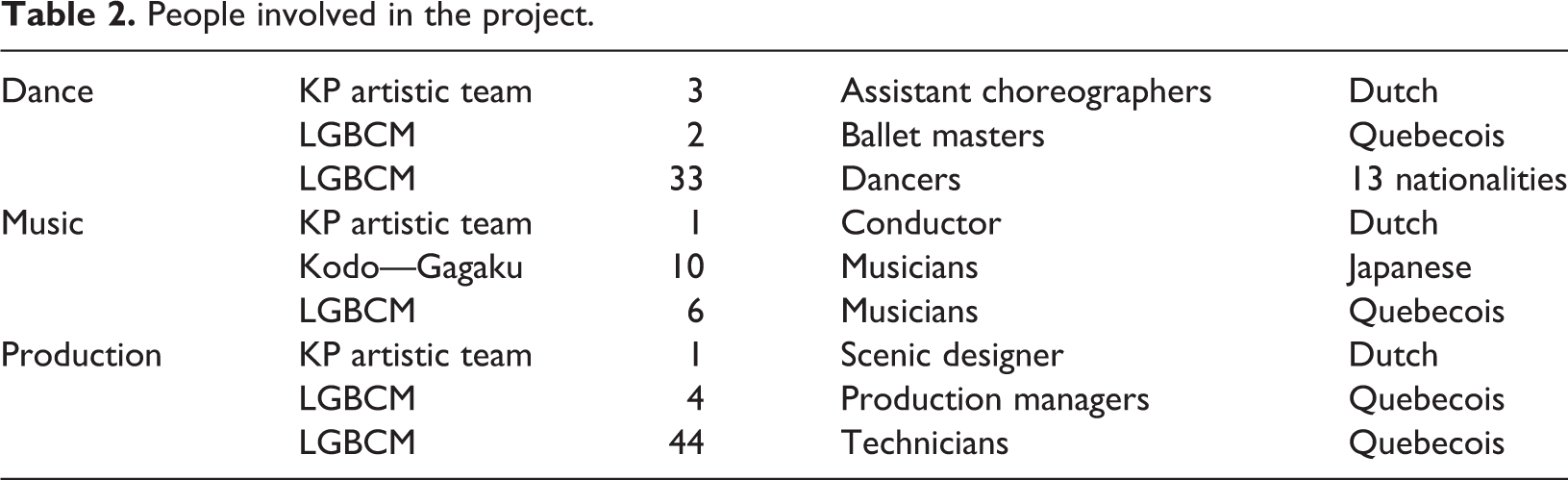
All these individuals came together to remount the show in Montréal’s Wilfrid-Pelletier Hall, in Place des Arts. We observed their efforts in order to understand how people of different professions (dancers, musicians, and technicians) and national cultures (Japanese, Dutch, and Quebecois of many origins) exchanged knowledge to bring this bold work to life for the fourth time in its most recent version.
Results
By establishing the remounting of a ballet as a transfer of knowledge and by observing this transfer within the framework of a multicultural organization, it appears, first of all, that the knowledge exchanged can take different forms: Explicit knowledge was found throughout the documentation sent by KP and used by LGBCM. This included the records of dance movements within the space (for the dance group), musical notation (for the music group), and a significant number of documents logging the use of materials, spacing, lighting levels, timing, and so on (for the technical production group). Explicit knowledge was therefore available in digital format, on paper, and in photographs and videos.
Tacit knowledge was much more widespread, or at least highly valued within the group. In fact, we observed that participants valued both tacit knowledge of the spirit of the piece and tacit knowledge of how others operate. Respondents had difficulty explaining this knowledge clearly; rather, they agreed that it was something that could not be explained and needed to be experienced. They spoke about “feeling,” “atmosphere,” “intention of the choreographer,” “color of sounds,” and “intuition.”
While explicit knowledge was exemplified by material artifacts that were transmitted to LGBCM, we found that tacit knowledge of the spirit of the piece was especially important but was limited to the on-site Dutch KP artistic team. Perceived as a series of shared self-evident truths, this knowledge was held by the artistic team and directly related to the work of the music composer and the choreographer.
The results of our study show that tacit and explicit knowledge should not be seen as a continuum but as embedded elements (Tsoukas, 2004) with what Collins (2010) refers to as hard tacit knowledge at its center—which, in this case, could be qualified as the spirit of the work. The results also show that the transfer in a different context was confronted with tangible and intangible differences.
The tangible differences refer to the materials (the musical instruments available, local technology, tools, etc.) and the context: work organization and working time, work methods, class structure, breaks, workspaces, and the presence of local unions. Tangible differences also include the organizational structure—especially the presence of a “home theater”—that is, a performance hall owned by the company in addition to its studios (a structure more common in Europe)—and the material available (in terms of rehearsal space and equipment). All these elements modify the organization of remounting a production.
Because of these tangible elements, respondents felt that the information transferred was never sufficient or satisfactory. With the same baseline information, completely different results could in fact be obtained. There are at least two reasons for this. First, the respondents sometimes considered this to be a coding problem in which the coder did not take the material reality of the recipient into account. Moreover, the documentation available was being interpreted by humans, within a variable context characterized by specifics of material, technical capacity, available technology, local terminologies, and so on. Second, they also believed that not everything is translatable.
Intangible differences were also observed. These are related to immaterial and relational aspects of knowledge transfer, such as the energy of the people involved, their relationship to musical instruments, their relationship to the others, and their perception of the work. Intangible differences also include matters of feeling, imagination, and relationships to images, which may differ from one culture to another and be embodied in individuals’ interpretations of the choreography or music.
All of these differences complicate the transfer of knowledge and the creation of a cultural synergy. Restaging the production in another context meant facing a number of technical differences, both tangible and intangible. The stage, the set decor available, the energy of the dancers, and the local materials used might all modify, if not destroy, the spirit of the work.
Since the transmission of knowledge in a different context can give rise to uncertain or ambiguous interpretations, the research results highlight the determining role played by the Dutch KP artistic team. They will work to transfer the sum of knowledge and to play a decisive role in the creation of a cultural synergy carried out in several consecutive stages: the creation of homogenous subgroups and an intragroup transfer, followed by an intergroup transfer. To do so, as the different phases occurred, KP artistic team members varied the use of their multiple identities to build on common conventions and sets of meaning that the local subgroups shared.
The creation of homogenous subgroups: Focusing on one identity
Prior to the transfer of knowledge, homogenous working groups were formed. These groups worked in parallel but were completely autonomous. Each group acted independently in their own space, often on different continents (the dance group in Quebec and the music group in Japan). Intercultural issues traditionally identified in the literature were eliminated by the presence of homogenous subgroups each characterized by a strong occupational subculture (Trice, 1993), by the selection of participants, and by the actions of the Dutch KP artistic team.
In dance, transfer of choreographic knowledge in an intercultural environment is facilitated by the presence of a common occupational subculture. Indeed, 13 nationalities, living in Quebec Province, were represented within the team of 33 dancers selected for the Kaguyahime ballet. Together they communicated in English, in French, and in their mother tongue with their compatriots. Despite their different and diverse cultural identities, in the rehearsal studio, each dancer is considered to exist under an umbrella that participants described as universal. The studio is a very specific space where the artistic team and dancers share a mode of operation and in which specific behaviors are expected. On our research field, occupational subculture appears to have a strong unifying power. Learned very early and during a long classical ballet training, the exercise of this professional activity has a profound influence on the individuals and contributes to the construction of their modes of operation. If we consider ballet as a form of ethnic dance (Kaeliinohomoku, 1983), we must also consider its geographic expansion and transnational connections.
Classical ballet is characterized by a notation system (Benesh Movement Notation), a culture of physical activity developed over centuries, a strict work discipline, a common vocabulary of French terminology for nearly 200 dance movements, and an agreement that English is the vehicular language of exchange (Wulff, 1998). Classical ballet training forms the dancer’s general attitude about an integrated way of life and work and serves as a basis for modes of mutual comprehension. This long training, which is understood as acculturation, constitutes a real professional cement. Despite a diversity of national identities, the community of dancers coheres under the weight of a principal identity of being a dancer (Wulff, 2008). A particular work technique, vocabulary, and willingness to embody a role allow dancers to transcend national identities in order to understand each other.
In addition to the professional homogeneity of the dancers, the Dutch KP artistic team ensured another homogenization through selection. This homogenization took place at the audition stage in which the assistant choreographers selected the individuals they viewed as capable of playing the role—a decision based on physical ability, but also mental and emotional abilities. The dancers’ commitment and their capacity to take on the role and the style of the work took precedence over their physical skills. The criteria for this selection were entirely tacit and were held by the three assistant choreographers deciding in consensus. In the classic business world, leaders will also talk about staff selection by looking for the right fit with their organization’s culture. It is a way of ensuring that it is possible to create a cultural synergy in the company.
For the music: Kaguyahime is performed to music composed by Maki Ishi. The composition plays with the sonic duality of Japanese and Western percussions. Led by a Dutch conductor, the ballet’s music brought together Quebecois percussionists (LGBCM’s orchestra) and Japanese percussionists (Kodo, a taiko ensemble. Taiko is an umbrella term to describe drums in traditional Japanese festivals). 1 Each group had very different discourses and attitudes regarding the musical piece that united them. The working dynamic of the Quebecois and Japanese percussionists is summarized in a brief outline (Table 3).
The differences between Quebecois and Japanese percussionists.
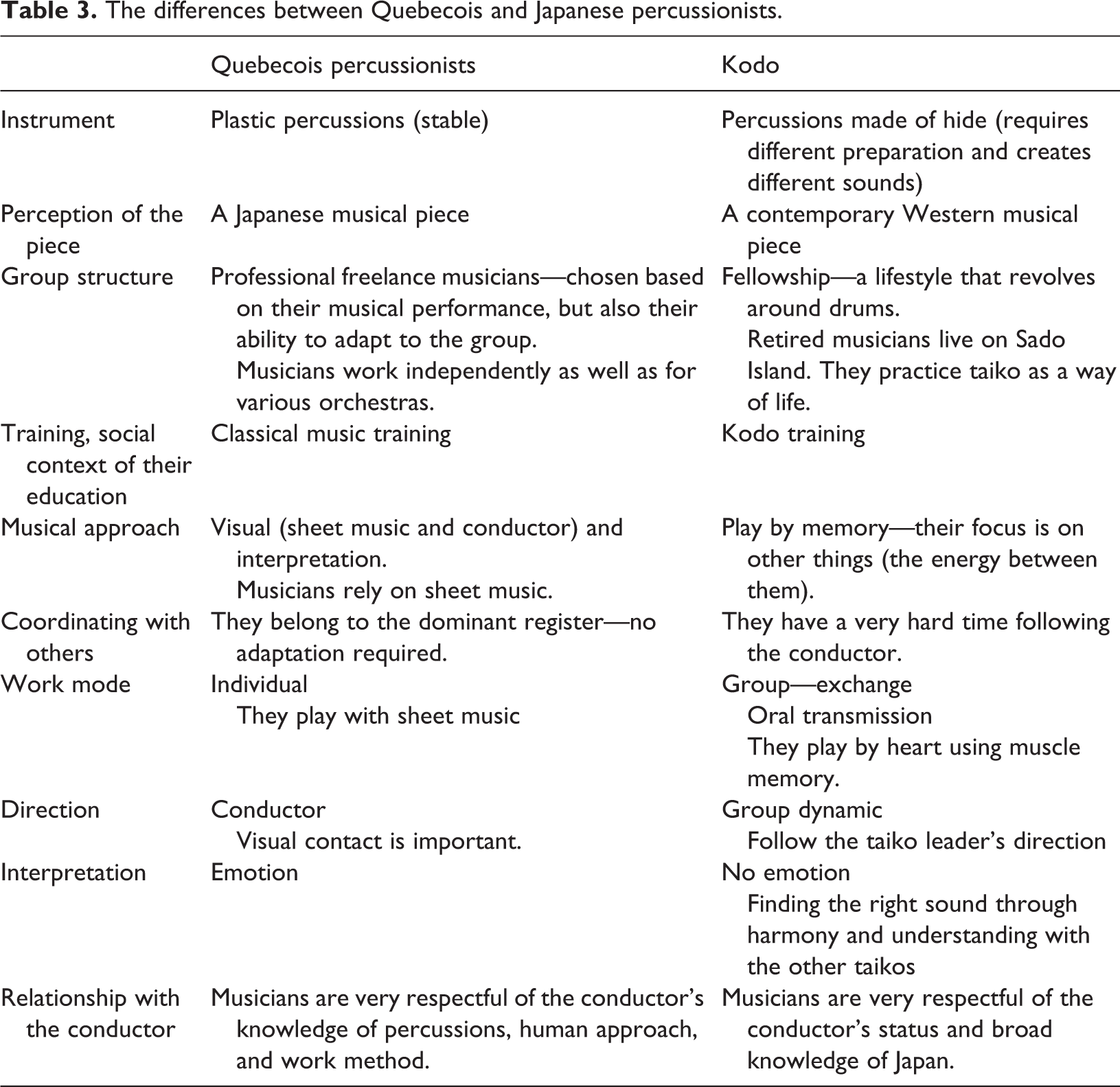
The conductor worked in subgroups separately, with the Japanese in Japan and Quebecois musicians in Canada, before bringing them together. As these subgroups were characterized by their internal homogeneity in terms of representations, shared standards, and common references, the conductor also assumed several identities. With the Quebecois, his quality of musicianship, notably as a percussionist, allowed the Dutch conductor to create a special connection with the Quebec percussionists, beyond their cultural differences. They found themselves in a commonly accepted mode of operation as Western musicians. For his relationship with the Japanese musicians, the conductor played on another identity, his closeness to composer Maki Ishi and, as a connoisseur of Japanese culture, his knowledge of the Kodo codes. The musicians did a large part of the work ahead of time in their respective cultural contexts in order to mitigate the difficulties of combining these two worlds, with their different conceptions and completely different modes of interacting.
Once they were all together, the conductor rehearsed each of the two groups separately, then together, and finally began full rehearsals. If the conductor claimed to have the same attitude toward each group, he did highlight the effectiveness of this modular method, which allowed him to make individual connections, explain the score, and seek the right sound with each group. It was this search for the “right sound” that animated the first exchanges. The musicians were given a great deal of freedom in how they structured the rest of their work.
For the production: The members of the LGBCM’s technical team were less diverse; the majority of them are from Quebec, with the exception of KP artistic team’s set designer, who is Dutch. We nonetheless observed a two-tiered hierarchy: The KP artistic team reported to LGBCM’s production managers, who then gave orders to the group of Quebec technicians, whom they know well. The production technicians conformed to this same homogeneity, and they are trained in a strong occupational subculture and share a common technical language. The importance of behavioral norms that guide the actions of the group members should be noted.
This way of working within a culturally homogeneous group first is a situation that is rarely seen in conventional enterprises. Surprisingly, supporters of cultural synergy in cross-cultural management never propose this as an initial phase either. However, it allows a culturally homogeneous group to cohere around the task at hand, and how to do it in a given organizational context before entering into relationships with individuals from other cultures.
The transfer was made within each of the homogeneously constituted occupational groups (dance, music, and production) by representatives from the artistic team. As identified in cross-cultural management by Chevrier (2013), professions here play more than a unifying role: They are acculturation in the sense that the world of dance is a culture in itself and facilitates all of its members to converge around shared standards as well as certain knowledge, know-how, and representations. Individuals capitalize on these common standards of conduct to transfer knowledge.
Learning a profession involves not only learning its technical and methodological aspects but also being socialized into its particular professional values. This secondary socialization will allow individuals to internalize the functioning of their professional universe (Berger and Luckmann, 1966). These homogeneous subgroups thus enable their members to work together on the basis of an occupational subculture (Trice, 1993) independent of belonging to a national culture.
Intragroup transfer
Each member of the Dutch KP artistic team was assigned to its occupational subgroup to begin the transfer. The results of our analysis show that while they built on this occupation homogeneity presented above, they also relied on two main levers to overcome the difficulties that may remain in transferring knowledge in another context. If the shared awareness of the occupational subculture cannot automatically guarantee convergence of understandings, individuals involved can rely on these other levers to promote inter-comprehension within occupational subgroups and ensure the knowledge transfer: communication through artifacts and facilitators.
Results show that tangible and intangible artifacts (human body and musical sounds) are coupled with the use of several channels of communication to transfer the knowledge within each subgroup. Artistic team also relied on local staff to guide them through the new context.
For the dance group, videos and verbal explanations were used to introduce the work and give its history. It was, however, the body that figured at the center of mutual comprehension. The KP artistic team’s assistant choreographers opted for techniques that made use of several channels of communication. They communicated the movement through physical imitation and used a number of vocal interjections (hearing) that guided the energy of the movement, by giving examples or counterexamples, or by touching the dancer. They might also play the role of a partner or take the place of a member of the group to inspire the dynamic. Learning happened dialogically, and the multiplication of communication channels allowed the dancers to make their own summaries and form their own understanding. Based on this physical response, the assistant choreographers adapted their practices to the dancers’ learning styles and suggested necessary adjustments. The care taken by the assistant choreographers in developing a personalized relationship with each dancer should also be noted. The final movement was thus constructed through a dialogue of mutual understanding that was centered on the engaged body.
The ballet masters of LGBCM served as the facilitators for the dance group. Although officially present to assist the KP assistant choreographers, they in fact had a subtler role as a facilitator or mediator as well. They provided guidance to the KP assistant choreographers in the technicalities of the on-site logistics but also in their understanding of each dancer’s personality or concerns.
For the music group, the conductor is part of the artistic team, and Maki Ishi’s score written in Western music notation served as an intermediary object. As the Japanese musicians are not trained to read the score, they produced their own personalized working notes from the sound of the piece. These working notes replaced the score and allowed them to adapt and reproduce the “right sound.” To establish this “right sound,” the conductor might resort to mental images to express the sound he was seeking. While the conductor is aware that every culture interprets images differently, he also believes there to be a universal relationship between man and nature, and he used this relationship occasionally. For the conductor, however, it was most important to actually play in order to remove abstractions. The negotiation for the right sound began from the sound itself, thus avoiding any useless theorization; trial and error were necessary and became the guiding principle of rehearsals.
The Japanese musicians created a personalized score (an artifact) on-site, based on what they heard and the negotiated sound they had to reproduce. This personalized score resembled tablatures (the traditional mode of writing in Japanese music) and was more consistent with their cultural system.
Indeed, the transfer of the musical composition came up against very different conceptions of music and how it is learned: The traditional music of Japanese percussion does not have the same notation as Quebecois percussion and is conducted differently. The difficulty of playing a more Western score with instruments not traditionally used for it should be noted.
The conductor depended on the musicians who spoke English as a second language as facilitators to make himself understood by those who speak only Japanese or French.
For the technical group, LGBCM’ technical team worked from a considerable quantity of documents sent by KP—including plans, photos, and videos—that were intended to enable them to restage the show. The technical team translated these documents and, where information was missing, took liberties to assemble a “preliminary set design.” Once the team arrived at the performance hall, this “preliminary set design” became a communal working draft that the set designer of the KP artistic team and local technicians worked from. In this sense, a translation of this knowledge and further adjustments to it were required.
Most of the discussion during this latter negotiation was done using an intermediate level of English that did not allow the actors to fully express what they wanted to say. They bypassed these linguistic barriers by communicating through other channels (drawings and gestures, physically designating things like speed, angles, and location) which allowed them to create a definitive set design.
For the set designer, the presence of the LGBCM’ production managers bridged the gap with the Quebecois technicians. Production managers’ experiences allowed them to systematically translate aesthetic aims into local technical terms. For example, as facilitators they instantaneously translated concepts like “warmer” into percentages of intensity of lighting, an exact color name, or a measurement for the technicians.
The KP artistic team here again relied on a key figure: the production manager. The production manager has the skills and experience to anticipate the needs and styles of the artistic team and to offer locally available or achievable solutions that remain consistent with the work’s aesthetic.
While the first stage of knowledge transfer occurred in each occupational subgroup of the ballet world, our results show that this transfer was initially a translation of knowledge for it to be appropriated in context. A true negotiation between the original work and the work in its present context then progressed. Within each element of the work (dance, music, and production), these adjustments were made on a dialogical basis and led by the Dutch KP artistic team. Indeed, they were the guarantors of the spirit of the work, and no adjustment or modification due to context could be considered if it did not respect this aesthetic spirit.
Additionally, the concept of key figures allows us to highlight the presence of facilitators. The artistic team relied on these facilitators in order to understand more efficiently the dynamics and material capacities of the new context. The facilitators were what Haas refers to as “boundary spanners” (2015), and they belonged to the context in which the ballet was being restaged and established a link to this new environment. Holding the necessary knowledge of their own organization, they guided the artistic team and transmitted messages to and from them, thereby rendering knowledge transfer more fluid and cultural synergy possible.
A large part of the work was carried out in this first stage. This stage was important because everyone expects other groups to be ready for the next stage. Changes to the schedule, as well as other adjustments, were permitted within each subgroup so that everyone could simultaneously arrive ready to integrate.
Intergroup transfer: Focusing on another identity
In the second stage of transfer, all three professional groups (music, dance, and production) shared the same space—the stage on which the final rehearsals and performances would take place. Our results present the dynamics and the interactions between occupational subgroups, separated by the boundaries of their experience, terminologies, and tools. Each specialized domain was, however, highly dependent on the others and shared the same incentive: to put on a production. The dynamics of this stage were characterized by knowledge sharing through which the groups adjusted to each other in order to form a coherent whole, to create a cultural synergy. The dynamics were now intergroup, not intragroup.
The integration of the groups allowed each of them to test their studio-acquired knowledge in actual conditions (busy and cluttered hallways, real sets and lighting, live music, etc.). Although all the actors were in the same space, the groups worked side-by-side (but separately), and actors didn’t work across domains. It was the Dutch artistic team that led the necessary interactions between the different groups and carried out the work of making decisions about adjustments.
The KP team members all have an intimate knowledge of the choreographer and his work. They were directly involved in the creation of the ballet in its original form and are trained to restage his works throughout the world. They have been connected to his aesthetic universe for decades. They have known each other for a long time and are used to working together all over the world. The artistic team thus uses this common past experience to forge a shared referential system that structures their understanding of the piece. This shared identity guided their decisions regarding the adjustments throughout this stage of the transfer. The choreographer has trusted them and left them room to maneuver so that, in restaging the ballet, they can make the adjustments required by new contexts.
Although each of the actors on-site was very much aware of the occupational subgroup interdependence and had respect for each other, differences between these groups can cause problems for coherence (Cohendet and Diani, 2003). Each group enjoyed complete autonomy in terms of how it operates, which is largely determined by its occupational identity, needs, and goals. The traditional difficulties of teamwork were eliminated by the presence of the Dutch artistic team as each of its members represented the professional group they directed. Modifications and adjustments were decided through consensus by the team members in order to create this “magic.”
The occupational subgroups did not directly interact with each other. The search for a “cognitive consensus” on adjustments to be made would be too long, too costly, and excessively complex. Members of the subgroups were literally “onstage,” without the ability to view the results of the integration of their activity from the audience vantage point. Hence, the coordination of the necessary adjustments was thus carried out by the artistic team as audience proxy, who discussed with each other in Dutch, symbolically cutting themselves off from the rest of the individuals on-site. As guarantors of the overall coherence of the work, they (the artistic team) are true “gatekeepers” in Haas’s sense of the word (2015). The members of this team have an intimate knowledge of the work as a whole. They do not, however, have specialized knowledge outside of their particular craft or profession.
Once the intragroup transfer and intergroup adjustment phases had been completed, the cultural synergy was created and the show was ready to be presented to the public at the “premiere.”
Discussion
Our case study attempts to complement theories in cross-cultural management by providing a detailed illustration of a cultural synergy. It responds to the lack of empirical research on cultural synergy by presenting how LGBCM created a cultural synergy that has nothing to do with the proposals of classical authors (Adler, 2008; Chevrier, 2012; Harris, 2004).
Many authors (Cox and Blake, 1991; Harris, 2004) have taken up the idea of creating a cultural synergy without necessarily developing it further. According to Adler (2008), a cultural synergy is created by taking advantage of the two cultures present, leaving aside elements that are in opposition and relying more on elements that bring them together to build a new dynamic in the organization.
By focusing primarily on adjusting the modes of communication in cultural interaction, Adler’s approach does not consider the overall dynamics of the organization. Moreover, examples presented by Adler only bring together two cultures, whereas in contemporary contexts, we are called upon to consider encounters between people from multiple different cultures within the same organization or between organizations (Søderberg and Holden, 2002).
Sylvie Chevrier’s work (2004, 2012, 2013) has enriched the Nancy Adler approach. She suggests organizing, with the help of an expert in intercultural mediation, meetings with members of an organization to identify misunderstandings, critical incidents, and problematic situations. Her approach then proposes to organize collective meetings to compare mutual representations on these misunderstandings, incidents, and situations. The role of the expert here is to make participants aware of their own (cultural) system and that of others through exchanges and small group discussions. It is then a question of collecting solutions defined by the participants, which will be tested in real situations. Feedback in plenary later on will allow solutions to be refined or modified in greater depth.
While the Chevrier examples are more detailed, feature all the main actors and affect the entire dynamics of the organization, they are still based on the meeting of two cultures in one organization, generally a group of French people and another group, Vietnamese in one case and Malagasy in the other (Chevrier, 2012). Moreover, the method she develops is applied after intercultural problems are identified within the organization, serving to break a deadlock and achieve a healthier dynamic, a cultural synergy.
The difference between Chevrier’s and Adler’s approaches is not so much in the last step, the search for synergistic solutions, as it is in the work done upstream. Adler’s approach is more based on the role of the manager and focuses more on general cultural differences (of the Hofstedien type), while Chevrier mobilizes an external expert and seeks to identify problematic situations within the organization or between organizations.
With this case, we propose a complementary approach as we illustrate a dynamic that involves several cultures and where cultural synergy is built before the problems of multicultural organizations arise (misunderstandings, conflicts, etc.). It seems to us that this case may thus have great potential to help researchers theorize further the process of creating a cultural synergy and managers to create one in their organization.
The latter outcome illustrates the importance of studying ongoing processes during an intercultural encounter, especially knowledge sharing. This application will make it possible to highlight the common elements that individuals mobilize as a necessary starting point for cultural synergy and inter-comprehension. By observing their practices, this case presents individuals with multiple identities, ability to mobilize different systems of meaning and change interpretive perspectives to adopt culturally appropriate behavior in a given time space.
The identification of the knowledge to be shared, linked to a type of identity (national, professional, occupational, etc.) serves as a lever for inter-comprehension and the creation of cultural synergy. In our case, without seeking to eliminate local national cultures, team members took advantage of common occupational subcultures of dance, music, and production. Identity archetypes of specific occupational subcultures will be activated and govern specific situational contexts and will serve as a common basis for modes of mutual understanding.
Members share a set of conventions (Becker, 1982) that are characteristic of their professional subculture within a (ballet) world. Conventions as very tacit agreements are part of the usual way of doing things. In our case, the constituent elements of the professional subculture (languages, knowledge, conventions, rites, etc.) foster sufficient consensus to generate coordination and cooperation among members. To this common body of knowledge, new and unique knowledge will be transferred and added. If this is not enough, there are many other tools on which the team can rely: For the transfer to be effective within an occupational subgroup, the team must still use artifacts, multiple communication channels, local key figures, and a great freedom left to subgroups to propose, in context, solutions locally adapted to the requirements of the KP artistic team.
Conclusion
In conclusion, we would like to propose some implications for cross-cultural management at practical, methodological, and theoretical levels.
From a practical point of view, this case reminds us that the transfer of practices and values from one organization to another is a lengthy process that requires significant investment of time and resources. The originality of the approach in this case is based on the existence of a steering team of experts (the KP artistic team) responsible for the quality of the transfer of these practices and values (the spirit of the original work). Initial work is done by this team before putting together all the actors to produce the show. However, it is rare for a traditional firm to assemble and train a team to play such a role in the transfer of its culture to its subsidiaries or a new acquisition. Emphasis will be placed on good practices, often neglecting the organization’s spirit, which is made up of tacit, informal, and yet essential rules about life in the organization and its culture. It is also rare to do this preliminary work within more or less homogeneous subgroups (here dancers, musicians, and technicians) in an organization before putting them together to recreate the values, practices, and culture of the parent organization. In this case, all preliminary work was done by the artistic team so that each subgroup member brought his own touch to the show, and everyone saw his contribution to the whole while respecting the general spirit of the work. Often the management of a traditional firm works from the top by passing down the values and practices it wants to put forward, leaving few opportunities for managers and employees to initiate appropriating them, and to renegotiate the project according to local capacities and modes of operation.
From a methodological and theoretical point of view, we also clearly see the benefit of adopting an “interactionist approach.” Traditional approaches to cross-cultural management, such as those of Geert Hofstede’s founding work, do not allow us to gather this type of dynamic, leaving the impression that individuals and groups are unable to adapt to other cultures, or even to appropriate elements from these cultures.
To enrich and develop the study of cross-cultural management, it is necessary to add other theoretical fields, responding to a call that Søderberg and Holden made in 2002. Observing the interaction from the lens of knowledge sharing allows us to highlight the unique dynamics that emerge through the phases of the encounter and in the creation of cultural synergy. The types of knowledge exchanged provide visible manifestations of the mobilized identity and initiate and create the points of contact necessary for the creation of cultural synergy. In an intercultural context, the artifacts and people that are mobilized for knowledge transfer also provide information on the dynamics underway and the probability of success or failure of cultural synergy.
Footnotes
Declaration of conflicting interests
The author(s) declared no potential conflicts of interest with respect to the research, authorship, and/or publication of this article.
Funding
The author(s) received no financial support for the research, authorship, and/or publication of this article.
