







Abstract
Drawing upon the cognitive evaluation theory, this study examined the relationship among the three dimensions of paternalistic leadership, namely, authoritarianism, benevolence, and morality on both employee creativity and intention to stay. Data from 344 subordinates and 132 leaders/supervisors were collected from 32 SMEs in the manufacturing industry of Ghana. The findings of the study revealed that while authoritarian leadership has a negative relationship with creativity, benevolent leadership impacts positively on both creativity and intention to stay. No significant relationship was recorded between moral leadership and creativity, as well as authoritarian leadership and intention to stay. Moreover, psychological empowerment was found to mediate the relationship among benevolent leadership, creativity, and intention to stay, as well as between moral leadership and intention to stay. The study provides a fresh practical and theoretical perspective on the underlying mechanism pertaining to the relationship among paternalistic leadership, creativity, and intention to stay.
Introduction
The rapid change in the business environment and improvement in technological dispensation among firms have led to intense competition among industry players, especially, small and medium-sized enterprises (SMEs) which dominate the private sector. Therefore, businesses in such environments require more flexibility and adaptability to be effective and competitive in the long-run. According to Annamalah et al. (2016), businesses that employ creative employees and retain the best human capital are more likely to achieve a competitive advantage over their competitors. Employee creativity contributes significantly to organizational performance and provides firms with a competitive edge (Annamalah et al., 2016). Similarly, Aldamoe et al. (2012) illustrated that employee retention is a catalyst for a firm’s productivity and growth. Because employee creativity and retention are inevitable for business survival, there has been growing research on the critical factors that influence employee intention to stay and creativity at the workplace. Prior studies have examined the influence of various leadership styles on creativity and intention to stay among which paternalistic leadership (authoritarian, moral, and benevolent leadership) has been found to significantly influence both employee creativity (Dedahanov et al., 2016; Soomro et al., 2020) and intention to stay (Ugurluoglu et al., 2018).
Paternalistic leadership is a culturally based leadership style which is said to combine strong discipline and authority with paternal benevolence, loyalty, and integrity (Chen et al., 2015; Farh and Cheng, 2000). Originating from Chinese traditional culture, paternalism is common in Eastern and Asian societies where collectivist culture is predominant. However, the social and cultural characteristics reflected in paternalism makes it universally applicable in societies with similar cultural characteristics. Ghanaian traditional culture (like the Chinese), has values where traditional leaders are expected to exhibit a superior/authoritative figure as well as a caring fatherly figure (Asiedu-Appiah et al., 2017). This paternalistic nature of traditional hegemony has gradually found expression in the leadership style adopted by Ghanaian managers (Asiedu-Appiah et al., 2017). Further, the upsurge in international trade, multinational businesses, and the rise of Chinese firms pursuing businesses and seeking managerial exchanges in Ghana has exposed Ghanaian business to the Chinese culture as well as paternalism. The foregoing provides a meaningful and fertile ground for the assessment of the dominant Chinese leadership style (paternalistic leadership) in SMEs in Ghana.
While recent studies on paternalistic leadership, employee creativity, and behavioral intentions are widely concentrated in Asian countries such as China (Guo et al., 2018; Jia et al., 2020), Pakistan (Soomro et al., 2020), Turkey (Ünler and Kılıç, 2019), Republic of Korea (Chai et al., 2020; Dedahanov et al., 2019) and Vietnam (Luu and Djurkovic, 2019), the literature is still unclear about the effect of paternalistic leadership in the African context, and virtually no empirical study on paternalistic leadership has been conducted in the Ghanaian context. What is more, the majority of paternalistic leadership research has focused on large establishments in the manufacturing industry (Chen et al., 2019), logistics sector (Cheng and Wang, 2015), health sector (Luu and Djurkovic, 2019), aviation industry (Chen, 2017), or banking (Wang et al., 2019). Notably, studies on paternalistic leadership in SMEs remain under-researched. This study bridges this gap by investigating the link among paternalistic leadership, employee creativity, and intention to stay among SMEs in the manufacturing industry of Ghana.
The social exchange theory, which focuses on the principle of reciprocity has primarily been used to study the relationship between paternalistic leadership and employee work-related outcomes. However, social exchange theory did not consider the relevance of individual intrinsic motivation such as self-efficacy, competency, meaning, autonomy, and feedback (Deci and Ryan, 1985) in determining employees’ responses to paternalistic behavior. In this study, a new perspective of the cognitive evaluation theory (CET) is applied to examine how paternalistic leadership affects employee creativity and intention to stay. According to the CET, an individual’s intrinsic motivation is engendered by his or her innate need to feel competent and self-determining in dealing with the environment (Deci and Ryan, 1985). Again, the CET has been used to examine a mediation mechanism in this study: psychological empowerment (Dedahanov et al., 2019; Javed et al., 2019). Paternalistic leadership is known to affect psychological empowerment (Dedahanov et al., 2019; Lin et al., 2015), and research has also shown that psychological empowerment enhances employee creativity (Knezovic and Musrati, 2018) and intention to stay (Mir and Manzoor, 2018; Pathak and Srivastava, 2017). Thus, psychological empowerment could serve as a significant mediating mechanism among the dimensions of paternalistic leadership and both creativity and intention to stay.
Despite the importance of psychological empowerment in mediating the role of paternalistic leadership in employee creativity and behavioral intentions, research on this dynamic is quite rare. The majority of the literature has either examined the relationship between paternalistic leadership and creativity (Dedahanov et al., 2016; Soomro et al., 2020), paternalistic leadership and intention to stay (Ugurluoglu et al., 2018), paternalistic leadership and psychological empowerment (Li et al., 2012), psychological empowerment and creativity (Knezovic and Musrati, 2018), or psychological empowerment and intention to stay (Mir and Manzoor, 2018; Pathak and Srivastava, 2017) without considering the mediating role of psychological empowerment in the relationship among paternalistic leadership, creativity, and intention to stay. Hence, knowledge of the mediating role of psychological empowerment in the relationship among paternalistic leadership, creativity, and intention to stay is desired in the leadership literature.
Collectively, the study contributes to the leadership literature by first, providing a more insightful understanding of how paternalistic leadership affects employee psychological empowerment, creativity, and intention to stay in a non-eastern cultural context, specifically Ghana. Second, we fill a theoretical gap in leadership literature by investigating psychological empowerment as a motivational mediator in the nexus among the dimensions of paternalistic leadership and employee creativity and intention to stay. Last, but not least, our study is different from others by employing a new theoretical lens, the CET, in studying the direct and indirect effect of paternalistic leadership on creativity and intention to stay.
Theoretical background and hypotheses development
Cognitive evaluation theory (CET)
The cognitive evaluation theory proposes that an individual is intrinsically motivated by his or her innate need to feel competent and self-determining in dealing with the environment (Deci and Ryan, 1985). Deci and Ryan (1985) further expound that social and environmental factors facilitate individual intrinsic motivation especially through the psychological needs of competence, autonomy, and relatedness. Perceived competence arises from a successful feeling, and a sense of autonomy arises when individuals feel they have the choice and control over their work. Relatedness involves an individual’s sense of attachment and affiliation to their job and or their superiors (Riley, 2016). The CET emphasizes that intrinsic task motivation in employees was first engendered by meaning and impact and allows an individual to feel psychologically empowered, which eventually enhances the employee’s task-relevant motivations (Deci et al., 1989). Extant research on CET has shown that individuals’ sense of autonomy, competence, meaning, and feedback is a result of intrinsic motivation (in this case psychological empowerment, Deci et al., 1989). According to Deci and Ryan (1985) employees’ psychological empowerment is influenced by either supportive situational factors or unsupportive situational factors at the workplace. Based on this assumption, Javed et al. (2019) argued that the supportive informational aspect of a situation may impact intrinsic motivation by facilitating internal locus of causality and competence while the unsupportive aspect inhibits intrinsic motivation through facilitating external locus of causality. Besides, Deci and Ryan (2008) asserted that individual behavior is influenced by their evaluation of the external environment, therefore, employees may evaluate their work environment to find support for their creative behavior and behavioral intentions. If a supportive atmosphere is found, employees feel motivated to embark on creative activities and stay committed to the organization (Yidong and Xinxin, 2013). Following the logic of the CET, we argue that paternalistic leaders could be supportive or unsupportive which could influence the intrinsic motivation of employees, and ultimately their creativity and sense of attachment to the organization. Moreover, this study posit that employees will exhibit high trust under benevolent and moral leaders with the believe that the leaders would be supportive in their psychological needs of competence, meaning, self-determination, and impact which is essential for their sense of attachment and creative potential. On the other hand, employees will show distrust in authoritarian leaders and believe that the behavior of authoritarian leaders is unsupportive and hinders their psychological needs. Therefore, employees would be reluctant to engage in creative behavior and continue with the same organization.
Paternalistic leadership, creativity and intention to stay
Employee creativity. Employee creativity refers to the generation, promotion, and implementation of novel and potentially useful ideas about products, services, and processes that are essential for improved productivity, global competitiveness, and sustainability (April et al., 2019). In every organization, employees are perceived to be the source of creativity and innovation, especially, employees who are proactive to initiate change that will influence their work environment positively (April et al., 2019). Studies show that creativity enhances organizational innovation, effectiveness, and survival (Knezovic and Musrati, 2018). Creativity, according to Amabile (1983), helps a business to become adaptive to the changing business environment, take advantage of opportunities, and able to compete and grow rapidly.
Intention to stay. Following the study of Chew and Chan (2008), intention to stay has been operationalized in this study as the level of employee commitment to the organization and the willingness to remain in the organization. Sometimes referred to as the “propensity to leave,” “behavioral commitment and attachment” or “intent to quit,” studies reveal that it is the most important determiner of actual turnover (Tett and Meyer, 1993). Therefore, Tett and Meyer (1993) asserted that organizations must be concerned about employee intention to stay as the exit of an employee could result in an extra cost of replacing and maintaining another employee, and ultimately hinders the growth of the organization.
Paternalistic leadership. Paternalistic leadership is originally an indigenous Chinese leadership theory that “combined strong discipline and authority with fatherly benevolence and moral integrity” (Farh and Cheng, 2000 p.84). Thus, a paternalistic leader exhibits strong authority along with fatherly benevolence. In paternalism, control and care must coexist such that this coexistence sterns from the father figure, who is caring and dependable as well as authoritative and disciplinarian (Mansur et al., 2017). In return, followers are expected to be loyal and respectful to their leaders. Farh and Cheng (2000) proposed three dimensions of paternalistic leadership, namely: authoritarianism, benevolence, and morality. These dimensions are generally considered and measured as independent leadership styles and are widely used by scholars in paternalistic leadership research (Farh and Cheng, 2000). Paternalistic leadership in Chinese culture has received some critique by scholars due to its patriarchal overtone (Westwood, 1997). Westwood (1997) argues that Chinese paternalism is built on Confucian gender norms that postulate men, but not women as natural leaders. The study of Sposato and Rumens (2021) advances the course of postcolonial feminism in paternalistic leadership and gender research. A study by Chen et al. (2014) found that women may be more effective at displaying benevolent behaviors, whereas men may be more effective at demonstrating authoritarian behaviors linked with paternalistic leadership.
Albeit paternalistic leadership is rooted in Chinese culture, the concept of paternalism is still emerging, and it has gained considerable attention for international leadership studies (Pellegrini et al., 2010). Paternalistic leadership style is predominant and proven to be effective in non-western societies such as Asian, Latin American, and the Middle-East with high-power distance and collectivist culture (Mansur et al., 2017; Pellegrini and Scandura, 2008). While studies in collectivist and high-power distance cultures have provided evidence that paternalistic leadership styles positively influence employee work-related outcomes (Cheng et al., 2000; Zhang et al., 2015), recent studies in low power distance and individualistic societies also show a similar positive influence of paternalistic leadership on several employee work-outcomes (Pellegrini et al., 2010). This suggests that paternalistic leadership could be more universally accepted than initially thought to be limited to specific cultures. Moreover, a recent cross-cultural study by (Mansur et al., 2017) found that paternalism as a whole is neither universally nor homogenously endorsed, but different patterns of endorsement result in idiosyncratic shades of paternalistic leadership across cultures. Their study reveals two shades of paternalism endorsement across cultures, namely, “exploitative paternalism” (where leader exhibit more authority and discipline than that of benevolence and morality) and “benevolence paternalism” (where leaders are more benevolent and moral than authoritative). However, to date, such empirical studies have not yet examined the pattern of paternalism in the Ghanaian context. Notwithstanding, studies on the influence of paternalistic leadership on employee work-related outcomes in a western cultural context are limited, and paternalistic leadership studies, especially in the Ghanaian context are virtually lacking. This current study does not only contributes to the argument on contextual paternalistic leadership research (Mansur et al., 2017; Oc, 2018) but enhances our knowledge on the paternalistic leadership pattern and its outcomes among SMEs in the manufacturing industry of Ghana.
In Ghana, paternalism stemmed from the Chieftaincy system, which is a respected and popular institution. Traditional leaders are held in high regard and are expected to act as fathers in the communities over which they rule. The traditional chieftaincy is held by a few privileged members of the royal family, making the system non-egalitarian. Chiefs establish rules and regulations, which are followed by community members. Chiefs also play a key role in the formal political administration and democracy through their involvement in local governance where their authority is acknowledged and highly revered (Ofori-Panin, 2010). Ghanaian paternalism can be likened to the triadic conceptualization of authoritarianism, benevolence and morality (Cheng et al., 2000).
Over the years, the paternalistic and non-egalitarian nature of traditional rule has found expression in the leadership styles of Ghanaian managers, which are generally regarded as effective by subordinates. The Ghanaian culture is non-egalitarian and characterized by high-power distance and low masculinity dimension of paternalism as indicated in the study of Hofstede (1979). Thus, Ghana might be described as a “feminine” culture in which a “good” manager is one who is supportive. The feminine characteristic and high-power distance cultural aspect has led to some Ghanaian managers adopting a paternalistic and/or autocratic leadership style, in which decisions are made by a few top-level managers and implemented by subordinates. Organizations are highly centralized and have a rigid hierarchical chain of command, and lower-level employees are expected to obey (Tayeb, 2005). Excessive kinds of authoritarian leadership, on the other hand, may lead to subject revolt. An inquiry into the Ghana Gold Mines, for example, shows a story of resistance to exploitative mining businesses, repressive regimes, and authoritarian labor union leaders (Crisp, 2017). Therefore, leaders are not only expected to be authoritarian but exhibit traits of benevolence as well as morality at the workplace.
In contrast to Western ideologies that paternalistic leaders are exclusively authoritarian in nature, the Ghanaian paternalism demonstrates benevolence, morality, and an element of authoritarianism. This study therefore argues that the multi-dimensional structure of culture and Ghanaian paternalism will have varied result on creativity.
Authoritarian leadership. Authoritarian leadership refers to the harsh side of paternalistic leadership that imposes strong discipline and authority on subordinates. An authoritarian leader commands employees to strictly follow the organizational course of action and demands from employees stern compliance to organizational rules, as well as punishing employees for breach of organizational rules (Guo et al., 2018). According to Cheng et al. (2004), authoritarian leaders are usually controlling and work within a hierarchical structure, therefore, punish employees who fail to follow the strict rules in the structure. Authoritarian leaders believe that intimidating and treating employees will cause employees to be submissive which will ultimately lead to the achievement of organizational goals (Pellegrini and Scandura, 2008). Huang et al. (2015) asserted that authoritarianism works efficiently in situations where leaders set explicit goals and expect to attain quick decisions and desired results. Linking our argument to the CET, we posit that the strict discipline and unconditional obedience of the authoritarian leader will be perceived by employees as unsupportive, and it will hinder the intrinsic motivation of subordinates and eliminate their sense of autonomy, impact, competence, and meaning (Yidong and Xinxin, 2013) so that they will lack the motivation to be creative and stay in the organization.
Benevolent leadership. Benevolent leadership style refers to the superiors’ concern for both the personal life and family welfare of their subordinates (Cheng et al., 2004). This concern and care for subordinates can manifest in both work situations and non-work situations (Farh and Cheng, 2000). In the work situation, the leader cares about the professional development of subordinates and constantly reviews the performance of the subordinates to provide supports when they perform poorly (Pellegrini and Scandura, 2008). In the non-work situation, the leader sees subordinates as family members and provides them with the care and support needed (Cheng et al., 2000). As a result of such care demonstrated by leaders, subordinates tend to reciprocate by expressing gratitude and being trustworthy to the leader. Thus, a relational agreement is maintained when both the leader and subordinate staunchly perform their respective roles (Chan et al., 2013). Therefore, we posit that when leaders show such concerns for subordinates, they intend to respond by being creative and committed to the organization. With respect to the CET, we argue that the kindness and care demonstrated by the benevolent leader inside and outside the workplace will enhance the task meaning, self-determination, impact, and competence of employees at the workplace. That is, employees perceive the actions of the benevolent leader as supportive and are intrinsically motivated to engage in creative behavior and continue with the same organization.
Moral leadership. Moral leadership refers to a leader’s demonstration of superior personal virtues, self-discipline, and unselfishness at the workplace (Cheng et al., 2004). Moral leaders will exalt collective and public interest over self and private interest, and they are greatly respected, admired, and considered as ideal leaders. Moral leaders do not take advantage of employees, they rather treat employees according to their values and serve as a role model to their employees to exhibit traits like self-discipline, selflessness, integrity, fairness, trustworthiness, kindness, and respect (Farh and Cheng, 2000). When moral leaders act with integrity and selflessness, it establishes a personalized emotional bond between the leader and the subordinates (Farh and Cheng, 2000). This consequently inspires subordinates and they reciprocate by enhancing their creativity and intention to stay. Thus, moral leaders positively stimulate employee cognition by supporting employees to achieve organizational goals. The cognitive mechanism motivates employees to have a sense of autonomy, self-efficacy, impact and meaning (Tu and Lu, 2016), which ultimately influences their creative abilities and intention to stay. We link our argument to the CET and posit that when moral leaders respect and treat employees equally without taking advantage of them, employees perceive such leacers as supportive and may respond by engaging in creative activities and continuing with the organization.
With recourse to the CET, we believe that the three paradoxical dimensions of paternalistic leadership discussed above may exert differential effects on employees’ creativity and intention to stay. Therefore, we propose the following hypothesis: H1a: Authoritarian leadership has a significant negative effect on creativity H1b: Benevolent leadership has a significant positive effect on creativity H1c: Moral leadership has a significant positive effect on creativity H2a: Authoritarian leadership has a significant negative effect on intention to stay H2b: Benevolent leadership has a significant positive effect on intention to stay H2c: Moral leadership has a significant positive effect on intention to stay
Paternalistic leadership and psychological empowerment
Psychological empowerment is defined as “intrinsic task motivation reflecting a sense of self-control in relation to one’s work and an active involvement with one’s work role” (Seibert et al., 2011: p.981). Thus, psychological empowerment enhances the intrinsic motivational resources of employees which could lead to employees exhibiting high work-related outcomes. Ashforth (1989) noted that intrinsic motivational cognition is generated by the organizational environment rather than an individual personality trait. The provision of empowerment helps employees to feel confident and independent in their job roles, which leads to a successful outcome of their job (Ashforth, 1989). The concept of psychological empowerment is made up of four cognitions, namely: meaning, self-determination, competence, and impact. Meaning refers to the degree to which an employee’s beliefs, values, and expectations fit with the responsibilities of the job. Self-determination refers to the degree of control employees have over their work regarding the freedom and autonomy they possess. Competence refers to the extent to which employees are confident about their ability to perform their job roles. Impact is the feeling that the employees’ work output contributes significantly to the organization’s total output or work unit (Seibert et al., 2011).
Studies show that the dimensions of paternalistic leadership have varied effects on the psychological empowerment of employees (Chen et al., 2014; Dedahanov et al., 2019; Ford and Fottler, 1995). In an authoritarian leadership environment, the leader exercises control over organizational and personal matters, and employees depend on their leaders for their desired outcomes (Cheng et al., 2004). The control exerted on subordinates and organizational matters by the authoritarian leader has been reported to affect the psychological empowerment of employees (Ford and Fottler, 1995). When employees are under intense control, they tend to perceive that they have little influence on what happens in the workplace and are unable to achieve desired outcomes. Hence, this results in subordinates largely depending on their leader as they are rendered powerless (Chen et al., 2014). Notwithstanding, powerlessness negatively affects individuals’ perception of self-competence due to reduced feeling of self-efficacy arising from control by the authoritarian leader (Chen et al., 2014). Further, an authoritarian leader hinders the autonomy and the self-determination of employees which ultimately affects the employees’ sense of having a choice to initiate an action (Tsui et al., 2004). An authoritarian leadership does not only hinder the autonomy and self-determination of employees but also inhibit employees’ sense of meaning in the organization. Since, decision-making and control over organizational matters are centralized with employees having less say, they are less likely to feel meaning and purpose in their work (Tsui et al., 2004). Thus, due to the absolute control of rights, employees perceive the behavior of authoritarian leaders to hinder their psychological empowerment.
Unlike authoritarian leaders, benevolent leaders support their employees and encourage high leader-member exchanges which according to Aryee (2006) could enhance employees’ psychological empowerment. The benevolent leader’s interactive relationship with subordinates enhances the mutual trust, openness, and support between both parties. This consequently reinforces the subordinate psychological perception of task meaning, autonomy, self-determination, and impact (Erkutlu and Chafra, 2016). Benevolent leaders care for the skill development of their subordinates and provide subordinates with autonomy which enhances the self-determination of employees (Erkutlu and Chafra, 2016). Additionally, employees find meaning in their work under benevolent leaders where they are coached in their career development, corrected and guided to learn from their mistakes, and taught how to improve on their performance (Aryee, 2006; Erkutlu and Chafra, 2016). Thus, under benevolent leaders, the concern for employees’ personal and family needs could reinforce their sense of psychological empowerment.
Similarly, moral leaders treat subordinates with respect and trust the competency of their subordinates. The trust, respect, and support for subordinates’ ideas and behaviors reinforce the perceived psychological empowerment of subordinates (Erkutlu and Chafra, 2016). Moral leaders involve subordinates in decision-making and give equal opportunities to subordinates to contribute to the organizational goals. This action by the moral leader is often interpreted as an act of psychological empowerment by subordinates (Avolio et al., 2004). Studies show that subordinates are likely to mimic work virtues such as integrity, job devotion, and a positive attitude toward work from the moral leader (Cheng et al., 2000). This, imitation of job virtues by subordinates provides them with a sense of meaning in their work. Research indicates that subordinates working with a leader with high moral values are empowered and feel comfortable to embark on their task successfully (Avolio et al., 2004). Based on the above discussions, we put forth the following hypotheses: H3a: Authoritarian leadership is negatively related to psychological empowerment. H3b: Benevolent leadership is positively related to psychological empowerment. H3c: Moral leadership is positively related to psychological empowerment.
Psychological empowerment, creativity, and intention to stay
Earlier studies indicate that psychological empowerment positively influences the creativity of employees (Amabile, 1983). Employees’ creativity is triggered by their increasing interest in their task rather than the reward and punishment system instituted, and employees exhibit creative behavior when they are given a degree of freedom performing tasks and setting targets (Amabile, 1983). Several studies have investigated the dimensions of psychological empowerment on creativity and have generally reported positive outcomes. For example, Aslam and Scholar (2017) asserted that employees tend to be creative when they perceive that they have garnered enough competencies. Likewise, Sun et al. (2012) reported that empowered employees are willing to generate new ideas to accomplish significant tasks when they realize personally how meaningful their work is. Furthermore, Knezovic and Musrati (2018) illustrated that employees’ creative abilities are enhanced when they feel their impact on the organization as a whole is significant. In the same manner, self-determined employees are highly confident which motivates them to identify novel ways to accomplish their tasks (Spreitzer, 1995).
According to Islam et al. (2014), psychologically empowered employees like to stay with the same organization than to find a new one. Empowered employees carry out their responsibilities more volitionally and are more responsible in their job because they feel attached to the organization (Islam et al., 2014). Thus, when employees are psychologically empowered, they feel affiliated with the goals of the organization and may respond by continuing with the same organization. Studies show that when employees are empowered, they show less intention to leave the organization, and psychological empowerment reduces turnover intention (Mir and Manzoor, 2018; Pathak and Srivastava, 2017). Based on the above arguments, we propose the following hypothesis: H4: psychological empowerment has a positive and significant effect on creativity. H5: psychological empowerment has a positive and significant effect on intention to stay.
Mediating role of psychological empowerment
Previous studies have examined the direct relationship among paternalistic leadership, creativity, and intention to stay (Gu et al., 2015; Soomro et al., 2020; Wang and Cheng, 2010). The current study believes that this direct relationship could be mediated by psychological empowerment. The CET provides support for the role of psychological empowerment in the relationship among paternalistic leadership, creativity, and intention to stay. The study reasons that benevolent and moral leaders serve as supportive informational factors where leaders care, support, respect, and appreciate subordinates’ contributions (Dedahanov et al., 2019) which creates a sense of psychological empowerment. On the other hand, authoritarian leaders serve as unsupportive informational sources where employees are required to obey strict rules and are exempted from decision-making which inhibit psychological empowerment. Thus, subordinates evaluate their leaders’ behavior concerning psychological empowerment and act accordingly. For instance, Li et al. (2012) demonstrated that when moral leaders give employees autonomy at work, employees feel empowered and are able to influence their work outcome. Similarly, employees are given a sense of power and are more likely to generate new ideas and remain committed to the same organization when they interact with a benevolent leader who supports them and provides them with adequate resources for their job (Farh and Cheng, 2000). However, when authoritarian leaders enforce strict rules and structures and demand complete obedience from subordinates, employees are likely to feel less empowered and have less efficacy, which consequently influences their creative ability and intention to stay (Farh and Cheng, 2000). This suggest that psychological empowerment potentially influences employees’ work-outcome behavior with regards to creativity and intention to stay through the influence of paternalistic leadership. The current study argue that employees’ observation of paternal leadership can inhibit or enhance their task motivation which may be shaped by psychological empowerment. Therefore, we make the following hypotheses: H6a: Psychological empowerment significantly mediates the relationship between authoritarian leadership and creativity. H6b: Psychological empowerment significantly mediates the relationship between benevolent leadership and creativity. H6c: Psychological empowerment significantly mediates the relationship between moral leadership and creativity. H7a: Psychological empowerment significantly mediates the relationship between authoritarian leadership and intention to stay. H7b: Psychological empowerment significantly mediates the relationship between benevolent leadership and intention to stay. H7c: Psychological empowerment significantly mediates the relationship between moral leadership and intention to stay.
The conceptual framework of the study is shown in Figure 1 below: Conceptual framework of the study.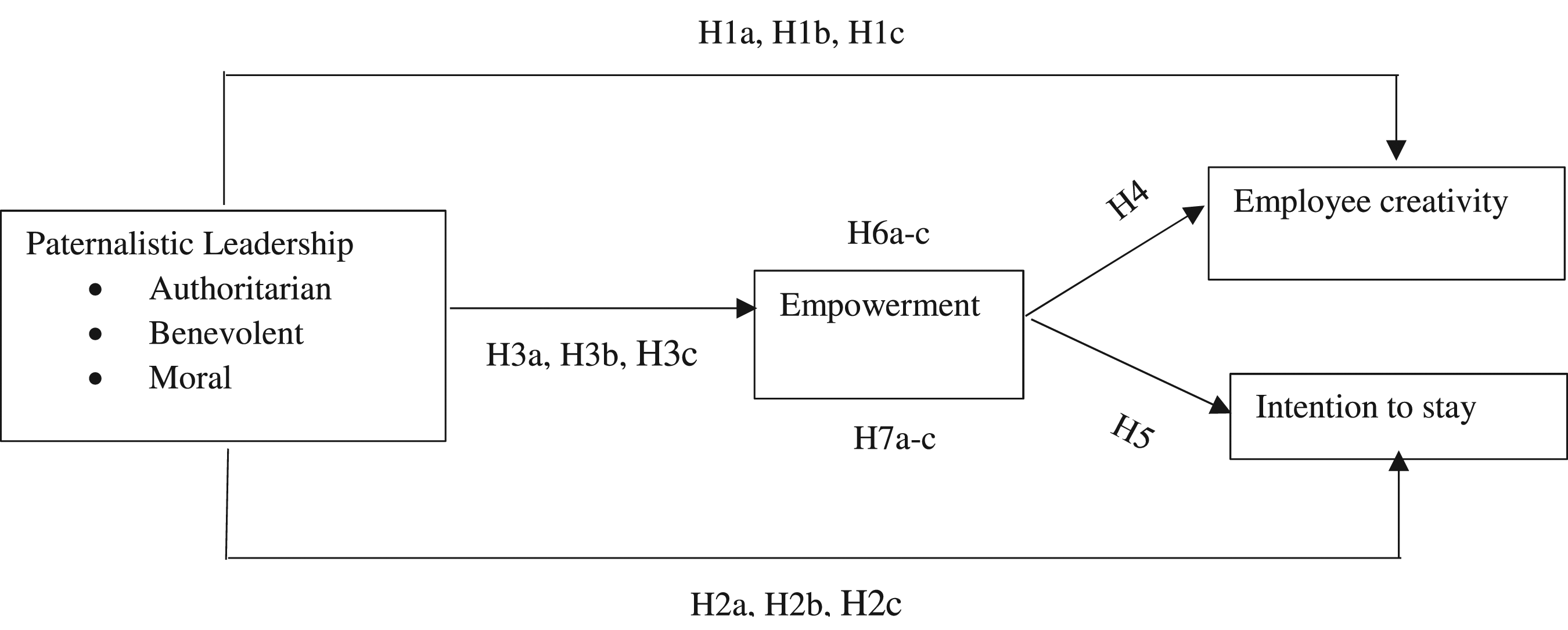
Methods
The target population of the current study was supervisors and employees of manufacturing SMEs in Accra, Ghana. Therefore, the sample included a supervisor-subordinate dyad selected from 32 manufacturing SMEs in Ghana. To avoid common method bias, separate data was collected from the supervisors and subordinates. Supervisors were asked to rate their subordinates’ creativity while the subordinates were requested to rate their intention to stay and their superiors’ paternalistic leadership style and psychological empowerment. The authors physically visited the SMEs and presented a cover letter seeking permission from management to conduct the survey. The study objectives were explained to all respondents, and they were assured of confidentiality and anonymity. In each company, the authors conducted a survey in small group sessions comprising 20-30 respondents. The respondents were given a pre-tested questionnaire consisting of open and closed-ended questions to complete. We coded each questionnaire with a researcher-assigned identification number. This was to ensure that subordinates’ responses are marched with their corresponding superior’s assessment. A total of 550 questionnaires were distributed to 150 supervisors and 400 subordinates. Among the 550 questionnaires, we excluded 74 (18 from supervisors and 56 from subordinates) due to uncompleted data. Thus, the final sample consisted of 476 matched supervisor-subordinate dyads. The SMEs industry consisted of textile and garments (24%), food processing (14%), metal works (26%), furniture and wood processing (22%), and chemicals (14%). The majority of the respondents were male (69.75%). The average age of the respondent was 34.24years with 42% holding a bachelor’s degree and 23.5% having a master’s degree and above. Most of the respondents (34.87%) had served between 6–10years in their organizations, and about 28% had worked between 11–15years.
Measures
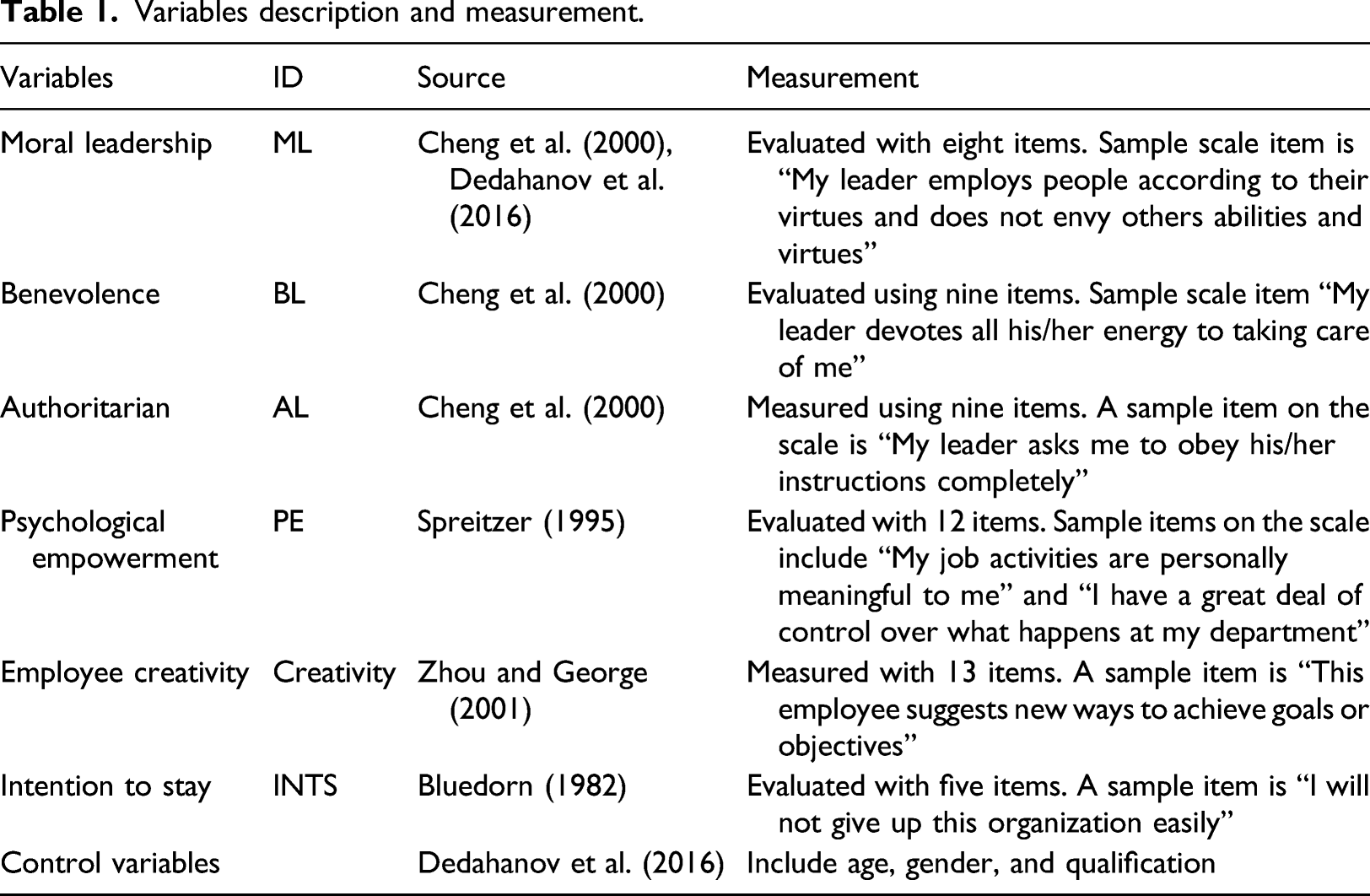
Variables description and measurement.
Comparison of measurement models.
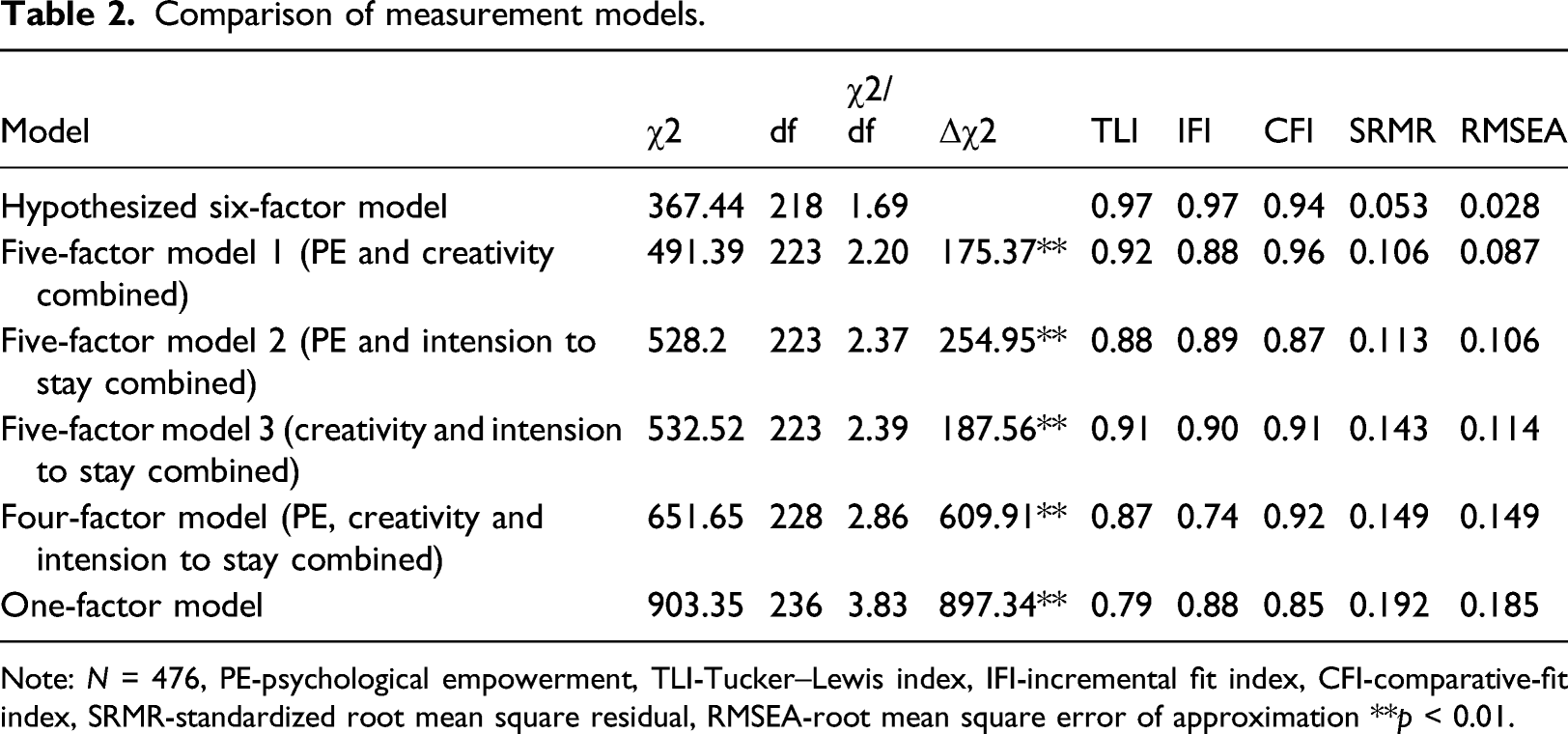
Note: N = 476, PE-psychological empowerment, TLI-Tucker–Lewis index, IFI-incremental fit index, CFI-comparative-fit index, SRMR-standardized root mean square residual, RMSEA-root mean square error of approximation **p < 0.01.
Confirmatory factor analysis (CFA)
To ensure convergent and discriminant validity among all constructs, we conducted a CFA using Amos 19. In doing this, various scale items were combined into parcels for each variable for a model fit comparison. The result in Table 2 shows that the hypothesized six-factor model provides a desirable fit since all the fit indices (TLI = 0.97, IFI = 0.97, and CFI = 0.94) are above the benchmark of 0.90 (Tabachnick and Fidell, 2001). The values of SRMR = 0.053 and RMSE = 0.028 also show a tolerable degree of misfit. Moreover, the χ2/df reported was 1.69, which according to Carmines and McIver (1981) should be under 2, accordingly, supporting the model fit.
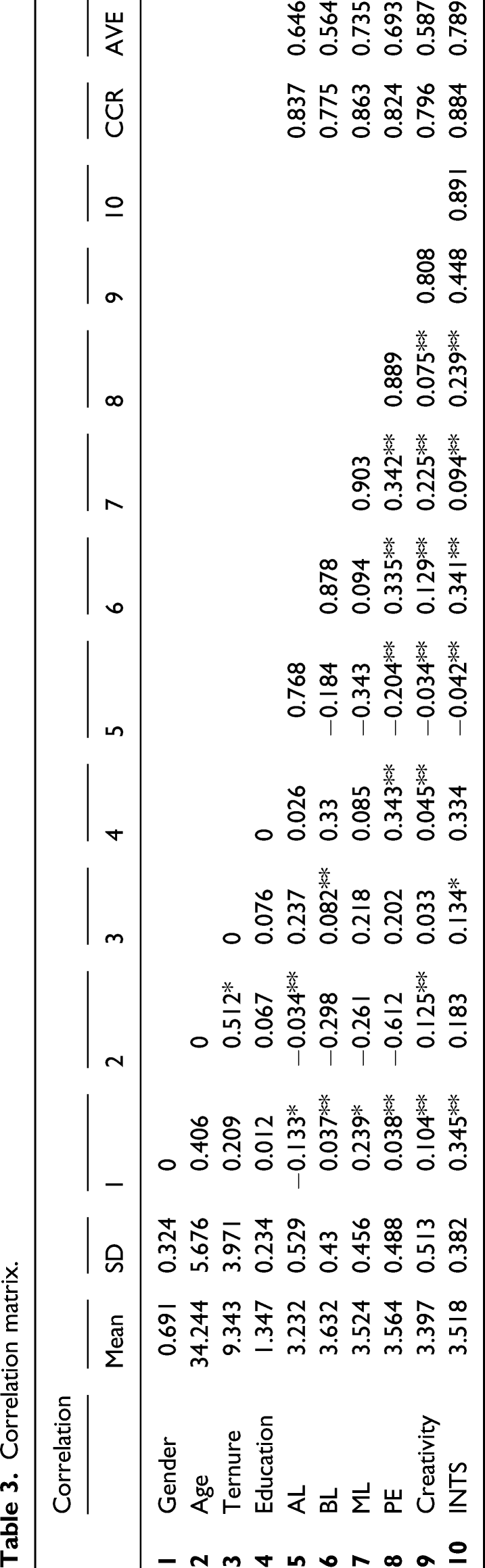
Correlation matrix.
Results and analysis
Descriptive statistics and correlation
Table 3 presents the mean, standard deviation, composite construct reliability, AVE, factor loadings, and inter-correlation for all variables. The result in Table 3 shows higher mean levels of benevolence (3.632) and morality (3.524) than authoritarianism (3.232) indicating that Ghanaian SME managers exhibit a “benevolence paternalism” pattern similar to other Asian countries like China, Indonesia, and the Philippines (Jia et al., 2020; Mansur et al., 2017). This finding, however, contradicts that of Luu and Djurkovic (2019) who found a high level of “exploitative paternalism” pattern in the Vietnamese health sector.
Furthermore, from Table 3, a negative correlation was found between authoritarian leadership and creativity (
Hypothesis testing
Standardized coefficient for final model.
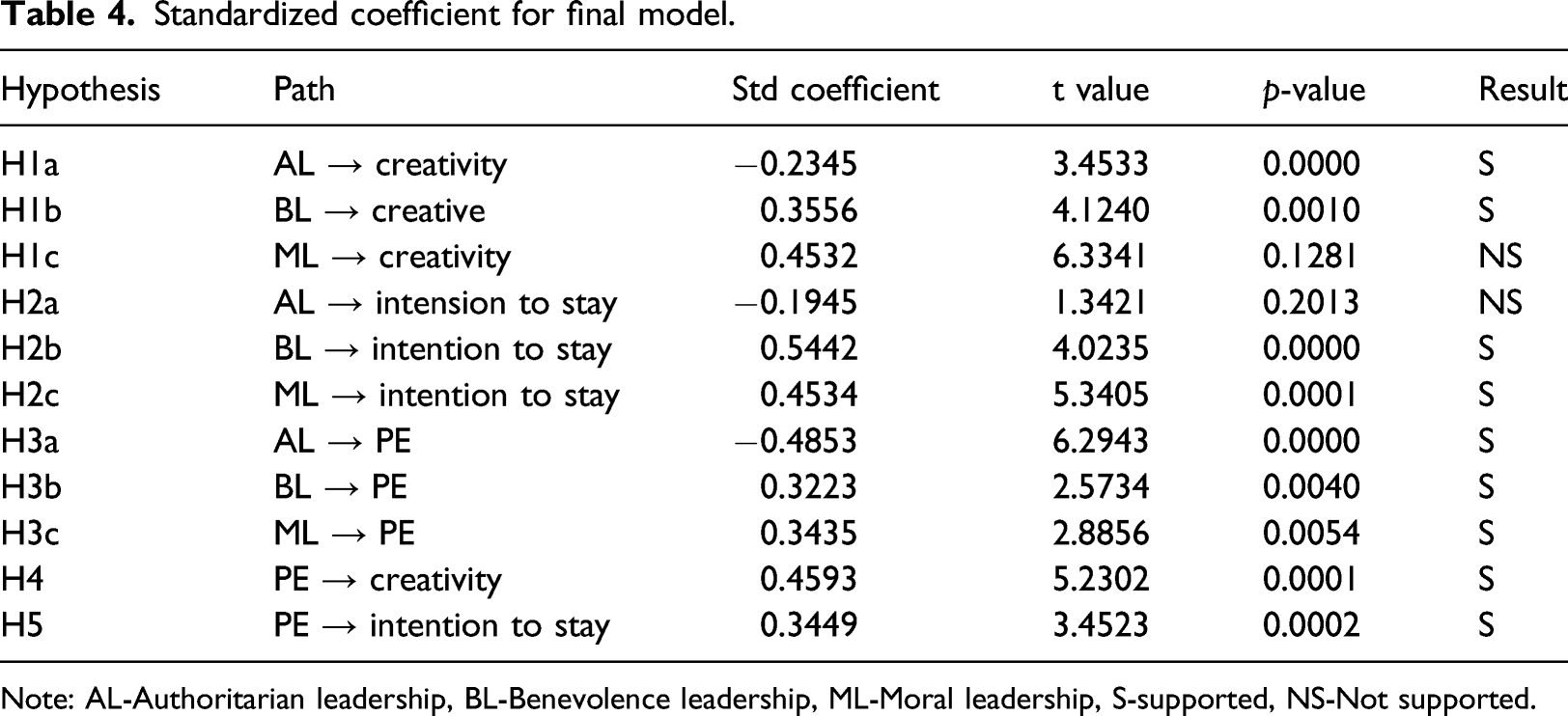
Note: AL-Authoritarian leadership, BL-Benevolence leadership, ML-Moral leadership, S-supported, NS-Not supported.
Mediation mechanism of PE.
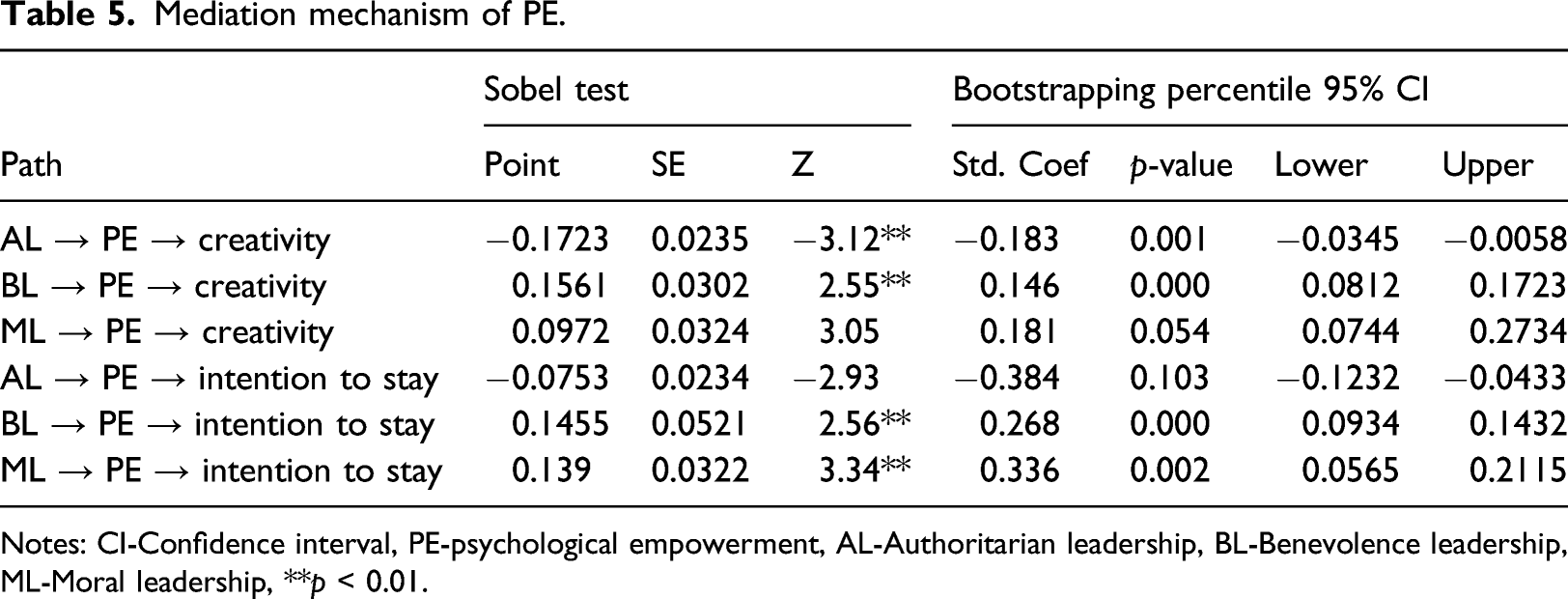
Notes: CI-Confidence interval, PE-psychological empowerment, AL-Authoritarian leadership, BL-Benevolence leadership, ML-Moral leadership, **p < 0.01.
In order to determine the degree to which psychological empowerment elucidates the relationship among the dimensions of paternalistic leadership and employee creativity and intention to stay, Sobel tests were conducted (Sobel, 1982). The Sobel tests presented in Table 5 suggest that psychological empowerment significantly mediates the relationship among two dimensions of paternalistic leadership (authoritarian and benevolent leadership) and both creativity and intention to stay. Notwithstanding, following Preacher and Hayes (2008), a bootstrapping test on 5000 samples with a 95% bias-corrected confidence interval was employed to test the mediation effect. The result also confirms that psychological empowerment mediates the relationship between authoritarian leadership and creativity (
Discussion of Findings
This study addressed an existing gap in leadership research by drawing on the CET to examine how different dimensions of paternalistic leadership influence employee creativity and intention to stay through the mediation role of employee psychological empowerment. The findings of this study support the CET theory and provide further evidence to buttress the argument that paternalistic leadership could have a varied effect on employees’ work-outcome in a different cultural context.
First, the results provide evidence to support paternalistic leadership as an effective leadership style in Ghana, where the majority of SME managers/leaders exhibit the “benevolent paternalism” pattern (low authoritarianism and high benevolence and morality). This “benevolent paternalism” pattern exhibited by Ghanaian SME leaders is similar to cross-cultural analysis of paternal leadership patterns in Asian countries like China, Indonesia, the Philippines, and Malaysia where paternalism is prevalent (Mansur et al., 2017). Our findings, therefore, highlight the view that paternalistic leaders may universally influence employee attitudes and behaviors (Zhang et al., 2015).
Second, the study found that benevolent leadership positively influences employee creativity and intention to stay while authoritarian leadership is negatively associated with employee creativity. The findings suggest that employees perceive leaders who show concern for them and devote energy to attend to their personal and family disquiets as supportive, and this triggers employees to generate novel and creative ideas as well as influence their voluntary retention. This concurs with the study of (Wu, 2018) who reported a positive association between benevolent leadership and employee creative behavior. On the other hand, employees perceive leaders who exert authority and control over employees and command strict obedience and discipline as unsupportive, which affects the creativity of the workforce negatively. Furthermore, the study shows that moral leadership impacts positively on employee intention to stay but does not influence employee creativity significantly. The insignificant relationship between morality and employee creativity is quite contradictory to the finding in the Chinese context (Wang et al., 2019) suggesting that morality may not be a key determinant of creativity in the Ghanaian context, unlike Chinese societies.
Third, the study revealed a negative and significant association between authoritarian leadership and psychological empowerment, while benevolent and moral leadership showed a positive and significant relationship with psychological empowerment. The findings on authoritarian and moral leadership are supported by Dedahanov et al. (2019) reporting a negative relationship between authoritarian leadership and psychological empowerment and a positive association between moral leadership and psychological empowerment. However, the result on benevolent leadership differs from the study of Dedahanov et al. (2019) documenting no significant relationship between benevolent leadership and psychological empowerment. These findings are in line with the CET suggesting that when leaders are too strict and constantly castigate subordinates, it damages employees’ intrinsic motivation causing employees to feel that they are not significant in the organization or within their work unit. On the other hand, when leaders are concerned about the daily life of employees and devote energy to care for employees and their families, employees are likely to feel that they are meaningful to the organization. Likewise, employees are more likely to be empowered and make suggestions that influence the organization when leaders exhibit traits of respect, sympathy, and sincerity and do not take advantage of employees for their benefit (Soomro et al., 2020).
Furthermore, the result indicated that psychological empowerment is positively related to both creativity and intention to stay. The result on psychological empowerment and creativity concords with earlier studies of (Ayoub et al., 2018; Dedahanov et al., 2019), and that of psychological empowerment and intention to stay is in line with Pathak and Srivastava (2017) and Mir and Manzoor (2018). Thus, the study confirms that psychologically empowered employees are more likely to generate novel ideas as well as prefer to continue working in the same organization.
Last, but not least, the bootstrapping analysis shows that psychological empowerment negatively and significantly mediated the relationship between authoritarian leadership and employee creativity. However, psychological empowerment was found to have no significant mediation effect on authoritarian leadership and employee intention to stay. These findings are in line with the CET which suggests that when employees are asked to follow strict rules and are punished for mistakes committed, they perceive their work or contribution to the organization as meaningless. Consequently, with this perception, employees will be unwilling to look for creative ideas and processes that may aid in organizational success. Furthermore, the result also demonstrates that psychological empowerment mediates the relationship among benevolent leadership, creativity and intention to stay. Hence, when supervisors demonstrate concern for the well-being of employees and their families and provide freedom and opportunities for employees at work, employees feel empowered in their work by attaching meaning to their work. This eventually, motivates employees to stay in the same organization and generate novel ideas for the organization. Moreover, while psychological empowerment was found to mediate the relationship between moral leadership and employee intention to stay, this mediation was insignificant between moral leadership and creativity. Thus, when supervisors respect employees, employ people according to their virtues, and do not use their authority to take advantage of employees, employees tend to feel more control and influence over what happens in the workplace. This autonomy inspires employees to stay in the organization but does not influence their creativity.
Theoretical implications
This study offers several theoretical contributions to leadership literature. First, we have made an overall contribution by building and validating a conceptual model that exclusively integrates the dimensions of paternalistic leadership (authoritarian, benevolent, and moral leadership) with employee creativity and intention to stay using CET. The majority of paternalistic leadership research is centered on the social exchange theory, overlooking the potential effect of paternalistic leadership on employees’ intrinsic motivation. Therefore, this study is the earliest to provide a different theoretical lens (the CET) to examine the role of psychological empowerment in the paternalistic leadership, creativity, and intention to stay relationship. Thus, the research model highlights the importance of the level of psychological empowerment in understanding employee creative behavior and intention to stay in terms of leadership style. Specifically, the study establishes that psychological empowerment triggers subordinates autonomy, competence, meaning, self-determination, and impact at work which eventually have varied effects on their creativity and intention to stay when they interact with a paternalistic leader. We further extend the CET by demonstrating that subordinates perceive paternalistic leaders as supportive or unsupportive informational sources. This perception has diverse influences on subordinates’ psychological empowerment and ultimately impacting their creativity and behavioral intentions.
Second, paternalistic leadership is still an emerging topic and until Farh and Cheng (2000) introduced the three-dimensional model and scale, the significance of paternalism in leadership had not been systematically investigated (Ugurluoglu et al., 2018). Paternalistic leadership research has heavily focused on Eastern culture and Asian countries while little has been done in the western and African context (Pellegrini and Scandura, 2008). This study is maiden to examine paternalistic leadership, a traditional leadership style emanating from China, in the Ghanaian business context. Thus, our study extends the international scope and generalizability of paternalistic leadership theory in an under-researched emerging country that has been experiencing a substantial rise of Chinese cultural influence in recent years.
Managerial implications
The findings of this study imply that a comprehensive understanding of the antecedents of employee creativity and intention to stay requires an emphasis on the psychological empowerment practices by a paternalistic leader. In light of this, the study provides an avenue for Ghanaian SME managers to pay considerable attention to empowering their employees to enhance employee creativity and retention. Thus, employers are advised to provide employees with an environment where they are given a high autonomy to perform their functions, their meaningfulness at work is enhanced, and they are allowed to be confident in utilizing their abilities to perform their job skillfully.
Furthermore, the study findings provide insight for SME managers in Ghana to understand the dimensions of paternalistic leadership that influence employee creativity and retention through psychological empowerment. The knowledge of this relationship will aid managers in managing leadership styles that impact employee psychological empowerment, which consequently influences creativity and retention. Specifically, the findings suggest that Ghanaian SME managers could enhance their employee creativity and intention to stay when they exhibit benevolence and moral leadership and limit authoritarian leadership style. Again, employees are likely to be psychologically empowered when managers exhibit a moral and benevolent leadership style at the workplace. In the nutshell, managers are encouraged to show concern for their employees’ personal lives and family members and exhibit respect, empathy, and sincerity to their employees (Soomro et al., 2020). However, managers are encouraged to avoid the use of abusive language, harsh punishments for mistakes, and over-controlling of employees to limit authoritarian practices.
Limitation and direction for future research
Albeit this study makes a significant contribution to the leadership literature, it has some limitations that need to be considered for further studies. First, this study is limited to SME managers and employees in the Greater Accra region of Ghana. The results may not apply to other managers or employees from different cultural settings. Therefore, to boost the robustness and generalizability of the findings, we recommend that future studies should obtain data from different types of businesses in different cultural settings to test our model.
The study measured psychological empowerment with a single construct and did not consider the different dimensions of psychological empowerment. We recommend future studies to explore how the different components of psychological empowerment (example, autonomy, self-determination, meaning, and competence) could explain the relationship among paternalistic leadership, employee creativity and intention to stay. Notwithstanding, this study only focused on psychological empowerment to explain the relationship among paternalistic leadership, employee creativity and intention to stay. Hence, future studies could investigate other mediation mechanisms such as structural empowerment and voice that predict employee creativity and intentions to stay.
Third, time may influence the result and relationship established in this study since the study relied on cross-sessional data collected through self-report surveys. Further studies could employ longitudinal data to test our model to enhance the confidence in the established relationships among the variables.
Footnotes
Declaration of conflicting interests
The author(s) declared no potential conflicts of interest with respect to the research, authorship, and/or publication of this article.
Funding
The author(s) received no financial support for the research, authorship, and/or publication of this article.
