







Abstract
CQ is considered a capability associated with expatriates’ functioning in new intercultural environments, shaped by individual experiences and social norms. This study explores how childhood family values are related to expatriates’ CQ, emphasizing the interplay between early socialization, contextual differences, and workplace environments. This research contributes to the understanding of the deep antecedents of CQ’s cognitive, metacognitive, behavioral, and motivational dimensions. The findings highlight the complex interactions between personal background and contextual factors, offering insights into variations in expatriates’ intercultural capabilities and leadership. The study also underscores the importance of a nuanced approach to CQ development.
Keywords
Introduction
In 2015, a British minister gifted a watch to Ko Wen-je, the mayor of Taipei, Taiwan, unaware that such a gift is considered taboo in Chinese culture. In Mandarin, “offering a clock” is akin to “attending a funeral,” symbolizing bad luck or that the recipient’s time is almost up (The Guardian, 2015). The misunderstanding was compounded when Ko Wen-je jokingly said that he did not need the watch and could sell it for scrap, triggering negative reactions among the British population. The mayor ignored the cultural significance of this gesture and later apologized, saying, “In the UK, a watch is precious because nothing is more important than time” (BBC News, 2015).
Societies are formed around social norms shaping behavior and interactions (Voigt, 2024). Social norms are defined as “informal rules endowed with sanctions that are administered by members of society” (Voigt, 2024: 2). These norms, shaped by historical, cultural, and familial factors, are transmitted through family and institutional structures (Ambos et al., 2019). Social norms define acceptable behaviors through language, education, and family environments (Bossert et al., 2025). Culture is a set of collective mental patterns that differentiate members of a group or social category (Hofstede, 2011). In the context of expatriation, researchers often examine expatriation through national cultural differences and contextual indicators reflecting relative gaps between home and host countries (Ambos et al., 2019; Engle and Nash, 2015). Differences between home and host contexts shape expatriates’ intercultural experiences by exposing them to unfamiliar normative frameworks (Deng et al., 2024). Expatriation, therefore, involves immersion in a new cultural environment, requiring intercultural capabilities shaped by several factors, including cultural intelligence (CQ) (Earley and Ang, 2003).
Earley and Ang (2003: 9) defined CQ as “a person’s capability for success in new cultural settings.” CQ development can be facilitated or hindered by the flexibility of social norms in the country of origin and the contextual differences between home and host countries (Deng et al., 2024). Previous studies suggest that geography, religion, and family organization contribute to the emergence and intergenerational transmission of social norms (Voigt, 2024). Even when geographical or historical constraints shape certain norms, social norms can exist long after those constraints disappear (Groenendyk et al., 2023). Socialization is a lifelong process; transformations in adulthood tend to be less significant than those experienced during childhood (Ivanova et al., 2020).
CQ development reflects complex interactions between individual and contextual factors, highlighting the influence of multiple dimensions such as personal experience, social environment, and education (Alexander et al., 2022). Previous research has identified several antecedents associated with CQ development, including international experience (Morin and Talbot, 2024; Ott and Iskhakova, 2019), learning flexibility (Li et al., 2024), personality-related characteristics (Ang et al., 2006), cross-cultural training (Kundu et al., 2025), and exposure to multicultural environments (Kadam et al., 2021). Organizational and institutional environments have also been associated with variations in CQ development and intercultural functioning (Fang et al., 2018; Ng et al., 2022). Despite these contributions, most CQ studies have focused on professional, organizational, or educational antecedents while paying less attention to early family socialization processes and the transmission of values during childhood. Existing research has examined expatriate adaptation, performance, well-being, and leadership outcomes within specific cultural or organizational settings. These findings remain difficult to generalize across populations and regions because intercultural experiences are shaped by distinct cultural environments, historical trajectories, and contextual conditions (Ng et al., 2024). Previous studies also underline that intercultural functioning varies across organizational and cultural environments (Fang et al., 2018).
This study draws on social learning theory (Kundu et al., 2025) to examine how early family values are associated with expatriates’ CQ across different expatriation contexts and employment sectors. Rather than proposing an exhaustive explanatory model of CQ, the study focuses on early family socialization, as remembered by participants, as one potential antecedent among broader individual and contextual influences. This study examines how family values conveyed during childhood are associated with expatriates’ knowledge acquisition, behavioral flexibility, strategic thinking, and motivation in intercultural interactions (Ott and Iskhakova, 2019; Ott and Michailova, 2018).
Literature review
The cultural intelligence (CQ) model
Originally conceptualized by Ang and colleagues (2006, 2007), CQ includes four interrelated dimensions: metacognitive, cognitive, motivational, and behavioral. The metacognitive dimension refers to individuals’ ability to examine their thoughts and emotions during and after cross-cultural experiences. It involves reflecting on intercultural experiences and adjusting coping strategies across intercultural situations (Ang et al., 2007).
The cognitive dimension refers to an individual’s knowledge of other cultures’ values and social, cultural, and institutional systems. This knowledge facilitates the interpretation of behaviors and social norms in intercultural contexts (Ang and Van Dyne, 2015). The motivational dimension refers to the motivations that encourage individuals to engage with new cultural contexts. It includes intrinsic factors, such as curiosity and interest in cultural diversity, and extrinsic factors, such as professional requirements or social expectations (Ang and Van Dyne, 2015). The behavioral dimension concerns the ability to adopt culturally appropriate behaviors and modes of communication. This ability encompasses verbal and non-verbal communication, which expatriates must develop for more harmonious interactions with people in the host country (Van Dyne et al., 2012).
Unlike more static approaches to cultural competence, CQ emphasizes intercultural capabilities that can be developed through experience and training (Alexandra, 2023). This perspective differs from models that regard cultural competencies as fixed achievements. Previous research has associated CQ with outcomes at the individual (e.g., Brand et al., 2023; Lee, 2023), interpersonal (e.g., Stoermer et al., 2021), team (e.g., Charoensukmongkol and Phungsoonthorn, 2022; Liao and Thomas, 2025), and organizational levels (e.g., Aminullah et al., 2022). Previous studies have also identified multiple antecedents associated with CQ, including personality traits, international mobility, intercultural learning opportunities, organizational support, and prior exposure to diversity (e.g., Ang et al., 2006; Ott and Michailova, 2018).
The cultural context of expatriation
The cultural context of expatriation refers to the intercultural experiences expatriates encounter when settling into unfamiliar environments (Zhang, 2013). This transition involves navigating unfamiliar norms, values, and communication patterns, which may differ substantially from those of the home country (Aguzzoli et al., 2024). Ignoring societies distinct normative frameworks’ differences can lead to tensions and difficulties navigating unfamiliar cultural environments (Mokgwane and Gabasiane, 2023; Pidduck et al., 2022). As Ng and colleagues (2022) and Toumi and Su (2025) have shown, CQ and context are closely interconnected. Rather than treating national culture models as deterministic explanations of intercultural behavior, the present study uses contextual cultural indicators to characterize differences between expatriation environments. Hofstede’s dimensions are therefore mobilized as comparative contextual markers rather than as direct measures of expatriates’ cultural intelligence or adaptation. Contemporary research on expatriation increasingly recognizes that CQ-related intercultural functioning extends beyond national cultural differences to encompass individual-level learning, identity transformation, and intercultural sensemaking (Caldwell et al., 2024).
In some contexts, greater contextual differences may weaken the relationship between motivational CQ and workplace functioning, limiting individuals’ ability to translate motivation into contextually appropriate behaviors (Lei et al., 2025; Toumi and Su, 2025). In other environments characterized by high cultural diversity, CQ remains associated with intercultural functioning and professional interactions (Kadam et al., 2021). These contrasting findings highlight the complexity of CQ across contexts and suggest that intercultural functioning depends on contextual conditions, individual differences, and methodological approaches (Toumi and Su, 2025).
The CQ framework provides a micro-level lens to understand expatriates’ intercultural behaviors, highlighting how exposure to cultural diversity supports metacognitive awareness, motivational engagement, and behavioral flexibility (Li et al., 2024). By situating CQ within the expatriation process, this study conceptualizes expatriates not merely as cultural outsiders navigating predefined norms but as active agents who continuously negotiate meanings and adjust their responses across contexts. This approach aligns with recent calls to integrate CQ into expatriation models to explain variations in intercultural effectiveness beyond static national culture indices (Thomas et al., 2015; Toumi and Su, 2025).
Employment sector
Public and private sector organizations operate according to different institutional logics (Meier & O’Toole, 2011). In the public sector, organizations must operate within formalized rules and procedures. These constraints limit employees’ latitude for action and encourage them to adopt a more deliberative style (Svenson et al., 2023). Ethical accountability and public service obligations shape decision-making processes (Overeem and Tholen, 2011). Civil servants must understand and respect cultural differences while tailoring their interventions to the specific needs of citizens (Cingolani and Salazar-Morales, 2024). In an expatriate context, civil servants are often sent abroad for international cooperation, diplomatic or cultural representation missions. Governments deploy public servants to promote national interests, participate in developing aid programs, or strengthen bilateral relations (CNFPT, 2019). Employment conditions for public sector expatriates often provide protected professional status, with long-term employment guarantees and civil service benefits. In terms of career paths, the careers of expatriate civil servants follow predefined trajectories (Meier & O’Toole, 2011).
In the private sector, expatriates work in professional environments characterized by greater uncertainty, requiring greater decision-making agility (Wangrow et al., 2015). Companies send their expatriates abroad to develop new markets, supervise subsidiaries, transfer skills, and manage projects (Fenner & Selmer, 2008). These assignments often include comprehensive compensation packages, including competitive salaries, expatriation bonuses, and various benefits. However, these positions also impose high-performance targets and pressure to achieve performance objectives. Employees in the private sector are more likely to rely on intuitive and flexible decision-making approaches than those in the public sector. The cognitive model of dual systems supports this observation by contrasting intuitive thinking with analytical and deliberative thinking (Svenson et al., 2023). As a result, private sector employees adopt a more flexible approach. This flexibility is reinforced by human resources management policies regarding performance and competitiveness (Eurofound, 2003).
The employment sector, conceptualized here as a contextual factor, captures structural and organizational characteristics that may influence how expatriates apply their CQ. While public sector organizations are typically guided by formalized procedures and accountability frameworks, and private organizations often emphasize flexibility and performance-based incentives, these distinctions are not absolute. Both sectors encompass significant internal diversity depending on the mission, size, and governance context of the organization (Meier & O’Toole, 2011; Svenson et al., 2023). Therefore, the effect of employment sector in this study is not assumed to reflect rigid categorical differences but rather to represent variations in institutional logic and organizational culture that may shape the expression and development of CQ.
The influence of socialization and family values on expatriate CQ: Theoretical framework and hypotheses
The family plays a critical role in determining children’s lives (Aranbarri et al., 2023; Baumrind, 1980), their path to adulthood (Ivanova et al., 2020), and their early socialization experiences (Deniz et al., 2013). Socialization is the process through which people adapt to a society by learning its norms, behaviors, values, knowledge, skills, and psychological attitudes (Ivanova et al., 2020: 2201). Children are not born knowing social norms (Bunce and McElreath, 2017). Instead, they develop them through experimentation and repetition, regardless of the norms used to socialize with them (Legare and Nielsen, 2015).
Children go through a period of development when they are cognitively more receptive to adopting cultural norms (Bunce and McElreath, 2017). Thus, individuals who experience positive exposure to out-group norms early in the socialization process through interethnic interaction are more likely to develop familiarity with the norms of the host culture (Bunce and McElreath, 2017). Socialization is defined as an interactive learning process through which actors acquire field-specific orientations and values (Hamann and Velarde, 2025 p.324) More specifically, family socialization is defined as “the process by which children learn to acquire patterns of behavior that promote adaptation in their specific social context” (Doan et al., 2022 p.75) These elements suggest that childhood socialization experiences contribute to understanding antecedents associated with CQ.
In this study, family values are defined as the perceived orientations and norms governing early socialization, rather than objective ideological positions. This focus acknowledges that individuals’ interpretations of their upbringing, whether open or conformist, egalitarian or hierarchical, shape their later approach to cultural difference (Bunce and McElreath, 2017; Legare and Nielsen, 2015). Such perceptions provide a cognitive-emotional framework through which adults engage with diversity and complexity in intercultural contexts.
Parents’ political beliefs
Liberal or progressive parental values are generally associated with greater openness toward cultural diversity, minority rights, and social equality (Bartusevičius et al., 2020). Expatriates from families with more liberal beliefs are more likely to have been socialized to perceive diversity more positively. This early socialization may support cognitive openness and intercultural learning, contributing to a greater understanding of foreign cultural values and practices (Moskalenko, 2025). Additionally, individuals who adhere to progressive positions (e.g., migrant rights and gender equality) perceive diversity more positively (Vergani et al., 2023). Expatriates who grew up in an environment with liberal values may have an ambivalent attitude toward local cultural norms. Greater intellectual humility may also make individuals more likely to recognize that their frame of reference is not universal (Snow, 1995). This perspective fosters greater behavioral flexibility and the ability to adjust practices to local expectations (Moskalenko and McCauley, 2009). However, expatriates strongly attached to progressive value systems may experience tension in more conservative cultural environments (Vergani et al., 2023). In societies characterized by strong hierarchical structures or limited tolerance for dissent, expatriates with progressive values may experience moral or cultural tension, as their emphasis on autonomy and equality may conflict with locally dominant social norms.
Conservative orientations emphasize continuity and social order, whereas authoritarian environments impose compliance with rigid rules and centralized authority (De Oliveira Santos and Jost, 2024). Conservative families seek to preserve traditional rules and may prioritize continuity and social cohesion within established social structures (Hetherington and Weiler, 2018). Conservatives, who often value prudence and continuity, may be more inclined to prefer reflection and restraint to active engagement and open debate.
Studies on belief radicalization suggest that strong political convictions may influence others’ perceptions and capacities associated with intercultural functioning (Moskalenko and McCauley, 2009). This conceptualization moves beyond the dichotomy of “liberal” versus “conservative” and instead treats early political socialization as a continuum of openness versus authority orientation. In this study, family political orientations are conceptualized as perceived value climates within the family, rather than as direct indicators of parental political affiliation. This distinction acknowledges that what individuals internalize from their upbringing is not necessarily a partisan ideology, but a set of social norms related to authority, equality, and openness that guide their interpretations of cultural difference later in life (Bunce and McElreath, 2017; Legare and Nielsen, 2015). The influence of these early value orientations is also expected to depend on contextual conditions. In performance-driven or flexible environments, such as the private sector, exposure to open and egalitarian family climates may facilitate behavioral and motivational CQ. In contrast, in rule-bound contexts, such as public-sector institutions, authority-oriented upbringings may support reflective and procedural CQ by reinforcing cognitive discipline and respect for structure (Meier & O’Toole, 2011; Cingolani and Salazar-Morales, 2024). We posit the following hypothesis:
Early family political orientations are associated with variations in expatriates’ CQ across intercultural contexts.
Progressive or egalitarian family socialization may be associated with stronger behavioral and metacognitive CQ.
Authority-oriented family climates may be associated with different CQ patterns across expatriation contexts.
Contextual environments characterized by greater pluralism may shape the expression of CQ across expatriation settings.
Parents’ religious beliefs
Religious socialization during childhood constitutes a key mechanism through which families transmit moral frameworks, collective norms, and a sense of belonging. While religion and culture are often intertwined, they operate at distinct levels of analysis. Religion refers primarily to a system of beliefs and moral prescriptions about human relations and transcendence, whereas culture encompasses shared meanings, values, and behavioral norms that shape how these beliefs are expressed in daily life. Previous studies have shown that religious morality tends to promote internal cohesion and the preservation of social order within the in-group rather than universal benevolence (Saroglou and Craninx, 2021). This socializing function of religion often sacralizes parent-child relationships, imbuing them with symbolic and emotional significance that strengthens family bonds (Mahoney et al., 2003). Religious socialization has also been associated with positive effects on family dynamics (Yeung and Chan, 2014) and the maintenance of cohesive, resilient family systems (Vermeer, 2014).
Within families, parents and grandparents serve as primary agents of religious transmission, shaping children’s moral reasoning, prosocial attitudes, and social worldviews (Bengtson et al., 2002). Research shows that grandparents, in particular, exert a significant influence on the moral and spiritual development of grandchildren, both by reinforcing parental teachings and by introducing alternative interpretations of faith (Silverstein and Marenco, 2001). As “spiritual guides,” they transmit prosocial and community-oriented values rooted in religious traditions (Preston et al., 2013).
In the context of CQ, this intergenerational religious transmission may support the development of cognitive and motivational aspects of CQ. Exposure to moral systems embedded in religion contributes to understanding social norms and intergroup ethics, while fostering respect and curiosity toward diverse worldviews (Silverstein et al., 2025). However, religion and culture are not synonymous. Religion provides moral frameworks, whereas culture shapes the social expression of these moral codes. Thus, the impact of early religious socialization on CQ likely depends on contextual factors, such as exposure to religious diversity or intergroup contact (Sharp et al., 2020, 2025). In pluralistic or heterogeneous environments, children encounter multiple systems of belief and value, encouraging reflexivity, tolerance, and perspective-taking, skills associated with CQ’s cognitive and motivational components (Arnett, 2000). In contrast, homogeneous or doctrinal contexts may strengthen conformity and in-group loyalty at the expense of intercultural flexibility.
We therefore posit that early religious socialization is associated with variations in CQ through the moral and relational frameworks transmitted during childhood. The influence of these frameworks is expected to vary according to contextual conditions such as religious diversity, intercultural exposure, and uncertainty tolerance within expatriation environments. We posit the following hypothesis:
Early religious socialization is associated with variations in expatriates’ CQ across intercultural contexts.
Strong religious socialization may be associated with lower intercultural flexibility in expatriation environments characterized by limited religious diversity and stronger normative rigidity.
In pluralistic environments, early exposure to structured belief systems may support reflective understanding, openness toward diversity, and motivational CQ.
The relationship between early religious socialization and CQ may vary according to contextual conditions such as religious pluralism, uncertainty tolerance, and intercultural exposure.
Family traditions and customs
Family traditions and customs transmitted during childhood play a critical role in shaping how individuals perceive, interpret, and respond to cultural diversity later in life. During childhood, humans learn enduring values through customs and traditions that remain relatively stable throughout life and influence future behavior (Amory et al., 2024; Van Hoorn, 2019). The family therefore constitutes the primary vector of intergenerational cultural knowledge and skills (McKinley, 2024). Through recurrent participation in rituals, celebrations, and intergenerational practices, children acquire symbolic and behavioral frameworks that contribute to the cognitive dimension of CQ by enhancing their understanding of social norms, shared meanings, and cultural scripts. These traditions also foster a sense of identity, belonging, and continuity that anchors individuals in their cultural background while providing reference points for interpreting other cultural systems (Bengtson et al., 2002; Silverstein and Marenco, 2001).
Customs and traditions serve as a form of “cultural capital,” transmitting values, norms, and practices that enable individuals to decode the cultural codes of a society and are linked to stronger personal and collective identity (Bourdieu, 2019). When transmitted in inclusive ways, family traditions may nurture curiosity, empathy, and openness toward diversity while integrating diverse influences. Children raised in such environments learn to appreciate multiple symbolic systems and to engage positively with culturally distinct others (Vermeer, 2014). The repetition of adaptive relational practices across generations also promotes the behavioral dimension of CQ, training individuals to adjust their conduct, communication, and social behaviors to diverse cultural expectations (Teixeira & Klein, 2024).
Moreover, family customs and traditions significantly influence the development of cultural skills, which are essential for transmitting cultural values and interacting across contexts (Wang et al., 2022; Wynn et al., 2021). Parents’ ethnic-racial socialization practices, for instance, are shaped by socioeconomic status and acculturation levels (Wong et al., 2024). Educational (Gebauer et al., 2014), political (Hetherington and Weiler, 2018), and religious values (Bellah et al., 2007) also influence how families interpret and transmit these traditions. The influence of family traditions on CQ is thus context-dependent: inclusive, evolving traditions foster openness and intercultural functioning, whereas prescriptive, homogeneous ones may restrict intercultural flexibility and cognitive complexity. We posit the following hypothesis:
Early exposure to family traditions and customs is associated with variations in CQ by shaping individuals’ cultural schemas and behavioral CQ-related capabilities.
Inclusive and adaptive family traditions may be associated with stronger behavioral CQ and intercultural flexibility.
Rigid or ethnocentric traditions may hinder intercultural flexibility and openness in culturally distant environments.
The influence of family traditions on CQ may vary according to the inclusiveness and adaptability of transmitted customs across intercultural contexts.
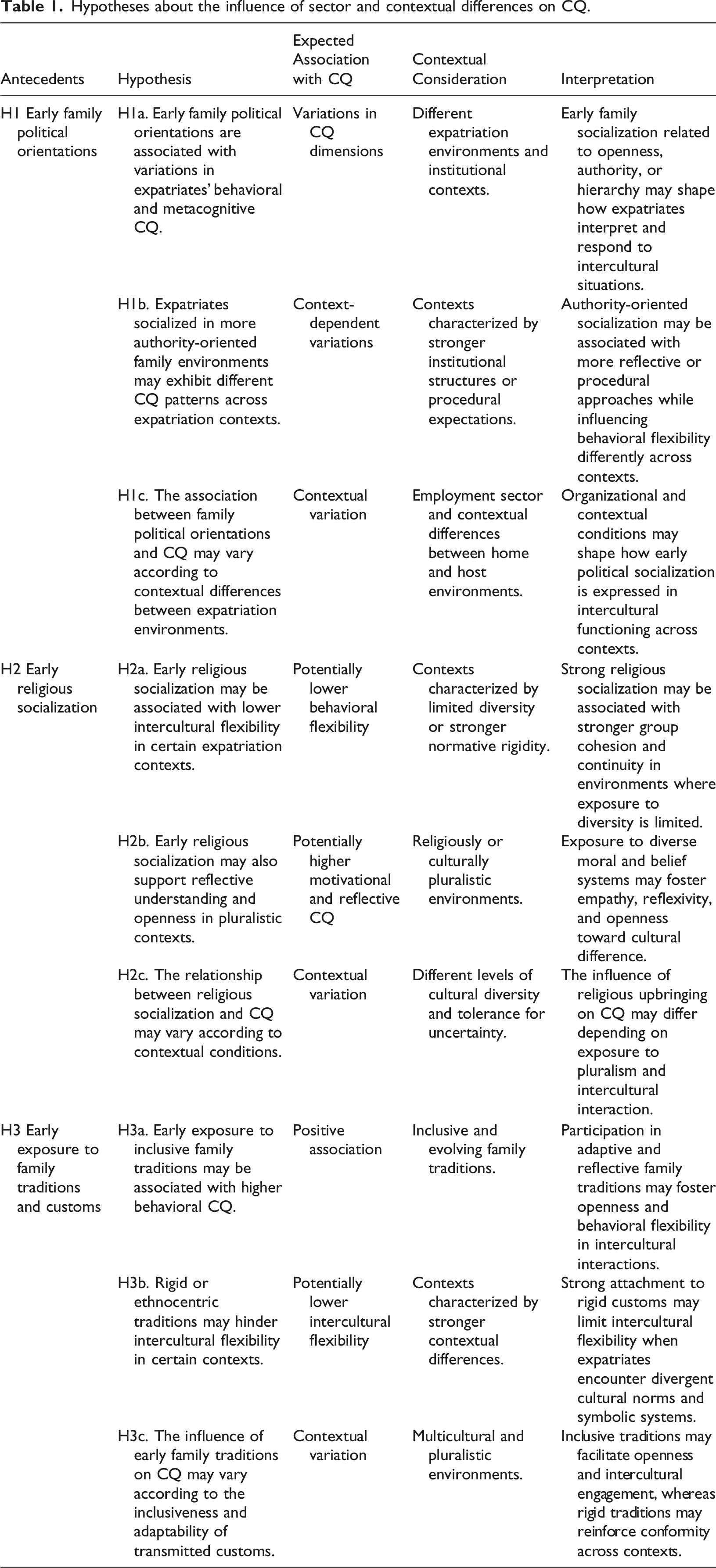
Figure 1 presents the theoretical model that guides our investigation of CQ. It draws on and synthesizes previous research on the antecedents of CQ cited above and the literature on socialization. Table 1 summarizes the hypotheses and expected effects on CQ. Model of the theoretical relationships. Figure adapted from Morin and Talbot (2024 p. 2974). Hypotheses about the influence of sector and contextual differences on CQ.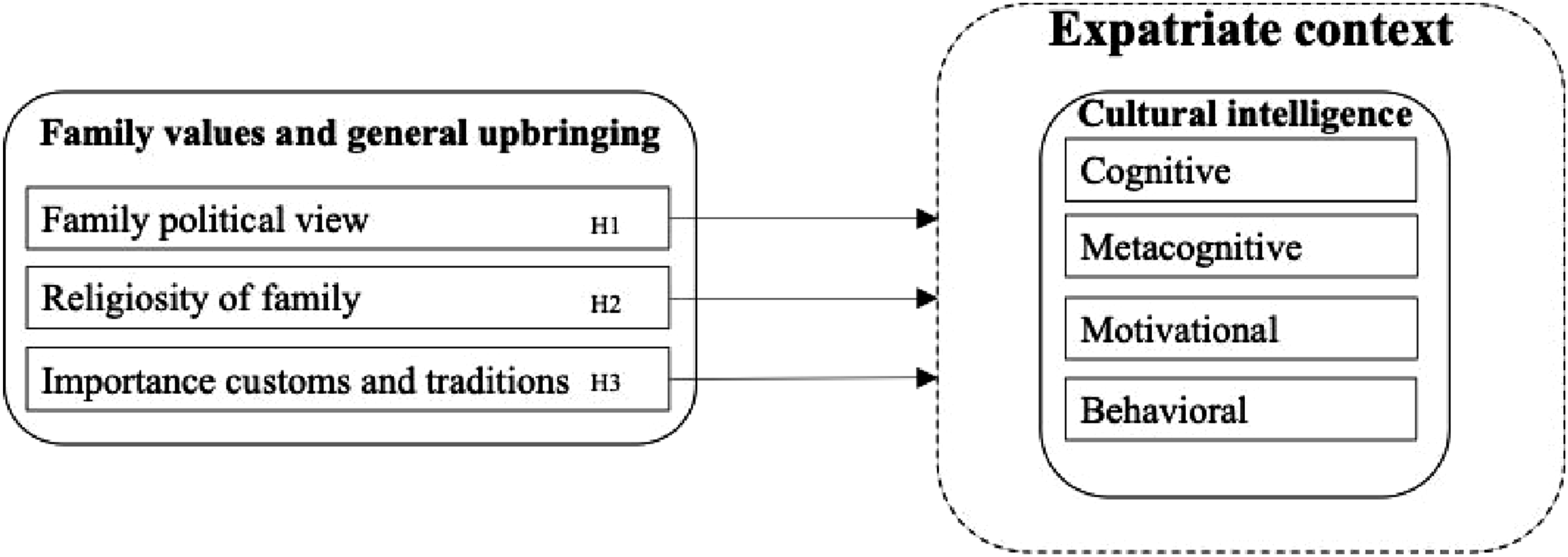
Methodology
Sample and data collection
The objective of this study is to examine associations between early family values and expatriates’ CQ across expatriation contexts. The study relied on two data sources: a quantitative survey and secondary data from Hofstede’s website. The quantitative survey was developed and administered online to expatriates. For this study, we define expatriates as individuals temporarily residing and working in a country other than their country of birth or nationality. This definition aligns with prior expatriation research (González and Oliveira, 2011).
Given the exploratory design and the difficulty of reaching a globally dispersed population, a combination of convenience and snowball sampling was used (e.g., He et al., 2019; Kaleramna et al., 2019). Participants were recruited through two digital social media platforms: Facebook and LinkedIn. Digital social media platforms facilitate access to geographically dispersed populations (Evans and Mathur, 2018). Researchers contacted group administrators by private message to 188 previously identified expatriate groups on Facebook to request approval to publish a recruitment ad and to share the questionnaire link on their page. Recruitment messages were posted in English (n = 137) and French (n = 49). The survey measured CQ levels and assessed the influence of socialization and international experiences. Although 5083 participants accessed the questionnaire, 38% (n = 1937) completed the questionnaire and signed the consent forms.
The second data source comes from Hofstede’s (2015) culture database. Data from this study used the model’s six dimensions to specify the expatriation context. Cultural dimension scores were retrieved from the Geert Hofstede database https://geerthofstede.com. Using two data sources for the analyses allowed the study to (1) reduce common method bias (Podsakoff et al., 2003) and (2) assess, using separate data, the differences in contexts between the country of origin and the country of expatriation.
To operationalize this variable, participants self-identified as working in either the public or private sector based on their employment contracts. The public sector includes governmental, intergovernmental, and public service organizations, whereas the private sector comprises corporate and non-governmental organizations operating under market-driven or independent governance. This operational distinction serves as a pragmatic analytical boundary rather than a strict theoretical dichotomy, acknowledging that levels of procedural formality, diversity, and intercultural capabilities may vary substantially across organizations within each sector. Recent research has also emphasized that structural and managerial differences between the two sectors are far from uniform, as organizational cultures, governance logics, and workforce dynamics overlap and interact in complex ways (Sardana et al., 2024; Boye et al., 2024).
Measures
Cultural intelligence
The dependent variable, CQ, was measured using the 37-item E-CQS measurement scale developed by Van Dyne and colleagues (2012). Participants selected responses on a 7-point Likert-type scale ranging from 1 (strongly disagree) to 7 (strongly agree). The scale demonstrated satisfactory validity and good internal consistency for global CQ and its four dimensions, with a Cronbach’s alpha coefficient of 0.90 for global CQ and item-total correlations ranging from 0.32 to 0.78. Factor loadings were statistically significant (p = 0.01) and above 0.50, ranging from 0.72 to 0.90, supporting the convergent validity of the scale items.
Family values
Single questionnaire items assessed the measurement of independent variables associated with family values. Political values were assessed with the item: “Would you consider your family that you grew up in to be politically … (1 = Very liberal, 2 = Moderate, 3 = Conservative, or 4 = Very conservative).” Religious values were assessed with the item: “Would you consider your family that you grew up in to be (1 = Very religious, 2 = Moderately religious, 3 = Only slightly religious, or 4 = Not religious at all)?” The importance of customs and traditions was assessed with a binary item: “For your family, traditions and customs are very important? (0 = no, 1 = yes)”. Single-item measures were selected to reduce questionnaire length and participant fatigue in the context of an already lengthy international survey.
The expatriation context
This study also incorporates both the context of expatriation and the employment sector. For this study, participants were divided into four sub-samples, each representing a specific expatriation context and sector of activity. Randel and Alexandra (2024, p. 9) have pointed out that focusing on perceived group similarity captures diversity as subjectively experienced by group.
Expatriates were classified according to relative contextual differences between home and host countries using variations across Hofstede’s six cultural dimensions. To differentiate participants’ expatriation contexts, we established six contextual variables based on the contextual differences, assessed according to Hofstede’s six dimensions, between the country of origin and the last expatriation country. Power distance (PD) reflects how authority and hierarchy are perceived within societies (Hofstede, 2011). Uncertainty avoidance (UA) reflects attitudes toward ambiguity and uncertainty (Hofstede, 2011). The individualism-collectivism (IDV) dimension reflects the extent to which societies prioritize individual autonomy or collective orientation (Triandis, 2018). Masculine versus feminine values (MAS) influence orientations toward competition, cooperation, and professional interactions (Hofstede, 2011). Long-term versus short-term orientation (ITOWVS) shapes expectations regarding learning, progression, and professional relationships (Han et al., 2022). Indulgence versus restraint (IVR) influences emotional expression and social interaction patterns (Minkov and Kaasa, 2022).
Descriptive statistics of variables and correlations.
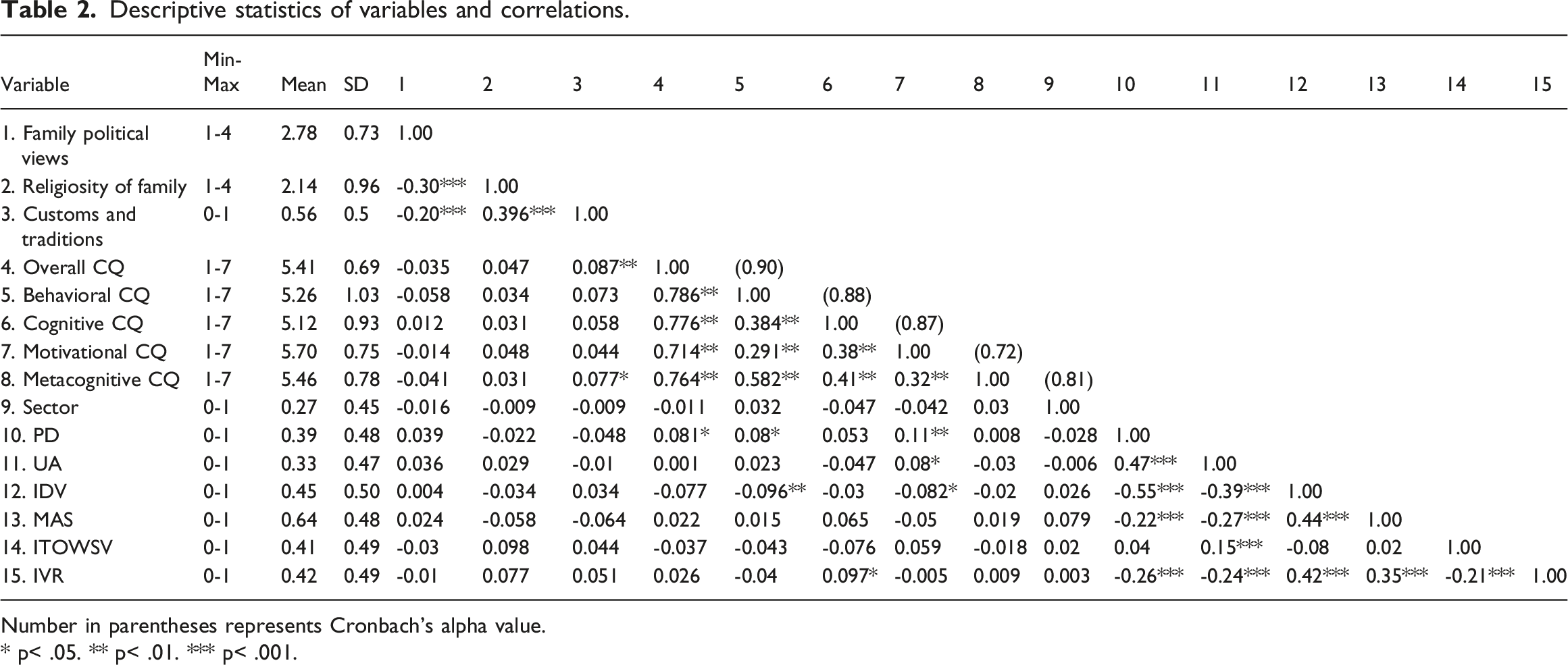
Number in parentheses represents Cronbach’s alpha value.
* p< .05. ** p< .01. *** p< .001.
Analysis
Study sample.
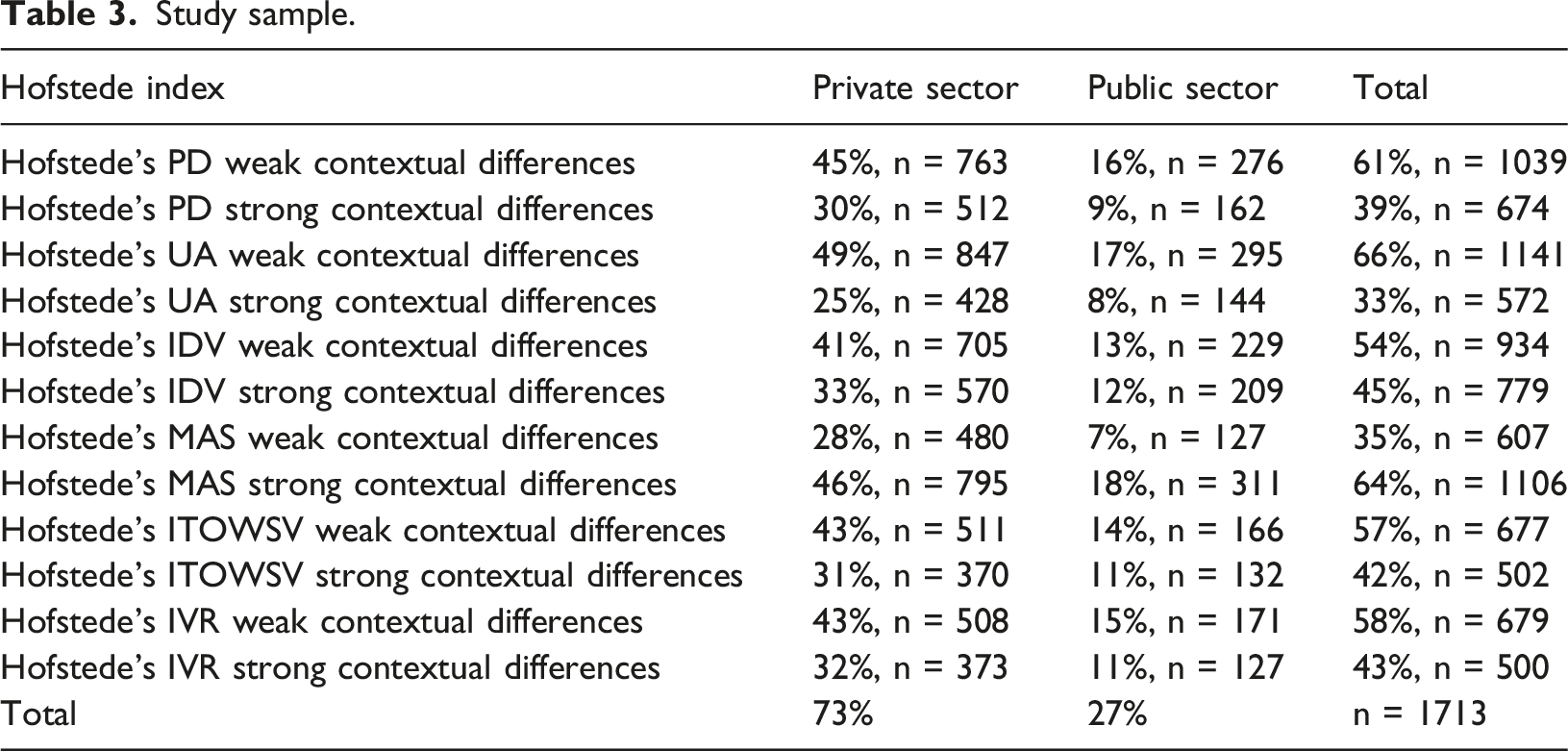
The hypotheses were tested separately for expatriates in the public and private sectors according to relative contextual differences for global CQ and the four sub-dimensions (cognitive, metacognitive, behavioral, and motivational). Therefore, OLS regression analyses were performed across four contexts: (1) the private sector, low relative contextual differences; (2) the private sector, high relative contextual differences; (3) the public sector, low relative contextual differences; and (4) the public sector, high relative contextual differences.
The analytical strategy adopted in this study was primarily exploratory rather than confirmatory. Instead of formally testing statistically-based moderation effects through conditional process modelling, the analyses compared patterns across subgroup regressions defined by employment sector and relative contextual differences. This approach was selected to identify potential contextual variations while maintaining interpretable subgroup structures within the sample. Consequently, differences observed between groups should be interpreted as contextual tendencies rather than statistically interacted effects.
Although exploratory in nature, the study employed several methodological safeguards to support methodological robustness, including diversified recruitment sources, validated measurement instruments, and subgroup cross-checking. These steps aimed to ensure data consistency and to identify stable patterns across professional and cultural contexts.
Results
Assumptions for models associated with Hofstede dimensions according to public or private sector.
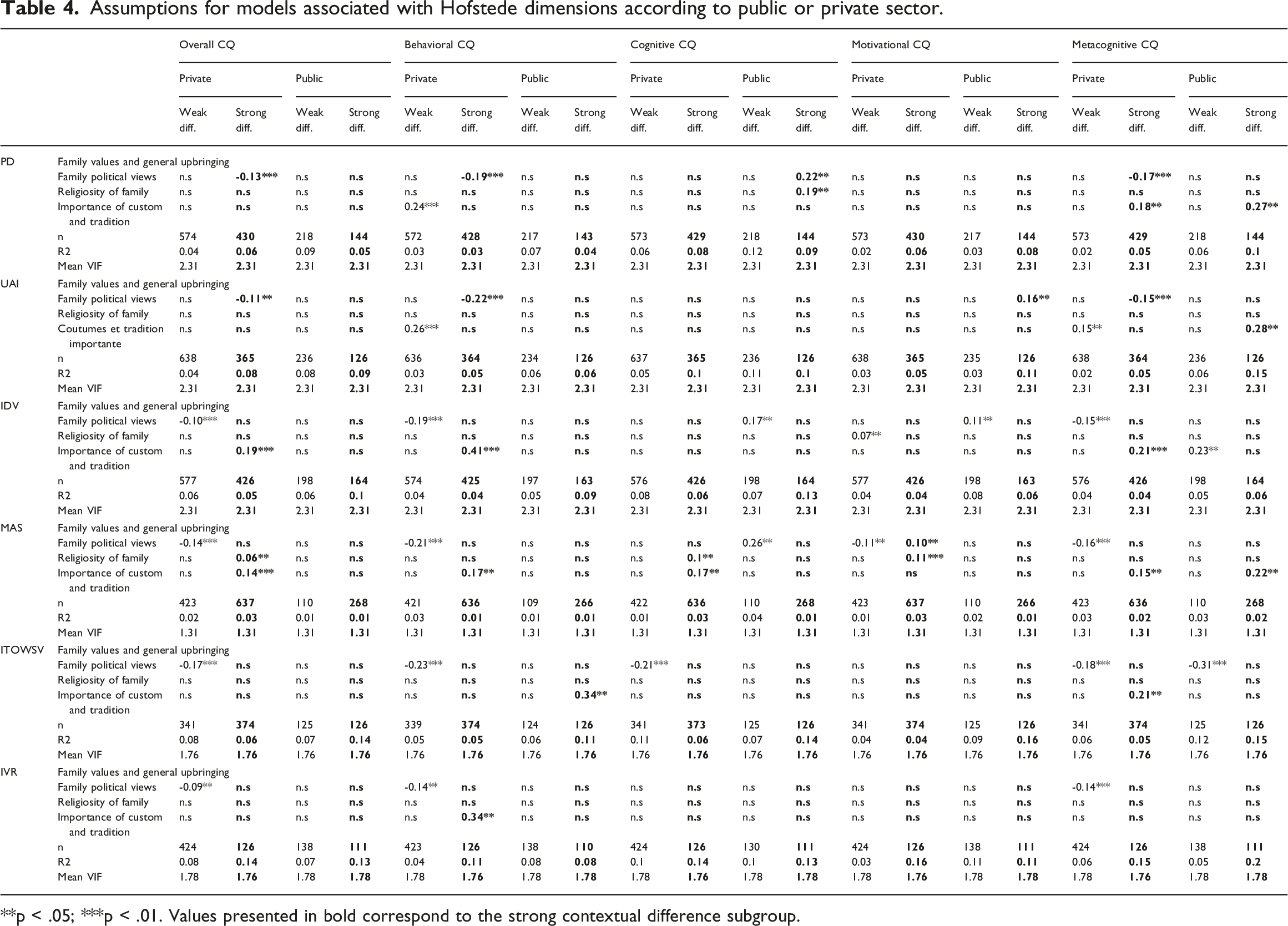
**p < .05; ***p < .01. Values presented in bold correspond to the strong contextual difference subgroup.
Power distance dimension (PD)
For the PD context, family political orientations perceived during childhood are associated with several dimensions of CQ. In the private sector, expatriates who grew up in families emphasizing more conservative or authority-oriented political values report lower global CQ (β = −0.13, p < 0.01), behavioral CQ (β = −0.19, p < 0.01), and metacognitive CQ (β = −0.17, p < 0.01) within contexts characterized by greater relative contextual differences. Conversely, those raised in families promoting more structured or traditional political values in the public sector report higher cognitive CQ (β = 0.22, p < 0.05). Family religiosity is also associated with CQ differently across sectors. In the public sector, expatriates from more religious families show higher cognitive CQ (β = 0.19, p < 0.05) under high relative contextual differences. However, religiosity is not significantly associated with CQ among private-sector expatriates, regardless of relative contextual differences. Expatriates raised in families where customs and traditions were central to family life report higher behavioral CQ and metacognitive CQ. In the private sector, such individuals report higher behavioral CQ (β = 0.24, p < 0.01) when relative contextual differences are low, and higher metacognitive CQ under high relative contextual differences in both public (β = 0.18, p < 0.05) and private (β = 0.27, p < 0.05) sectors.
Uncertainty avoidance dimension (UA)
In the UA context, expatriates raised in families with more conservative or authority-oriented political values report lower global CQ (β = −0.11, p < 0.05), behavioral CQ (β = −0.22, p < 0.01), and metacognitive CQ (β = −0.15, p < 0.01) when relative contextual differences are high in the private sector. In contrast, in the public sector, similar family political orientations are associated with higher motivational CQ (β = 0.16, p < 0.01). Family religiosity showed no significant association with CQ in either sector. Meanwhile, expatriates raised in families that placed great importance on customs and intergenerational traditions report higher behavioral CQ (β = 0.26, p < 0.01) and metacognitive CQ (β = 0.15, p < 0.01) at low relative contextual differences in the private sector, and higher metacognitive CQ (β = 0.28, p < 0.05) under high relative contextual differences in the public sector.
Individualism versus collectivism dimension (IDV)
In IDV contexts, expatriates who grew up in families emphasizing more conservative or authority-oriented values report lower global CQ (β = −0.10, p < 0.01), behavioral CQ (β = −0.19, p < 0.01), and metacognitive CQ (β = −0.15, p < 0.01) CQ in the private sector when relative contextual differences are low. Conversely, those raised in politically structured families report higher cognitive CQ (β = 0.17, p < 0.05) and motivational CQ (β = 0.11, p < 0.05) among public-sector expatriates. Regarding religion, expatriates from less practicing or secular families report motivational CQ (β = 0.07, p < 0.05) when relative contextual differences are low, while religiosity is not significantly associated with other CQ dimensions. Expatriates raised in families where traditions were at the heart of family life report higher global CQ (β = 0.19, p < 0.01), behavioral CQ (β = 0.41, p < 0.01), and metacognitive CQ (β = 0.21, p < 0.01) at high relative contextual differences in the private sector, and higher metacognitive CQ (β = 0.23, p < 0.05) under low relative contextual differences in the public sector.
Masculinity versus Femininity dimension (MAS)
In MAS contexts, expatriates from families emphasizing conservative or authority-oriented political values report lower global CQ (β = −0.17, p < 0.01), behavioral CQ (β = −0.23, p < 0.01), cognitive CQ (β = −0.21, p < 0.01), and metacognitive CQ (β = −0.18, p < 0.01) in the private sector when relative contextual differences are low. However, those raised in politically structured families report higher motivational CQ (β = 0.10, p < 0.05) when relative contextual differences are high, while public-sector expatriates from similar family environments report higher cognitive CQ (β = 0.26, p < 0.05) under low relative contextual differences. Expatriates from less practicing families report higher global CQ (β = 0.06, p < 0.05), cognitive CQ (β = 0.10, p < 0.05), and motivational CQ (β = 0.11, p < 0.01) under high relative contextual differences. Expatriates from families where traditions and rituals were strongly valued report higher global CQ, behavioral CQ, cognitive CQ, and metacognitive CQ in the private sector (β ranging from 0.14 to 0.17, all p < 0.05), as well as higher metacognitive CQ in the public sector (β = 0.22, p < 0.05).
Long-Term and short-term orientation dimension (ITOWVS)
Within ITOWVS contexts, expatriates raised in families characterized by traditional or authority-oriented values report lower global CQ (β = −0.17, p < 0.01), behavioral CQ (β = −0.23, p < 0.01), cognitive CQ (β = −0.21, p < 0.01), and metacognitive CQ (β = −0.18, p < 0.01) in the private sector under low relative contextual differences. In the public sector, this association is observed only for metacognitive CQ (β = −0.31, p < 0.01). The level of family religiosity, whether high or low, is not significantly associated with CQ in either sector. However, expatriates raised in families where cultural rituals and traditions occupied a central place report higher behavioral CQ (β = 0.34, p < 0.05) in the public sector and higher metacognitive CQ (β = 0.21, p < 0.05) in the private sector under high relative contextual differences.
Indulgence versus restraint dimension (IVR)
Within IVR contexts, expatriates who grew up in families emphasizing conservative or authority-oriented political values report lower global CQ (β = −0.09, p < 0.05), behavioral CQ (β = −0.14, p < 0.05), and metacognitive CQ (β = −0.14, p < 0.01) in private-sector settings characterized by low relative contextual differences. The level of religious practice within the family is not significantly associated with CQ in either sector.
In contrast, expatriates raised in families where customs, rituals, and traditions were integral to daily life report higher behavioral CQ (β = 0.34, p < 0.05) in the private sector under high relative contextual differences.
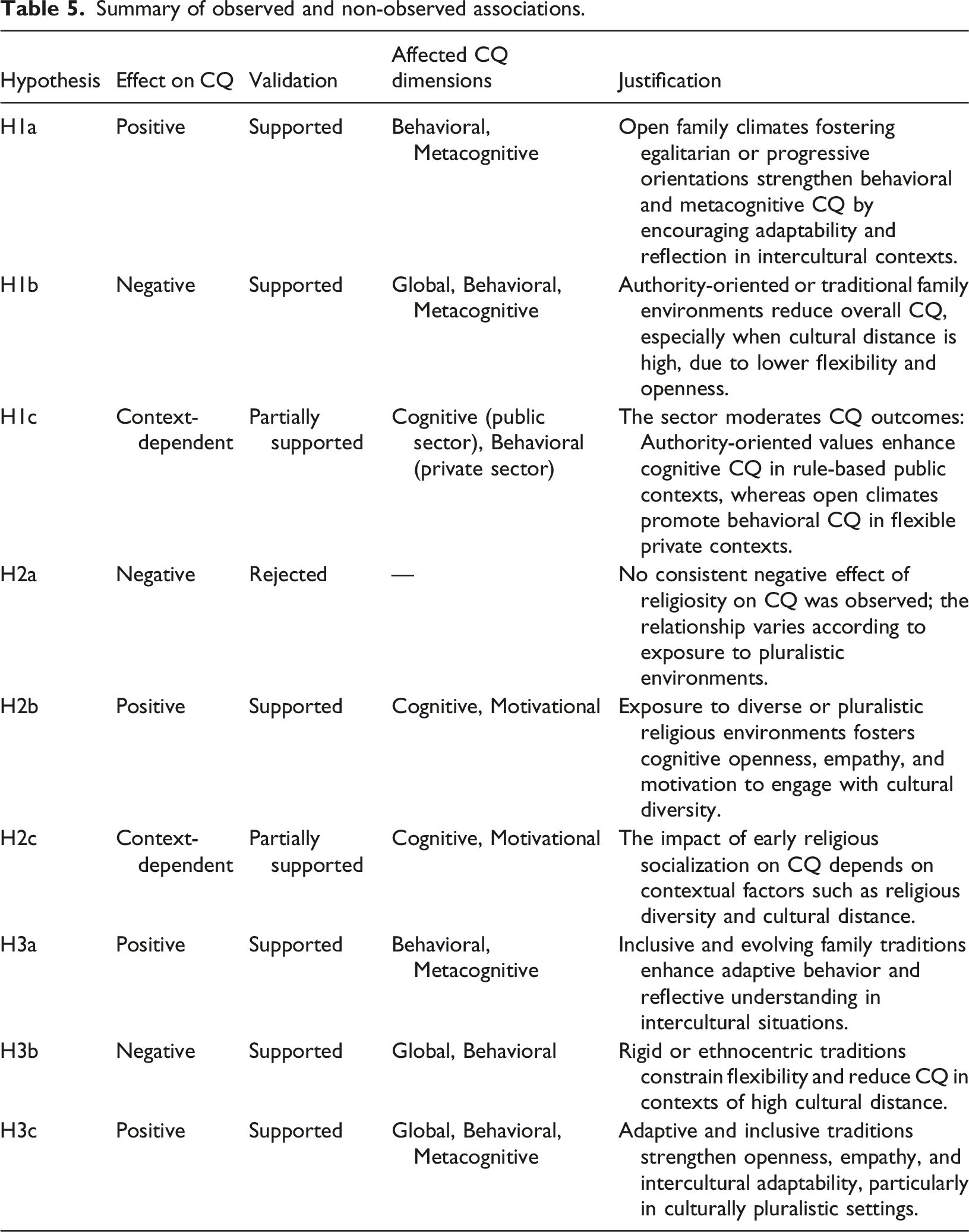
Summary of observed and non-observed associations.
Discussion
This study highlights associations between family values and expatriates’ CQ across employment sectors and contextual environments. These findings are in line with previous work on socialization and intercultural functioning (Ambos et al., 2019; Voigt, 2024) and highlight the importance of contextual factors in the intercultural capabilities associated with CQ (Fang et al., 2018; Morin and Talbot, 2023, 2024). The results suggest that expatriates who remembered their family environment during childhood as emphasizing more traditional or authority-oriented values report lower CQ, particularly in the private sector and in contexts of low contextual differences. More open or egalitarian family orientations, by contrast, appear associated with stronger behavioral and metacognitive CQ, often associated with greater openness toward diversity appear associated with stronger behavioral and metacognitive CQ, as well as greater openness toward diversity (Bartusevičius et al., 2020; Vergani et al., 2023).
These findings are broadly consistent with prior research on intercultural interactions and contextual variation (Hofstede, 2011). In the public sector, the influence of such value orientations appears more limited to metacognitive CQ, suggesting that formal structures and institutional expectations constrain the expression of personal values in CQ-related capabilities (Meier & O’Toole, 2011). The nature of expatriates’ assignments in these two sectors may also explain this phenomenon. In the private sector, individuals from environments emphasizing conformity and stability may report lower behavioral CQ (Shepherd et al., 2019). Conversely, in the public sector, decision-making is more regulated by principles of equity and inclusion (Cingolani and Salazar-Morales, 2024), creating contexts where value alignment with institutional norms may support intercultural functioning.
Patterns observed across contexts suggest that cultural differences between home and host countries may shape the influence of these family-based orientations. In societies characterized by strong hierarchical structures and limited tolerance for dissent, expatriates with progressive values may experience tension between personal beliefs and dominant local norms. These findings also suggest the importance of distinguishing conservative orientations emphasizing continuity and social order from authoritarian environments characterized by rigid compliance and centralized authority (De Oliveira Santos and Jost, 2024).
Contrary to the initial hypotheses, and consistent with its context-dependent nature, family religiosity does not show a uniform effect across contexts. These mixed patterns reinforce the importance of interpreting contextual differences cautiously within an exploratory analytical framework. Rather, its influence may depend on exposure to pluralism, suggesting that early religious socialization contributes indirectly to CQ through moral reflection and empathy rather than doctrinal adherence. Although some studies have suggested that strong religious convictions may limit intercultural openness by promoting more rigid group cohesion (Saroglou and Craninx, 2021), our results indicate that other factors, such as professional experience and education, may be more strongly associated with CQ in expatriate environments (Alexander et al., 2022). These findings are consistent with previous research suggesting that CQ emerges from the interaction of multiple experiential, organizational, and individual-level factors rather than from a single antecedent alone (Fang et al., 2018; Ott and Iskhakova, 2019). The role of cultural context could explain this lack of effect. The role of religiosity may vary according to broader cultural and institutional environments (such as Canada or the Netherlands). Conversely, religion may be a structuring factor influencing intercultural attitudes in more homogeneous and conservative societies, but this dynamic is not directly visible in our results.
One notable finding of this study is the association between family customs and traditions and CQ, particularly in contexts of high contextual differences. Our results suggest that expatriates who have grown up in an environment where traditions were central to family life report higher behavioral and metacognitive CQ dimensions. This finding corroborates Bourdieu’s (2019) work on cultural capital, which postulates that childhood exposure to cultural norms and practices is an asset for navigating diverse environments. In the private sector, this association is reflected in stronger behavioral CQ, suggesting that individuals with strong cultural references are report greater behavioral flexibility in intercultural contexts (Wynn et al., 2021). Conversely, in the public sector, the effect manifests more at the metacognitive CQ level, suggesting that these expatriates report stronger strategic reflection and intercultural reflexivity. These findings reinforce the idea that family socialization plays a key role in individuals’ ability to understand and interpret new cultural environments (McKinley, 2024; Wang et al., 2022). However, contextual differences between host environments may shape how these family-based orientations are expressed.
The study results reveal notable differences between the public and private sectors regarding the influence of family values on expatriate CQ. Individuals whose family environment emphasized more traditional or authority-oriented values report lower CQ in the private sector, particularly in contexts of low contextual differences. This pattern suggests that the private sector’s flexible and competitive environments are associated with stronger CQ dimensions for those socialized in more open and progressive settings. Conversely, in the public sector, the influence of traditional or authority-oriented environments is more limited. It manifests mainly in metacognitive CQ, which could be attributed to the institutional rigidity and formal rules framing intercultural interactions (Meier & O’Toole, 2011). The importance attached to family traditions is associated with CQ differently depending on the employment sector. The private sector is more conducive to behavioral flexibility, consistent with the need for rapid responses to new cultural expectations (Shepherd et al., 2019). In the public sector, this attachment to tradition is associated with stronger intercultural reflection and strategic adjustment, which may reflect the demands of diplomatic interactions and institutional missions that require a thorough understanding of local cultures (Cingolani and Salazar-Morales, 2024). These differences suggest that the demands of the professional context shape how family values influence CQ dimensions. Therefore, these findings underline the need for differentiated approaches to training and preparing expatriates for these two sectors. These findings are broadly consistent with the theoretical framework proposed in this study. This study examines CQ as an intercultural capability rather than as a direct indicator of expatriate adaptation outcomes.
Contributions and theoretical and practical implications
From a theoretical point of view, this study reinforces the literature demonstrating that CQ development is a dynamic process influenced by early socialization as well as by professional and cultural contexts (Morin and Talbot, 2024). The findings underline the importance of adopting an integrated approach that is not limited to skills acquired in the workplace but also considers the values internalized during childhood and how they interact with organizational and cultural environments (Voigt, 2024). This perspective extends current research on intercultural competencies by emphasizing the interplay between personal history and institutional context in shaping intercultural capabilities associated with CQ. The findings suggest that companies and public organizations should adapt their expatriate management strategies by recognizing that individuals bring diverse socialization experiences that may influence their learning and intercultural functioning processes. However, this does not imply that organizations should assess or select expatriation candidates based on their family background or childhood experiences. Instead, the results highlight the importance of designing inclusive training and preparation programs that can help all employees regardless of background develop the cognitive, motivational, and behavioral dimensions of CQ.
In the private sector, where global competition and team diversity require rapid responses to intercultural demands and behavioral flexibility, intercultural training programs should focus on developing behavioral CQ and situational agility to enhance performance and collaboration (Shepherd et al., 2019). In contrast, in the public sector, where intercultural encounters often occur within formal, regulated, or diplomatic contexts, training efforts should emphasize metacognitive CQ, reflexivity, and strategic intercultural reflection to ensure inclusive and equitable service delivery (Cingolani and Salazar-Morales, 2024). These recommendations are based on the distinct institutional logics and performance demands of each sector rather than on differences in individuals’ personal traits. Beyond training, these findings encourage organizations to foster environments that value diversity, reflexivity, and empathy. Recognizing that early socialization may influence employees’ preferred modes of interaction can help managers create conditions that support intercultural learning rather than judging fit based on background. Such an approach aligns with contemporary principles of ethical leadership and responsible talent management (Seriwatana and Charoensukmongkol, 2020), promoting equity while maximizing intercultural capabilities at the organizational level. This study contributes to current research by examining perceived early family orientations as one potential antecedent associated with CQ development across different expatriation environments. By connecting micro-level family socialization with meso-level institutional contexts, it contributes to a more nuanced understanding of how personal history and professional environment jointly influence intercultural capabilities. The model extends beyond traditional professional and educational predictors of CQ. It introduces intergenerational and value-based pathways associated with intercultural capabilities (Morin and Talbot, 2024; Teixeira & Klein, 2024).
Limitations and avenues for future research
This study contributes to understanding how early family socialization, political, religious, and cultural, is associated with CQ development of cultural intelligence (CQ) in adulthood. However, several methodological and conceptual limitations should be acknowledged, as they also open promising directions for future research.
The study relied on a combination of convenience and snowball sampling, through which expatriates were recruited via professional and social networks. While this approach facilitated access to a geographically dispersed and diverse population by sector of employment, it may have introduced selection bias, as participants could share similar professional backgrounds or social orientations. Furthermore, since recruitment primarily occurred through Facebook groups and professional online platforms, participants were likely to be more socially engaged and supported within digital communities. This may have influenced their perceptions of CQ and intercultural functioning (Ozer and Schwartz, 2021), thereby underrepresenting expatriates who are more isolated or less digitally connected. Future studies could strengthen external validity by using random or stratified sampling designs and by targeting a broader spectrum of expatriation trajectories. Including less visible expatriates would enable a more comprehensive understanding of the diversity of CQ development experiences across contexts.
A second limitation concerns the subjective nature of the data. The study relied on self-reports, which may be affected by self-perception biases. Although the instruments were theoretically grounded and previously validated, they capture participants’ interpretations rather than objective behaviors. More specifically, the measure of family values reflects participants’ perceived early socialization rather than their families’ objectively defined ideological orientations. This may lead to discrepancies between perceived and actual family values. In addition, the use of single-item measures for family values may limit construct precision and reduce the ability to capture the multidimensional nature of early socialization experiences. To enhance construct validity, future research should triangulate perceptual data with complementary sources, such as parental or sibling reports, archival data, or cultural indicators of value orientations (Ramsey et al., 2025). Combining subjective and objective measures would provide a more accurate picture of how early value orientations shape adult CQ.
Given the sample size and exploratory design, this study favored subgroup analyses over conditional process modelling. While this approach limited the formal testing of interaction effects, it offered preliminary insight into how family orientations interact with contextual factors such as sector of employment and contextual differences. Contextual interpretations should be understood as exploratory rather than causal or confirmatory. Consequently, the hypotheses were revised to reflect exploratory contextual expectations rather than rigid directional predictions across all expatriation environments.
In addition, Hofstede’s cultural dimensions were used as contextual comparative indicators rather than as exhaustive representations of national cultures. Future studies could employ alternative operationalizations of contextual variation or multidimensional intercultural indices to capture cross-cultural differences more comprehensively. Future studies with larger samples could employ moderated or conditional process analysis to test the joint effects of contextual differences, sector, and individual attributes on CQ. Such models would provide stronger evidence for the differentiated pathways hypothesized in this study, enhancing the robustness and generalizability of the findings.
The present study did not include several relevant antecedents known to influence CQ, such as prior international experience, personality traits, education, or socio-economic background (Morin and Talbot, 2024). Consequently, the present findings should not be interpreted as isolating the exclusive influence of family socialization on CQ, but rather as identifying exploratory associations within a broader constellation of individual, professional, and contextual influences. Likewise, emerging research suggests that geo-genetic diversity may be associated with cognitive and behavioral functioning in multicultural environments (Bratianu and Paiuc, 2025). Future research could integrate these factors into a multilevel framework that captures the interplay between psychological, experiential, and sociocultural determinants of CQ. Future studies should also distinguish between corporate-sponsored expatriates and self-initiated expatriates, whose motivations, support structures, and adaptation trajectories may differ substantially. A longitudinal design would be particularly useful to trace the evolution of CQ over time. Such designs could clarify whether family-based influences persist, fade, or interact dynamically with later professional experiences.
Beyond individual trajectories, the role of institutional and organizational settings deserves closer attention. Working in a multicultural private organization may offer different learning opportunities compared to a public administration with formalized intercultural protocols. Comparative analyses could examine how institutional logics shape the development and expression of CQ across contexts. The digital dimension of expatriate adaptation represents a growing and underexplored area. Expatriates increasingly maintain hybrid networks that blend online and offline communities, which can influence both cultural learning and emotional adjustment. Future research should examine how digital mentoring, online intercultural exchanges, and virtual communities contribute to sustaining or transforming CQ in global mobility settings.
Conclusion
This study highlights the potential role of family values among the broader set of factors associated with expatriates’ CQ while showing that their associations with CQ vary according to the employment sector and relative contextual differences. Political orientations and attachment to traditions appear associated with variations across CQ dimensions, within the present exploratory framework. This study supports the value of a more holistic and nuanced approach to expatriate management, considering professional skills and the cultural and family backgrounds that influence intercultural capabilities. Ultimately, this study suggests that companies and international institutions should invest more in context-sensitive intercultural preparation to support expatriates’ intercultural functioning and professional interactions in an increasingly globalized professional world.
