






Abstract
The Hispanic managerial workforce in the United States represents a rapidly growing demographic, yet research concerning the leadership behaviors and characteristics of Hispanic managers remains limited. This research underscores the importance of employing culturally appropriate and validated measurement instruments for assessing leadership within this unique demographic group. The validation of such instruments is pivotal for the advancement of comprehensive theories and frameworks tailored to Hispanic managers, fostering the development of inclusive and effective management practices. This study aims to assess the validity and reliability of the Authentic Leadership Questionnaire (ALQ) in the context of Hispanic managers, recognizing potential cultural nuances that may impact leadership perceptions. Furthermore, it explores the influence of cultural dimensions, such as paternalismo, familismo, and collectivism, on authentic leadership within the Hispanic managerial population. Validating the ALQ in this population contributes to the generalizability of the instrument and facilitates its broader application in research and practice.
Keywords
Introduction
The Hispanic managerial workforce in the United States has experienced substantial growth in recent decades, reflecting the broader demographic expansion of Hispanic communities nationwide (Beutell & Schneer, 2014; Alba and Maggio, 2022). Yet, despite this demographic significance, research exploring leadership behaviors and traits specific to Hispanic managers (Chung-Herrera and Lankau, 2005; Guerrero and Posthuma, 2014). This underrepresentation has created a gap in understanding how cultural values and social norms shape leadership perceptions and practices within this population. Moreover, leadership assessment tools such as the Authentic Leadership Questionnaire (ALQ) have rarely been validated within U.S. Hispanic contexts, despite their frequent application in Western or European settings (Moriano et al., 2011). The absence of culturally attuned validation limits both the theoretical generalizability and the practical utility of these instruments in managerial environments (Cox and Blake, 1991).
Authentic leadership, characterized by self-awareness, relational transparency, internalized moral perspective, and balanced processing (Hames, 2007; Walumbwa et al., 2008), is inherently influenced by culture. In the case of Hispanic managers, values such as paternalismo, familismo, and collectivism shape how authenticity is expressed and perceived. For instance, paternalismo emphasizes guidance, care, and moral responsibility (Martinez, 2003), while familismo underscores loyalty, relational harmony, and collective well-being (Marsiglia et al., 2009). These culturally embedded constructs may alter how leaders interpret and demonstrate authenticity—suggesting that ALQ items developed in Anglo contexts might not fully capture leadership authenticity among Hispanic managers. Thus, culturally appropriate validation of the ALQ is essential to ensure conceptual equivalence and accuracy in measuring authentic leadership in this population (Cheung et al., 2011; Fantini, 2009).
This study draws on Cross-Cultural Leadership Theory (House et al., 2004) and the GLOBE study framework to contextualize leadership differences between Anglo and Latin cultural clusters. According to GLOBE, leadership prototypes—such as charisma, participative decision-making, and humane orientation—vary significantly across societies, reflecting underlying cultural dimensions like power distance, collectivism, and humane orientation. These cross-cultural differences are further reinforced by research demonstrating that leadership perceptions are shaped not only by national culture but also by demographic characteristics such as gender, underscoring the importance of examining leadership within specific cultural populations (Ayman and Korabik, 2010). The U.S., as part of the Anglo cluster, typically emphasizes autonomy, assertiveness, and individual achievement, while the Latin American cluster prioritizes relational harmony, loyalty, and hierarchy (Javidan et al., 2006). Consequently, constructs within the ALQ may manifest differently among Hispanic managers who navigate bicultural realities that blend collectivist heritage with the individualistic tendencies of mainstream U.S. corporate culture (Green et al., 2005). By situating the ALQ within these macro-level cultural distinctions, this research examines whether its dimensions align with culturally embedded leadership values prevalent among Hispanic managers.
At the micro level, this study is also grounded in Implicit Leadership Theory (Den Hartog et al., 1999; Lord and Maher, 1991), which posits that followers’ cognitive schemas and expectations about leaders are culturally shaped. Within this perspective, leadership authenticity is not a fixed construct but one filtered through cultural interpretation. For example, the ALQ dimension of “relational transparency” may connote openness and vulnerability in Anglo cultures, but in collectivist Hispanic settings, it could instead signify respectful discretion to preserve group harmony (Epitropaki and Martin, 2005). Integrating ILT allows for a deeper understanding of how cultural schemas influence both leader behavior and subordinate perception, advancing culturally responsive leadership assessment.
Finally, this study adopts the Cultural Congruence and Measurement Validity framework (Cheung et al., 2011; Van de Vijver and Leung, 1997), emphasizing that instruments developed in one cultural context require empirical validation before application in another. By examining whether the ALQ maintains construct validity among U.S. Hispanic managers, the research not only tests measurement equivalence but also contributes methodologically to the literature on culturally adapted leadership assessment. This approach bridges theoretical and empirical domains, enhancing both cross-cultural leadership theory and psychometric rigor.
In summary, this study aims to validate the Authentic Leadership Questionnaire (ALQ) among Hispanic managers in the United States, addressing a critical gap in leadership research. Integrating insights from the GLOBE framework, Implicit Leadership Theory, and cultural congruence approaches, it investigates how cultural dimensions such as paternalismo, familismo, and collectivism influence authentic leadership perceptions. By doing so, the study contributes to the expansion of authentic leadership theory beyond Western paradigms and supports the development of culturally inclusive tools for assessing leadership authenticity in diverse organizational settings.
Literature review
Cultural foundations of leadership across societies
Culture profoundly shapes how individuals perceive authority, express values, and define effective leadership. One of the most influential frameworks for analyzing such cross-cultural variation is Hofstede’s cultural dimensions theory, which conceptualizes culture as the collective programming of the mind distinguishing one group or category of people from another (Hofstede, 2011). Hofstede originally identified six value dimensions that guide social and organizational behavior—power distance, individualism–collectivism, uncertainty avoidance, masculinity–femininity, long-term orientation, and indulgence–restraint—each reflecting how societies manage inequality, relationships, and moral priorities. Among these, power distance, collectivism, and humane orientation (a construct later refined in the GLOBE study) are particularly relevant to understanding leadership in Hispanic managerial contexts, where hierarchy, loyalty, and interpersonal warmth are deeply intertwined (Basabe and Ros, 2005; Smith and Hume, 2005).
Power distance reflects the degree to which members of a society accept unequal distributions of power and authority (Daniels and Greguras, 2014; Hofstede, 2011). In high power-distance societies—such as those found in Latin America and Southern Europe—hierarchy is perceived as natural and even desirable, and leaders are expected to provide direction, guidance, and protection. Conversely, in low power-distance cultures such as the United States, equality, empowerment, and participative decision-making are idealized (Dash et al., 2009). For Hispanic managers working in bicultural environments, this contrast produces a complex dynamic: while their cultural heritage often values respect for authority and relational warmth, U.S. organizational norms tend to reward autonomy, assertiveness, and direct communication. Daniels and Greguras (2014) emphasize that power distance operates at both societal and interpersonal levels, influencing institutional structures as well as daily workplace interactions. Consequently, leadership authenticity among Hispanic managers may manifest more through mentorship, protection, and moral guidance than through egalitarian decision-making. Hofstede (2011) and Brewer and Venaik (2011) further note that power distance interacts closely with individualism–collectivism, jointly shaping what types of leader–follower relationships are perceived as effective or appropriate.
The individualism–collectivism dimension captures whether societies prioritize personal autonomy and achievement or group cohesion and loyalty. In individualistic cultures, individuals are expected to pursue self-interest and independent goals, while collectivist societies emphasize harmony, duty, and interdependence (Basabe and Ros, 2005). Latin American cultures, including Hispanic communities in the United States, traditionally score high on collectivism, placing strong emphasis on interpersonal loyalty, harmony, and relational obligation (Brewer and Venaik, 2011). This collectivist orientation is reflected in managerial practices grounded in familismo—a deep sense of commitment to the welfare of family and close networks—and paternalismo, a leadership value characterized by moral responsibility and benevolent authority (Martinez, 2003). Collectivism shapes how leaders define success and ethics, encouraging them to evaluate effectiveness through communal well-being rather than individual advancement. Smith and Hume (2005) found that collectivist contexts foster relational ethical belief systems emphasizing loyalty, fairness, and reciprocity over abstract individual rights. These relational norms suggest that authentic leadership behaviors such as transparency or balanced processing may carry culturally contingent meanings. For instance, direct disagreement or self-disclosure—markers of transparency in Western individualist settings—might be interpreted as disrespectful or disloyal within collectivist frameworks.
Although humane orientation was formally articulated in the GLOBE study, its conceptual roots can be traced to Hofstede’s (2011) discussions of collectivism and power distance as moral as well as structural phenomena. Cultures high in humane orientation tend to promote altruism, compassion, and social responsibility. In many Hispanic and Latin American contexts, humane orientation underlies the expectation that leaders act as moral stewards—protecting subordinates, fostering personal growth, and maintaining group harmony through empathy and care (Basabe and Ros, 2005). This orientation overlaps conceptually with paternalismo, where authority and benevolence coexist. Brewer and Venaik (2011) and Dash et al. (2009) suggest that humane orientation moderates the effects of power distance: where compassion is culturally prized, hierarchical authority becomes legitimized through ethical behavior and service rather than control. Thus, leadership effectiveness depends not merely on position or status but on moral authenticity—an idea that aligns closely with the “internalized moral perspective” dimension of authentic leadership (Walumbwa et al., 2008).
Together, these cultural dimensions provide a macro-level foundation for understanding how leadership expectations differ across societies. They help explain why followers in high power-distance, collectivist cultures often perceive strong, protective leaders as credible and trustworthy, while those in low power-distance, individualist contexts prefer participative and transparent leadership styles (Dash et al., 2009). In Hispanic managerial contexts, the coexistence of these contrasting cultural systems produces hybrid leadership expectations that combine respect for authority with interpersonal warmth and ethical concern. However, contemporary scholarship cautions against treating Hofstede’s dimensions as static or universally deterministic (Brewer and Venaik, 2011). Cultural values interact dynamically with migration, acculturation, and organizational environments (Daniels and Greguras, 2014), resulting in complex bicultural adaptations among Hispanic managers who navigate both Anglo-American and Latin cultural norms. This hybridization reflects a continuous negotiation of leadership identity, where authentic leadership behaviors are filtered through both collectivist and individualist lenses.
Power distance, collectivism, and humane orientation, Hofstede’s framework provides the essential macro-level context for this study. These cultural dimensions establish the groundwork for exploring how leadership constructs are interpreted differently across societies, particularly within the bicultural realities of Hispanic managers in the United States. The following discussion extends this foundation through the GLOBE framework, which refines Hofstede’s dimensions by identifying six leadership prototypes that reveal how cultural values are enacted in organizational behavior.
Global Leadership perspectives and cultural variation
Building upon Hofstede’s cultural dimensions, the Global Leadership and Organizational Behavior Effectiveness (GLOBE) study provided one of the most comprehensive examinations of how cultural values translate into leadership expectations across societies (House et al., 2004; Peterson, 2004). While Hofstede’s framework established the foundational value dimensions, GLOBE advanced this understanding by linking these values directly to leadership prototypes. The project, spanning 62 societies, emphasized that leadership is not a universal construct but one that is deeply contingent upon cultural context. Hofstede (2010) later acknowledged this contribution, noting that GLOBE “brought culture back to relevance” by illustrating how cultural beliefs and social practices shape organizational behavior and leadership effectiveness.
The GLOBE study identified nine cultural dimensions—such as institutional and in-group collectivism, power distance, uncertainty avoidance, assertiveness, humane orientation, performance orientation, gender egalitarianism, and future orientation—that influence how people perceive leaders (Herrera et al., 2011; House et al., 2004). From these emerged six primary leadership dimensions that appear across all cultural clusters but vary in emphasis and desirability: charismatic/value-based, team-oriented, participative, humane-oriented, autonomous, and self-protective (Brewer and Venaik, 2010; House et al., 2004). Collectively, these dimensions reflect a shared human understanding of leadership, yet their expression and perceived legitimacy depend heavily on societal expectations and historical traditions.
In the Anglo cultural cluster, which includes the United States, Canada, and the United Kingdom, effective leaders are often described as participative, autonomous, and performance-oriented. These societies value independence, empowerment, and individual accountability, aligning closely with low power distance and high individualism (Vecchi and Brennan, 2011). By contrast, in the Latin cultural cluster, which includes Mexico, Argentina, and much of Central and South America, leadership is often defined by warmth, compassion, and a sense of moral stewardship (Hofstede, 2010). Here, traits such as humane orientation and team orientation are most valued, reflecting collectivist traditions and high relational interdependence.
2Brewer and Venaik (2010) distinguish between GLOBE’s two levels of analysis—cultural values (what societies aspire to) and practices (what societies actually do)—which together reveal the gap between idealized and enacted leadership. For instance, while both Anglo and Latin clusters value charismatic leadership, the form it takes differs substantially. In Anglo contexts, charisma is tied to vision and performance; in Latin contexts, it is associated with integrity, relational harmony, and moral duty. Similarly, participation in decision making is a hallmark of effective leadership in Anglo societies, but in Latin environments, it tends to occur within trusted in-groups and under the guidance of a respected authority figure (Vecchi and Brennan, 2011). These differences highlight how culture shapes not only leadership behavior but also the very meaning of authenticity, transparency, and moral integrity in organizational contexts.
GLOBE cultural dimensions comparison.
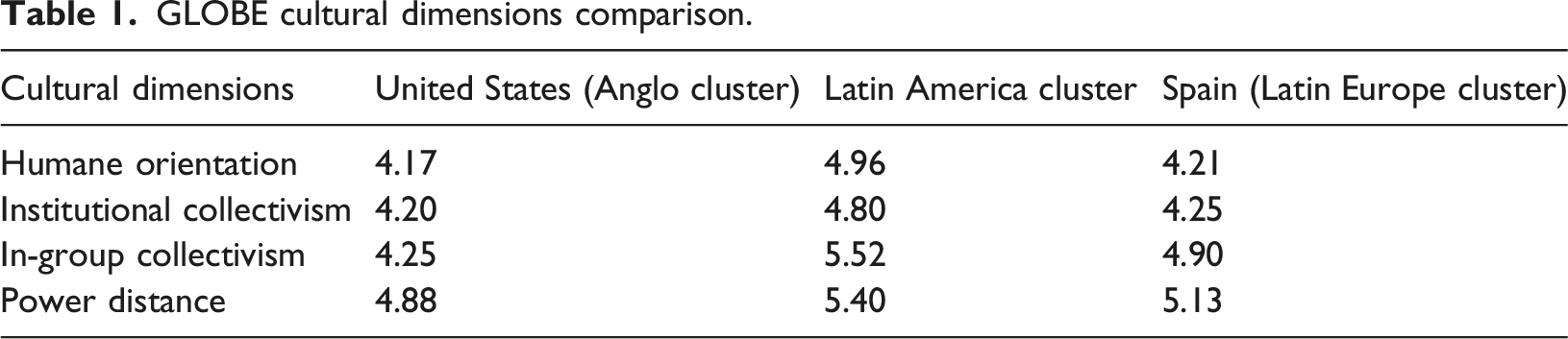
The implications of these contrasts are particularly significant for Hispanic managers in the United States, who operate within bicultural realities that combine the individualism and autonomy of the Anglo workplace with the relational collectivism and humane orientation of Latin traditions. Chui and Kwok (2009) emphasize that such cultural orientations influence not only leadership behavior but also decision-making styles and risk preferences, suggesting that culture permeates all aspects of managerial functioning. Consequently, leadership assessments developed in Western contexts—such as the Authentic Leadership Questionnaire (ALQ)—may not fully capture the nuanced expressions of leadership authenticity present among U.S. Hispanic managers.
The integration of Hofstede’s value dimensions and the GLOBE leadership prototypes provides a conceptual bridge from macro-level cultural values to the meso-level manifestation of leadership behaviors. It underscores that effective leadership cannot be understood outside its cultural context and that leadership authenticity, in particular, must be interpreted relative to the social norms and collective meanings that shape it. In the following section, these frameworks are applied to the specific cultural values most salient in Hispanic managerial contexts—familismo, paternalismo, and collectivism—which together represent the micro-level mechanisms through which authentic leadership is culturally enacted and perceived.
Hispanic cultural constructs and leadership expression
While macro- and meso-level cultural frameworks such as Hofstede’s dimensions and the GLOBE study illuminate the broader value systems shaping leadership across societies, understanding leadership authenticity within the Hispanic managerial context requires consideration of micro-level cultural constructs that operate in everyday relationships. These include familismo, paternalismo, and collectivism—interrelated concepts that inform how authority, trust, and moral responsibility are enacted within Hispanic organizational cultures (Marsiglia et al., 2009; Martinez, 2003). Together, they represent not only social values but also adaptive mechanisms that promote cohesion, loyalty, and resilience in hierarchical yet relational environments.
The construct of familismo embodies a deep sense of loyalty, solidarity, and identification with one’s family and close social network (Marsiglia et al., 2009). It extends beyond the nuclear family to encompass extended relatives, friends, and trusted colleagues, forming the foundation of social and professional relationships in many Hispanic communities (Espinoza, 2010; Marsiglia et al., 2009
Closely related to familismo is paternalismo, which refers to a culturally endorsed form of leadership emphasizing care, protection, and moral guidance. Research on paternalistic leadership also suggests that leaders who cultivate trust through information sharing and benevolence encourage employees to speak up and contribute ideas, reinforcing the relational foundations of authentic leadership (Chan, 2014). Rooted in Latin traditions, paternalismo reflects the belief that authority entails not only power but also responsibility for the well-being of subordinates (Martinez, 2003). Rather than being authoritarian, paternalistic leadership is characterized by benevolence and relational closeness, where leaders act as mentors and (Añez et al., 2005; Liberman, L. 2014; Martinez, 2003). The impact of a paternalistic style of management and delegation of authority on job satisfaction and organizational commitment in Chile and the US. (Innovar, 24(53), 187-196.). In this context, authority is legitimized through personal trust and ethical conduct rather than position alone. Hofstede’s (2011) power distance dimension helps explain why such hierarchical relationships are culturally accepted; however, paternalismo transforms hierarchy into a moral contract grounded in reciprocity and loyalty. This dynamic captures the cultural adaptation of authentic leadership in Hispanic settings, where relational transparency is expressed through empathy and discretion rather than direct confrontation.
Collectivism, another defining characteristic of Hispanic cultures, reinforces these relational orientations by emphasizing the welfare of the group over individual (Basabe and Ros, 2005; Brewer and Venaik, 2011; Gomez et al., 2000). It serves as a unifying principle that integrates familismo and paternalismo within the organizational sphere. As Añez et al. (2005) explain, collectivism fosters collaboration, emotional connection, and mutual responsibility, traits that contrast with the individualistic and competitive norms prevalent in Anglo-American workplaces. This emphasis on collective identity has implications for leadership assessment: behaviors such as shared decision-making, consensus-building, and moral integrity are often interpreted as demonstrations of authenticity and ethical commitment, even if they do not align perfectly with Western constructs of autonomy and transparency. Garcia (2017) highlights this cultural orientation in educational institutions serving Hispanic populations, noting that organizational identity and success are often defined by communal values rather than isolated performance outcomes—a pattern that parallels Hispanic conceptions of leadership effectiveness in business environments.
Importantly, these constructs are not static but evolve through acculturation and bicultural negotiation. Cuellar et al. (1995) and Diaz and Bui (2017) note that as Hispanic professionals integrate into U.S. corporate systems, they experience a cognitive blending of collectivist and individualist schemas, resulting in adaptive leadership behaviors that reflect both cultures. Gallo et al. (2009) describe this as a form of cultural resiliency, where traditional values such as familismo and paternalismo persist as psychological resources that help individuals maintain relational balance and moral consistency in competitive contexts. For U.S. Hispanic managers, this dual orientation enables them to act as cultural bridges—balancing Anglo expectations for participative and autonomous leadership with Latin expectations for protective and compassionate authority.
Understanding these cultural constructs is essential for the validation of the Authentic Leadership Questionnaire (ALQ) in Hispanic contexts. Authentic leadership emphasizes self-awareness, relational transparency, balanced processing, and an internalized moral perspective (Roof, 2014; Walumbwa et al., 2008). Yet, the interpretation and expression of these dimensions are shaped by familismo, paternalismo, and collectivism. For example, relational transparency may be enacted through genuine care and mentorship rather than open self-disclosure, while balanced processing may emphasize consensus and collective reflection rather than individual deliberation. These culturally influenced expressions suggest that authenticity is not a universal trait but a relationally and contextually grounded phenomenon (Senft et al., 2022).
The integration of authentic leadership within Hispanic cultural constructs, this study addresses a key gap in leadership research: the need to ensure that instruments like the ALQ capture culturally relevant understandings of authenticity. As Añez et al. (2005) and Garcia (2017) assert, culture is not peripheral to leadership—it is the interpretive framework through which leadership meaning is constructed. Therefore, validating the ALQ for Hispanic managers does not merely test its psychometric robustness; it also advances cross-cultural leadership theory by aligning measurement tools with the lived realities of culturally diverse leaders.
Authentic leadership and the culturally embedded model
The Authentic Leadership Questionnaire (ALQ), developed by Walumbwa et al. (2008), remains one of the most empirically supported frameworks for understanding ethical and transparent leadership. Rooted in positive organizational behavior, authentic leadership promotes integrity, self-knowledge, and relational trust as essential foundations for effective and moral leadership (Chang, W., et al., 2020; Avolio and Gardner, 2005; Kelly and Hashemi, 2022). The ALQ operationalizes this construct through four core subdimensions—self-awareness, relational transparency, balanced processing, and internalized moral perspective—which together capture both the internal psychological processes and the outward relational behaviors of authentic leaders.
Self-awareness refers to a leader’s capacity for introspection and accurate self-assessment, including awareness of one’s strengths, limitations, motives, and emotional triggers. In Western leadership models, self-awareness emphasizes personal reflection and individual development. However, within collectivist and relational cultures such as those prevalent among Hispanic managers, self-awareness extends beyond the individual to include awareness of one’s role and moral obligations within the community (Hofstede, 2011). It is the understanding of self in relation to others, grounded in loyalty, humility, and ethical purpose. Kelly et al. (2025) highlight that in Hispanic contexts, leaders often define self-awareness not through self-promotion but through self-anchoring—the ability to remain authentic to one’s cultural values while navigating bicultural environments. This relational form of self-awareness becomes a foundation for moral authenticity, as leaders align their inner values with the collective good.
Relational transparency captures the leader’s ability to present their authentic self to others through openness, honesty, and integrity (Walumbwa et al., 2008). Yet, the expression of transparency is profoundly influenced by culture. In Anglo-American contexts, transparency often implies directness and verbal self-disclosure, whereas in Hispanic cultures it is manifested through empathy, warmth, and loyalty within close-knit relationships (Añez et al., 2005; Martinez, 2003). Rooted in familismo, relational transparency among Hispanic managers is expressed by creating an environment of psychological safety and genuine care rather than open confrontation. This aligns with GLOBE’s humane- and team-oriented leadership prototypes, where effective leaders demonstrate compassion and protect the dignity of others (House et al., 2004). In practice, transparency thus becomes a relational ethic—a way of maintaining trust and harmony while preserving respect.
Balanced processing involves a leader’s capacity to objectively analyze information, solicit diverse perspectives, and make decisions based on fairness rather than bias or emotion (Walumbwa et al., 2008). In Hispanic managerial settings, this dimension operates through collective reasoning and consensus-building. Influenced by collectivist norms and participative leadership patterns, decision-making tends to emphasize group reflection and shared responsibility (Brewer and Venaik, 2011). Authentic leaders in such contexts seek input not as a democratic exercise but as a moral duty to ensure that decisions respect the group’s harmony and well-being. This culturally adapted view of balanced processing reflects Hofstede’s collectivism and GLOBE’s participative orientation—where dialogue and consultation serve both practical and relational purposes. As Kelly et al. (2025) observe, balanced processing among Hispanic leaders is deeply intertwined with emotional intelligence and mindfulness, fostering empathy in deliberation and resilience in decision-making.
Internalized moral perspective, the final subdimension, represents the leader’s ability to self-regulate behavior according to deeply held ethical standards rather than external pressures. In Hispanic cultural contexts, morality is not merely personal but communal—a reflection of the leader’s responsibility to care for, protect, and guide others (Añez et al., 2005; Martinez, 2003). The concept of paternalismo illustrates this perfectly: authority carries an ethical obligation to act benevolently and uphold justice. Thus, moral perspective in this setting is grounded in compassion, fairness, and service to others (Hannah et al., 2011; Liden et al., 2014), closely aligned with GLOBE’s charismatic/value-based and humane-oriented dimensions. Kelly et al. (2025) found that Hispanic leaders who integrate moral conviction with empathy and resilience cultivate both organizational trust and personal authenticity, exemplifying how ethical self-regulation becomes a cultural act of stewardship.
Together, these four subdimensions of authentic leadership form a culturally embedded model that aligns naturally with the macro, meso, and micro cultural frameworks discussed earlier. At the macro level, Hofstede’s collectivism, power distance, and humane orientation establish the societal logic shaping moral and relational leadership expectations. At the meso level, GLOBE’s leadership prototypes—particularly charismatic/value-based, participative, and humane-oriented leadership—translate those cultural values into desirable leader behaviors. Finally, at the micro level, Hispanic constructs such as familismo, paternalismo, and collectivism ground these ideals in everyday workplace relationships, where authenticity is enacted through trust, humility, and moral care (Añez et al., 2005; Gallo et al., 2009).
Authentic leadership cultural alignment model.
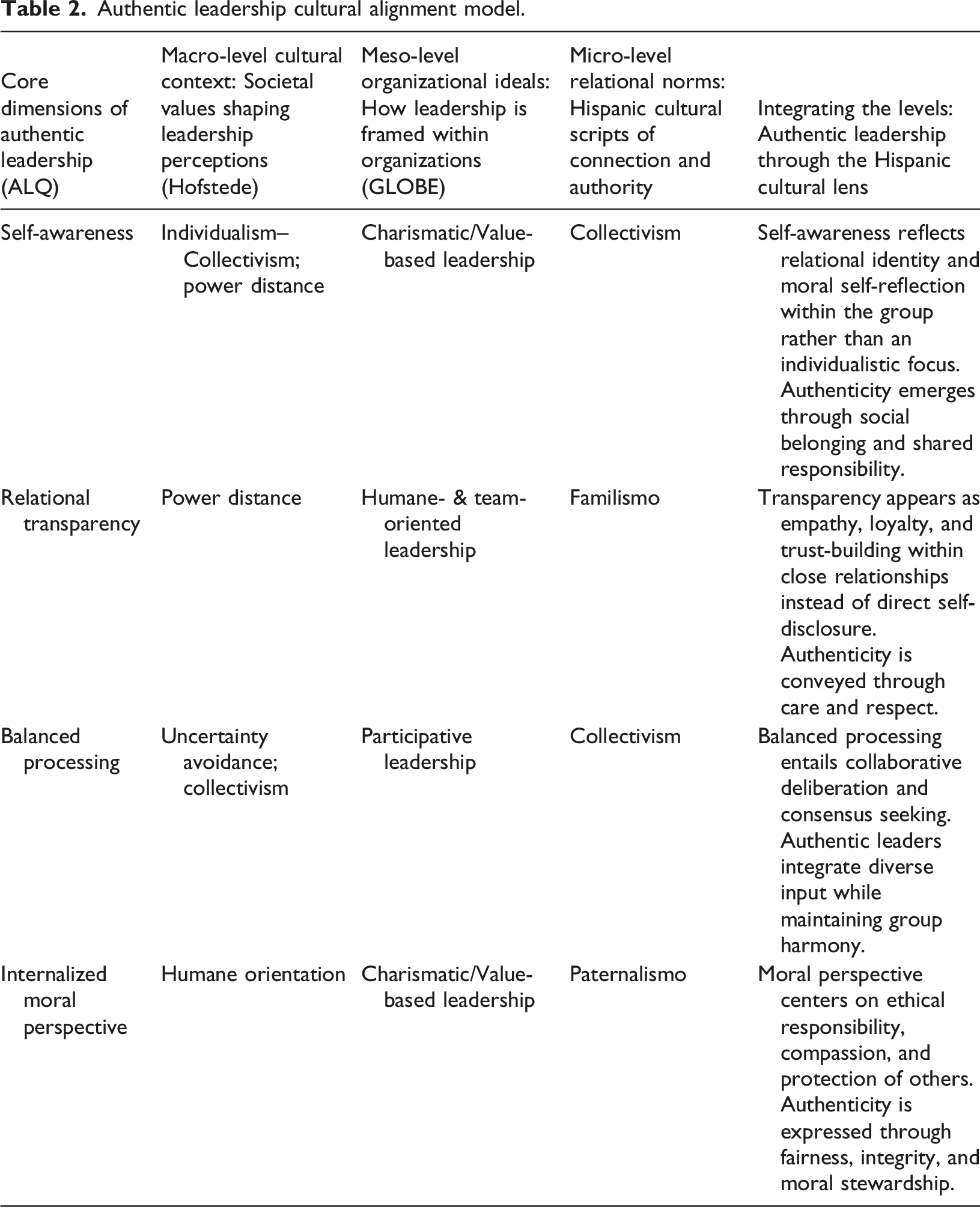
This multilevel conceptual model advances cross-cultural leadership research by linking macro-level values, meso-level prototypes, and micro-level relational norms to a psychometric measure of authentic leadership. It argues that authentic leadership is inherently dynamic—shaped by social context, guided by cultural ethics, and sustained by relational commitment. The following methodology section builds on this framework to evaluate the reliability and validity of the ALQ for U.S. Hispanic managers, addressing both measurement precision and cultural sensitivity in leadership assessment (Komarraju et al., 2008; Zhu et al., 2021).
Methodology
Data collection and sampling
The research targeted Hispanic managers in the United States, a demographic experiencing significant growth in the workforce (Beutell & Schneer, 2014). Participants were selected based on criteria that ensured the sample was representative of this population. Recruitment was conducted using Qualtrics panels, chosen for their extensive reach and ability to stratify participants by demographic characteristics, including ethnicity and professional role. This approach aligns with previous studies leveraging similar methods for data collection in underrepresented groups (Nielsen et al., 2016).
This study employed a quantitative, cross-sectional, correlational design to evaluate the validity and reliability of the Authentic Leadership Questionnaire (ALQ) among Hispanic managers in the United States. Following established guidelines for instrument validation (DeVellis, 2017; Hair et al., 2019; Liden et al., 2014), the research design aligns with the Multilevel Cultural Framework of Authentic Leadership, which situates leadership authenticity within macro- (Hofstede), meso- (GLOBE), and micro- (Hispanic cultural constructs) levels of analysis. The study’s purpose was to determine whether the ALQ’s four subdimensions—self-awareness, relational transparency, balanced processing, and internalized moral perspective—maintain their factorial integrity and internal consistency in a Hispanic managerial population. Quantitative analysis allows for the assessment of construct validity, convergent and discriminant validity, and reliability through statistical modeling and psychometric evaluation (Byrne, 2016).
Participants were required to be currently employed in full-time or part-time managerial positions and possess a minimum of 3 years of managerial experience to ensure familiarity with leadership practices. Fluency in English or Spanish was essential to ensure comprehension of the survey items. Additionally, efforts were made to include participants from diverse industries to enhance the generalizability of the findings.
A total of 6000 survey invitations were distributed through Qualtrics, a Utah-based survey research company, to reach a diverse pool of managerial professionals across the United States. Participants were screened using qualification criteria requiring that respondents (a) self-identify as Hispanic or Latino/a, and (b) currently hold a managerial or supervisory position with responsibility for at least two direct reports. Out of 6000 individuals invited, 899 participants (15.0%) met these eligibility requirements and qualified to begin the survey. Among those qualified, 230 respondents (25.6%) completed the full questionnaire, resulting in a qualified response rate of approximately 26%.
During initial data screening, ten cases were identified as incomplete due to missing responses across multiple ALQ items and were excluded from the dataset. To preserve the intended sample size and maintain the qualified response rate, the researcher requested ten additional complete responses from Qualtrics. The final dataset therefore included 230 fully completed and valid responses, which provided sufficient statistical power for reliability and validity testing.This sampling strategy was designed to address concerns about the underrepresentation of Hispanic managers in leadership research, as noted in previous literature (Chung-Herrera and Lankau, 2005). The resulting dataset reflects a cross-section of Hispanic managerial roles, offering insights into this demographic’s unique leadership characteristics.
Instrumentation
The study utilized the Authentic Leadership Questionnaire (ALQ) to measure leadership characteristics among Hispanic managers. Originally developed by Walumbwa et al. (2008), the ALQ is a widely validated instrument comprising four dimensions of authentic leadership: self-awareness, relational transparency, internalized moral perspective, and balanced processing. The Authentic Leadership Questionnaire (ALQ; Walumbwa et al., 2008) consists of 16 items measuring four subdimensions of authentic leadership: self-awareness (4 items), relational transparency (5 items), balanced processing (3 items), and internalized moral perspective (4 items). Each item is rated on a five-point Likert-type scale (1 = strongly disagree to 5 = strongly agree). Although some adaptations of the ALQ have reported 18 items, the current study employed the original 16-item version validated by Walumbwa et al. (2008) to ensure construct consistency and comparability across cultural samples.
The ALQ, was initially validated in diverse cultural settings but had limited testing within Hispanic populations. To address this gap, the current study adapted the ALQ to incorporate cultural dimensions such as paternalismo, familismo, and collectivism—core values influencing Hispanic leadership styles (Domenech Rodríguez et al., 2011). Items reflecting these cultural dimensions were included or rephrased to ensure cultural relevance. For example:
The item “I understand my strengths and weaknesses as a leader” aligns with self-awareness but was contextualized to emphasize collectivist tendencies among Hispanic managers.
Items emphasizing relational transparency, such as “I openly share information about myself with my team,” were reviewed to account for cultural norms around hierarchical relationships (Martinez, 2003).
This study did not include qualitative interviews, which could have provided deeper insights into participants’ lived experiences and cultural interpretations of authentic leadership (Lee and Kelly, 2019). The absence of qualitative data limits the ability to capture nuanced contextual factors that influence leadership authenticity among Hispanic managers. Future research is recommended to incorporate qualitative interviews to complement the quantitative findings and enrich the interpretation of cultural dimensions within the ALQ framework.
Data analysis
The data analysis process employed both exploratory and confirmatory statistical methods to evaluate the structure, reliability, and validity of the Authentic Leadership Questionnaire (ALQ) within the Hispanic managerial context. The primary objective of this analysis was to assess the suitability of the ALQ for capturing leadership dimensions that align with cultural values such as paternalismo, familismo, and collectivism. A combination of exploratory factor analysis (EFA), confirmatory factor analysis (CFA), and reliability testing was utilized to refine the instrument and ensure its appropriateness for this demographic.
The reliability testing was conducted to assess the internal consistency of the ALQ’s dimensions. Cronbach’s alpha was used as the primary metric, with values above 0.80 indicating strong reliability.
Exploratory Factor Analysis (EFA) was conducted to identify the latent structure underlying the ALQ’s items. This statistical approach allowed the researchers to determine the number and nature of factors most appropriate for the data. A principal component analysis with varimax rotation was employed to maximize interpretability. This analysis tested whether the original four-factor model of the ALQ—comprising self-awareness, relational transparency, internalized moral perspective, and balanced processing—was suitable for the Hispanic managerial population or required modification. Factor loadings and explained variance were calculated to evaluate the strength and structure of the identified components, guiding the subsequent validation steps.
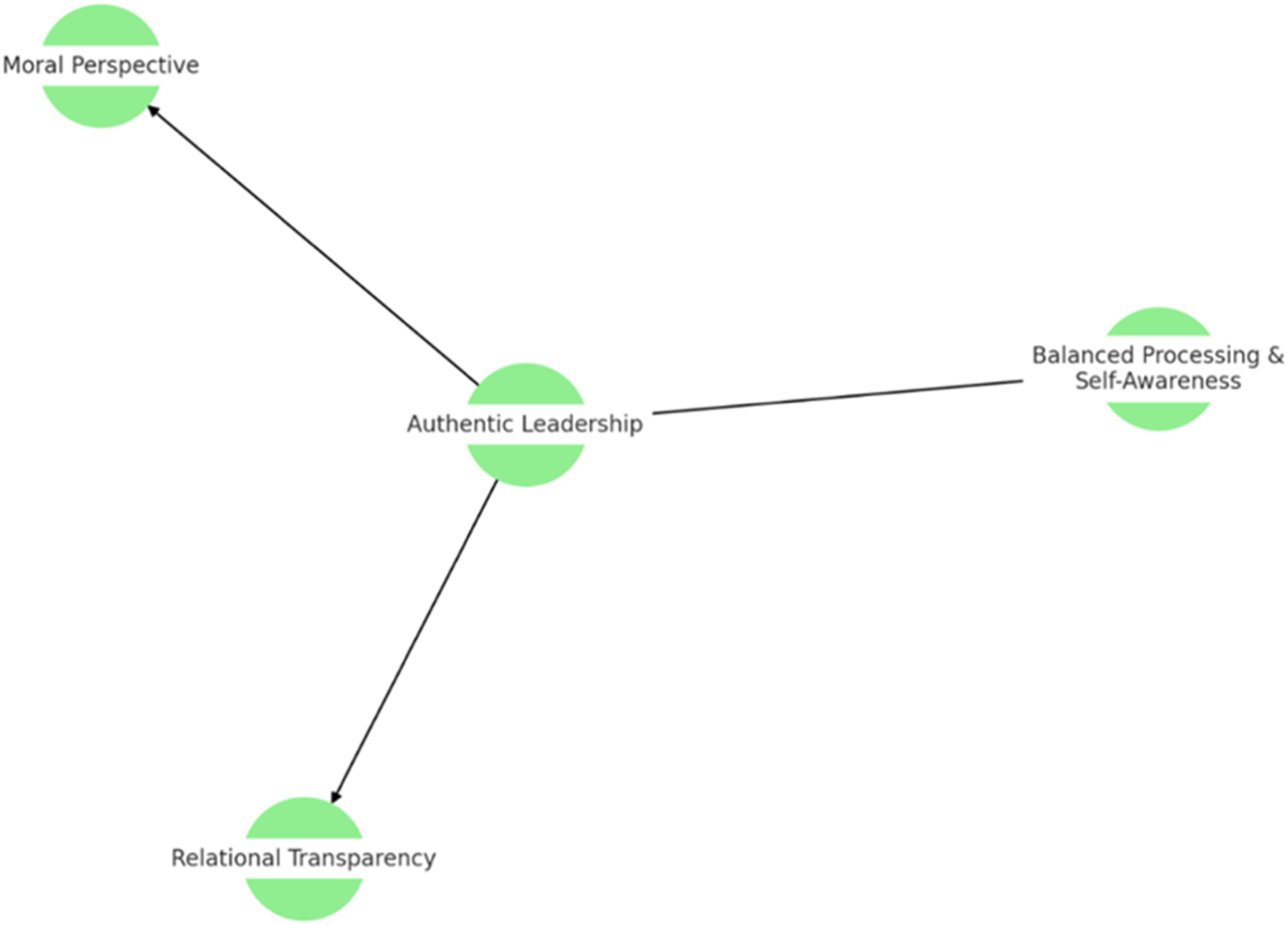
Confirmatory Factor Analysis (CFA) followed the EFA to rigorously test the fit of the proposed factor structure. CFA is a hypothesis-driven method that examines whether a predefined model accurately represents the observed data. Using indices such as the root mean square error of approximation (RMSEA), comparative fit index (CFI), and Tucker-Lewis index (TLI), the analysis validated the factor structure identified in the EFA. The CFA results provided evidence of the model’s alignment with the theoretical framework of authentic leadership while accounting for cultural nuances. The model fit was assessed against widely accepted statistical thresholds, ensuring its robustness. The Figures 1 and 2 show the difference between factor loading. Four-Factor Model of Authentic Leadership based on Hispanic Sample. Three-Factor Model of Authentic Leadership based on Hispanic Sample.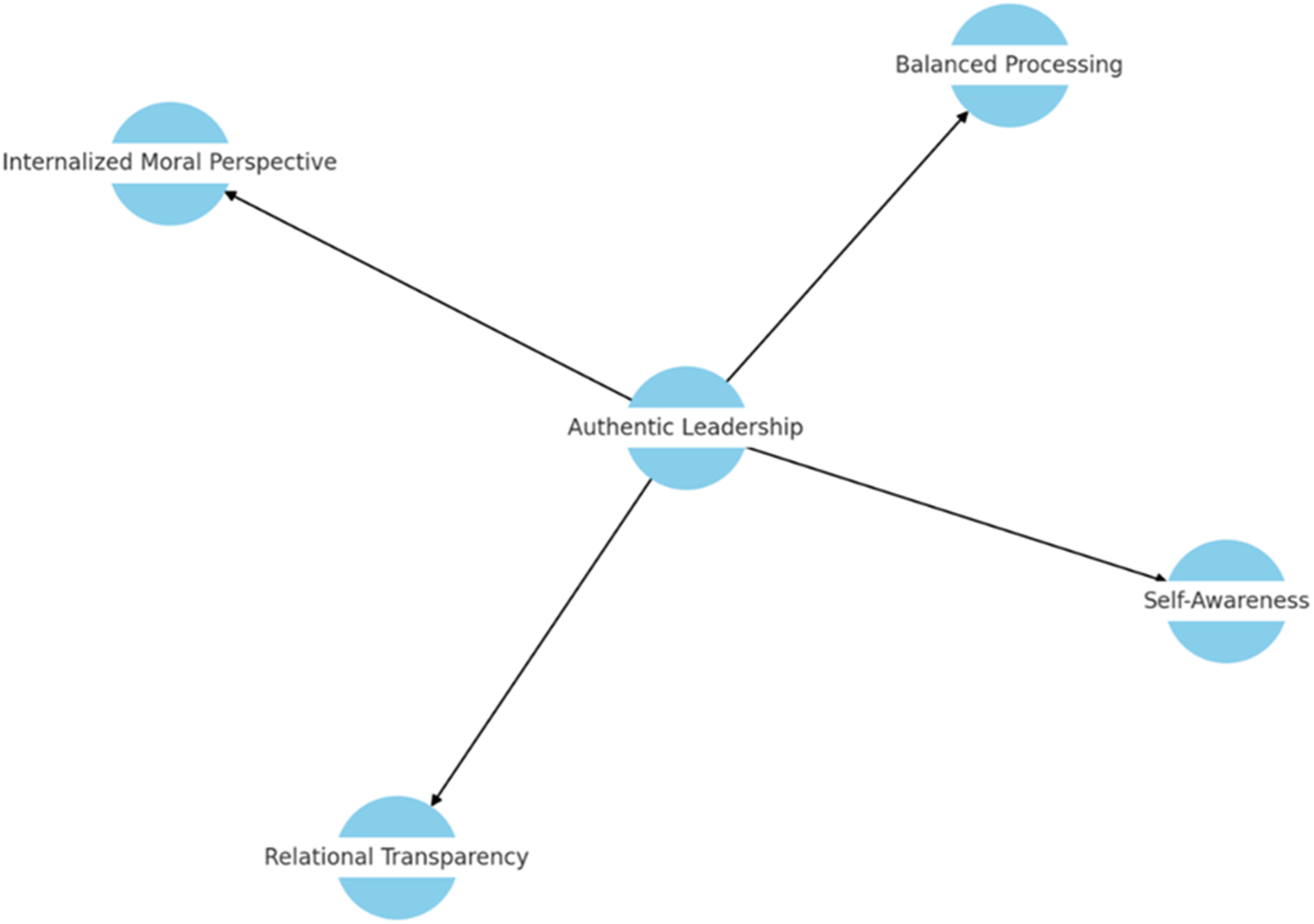
This step ensured that the items within each factor consistently measured the intended construct. The reliability analysis further informed the refinement of the scale, identifying potential items for removal or revision to enhance its applicability and precision in measuring authentic leadership in the context of Hispanic managers.
Item statistics
Descriptive statistics.
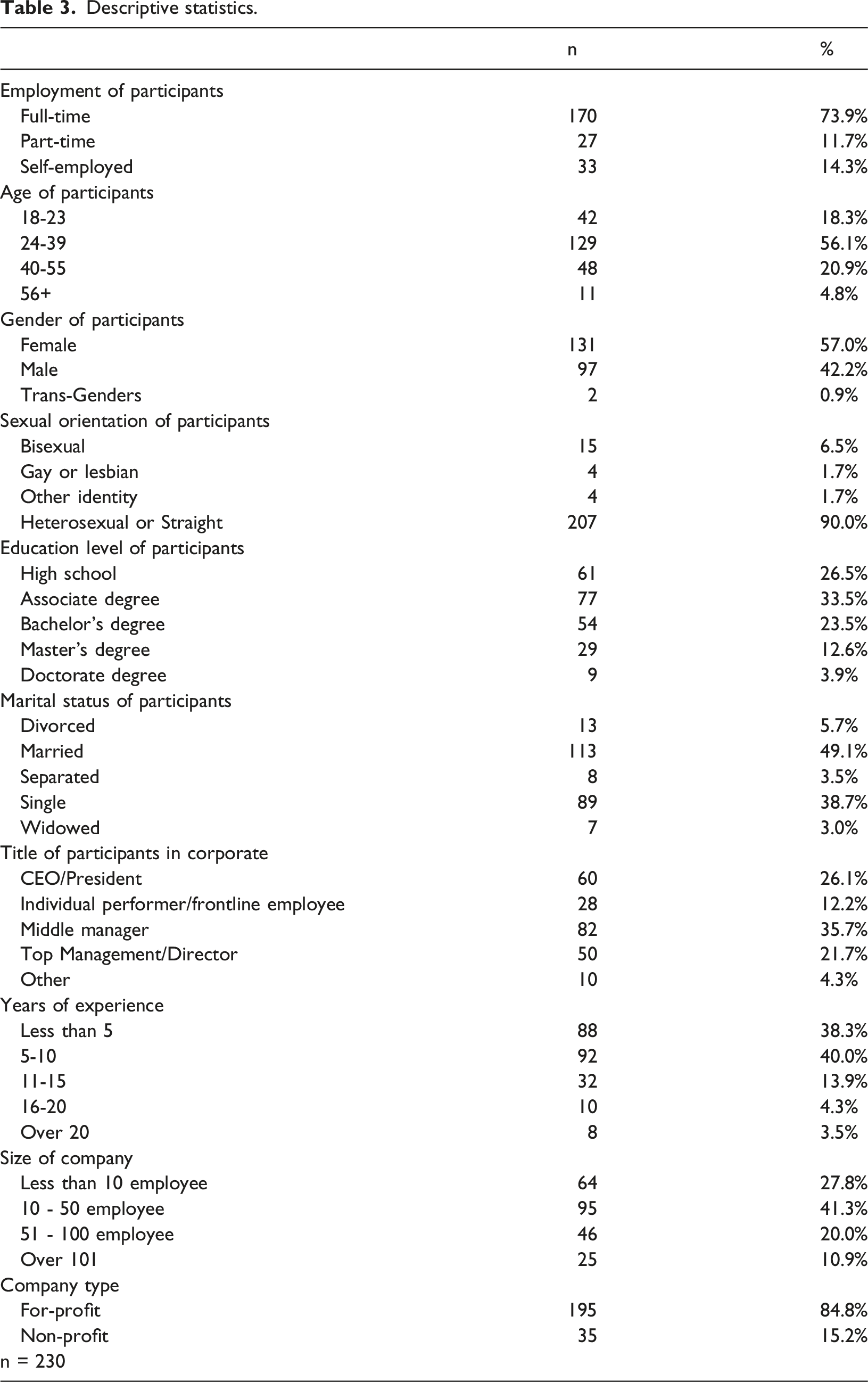
Marital status revealed that 49.1% were married, 38.7% single, and smaller groups divorced (5.7%), separated (3.5%), or widowed (3.0%). In corporate roles, middle managers comprised the largest group (35.7%), followed by CEOs/Presidents (26.1%), top management/directors (21.7%), frontline employees (12.2%), and other roles (4.3%). Most participants had 5-10 years of experience (40.0%), while 38.3% had less than 5 years, and fewer had 11-15 years (13.9%) or more (7.8%). The majority worked in for-profit organizations (84.8%), with company sizes primarily ranging from 10 to 50 employees (41.3%) or fewer than 10 employees (27.8%). These demographics highlight a diverse sample in terms of employment status, professional roles, and organizational contexts.
The reliability of the 16-item scale was assessed through examination of item statistics, inter-item correlations, and item-total statistics. The overall Cronbach’s Alpha coefficient was found to be .91, indicating high internal consistency (Abu-Bader, 2016) with a statistically significant F-value of (15, 3435) = 5.80, p < .01. Deleting any item did not significantly increase the overall scale reliability. The mean scores for the items ranged from 3.56 to 4.02.
Additionally, all items exhibited positive correlations with each other, with Pearson’s r values ranging from .22 to .57, indicating significant associations (p > .05).
Results
Reliability analysis
Reliability analysis (N = 230).
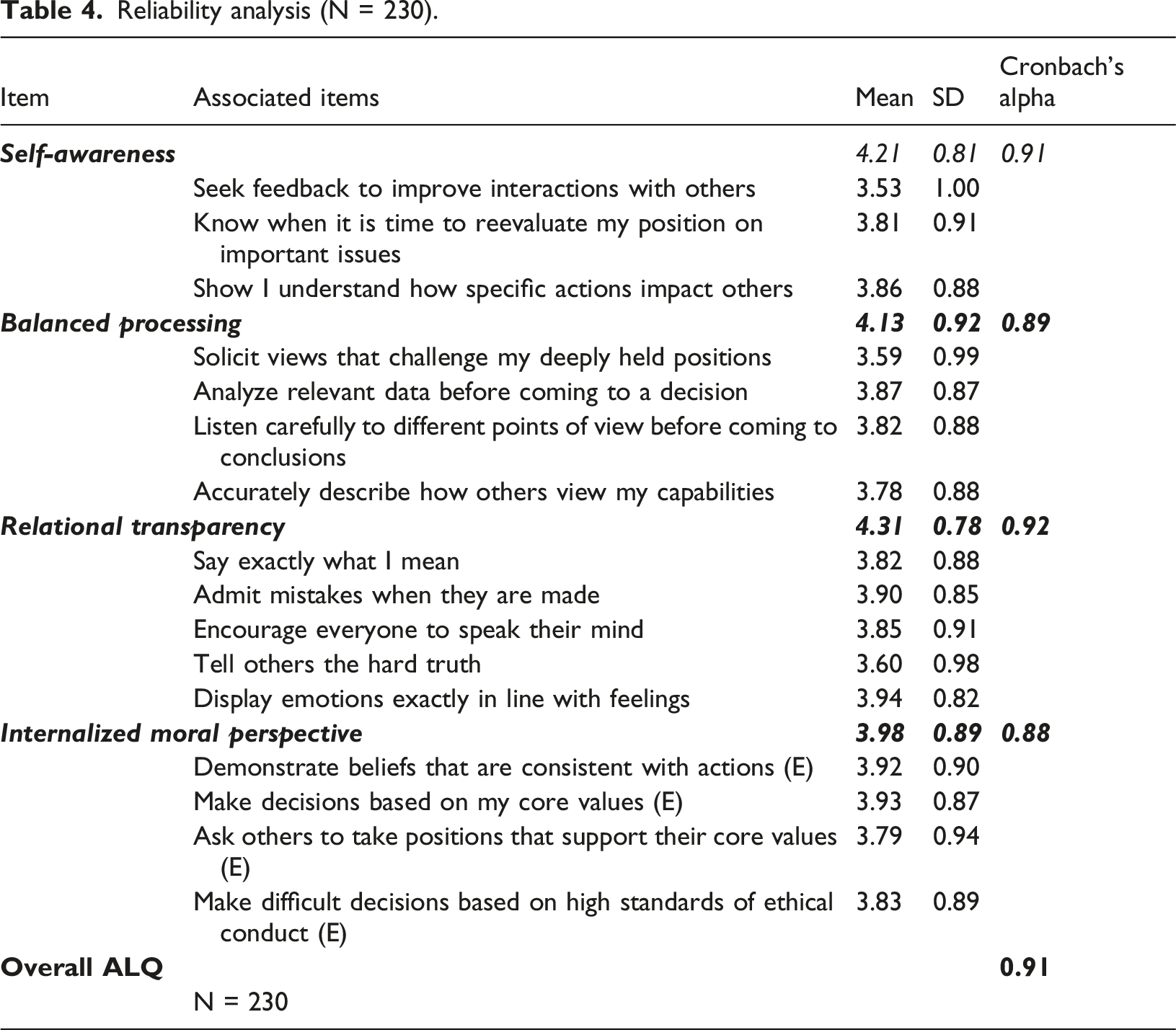
Overall, the ALQ demonstrated excellent reliability with a Cronbach’s alpha of 0.93, validating its suitability for this demographic. These findings reflect the participants’ alignment with the core dimensions of authentic leadership, particularly in culturally nuanced areas like relational transparency and ethical practices. The results underscore the robustness of the ALQ as a reliable tool while highlighting the importance of integrating cultural values such as familismo and paternalismo to capture the distinct leadership styles of Hispanic managers. These cultural dimensions likely enhance the emphasis on ethical decision-making and transparent communication observed in the data
Exploratory Factor Analysis
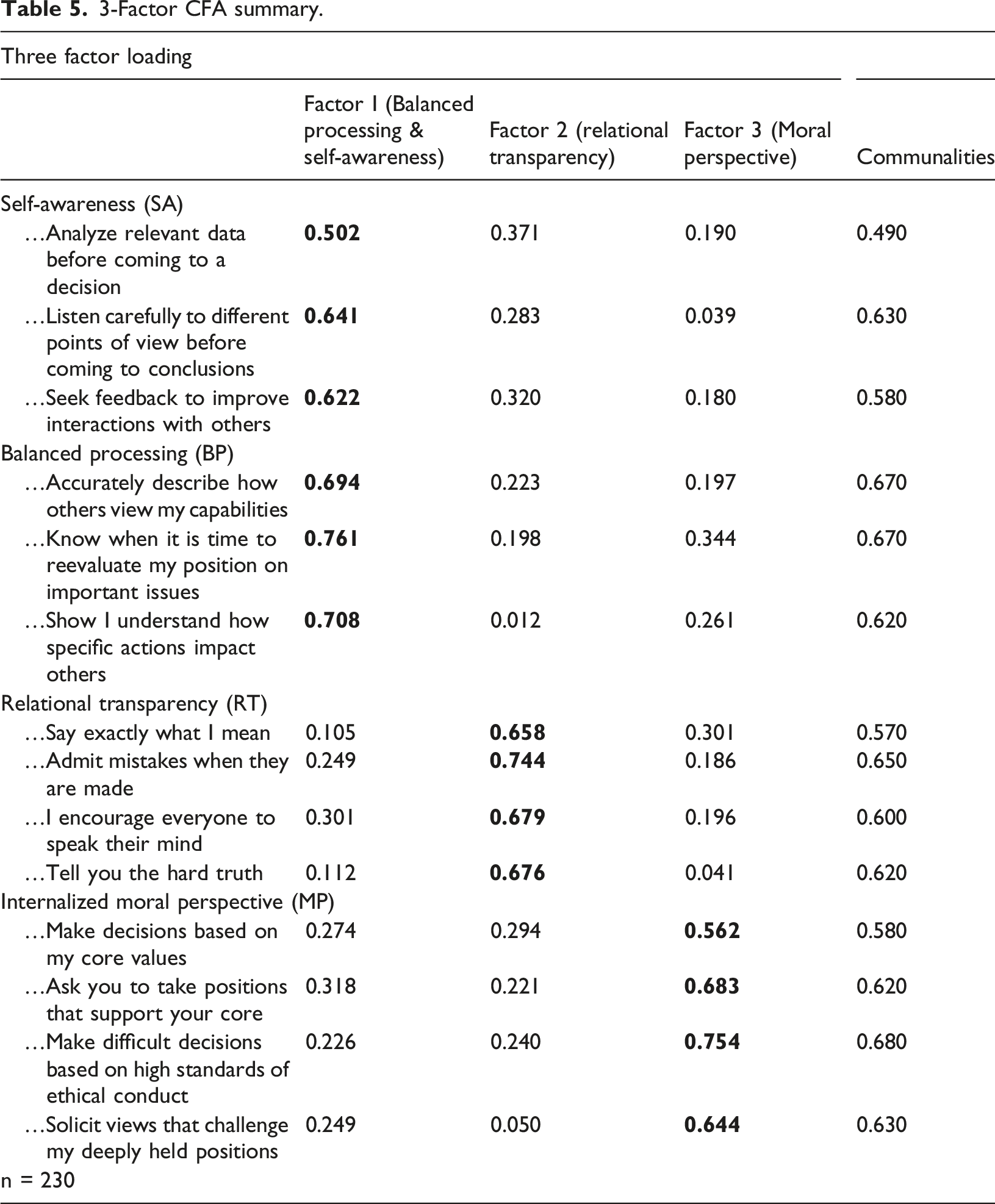
A principal component analysis with varimax rotation and Kaiser normalization was conducted to identify underlying factors within the 16-item scale. The analysis summarized in the Table 4 yielded a three-factor solution, explaining a total variance of 56.7%. Factor 1, labeled as “balanced processing and self-awareness,” consisted of eight items (eigenvalue = 6.94) and accounted for 43% of the variance, with factor loadings ranging from .50 to .76. Factor 2, termed “relational transparency,” comprised four items (eigenvalue = 1.22) and explained 7.6% of the variance, with factor loadings ranging from .65 to .74. Factor 3, labeled as “moral perspective,” included four items (eigenvalue = .975) and accounted for 6.1% of the variance, with factor loadings ranging from .56 to .75. Notably, two items, namely “Display emotions exactly in line with feelings” and “Demonstrate beliefs that are consistent with actions,” did not load significantly on any of the identified factors.
Several ALQ items did not load significantly onto any factor, which may reflect cultural interpretation differences rather than instrument deficiencies. In collectivist and high-context cultures, including many Hispanic managerial environments, direct emotional expression and self-promotion are often moderated by social harmony and group cohesion norms (Minkov and Hofstede, 2012). Items emphasizing individual emotional display or explicit self-assertion may therefore appear culturally incongruent, as authenticity is typically conveyed through modesty, empathy, and restraint rather than overt emotional transparency. These findings suggest that some ALQ items may carry an implicit individualistic bias, underscoring the need for cultural adaptation when applying leadership assessments across diverse populations.
Confirmatory Factor Analysis
3-Factor CFA summary.
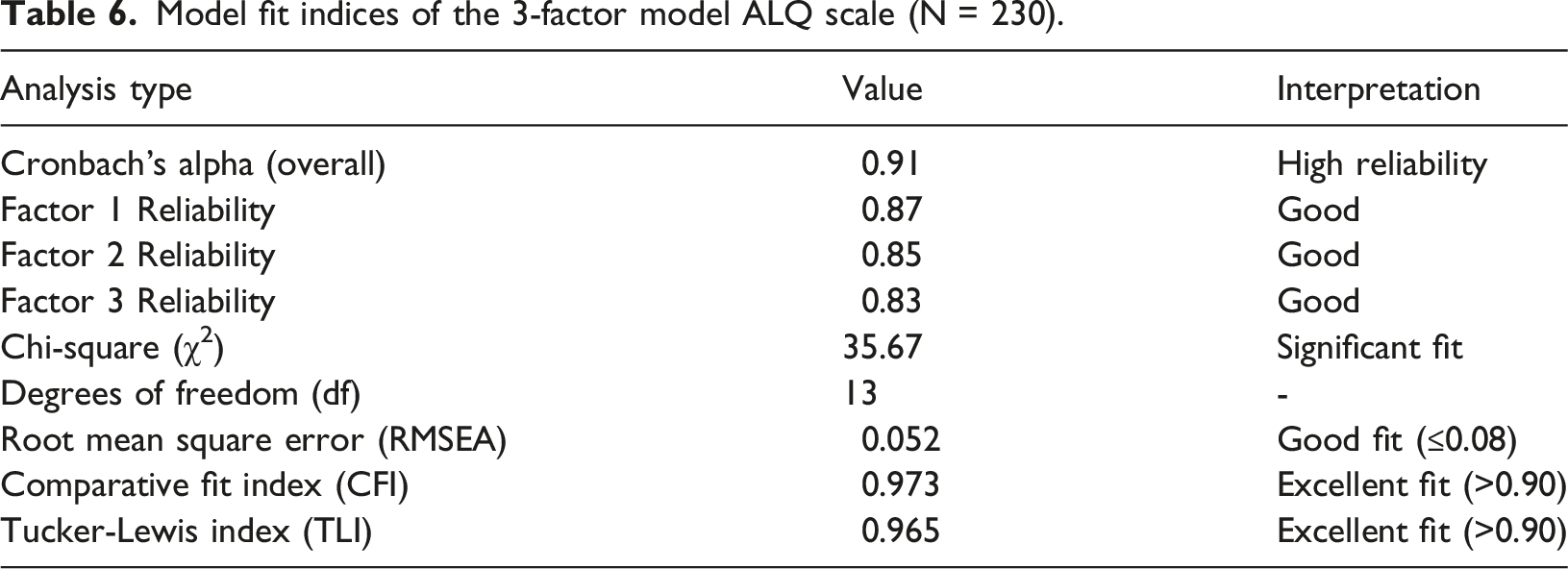
Model fit indices of the 3-factor model ALQ scale (N = 230).
The factor analysis indicated overlap between self-awareness and balanced processing, which may reflect cultural integration rather than measurement error. In collectivist contexts, such as among Hispanic managers, self-perception is often intertwined with group reflection and consensus (Hofstede, 2011; House et al., 2004). This suggests that leaders develop self-awareness through collective dialogue and relational feedback, aligning personal insight with the group’s shared understanding—an interpretation consistent with GLOBE’s emphasis on team-oriented and participative leadership within collectivist societies.
Further exploration and modification
To address the issue of non-loading items, an alternative exploratory factor analysis was conducted, excluding those two items. The revised 14-item, three-factor model demonstrated a good fit to the data. Table 6 indicates the chi-square value was 98.776 with 52 degrees of freedom, and the RMSEA value was .062. Additionally, the CFI and TLI values were close to 1, with CFI = .963 and TLI = .934, indicating a satisfactory model fit.
Revised three-factor model fit indices after item removal.
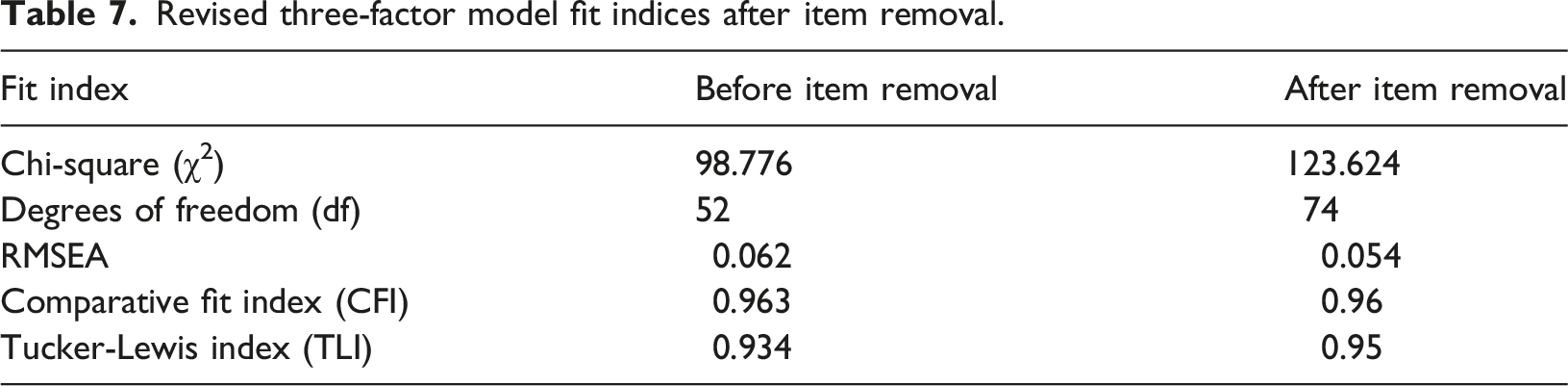
Overall, the statistical analyses provided strong evidence for the reliability and validity of the revised scale, while also highlighting the need to further investigate the items that did not load and the variation of a three-factor model fitting the cultural context.
Discussion
The findings of the statistical analysis have important cultural implications for measuring authentic leadership among Hispanic managers in the United States. The high overall Cronbach’s alpha coefficient of .91 demonstrates strong internal consistency of the Authentic Leadership Questionnaire (ALQ), confirming its reliability across this cultural sample (Walumbwa et al., 2008). This consistency suggests that the ALQ’s four dimensions—self-awareness, relational transparency, balanced processing, and internalized moral perspective—are conceptually meaningful within a collectivist managerial context. However, the interpretation of authenticity in Hispanic leadership is often shaped by cultural norms such as paternalismo, familismo, and collectivism, which emphasize relational harmony and moral responsibility over individual expression (González and Brown, 2019; Martinez, 2003).
From a broader theoretical lens, the GLOBE framework (House et al., 2004) and Hofstede’s cultural dimensions (Hofstede, 2011; Minkov and Hofstede, 2012) help explain why certain leadership behaviors resonate differently in this population. For example, high collectivism and humane orientation promote leadership grounded in empathy, loyalty, and decision-making—values that align closely with the relational and moral dimensions of authentic leadership (Nazir et al., 2021). Conversely, moderate power distance in many Hispanic contexts may influence how transparency and self-disclosure are expressed, with leaders often demonstrating authenticity through care and guidance rather than overt emotional openness. These findings indicate that while the ALQ exhibits psychometric robustness, cultural calibration may further enhance its validity for Hispanic managers by capturing relational authenticity as defined through collective and moral interdependence.
A possible three-factor scale in the context of Hispanic managers in the US
The principal component analysis revealed a three-factor solution for the ALQ scale in the Hispanic population. Factor 1, labeled “balanced processing and self-awareness,” included six items that explained 43% of the variance. This factor represents the importance of maintaining a fair and thoughtful decision-making process and being aware of one’s strengths and weaknesses as a leader (Avolio and Gardner, 2005). Factor 2, named “relational transparency,” comprised four items that explained 7.6% of the variance, emphasizing the significance of open and honest communication (Gardner et al., 2011). Finally, Factor 3, labeled “moral perspective,” included four items that explained 6.1% of the variance, underscoring the importance of ethical decision-making. The implicit leadership theory framework proposed by the GLOBE study suggests that leadership attributes are perceived differently across cultures (Epitropaki and Martin, 2004), which may help contextualize these factors within the broader cultural characteristics of Hispanic managers (Dorfman et al., 2012).
Cultural dimensions and factor interpretation
While the specific relationship between the GLOBE cultural dimensions and authentic leadership remains an area for further exploration, the dimensions of power distance, collectivism, and humane orientation identified in the GLOBE framework provide a general perspective on how cultural values shape leadership expectations (Chhokar et al., 2007). For instance, the relatively high levels of collectivism and humane orientation in Hispanic cultures may influence how self-awareness and balanced processing are expressed, potentially emphasizing group harmony and relational interdependence rather than individual self-reflection (Hofstede, 2001). Similarly, power distance may shape relational transparency, where hierarchical relationships influence the extent and manner in which openness and honesty are displayed in leadership interactions (Gelfand et al., 2007).
The concepts of paternalismo and familismo, which are deeply embedded in Hispanic cultures, may align with aspects of the GLOBE dimensions, particularly in-group collectivism and humane orientation (Ramirez, 2014). These cultural values emphasize the importance of relational ties and collective well-being, which could impact how leadership behaviors such as self-awareness and moral perspective are perceived and enacted. However, further research is needed to clarify the specific intersections between these constructs and their implications for leadership measurement.
Two items on the ALQ scale, namely “Display emotions exactly in line with feelings” and “Demonstrate beliefs that are consistent with actions,” did not load on any of the identified factors. This suggests potential cultural influences on leadership perceptions that may not align with the individualistic assumptions underlying the scale. In cultures with high collectivism and power distance, emotional expression and value-driven actions may be more context-dependent, influenced by hierarchical expectations and group harmony rather than individual authenticity (Minkov and Hofstede, 2012). These findings highlight the need for a culturally sensitive approach when applying leadership assessment tools across diverse cultural settings (Aycan et al., 2013).
The findings of this study contribute to cross-cultural leadership theory by advancing the understanding of how authentic leadership manifests within Hispanic managerial contexts. The merging of self-awareness and balanced processing reflects the cultural interdependence of personal insight and collective reasoning, supporting Hofstede’s (2011) collectivism dimension and GLOBE’s (House et al., 2004) team-oriented leadership prototype. This suggests that authenticity among Hispanic leaders is a relationally constructed process—leaders define themselves through dialogue, trust, and shared moral judgment rather than purely individual introspection. Moreover, the non-loading items related to emotional display highlight that Western conceptualizations of authenticity may inadvertently privilege individualistic expression. By identifying these culturally embedded patterns, this study extends authentic leadership theory beyond its Western origins and reinforces the need for context-sensitive measurement models that respect diverse cultural expressions of authenticity.
From a practical perspective, these results offer valuable insights for organizational development, leadership assessment, and training in multicultural workplaces. The strong reliability of the ALQ suggests it can serve as a viable diagnostic tool for identifying leadership strengths among Hispanic managers, provided that its interpretation accounts for cultural norms such as familismo, paternalismo, and collectivism. Leadership development programs should emphasize relational authenticity, focusing on empathy, shared decision-making, and moral guidance rather than solely on individual self-expression. Human resource professionals and executive coaches working in Hispanic or Latin-influenced organizations can use these findings to design more culturally congruent leadership initiatives, enhancing trust, engagement, and performance (Guerrero and Posthuma, 2014). Ultimately, by acknowledging the cultural foundations of authenticity, organizations can foster inclusive leadership cultures that value both individual integrity and collective responsibility.
Conclusion
This study offers a significant contribution to leadership research by examining the cultural validity of the Authentic Leadership Questionnaire (ALQ) within the context of Hispanic managers in the United States. The findings revealed a culturally grounded three-factor model—comprising “balanced processing and self-awareness,” “relational transparency,” and “moral perspective”—rather than the original four-factor structure. This shift highlights the influence of cultural values on how authentic leadership is perceived and enacted in diverse managerial populations.
The revised model reflects the intersection of authentic leadership constructs with cultural dimensions such as collectivism, paternalismo, and familismo. These values play a central role in shaping leadership behaviors and expectations among Hispanic managers, emphasizing group harmony, ethical responsibility, and relational care. The exclusion of two ALQ items that failed to align with any of the identified factors further underscores the importance of cultural context in leadership assessment (Javidan et al., 2006). It suggests that certain leadership attributes, particularly those grounded in individualistic assumptions, may not fully capture the lived experiences and expressions of leadership within Hispanic communities.
Additionally, the findings resonate with cultural frameworks such as the GLOBE study and Hofstede’s dimensions, which reveal how leadership behaviors are embedded in broader societal values. The higher relevance of relational and moral aspects in the Hispanic context points to a leadership style deeply rooted in social connection and group obligation, in contrast to more autonomy-driven models prevalent in Anglo cultures.
Despite the study’s contributions, several limitations should be acknowledged. First, the use of nonprobability purposive sampling through Qualtrics may introduce sampling bias, as participants who self-selected to respond might differ systematically from the broader population of Hispanic managers. Second, this study did not analyze cultural subgroups within the Hispanic population, such as Mexican, Cuban, or Puerto Rican managers. Future research should examine these subgroup differences to identify potential variations in authentic leadership perceptions and cultural expression across diverse Hispanic communities. Third, as a self-report survey, the data are subject to potential social desirability bias and common method variance, which may inflate correlations among the ALQ constructs. Finally, the absence of qualitative data, such as interviews or focus groups, limited the ability to explore the deeper cultural meanings and lived experiences underlying authentic leadership behaviors.
Future research should aim to deepen and broaden the understanding of authentic leadership across Hispanic managerial contexts. Building on the Implicit Leadership Theory perspective introduced in the literature review, subsequent studies could explore how culturally rooted leadership prototypes influence the perception of authenticity across different Hispanic subgroups. Qualitative and mixed-methods designs—including semi-structured interviews, focus groups, or longitudinal (multi-wave) data collection—are recommended to complement quantitative findings and provide richer interpretive depth. Such approaches would allow for cross-validation of the ALQ factor structure and a deeper examination of cultural constructs like familismo, paternalismo, and collectivism as moderators of authentic leadership. Moreover, extending this framework to non-Hispanic cultural clusters could advance comparative leadership theory and support the development of culturally inclusive leadership assessment models.
Footnotes

Funding
The authors received no financial support for the research, authorship, and/or publication of this article.
Declaration of conflicting interests
The authors declared no potential conflicts of interest with respect to the research, authorship, and/or publication of this article.