







Abstract
Omni-channel retailing has created different shopping paradigms, such as channel hopping, to meet diverse consumer expectations through various channels. Based on the consumer decision-making model, this study explored the typology of consumer groups based on consumers’ channel usage during the entire shopping trip and how each group differs in terms of shopping values, shopping behaviors, perceived benefits, and risks. Using a total of 264 US nationwide consumer responses, we identified four consumer groups that have distinctive channel-hopping patterns; hyperconnected shoppers, traditional shoppers, web shoppers, and webroomers. Our findings revealed unique shopping values and shopping behaviors in each of these categories, as well as perceived risks and benefits among the four groups. This study’s results can serve as empirical evidence to provide better insights to help retailers develop successful omni-channel strategies and also contribute to the omni-channel retailing literature.
Keywords
Introduction
In response to the rapidly growing phenomenon of omni-channel retailing, numerous fashion brands have attempted to innovate their retail spaces by utilizing individual shopper data to customize their mobile and online shopping experience, providing flexible delivery options, as well as novel in-store experiences. Consumers tend to view fashion-related shopping as one of the prime leisure activities they get to experience during their overall shopping journey (Passport, 2016c). In early 2008, the Net-A-Porter Group teamed up with Valentino to launch a new omni-channel business model, allowing unprecedented online access to inventory from all Valentino’s boutiques, logistics centers, and their entire YNAP global network consisting of eight fulfillment centers (Yoox Net-A-Porter Group, 2017). A wide range of fashion companies (e.g., Burberry and Bonobos) are continually adding new channels to their shopping options, so that consumers can increasingly use various devices to make purchases without the constraints of time and location (Avery, Steenburgh, Deighton, & Caravella, 2012). This has transformed the consumers’ decision-making process, making it more complicated and creating different shopping paradigms, such as channel hopping. Channel hopping is defined as creating an experience “for shoppers to start shopping on one channel and continue onto another before they complete their transaction” (Passport, 2016a, p. 8), to fulfill multiple needs through accessing various available channels (Court, Elzinga, Mulder, & Vetvik, 2009). A new consumer segment, hyperconnected consumers, is constantly connected to online resources by using multiple devices even in a single transaction and, therefore, has become an important target for omni-channel retailers (Passport, 2016b).
Previous studies have shown various results in terms of channel usage during consumers’ decision-making process. For example, Sullivan (2015) reported that more than 70% of Americans exploit three or more channels when researching product information, while Woodall (2015) argued that approximately 62% of consumers across all age groups and geographic regions still prefer to shop in a physical retail store. Such inconsistent results may stem from the fact that technology use can differ according to consumer characteristics, such as demographics, psychographics, and geographic location (Passport, 2016a, 2016b); thus, to fully understand consumers’ channel usage and channel-hopping behaviors during their decision-making process, several consumer characteristics should be considered. Also, previous studies rarely regarded consumer channel usage as a continual pattern from a theoretical perspective. That is, although consumers’ shopping decisions consist of a number of steps (including information searches, making the purchase, and post-purchase behavior; Lemon & Verhoef, 2016), scant studies exist examining consumers’ channel-hopping patterns throughout the entire process.
As consumers become more sensitive to the variety of offerings contained across various channels and as retailers continue to add new channels to create omni-channel experiences, it becomes more and more important to specifically understand the end-to-end points of consumers’ shopping behaviors across all of the different channels used in a single transaction, to craft effective omni-channel strategies. Based on the consumer decision-making process model (Lemon & Verhoef, 2016), this exploratory research aims to (a) identify US consumer groups based on various patterns of channel hopping, encompassing the entire decision-making process in a fashion retail context, and (2) profile different consumer groups according to psychographics (e.g., shopping values, perceived benefits, and risks) and demographics (e.g., age, gender, education, income, etc.). Consequently, this study can provide theoretical and empirical evidence to help retailers understand how consumers utilize different channels throughout their shopping journey, enabling them to establish effective strategies to mobilize each channel in an omni-channel world.
Literature review
Consumers’ decision-making processes and channel-hopping behaviors
The consumer decision-making process refers to a linear model that illustrates the behavioral patterns demonstrated as they occur across various stages of the shopping experience (Karimi, Papamichail, & Holland, 2015). Decision making is defined as the information-intake process through which people integrate as much as information as possible (Neslin et al., 2006; Spears, Ketron, & Ngamsiriudom, 2016). Traditional consumer decision-making process models describe this as a five-stage process, which includes need recognition, information searches, evaluation of alternatives, and purchase and post-purchase phases (Neslin et al., 2006). However, Court et al. (2009) argued that traditional consumer process models do not incorporate essential buying factors centered on the increasing amount of products offered through various channels, and thus they suggested that there are four phases in this process: initial consideration, active evaluation of potential purchases, the purchasing of products/services, and post-purchasing behaviors. During these four phases, they emphasized that multiple channels were used interchangeably and effortlessly. Also, Taylor (2016) highlighted that consumers do not necessarily start at the first stage (problem recognition) but could quickly jump directly to information searching through various channels. In the same vein, Lemon and Verhoef (2016) conceptualized the entire customer journey as it maps across three overall stages, including the information search (pre-purchase), purchase, and post-purchase phases, and argued that the customer decision-making process is a highly dynamic and iterative process in which consumers hop around various channels to meet their expectations and create an optimal experience for themselves.
With the current proliferation of channels, the customer decision-making process has become less controlled by brands and businesses, which results in an unexpected but interesting customer journey, manifesting in channel-hopping behavior (Rapp, Baker, Bachrach, Ogilvie, & Beitelspacher, 2015). It has become increasingly challenging for businesses to create, manage, and attempt to control the consumer’s journey and create a seamless customer experience (Passport, 2016a). As consumer channel-hopping behaviors have brought enormous challenges for retailers, researchers have become increasingly interested in the phenomena known as webrooming and showrooming (Venkatesan, Kumar, & Ravishanker, 2007). Webrooming means “searching online and buying in stores,” whereas showrooming refers to “browsing to gather information in-store but buying online” (Wolny & Charoensuksai, 2014, p. 318). Due to the number and availability of accessible channels, consumers do not feel compelled to buy products when they search for information and product demonstrations.
Approximately, 65% of consumers in the United States are predominantly using webrooming: conducting research online and then making their purchases at a physical store (Skrovan, 2017). Verhoef, Neslin, and Vroomen (2007) also found that 43% of consumers aged 18 to 35 years were highly engaged in searching for information about products online and then making their purchases at physical stores. To be specific, these consumers mainly use search engines, brand websites, and/or customer reviews, while some consumers favor blog posts for the information search stage (Sullivan, 2015). In addition, social media has become one of the ultimate channels through which to search for information as 87% of marketers agree that brands are putting considerable effort into creating marketing content to reach their consumers on social media (Sullivan, 2015). In another survey, consumers aged 25 to 34 years, particularly male shoppers, were found to be highly likely to search online before making an actual purchase (KPMG, 2017). Also, Skrovan (2017) indicated that 57% of males and 41% of females between ages of 18 and 34 years prefer to research online prior to shopping at a physical store.
In contrast, after taking full advantage of services at a physical store, consumers may then choose to actually purchase products from the retailer’s online store, which exemplifies the showrooming phenomenon that helps consumers reduce uncertainties in the buying processes (Flavián, Gurrea, & Orús, 2016). One study found that consumers between 25 and 34 years of age are more likely to engage in searching at retail stores and then purchasing through online channels, which is inconsistent with what Verhoef et al. (2007) found (comScore, 2012). A more recent survey also reported results similar to those of comScore (2012), with 51% of consumers reported as browsing in-store for information and then buying online (Skrovan, 2017). According to a study conducted by KPMG (2017), Millennials and Generation X consumers who were born between 2001 and 1981 tend to search for product information online simultaneously through mobile devices while they are shopping in stores. This indicates that the younger generations still use physical retail stores as one of the essential channels through which to search for product information. Indeed, mobile devices create an additional dynamic phenomenon in the consumer shopping journey when consumers concurrently search for and experience products in stores, while making purchases with their mobile device (Rapp et al., 2015).
After making purchases, consumers may utilize various channels for post-purchase activities such as returns, customer service, writing reviews, and so on. Post-purchase is an imperative stage where consumers utilize and interact with the brand and its products, which can develop brand loyalty and a greater likelihood of repurchase (Lemon & Verhoef, 2016). If a consumer develops a strong bond with a particular product or brand, she or he will enter into an “enjoy-advocate-buy loop” that skips the consideration and evaluation stages entirely (Edelman, 2010, p. 3). Hence, the post-purchase stage needs to embrace the “loyalty loop” as a key part of the overall consumer’s decision-making process (Court et al., 2009). As the post-purchase stage can guarantee a deeper relationship with customers and build loyalty, it is very important to create a positive experience at this stage. Depending on the consumer’s comfort level with a given channel, their preferred channels in the post-purchase stages were shown to be significantly different than those used in the purchasing stages (Frambach, Roest, & Krishnan, 2007). By investigating the importance of post-purchase capabilities, Stelzer (2017) found that consumers’ expectations of these capabilities are continuously increasing, the most crucial of which were expectations around the notification of delays with an order or its delivery, tracking orders online or through a mobile device via any combination of channels, notification when an order has been delivered, and in-store pickup and return of online/mobile purchases. Individuals who do not experience these options online highly rated the physical retail channel during the post-purchase stage (Frambach et al., 2007). To summarize, we evaluated the consumer decision-making process according to Lemon and Verhoef’s (2016) three-stage model, and we raised Research Question 1 to empirically identify consumer groups according to their channel usage:
RQ1. Which fashion consumer groups can be identified based on their channel usage before, during, and after purchasing retail items?
Consumers’ perceived values as reflected in their fashion purchases
Consumers navigate various channels in ways that suit their needs on any particular shopping occasion; in turn, they expect retailers to be consistently accessible through every channel (Wolny & Charoensuksai, 2014). The choice of channel is typically influenced by the type of products and services sought. Depending on the type of product, the things that consumers value in a shopping trip may differ (Blazquez, 2014; Citrin, Stem, Spangenberg, & Clark, 2003). For example, when consumers shop for hedonic fashion goods, they may go to the physical store as physical stores create environments which stimulate social interaction, product evaluation, and the five senses (Nicholson, Clarke, & Blakemore, 2002). It was particularly reported that more consumers tend to webroom when making fashion product purchases due the instant gratification this channel provides (Passport, 2016c). However, some consumers may prefer searching for product information online if they perceive online sources as trustworthy (Skrovan, 2017).
Holbrook and Hirschman (1982) defined the two primary shopping values as (a) the hedonic instinct driven by the prospect of the pleasure, joy, and fun that will be derived from the possession and the use of certain products and (b) utilitarian needs, which are more task-oriented and inspired by consumers’ efforts to solve problems, thus product information is gained through cognitive processing (Molinillo, Pérez-Aranda, Gómez-Ortiz, & Navarro-García, 2017). Sweeney and Soutar (2001) defined the consumption values that drive purchases according to four dimensions of perceived value, which encompass both hedonic and utilitarian impulses. Utilitarian impulses reflect whether or not consumers achieve their shopping goals with a minimum investment of time and effort, which includes considerations of quality and price (Sheth, Newman, & Gross, 1991). Quality refers to consumers’ judgments about the overall excellence or superiority of the products or services received (Dodds, Monroe, & Grewal, 1991). Price plays a critical role in determining both the information-seeking and the purchasing channel for price-sensitive consumers (Valle, Lavin, Magner, & Geldes, 2017). Hedonic impulses focus on the experiential value consumers derive from the shopping process, including social and emotional values (Sheth et al., 1991). Social value refers to the utility derived from the product’s ability to enhance the buyer’s social self-concept, such as conferring status. Emotional value refers to the utility derived from the feelings or affective states that a product generates. In this study, we posited that consumers’ shopping values derived from both hedonic and utilitarian impulses may drive various channel usage during a shopping trip. Thus, we proposed Research Question 2:
RQ2. How do either hedonic or utilitarian shopping values determine consumers’ channel usage?
Perceived benefits and risks of online shopping
Perceived benefit is defined as the sum of the needs or wants consumers believe will be fulfilled by the products they are considering (Wu, 2003). To understand online shopping behavior, Forsythe, Liu, Shannon, and Gardner (2006) suggested observing consumers’ total perceived benefits, which encompass convenience, ease of shopping, and product selection (which are functional benefits). Without the constraints of time and location, online shopping can help consumers enjoy “window shopping” by seeking information and comparing prices conveniently, and without feeling the pressure to purchase. Moreover, the nonfunctional or emotional benefits of online shopping have been argued to be important for online consumers (Sarkar, 2011). Childers, Carr, Peck, and Carson (2001) posited that consumers’ positive attitudes toward online shopping could be explained by both the functional and hedonic benefits gained through the experience. In this regard, the perceived benefits of online shopping are crucial factors affecting channel decisions made during the shopping journey (Kim, Ferrin, & Rao, 2008).
A perceived risk is defined as a consumer’s perception of the uncertainty and adverse consequences of buying a product or service (Dowling & Staelin, 1994; Lee & Moon, 2015). The perceived risk theory postulates that buyers are more inclined to minimize their perceived risk rather than to maximize the expected positive outcome or expected payoff from making a purchase (Samadi & Yaghoob-Negadi, 2009). Particularly in relation to consumers’ channel usage, Xirong and Yang (2010) found that offline shoppers showed a higher perceived risk of financial loss and security breaches through online transactions than that did online shoppers. Forsythe et al. (2006) found three types of perceived risks that emerged from online shopping: (a) financial risk, which refers to the fear of net financial loss; (b) product risk, which is associated with trepidation about the expected performance of the product or fears of delay in actual delivery; and (c) convenience risk, which refers to buyers’ perceptions of a lack of convenience when placing orders online, such as potential technological complications. Due to the inability to interact with and examine products in person, approximately 80% of Internet users are adverse to online shopping (Chang & Wu, 2012). In addition, 50% of Internet users are unwilling to shop online because of the uncertainty involved with post-purchase services, insecurity around the safety of the financial transaction, and fears about personal information privacy (Chang & Wu, 2012). Particularly, in the hyperconnected environment where customer information is shared across channels, a lack of secure payment method is one of critical issues as consumers are reluctant to provide payment information (Passport, 2016a).
Although numerous researchers have discussed the benefits and risks of online shopping, few have provided support for the impact of these perceived benefits and risks on channel usage during the consumer’s shopping journey. Thus, we raised Research Question 3:
RQ3. How similarly/dissimilarly are the benefits and risks of online shopping perceived by different consumer groups according to their channel usage?
Methodology
Data collection and samples
Data were collected by an online survey company in the spring of 2017. To obtain general opinions about consumer channel usage and related factors, this study recruited US consumers nationwide who were more than 18 years of age. We attempted to enhance sample representativeness by employing a quota sampling method in which age, gender, and area of residence of the respondents was considered. Thus, the characteristics of the sample used in this study were consistent with those of US consumers nationwide. The survey was built on an online survey platform, and an invitation was emailed to selected consumer panels by the survey company. Out of 1,000 invitations, a total of 264 complete responses were returned (26.4% response rate) to us after the survey company screened out speeders, patterners, and incomplete answers. The characteristics of the 264 respondents are presented in Table 1.
Sample characteristics (N = 264).
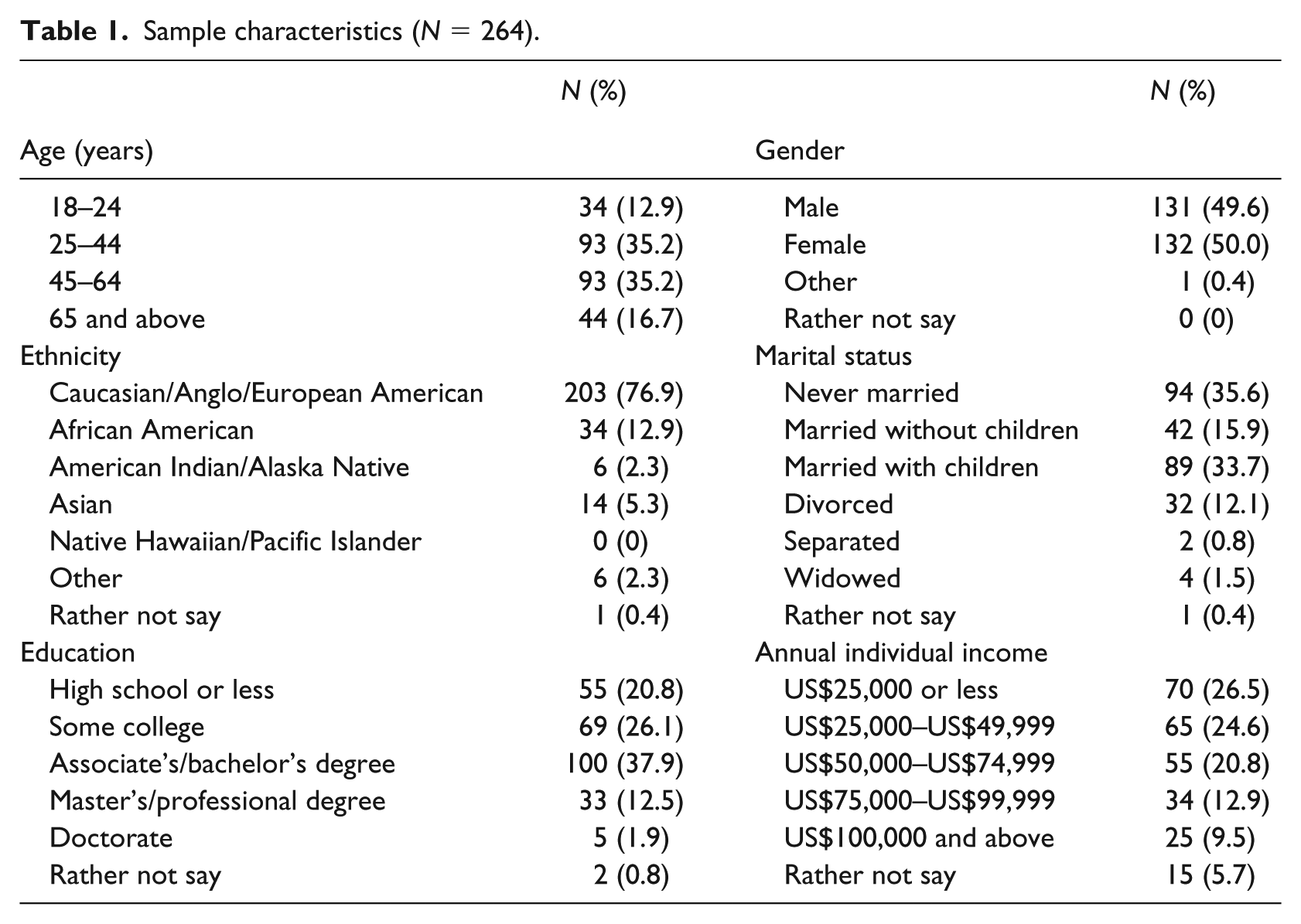
Over 80% of respondents (n = 220) were under 65 years of age, and gender distribution was almost equal between males (n = 131, 49.6%) and females (n = 132, 50.0%). In terms of ethnicity, most respondents were Caucasian (n = 203, 76.9%), followed by African American (n = 34, 12.9%). There were 94 respondents (35.6%) who had never married and 89 respondents (33.7%) who were married with children. We also asked for the highest level of education the respondent had completed; over one-third of the respondents (n = 100, 37.9%) had obtained an associate’s or bachelor’s degree, and 69 respondents (26.1%) had completed some college.
Measurements
The survey began with questionnaires asking for information about age, gender, and area of residence as screening questions for quotas. Subsequent questions included items to measure Channel Usage, Web Access Frequency, Shopping Values, Shopping Behaviors, and Perceived Benefits and Risks, followed by questions to gather additional demographic information.
First of all, this study measured the extent of Channel Usage at each stage of the purchasing process. We provided a list of channels that previous studies had indicated were commonly used before, during, and after making purchases (Passport, 2016a, 2016c) and asked respondents to rate their perceived usage level of each channel on a 7-point Likert-type scale (1 = not at all to 7 = always). To clarify each stage of the purchase process, we specifically asked, “For researching your clothing before purchase, how much do you use the following channels?” “For making payments for your clothing purchase, how much do you use following channels?” and “For returns and exchanges after your clothing purchase, how much do you use following channels?” For pre-purchase channels (e.g., information searching), we provided the options of physical store, online website, search engine (e.g., Google), mobile website, and social networking sites (e.g., Instagram, Facebook, Twitter, etc.). The physical store, the store’s website, and the store’s mobile website were provided as options for the actual purchase (e.g., making payments) and post-purchase (e.g., returns and exchanges), yet search engines and social networking sites were not included in these stages because these channels are likely to redirect to the brands’ websites for payment and/or customer service. Thus, we determined that search engines and social networking sites were not adequate options for during- and post-purchase channels. Subjects were also asked to rate their frequency of Web Access at different locations such as home, work, school, and so on on a 5-point Likert-type scale (1 = never to 5 = daily). These items were used to determine the predictive validity of the groups based on channel usage.
For Shopping Values, we borrowed 15 items from a study by Babin, Darden, and Griffin (1994) and measured them on a 7-point Likert-type scale (1 = strongly disagree to 7 = strongly agree). To assess Shopping Behaviors, we asked for the average number of clothing items purchased (1 = 0–1 piece to 5 = more than 10 pieces) and money spent (1 = US$0–US$20 to 5 = more than US$200) in a month on a 5-point interval scale. Items used to measure the Perceived Benefits and Risks for online shopping were borrowed from a study by Forsythe et al. (2006) and modified to fit the purpose of this study. These items were measured on a 7-point Likert-type scale (1 = not at all important to 7 = extremely important). As perceived benefits and risks are very context-specific (Forsythe et al., 2006), we attempted to limit the context (e.g., online shopping) and assess how each consumer group perceived the benefits and risks of online shopping. Considering that the primary characteristic of omni-channel consumers is that they exploit online resources using multiple devices (Passport, 2016b), we deemed that examining the perceived benefits and risks related to online shopping would be appropriate to better understand omni-channel consumers. After assessing all major variables, demographic information was collected, such as race, education, income level, and so on.
Results
Exploratory factor analysis (EFA)
Variables measured by multiple items (e.g., shopping values, perceived benefits, and risks derived from shopping online) were first analyzed using EFA in SPSS 23.0 to investigate dimensionality. In EFA, the principal components method with varimax rotation was used. Hair, Black, Babin, and Anderson (2010) explained that an assumption of factor analysis is presence of correlations among the variables, so the Bartlett test of sphericity and the KMO measure were referenced. All three variables were found to be appropriate for the analysis in that the Bartlett test of sphericity showed statistically significance (p < .001), and KMO ranged from .94 to .90.
In shopping values, the EFA results revealed that one item was heavily cross-loaded (i.e., While shopping, I find just the time I was looking for.) and was therefore deleted (Hair et al., 2010). A total of 14 items accounted for 75.07% of the total variance, and two factors were identified, namely utilitarian shopping value (4 items, 59.04%, Cronbach’s α = .73) and hedonic shopping value (10 items, 16.03%, Cronbach’s α = .97). An EFA was also conducted for the perceived benefits of shopping online, and one item was deleted due to cross-loading (i.e., I would not be embarrassed if I do not buy.). Thus, 14 items were retained with two factors, which accounted for 64.67% of the total variance. The first factor was named the functional online shopping benefit because convenience, information, and product assortment were related to this factor (8 items, 52.72%, Cronbach’s α = .93), and the other factor, referred to as the emotional online shopping benefit (6 items, 11.95%, Cronbach’s α = .86), included feelings of security, excitement, and the pleasure derived from the overall experience. Finally, the EFA results of the perceived risks of shopping online revealed that three items were heavily cross-loaded (i.e., I may purchase something by accident, I cannot examine the actual product, and Size may be a problem with clothes). After deleting these three items, 13 items were retained (72.21%), yielding three factors. The first factor was referred as to security risk (5 items, 52.11%, Cronbach’s α = .88) which included concerns related to the security of the product, user information, and payment information. The second factor, procedural risk (4 items, 11.84%, Cronbach’s α = .91), indicated concerns about the complicated process of searching and placing an order online. The final factor was named the intangibility risk (4 items, 8.26%, Cronbach’s α = .86) because it involved an overall lack of tangibility and immediate gratification when purchasing products online. Table 2 presents the result.
EFA result.
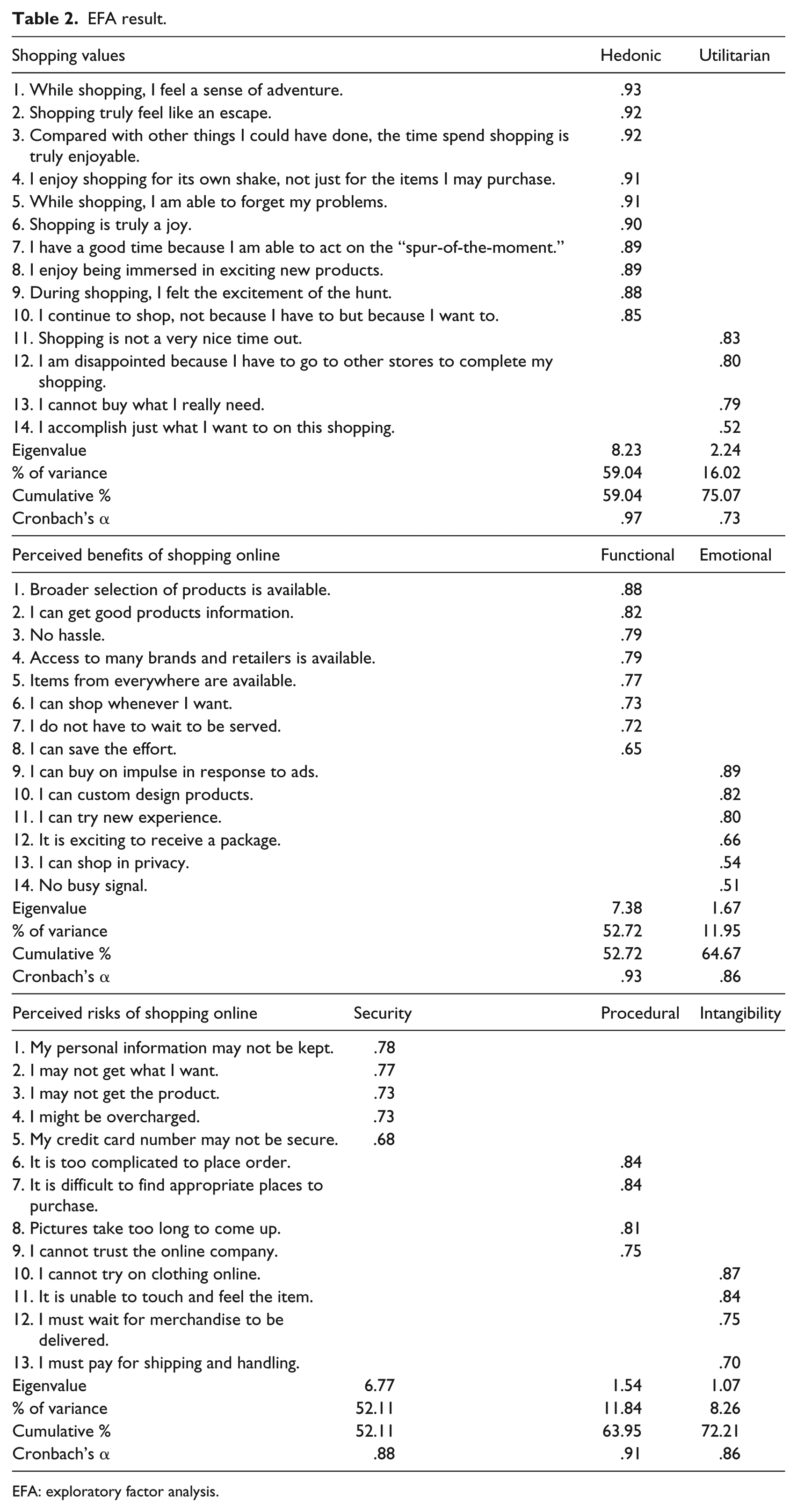
EFA: exploratory factor analysis.
Group identification
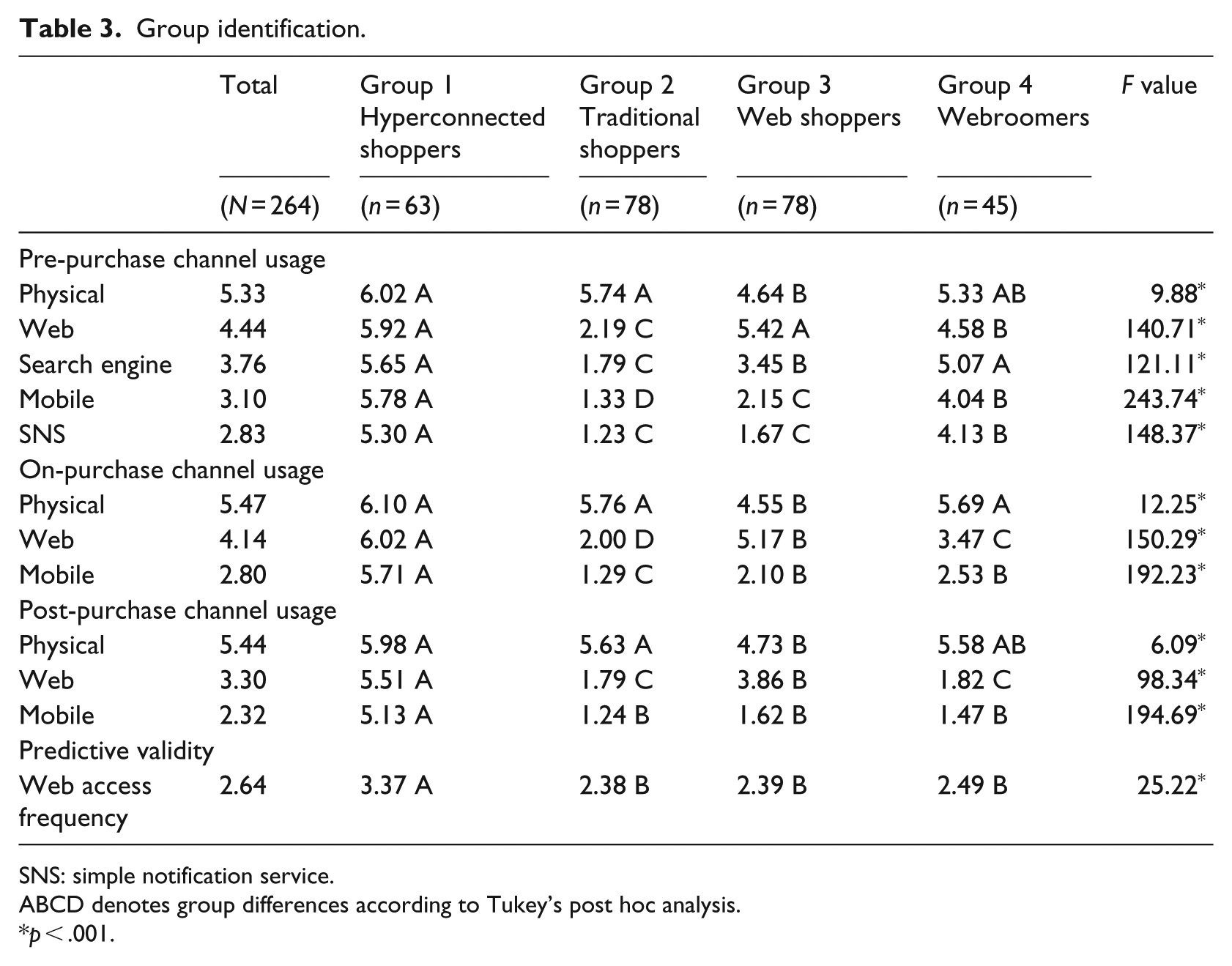
A cluster analysis was used to identify and define the various consumer groups based on their levels of channel usage during the pre-, on-, and post-purchase phases. Following Punj and Stewart’s (1983) two-stage procedure, we conducted a hierarchical cluster analysis using Ward’s method to identify a candidate’s number of clusters and outliers. Using a dendrogram, we were assured that a four-cluster solution is the most meaningful; thus, we set the number of clusters to four in the non-hierarchical cluster analysis of the K-means. Then, the analysis of variance (ANOVA) confirmed significant differences among the clusters, and Tukey’s post hoc analysis provided evidence of the differences among them (Table 3).
Group identification.
SNS: simple notification service.
ABCD denotes group differences according to Tukey’s post hoc analysis.
p < .001.
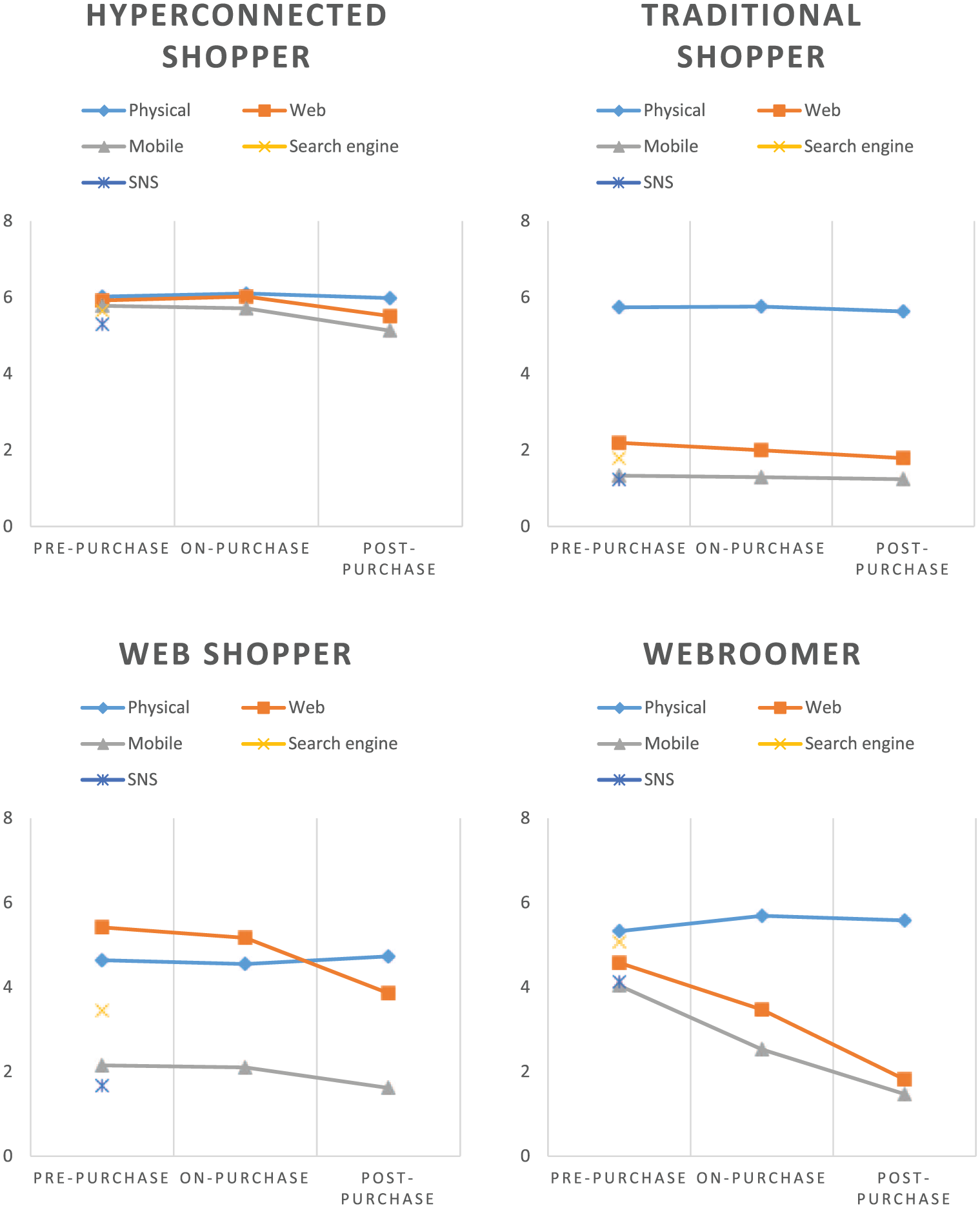
Group 1 was named the hyperconnected shopper (n = 63, 24%) group as respondents in this group heavily used all channels provided throughout the entire purchasing process. Group 2 was referred to as the traditional shopper (n = 78, 30%) group due to their heavy reliance on the physical store as the primary channel for searching, purchasing, and returning/exchanging products. It is noteworthy that respondents in this group demonstrated a relatively low usage of the online and mobile channels. Group 3 was named the web shopper (n = 78, 30%) group, given that these consumers showed relatively higher scores in the use of online websites from the pre-purchase to post-purchase phases as compared with the other channels. The smallest but most interesting group was Group 4, namely the webroomer (n = 45, 17%) group. Respondents in this group revealed a greater extent of search engine, mobile, and simple notification service (SNS) usage during the pre-purchase phase, but then were likely to actually purchase products in a physical store rather than through the online or mobile store.
The predictive validity of the group identification was examined according to the extent of their web usage because we posited that hyperconnected shoppers may heavily use the web, as compared with traditional shoppers who mainly rely on the physical store for their shopping needs. As expected, hyperconnected shoppers were found to use the web more frequently than those in the other groups (F = 25.22, p < .001). Considering their greater extent of web usage, as well as the conceptual meaning of various patterns of channel usage throughout the shopping trip, we regarded the four identified groups as highly reflective of reality. Using these four groups, which show distinctive patterns of channel usage in the pre-, during-, and post-purchase phases, this study will compare these groups in terms of their shopping values, shopping behaviors, perceived benefits and risks of shopping online, and demographic characteristics.
Group comparison of shopping values and behaviors
To compare shopping values and shopping behaviors among the groups, we conducted an ANOVA test using Tukey’s post hoc analysis (Table 4). Significant differences were found in hedonic shopping values (F = 17.52, p < .001) and shopping behaviors in terms of the level of shopping frequency (F = 38.02, p < .001) and money spent (F = 30.29, p < .001). As compared with other groups, the hyperconnected shopper was more oriented toward the hedonic aspects of shopping than the other groups, seeking enjoyment and excitement from the shopping experience. Respondents in this group were more likely to shop for a greater number of clothing items and spent more money than the other groups. However, the four groups did not show differences in utilitarian shopping values (F = 0.91, p > .05), suggesting that respondents in this study may seek similar levels of utilitarian aspects in their shopping no matter what channels they are using during the shopping trip.
Group profiles according to shopping values and behaviors.
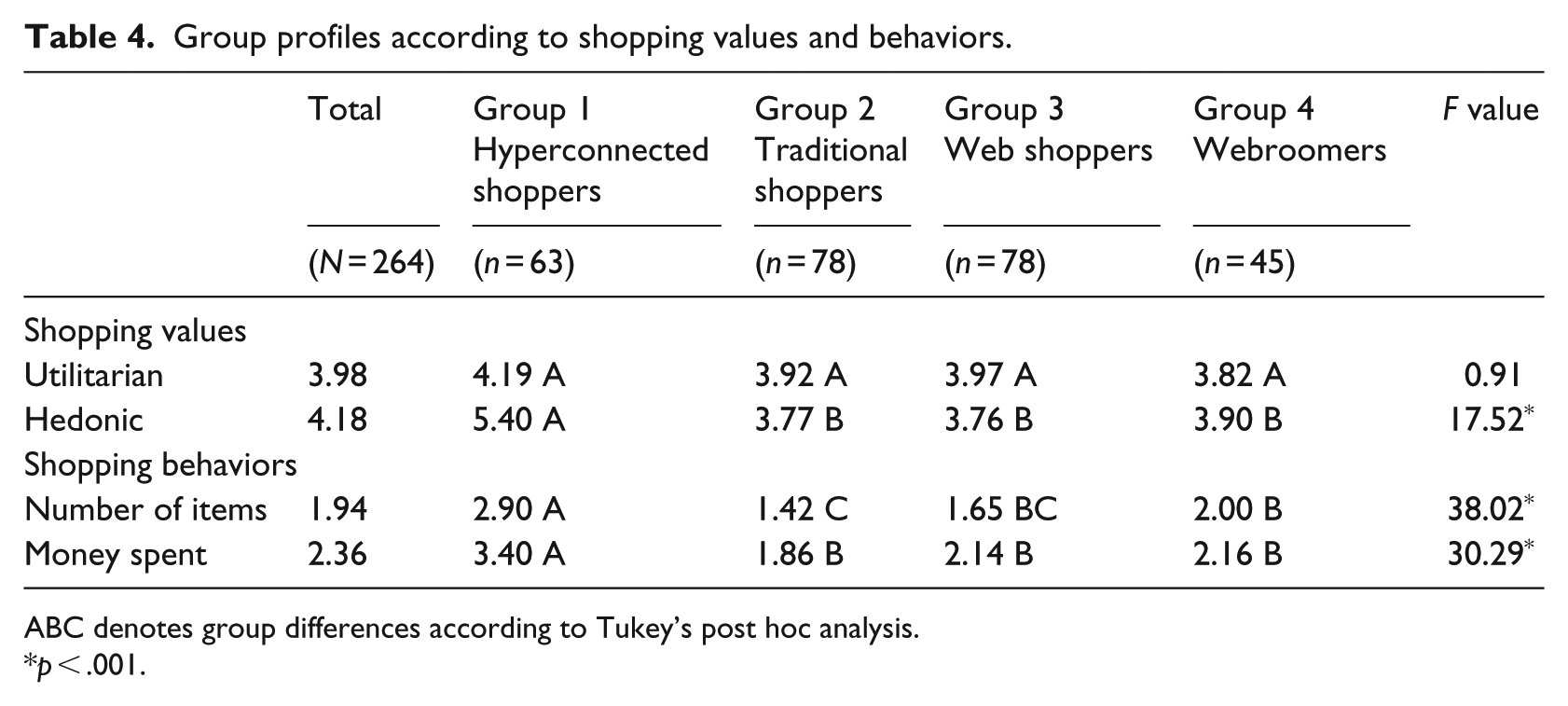
ABC denotes group differences according to Tukey’s post hoc analysis.
p < .001.
Group comparison of the perceived benefits and risks of shopping online
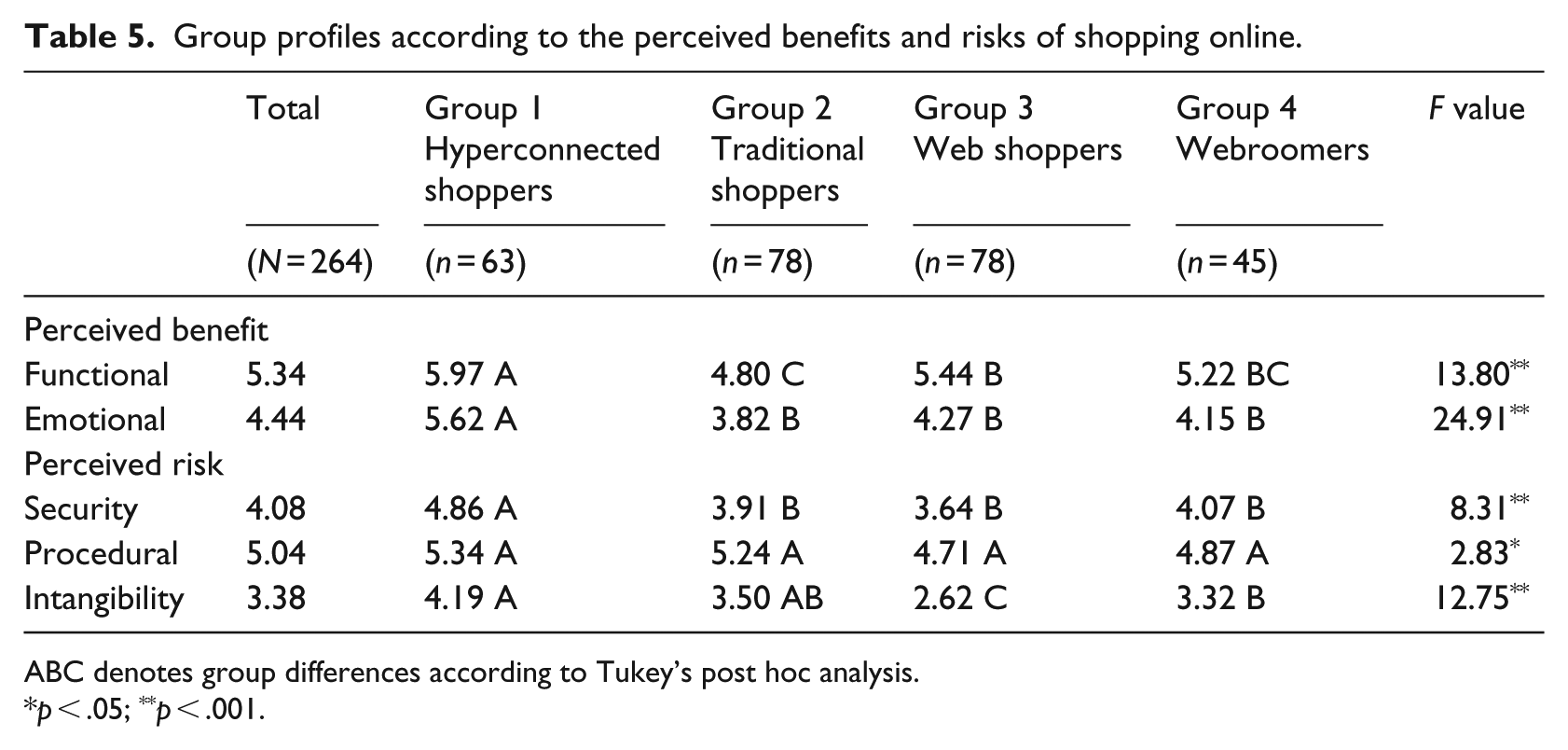
This study found significant group differences (Table 5) when comparing the level of perceived benefits (functional: F = 13.80, p < .001; emotional: F = 24.91, p < .001) and risks of shopping online (security: F = 8.31, p < .001; procedural: F = 2.83, p < .05; intangibility: F = 12.75, p < .001) among the groups, using an ANOVA test with Tukey’s post hoc analysis. Hyperconnected shoppers tended to feel the highest level of both perceived benefits and risks of shopping online. Traditional shoppers tended to perceive the least benefit in shopping online, whereas perceived risk levels were relatively high. Web shoppers showed relatively higher perceived benefits for shopping online but the lowest perceived risks. This group especially showed significantly lower levels of intangibility risk than the other groups.
Group profiles according to the perceived benefits and risks of shopping online.
ABC denotes group differences according to Tukey’s post hoc analysis.
p < .05; **p < .001.
Group comparison based on demographics
The demographic characteristics of the groups were compared, such as age, education level, annual individual income level, gender, race, and marital status. With age, education, and income level measured as continuous variables, we conducted an ANOVA test using Tukey’s post hoc analysis, while gender, race, and marital status, which are nominal variables, were analyzed using crosstabs with χ2 statistics. As a result of the ANOVA test, hyperconnected shoppers and webroomers were found to be significantly younger than single-channel shoppers, including traditional and web shoppers (F = 10.86, p < .001). However, education and income levels were not different across the four groups (education: F = 1.83, p > .05; income: F = 2.13, p > .05). No differences were found in terms of gender (χ2 = 7.49, p > .05), race (χ2 = 21.88, p > .05) and marital status (χ2 = 22.16, p > .05) based on the crosstabs results.
Discussion
Given that omni-channel shopping creates different shopping paradigms such as channel hopping, this study explored the typology of consumer shopping patterns based on consumers’ channel usage across their entire shopping trip. Based on Lemon and Verhoef’s (2016) consumer decision-making model, we created a map of the three stages of the consumer, incorporating the pre-, on-, and post-purchase stages. Each stage was comprised of key channels that greatly affected consumers’ behavior, such as their use of the physical store, online store, search engines, and mobile, and SNS apps. Using US consumers nationwide, this study identified four consumer groups with different patterns of channel hopping: the hyperconnected shopper, traditional shopper, web shopper, and webroomer (Figure 1).
Channel hopping patterns.
The hyperconnected shopper mostly utilizes all available channels throughout the three stages of the shopping journey, and their use of mobile devices, search engines, and SNS apps were found to be the highest among the four groups. Traditional shoppers showed a greater tendency to rely on the physical store throughout the decision-making process. In contrast to the traditional shopper, the web shopper predominantly used online resources for searching, purchasing, and returning/exchanging products. Although this group showed a greater extent of web usage second only to the hyperconnected consumers, they were not heavy users of social media. Finally, webroomers exploited various sources including search engines, mobile devices, and SNS apps to search for information, but they preferred physical stores to actually purchase products. These findings suggested that hyperconnected shoppers and webroomers displayed channel-hopping behavior across various channels, yet traditional and web shoppers were single-channel users. Interestingly, the results revealed webrooming but not showrooming behavior. This may be because fashion-related products are highly specific in evaluating colors, fit, and design, and thus there is often a greater preference to feel the actual product and to obtain information at the physical retail store, even though consumers heavily use the Internet and mobile devices to search for information (Blazquez, 2014; Citrin et al., 2003). The Passport (2016c) report also supported this finding; webrooming is key for fashion products such as bags because consumers want instant gratification.
This study also found that shopping values and shopping behaviors were different across the four groups. Previous literature argued that depending on consumers’ need for brands and products, consumers tend to hop around different channels while shopping (Wolny & Charoensuksai, 2014). The results of this study found that the pursuit of utilitarian shopping values was consistent across the four consumer groups. However, as compared with the other groups, hyperconnected shoppers were more likely to seek out the hedonic aspects of shopping. This finding implies that hyperconnected consumers may seek “interactions” (Passport, 2016a) and “relationships” (Stuart-Mentheth, Wilson, & Baker, 2006) with retailers beyond product purchases, regardless of the type of channels used. Also, consumers in this group showed the highest shopping frequency and expenditure on fashion items, whereas traditional shoppers showed the lowest level of shopping frequency and money spent. This result is consistent with the literature, which found that omni-channel shoppers spent more (3.5 times) and shopped more frequently (3 times) than single-channel shoppers (Passport, 2016a).
Moreover, the levels of perceived benefits and risks of online shopping were different among the four groups. Hyperconnected shoppers showed the greatest level of perceived benefits for online shopping. Interestingly, they also perceived the highest levels of risk. This implies that consumers in this group may attempt to reduce risk by utilizing a number of channels; that is, they understand the benefits of online shopping and simultaneously perceive its risks. Therefore, capitalizing on multiple channels may help them maximize the benefits and minimize the risks of online shopping. Therefore, consumers’ channel-hopping behaviors are referred to as the “research shopper phenomenon” (Verhoef et al., 2007). Not surprisingly, traditional shoppers who mainly use the physical store across all stages of their shopping trip perceived the lowest level of functional benefits for online shopping, such as convenience. They more frequently expressed an intangibility risk, which means they were concerned that they cannot immediately try on, touch, and receive the product, as compared with the other groups. As consumers in this group rarely perceived benefits and saw high levels of risk for online shopping, they preferred to shop in a physical store. Another interesting point to note was that web shoppers revealed the lowest level of risk perception but webroomers showed a higher perception of risk. This finding suggests that due to the higher risks of online shopping, webroomers may prefer making purchases in a physical store to reduce these risks, while using rich online sources for their information search.
Conclusion
Bridging research gaps by examining the psychographic and demographic factors that can affect consumer channel choices (Passport, 2016b), the findings of this study could contribute to the retail channel literature. Also, to build on the consumer decision-making model (Lemon & Verhoef, 2016), we attempted to theoretically identify consumer channel-hopping patterns throughout the entire purchasing process. To the best of our knowledge, this study was one of the first attempts to track consumer channel-hopping patterns using an empirical data set.
In terms of managerial implications, the consumer profiles in this study clarify inconsistent shopping values, behaviors, and perceived benefits and risks among the channel-hopping groups and can therefore serve as empirical evidence to help retailers develop successful omni-channel strategies. Moreover, considering the hedonic needs of hyperconnected consumers revealed in this study, marketers need to revisit the changing role of physical stores in their channel strategies for US consumers who tend to appreciate the hunt-like in-store experience (Passport, 2016b). Retailers can develop “retailtainment (e.g., retail + entertainment)” strategies to satisfy consumers’ hedonic needs. In addition, given that more than half of consumers were found to be to single-channel users, retailers should be mindful of too much omni-channel planning. Instead of reckless expansion, they should make an effort to accommodate the needs of single-channel users as well. For example, to resolve traditional shoppers’ concerns, providing unique, memorable, and convenient shopping experiences both online and in-stores as much as possible is likely to result in happy and returning customers.
Due to the exploratory nature of this study, there are limitations that can extend to valuable future studies. First, this study was designed to investigate how US consumers use multiple channels to purchase fashion-related products. Although the findings of this study provide valuable insights for fashion businesses, future studies can expand to include global consumers to compare different channel-hopping behaviors. Asian nations are highly engaged in computer-based transactions, and many Asian countries such as China, Indonesia, South Korea, and Thailand have a “mobile-first” mind-set (Passport, 2017). Also, Chinese consumers are more prone to use their mobile devices as both searching and purchasing channels as well as for post-purchase channels (Passport, 2017). Thus, we posited that consumers in these countries may have greater engagement with mobile devices than US consumers and could thereby reveal different channel-hopping patterns. Together with mobile devices, the importance of social media as a major channel can also be further investigated in a future study. Social media could particularly play a critical role in high-involvement decisions such as fashion buying (Bronner & de Hoog, 2014). Second, as this study targeted general consumers, we could not include emerging channels such as the Internet of Things (IoT), watch, and so on, which are less likely to be familiar to consumers. Future studies can deepen our understanding of tech-savvy consumers by incorporating more up-to-date channels, enabling retailers to craft strategies for hyperconnected consumer groups specifically. Based on the invaluable findings of this study, subsequent studies around consumer channel hopping will enrich the theoretical foundations of retail channel literature, as well as provide managerial implications for retail channel strategies.
Footnotes
Funding
The author(s) received no financial support for the research, authorship, and/or publication of this article.