







Abstract
With social media and modern pop culture (e.g., virtual stickers) reshaping social dynamics, young Taiwanese consumers who engage in social messaging via the Line app are introducing new interaction avenues that change communication habits and style choices to meet their tastes and interpersonal needs. This article analyzes the links between style choice and young consumers’ experiences to elucidate the contours of virtual sticker possession when managing aesthetic identity and emotions for friendships. The methodological approach to this research follows the principles of interpretive phenomenology. The results demonstrate that Taiwanese culture’s consolidating forces clash with alternative styles in the different contexts of friendships. In terms of modern pop culture and Taiwanese cultural reflexivity, young consumers are contemplating the possibilities of embracing new ways of managing their friendships.
Introduction
Sherry Turkle’s (2015) latest book Reclaiming Conversation: The Power of Talk in a Digital Age points to a cyber socio-cultural phenomenon that challenges all aspects of human development, including the interface of biological, emotional, and cognitive lines. In her book, Turkle explored the intersections between emotion and technology, as evident in apps designed to help users find friends or potential partners as well as algorithms that assess psychological states. She concluded that this digital epoch ultimately encourages a “friction-free” style of communication, defined by self-editing and the need for immediate gratification. The Los Angeles Times reported by Van Grove (2016) showed that social messaging applications (e.g., Line) are on a fast track to having a billion users, growing so fast that they are overshadowing even social networks as a favorite smartphone activity among youngsters. According to one report (DMR Business Statistics, 2018), the app Line has 218 million users worldwide who are active on an at least monthly basis and who send more than 2.4 billion virtual stickers every day—a significant increase from the 268 million virtual sticker sets sold in all of 2015 (Seward, 2016). Today, Line’s virtual stickers are seen as a virtual aesthetic symbol. Thompson, Arnould, and Giesler (2013) suggested that the contemporary world of the agentic consumer is “a kind of symbolic supermarket in which autonomous consumers made selections, chose identities, and extended their core selves through the ownership and use of material goods (or virtual aesthetic objects)” (p. 156).
Designed in Korea and launched in 2011, Line is a popular social messaging application for producing real-time and instant communication on mobile devices like smartphones, tablet computers, and personal computers (Russell, 2016). Using Line app software, users engage in synchronous text and virtual sticker conversations with one person at a time or via multiple one-on-one or group conversations. With the advances in traditional computer-mediated communication (CMC), Line has integrated multiple print-linguistic and non-linguistic forms of virtual aesthetic representation. Its virtual stickers typically come in packs of up to a dozen, most of which are free to download and use, although some services charge US$1–US$2 for premium packs customized for brands, products, or limited edition events. According to the statistics gathered from the Line company, Taiwan is the company’s third-largest market worldwide, and the number of registered users in Taiwan exceeds 18 million (Huang, 2017).
Based on the consumer culture theory (CCT), the Line app not only provides alternative aesthetic and emotional expressivity, but it also expands cultural experiences for young people, offers symbolic resources (i.e., virtual stickers) as choices for personal self-development and self-expression, and establishes friendships (Arnould & Thompson, 2005). Line’s young users in Taiwan have developed an addictive new way to accumulate their beloved virtual stickers. Young Taiwanese who choose a wide variety of Line’s virtual stickers to develop friendships might be influenced by their own cultural values and social norms. Although Line has traditionally promoted “cute” Japanese virtual stickers, it recently introduced alternative style choices (e.g., ugly, ludic, and sarcastic) for young adults that may actually change their tastes, communication habits, and consumption behaviors (Maciel & Wallendorf, 2017).
To the best of our knowledge, prior studies on mobile text-based messaging services have focused exclusively on the exchange of linguistic information. Individuals’ use of nonverbal cues, particularly those focusing on (virtual) aesthetic identity formation and emotional expressivity, has received far less attention thus far. Therefore, this article addresses the links between style choice and young consumers’ experiences to elucidate the contours of virtual sticker possessions when managing aesthetic identity and emotion for developing friendships by approaching these areas phenomenologically. The two main research questions driving this study are as follows:
RQ1. How is young Taiwanese consumers’ aesthetic identity formed and presented through their virtual sticker style choice in Line friendships?
RQ2. How do different genders express emotions through their virtual sticker style choice in Line friendships?
This article next discusses the theoretical framework, focusing on CCT, particularly in self-identity and emotion. It then describes the methodology, including the nature of the data collection and the analysis. The final sections present the results of the data analyses, the discussion, and the conclusion.
Theoretical framework
Consumer Culture Theory: self-identity and emotion
CCT refers to “a family of theoretical perspectives that address the dynamic relationships between consumer actions, the marketplace, and cultural meanings” (Arnould & Thompson, 2005, p. 868). CCT views consumption as continually being shaped by ongoing interactions within a dynamic socio-cultural context; it is concerned with the factors that shape the experiences and identities of consumers “in the myriad mess contexts of everyday life” (Arnould & Thompson, 2005, p. 875). Thus, consumer culture is essential to understand when exploring “a social arrangement in which the relations between lived culture and social resources, and between meaningful ways of life and the symbolic and material resources (i.e., virtual stickers) on which they depend, are mediated through markets” (Arnould & Thompson, 2005, p. 869).
Consumption and possession practices—particularly their aesthetic, hedonic, and ritualistic dimensions—have been the most widely studied constellation of the phenomena identified with the CCT tradition (Belk, Ger, & Askegaard, 2003). In particular, individual identities are the result of how consumers relate to their aesthetic (or material) objects of possession. Belk, Wallendorf, and Sherry (1988) argued that possessions are seen as not only an extended self, but also as the artifacts of that self in self-developmental identity projects. Consumers use aesthetic objects of possession as markers to denote their character to others; they also use aesthetic objects of possession as markers to remind themselves of who they are. In this way, the aesthetic objects that individuals own often take on special meaning that arises from the use of these possessions to satisfy their own psychological needs and interpersonal needs (Belk, 2010; Belk et al., 1988).
Willis (2000) associated aesthetic objects with meaning-making and identity formation. He concluded that consumers are driven to make sense of their cultural world and their place in it—a process that he calls cultural production. Through this process, consumers shape their own persona. In this ongoing identity formation, the quest for identity is internally focused not on discovering a true essence as an unchanging inner expression, but rather on that consumer’s interaction with a cultural world that keeps evolving. As Willis (2000) described it, “art as an elegant and compressed practice of meaning making is defining and irreducible quality at the heart of everyday human practices and interactions” (p. 3). Thus, aesthetic objects situate an individual’s character in different contexts, providing a physical base of facilitating artifacts initially used to establish the personal front, then evoke the anticipated impression from others in different contexts, and ultimately claim very specific desirable self-identities and (gender) roles.
Based on CCT, culture also plays a role in the fundamental process of labeling emotions and emotional experiences (Peterson, 2006). In earlier work, Cooley (1964) linked emotional reactions with the concept of the self. Although Cooley did not explicitly deal with culture in his theory, his work did set the stage for subsequent theories that incorporated culture for understanding the link between emotions and the self. This self-emotion connection is also exemplified in Rosenberg’s (1990) discussion of reflexivity, which illustrates the impact of culture on emotional identification and emotional displays. Reflexivity involves individuals’ ability to see themselves as objects and reflect upon themselves. Reflexivity leads us to manage the displays by using verbal devices, facial, and physical expressions and physical objects. The process involves reflexive agency as individuals act upon themselves or their props to produce an emotion management outcome for the self. As a result, emotions are seen as a response to whether behavior indicative of an identity is supported by others during an interaction. In this way, an identity becomes a set of meanings attached to the self, while in a role (role identities) or group (group identity) or when trying to differentiate oneself from others (Burke & Stets, 2009).
Meaning is a mediation response to a stimulus as it mediates the act of perceiving a stimulus and responding to it. When the stimulus is seeing oneself as a role player or group member, then the meanings become the individuals’ reflections on who they are when they think of themselves as part of that role or group. These dynamics operate within individuals when an identity is activated in a situation; once activated, the meanings defining an identity serve as the standard for individuals, and the identity standard guides behavior in that situation. Overall, emotions influence the formation of such social networks because individuals who share common affective meanings are more likely to enter into and maintain social relationships with each other (Stryker, 2004). When positive feelings are linked to an identity because these individuals are meeting the expectations tied to their identity, it encourages such individuals to spend more time in this identity and develop more relationships based on that identity, thereby expanding their social network.
Emotions are also considered part of the socialization development into the roles that men and women commonly occupy (Alexander & Wood, 2000). Existing literature has shown that females are typically more willing than males to communicate their internal emotional states both verbally and nonverbally. Females are more expressive of their positive and negative emotions, including happiness, depression, and sadness. In contrast, males are reluctant to disclose their intimate feelings, especially when it comes to expressing any emotions that imply dependency, weakness, or vulnerability. Taiwanese society not only shares these gender beliefs that women are more emotionally expressive than men but also promotes strong lifelong bonds with a social group (Chen, 2016a). In Taiwan, more emphasis is placed on an individual’s relationship with the group, resulting in a person’s behaviors being determined less by individual motives or beliefs and more by collectivistic cultural codes and norms. Such collectivistic cultural codes are based on the emphasis on respect for others and the importance of the context as a guiding principle in one’s conduct.
These cultural codes also produce certain guidelines for individuals in Taiwan to use to downplay emotional expressions that threaten in-group harmony as well as encourage the expression of emotions that maintain or create harmony. In Taiwan, these display rules prescribe the view that negative emotions should be masked in public (Chen, 2016b). Males in Taiwan have been socialized to minimize the degree to which they express their emotions in general and to avoid the expression of emotions that are contrary to the accepted male stereotypes used in social settings. For example, cultural display rules call for males to suppress expressions of sadness in public, which are seen as being taboo. In certain private situations, males may express their feelings freely because in those situations no potential exists for public social approval or disapproval. However, in public, males are motivated to ensure that their emotional displays are congruent with the affirmed and accepted social expectations.
With the advances of industrialization and social media in modern Taiwan, young adults tend to be well educated and hold positions of power where they can freely make personal style choices. Today, male and female roles overlap more and have become more diverse and flexible. Yet these same Taiwanese males and females, who are socially and culturally constructed, choose virtual stickers within the Line app for use in various social contexts, which may be imbued with traditional symbolic meanings. As a result, the virtual stickers can be used to identify differences between the sexes. On the other hand, an alternative self-identity and gender role can potentially be created when individuals are choosing alternative styles of being. As much of the contemporary writing on the use of Line stickers is theoretical rather than empirically informed, a clear need exists to move beyond generalized discussions about aesthetic identity formation and emotional expression through style choices related to stickers in Taiwan by examining the rich empirical detail and the complex ways in which virtual stickers are being used in both real everyday ways and in the virtual world.
Methodology
The methodological approach to this research follows a combination of the principles (Strauss & Corbin, 1998) and interpretive phenomenology (Thompson & Haytko, 1997). To maintain naturalistic fieldwork in the current research, netnographic fieldwork was conducted in two parts in the Line app (Kozinets, 1998): (1) private one-on-one chats and (2) public chat groups. The private area is limited to two people, who can privately text, post virtual stickers, and exchange their emotions and opinions once one person invites the other into Line’s private space. In contrast, in the public chat group, everyone allowed to join the group can do the same activities and even observe/lurk other members’ chatting, posting, and discussions. Marvin (1995) argued that lurking/observing is not a suitable method for researchers to utilize in a virtual world. To overcome this barrier in this study, an inductive theory-building process was embarked upon using triangulated methodology consisting of user self-diary reports, in-depth interviews, and both online and offline participatory observations.
Recruitment of study participants
Due to privacy concerns, the Line company could not disclose users’ personal information, so we had limited access to participants. We first adopted a strategy of “posting” and “snowballing” to recruit volunteer participants in various Line chatting groups and looked for friends of friends who might be interested in joining this study. Following snowball sampling, we then gained access to a population of 40 middle-class educated young female and male Taiwanese who had bought at least four packs of virtual stickers during the research periods and communicated with others every day via Line conversations for more 2 years. These users, whose age ranged from 20 to 23 and who included 21 females and 19 males, were recruited for participation in this study.
Data collection
The data reported in this article were collected during two main stages from January 2015 to June 2017. The first stage used a netnographic approach that involved immersion in the setting and context of the experience through online participatory observation of self-diary reports and those chat group dialogues that research assistants could observe in Line. All participants were asked to complete self-diary reports from January 2015 to December 2016. The participants documented their daily mutual text interactions and posts of virtual stickers and sent these along with their personal diaries to the researcher by email each week. This process solved the locked private (i.e., one-on-one) chat zone problems. The second stage utilized in-depth interviews and physical offline participatory observation to develop an account of the “live” experiences of the participants in Line, which took place over 18 months from January 2016 to June 2017. All 40 interviews were tape recorded and consisted of one-on-one dialogues between the researcher and individual participants that lasted up to 2 or 3 h in length.
Data analysis
To ensure the use of interpretive phenomenology, this research followed the guidelines suggested by Thompson and Haytko (1997). The interpretive process began with primarily textual data. The process of coding is central to any textual data analysis. Coding involves breaking down data into discrete parts, then examining, conceptualizing, and reconfiguring these parts into new forms. The three stages of coding (i.e., open, axial, and selective) represent a progression from elemental categories and properties to a high level of abstraction in the format of a storyline. Meanwhile, the researcher independently reread the data and attempted to discover relationships between the codes and condense those discoveries into themes. The research team members compared their findings until they agreed on the emergent themes that best captured the lived experience of our participants. In developing and reporting our interpretations, we tracked between the literature and the data as well as between the parts of each transcript and the entire body of transcripts.
Findings
The analysis of the data indicated that young participants are intrigued by virtual stickers and use them to make sense of other persons as well as build their self-image in terms of managing aesthetic identity and emotions in their Line friendships. Many virtual sticker style choices that stimulated their interactions with others in Line seemed to depend on a dominant cultural frame in which specific social situations/norms were constructed and, therefore, could not be separated from the expected socio-cultural patterns of thinking, acting, and interacting.
Multiple selves and alternative images through virtual sticker consumption and practices real self
Gender attributes provide basic information about how to conduct virtual aesthetics with friends in the Line app and how to organize social reality (Lastovicka & Siranni, 2011). Both young males and females chose virtual stickers based on how they assumed their friends perceived them and their favorite visual elements (e.g., colors, postures, gestures, and facial expressions) or styles (e.g., cartoon, cute, trash talk, and ugly) as markers to denote their characters in order to form an aesthetic identity to interact with friends in Line. These choices reflect the lived and mediated experiences of young participants. Young generations in Taiwan have been so deeply immersed in Taiwanese cultural values and Japanese pop culture that they have strongly experienced in-group harmony and the “cute” trends in taste. Interestingly enough, young females like Jan, who kept these values in mind when choosing a cute style, overwhelmingly created an aesthetic identity reflecting their “real” selves in their Line friendships.
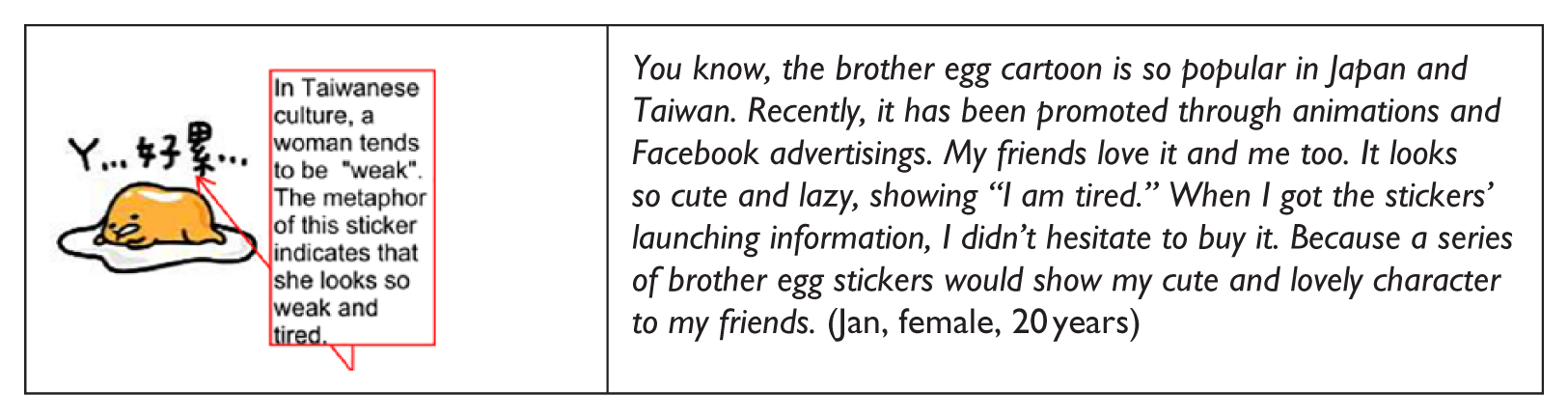
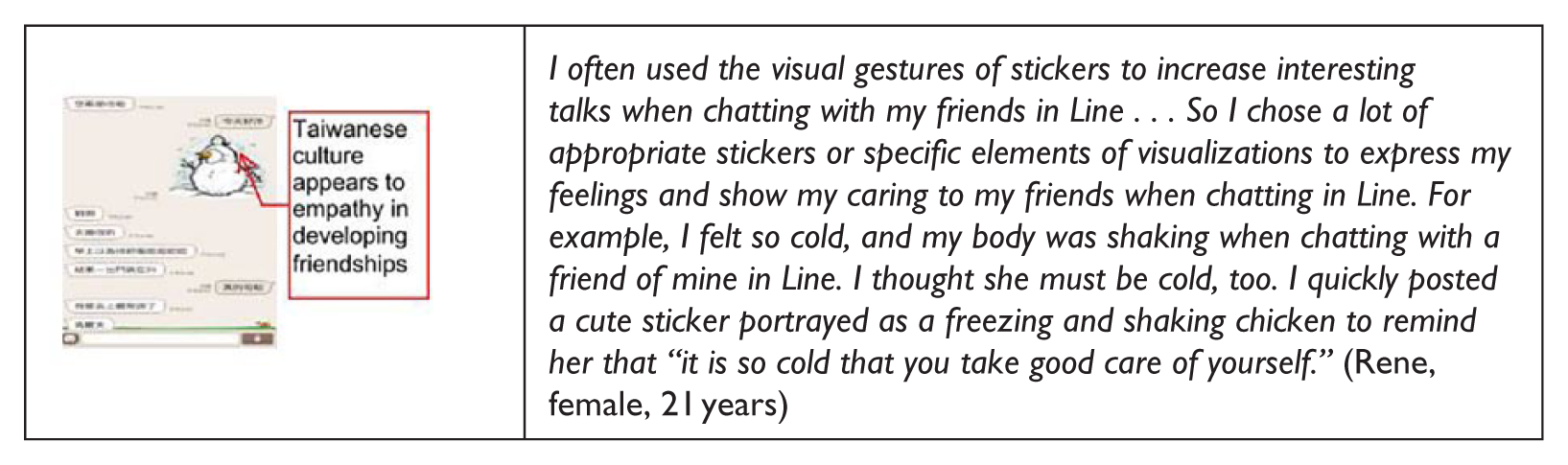
Young females cared about aesthetic identity formation and performance, as evident from their use of their beloved virtual stickers, which was positively supported by their female friends in Line interactions. Once young females and their friends mutually shared and perceived the social support of a specific aesthetic identity, they continued purchasing the same style of virtual stickers to enhance their projective identification. Thus, the virtual sticker was not used to form an aesthetic identity, but rather an imagined taste or meaning that mattered to the young females (Belk et al., 2003).
Through such consumption of preferred styles, young females not only retained an aesthetic “feminine” identity but were also stimulated to build an image as a caregiver or supporter of their friends. Rene imagined that she understood her friends’ communal needs and acted as a caregiver so as to be understood by her friend(s) in Line interactions.
In contrast, young males are used to being treated as masculine and learn how to act appropriately as a member of (particularly male) friendships. Norm understood how Taiwanese society, even when using virtual stickers to maintain friendships, expected males to be athletic, competitive, pragmatic, independent, and strong. He claimed these masculine characteristics reflect the “real” self when he forms an aesthetic “masculine” identity to share his tastes with his male friends.
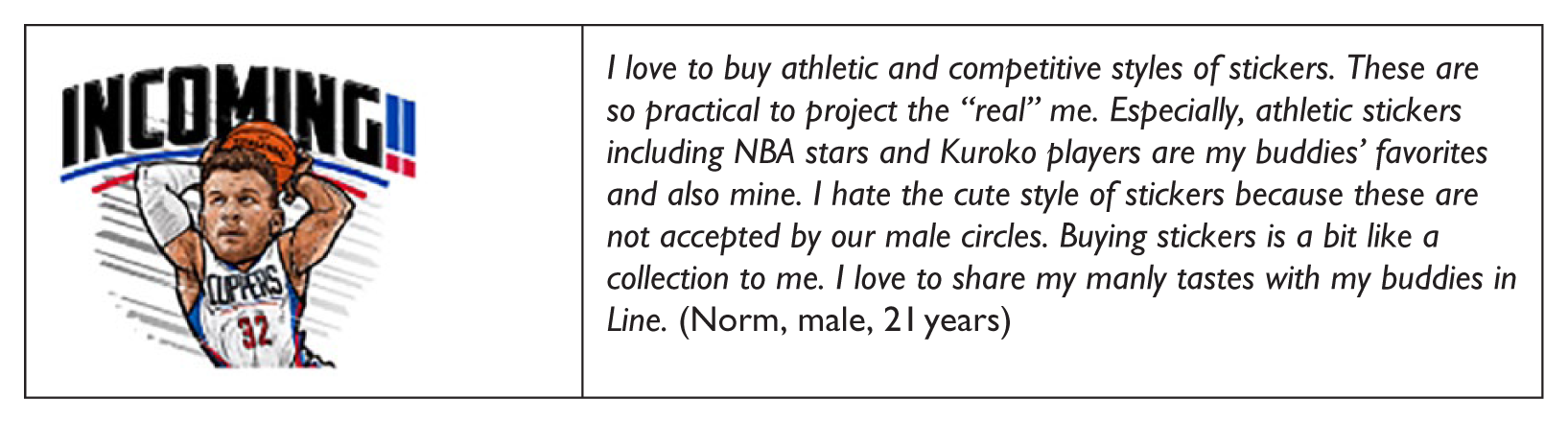
In face-to-face communications with their friends, young males often use harsh language and/or aggressive attitudes to display a masculine identity. To some extent in Line friendships, young males retain those behaviors and attitudes to form an aesthetic “masculine” identity using virtual stickers (Chen, 2016b). They prefer to purchase “trash-talk, straightforward, sarcastic, and aggressive” styles to enrich traditional masculinity, thereby metaphorically competing against their friends. Such behaviors and attitudes profoundly reproduce masculine ideologies during their Line friendship interactions. Frank enjoyed practicing such behaviors and attitudes by using virtual stickers to build his self-image as “an ambitious or aggressive man” in his male friendships on Line.

Potential self
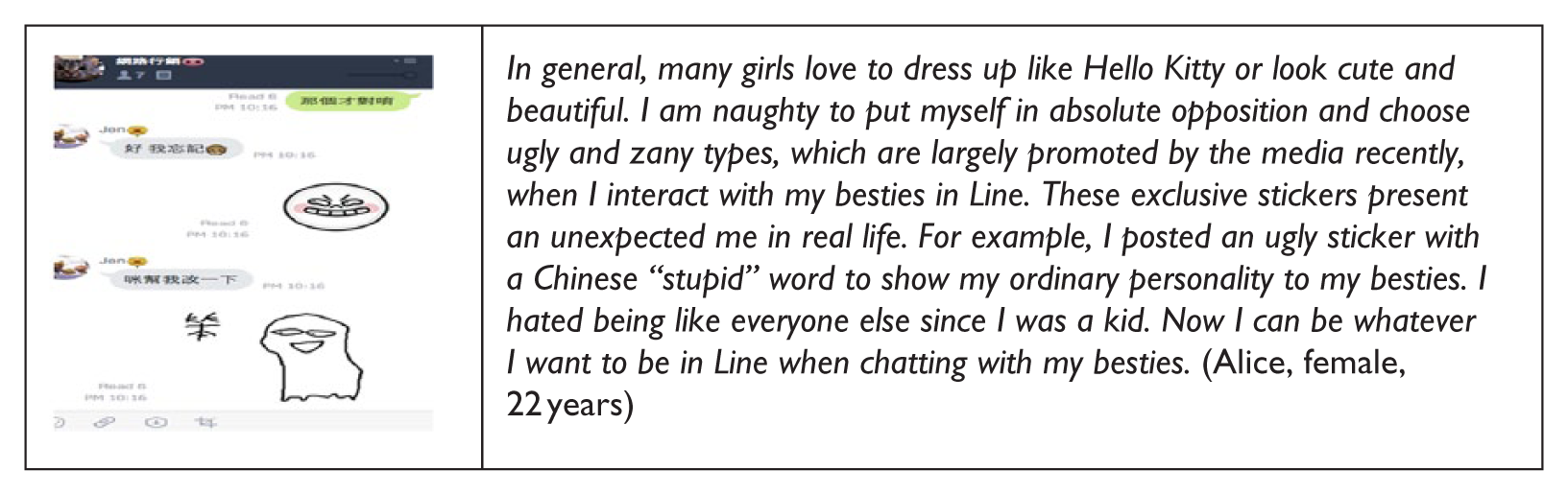
Turkle (1997) argued that experiences with virtual mediated environments have the potential to redefine and reconstruct the traditional notion of identity. Through the spread of alternative styles of virtual stickers in Line’s campaigns, the traditionally established and assumed conditions for consumers (re)forming their underlying aesthetic identities to practice their “subjective agencies” are potentially changing when they share these emerging styles and the tastes with friends. To some extent, certain young females claimed that they are naughty enough and do not care about traditional limitations regarding gender identity as they see gender as a self-regulated achievement. They have destabilized the traditional Taiwanese gender beliefs by bravely choosing ugly and horrible styles, engaging in virtual gender play to express the unexplored aspects of their identity with virtual stickers in Line friendships. For example, Alice moved away from the traditional gender beliefs on beautiful and cute styles and instead became oriented toward ugly and zany styles—a sharp contrast—when forming her aesthetic identity to demonstrate an alternative image. She believed doing so expressed and delivered a person whose image was ordinary or not distant from her friends. It further emphasized that forming an aesthetic identity through an ugly style choice will project a more honest “potential” self that is seldom presented in real life.
Similarly, some young males “reform their every [virtual] daily life practices and alter their character” in Line friendships through the use of alternative styles of virtual stickers (Giddens, 1990, p. 38). Traditionally, men in Taiwan are hesitant about disclosing their feminine characteristics with friends or publicly because they are afraid they will be teased and labeled as “sissy” or “girlie.” The emphasis placed on the personal narrative appears to be increasingly breaking down that barrier, and some young males have sought to take “the road not taken . . . the one less traveled” in their past experiences (Giddens, 1990, p. 38). Their desire for a vivid aesthetic identity with virtual stickers drives them to deviate from the practices of the dominant Taiwanese cultural framework. Henry elaborated on such situations.
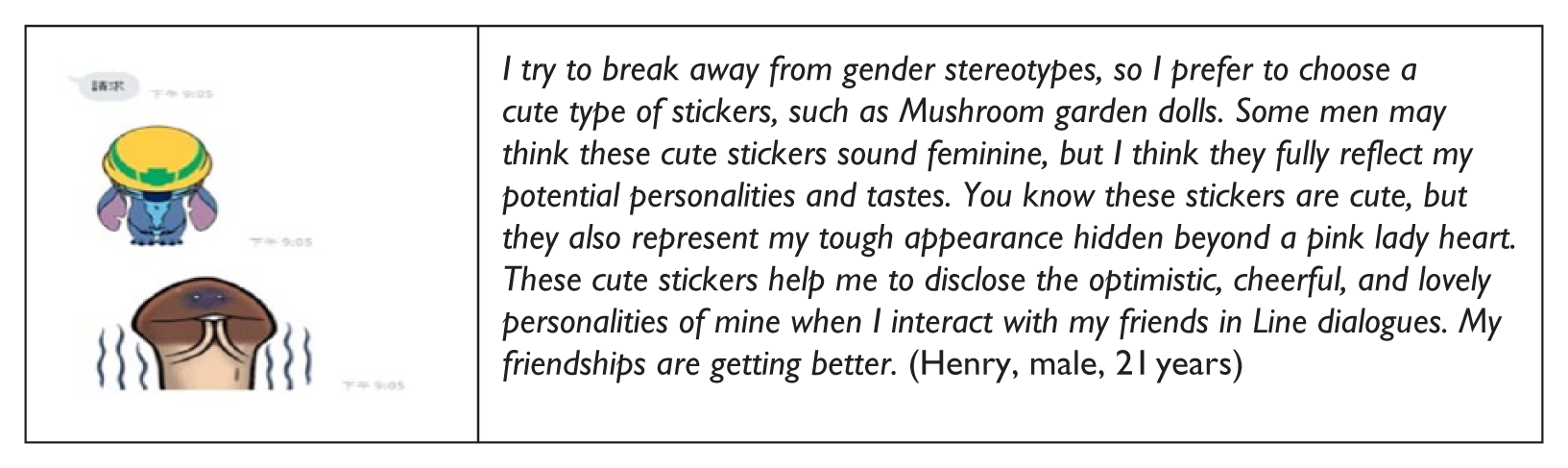
Believing that the gender traits of Taiwanese society are shifting slightly, particularly in Line friendships, some young males now seek to change their gender traits according to what they have learned from the preferences of their female friends in modern Taiwanese society. Max (male, 21 years old) strategically made a cute style choice and viewed it as a better way to experience the unexplored aspects of his aesthetic identity (Burke & Stets, 2009). That cute style is ascribed with feminine characters (e.g., tenderness or carefulness) so as to manage an alternative image of “a modern man” and trigger female attention during his Line interactions with friends.
Ideal self
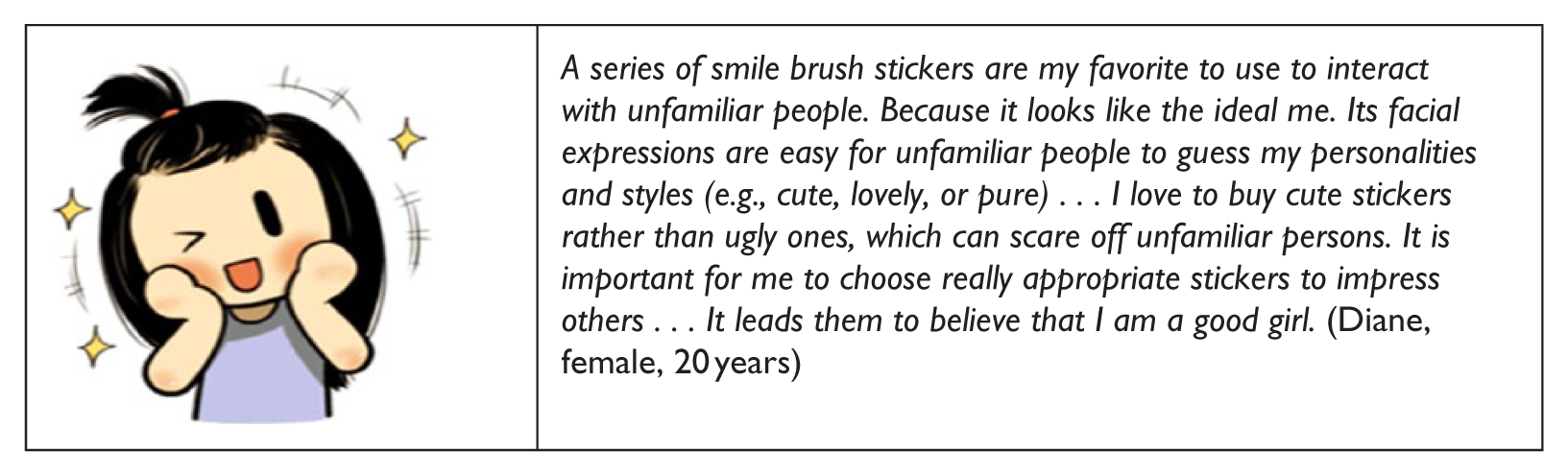
A trend among young participants who know each other socially or who never meet face-to-face is to develop a social network of positive acquaintanceships through Line chat groups. This transition from acquaintanceship to friendship is typically characterized by an increase in both the breadth and depth of self-disclosure and self-presentation in their virtual sticker exchanges. Young participants realize that socio-cultural acceptance is the key to forming an aesthetic identity in a weak tie of acquaintanceships. Diane was a typical case of young females. She demonstrated her modern pop culture tastes to form an aesthetic identity and project an “ideal” self (Belk et al., 1988). It was securely accepted by members of her Line chat groups.
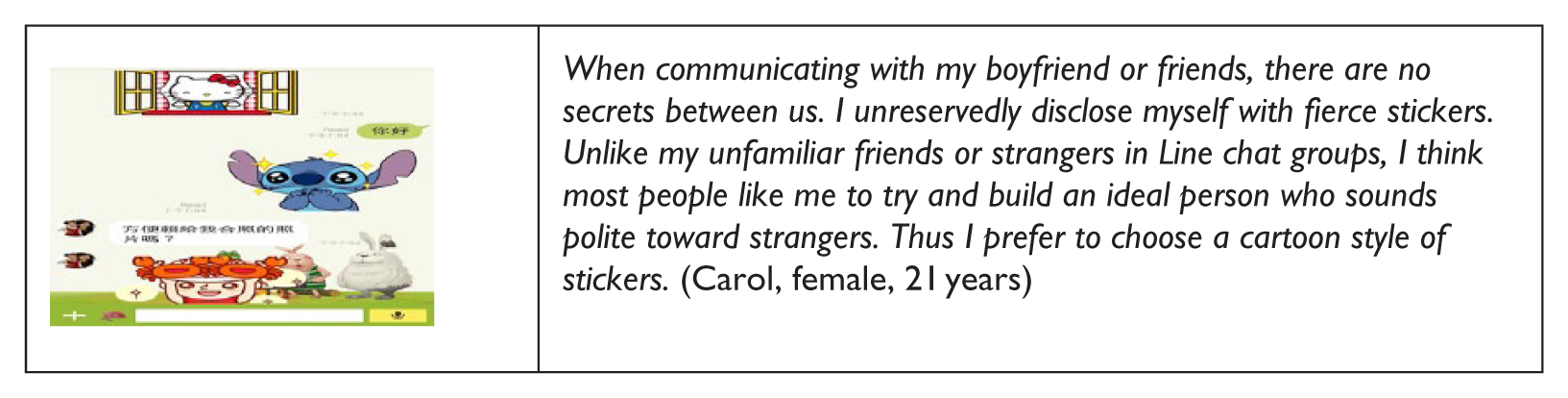
Interestingly, Carol got used to portraying an aesthetic masculine identity to her best friends in Line, but she was afraid to scare off acquaintances in the same way (Stryker, 2004). As a result, she conventionally oriented a series of cute cartoon styles to enhance her manners as a polite image to become more ideally attractive and draw attention from a lot of new acquaintances.
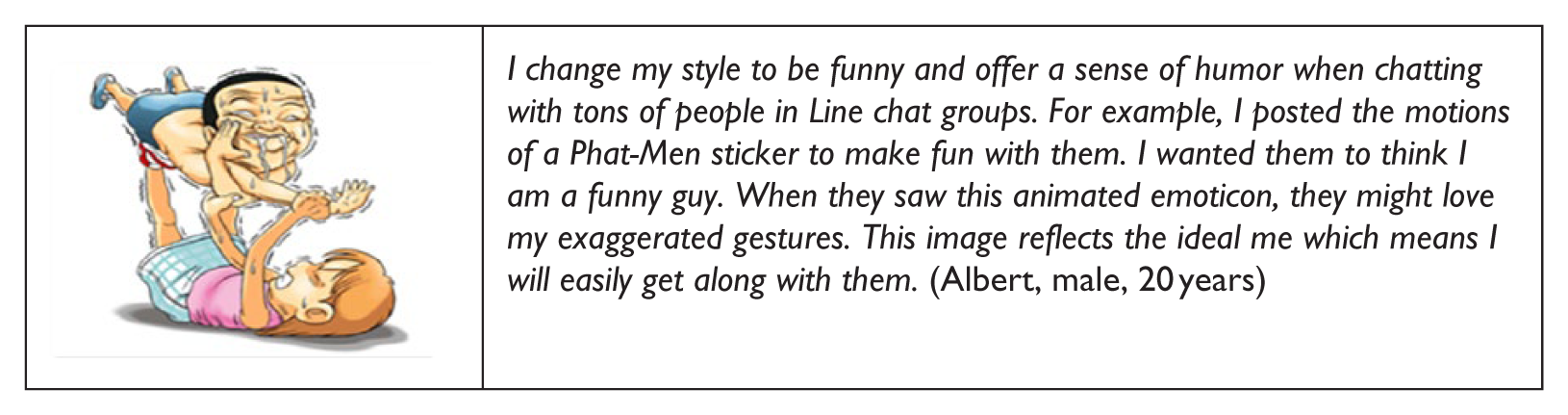
Many young males acknowledge that the social purpose of using Line is to make more friends and become popular in these acquaintanceships. Young males learn about new modes of being by developing Line acquaintanceships and putting them into practice, which can actually change their aesthetic style choices. When committing themselves to the change process (Willis, 2000), young males avoid choosing the more traditional gender stereotypes of virtual stickers to produce and display their aesthetic identity as being tough, aggressive, or competitive. Indeed, Albert transformed his ludic style into a funny one, creating an aesthetic identity reflecting his “ideal” self. Through such alternative practices, the self becomes more ideally communal so as to draw a lot of acquaintances’ attention.
Young males understand that if they kept portraying a traditional masculine image to acquaintances (even to males), it will be difficult for them to become popular and make new friends in Line chat groups. The result may be negative impressions, such as being snobbish or assertive, further contributing to ruining their friendships. Therefore, they practice the new mode of being by choosing cute, interesting, and joking styles to create and manage an alternative image. Duncan gave an example.
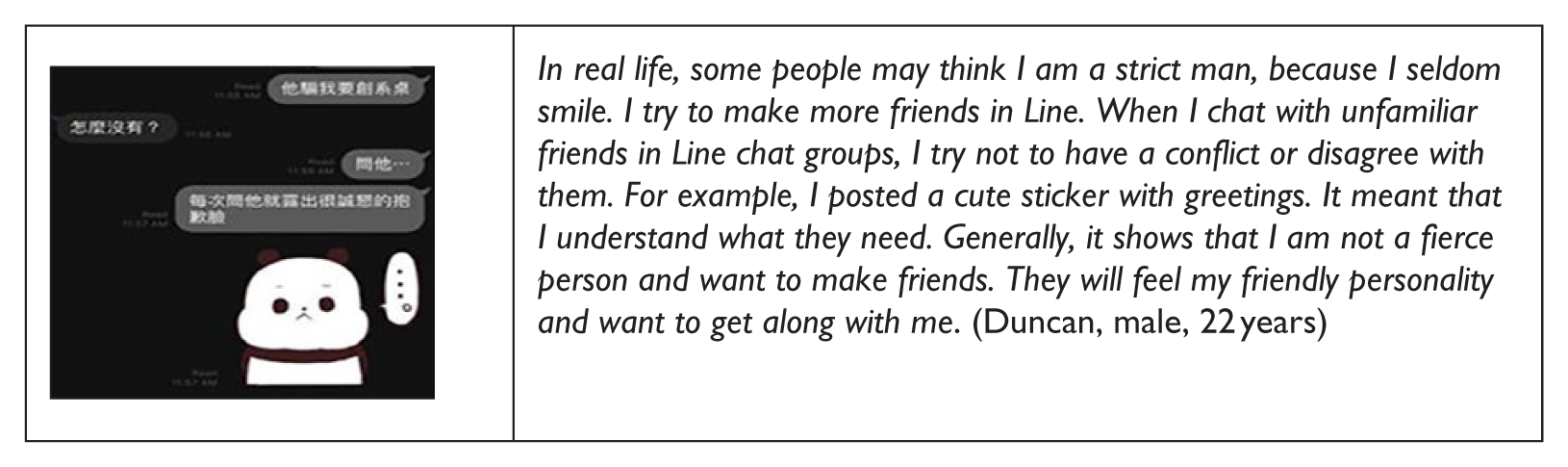
When an alternative image is activated, these meanings (e.g., friendly, easygoing, and humor) serve as standards to use when dealing with (new) friends in Line (Burke & Stets, 2009). Consequently, the impression of “an easygoing person,” combined with in-group harmony and being sensitive to others’ communal needs is promoted to make more (new) friends and even transform acquaintanceships into friendships more easily.
Friendship developments through playful emotions
Young females feel free to express and/or share negative emotions by using virtual stickers in Line friendships. They acknowledge that the cultural values and Taiwanese social norms allow them to present themselves as a sad woman because females are used to being attached to a weak status (Chen, 2016b). Therefore, their taking and giving of negative emotional responses have fewer constraints. On the other hand, their friends parasocially capture the ascribed metaphors of virtual sticker(s) in Line exchanges (Chen, 2016a). Jill discussed the metaphorical and emotional meanings in the situation she created and how her friend allowed her to not suppress her negative emotional expressions.
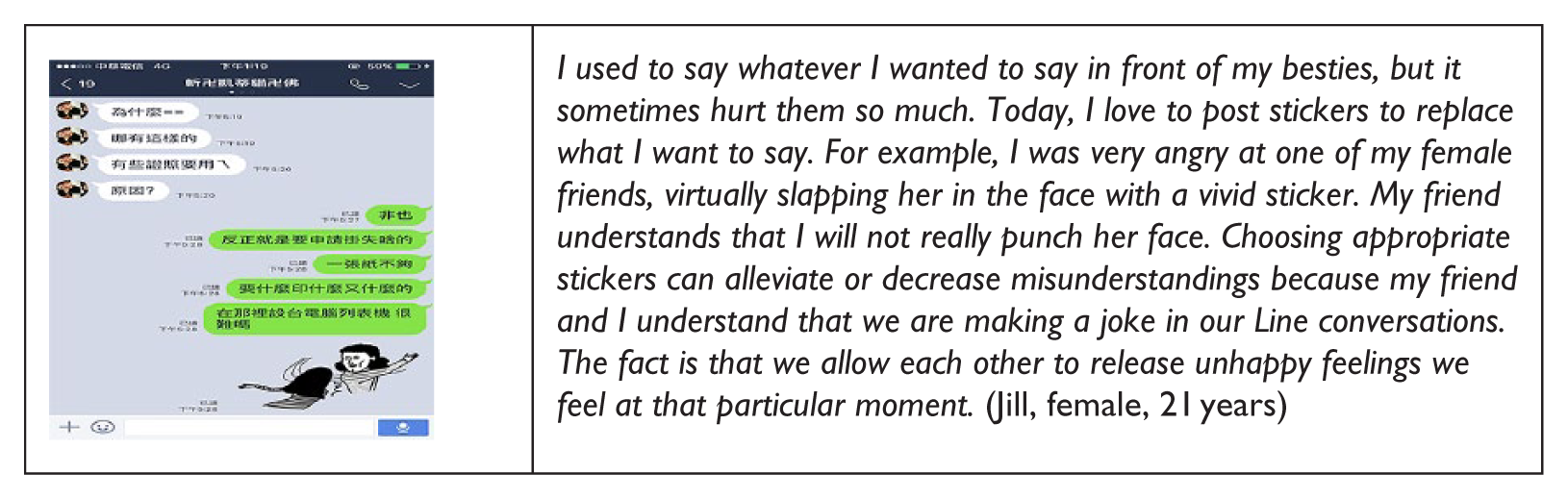
Playfulness in Line virtual aesthetic interactions cannot be seen as threatening to the social order because the boundary of the protection between virtual and real has been established to release emotions. Young females consciously accept that the virtual side of the world is a “play.” Through the decoration of virtual stickers, “you rent a shell and then you enter that actor or actress. You feel what they feel. They’re yours . . .” (Stone, 1996, p. 47). Deb was happy to rent a shell and enter an agency expressive way by choosing a style of virtual stickers with exaggerated gestures. Such an alternative style is associated with sarcasm and aggressive attitudes that might hurt other people’s feelings, but she was delighted to feel and learn how to avidly control that power and enjoyed talking disparagingly with friends. Her friends allowed her to release emotions in a masculine way because anything goes in Line’s virtual environment.
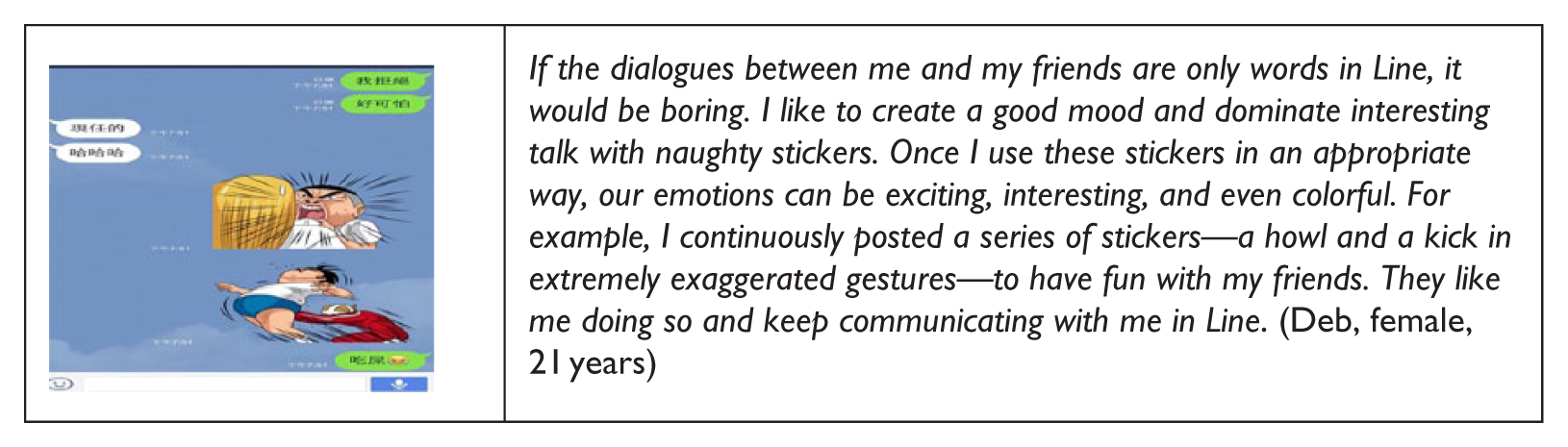
By contrast, young males like Rodney (male, 20 years old) proclaimed that “I seldom display sadness in public and even rarely share it with friends in Line.” Young males who have internalized the Taiwanese cultural gender norms are likely to experience positive emotional affects after behaving in ways that uphold the gender norms. For young males, positive emotions like joyfulness, happiness, and enthusiasm are more frequently expressed with virtual stickers in Line friendships because these are considered to be high on agency and are also linked to achievement and the feelings of being in control. The naughty or theatrical aesthetics and statement offered by Victor was a typical case where he and his male friend parasocially expressed emotions to be highly competitive or dominant in Line communications. They were profoundly intrigued and wanted to compete to show how their emotions are in control even with virtual stickers.
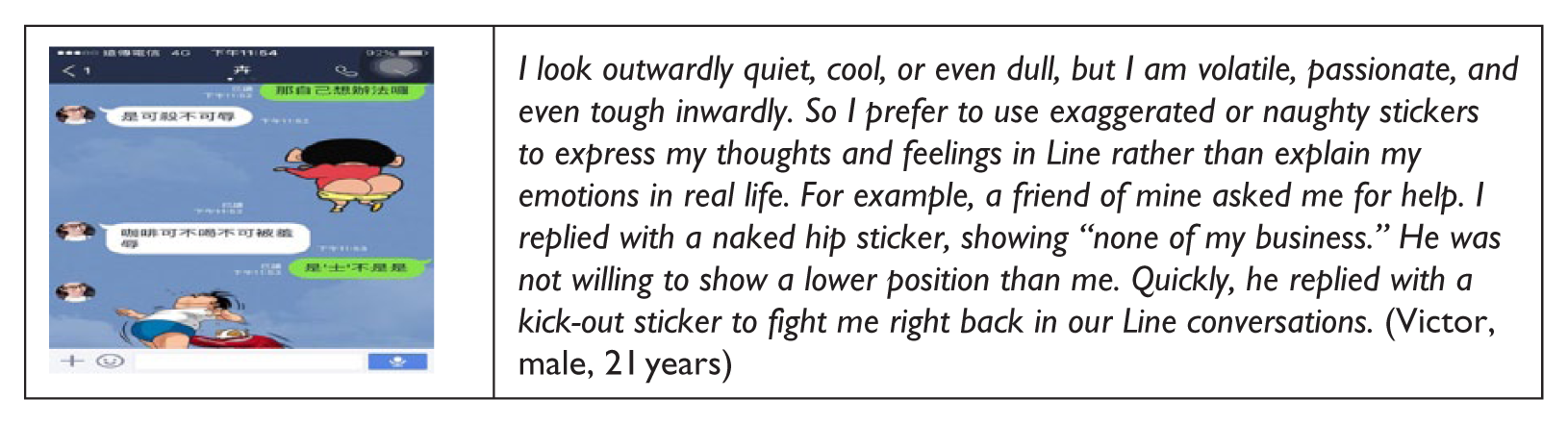
Using virtual stickers to depict emotional expressions is not just associated with high agency; young males are also linked to having a sense of power and mastery in their male friendships on Line. Clark exemplified his humor to illustrate his disagreeable idea by choosing a sarcastic style of virtual stickers to confirm and enhance the dominant power. That effort highlighted that he was a master of himself and able to control both his emotions and situations.
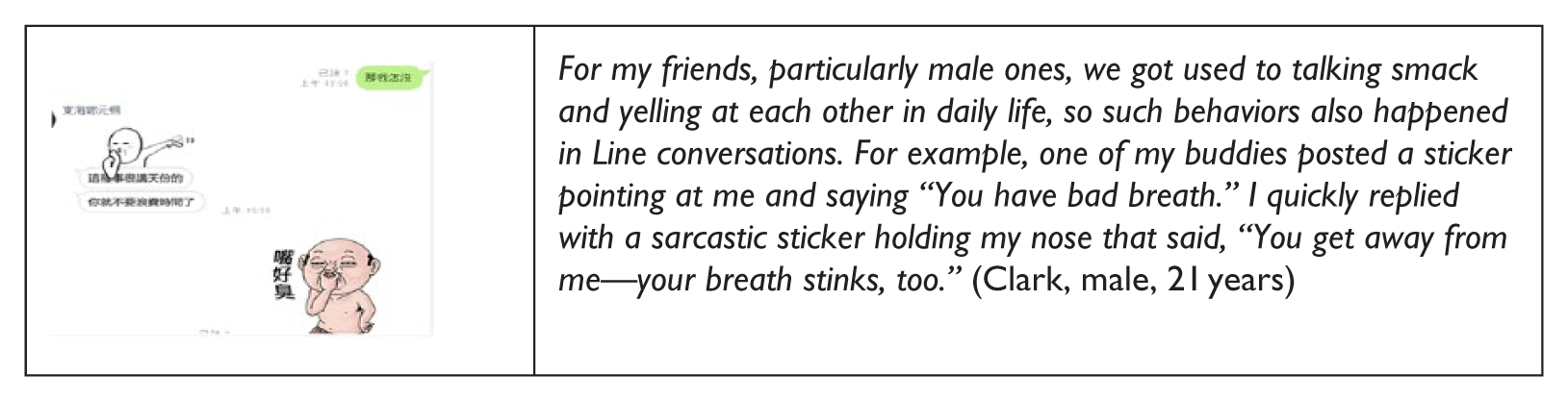
Unlike ridiculing friends with a sarcastic style of virtual stickers and emotionally connecting to maintain existing friendships, young males fully understand that it is not safe and/or beneficial to do so with strangers, particularly when initially developing acquaintances on Line. Over time, they have learned that their impressions might be ridiculed by other aggressive (male) acquaintances in Line’s intensive group chat conversations due to social and cultural constraints. In particular, young males without girlfriends claimed that they seldom choose sarcastic or teasing styles when chatting with female acquaintances in Line’s chat groups. Although such sarcastic and teasing styles are fruitful for creating an interesting climate in male friendships on Line, they may harm acquaintanceships. It is easy to misinterpret and misunderstand when both a male and his female acquaintance are not on the same page. These misunderstandings can directly contribute to a negative impression. Bruce described one such disaster he had encountered.
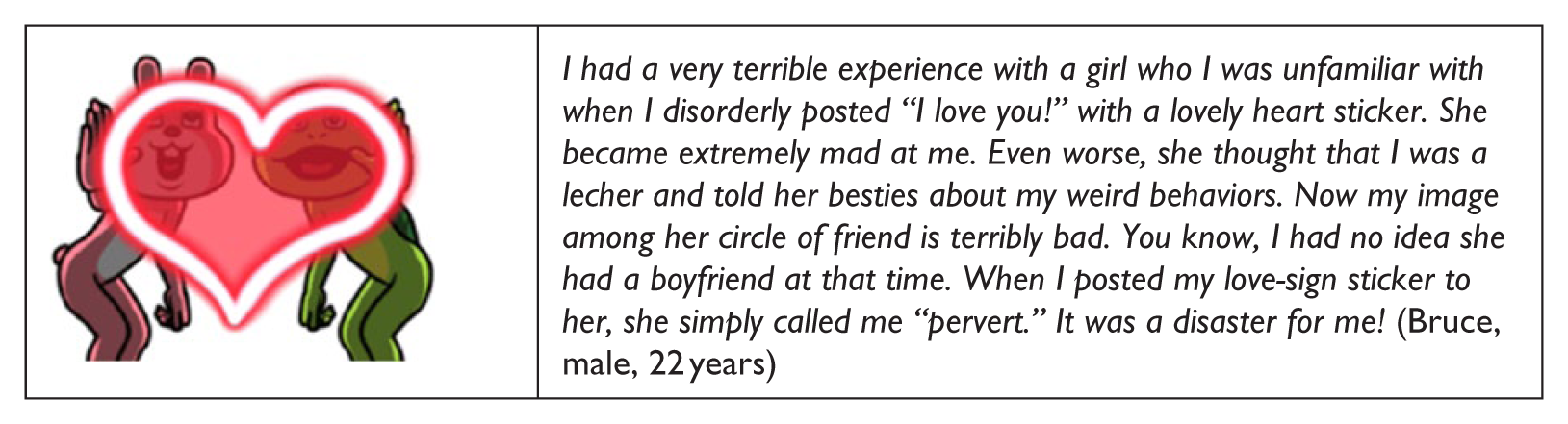
To avoid such misinterpretations and misunderstandings in Line acquaintanceships, Bruce strategically changed his style to virtual stickers with “texts,” which can deliver a clear meaning and emotion.
Overall, the participants saw the virtual stickers as tools that could present an extension of the self to release immediate emotions and build opportunities for creative moments of imagination and fantasy to establish friendships (Belk et al., 1988; Turkle, 2015).
Discussion and conclusion
The analyses from this study indicate that cultural values and social norms play a pivotal role in developing friendships using a virtual aesthetic style through an ongoing learning process. The significance of this understanding reflects the process of forming/presenting an aesthetic identity reflecting multiple selves (e.g., real self, potential self, and ideal self) and displaying emotional meanings (e.g., communal and agentic behaviors), fulfilling a gender role, and managing an image that is appropriate to Line friendships. This consistency in our data caused us to move back and forth between the data and literature to find a positive theoretical explanation. This iteration directed our analyses toward interpreting our young participants’ possession reflexivity as an ongoing virtual aesthetic learning process (Belk et al., 1988), wherein individuals gain “parasocial” experiences (Chen, 2016a). In other words, their imagination is activated by virtual aesthetic objects, feelings, emotions, and the actions of another person, culminating in an integration of Taiwanese culture with modern pop culture in parasocial interaction environments. As alternative styles of modern pop culture stimulate young participants, they feel “empowered” to “select” between a wider style of optional “aesthetics” to reform their daily life practices, alter their character, and organize their styles in the way they want (Belk, 2013). Ultimately, the results of this study demonstrate that the consolidating forces of the Taiwanese culture (e.g., traditional values and gender ideologies) clash with the alternative styles available when using the Line app in friendships. In modern pop culture, when equipped with Taiwanese cultural reflexivity, these young participants contemplate the possibilities of embracing new ways of being to manage their friendships well.
In many cases, the virtual stickers young participants manage act as an agent in reinforcing and reshaping Taiwanese society’s norms, gender beliefs, and appreciation of stronger friendship developments. As previous studies demonstrated, Taiwanese cultural values and social norms appeared to be relevant in young participants’ acceptance of virtual aesthetic style choices in their Line friendships, even though they simultaneously allude to the alternative styles of virtual stickers promoted by the Line company and the mass media. The ways in which young participants habitually perceive and conceive their lives and the social world, the alternatives they view as being open to them, and the standards they use to judge themselves and others are shaped by virtual stickers—perhaps without them ever being consciously aware of that role. Young participants do not leave all Taiwanese cultural values and social norms behind when they enter the Line virtual space. The virtual aesthetic style choices in Line are shaped by, and grounded in, the social, visual, virtual, and cultural experiences of these young participants.
However, to some extent, alternative styles of virtual stickers suggest the ability to create and ascribe new meanings for forming aesthetic identity and expressing emotion to fulfill a certain gender role and manage an image, thereby emancipating these young participants from cultural values and social norms so they can experience their virtual aesthetic imagination. The alternative styles ascribed new meanings and values to individuals in their parasocial aesthetic interactions and actually inspired young participants who diverged from traditional identity formation, emotional expressivity, and role performance. Based on our findings, the gender traits of forming and presenting an identity are shifting slightly, particularly for young males who want to embrace alternative styles of being (e.g., cute and gentle). They will display communal emotions and behaviors in friendships or acquaintanceships and manage an alternative image (e.g., a new good man). Changing their gender traits is facilitated by virtual aesthetic alternatives, using what they have learned from their preferences for female friends or acquaintances to thus become more attractive in terms of friendship in the Line environment.
This study further revealed that Line’s virtual sticker alternatives are in some way liberating, as they enabled young participants to express emotions openly, successfully establish friendships in a non-traditional way, and engage in “play.” Such virtual sticker alternatives offer a great function by creating a relaxing atmosphere in which young participants can express negative emotions that they would never dare to do in face-to-face communications, particularly in the Taiwanese society. It leads them to feel free to have “parasocial” experiences by engaging in play and establishing their friendship. The knowledge that young participants gain about new modes of being does not simply remain a formed aesthetic identity for expressing emotion with virtual stickers at the virtual level only; rather, it manifests in alternative aesthetic styles and the possession of different practices in everyday life.
This article advances a suggestion for synthesizing the theories of possession and CCT developed by traditional consumption behavior into virtual aesthetic style choices and possession practices on the social messaging Line app. It is useful not only for understanding the conceptualization of friendships through an ongoing virtual aesthetic learning process, but also for gaining insights into how social change actually occurs. An alternative style of virtual aesthetic objects produces new values, which in turn evolve into new habits, which presumably then produce new meanings. A traditional aesthetic object works on individual consumers by enacting meanings via one-way perceptions, feelings, and imagination. This study highlights the view that ascribing meanings in two-way or multi-way parasocial communications simultaneously triggers perceptions, feelings, and imagination when individual consumers respond to actions of other persons in chat groups. If an individual is struggling with cultural values/social norms built on modern pop culture values, she or he can have a greater desire to adjust the style choices and performances toward what she or he imagines is socially desirable and other persons’ responses to him or her. This suggests that the subjective experience imparted by virtual aesthetic style choices substantially contributes to a consumer’s structuring of virtual social reality, self-concept, self-performance, and emotional expressiveness. This consumer might often rely on the social meanings inherent in virtual aesthetic objects as guidance when performing gender roles, especially when such role demands are a novelty or extend into different virtual social contexts. In terms of managerial implications, particularly in the Asia-Pacific market (e.g., Taiwan), young consumers’ virtual aesthetic style choices and possession practices tend to be more socio-cultural salient due to an in-group harmony of cultural values and modern social norms. Marketers must, therefore, consider which aspects of perceived value they want to promote when marketing virtual aesthetic objects in the Asia-Pacific market. They may need to focus on the virtual aesthetic objects of socio-cultural values rather than simply the enhanced economic value of consumers’ individual preferences.
Footnotes
Funding
The author(s) disclosed receipt of the following financial support for the research, authorship, and/or publication of this article: The author received a financial support from Ministry of Science & Technology in Taiwan (MOST 107-2410-H-155-027) for the research, authorship, and/or publication of this article.
