







Abstract
The importance of ethical behavior in consumers has never been so evident, and in recent years, researchers have generated a great deal of knowledge about ethical consumption. The search for happiness in consumption has been a recurrent line of research by academics of the management and, mainly, the marketing fields. Our study analyses the relationship between ethical and sustainable behavior in consumption and the achievement of consumer happiness. Employing structural equations, the findings of the study suggest that there is a positive relationship between consumers’ predisposition toward sustainable behavior and happiness. In addition, the findings indicate that, when there are reasons to justify unethical behavior in consumption, the consumer also manages to be happier. Important implications for theory and practice are derived from the results. Emphasizing the benefits of sustainable consumption for enhancing happiness might instigate sustainable consumption, especially in the case of those consumers who do not have a positive attitude toward sustainable consumption.
Introduction
The importance of sustainable behavior for organizations, individuals, and policymakers is emphasized, especially at the present time (Kolk, 2016). The awareness of the importance of sustainability arises in response to the increasing deterioration of the natural environment, and the living and working conditions of large sectors of the population (Haque & Ntim, 2018). Both international organizations and academia echo this concern, as reflected in the United Nations’ Sustainable Development Goals, and, in recent years, in the proliferation of studies on sustainability (Cullen, 2017). However, sustainability and ethics are not being widely studied from a consumer’s perspective, despite consumers being one of the fundamental axes of pressure and action for sustainable practices (Hwang & Kim, 2018; Luthra et al., 2016). It is essential that companies commit to sustainable development, but this must be accompanied by consumers’ commitment to sustainable behavior by the consumption of products that minimize the use of natural resources (Young et al., 2010), thereby improving the quality of life of individuals (Niinimäki & Hassi, 2011). Regardless of the benefits, sustainable consumption generates for society, the environment, and individuals (Brand, 2010; Kilbourne et al., 1997), consumer happiness could be positively affected. The incorporation of environmental and social concerns into the purchasing process could reinforce the moral identity and the image that consumers have of themselves, which might foster their positive emotions (Kasser & Sheldon, 2002).
While research individually analyzing the relationship between consumption and happiness, and between consumption and sustainability, can be found in the literature (e.g., Bonini & Oppenheim, 2008; Cherrier et al., 2012; Griggs et al., 2013; Wang et al., 2019), studies that jointly analyze consumption, sustainability, and happiness, are scarce. The objectives of this study are to contribute to bridging this research gap in three ways: exploring the relationship between consumers’ predisposition toward sustainable behavior and happiness; analyzing the relationship between consumers’ predisposition toward unethical behavior and happiness; and, examining whether the relationship, between unethical consumer behavior and happiness, is mediated by factors that consumers invoke to justify this type of behavior, such as the reality of economic development, and other factors they cannot control. These objectives are the basis of the hypotheses that are posited later in the text.
The research presents significant theoretical and practical contributions, by providing empirical evidence on the importance of consumers’ sustainable behavior to their happiness, which could foster sustainable consumption. The results also have implications for the marketing campaigns of organizations that seek to promote sustainability, and, for companies which market sustainable products. These organizations could emphasize the benefits that sustainable consumption generates, not only for the environment and for society as a whole, but also for consumers, in terms of increasing their levels of happiness.
The article is structured as follows. The second, third, and fourth sections revisit the concepts of happiness, sustainability, and ethical consumption, and present the theoretical background and the research hypotheses. The fifth section describes the research methodology. The sixth section presents the analysis and results, and the seventh section discusses the main findings. The study’s primary contributions, practical implications, limitations, and future lines of research are shown in the final section.
Consumer happiness
Happiness, despite being a concept widely analyzed in recent decades (Verme, 2009), is difficult to define, as this can be addressed from different approaches, such as psychology, sociology, and anthropology (Hwang & Kim, 2018; Kaminitz, 2018). The literature includes multiple definitions and measures of happiness (Diener, 2000; Diener et al., 1985; Layard, 2005; Nicolao et al., 2009). According to Merriam-Webster’s Collegiate Dictionary (1898/2006), happiness is defined as “a state of well-being and contentment; a pleasurable or satisfying experience.” Happiness is an ideal condition pursued by all human beings (Handayani et al., 2018) and has a different meaning for each person (Diener, 2000). However, scholars find that happiness is characterized by multiple facets, including global life satisfaction, domain-specific satisfaction, positive beliefs about life, and frequent, positive emotions over negative affection, regardless of the context (Diener et al., 1985, 2006; Lucas et al., 1996). The conceptual basis of happiness relies on two main approaches: hedonic and eudaimonic. While the hedonic view understands happiness in terms of seeking pleasure and avoiding pain, the eudaimonic approach focuses on meaning, self-development, and functioning (Ryan & Deci, 2001; Waterman et al., 2010).
Happiness has been widely studied in the fields of psychology and sociology, but has scarcely been addressed within the business field (Dominko & Verbič, 2018). Only more recent studies have applied the concept of happiness to strategy, business, marketing, and human resources (Alba & Williams, 2013; Frey & Stutzer, 2002; Handayani et al., 2018). Most of these studies focus on the happiness of managers and employees, and attempt to relate their happiness to organizational performance (Frey, 2018). Recently, studies have been developed (Hwang & Kim, 2018) that address happiness, together with consumption patterns, giving rise to the concept of consumer happiness.
While general happiness refers to a state of well-being induced by the predominance of positive over negative affection, regardless of the context (Diener et al., 1985, 2006; Lucas et al., 1996; Mogilner et al., 2011), consumer happiness refers to a positive subjective mood related to a specific consumption situation (in terms of acquisition, use, or elimination; Schellong et al., 2018). Although consumer happiness and consumer satisfaction might appear to be similar terms, they represent two clearly differentiated concepts (Desmeules, 2002). While consumer satisfaction is an evaluation (comparison) of actual product experience against expectations (Kotler, 2000), and is associated with a product or a brand, consumer happiness is a variable that “summarises important experiences” when consuming, thereby “integrating satisfaction and repentance with positive and negative affective experiences” (Desmeules, 2002, p. 409). Consequently, consumer happiness might be enhanced by the satisfaction they get from the purchasing experience.
Past research has studied the background of consumer happiness (e.g., Belanche et al., 2013; Desmeules, 2002; Mogilner et al., 2011), with some related to emotions, values, and the cultural context (Belanche et al., 2013). In this vein, Desmeules (2002) developed a model that identified several aspects of consumer happiness: marketing strategies, what people consume (material/experiential), and, how people approach consumption and align this consumption to their aims (maximization tendencies). The model also included two dimensions of consumer happiness: the affect (affective dimension) and the life satisfaction (cognitive dimension). Both dimensions are important to understand the meaning of consumer happiness: first, happiness related to the general effect of consumers (general happiness); and, second, happiness directly related to the purchase of a product (the happiness with the purchase; Schellong et al., 2018). Among the antecedents of consumer happiness, previous studies have explored whether sustainable consumption enhances consumer happiness in its different dimensions (e.g., Kasser & Sheldon, 2002; Madjar & Ozawa, 2006; Veenhoven, 2012; Xiao & Li, 2011). However, empirical evidence on this relationship is still scarce.
Sustainable consumption and consumer happiness
The concept of sustainability refers to satisfying the needs of the present, without compromising the resources of future generations (United Nations Conference on Environment and Development, 1992). As a result of the deterioration in the natural environment and working conditions, sustainability is becoming increasingly important for organizations, consumers, policy-makers, and society (Kolk, 2016). New forms of consumption are gaining importance: eco-friendly consumption, green purchase behavior, and sustainable consumption are some of the new consumer trends that are becoming increasingly relevant in recent decades (Brough et al., 2016). Although they represent different consumption patterns, these terms are used as synonyms. While green and eco-friendly consumption refer to products whose production focuses on minimizing environmental impact, the concept of sustainable consumption is wider, as it implies two main denotations: the preservation of the natural environment and the enhancement of social equity (Niinimäki & Hassi, 2011; Seyfang, 2005). Specifically, a widely used definition of sustainable consumption from the United Nations Conference on Environment and Development (1992) states that sustainable consumption is associated with the purchase of goods and services that bring about a better quality of life and minimize the use of natural resources, so as not to jeopardize the needs of future generations. This definition was later included in the goals of the 2030 Agenda for Sustainable Development and includes both environmental and social concerns.
Sustainable consumption has positive effects on society and on the environment, as previous studies show (e.g., Bonini & Oppenheim, 2008; Cherrier et al., 2012; Griggs et al., 2013). However, how does sustainable consumption affect consumers? A consumption that incorporates environmental and social concerns is positively related to consumer well-being (Brown & Kasser, 2005; Jacob et al., 2009; Venhoeven et al., 2016), life satisfaction (Nassani et al., 2013; Xiao & Li, 2011) and happiness (Kasser & Sheldon, 2002). These works argue that sustainable consumer behavior may create positive emotions, by reinforcing consumers’ moral identity, and creating a positive self-image.
The relationship between sustainable consumption and happiness can be explained by relying on self-determination theory (Ryan, 2009). According to this perspective, when consumption satisfies the psychological needs for autonomy, competence and relatedness, it enhances consumers’ happiness. As pointed by Li and Atkinson (2020), autonomy refers to the need of consumers to act in harmony with their integrated self, competence relates to their desire to feel effective in interacting with the environment, and relatedness refers to their need to feel connected to, and experience caring for, others.
Cornelissen et al. (2008) and Van der Werff et al. (2014) state that engaging in sustainable consumption helps to create consumers’ environmentally friendly self-identities. As a result of the benefits that such behavior presents for the natural environment, and for society, sustainable behavior is regarded by society as moral (Antonetti & Maklan, 2014; Tanner & Wölfing Kast, 2003). As self-image is created on the basis of people’s own behavior, moral behavior might enhance moral self-image and an effective interaction with the environment, fostering consumers’ sense of competence and autonomy (Gaston-Breton et al., 2020); (“I want to break free!” How experiences of freedom foster consumer happiness; Journal of Business Research, 121, 22–32). Furthermore, sustainable consumption is expected to satisfy consumers’ relatedness needs, because of a belief that they can contribute to protecting the environment and to enhancing the quality of society’s life through their purchasing action (Venhoeven et al., 2016). Assuming that a predisposition toward sustainable consumption is expected to enhance consumers’ sense of competence, autonomy, and relatedness, this type of consumption is expected to satisfy the basic psychological needs which ultimately enhances happiness.
It is important to note that sustainable consumption will be assumed to be moral when consumers have made that decision. Therefore, it is a positive predisposition toward sustainable consumption (beyond the external factors determining such behavior) identifying individuals as persons who behave, according to morality, and subsequently improving self-image and enhancing happiness (Bodner & Prelec, 2003; Nassani et al., 2013). From these arguments, the following hypothesis is derived:
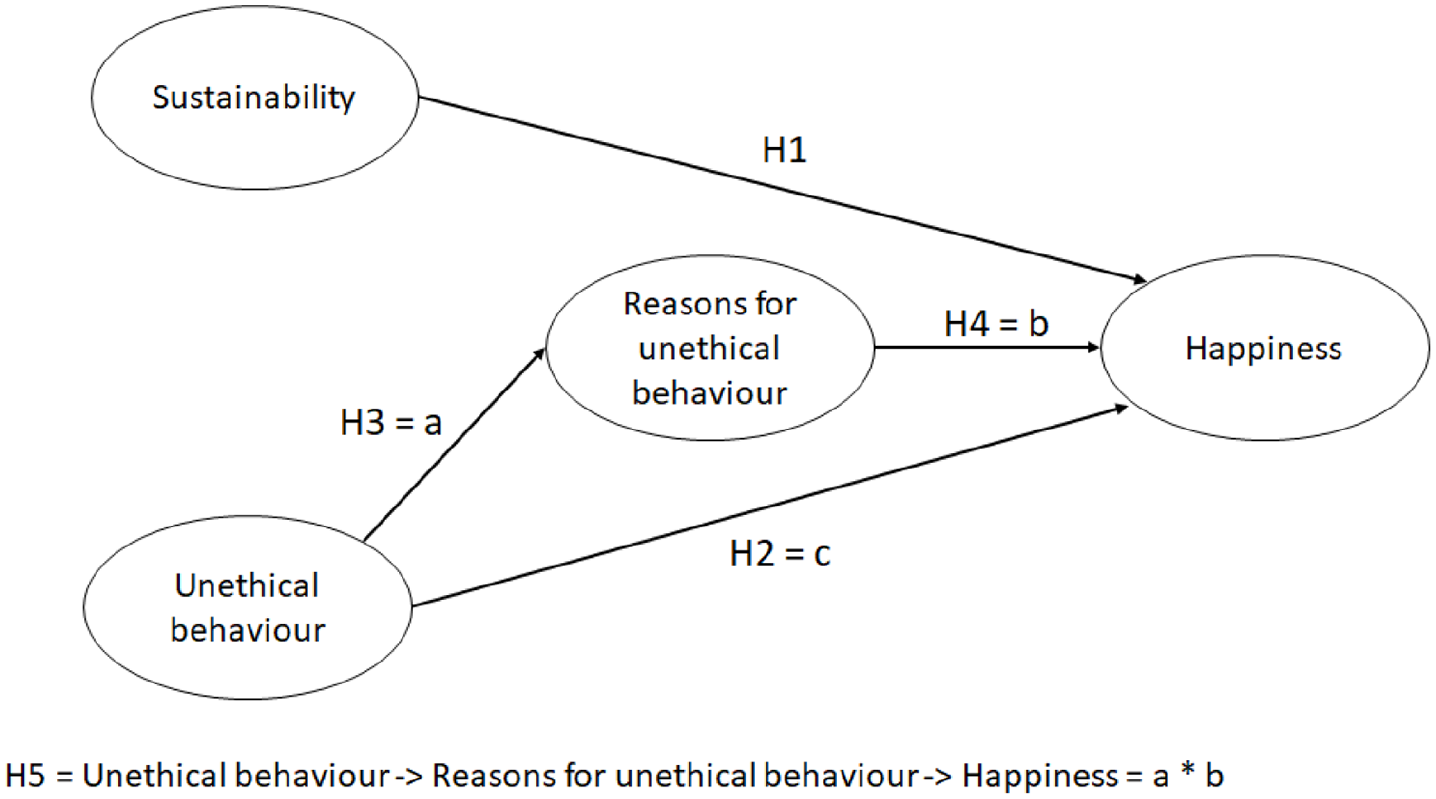
Hypothesis 1. Consumers’ predisposition towards sustainable behavior is positively related to happiness.
Ethical consumer behavior and consumer happiness
Ethical consumption is defined as the purchase (through one’s own choice) of products that respond to some of the main ethical concerns, such as human rights enhancement, decent working conditions, or environmental protection (Mintel, 1994). Literature shows that ethical consumption is mainly reflected in the purchase of environmentally friendly and fair trade products (e.g., Balderjahn et al., 2013; De Pelsmacker & Janssens, 2007; Gershoff & Frels, 2015; Nielsen, 2011; Shaw et al., 2005). One of the most influential works in consumer ethics, Muncy and Vitell (1992) formulated the consumer ethics concept and proposed the Consumer Ethics Scale. Later, Rodriguez-Rad and Ramos-Hidalgo (2018) and Vitell et al. (2018) redefined the scale, distinguishing between two types of behavior: predisposition toward unethical behavior and predisposition toward sustainable consumption.
Ethical consumers increasingly perceive a direct link between their buying behavior and ethical problems (Singh, 2016). As society shows an increasing awareness of ethical concerns, ethical consumption is becoming increasingly widespread in developed societies (Shaw et al., 2016). Although ethical concerns for the consequences generated by the production of goods by companies have been increasing in the last decades, ethical consumers are still only a small share of the total sales of the market (Liobikienė et al., 2016). Research on ethical consumption shows that, despite the fact that many consumers show a positive predisposition toward ethical brands and claim to be willing to pay a higher price for ethical products, in practice, only a small share of those consumers buy products manufactured under ethical conditions (Brunner, 2014; Poelmans & Rousseau, 2016). Hence, a substantial gap is observed between consumers’ predisposition and behaviors, with regard to ethical consumption (Carrington et al., 2014; D’Astous & Legendre, 2009; Shaw et al., 2016).
Literature on how consumers’ ethical behavior predisposition influences their happiness is also scarce. Only some studies can be found that analyze how predisposition to ethical consumption affects some of the facets of happiness, such as the consumer’s or subjective well-being (e.g., Ganglmair-Wooliscroft & Wooliscroft, 2019; Haybron, 2007; Sirgy, 2012). Ganglmair-Wooliscroft and Wooliscroft (2019) affirm that everyday ethical consumption behavior is quite differently related to well-being. While perceived eudemonic well-being and everyday ethical consumption behavior are positively related, the correlation between hedonic well-being and everyday ethical consumption behavior is negative. Although these authors do not explore the reasons that can determine the relationship between everyday ethical consumption behavior and well-being, they conclude that a consumption that incorporates environmental and ethical concerns is likely to generate eudemonic well-being, as the alignment of purchasing behavior with consumers’ ethical values might foster a meaningful life (Schröder & McEachern, 2004). In contrast, the cognitive dissonance generated by the discrepancy between consumers’ values and predisposition toward certain behavior, and their current behavior when making unethical purchasing decisions, could generate emotions of shame and guilt which, in turn could reduce the levels of happiness (Gregory-Smith et al., 2013). However, the cognitive dissonance being the result of the self-evaluation process, which assumes a comparison between the current self (and behavior) and the “ideal” self (Tracy & Robins, 2004), we believe that cognitive dissonance could lead to consumers experiencing a feeling of unhappiness when there is a discrepancy between their actual behavior (actual self) and their ethical values (ideal self; Szmigin et al., 2009). This is why the cognitive dissonance, resulting from predisposition toward unethical behavior, is expected to negatively affect consumer happiness. The level of cognitive dissonance will be determined by the individual’s moral development, thus, as proposed by Rholes et al. (1982), and subsequently followed by other authors (e.g., Fraedrich et al., 1994; Treviño, 1986), not all consumers have the same level of commitment to ethical values. In his theory of moral development, Kohlberg distinguished between three levels of moral commitment that extend the conception of moral development, as a continuous process that occurs throughout life.
Following Rodriguez-Rad and Ramos-Hidalgo (2018) and Vitell et al. (2018) and derived from the aforementioned arguments, the following hypothesis is formulated:
Hypothesis 2. Consumers’ predisposition toward sustainable behavior is negatively related to happiness.
Unethical consumer behavior and consumer reasons for unethical behavior
The unhappiness generated by unethical consumer behavior can be mitigated by justifying the existence of factors that do not depend on oneself (Heberlein, 1972). This is because, as pointed out by ethical relativism, absolute moral principles that guide behavior do not exist (Forsyth, 1985). On the contrary, individuals must decide how to behave in every specific situation (Hunt & Vitell, 1986). Hence, ethical relativism focuses on the consequences of actions rather than moral principles (Hunt & Vitell, 1986). Accordingly, individuals must use practical reasoning to decide what should be done in each specific context (Ramos, 2001; Vitell & Paolillo, 2003). Practical reasoning is the use of judgment, rather than formalized rules, by which an individual determines the morality of a particular situation. Hence, this moral judgment can vary from person to person and can be affected by different situational factors. Thus, moral judgments are also subject to contingency factors. Relying on this premise, Heberlein (1972) argues that decisions are classified as moral, only when the person who makes them is perceived to be the responsible agent.
According to the previous arguments, consumers tend to reduce their culpability and maintain their self-concept in the face of unethical consumption, by invoking justifications based on uncontrollable factors that release them from the responsibility for ethical consumption. The justifications consumers provide for behaving unethically, when they make their questionable purchasing decisions, are diverse, as indicated by Eckhardt et al. (2006). Those authors developed the Consumer Reasons for Unethical Behavior Scale, which was later validated by D’Astous and Legendre (2009). This scale identifies 28 reasons, grouped into three dimensions, which consumers invoke to justify their unethical behavior: economic rationalization, reality of economic development, and government dependency. The economic rationalization argument refers to consumers attributing greater importance to the price and quality, rather than to the ethical attributes of the product. Some studies point to this reason to explain the lack of ethical behavior by consumers (e.g., Connell, 2010; Gleim et al., 2013; Joshi & Rahman, 2015; Padel & Foster, 2005). The economic development reality argument refers to the justification that consumers invoke to defend the adoption of unethical behavior, based on the economic development of countries. Therefore, for countries to benefit from economic growth and to reach a decent standard of living, it is necessary to put aside ethical aspirations (Eckhardt et al., 2006). Finally, regarding the government dependency justification, consumers argue that ethics correspond to compliance with the law, and that the government is responsible for prohibiting unethical behavior. Therefore, the responsibility for unethical behavior in consumption falls on the government, and not on consumers (Eckhardt et al., 2006).
When consumers reduce the culpability associated with unethical consumption, by invoking the previous reasons, they can maintain their self-concept, which is positively associated with happiness (Bodner & Prelec, 2003; Nassani et al., 2013). Therefore, it is expected that consumer reasons for unethical behavior mediate the relationship between predisposition toward unethical behavior and consumer happiness. Accordingly, the following hypotheses are formulated:
Hypothesis 3. Consumers’ predisposition toward unethical behavior is positively related to consumer reasons for unethical behavior.
Hypothesis 4. Consumers’ reasons for unethical behavior are positively related to happiness.
Hypothesis 5. The relationship between consumers’ predisposition toward unethical behavior and happiness is positively mediated by consumer reasons for unethical behavior.
Based on the reviewed literature on sustainable consumption and unethical consumer behavior to happiness, and on the premises of ethical relativism explained above, this study sets forth the proposed research model shown in Figure 1.
Research model.
Methodology
Sample and data collection
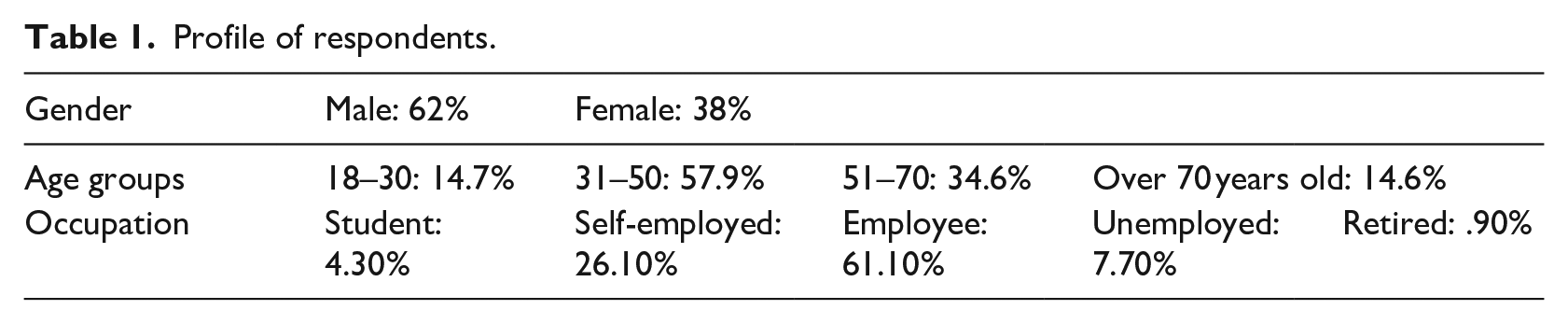
To obtain the necessary information, and to contrast the various hypotheses of the research, an integrated sample was employed of 286 individuals over 18 years of age, of which 160 were female and 126 were male (see Table 1). The sample was randomly selected. The data collection instrument involved an online survey (see Supplemental Appendix), in which the only eligibility requisite was for the participants to be over 18 years of age. All the members of the sample were inhabitants of the south of Spain. In a first phase, a pilot survey was conducted in the city of Seville, with a total of 50 questionnaires, to determine the amount of time needed to complete the questionnaire, and to rate the understandability of the items. The questionnaire consisted of a measurement scale of five levels, ranging from level (1) “I do not think it is wrong” to (5) “I think it is wrong . . .”
Profile of respondents.
Measures
Consumers’ predisposition toward unethical behavior was measured employing the original Consumer Ethic Behavior Scale (Muncy & Vitell, 1992). This scale uses 26 items, grouped into the four dimensions: actively benefit from unethical activities, passively benefit from unethical activities, benefit from questionable practices, and, benefit from harmless practices. The first dimension refers to unethical practices, consciously decided by the consumer, such as the use of another person’s password, or the return of damaged merchandise, when the damage has been caused by the consumer. The second dimension refers to those actions that are not consciously decided by the consumer, but which “luckily” benefit them, such as not saying anything when the waiter miscalculates the bill in the consumer’s favor. The third dimension is an active, questionable action, not considered as such by the consumer as it is not illegal, such as the use of an expired coupon to acquire a product. The fourth dimension includes practices not considered by consumers as causing any damage.
Following Rodriguez-Rad and Ramos-Hidalgo’s (2018) and Vitell et al. (2018) to measure consumers’ sustainable behavior, we used the consumers’ predisposition toward sustainable behavior dimension from Vitell and Muncy’s (2005) scale, which includes nine items.
To measure happiness, we employed the Satisfaction with Life Scale developed and validated by Diener et al. (1985) widely used in previous research (e.g., Cohn et al., 2009; Delle Fave et al., 2011; Glaesmer et al., 2011; Pavot et al., 1991). According to Pavot et al. (1991), this has favorable psychometric properties, including high internal consistency and high temporal reliability. These authors argue that the Satisfaction with Life Scale is suitable for use as a screening tool for large-scale studies with a wide range of age groups and applications. In addition, the high convergence of the measures of subjective well-being and life satisfaction reported by oneself and one’s peers provides strong evidence that it is a relatively global and stable phenomenon, not simply a momentary judgment based on fleeting influences (Diener et al., 1985; Pavot & Diener, 1993).
All the previous variables have been measured on a 5-point Likert-type scale.
Analysis and results
Our proposed model has four constructs: consumers’ attitude toward unethical behavior, consumers’ attitude toward sustainable behavior, consumer reasons for unethical behavior, and consumer happiness. All constructs have been considered Mode A, both first-order dimensions and second-order constructs. Consumer reasons for unethical behavior were modeled in response to the research question of whether it mediates the relationship between consumers’ predisposition toward unethical behavior and consumer happiness.
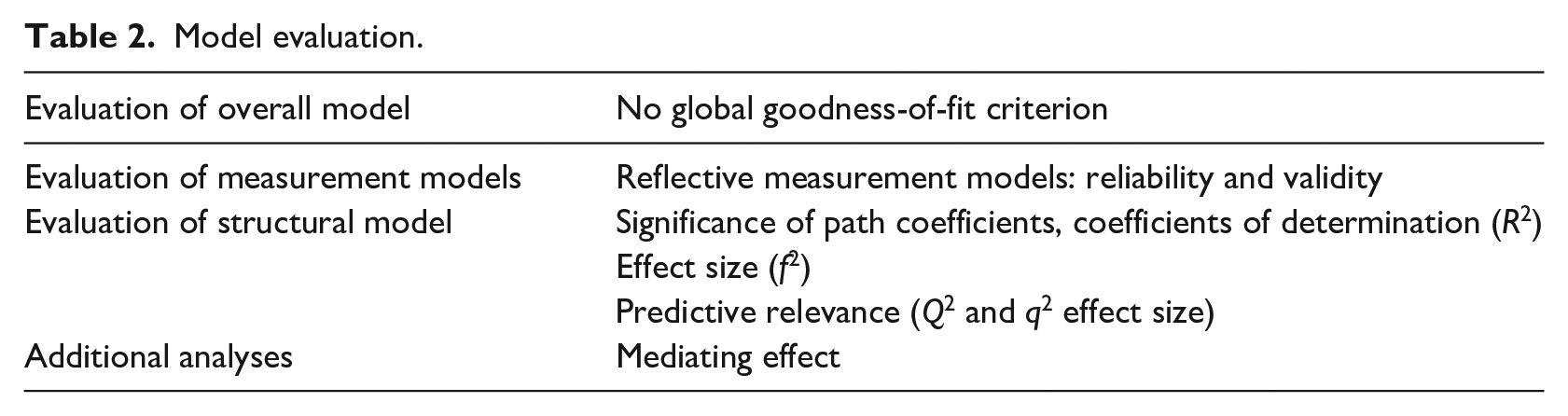
The method of partial least squares (PLS) was used to test the proposed model, an approach to modeling structural equations based on variance. Specifically, the software version SmartPLS 3.2.7 was used (Ringle et al., 2015). The use of this method is justified because, on one hand, the research model constructs are composed and therefore suitable for the application of PLS (Roldán & Sánchez-Franco, 2012). On the other hand, this study is aimed at identifying the influence of consumers’ ethical attitude, which allows forecasting behavior and the happiness of consumers (Hair et al., 2017). Both the four constructs included in the model, and the three dimensions that define the consumer reasons for unethical behavior construct, were modeled and estimated in Mode A. Table 2 summarizes the methodology employed in the research.
Model evaluation.
Common bias method
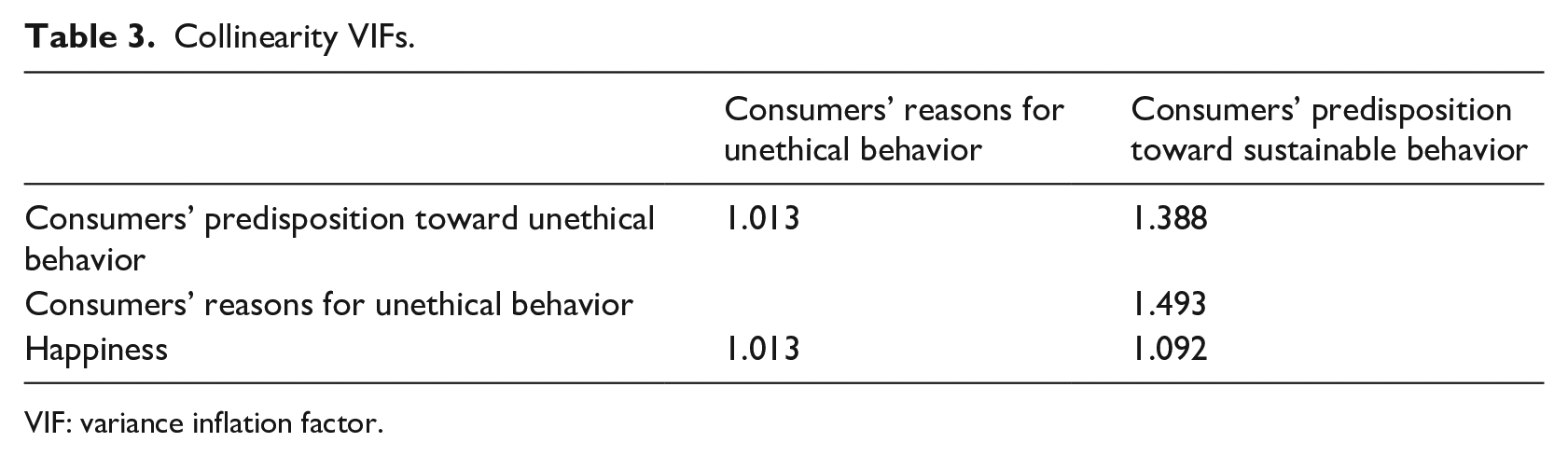
The procedure recommended by Podsakoff et al. (2003), to control the possible bias attributable to the measurement variables, was applied during the research design process. In addition, a complete collinearity test based on variance inflation factors (VIFs) to detect possible common method bias (CMB; Kock, 2015) was applied. The guidelines followed were those described by Kock and Lynn (2012), who proposed such a test to evaluate both vertical and lateral collinearity. Kock (2015) indicates that when the VIF reaches a value greater than 3.3, there would be an indication of pathological collinearity, alerting to the possibility of common method biases in the model. The current model, which has a maximum VIF value of 1.73, can be considered free of CMB (see Table 3).
Collinearity VIFs.
VIF: variance inflation factor.
Measurement model
Taking into account that all the variables in the model were estimated in Mode A, the traditional measures of consistency, reliability, and validity were applied (Henseler et al., 2016). As a general rule to satisfactorily consider the reliability, the loading as well as the indicators and the dimensions exceeded the value of .7 (Zeller & Carmines, 1976). In this case, once the model was refined, all the indicators of the constructs estimated in Mode A exceeded that critical value (Table 4).
Measurement model (loadings, construct reliability, and convergent validity).
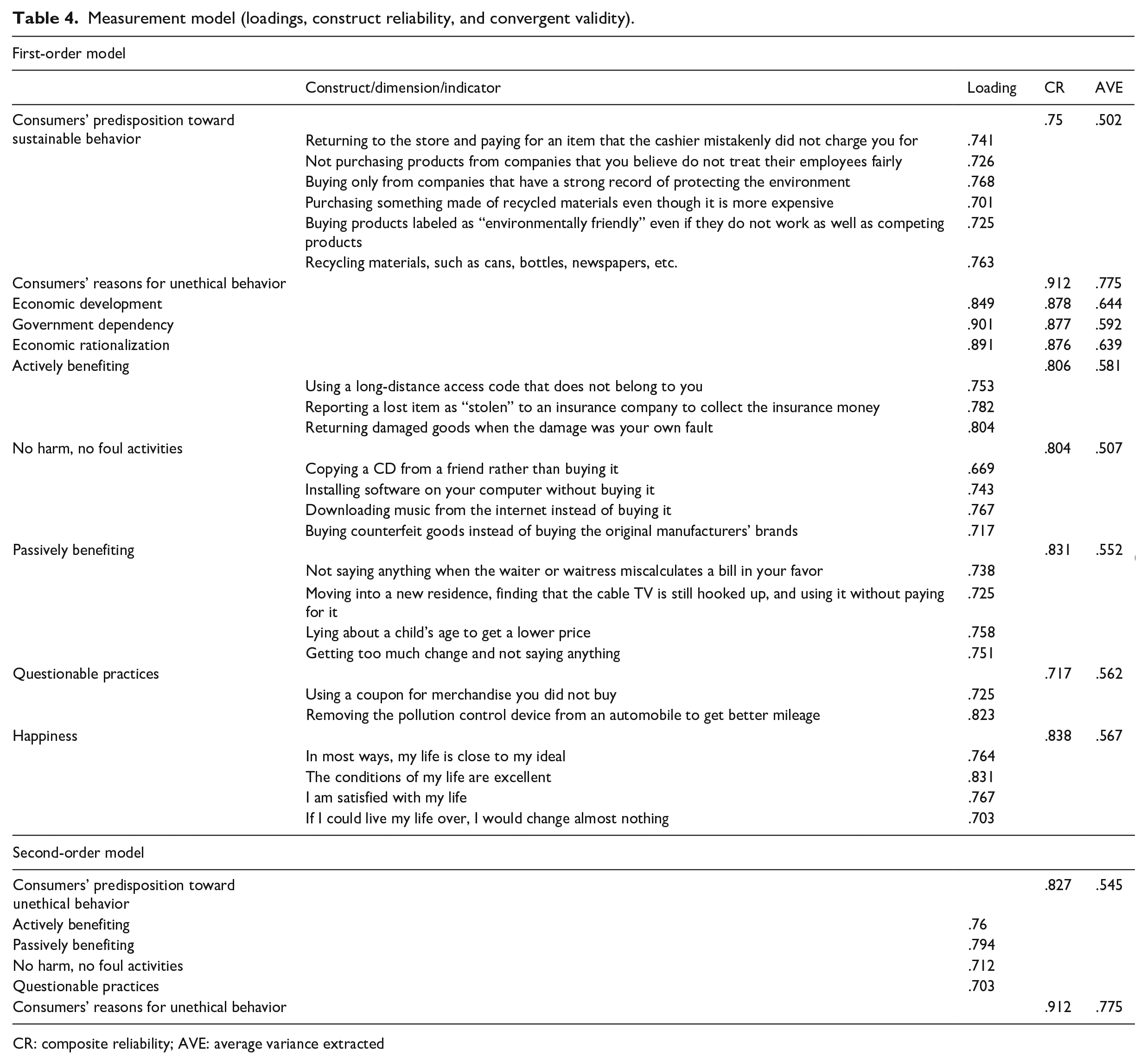
CR: composite reliability; AVE: average variance extracted
The average variance extracted (AVE) was applied to demonstrate the convergent validity. All the constructs and dimensions in our model satisfied this criterion, as the AVE exceeded the .5 level (Table 4). The methodology advises debugging the scales by eliminating the items that do not meet the minimum conditions to guarantee reliability and convergent validity. For instance, as the item, “So far I have gotten the important things I want in life,” from the Satisfaction with Life Scale did not meet the previous conditions, this dimension was eliminated. Therefore, the happiness construct is formed by only four items. To accept the discriminant validity, which indicates that each construct differs from the rest, the square correlation of the construct must not exceed the value of the AVE (Fornell & Larcker, 1981). To guarantee discriminant validity, the heterotrait–monotrait ratio (HTMT ratio) was also used (Henseler & Fassott, 2010). All the values of the matrix were below .85 (Kline, 2010). In addition, the confidence intervals for the HTMT did not contain the value 1 (Henseler et al., 2016), hence, the discriminant validity of the model could be confirmed (see Table 5).
Measurement model (discriminant validity).
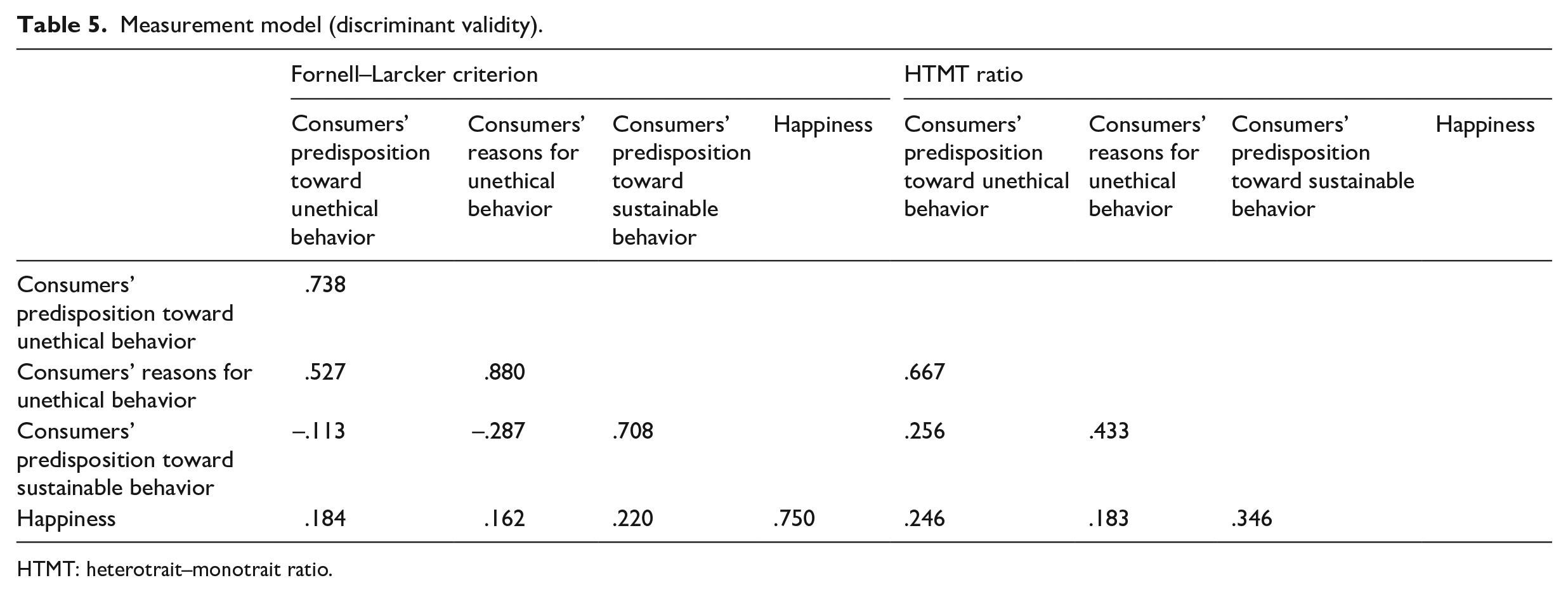
HTMT: heterotrait–monotrait ratio.
Structural model
As the partial least squares-structural equation modeling (PLS-SEM) methodology used in this work does not assume the normality of the data, it was necessary to perform a nonparametric bootstrap procedure to test the significance of estimated path coefficients (Roldán & Sánchez-Franco, 2012). Bootstrapping provided both the t-values and the confidence intervals that allowed evaluation of the statistical significance of the relationships (see Table 6).
Summary of structural model results.
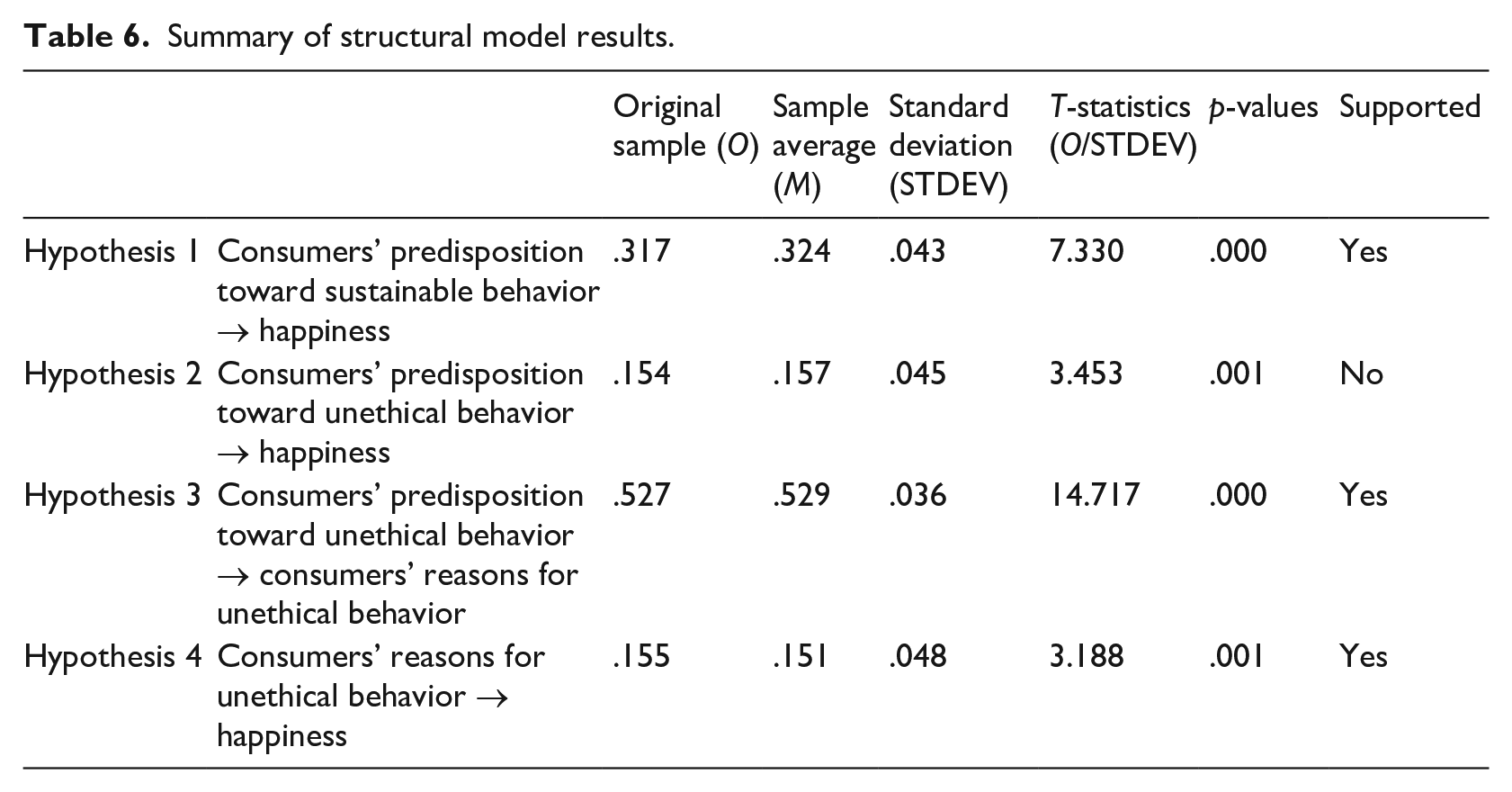
First, the results revealed that consumers’ predisposition toward sustainable behavior is positively and significantly related to happiness, supporting Hypothesis 1 (β = .317, t-value = 7.330).
Second, a positive and significant relationship between consumers’ predisposition toward unethical behavior and consumers’ reasons for unethical behavior was found, which leads to the confirmation of Hypothesis 3 (β = .527, t-value = 14.717). The results also showed that consumers’ reasons for unethical behavior positively and significantly affect happiness. Therefore, Hypothesis 4 is also supported (β = .155, t-value = 3.188). However, the analysis showed that consumers’ predisposition toward unethical behavior had a positive effect on happiness. Hypothesis 2 was not supported, because the hypothesis proposed a negative effect of consumers’ predisposition toward unethical behavior on happiness (Sarstedt & Cheah, 2019).
The use of blindfolding allowed the evaluation of the predictive importance of the Mode A constructs. When developing blindfolding procedures, all values of Q2 were above zero (consumers’ predisposition toward unethical behavior = .246 and happiness = .163), which supported the predictive relevance for endogenous constructs (see Table 7).
Effects on endogenous variables.
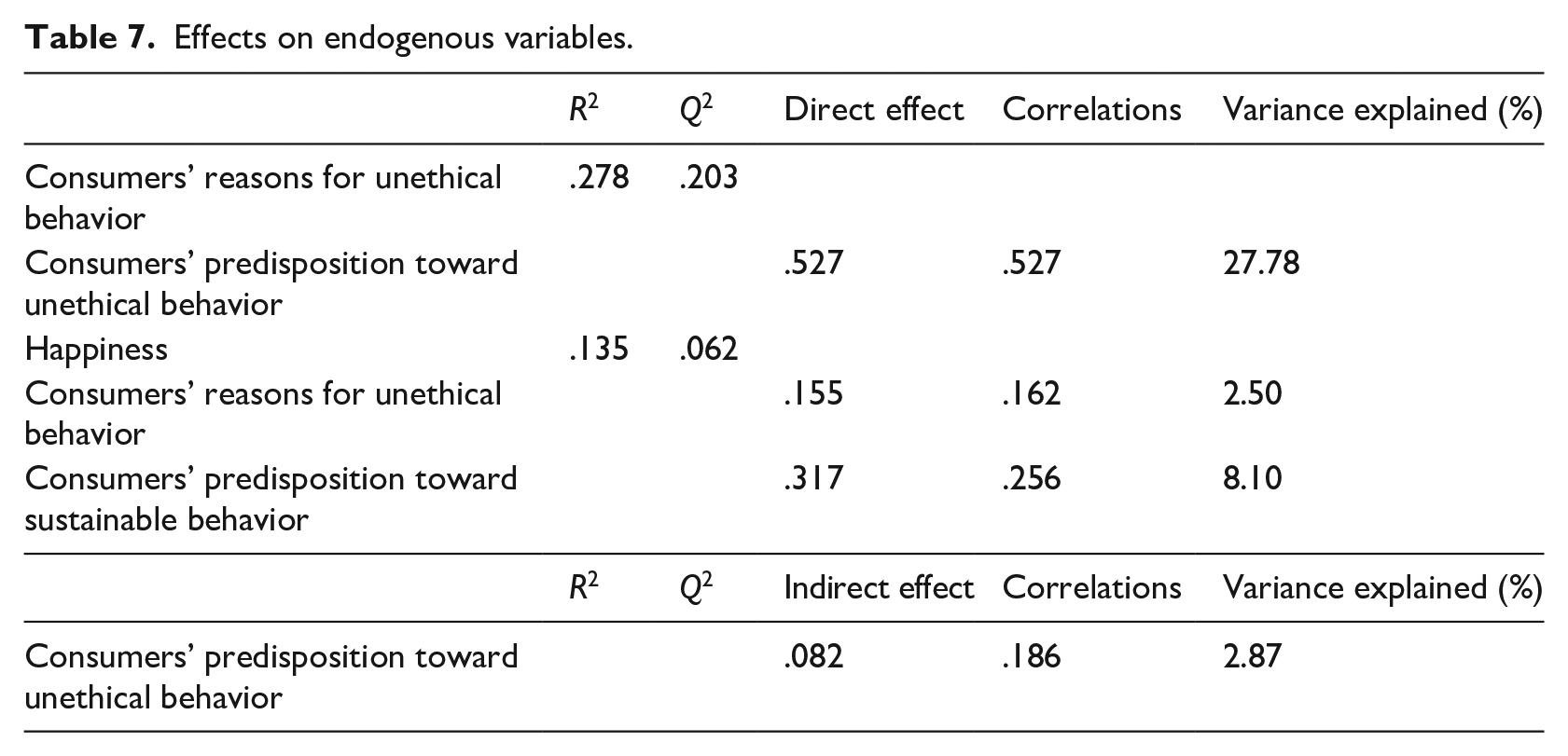
Considering the possibility of the mediating effect of consumers’ reasons for unethical behavior, on consumers’ predisposition toward unethical behavior and happiness, the variance accounted for (VAF) index was calculated, which, with a value of .346, between the critical values .2 and .8, leads us to assume the existence of partial mediation (Hair et al., 2017).
In addition, the determination coefficient (R2) was examined to evaluate the predictive strength for endogenous constructs. This coefficient indicates the amount of variance of a construct explained by the predictor variables of the endogenous construct in the model (Chin, 2010). In the proposed model, consumers’ predisposition toward sustainable behavior explains 8.10% of happiness, consumers’ predisposition toward unethical behavior explains 27.80% of consumers’ predisposition toward unethical behavior, and the explanatory power of consumers’ predisposition toward unethical behavior on happiness is 2.5%.
When examining the size of the effects (f2), following the heuristic rules of Cohen (2013), it was observed that the effect between consumers’ predisposition toward unethical behavior and consumers’ reasons for unethical behavior was higher (.385), the effect between consumers’ predisposition toward sustainable behavior and happiness was medium (.109), and the effect between consumers’ reasons for unethical behavior and happiness (.019), although it exists, did not exceed the minimum value.
It was also confirmed that the standardized root mean-squared residual (RMSR) adjustment index was .070. As this value did not exceed the recommended maximum limit (.08), the good fit of the global model could be confirmed.
Discussion and conclusion
This research explores the antecedents of consumer happiness. First, it has analyzed the influence of consumers’ sustainable behavior on consumer happiness. Second, it has studied how the predisposition toward unethical consumption, and the reasons consumers invoke for unethical behavior, influence their happiness. According to the results obtained, consumers’ predisposition toward sustainable behavior and reasons for unethical behavior has a positive and significant effect on happiness. Regarding the latter, the positive and significant influence observed in our results implies that having a strong predisposition toward sustainable behavior, that is, a consumption that incorporates environmental and social concerns, enhances consumer happiness. Surprisingly, predisposition to unethical consumption presents a significant direct effect on happiness. As this relationship presents a causal direction different from that proposed by the literature and in our model, following the recommendations of Sarstedt and Cheah (2019) we must reject Hypothesis 2. Predisposition toward unethical behavior also maintains a direct and positive relationship with the reasons that justify the behavior (Hypothesis 3). As this group of reasons is also positively related to happiness (Hypothesis 4), this leads us to think that the reasons that justify unethical behavior could have a mediating effect on the relationship between the predisposition to unethical consumption and consumer happiness. If we observe the results, the predisposition to unethical consumption helps to explain 27.78% of the reasons (Hypothesis 3). This positive and significant influence implies that those consumers who show a strong predisposition toward unethical behavior will try to justify it by looking for reasons that explain and justify this type of behavior. The reasons explain 2.50% of the variance of happiness. From these results, we draw the second conclusion of our study, which leads us to affirm that, to the extent that consumers find reasons that justify unethical behavior, consumers would improve their happiness in consumption. Furthermore, the analysis of direct and indirect effects explains a partial mediating effect of the reasons in this relationship (Hypothesis 5). Thus, we can understand that consumers who have a high predisposition toward unethical behavior will be happier to the extent that they find reasons to justify this behavior. The third conclusion drawn from our results is that there may be other factors (such as to try to contribute to the economic wealth of developing countries) that determine that the relationship between unethical behavior and happiness may be positive, contrary to the arguments provided by the previous literature (e.g., Gregory-Smith et al., 2013; Schröder & McEachern, 2004). This can be explained because, more or less consciously, consumers relativize the consequences of their behaviors (Forsyth, 1985, 1992; Vitell & Paolillo, 2003) relying on external reasons that serve as justification. In this way, in line with previous studies (Gregory-Smith et al., 2013; Oh & Yoon, 2014), they reduce the cognitive dissonance generated by the discrepancy between consumer values and their actual behavior, associated with the discrepancy between consumers’ values and beliefs and their behavior, which, in turn, allows them to be happier.
Contributions, implications, and limitations
This study is one of the first attempts to examine happiness in the context of sustainable consumption. In addition to contributing to the field of happiness studies by providing new reasons that improve the feeling of happiness in consumption, it contributes to the literature on sustainability, management, marketing, and psychology. Regarding the former, literature suggesting the importance of sustainable consumption for sustainability is in an emerging stage of development (Luthra et al., 2016) and studies that delve deeper into the importance of sustainable consumption are needed (Hwang & Kim, 2018). The study contributes to sustainability literature by providing empirical evidence on the relationship between predisposition toward sustainable consumption and happiness. One lesson of this study is that participants can appreciate the value, not only at the societal level, but also at the individual level, of their sustainable behavior and the sustainable behavior of companies from which they purchase goods and services. This evidence might contribute to management literature by providing new arguments that support companies on the path to becoming more involved in the implementation of sustainable practices.
Our implications for theory are especially important in the field of marketing, where the idea to reinvent marketing to adapt to the requirements of the environment is even proposed (Kotler, 2000). Our study adds specificity to the discussion regarding happiness and consumption (Hsee et al., 2009) by suggesting that an attitude toward sustainable consumption positively affects happiness, both in terms of consumption and acquisition. We point to sustainability as a novel ethical consumer motivation as well as the reasons consumers invoke to justify their unethical consumption behavior. Both factors are shown as relevant to the increase of consumer happiness. Therefore, this study also found that ethical evaluation is a cognitive strategy that allows consumers to justify their predisposition to adopt unethical practices.
The research also contributes to psychology literature, more specifically to the social psychology arena, by offering novel insights into the study of happiness and consumer behavior. The research delves into some factors that determine consumer happiness, such as sustainable consumption and moral relativism, which serves as justification for an attitude toward unethical consumption practices. The results show that consumers find reasons that justify their attitude toward unethical behavior, which enhances their level of happiness, reinforcing the relativistic moral philosophy that assumes that the goodness of a practice depends on the circumstances surrounding it (Forsyth, 1985, 1992, that is, “scepticism regarding inviolable moral principles” (Forsyth et al., 2008, p. 813).
Besides contributing to different areas of knowledge, the study presents several practical implications for policymakers and organizations. First, our findings imply that the use of positive emotions (e.g., pride, satisfaction, contentment) might encourage sustainable consumption. Emphasizing the benefits of sustainable consumption for enhancing happiness might foster sustainable consumption, especially in the case of those consumers who do not have a positive predisposition toward sustainable consumption. This becomes especially important if we consider that consumers who are favorable to sustainable consumption also contribute to promoting such practices in companies, as they reward those organizations that engage in sustainable practices.
Previous studies have pointed to various reasons for companies to develop sustainability policies, such as achieving legitimacy, contributing to protecting the natural environment, and so on (Battilana & Dorado, 2010; Cheng et al., 2014; Epstein, 2018), and our study provides a novel perspective about the reasons organizations might have to implement sustainable practices. Our findings show that consumers’ support of responsible companies makes them happier. Thus, companies must strive both to increase their social responsibility and to ensure that their responsible efforts are clearly perceived by their consumers. Moreover, considering that responsible organizational behavior will improve the happiness of their customers, companies could find a new form of customer segmentation, allowing them to actively target customers, seeking to improve their happiness with better adapted marketing strategies. The target market can be considered as the segment that groups consumers who emphasize the importance of sustainable corporate practices. The choice of this segment will help marketers to choose strategies suited to the characteristics of this segment that favor consumer happiness with the positive effects that this entails, both for improving brand image and increasing consumer loyalty and loyalty.
Policy-makers should also be cited in this section, because of the role they play in improving societal welfare. In terms of sustainability, it is possible to combine positions and efforts in terms of who should be responsible, and to whom this responsibility for sustainability should be demanded: organizations and consumers. As consumers can improve their happiness if they find reasons to justify their unethical consumption practices, to foster sustainable consumption, policy-makers should use communication strategies that emphasize the responsibility that consumers have regarding such consumption, trying to associate negative emotions with unethical behavior. Spurred by the coronavirus disease 2019 (COVID-19) crisis, enhancing individuals’ happiness must become a priority objective for public institutions. Allocating more resources and efforts to promote a more sustainable world has a double beneficial impact both for the planet and for the people. The COVID-19 crisis has emphasized the need to search for the common good beyond individual desires and expectations, pointing to the importance of people acting as members of a group, which are highly interconnected. This awareness has led some consumers to realize the importance of contributing to create a more sustainable world. Recent studies argue that ethical and sustainable consumption have been fostered by the COVID-19 pandemic (He & Harris, 2020). The question of whether we are truly witnessing a revolution in sustainable consumption still remains unsolved. In our research, we contribute to shedding light on the benefits that this type of consumption has for people’s happiness.
This work is not exempt of some limitations, which allow us to propose some future research venues. First, our work focuses on two factors that affect happiness, although we are aware that there are other factors that could also influence it. In future work, we plan to undertake a new line of research aimed at measuring the effect on the model of segmenting consumers according to different variables, considering the possibility of including moderating variables, such as gender, age, occupation, and educational level. Second, although the research provides evidence of the relativistic moral philosophy in the choice of consumer practices that lead to an improvement in consumers’ happiness, future research could focus on contrasting the role-played by the two moral philosophies (idealism and ethical relativism) in the improvement of consumer happiness. Also, knowing the importance of cultural factors in happiness, another future line of work should be directed to assess the impact of culture on the relationship between happiness and consumer attitudes toward both ethics and sustainability. Finally, future studies could further explore the effect of actual ethical consumption behavior on happiness using qualitative and longitudinal methodologies.
Supplemental Material
sj-docx-1-mre-10.1177_14707853211030482 – Supplemental material for Does sustainable consumption make consumers happy?
Supplemental material, sj-docx-1-mre-10.1177_14707853211030482 for Does sustainable consumption make consumers happy? by Encarnación Ramos-Hidalgo, Rosalia Diaz-Carrion and Carlos Rodríguez-Rad in International Journal of Market Research
Footnotes
Declaration of conflicting interests
The author(s) declared no potential conflicts of interest with respect to the research, authorship, and/or publication of this article.
Funding
The author(s) disclosed receipt of the following financial support for the research, authorship, and/or publication of this article: This research was supported by the Ministry of Economy and Competitiveness of Spain (Grant number: ECO2017-84364-R).

Supplemental material
Supplemental material for this article is available online.
References
Supplementary Material
Please find the following supplemental material available below.
For Open Access articles published under a Creative Commons License, all supplemental material carries the same license as the article it is associated with.
For non-Open Access articles published, all supplemental material carries a non-exclusive license, and permission requests for re-use of supplemental material or any part of supplemental material shall be sent directly to the copyright owner as specified in the copyright notice associated with the article.
