







Abstract
Ethical considerations are increasingly important because new online techniques of research such as online ethnography often have novel ethical challenges. Our research aims to help online ethnographers by providing a moral/philosophical framework to be used in making ethical decisions and guiding them to reflect on how these decisions affect and justify their methodological choices. We draw upon prior research on ethics and online ethnography, and utilize five key dimensions of moral and philosophical principles (autonomy, non-maleficence, beneficence, justice and trust, explicability) for our framework. Our research highlights essential ethical questions such as selecting a philosophical basis as your ethical frame and coming to terms with ambiguity, and related methodological guidelines such as avoiding personal prejudice, assumptions and bias, research site entry strategy, researcher’s communication with the participants, protection of data, research site exit strategy and communicating online research findings. This paper contributes to the existing literature by identifying how moral and philosophical guidelines impact our ethical and methodological choices when engaging in online ethnography and what this means in terms of research practice.
Keywords
Introduction
Ethical principles govern the standards of conduct for online ethnography. Online ethnography (also known as virtual ethnography or digital ethnography) can be broadly defined as an ethnographic research method to study online communities, cultures and other computer-mediated social interactions. Ethical principles of online ethnography are not just requirements written in a code of ethics but they also represent the researcher’s philosophical position and values. In the online realm, ethical dilemmas are even more complicated due to the changing nature of online platforms, context and interactions as well as technological advancements (Thompson, Stringfellow, Maclean, & Nazzal, 2021). These technological advancements mediate our research experience through documenting, sharing, locating, automating and mining everyday experiences and providing new tools for online ethnographers. Yet, while ethical decision-making process is an important and ever-changing issue, rarely are they evidenced in published research. Explicitly reporting ethical preferences may have important benefits such as preventing harm and maintaining scientific credibility for the researcher, participants and the scientific community.
Ethical considerations in the online landscape have been investigated largely in the context of online ethics (Hair & Clark, 2007; Nunan & Di Domenico, 2013; Nunan & Yenicioglu, 2013; Reid & Duffy, 2018; Zimmer, 2010), ethnography in virtual worlds (Boellstorff, 2012; Boellstorff, Nardi, Pearce, & Taylor, 2012) and netnography related ethical issues (Kozinets, 2002, 2012, 2015, 2020). Others have focused on more specific areas of online ethics such as ethical considerations for vulnerable consumers (Thompson et al., 2021). Our paper adds to this stream of research by clarifying philosophical principles that guide methodological choices of online ethnography.
Explaining moral understandings behind ethical considerations can help researchers justify the ethical stance of their research, evidence the application of certain priorities such as to avoid harming others and building trust; and advise how it can be best reported in the research (Nunan, 2020). Surprisingly, when we look at the recently published papers utilizing online ethnography, although some explain their ethical decision-making process in their papers (Harridge-March & Quinton, 2010; Izogo & Jayawardhena, 2018; Ravoniarison & Benito, 2019); 70 percent of the recently published papers do not (Kozinets, 2020). Our research bridges this gap and provides a detailed guideline of moral/philosophical justifications to those operating in the field to utilize in their research.
Philosophical choices in online ethnography
Due to the rapid evolution of the Internet and the online space, researchers need to evaluate, reevaluate and update their ethical stance and it is the responsibility of future scholars to confirm the research method and keep procedures embedded in long-standing ethical practices. This paper provides researchers an up-to-date framework to consider ethical practices of conducting ethnography in online communities. While much has been written across disciplines on the practical aspects of ethical decisions such as privacy and informed consent (Hair & Clark, 2007; Moraes, 2016; Nunan & Di Domenico, 2013; Roberts, 2015; Stevens et al., 2015), few have identified the importance of grasping the philosophical traditions of ethics in the light of new technological advancements that affect our choices as a researcher.
In the literature, some have argued there are many ways to conduct research that is ethically justified (Kantanen & Manninen, 2016; Roberts, 2015; Tuikka, Nguyen, & Kimppa, 2017) but very few authors (Kozinets, Gershoff, & White, 2020) consider ethics philosophical foundations which are fundamental in making epistemological decisions in ethnography. Our approach presents a unique contribution to knowledge in online ethnographic research by focusing on moral/philosophical justifications. The next section will explain the moral/philosophical principles used in our framework to guide methodological choices.
Moral/philosophical principles as guidance
Moral theories attempt to provide systematic answers to moral questions such as what makes an act right or wrong or what makes an individual morally good or bad. Deontology focuses on the inherent rightness of a behavior and determines the set of rules to live by whereas utilitarianism emphasizes the amount of good and bad caused by the consequences of the action undertaken. The course of action with the greater good is considered to be ethical (Owens, 2017).
These moral theories act as a lens for the researcher through which dilemmas around moral conflict (e.g., fair distribution of benefits and harms) and these theories are essential precursors to the actual act of research. Ethical relativism holds to a doctrine that is rooted in the work of the Greek historian Herodotus and further expanded upon by aspects of the postmodernist movement of the 1960s that rejects the notion of a singular truth in science and ethics (Renteln, 1988). In this paper, we select a position of ethical relativism as the most reasonable position from which to begin an online ethnography due to the everchanging nature of the online environment (e.g., online communities, online brand groups). In ethical relativism, there are no absolute truths and what is morally right or wrong will vary between persons, societies, and situations (LaFollette, 1991). This foundation is well suited to inform methodological decisions on conducting ethnography as it allows for flexibility in approach and interpretation.
Specifically, we draw from a disparate field, including artificial intelligence (AI) (Floridi et al., 2018), human subjects research (Resnik, 2018), moral theory (Timmons, 2002) and biomedical science (Beauchamp & Childress, 2001) in identifying a range of moral/philosophical justifications. As in prior research, the ethical relativism we employ in this paper focuses on five key tenets, autonomy, non-maleficence, beneficence (including respect for dignity), justice and trust, and, most recently added from the field of AI, explicability.
Autonomy is to treat all human beings as having inherent moral worth and not restricting an autonomous person’s decisions or actions with a sound justification (Floridi et al., 2018). Since ethical relativism rejects the notion of a singular truth and thus there is no way to justify a moral principle, it enforces a position of the researcher to respect an autonomous individual and that person’s right to hold views, make choices and take actions based on their personal beliefs and not of that of the researcher (Beauchamp & Childress, 2001). Second, non-maleficence refers to avoiding causing harm to one’s self or others, to not cause pain or suffering or offense (Beauchamp & Childress, 2020; Floridi et al., 2018). Viewing this through an ethical relativistic lens requires the researcher to take great care in how to interpret this in light of the specific context in which the ethnography is taking place. Third, beneficence refers to a group of norms pertaining to relieving, lessening or preventing harm and providing benefits and balancing benefits against risks and costs to promote the welfare of one’s self and others (Beauchamp, 2009). Adopting a relativist position forces the researcher to take even greater care in determining what may or may not be perceived as expected norms by those informing the research. Fourth is justice and trust that refers to distributing benefits and harms fairly and use fair procedures to make distributive decisions. Relativism once again forces the researcher to determine how the concept of justice is defined within the context of the community being studied, to surface this in one’s work and to ultimately demonstrate ethical practice. The tenet of trust, relying on a researcher or research team to act or behave ethically, professionally, competently or skillfully (Resnik, 2018), as is defined within the context being studied represents the fourth. A fifth tenet has been proposed by the AI research community and it strikes at the heart of demonstrating an ethical approach – explicability, which enables the other tenets through intelligibility and accountability (Floridi et al., 2018). Holding to the theory of ethical relativism requires a demonstration on what complex decisions have been made and how those methodological choices have been executed. The field of online ethnography is replete with examples of studies that have not acknowledged these choices and by definition the implications of these on claimed ethical practice. In utilizing these moral/philosophical parameters, the next section explains our methodological steps that online ethnographers could use (Figure 1). Ethical guidelines in online ethnography.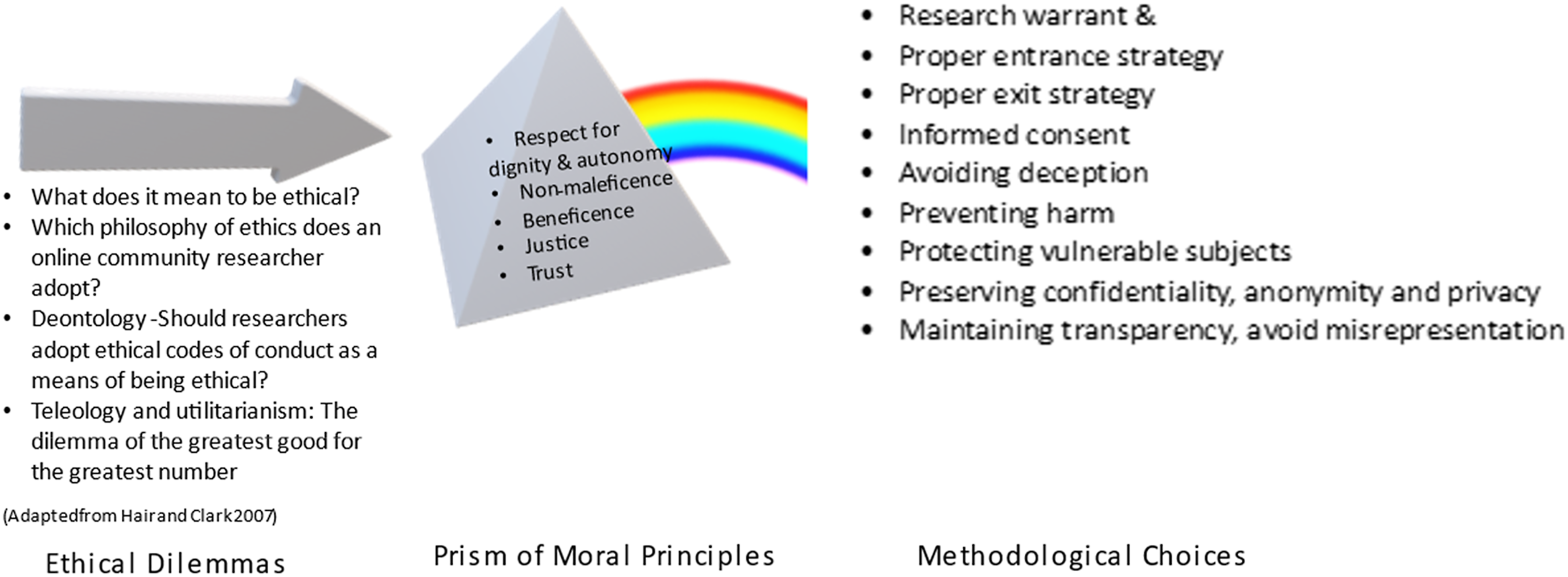
Online research methodology guided by moral/philosophical justifications
One of the most challenging aspects of being an ethnographer is accepting a degree of ambiguity about the nature of research that is not normally present in other less interpretivist philosophical paradigms. In our review of research in online platforms (e.g., brand communities, online forums), we quickly came to the conclusion that there are many different approaches towards engaging a community and that many judgment calls have to be made dependent on the approach. This, coupled with a poor reporting of process, means that there is a great deal of ambiguity on how you conduct virtual ethnography ethically grounded in its philosophical traditions. Thankfully, it is the ambiguous nature of ethnographic enquiry that often makes the process as exciting as it is rewarding, but ambiguity can also be perilous if a comprehensive process is not considered. In our initial review of the types of online communities, we also came to the conclusion that ethical behavior in one may not constitute ethical behavior in another as others have concluded (Convery & Cox, 2012; Golder, Ahmed, Norman, & Booth, 2017). Therefore, at the start of the process, the researcher needs to negotiate what constitutes ethical behavior with the community which the research team engages with (Allen & Meyer, 1996; Roberts, 2015; Tuikka et al., 2017).
The boundaries of privacy are discussed in the literature in the form of preserving the confidentiality, anonymity and privacy of participants. It is crucial for the researchers to balance rights of the community and its members with those of other stakeholders, such as the sponsors of the research or the owners of community platform (Hair & Clark, 2007). Privacy boundaries are becoming even more complicated with the introduction of artificial intelligence, networked devices and virtual reality in the context of online communities which challenge the fit of traditional ethical frames of reference (Golder et al., 2017). Recent advancements in technology create new ethical considerations for online communities, which could affect the researcher’s ethical frame. For example, artificial intelligence such as Spirit AI acts as online community moderator or administrator for companies which could have implications on data collection and data privacy.
Another important point is to start to make clear the importance of having a guiding research question or issue before embarking on research (Moisander & Valtonen, 2006). Once an issue is identified, a philosophical frame can be adopted to help guide the research process and epistemological choices. Therefore, it is important to have a clear justification when the researcher is selecting a community to explore. In this paper, we will utilize the moral principles framework by Resnik (2018) and Beauchamp and Childress (2001) to guide us through methodological decisions when conducting online ethnography. We utilize their main principles of autonomy, non-maleficence, beneficence, justice and trust, with the addition of explicability as main moral principles for our framework.
Methodological (procedural) guidelines on how to conduct ethical online ethnography
In this paper, we provide an examination of methodological choices by examining research methodology and method-related decisions that would be seen as “the right choice” from an ethical perspective. We contribute to the literature by explaining methodological (procedural) guidelines on how to conduct ethical online ethnography.
When conducting online ethnography, it is important to remember the origins of the method. For example, it is crucial to note that ethnography aims to create a cultural understanding of experiences of people and various related elements such as identity, language, rituals, imagery, values, myths and meanings (Kozinets et al., 2018). In their investigation of these elements, researchers should avoid “the tendency to reduce humanity to numbers, decontextualizing its constituent elements and descriptors” (Morais et al., 2020, 443). From traditional ethnography to online ethnography, there has been a change of focus to understanding the effects of technology on individuals’ lives and culture.
This is directly reflected in our ethical understandings and their reflection on methodological guidelines. For example, the types of biases or the sampling problems the researcher face could be different for online versus traditional offline research ethnography settings. We provide step by step methodological guidelines for online researchers to make the right ethical choices (e.g., avoiding bias, personal prejudice, sampling problems, etc.) for different stages of an online ethnography/netnography (i.e., developing a research plan, establishing entrée, data collection, interview questions asked, data analysis, iterative interpretation, community vs. individuals, publications and distribution of results). In the next section, we evaluate different stages of online ethnography based on philosophical guidelines that lead our method related decisions.
Methodological preferences/choices in the different stages of an online ethnography to ensure adhering to ethical guidelines
Avoiding personal prejudice, assumptions and bias
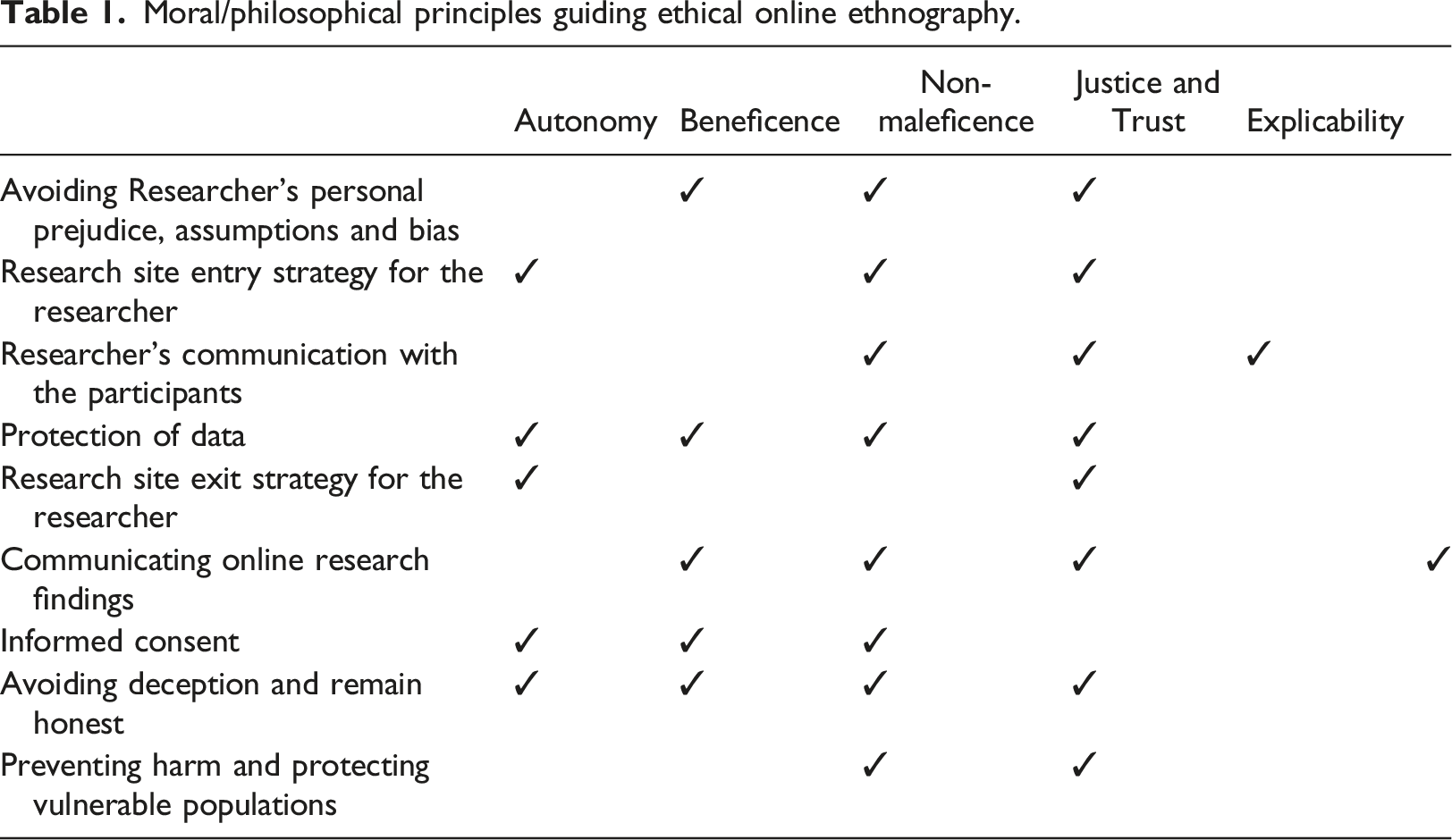
Online ethnographers should be aware of their own personal world view and potential prejudice around the research topic at hand. An essential issue here is to understand and create a balance between emic and etic perspectives. An emic perspective refers to perceptions and categorizations of one’s culture and experiences based on how they are meaningful for the individuals who are embedded in that culture. An etic perspective is the perspective of the observer (Morris, Leung, Ames, & Lickel, 1999). To establish philosophical justifications of beneficence, which will turn into justice and trust, it is essential to look at the research problem and the culture at hand from both emic and etic perspectives and to avoid interpreting others through their own cultural beliefs. In order not to give any potential harm to the participants and ensure non-maleficence, the researcher could engage in member checks to go over the interviews or findings to triangulate and minimize bias.
Emic perspectives refer to descriptions of behaviors and beliefs in terms that are meaningful to people who belong to a specific culture, e.g., how people perceive and categorize their culture and experiences, why people believe they do what they do, how they imagine and explain their existence. To uncover emic perspectives, ethnographers talk to individuals, observe what they do, and participate in their daily activities with them. Emic perspectives are crucial for researchers’ efforts to obtain a detailed understanding of a culture and to avoid interpreting others through their own cultural beliefs. For example, when conducting online ethnography in an online community of low-income consumers, the researcher should consider their own familiarity and own biases towards poverty.
It is also crucial to embrace an etic perspective to make sense of the observed online community’s culture from the eyes of an outsider. Utilizing both emic and etic perspectives will help the researcher to ensure non-maleficence, beneficence, justice and trust by avoiding personal prejudice, assumption and bias.
Research site entry strategy
In order for the online ethnographer to ensure non-maleficence, justice and trust, research site entry strategies should be selected carefully. Many online ethnography sites are private and they require extra levels of ethical procedures for online ethnography including compliance with platform policies, disclosing researcher identity and moderator permission (Kozinets, 2020). The boundary between public and private space is hard to define when it comes to online communities (Convery & Cox, 2012; Golder et al., 2017; Kantanen & Manninen, 2016; Roberts, 2015; Stevens, O’Donnell, & Williams, 2015). In consideration of the concerns raised by non-participant observation decisions are often made to focus on an ethnography based on participant observation of the community itself (Kozinets et al., 2010; Kozinets, 2020). Participant observation in ethnography is essential because it helps the researcher to have a better understanding that results in a more informed sense-making as well as resulting in an increased emic perspective (Kozinets, 2020). The next challenge is the decision to select an appropriate venue. Some traditional and online ethnographic approaches appear to select research sites on the basis of personal researcher interest (e.g., Star Trek support community (Kozinets, 2001), examination of a Venezuelan community (Paccagnella, 1997), mountain climbing communities (Tumbat & Belk, 2011) and examination of cosplay communities (Seregina & Weijo, 2017)).
Additionally, sampling is also a very important part of online ethnography. The question that needs to be answered is whom to include in the study. In order to ensure non-maleficence, if the research has potential harm to participants the researchers should determine whether or not they can answer their research questions and complete the research with a smaller sample size. After selecting the context for the study and deciding on the sample, and being mindful of justification, the next step is to decide on an entrance strategy.
Entrance strategy
Selecting a community is the first step to lay a foundation for research that is richly rewarding whilst upholding the ethical cannons. If the context and nature of an online community is not understood by reviewers, or if assumptions about the nature of the digital context is confused with or assumed to be the same as a traditional in person community, researchers could experience challenges. It is also important to inform the community administrator of your intentions as failing to do so before revealing your identity, could result in your removal from the community damaging trust. Additionally, it is important to consider applying for the necessary permit and consider principles related to conducting research on human subjects such as International Review Boards (IRB) in the United States (Kantanen & Manninen, 2016). Independent ethics committees like IRBs can be a helpful secondary check for the researcher to ensure their research plan and research entrance procedures are in line with their philosophical/moral justifications. While we often assume IRB has the expertise and experience to review challenging approaches like a proposed online ethnography, the process at least forces the researcher to articulate their research strategy with ethical practices in mind.
Researcher’s communication with the participants
Building on the emic and etic perspectives to establish non-maleficence, beneficence, and trust, the researcher’s communication with the participants is a crucial element in conducting ethical online ethnography. As we also detail in our entrance strategy and exit strategy sections, when entering the online community, it is essential to reveal the identity of the researcher and ask permission from community moderators. This practice is very important to ensure trust between the researcher and participants. Similarly, when the researcher is exiting the research site, they should let the community know that they have completed the research and asking for permission to return for debriefing. In order to make sure the participants are able to express themselves fully, debriefing at the end of the study is necessary. Debriefing could be seen as a continuation of informed consent of the participants to join the study.
When direct contact with the participants of the online group or community is needed (e.g., interacting with the community members online, interviewing the participants), the researcher could lay out how they can develop an appreciation of the feelings of the participant/interviewee of being and not being heard about the research topic and the questions asked or the topic being discussed. As a continuation of this, appreciating the vulnerabilities of the participant is very important to establish non-maleficence and beneficence.
The nature of communication for many online communities is textual and it requires the researcher to understand how the conversations evolve over time between the members of the community rather than a stand-alone snap shot of the communication (Jensen, Bearman, Boud, & Konradsen, 2022). This leads to establishing non-maleficence by not giving harm by misinterpreting the textual data during data analysis, gaining the trust of the participants and ensuring justice by paying necessary attention to their online conversations and preserving the collected data, and lastly, establishing explicability where the researcher is capable of understanding how the new technological advancements are being used to facilitate the online communication and its implications for the community members as research participants and society at large.
Informed consent
Informed consent is “a procedure for enduring that research participants understand what is being done to them, the limits to their participation and awareness of any potential risks they incur” (Nunan & Yenicioglu, 2013, 794) and it is a very important step for the researcher’s communication with the participants. Autonomy and beneficence justify the need for informed consent because it facilitates autonomous individual decision-making process as to whether to participate in research or not. Non-maleficence provides additional justification as consent helps individuals avoid participating in studies they judge to be excessively risky (Brock, 2008). Due to the enabling of honest and open communication between the researcher and the participant, informed consent requirements can promote trust. Honest communication also prevents the sense of betrayal and loss of trust that subjects may experience if they discover that they have not been fully informed about some key aspect of a study (Resnik, 2018). Similar to the discussions of informed consent in web surveys (Kunz, Landesvatter, & Gummer, 2020), in online ethnography a similar practice could be identified.
Having a senior community member, management or owner, introduce you and your research helps establish legitimacy for collecting informed consent. In ensuring the ethical practice of informed consent every effort should be made to detail the purpose of the work where possible and identify your role as a researcher together with any expectations you have along with those of your community participants. It is equally important to realize that you are unlikely to gain the permissions of every member from the onset. Additionally, exploring the purpose of your research with key participants in open dialogue is one means of judging the level to which they are informed.
Establishing the extent to which your research is at the community-wide level or it involves individual participants is important as it clearly has implications for ethical conduct. Special attention should be paid to individual participants that are to be interviewed one-on-one. Separate assurances on the nature of confidentiality should be given. Guidelines for in-depth interviews could be followed in that case (Moisander & Valtonen, 2006). Similarly, participants’ rights in the research process such as the ability to immediately withdraw should they want to and permissions to use their interview data as with traditional ethnography should be applied. Whilst written acceptance of all community members is unlikely, researchers should seek text-based confirmation of informed consent from individuals who are interviewed one-on-one or in smaller teams. As an additional practice, informed consent could be obtained through the registration page where there is a dedicated project website (Bruckman, 2002; Kantanen & Manninen, 2016; Kozinets et al., 2020). Perceptions of community-wide consent could also be published in the results of the ethnography. Furthermore, it is important to accept the constantly changing nature of consent and accept the challenges to the traditional nature of consent and create solutions such as data anonymization (Zimmer, 2010).
Protection of data
Following data collection, an essential issue is to preserve the collected data to establish non-maleficence, autonomy, and justice/trust. To protect the confidentiality, anonymity and privacy of the participants, the moral justifications include beneficence, autonomy, non-maleficence, justice and trust. Guidelines about privacy and confidentiality give autonomy to the participants to control their private information and protect participants from harm (e.g., stigma, embarrassment, identity theft) (Resnik, 2018).
As with traditional ethnography engaging with the community on a social level and avoiding a task-oriented approach help the researcher get a deeper impression of the culture of the community studied as well as developing rapport. The online ethnographer can gain trust and ensure non-maleficence by making sure the research participants’ private information will be kept protected, an assurance that is critical in making the participant comfortable in their participation in this research. Also, in many markets, researchers are legally bound to act and treat data with integrity. For example, initiatives like the European Union’s General Data Protection Regulation (GDPR) lays down rules related to the protection of research subjects with regard to issues such as processing personal data, privacy by technology design, right to access and right to be informed.
Research site exit strategy
Having conducted the research and paying attention to the range of issues surrounding ethical treatment of participants, careful consideration needs to be given to a managed exit from the community. To ensure autonomy of participant contributions to the research and justice by eliminating all types of discrimination, the exit phase of the community should have explicit guidelines for resolving questions such as how long the data is retained and how the data is demolished after the expiration of retention period (Paris, Colineau, Nepal, Bista, & Beschorner, 2013). After the conducting the analysis, returning analysis to respondents for feedback is an important milestone in claiming ethical conduct and creating credible findings. Exploring the results, focusing on the meanings and implications to the community studied is crucial in managing the potential disruption caused by the withdrawal of the research team or lone researcher. Over the course of research, meaningful relationships are usually developed with researchers who, by examining relationships or community interplay, may take on a support role in interpreting behavior and exploring participants’ feelings towards other members. This is especially important to ensure trust between the research team and the participants.
Managing oneself out of a complex relationship with the community is a challenging task. We suggest the importance of targeting a set date and gradually working towards this in daily communications with the community, though it should be made clear this is by no means a simple task particularly if the members and participants have been deeply involved with respect to their time and commitment to the research project. One means of meeting this challenge is to conduct a post impact assessment several months after the research team leaves the community. It is often unsurprising to find relationships with key members as easily re-established and this suggests in part a successful outcome of previous research. Another exit strategy could be conducting exit interviews with the key members of the community to learn about their reflections of the findings (Wallace, Costello, & Devine, 2018).
Communicating online research findings
Beneficence including respect for dignity, non-maleficence, justice and trust are needed to justify communication of the online research findings. As is common with other ethnographies, care needs to be taken in the representation of participants in the documentation and presentation of findings. A great deal has been said about the ethics of honest representation and one means of ensuring that the findings meet the ethical standards to be adhered to is to return the ethnography to the respondents themselves and the wider community for comment (e.g., debriefing). Being in contact with the participant helps to make sure to what extent they are comfortable with their data being shared online. Also, anonymizing the participant whenever possible but keeping in mind that it may not be possible for certain online platforms or communities. Additionally, the researcher should establish non-maleficence by deciding on the fine line between choosing what to use and not to use as data examples in the paper.
It is important to include the participant comments in respect of revisions when conducting ethical ethnography. This often has the outcome of further strengthening relationships between participants and the researcher or research team. Gathering participant feedback also helps to build the credibility and dependability of the findings which will in turn build trust. Whilst it is recognized that the limitations placed on publication length may prohibit some researchers from specifying in detail the process adopted to claim ethical practice, this issue remains of central importance in online community research that is ethnographic and should not be avoided. We therefore take the position that ethics should be discussed in all of our dissemination efforts. This seems particularly important with research conducted on relational activity (where these relationships may be irreparably harmed by the researcher’s influence).
Additional ethical issues guided by philosophical/moral principles in online ethnography
Avoiding deception and remain honest throughout the research process
Beneficence, autonomy, non-maleficence, justice, and trust justify the requirement of avoiding deception when conducting online ethnography. Following beneficence and autonomy principles, while collecting and analyzing data, consideration needs to be given to respectfully treating participants while building relationships between researcher and community. In practical terms this might involve a constant negotiating of what is and was is not acceptable to the participants (e.g., permission to quote verbatim conversations between members; and documenting feedback provided from the participants on the process of research). This is critical in demonstrating respect for participants’ wishes and their well-being and in presenting subsequent findings. When conducting field research, ethnographers must fully disclose their presence and ensure confidentiality and anonymity where appropriate in order to demonstrate ethical conduct (Boellstorff, 2012; Whalen, 2018).
Researchers should also consider fully immersing themselves socially in the online community. For online ethnographers, immersing themselves in the community ensures a deeper understanding of the community including the conversations among members, community norms and overall culture. Additionally, an open forum to discuss any research related concerns helps demonstrate the honesty and integrity of the researcher whilst enhancing the richness of findings. Similarly, such open and frank discussions that take place on an individual basis with interviewees. A further choice of returning findings for community verification is another important step in claiming honest practice (Hair & Clark, 2007).
Preventing harm and protecting vulnerable populations
Non-maleficence and trust are the underlying principles for preventing harm. In the context of conducting online ethnography on vulnerable populations, and researchers require an obligation to not intentionally act in ways that could cause it harm (Thompson et al., 2021). It is also important to assess whether or not the participant has the ability to provide consent and make decisions to protect themselves from potential harm (e.g., cognitively impaired individuals or children). The researcher is responsible from protecting vulnerable individuals from harm and limiting the risks.
One important means of non-maleficence is refusing to be drawn publicly on contentious issues, similarly avoiding the temptation to discuss specific feedback from individual interviews with others in any identifiable manner (Aguirre & Hyman, 2015; Roberts, 2015; Stevens et al., 2015). As with traditional ethnography engaging with the community on a social level and avoiding an always task oriented approach also helps develop trust and rapport with the community. This approach also helps the researcher get a richer impression of the culture of the community studied (e.g., understanding shared norms, rules, goals and traditions of the community). As usual though, online community researchers should watch for signs of abandoning the original aims of the research. It is also important to afford the interviewees the right to retract statements and not discuss comments made by them with the wider community unless expressed permissions were received. One further means of ensuring the dignity of participants is allowing them to freely leave interviews at any time and have their materials destroyed. Whilst this is likely to be disconcerting to the research team it is one means by which ethical practice can be ensured and in doing so prevent or limit harm (Udo-Akang, 2013).
Vulnerable consumers
Ethical issues are essential components in any piece of research and researchers need to make decisions on ethical directions during designing, planning and conducting each research study particularly among the vulnerable. A vulnerable individual has a diminished capacity to anticipate, cope with, resist and recover from the impact of different types of hazards (IFRC, 2018). Vulnerability is the risk to one’s physical, emotional or psychological wellbeing due to internal or external factors such as exposure to shocks, hostile environments and adverse events (Fletcher-Brown, Turnbull, Viglia, Chen, & Pereira, 2020). Research ethics of vulnerable populations has become an important issue especially after the rise of the Internet and social media (Thompson et al., 2021). In online ethnography of vulnerable populations, protection versus access is an important emerging theme. Protecting them from harm, coercion, undue influence and exploitation are essential rules to follow (Mastroianni & Kahn, 2001; Resnik, 2018).
The principles of autonomy, non-maleficence, beneficence, justice and trust warrant the inclusion of additional protective measures for vulnerable participants. For the justice principle, protecting vulnerable individuals by including them in research only if the inclusion is important to addressing a specific research question (National Commission 1979 in Resnik, 2018). Additionally, researching children and the ethical considerations around it is an important issue in online ethnography (Nairn & Clarke, 2012). Nairn and Clarke (2012) specifically raise concerns about online data collection (e.g., youth bulletin boards) and the lack of awareness in young people about the privacy and confidentiality of online exchanges. Lastly, the trust principle can help to justify additional protections for vulnerable subjects including making sure the vulnerable individuals and their parents, guardians, or caregivers will not be unfairly included in research findings (Resnik, 2018).
Future research directions
Outside of these ethical themes a number of practical issues remain that are worthy of additional consideration. As community research can involve large numbers of members, to what extent should and can the researcher make their presence and motives known? It remains a logistical improbability to seek written permission from all members of an online community to facilitate a research project. In the future, online platforms hosting online communities could implement an online system similar to Qualtrics or other survey tools that makes it possible for the members to give informed consent.
Membership can reach in excess of tens of thousands of participants and often involves rapid turnover. How often should the researcher make their objectives known bearing in mind that doing so may impede the natural development of relationships between members and the researcher, and that the objectives may evolve over time? Researchers need to understand the implications of their acknowledgement as a researcher on the community’s participation and in particular how this then relates to the researcher as participant. At an institution policy level, the ethical consideration of virtual environments and virtual participants needs additional consideration. Applying old checks and balances of traditional ethnographers and traditional research approaches has been shown to be incompatible and unreasonable in such a unique environment in some instances and with some governance boards.
With the new technological advancements, companies need better tools to understand moral standards of consumers and society. It is essential to understand ethical boundaries of consumer interactions with new technology. For ethnographic researchers conducting research in digital platforms, privacy and security issues will remain important and the researchers need to continuously adapt to an evolving landscape (Hudson & Bruckman, 2004). Researchers conducting online ethnography should be careful about how the data is being managed, stored and represented, especially potentially sensitive data. Researchers should also ensure data privacy and data security such as protecting anonymity and confidentiality and transparency in how they do so.
For future research directions, researchers could investigate guidelines of ethical conduct that are changing with the introduction of virtual worlds (e.g., Bloxburg), virtual reality (VR), augmented reality (AR), gamification, artificial intelligence (AI) including self-driving vehicles, guidelines of ethical conduct are constantly changing (See Figure 2). Virtual worlds have been an interesting context for ethnographic researchers to investigate especially for communities of vulnerable populations (Boellstorff, 2020; Kawulich & D’Alba, 2019; Krasonikolakis & Pouloudi, 2015). Similarly, future studies may also explore the use of virtual reality (VR) and artificial intelligence (AI) devices. With their immersive nature may change the way we conduct ethnographic research not as a context but as a tool for researchers to collect data. We envision the future ethnographic data collection to be able to be done using VR devices and our guidelines apply equally to future technologies as they do legacy systems. This may bring its unique ethical challenges that needs to be addressed in the future (Donthu & Gustafsson, 2020). Future research may investigate ethical considerations of conducting research on communities that have both human and AI members (e.g., researcher robots) given that the diverse but entwined domains of informatics, and computer science are rapidly expanding (Hasse & Søndergaard, 2019). New horizons for online ethnographers.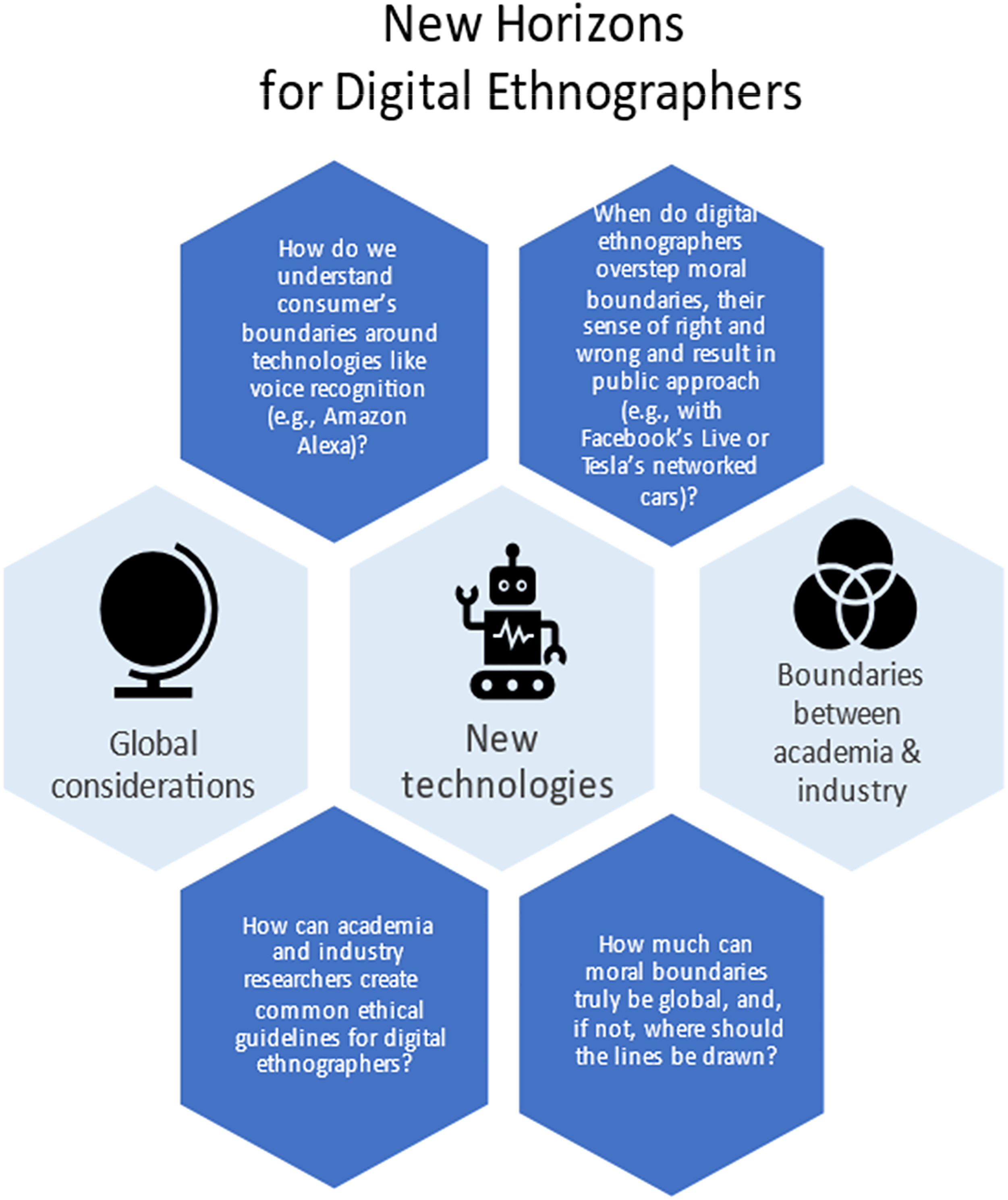
Concluding remarks
In this paper, we have introduced a new framework of underlying moral/philosophical principles, based on the theory of ethical relativism that can be used by online ethnographers in making decisions about their research practices (Figure 3). A relativist position forces a process for reflecting on and then outlining specific actions taken to ensure the five key tenets of moral/philosophical justifications namely, autonomy, non-maleficence, beneficence, justice and trust, and explicability. Specific actions related to each of these are highlighted in the paper and offer a much needed contribution to the practice of online ethnography. While this contribution is significant, criticisms of the relativist position should be acknowledged. First, such a position might be seen to deprive the researcher from raising moral objections against certain practices, customs or norms within the online community. A second common concern with this approach is that it might be seen to absolve a researcher from intervening in certain practices or customs. However, we argue that a consequence of ethical relativism as a theory is a rejection of justifying ethical principles in all cases, for all people, in all situations. It enables greater freedom in interpreting the culture of the community being studied and potential interventions with it. The diversity of online community is such that it requires a relativist position in order to protect the flexibility of approaches while making clear what ethical positions have been taken. Ethical guidelines in online ethnography through a moral/philosophical justifications lens.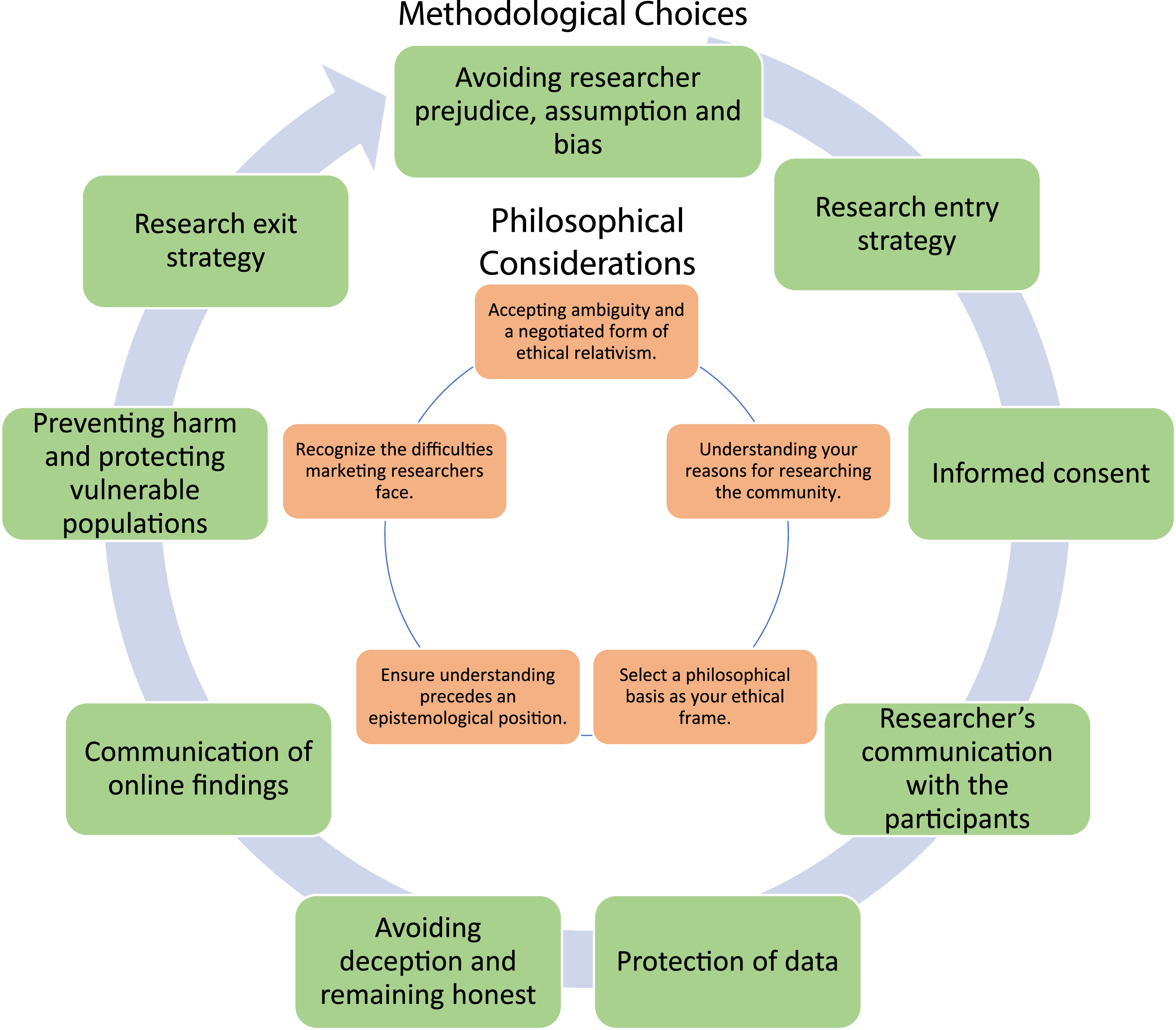
Moral/philosophical principles guiding ethical online ethnography.
Footnotes
Declaration of conflicting interests
The author(s) declared no potential conflicts of interest with respect to the research, authorship, and/or publication of this article.
Funding
The author(s) received no financial support for the research, authorship, and/or publication of this article.
