







Abstract
The visual design of consumer packaged products is crucial for brand success, as consumers learn to recognise pack styles and look for these in buying situations. Therefore, any pack redesign is risky, as the change could interfere with consumers’ ability to find and buy the brand. Market research is often undertaken to reduce the risk of poor pack redesign decisions. Many different approaches are available, meaning marketers must select an appropriate method to increase the chance of pack redesign success. As such, our paper investigates the role of market research in packaging redesign performance. We examine data collected via an online survey with 227 marketers who were asked questions about the last pack redesign they were involved with within the previous two years. The findings challenge the assumption that conducting pack redesign research will boost its success. Notably, commonly used methods and metrics, such as focus groups or brand attitudes, are associated with less successful outcomes. In contrast, testing that identifies and suggests elements to retain in an existing pack design, that consumers link with the brand proves promising, as it is linked to more successful pack redesigns.
Introduction
The visual design of a product’s packaging is an integral component of the brand’s product mix (Orth & Malkewitz, 2006). The global food packaging market, valued at USD 362 billion, is estimated to reach USD 562 billion by 2030 (Grand View Research, 2023), with an approximate annual growth of 6%. Consequently, packaging is crucial in identifying brands and serving as a communication device amidst category competition (Deliza & MacFie, 2001).
The graphics on pack are typically redesigned for several reasons. These can include updating the appearance to a more modern style (Hagen, 2023; Veryzer, 1993), enhancing its visibility on the shelf (Ambrose & Harris, 2011), aligning the design with the overall product portfolio (Ward et al., 2023), and accommodating different variants (Veryzer & Hutchinson, 1998). Regardless of motive, redesigns cost money and resources to develop and implement, often with uncertain results. For example, in 2021, the marketing manager(s) of Bahlsen, a leading German biscuit brand, decided to redesign their packaging due to concerns that it was falling behind contemporary trends (Qureshi, 2021). The redesign garnered substantial acclaim from designers, including the prestigious Designer and Art Director (D&AD) award, recognising it as one of the best global creative designs of that year (Qureshi, 2021). However, sales dipped by approximately 12% since the redesign’s launch and the company is no longer the top-selling biscuit across multiple markets; the Bahlsen company have announced the packaging redesign is to blame and is now looking at performing research to inform their decisions (Foley, 2023).
Changes to packaging design are risky, and market research is one common strategy adopted to reduce risk. As market research is a behind-the-scenes activity, companies are often reluctant to divulge research undertaken publicly. The exception lies with popular case studies, which, despite discussing research processes, are prone to selection bias since they typically highlight only successful instances, like Kotex (George, 2010) or visible failures (Andrivet, 2022; Foley, 2023; Gallop, 2020; Shayon, 2011) by large brands rather than including all cases. Therefore, our research aims to comprehensively document packaging redesign approaches, highlighting the role of research and identifying methods more closely linked to success by gathering a wide range of redesign experiences.
Background and research questions
The role of packaging in marketing
Packaging design is the amalgamation of structure, materials, form, colour, typography, imagery, or regulatory information with additional design elements to make a product appropriate for the market (Meyers et al., 1998; Rettie & Brewer, 2000; Stern, 1981). Additionally, packaging design aims to meet marketing objectives by clearly communicating a message to generate a sale (Orth et al., 2010; Rettie & Brewer, 2000). Although the importance of packaging as a communication device is widely accepted, how managers can ensure success when redesigning packaging is unclear. Managers continue to make decisions that have negative results: nine in ten redesigns fail to deliver a meaningful sales lift in the market (Nielsen, 2020).
The importance of research in packaging (re)design
Information on the role of market research in packaging design and redesign literature is limited, as marketing managers are often reluctant or unable to discuss the packaging design or redesign process (Mondelez Marketing Manager, personal comms, 2021). The details on the types of research performed and performance outcomes are often non-existent as companies can be unwilling to make this information publicly available. Examining the package design process of companies even occasionally reveals a process without research or a final consumer test of the package designs before it is launched into the marketplace (Foley, 2023). Similarly, many agree that market research should occur but do not provide any information about what form this research should take (Bennett, 2006; Meyers et al., 1998).
For marketers, it is essential to determine how research might influence [subjective] success and sales when packaging is redesigned. Research-based decisions are documented to improve success over gut feelings in many textbooks (Green & Tull, 1974; Hair et al., 2006; Seymour & Blair, 1998; Sharp, 2017a; Zikmund et al., 2013). However, when packaging design testing does occur, it has varying degrees of rigour (Bennett, 2006). A review of market research agency offerings suggests various possible qualitative and quantitative research techniques. The methods can include a cost-benefit analysis, tracking against key metrics, eye-tracking, shelf tests, focus groups, sensory testing, distinctive brand asset measurement and packaging perception studies, to name but a few.
If no research is conducted, marketers must operate on gut feeling/opinion alone, which is a risky strategy. For example, in the context of the role of colour and image cues on product variety signalling - the cues marketers use are generally not what consumers expect (Ward et al., 2023). Further, relying on marketing intuition to identify sales effective advertising results in outcomes scarcely better than chance (Hartnett et al., 2016). Therefore, our first research question is:
RQ1a: Are pack redesigns that involve market research more successful than those that do not include any market research?
Whether qualitative or quantitative, market research will involve respondents – in a pack redesign context, these may be consumers of the brand, buyers of competitor brands, or retailers. Previous research finds that undertaking market research involving consumers when developing new products results in quicker, cheaper, and better outcomes for the company (Herstatt & Von Hippel, 1992). Undertaking research with consumers can sometimes result in unexpected results, which reinforces the need for empirical studies over gut-feeling decisions. For instance, it is not intuitive to discover that distracted consumers were more likely to notice a new brand on the shelf than those able to concentrate on a shopping task wholly (Fuller et al., 2024) or that when using co-branding in advertising with a commercial product and a charity, overall ad memorability is higher when consumers use both the brand and charity, but lower than a single branded ad when consumers only use (or donate to) one of the brands present (Nguyen et al., 2018). Although research highlights the benefits of studying current consumers, brand non-buyers, and retailers, no studies have yet compared their specific contributions to packaging redesigns. Thus, our subsequent research question is:
RQ1b: Are pack redesigns more likely to be successful if they involve research with (a) current consumers, (b) buyers of competitor brands, or (c) retailers?
There is a general assumption that marketing activities (including advertising) are undertaken to result in an outcome – such as sales increases (Twyman, 1996). Our next research question is therefore:
RQ1c: Are specific objectives for pack redesigns linked to the likelihood of engaging in research?
The types of pack redesign research
Qualitative and quantitative research are umbrella terms that cover a wide range of techniques. These techniques vary in sampling, method, and costs involved (Sampson, 1996). Examples of qualitative research types for packaging primarily include focus groups and in-depth or intercept interviews. All of these involve small samples recruited for an extensive period to gauge their opinions of packaging—with recommended sample sizes ranging from 15 to 30 interviews for single case studies (Marshall et al., 2013).
Qualitative research allows marketers to identify and explore concepts (Sampson, 1996), which includes pack redesigns. However, to overcome the inherent difficulty of qualitative research usually not being generalisable to all category buyers (Rossiter, 2008), formal procedures and software (Sinkovics et al., 2008) are required.
Quantitative research covers various techniques, including eye tracking, distinctive asset measurement, shelf tests, brand values research, A/B testing, and purchase intent surveys, all focusing on different dimensions of a pack’s performance. Among the various packaging redesign research techniques available, specific techniques may prove more effective than others in achieving successful packaging redesigns. As we were unable to find research directly relating to the relationship between research techniques and pack redesign success, our second research question is:
RQ2a: Are pack redesigns that involve qualitative and/or quantitative market research more successful than pack redesigns that do not include qualitative and/or quantitative market research?
Success outcomes might also depend on the type of research conducted. Further, the combination of both qualitative and quantitative research might provide insights that are inaccessible with purely one or the other (Roster, 2021). Hence, the second part of research question two is:
RQ2b: Underneath the qualitative and quantitative research classifications, are any specific research techniques likely to result in more successful pack redesigns?
Measures and metrics for assessing pack redesigns
Various measures and metrics can be extracted to assess potential pack redesigns. Examples include the time to find the brand (Harald Baayen & Milin, 2010), visual recognition (Kinchla, 1992), link to desired brand values/perceptions (Ries & Trout, 1981), effect on the brand’s distinctive assets (Romaniuk, 2018b), likability (Landwehr et al., 2012), and purchase intentions (Morwitz et al., 2007).
Each comes with advantages and disadvantages. For instance, time to find the brand provides insights into the user experience but may fail to capture the overall impact on brand perceptions. Visual recognition and likability metrics offer valuable data on consumer preferences yet might not show [mis]alignment with desired brand values. Linking redesigns to brand values provides a more holistic understanding; however, it might lack specificity in certain areas, such as brand recognition. Distinctive brand asset testing provides an understanding of what elements represent the brand for category buyers but does not capture the emotional or cognitive aspects of preferences towards design concepts. Given the wide range of data these metrics can provide, marketers often cannot afford to collect them all, so the challenge is to determine which will best inform successful decision making.
The final part of our second research question is therefore:
RQ2c: Which measures or metrics will likely result in more successful pack redesigns?
Method
Sample demographics.
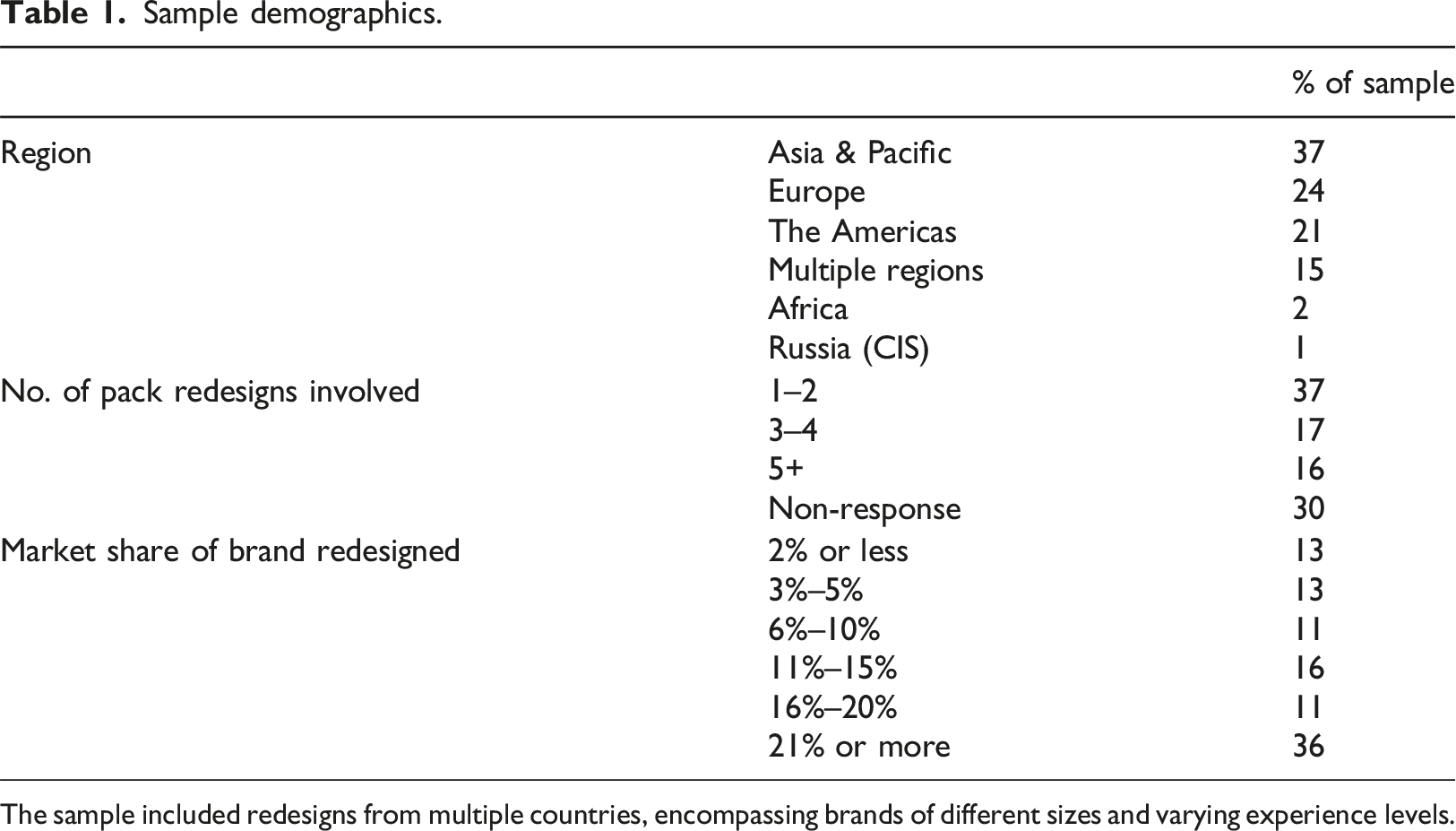
The sample included redesigns from multiple countries, encompassing brands of different sizes and varying experience levels.
We implemented strict inclusion criteria to ensure that the information provided by marketers was as accurate and relevant as possible, requiring their direct involvement in recent redesigns. We anticipated a low response rate, as not all marketers in the database worked in consumer packaged goods or had participated in a redesign within the last two years. However, this approach was necessary to capture more accurate information. We note that the final sample size is larger than previous studies with business professionals of n = 27 (Gebhardt et al., 2019), n = 15 (Ryynänen & Rusko, 2015), and n = 197 (Bendle et al., 2010). This unique sample allows us to get an ‘inside view’ of the research inputs into pack redesign processes across various pack redesigns.
Marketers were asked to refer to their last pack redesign to ensure a sample of redesigns that varied in success and reduced the chance of marketers focusing on only successful pack redesigns. Throughout the survey, marketers were consistently reminded to think only about the last redesign to ensure they were not swapping between redesigns for each question. We operationalised claimed success in two ways. First, we asked about overall success, where marketers used a scale from zero to 100% to indicate the redesign’s success in meeting that redesign’s main objective, whatever it may be. As the main objective for a redesign varies across pack redesigns, this general overall success measure avoids asking marketers to assess the redesign for unintended objectives, and does allow for variation in the goals of each redesign. Respondents could also indicate “don’t know” or “do not want to say”.
The second measure of success was if the pack redesign increased sales within three months after launch as, while sales increase might not always be the objective of a pack redesign, it is often a desirable outcome. This was a binary variable, aiming to help increase the information revealed about the sales success of a redesign without being too invasive by asking for the exact increase. This protects commercial confidentiality and still provides a benchmark of sales (Armacost et al., 1991). After data cleaning, the entire sample provided answers to our first measure. However, two-thirds provided answers to our second (due to dropping out); of these, 51% of pack redesigns increased sales. Overall success is a continuous variable; therefore, linear regression is used to investigate these relationships, and, as sales success is a binary variable, binary logistic regression is the analysis approach to quantify any effect on pack redesign success. The overall success rate was 76%, with 50% of redesigns leading to sales increases. These success scores show that successful and unsuccessful redesigns were included in the sample, allowing for a comparison of success factors.
To identify potential confounding variables, we examined various characteristics of the brands involved in the pack redesigns, including market share, product category, use of advertising support, and age, which could influence their success. However, these variables did not show statistically significant relationships with either overall or sales success. This suggests that larger brands, those with advertising support for the redesign, or older brands, were not inherently more successful, indicating the observed success was likely due to the pack redesigns rather than these external factors.
Results
To address our first research question, the extent to which packaging redesigns involving market research are more successful than those without; we compared the overall success and sales performance of redesigns conducted with and without market research. Of the 227 pack redesigns, 195 (86%) involved market research. There was no evidence that marketers who conducted market research had more overall success (M = 75%, SD = 23) than those who did not perform any research (M = 79%, SD = 20), t (171) = −.708, p = .480. A Fisher’s exact test of independence revealed no link between performing research and sales outcomes p = 1.000, further underscored by the virtually identical sales success among those who engaged in research (51.9%) and those who did not (51.7%). This highlights that there is no inherent value in doing research generally, and that the value comes from conducting the most appropriate type of research.
Our next stage is to examine the effect of the research audience and whether pack redesigns that involve research with current brand buyers, buyers of category/competitor brands, or retailers are more likely to be successful than other audiences. The most common audience for research is current brand buyers (81%), though nearly half of the sample (45%) reported conducting research with multiple audience types. Competitor buyers (33%) and retailers (21%) were also frequently included in the research. Multiple regression analyses indicated that the research audiences did not significantly influence the overall success measures, F (3, 169) = 1.168, p = .324, adj. R2 = .003, neither was the relationship with sales success statistically significant for any research audience.
The final part of our first research question addresses which, if any, objectives for pack redesigns are linked to a greater or lower likelihood of engaging in research. We asked respondents open and closed questions, first allowing them to express reasons for a redesign in multiple open-ended text boxes. Then, a second question asked marketers to specify, if multiple reasons were stated, the primary reason for the redesign. Multiple trained coders classified responses into key themes. Most pack redesigns (72%) were undertaken for more than one reason, with sales increases only directly referenced in 14% of cases - reiterating the importance of looking at non-sales-related success metrics through our overall success measure.
Reasons for undertaking a pack redesign & likelihood of success.
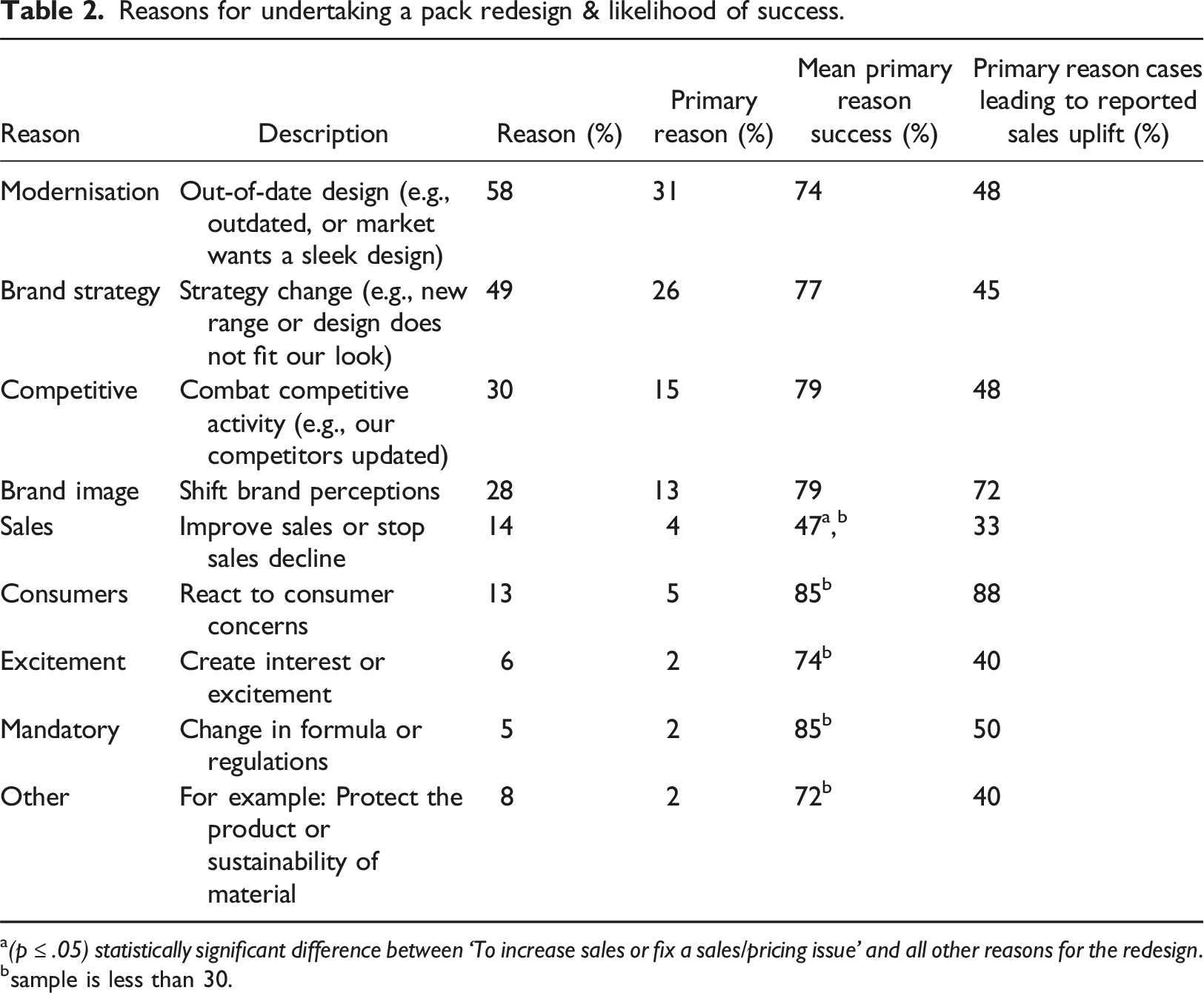
a(p ≤ .05) statistically significant difference between ‘To increase sales or fix a sales/pricing issue’ and all other reasons for the redesign.
bsample is less than 30.
Due to sample size considerations, the additional analyses will focus on the top four main reasons for redesign (i.e., Modernisation, Brand Strategy, Competitive, and Brand Image), all with a sample size of n > 30. The main reason for each redesign was identified after respondents typed in their reasons for the redesign as they were then asked to select which reason they considered the main reason. These four main reasons were compared to determine whether specific objectives were more likely to involve research. A chi-square test of independence revealed no statistically significant association between the four main reasons for performing a packaging redesign and conducting research, (χ2 (3) = 2.061, p = .560) -, indicating that if research has a role in the objectives, it was not limited to specific objectives.
To address our second question, which research techniques result in successful pack redesigns, marketers were asked about the type of market research they engaged in for their pack redesign. These responses were categorised into three groups (1) qualitative only (mean overall success rating = 73%, SD = 24), (2) quantitative only (M = 77%, SD = 16), and (3) both qualitative and quantitative research (M = 75%, SD = 26), and their overall and sales success analysed. The results show no statistically significant differences between either redesign overall success score and research design, F (2, 109) = .181, p = .834, or sales outcomes (χ2 (2) = 4.04, p = .138). Therefore, neither qualitative and/or quantitative research is related to redesign success (overall or sales).
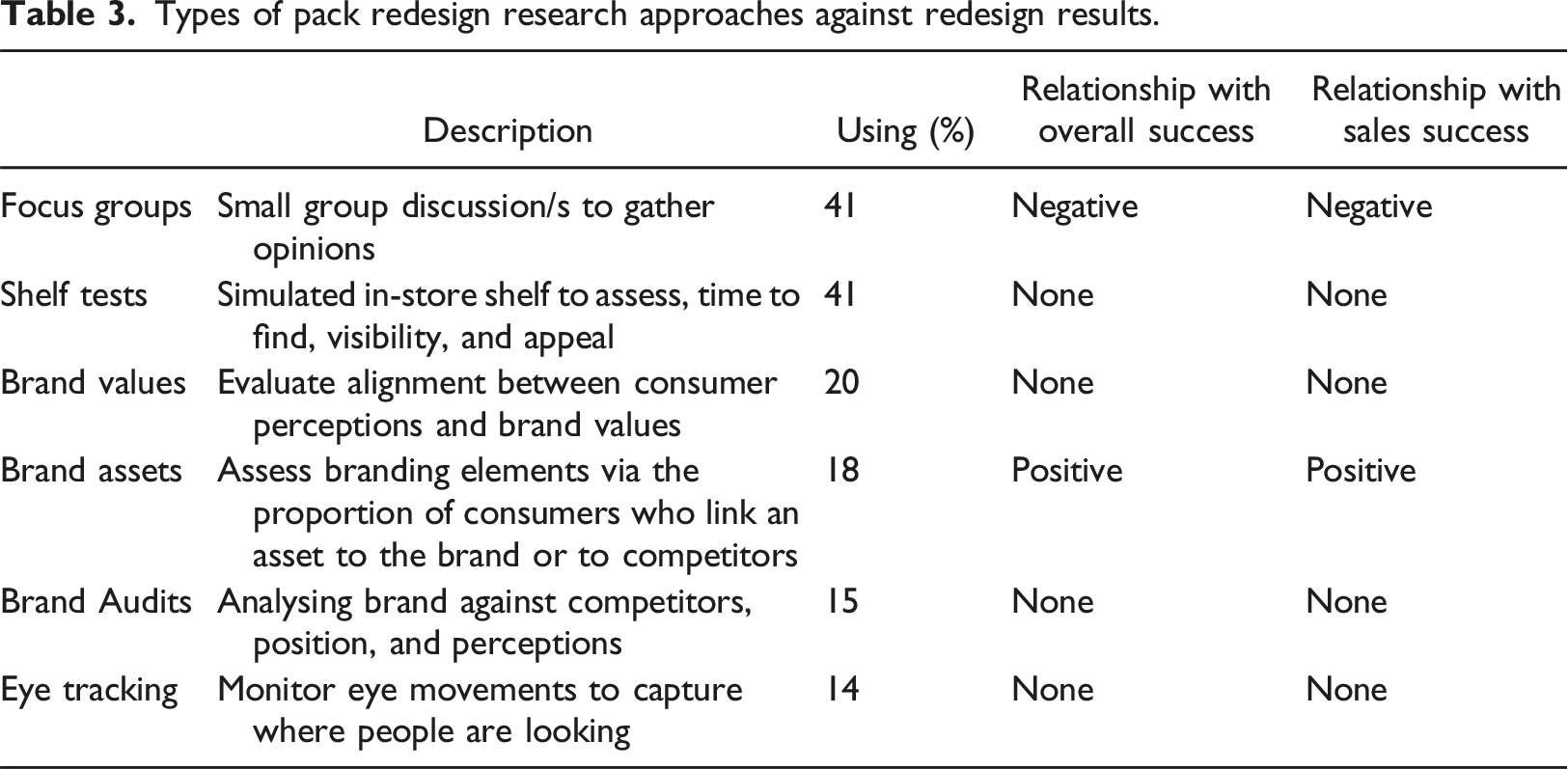
To address the following exploration of specific types of research, marketers were asked to list the research approaches in open-ended text boxes. Responses were classified into different approaches by two trained coders with an inter-coder reliability of 98%; a third coder resolved differences. The most common research approaches are focus groups (41%) and shelf tests (41%), showing that both qualitative and quantitative approaches are commonly used (see Table 2).
Types of pack redesign research approaches against redesign results.
Measures and metrics used to assess potential pack redesigns.
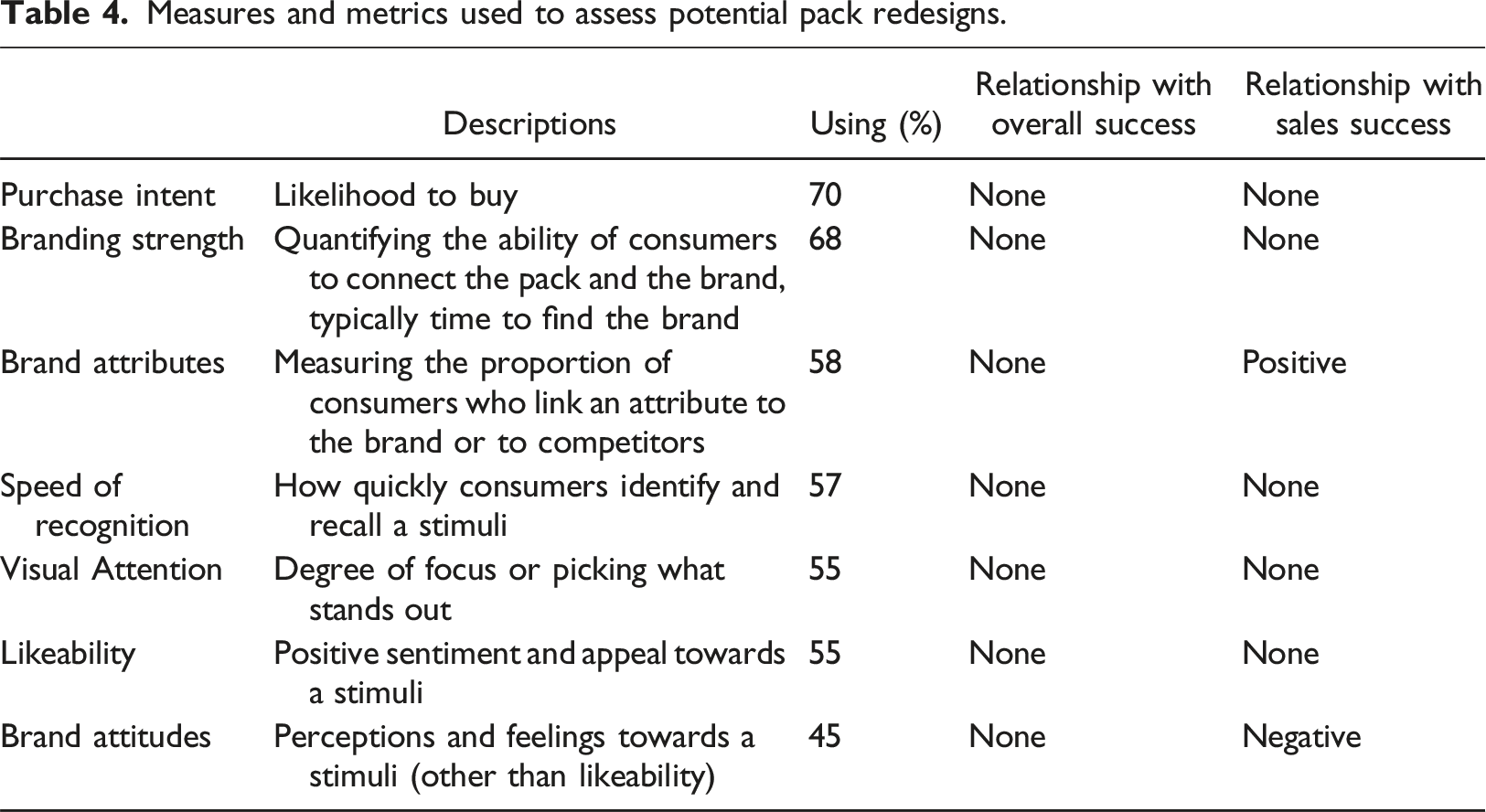
As shown in Table 4, none of the intermediate measures were significantly associated with overall success. Brand attitude was the only measure nearing statistical significance, displaying a negative relationship with overall success at p = .07. Sales success modelling revealed two measures with statistically significant results: Brand Attributes have a positive relationship with sales success (Naglekerke R2 = 0.044; Exp (B) = 2.1 (CI upper 4.1; CI lower 1.1) p = .03) and Brand Attitudes tests have a negative relationship with sales success (Naglekerke R2 = 0.047; Exp (B) = 0.43 (CI upper 0.89; CI lower 0.21) p = .02).
Discussion
Summary of results for all research questions linked to success measures.
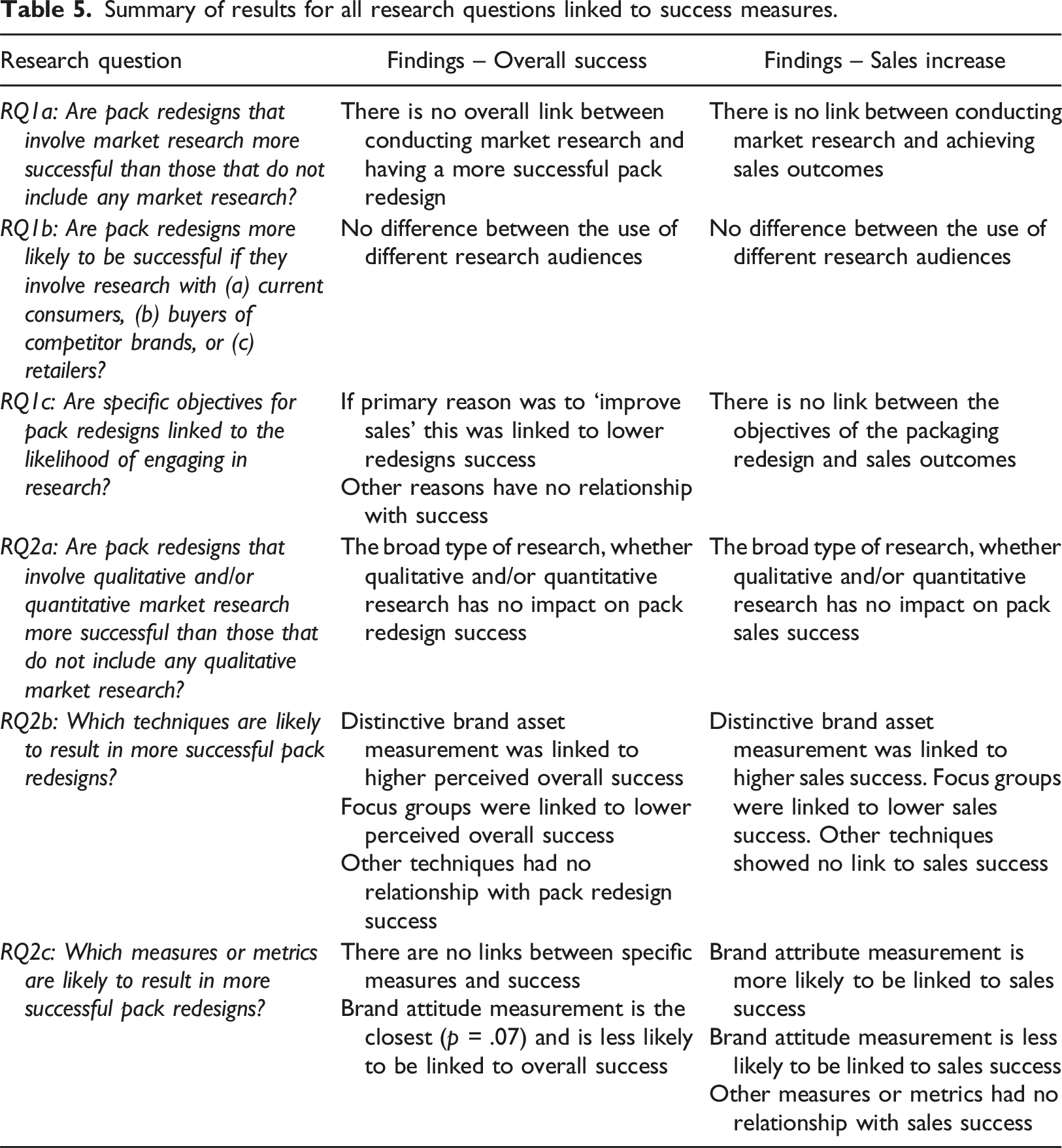
Initially, this result was somewhat surprising given research is supposed to improve the odds of success, as decisions are based on information rather than gut feeling (Zikmund et al., 2013). However, once the decision to redesign the packaging has been made, the outcome might be based on selecting the best available redesign option rather than considering the possibility of keeping the existing design, which could be the optimal choice (Thomas, 2012). This result further highlights the importance of ensuring pack redesign research processes provide the option to retain the existing pack when a change is not mandatory.
Focus groups are one of the most common approaches to assessing pack redesign options, but our findings reveal a negative relationship with the success of the pack redesign. This is perhaps due to the more involved research technique being at odds with the typical shopping experience for consumer packaged products, which is often a quick, distracted process (Dickson & Sawyer, 1990; Page et al., 2018; Sorensen et al., 2017); the role of packaging being a subconscious brand identifier in cluttered retail environments (Romaniuk & Caruso, 2018). Focus group settings may encourage consumers to evaluate redesigned packaging more thoroughly and provide explicit evaluations that buyers would not consider during a typical shopping situation.
In contrast, a distinctive brand asset test indirectly assesses a consumer’s ability to recognise key packaging elements as branding devices (Romaniuk, 2018a), and therefore identifies the parts of the design that are crucial for brand identification so these can be retained in any redesign. This aligns with how consumers typically use packaging in retail settings; by relying on on-pack brand assets to locate brands on shelves. Therefore, research that prioritises the protection of these critical packaging elements can guide marketers toward more effective redesign choices and prevent drastic changes that customers can no longer recognise or find the product.
Other research methods, even commonly used shelf tests, do not significantly correlate with greater redesign success. This could be a limitation of the approach itself, such as the in-context testing of a limited shelf representation may not be sufficiently generalisable to the diverse range of shelves where the redesigned packaging must compete, or it could be due to the lack of application for specific pack redesign objectives, such as using a shelf test when an assessment of alignment with brand values would have been more appropriate.
Ultimately, the lack of a clear connection between research methods and the marketer-perceived success of pack redesigns suggests that most current techniques require further validation in the context of specific pack redesign objectives before their costs can be justified.
The links between measures, metrics and pack redesign were similarly obtuse. Purchase intent and branding strength are two common intermediate measures; however, neither are linked to overall or sales success outcomes. For purchase intent, it may reflect that purchasing a pack is based on more than just visual design. The lack of efficacy of branding strength measures seems surprising given the positive contribution of distinctive brand asset tests, but this is probably because branding strength measures typically rely on response latency, or time to respond, which is known to be flawed (Phua et al., 2023), rather than linkage to brand retrieval as per distinctive asset testing (in line with Romaniuk & Nenycz-Thiel, 2014). In hindsight, it would have been useful to probe more deeply into the type of branding strength measures employed to better understand this aspect of packaging redesign research, but this is recommended for future research.
Findings were more apparent for brand attribute measurement, whether the pack conveys the desired attributes. This was positively linked to sales success but held no relationship with general success. Therefore, this is primarily useful when sales improvement is the primary desired outcome. It may be that more research into the links between changes in specific attributes and the research objectives is needed for non-sales-specific objectives. For example, suppose the objective is to make the pack more up-to-date. In that case, this might require measuring specific brand attributes around this concept, and including any other brand attributes is a distraction.
In contrast, research into the effect of the pack redesign on brand attitude is negatively related to sales success and trends in the same direction for general success. This fits the general theme that research involving consumers’ considered evaluation of pack redesign options does not lead to successful outcomes. The value of building brand attitudes to drive behaviour has been questioned due to their poor predictive ability (Sharp, 2017b). Focusing too much on how the redesign affects people’s feelings toward the brand may hinder marketers’ ability to achieve other goals, such as enhancing brand recognition or communicating key messages, potentially resulting in suboptimal packaging redesign choices.
Contribution to theory
This research supports the theory that consumer packaged good brand buying is typically a quick, low-involvement mental process (Dickson & Sawyer, 1990; Page et al., 2018), not a deeply thought-out evaluation of multiple options. If it were, focus group opinions, which delve deeply into consumer thoughts and evaluations or measures of change in brand attitude, would more effectively predict redesign success.
We also offer additional evidence that understanding the packaging elements consumers use to recognise the brand plays a crucial role in the success of a packaging redesign. One of packaging’s roles is to facilitate brand identification (Deliza & MacFie, 2001). Research that identifies the brand’s distinctive packaging elements can enhance redesign success by either emphasising these key elements to strengthen brand recognition or by preventing changes that could diminish or eliminate features consumers rely on for easy identification, thus preserving packaging performance. The main goal of a packaging (re)design should be to make it recognisable, especially for infrequent buyers who form a significant portion of the customer base (Dawes et al., 2022; Graham & Kennedy, 2022; Hossain et al., 2023).
Contribution to practice
Our research builds knowledge about how to engage in successful packaging redesigns. However, it also highlights that research investment does not guarantee a more successful pack redesign outcome. An explanation for this could be that the different objectives require specific research approaches, and right now, the links between the many other reasons for undergoing a pack change and the myriad of research alternatives available to investigate pack redesigns are not sufficiently well established to help marketers make evidence-informed choices in this area.
Our research shows that popular options like shelf tests are not linked to greater packaging redesign success. Therefore, we recommend marketers look more closely into the efficacy and limitations of any research approach, regardless of how popular, before commissioning.
Our findings emphasise the importance of preserving branding elements in any redesign. It is crucial to have a process in place to understand these branding devices on the packaging, ensuring that any redesign improves or maintains recognition without harming consumers’ ability to identify the pack. As distinctive brand asset research does not need complete concepts, it can occur earlier, such as during the design stage, and inform pack redesign briefs and evaluate potential redesign options.
Our results also caution against using approaches that focus on consumer involvement and evaluation, such as focus groups or brand attitude research. Focus groups are thought to be helpful when the topic invites interaction, evaluation, or creativity (Stewart et al., 2007). The method’s unsuitability may be due to the group setting and a focus on how people feel about the packaging redesign, which is unrelated to the typical grocery shopping process and the primary role of pack design for consumers in-store—to help them find the brand in a cluttered retail environment.
Brand attitude research focuses on how consumers consciously feel about a packaging redesign, failing to notice when the pack redesign compromises the consumer’s visual recognition system, which is largely sub-conscious.
Finally, when planning pack redesigns, the option to retain the existing packaging (or, if mandatory, as close/similar as possible) should be considered. This can minimise the risk of unintended harm by choosing the best of what are all poor alternatives.
Limitations and future research
While this study provides valuable insights, its limitations must be acknowledged. Firstly, reaching marketing professionals through random sampling is extremely difficult as evidenced by most studies with marketers having low sample sizes. Therefore, we used an extensive email database and snowball sampling techniques to recruit the sample. However, this approach increases the risk of sampling bias and reduces the generalisability of the results. We acknowledge that asking marketers to assess their performance in achieving pack design success may lead to inflated scores. While we achieved variation in results, future research should look to validate the success of pack redesigns externally. For example, if the objective is to modernise the pack, consumers could be asked to judge its modernity, or sales data could be obtained through a third party.
Second, we recognise that as our focus was on pack redesign and research related to pack redesign only, it may lead to the neglect of broader marketing management issues that could affect the success of a pack redesign outside of the research process. These broader issues may also affect the alignment between pack redesign objectives and the research employed to help achieve these objectives. Having identified the popular areas of packaging redesign research that don’t typically correlate with redesign success, further investigation can examine whether this disconnect is a result of “mission creep.” Mission creep refers to the gradual shift in objectives or focus away from the original goals of a project, often leading to the adoption of methods or strategies that are not well-aligned with those goals. In the context of packaging redesign, this might mean that certain approaches are applied without considering their relevance or effectiveness for specific objectives, resulting in less successful outcomes. Future research could extend this study by exploring how different methodologies might be employed to directly answer specific research questions, thereby enhancing the effectiveness and depth of the redesign research. Our research highlights the areas where packaging redesign efforts are most valuable by identifying common objectives and research methods. The main reasons for redesign are modernisation, brand strategy, and staying competitive. Common methods include shelf tests, brand value assessments, and brand asset reviews, while metrics typically focus on purchase intent, branding strength, and brand attributes
Lastly, while our research makes novel contributions to understanding the relationship between market research and pack redesign outcomes, only two outcome measures were included (overall and sales success). Given that we now uncover modernisation, brand strategy, competition, and brand image as the four most prominent reasons for redesigns, future research on achieving these specific outcomes is a valuable area of exploration.
Supplemental Material
Supplemental Material - The role of market research in pack redesign performance
Supplemental Material for The role of market research in pack redesign performance by William Caruso, Jenni Romaniuk, Bill Page, Zachary William Anesbury, and John Williams in International Journal of Market Research
Footnotes
Author contributions
All authors contributed to each section of the manuscript.
Declaration of conflicting interests
The author(s) declared no potential conflicts of interest with respect to the research, authorship, and/or publication of this article.
Funding
The author(s) received no financial support for the research, authorship, and/or publication of this article.
Ethical statement

Supplemental Material
Supplemental material for this article is available online.
References
Supplementary Material
Please find the following supplemental material available below.
For Open Access articles published under a Creative Commons License, all supplemental material carries the same license as the article it is associated with.
For non-Open Access articles published, all supplemental material carries a non-exclusive license, and permission requests for re-use of supplemental material or any part of supplemental material shall be sent directly to the copyright owner as specified in the copyright notice associated with the article.
