







Abstract
The current study systematically investigates the literature on political branding using a bibliometric clustered analysis. A synthesis of 17,811 research articles related to political advertising for political branding was developed using the Web of Science (WoS) and Scopus databases. Bibliometric coupling was used to identify the most prestigious research publications, authors, universities, and research work to capture information about developing challenges and charting political advertising for political branding of parties and leaders’ research growth, enhancing advertising and branding literature. This led to the identification of three clusters dominating political branding and have scope for future research. These are (1) the communication medium (online and offline) used for political branding, (2) the role of technology in creating a persona and identity of the political leaders, and (3) political influencers' effectiveness in the success or failure of political branding campaigns, which would significantly affect the political branding literature.
Keywords
Introduction
Political branding is evolving beyond the conventional strategies to influence voter behavior in the present times (Wilson et al., 2018). It is an aid in creating the political image, identity, and value for a political party or leader and is used to communicate with the voters and maintain a relationship of trust with them (Kaur & Sohal, 2019). As a result, it can be suggested that political branding contributes to how people perceive political leaders and political parties (Bal et al., 2009). Like other political strategies and interventions, political branding is used to achieve political goals and gain an edge over rival parties and leaders (Ingram & Lees-Marshment, 2002). Owing to that, there is an increasing focus on political branding to create a unique brand identity for the parties or leaders through various approaches like emotional engagement with voters, personalized communication, representation of shared values, and human-brand building.
Studies suggest that political branding is essential for educating voters about political parties, candidates, and their agendas, particularly during election campaigns (Schwarzkopf, 2011). During the elections, voters are bombarded with political branding initiatives to provide information and encourage political participation (Valentino et al., 2011). The advent of new media technology and the growing popularity of social media platforms have significantly impacted this information sharing for brand building. Social networking sites and mass media provide political brands with many creative ways to portray the election candidate’s and party’s image (Fowler et al., 2021). These ongoing changes have transformed the political branding of parties and leaders. As a result, the discipline is receiving more attention among scholars and political parties. As the discipline is advancing, there is a need for research papers focusing on changes in publication activity, key constructs of political branding, and advancements in the literature (Donthu et al., 2021). The authors have identified bibliometric analysis as an appropriate method to fill this research gap and present the transformations and consistencies in political branding (Kraus et al., 2022; Nielsen et al., 2023). Several scientific domains, such as marketing, advertising, branding, and so on, promote bibliometric studies to gain a state-of-the-art understanding of a given study topic (Ellegaard, 2018). This study thus presents a systematic analysis of political branding research to chart the thematic progression of political branding of parties and leaders’ literature, an essential political branding element. Thematic grouping is carried out by clustering keywords around political branding, identifying commonalities in academic literature, categorizing studies, and organizing them into themes (Nielsen et al., 2023) by exploring the following research questions: (i) What has been the theoretical progress in political branding literature? (ii) How significantly have the authors contributed to the political branding discipline? and (iii) What are the possible avenues for future research in political branding?
The present investigation divided into sections that include the conceptualization of political branding to get an overview of the discipline’s deep roots, a methodological overview of the bibliometric approach and steps followed, and a presentation of the descriptive analysis and findings of the study to highlight the publication activities, key themes, and gaps that persist. Based on the insights from the analysis, the research agenda for future research is developed.
Conceptualization of political branding
Robertson and Meintjes (2021) defined political brands as a combination of political parties, their policies, and the visionary leaders leading the party. Political branding is an outcome or the process of creating a brand identity for this partnership to thrive and gain voters’ confidence and support during elections. The study undertakes this key argument to further the conceptualization of political branding.
Political branding has become a competent field of study since the advent of digital media and advanced technologies (Ferreira and Marlé, 2023). However, it has been systematically discussed for decades as a part of the academic literature. In 2010, (Harris & Lock, 2010), defined political branding as applying branding theories and interventions to shape the image of political parties and leaders and influence voter behavior. However, these interventions are evolving and are used to expand the scope of political parties and leaders (Billard & Moran, 2019). It has extended the reach of such political parties and leaders by enabling them to establish regional, national, and international images and identities in the people’s minds. Several scholars argue that political branding intends to influence voters and seek favorable support from them during elections (Cwalina & Falkowski, 2014). As a result, political parties and leaders use political branding to create a cohesive identity that reflects the political philosophy and ethos of the party or the leader. In making a coherent identity, several factors, such as the political manifesto, slogan, digital presence, narratives online, appearance for a cause, and selection of a color scheme, play a critical role (Alturas et al., 2024).
Given the different factors enabling political branding, Banerjee and Ray (2016) emphasize community, consumption, and political expression to highlight the personality traits enabling political branding and impacts the voters’ minds, who visualize their future leader or party as having a specific profile, value system, or belief. Extending this further, Needham and Smith (2015) highlight the focus on the cognitive and emotional values of the voters that enable political parties and leaders to appeal accordingly. Sophocleous et al. (2024) analyze political branding as necessary for political parties and leaders to influence voters and engage them physically and digitally. Despite not being recognized as actual brands, political branding empowers political parties and leaders to boost their reputations and become irreplaceable. Therefore, it would be an understatement to say that the political marketplace is highly competitive and requires a blend of selling interventions, identity creation, and relationship-building with the voters (Vankov, 2013). However, some studies criticize it for subsidising social inequality and creating societal differences. Arguments on both sides enhance the richness of the discipline as there is a significant rise in political branding research (Perannagari & Chakrabarti, 2019). Special issues, books, book chapters, and conferences are dedicated to political branding. Considering the rising significance of the discipline and the current momentum of political interventions happening worldwide, the following section summarizes the academic progress made in political branding literature using a bibliometric approach.
Methodology
The study used a bibliometric analysis approach to synthesize the literature on political branding. The approach enables analysis of publication activities (De Araújo, Pedron, & Picoto, 2018) and summarizes the progress made in the discipline (Morkunas et al., 2019). To identify relevant and rigorous research papers on political branding, the authors used the Web of Science (WoS), an internationally recognized platform for data (Merigó et al., 2015). The exploration was guided by keywords around the term 'political branding' in the last two decades, as shown in Figure 1 below. Flowchart for inclusion of articles for analysis.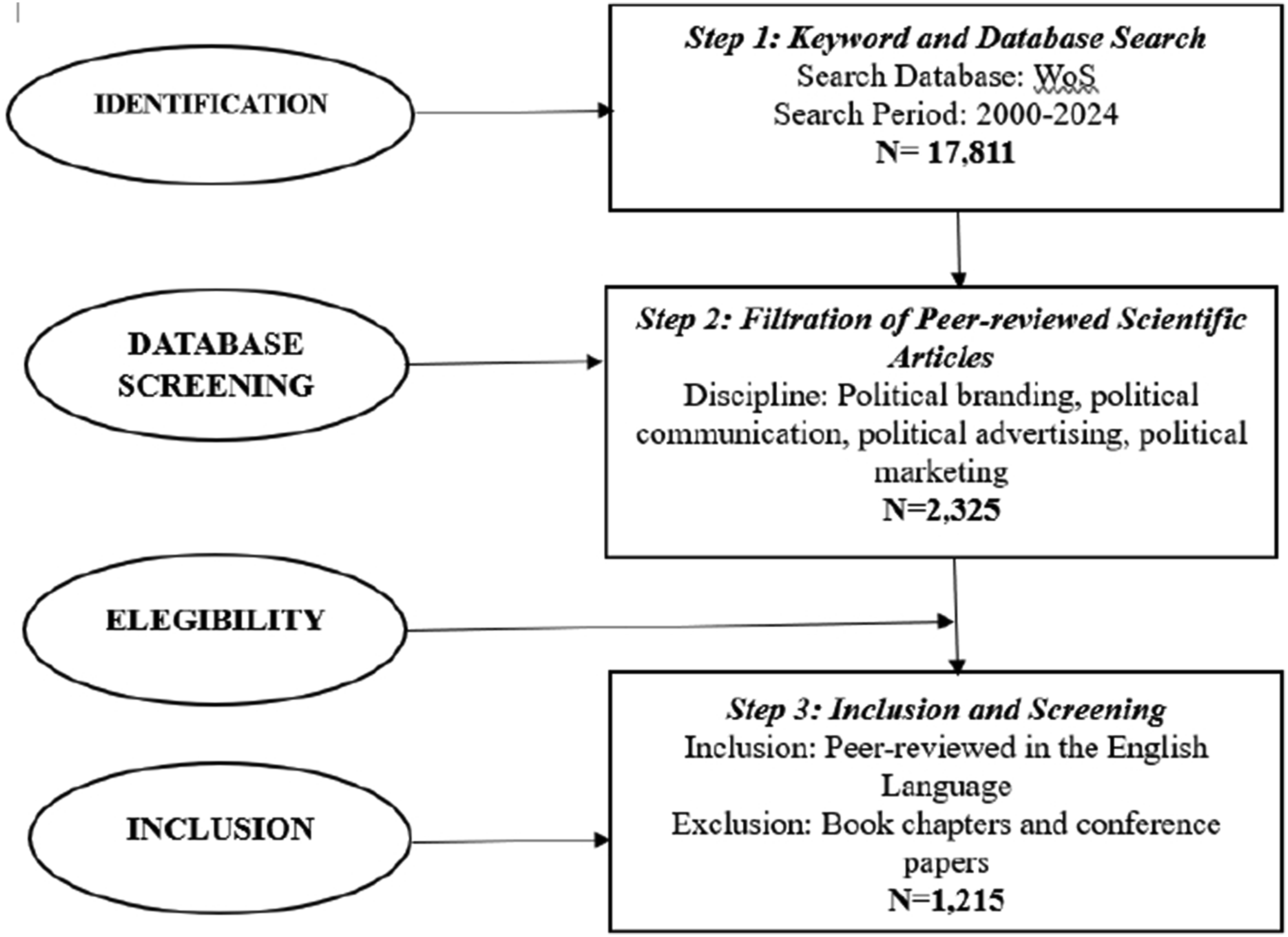
Figure 1 highlights the steps adopted for systematic review using the PRISM protocols (Lim & Rasul, 2022). It is a four-step process that includes identifying research articles, filtration or relevant articles, screening, and including final articles for analysis.
Identification and keyword search
In the first step, the keywords are identified to develop a string search. This is done considering the study’s objectives, the conceptual background of political branding, and the scope of the study. To expand the concept, the search undertakes all original articles, seminal work, and editorial pieces. However, these articles are mapped around political branding, including brand building, brand image, political identity, and political representation. The following string is used to search keywords; (“BRANDING” OR “POLITICAL BRANDING” OR “BRAND IMAGE” OR “POLITICAL PARTY” OR “POLITICAL LEADERS” OR “BRAND BUILDING” OR “POLITICAL VALUE” OR “BRAND VALUE” OR “IDENTITY” OR “POPULARITY” OR “PRESTIGE” OR “POLITICAL AFFILIATION” OR “POLITICAL ENGAGEMENT” OR “EXCLUSI*”) AND (“POLITICAL ADVERTISING” OR “POLITICAL MARKETING*” OR “PUBLIC RELATIONS*” OR “IMAGE*”). This search string was used for relevant articles from the WoS database (Mariani et al., 2022).
Filtration for peer-reviewed and scientific articles
The second step involved selecting relevant articles for further analysis. Previously identified articles were filtered based on discipline, where only political branding articles were undertaken. As a result, the search was reduced to 2325 articles. In addition, another filter was applied to ensure the quality of the articles selected.
Eligibility of selected articles
The articles were examined and screened in this step to ensure the study’s title, abstract, keywords, objectives, and findings. This was done to ensure that the studies significantly contributed to political branding literature. As a result, 1215 articles were retained for final analysis. Frequency analysis was also considered to complement and explain the frequency of political branding articles published over time (Passas, 2024), which helped draw a comparative understanding between different journals, authors, and countries that have been dominant in this field of research.
Inclusion of articles
Step 3 was accompanied by this step, where the researchers ensured that articles initially written in English were retained. The research strategy focused on undertaking documents relevant to the discipline. As a result, book chapters and conference papers were also excluded to streamline the analysis.
Descriptive analysis
While the study used a bibliometric approach to identify and study publication activities and the growth of political branding as an academic discipline, it reviewed 1,215 articles in Biblioshiny. Biblioshiny is an R-programming-based software frequently used in social sciences for scientific mapping (Aria & Cuccurullo, 2017; Donthu et al., 2021). The study further focused on data exploration through bibliographic coupling, co-occurrence, and citation analysis to identify the key constructs in political branding. This process was divided into five subsections: source analysis, citation analysis, the impact of the publishing authors, country-wise analysis, and keyword analysis.
Source analysis
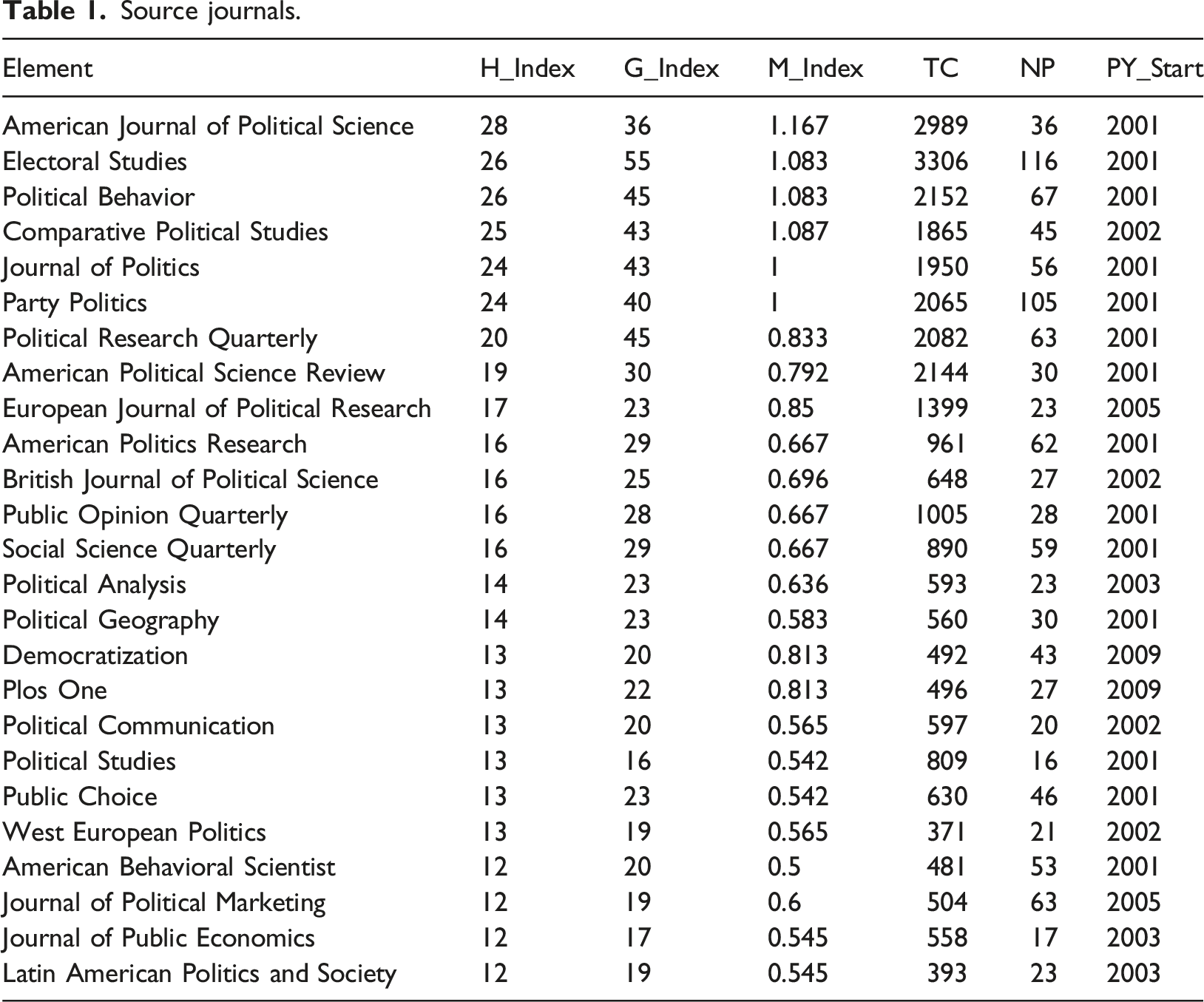
Source journals.
Citation analysis
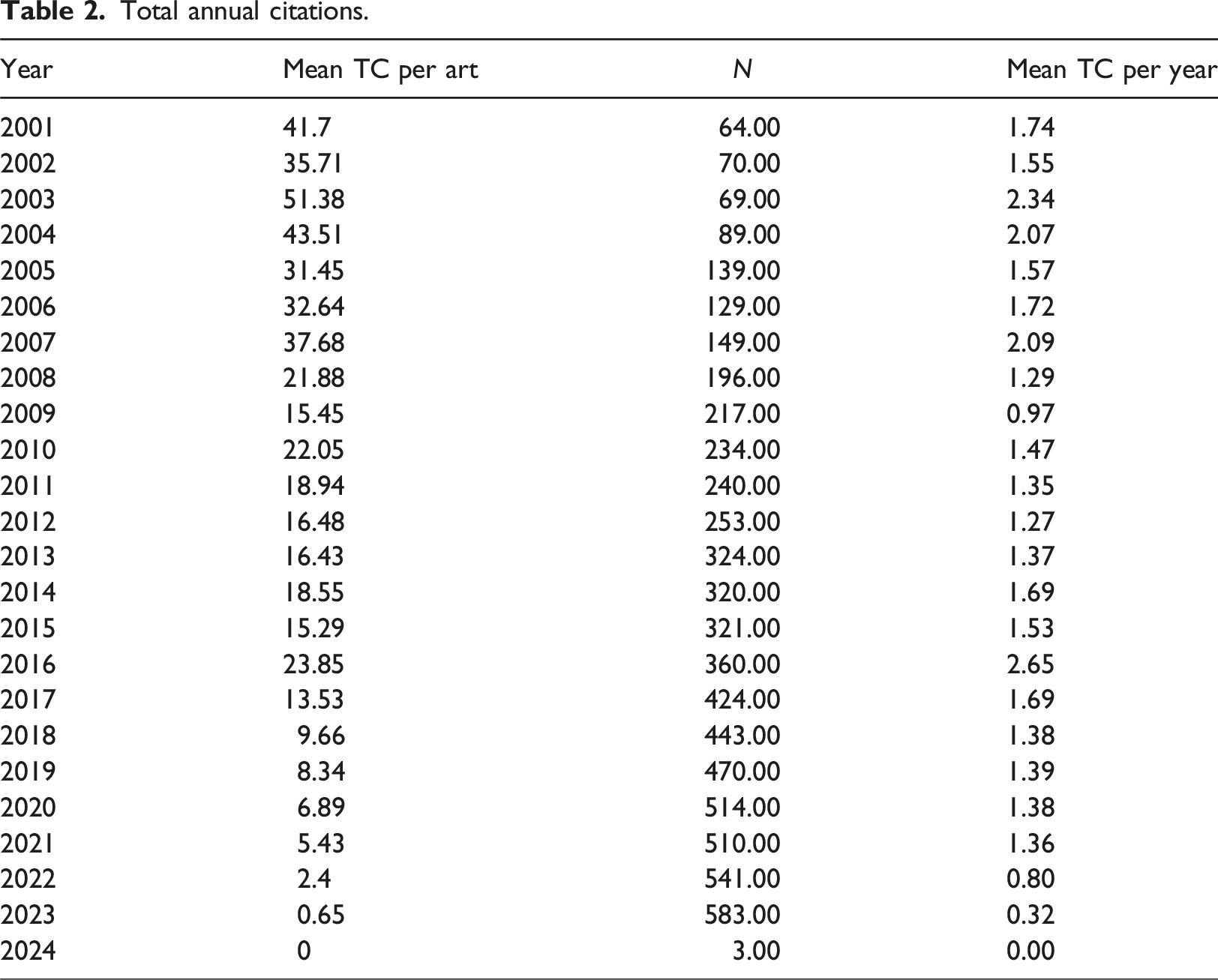
Total annual citations.
Author impact
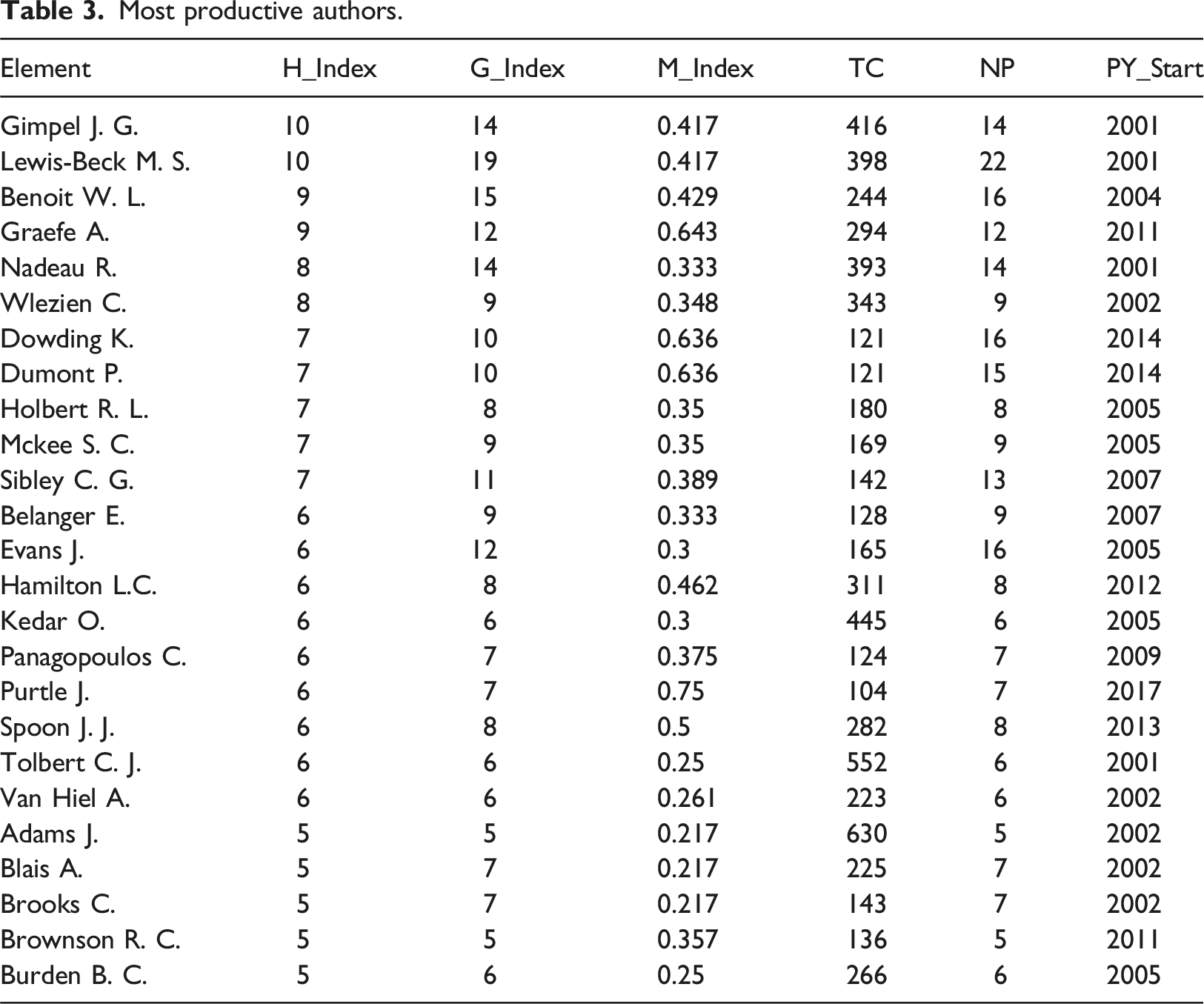
Most productive authors.
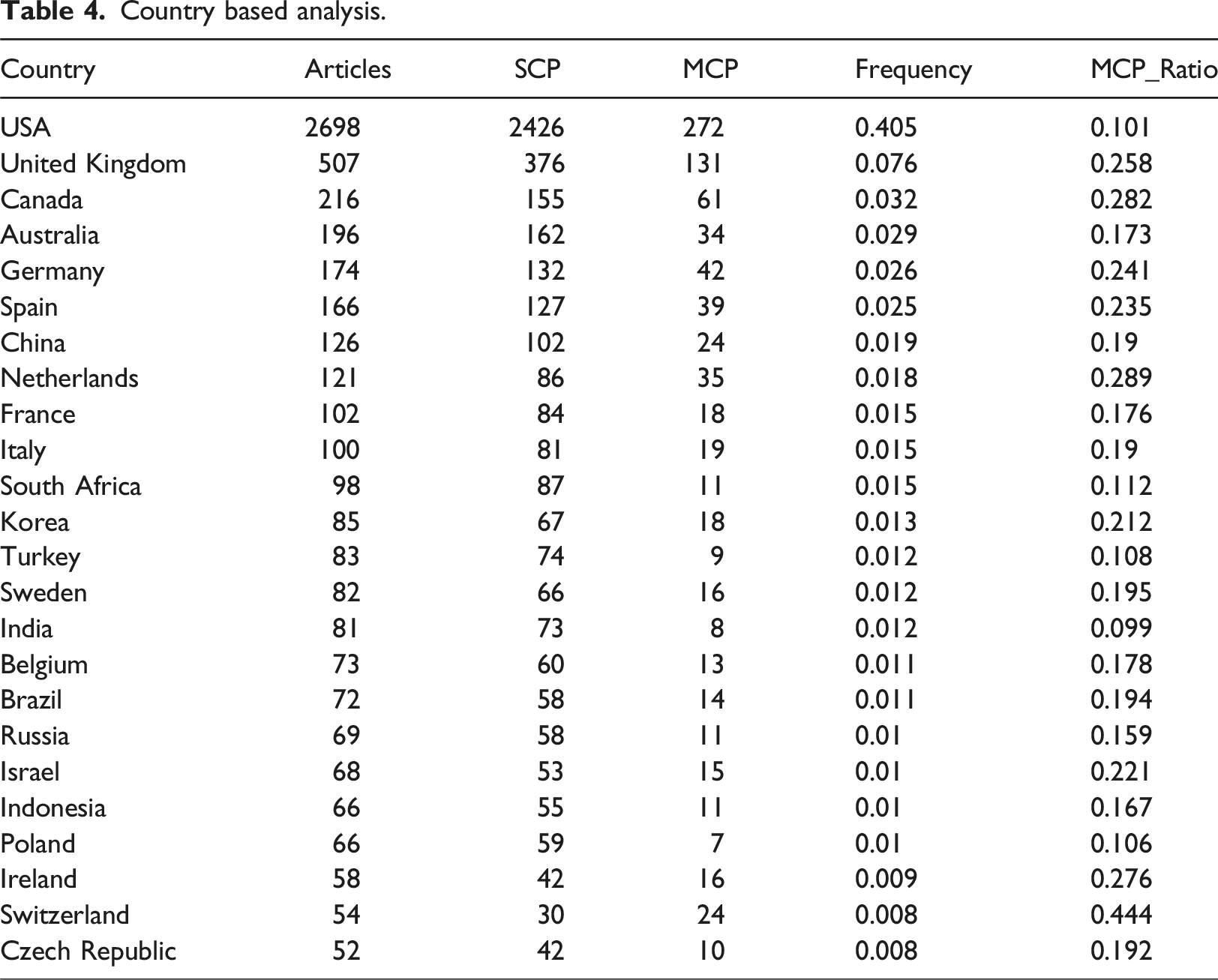
Country based analysis
Country based analysis.
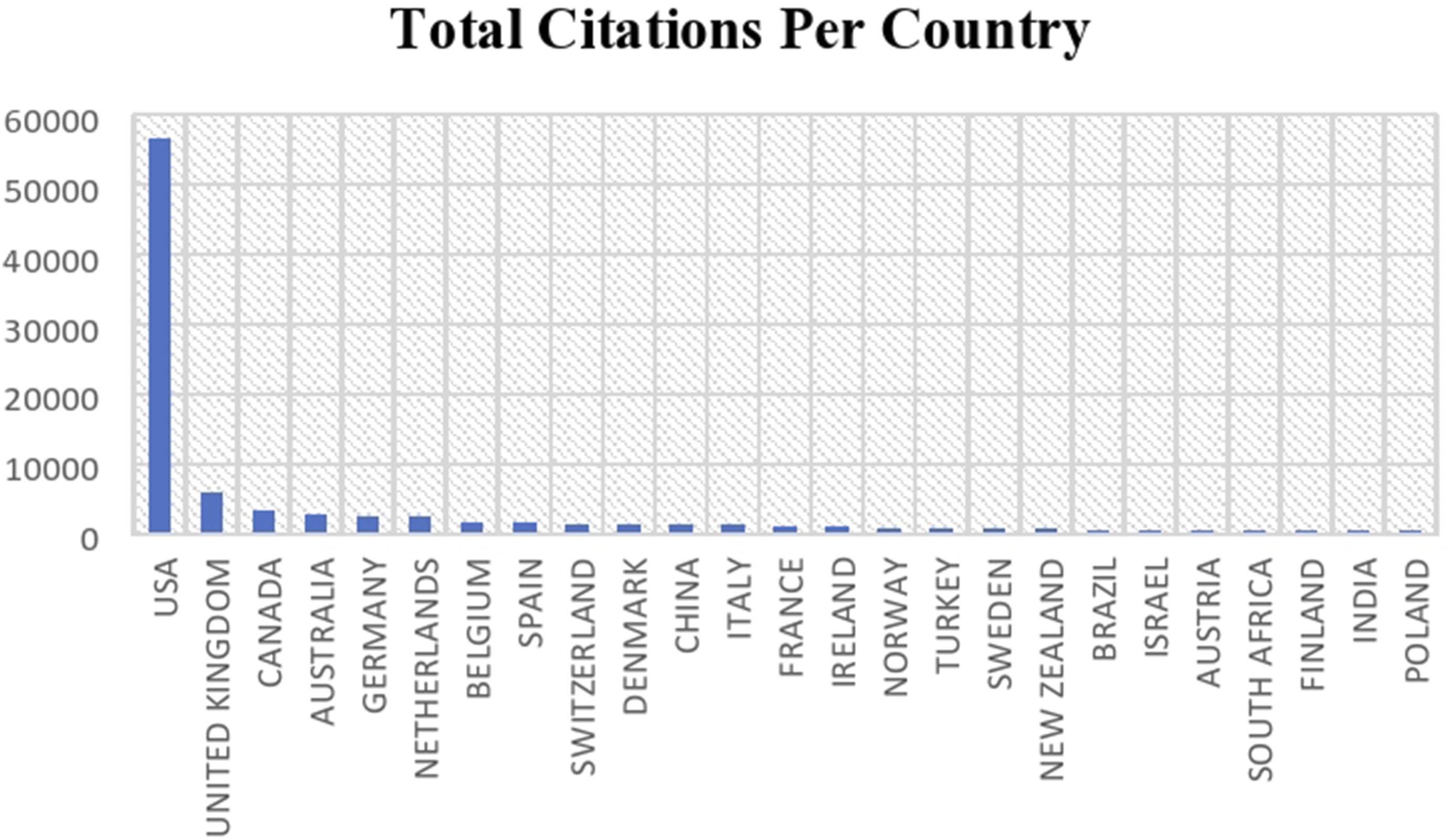
Top cited countries.
Keyword analysis
The keywords for the study were analyzed using a word concurrency cluster map, as shown in Figure 3 below; for this, 14,937 keywords were obtained. These were specific keywords that represented the content of the articles based on which a word cloud was generated (Figure 3). The keywords were related to the context, that is, political branding, and also focused on the literature around political branding. Some prominent occurrences were politics, attitudes, communication, competition, and government, highlighting their pivotal role in political branding literature. Notably, terms like democracy, presidential elections, social media, and participation indicate the nature of the studies conducted. However, the study employed bibliometric coupling to explore and understand the emergent themes and their relationships, as presented in the following section. Word cloud.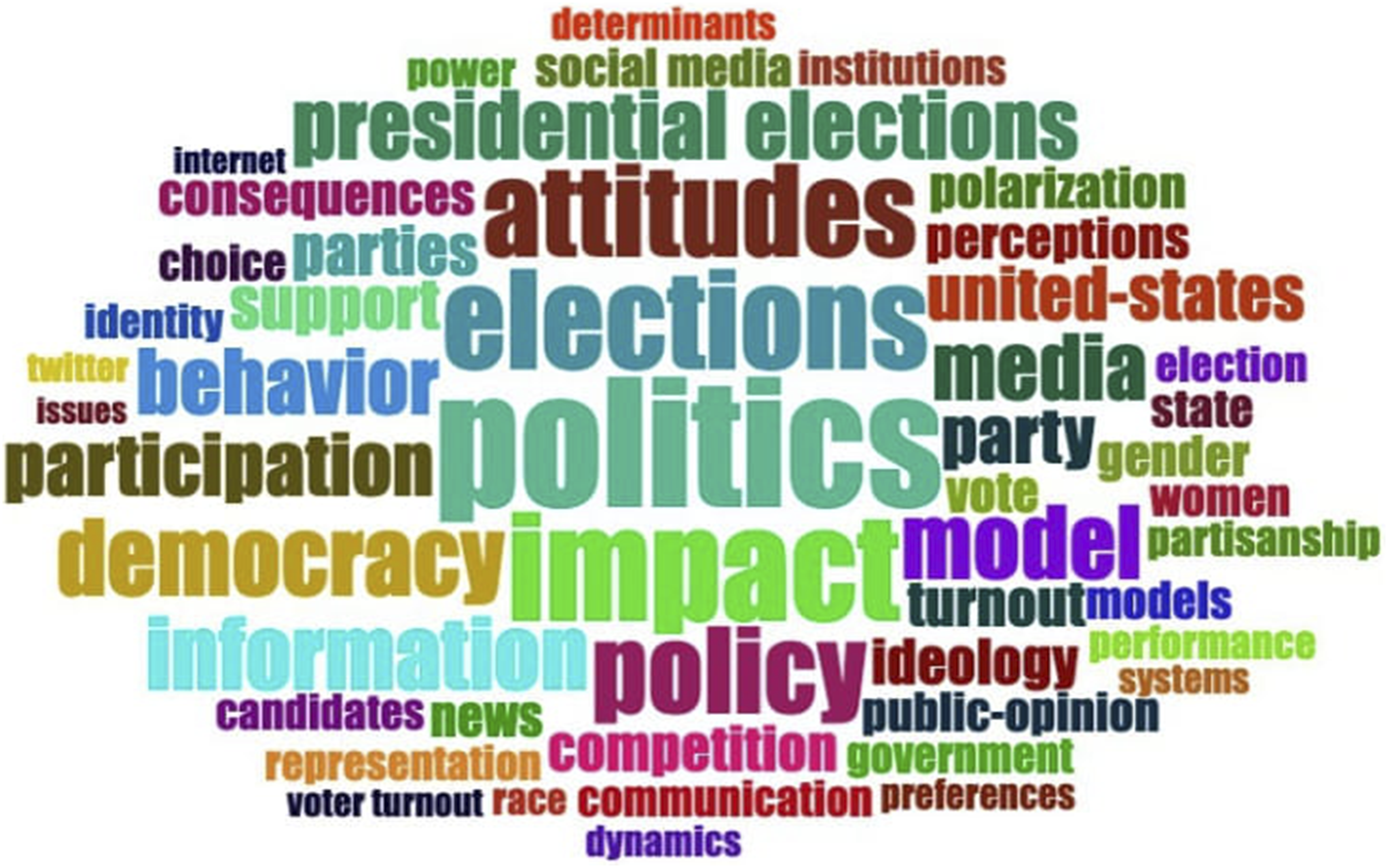
Bibliometric coupling
Bibliometric coupling was used to study the relationship between the emergent themes in research articles within the political branding discipline (Donthu et al., 2021; Mariani et al., 2022). It was also used to find conceptual similarities in the studies undertaken for analysis (Pandey et al., 2023). The process was performed using VOSviewer, setting the threshold at 20 citations per article. The process helped identify a standard third reference used in political branding studies to build an intertextual relationship between co-citation analysis and bibliometric coupling. As a result, with the help of previously conducted co-citation and bibliometric analyses, the study proposes key clusters that emerged in the political branding discipline. Each cluster is shown in Figure 4. Keywords co-occurrence map: 14,937 keywords, frequency 20 -824.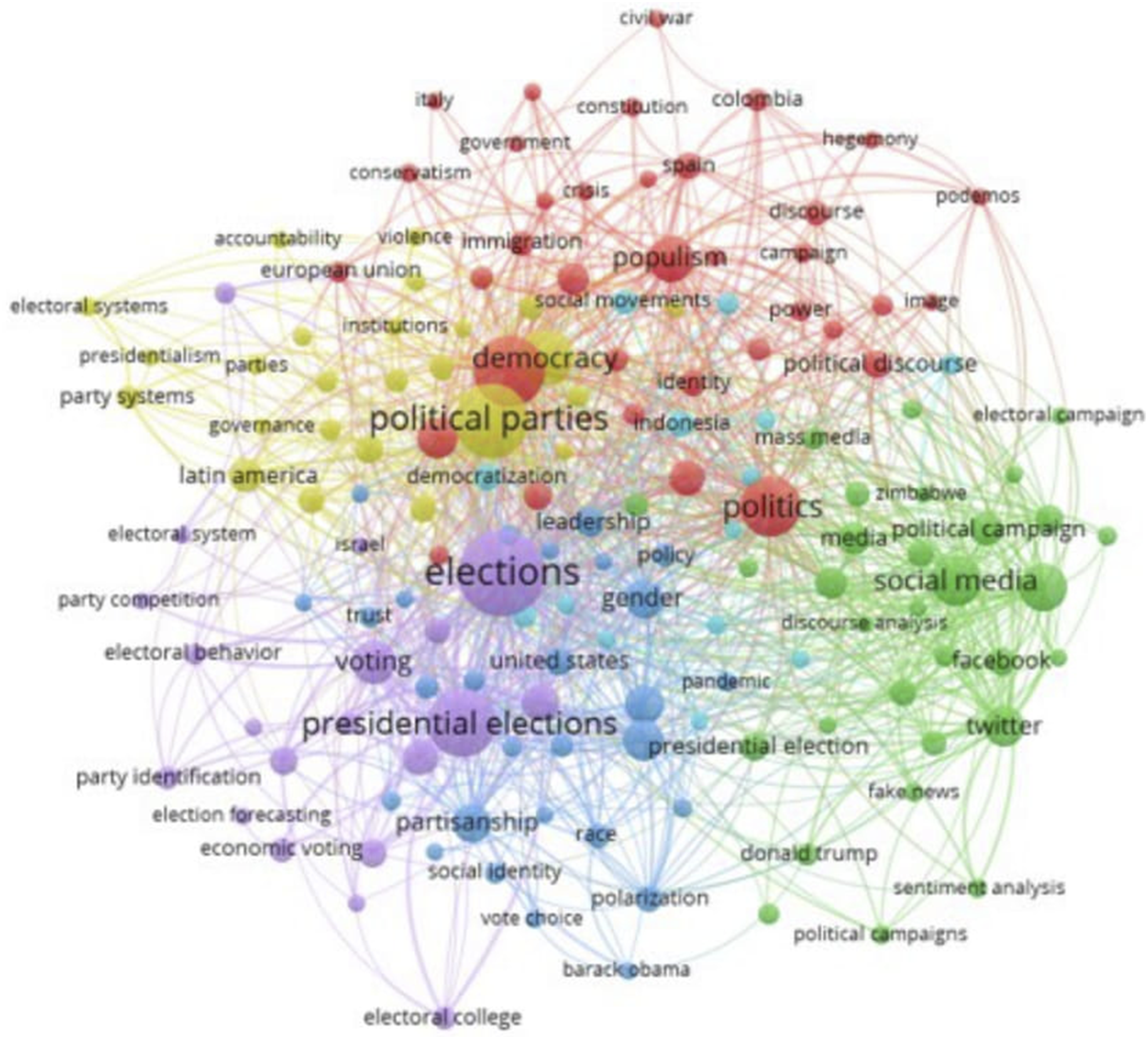
The upper segment of the map in Figure 4 represents the ideas around populism, depicted in red. These terms were commonly found in international studies on political branding. Issues of hegemony, power, and social inequality were a part of this cluster. Another cluster that significantly stood out was the violet cluster. It highlights the presidential campaigns being studied, primarily focusing on election campaigning, forecasting, voting, and identity creation in the United States (US). Following this is the green cluster, dominated by usage and the role of social media in political campaigning. The cluster highlights different methodologies used to study political branding from the lens of social media. These include sentiment analysis, observation studies, social media analysis, and Netnography. The next cluster that appears significantly is the blue cluster. This cluster is dedicated to studies that have explored political branding in the context of race, gender, polarization, and partisanship. Though it stands out as a distinct cluster, there is an ongoing overlap with the violet and green clusters. The final cluster is yellow. This cluster highlights research around specific geographic regions, including studies on Latin America, the European Union, and others. The topics addressed include electoral systems, governance mechanisms, parties, and democratization in specific countries.
The richness of each cluster creates possibilities for future research. Therefore, using a thematic analysis, the authors further analyzed each cluster to discuss three key areas for future research.
The communication medium (online and offline) used for political branding
The analysis highlights that communication is a common theme in political branding. The co-occurrence map also shows that communication through online and offline media is vital during election campaigning. Using online and offline media helps political parties and leaders reach their target audience and create a lasting impression on their minds (Osei-Appiah et al., 2023). The analysis reveals that numerous studies have focused on using television, local newspapers, and social media to communicate with voters. All these media contribute significantly to brand building and offering political information (Sotirovic & McLeod, 2004). However, future research on political branding can incorporate how different communication media enhance the political participation of voters. There are limited studies specifically highlighting the adverse outcomes of online and offline communication that can become overwhelming. In addition, comparative studies between different political countries can be conducted to measure the effectiveness and outcomes of various media of communication used for political branding.
As cluster green highlights, political parties’ usage of specific social media platforms can also be explored to study the legitimacy of these platforms, transparency, and ethics used to convey political information. Future research can also investigate the role of citizens as civic volunteers in sharing and resharing truthful information and creating political brands.
The role of technology in creating a persona and identity of the political leaders
Research on the role of technology in political branding revolves around adopting digital platforms and advanced open technologies used to create public profiles of political leaders (Usher, 2016). However, there is a lack of research examining the underlying personality traits, conceptual advantages, and organizational faces of political leaders (Peña & Gold, 2022) that are created to help political leaders build an image in voters’ minds. Limited theories focus on identity creation; thus, the area needs to advance from the formalization stage. There is also scope for experimental studies to test the impact of technology on voters who follow their leaders religiously.
An interdisciplinary approach to understanding human sentiments, their expectations, and nature can be fruitful for future research. However, owing to the complexities and dilemmas that exist with the identity creation of political leaders, the area needs more theoretical grounding and adaptations from disciplines like political science, psychology, and others. Future studies must be carefully designed to study how voters’ values and belief systems are considered for creating political identities, which has not been explored much (Wilson et al., 2018). This understanding is drawn from the respective clusters that include violet, green, and red, where political identity’s role has been extensively valued in political branding research. In addition, future research can map and understand the age of the digital identities and personas created using digital technologies and the risks that ensue.
Political influencers’ effectiveness in the success or failure of political branding campaigns
Political influencers are a critical part of political branding. They are omnipresent on various social media and other platforms, propagating the political goals of a particular party or leader. Many studies have emphasized the role of influencers in successfully establishing and developing brands. However, the studies have mainly focused on the beauty, gaming, and fashion industries. In contrast, political influencers have been limitedly explored (Riedl et al., 2023). Despite their competent role in promoting political branding campaigns, only a few studies have examined the role and effectiveness of political influencers. The analysis of the current study revealed that in the era of digital media and social presence, political influencers can propel the growth of political parties and leaders and is highlighted in clusters violet and yellow, where constructs like trust, social identity, gender, and race are valued in political branding research. Integrating political influencers in political branding is a global phenomenon that needs further exploration.
Future research by bibliometric coupling themes.
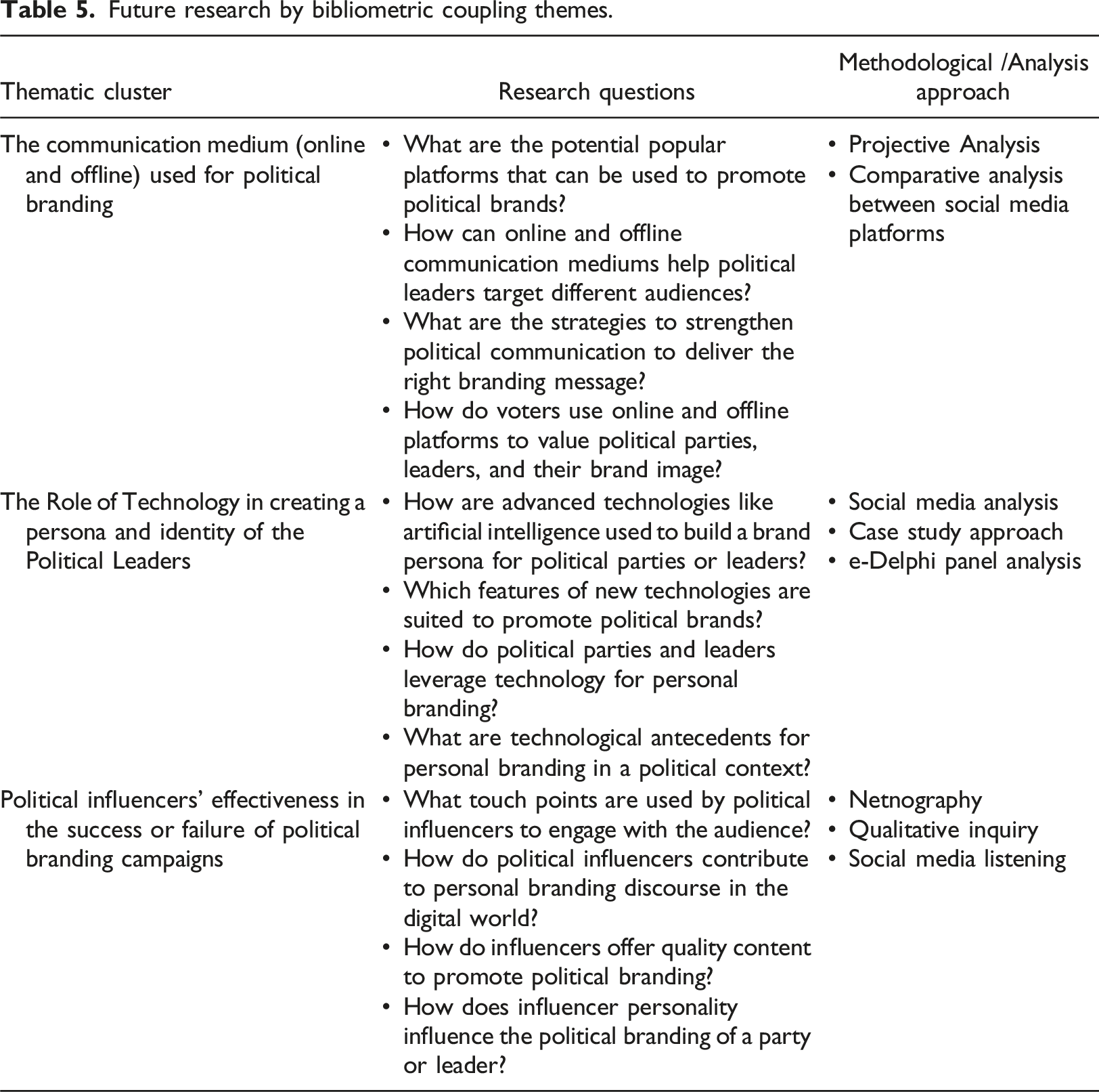
The thematic analysis conducted unraveled key areas for potential research. However, as the discipline grows, these areas are already in momentum and being explored in the context of present political scenarios worldwide. Both online and offline channels are used for political communication. Dommett and Power (2024) examine the concept of digital elections while looking past technology challenges. On another tangent, Klinger (2024) discusses the need for regulating unhinged political communication in digital societies. Klüver (2024), in his latest study, argues how political influencers influence elections in different societies. They shape political agendas and set narratives that are grasped by generations. Mukherjee et al. (2024) emphasize political interviewing on YouTube in another study. In their case-based study on Indian politicians, the authors attempt to understand how politicians portray themselves to the public. Similarly, Mir (2024) highlights the role of social media in political branding. These studies are exemplars of the ongoing work in the political branding discipline. They present the known and unknown that future scholars can further confirm or critique.
While bibliometric coupling identified the scope for future research, it also helped determine the dominant theories used in political branding. These theories have been used to study constructs like brand and self-identity, brand value, trust, relationship, and loyalty. The following section highlights three key theoretical perspectives.
Theoretical perspectives
Extending the study further, in addition to the initial search for articles on political branding, an extended search was also conducted to explore the theories extensively used in political branding literature. This search aimed to confirm the coupling of theories that have been dominantly used in political branding studies. Though the theories were observed from the literature review, they are discussed to add value and reflect the author’s understanding of the political branding literature.
Different theoretical approaches and models from marketing, sociology, and psychology were identified and are summarized below.
Social identity theory
This is the most widely used theory in political branding literature, stemming from the socio-psychology discipline. The theory emphasizes the concept of self in group dynamics. It includes social belongingness, social comparison, and social identification. Raskovic (2020) explains the concept and application of social identity theory in the context of inter-group relations. The analysis reveals that political parties and leaders want to be socially accepted and enjoy a sense of belongingness, for which they focus on identity creation through political branding. The analysis also suggests that the Theory of Social Identity, though extensively explored, can be used to further define the concepts of social acceptance and belongingness in digital spaces where media and the general public evaluate each political party and their respective leaders. The theory can be used to understand the concept, benefits, and challenges of digital brand building in digital societies.
Economic theory of branding
This is the least explored theory in the context of political branding. The economic theory of branding emphasizes the goodwill of a brand through which it earns profits. In the context of political branding, goodwill is an asset for political parties and leaders who want to earn the support of their target audience. In return, they offer the audience quality services, transparency, and dependability value. This theory has a high scope for further exploration as scholars have extensively relied on social exchange theory to explain cost-benefit analysis. The analysis highlights that the Economic Theory of Branding can be used as an inter-disciplinary theoretical perspective to evaluate political branding and conduct a comparative analysis of how it impacts nations with different political and economic environments.
Brand value model
David Aaker’s brand value model is one of the most commonly used branding models to explain how brands build value. Ahmed et al. (2015) explained that to create brand value for political parties, party awareness (brand awareness), party association (brand association), and party image (brand image) are critical antecedents. Their analysis confirms that these are essential for political branding. However, the model still has more scope for exploration and thus can be used further to understand how a political party or leader creates brand value for themselves in a digital world where virtual identities are more powerful than actual identities.
The theories discussed above have deep academic roots and have been used extensively in various fields of political marketing, including political branding. However, one of the key contributions of this study is the definition of scope and gaps in the political branding discipline that can be explored using the theories and examining the results in different contexts and scenarios for generalizability. The theories are particularly relevant in the present political scenario where digital verdicts precede the physical results during the election season.
Discussion and limitations
The analysis unveiled that political branding is increasingly a potential area of research that is receiving continued academic attention. Top peer-reviewed journals in the marketing and branding discipline encourage publications in this area. However, the findings also suggest the necessity for more dedicated collaborations and publications to elevate this discipline. In addition, the study also guided the understanding of the persistent gaps in political branding literature and the agenda for future research. The same are discussed in the section below.
Political branding has gained attention following the changes in world politics and the advent of digital media and technology. Though political interventions and marketing strategies have been a pre-existing phenomenon used by political parties, there is a shift towards establishing political parties and leaders as a brand. 2024 is an intense year for many countries holding elections, including robust democracies like the United States, India, and Russia and makes political branding even more critical as parties and political leaders contest to appeal to the voters, build brand value, and deal with competitors while managing the cost of branding, consumer volatility, and other risks.
This urgency is reflected in the literature as well. The analysis unveiled that there has been a continuous increase in political branding studies worldwide in the past two decades. These studies present diverse concepts, including voter preferences, political branding strategies, social media influence, and the rise of political leaders. Most studies hint towards positive outcomes of political branding and how it shapes the current political landscape in different countries. Armannsdottir et al. (2019), in their research on political brands, demonstrate how political branding can help develop tailored identities for political parties and their leaders.
Similarly, Pich et al. (2019) suggest that political branding is a dynamic process that can be used to appeal to the target audience. In continuity and prior, several other scholars emphasize using political branding to influence voter behavior (Needham, 2005) and benefit from competitive differentiation (Mensah, 2016). Therefore, the analysis leads to an understanding that political branding strategies and literature are critical to academic scholars, marketers, political parties, and leaders. However, some gaps persist and can be pursued further through scholarly research. In addition, the study has certain limitations that can be addressed in future studies. One of the key themes for future studies could be a comparative analysis between countries like the UK and the USA, which have extensively been published in this area.
The study adopted a bibliometric analysis to get descriptive insights about political branding disciplines. However, despite considering literature from the past two decades, the method highlights the intention to cite a study or justifies its relevance. In addition, there is a methodological challenge in considering all the articles with keywords of political branding, which may not be relevant (Morkunas et al., 2019). To avoid such issues, the method allowed using filters that helped to a certain extent. In addition, the literature is sourced from limited databases; thus, it is possible to explore more political constructs and their relationships. Future studies can overcome this limitation by exploring sources besides Google Scholar and WoS to produce more comprehensive findings by overcoming these three limitations. First, non-indexed journals can also be included for a more competent analysis. Second, book chapters that have been peer-reviewed and published with high rigor can also be included. Third, future scholars can use frameworks like the antecedent decision outcomes (ADO) for more in-depth insights.
Implications
The analysis unravels the progressive intellect of political branding literature and has implications for managerial practices. First, the study positions political branding as the key to political image-building in the digital world. Marketers and managers for political parties or leaders can carefully design their political campaigns considering the expectations and experiences of the audiences. Political brands should focus on building a brand identity that is unique and valued. However, it should be done ethically without any moral disproportions.
The findings of the study also suggest that political branding is highly dependent on social media platforms and that these platforms should be leveraged accordingly. Marketing managers should also ensure public interactions and feedback as a necessary component of political branding. Human-technology relationships should be maintained to provide strong political communication. Moreover, emphasis should be placed on promoting authenticity and consistency in political branding. Despite its long history in political marketing, political branding is still nascent and can be developed further. Political parties and leaders can focus on relationship-building and social well-being as crucial elements of political branding. Finally, the audiences who are potential voters for the political party must be engaged in the branding process.
In addition, the analysis highlighted that there has been a significant rise in the number of studies on political branding. These studies have undertaken different themes and expanded the scope of previous studies limited to political image. As a result, the new studies are expanding the literature by exploring the role of political influencers, voters’ attitudes, the use of advanced technology and artificial intelligence, and the role of civil societies. This study undertakes all the studies that offer meaningful insights and pave the way for future research. It contributes to the literature by synthesizing political branding research that can be used to develop novel studies, create new hypotheses, quantify political branding ideas, and enhance knowledge by presenting the key themes from previous and new studies. Thus, it suggests the thematic clusters to ensure an increasing scope for political branding research.
Conclusion
The study synthesizes and presents an overview of the research in the political branding discipline and the developments in the last two decades. Articles included in the investigation provide a diverse yet detailed understanding of political branding while advancing the possibilities for further research. The bibliometric analysis enables the evaluation of crucial journals contributing to the domain, as shown in Table 1. Other tables represent the extant political branding research and its increasing scope by highlighting the countries, authors, and their impact. These insights are resourceful for scholars of political branding, marketers working as brand managers, organizations creating brands, and political parties and leaders aspiring to be brands. These stakeholders can use personal branding to appeal to their voters and make a lasting identity in the voters’ minds. Political parties and leaders must create a relevant and valuable brand for the voters.
Footnotes
Author Contributions
Varsha Jain: Writing the manuscript (all the sections of the study), Damini Goyal Gupta: Synthesizing and analyzing the literature (bibliometric analysis), Himani Sharma: Writing the manuscript (all the sections of the study).
Declaration of conflicting interests
The author(s) declared no potential conflicts of interest with respect to the research, authorship, and/or publication of this article.
Funding
The author(s) received no financial support for the research, authorship, and/or publication of this article.
