







Abstract
This paper develops an integrative framework for consumer AI adoption that addresses the complex interactions between AI technologies, consumer behaviors, and socio-cultural contexts. Through a systematic literature review of 243 seminal studies, we conducted a three-step analysis. First, we used content analysis to clarify AI adoption conceptualizations and map the existing literature. Second, we employed thematic analysis to inductively categorize antecedents and develop a conceptual framework, which emerged to align with socio-technical systems theory. Third, we conducted a cross-tabulation analysis to examine how antecedents vary across different AI technologies. Our findings reveal significant diversity and complexity in AI adoption patterns. Based on this, we propose an integrative framework encompassing AI-related, consumer-related, and AI-consumer interaction-related antecedents, grounded in socio-technical theory. This framework accommodates unique features of specific AI technologies in providing practical guidance for researchers and practitioners.
Keywords
Introduction
The integration of AI technologies into products and services across various sectors has fundamentally transformed how consumers interact with and make decisions about using technology (Davenport et al., 2020). From voice assistants to recommendation algorithms, AI technologies are increasingly prevalent (Suraña-Sánchez & Aramendia-Muneta, 2024). This proliferation creates both opportunities and challenges for market researchers: while AI-powered tools offer new capabilities for consumer insight generation, successful market research increasingly depends on understanding the complex factors that drive consumer adoption of AI technologies themselves. Without this understanding, researchers risk misinterpreting consumer behaviors, developing methods that fail to capture AI-specific concerns, and struggling to predict market adoption patterns for AI-enhanced products and services. These challenges make understanding AI adoption factors particularly crucial for developing comprehensive insights into market trends and the broader societal implications of AI advancement (Kopalle et al., 2022).
The growing importance of AI adoption has prompted substantial academic attention, with research covering diverse applications, ranging from finance (Atwal & Bryson, 2021) and transportation (Huang & Qian, 2021) to hospitality services (Pillai & Sivathanu, 2020). This diversity has motivated several review studies that synthesize research and integrate knowledge (e.g., Mehta et al., 2022; Sohn & Kwon, 2020). These consolidation efforts have revealed that while expanding rapidly, AI adoption research still faces significant theoretical challenges which limit our understanding of this complex phenomenon.
Current knowledge synthesis efforts have primarily relied on traditional theoretical frameworks like the Technology Acceptance Model (TAM) or the Unified Theory of Acceptance and Use of Technology (UTAUT). However, many scholars find that these frameworks insufficiently capture the nuanced complexities of AI adoption (Ågerfalk, 2020). Traditional frameworks typically fail to address the dynamic and multifaceted interactions between AI technologies and users (Vlačić et al., 2021). Yet, these dynamic AI-user interactions are critical in market research since they reveal how consumers integrate new technologies into daily life while also enabling personalized marketing strategies and optimized customer experiences (Kopalle et al., 2022). These limitations highlight the need for a comprehensive theoretical framework that can accommodate AI technologies’ unique characteristics and the complex nature of their interactions with consumers.
Through a systematic literature review of 243 studies, we developed an integrative socio-technical framework that captures the multidimensional nature of AI adoption while accommodating variations across different AI technologies. Our three-step analysis—content analysis, thematic analysis, and cross-tabulation analysis—reveals how adoption antecedents cluster into AI-related, consumer-related, and AI-consumer interaction factors. This demonstrates significant variation in the adoption patterns across different AI technologies.
Through this analysis, we thus propose a theoretically significant discovery: the empirically-derived patterns of AI adoption align remarkably with socio-technical systems (STS) theory principles (Münch et al., 2022; Trist & Bamforth, 1951). This represents the first systematic demonstration of STS theory’s relevance to consumer AI adoption research. Unlike traditional technology acceptance models that primarily focus on individual perceptions and behaviors, STS theory recognizes that technology adoption emerges from the complex interaction between technical systems (AI-related factors) and social systems (consumer-related factors). While STS theory has been extensively applied in organizational and information systems contexts, its alignment with consumer AI adoption phenomena has remained unrecognized in the literature. This emergent theoretical connection is particularly important because it reveals that this established framework, which offers a more comprehensive understanding of AI adoption since it accommodates both the technological sophistication of AI systems and the social complexity of consumer adoption processes, can provide better explanations for AI adoption than the individual-focused models that have dominated this field, thereby opening new research avenues for understanding consumer behavior with intelligent technologies.
This study makes three key contributions to AI adoption research and market research practice. First, we provide much-needed conceptual clarity by developing a standardized framework that distinguishes between different aspects of AI adoption. Second, we advance theoretical understanding by showing how STS theory can explain the complex, multifaceted nature of AI adoption, in a more comprehensive way than traditional technology acceptance models. Third, we offer practical insights by revealing how adoption mechanisms vary across different AI technologies, enabling more targeted and effective marketing strategies for specific AI applications.
The remainder of this paper is structured as follows. We first review the existing literature on AI adoption and prior consolidation attempts. We then present our research design, including our systematic literature review methodology and three-step analytical approach. The subsequent sections present our findings: mapping the AI adoption literature through content analysis (Step 1), developing our socio-technical framework through thematic analysis (Step 2), and examining technology-specific patterns through cross-tabulation analysis (Step 3). We conclude with implications for market research theory and practice, limitations, and directions for future research.
AI Adoption and Prior Consolidation Attempts
According to the literature, the term artificial intelligence (AI) refers to any technological tools capable of interpreting data, interacting accordingly, and adjusting to new settings through learning processes (Kaplan & Haenlein, 2019; Mikalef & Gupta, 2021). AI has rapidly gained traction in marketing research, emerging as a critical focus area for academics and practitioners (Vlačić et al., 2021). This growing interest is evidenced by a notable increase in AI-related marketing publications (Davenport et al., 2020; Vlačić et al., 2021). In this context, systematic reviews are important instruments as they integrate findings from various studies, thereby facilitating a comprehensive understanding of the field.
Within this expanding field of AI, the marketing literature primarily relates to two core pillars: (1) consumer research, and (2) organizational and strategic research (Mariani et al., 2022; Mustak et al., 2021). However, in aggregating existing knowledge, the reviews have predominantly concentrated on the second pillar, focusing on the applications of AI in marketing strategies (Anayat & Rasool, 2024; Mustak et al., 2021; Vlačić et al., 2021). In these reviews, which mostly treat AI as a pivotal tool in marketing, the focus is on AI-integration into processes, technique selection, and improving existing marketing practices.
Nonetheless, the first pillar with its focus on AI as part of a market product and service offered to consumers, represents a crucial area to be investigated. Key questions that arise in the consumer research literature are, e.g., How do consumers perceive AI technology? What drives AI adoption? These intriguing issues have spurred various studies attempting to understand these dynamics. Despite the increased research volume, comprehensive reviews on this topic remain scarce.
Notable recent contributions include Mariani et al. (2022) and Jain et al. (2023). Mariani et al. (2022) provide an exhaustive overview, integrating research from marketing, consumer research, and psychology. They identify seven research clusters through bibliographic coupling, offering a map of key research themes in AI across marketing, consumer research, and psychology. Jain et al. (2023) also identified five central themes in AI consumer behavior research to help clarify pertinent categories in the current literature. These reviews are instrumental in understanding the prevalent topics on AI in consumer research.
Both reviews identify AI adoption as a central research theme. While numerous studies examine this topic, comprehensive syntheses of adoption determinants remain limited, hindering knowledge development as consumer-facing AI technologies evolve rapidly. Only two notable reviews have attempted systematic integration of AI adoption knowledge: Mehta et al. (2022) and Sohn and Kwon (2020).
Mehta et al. (2022) represents the most comprehensive quantitative synthesis to date on AI adoption in a study that employs meta-analytic structural equation modeling (MASEM) to analyze relationships between AI adoption antecedents. However, this review amalgamates two classical theories (Theory of Reasoned Action and UTAUT2) without questioning whether these frameworks adequately capture AI’s unique characteristics. While their meta-analytic approach provides statistical rigor, it inherently assumes that traditional technology acceptance constructs (i.e., perceived usefulness, ease of use, social influence) are sufficient to explain AI adoption across all contexts and technologies. This assumption overlooks the complex socio-technical nature of AI systems and their varied manifestations across different applications.
Sohn and Kwon (2020) take a different approach, comparing AI adoption through four classical theoretical lenses: TAM, Theory of Planned Behavior, UTAUT, and Value-based Adoption Model. Their comparative analysis reveals which traditional frameworks perform better in explaining AI adoption. However, their analysis is also based on the conventional technology acceptance paradigms, treating these established models as the universe of possible explanations rather than questioning their fundamental adequacy for AI contexts. Moreover, their approach treats AI as a homogeneous technology category, failing to account for the significant variations in adoption mechanisms across different AI applications which range from chatbots to autonomous vehicles to recommendation systems.
These two papers, while contributing valuable insights, share critical limitations in addressing AI adoption complexity. First, they rely exclusively on traditional technology acceptance frameworks developed for conventional information systems, not for AI technologies with their unique characteristics regarding learning, adaptation, and social interaction (Ågerfalk, 2020). Second, they lack a theoretical lens that can accommodate the complex interplay between technological, social, and contextual factors that characterize AI adoption. Third, neither review systematically examines how adoption mechanisms might vary across different AI technologies; they treat AI as a monolithic category despite its diverse manifestations and applications.
There is an emerging consensus on the need to integrate diverse theoretical perspectives and, thereby, highlighting the importance of a multidisciplinary approach that moves beyond traditional technology acceptance models (Jain et al., 2023). The literature on AI adoption is rich and varied, encompassing studies from sociology, psychology, economics, and computer science. These fields have brought various antecedents and theoretical frameworks to light, providing unique perspectives on AI adoption across different contexts. By tapping into these interdisciplinary resources, we can significantly enrich the field of consumer behavior research and market research, providing a comprehensive understanding of AI adoption (Mariani et al., 2022).
Research Design
We designed the research as a systematic literature review following Templier and Paré’s (2015) approach to provide a comprehensive overview of the current research on consumers’ AI adoption. First, to delineate the scope of our investigation, we formulate the problem we aim to address. Next, we engage in a targeted search for pertinent literature that addresses this problem. Finally, we present our analytical approach, which we conducted through three complementary steps.
Formulating the Problem and Research Questions
Most reviews on AI adoption employ bibliometric analyses (e.g., Anayat & Rasool, 2024; Jain et al., 2023; Mustak et al., 2021). These are instrumental in categorizing thematic elements and disclosing the overarching intellectual structure. However, we aim to achieve a different objective. Instead of categorizing studies based on themes, we delve deeper into each study to identify the use of key concepts and theories. Based on this foundational content we then discuss consumer AI adoption and its antecedents.
Our approach addresses several critical questions: Which concepts repeatedly surface in existing studies, and in what contexts are they applied? How do these studies contribute to a collective understanding of AI adoption? Can we piece together a general framework encompassing these diverse concepts to thereby coherently explain AI adoption as a phenomenon?
This approach allows for a deeper, more nuanced understanding of AI adoption research’s theoretical foundations. By focusing on the intricacies of each individual study, we aim to construct a holistic conceptual framework, potentially revealing new insights for research and market research practices.
Searching for Relevant Papers on AI Adoption
To identify relevant papers, we first defined a list of suitable keywords. A preliminary search in the Web of Science core collection of databases using the terms “artificial intelligence” and “adoption” helped us to identify keywords related to AI adoption. For this, we examined how AI technologies and their adoption are discussed in articles we retrieved in this initial search. In the process, we identified various AI technology terms (e.g., “voice assistant,” “robot,” “automated vehicle”) and adoption-related terms (e.g., “acceptance,” “intention to use,” “continuance usage”) that frequently appeared in the literature. By combining these keywords, we developed a final search string 1 . To guarantee comprehensive coverage, we conducted searches in two distinct databases: Web of Science and Business Source Complete.
The PRISMA flow diagram, a standardized reporting framework for systematic reviews (Page et al., 2021), depicts our data inclusion and exclusion process (see Figure 1). We first filtered out results that did not appear in journals on the Harzing’s Journal Quality Lists (Harzing, 2020). This collection encompasses reputable peer-reviewed journals appearing in internationally acknowledged journal quality guides, including those issued by the Association of Business Schools (ABS) and Australian Business Deans Council (ABDC). This step ensured that the reviewed papers meet a baseline quality standard, enhancing our knowledge synthesis’s robustness. Following this rigorous selection criterion and removing duplicate entries across both databases, our sample contained 2,997 articles. Next, we excluded all items that were editorials, commentaries, opinion papers, or case reports, as well as all articles that were not in the English language, leaving us with 2,917 records to be retrieved. Systematic Literature Review Process Following PRISMA Guidelines (n = 243 Studies)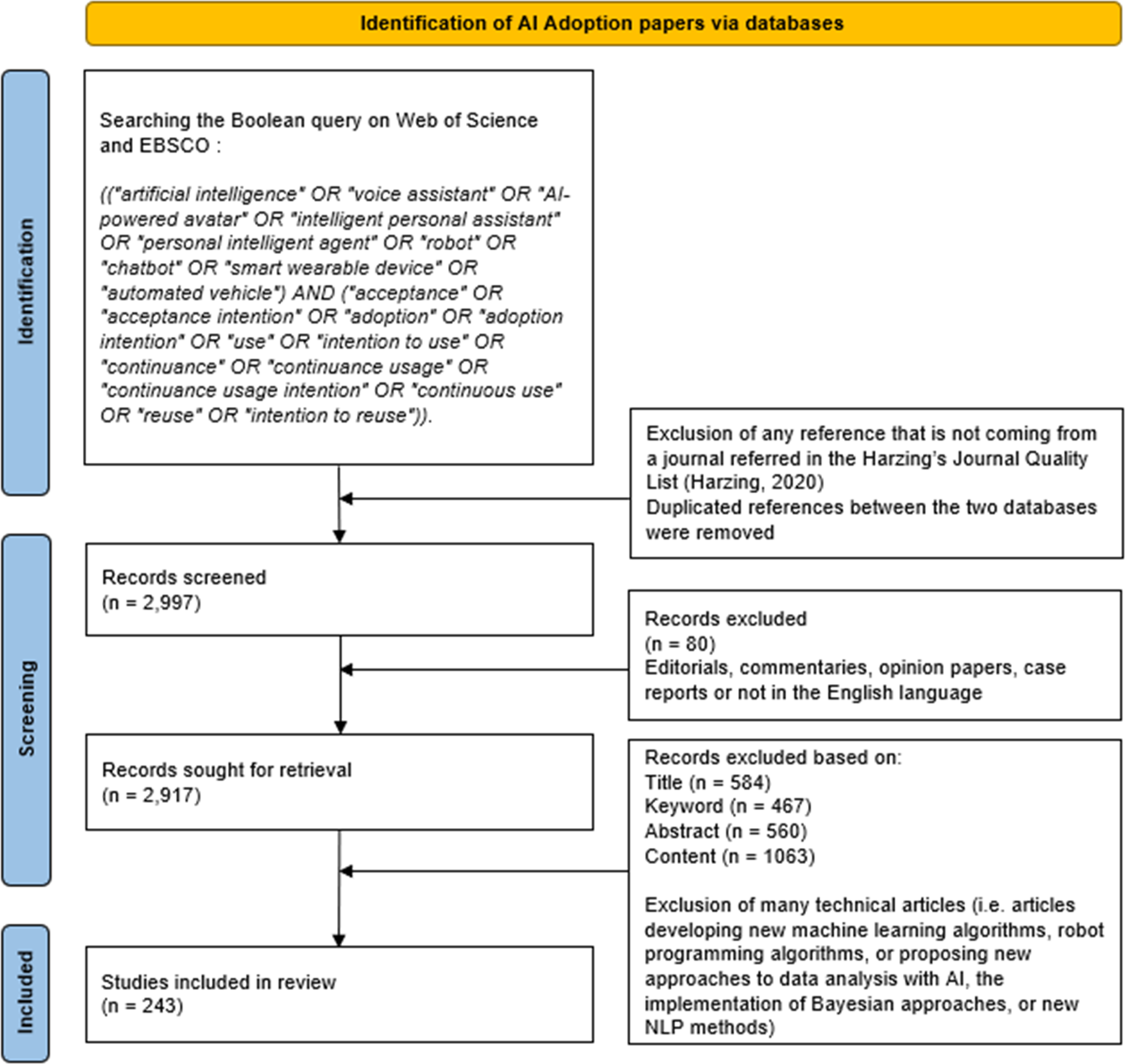
We refined our selection process further by scrutinizing the articles, focusing on titles, keywords, and abstracts. This revealed that most articles were purely technical, covering, e.g., how to develop new machine learning algorithms, programming for robots, or advancements in NLP methods. Consequently, we removed a significant proportion of the studies, to keep only those aligning with our research objective of better understanding AI adoption. This gave us a reduced sample of 243 articles.
A Three-Step Analytical Design
Having identified these 243 papers on AI adoption, we conducted a careful analysis. Our analysis followed a structured three-step design (see Figure 2), with each step building upon the previous one. Three-Step Analytical Framework for AI Adoption Literature Review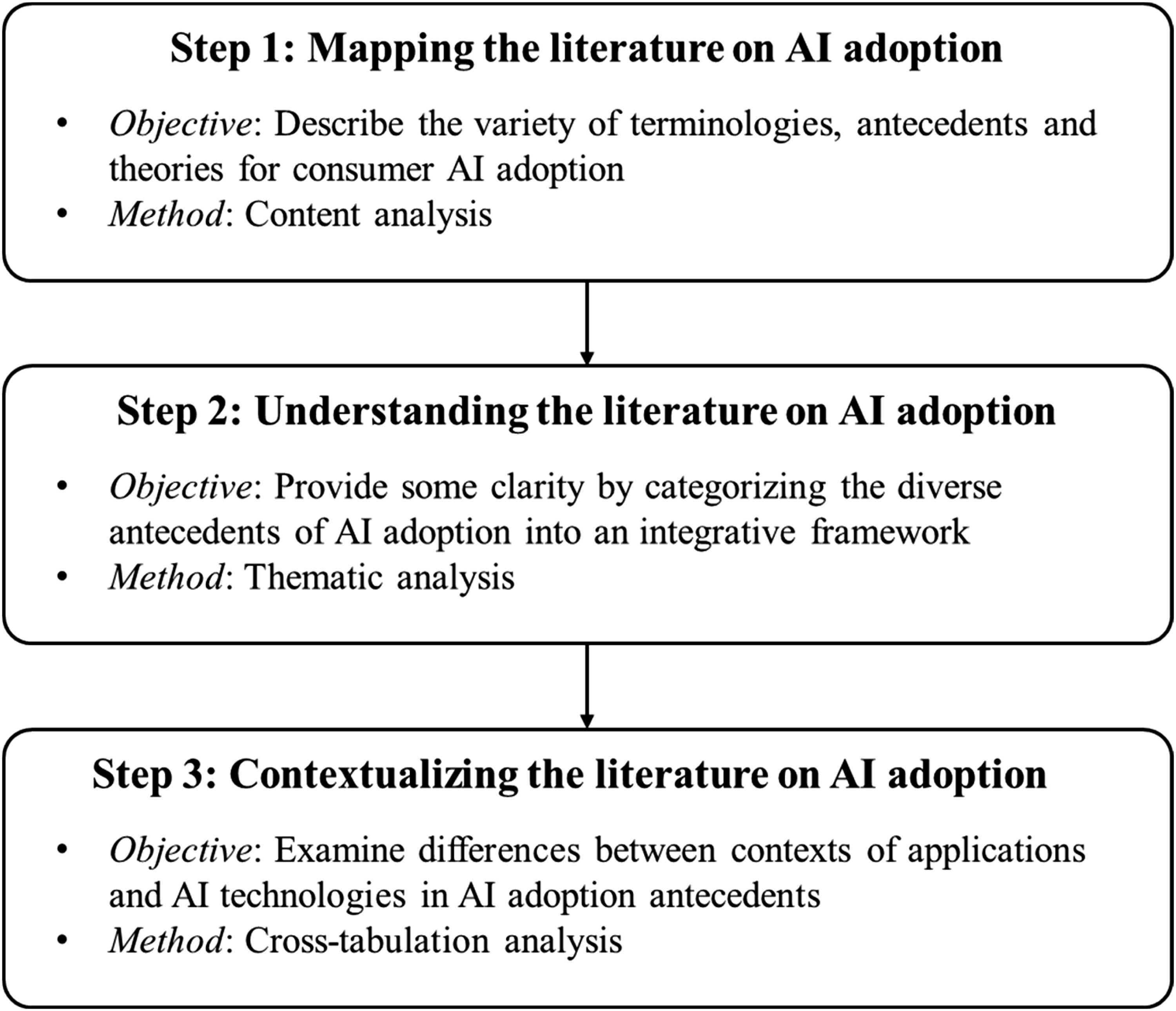
In step 1, we conducted a content analysis (Neuendorf, 2017) to systematically map the diverse array of theories, antecedents, and definitions for AI adoption, and provide an overview that could be foundational for subsequent research endeavors.
In step 2, we conducted a thematic analysis (Braun and Clarke, 2012) to categorize the identified antecedents of AI adoption into an integrative conceptual framework. During this inductive process, we identified patterns that aligned with STS theory principles, leading us to adopt this theoretical lens to structure our findings. We did not use this theory to predefine categories; rather, it became our interpretive framework to make sense of the inductively derived categories, clarifying the interplay between social (the consumers) and technical (the AI) elements.
In step 3, we applied cross-tabulation analysis (Momeni et al., 2018) to examine how our integrative framework applies across various AI technologies (chatbots, autonomous vehicles, robots, etc.). In this comparative analysis we employed descriptive statistics and statistical testing to identify significant differences in antecedent patterns across different AI contexts.
Step 1: Mapping the Literature on AI Adoption
Content Analysis of AI Adoption Literature
We used content analysis following Neuendorf’s (2017) guidelines to rigorously examine the 243 studies on AI adoption. Each study was independently analyzed by researchers who coded the relevant concepts and theories. To ensure reliability and consistency, the research team then collectively reviewed and synthesized the findings.
The following sections examine how the concept of AI adoption has been defined and analyzed, as well as the theoretical frameworks and antecedents that have been employed to explain this phenomenon.
Discussing the Concept of AI Adoption
A first finding from the content analysis is that the definitions and terminologies researchers employed showed discernible variability. Figure 3 visually summarizes the most commonly used terms to describe AI adoption in the analyzed papers. Terminology Diversity in AI Adoption Research: Most Frequently Used Terms (n = 243 Studies). Note. This Word Cloud Shows the Relative Frequency of Terms Used to Describe AI Adoption in the Reviewed Literature. Font Size Reflects Usage Frequency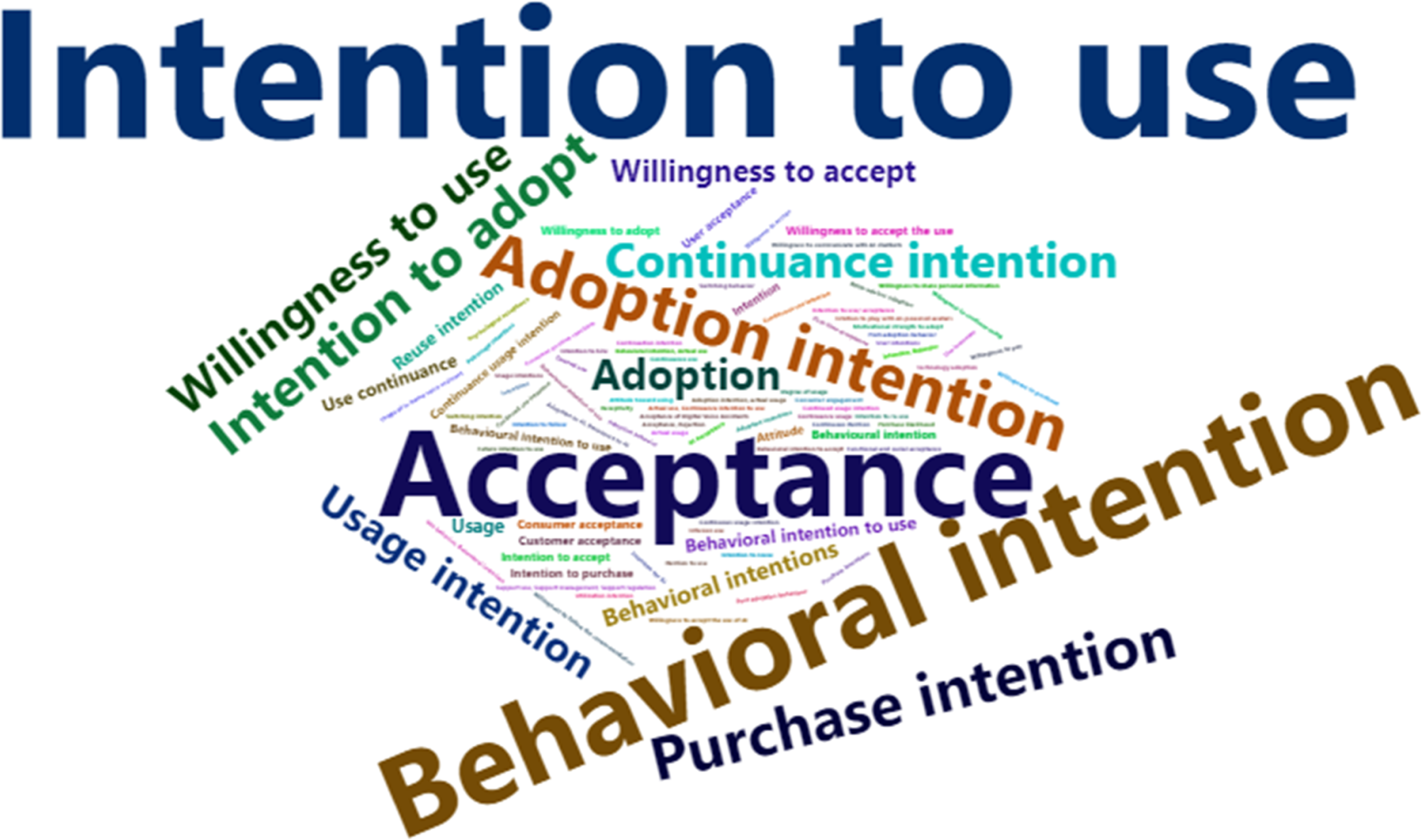
Terms such as behavioral intention, intention to use, acceptance, and adoption intention are frequently used interchangeably, leading to ambiguity and confusion (Adnan et al., 2018; Belanche et al., 2021). A key matter involves more specifically distinguishing between AI acceptance and adoption. Although these terms are often treated as synonymous, they encapsulate distinct aspects of user interaction with technology. Acceptance refers to the user’s willingness to employ technology for its intended purpose (Dillon & Morris, 1996). Such acceptance is often influenced by positive attitudes towards the technology (Edelmann et al., 2021) and favorable experiences during its use (Latikka et al., 2019). It encompasses the users’ direct attitudes toward a system, as well as its broader experiential impact on the user. Conversely, adoption refers to the user’s readiness to start using technology, characterized by a commitment to integrate new technology into their routine (Gursoy et al., 2019). Adoption has been measured by intention to use and users’ readiness to purchase, similar to approaches in AI acceptance research (Huang & Qian, 2021). Many studies measure acceptance and adoption using similar constructs, such as behavioral intention or willingness to use, without fully capturing the nuanced distinctions between these concepts.
To better differentiate these terms and their nuanced meanings in AI studies, referring back to their core definitions can be helpful. The Oxford English Dictionary defines “adoption” as the act of choosing to take up, follow, or use something, implying a decision to start using technology. “Acceptance,” however, is defined as consenting to receive or undertake something offered. This would focus on the agreement to begin using technology when it becomes available. The various definitions emphasize that acceptance might lead to adoption, but the two terms are not synonymous and should not be conflated. For instance, users could accept the idea of using a voice assistant (acceptance) but not integrate it into their daily activities (adoption). Our analysis thus encourages researchers to meticulously consider these conceptual differences in their work, to enhance the conceptual clarity and methodological rigor of AI adoption studies.
Multiple Theories and Antecedents in Explaining AI Adoption
A second key finding from our content analysis concerns the broad range of theoretical frameworks used to study AI adoption. We identified 204 different theories applied in this context, the most prominent of which include technological acceptance theories, behavioral and psychological theories, and theories of perception and social interaction. Online Appendix A details the specific frameworks in our sample and their frequencies.
First, the literature substantially focuses on technological acceptance theories, which examine the factors influencing individuals’ acceptance and use of technologies, particularly regarding perceptions of utility and usability. The TAM and UTAUT frameworks predominate, with 60 and 28 occurrences, respectively. TAM, developed by Davis (1989), assesses perceived usefulness and ease of use. It has been applied to various AI systems, such as autonomous vehicles (Panagiotopoulos & Dimitrakopoulos, 2018), chatbots (Pillai & Sivathanu, 2020), and service robots (Zhong et al., 2021). UTAUT, proposed by Venkatesh et al. (2003), evaluates performance expectancy, effort expectancy, and social influence to understand AI adoption. Its extension, UTAUT2, includes additional factors like hedonic motivation, price value, and habitual use. These frameworks that are critical for understanding the practical factors that facilitate AI adoption, emphasize the need to consider user expectations.
Second, behavioral and psychological theories feature strongly. While less commonly used than technological acceptance theories, these frameworks are critical for understanding the core dynamics of AI adoption by exploring human psychology and behavioral dynamics. Specifically, the Theory of Planned Behavior (16 citations) or the Theory of Reasoned Action (12 occurrences), explore how attitudes, beliefs, and social norms influence technology interactions (Ajzen, 1991; Fishbein & Ajzen, 1975). Further, we found theories like the Behavioral Reasoning Theory (10 occurrences) explaining consumer behavior through explicit and implicit motivations (Westaby, 2005), or the Privacy Calculus Theory (4 occurrences) exploring how individuals assess the benefits and risks of disclosing personal data to AI systems (Culnan & Armstrong, 1999).
Last, theories of perception and social interaction which have recently gained prominence, examine how users perceive and engage with AI on social and emotional levels. These theories highlight AI’s role not just as a tool, but also as a potential social partner. Notably, anthropomorphism theory (11 occurrences) investigates how human-like attributes ascribed to AI, such as intelligence or appearance, influence trust and intentions to use (Blut et al., 2021; Sheehan et al., 2020; van Pinxteren et al., 2019). Meanwhile, the uncanny valley theory (16 occurrences) demonstrates how negative emotional reactions to human-like AI features can hinder acceptance (Mori, 1970). The Computers are Social Actors (CASA) paradigm (10 occurrences) suggests that user interactions with AI mimic their interactions with humans (Nass et al., 1994), influencing both user interface design and human-computer interaction. Additionally, Social Presence Theory (9 occurrences) and Social Response Theory (7 occurrences) provide frameworks for understanding how AI’s perceived social presence affects user engagement.
While our review of 204 theoretical frameworks demonstrates a wide array of influences on AI adoption, from utility and usability to psychological and social factors, most marketing studies still rely heavily on well-established models like TAM and UTAUT. With this as the predominant focus, exploring richer, multifaceted perspectives offered by less commonly used frameworks, is restricted. This indicates a significant opportunity to broaden research horizons by incorporating these diverse theories, potentially unlocking more varied insights into AI adoption dynamics.
The diversity of theoretical approaches scholars have used to explain AI adoption is also reflected in the plurality of antecedents to such adoption. Our review identifies 697 antecedents of AI adoption. Figure 4 highlights those most recurrent in the studies (see Online Appendix B for the full list). Most Frequently Studied Antecedents of Consumer AI Adoption (n = 697 Total Antecedents Identified). Note. This Word Cloud Presents the Most Commonly Investigated Factors Influencing Consumer AI Adoption Across 243 Studies. Size Indicates Frequency of Investigation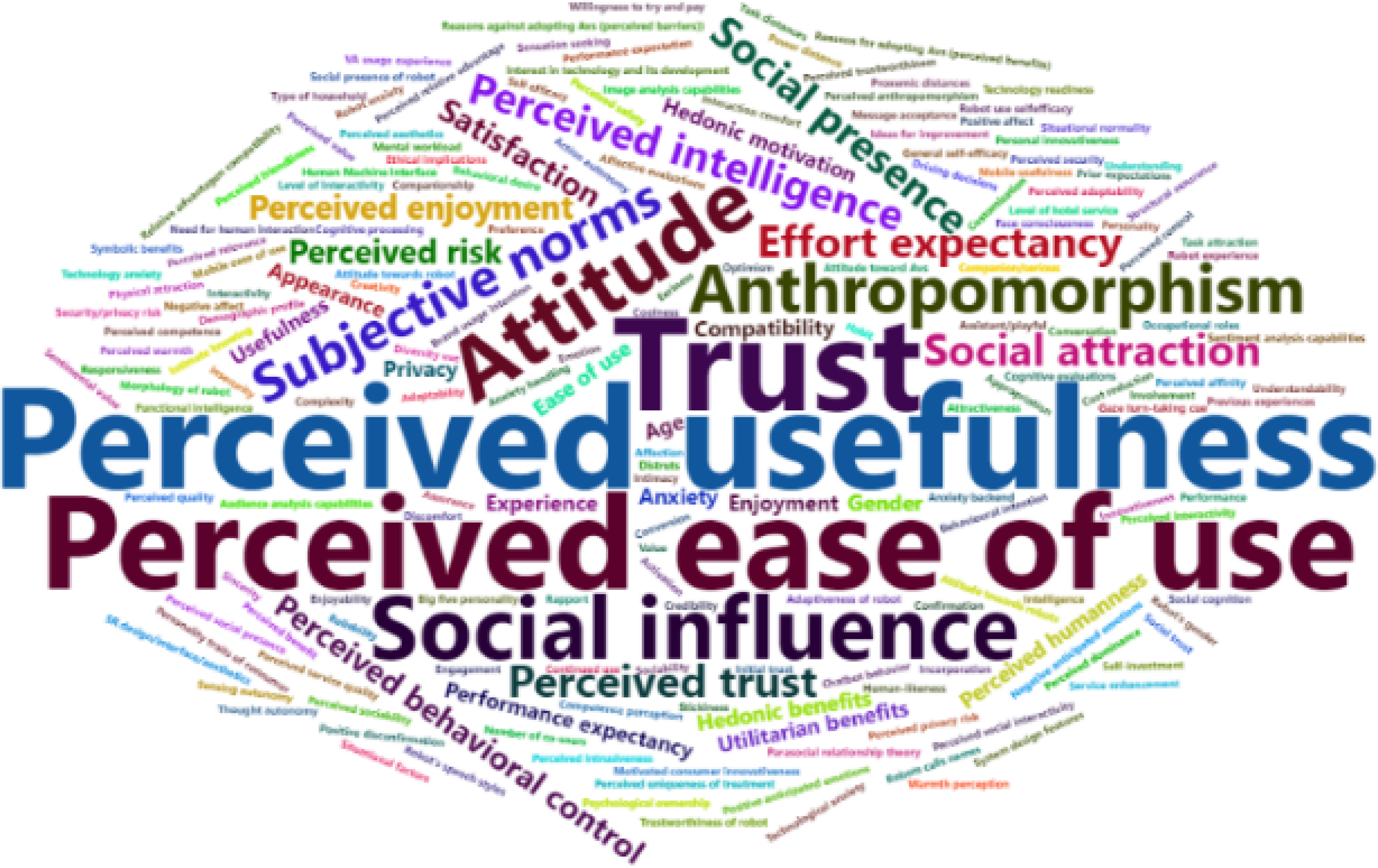
Discussion of Step 1
Our content analysis highlights inconsistent terminology use, underscoring the need for a standardized lexicon. As AI technologies continue to evolve, our approaches to studying their adoption must be more specific about which behavior is being researched (adoption, acceptance, use, continuance).
Our findings suggest that while pragmatic perceptions of utility and ease of use are significantly in focus, the critical psychological and social factors in AI adoption are also increasingly acknowledged. This indicates that a comprehensive approach, integrating technological, human, and contextual dimensions, is necessary to fully understand AI adoption. Therefore, to advance our understanding of AI adoption, we need a concerted effort to standardize terminology and integrate theoretical perspectives.
Step 2: Understanding the Literature on AI Adoption
Thematic Analysis of AI Adoption Antecedents
Our second analytic step was a thematic analysis aimed at providing clarity on the diversity of AI adoption determinants. The objective was to compare the identified antecedents and organize them into broader conceptual categories, to offer a new theoretical understanding of AI adoption, and to identify gaps that would help direct future research into unexplored areas.
In this thematic analysis, we followed the classical guidelines Braun and Clarke (2012) established. To identify common themes and patterns, we rigorously reviewed antecedents discussed in the literature. Each of the authors worked concurrently, applying uniform coding standards in (1) defining categories based on the nature and analysis level of each antecedent, (2) ensuring these categories were mutually exclusive, and (3) ensuring the categories were collectively exhaustive. This structured approach facilitated a transparent and consistent coding process.
Based on this analysis, the following sections organize these antecedents into a coherent framework through thematic analysis and explore the theoretical implications of the resulting categorization.
A Conceptual Framework for AI Adoption
In comparing the authors’ thematic analysis we concluded that the antecedents mainly differ on three levels of analysis: the AI level, the customer level, and the intersection between the two (see Figure 5). Socio-Technical Framework for Consumer AI Adoption. Note. Our Inductively-Derived Conceptual Framework Organizes AI Adoption Antecedents Into Three Main Categories Aligned With Socio-Technical Systems Theory: AI-Related Factors (Technical System), Consumer-Related Factors (Social System), and AI-Consumer Interactions (Socio-Technical Intersection). Each Category Contains Two Sub-Dimensions, Creating a Comprehensive Six-Factor Framework for Understanding Consumer AI Adoption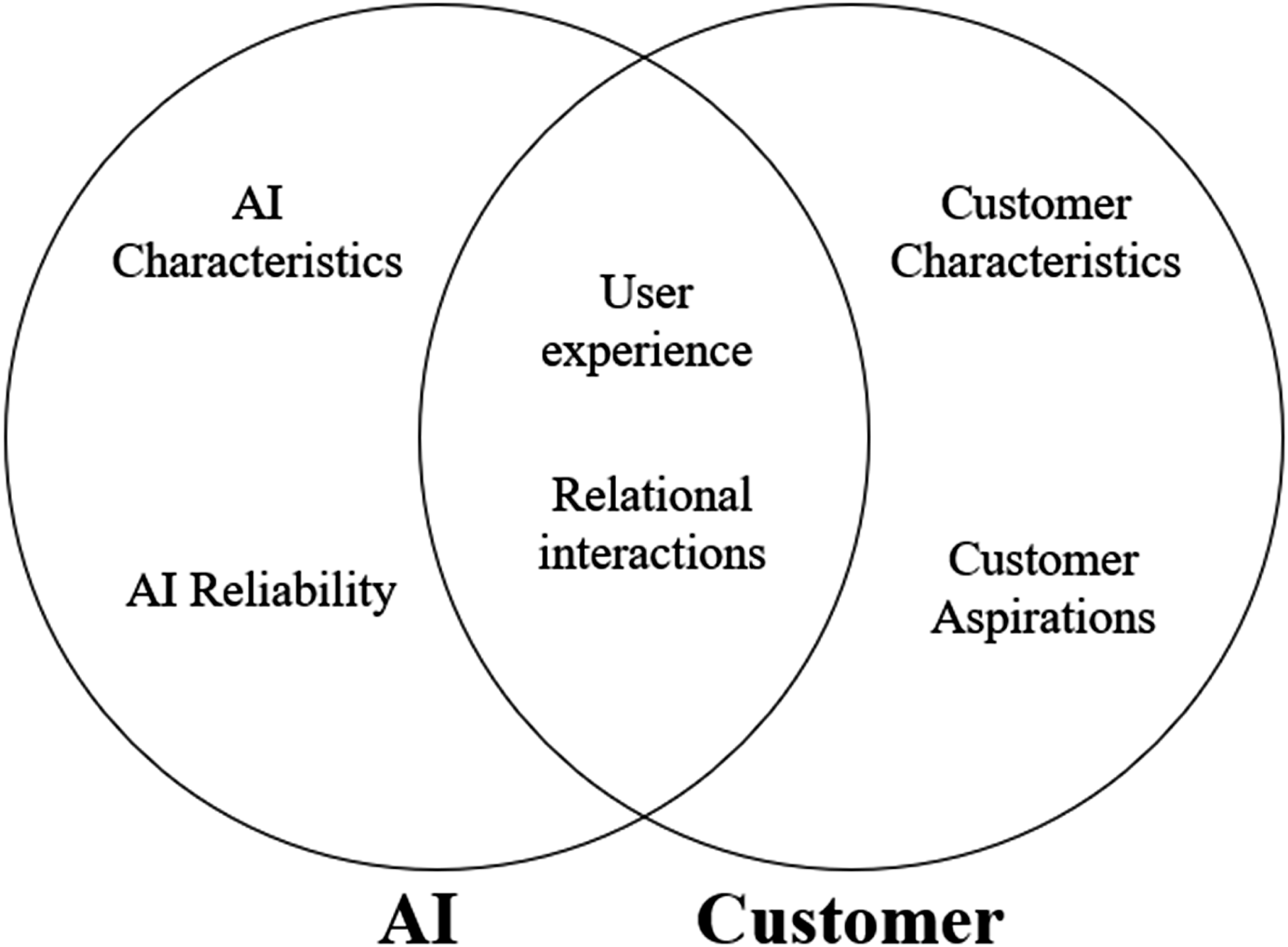
We found antecedents at the AI level, representing the characteristics of the innovation itself that can influence AI adoption. We identified two subcategories: AI characteristics and AI reliability. AI characteristics, which include performance, ease of use, and appearance, are critical adoption determinants that comprise purely descriptive variables of AI products or services, reflecting how AI is perceived through various features such as adaptability, anthropomorphism, benefits, coolness, and complexity. AI reliability encompasses various antecedents identified in the literature, which indicate that users are more likely to adopt technologies they perceive as reliable and predictable. Key variables include AI trustworthiness, privacy risks, safety, credibility, and ethical implications.
Then, we found antecedents at the customer level, where we identified two sub-categories: customer characteristics and customer aspirations. Customer characteristics, such as a consumer’s expertise in using new technologies, are critical determinants of AI adoption. The literature identifies several relevant variables, including demographic profiles (age, gender, profession), and attitudes toward technology (levels of optimism, personal interest, technology anxiety, readiness). Customer aspirations, which include specific preferences and individual needs, are also important antecedents to AI adoption identified at the customer level. We found several hedonic motivation variables, like sensation seeking, and other more utilitarian motivation variables, like perceived relevance, in the literature. Research further considers consumers’ prior experience through their habits and attitudes, to understand AI adoption.
In addition, the interactions between the AI and the customer level were found to be of two main subcategories: user experience and relational interaction. User experience encompasses all variables that describe customer interactions with AI-based products or services. Variables such as enjoyment of the experience, satisfaction levels, service customization, felt emotions, and other experiential factors are studied in the AI adoption literature. Relational interactions, such as the level of interactivity, intimacy, and social presence, are increasingly studied variables for understanding AI adoption. These interactions occur between the consumer and AI, and include variables related to affection, affinity, sentimental bonds, and other affective evaluations which foster feelings of personal connection with the AI. This relational dimension also encompasses variables describing the social aspects of AI consumption such as social group memberships, perceived ownership, and relational norms.
Discussion of Step 2
Our thematic analysis yielded a conceptual framework for AI adoption consisting of three categories of antecedents (AI-related, consumer-related, and AI-consumer interaction-related). This categorization emerged inductively from our analysis and aligns with STS theory, which provides a comprehensive theoretical foundation. Unlike existing reviews that keep AI adoption research in the constraints of TAM, UTAUT, or other individual-focused frameworks, our socio-technical lens captures the multifaceted reality of AI adoption.
The STS theory, introduced by Trist and Bamforth (1951), and expanded by scholars like Münch et al. (2022), has traditionally been applied to organizational and information system literature. It views systems as complex interactions between people (social components) and machinery (technical components), emphasizing that both factors must be considered when implementing new technologies. Interestingly, despite its long-standing presence in academic discourse, the STS theory has not been applied in understanding customers’ AI adoption. Our inductive analysis underscores the relevance of this theory in providing an overarching understanding of the current field of AI adoption.
Indeed, AI-related antecedents represent the “technical system” (Münch et al., 2022), focusing on AI’s technical and functional aspects, which include characteristics like performance, appearance, and usability. Consumer-related antecedents, in contrast, represent the “social system,” and involve consumers’ characteristics and aspirations (Appelbaum, 1997; Trist, 1981). AI-consumer interaction-related antecedents then represent the intersection of the technical and social systems. This category addresses how users’ experiences with AI and their relational interactions influence technology adoption, thus emphasizing the dynamic process shaped by both social and technical factors (Clegg, 2000; Maguire, 2014).
The balance between AI-related, consumer-related, and AI-consumer interaction-related categories is crucial for a holistic understanding of AI adoption and represents a significant advancement over existing theoretical approaches. Current theoretical frameworks often concentrate on isolated aspects—either technology characteristics or user behavior—risking neglect of their interconnectedness (Makarius et al., 2020). This oversight can lead to the social dynamics that influence technological applications being disregarded, or vice versa. Recognizing the complex nature of AI adoption is essential, and our framework, grounded in STS theory, offers robust support for exploring these multifaceted interactions in future research. Thereby the conceptual limitations identified in current synthesis efforts will also be addressed.
Step 3: Contextualizing the Literature on AI Adoption
Cross-Tabulation Analysis of AI Technologies
The diversity of technologies under the AI umbrella, with their varying capabilities, applications, and experiences, is vast. We undertook Step 3 to accommodate this diversity in the development of our conceptual framework by (1) identifying the specific types of AI discussed in the literature, and (2) systematically examining how the various types of antecedents vary across different AI technologies. We employed cross-tabulation analysis using contingency tables and our conceptual framework as the guiding structure (Momeni et al., 2018). This method is particularly valuable for identifying similarities across diverse contexts, which offers a nuanced understanding of AI adoption.
The following sections examine the specific AI technologies studied in the literature and analyze how adoption antecedents vary across these different technological contexts.
AI Technologies
Taxonomy of AI Technologies in Consumer Adoption Research
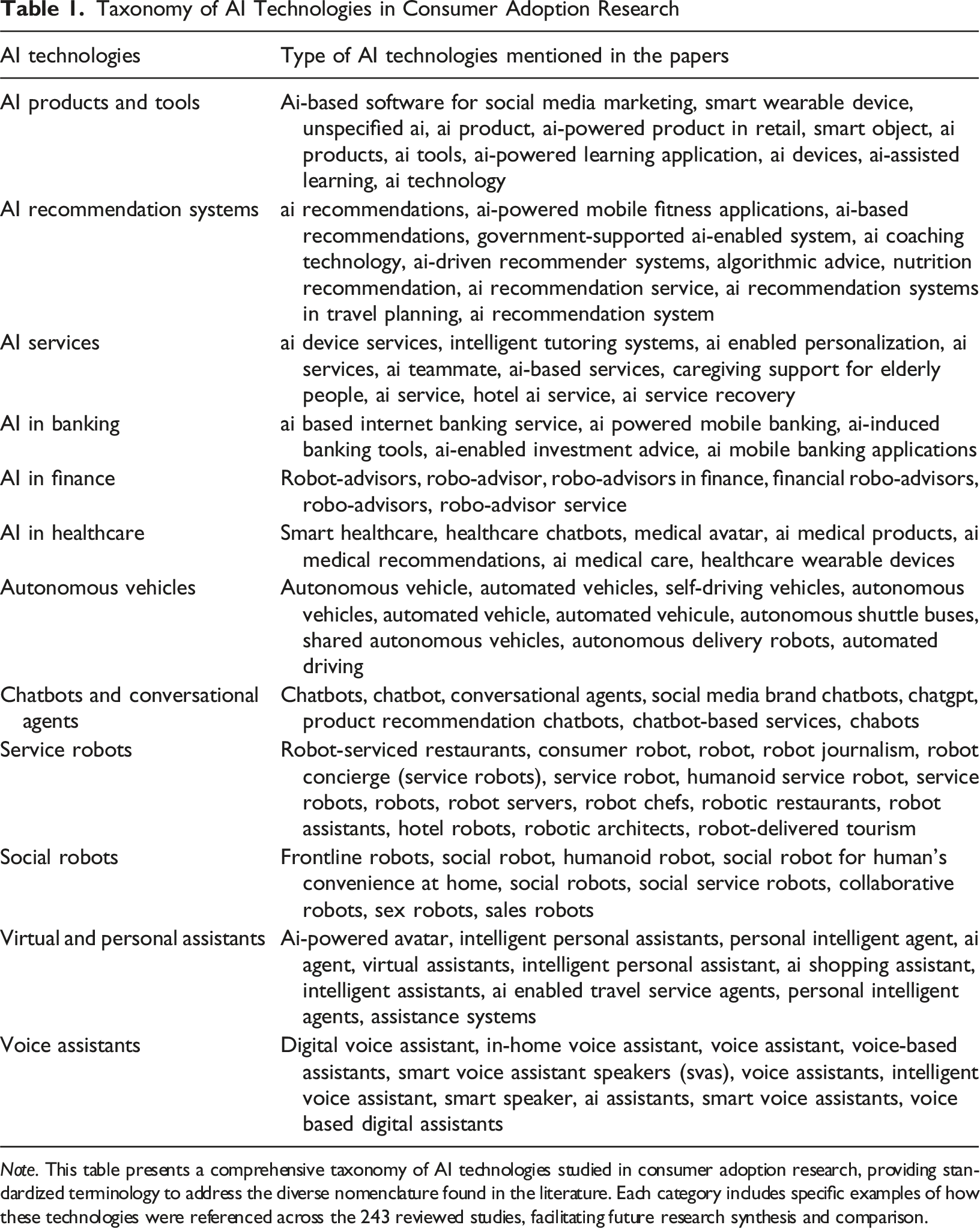
Note. This table presents a comprehensive taxonomy of AI technologies studied in consumer adoption research, providing standardized terminology to address the diverse nomenclature found in the literature. Each category includes specific examples of how these technologies were referenced across the 243 reviewed studies, facilitating future research synthesis and comparison.
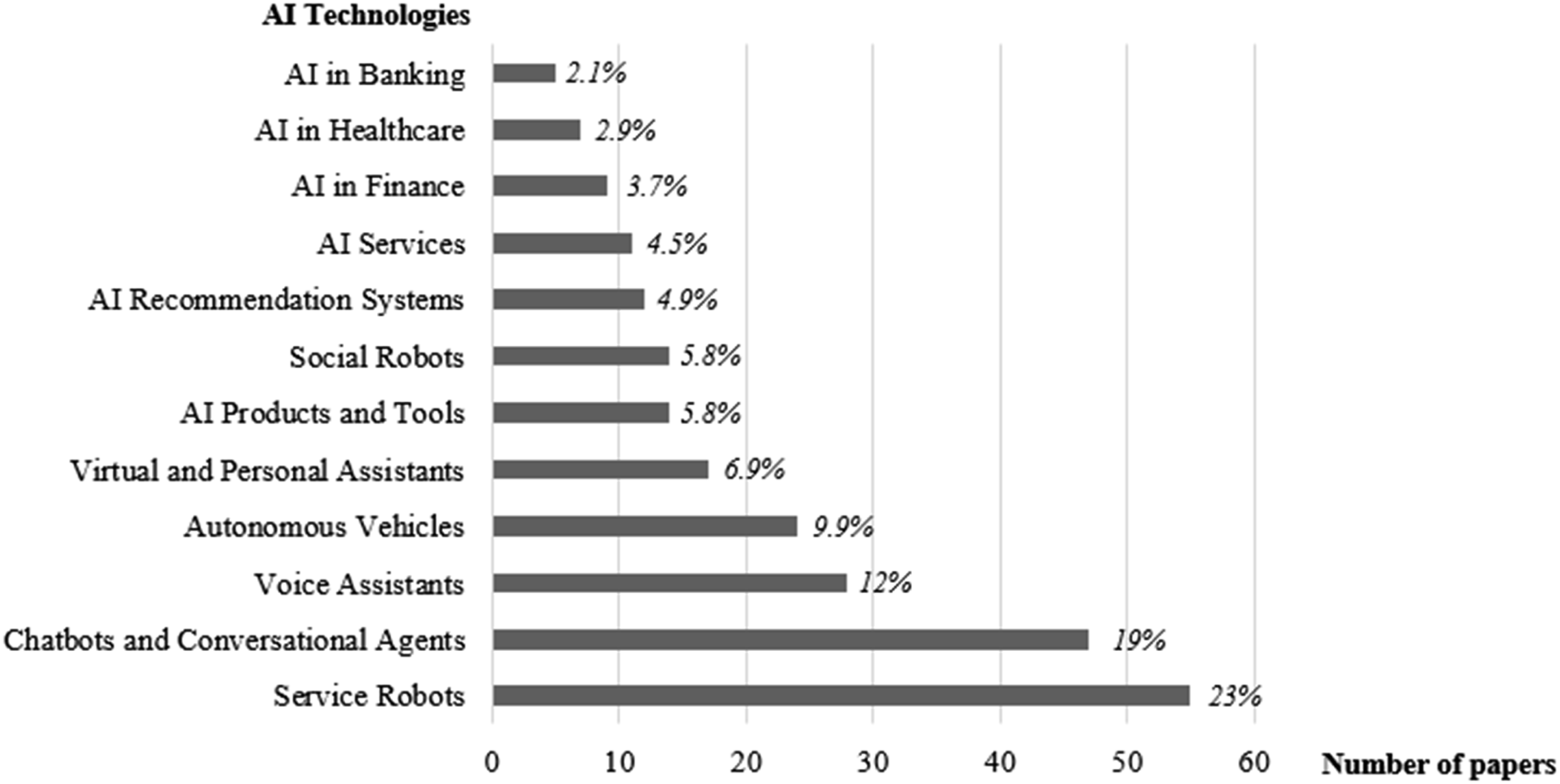
Distribution of AI Technologies Studied in Consumer Adoption Research (n = 243 Studies)
The adoption of robots, particularly service robots (23% of studies), dominates the discourse. These are primarily studied in customer-facing roles in tourism and hospitality for tasks such as guest reception and food service (Belanche et al., 2021; McCartney & McCartney, 2020; Zhong et al., 2021). Specialized applications, such as robot journalists (e.g., Kim & Kim, 2021), are also explored, though to a lesser extent. Social robots, comprising 5.7% of studies, represent another area of interest. These are mainly explored in educational and residential care settings, focusing on how the robots’ social and emotional effects impact their adoption (e.g., Sundar et al., 2017).
Conversational AI, which includes chatbots and voice assistants, constitutes the second type of investigated AI technology (19%). These technologies, simulating human-like dialogue, are prevalent across service industries and social media platforms, intended to enhance customer interaction and service delivery (e.g., Pillai & Sivathanu, 2020; Sheehan et al., 2020).
Autonomous vehicles, accounting for 9.9% of studies, are analyzed for various factors influencing adoption, like trust and cross-cultural variation (Du et al., 2019; Liu et al., 2019; Panagiotopoulos & Dimitrakopoulos, 2018). Virtual and personal assistants (6.9%), like AI-powered avatars, AI shopping assistants, or AI travel service assistants, are studied for their roles in enhancing personal interaction and streamlining transaction processes in settings ranging from gaming to travel planning (Butt et al., 2021; Frank & Otterbring, 2023).
The general adoption of AI products and services is discussed in 11% of our sample, with a focus ranging from intelligent tutoring systems to smart devices, often without clear specification of the tools or products involved (e.g., Dhiman et al., 2023; Jang, 2023; Yue & Li, 2023). AI recommendation systems, which customize consumer experiences by providing tailored suggestions, represent 4.9% of the studies, which are conducted in various areas from health (Lee & Lin, 2023; Querci et al., 2022) to retail (Zhu et al., 2023).
Lastly, specialized applications of AI in sectors like finance, healthcare, and banking are marginally represented, reflecting focused research interests in these areas (3.7%, 2.9%, and 2.1%, respectively).
The Types of Antecedents per Technology
Relative Frequencies of Antecedent Types for Each AI Technologies
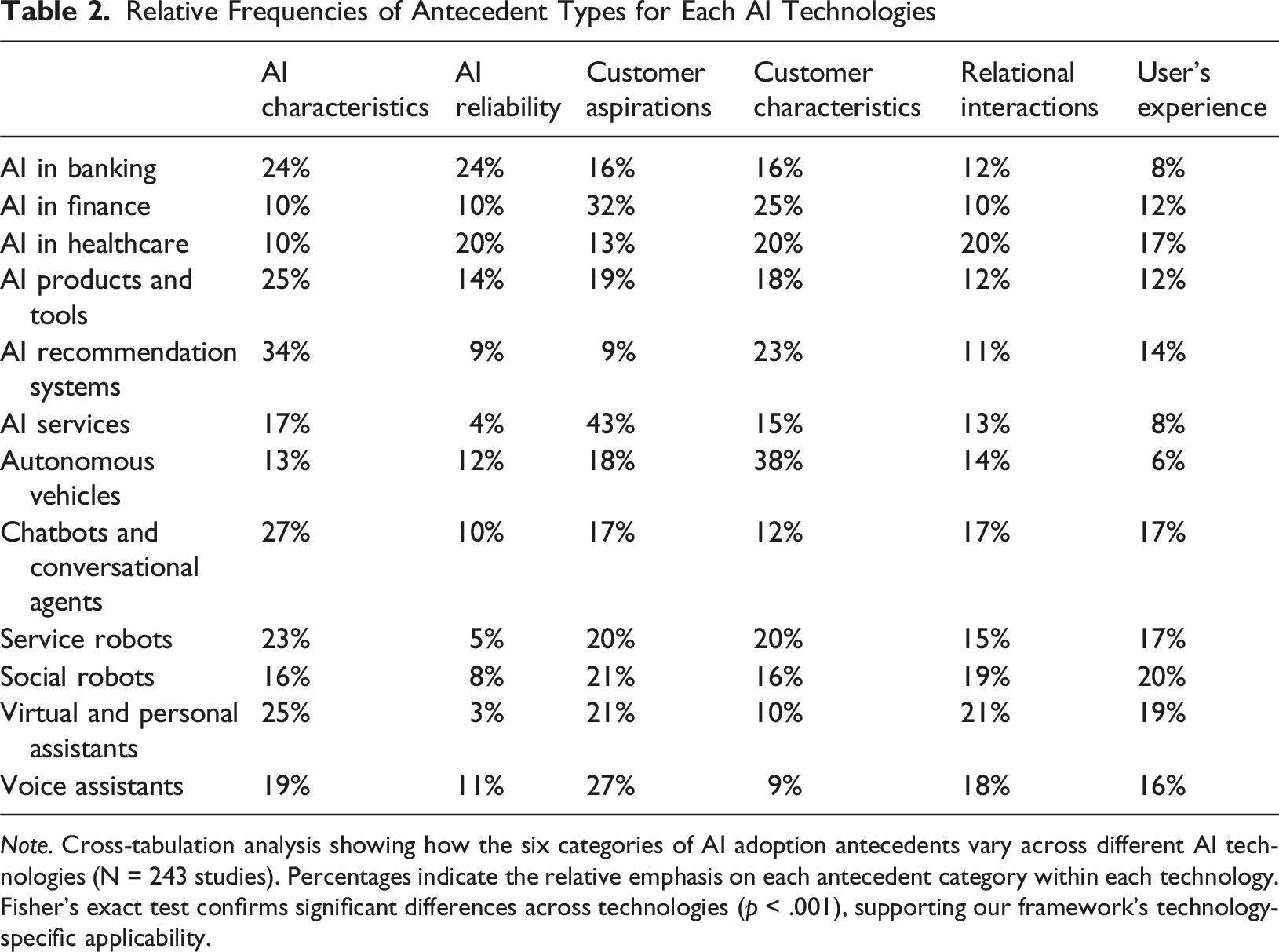
Note. Cross-tabulation analysis showing how the six categories of AI adoption antecedents vary across different AI technologies (N = 243 studies). Percentages indicate the relative emphasis on each antecedent category within each technology. Fisher’s exact test confirms significant differences across technologies (p < .001), supporting our framework’s technology-specific applicability.
For example, AI reliability is a major concern in critical AI applications such as healthcare (20%) and banking (24%), reflecting the increased importance of security and accuracy in contexts where errors can have serious consequences. In contrast, in AI services, customer aspirations are predominant (43%). Customer characteristics have primarily been studied in the context of autonomous vehicle technologies (38%), which reflects the strong need for these technologies to adapt to the varied and specific user characteristics.
Unsurprisingly, antecedents related to relational interactions predominate in studies of virtual and personal assistants (21%) and social robots (19%). To be effective and enjoyable, these technologies which are designed for regular human interaction, require understanding of social dynamics.
Recommendation systems, in contrast, strongly emphasize AI characteristics (34%), which highlights the importance of technological innovation to improve the accuracy and efficiency of recommendations in this field.
Discussion of Step 3
This third step of analysis has highlighted that the factors driving AI adoption can vary depending on the application context and the AI technologies involved. It illustrates how the diversity of technologies and the varying importance of certain antecedents over others complicates the discussion of AI adoption in overly general terms.
However, we noted a consistent diversity in the antecedents studied—encompassing AI-specific, consumer-specific, and AI-consumer interaction factors—regardless of which AI technologies were examined. This highlights the relevance of a comprehensive and holistic approach to understanding AI adoption, emphasizing the importance of considering all relevant facets for effectively and beneficially integrating these technologies into society.
Conclusion and Implications for Market Research
By synthesizing findings from 243 studies through multi-step analysis, this paper reveals the richness and complexity of consumers’ AI adoption. This complexity involves challenges which include ambiguous terminology representing a variety of sometimes overlapping factors that explain AI adoption, and fragmented theoretical bases across disciplines.
To address these complexities, we propose an integrative conceptual model based on STS theory that advances beyond existing synthesis efforts in AI adoption research. This represents a major theoretical breakthrough, as it demonstrates for the first time that an established organizational framework can comprehensively explain consumer technology adoption in the context of intelligent systems. While STS theory has been extensively applied in organizational and information systems research for decades, its relevance to consumer behavior remained unexplored until our systematic analysis revealed this theoretical alignment.
This theoretical innovation fundamentally advances AI adoption research beyond the limitations of existing approaches. While previous reviews (Mehta et al., 2022; Sohn & Kwon, 2020) remain constrained by conventional technology adoption paradigms designed for traditional information systems, our inductive application of STS theory opens an entirely new research paradigm. Our approach demonstrates that consumer AI adoption cannot be adequately understood through individual-focused models but requires recognition of the dynamic interactions between technical systems (AI-related factors), social systems (consumer-related factors), and their intersection (AI-consumer interactions). This framework permits harmonizing diverse theoretical perspectives through the integration of these three critical dimensions.
Our study also provides the granularity missing in earlier synthesis efforts by systematically examining how these socio-technical dynamics vary across different AI technologies. Our cross-tabulation analysis reveals that adoption mechanisms vary substantially between contexts such as healthcare AI (emphasizing AI reliability), autonomous vehicles (emphasizing consumer characteristics), conversational AI (emphasizing relational interactions), and recommendation systems (emphasizing AI characteristics).
Our study has both theoretical and practical implications. For market research professionals, our framework enables a more comprehensive understanding of AI adoption factors than existing approaches that focus primarily on individual perceptions or treat AI as a monolithic technology. Each dimension of our STS framework offers specific insights for market research practice. The AI-related dimension guides professionals in evaluating not only characteristics of AI technologies, but also their perceived reliability in consumer studies. The consumer-related dimension helps in developing more nuanced segmentation strategies that account for both demographic characteristics and individual aspirations regarding AI use. The AI-consumer interaction dimension provides frameworks for studying experiential factors and relational bonds that traditional market research often overlooks.
Looking forward, as AI technologies continue to evolve rapidly, from generative AI to autonomous systems, market researchers will need to adapt their methodologies to capture these dynamic socio-technical interactions. Our framework provides the theoretical foundation for developing new research instruments that can measure not just consumer preferences, but the complex interplay between AI capabilities and human interactions. This is particularly crucial as AI becomes more personalized and context-aware, requiring market research approaches that can capture the complex nature of AI-consumer relationships. Moreover, the technology-specific insights provide actionable guidance—for example, marketing strategies for healthcare AI should emphasize reliability and safety, while strategies for conversational AI should focus on relational aspects.
For researchers, our findings suggest the need to move beyond traditional adoption models in studying AI adoption. Rather than relying solely on frameworks like TAM or UTAUT that primarily focus on consumer perspectives, future research should integrate technical factors, social factors, and their dynamic interactions. Also, our socio-technical framework demonstrates that researchers must account for the specificities of different AI technologies rather than treating AI as a single homogeneous technology. Most importantly, our findings suggest that STS theory may hold untapped potential for understanding consumer adoption of other emerging technologies characterized by complex socio-technical interactions, thereby opening an entirely new research stream in consumer behavior. This theoretical shift is particularly important for market research, as it provides a foundation for developing research methodologies that can capture the evolving nature of AI-consumer relationships in an era of rapid technological advancement.
Our systematic review has limitations that suggest important future research directions. First, as our framework is proposed through literature synthesis, it requires empirical testing. Future research should evaluate our socio-technical model through meta-analyses or empirical studies with specific AI technologies. Second, our review approach cannot capture dynamic adoption processes. This suggests the need for longitudinal studies examining how adoption dimensions evolve over time and for process-oriented studies of factor interactions. Finally, our cross-tabulation analysis reveals patterns but cannot establish causal relationships between AI technology types and adoption patterns. Future research should employ experimental designs to determine whether these patterns reflect actual causal mechanisms.
Supplemental Material
Supplemental Material - Integrating the Literature on AI Adoption: A Socio-Technical Framework
Supplemental Material for Integrating the Literature on AI Adoption: A Socio-Technical Framework by Kathleen Desveaud, Ransome Bawack in International Journal of Market Research.
Footnotes

Funding
The authors received no financial support for the research, authorship, and/or publication of this article.
Declaration of Conflicting Interests
The authors declared no potential conflicts of interest with respect to the research, authorship, and/or publication of this article.
Supplemental Material
Supplemental material for this article is available online.
Note
References
Supplementary Material
Please find the following supplemental material available below.
For Open Access articles published under a Creative Commons License, all supplemental material carries the same license as the article it is associated with.
For non-Open Access articles published, all supplemental material carries a non-exclusive license, and permission requests for re-use of supplemental material or any part of supplemental material shall be sent directly to the copyright owner as specified in the copyright notice associated with the article.
