







Abstract
This study aimed to determine whether the Markers of Assimilation of Problematic Experiences in Dementia scale (MAPED) can be used to identify whether the way in which participants talk about dementia changed during the group. All eight sessions of a LivDem group, which were attended by participants were recorded and transcribed. An initial analysis identified 160 extracts, which were then rated using the MAPED system. Inter-rater reliability was 61% and following a resolution meeting, 35 extracts were discarded, leaving 125 extracts with an agreed marker code. All of the participants were identified as producing a speech marker relating to dementia, and these varied between 0 (warding off) to 6 (problem solution). Examples of these markers are provided. The proportion of emergence markers (indicating the initial stages of assimilation) compared to later markers changed significantly between the first four sessions and the final sessions. This difference was still significant even when the markers produced by the most verbal participant, Graham, were excluded. The use of process measures within psychotherapy complements more conventional outcome measures and has both theoretical and clinical implications.
Background
The Assimilation Model of psychotherapeutic change (Honos-Webb & Stiles, 1998; Stiles, 1999, 2001; Stiles, Honos-Web, & Lani, 1999) is a transtheoretical model of the process of change that occurs in psychotherapy. The Assimilation Model is not a description of how to do therapy, but rather a way of formulating the nature of change that can occur in any form of therapy, or indeed, in everyday life. It has been used to analyze the process of change within psychotherapy sessions with clients with a wide variety of mental health needs (e.g., Varvin & Stiles, 1999), as well as people with learning disabilities (Newman & Beail, 2002) and people affected by dementia (Watkins, Cheston, Jones, & Gilliard, 2006).
The assimilation model represents the self not as a single, unified entity but instead as context-dependent, shifting, and multiple selves. This is consistent with postmodern or social constructionist theories of the self, which describe a “community of voices” (e.g., Gergen & Kaye, 1992; Hermans & Kempen, 1992; Mair, 1989). Typically, these different voices are referred to as the Dominant Voice (the voice of continuity, or the preservation of the status quo) and the Problematic Voice (the voice of the emotional consequences of change including fear, anger, sadness, and loss). Within the Assimilation Model, most experiences in a person’s life are seen to be unproblematic and can be assimilated relatively routinely into that person’s existing self.
During successful assimilation, a dialogue or conversation occurs between the Problematic and Dominant Voices (Honos-Webb & Stiles, 1998), leading to the resolution of the differences between the two voices. However, some experiences are so traumatic and their implications are so threatening that they represent a profound threat to that person’s sense of self. In these cases, conflict arises between the different voices, which acts to prevent the assimilation of that experience, and the unassimilated material remains unacknowledged or “warded off” (Honos-Webb & Stiles, 1998; Stiles, 2001). Within this model of psychotherapy, the role of therapy can thus be understood as being to facilitate a conversation between the Problematic and the Dominant Voices, thus enabling the person to engage with the difficult or problematic material, and to integrate this otherwise unassimilated material. This often takes the form of the client approaching and then retreating from the threatening material.
Markers of Assimilation of Problematic Experiences of Dementia Scale (MAPED).

Assimilation and dementia
The threat of a dementia diagnosis can be understood in terms of the Assimilation Model of Problematic Voices. Within this framework, a diagnosis is likely to represent such a powerful threat to the person’s psychological equilibrium that it may resist being easily assimilated into the self. This way of representing the threat of dementia, and thus the nature of the psychological change that is required for people to “come to terms with” dementia, has been used in a series of studies about changes in descriptions of dementia (e.g., Betts & Cheston, 2011; Cheston, 2013; Cheston, Jones, & Gilliard, 2004; Snow, Cheston, & Smart, 2014; Sims & McCrum, 2012; Watkins et al., 2006). The MAPVS was adapted so that it is appropriate for use with people with dementia (Lishman, Cheston, & Smithson, 2014). The revised scale (known as the Markers of Problematic Experiences of Dementia or MAPED scale 1 ) follows the MAPVS by coding accounts of dementia in terms of a series of markers, or speech events, which can be grouped into one of the eight possible levels (see Table 1). Ratings of these markers take into account both the use of language to frame dementia (and dementia-related experiences) and the emotional intensity that surrounds this discourse. Adapting the MAPED scale from the original MAPVS involved identifying passages from either psychotherapy groups or qualitative interviews with people affected by dementia in which descriptions of dementia were initially rated as indicative of a specific marker and then used as illustrative templates to guide future analysis. For instance, a passage would be coded as falling into level 1 (unwanted thoughts) if the account includes an aspect of dementia such as memory loss and the person’s level of affect indicates feelings such as anxiety, anger, or sadness. In addition, there needs to be a strong sense that exploration of the wider implications of the dementia is being avoided because this is experienced as being frightening or destabilizing to the person’s emotional equilibrium. Level 1 markers include the person: changing the conversation; locating the existence of dementia elsewhere by talking about other people and not themselves as having dementia; limiting the problems the person experiences to some areas without this being explicitly or implicitly associated with dementia; references to fears of being mad or abnormal; asserting that other areas of functioning are unimpaired or that they can be easily overcome; or other speech acts that minimize the significance of the dementia experience.
One marker of a level 1 rating that was identified in the original MAPVS rating process is referred to as the “fear-of-loss-of-control” marker (Honos-Webb, Lani, & Stiles, 1999). This marker can be identified as occurring when a person describes a choice between continuing to explore the problematic experience (and risking destabilizing their internal, emotional equilibrium), and avoiding further discussion. The clinical importance of this marker is that it signifies the emergence of unwanted thoughts into the person’s awareness, an early indication of the person beginning to assimilate emotionally charged or problematic experiences. The MAPED coding frame translates this into the context of dementia by identifying instances in which a person avoids discussing dementia, for fear of how this might make them feel. Thus, in the psychotherapy group subsequently reported by Watkins, Cheston, Jones, and Gilliard (2006), Mr E states “I can’t think about coming here, it just brings it all back.”
One indication of a possible “fear-of-loss-of-control” marker can be found in what has been described by Cheston (2015) as the Voldemort phenomenon. This refers to the way in which some people affected by dementia may refer to aspects of their experiences indirectly, and without using the terms “dementia” or “Alzheimer’s disease.” Just as in the Harry Potter series of novels, the evil Voldemort is for many characters too frightening to be named directly, so too some people affected by dementia find their illness too powerful to be referred to by name. To name dementia, then, is to acknowledge its existence and thus to risk a loss of emotional equilibrium. Thus, Sue’s description of her dementia as “like being given a ticking time bomb” (Snow et al., 2014) and Henry’s analogy of fighting an unnamed foe because he did not want to “wave the white flag” (Lishman et al., 2014) were both rated being markers of a “fear-of-loss-of-internal-control”—and thus acquired a Level 1 rating. Finding alternative ways to talk about dementia, for instance by using euphemisms (such as memory loss) or figurative language is therefore part of a process of emotional regulation.
Living well with dementia therapy groups
Structure of living well with dementia intervention.
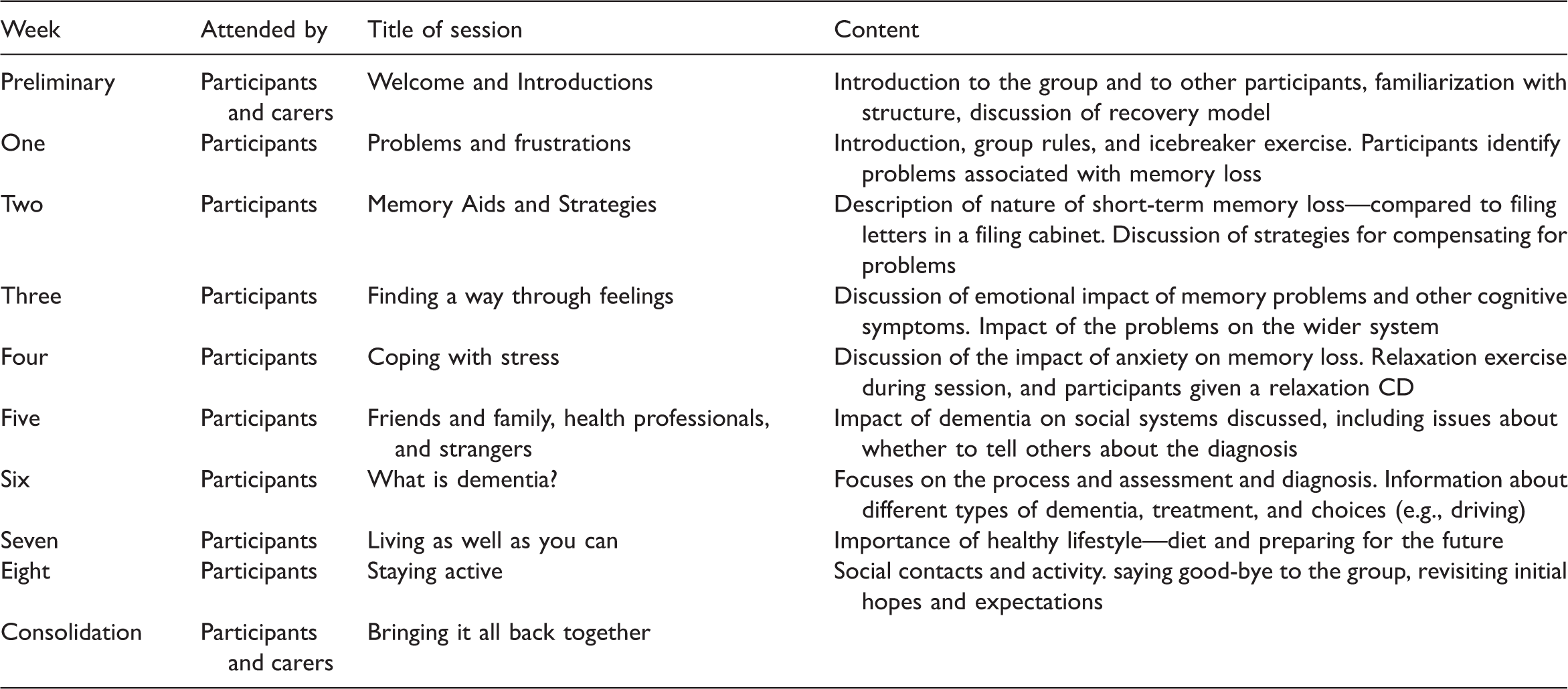
The aim of the LivDem intervention is to support people who have recently received a diagnosis of dementia to plan ahead and to take control over their illness. For many people, this may present a significant emotional challenge in which there is a need, in effect, to balance the practical benefits that might accrue from greater understanding of dementia on the one hand, against the existential pain that might arise from this increase in awareness (Cheston, 2013). The aim of the qualitative part of the study was to establish whether it was possible to use the MAPED technique to identify whether there were changes in the type of markers that are found over the course of one of the LivDem groups.
Method
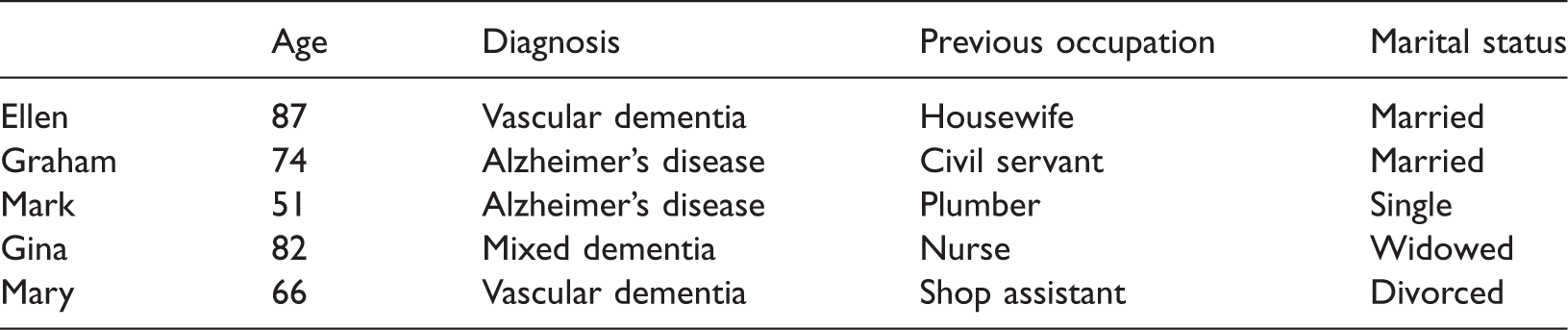
The assimilation analysis of recordings collected during the LivDem study falls into two parts: first of all, the analysis presented here of all eight of the sessions attended by one of the seven groups; and secondly, the analysis of a randomly selected sample of sessions from the remaining six groups, which will be reported separately. The group from which this analysis is presented was the first of the seven groups to take place, although otherwise it does not differ significantly from the other groups that were part of the project.
Demographic and outcome scores for group participants.
The procedure for identifying markers of assimilation is adapted from psychotherapy process research (Honos-Webb & Stiles, 1998; Honos-Webb, Surko, et al., 1999; Knobloch, Endres, Stiles, & Silberschatz, 2001). This consists of four steps:
Transcribing and familiarization. All participants in the LivDem study gave their consent for each session to be audio-recorded. The initial step of the analysis involves intensive exposure to the transcripts, making systematic notes to locate passages that relate to change, cognitive loss, or expressions of heightened affect. Extracting passages. Speech markers are identifiable events in discourse that recur throughout the transcripts and that indicate important clinical phenomena (Honos-Webb et al., 1998). In this analysis, LG identified 160 extracts in which one or more of the group participants either referred directly to an aspect of dementia or were provided with a clear opportunity to do so (e.g., through a question by a facilitator) but avoided doing so. Rating passages. LG was trained using extracts that had initially been rated in Lishman, Cheston, and Smithson (2014). LG and RC then independently coded the extracts. RC was blind to the session in which the extracts occurred, although LG was not blind as she had extracted the data from the transcripts. There was an initial agreement on 98 of the 160 extracts, giving an inter-rater agreement level of 61%. Clarifying disagreements. The 62 ratings where the raters disagreed were discussed in a resolution meeting. This enabled agreement to be reached for 27 extracts, with the remaining 35 extracts being discarded as they were deemed either not to have enough content to be rated or as being too difficult to be rated reliably. This left a combined total of 125 extracts with an assigned marker code.
Results
Across the eight sessions as a whole, markers from every level except Level 7 (Mastery) were identified. Over half of the extracts (66 of the 125) came from one participant: Graham. Previous research (e.g., Cheston, 2013) suggests that the markers can be subdivided into three groups: emergence, in which the therapeutic task is to enable dementia to emerge as the cause of problems without the person being overwhelmed (levels 0–2); naming dementia as the problem and finding distance from it (levels 3 and 4); and working through (levels 5–7).
Emergence
Level 0: warding off. In session 2, when the group was asked directly about how their memory problems affected them, Mary showed avoidance by interpreting the question as relating to her physical disability: [1] Mary: I’ve come to terms with mine now I know I can’t walk on my leg again so yeah I’ve come to terms with it now. Session 2
Level 1: unwanted thoughts. For a speech extract to be rated as occurring in this level, there needs to be evidence both that the person has thought about dementia and also that these thoughts are actively avoided. Thus in the fifth session, the group watched a recording of people talking about how the diagnosis of dementia had affected them personally. Mary who had been quiet, was asked about the impact of the dementia diagnosis on her: [2] F1: How did you feel about it Mary? Mary: Oh I feel all right about it, me. Yeah. F2: So did, when you had your diagnosis did it // Mary: //Hmm? [2.1] F2: When you had your diagnosis did it affect you in any way? Mary: No, no, no F2: No. [2.2] Mary: No,
[2.3]
[2.4]
[2.5]
I can’t get up and walk I know but (coughs) you know I’m sat there and I do a lot of um crosswords and things that keep my mind occupied. Session 5
Level 2: vague awareness. In this level, the person is in distress that comes from an internal conflict relating to an aspect of their dementia. In articulating this distress, the person seems to be caught up in the moment of the emotion. They express material with a strong level of affect, and while the nature of this affect varies, nevertheless there is a clear intensity to the way in which they express themselves. Thus, in this series of extracts, the participants express their distress which we might characterize as, respectively, sadness, resentment, and anxiety: [3] F1: You’re really quiet there Gina. Gina: Yeah I know, there’s lots of things going through my mind.
Graham: I’m sorry if I’ve// Gina: //No, no, it’s nice to hear anyway. Session 2 [4] Graham: And before long they'll be giving you toilet paper and wiping your bum for you. Gina: I don’t want that Graham:
[5] Gina: My memory turns up at the wrong times In the middle of the night
I didn’t speak to them. Session 7
Naming dementia as the problem
Level 3: clarifying dementia as the problem. At this level, the person both acknowledges the existence of a problem and attributes this to or recognizes that this is caused by their dementia. Thus, in session 5, Gina and Graham comment on a recording of people talking about a diagnosis of dementia that they had just watched (this was part of a DVD used within sessions): [6] Facilitator 1: You were watching the television just now people were talking about how they felt when they first had their diagnosis. Gina:
Graham: That’s right
[7] Graham: You, fortunately for me brought up an area which was snowboarding. I1: Oh, sun downing? Graham: Sun downing sorry sun downing I happened to say that that’s something I get now what I then went on to say is
it’s the broadening of more than just memory. [8] Facilitator 1: … is that a concern as well the fact that maybe other people will see changes happening and you won’t see those changes? Graham: my concern if you want to know the real truth is at what stage am I going to be a real burden on my wife. F1: Right yeah. Graham: That’s my real concern. F1: Yes have you shared that at all with your wife have you talked to her? Graham: She wouldn’t accept it if I did. F1: Really. Graham: She would tell you I am already a burden (laughs) Gina: In a joking way probably? Graham: (laughs) No seriously. Session 8
Working through
Level 5: accepting dementia and developing strategies. Here, the person acknowledges the existence of a dementia or a central aspect of dementia such as a memory problem and recognizes that the dementia cannot be cured, but can be managed. They can point out exactly what needs to change or to be worked on and show that they are weighing up attempts at specific or partial solutions to the problem (e.g., considering taking medication, supporting the Alzheimer’s society or challenging stigma). The affect (mood) is positive, business-like, and optimistic. Thus Graham comments in the penultimate session: [9] Graham:
and the best thing I could do was tell everybody I've done exactly that
If I could tell you the truth I don’t think they’ve taken one blind bit of notice. Session 7 [10] Graham: Well I try and be jolly all the time and I keep thinking to myself I should have made a change by now because when I was told I got dementia it was as if you know the end of the world had come
Does that make sense? Session 6
Shifting use of markers across sessions
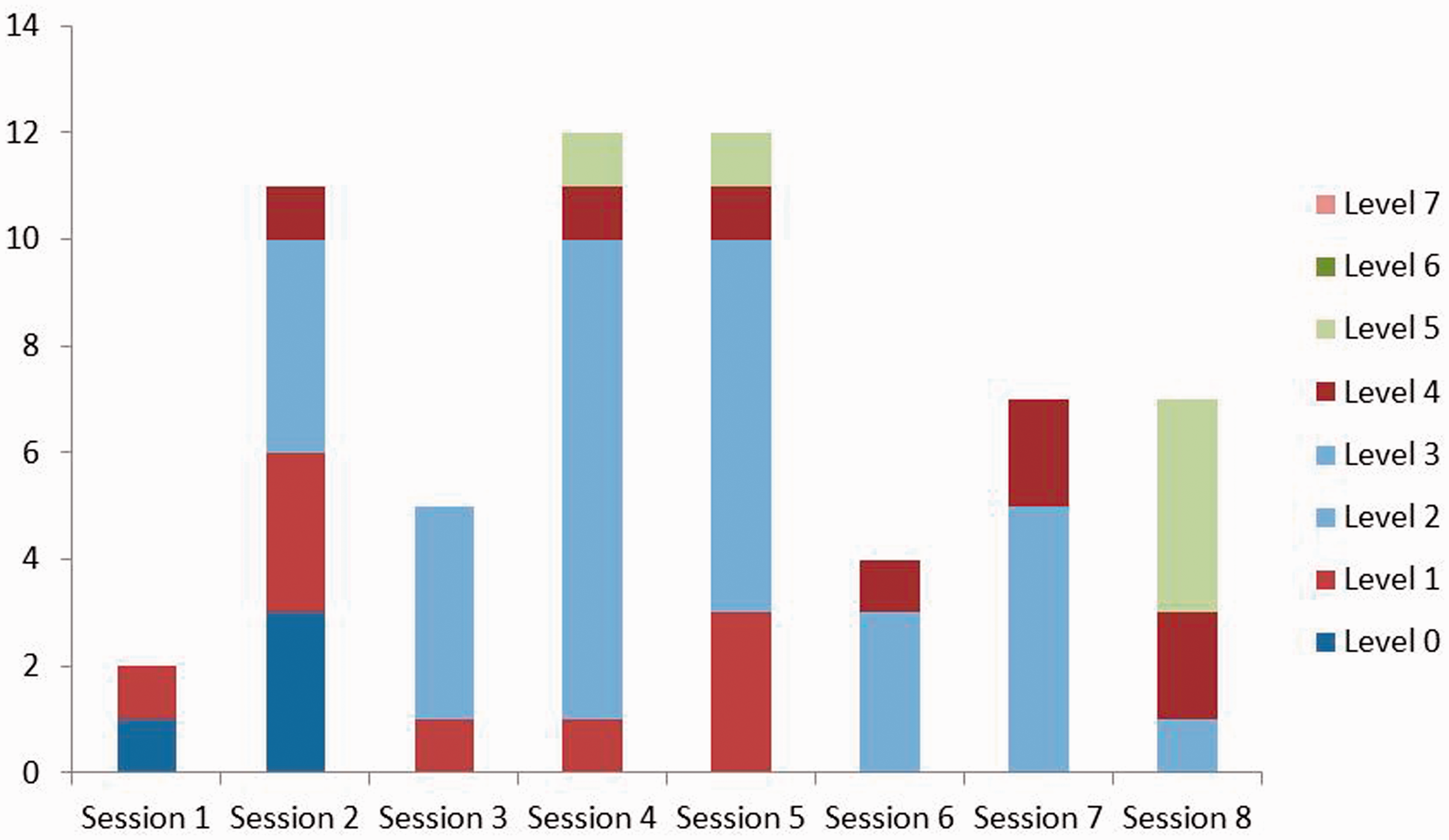
This analysis shows that the levels of markers used in sessions altered as the group progressed. As Figure 1 indicates, there was a shift toward an increase in the proportion of markers from more assimilated levels in the later sessions. Alongside this was a decrease in markers signifying emergence of awareness (i.e., levels 0–2) as there are no level 0 markers after week 2, no level 1 markers after week 5, and only one level 2 marker in each of sessions 6, 7, and 8. Similarly, there was an increase in higher level markers over successive sessions: from week 4 onward, there was a significant increase in the number of markers from levels 3–6. A 2 × 2 contingency, table was constructed to examine whether there were differences between the proportion of markers indicating an emerging awareness (levels 0–2) and more assimilated markers (levels 3–6) between the first four and the final four sessions. Fisher’s exact test gave a highly significant two-tailed value of less than 0.0001. Over half of the extracts (66 of the 125) came from one participant: Graham. However, although Gina, Mark, and Mary provided fewer references to dementia that could reliably be identified as markers, nevertheless Figure 2 suggests that when they did contribute, then their use of markers too altered. Even when Graham’s markers were excluded from the contingency table, Fisher’s exact test gives a P of 0.0016.
Total number of markers for all participants across the eight sessions (total of 125). Total number of markers for Mary, Gina, and Mark across the eight sessions (total of 60).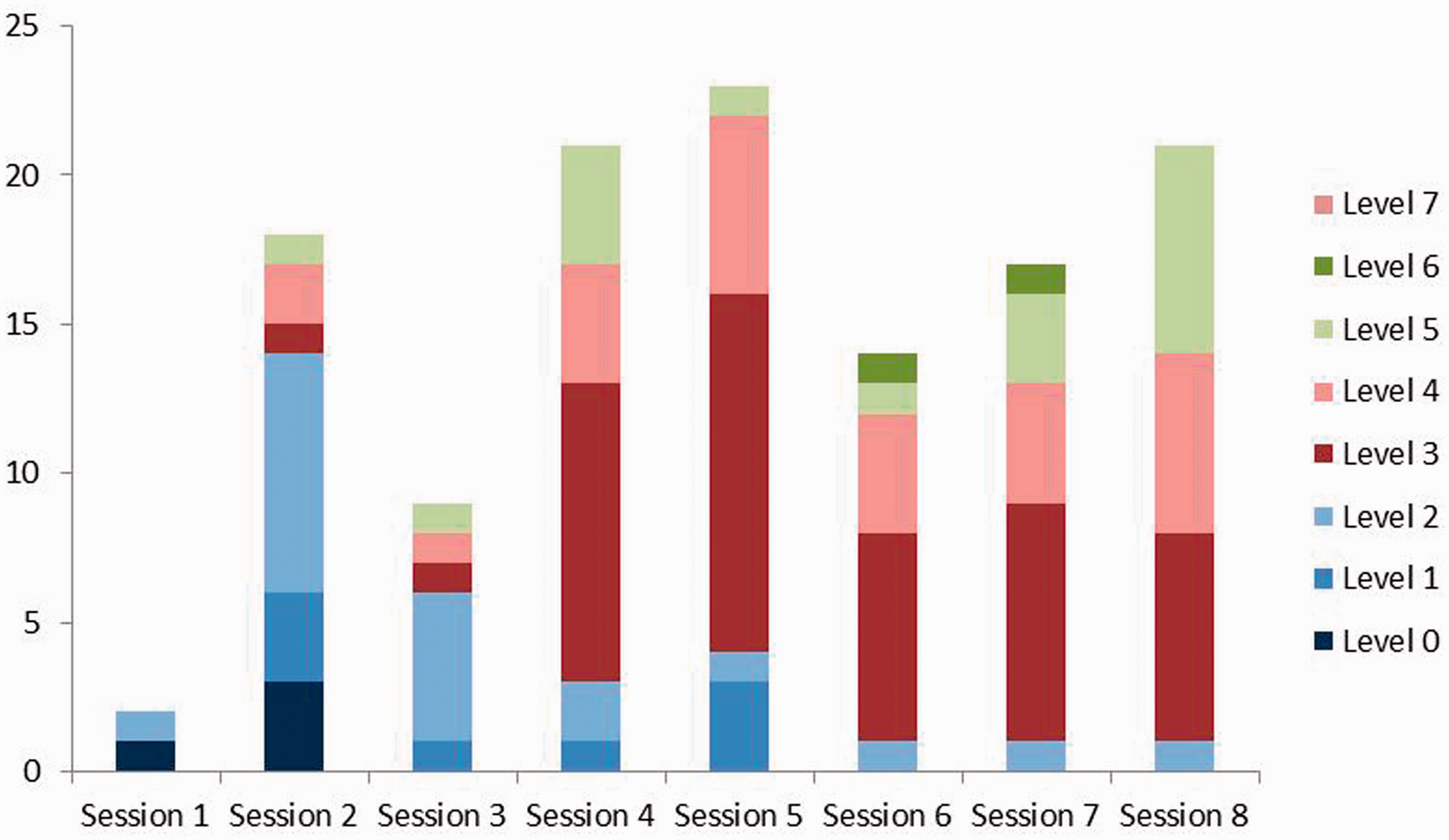
Discussion
This study set out to test whether the markers that were used within a therapy group changed across the eight participant-only sessions of a group. We have argued that the Markers of Assimilation of Problematic Experiences of Dementia is a useful way of tracking change, and also that in the second half of the group, participants talked about their dementia in a different way to that in the first four sessions. Change is still present even when Graham, the most verbal and assimilated participant is removed from the analysis.
There are two possible reasons for this apparent change in levels of markers found in the group over the initial and latter stages of the group: either it may represent a therapeutic shift in which participants gradually assimilated the problematic elements of their diagnosis; or alternatively, it may reflect the way in which the topics that the facilitators raised altered across these sessions. In many ways, this change in the type of markers used probably reflects both of these factors—thus although the facilitators talked more directly about dementia in later sessions, participants were able to assimilate this understanding in a way that may well have not have been possible at an earlier point. Indeed, it is this combination of participant and therapeutic factors that typifies the psychotherapeutic process of change.
In addition, talking about dementia, was rarely characterized as existing at a single level of assimilation. Instead, individuals moved between different levels within the same session, and sometimes within the same extract. This is a process that has been described elsewhere, for instance within qualitative analysis of interviews with people affected by dementia. Typically, these studies represent awareness as a fluid process in which both denial and acknowledgement of dementia may be present. Thus, Robinson, Clare, and Evans (2005) described couples’ shared constructions of the diagnosis of dementia as a process that cycled through “denial, minimisation and gradual realisation as couples gradually began to accept the changes in the person with dementia were likely to be permanent, linked to an oscillating process of acknowledging what had been lost, as well as carrying on as a couple by focusing on what remained for each person and the couple” (Robinson, Clare, & Evans, 2005, p. 344).
Importantly, both the growth in awareness for some participants and the oscillating ambivalence described by both Robinson, Clare, and Evans and by Lishman et al. (2014) occurred outside a formal psychotherapeutic process. This suggests that for some people affected by dementia, it is possible to gain increased awareness of their illness without attending support groups such as LivDem. However, the personal and social characteristics that lie behind such shifts in awareness are not clear.
Implications for clinical development
Drawing on the assimilation model, Cheston (2013) has suggested that there are three steps within this process of adjusting to the illness. The first task is for people to be able to name their problems as being dementia without being emotionally overwhelmed (levels 0–2). Then, once people are able to talk about the dementia, they have to find some emotional distance from the illness (levels 3 and 4). Finally, they are able to see dementia as only one part of their lives, and make appropriate plans (levels 5–7).
Within this model, the transition between levels 2 and 3 (i.e., from warding off awareness of the illness, to identifying dementia as the problem) is of critical importance. This process involves the person managing to name their problems as being caused by dementia without, at the same time, being emotionally overwhelmed. Intrinsic to this change in talking about dementia is an emotional process involving the person articulating the Problematic Voice. This may be around their fears for the future, around loss (such as giving up driving), or around embarrassment and frustration. From a clinical perspective, what seems to facilitate people in approaching their dementia includes other people in the group articulating their fears and concerns (Watkins et al., 2006) and using indirect ways of exploring threat (Cheston et al., 2004). Conversely, barriers to change may be setting too fast a pace for therapy, providing information at too soon a point in the therapeutic process or involving people from outside the group (Cheston & Jones, 2009).
Implications for research
The Assimilation Model has a number of differences compared to other approaches which examine the awareness that people affected by dementia have into their illness. One clear difference is the way it conceptualizes the relationship between affect and awareness as a complex and bilinear process. Thus, the Assimilation model suggests that initially increased levels of awareness from warding off (Level 0) through to Vague Awareness (level 3) are associated with increasing levels of affect. This distress can be dissipated through the use of affect regulation behaviors such as repression and the projecting out of distress, but it may also be associated with behavioral strategies such as avoidance. For some people, increased awareness of the Problematic Voice of dementia may be associated with verbal markers of a fear-of-loss-of-control in which the person expressed concerns that continuing to engage with the problematic material may lead to a loss of psychological equilibrium or well-being (Cheston, 2015). However, if the person affected by dementia is able to continue to articulate their Problematic Voice and this becomes assimilated into the community of selves, then levels of affect decline. Thus, if a person is able to identify their problems as being associated without being emotionally overwhelmed and are both to hold onto their dementia while also identifying partial solutions to some of the problems that it raises, then levels of affect diminish.
Final thoughts
The importance of postdiagnostic support for people affected by dementia is increasingly recognized (Watts et al., 2014). The LivDem groups provide a short-term intervention that can be facilitated by nurses and other memory clinic workers after a two-day training course and receiving supervision from clinical psychologists. Although evidence from the Pilot study was encouraging, further work is needed to clarify its therapeutic impact. This includes identifying whether participants are more able to acknowledge their dementia as a result of attending the groups, and to identify therapist behaviors that facilitate or impede this process. The MAPED method provides an innovative and potentially important way of tracking therapeutic change or growth in awareness, and this is an important tool in both research and clinical practice.
Footnotes
Statement of ethical approval

Acknowledgements
We would like to thank all of the participants and their families for participating in this research. The project team would also like to thank the group facilitators (Kathy Chapman-Hill, Jackie Shearing, Lorraine Conduit, Rachel Crane, Angela Lynch, Kate Wilson, Rebecca Burke, Heather Baldwin, Rachel Woodward, Alison Moren, Sue Ward, Helen Williams, Debbie Bolton, Emma Reed, Susan Ryan, and Nicki Short). In addition, thanks are due to Saskia Boisevin, who assisted in the initial analysis of recordings of sessions. Cynthia Russell, Claire Ballinger and Mark Mullee, Elizabeth Bartlett, Professor Clive Holmes, and David Higgenbottom all contributed significantly to the project as members of the Trial Steering group.
Declaration of Conflicting Interests
The author(s) declared the following potential conflicts of interest with respect to the research, authorship, and/or publication of this article: The views expressed are those of the authors and not necessarily those of the NHS, the NIHR or the Department of Health. Trial Identifier: ISRCTN25079950.
Funding
The author(s) disclosed receipt of the following financial support for the research, authorship, and/or publication of this article: This article presents independent research funded by the National Institute for Health Research (NIHR) under its Research for Patient Benefit (RfPB) Program (Grant Reference Number PB-PG-0610-22005).