







Abstract
Participatory approaches are increasingly required and used in research. In this review, we examined the impact (benefits and disadvantages) of participatory dementia research on researchers as potential key actors to sustainably implement the participatory approach. Our aim was to provide information on how the participatory process could be improved. We conducted a systematic literature review covering the Cochrane Library, PsycNet, PubMed, Scopus, and Google Scholar. The inclusion criteria for publications were as follows: research (1) involving people with dementia as co-researchers, (2) including a description or discussion of the impact of participatory research for researchers, (3) published between 2000 and 2020, and (4) in English. We performed a quality assessment of the included publications. Our final review included nine publications; three categorized as high quality, five as medium quality, and one as low quality. Four of the publications categorized as high or medium quality implemented participation at the level of partnership, and two publications implemented participation at the level of delegated power. The beneficial impact of participatory dementia research on researchers consisted of an increased understanding of people with dementia that widened researchers’ theoretical knowledge and perspectives and increased their competence in working with people with dementia. Disadvantages comprised the required additional effort and time as well as the difficulty of establishing a balanced relationship between researchers and co-researchers. Disadvantages may result from the lack of a definition and structure of participatory research and a lack of training on both sides. More well-designed and transparent methods of evaluating participatory research projects are needed.
Keywords
Introduction
Participatory approaches involving different stakeholders in research processes are increasingly used internationally. People with lived experience provide insights into their lives and living circumstances, thereby taking on the position of co-researchers as experts of a specific condition or experience (Bergold & Thomas, 2012; Bethell et al., 2018; Crocker et al., 2017; Staley & Minogue, 2006). The definition of different terms, such as participatory research, research engagement, or patient and public involvement (Miah et al., 2019), is not uniform, entailing different roles and participation degrees of the stakeholders involved. Public involvement is defined as “research being carried out ‘with’ or ‘by’ members of the public rather than ‘to’, ‘about’, or ‘for’ them” (INVOLVE, 2021, para. 1). For this review, we used the definition of participatory research as “collaborative co-governance of research, involving researchers and those affected by issues under study or who are in positions to act on the knowledge generated by research (e.g., end-users including participants of an intervention, clinicians, health managers, and policy makers)” (Green et al., 1995 cited by Jagosh et al., 2011, p. 2). In this review, we refer to collaborative research with shared decision-making of parties involved with people with dementia. Furthermore, different terms are used in the literature to refer to people engaging in research (Crocker et al., 2017; Ocloo et al., 2021), such as research partners or non-academic researchers. In this paper, we will use the term co-researchers for people with dementia who have no prior scientific training in the field of research in which they are involved, as distinct from researchers with a professional background. By sharing their experience-based knowledge with researchers, co-researchers contribute to the interaction between practical and theoretical knowledge (Bergold & Thomas, 2012).
For researchers, adopting a participatory approach implies changing usual working processes and practices. The expected benefits of participatory research include a better understanding of those affected by a condition (Staley, 2009, p. 64). Furthermore, researchers gain experience in conducting research projects with co-researchers, which is now often required by funders (Staley, 2009, p. 8). Nevertheless, with regard to the impact for all involved Staley (2015, p. 1) discussed the question whether patient and public involvement is worth doing. The author concluded that evidence on this topic is still lacking but a positive effect is to be expected, especially for researchers (Staley, 2015).
The question of whether it is worth doing is even more relevant in dementia research, where collaboration with those with the condition requires additional effort due to cognitive impairment, communication restrictions, and behavioral changes. Several studies have successfully included people with cognitive decline (e.g., Miah et al., 2019), but symptoms like agitation, apathy or hallucinations (e.g., Cerejeira et al., 2012) as well as disease progression render the participation of those affected more difficult and time-consuming. However, the prevalence of dementia (e.g., Fiest et al., 2016; Livingston et al., 2020) accompanied by social and economic consequences of cognitive decline highlights the importance of participatory dementia research to allow the necessary broadening of scientific perspectives (Staley & Minogue, 2006; Watson et al., 2019).
Further research is needed on the impact of participatory dementia research on research outcomes and parties involved, including people with dementia and researchers (Bethell et al., 2018; Miah et al., 2019). Evidence exists regarding the effects of participatory research on people with dementia, such as their empowerment and an increase in positive feelings (Span et al., 2018; Suijkerbuijk et al., 2019), as well as on the project outcomes in dementia research, such as the better quality of generated data (Clarke et al., 2018; Stevenson & Taylor, 2019). In this review, we wanted to expand the existing knowledge on the impact of participatory research with the experience of researchers. The experience of researchers has been the focus of only a few studies (Staley, 2017), although they represent one important group for impact evaluation (Morgan et al., 2018, p. 3). A lack of knowledge about the positive impact of participatory research is one reason researchers do not include different perspectives (Evans et al., 2013 cited by de Wit et al., 2018). A better understanding of the impact on researchers may be one of several motivating factors to conduct participatory research. Most importantly, a stronger evidence base could aid in the sustainable implementation of participatory approaches in dementia research (Miah et al., 2019). For this reason, in this systematic review, we focused on the beneficial and disadvantageous impact of participatory research as experienced by researchers. Our research questions were: (1) What are the benefits of participatory research including people with dementia for researchers? (2) What are the disadvantages of participatory research including people with dementia for researchers?
We have examined these features of participatory research to outline resources needed as well as limitations and to support next steps.
Methods
We conducted a systematic literature review. Details are reported complying with the requirements of the Preferred Reporting Items for Systematic Reviews and Meta-Analyses (PRISMA) statement (Moher et al., 2009). The review protocol has not been preregistered. The search was carried out in April 2020 with the following databases: Cochrane Library, PsycNet, PubMed, and Scopus. These databases cover an interdisciplinary range of literature on the subject of dementia. In addition, we searched articles’ references based on the snowball method, and we searched using Google Scholar to capture gray literature.
Search strategy with inclusion and exclusion criteria
The search strategy was based on four keywords: “dementia”, “research”, “participation” and “impact”. For each keyword, synonyms were identified to find relevant Medical Subject Headings (MeSH) terms and to develop a search string. We focused on the concepts of participation and participatory research. Starting in PubMed, the string syntax was adapted to other databases. The search string in PubMed was as follows:
(((participation [All Fields] OR participatory [All Fields]) AND (“research”[MeSH Terms] OR “research” [All Fields])) AND (“dementia” [MeSH Terms] OR “dementia” [All Fields])) AND (“Impact (Am Coll Physicians)” [Journal] OR “impact” [All Fields]) AND (”2000/01/01” [PDAT]: “2020/12/31” [PDAT])
Inclusion and exclusion criteria for the systematic review.
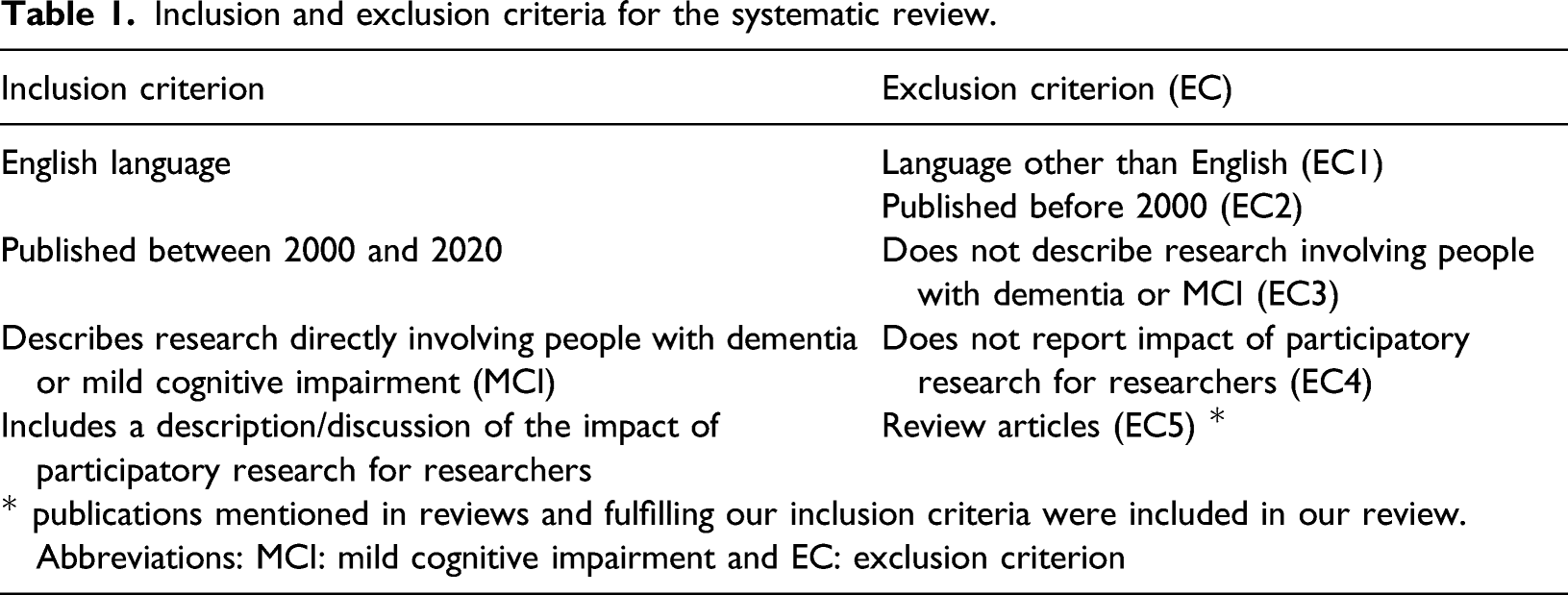
One researcher (AK) searched each database and Google Scholar using the inclusion criteria listed in Table 1 and created a publication list based on the title and abstract of the articles. Duplicates were removed, and the titles relevant to our review were marked. The search in Google Scholar yielded more than 50,000 results, so only the first 20 pages of the results were viewed.
The second researcher (HP) replicated the search on the same dataset with the same strings as well as inclusion criteria and marked the relevant publications independently. Conflicts in selection were resolved by discussion between the two researchers. Subsequently, the relevant articles were stored in EndNote X9 (Version X9.2, Clarivate Analytics, Philadelphia).
Quality assessment
We appraised the methodological quality of the articles using a checklist that we developed based on the Mixed Methods Appraisal Tool (MMAT), which is suitable for all study designs with the exception of non-empirical data (Hong et al., 2018, p. 1). Since studies with a participatory approach are often descriptive, we have created a checklist based on the MMAT due to the lack of critical appraisal tools for these study designs. This checklist is shown in Supplement Material 2.
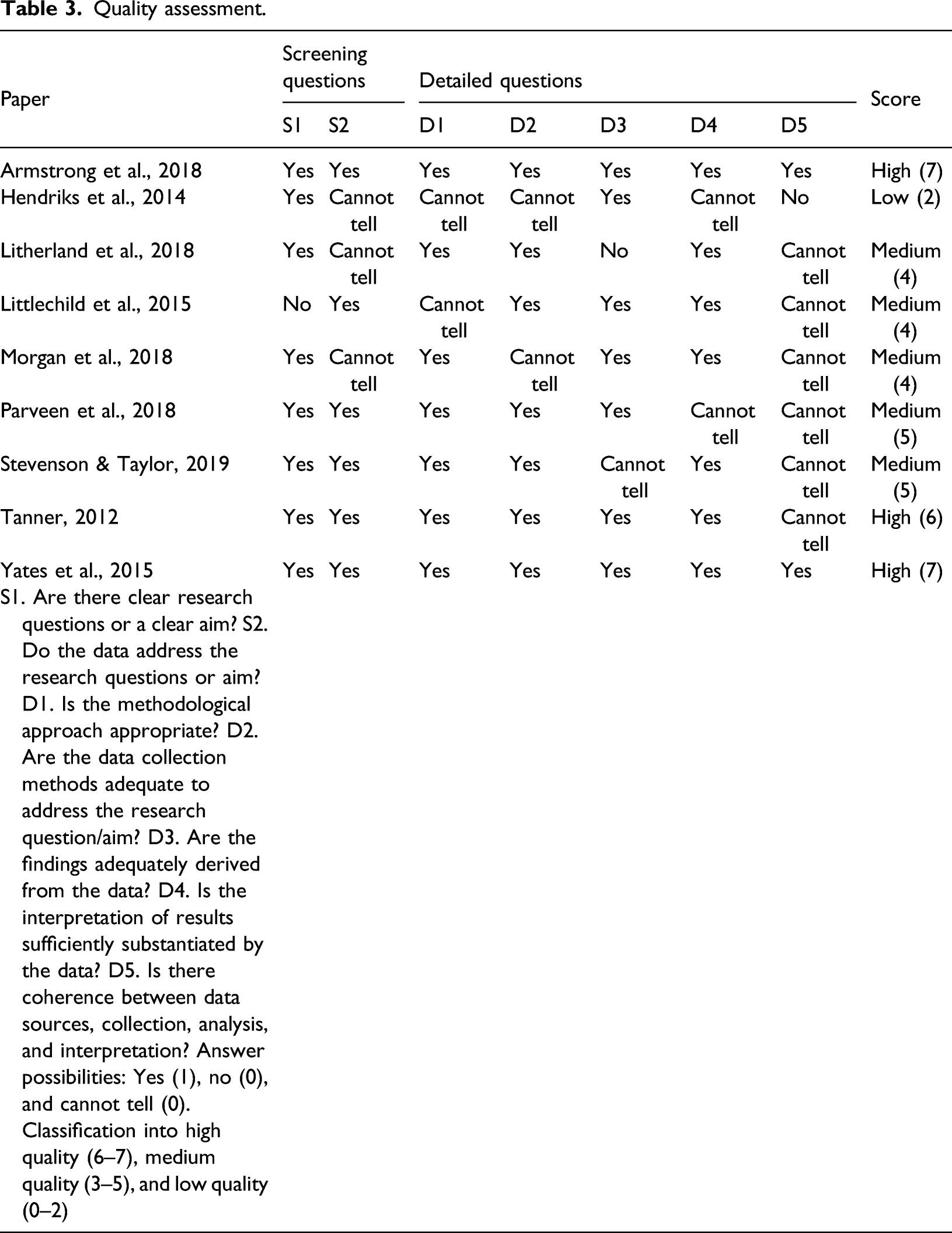
One researcher (AK) rated the papers individually. The rating results were discussed with a second researcher (HP). We ranked the papers according to the number of questions answered in the affirmative on a scale from 0 to 7. The quality assessment was intended to enable a classification into high quality (6–7), medium quality (3–5), and low quality (0–2).
Data analysis and extraction
Degree of participation according to Arnstein (1969) and adapted to participatory dementia research.
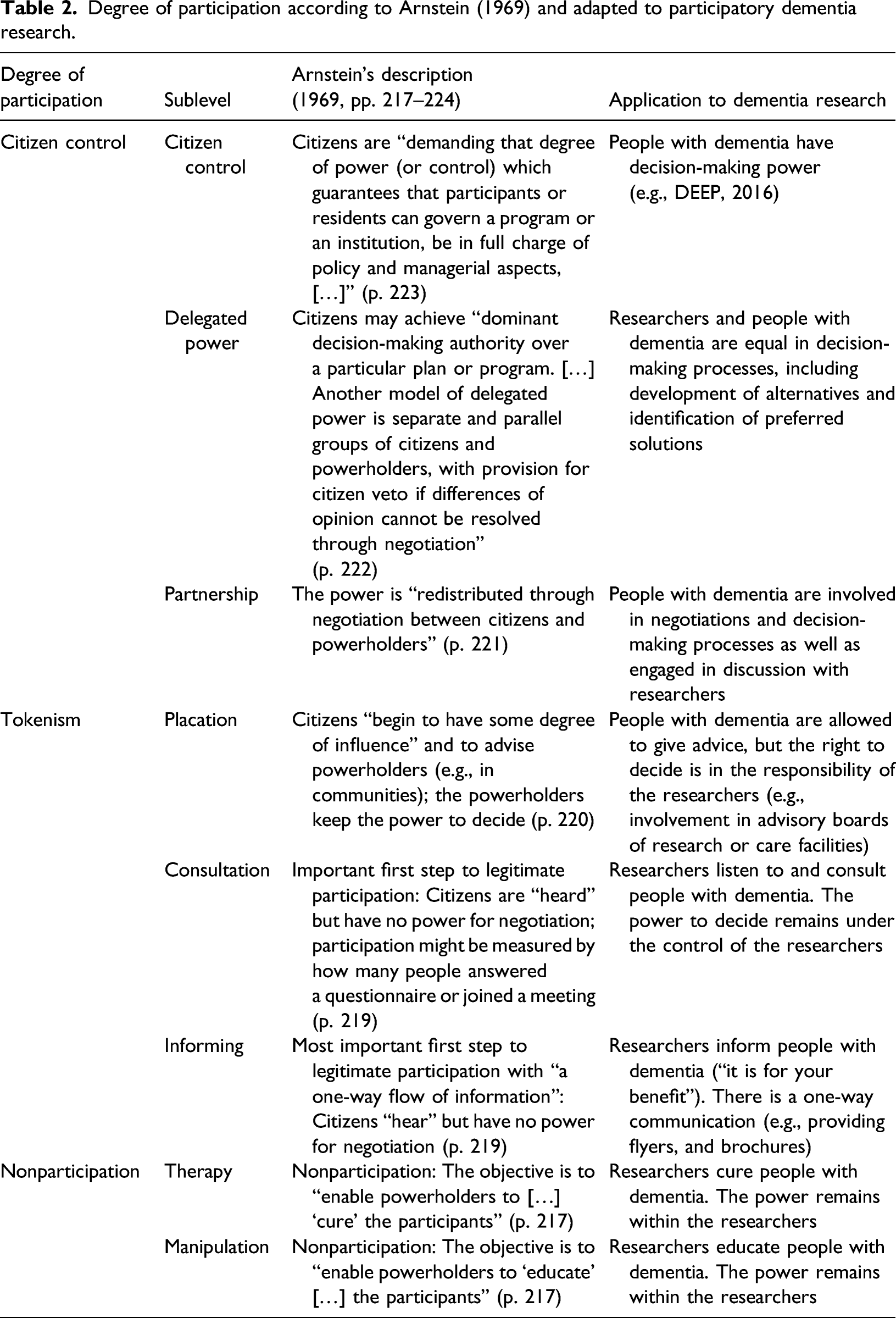
Second, we deductively formed main categories based on our research questions to identify the benefits and disadvantages of participatory research on researchers. The categories were defined, anchor examples were selected, and coding rules were formulated. The coding rules for the deductively formed categories are presented in Supplement Material 3. We assigned the text passages from the publications to the main categories. We summarized text passages reporting analogous content in the main categories as a subcategory. The text analysis was performed with MAXQDA 2020 software (Version 20.2.2, VERBI GmbH, Berlin).
Results
Study selection
The search generated 859 results, and through the systematic process, we identified nine eligible papers, as shown in the figure (Figure 1). We screened the titles and abstracts of 786 publications. We aimed to include 46 publications in full-text screening. Six publications were not available as full texts and were therefore excluded. Thirty-one articles were excluded because they did not meet our inclusion criteria. PRISMA flowchart (Moher et al., 2009, p. 3) of the review search results. Exclusion criterion (EC, Table 1): EC1: language other than English, EC2: published before 2000, EC3: publication does not describe research involving people with dementia or mild cognitive impairment (MCI), EC4: publication does not report impact of participatory research for researchers, and EC5: review articles.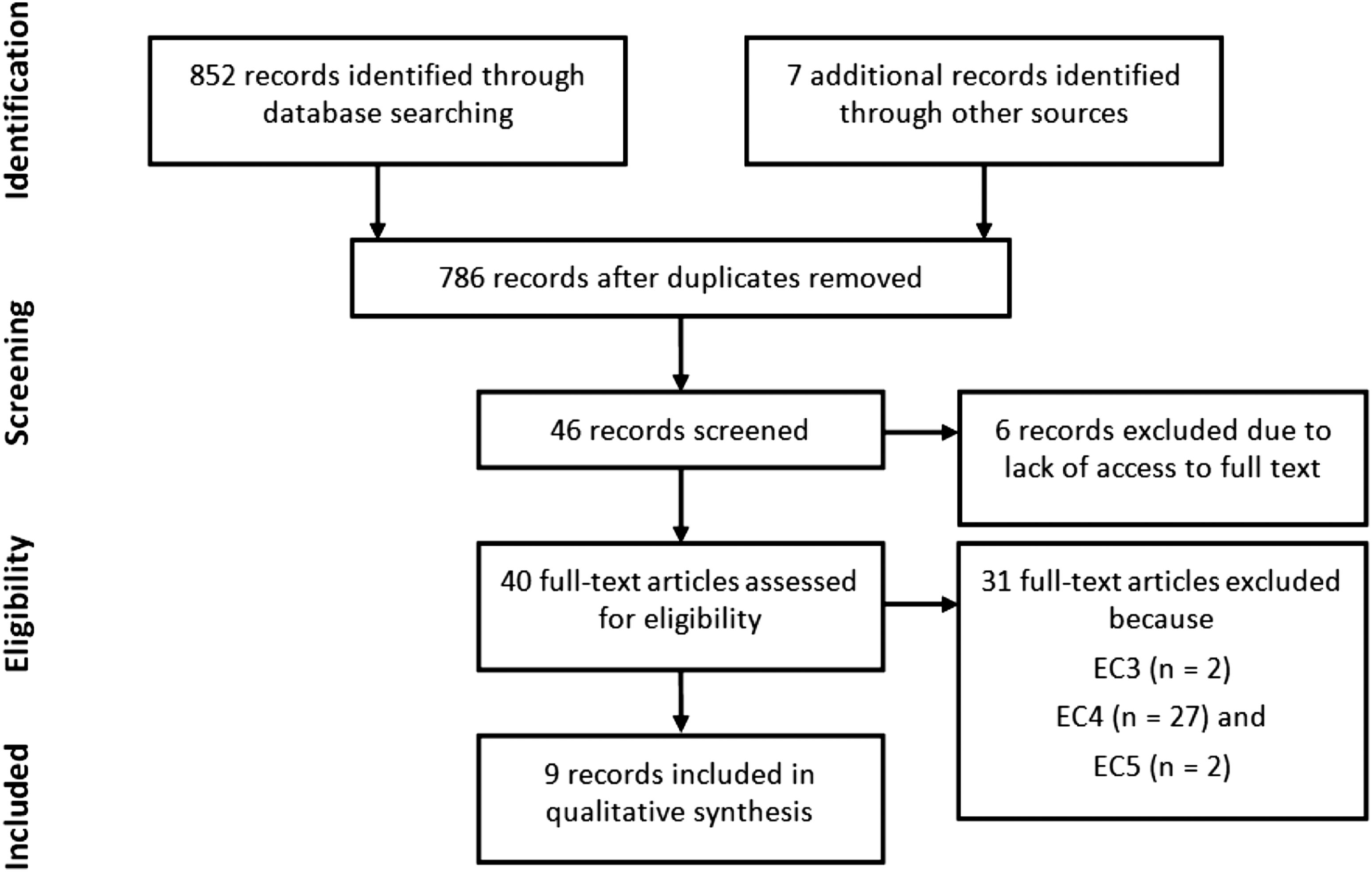
Quality assessment
According to our checklist, three papers were of high quality (Armstrong et al., 2018; Tanner, 2012; Yates et al., 2015). Five papers showed medium study quality because of an unclear research aim (Littlechild et al., 2015), an unclear methodological approach, especially with regard to data collection (Litherland et al., 2018; Littlechild et al., 2015; Morgan et al., 2018), intransparency in the presentation of results (Stevenson & Taylor, 2019), intransparency in the interpretation of findings (Litherland et al., 2018; Parveen et al., 2018), or incoherence between data sources, collection, analysis, and interpretation (Litherland et al., 2018; Littlechild et al., 2015; Morgan et al., 2018; Stevenson & Taylor, 2019; Parveen et al., 2018).
Quality assessment.
Descriptive characteristics
Descriptive table of included papers.
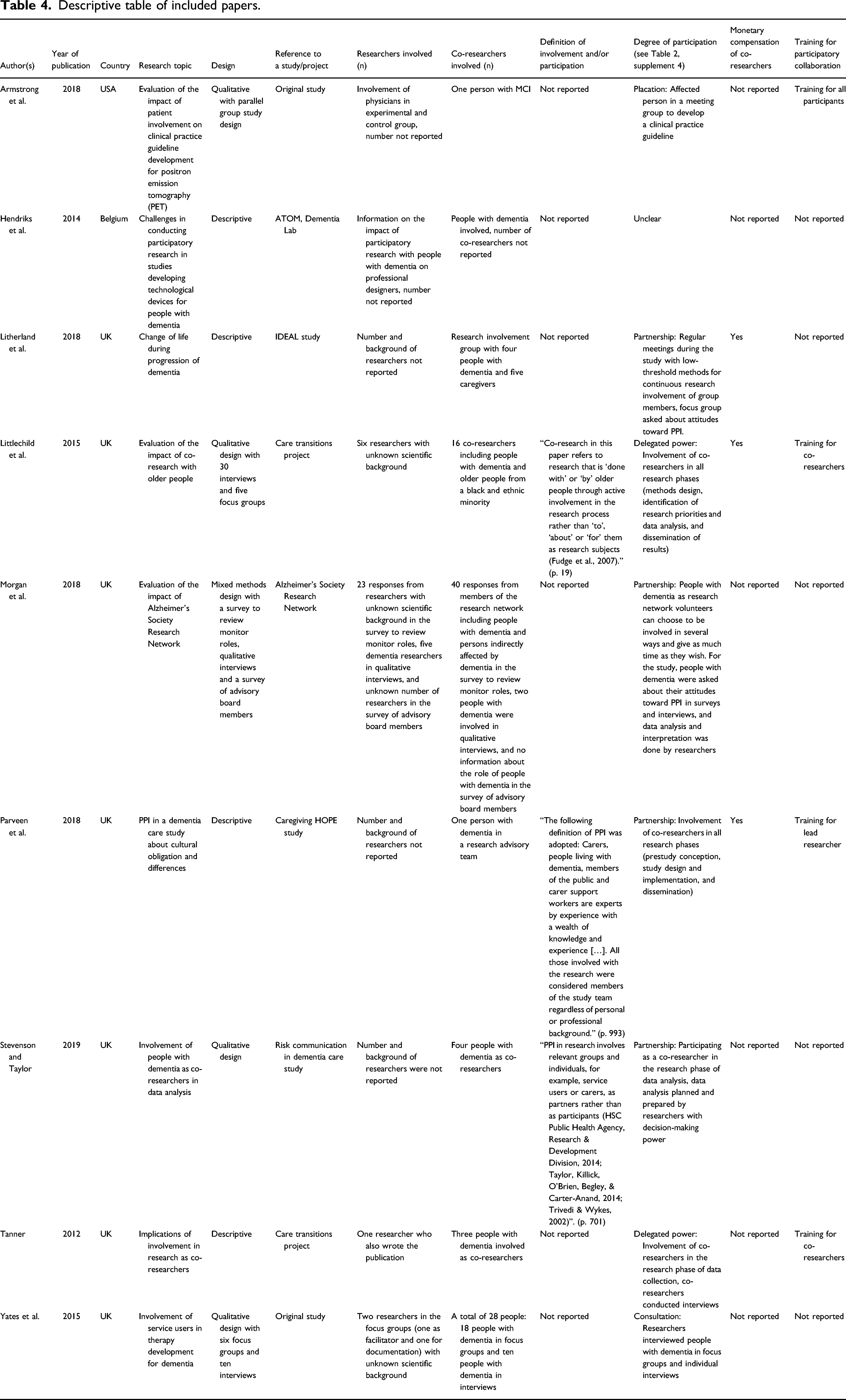
In three papers, the co-researchers received financial compensation for their research engagement (Litherland et al., 2018; Littlechild et al., 2015; Parveen et al., 2018). In four papers, special training for participatory research was reported: in two publications, a training course for co-researchers was offered (Littlechild et al., 2015; Tanner, 2012); in one paper, training was mentioned for the lead researcher (Parveen et al., 2018); and in one paper, training was offered for all people involved (Armstrong et al., 2018).
Benefits of participatory dementia research for researchers
In the qualitative analysis, 58 codings were assigned to the category of benefits of participatory dementia research for researchers, as shown in Supplement 5. In the majority of publications, researchers evaluated participatory research as overall helpful and beneficial. The main benefit was the widening of the researchers’ perspectives through the involvement of co-researchers (Littlechild et al., 2015; Morgan et al., 2018, pp. 14-19; Stevenson & Taylor, 2019; Tanner, 2012; Yates et al., 2015). Furthermore, interaction with people with dementia increased researchers’ competence (Littlechild et al., 2015; Morgan et al., 2018, pp. 14-17; Stevenson & Taylor, 2019) by improving communication skills for a lay audience (Littlechild et al., 2015; Morgan et al., 2018) and expanding the knowledge of the researchers (Armstrong et al., 2018; Hendriks et al., 2014; Morgan et al., 2018, p. 13; Yates et al., 2015). Participatory dementia research minimized the concerns and insecurity of researchers to behave inappropriately toward the target group (Litherland et al., 2018) because of an in-depth understanding of living with dementia (Morgan et al., 2018, pp. 13-14) and of the perspectives of those affected (Stevenson & Taylor, 2019).
With regard to the benefits for the researchers’ work, participatory research enabled to increase the quality of generated data (Armstrong et al., 2018; Morgan et al., 2018, p. 18; Yates et al., 2015) and facilitated the dissemination of results to stakeholders in dementia care settings (Littlechild et al., 2015; Stevenson & Taylor, 2019). Littlechild et al. (2015) described the relationship between researchers and co-researchers as a powerful combination allowing strengths of both groups to synergize. Participatory research enabled a “sense of familiarity and trust” (Tanner, 2012, p. 298) between researchers and co-researchers. The interaction with people with dementia increased the overall person-centeredness in the research context (Armstrong et al., 2018); researchers felt more motivated and reminded of the original motivation for their work (Morgan et al., 2018, p. 13). Overall, researchers viewed participation as an important strength of their scientific work (Littlechild et al., 2015; Morgan et al., 2018, p. 13; Parveen et al., 2018).
One publication (Littlechild et al., 2015, p. 28) pointed out that researchers did not see data collected by co-researchers as “better” or “worse” compared to the data they would collect independently: Instead, the process was merely “different” (Littlechild et al., 2015, p. 28).
Disadvantages of participatory dementia research for researchers
In the qualitative analysis, 27 codings were assigned to the category of disadvantages of participatory dementia research for researchers, as shown in Supplement 5. Participatory research with people with dementia meant additional effort for researchers (Hendriks et al., 2014; Litherland et al., 2018; Parveen et al., 2018; Tanner, 2012) and additional time (Armstrong et al., 2018; Morgan et al., 2018, p. 17; Tanner, 2012), because research methods had to be adapted to the specific needs and cognitive skills of the co-researchers (Hendriks et al., 2014). Data quality decreased with regard to some interesting aspects because co-researchers did not have the methodological skills required to further explore the aspects during data collection (Littlechild et al., 2015; Tanner, 2012).
Furthermore, researchers reported an emotional burden (Hendriks et al., 2014; Littlechild et al., 2015) deriving from co-researchers’ seeking for advice falling outside of the research projects (Hendriks et al., 2014) as well as uncertainties about their role in participatory research (Littlechild et al., 2015). Some researchers described the need to accommodate such emotional impact with the required neutrality of their role as challenging (Hendriks et al., 2014).
In their work, Hendriks et al. (2014) concluded that participatory research approaches did not create equality between researchers and co-researchers. Although researchers were able to learn much from co-researchers, a hierarchy remained between them (Hendriks et al., 2014). In addition, some researchers stated that they placed too high demands on the co-researchers regarding the workload and tasks in the research process (Hendriks et al., 2014).
Discussion
In this systematic review, we explored the overall benefits (e.g., increased understanding of dementia and the perspectives of people with dementia; new competencies in conducting research; and an increased depth of data) and overall disadvantages (e.g., additional effort and time required; decreased quality in data generation; and added emotional burden) of participatory dementia research on researchers.
In the majority of publications identified in our review, researchers considered participatory research with people with dementia to be beneficial overall. The most frequently stated advantages were the widening of researchers’ perspectives (Littlechild et al., 2015; Morgan et al., 2018, pp. 14-19; Stevenson & Taylor, 2019; Tanner, 2012; Yates et al., 2015), the gain of competencies in working with people with dementia and conducting participatory research (Littlechild et al., 2015; Morgan et al., 2018, pp. 14-17; Stevenson & Taylor, 2019), valuable content gain in research projects (Armstrong et al., 2018; Hendriks et al., 2014; Morgan et al., 2018, pp. 17-18; Yates et al., 2015), and improved relationships between researchers and co-researchers (Litherland et al., 2018; Littlechild et al., 2015; Parveen et al., 2018; Tanner, 2012). These findings correspond with the results of previous studies (Brett et al., 2014; Staley, 2009). In our review, we found that researchers had fewer reservations about participatory research with people with dementia after the implementation of the research approach (Litherland et al., 2018). This finding may be particularly relevant for participatory research with people with dementia because it may be related to the condition’s associated cognitive impairment and stigma. This finding deserves further exploration.
Although researchers thought positively about participatory dementia research in most of the publications identified, disadvantages were also outlined, mainly consisting of additional effort (Hendriks et al., 2014; Litherland et al., 2018; Parveen et al., 2018; Tanner, 2012) and additional time (Armstrong et al., 2018; Morgan et al., 2018, p. 17; Tanner, 2012) required by participatory approaches. These results correspond to previous findings (Bethell et al., 2018; Brett et al., 2014). The additional effort and time for researchers seem particularly constant in participatory research with people with dementia, since working with people with cognitive impairment involves additional ethical and practical issues such as legal requirements concerning informed consent (Gove et al., 2018) compared to working with people who do not have cognitive problems.
Researchers must be aware that successful implementation of participatory research requires not only additional time and resources but also skills that need to be developed through training. Two papers included in our review reported the provision of training for co-researchers (Littlechild et al., 2015; Tanner, 2012). In one paper, training was conducted for the lead researcher (Parveen et al., 2018), and in one publication, all people involved received training (Armstrong et al., 2018). Lack of training in the involvement of laypeople may overwhelm both researchers and co-researchers. These factors need to be considered when planning research studies since they add to workload.
Additional effort for researchers may also arise because of their perceived responsibilities toward co-researchers: In addition to their traditional research tasks, such as planning and conducting research, disseminating results, and networking (Kyvik, 2013), the moral obligation to protect co-researchers with cognitive impairment and to support them beyond project time (Hendriks et al., 2014) leads to a dual responsibility. The legal and ethical responsibility of researchers can influence their relationship with co-researchers (Gove et al., 2018). One paper included in this review stated that a power imbalance between researchers and co-researchers remained, despite the attempt to implement equal cooperation through participation (Hendriks et al., 2014). Co-governance, which underlies the participatory approach (Green et al., 1995 cited by Jagosh et al., 2011, p. 2), was usually not achieved in the publications included in our review. In only two papers (Littlechild et al., 2015; Tanner, 2012), we identified delegated power as participation degree indicating collaboration at eye level between researchers and co-researchers. Four papers described participatory dementia research at the level of partnership (Litherland et al., 2018; Morgan et al., 2018; Parveen et al., 2018; Stevenson & Taylor, 2019).
Considering the effort associated with participatory research, the question arises: A great deal of effort but for what? Do the positive effects on researchers balance the disadvantages? The question of whether and how participatory research should occur remains to be negotiated between the parties involved. Existing frameworks for the implementation of participatory research, such as in the field of community-based participatory research (e.g., Kwon et al., 2018), could provide researchers with useful recommendations for participatory dementia research, accounting for the special requirements of working with people with dementia, which we have discussed in this review.
To date, only a few studies have investigated the impact of participatory dementia research on researchers. However, taking the effects of participatory research into consideration could lead to an increasing willingness of researchers to involve those affected in research (Miah et al., 2019). Reservations of researchers about the research involvement of laypeople may result in tokenism for apparent participation, which only serves the fulfillment of political demands (Thompson et al., 2009).
The design and impact of participatory research are often documented anecdotally in studies (Fudge et al., 2007; Miah et al., 2019). Although the overall quality of the majority of articles was high to medium, most publications included in this review did not define participation and did not provide a transparent representation of the collaboration with the co-researchers. The impact of participatory research was not comprehensively and systematically evaluated in the papers, as this assessment was mostly not the main objective of the publication. In future studies and to ensure an independent evaluation of participatory research, the evaluation should already be taken into account in the planning stage of studies and carried out as an external process evaluation. Evaluating participatory research can be understood as a systematic collection of information about the activities, characteristics, and outcomes of the conducted co-research. This will help gaining insights into its facilitating and hindering factors, on how to improve participatory research, and how to conduct future co-research projects.
Limitations
Our study had several limitations that must be taken into account when interpreting the results. We selected participation and participatory research as search terms. In view of the lack of uniformity in terminology in the literature, similar approaches, such as research involvement and co-design, may have been missed.
By only including English language publications, relevant studies in other languages were excluded. Google Scholar was included in the systematic research to capture gray literature and to reduce publication bias. This search generated a large number of hits. Not all of them were screened so that relevant publications may have been overlooked.
Regarding the assessment of the papers included, we were bound to use the information available to us in the descriptions of the articles. Two publications (Littlechild et al., 2015; Tanner, 2012) referred to the same project. The two papers contained varying levels of detail, which made it difficult to unanimously determine the level of participation. It was important for us to assess the quality of the papers independently of the participation level, as the participatory approach was rarely the main focus of the papers; thus, a comparison of the publications was only possible using other evaluation features. We evaluated the quality of the papers and included all papers in the analysis of the benefits and disadvantages of participatory dementia research. One study focused particularly on the challenges of participatory research (Hendriks et al., 2014). Therefore, Hendriks et al. (2014) described disadvantages of the research approach. These results, however, need to be interpreted carefully since they are taken from a publication in which detailed information on the methods were missing.
The papers that we identified in the systematic literature review did not explore long-term effects. The long-term impact of participatory research on research projects, on co-researchers and on researchers has yet to be determined in future research projects. At the same time, we suggest that researchers should not be considered a homogeneous group. For example, junior researchers and senior researchers differ greatly in their roles and responsibilities in projects (de Wit et al., 2018). Differences also exist based on the scientific background of researchers and the current field of research. Therefore, it is worthwhile to investigate whether participatory research affects researchers differently.
Conclusions
Participatory research involving the views of those affected by the research into the research process itself has both ethical and practical justifications. As shown in this systematic review, participatory approaches are already integrated into dementia research, but there is still room for improvement with regard to the level of participation of people with dementia: a concrete objective should be to achieve progressively higher levels of Arnstein’s model.
Researchers act as a key group for implementing sustainable participatory research. Current evidence on the benefits and disadvantages of participatory research for researchers themselves is very limited. This systematic review sheds light on the little researched impact of participatory dementia research on researchers themselves. Regarding the benefits, researchers have identified that participatory research has helped them gain a better understanding of the daily effects of dementia as well as the perspectives of people with dementia. In addition, they acquired important new competencies and skills in working with co-researchers. Future research should focus on how to maximize this expansion of perspectives and knowledge, especially with regard to the potential of participatory research to decrease stigma against dementia and reduce researchers’ reservations about people with dementia as co-researchers.
This systematic review also revealed the disadvantages of participatory dementia research, particularly the additional effort and time required. These requirements for the implementation of participatory research (e.g., resources for the training of co-researchers and researchers) must be considered in the planning phase of future projects. Currently, many funders make participatory approaches mandatory, and often, without necessary adaptations to their funding scheme. Therefore, researchers may simply not have the means and resources to conduct a participatory project.
Last, future participatory projects should involve some independent process evaluation, which should also include evaluating the impact of the research approach not only for co-researchers but also for researchers. This would help to identify and evaluate additional factors to maximize benefits and minimize disadvantages for all those involved.
Supplemental Material
sj-pdf-1-dem-10.1177_14713012211067020 – Supplemental Material for The impact of participatory dementia research on researchers: A systematic review
Supplemental Material, sj-pdf-1-dem-10.1177_14713012211067020 for The impact of participatory dementia research on researchers: A systematic review by Antonia Kowe, Hentry Panjaitan, Olga A Klein, Marina Boccardi, Martina Roes, Sonja Teupen, Stefan Teipel in Dementia.
Footnotes
Declaration of conflicting interests
Stefan Teipel has done the listed works below (all in Germany). MSD Sharp & Dohme GmbH, Lindenplatz 1, 85540 Haar: 11/09/2018 - Quality circle for physicians in Kühlungsborn, Talk: ‘Dementia and Diabetes - current report’. 14/11/2018 - MSD Expert-forum: NAB Alzheimer in Munich, participator as consultant. 13/08/2019 - Event ‘Diabetes and Dementia’ in Rostock, Talk: ‘Dementia and Diabetes - current report’. ROCHE Pharma AG, Emil-Barell-Str. 1, 79639 Grenzach-Wyhlen: 12/09/2019 - 3. Nationales Advisory-Board in Frankfurt (Main), participator as consultant. 27/09/2019 - ROCHE Symposium at the DGN Congress in Stuttgart, Talk: ‘Amyloid as target for diagnosis and treatment in Alzheimer’s disease’. Biogen GmbH, Riedenburger Straβe 7, 81677 München: 23/04/2020 ‐ Biogen Advisory Board Session. 28/04/2020 - Biogen Advisory Board Session. 18/09/2020 - Biogen Advisory Board Session. Dr Willmar Schwabe GmbH & Co. KG, Ottostr. 24, 76227 Karlsruhe: 22/01/2021 - Virtual Advisory Board. The other authors declare that there is no conflict of interest. A language editing service was used.
Funding
The present study was funded in part by a grant from the German Research Foundation (TE 621/3-1) and the European Social Fund (DigiCare, ESF/14-BM-A55-0021/19).

Supplemental material
Supplemental material for this article is available online.
References
Supplementary Material
Please find the following supplemental material available below.
For Open Access articles published under a Creative Commons License, all supplemental material carries the same license as the article it is associated with.
For non-Open Access articles published, all supplemental material carries a non-exclusive license, and permission requests for re-use of supplemental material or any part of supplemental material shall be sent directly to the copyright owner as specified in the copyright notice associated with the article.
