






Abstract
Family caregivers of persons with dementia often face chronic stress, disrupted sleep, and emotional exhaustion. While adult day programs provide daytime respite, support during nighttime, when caregiving responsibilities can intensify, remains limited. “Overnight” adult day programs are a promising yet underexplored model that offers short-term respite by extending adult day program care into evening and overnight hours. This qualitative study explored the experiences of 15 family caregivers of community-dwelling individuals with moderate to advanced dementia who participated in an innovative program that combines a day program with short-term overnight respite in British Columbia, Canada. As part of a focused ethnography, in-depth semi-structured interviews were conducted with family caregivers between July and December 2023. Data were analyzed thematically using Braun and Clarke’s framework to identify patterns in caregivers’ perceptions of and experiences with the program. The findings demonstrated that: (1) family caregivers emphasized the importance of trust and continuity, built through consistent staffing and familiarity with the environment, which enabled confidence in leaving their relatives overnight, and (2) the program provided meaningful respite, allowing caregivers to rest, attend to personal needs, reconnect socially, and sustain their caregiving capacity while strengthening relationships at home. These findings highlight the potentially transformative role of short-term overnight respite in combination with adult day programs in enhancing family caregiver well-being and sustaining caregiving in community. This study adds to a growing body of evidence calling for more flexible, person-centered respite models tailored to the realities of dementia caregiving in the community.
Keywords
Introduction
Family caregivers, hereafter referred to as caregivers, play an essential role in supporting persons with dementia to continue residing in their homes and communities. According to the Alzheimer Society of Canada (2022) caregivers are often relatives or close friends who provide emotional and practical support, typically without pay, to someone living with dementia. In Canada, over 350,000 people currently provide unpaid care to someone living with dementia (Alzheimer Society of Canada, 2020). Globally, more than 55 million people live with dementia, with most care provided by family members or other informal caregivers (World Health Organization, 2021). These figures reflect growing expectations placed on caregivers, driven in part by long wait times for long-term care home placement and a widespread preference to remain in the community for as long as possible (Office of the Seniors Advocate, 2025). While caregiving can be meaningful, caring for a person living with dementia can place consideerable demands on caregivers, contributing to caregivers’ health and well-being (Brandão et al., 2016). As the demand for dementia care in the community increases, so too does the urgency to understand and address the needs of those providing care.
Respite care has emerged as a critical support mechanism in addressing the increasing responsibilities and complexities faced by caregivers. These services offer part-time or short-term support by providing alternative care arrangements for a period, allowing caregivers to tend to their own well-being, responsibilities, or other aspects of daily life while ensuring continued care for the person with dementia (Phillipson et al., 2013; Robinson et al., 2012; Sussman & Regehr, 2009). Short-term respite typically refers to services delivered for a few hours to several days, such as in-home care, day programs, or overnight stays, whereas long-term respite involves extended or continuous care, often lasting several weeks and commonly provided in long-term care (Robinson et al., 2012; Sussman & Regehr, 2009). By alleviating the physical and emotional strain of caregiving, respite programs play a critical role in reducing caregiver burden and supporting overall well-being (Phillipson et al., 2013; Robinson et al., 2012; Sussman & Regehr, 2009). Delivered through various models, including in-home care, short-term stays in long-term care homes, and community-based services, such as adult day programs respite services are designed to meet the diverse needs of caregivers and clients (Orellana et al., 2020). These programs have become a vital pillar of dementia care, though access remains limited due to long waitlists and resource constraints (Orellana et al., 2020; Phillipson et al., 2013).
Adult day programs, as a subset of respite services, provide structured, supervised daytime care for older adults, particularly those living with dementia or other chronic conditions. These programs typically incorporate therapeutic and social activities aimed at fostering emotional, social, and cognitive well-being (Jaana, 2020; Orellana et al., 2020). Adult day programs generally operate on a fee-for-service basis, with daily participant fees typically ranging from approximately CAD $20 to $30, and additional transportation costs where applicable (Jaana, 2020). Subsidies or partial fee assistance are, however, often available to support individuals with limited financial resources (Orellana et al., 2020). For persons with dementia, adult day programs promote social engagement, reduce behavioral symptoms, and improve quality of life (Phillipson et al., 2013; Vandepitte et al., 2016). For caregivers, they offer much-needed time for rest, work, or self-care, supporting both physical and mental health (Phillipson et al., 2013; Sussman & Regehr, 2009).
Yet, despite these well-documented benefits, access to adult day programs or other respite programs remains limited, shaped not only by service delivery challenges but also by broader systemic, structural, and sociocultural factors. Caregivers frequently encounter barriers, including logistical challenges, financial constraints, and limited awareness of available programs (Phillipson et al., 2013). Concerns about the quality of care provided during respite, particularly regarding safety, comfort, and engagement of clients may deter caregivers from seeking these services (Phillipson et al., 2013; Robinson et al., 2012). Additionally, cultural attitudes, societal stigma, and caregiver guilt often discourage the delegation of caregiving responsibilities to external services, perpetuating the underutilization of respite programs (Phillipson et al., 2013; Sussman & Regehr, 2009).
Conventional respite care models, which are often characterized by rigid schedules and limited flexibility, do not meet the dynamic and evolving needs of caregivers; there is growing recognition of the need for innovative and adaptable respite care solutions (O’Shea et al., 2017; Phillipson et al., 2013; Vandepitte et al., 2016). One such innovation is the development of “overnight” adult day programs, which provide short-term, round-the-clock respite by extending beyond traditional daytime hours to include evening and nighttime support. This approach is particularly significant given that sleep disturbances are common among persons living with dementia, which contributes to caregiver stress and fatigue (Jaana, 2020). These programs address critical gaps in respite programs by providing care during nighttime hours, a period when caregiving demands often peak and caregiver burden intensifies due to disrupted sleep and heightened vigilance (Jaana, 2020). By offering comprehensive, individualized care, overnight adult day programs enable caregivers to achieve restorative rest and emotional recovery while ensuring that the client receives safe, person-centered care from staff familiar with their needs (Robinson et al., 2012).
Overnight adult day programs are a significant advancement in respite care, aligning with contemporary caregiving needs by emphasizing flexibility, adaptability, and holistic support for caregivers and clients. However, this innovative model remains underexplored in the literature. The purpose of this study was to explore caregivers’ perceptions and experiences of having their relative participate in an overnight adult day program.
Methods
Qualitative Approach and Research Paradigm
This study was part of a broader focused ethnography conducted at a newly implemented overnight adult day program in British Columbia, Canada. The methodology is a branch of traditional ethnography distinct in its use of short-term, intensive field visits, reliance on researchers with pre-existing knowledge of the phenomena under study, and a collaborative approach to data collection and analysis (Knoblauch, 2005). This approach is well-suited for exploring specific, well-defined aspects of cultural or social practices, such as an overnight respite program (Knoblauch, 2005). In this current work, we concentrate on data collected from caregivers through semi-structured interviews. Findings about the operations of the overnight adult day program will be reported elsewhere. This study is reported in accordance with the Standards for Reporting Qualitative Research guidelines (O’Brien et al., 2014). A completed Standards for Reporting Qualitative Research checklist is provided as Supplemental File 1. This study was informed by an interpretivist qualitative paradigm, which recognizes that meaning is socially constructed and understood through participants’ lived experiences and perspectives. This orientation aligned with the study aim of exploring family caregivers’ experiences and perceptions of the overnight adult day program.
Setting and Context
The overnight adult day program examined in this study was purposefully chosen for its distinctive and short-term respite model, which expands traditional daytime services to include evening and nighttime care for community-dwelling older adults with dementia. Serving families from three large suburban cities in British Columbia, Canada, the program provides flexible, continuous support through coordinated day and overnight services. Clients eligible for the overnight program are typically those with reversed sleep–wake cycles, needing night-time personal care (e.g., toileting), or whose caregivers require respite from frequent overnight waking. Participants must be able to stay one to four nights, follow basic instructions, and have a relative available for early pickup if needed. Overnight stays are offered as a flexible, short-term option that family caregivers can access on an as-needed basis, rather than through a fixed schedule, with patterns of use ranging from intermittent, short-term stays to more regular use within program limits, depending on caregiver need and program availability. The program excludes individuals at risk of elopement or exhibiting responsive behaviours that cannot be safely managed in the assisted living environment, such as night-time wandering.
Co-located within a not-for-profit assisted living residence, the adult day program operates in partnership with the assisted living site while maintaining oversight through the regional health authority. The assisted living residence includes over 60 subsidized suites with three designated for the overnight adult day program: two for clients and one for the overnight health care assistant. The daytime adult day program accommodates up to 25 participants per day. Co-funded through the regional health authority, the program charges user fees of $9 per day and $17 for the first overnight stay ($2 for each additional night). Established in November 2022 as a pilot initiative, the overnight adult day program is among the first in British Columbia to extend community-based respite for caregivers by using existing assisted living infrastructure for overnight stays.
The daytime program runs from 9:00 a.m. to 3:00 p.m., facilitated by two adult day program staff. Between 3:00 and 4:00 p.m., clients scheduled to stay overnight remain in the adult day program under the supervision of daytime staff, typically engaging in leisure activities such as playing cards or watching television. During this time, adult day program staff also prepare clients’ belongings and update the incoming health care assistant on each client’s care needs to support a smooth transition. At 4:00 p.m., the overnight portion begins, and client care is assumed by health care assistants employed by the regional health authority and based within the co-located assisted living residence. These health care assistants provide overnight care to adult day program clients using the assisted living’s suites, ensuring a seamless transition between daytime and nighttime support. The overnight program operates Monday through Thursday nights, with no overnight stays offered on Friday, Saturday, or Sunday. A maximum of two clients may stay for up to four consecutive nights. Overnight care is delivered through a structured staffing model consisting of two health care assistants working consecutive shift (4:00 p.m. to midnight and midnight to 8:00 a.m.), ensuring continuous supervision across the evening and night. The late-afternoon and evening schedule provides opportunities for socialization, dinner, and structured activities. Each night, two health care assistants provide care for up to two clients in consecutive shifts: the evening health care assistant works from 4:00 p.m. to midnight, and the overnight health care assistant from midnight to 8:00 a.m., when clients return to the adult day program for daytime programming. To support relationship building and continuity of care, the same two health care assistants typically staff the evening and overnight shifts each week from Monday to Thursday, and the need for substitute staff is kept to a minimum.
Sampling Strategy and Participants
Purposeful sampling was used to recruit family caregivers with direct experience supporting a relative who had participated in the overnight adult day program. This approach was selected to obtain rich, experience-based accounts relevant to the study aim. Twenty-two caregivers of clients who participated in the program between November 2022 and August 2023 were invited to take part in the study. Eligible participants were caregivers of individuals who were currently enrolled in or had previously attended the overnight adult day program and were able to communicate in English about their experiences with the program. Letters of information were mailed to them by program staff outlining the study’s purpose and data collection methods. Two weeks after the letters were sent, a research team member (SG) followed up with the 22 caregivers by telephone. Four declined to participate citing various reasons, and three did not respond despite follow-up efforts, leaving 15 participating caregivers who shared their experiences and insights into the program’s impact. Sociodemographic information was also collected at the time of the interview.
Researcher Characteristics and Reflexivity
Interviews were conducted by SG, who has advanced training and graduate-level education in qualitative research methods and social gerontology. SG had no prior relationship with participants before recruitment. Reflexivity was considered throughout the research process. Reflective memos were written following each interview and revisited during analysis to examine how the researcher’s assumptions, experiences, and positionality may have influenced data collection, interpretation, and theme development. These reflections helped maintain awareness of the relational and interpretive dimensions of the research and supported a transparent and grounded approach to analysis.
Data Collection Methods
Data collection took place between July and December of 2023. Participants chose the mode of interview deliver: telephone (n = 7), in-person (n = 5), or via Zoom (n = 3). This flexible approach ensured accessibility and comfort for participants, accommodating their varying caregiving responsibilities, schedules, and technological capabilities. On average, interviews lasted 61 minutes (range: 37 to 106 minutes).
Data Collection Instruments
Data were collected using a semi-structured interview guide developed by the research team. The guide was designed to explore caregivers’ experiences of supporting a relative living with dementia, their experiences with the overnight adult day program, and perceived benefits and challenges associated with program participation. Open-ended questions encouraged participants to describe their experiences in detail. Example questions included: “How did you use your time while your relative was in the program?” and “How has your relative’s mood, sleep, or behaviours changed since attending the program?”
Data Processing
Interviews were audio-recorded and transcribed verbatim. Transcripts were de-identified prior to analysis and participants were assigned identification codes to protect confidentiality. Electronic files were stored on secure password-protected systems accessible only to the research team.
Data Analysis
Our analysis was guided by Braun and Clarke’s thematic analysis framework, a systematic and flexible method for identifying, analyzing, and interpreting patterns within qualitative data. This approach was well-suited for exploring the nuanced and diverse narratives of caregivers, as it allows for both inductive (data-driven) and deductive (theory-driven) analyses, enabling a comprehensive understanding of the data (Braun & Clarke, 2021).
First, the core research team members (SG, SW, JB) familiarized themselves with the data through repeated readings of the interview transcripts, noting initial impressions and areas of interest. This phase ensured a deep, immersive understanding of the content. Second, coding was conducted systematically across the dataset, identifying significant excerpts and categorizing them into meaningful units related to the caregivers’ experiences and perceptions. Third, codes were reviewed and grouped into potential themes, capturing both recurring patterns and unique perspectives. In the fourth phase, these potential themes were reviewed and refined to ensure they were coherent, distinct, and reflective of the data. Themes were checked against the coded data and the entire dataset to confirm their relevance and alignment with the research objective. In the fifth phase, the themes were defined and named, with detailed analysis conducted to articulate their scope, relationships, and contribution to the broader understanding of caregivers’ experiences. Finally, in the sixth phase, the themes were synthesized into a coherent narrative, highlighting the caregivers’ voices and insights into the overnight adult day program.
This application of Braun and Clarke’s framework ensured that the analysis was both systematic and reflective of the complexities of community-based family caregiving for persons with dementia. The resulting themes provided a rich understanding of the overnight adult day program’s impact, revealing how it shaped caregivers’ well-being, relationships, and caregiving roles, while also capturing the specific benefits they encountered.
Techniques to Enhance Trustworthiness
Several strategies were used to enhance trustworthiness and analytic rigor (Braun & Clarke, 2021). Reflexive memo writing supported ongoing consideration of researcher assumptions and interpretations throughout data collection and analysis. Regular discussions among members of the research team facilitated critical reflection on coding decisions, theme development, and interpretation. Verbatim quotations are presented in the findings to demonstrate the connection between participants’ accounts and analytic interpretations.
Ethical Considerations
The study received ethics approval from the University of British Columbia’s Behavioural Research Ethics Board (H19-03744) and the local health authority where the study site was located. Letters of information, including detailed information about the study objectives and consent forms, were provided in advance, allowing participants time to review the materials and discuss any questions with a research team member. Written informed consent was obtained from all participants. At the outset of the interview, the interviewer reviewed the consent and voluntary nature of participation.
Findings
Sociodemographic Characteristics of Family Caregiver Participants
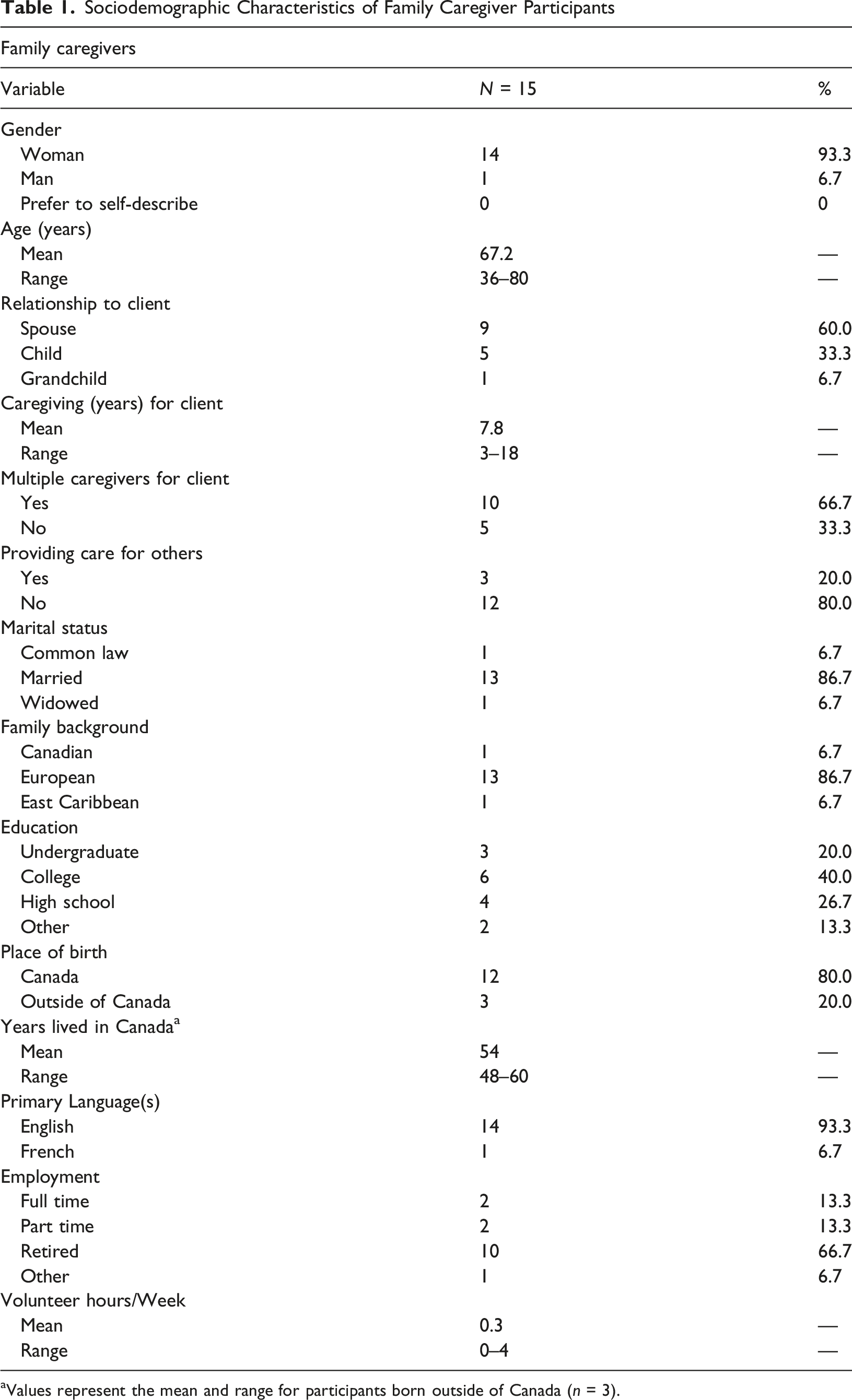
aValues represent the mean and range for participants born outside of Canada (n = 3).
The findings highlight two key themes that illuminate participants’ perceptions and experiences with the overnight adult day program. The first, Continuity Builds Trust: The Centrality of Consistency in Staff and Place, describes how trust was developed through familiar relationships and stable care environments that reassured caregivers when leaving their relatives overnight. The second, Recharging and Restoring: Respite Benefits of the Overnight adult day program for Family Caregivers, illustrates how the program offered meaningful rest, personal time, and social reconnection, helping caregivers sustain their roles at home and in the community.
Continuity Builds Trust: The Centrality of Consistency in Staff and Place
Participants consistently emphasized that trust in the program was foundational to their decision to use the overnight component of the adult day program. This trust was not automatic; it was earned over time through consistent staffing, familiarity with the environment, and the staff’s reliable attentiveness. For many participants, the continuity they experienced in the daytime adult day program laid the groundwork for their confidence in the overnight adult day program. When care was predictable, responsive, and grounded in relationship, it made leaving their relative overnight not only possible but reassuring.
Participants frequently praised the staff’s professionalism, attentiveness, and kindness, which provided them with a strong sense of reassurance that their relatives were well cared for. One participant shared: “The staff at [the program] has been very kind with him, and he’s comfortable with them… If he wasn’t comfortable, he would not even go…” (FM13, wife). Another participant shared that staff earned their trust through collaborative communication and a willingness to address personal care challenges. …[Staff] are very good. He [the’ client] did have a problem with going to the toilet, but they were very helpful and called me and we came up with a solution for it. So… I have nothing but good things to say about the staff. (FM14, wife)
Participants described trust as developing through both kindness and staff’s consistent follow-through, including their willingness to respond to care challenges and involve caregivers in solutions. They appreciated being seen as partners in care, something that deepened their trust in the team.
Familiarity with staff and the physical environment was another key factor in easing the transition into overnight care. For relatives attending the program, being cared for in a space and by people they already knew reduced anxiety and made the shift feel seamless: …it's the familiarity of it… he really likes the day program. So, then it's just kind of the transition to the nighttime… it's just sort of an easy transition… so it's the familiarity of it for him. He likes that. (FM14)
Another participant emphasized that this sense of recognition and warmth was reassuring for both them and their relative: “…the people that work there, they know him since he comes to the door. [They say] ‘Hi [Name]’. They're just very friendly and caring. So, for me, it gives me peace” (FM9, wife). That sense of peace was closely tied to the confidence that participants placed in the staff’s ability to deliver not just safe but attentive care. One participant put it simply: “If I didn't trust [the program] and I have told him that if I didn't trust them there, I wouldn't send him there. But it's been good.” (FM9). Across participants’ accounts, trust was linked to staff familiarity, warmth, and consistent support. Participants described being able to step away without anxiety, because they felt assured of the quality and continuity of care their relatives received.
Several participants also highlighted that staff helped clients become socially engaged and emotionally uplifted, an aspect of care that contributed further to participants’ trust. One participant shared: “Mom would not do anything on her own. So, it was the staff that would get her up. ‘Let’s do our exercises. Let’s go play bingo.’ …So, she’s a little more active, doing a little more. Being more social.” (FM6, daughter). Another participant reflected on how her mother responded to the environment: She expressed no unhappiness about [the program]. When I spoke with her, she was full. She was [feeling] joy and happiness and cared for… they met her needs and then some. She had no resistance going [to the overnight program] three days or two days… it was something that she looked forward to. (FM8, daughter)
Participants also described the overnight adult day program as a space where their relatives experienced comfort, fulfillment, and social connection. Family members further noted improvements in their relatives’ overall well-being, attributing this to the quality of the staff: “The best part of the program is the caring of each member of the staff and the people who are attending it together. Because that makes them healthier.” (FM5, wife). The trust and confidence participants placed in the overnight adult day program staff were central to this dynamic. One participant emphasized that this trust, rooted in consistent and attentive care, made it possible for her to step away: It gave me a break. I didn’t have to worry about her being alone in her home. It was a big gift, and it wasn’t a small gift. It was a very comprehensive, skilled, gift. It wasn’t just any program. It was skilled, and it provided my mother very good care. I was very grateful. (FM8)
For this participant, confidence in staff reliability and competence was central to feeling able to use the overnight adult day program. This sense of trust, built through continuity and day-to-day experience, allowed them to participate without hesitation, knowing their relatives were in safe, capable hands and in a familiar environment.
Recharging and Restoring: Respite Benefits of Overnight Adult Day Program for Family Caregivers
The overnight adult day program provided participants with a meaningful respite from their ongoing caregiving responsibilities, offering emotional relief, restorative sleep, and opportunities to reconnect with themselves and others. Many described caregiving as a constant presence in their daily lives, often requiring sustained attention and emotional energy. Knowing their relatives were safe and well cared for allowed participants to relax more fully, letting go of persistent worry, sleeping more deeply, and reengaging in aspects of life that had been set aside. These moments of respite helped participants feel more balanced, renewed, and supported their ability to continue caregiving over time.
Participants frequently spoke about caregiving as an all-consuming presence that shaped their everyday lives, often in invisible ways. The opportunity to entrust their relatives to overnight care provided lasting emotional relief. As one participant reflected: It’s just like the pressure comes right off of me when she goes in [to the program] and I don’t have to worry about what she's doing. Cause you don't realize until you don't have it. How much you worry about everything. (FM3, daughter)
Caregiving responsibility and worry were described as deeply embedded in participants’ day-to-day lives, often becoming more apparent when respite was available. Another participant used a more vivid metaphor to describe this experience: “It’s amazing the monkeys that come off your back just even if it’s overnight. You know [it] just sort of frees you… it’s like you won the lottery.” (FM6). These accounts highlight that even short periods of respite were perceived as transformative, offering a sense of liberation and joy that contrasted sharply with participants’ usual caregiving routines.
One of the most immediate and tangible benefits described was improved sleep. Participants often reported chronic sleep disruption due to worry and the need to remain alert at night. The overnight adult day program allowed them to let go of that vigilance, leading to better rest. One participant shared that her mother, who was the primary caregiver for her grandmother, experienced better sleep: “I think comparatively [my mom] slept better knowing that [my grandmother] was somewhere safe and that her care needs were met.” (FM11, granddaughter). Another described the quality of her sleep when her husband stayed overnight at the program: I really don't know how much sleep I get, not enough is what I'm gonna say. [While my husband is at the overnight program], I can get like seven or eight hours of sleep. It's just the maintaining sleep is so much easier. (FM14)
Participants consistently described improved sleep when their family member stayed overnight at the program, often linking this to reduced worry and the ability to rest without needing to remain alert.
Beyond sleep, participants described how the overnight adult day program gave them rare opportunities to attend to their own lives, whether by reconnecting socially, pursuing leisure, or simply being alone. One participant shared: The overnight program gave me the ability to go and spend an afternoon or an evening with my friend and have dinner with them, enjoy a glass of wine… it gives you a break. It gives the caregiver a break to be able to feel life again. To some small degree. (FM13)
Another described the profound value of solitude and personal freedom: That is the greatest thing. Just to be alone with no care. I don’t have to check. I don’t have to see if window is open or closed. I just have to think about myself. This is a thing that you don’t get—it’s a luxury. Just having to think about yourself. I can read what I want at any time… I can go till one o’clock. (FM5)
Participants spoke about the overnight program as offering time away from caregiving responsibilities and opportunities to focus on themselves. They also described how this space to recharge enabled them to reconnect more positively with their relatives. One participant reflected: [When] you get a break for the day or two days, overnight… you can go for lunch. You kind of look at things different. Like, now that she’s in that [overnight program], I take her out just to have fun with. I wasn’t having fun with her. Everybody needs to have that freedom a little bit, just to start appreciating them again and not seeing them as a dark cloud… like people have to breathe. And that’s what that program offers. It offers people [the opportunity] to breathe. (FM6)
By stepping away and recharging, participants were able to reconnect with their relatives in positive and meaningful ways.
For some participants, the overnight program even shaped their ability to continue providing care at home. One explained: “Because of the day program and the overnight program, I would be able to keep [relative] at home much longer. It is remarkable to me the difference in the way I feel. It's huge.” (FM7, wife). For some participants, the overnight adult day program helped reduce stress beyond the immediate respite period and supported their ability to continue caregiving at home. One caregiver captured this cumulative strain and how the overnight adult day program helped her continue: Yeah, it kept me going for sure ‘cause [I] definitely hit some walls along the way where I was over exhausted… [the program] just came at the perfect timing for exhaustion. It didn’t mean I wasn’t exhausted the rest of the week. But it gave me little things to look forward to, little breaks. (FM12, daughter)
Participants described even brief, consistent breaks as important to sustaining their caregiving role. The importance of maintaining such programs was echoed by another participant: “I hope [the program] doesn't [stop]. When they first started, they weren't sure. So, I'm really glad that they're keeping it because we need it.” (FM9). While the overnight adult day program did not eliminate the challenges of caregiving, it helped participants manage them more effectively by providing restorative support that enabled them to continue in their role.
Discussion
This study identified two central dimensions of caregivers’ experiences with an overnight adult day program. Continuity and quality of staff and environment were fundamental to establishing trust, which in turn enabled families to feel confident leaving their relatives overnight. The overnight adult day program also provided meaningful respite, allowing caregivers to rest, step back from constant vigilance, and restore their well-being. These findings suggest that continuity fosters trust, which in turn enables caregivers to disengage from ongoing monitoring and experience respite as restorative. These findings advance understanding of how adult day program design features can shape both the uptake and effectiveness of respite services through trusted care that supports caregiver renewal.
A longstanding critique of traditional respite programs, particularly short- or long-stay residential models, is that they often fail to foster meaningful relationships between staff and caregivers. Studies have shown that respite can be experienced as fragmented and impersonal when delivered by unfamiliar staff, which undermines caregivers’ trust and diminishes the acceptability of services (Orellana et al., 2020; O’Shea et al., 2020). Previous research also suggests that caregivers may experience greater strain when respite involves transitions into settings where staff do not know the client well, creating distress for both the person with dementia and their family (O’Shea et al., 2020; Rokstad et al., 2019). Examples of respite programs that fit this approach are one-time long-stay respite in facilities, such as long-term care homes, that have no previous relationship with the caregiver or care receiver. Broader reviews similarly note that the benefits of adult day and respite services are inconsistent, in part because service processes and staffing arrangements often fail to support continuity and trust (Fields, et al., 2014; Gaugler & Dykes, 2019). Evidence further suggests that respite is most effective when it provides caregivers with the assurance and confidence to disengage, conditions that are rarely met in fragmented or impersonal models (Bangerter et al., 2021; Wylie et al., 2020). These findings highlight a persistent gap between the intended purpose of respite and the relational conditions required for it to provide genuine relief. As our study demonstrates, when respite is structured around continuity of staff, familiarity with clients, and trusted relational processes, it better enables caregivers to experience respite as restorative rather than distressing, thereby advancing understanding of how relational conditions can transform the effectiveness of respite care.
One of the defining strengths of the overnight adult day program in this study was its intentional emphasis on consistent staffing, which created the relational stability necessary for trust to develop. For caregivers, this continuity was a central condition that allowed them to step away with confidence. Trust built in this way transformed respite into a source of genuine relief, enabling caregivers to rest more fully and return to their roles restored. These findings point to the broader significance of continuity in dementia care. Ménard et al. (2025) show that inconsistent and untrusted relationships heighten caregivers’ emotional strain and decisional burden. Similarly, Grogan et al. (2025) found that trust, consistency, and clear communication are essential to effective in-home respite, with reliable, familiar staff fostering safety and comfort. These studies demonstrate that relational trust is central to respite experiences across institutional, community, and home settings, shaping caregivers’ ability to disengage without anxiety (Grogan et al., 2025; Ménard et al., 2025). Our study illustrates how embedding continuity into program design transforms the experience of respite. Instead of uncertainty and anxiety, caregivers encountered reassurance and stability, which allowed them not only to accept support but also to experience its full restorative potential.
The emphasis on continuity also highlights the limitations of the fragmented service landscape in which respite and adult day programs are often delivered. Research consistently documents that caregivers experience challenges when services are siloed across community and facility-based settings, resulting in care transitions that can feel disjointed and difficult to navigate (Evertson et al., 2021; Orellana et al., 2020). While adult day services have been shown to improve caregiver affect, reduce stress associated with behavioral and psychological changes associated with dementia, and enhance opportunities for rest and self-care (Bangerter et al., 2021; Wylie et al., 2020), their benefits can be undermined when caregivers must negotiate multiple providers or when overnight or longer-stay respite requires moving into unfamiliar environments with unfamiliar staff (Rokstad et al., 2019). Such fragmentation not only disrupts relational continuity but also increases the emotional and logistical burden placed on families.
The overnight adult day program examined in this study offered an alternative model by co-locating overnight respite within the same site as the day program, thereby minimizing transitions and ensuring that both clients and caregivers encountered familiar staff and environments. Prior research similarly emphasizes that service integration and continuity of personnel are central to realizing the full benefits of respite for caregivers, as these conditions facilitate both confidence in care and opportunities for caregivers to restore their own well-being (Gaugler & Dykes, 2019; Lunt et al., 2020; Orellana et al., 2020; Parker et al., 2019).
When situated within the broader literature, these findings underscore that respite care should not be conceptualized solely as a discrete period of relief, but as an intervention shaped by its relational and organizational context. The overnight adult day program model addresses longstanding critiques of respite provision and aligns with policy imperatives to support aging in place, delay entry to long-term care, and enhance caregiver well-being (Lunt et al., 2020; Rokstad et al., 2019). Future service development should therefore move beyond viewing respite as a temporary interruption of caregiving to embedding it as a core element of dementia care systems, with continuity and integration recognized as fundamental conditions for its effectiveness.
While these findings point to the potential of well-designed respite models to support caregiver sustainability, they also help clarify the mechanisms through which such outcomes may occur. In this study, continuity of staffing and familiarity of the care environment fostered trust, enabling caregivers to disengage from constant vigilance and experience meaningful rest. This restoration of capacity may support caregivers in sustaining their roles over time and reduce the likelihood of crisis-driven transitions to long-term care. However, empirical evidence linking adult day program use to delayed long-term care placement or reduced service use remains mixed. For example, Vossius et al. (2019) found no difference in time to nursing home admission or overall care use between day care users and non-users. These findings suggest that outcomes are shaped by contextual and program-level factors, including timing, intensity, and relational continuity. As such, our findings contribute by identifying mechanisms that may help explain variability in outcomes across respite models.
Implications for Policy and Practice
The findings highlight several priorities for the design and delivery of dementia respite services. Foremost, continuity of relationships between staff and families should be recognized as a core requirement of effective respite. While relational continuity and trust have often been treated as incidental, the evidence here indicates that it is fundamental to effective programming. Policies that incentivize stable staffing models, such as limiting reliance on casual personnel and supporting workforce retention, may therefore be essential to ensuring respite achieves its intended benefits (Ménard et al., 2025).
Equally, the integration of day and overnight respite services within the same organizational and physical setting illustrates a pathway to reduce service fragmentation. Co-located programs are better positioned to provide seamless transitions, preserve familiar environments, and sustain relational trust, all of which strengthen caregiver confidence and well-being. Current systems too often require families to navigate disconnected programs, limiting effectiveness (Bangerter et al., 2021; Orellana et al., 2020; Wylie et al., 2020). Policy initiatives could address this by encouraging the development of “hub” models where adult day, overnight respite, and long-term care services are offered on the same site, allowing individuals to move flexibly between levels of support as needs progress (Lunt et al., 2020).
Finally, the findings speak to the positioning of respite within the continuum of dementia care. Rather than an optional add-on, respite should be considered core infrastructure for sustaining caregiving over time. Well-designed respite programs and adult day programs have the potential to reduce unnecessary health service use, delay entry to long-term care, and bolster caregivers’ resilience (Gaugler & Dykes, 2019; Parker et al., 2019; Rokstad et al., 2019). Embedding respite program continuity and integration into policy frameworks would not only support individual families but also advance broader system sustainability in dementia care.
At the same time, given mixed evidence on system-level outcomes such as delayed long-term care placement, future policy and program development should be cautious in assuming uniform effects and instead attend to the specific relational and structural features that shape how respite is experienced and used.
Limitations and Future Research
This study does have limitations. The analysis was conducted within a single overnight adult day program co-located in one assisted living residence, and the experiences described may not reflect the diversity of respite models available in other regions or cultural contexts. While focused ethnography is well suited for generating in-depth understanding of a particular setting (Knoblauch, 2005), the transferability of insights depends upon contextual similarities. Participants who chose to share their experiences may also represent those with more favorable perceptions, potentially under-representing the views of caregivers who were dissatisfied or who did not access the program.
The study also captured caregiver experiences at one point in time, leaving unanswered how perceptions of trust, continuity, and respite benefits may shift as dementia progresses or as caregiving demands intensify. Longitudinal qualitative work could provide deeper insight into these dynamics, while comparative studies across different respite models could further clarify the relational and organizational conditions that best support caregivers (Gaugler & Dykes, 2019; Orellana et al., 2020).
Future research should also employ complementary quantitative approaches to build on these qualitative insights. Evidence shows that adult day services can reduce caregiver stress and improve daily affect (Bangerter et al., 2021), and that the quality of respite time strongly shapes caregivers’ well-being (Wylie et al., 2020). Building on these findings, biometric and sleep-tracking methods could be used to determine whether programs provide measurable physiological benefits for caregivers. Longitudinal quantitative studies are also needed to assess how integrated respite models affect caregiver mental health, healthcare service use, and the sustainability of home-based care over time (Lunt et al., 2020; Rokstad et al., 2019). Finally, comparative evaluations of short- and long-term respite programs would provide critical evidence on how program duration and intensity shape both family caregiver outcomes and care trajectories. Attending to both subjective and objective outcomes in this way would generate a more comprehensive evidence base to inform policy and practice.
Conclusion
This study contributes new insight into caregivers’ perspectives on an innovative overnight adult day program. Caregivers’ accounts emphasized that consistent staffing and familiar environments were essential for building trust, which in turn allowed them to experience respite as restorative. The co-location of day and overnight services further supported this sense of reassurance by reducing the fragmentation and disruption that often characterize respite arrangements. These findings underscore that respite, when designed to reflect the priorities of caregivers and consider their lived experiences, becomes more than a temporary relief: it is a relationally grounded and structurally integrated support. Embedding continuity and co-location into future service models can not only enhance caregivers’ well-being but also advance broader policy goals of sustaining care at home and in the community.
Supplemental Material
Supplemental Material - Understanding the Experiences of Family Caregivers of Persons Living With Dementia Participating in an ‘Overnight’ Adult Day Program
Supplemental Material for Understanding the Experiences of Family Caregivers of Persons Living With Dementia Participating in an ‘Overnight’ Adult Day Program by Shreemouna Gurung, Jennifer Baumbusch, Sarah A. Wu, Maureen C. Ashe, Heather A. Cooke, Alison Phinney and Janice Sorensen in Dementia.
Footnotes
Acknowledgments
The author gratefully acknowledges the staff, participants, and family caregivers of the Overnight Adult Day Program for generously sharing their time, experiences, and insights. Special thanks are also extended to Chandan Dhillon, Regional Manager of Community Services for Day Programs for Older Adults, Respite, and Caregiver Initiatives, and to her team, whose collaboration and support were instrumental in facilitating this research.
Ethical Considerations
This study received ethical approval from the University of British Columbia’s (UBC) Behavioural Research Ethics Board (Approval #H19-03744). All research procedures adhered to UBC’s ethical guidelines for research involving human participants.
Consent to Participate
Informed consent was obtained from all participants prior to data collection. Participants were informed about the study’s purpose, procedures, and their rights, including the voluntary nature of participation and the option to withdraw at any time. Written and/or verbal consent was obtained in accordance with the approved ethics protocol.
Funding
The authors disclosed receipt of the following financial support for the research, authorship, and/or publication of this article: The authors disclosed receipt of the following financial support for the research, authorship, and/or publication of this article: This work was supported by the Canadian Institute of Health Research [grant number 440454].
Declaration of Conflicting Interests
The authors declared no potential conflicts of interest with respect to the research, authorship, and/or publication of this article.
Data Availability Statement
The datasets generated and/or analyzed during the current study are not publicly available due to ethical restrictions and the confidential nature of qualitative data collected from participants in an overnight adult day program. De-identified excerpts supporting the study’s findings are available from the corresponding author on reasonable request.
Supplemental Material
Supplemental material for this article is available online.
Author Biographies
 ). Using qualitative participatory methods, she has advanced understanding of the lived experience of dementia - the impact of cognitive impairment on everyday life, people’s involvement in meaningful activity, and the role of families and communities in supporting them. Her current research takes a community-engaged participatory approach to promote social inclusion and reduce stigma.
References
Supplementary Material
Please find the following supplemental material available below.
For Open Access articles published under a Creative Commons License, all supplemental material carries the same license as the article it is associated with.
For non-Open Access articles published, all supplemental material carries a non-exclusive license, and permission requests for re-use of supplemental material or any part of supplemental material shall be sent directly to the copyright owner as specified in the copyright notice associated with the article.
