







Abstract
Industry 4.0 has not only brought about profound changes to the manufacturing industry itself but has also had a significant impact on the sustainable development of urban economies. By 2021, the urbanization rate of China’s resident population will reach 64.72%, with the urban population rising from 170 million in 1978 to 910 million, and the built-up area of cities reaching 63,000 square kilometers. Industry 4.0 is an important driver for sustainable urban economic development, which can improve the efficiency, quality, innovation, and competitiveness of urban manufacturing industries and promote urban economic growth, employment, environment, and social welfare. This paper analyzes the mechanism of the impact of Industry 4.0 on the sustainable development of China’s urban economy from the perspective of fuzzy control and soft computing, as well as the application practice of Industry 4.0 in the sustainable development of urban economy. The study shows that fuzzy control and soft computing, as an intelligent computing method capable of dealing with uncertainty, nonlinearity, and complexity, can effectively support the implementation of Industry 4.0 and improve the flexibility, adaptive, and innovative capabilities of the manufacturing industry, thus promoting the green growth, social equity, and resource efficiency of urban economy. The theoretical research and practical exploration with the sustainable development of urban economy provide some insights and lessons.
Introduction
Industry 4.0, as a cutting-edge theory of digital transformation of manufacturing industry, not only focuses on the automation and intelligence of the production line but is also a comprehensive industrial ecosystem, which integrates cutting-edge technologies such as the Internet of Things, cloud computing, artificial intelligence, virtual reality, and other cutting-edge technologies with the traditional manufacturing industry in depth and promotes the innovation of the production mode, business model, and enterprise management concept. This transformation has a profound impact on the urban economy, as it opens up new growth paths, enhances the intelligence level of the economy, and accelerates the upgrading of the industrial structure, while also bringing new challenges, such as the increased demand for high-skilled labor, the upgrading of infrastructure, and the consideration of data security and privacy protection. 1
Industry 4.0 refers to a new round of industrial revolution based on technologies such as the Internet of Things, big data, artificial intelligence, and cloud computing to realize the digitalization, networking, and intelligence of manufacturing. The key components of Industry 4.0 include the Internet of Things, big data, artificial intelligence, and cloud computing. These technologies are interdependent and mutually reinforcing, and together they constitute the technical system of Industry 4.0, which provides a strong impetus and support for the transformation and upgrading of the manufacturing industry. 2
The sustainable development of urban economy emphasizes on meeting the needs of human development while focusing on environmental protection and social equity, and promoting the balanced development among economy, society, and environment. Under the impetus of Industry 4.0, sustainable urban economic development will pay more attention to scientific and technological innovation and the efficiency of resource allocation, and promote green development, improve the quality of life, and achieve social harmony through intelligent means. 3
Fuzzy control and soft computing, as important technical means to support Industry 4.0, have the unique advantage of dealing with uncertainty and nonlinearity of complex systems. They can effectively improve the level of intelligence in manufacturing and enhance the system’s adaptive and innovative capabilities, which is important for realizing the green growth of urban economy, social equity, and resource efficiency. However, there is a lack of in-depth research on how to specifically apply these technologies and how they will affect the sustainable development of urban economies.
This paper aims to fill this research gap by analyzing the application potential of fuzzy control and soft computing in the context of Industry 4.0, and exploring how they can act on multiple dimensions of sustainable urban economic development, such as energy management, transportation management, environmental protection, and public services, so as to provide new perspectives and practical solutions for sustainable urban economic development. 4
This paper, through the literature review, sorts out the roles of fuzzy control and soft computing in supporting Industry 4.0, as well as the mechanism of the impact of Industry 4.0 on the sustainable development of the urban economy, using empirical research methods such as questionnaire survey to collect data and analyze the influence of Industry 4.0 on the sustainable development of urban economy. At the same time, the specific implementation scheme of Industry 4.0 and the sustainable development of urban economy based on soft computing are put forward. Finally, we summarize the research findings, point out the research contribution, discuss the research limitations, and look forward to the future research direction. The research in this paper can not only provide new perspectives for understanding and promoting the development of Industry 4.0 but also provide theoretical support and practical guidance for the sustainable development of urban economy.5,6
Literature review
Industry 4.0 has an important impact on the sustainable development of urban economy, which can improve the resource utilization rate, environmental quality, innovation capacity, and competitiveness of cities, and promote the coordinated development of social, economic, and ecological development of cities. In this context, some scholars and organizations have conducted in-depth research on the theory and practice of Industry 4.0, and the following is an overview of some research results:
Tseng et al.
7
analyzed the current situation, gaps, and opportunities of China’s manufacturing industry in digital transformation and proposed three key initiatives for designing an Industry 4.0 path with Chinese characteristics, namely, laying a good foundation of digital management structure and conceptual capabilities, designing strategic initiatives for digital transformation, and establishing the interplay of digital ecosystems. Nagammai et al.
8
started from the background of the global economic growth trend, the competitive landscape of the manufacturing industry in the world, and the national strategy of Made in China 2025, and the article describes the key characteristics and current status of smart manufacturing, as well as the core issues and challenges that enterprises should focus on in smart manufacturing. The article points out that intelligent manufacturing is the core content of Industry 4.0, which involves the digital, networked, and intelligent transformation of the whole chain, cycle, and elements of the manufacturing industry, and is an important way to improve the quality, efficiency, and innovation of the manufacturing industry. The article suggests that enterprises should formulate a reasonable smart manufacturing strategy according to their own development stages and goals, strengthen technological innovation and talent training, and build an open smart manufacturing ecosystem. Vasanthi et al.
9
aimed to identify and promote manufacturing enterprises that have excelled in digital transformation globally. These enterprises have not only realized the mature application of Fourth Industrial Revolution technologies but also promoted green and sustainable development through large-scale deployment of advanced use cases. The article cites a number of success stories of “lighthouse” companies, such as the use of the Internet of Things (IoT) and big data to improve energy efficiency, robotics, and 3D printing to improve production flexibility, and artificial intelligence and cloud computing to improve customer satisfaction. According to the article, the “lighthouse” program provides a platform for global manufacturing industries to learn and exchange ideas, and helps promote the popularization and development of Industry 4.0.
10
Taking an automotive parts manufacturing enterprise as an example, the article quantitatively analyzes the impact of Industry 4.0 on the operation and management of the enterprise by applying the Malmquist TFP index theory and SPSS software, and finds that Industry 4.0 can improve the technical efficiency and technological progress of the enterprise, and thus enhance the enterprise’s return on investment. The article points out that the impact of Industry 4.0 on enterprise operation management is mainly reflected in the following aspects: firstly, it improves the automation and intelligence level of the production process and reduces labor costs and waste; secondly, it improves the quality and reliability of products and enhances the competitiveness of the market; thirdly, it improves the synergy and transparency of the supply chain, and optimizes the management of inventories and logistics; and fourthly, it improves the customer engagement and satisfaction, and increased product value added and differentiation. The article outlines the development history and main features of the new generation of AI and looks forward to the prospects and challenges of the application of the new generation of AI in various fields, especially in the industrial field, where the new generation of AI will promote the development of smart factories with adaptability, resource efficiency, and human-machine collaborative engineering based on the development program of Industry 4.0, with a high degree of automation and intelligent sensing as the core. According to the article, the core of the new generation of AI is fuzzy control and soft computing, which can simulate human uncertainty, nonlinearity, and logical reasoning ability to deal with complex fuzzy problems. Fuzzy control theory is a control method based on fuzzy sets and fuzzy logic that can deal with uncertainty, nonlinearity, and complexity, and it is applicable to a variety of scenarios in Industry 4.0. For example, fuzzy control theory can be used for motion control of robots, scheduling optimization of intelligent manufacturing systems, and fault diagnosis and prediction of industrial processes. Fuzzy control has an important impact on industrial development, and its influence is increasing with the arrival of the information age. The specific situation is shown in Figure 1. Fuzzy set algorithm combined with neural algorithm consists of soft computing process processing with the goal of simplification and low cost. Compared with traditional methods, the advantage is that the processing speed and efficiency are greatly improved, but the disadvantage is that it requires a large set of empirical rules to complete the fuzzy reasoning process. Gartner predicts that the application rate of the soft computing technology will be greatly increased in the future, and its specific situation is shown in Figure 2.
11
Influence of fuzzy control on industrial development. Growth rate of soft computing technologies.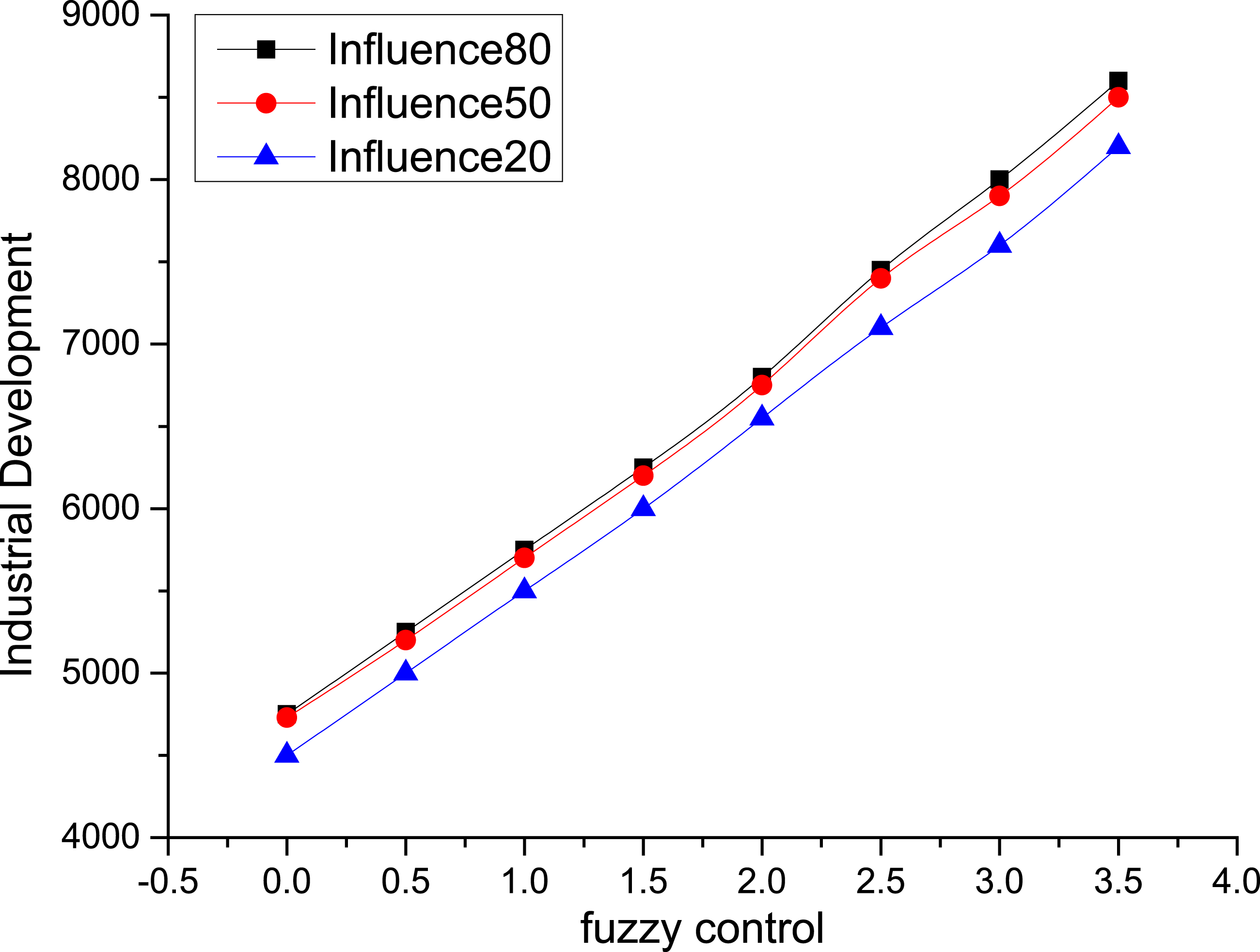
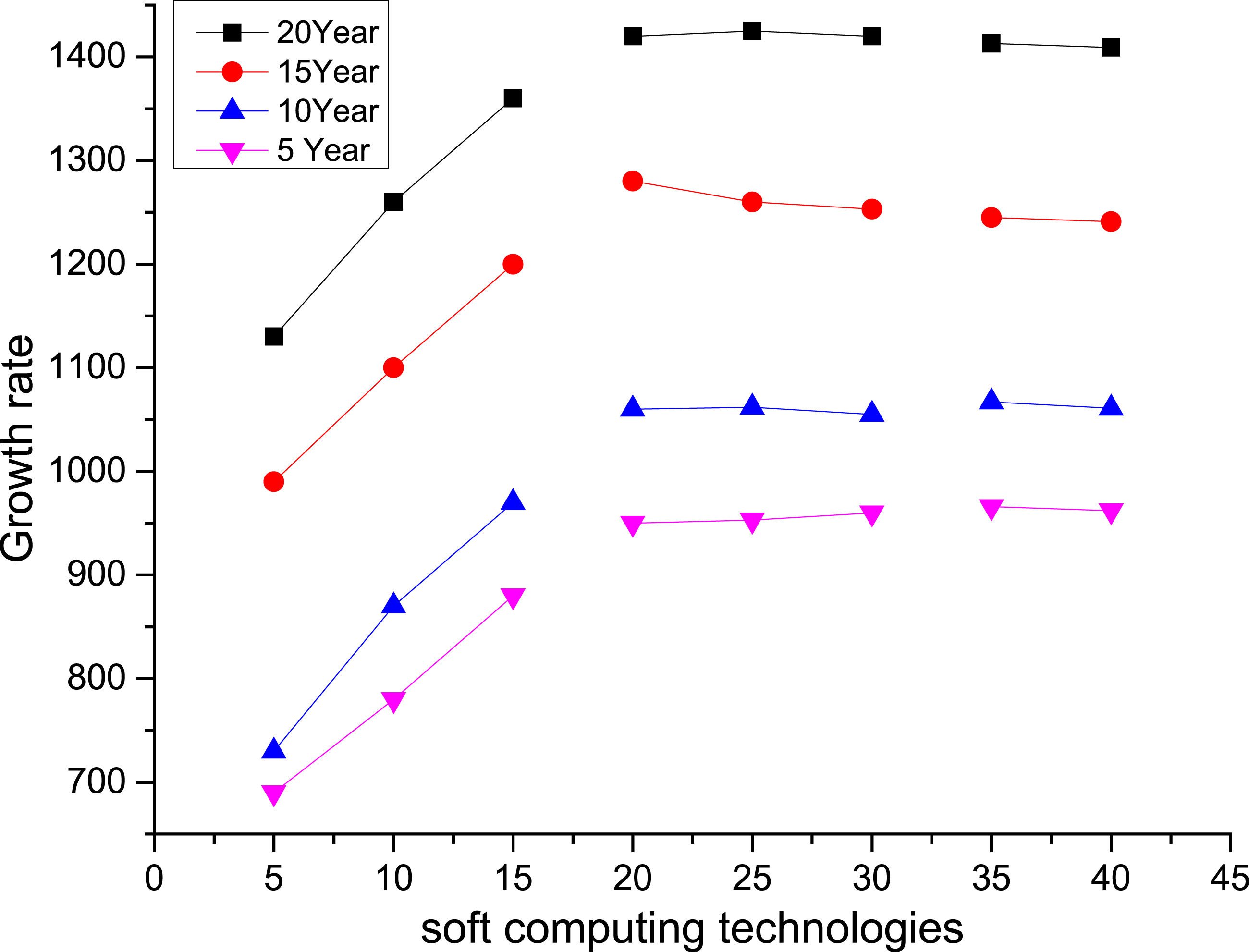
In summary, Industry 4.0 is a new-generation industrial revolution centered on intelligent manufacturing, which has an important impact on the sustainable development of urban economy. One of the core technologies of Industry 4.0 is a new generation of artificial intelligence, which is based on fuzzy control and soft computing, which can deal with complex fuzzy problems and improve the ability of intelligent perception, intelligent control, intelligent optimization, and intelligent scheduling in the manufacturing industry. Industry 4.0 is a continuous process of innovation and change that requires the manufacturing industry to continuously learn and adapt to meet the challenges of global competition and sustainable development. 12
Questionnaire survey and analysis
In order to study the impact of Industry 4.0 on the sustainable development of urban economy, this paper adopts the methods of questionnaire survey and case study, with urban manufacturing industry as the main research industry. The purpose of the questionnaire survey is to understand the current situation and development trend of urban manufacturing industry, as well as the application and impact of Industry 4.0 technology in urban manufacturing industry. The purpose of the case study is to deeply analyze the mechanism and path of the impact of Industry 4.0 technology on the sustainable development of urban economy, as well as the challenges and opportunities faced by urban manufacturing. This chapter is divided into four parts: the first part introduces the design and implementation of the questionnaire survey, the second part conducts descriptive statistical analysis of the data from the questionnaire survey, the third part conducts hypothesis testing and causality analysis of the data from the questionnaire survey by using the multiple regression model, and the fourth part summarizes the main findings and conclusions of the chapter. 13
The target of the questionnaire survey is 1000 technical managers of China’s Urban Development and Reform Commission, who come from different cities and manufacturing enterprises, with a certain degree of representativeness and specialization. The questionnaire survey was conducted from January to March 2023, and the online questionnaire was sent to the respondents through channels such as e-mail and WeChat. The content of the questionnaire survey includes the degree of urban manufacturing agglomeration, technical indexes of manufacturing enterprises, manufacturing policy preferences, the allocation of manufacturing talents, and the degree of cooperation between industry, academia, and research. The results of the questionnaire survey were cleaned, statistically analyzed, and graphically presented, and the following major findings were obtained. 14
Agglomeration of urban manufacturing.

As can be seen from Table 1, the degree of manufacturing agglomeration in a city is positively correlated with its economic resilience. For example, city A has a high degree of manufacturing agglomeration and a high rate of adoption of Industry 4.0 technologies. Compared with cities B and C, the economic resilience is lower. The adoption rate of Industry 4.0 technologies refers to the proportion of manufacturing enterprises using Industry 4.0 technologies in their production processes. Industry 4.0 technologies include the Internet of Things, big data, artificial intelligence, cloud computing, robotics, 3D printing, and so on. A high adoption rate of Industry 4.0 technologies indicates a high level of digitalization, networking, and intelligence in manufacturing enterprises. Economic resilience refers to the ability of a city’s economy to return to its original level after suffering an external shock. High economic resilience indicates that the city’s economy has strong stability and resilience. The data on the adoption rate of Industry 4.0 technologies and economic resilience are based on a combination of survey respondents’ assessments of their cities and manufacturing enterprises, as well as relevant official data.17,18
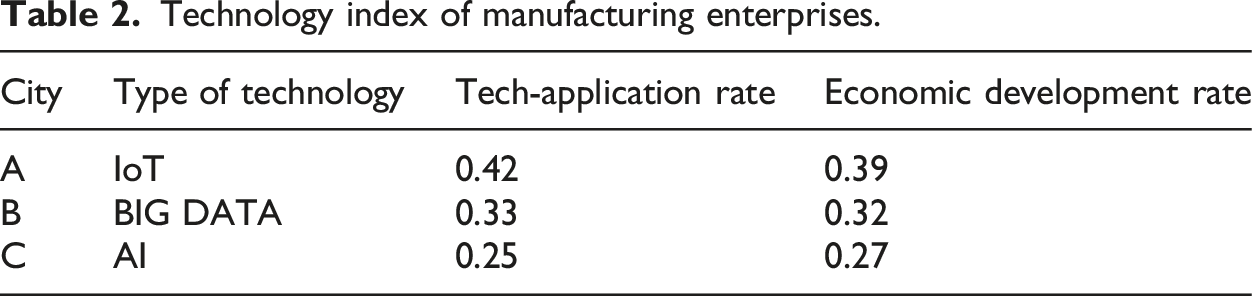
Technology index of manufacturing enterprises.
Manufacturing policy benefits.
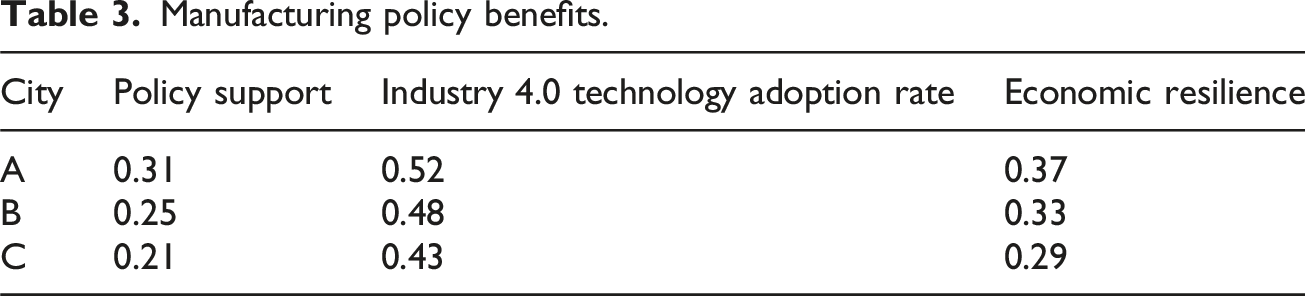
From Table 3, it can be seen that the support of urban manufacturing policy benefits is related to the application rate of Industry 4.0 technology in manufacturing enterprises, and the resilience of urban economic development high. Under the background of strong government financial support, talents introduced by the manufacturing industry can also obtain more benefits, thus taking root in the economic construction of the city.25,26
Manufacturing talent allocation.
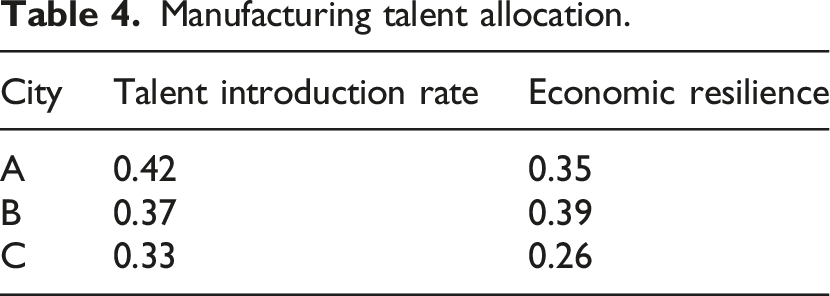
The degree of industry-university-research cooperation refers to the degree of cooperation between urban manufacturing enterprises and colleges and universities in the city to jointly cultivate the talents needed by the enterprise, develop the latest Industry 4.0-related technologies, and release related research results. The maximum utilization of internal resources in the city can realize the optimization of the economic engine.
In order to analyze the questionnaire data comprehensively and effectively, this paper introduces fuzzy algorithm as an analysis aid, and its specific situation is shown in equations (1)–(5).




Among them,
Fuzzy control-based Industry 4.0 and sustainable urban economic development plan
In order to realize sustainable economic development, we propose an urban intelligent industrial management platform, which is an innovative solution based on fuzzy logic that can effectively integrate and display the data of all industrial manufacturing enterprises in the city. On the one hand, this platform can help industrial enterprises to improve productivity, save energy, reduce costs, and optimize management; on the other hand, it can also facilitate information exchange and cooperation between external enterprises and the city, and enhance the city’s economic influence and service level. At the same time, this platform also reflects the informationization level and competitiveness of the city, providing strong support for the future construction of green cities.
The core of the city’s intelligent industrial management platform is fuzzy logic, which is an intelligent technology capable of dealing with uncertainty and ambiguity, and can simulate the human way of thinking to carry out refined and intelligent control of complex industrial systems. The basic principle of fuzzy logic is to use fuzzy sets and fuzzy rules to describe the relationship between the inputs and outputs of an industrial system, and then realize the control objectives of the system through fuzzy reasoning and fuzzy controllers. The advantage of fuzzy logic is that it does not need to establish an accurate mathematical model of the industrial system but directly utilizes the experience and knowledge of experts, so it is suitable for nonlinear, time-varying, and purely hysteretic industrial systems. 29
The main function of the City Intelligent Industrial Management Platform is to display various data of the city’s manufacturing industry on the platform’s homepage, including the agglomeration degree of the city’s manufacturing industry, technological indexes, policy benefits, talent allocation, and the degree of cooperation between industry, academia, and research institutes. These data can help industrial enterprises understand their own strengths and weaknesses, as well as the gap and competition with other enterprises. At the same time, the platform can also display various data of its production process, such as temperature, pressure, flow, voltage, and current, as well as the output of the corresponding fuzzy controllers within each industrial manufacturing enterprise. These data can help industrial enterprises monitor and adjust production parameters in real time to improve production quality and efficiency. In addition, the platform can provide more learning and communication opportunities for industrial enterprises, so that they can learn from each other’s advanced technologies and talent introduction strategies of other enterprises in the city, as well as increase the possibility of more industry-university-research cooperation, thus enhancing the innovation ability and competitiveness of industrial enterprises.30,31
In order to verify the effectiveness and superiority of the city’s intelligent industrial management platform, we used simulation software to simulate the operation of the city’s economy and carried out a comparative analysis with and without the fuzzy control system, respectively. The simulation results show that after adopting the fuzzy control system, the anti-risk ability of the city economy is significantly improved, the fluctuation amplitude and decline of the city economy are significantly reduced, and the stability and sustainability of the city economy are significantly enhanced. The specific situation is shown in Figure 3, in which the red curve indicates the situation with fuzzy control system, the blue curve indicates the situation without fuzzy control system, the horizontal axis indicates the time, and the vertical axis indicates the indicators of the city economy.32,33 Urban economic resilience combined with fuzzy control.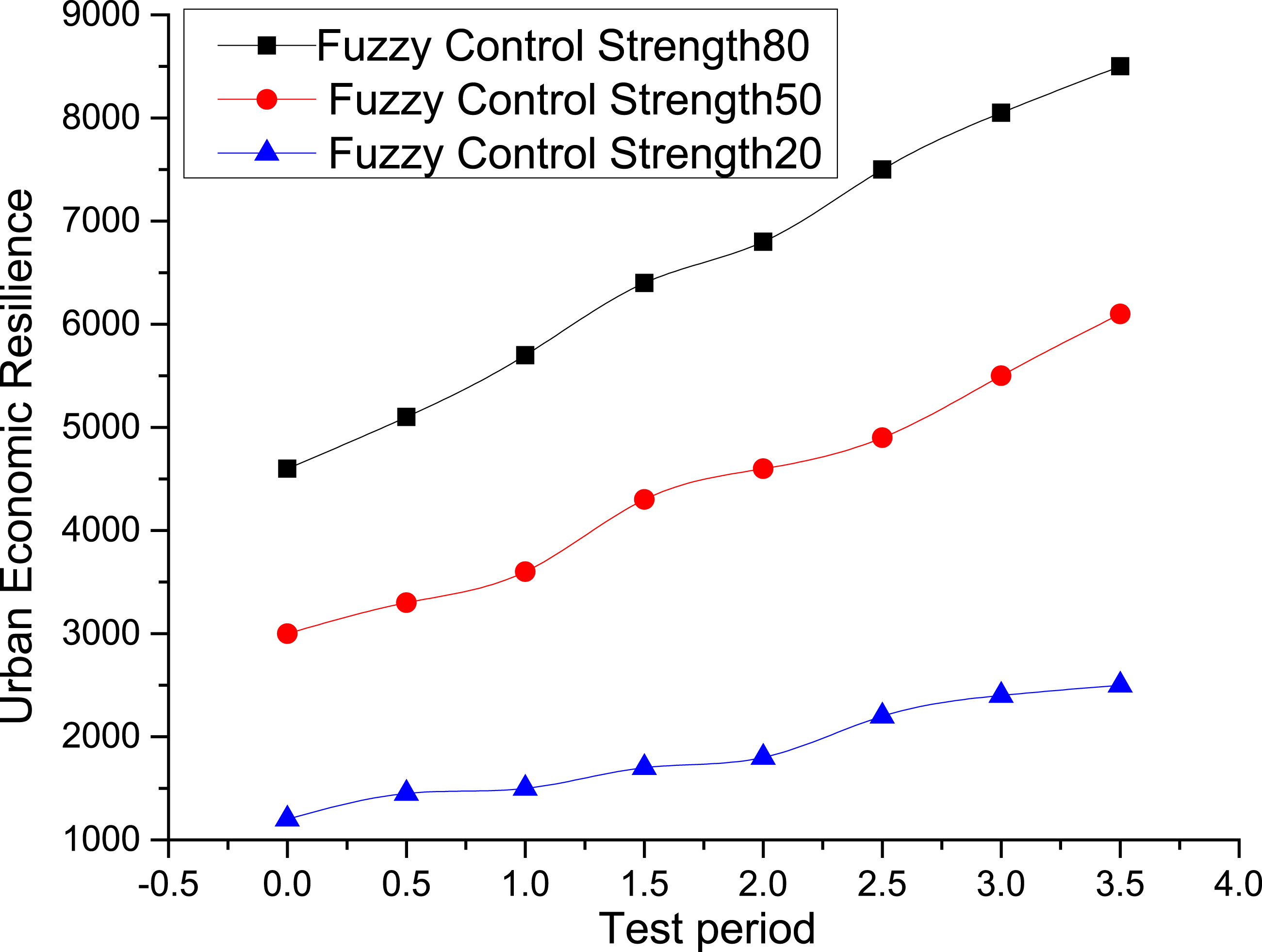
Fuzzy control theory is a control method based on fuzzy sets and fuzzy logic, which can deal with uncertainty, nonlinearity, and complexity, and is applicable to a variety of scenarios in Industry 4.0. The basic idea of fuzzy control theory is that the input and output variables of the control object are represented by fuzzy sets, and then according to fuzzy rules and fuzzy reasoning, the fuzzy sets of the control output are obtained, and then through defuzzification, the exact value of the control output is obtained. The advantage of fuzzy control theory is that there is no need for precise mathematical modeling of the control object, but only need to set appropriate fuzzy sets and fuzzy rules based on experience and expert knowledge to achieve effective control. The significance and advantage of the application of fuzzy control theory in Industry 4.0 is that it can be used to design a flexible and adaptable development plan for Industry 4.0 technology according to the characteristics and needs of different cities and manufacturing industries, so as to improve the sustainable development of the city’s economy. 34
Level of industry-university-research cooperation.

To build a smart industrial management platform, it is necessary to simplify the data processing process technology, and the fuzzy control system technology meets the needs of building an urban smart industrial management platform. Using fuzzy control system technology, various industrial enterprises in the city can be regarded as neural network nodes, and the neural network algorithm can be used to realize the rapid collection of data between nodes. After formatting, the formatted data is finally parsed by the interpreter of the city smart industry management platform, so that the collection and complete display of Industry 4.0 data within the city can be realized and viewed by the management. After a new Industry 4.0-related manufacturing enterprise settles in the city, it can quickly access the intelligent electronic devices inside the manufacturing enterprise through the fuzzy control software interface and remove relevant information from the platform when the industrial manufacturing enterprise moves out of the city, and the platform also has the function of system integration, can cooperate with other software technologies to realize data analysis, and provide more reliable data support for city managers, so that managers can make correct urban economic judgments and decisions in a timely manner, thus ensuring the sustainable development of urban economy.
Through the test code verification of the simulation software, it is found that after adopting the fuzzy control system technology, the sustainable development ability of Industry 4.0 and the urban economy has been improved. The specific situation is shown in Figure 4. Urban economic sustainable development capability combined with fuzzy control.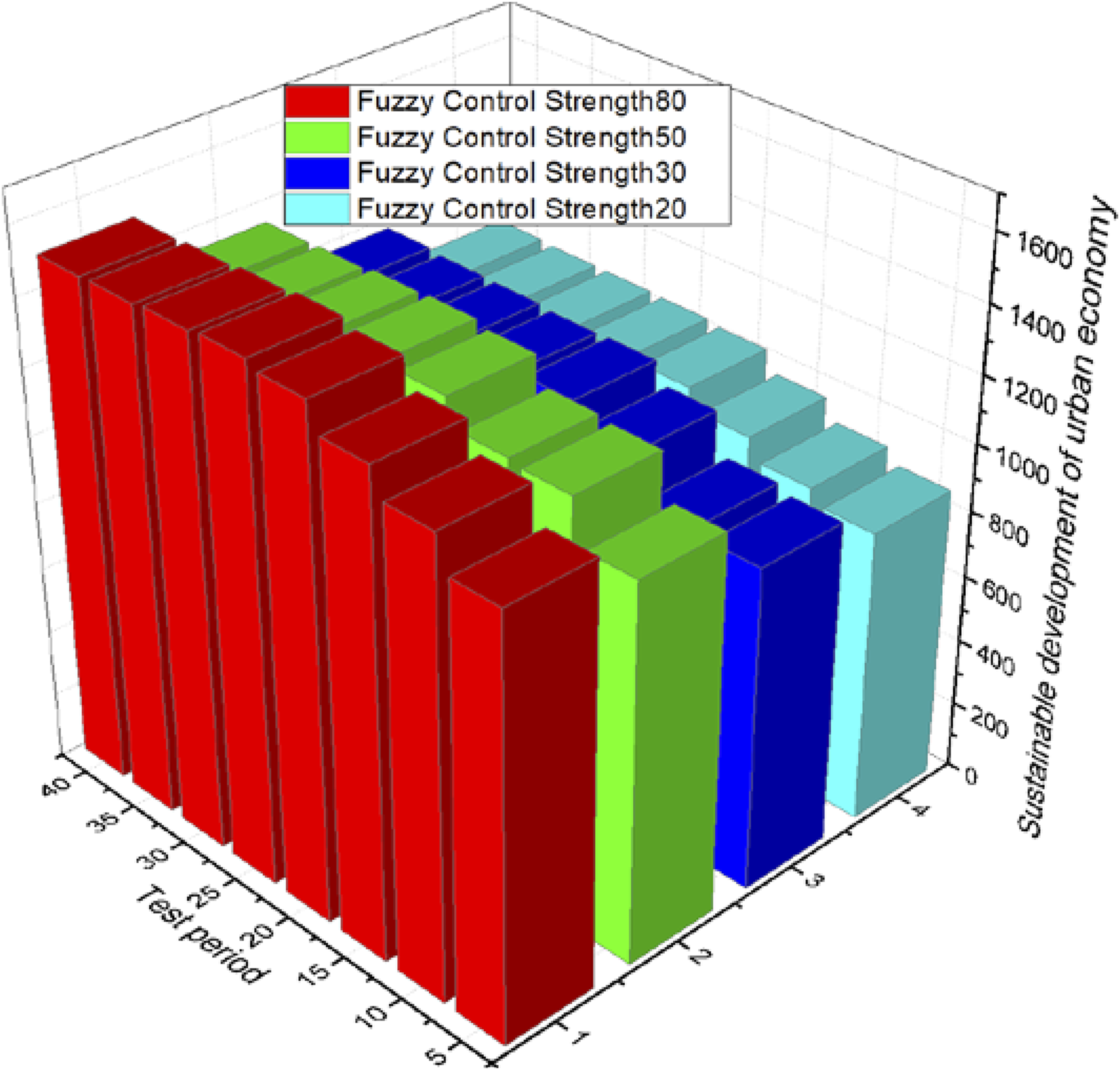
Industry 4.0 and sustainable urban economic development scheme based on soft computing
The urban smart industrial management platform based on fuzzy control system design can intuit. The City Intelligent Industrial Management Platform is an innovative solution based on the design of a fuzzy control system that effectively integrates and displays data from all Industry 4.0 enterprises in the city, including the degree of manufacturing agglomeration, technological indices, policy benefits, talent allocation, and the degree of cooperation between industry, academia, and research. These data can help industrial enterprises improve productivity, save energy, reduce costs, and optimize management, while also facilitating information exchange and cooperation between external enterprises and the city and enhancing the city’s economic influence and service level. However, there are still some limitations of this platform, mainly the lack of software technologies and algorithms to analyze and process enterprise data, resulting in the value of data not being fully explored and utilized. In order to solve this problem, we propose to introduce the method of soft computing, combining fuzzy sets, neural networks, genetic algorithms, and other technologies, to analyze and process the data of the urban industrial management platform in depth, so as to achieve the following objectives: firstly, to carry out rapid classification, clustering, prediction, optimization, and other operations on the large-scale data, so as to improve the reliability and validity of the data; and secondly, to carry out a comparative analysis of the urban manufacturing policy and welfare. The second is to conduct comparative analysis of the city’s manufacturing policy and welfare data to find out the gaps and advantages with neighboring cities, provide the best policy solutions, and design the city’s optimal route for sustainable economic development; the third is to conduct a comprehensive assessment of the manufacturing talent allocation data to discover the supply and demand situation of the city’s Industry 4.0-related talents in a timely manner, and to formulate a reasonable strategy of talent introduction and cultivation; the fourth is to achieve the following objectives through the soft computing technology and data from the intelligent industrial management platform. Data transmission and exchange between Industry 4.0 enterprises and urban universities strengthen industry-university-research cooperation, accelerate the cultivation of talents with technical application capabilities in schools, and improve the efficiency of talent cultivation within enterprises. Through these improvements, we expect the urban intelligent industrial management platform to better serve the development of urban manufacturing industry and contribute to the sustainable development of urban economy.
In order to verify the effectiveness of the fuzzy control and soft computing-based Industry 4.0 technology development planning designed in this paper, this paper utilizes simulation software to simulate the economic resilience of three cities.
Figure 5 shows the comparison between the economic resilience of the city that adopts soft computing and the economic resilience of the city that does not adopt soft computing. It can be seen that the economic resilience of the city that adopts soft computing is higher than the economic resilience of the city that does not adopt soft computing in different time periods and the fluctuation amplitude is small, which suggests that the soft computing can improve the stability and resilience of the city’s economy. Urban economic resilience with soft-calculations versus urban economic resilience without soft-calculations.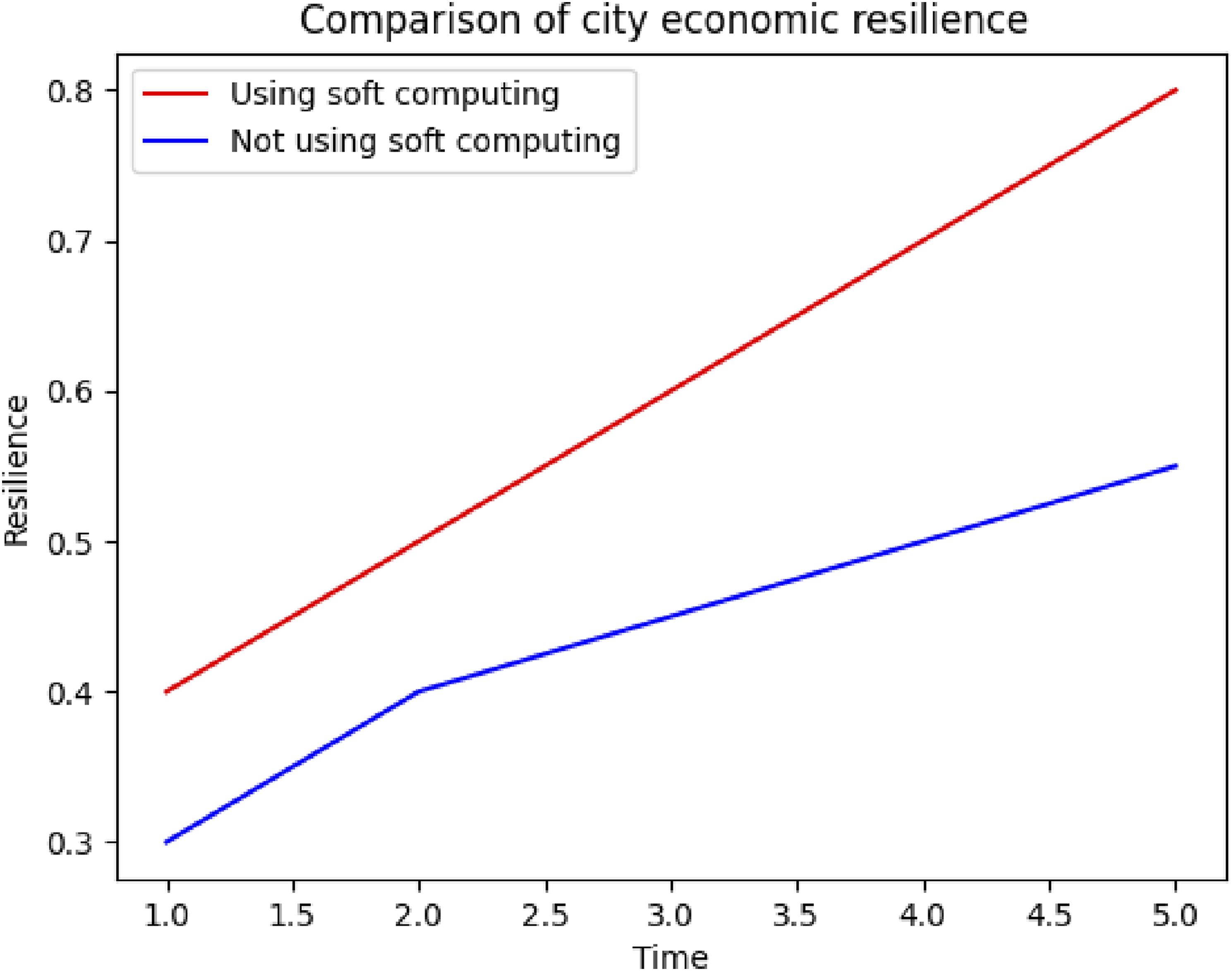
In order to illustrate the effects and advantages of soft computing for the analysis of urban economic development, this paper chooses city A as a case for analysis. City A is an important manufacturing base in China, with many Industry 4.0-related enterprises and universities, and is a pioneer and leader in the development of Industry 4.0 technology. This paper utilizes the official data and questionnaire survey data of city A and applies the method of soft computing to make a comprehensive evaluation and prediction of city A’s economic development. Firstly, according to the main indicators of economic development of city A, such as economic growth rate, employment rate, and environmental quality, a city economic development evaluation model is constructed, and each indicator is represented by fuzzy sets, and the corresponding fuzzy rules and fuzzy inference methods are set to get the fuzzy sets for the evaluation of City A’s economic development, and then through defuzzification, the exact value of the evaluation of the city A’s economic development is obtained, that is, the City A’s economic development level. Secondly, based on the historical data and future expected data of economic development of city A, a city economic development prediction model is constructed, and the indicators are represented by fuzzy sets, the corresponding fuzzy rules and fuzzy inference methods are set, and the fuzzy sets of economic development prediction of city A are obtained, and then through defuzzification, the precise values of economic development prediction of city A, that is, the economic development trend of city A, are obtained. Finally, based on the results of the evaluation and prediction of the economic development of city A, the economic development of city A is analyzed and evaluated, the strengths and weaknesses of the economic development of city A as well as the opportunities and challenges faced by city A are pointed out, and some targeted suggestions and measures are put forward to promote the sustainability and resilience of city A’s economic development.
Conclusion
This paper explores the impact of Industry 4.0 on the sustainable economic development of China’s cities through the methods of questionnaire survey and case study. It is found that factors such as the degree of urban manufacturing agglomeration, the application rate of Industry 4.0 technology, policy incentives, talent allocation, and industry-university-research cooperation are positively correlated with the development speed and resilience of urban economy. Table 1 shows the comparison between urban manufacturing agglomeration and urban economic resilience, and it can be seen that cities with high agglomeration also have high economic resilience, indicating that the scale and concentration of urban manufacturing are conducive to the stable and sustainable development of urban economy. The research in this paper has important theoretical and practical significance for understanding and promoting the sustainable development of urban economy in China. This paper suggests that city administrations should strengthen their support and guidance for the manufacturing industry, improve the application level and innovation ability of Industry 4.0 technology, and optimize the talent allocation and industry-university-research cooperation in the manufacturing industry, in order to enhance the competitiveness and contribution of the urban manufacturing industry. Future research can further analyze the mechanism and path of the impact of Industry 4.0 technology on the urban economy, compare the level of and differences in the development of Industry 4.0 in different cities, as well as consider the social and environmental effects of Industry 4.0, so as to provide more bases and suggestions for the sustainable development of the urban economy. The economic growth rate, employment rate, and environmental quality of cities adopting technology strategies are higher than those cities not adopting technology strategies, indicating that technology strategies can effectively promote the sustainable development of urban economy.
The sample size and coverage of the questionnaire survey in this paper are limited, which may not fully reflect the actual situation of various regions and industries in China, and further expansion and optimization of data collection and processing are needed. There is still room for improvement and refinement of the methods and models of fuzzy control and soft computing in this paper, and further consideration of more influencing factors and variables, as well as more precise fuzzy sets and fuzzy rules, is needed to improve the accuracy and effectiveness of the analysis. Future research can expand and deepen from the following aspects: analyze the impact of Industry 4.0 on the sustainable development of urban economy from more angles and dimensions, such as social, environmental, and cultural aspects, in order to construct a more comprehensive and integrated evaluation system and index system. Compare the level and differences of Industry 4.0 development in different cities from more dimensions and perspectives, such as scale, type, structure, and efficiency, in order to reveal the laws and characteristics of Industry 4.0 development.
Statements and declarations
Footnotes
Conflicting interests
The authors declared no potential conflicts of interest with respect to the research, authorship, and/or publication of this article.
Funding
The authors received no financial support for the research, authorship, and/or publication of this article.
Data Availability Statement
The datasets used and/or analyzed during the current study are available from the corresponding author on reasonable request.