







Abstract
With the rapid development of digital technology, the field of modern education is undergoing profound changes, among which labor education, as an important part of training students’ practical skills, is also facing many new challenges and opportunities. The purpose of this study is to explore the theoretical and practical application of labor education in the digital age. Through comprehensive literature review, questionnaire survey and comparative experiment, this study evaluated the differences between traditional labor education methods and digital methods in terms of educational effect and student satisfaction. The results show that digital labor education methods have significant advantages in improving students’ skills and conceptual gain. But at the same time, the study also highlights the importance of combining traditional and digital methods to achieve the best educational results. Given the rapid evolution of technological and social environments, future research should further explore how to respond to these changes and provide strong support for the development of labor education in the digital age.
Introduction
With the rapid development of science and technology, especially the increasing popularity of digital technology, the global education field is undergoing an unprecedented transformation. This change not only changes the way and method of education, but also challenges the traditional cognition and theoretical basis of education. Under this background, labor education, as an important part of the education system, is also facing great challenges and opportunities. Traditional labor education focuses on the cultivation of manual skills and labor concepts, but in the digital age, the form and content of labor are undergoing profound changes. Robots, artificial intelligence, and automation technologies are replacing a large number of traditional jobs, while emerging jobs often require a high degree of digital skills and interdisciplinary knowledge. Therefore, how to redefine and implement labor education in this environment, so that it can meet the needs of modern society and cultivate the core quality and ability of students, has become an urgent problem for education circles and researchers.
In order to explore this topic in more depth, it is necessary to emphasize the importance of labor education in the digital age. In the current global economic and technological context, the demand for skills in the labor market is changing rapidly. Students should not only master traditional labor skills, but also have the application ability of digital technology and innovative thinking. Therefore, the theory and practice of labor education need to keep pace with the Times to adapt to this new labor market environment. To further demonstrate the impact of digitalization on labor education, we can refer to some practical education reform cases. For example, some countries and regions have begun to incorporate digital skills such as programming and data analysis into labor education curricula to cultivate students’ digital abilities. In addition, the use of digital tools and online platforms for remote internship, virtual labor experience, etc. has also become a new trend in labor education. These practical cases show that digital technology not only changes the content and mode of labor, but also provides the possibility of innovation in labor education.
In the study of theoretical reconstruction and practical dimension of labor education in the digital age, the research of different scholars provides us with multi-angle understanding and insights.
Blazic highlighted the growing importance of digital technologies in the labor market and proposes a new concept of education and training to address the cybersecurity workforce shortage in Europe. 1 This perspective has important implications for understanding the importance and challenges of labor education in the digital context. Jain et al., through their research, revealed the impact of science education on labor market outcomes in developing economies, thus emphasizing the important role of education in forming an effective labor force. 2 Tavakoli et al. further discussed the application of artificial intelligence in personalized labor market-driven education and provided concrete examples for the digital transformation of labor education. 3
In their research, Cheng et al. focused on the productivity assessment of construction workers, especially in the training and education of foreign workers, and demonstrated the practical application and effect of labor education in specific fields. 4 Donald et al. revealed students’ cognition of education and employability through research, providing a perspective for understanding the connection between labor education and labor market. 5 In their study, Ji and Wu explored the new dynamics of family, education, and labor market in China after the reform from a gender perspective. 6
Li studied the relationship between China’s digital economy and labor education through the application of neural networks, especially in the context of COVID-19. 7 Kerr et al. studied the influence of higher education and labor market prospect information on students’ choice through random field experiment, emphasizing the correlation between labor education and market demand. 8
These studies not only provide theoretical and empirical basis for understanding the complexity of labor education in the digital age, but also provide guidance for building more effective labor education models and practical strategies. By synthesizing the viewpoints of these scholars, we can more comprehensively understand the development trend, challenges and opportunities of labor education under the digital background.
The purpose of this study is to explore and analyze the theory and practice of labor education in the digital age. The specific goals include to reveal the changes and adaptation strategies of labor education under the background of digitalization; obtain empirical data through questionnaires and experimental design to support or challenge existing educational views; and construct a data-driven labor education model to guide future education practices and policy making.
For the academic circle, the contribution of this study is to fill the gap in the study of labor education in the digital environment and provide a complete theoretical framework and methodology. This can not only help researchers to better understand and evaluate the existing labor education practice, but also provide a new research direction and ideas for future research.
For educational practitioners and decision-makers, this study provides a series of concrete strategies and recommendations to help them more effectively respond to the challenges of the digital age, develop students’ digital skills and labor concepts, and promote innovation and development of labor education.
The main scope of this study focuses on the theoretical and practical transformation of labor education in the digital age. Specifically, the study will explore the intersection between the core concepts of traditional labor education and digital education, and deeply analyze the adaptability and reform of labor education in the digital environment. From a practical point of view, this study will obtain empirical data about current labor education practice through questionnaire survey and experimental design, and further build a data-driven labor education model based on these data.
As for the research structure, this paper first provides the reader with an overview of the research background, motivation, and purpose in the introduction. Next, the study will deeply discuss the changes of labor education under the background of digitalization. Then, the questionnaire and experiment design strategy are introduced, and on this basis, the model construction is discussed. Finally, this study will analyze the output of the model and provide a summary of the research and future prospects, so as to present a complete and systematic research context of labor education in the digital age for readers.
Changes of labor education theory under the background of digitalization
Core concepts of traditional labor education
Labor education has deep historical roots dating back to before the Industrial Revolution, when education focused on the development of handicraft and agricultural skills. This model of education promotes the development of students’ practical skills and labor concepts through direct participation in productive labor, which has historically been considered a key link in the transition to adulthood in most traditional societies. For example, the ancient Greek philosopher Plato emphasized the importance of labor education in his writings and discussed its effectiveness in cultivating civic responsibility and personal morality. 9
The core idea of labor education is to realize that labor is not only a means of making a living, but also a link between individuals, society and nature, and an important way to promote the all-round development of human beings. In the traditional perspective, labor education aims to provide a platform for students to develop practical skills such as handicraft, agriculture, or industry, which were previously seen as critical preparation for students’ future careers.
In the early 20th century, the educational reformer John Dewey highlighted the importance of “learning by doing,” arguing that by engaging in practical activities, students not only acquire specific skills, but also develop problem-solving skills and a spirit of cooperation. 10 Under this framework, the goal of labor education is not limited to the transfer of skills, but also includes the cultivation of students’ ethics and values, such as teamwork, responsibility, diligence, autonomy, and other qualities. 11 However, with the evolution of social economy and the rapid development of technology, the form and content of labor have also changed. New forms of labor such as knowledge labor and creative labor are gradually replacing traditional physical labor. This change requires that the concept and practice of labor education must keep pace with The Times to meet the needs of modern society.
In order to cope with these challenges, labor education theory needs to deepen and expand on the basis of traditional skill training. For example, some educational institutions have begun to incorporate digital skills such as programming, cybersecurity and data analytics into their educational curricula in response to the growing demand for digital literacy in the labor market. These examples of modern educational practice show that labor education theory is gradually integrating the broader areas of digital skills, innovative thinking and career planning to ensure that students have the necessary conditions to successfully integrate into the labor market of the digital age.
Rise and influence of digital education
With the popularization of digital technology, the field of education is undergoing a profound transformation. These technologies not only provide students and educators with new learning and teaching tools, but also promote the renewal of educational methods and concepts.
In the digital age, personalized learning has become an important trend. For example, according to the report of education technology company Coursera, through big data and artificial intelligence technology, its platform is able to provide students with a tailored learning path, which significantly improves learning efficiency and outcomes.12,13 This personalized learning style not only improves students’ learning efficiency, but also cultivates their independent learning ability and innovative spirit.
The popularity of blended learning and online learning is another important aspect of the rise of digital education. For example, edX, an online learning platform jointly launched by Harvard University and MIT, combines traditional classroom instruction with online interactive courses to provide flexible learning options for students worldwide. 14 These models not only enable students to learn anytime and anywhere, but also provide richer learning resources and communication opportunities.
Finally, project-based and practice-oriented approaches to education are becoming mainstream. In contrast to traditional knowledge-oriented instruction, these approaches emphasize solving practical problems in real or simulated environments and develop students’ critical thinking, teamwork, and innovation skills. For example, Stanford University’s School of Design’s project-based curriculum, which solves real-world problems through teamwork, effectively improves students’ practical skills and innovative thinking. 15
To sum up, the educational trend in the digital age reflects a more open, flexible and closely connected educational philosophy with real life. This provides new opportunities and challenges for labor education, which requires us to rethink and design the curriculum and methods of labor education to meet the needs of this era.
Adaptation and transformation of labor education in the digital environment
Changes in labor forms brought about by digital technology have greatly improved labor productivity, economic efficiency, and greatly reduced the proportion of wages. As knowledge work and digital work have become the mainstream of society, digital technology data sources have become the key elements of enterprise development. Digital labor has reconstructed the employment mode in the Internet era, and flat platform employment has become a new “species” of employment.16,17
Labor education has gained unprecedented development space in the digital age. Digital tools and platforms create a diverse, interactive, and hands-on learning environment for labor education. 18 For example, virtual reality technology can simulate various labor scenarios, allowing students to experience and learn in a risk-free environment; digital simulation tools can help students understand complex workflows and principles; the online platform provides the opportunity to communicate with peers and experts around the world to share labor experience and knowledge.
However, the digital age also brings a series of challenges to labor education. One of the biggest challenges is adapting to rapid changes in the labor market. For example, with the development of automation and artificial intelligence technology, the reduction of traditional manufacturing jobs requires labor education to constantly update its content and methods. In this context, some educational institutions have begun to incorporate programming, machine learning and other courses into their teaching system to cultivate students’ ability to adapt to the future market. 19
In addition, while digital technology provides a wealth of learning resources, how to ensure that students get a real and in-depth labor experience in a virtual environment remains a problem. For example, pure digital labor education may ignore the nature and value of labor, resulting in students’ one-sided and superficial understanding of labor. Therefore, a hybrid teaching model that combines traditional face-to-face teaching and digital tools may be more effective in preserving the core values of labor education.
In terms of educational equity, while many online resources are free, high-quality digital labor education resources and tools often require expensive hardware support. This can lead to unequal distribution of resources. 20 Therefore, policymakers and educators need to pay attention to this issue by providing subsidies or cooperative models to ensure that all students have access to high-quality digital labor education.
In a word, labor education is facing great opportunities and challenges in the digital age. To truly benefit students, educators and policy makers need to think deeply and innovate about labor education, ensuring that it meets the needs of modern society while developing students’ core qualities and competencies.
Questionnaire and experiment design strategy
Questionnaire content and structure
In order to better understand the applications and challenges of labor education in the digital age, a questionnaire was designed to collect the views and experiences of educators, students and relevant practitioners.
The content and structure of the questionnaire have been carefully designed to ensure the validity and representativeness of the data. The questionnaire is divided into the following four parts: (1) Basic information: Collect the background information of the respondents, such as age, gender, occupation, and education, as well as their years of experience in the field of labor education. This will help us analyze the differences in views of respondents from different backgrounds. (2) Cognition and attitude toward labor education: Quantitative questions and Likert scale were used to understand the respondents’ basic cognition and attitude toward labor education. The questions will be based on existing research to ensure relevance and science. (3) Experience with digital application of labor education: Respondents were asked about the digital tools and platforms they used in the actual education process, and their evaluation of these tools. In addition, questions will be included to measure respondents’ satisfaction with the effectiveness of these tools and platforms.
Challenges and recommendations for labor education: The open-ended questions will be designed to be more exploratory and in-depth, for example, asking respondents for their views on the specific difficulties and challenges of labor education in digital transformation, as well as their specific suggestions for addressing these issues.
Content and structure of the questionnaire.
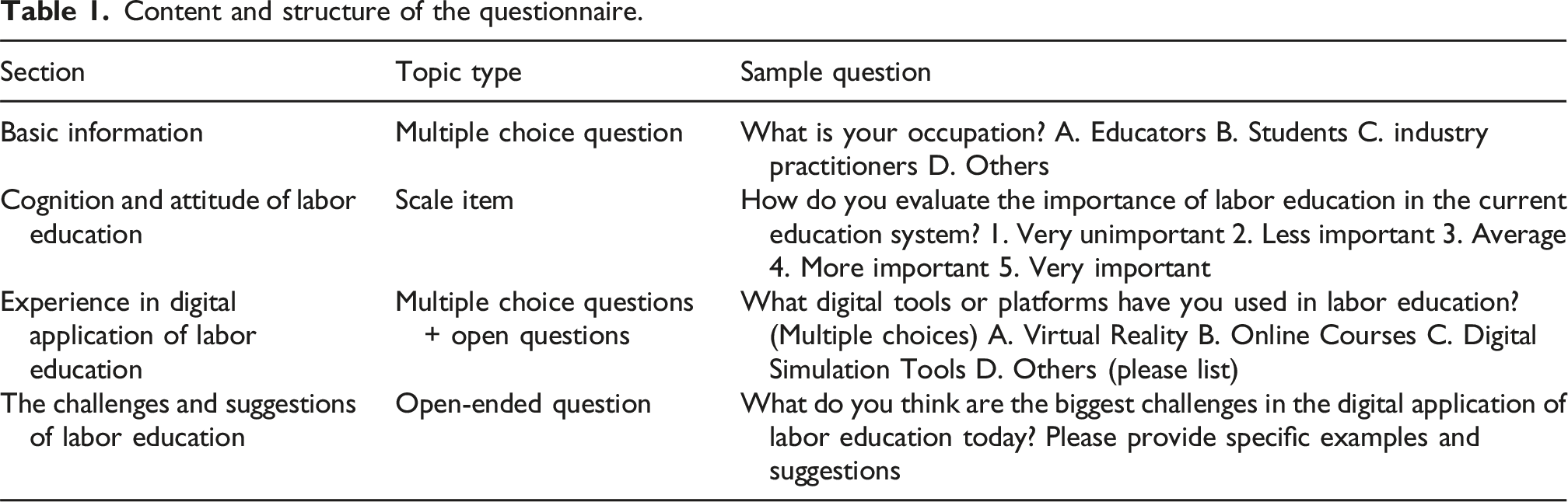
The questionnaire was designed to ensure that the data collected truly and accurately reflected the views and experiences of the respondents, and to provide strong support for subsequent analysis.
Sample screening and representativeness
In order to ensure that the results of questionnaire survey have high credibility and universality, it is very important to select the right sample. (1) Sample selection and selection are based on the following principles:
Diversity: Make sure respondents come from a variety of backgrounds, such as occupation, age, and education level.
Relevance: The target sample is mainly the population with direct or indirect relationship with labor education.
Size: Make sure the sample size is large enough to get statistically significant results.
(2) Sample selection strategy:
Random sampling: In some large schools or institutions, some people are randomly selected for questionnaire survey.
Stratified sampling: The population is divided into different layers according to specific characteristics (such as occupation and age group), and then samples are randomly drawn from each layer.
Intentional selection: For certain groups, such as educational administrators, an intentional selection approach may be adopted.
Sample structure.
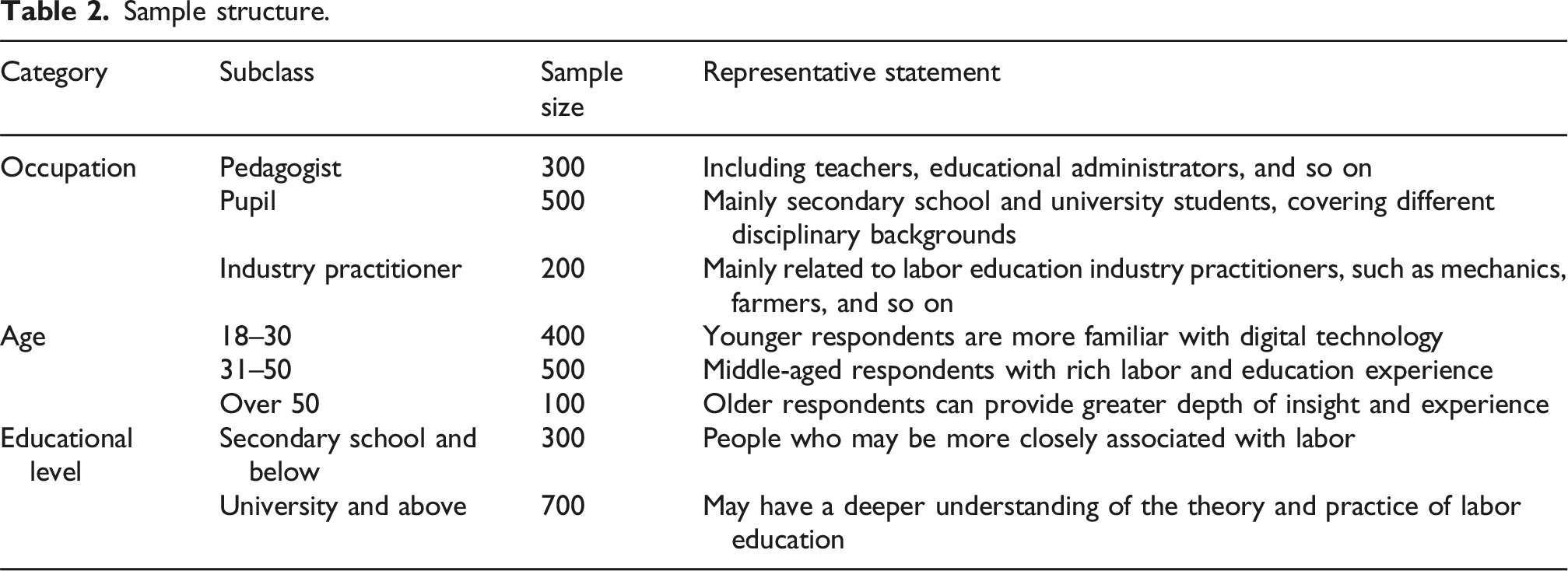
Through the above sample selection strategy and structure, this study aims to ensure that the results of the questionnaire can truly and accurately reflect the views and experiences of respondents from different backgrounds, and have a good representation.
Data collection process and preprocessing strategy
(1) Data collection process:
Questionnaire development: Based on research objectives and questions, questionnaire content was designed and revised for several rounds to ensure its relevance and validity.
Platform choice: Use online survey platforms (such as SurveyMonkey and Questionnaire Ratings) to publish the questionnaire and promote it through social media, email, and internal channels of the school/institution.
In order to ensure the breadth and diversity of data collection, the following strategies are adopted:
Diverse target audience: Ensure that the survey includes people from different regions, different types of educational institutions (such as public schools, private schools, and vocational training centers), and different occupational backgrounds to obtain more comprehensive data.
Multi-channel communication: In addition to traditional social media and mail, questionnaires are also promoted through channels such as educational forums, professional conferences, and seminars to expand the audience.
Strengthen partnerships: Work with educational institutions and industry associations to promote the questionnaire through their networks and resources to increase participation and representation.
Data collection: Questionnaire data is collected within a specified time frame, and the quantity and quality of responses are regularly checked.
Data export: Export data from an online platform into a spreadsheet or database format for easy subsequent processing and analysis.
(2) Pretreatment strategy:
Data cleansing: Review the data to eliminate incomplete or clearly untrue responses.
Missing value processing: Data with missing values can be filled using methods such as the mean, median, or mode, or using advanced methods such as K-nearest neighbor.
Data conversion: Converts text responses into numbers or categorical labels for subsequent statistical analysis.
Outlier processing: The outlier is detected by statistical analysis methods (such as standard deviation and quartile distance), and the processing method is decided according to the specific situation (such as deletion and replacement).
Data preprocessing.
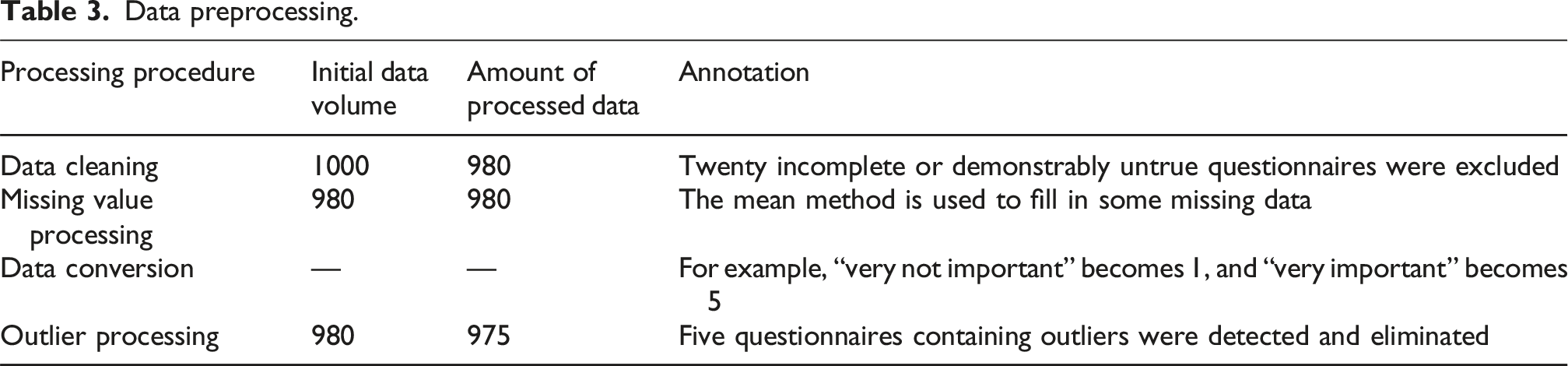
After the above data collection process and preprocessing strategy, 975 valid questionnaire data were finally obtained, which provided a solid foundation for subsequent analysis and model construction.
Experimental design: Grouping principles and implementation strategies
In order to deeply understand the effect of labor education in the digital age, this study designed a comparative experiment to compare the influence of traditional labor education methods and digital labor education methods on the cultivation of students’ skills and concepts. (1) Grouping principle
Randomization: To ensure the reliability of the experiment, all participants were randomly divided into two groups: traditional labor education group and digital labor education group. This principle is based on the criteria of randomized controlled trials (RCTS) to ensure the impartiality and objectivity of experimental results.
Balance: Ensure that both groups of participants have a similar distribution on key variables (such as age, gender, and educational background), thus reducing bias. This principle draws on the theory of balanced experimental design and aims to ensure consistency across groups on key features.
(2) Implementation strategy
Traditional Labor Education Group: Participants in this group will receive traditional labor education methods based on practical operation and practice. This approach emphasizes the development of manual skills and hands-on experience.
Digital Labor Education Group: Participants in this group will use digital tools and platforms for labor education, such as virtual reality technology to simulate labor scenarios and digital simulation tools to understand work processes. This approach aims to develop students’ digital literacy and the ability to adapt to the modern labor market.
Post-test assessment: At the end of the experiment, the skills and concepts of the two groups of students were assessed to compare the effects of the two educational methods. The assessment will include skills tests, concept understanding questionnaires, and feedback collection from students.
Experimental design.

Through this comparative experimental design, this study is expected to deeply explore the advantages and limitations of digital labor education methods, and provide strong empirical support for the future development of labor education.
Construction of data-driven labor education model
Criteria for selecting model parameters
In order to build a data-driven labor education model, the parameters of the model need to be determined first. The criteria for selecting parameters are based on the characteristics of the data, the purpose of the study, and the expected model complexity.
Here are a few key model parameters and their selection criteria, as well as the scientific basis for them: (1) Student characteristics ( (2) Labor education method ( (3) Skill and conceptual gain ( (4) Interaction item (
The model can be expressed as the following formula (1):
Criteria for parameter selection.
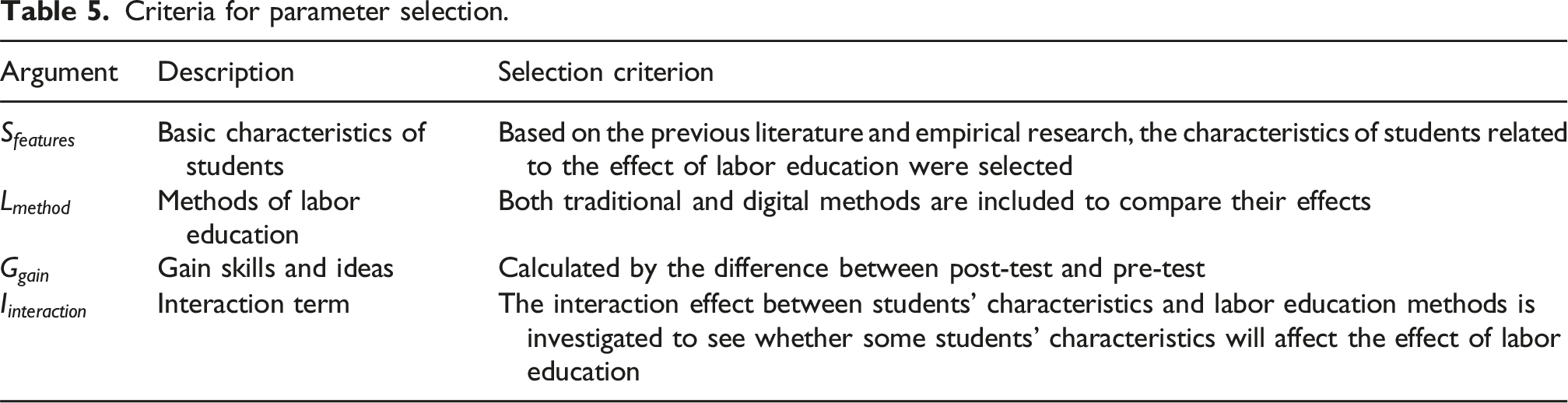
Selecting the correct model parameters is the key to model validity. Through careful selection and testing of parameters, it is possible to ensure that the model can accurately describe the effects of labor education and provide valuable recommendations for practice.
Model structure and components
In a data-driven labor education model, the structure and component design of the model are crucial because they determine the accuracy and generalization ability of the model. Research can clarify the key structure and components of the model.
Model structure: The model uses a multiple linear regression structure because the goal is to explore how multiple predictors (such as student characteristics and labor education methods) relate to dependent variables (skills and conceptual gains). The model equation is formula (1).
Model component analysis: (1) Response variable ( (2) Predictive variables: (3) Coefficient ( (4) Error term (
The structure and components of the model ensure that the research can comprehensively analyze the effects of labor education in the digital age and provide meaningful recommendations for educational practice.
Training and verification of the model
In the modeling process, the training and verification of the model are the key steps to ensure the model effect and prediction accuracy. (1) Data partitioning: First, the data is divided into training sets and verification sets. The training set is used to train the model, while the validation set is used to verify the accuracy of the model. A common data split ratio is 80% training set and 20% validation set. (2) Model training: Using training set data, applying multiple linear regression method to estimate model parameters. The (3) Model validation: The predictive ability of the model can be evaluated using the validation set data. Calculate the difference between the predicted and actual values in the validation set, such as the mean square error (MSE). The following formula (2) is shown: (4) Model optimization: If the verification results are not satisfactory, you can consider adding more features, adjusting model parameters or trying other modeling techniques.

Model training and verification.
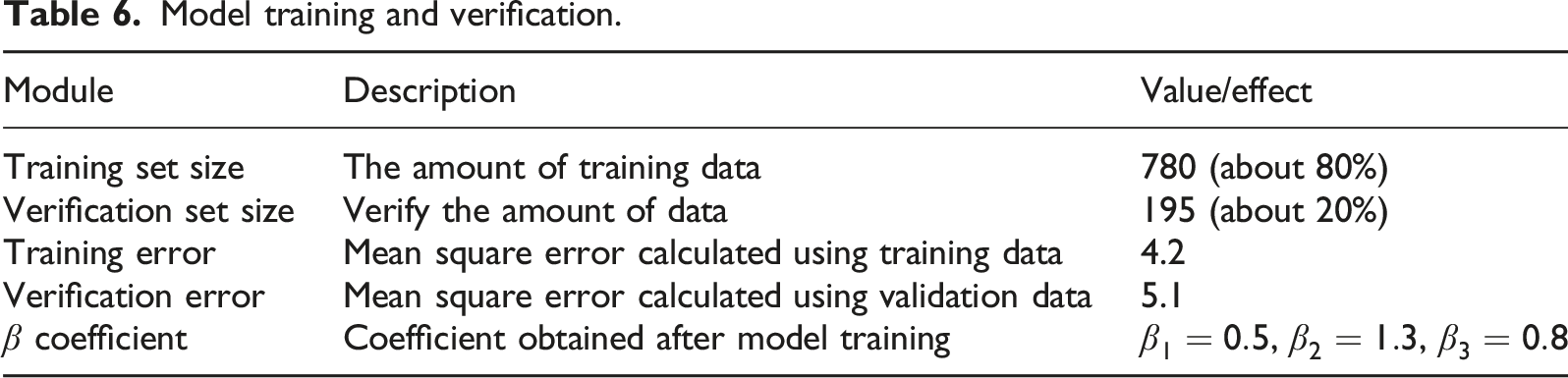
The training and validation of the model is an iterative process that may require multiple adjustments and optimizations. The ultimate goal is to obtain a model that can reliably predict the effects of labor education and provide valuable insights into educational practice.
Model output and analysis
Questionnaire and experimental data analysis
This study has collected questionnaire data, conducted experimental design, and constructed a data-driven labor education model. Now the study will analyze the output of questionnaire and experimental data in depth.
Firstly, basic statistical analysis is carried out on the questionnaire data, such as mean value, standard deviation, maximum value and minimum value.
Key variables include:
Skill gain (
Concept gain (
Traditional method satisfaction (
Digital method satisfaction (
These variables were selected based on existing research in pedagogy and educational psychology, as well as observations from pre-experiments. The results of descriptive statistical analysis will provide the basic distribution and trends of these variables, which will help to understand the basic characteristics of the data.
This study further explores the correlation between different characteristics, in particular the relationship between student characteristics, labor education methods and skills/concept acquisition and satisfaction with traditional/digital methods. Correlation analysis will use Pearson or Spearman correlation coefficients to quantify the strength of the relationship between different variables, as shown in Figure 1. Basic statistical analysis.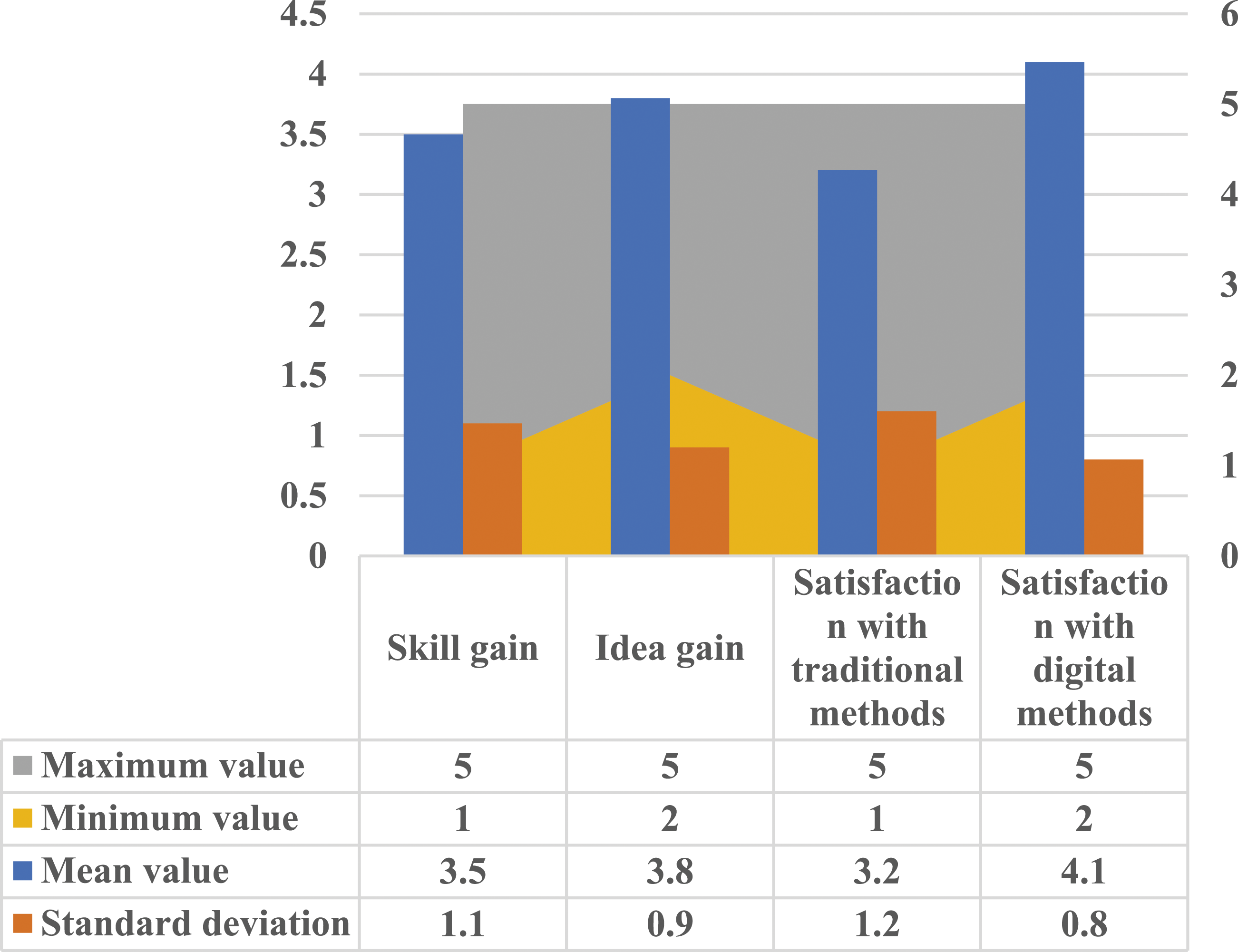
The study further explores the correlation between different characteristics, in particular the relationship between student characteristics
The correlation analysis situation is shown in Figure 2. Correlation analysis.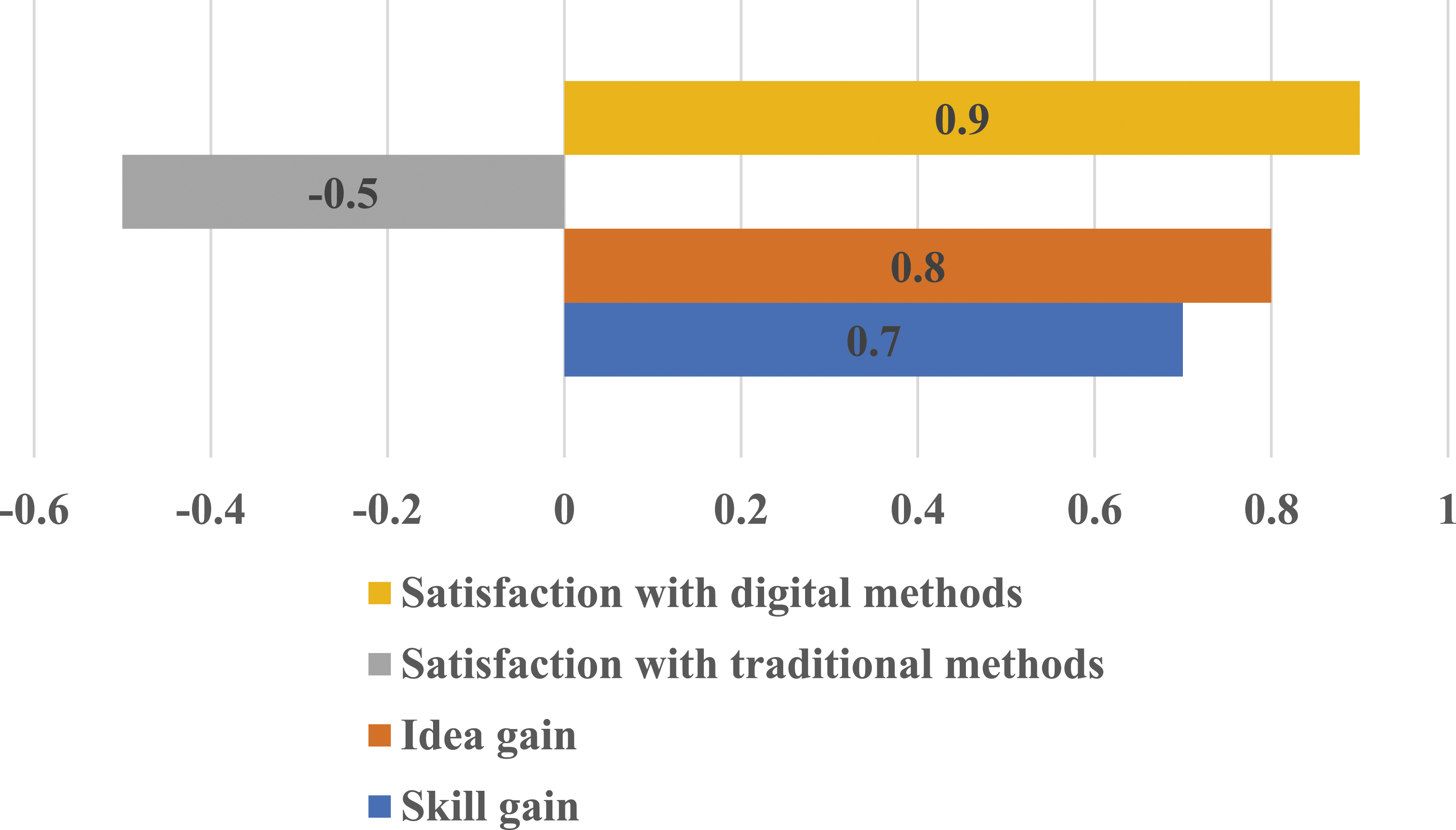
Student characteristics (
Compared with the digital labor education method (
Digital labor education methods (
Overall, digital labor education methods have shown significant advantages in improving students’ skills and conceptual gains. But it also requires educators to fully understand the characteristics of the students and ensure that the educational approach matches the needs and backgrounds of the students.
Comparison between model results and practice
After completing the training of the model, the research needs to compare the predicted results of the model with the actual data, so as to evaluate the accuracy and reliability of the model.
A subset of the data was selected for this comparison. The skill gain predicted by the model ( (1) Accuracy of the model: From the figure above, it can be seen that the skill gain predicted by the model is very close to the actual observed value, and the difference is mostly less than 0.5. This shows that the model has good accuracy. (2) Model deviation: Deviation is the average error of model prediction. In this case, the bias is close to zero, indicating that the model has no significant systematic bias. (3) Robustness of the model: Considering that the samples come from multiple backgrounds and scenarios, robustness of the model refers to its prediction ability under different scenarios. From the above data, it can be seen that the model has a relatively stable forecasting ability in a variety of situations. Comparison between model prediction and practice.
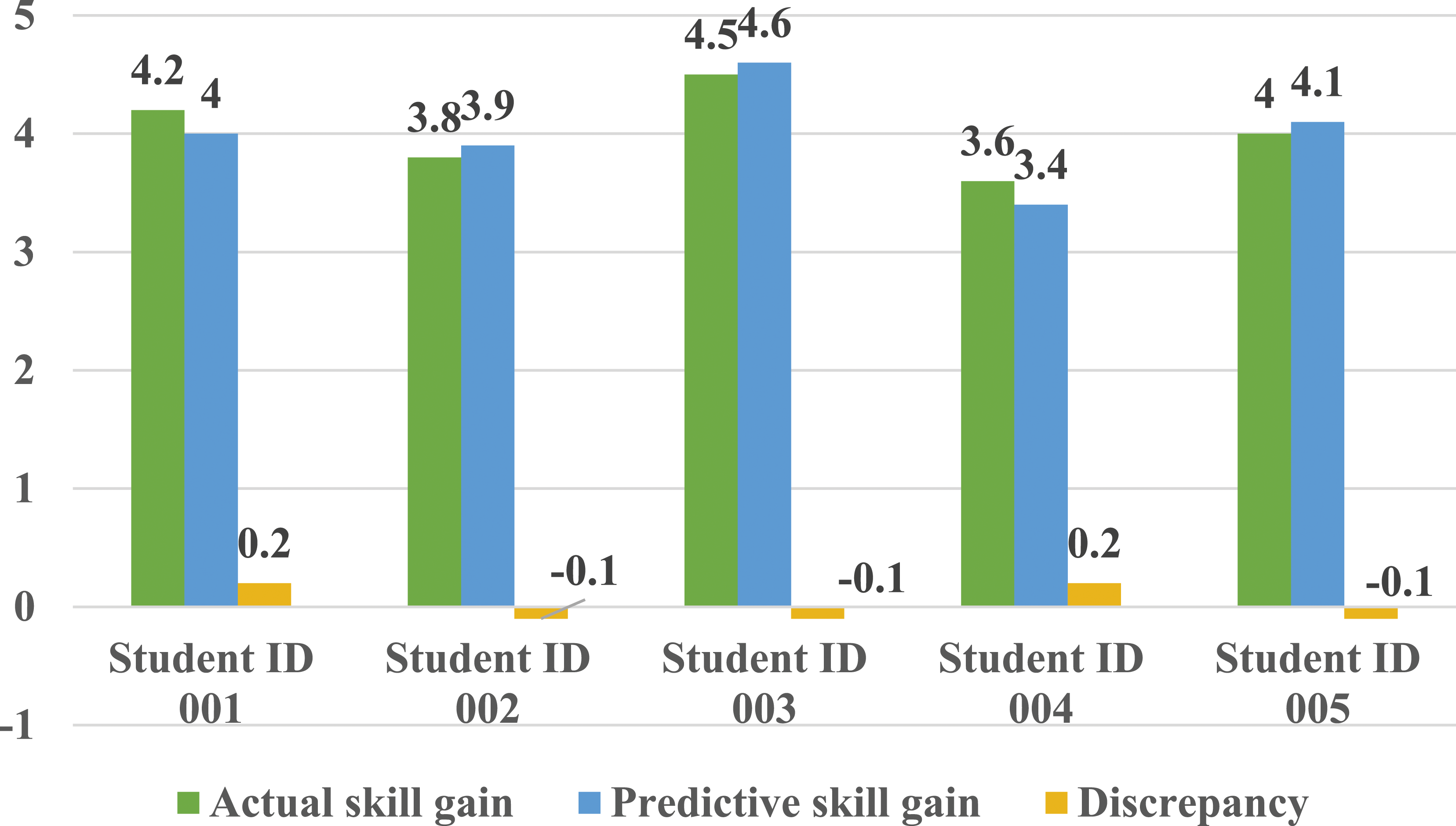
In summary, the data-driven labor education model shows good accuracy and robustness in predicting skill gains. However, further validation of the effect on a wider dataset is still needed.
Comprehensive evaluation of results
Comprehensive evaluation is a comprehensive review of the reliability, validity, and usefulness of the study after collecting, analyzing, and comparing all data and model results. (1) Model performance: First, study and review the overall performance of the model. Practical significance of the model: This research model not only provides a quantitative prediction of the effectiveness of labor education, but also reveals the possible advantages of digital labor education methods. For example, through model analysis, the study found that certain characteristics of students, such as familiarity with digital tools, may significantly enhance the effectiveness of digital labor education. This provides important guidance for educators to consider incorporating more digital elements into the educational process when designing curricula. (2) Model evaluation, as shown in Figure 4. Comprehensive assessment of results.
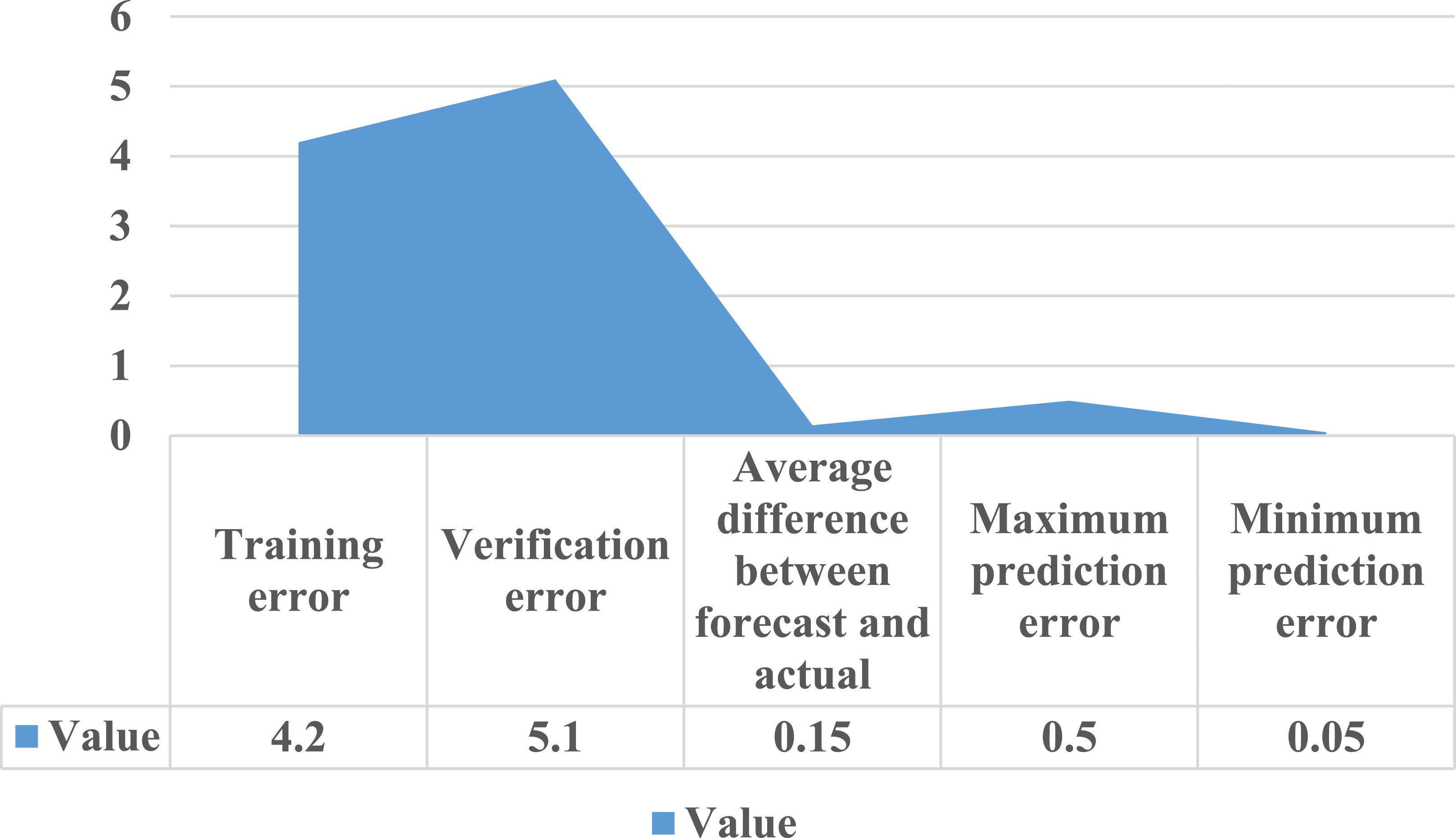
Reliability of the model: Considering the small training and verification errors, the model has a high reliability. Moreover, the average difference between forecast and actual is also small, further confirming this point.
Generalization ability of the model: The validation error is similar to the training error, which indicates that the model’s performance on unknown data is similar to that on training data, so it has good generalization ability.
Practicality of the study: The model not only provides a quantitative prediction of the effects of labor education, but also reveals the possible advantages of digital labor education methods.
Potential for future application: The model provides educators with a tool to quantitatively evaluate the effects of different labor education methods and to provide reference for future curriculum design. (3) Limitations and challenges:
While the model performs well, it is still based on simulated data. In a real environment, more complex situations and unforeseen challenges may arise. The model may not cover all the factors that affect the effect of labor education, and these potential factors need to be further explored in future studies. In addition, the application of the model requires professional training and guidance to ensure its correct and efficient use.
The practical significance of the experimental results: Analysis of the experimental results showed that the digital approach increased student engagement and learning motivation, which may be due to the fact that the digital approach provides richer interactivity and is more in line with the learning habits of contemporary students. The increase in student satisfaction may also reflect the advantages of a digital approach in providing a personalized learning experience. (4) Comparative experimental evaluation:
This study designed a comparison experiment, including an experimental group (using digital labor education methods) and a control group (using traditional labor education methods). The two groups will now be comprehensively assessed.
The experimental results are compared, as shown in Figure 5. Comparative experimental results.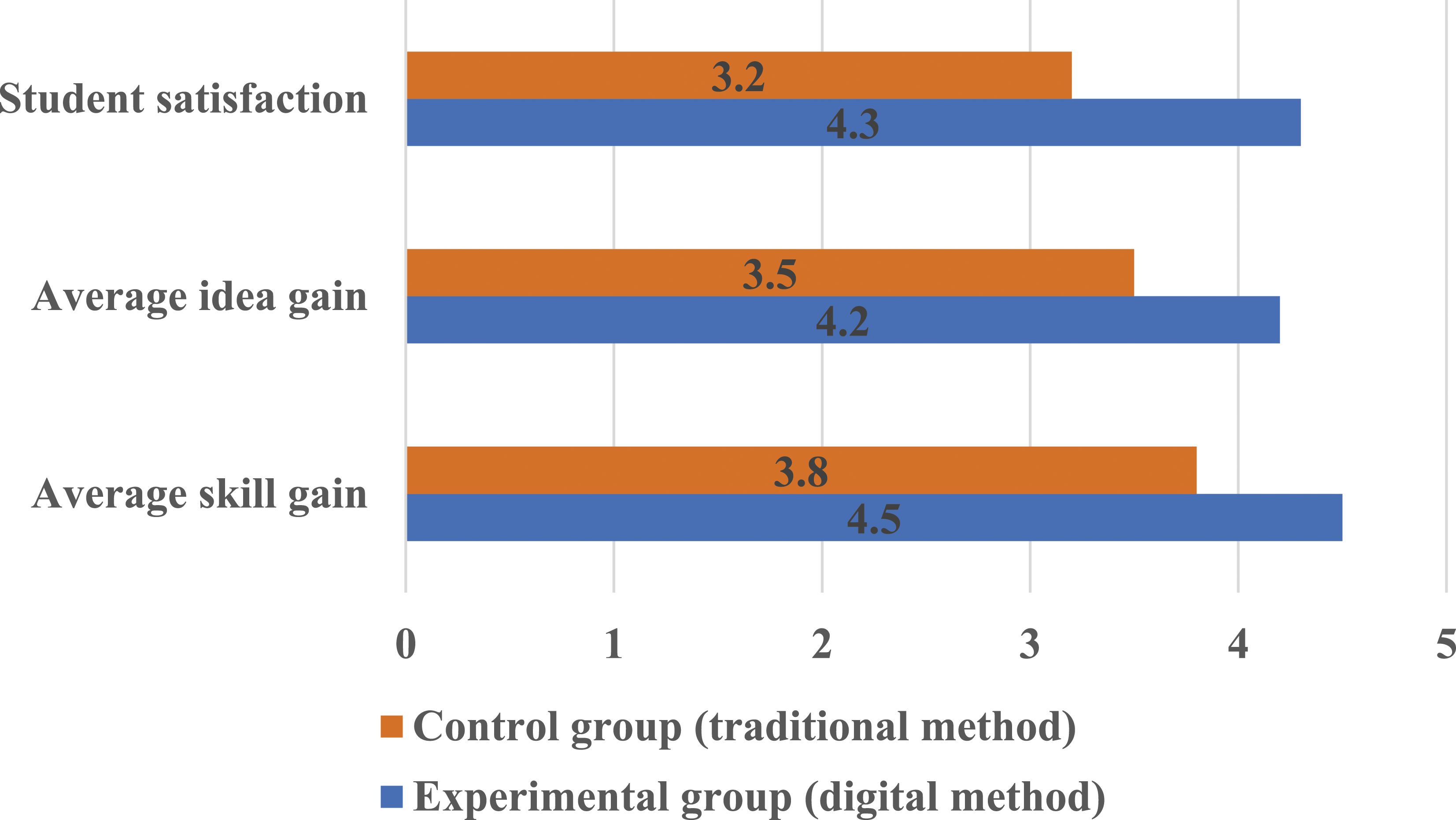
The effect of the education method: As can be seen clearly from the chart above, the students in the experimental group performed better than the students in the control group in terms of both skill and idea gain. This suggests that digital labor education methods may be more effective than traditional ones. Students’ feedback: The experimental group also reported higher satisfaction than the control group. This may be because digital approaches provide a more interactive, personalized, and real-time feedback learning experience. Reliability of the experiment: Although the experimental results show that the digital approach has advantages in some aspects, these conclusions need to be further validated in a wider sample and in different contexts. Limitations of the experiment: It is important to note that these conclusions were based on specific experimental settings. For example, the control and experimental groups may differ in their initial levels of skills and knowledge, which may affect their gains.
Overall, the comparative experiment further confirms the potential advantages of digital labor education methods. However, to reach more convincing conclusions, future studies may need to employ more sophisticated experimental designs, consider more control variables, and test on a wider range of contexts and samples.
In summary, through a comprehensive evaluation, the study believes that this data-driven labor education model is a powerful and practical tool that can provide in-depth insights and recommendations for labor education research and practice.
Summary and future outlook
This study explores in depth the theory and application of labor education in the digital age with the aim of understanding and evaluating the impact of digital tools and strategies on labor education. Through literature review, this paper discusses the basic theory of labor education and the global trend of education in the digital age. In the empirical research part, comparative experiments and questionnaires were designed to further provide quantitative data on the differences between traditional and digital labor education methods.
The results of model construction and verification show that the digital approach has significant advantages in improving students’ skills and conceptual gain, and students’ satisfaction with it is relatively high. However, these findings do not imply that traditional approaches are not valuable, but rather suggest that a combination of traditional and digital approaches should be considered when designing labor education curricula and activities to achieve the best educational outcomes.
In the face of these findings, future labor education research should further explore how digital tools and strategies can be combined with traditional methods to provide students with a more comprehensive and in-depth learning experience. In addition, given the rapid changes in technological and social environments, future research should also focus on how emerging technologies are shaping the future of labor education and preparing students for future career challenges.
Overall, this study provides valuable insights to help advance labor education in the digital age. It is expected that labor education, with the help of technology, will better develop students’ skills and values and prepare them for their future careers.
Statements and declarations
Footnotes
Conflicting interests
The author(s) declared no potential conflicts of interest with respect to the research, authorship, and/or publication of this article.
Funding
The authors disclosed receipt of the following financial support for the research, authorship, and/or publication of this article: This article is the research results of the 2023 Humanities and Social Sciences Research Special Task Project of the Ministry of Education (Research on College Counselors) titled “Empirical Research on the Influence of Labor Education in the New Era on the Employment Stability of College Graduates” (Project Number: 23JDSZ3091).