







Abstract
The purpose of this study is to explore the method content innovation strategy of digital education in higher vocational education under the background of artificial intelligence, in order to provide theoretical support and practical guidance for the future development of higher vocational education. The research uses the method of comparative experiment to deeply analyze the difference between the digital education method based on artificial intelligence and the traditional higher vocational education method in teaching effect. The experimental results show that compared with traditional methods, the AI-based education method can improve students’ learning efficiency and satisfaction, and it is more conducive to personalized teaching. Further, the study also puts forward a series of suggestions to optimize the content of digital education methods in higher vocational colleges, such as promoting the construction of personalized learning paths, enhancing the effect of intelligent interaction and feedback, and promoting the digital transformation of teaching environment. The findings of this study bring a new perspective and thinking to the field of higher vocational education and provide feasible solutions for the future development direction of higher vocational education.
Keywords
Introduction
The rapid development of science and technology has led to the gradual integration of artificial intelligence (AI) into various fields, particularly in education, showcasing significant potential and value. Higher vocational education plays a vital role in cultivating practical and technical talents, serving as an important driver for social and economic development. Therefore, exploring and implementing the deep integration of artificial intelligence within higher vocational education has become a crucial issue in current educational reform and development. 1
On a global scale, the application of artificial intelligence in the field of education is becoming an important trend to promote teaching innovation and improve education quality. Different countries have implemented AI education projects to explore how to effectively integrate AI technology with educational practices. For example, some countries in the United States, Europe, and Asia have made significant progress in intelligent tutoring systems, personalized learning platforms, and automated assessment tools, which provide valuable international perspectives and experiences for this study.
In the digital age, higher vocational education is facing great development opportunities and challenges. On the one hand, digital technology provides more abundant and diverse teaching resources and means for higher vocational education, which can better meet students’ personalized learning needs and improve teaching efficiency and quality. On the other hand, how to make reasonable and efficient use of digital technology for teaching innovation and how to cultivate students’ digital literacy and ability have become the key issues to be solved in higher vocational education.
With the wide application of artificial intelligence technology, the impact and change on the field of education cannot be ignored. Especially in higher vocational education, how to use this technology to improve the teaching quality and efficiency, optimize the allocation of educational resources, and meet the individual learning needs of students has become an urgent and important topic. Therefore, the purpose of this study is to explore and practice the application of artificial intelligence in the digital education of higher vocational education, aiming at providing effective educational strategies and methods for the field of higher vocational education. 2
This study is significant because it offers practical recommendations and theoretical support for the practice of higher vocational education reform, in addition to assisting educators and researchers in fully appreciating the potential applications and benefits of artificial intelligence technology in higher vocational education. This study can provide targeted education strategies and methods for the field of higher vocational education, as well as highlight the benefits and drawbacks of artificial intelligence-based digital education methods compared to traditional methods through comparative experimental research and in-depth analysis. 3
This study aims to promote the innovation and progress of digital education in higher vocational colleges, strengthen the deep integration of education and technology, train more high-quality technical talents, and make positive contributions to the sustainable development of society and economy.
Artificial intelligence (AI) and digital education in higher vocational colleges have received extensive attention and research. Rong et al. found that AI and VR technology can significantly affect students’ concentration and creativity. 4 In the current digital age, the discussion of educational governance has covered multiple levels from basic education to higher education. In terms of K-12 education, Yang et al. emphasized the possibilities, risks, and coping strategies brought about by digitalization and pointed out the importance of digital education in promoting educational equity and improving educational quality. 5 At the same time, Guo et al. discussed the application of digital information in patient education, which reflects the important value of digital technology in transmitting information in education. 6 Regarding the integration and development of higher education, Alenezi et al. discussed the necessity, challenges, and opportunities of integrated digital education and emphasized the importance of improving the sustainability of education. 7 The research of Urbanek et al. showed that digital communication skills in higher education institutions improved significantly after the COVID-19 pandemic, thus improving the quality of education. 8 In terms of education quality assessment, Feng evaluated the quality of higher vocational education by using an integrated decision method based on triangular fuzzy neutral sets, demonstrating the application of modern assessment techniques. 9 Zhu adopted the modified cross-entropy method and the intuitionistic fuzzy set of fuzzy numbers to evaluate the management quality of higher vocational education, which reflects the evaluation method under complex decision-making environment. 10 Han et al. proposed an integrated multi-attribute decision-making method for quality assessment of innovation and entrepreneurship education with interval-valued intuitionistic fuzzy information. 11 In addition, Lee’s research focused on the assessment of learning skills needs of information technology and computer science students in technical and vocational universities, emphasizing the importance of targeted education strategies. 12 Collectively, these studies reflect profound changes in the assessment, management, and skills development of education in the digital age.
These studies cover multiple aspects of AI in digital education in higher vocational education, including teaching methods, educational technology, learning effectiveness, focus and creativity, and digital transformation of education. This shows that there are rich and diverse interaction and integration possibilities between artificial intelligence and digital education in higher vocational colleges.
This innovation can be seen in several ways: First, the use of artificial intelligence to analyze learning data to personalize learning paths and content to meet the needs of different students. Secondly, develop and apply intelligent teaching assistance systems, such as virtual laboratories and intelligent tutoring robots, to improve the interaction and interest of students’ learning. Moreover, through artificial intelligence technology, the course content update mechanism is improved to quickly reflect industry changes and technological progress. Finally, artificial intelligence is used to evaluate teaching quality and provide data support for educational decision-making. These innovations not only improve the teaching efficiency and quality but also provide students with skills closer to the actual needs and promote the digital transformation of higher vocational education.
Overview of the foundation of artificial intelligence and digital education in higher vocational colleges
Overview and development of artificial intelligence
Artificial intelligence (AI) is the term used to describe the intelligence exhibited by man-made systems that are able to move mechanically, learn, reason, perceive, and grasp natural language. AI has seen numerous highs and lows in its evolution since the 1950s and is currently at the forefront of scientific and technical advancement, having a significant impact on a wide range of fields and sectors globally at a rate never seen before. 13
Recent AI trends include advances in deep learning, advances in natural language processing, and innovations in the application of generative adversarial networks (GANs). These technologies not only enhance machine learning but also enable AI to understand and generate human language more accurately, opening a new chapter in personalized content creation and automated decision support, and bringing unprecedented opportunities for change in fields such as education.
In recent years, with the rapid development of big data, cloud computing, and algorithms, AI technology has been widely used and rapidly developed, and has penetrated into all aspects of life. Among them, deep learning technology, as an important branch of AI, has made remarkable achievements in many aspects such as image recognition, natural language processing, games, and automatic driving.
Development stage of artificial intelligence.
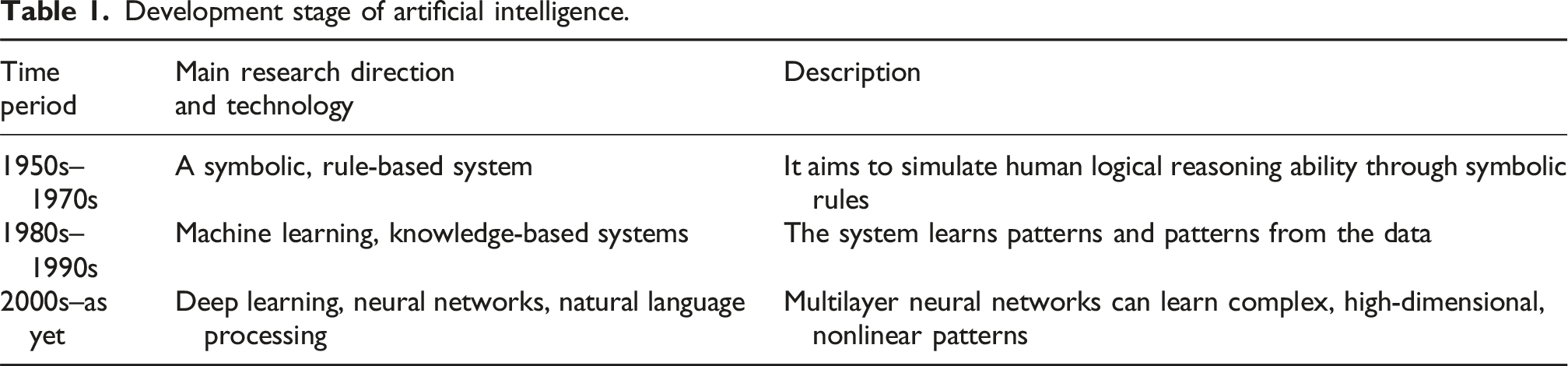
The continuous development and deepening application of artificial intelligence technology provides new possibilities and opportunities for the innovation and development of digital education in higher vocational colleges.
Definition and development of digital education in higher vocational colleges
Definition of higher vocational digital education
Higher vocational digital education refers to a form of education in higher vocational education, using digital technology and tools, such as computer, network, and multimedia, to realize education and teaching activities. It aims to expand and enrich educational and teaching resources through technical means, improve teaching efficiency and quality, meet the diversified and personalized learning needs of students, and promote the all-round development of students.
Digital innovation and promotion have been applied to instructional materials, techniques, resources, and administration in higher vocational education. It can facilitate the sharing and best use of educational resources, offer a range of interactive learning methods, accommodate various learners’ requirements and learning preferences, and give students access to a more convenient, adaptable, and rich learning environment. 15
Through digital technology, higher vocational education can better integrate multimedia and network resources, give full play to the advantages of technology in education, further improve the efficiency and quality of education and teaching, and realize the innovation and development of education.
Globally, there’s a significant shift towards digital learning platforms, which are recognized for their potential to democratize education by making learning resources available to a wider audience. This is particularly relevant in the context of vocational education, where the practical application of knowledge and skills is paramount. Digital tools and resources offer unprecedented opportunities for hands-on learning experiences through simulations and virtual environments, which are increasingly being adopted in vocational institutions worldwide.
The integration of digital technologies in vocational education also fosters a culture of continuous learning and adaptability among students, skills that are highly valued in the global workforce. As industries evolve at an unprecedented pace, the ability to continuously update one’s skills becomes crucial. Digital education platforms facilitate this by providing access to the latest knowledge and trends in various fields, ensuring that vocational education remains relevant and aligned with industry needs.
Development of digital education in higher vocational colleges
When comparing the development trend of higher vocational digital education and international education, several key differences and similarities can be found. First of all, internationally, especially in Europe and the United States, digital education pays more attention to the deep integration of technology and teaching content, such as the use of big data and artificial intelligence for personalized teaching, and higher vocational digital education is still in the exploratory stage in this respect. Secondly, the international education community is more inclined to open resources and shared learning platforms to encourage cross-cultural and cross-border learning exchanges, while higher vocational education is more focused on meeting the needs of local or regional industries. However, in the pursuit of improving students’ employability and practical skills, higher vocational education is highly consistent with the international trend and attaches great importance to combining virtual simulation technology and online practical training platform to enhance students' practical operation ability. These comparisons not only reveal the development space of higher vocational digital education but also point out the possible path to integrate with international education.
Diversification and intelligence have been demonstrated by the growth of digital education in higher vocational colleges. From the earliest days of computer-assisted instruction to the present broad integration of big data, artificial intelligence, the Internet, and other technology, education has advanced, resulting in a greater variety of instructional approaches, more individualized learning, and more intelligent management.
16
Figure 1 depicts its evolution over time. Development trend of digital education in higher vocational colleges.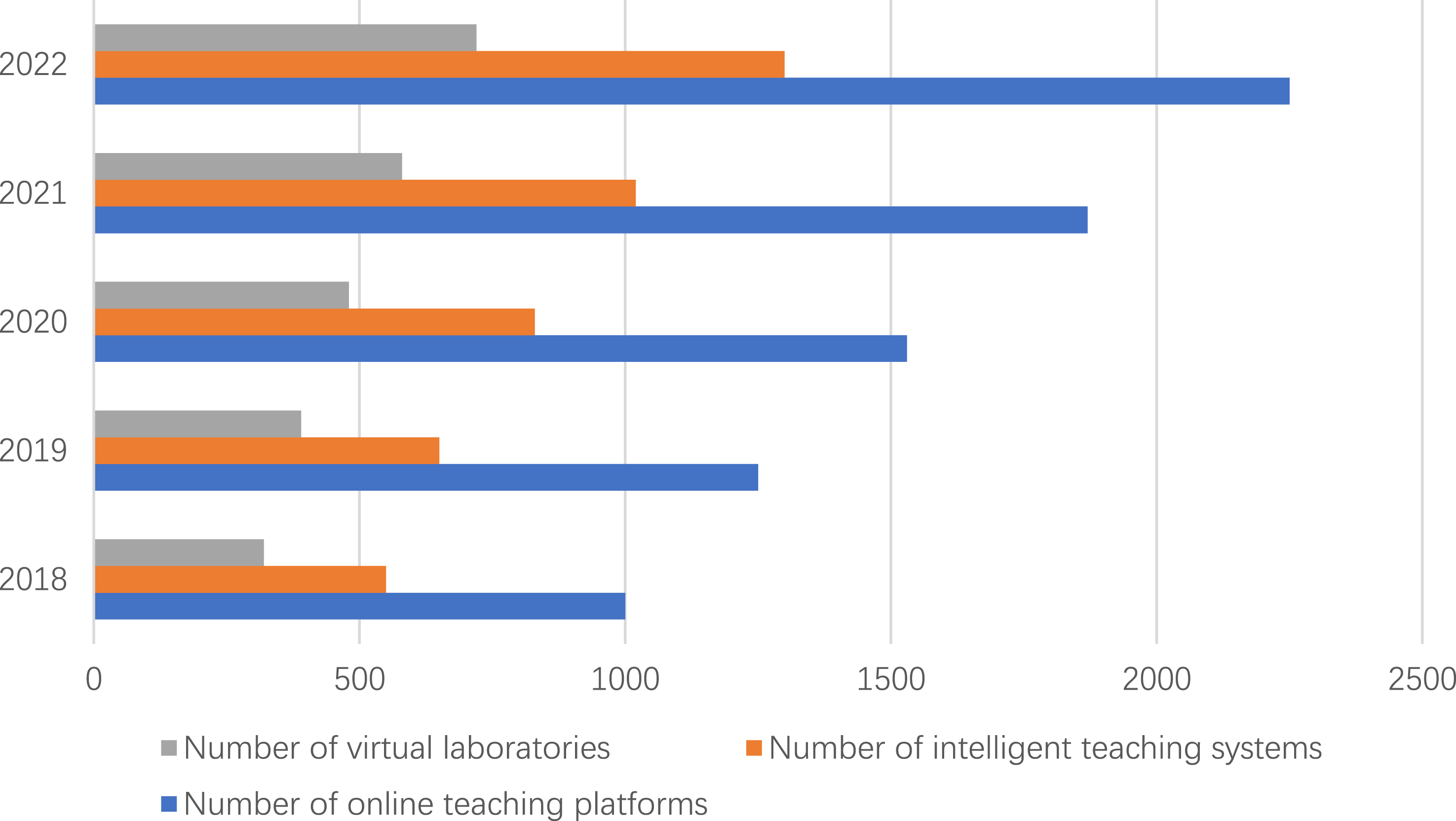
Application of artificial intelligence in digital education of higher vocational colleges
Application of artificial intelligence in digital education of higher vocational colleges.
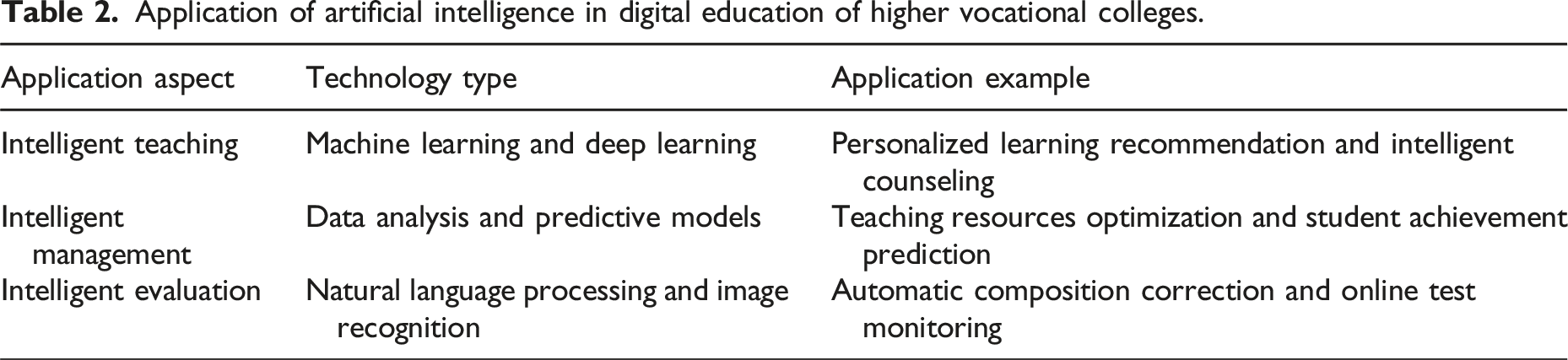
By applying artificial intelligence technologies such as machine learning and deep learning, intelligent teaching can accurately analyze students’ learning behaviors and needs, provide students with personalized learning recommendations and intelligent tutoring, and improve students’ learning efficiency and effect. Intelligent management through data analysis and prediction model, to achieve the optimal allocation of teaching resources and accurate prediction of student grades, improves management efficiency and accuracy. By using natural language processing, image recognition, and other technologies, intelligent evaluation can realize automatic composition correction and real-time monitoring of online exams to ensure the objectivity and fairness of evaluation.
In a higher vocational college in Zhejiang province, an AI application project called “Intelligent Tutoring System” has been implemented, aiming to improve students’ learning efficiency through personalized learning recommendations and intelligent tutoring. The system uses machine learning algorithms to recommend personalized learning materials and exercises for students based on their learning history, preferences, and performance. At the same time, through natural language processing technology, the intelligent tutoring system can understand students’ queries and provide instant question-answering services. The implementation of the program has significantly improved student motivation and achievement, especially in mathematics and English. By introducing this intelligent learning aid, students can learn at their own pace and point of interest, while teachers can obtain real-time feedback on student progress, providing a basis for teaching adjustments. This case fully demonstrates the application potential of artificial intelligence in higher vocational education, as well as its value in promoting students’ personalized learning and improving teaching results.
These artificial intelligence applications not only increase the effectiveness of higher vocational education’s administration and instruction, but they also offer teachers and students more convenient and effective teaching options and foster the deep development and innovation of digital education in this field.
Experimental design and data collection
Experimental design
This study aims to explore the application effect of artificial intelligence in higher vocational digital education. The experiment adopts control group design, that is, one group uses the digital education method based on artificial intelligence, and the other group uses the traditional higher vocational education method. The main goal of the experiment was to compare the learning outcomes and student satisfaction between the two groups.
The experimental design assumes that AI-assisted digital higher vocational education can significantly improve students’ learning efficiency and performance, and enhance students’ learning interest and self-learning ability. The expected result is that through the implementation of AI technology, students’ grades in specific courses will be significantly improved, and learning satisfaction and engagement will also be improved, further verifying the effectiveness of AI in improving the quality and effectiveness of education.
In the experimental design, the selection of indicators should be based on the research purpose and research question to ensure that the indicators can effectively measure the effect of artificial intelligence applied to higher vocational education. Typical indicators include improved student achievement, increased learning efficiency, student satisfaction, and improved teaching interaction. These indicators are directly related to the reliability and practicability of the research results, helping to quantify the specific contribution of artificial intelligence technology to the improvement of higher vocational education and providing objective data support for evaluating the effectiveness of teaching methods and tools.
Selection of experimental indexes.
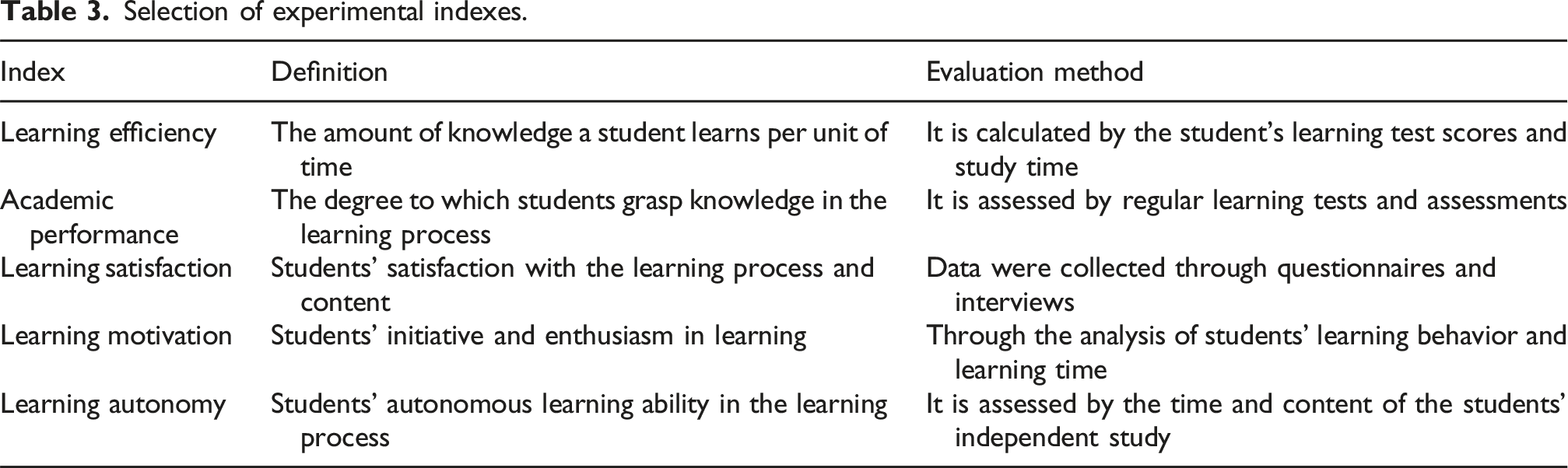
The experiment will adopt the method of random grouping, and the students participating in the experiment will be divided into the control group and the experimental group. The traditional higher vocational education method will be adopted in the control group, and the digital education method based on artificial intelligence will be adopted in the experimental group. By collecting and analyzing the data of these two groups of students during the experiment, we will be able to evaluate the effect and advantages and disadvantages of the two educational methods more objectively and accurately.
Experimental sample and grouping
Design table of the control group and experimental group.

In the whole process of the experiment, the two groups of students will face the same learning tasks and assessments to ensure the fairness and comparability of the experiment. All students participating in the experiment are required to sign an informed consent form that specifies the purpose, method, and possible risks of the experiment. During the experiment, the research team will continuously monitor and record the learning status and performance of the students, so as to conduct detailed analysis and comparison of the experimental data in the future.
Data collection and processing
Data collection methods
Data collection is the core of experimental research because only accurate and comprehensive data can support the validation of research. In order to ensure the accuracy and reliability of data, data will be collected in various ways in this experiment.
In the data collection and processing section, the selection of a specific data processing algorithm is based on the characteristics of the data and the research objectives. For example, for large-scale learning behavior data, clustering algorithm can be used to analyze student behavior patterns because it can effectively process large amounts of data and reveal hidden patterns. When selecting an algorithm, consider its ability and efficiency in processing specific types of data (such as text and time series) to ensure that the selected algorithm can adapt to the structure and complexity of the data, so as to ensure the accuracy and practicality of the analysis results.
Data collection table.

Data collection is a key step to ensure the quality of experimental research. In this study, researchers will use a variety of methods and tools for data collection to ensure the comprehensiveness and accuracy of data.
Data processing mode
In order to ensure the accuracy and scientificity of the analysis, appropriate statistical methods are adopted to conduct in-depth processing and analysis of the collected data. For quantitative data, such as academic achievement and learning efficiency, descriptive statistics are used to outline the main characteristics of the data through the mean, median, and standard deviation. Following the proper conversion, numerical processing will also be applied to qualitative data, such as learning satisfaction. To completely comprehend students’ learning behavior and psychological traits, deeper data, such as learning motivation and learning autonomy, will be examined through content analysis and subjective interpretation. Learning satisfaction is one example of a qualitative data that will be coded into a quantitative format before being analyzed using the Chi-square test. The mean value processing formula is equation (1).
The median processing formula is equations (2) and (3).
When 
When 
The standard deviation formula is equation (4).
The Chi-square test formula is equation (5).
These treatment methods will help to reveal the advantages and disadvantages of educational methods in different aspects and provide scientific basis for optimizing teaching methods.
Experimental results and analysis
Experimental results
Digital education methods based on artificial intelligence
In this study, an AI-based digital education method is implemented and a series of evaluations and analyses are conducted for this method. In order to make a comprehensive evaluation of teaching effect, five main indicators are used: learning efficiency, learning satisfaction, learning autonomy, learning motivation, and teaching satisfaction. The specific experimental results are shown in Figure 2. Experimental results of artificial intelligence digital education method.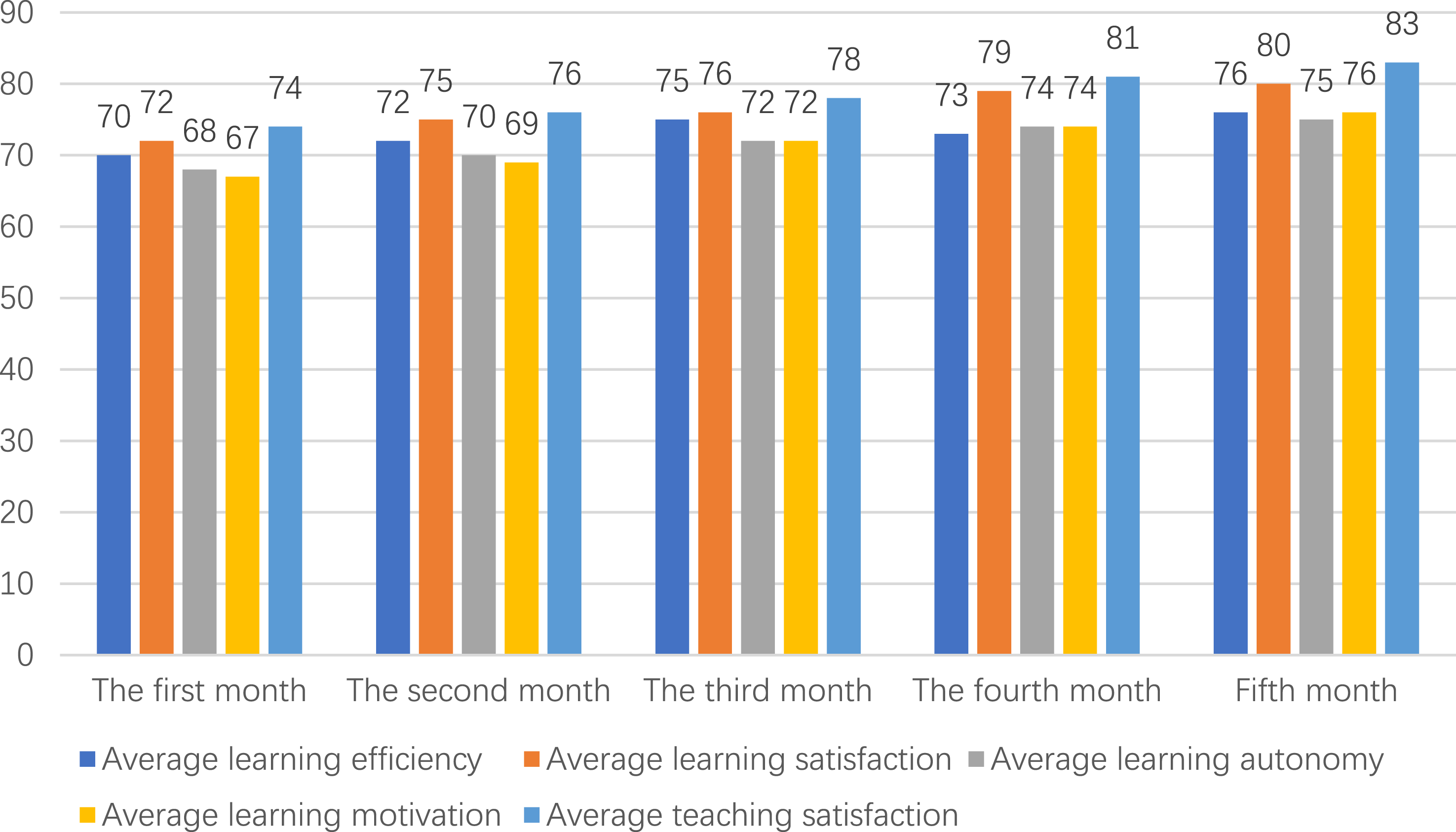
The aforementioned evidence indicates that artificial intelligence-based digital education approaches can enhance certain teaching metrics to varying degrees. Even though there was some randomness in the data, overall, the trend indicated a positive development: students’ learning efficiency, autonomy, motivation, and satisfaction all increased with artificial intelligence support, and teaching satisfaction increased as well.
This positive trend indicates that the digital education method using artificial intelligence has potential teaching value. In future teaching practices, this method deserves further research and optimization to better serve educational goals and student needs.
Result analysis
As for the traditional higher vocational education method, it mainly relies on the traditional teaching mode and teaching method, and rarely involves the modern educational technology and means. Compared with the digital education method based on artificial intelligence, there may be some gaps in the teaching effect and student satisfaction of the traditional method. A series of assessments were also carried out for evaluation and comparison. Specific data are shown in Figure 3. Experimental results of traditional educational methods.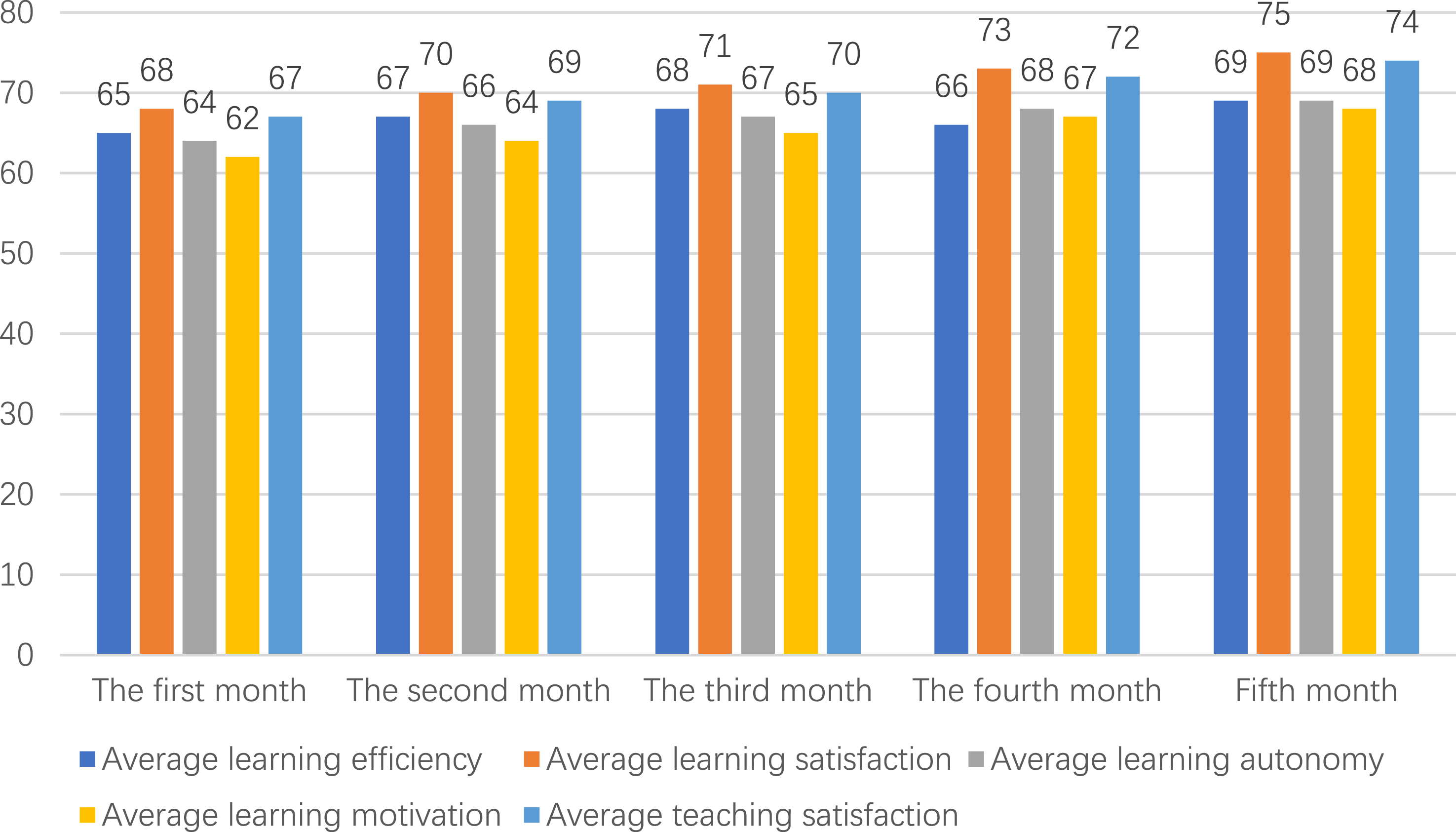
The data analysis of the traditional higher vocational education method reveals that while there has been some improvement in various indicators, it has not improved as quickly or as much as the digital education method based on artificial intelligence. Traditional teaching approaches don’t seem to be able to keep up with the demands of modern education and students’ expectations, particularly when it comes to learning autonomy and motivation.
Result analysis
In order to compare the digital education method based on artificial intelligence with the traditional education method, the score of each indicator is listed in the form of average, and the difference between the two and the difference ratio are calculated. The comparison data between the two are shown in Figure 4. Comparison of experimental data.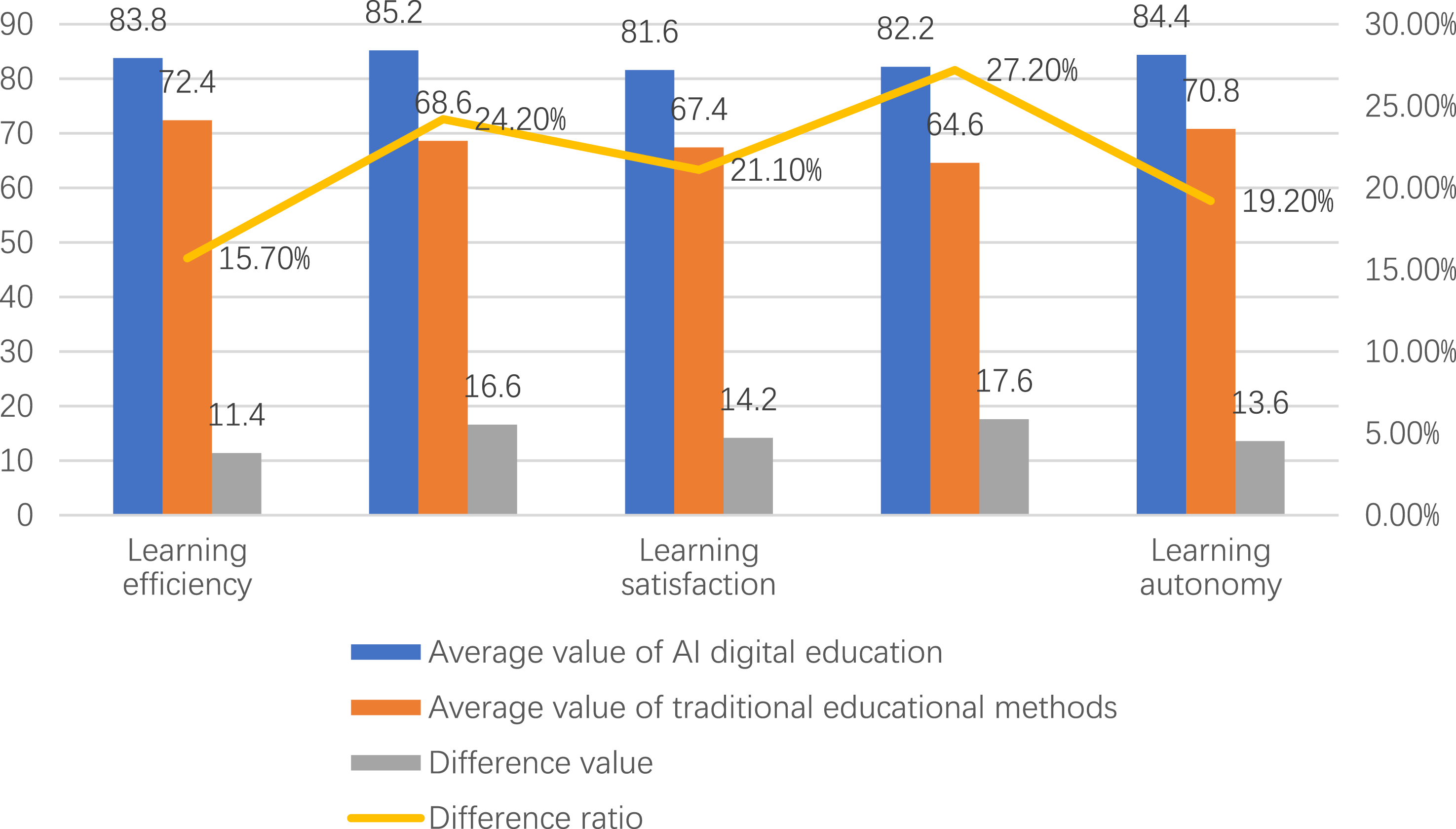
The table makes it evident that the artificial intelligence-based digital education approach outperforms the traditional education approach in a number of ways. AI digital education can better match students’ learning demands and increase their interest and motivation in learning, as evidenced by the difference ratios of 24.2% and 27.2%, respectively, in the two areas of learning satisfaction and motivation. AI digital education also fared well in terms of teacher satisfaction, scoring an average 13.6 percentage points better than traditional teaching techniques.
The experimental results show that compared with traditional education methods, artificial intelligence education shows significant advantages in improving student learning efficiency, personalized learning support, and interaction. Through data-driven personalized learning paths and instant feedback mechanisms, students can master knowledge faster, and teachers can adjust teaching strategies in real time according to student performance, which is difficult to achieve with traditional education methods.
Suggestions on the optimization of digital education methods and contents in higher vocational colleges
Personalized learning path
With the gradual application of artificial intelligence technology in the field of education, personalized learning path has become a highlight of digital education in higher vocational colleges. Unlike the traditional “one-size-fits-all” teaching model, the emergence of personalized learning paths means that education is no longer a fixed process but can be tailored to each student’s abilities, interests, and needs.
The AI-based digital education platform can evaluate students’ learning status and ability level in real time by analyzing students’ learning data, such as learning time, answer rate, and interaction frequency. This evaluation predicts a student’s future learning capacity in addition to reviewing their prior academic success. The platform can suggest the best exercises, courses, and learning resources for students based on the results of this assessment. For instance, the platform might suggest more complex and advanced learning materials for students who thrive in a particular subject in order to satisfy their need to push the boundaries of their knowledge; conversely, it might suggest more straightforward and basic learning materials for students who struggle in a particular subject in order to help them solidify their foundational understanding.
Personalized learning path is not only to improve the learning effect of students but also to let students experience a more autonomous, free, and interesting learning process. Because each person is unique, each person’s learning path should also be unique. Digital education based on artificial intelligence is making continuous efforts to achieve this goal.
Intelligent interaction and feedback
In higher vocational digital education, intelligent interaction and feedback, as a part of educational innovation, play an extremely important role. Intelligent interaction and feedback are mainly based on artificial intelligence and big data technology, which can more accurately and personalized identify students’ learning needs, learning conditions, and learning problems and then generate corresponding feedback and suggestions to help students learn more efficiently.
Real-time connection between students, professors, and learning systems is made possible through intelligent engagement. For instance, students can use the platform to instantly ask a question of the teacher when they come across material during the learning process and receive a prompt response and assistance. They can also use the platform to collaborate with other students online to find solutions to problems together. This not only lowers the barriers to learning that students face, but it also improves learning engagement and interaction. The goal of intelligent feedback is to analyze students’ learning behaviors, grades, and performance in order to provide them precise learning suggestions and strategies for development. This includes developing an appropriate learning plan for students, recommending learning resources tailored to their individual needs and levels, and making timely recommendations to improve learning strategies and methods for personalized learning path optimization.
The use of artificial intelligence algorithms makes intelligent interaction and feedback possible. These algorithms continue to learn and optimize, providing more accurate and personalized interaction and feedback based on the actual performance and needs of each student. This is undoubtedly of positive significance to improving the teaching quality of higher vocational education and the learning effect of students and is a powerful tool to promote the development of education modernization.
When optimizing the teaching method, we should combine the characteristics of higher vocational education and choose the mixed teaching mode suitable for vocational education, such as the combination of flipped classroom, project-based learning, and online self-study. In terms of specific operation, we can establish an online learning platform to provide rich learning resources and interactive tools, encourage students to take the initiative to learn, and arrange regular face-to-face discussions and practical operations to ensure that students can apply theoretical knowledge to practical work and enhance the operability and implementation of teaching methods.
Digital transformation of teaching environment
The digital transformation of teaching environment is an indispensable part of the content innovation strategy of digital education in higher vocational colleges, which is committed to creating a more flexible, open, diversified, and personalized learning environment. In this environment, students can more easily acquire knowledge, communicate and collaborate with others, show creativity, and teachers can be more efficient and precise teaching management and service.
The creation of virtual laboratories, the development and use of multimedia teaching resources, and the creation of online learning platforms comprise the digital teaching environment. The combination of these components improves teaching effectiveness by giving teachers more useful and practical teaching tools in addition to giving students access to a wider variety and abundance of learning resources and instructional strategies.
Digital teaching environment can realize the data and intelligent management of teaching activities, so as to promote the innovation and optimization of teaching mode. For example, through the application of learning management system (LMS), teachers can track and analyze students’ learning situation and performance in real time, so as to precisely adjust teaching strategies and methods. At the same time, students can also obtain personalized learning paths and resource recommendations based on the platform and carry out learning activities more actively and flexibly.
Conclusion
Higher vocational education, as an important bridge connecting high school education and higher education, its education mode, and quality directly affect students’ future development and career planning. Therefore, it is particularly important to explore the application of artificial intelligence in higher vocational digital education and to comprehensively analyze the differences between it and traditional education methods.
First, through a series of in-depth experiments and analyses, this study finds that the digital education method based on artificial intelligence can more accurately identify students’ learning needs and preferences and achieve the customization of personalized learning paths. Through data analysis and learning algorithms, this approach can accurately recommend learning materials and courses suitable for each student, thus greatly improving learning efficiency and effectiveness. Compared with traditional “one-size-fits-all” teaching methods, AI-driven personalized learning is more likely to stimulate students’ interest and motivation in learning and help them achieve better results in their own learning journey.
Second, the application of AI in higher education is not limited to the design of personalized learning paths but also includes the establishment of intelligent interaction and feedback mechanisms. By leveraging technologies such as natural language processing (NLP) and machine learning, education platforms can provide instant, targeted feedback and guidance to help students correct learning errors and optimize learning strategies in a timely manner. In addition, intelligent teaching assistants can accompany students 24/7 to answer questions and provide learning support, making the learning process more flexible and efficient.
Further, in order to promote the digital transformation of higher education, this study also emphasizes the importance of intelligent transformation of the teaching environment. This includes the construction of smart classrooms, virtual laboratories, and online learning platforms, which utilize technologies such as virtual reality (VR) and augmented reality (AR) to provide students with immersive learning experiences. Such a digital teaching environment can not only expand the coverage of educational resources but also improve the fun and interactivity of teaching and better meet the learning habits and needs of contemporary students.
Statements and declarations
Footnotes
Conflicting interests
The author(s) declared no potential conflicts of interest with respect to the research, authorship, and/or publication of this article.
Funding
The author(s) disclosed receipt of the following financial support for the research, authorship, and/or publication of this article: Fund Program for the Scientific Activities of selected returned verseas Professionals in Shanxi Province, Research on the deep integration and innovation development path of Shanxi Higher Vocational Education and industry (No. 20240040) and Shanxi Provincial Science and Technology Association Science and Technology Innovation Think Tank Construction Research Project in 2024, Research on Measures of New Quality Productivity Enabling Scientific and Technological Innovation and Development in Shanxi (No. KXKT202404).