







Abstract
This paper proposes a capacity configuration method for a microgrid composed of a photovoltaic (PV) power generation system and a hybrid energy storage system (battery storage + supercapacitors). The core of this method involves constructing a mixed-integer linear programming (MILP) model and incorporating a battery aging model to determine the retirement time of the energy storage system, thereby optimizing the microgrid capacity configuration. Additionally, this paper explores the integration of supercapacitors (SCs) into the microgrid capacity configuration to effectively mitigate battery aging, enhancing the economic performance and operational efficiency of the microgrid. The proposed method is validated through real-world case studies, demonstrating its practical applicability in microgrid development. Moreover, the case study analysis compares the proposed method with traditional methods that do not consider battery aging factors and conducts a sensitivity analysis regarding changes in energy storage procurement cost parameters. The results demonstrate that the proposed method not only effectively addresses the challenges posed by battery aging but also offers superior economic and technical performance in microgrid optimization planning and capacity configuration.
Keywords
Introduction
In recent years, the global electrification rate has significantly improved with the widespread deployment of distributed renewable energy, energy storage, and microgrid technologies across various countries and regions. The decline in investment costs and increase in conversion efficiency have spurred investments in electrification projects based on renewable energy sources.1,2 However, the construction and operation of these projects are closely linked to factors such as regional investment budgets, geographical location, climate conditions, and the policy environment of the installation site.3,4 Non-interconnected areas (NIAs) are not connected to the national grid due to geographical remoteness or economic barriers. They face significant challenges in resource availability, economic constraints, technical and maintenance issues, environmental and regulatory constraints, as well as social and community engagement, all of which severely impact the reliability and economic viability of microgrid projects. 5 These challenges include high initial and operational costs, limited local expertise, regulatory uncertainties, and the need for community acceptance, making it essential to develop tailored solutions to ensure the success and sustainability of microgrid initiatives in NIAs. Additionally, deploying microgrid projects in these NIAs is challenging due to the lack of detailed operational data from similar projects and historical meteorological data. 6 Therefore, it is crucial to develop mathematical models that optimize the capacity of various distributed generation technologies within microgrids, considering the need for uninterrupted power supply to critical loads during independent operation, and to conduct thorough technical and economic feasibility pre-assessments based on the region’s economic, technical, and environmental conditions.
Numerous studies have focused on the optimal capacity configuration of small-scale microgrids incorporating photovoltaic (PV) and energy storage systems (ESS).7–10 However, in the context of optimal capacity configuration for PV-battery microgrids, the following issues have received less attention: (1) Battery capacity degradation impacting system operation and replacement costs, with hybrid energy storage systems (HESS) used to extend battery life; (2) Variations in electricity prices, encompassing both main grid energy costs and costs due to critical load supply interruptions; and (3) Dependence on the main grid, including grid availability profiles. (1) Battery capacity degradation and its impact on system operation, which involves the replacement costs of battery storage and the use of hybrid energy storage systems (HESS) to extend battery life. (2) Variations in electricity prices, which should not only include the energy costs of supplying loads from the main grid but also account for the costs incurred by users due to interruptions in critical load supply. (3) Dependence on the main grid, including grid availability profiles. Although recent studies have incorporated battery energy storage system (BESS) aging models,11,12 most do not consider the eventual need for BESS replacement, even though the lifecycle of battery storage is typically shorter than the average lifespan of PV modules. Reference 13 proposes a novel set of formulations for optimally sizing ESS in microgrids (MGs) by considering technical characteristics, service life, depth of discharge (DOD), and capacity degradation to minimize total scheduling costs and enhance economic feasibility and precision. Similarly, a novel BESS sizing model that accurately minimizes microgrid costs by incorporating major battery degradation factors is presented in Ref. 14, including temperature, DOD, cycles, state of charge, and time passage, into a linear framework for estimating BESS capacity loss. Reference 15 proposes a comprehensive optimization method for designing residential PV-battery microgrids, focusing on minimizing the levelized cost of energy (LCOE) while considering power supply loss limitations, operational constraints, and detailed battery lifetime estimation.
HESSs that combine supercapacitors with battery storage have garnered significant attention in recent studies evaluating the optimal scale of battery storage, due to their ability to more effectively manage stored energy and extend battery life.16,17 Due to the benefits brought by HESS in frequency regulation services, system cost minimization, and microgrid energy management, they have seen applications at both the public grid level and in standalone DC microgrids.18,19 As mentioned in Ref. 18, supercapattery devices, which combine the advantages of batteries and supercapacitors, have garnered attention for their high specific energy and power density, addressing the challenge of enhancing energy density without sacrificing power density. The integration of supercapacitors into microgrids offers significant economic and environmental benefits. Economically, supercapacitors can reduce the frequency of deep charge and discharge cycles experienced by batteries, thereby extending battery life and reducing replacement costs. Environmentally, by managing transient power fluctuations and stabilizing the state of charge (SOC) of batteries, supercapacitors help to improve the overall efficiency and reliability of the microgrid, leading to higher utilization of renewable energy sources and lower greenhouse gas emissions. These benefits make the integration of supercapacitors a compelling solution for enhancing the sustainability and economic viability of microgrids. Reference 20 presents a novel optimization approach that integrates system costs, SOC management for batteries and supercapacitors, to optimize the sizing and cost of a HESS in an independent Direct Current (DC) microgrid powered by solar photovoltaics, ensuring battery longevity and system stability. A two-level controller for a HESS combining lead-acid batteries and supercapacitors to optimize grid integration of photovoltaic plants in distribution grids is introduced in Ref. 19, providing peak power shaving and PV output power ramp limitation while minimizing battery degradation.
Given the importance of maintaining power supply continuity during outages, incorporating the cost of energy quality into the sizing methodology is crucial. References 21,22 quantified the economic losses during power outages by introducing the concept of interruption costs and the average load loss value (VOLL) based on customer surveys, emphasizing the necessity of detailed survey data for accurately assessing the cost of unserved energy (ENS). For example, Ref. 22 introduces a novel method for incorporating the value of resilience into the techno-economic optimization of PV and BESS, showing that including resilience considerations can increase system capacities and make previously uneconomical systems viable. For microgrid operation and energy management, Ref. 23 proposes a low-carbon economy operation strategy for multiple integrated energy microgrids (IEMs) using a double-layer Stackelberg game model, incorporating carbon trading and seasonal variations in PV data, to achieve collaborative low-carbon economic operation and multidimensional performance evaluation. Reference 24 constructs a wind-PV-hydrogen microgrid system and develops an optimal scheduling model that integrates long-term hydrogen storage and short-term battery storage to achieve economic optimization. An AI-based approach using the one-to-one based optimizer (OOBO) for economic dispatch and load management in three linked microgrids is proposed in Ref. 25, integrating renewable energy resources and optimizing scheduling to reduce operating costs and improve grid performance. For healthcare facilities, ensuring energy continuity is paramount with high ENS costs (CENS) and VOLL, especially in unstable grid environments in developing countries’ NIAs. Therefore, microgrid sizing strategies need to be flexibly adjusted to accommodate load fluctuations and grid uncertainties, ensuring power continuity while optimizing operational costs.
To address these unresolved issues, this paper proposes a microgrid capacity sizing method for systems comprising photovoltaic generation, battery storage, and supercapacitors. This method introduces an innovative approach by incorporating an ESS throughput aging model, which is designed to accurately estimate storage replacement costs. The model achieves this by calculating the additional energy required to compensate for the operational degradation that occurs over time. Additionally, the method integrates HESSs, utilizing supercapacitors to extend battery life. A photovoltaic performance model is incorporated into the sizing method to evaluate the techno-economic feasibility of various generation technologies and select the optimal solution. Grid intermittence is considered through availability profiles during the predicted microgrid operation period, and dynamic critical load interruption costs (CENS) are evaluated using adjusted load profiles to assess the dynamic criticality of the loads. Finally, the proposed microgrid capacity sizing method is applied to two case studies, further validating its effectiveness.
Basic models for PV and HESS
This section provides a detailed overview of the models utilized to evaluate key factors affecting microgrid performance and reliability. It covers the power output derating of photovoltaic (PV) systems due to varying ambient temperatures at installation sites, highlighting how higher temperatures can significantly reduce the efficiency and overall energy output of PV panels. This assessment ensures accurate projection of the PV system’s capacity under real-world conditions, leading to more reliable and optimized microgrid designs. Additionally, the section delves into the aging dynamics of HESSs, which combine batteries with supercapacitors. These systems are crucial for balancing supply and demand, providing stability, and enhancing the lifespan of the energy storage components. The aging dynamics model accounts for the gradual capacity degradation over time, essential for planning maintenance schedules and replacement strategies to ensure continuous and efficient operation.
PV power output derating model
The PV power output derating model is a mathematical model that takes into account various factors such as PV panel and ambient temperatures, irradiance, air quality, dust accumulation, and the actual efficiency and degradation of PV modules to predict and assess the reduction in power output of photovoltaic systems. By utilizing this model, we can accurately estimate the actual generating capacity of PV systems under different conditions, assess performance degradation over time, and optimize operation strategies to improve system efficiency and stability. The PV output derating model accounts for factors such as temperature, shading, and module degradation, which can affect the actual power output of photovoltaic panels. Specifically, the efficiency of PV cells is significantly influenced by ambient temperatures, with power output typically declining as temperatures rise.
26
Generally, the model uses the following equation to calculate the derated output power while approximating this effect
27
:

HESS aging dynamics model
The Ah throughput model is an ideal tool for integrating battery aging effects into energy storage system (ESS) capacity planning.
28
Within our research framework, a battery is considered to have reached the end of its service life when its nominal energy capacity degrades to 80% of its initial value. Based on this criterion, we can calculate the total energy availability (

This study particularly focuses on the integration of hybrid energy storage systems (HESS) that combine supercapacitors and batteries in microgrid capacity planning. According to the Ah throughput model, incorporating OPzV supercapacitors with only 0.1% of the total energy capacity of the battery bank can significantly enhance battery lifespan by approximately 7.7%. This aging estimation model is highly versatile and flexible as it relies solely on parameters obtained through technical charge/discharge tests, making it applicable to all types of batteries. 28
Mathematical model
The primary goal of this paper is to propose a resource allocation method designed to identify the most cost-effective and technically feasible combination of photovoltaic (PV) panels, battery storage units, and supercapacitor (SC) units for configuring the capacity of a microgrid within a set investment budget, as shown in Figure 1. The proposed method achieves this by comparing various PV and energy storage system (ESS) units based on their technical and economic factors. The objective function considers both initial investment costs and long-term operational costs, ensuring a holistic economic analysis. Critical factors like load demand variations, meteorological conditions, and energy supply availability are incorporated to ensure a realistic assessment of microgrid performance and reliability, ultimately aiming to optimize these aspects along with cost-effectiveness. The end result is a robust and efficient energy management solution that guarantees the microgrid’s ability to reliably and economically meet consumer energy demands. Schematic diagram of the microgrid topology, including PV arrays, battery systems, supercapacitors, and charge controllers.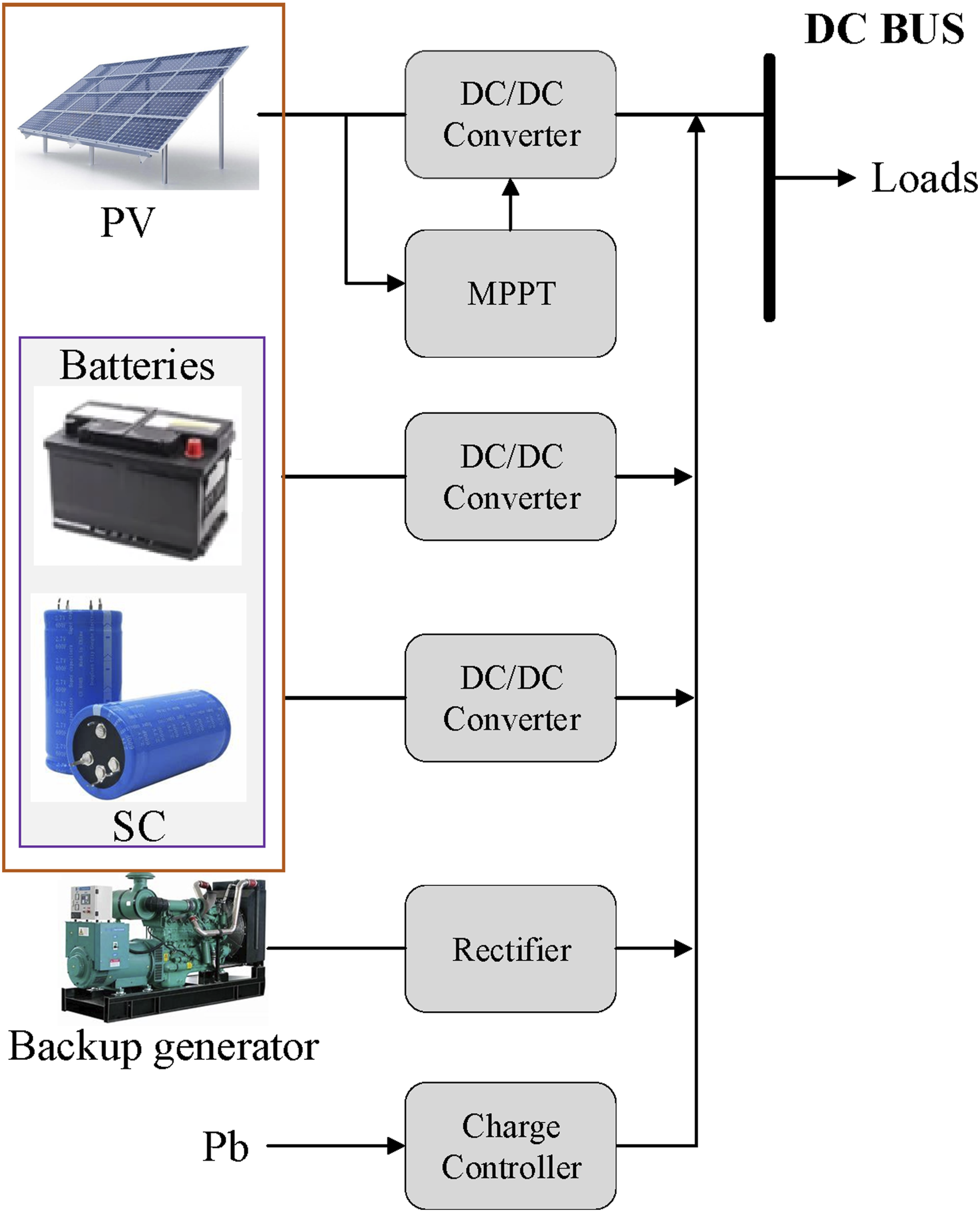
Objective function
The objective function of the proposed MILP model is a cost minimization function for optimizing microgrid (MG) sizing, incorporating various cost components related to photovoltaic (PV) installations, battery installations, grid interactions, backup power, and energy not supplied (ENS). The objective function is expressed as follows:

Constraints
1. Investment budget constraint
Constraint (4) represents a budget limitation in the optimization problem. It states that the total cost of installing photovoltaic (PV) systems across all nodes i plus the total cost of installing batteries across all j should not exceed a predefined maximum budget ( 2. Installation constraints of PV modules and batteries

Constraint (5) determines the installation status 3. General power balance and PV generation balance constraints



Constraint (8) represents the overall power balance at each time period t. It enforces that the sum of the power from the main grid ( 4. Energy transactions and backup-diesel-generator availability constraints


Constraint (10) sets a limit on the main grid power to load ( 5. Battery operation constraints



Constraints (13)–(18) govern the operation of battery storage systems within the network, ensuring that charging and discharging operations respect the physical limitations of the batteries. For every time period t, these constraints ensure proper control of battery charging/discharging based on its state and capacity. It is noted that batteries can be charged from PV stations during periods of high photovoltaic generation, as well as from the grid. The two charging powers of batteries are represented by variables






Similarly, constraints (19)–(21) presents three limits for the discharging power of the batteries. And constraint (22) enforces that at any given time period t, a battery j can only be in one of three states.




Constraints (23)–(25) define the state-of-charge (SoC) dynamics and constraints for batteries in an energy management system, particularly for optimizing the use of batteries in conjunction with renewable energy sources and grid interactions. The SoC changes over time is described in (23). Constraint (24) restricts the minimum and maximum SoC level. And constraint (25) defines the initial SoC level.



Constraints (26)–(28) extend the battery model to consider capacity degradation over time and enforce a limit on total degradation over the lifetime of the battery. Constraint (26) reiterates the initial battery capacity setup, where



Finally, the proposed optimal resource allocation model can be summarized as follows:



Case study
In this section, the proposed MG sizing methodology is evaluated by applying two different cases studies.
Parameter setting
Parameters of candidate PV module technologies.
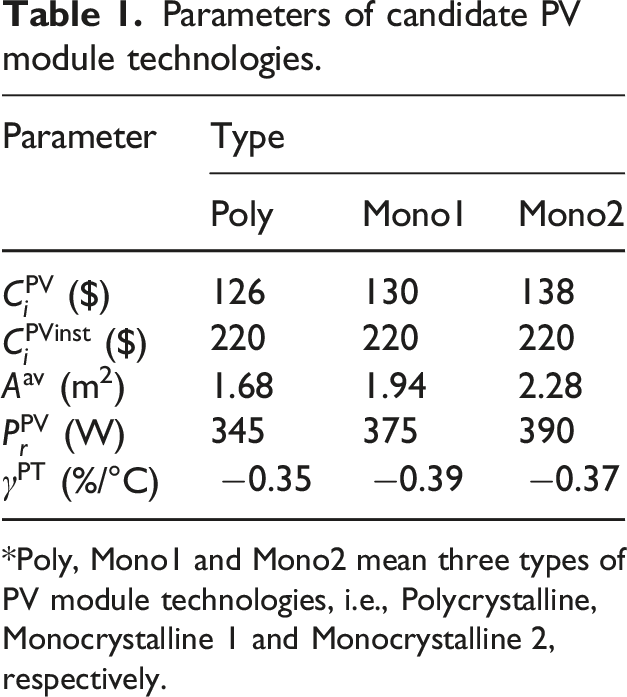
*Poly, Mono1 and Mono2 mean three types of PV module technologies, i.e., Polycrystalline, Monocrystalline 1 and Monocrystalline 2, respectively.
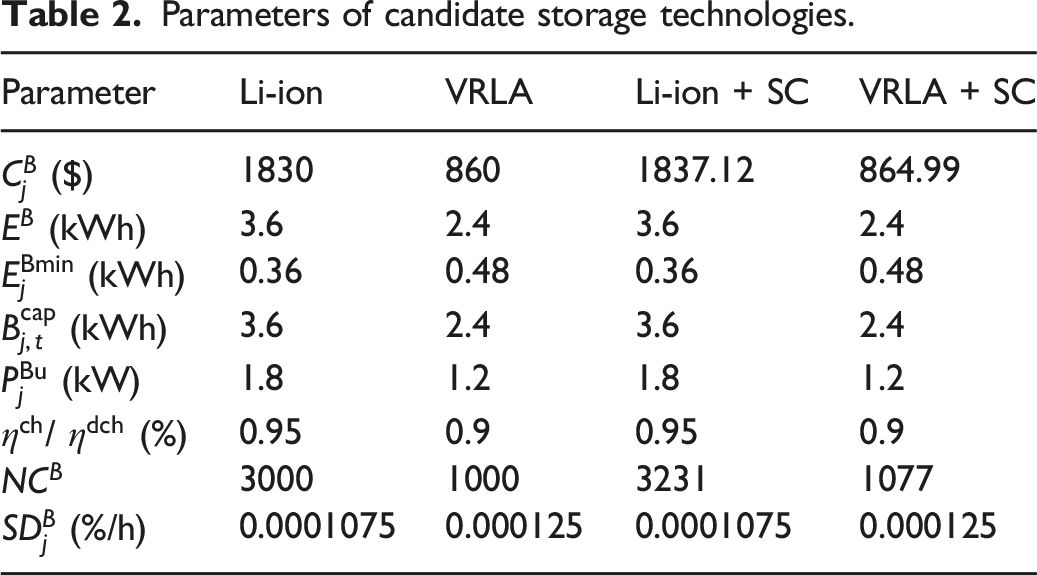
Parameters of candidate storage technologies.
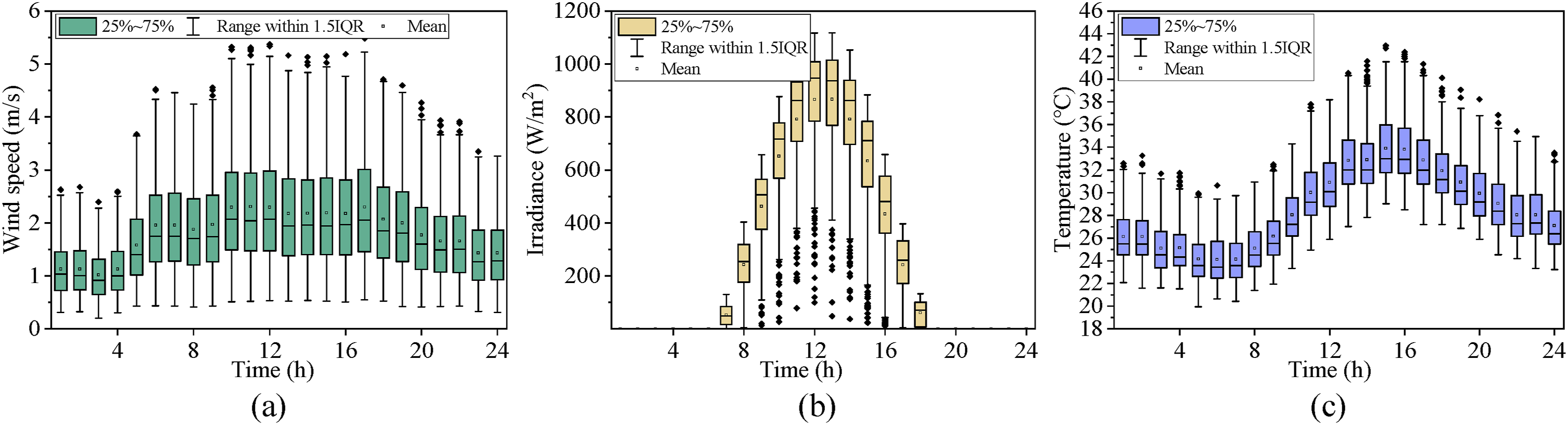
Climatic condition data including (a) wind speed, (b) solar irradiance, and (c) temperature.
Results for case 1
The input parameters for Case 1 are set as follows:
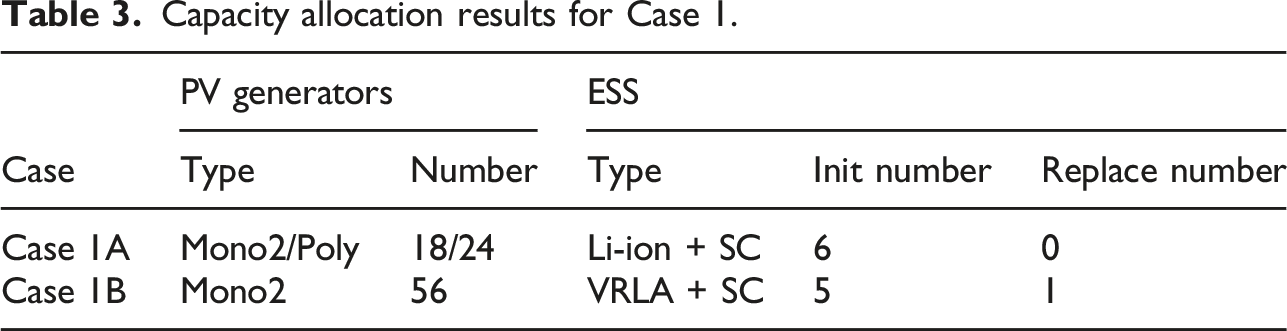
These scenarios, labeled as Case 1A and Case 1B, respectively, represent different levels of
Capacity allocation results for Case 1.
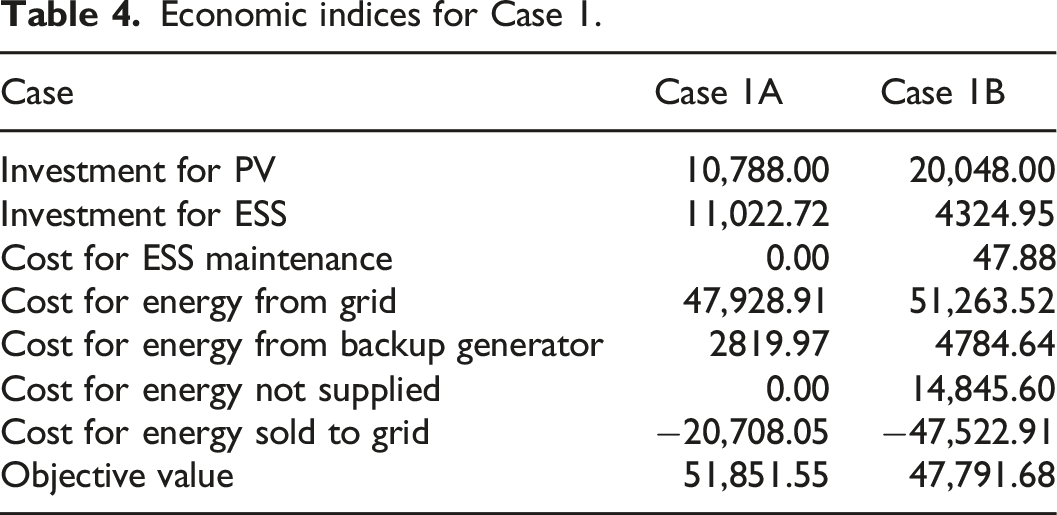
Economic indices for Case 1.
Results for Case 2
In Case 2,
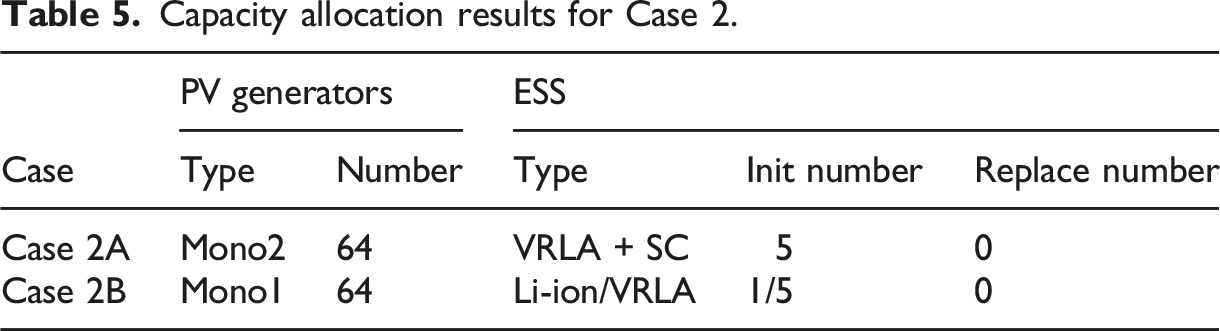
In this case, we compare two scenarios: in Case 2A, the proposed capacity configuration model is utilized, while Case 2B assumes no degradation in the battery energy storage system (BESS). This means excluding the incorporation of supercapacitors (SC) in the HESS for extending battery life, not considering the linear battery degradation model, and omitting estimation of storage replacement units based on equipment degradation. Consequently, the objective function (5) excludes the term (
Capacity allocation results for Case 2.
Economic indices for Case 2.
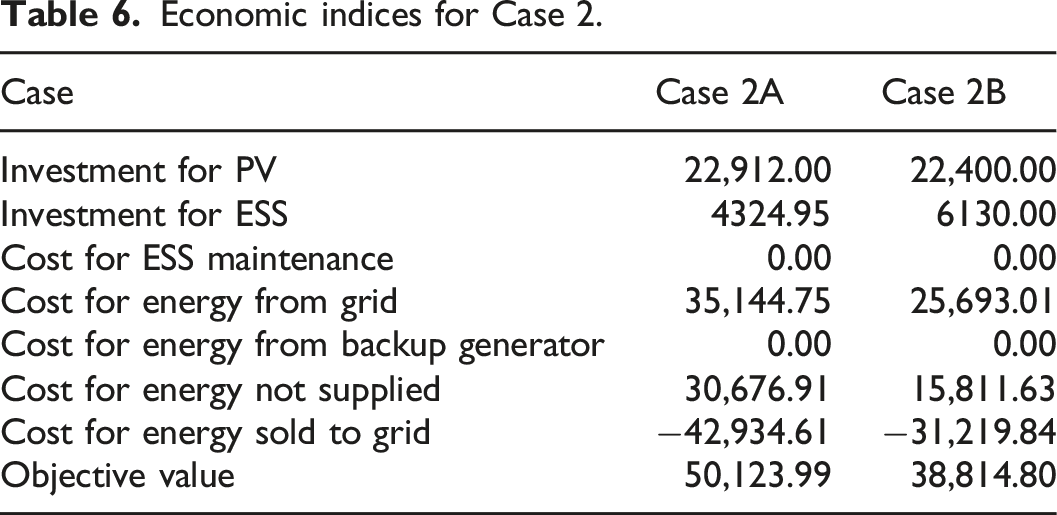
Comparing Tables 5 and 6, in Case 2B, where battery aging and replacement are not considered, the number of storage units increases, and their technology composition changes, excluding SC coupling in the BESS. However, the increased BESS operation in Case 2B does not affect battery lifespan, resulting in SCs being excluded from the capacity configuration results. Neglecting BESS degradation underestimates the benefits of SC coupling, leading to higher operational costs when implementing the microgrid. Therefore, the exclusion of the BESS degradation model in Case 2B leads to an optimistic estimation of expected ENS and the microgrid’s interaction with the main grid, underestimating the benefits of SC coupling.
Comparing the outcomes in Tables 5 and 6 for Case 2B reveals a critical influence of neglecting battery aging and replacement on the design and operation of the battery energy storage system (BESS) in the microgrid. In Case 2B, where these factors are not considered, the number of storage units rises, and the technology mix shifts, particularly excluding the integration of supercapacitors (SCs) with the BESS. This oversight underestimates the advantages of incorporating SCs into the storage system, leading to higher operational costs in real-world implementation. In practice, SCs could potentially decrease battery replacement frequency and maintenance requirements, thus reducing overall operational expenditures. Additionally, disregarding BESS degradation in Case 2B provides an optimistic assessment of the expected energy not supplied (ENS) and the microgrid’s interaction with the main grid. This optimistic view fails to account for potential challenges arising from neglecting battery aging, such as increased unreliability and decreased energy availability during peak demand. Consequently, the true benefits of SC coupling in enhancing the microgrid’s performance, reliability, and cost-effectiveness are underestimated.
Sensitivity analysis
Planning results and economic indices for different ESS investment costs.
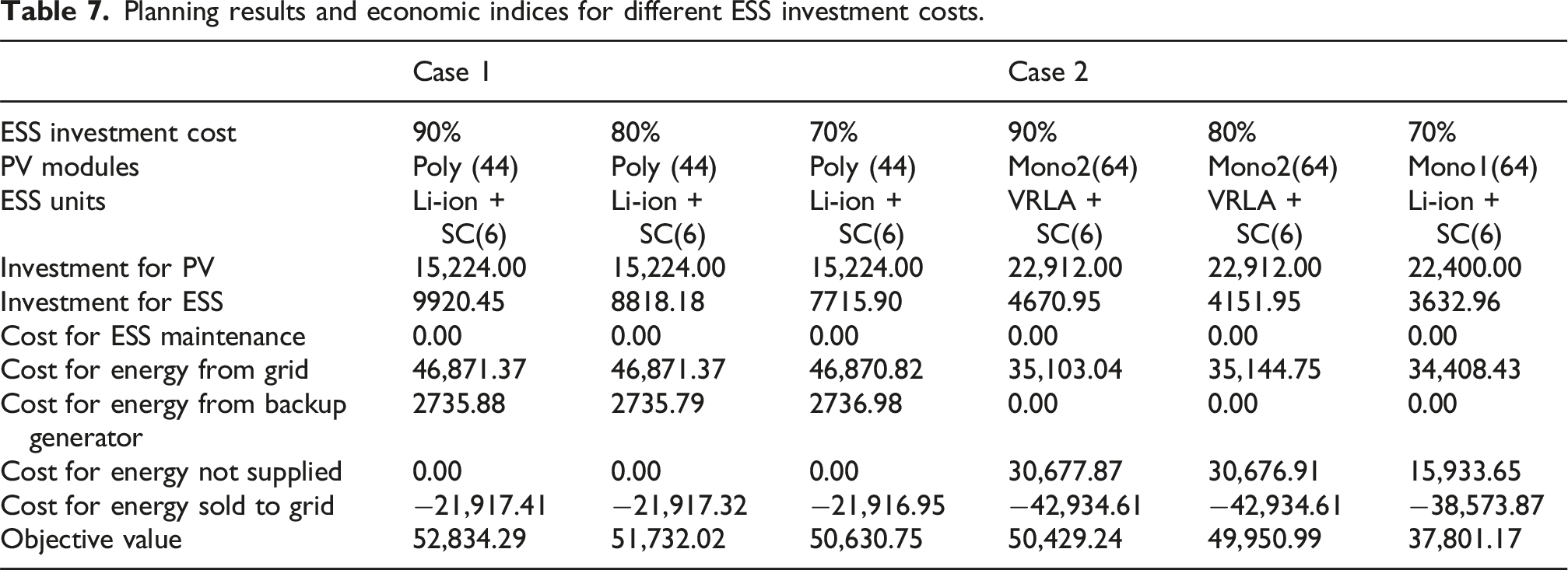
From the findings presented in Table 7, it becomes clear that a decrease in ESS investment costs influences the configuration of storage units in Case 2 microgrid (MG), even though no battery replacements are required in either scenario. This suggests that while configuring battery storage assists in supporting load supply during specific periods, the primary focus remains on exporting energy to the grid, as indicated by the reduction in the objective function value.
Upon a thorough examination of the two scenarios, it becomes evident that the microgrid (MG) responds differently to reductions in energy storage system (ESS) unit prices. In Case 1, a decrease in ESS prices triggers a proportional increase in the number of photovoltaic (PV) modules, reaching a total of 48 additional modules as prices decline to 90%, 80%, and 70% of the baseline. Meanwhile, the number of ESS units remains static. In contrast, Case 2 exhibits a static PV module count despite ESS price reductions. However, when prices hit 70% of the original cost, a strategic shift occurs, introducing a new storage technology to enhance the MG’s energy management. The economic analysis underscores the significance of interrupted energy service costs in optimizing MG capacity, balancing project costs and minimizing unserved energy. The potential for energy export to the main grid also plays a crucial role, generating revenue to offset costs and influencing the MG’s capacity configuration and overall objectives. Restricted export prompts the MG to prioritize local load demands, fostering the use of storage units for reliability and resilience.
Conclusion
This paper presents a comprehensive methodology for optimizing the capacity configuration of a microgrid (MG) system, incorporating photovoltaics (PV), hybrid energy storage systems (HESS), and diesel generators. It considers various factors such as installation location, meteorological conditions impacting PV performance, and battery aging dynamics. The methodology introduces a novel approach to estimating storage replacement costs using the linear throughput model of the battery energy storage system (BESS), accounting for additional compensation energy required. Furthermore, it explores the advantages of integrating supercapacitors into HESS to extend battery life. Specific constraints and key factors, including the BESS degradation model, replacement calculation, HESS performance, main grid availability, and dynamic cost of interrupted energy service (CENS), are integrated into the decision-making process.
The proposed methodology’s effectiveness is validated through two case studies, showing its practical applicability. Comparative analysis with a methodology overlooking BESS degradation indicates inaccurate estimations of ENS and grid interaction. Neglecting BESS degradation costs can underestimate the benefits of using supercapacitors to enhance HESS performance, including efficiency gains, reliability improvements, and cost savings. This could lead to incorrect MG project capacity configurations and higher operating costs. Furthermore, sensitivity analysis based on energy storage system (ESS) costs reveals that reductions in ESS costs significantly influence MG capacity configuration, especially in scenarios with higher costs of interrupted energy service (CENS). Note that the proposed method is limited by reliance on historical weather and load data from specific regions. The computationally intensive MILP model may pose challenges for real-time optimization in large-scale microgrids. Future research directions include developing more efficient algorithms for real-time optimization, exploring the integration of multiple renewable energy sources to enhance reliability and economic viability, investigating advanced control strategies using machine learning and artificial intelligence, and conducting long-term performance analysis to assess sustainability and resilience over extended periods.
Footnotes
Funding
The authors disclosed receipt of the following financial support for the research, authorship, and/or publication of this article: This research was funded by State Grid Hubei Electric Power Co., Ltd. Major Science and Technology Project: Research on key technologies for active distribution network structure optimization and operation coordination adapting to the friendly interaction of microgrid clusters (project code: 521532220008).
Declaration of conflicting interests
The authors declared no potential conflicts of interest with respect to the research, authorship, and/or publication of this article.