







Abstract
Amid diverse market competition and evolving consumer demands, the construction of tea brand assets has gradually garnered significant attention from enterprises. However, existing literature investigations reveal a scarcity of theoretical research focusing on Chinese tea brand assets from a consumer perspective; this will inevitably lead to a lack of theoretical experience support for tea brands in the practical process, affecting the construction of brand assets. This study aims to clarify the constituent factors of tea brand assets and explore the interrelationships among these factors. Through a comprehensive analysis of existing literature, the constituent factors of tea brand assets were identified. By formulating theoretical hypotheses, a model for tea brand assets was proposed and an assessment scale was developed. Subsequently, a questionnaire survey was conducted based on the scale, followed by a reliability and validity test of the data and model using factor analysis. The results demonstrate that tea brand assets from a consumer perspective consist of Brand Awareness, Brand Association, Perceived Quality, and Brand Loyalty, with interconnections among these factors that influence brand assets. Notably, there is a significant correlation between Brand Awareness and Brand Association, while Brand Awareness does not significantly affect Perceived Quality. Brand Association positively impacts Perceived Quality and Brand Loyalty. Both Brand Awareness and Perceived Quality significantly influence Brand Loyalty.
Introduction
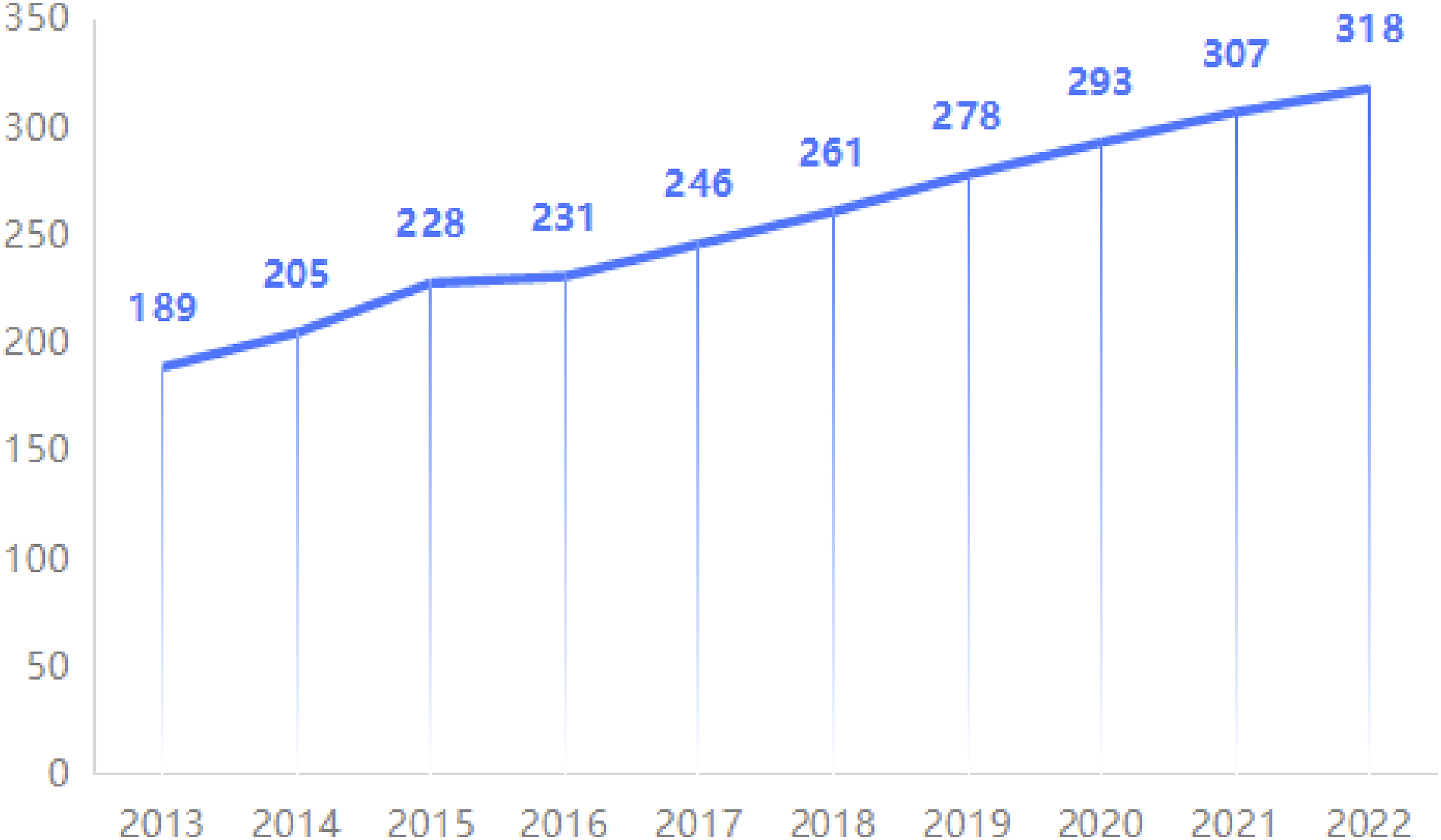
In the vast expanse of China, the rich tapestry of tea cultivation unfolds with deep historical roots. Tea, a cornerstone of China’s economic landscape, reigns supreme as one of its primary cash crops, consistently dominating global markets in annual production and trade. According to figures from the China Tea Marketing Association, the tea plantations in China sprawled across 49.95 million mu in 2022, a significant leap from the 39.09 million mu recorded in 2013. Embracing its legacy as a traditional stronghold, the tea gardens have witnessed a decade-long crescendo, with the plantation area showing a steadfast upward trajectory. Concurrently, the annual yield of Chinese tea surged from 1.89 million tons in 2013 to a remarkable 3.18 million tons in 2022. Amidst the global tea tapestry of 6.4 million tons in 2022, China stood regally at the helm, boasting of an impressive half share in the global tea bounty. This narrative is further elucidated in the detailed portrayal of the data encapsulated in Figures 1 and 2. Tea plantation area from 2013 to 2022, unit (10,000 Mu). Tea production from 2013 to 2022, unit (10,000 Tons).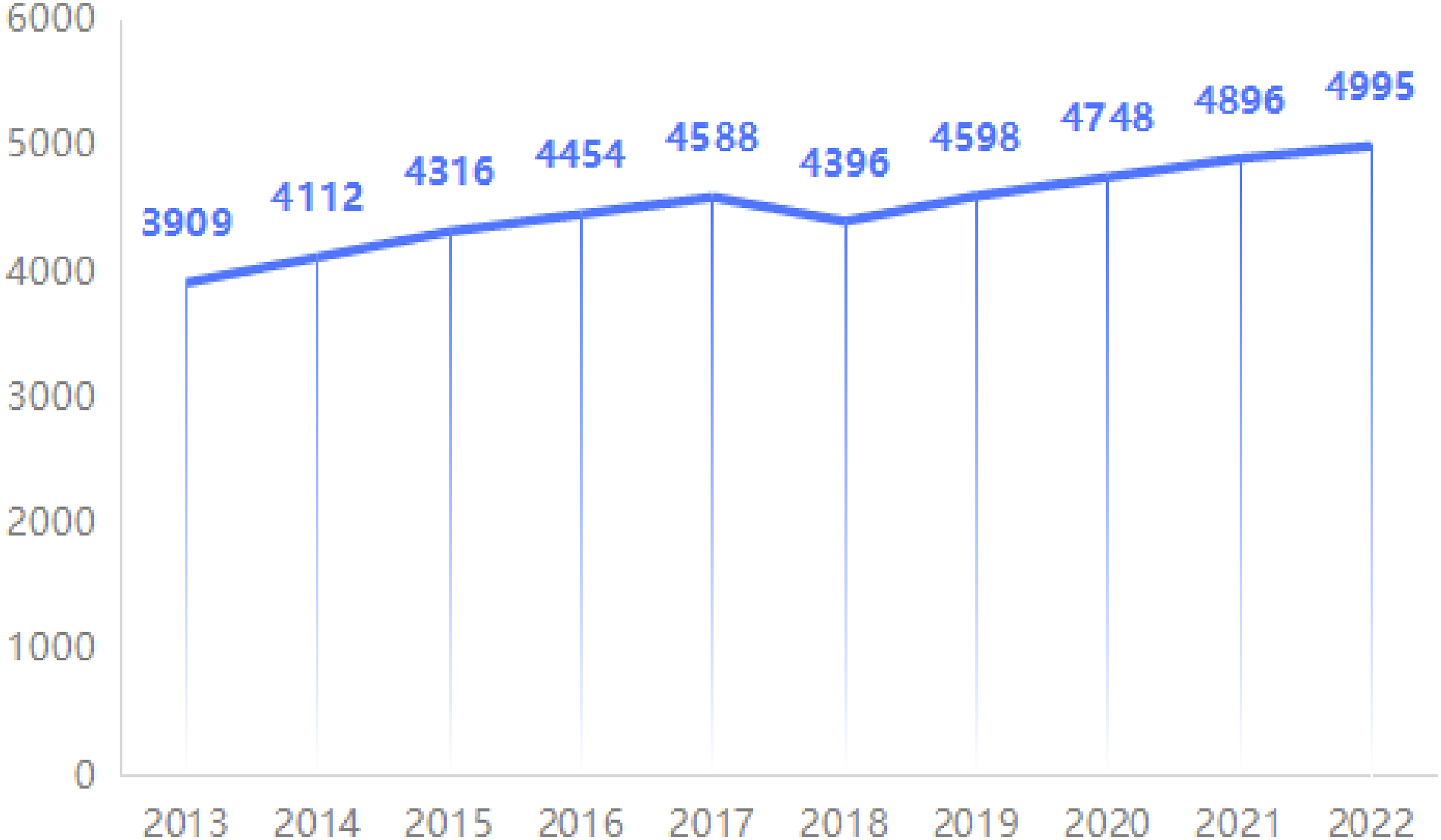
The nation boasts vast tea plantation areas and a diverse array of tea varieties, such as West Lake Longjing, Anxi Tieguanyin, Wuyi Mountain Da Hong Pao, Yunnan Pu’er, Dongting Biluochun, Lu’an Guapian, and Huangshan Maofeng. Despite this rich tapestry, Chinese tea brands still face relatively low levels of global recognition in the competitive international market. This underscores a deficiency in the influencing power of Chinese tea industry brands. While China does possess some renowned tea brands, their international impact remains modest compared to globally recognized tea labels, showcasing lower product added value and insufficient market competitiveness. 1 According to Zhejiang University’s Report on the Brand Value Assessment of Chinese Tea Enterprises in 2023, the average brand value of the 141 tea brands evaluated in 2023 stood at 324 million RMB, with a median value of 197 million RMB. Sixty-six percent of the brand values fell below the average, indicating an overall low brand value with a higher proportion of medium and small brands. In the Brand Finance Global Food and Beverage Brand Value Report for 2023, the British tea beverage brand “Lipton” ranked 10th with a brand value of 3.021 billion USD, equivalent to approximately 21 billion RMB, nearly half of the total combined brand value of the 141 Chinese tea brands in 2023. In Zhejiang University’s “The 13th Annual Brand Value Assessment Report for Chinese Tea Enterprises in 2023,” the highest valued brand was “Wuyutai” at 1.756 billion RMB, less than a tenth of Lipton’s value. Despite both being century-old brands, what factors underline such a significant gap? During the Fourteenth Session of the National Committee of the Chinese People’s Political Consultative Conference in March 2024, member Ye Zhengbo highlighted that “The market share of China’s independently branded tea exports has declined from 80% to approximately 10% in the international market, leading to a prolonged stagnation in export volume and prices. The evident weakening of competitive advantage in the international market underscores the primary challenge facing the Chinese tea industry as one of brand management.”
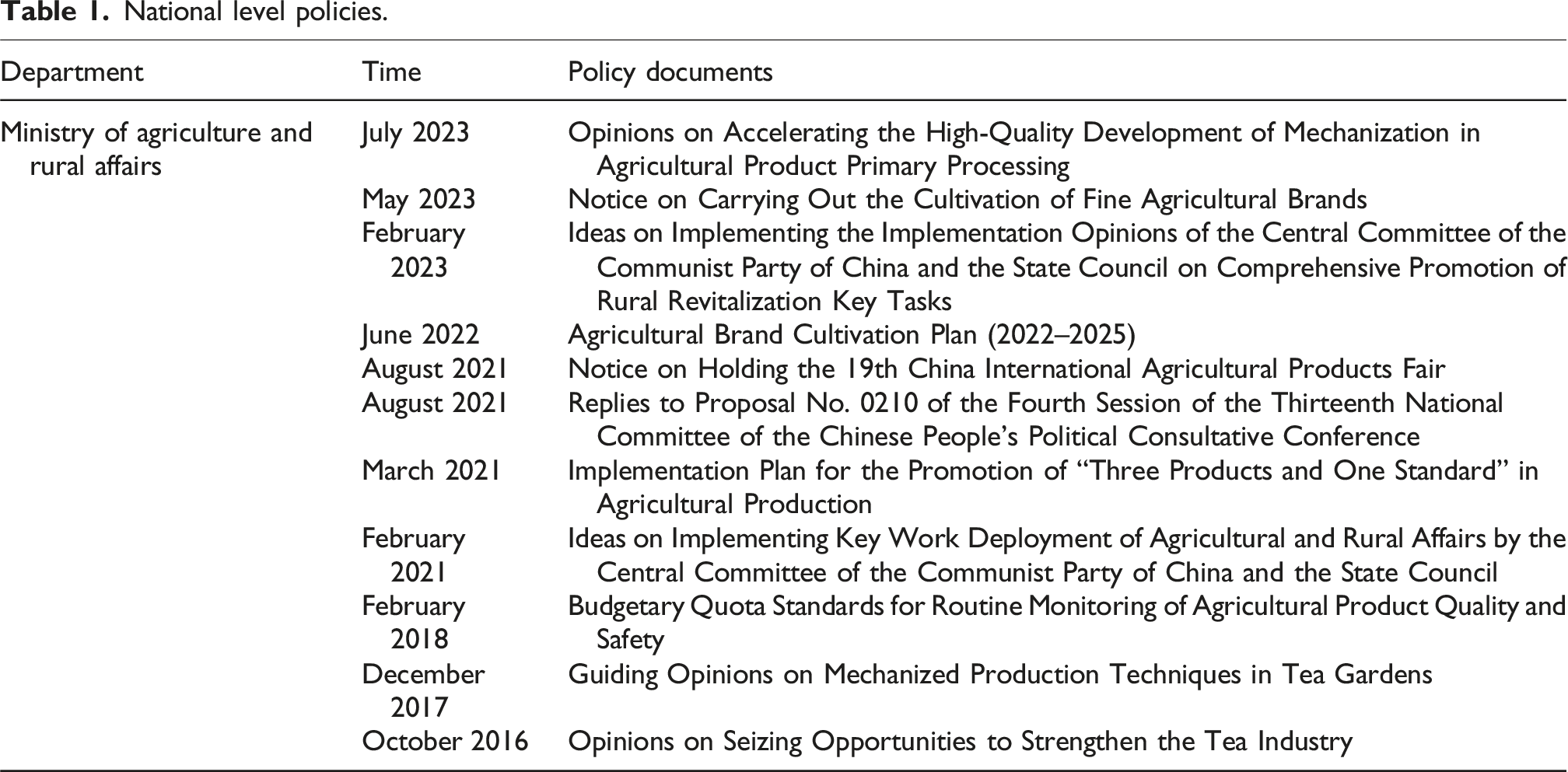
National level policies.
Policies by region.
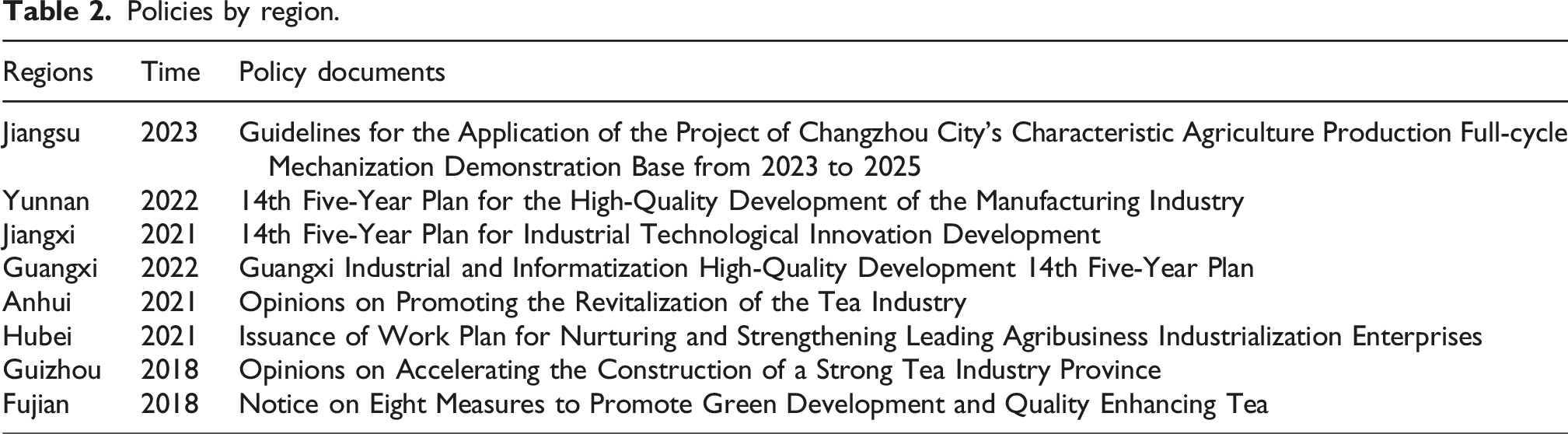
Through various policy drives and the pioneering development of the tea industry, a number of regions in China have seen the emergence of tea brands endowed with sterling reputations and word-of-mouth acclaim. Representative brands include Yunnan Pu’er, West Lake Longjing, Anxi Tieguanyin from Fujian, and Dongting Biluochun from Hunan. These tea industry brands have become regional brand ambassadors, enjoying a certain level of recognition and esteem. However, in the Chinese market, many such tea industry brands with rich cultural histories are still categorized merely as “regional brands,” struggling to shed the label of being solely regional and venture into broader markets.
In China, while there is a plethora of tea industry brands, their overall brand influence and visibility remain relatively low. The level of standardization and scaling in tea gardens is not high, with most operations being led by small-scale farmers. This situation results in compromised quality, market competition chaos, and even instances of misrepresentation, diluting the authenticity of tea brands, thereby severely tarnishing their reputation. 2 These unfavorable market phenomena persistently constrain and impact the healthy development of the tea industry. Additionally, as the economy rapidly evolves, there has been a general increase in public awareness regarding health. Tea, as a healthful beverage, is becoming increasingly commonplace. The market is witnessing a proliferation of domestic and international tea brands, each innovating in production methods, product varieties, styles, and marketing strategies, creating a diverse landscape. The competition within the tea industry has transcended beyond mere product rivalry, ushering in a new era of brand competition. 3
David A. Aaker posited that if a brand’s brand equity is under strain, the brand will inevitably invest more in promotional activities, primarily to maintain its position in the sales channels. This theory resonates with the current state of branding in the Chinese tea industry market. The significance of brand equity has long been recognized in the marketing realm, with consumers serving as the primary source of brand equity formation. Consumer perception plays a crucial role in shaping brand equity, and studying the factors influencing brand equity from a consumer perspective is advantageous for the development of tea industry branding assets.
Therefore, given the existing issues within the Chinese tea industry branding landscape and the current research status in this field, this paper endeavors to explore the factors influencing the construction of brand assets in the Chinese tea industry from a consumer perspective, based on brand asset theory. The aim is to construct a model of tea industry brand assets, develop a measurement scale, and analyze the interrelationships among various factors. The theoretical model and measurement scale derived from this study can serve as practical tools for the construction and enhancement of brand assets in the Chinese tea industry. Delving into the establishment of tea industry brand assets not only paves the way for regional brands to venture into a broader global arena but also offers profound theoretical and practical significance in guiding their strategic actions.
Brand assets
Concept of brand assets
Brand assets emerged as one of the most popular and potentially valuable marketing concepts in the 1980s. Brand assets not only create value for consumers but also generate value for businesses. Brand assets are the value a brand brings to consumers, derived from the enjoyment, positive attitudes, and behavioral preferences instilled by the brand. 4 Kevin Lane Keller, in his seminal work on strategic brand management, incorporated the “associative network memory model” from cognitive psychology as a theoretical foundation. He asserted that consumers’ cognitive brand value is primarily formed through ongoing perceptions of brand information. According to his theory, consumers’ brand assets are “differentiated responses to brand marketing strategies in consumers’ minds,” and it is this “differentiated response” that leads to sustained profits for companies. Consumers engage in purchase behaviors because they perceive value in the product; only when consumers have a high perception of brand assets can strong purchase intent be generated for a product. 5 Brand assets from a consumer perspective represent a genuine response to the implementation of brand marketing activities and serve as guidance for the future development of enterprise brands. 6 Therefore, consumer brand perception forms a crucial foundation for brand asset formation.
Composition dimensions of brand assets
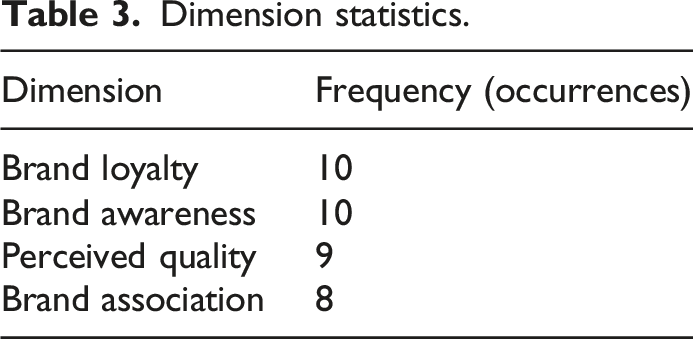
Up to now, the classic models of brand assets theory have been primarily formulated by David A. Aaker and Kevin Lane Keller. David A. Aaker categorized Brand Awareness, Brand Association, Perceived Quality, Brand Loyalty, and other brand-specific assets into five dimensions of brand assets. The first four dimensions reflect consumer perceptions of the brand, while the final dimension pertains to a company-centric perspective and is unrelated to consumers. Kevin Lane Keller emphasized that brand knowledge is pivotal in creating brand assets, comprising Brand Awareness and brand imagery, and he introduced the brand asset pyramid model. These classical brand theory models have provided scholars with effective and crucial references for research in the domain of brand assets, shaping numerous theoretical studies conducted to date.
Dimensions of brand assets in the tea industry
Dimension statistics.
Assumptions, model construction, and scale development
Theoretical hypotheses
Hypotheses.
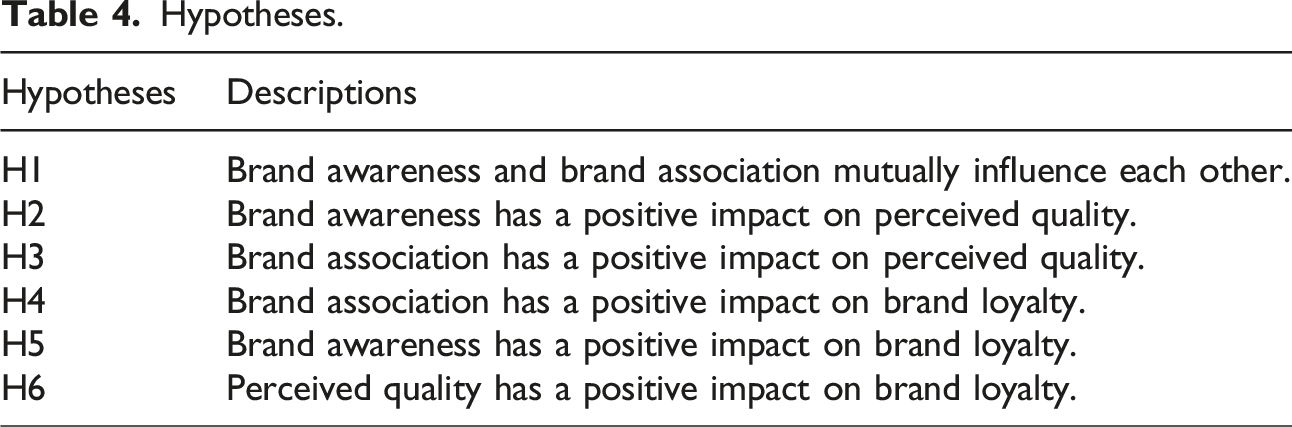
Brand Awareness serves as a crucial cue for customers to predict product quality and is a significant factor influencing customers’ perception of quality. Brand Awareness as a primary driver of Perceived Quality, Consumers often rely on Brand Awareness to assess the quality of agricultural products, and Agricultural products with high Brand Awareness tend to be perceived as having higher quality compared to those with lower Brand Awareness. Thus, hypothesis H2 is proposed, as shown in Table 4.
When consumers make purchases, they frequently associate products with their places of origin. The development of regional characteristics in agricultural economies, such as superior growing environments, infrastructure, well-established market orders, and business environments, determines the inherent quality of regional agricultural brands. 8 Consequently, hypothesis H3 is proposed, as depicted in Table 4.
Regional association represents the psychological effect of consumers’ perception of the production region of a brand’s products, primarily reflected in aspects such as Brand Association, awareness, reputation, and loyalty. Association with tea brand regions is crucial in consumer purchase decisions, requiring the generation of rich perceptions among consumers to cultivate comprehensive brand enthusiasm, which is the most significant influencing factor in Brand Loyalty formation. 1 Therefore, hypothesis H4 is presented, as outlined in Table 4.
Brand Awareness plays a positive and active role in fostering Brand Loyalty. Strong Brand Awareness enables consumers to distinguish the brand effectively from others, fostering feelings of familiarity and dependence that facilitate repeat purchases, ultimately cultivating Brand Loyalty, brand Awareness has a certain impact on Brand Loyalty. 9 Hence, hypothesis H5 is posited, as detailed in Table 4.
Level of technological advancement in branded products directly influences consumers’ trust. The technological level not only positively affects consumer satisfaction but also plays a positive role in consumer loyalty. 9 In an empirical study using Phuc Long’s Packaged Tea Products as an example, it was found that product quality perception has a significant impact on regional brand loyalty. Therefore, hypothesis H6 is proposed, as illustrated in Table 4.
Model construction
Drawing upon David A. Aaker and Kevin Lane Keller’s brand equity theory model, integrating the research findings of scholars, a consumer-centric dimension of tea industry brand assets is proposed and a tea industry brand asset model from the consumer perspective is established, as illustrated in Figure 3. Consumer-centric model of tea industry brand assets.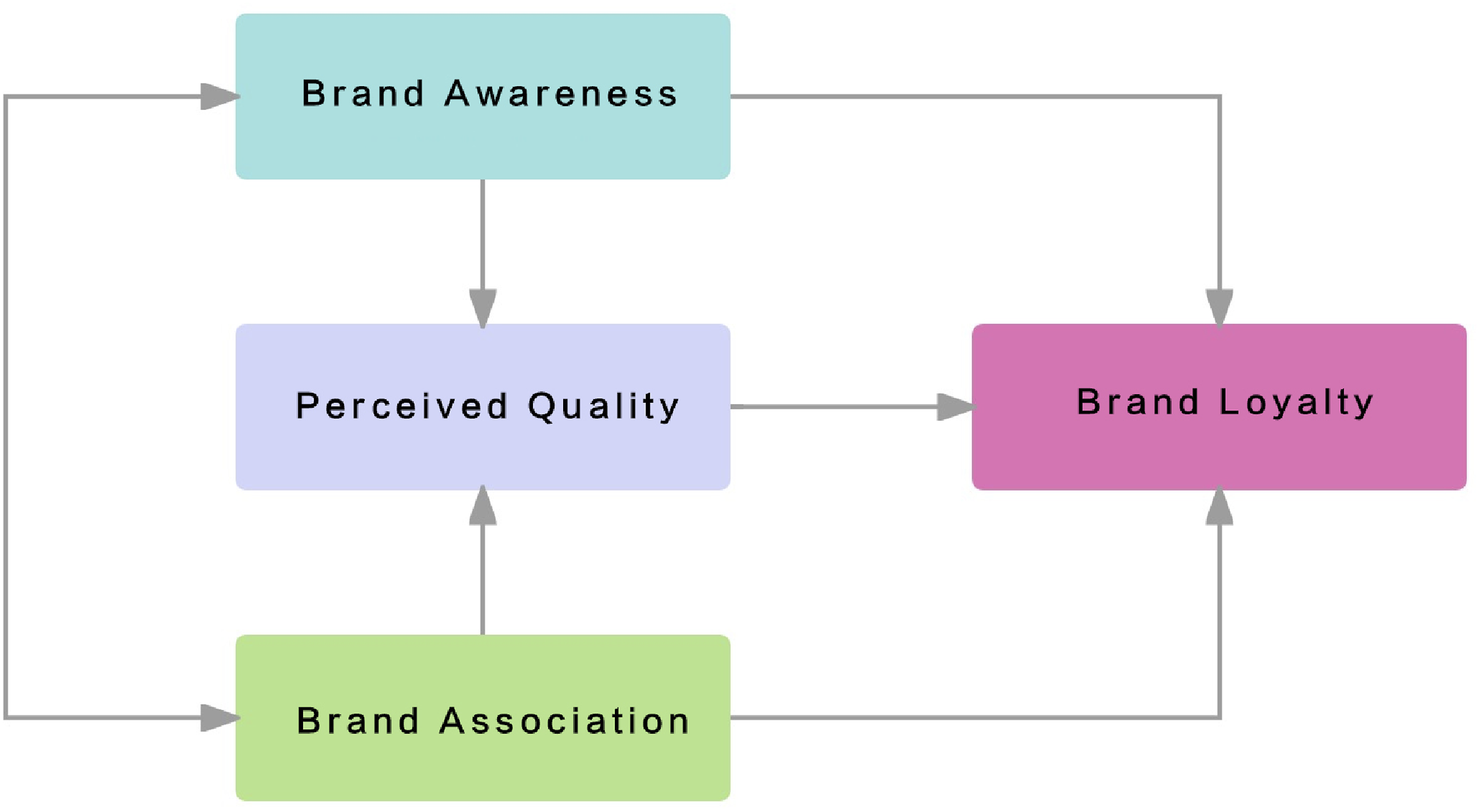
Scale development
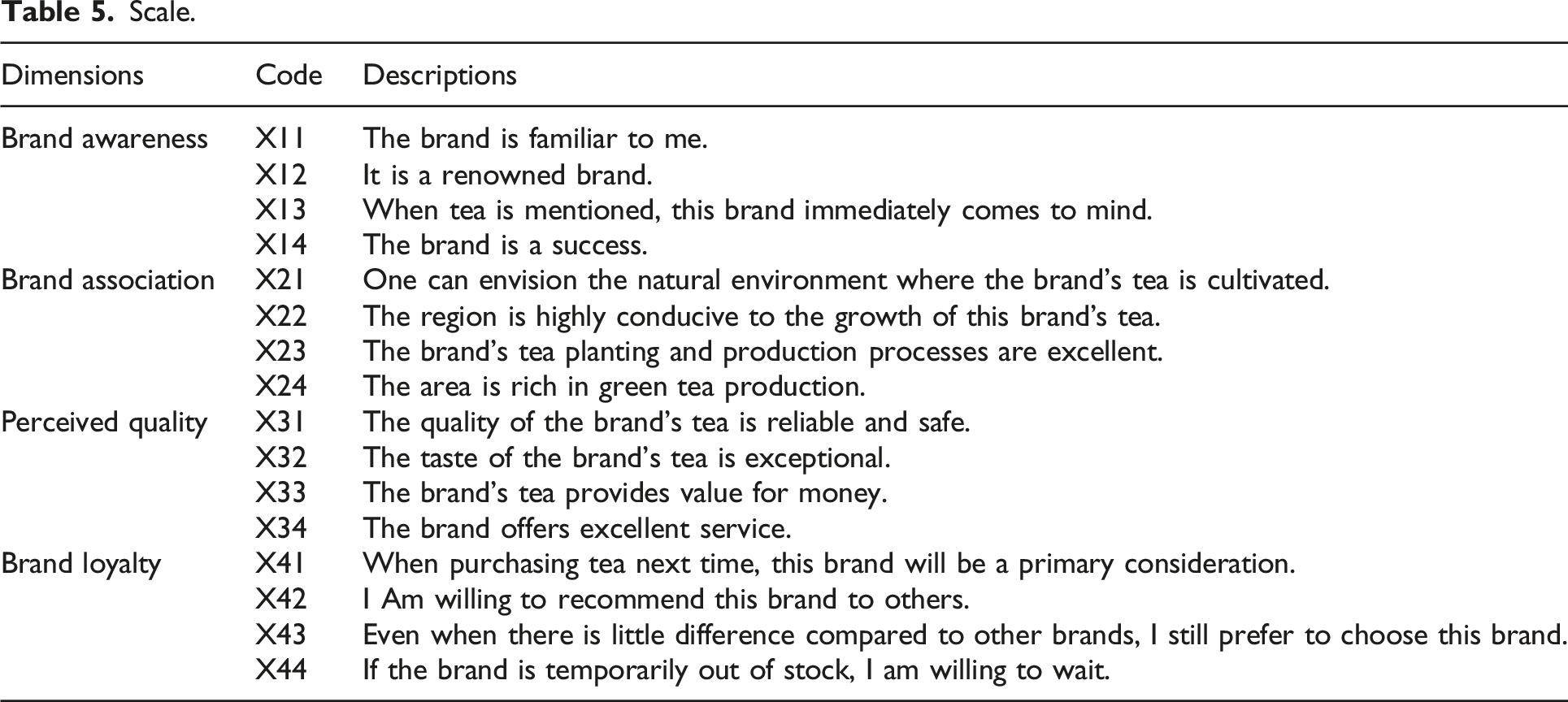
Scale.
Data source and analysis
Questionnaire design
Given the limited research on brand assets in the tea industry, this study referenced scales developed by Chen Lingwen and Zhao Longfei to create a scale comprising four dimensions and 16 measurement items. All items were measured using a five-point Likert scale (ranging from “Strongly Agree” to “Strongly Disagree,” with corresponding scores of 5, 4, 3, 2, 1).
Data collection
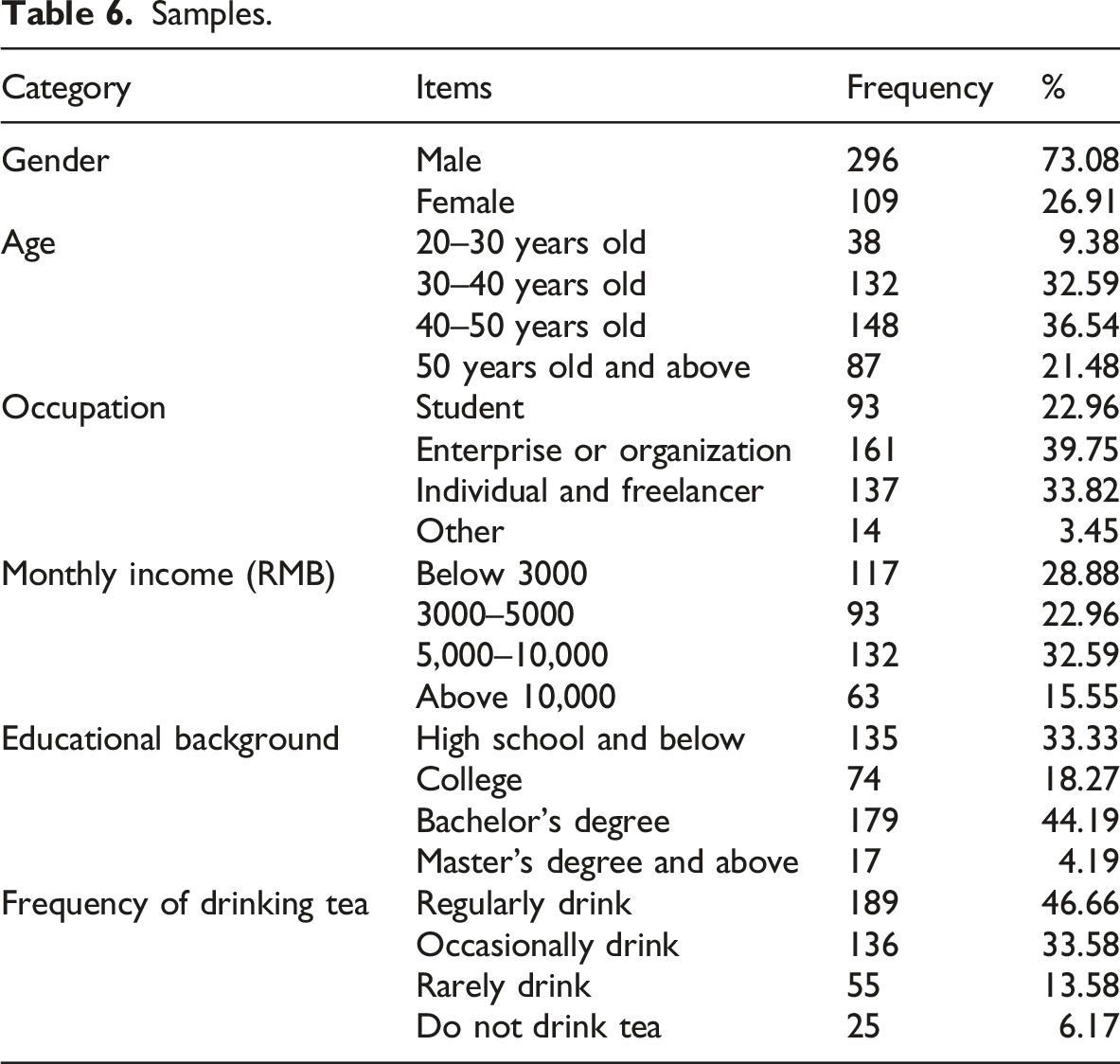
Samples.
Reliability analysis
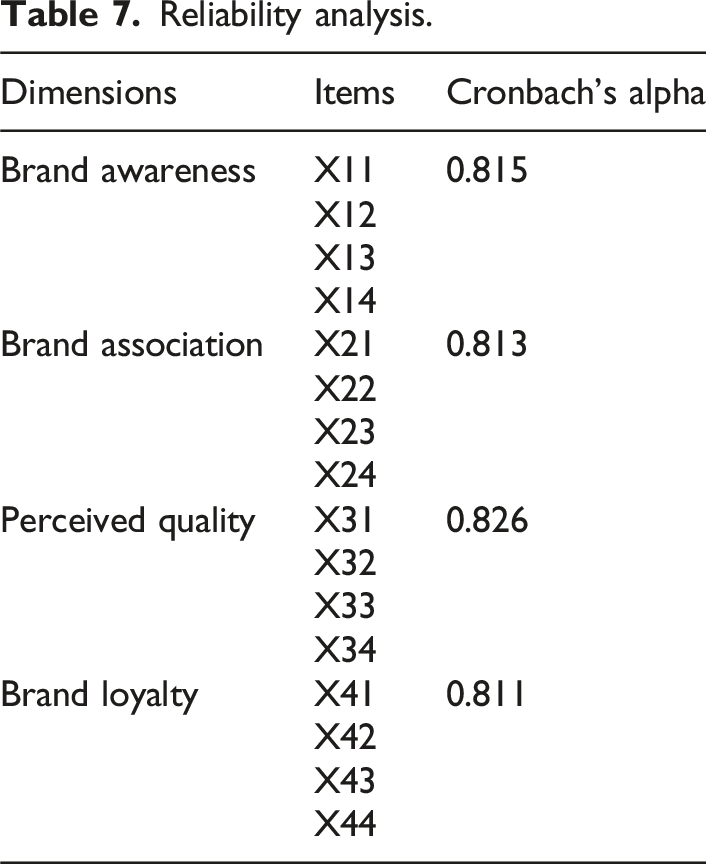
Reliability analysis.
Validity analysis
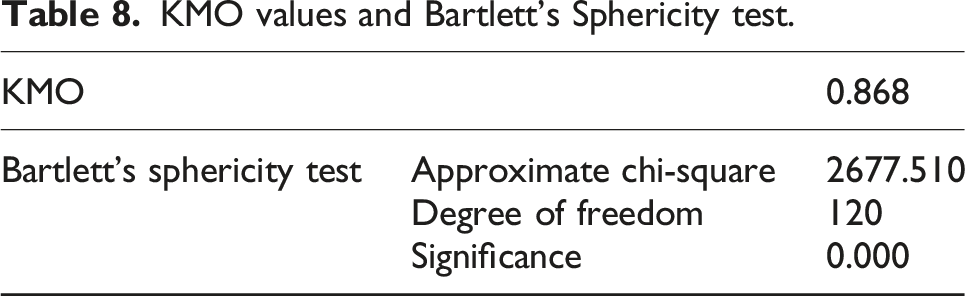
KMO values and Bartlett’s Sphericity test.
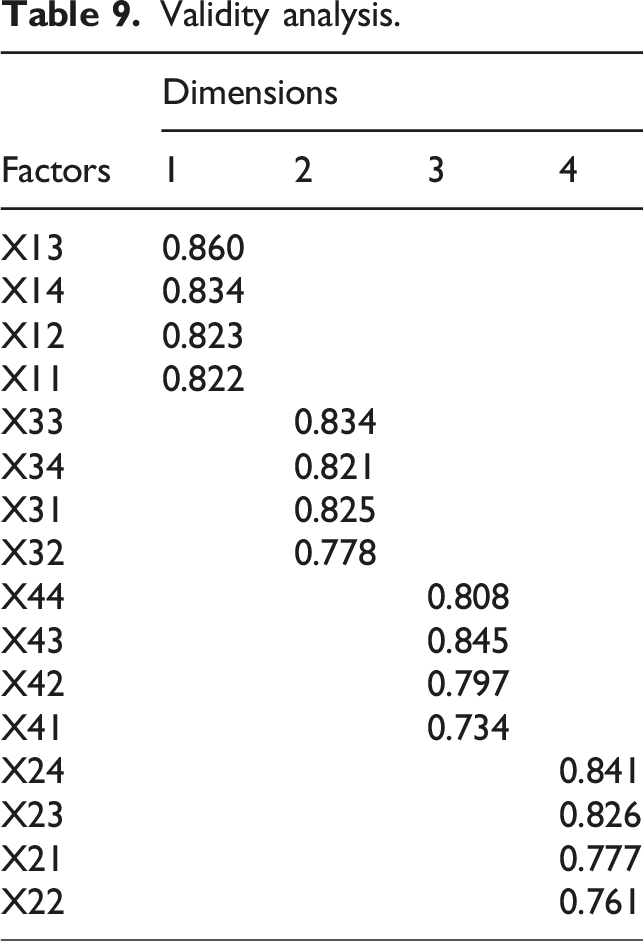
Validity analysis.
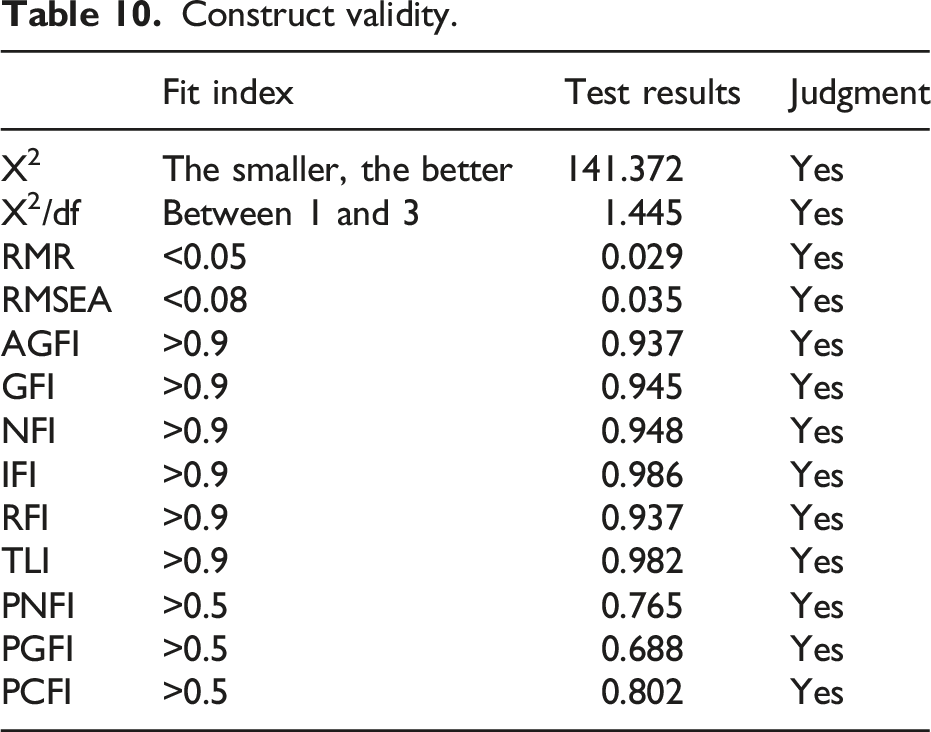
Construct validity.
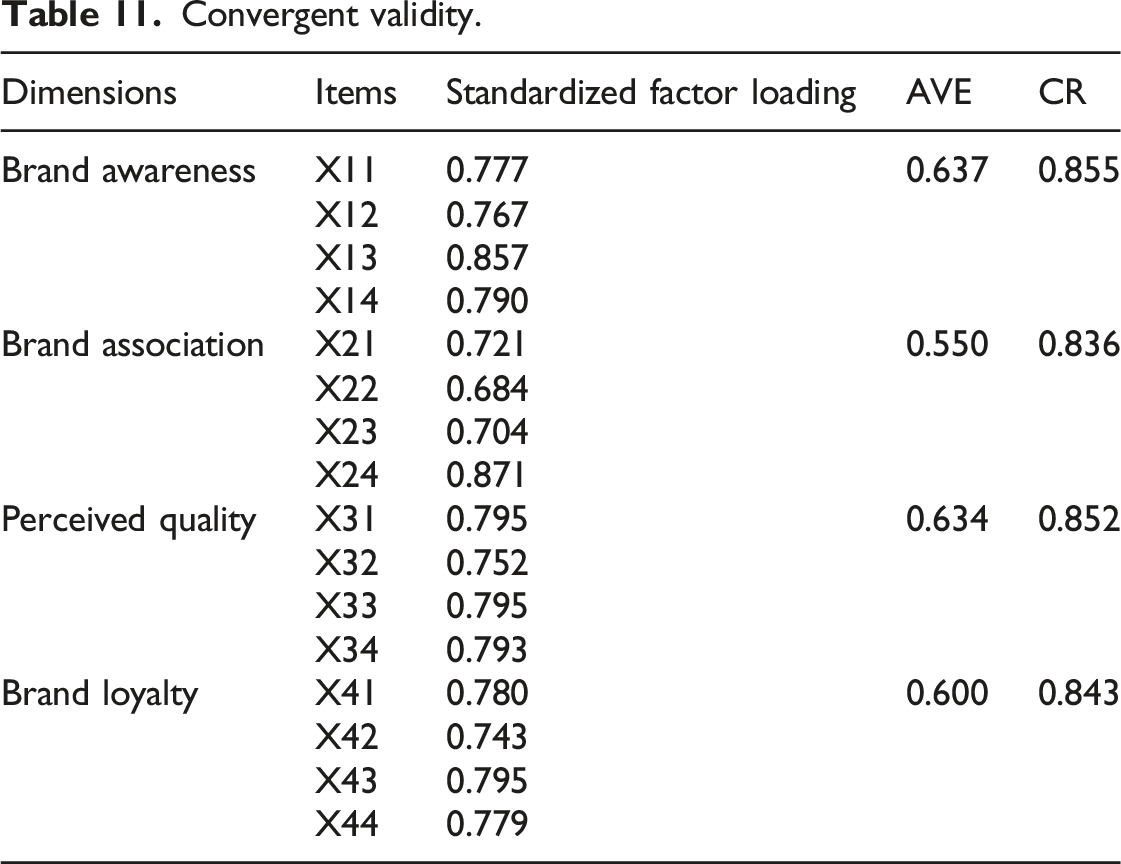
Convergent validity.
Discriminant validity.
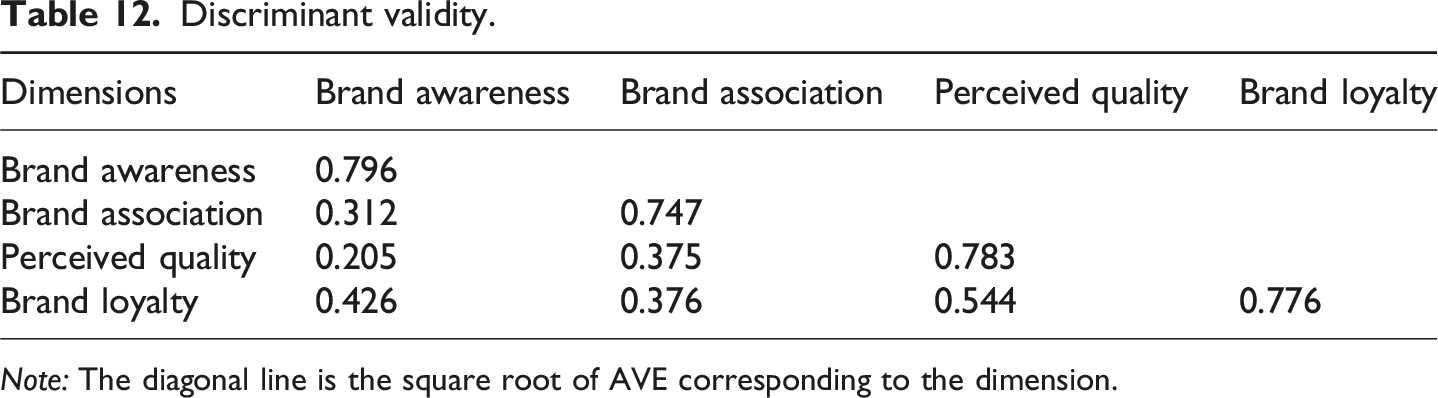
Note: The diagonal line is the square root of AVE corresponding to the dimension.
Correlation analysis
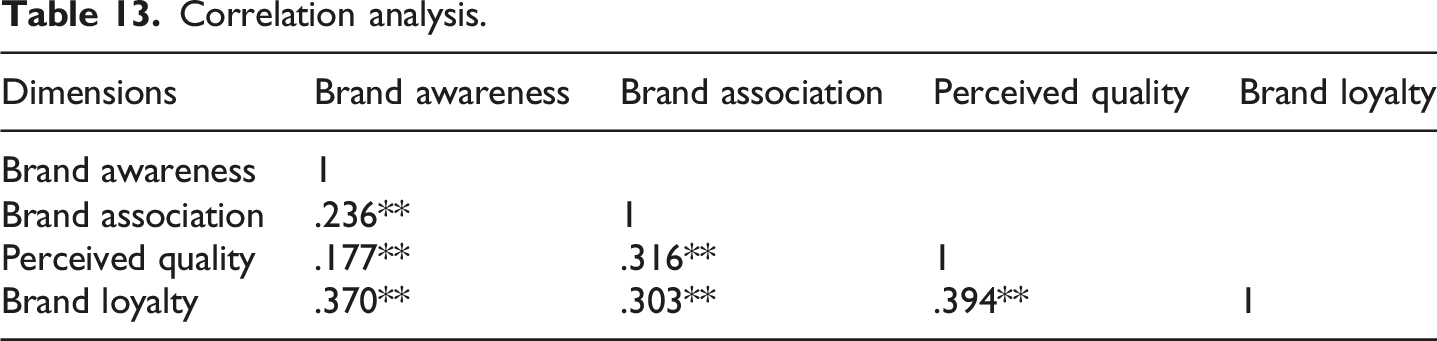
Correlation analysis.
Structural equation modeling examination
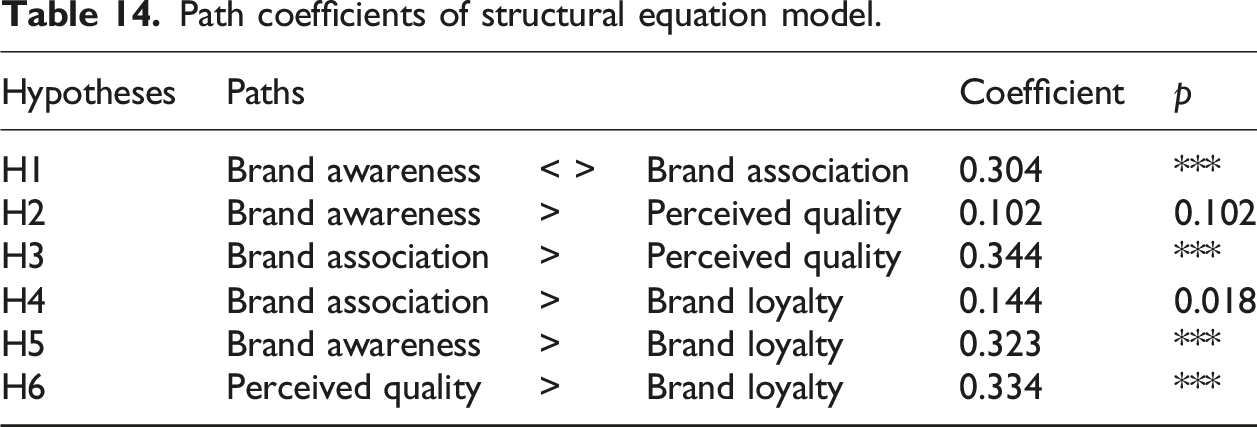
Path coefficients of structural equation model.
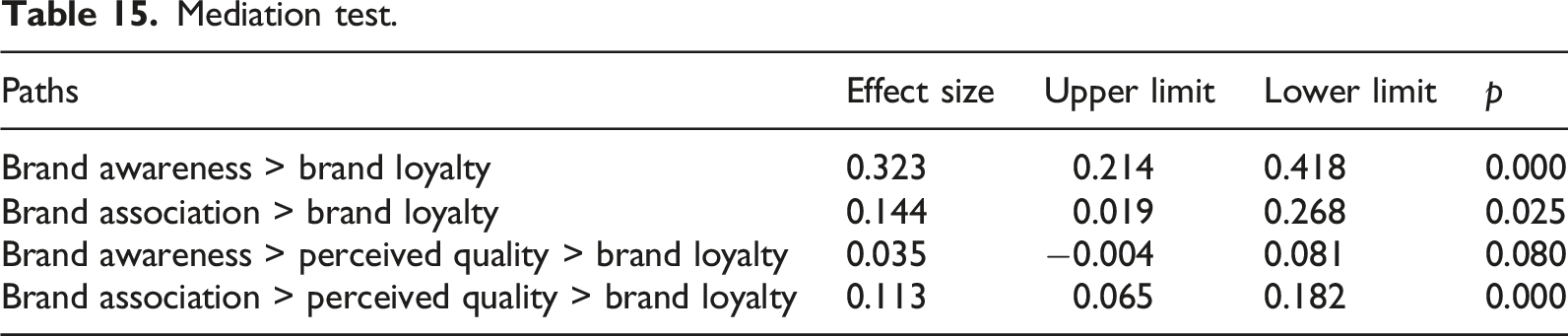
Mediation test.
After conducting tests on six hypotheses, only hypothesis H2 did not pass the test, indicating that Brand Awareness does not have a significant positive impact on Perceived Quality (p > 0.05), with a standardized coefficient of 0.102. As illustrated in Figure 4, the dashed line represents the non-validated hypothesis. Influencing factors of tea brand equity from the perspective of consumers.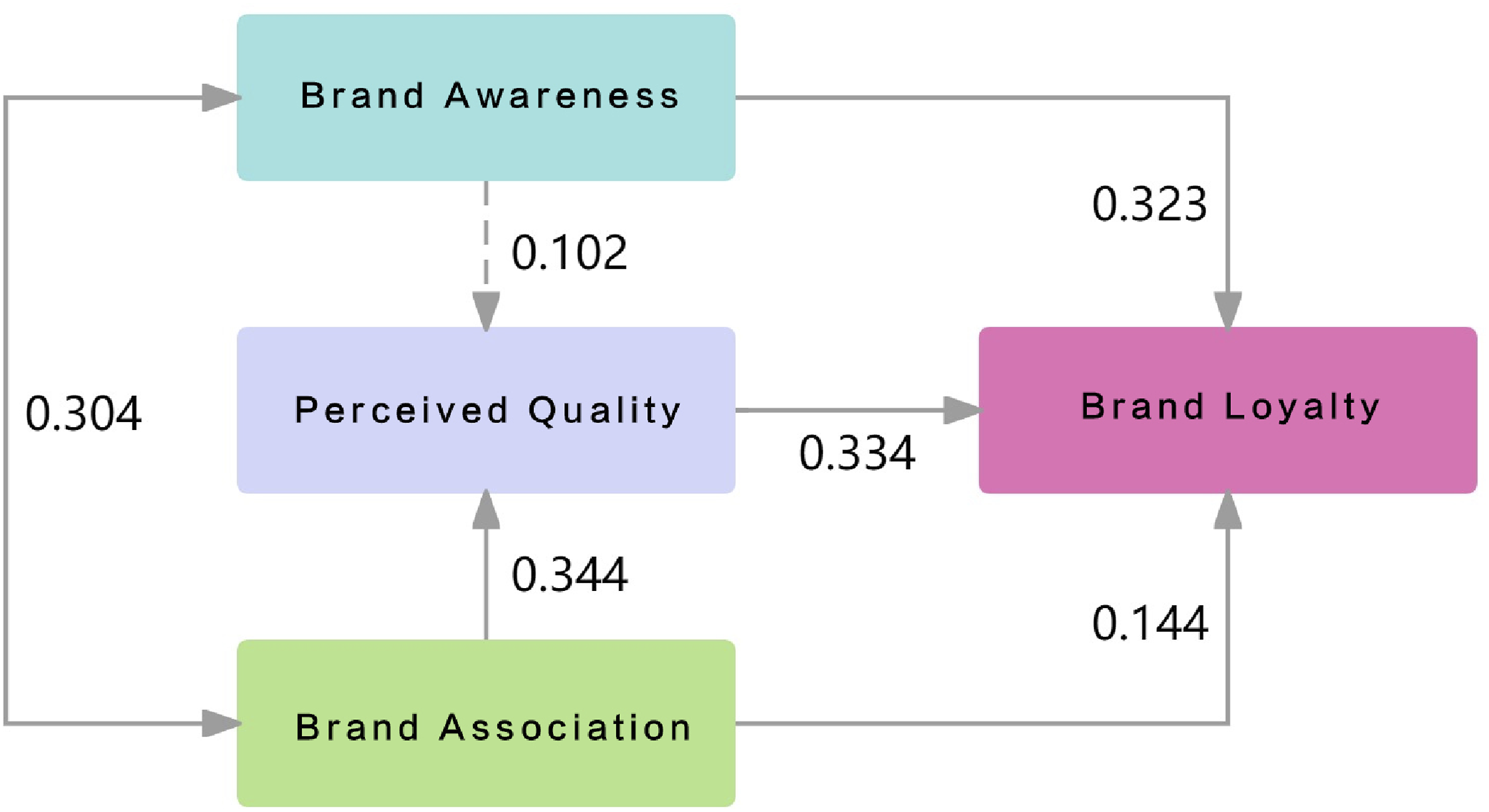
The Bootstrap test results in Table 15 indicate that the confidence intervals for Brand Association > Perceived Quality > Brand Loyalty do not contain 0. Furthermore, in terms of direct effects, the confidence intervals for Brand Association > Brand Loyalty do not encompass 0. Hence, it can be inferred that Perceived Quality partially mediates the relationship between Brand Association and Brand Loyalty. Conversely, the confidence intervals for Brand Awareness > Perceived Quality > Brand Loyalty include 0, suggesting that Perceived Quality does not act as a mediator between Brand Awareness and Brand Loyalty.
Conclusions and limitations
Conclusions
The examination of tea brand assets from a consumer perspective reveals that tea brand assets consist of four dimensions: Brand Awareness, Brand Association, Perceived Quality, and Brand Loyalty. These dimensions exhibit interrelationships, where positive Brand Associations can enhance consumers’ perceptions of tea product quality. There exists a significant correlation between Brand Awareness and Brand Association, indicating mutual influence between the two. The level of Brand Awareness does not directly impact consumers’ perceptions of quality. Perceived Quality serves as a partial mediator between Brand Association and Brand Loyalty, while it does not act as a mediator between Brand Awareness and Brand Loyalty. Consumer Brand Loyalty emerges as a core element of brand assets, with higher Brand Awareness, Brand Association, and Perceived Quality playing a positive role in boosting Brand Loyalty.
Limitations
Despite efforts to mitigate shortcomings during the research process, there are still certain limitations to acknowledge. First, due to a lack of comprehensive data, the available literature on tea-related brand assets is limited and lacks high authority. Hence, this study can only be considered a preliminary exploration in this field. Second, constrained by social relationships and resources, the sample coverage in the survey is not sufficiently broad. A more objective comparative analysis could be achieved by incorporating information from various tea production bases. Third, this study is conducted from a consumer perspective. Future research endeavors could consider incorporating an enterprise perspective to conduct a more comprehensive and systematic examination of brand asset development.
Footnotes
Funding
The author(s) disclosed receipt of the following financial support for the research, authorship, and/or publication of this article: This work was financially supported by the doctoral research funding project “Brand Virtual Image Design” from Taiyuan Institute of Technology (Project Number 2023KJ051).
Declaration of conflicting interests
The author(s) declared no potential conflicts of interest with respect to the research, authorship, and/or publication of this article.