







Abstract
In the Internet of Things environment, the energy consumption of trust transmission has a significant impact on ensuring the stable operation of the network. To effectively manage and control energy consumption, this study proposes a study on intelligent perception of energy consumption through trust transmission among Internet of Things nodes. This study intends to effectively control the energy consumption of Internet of Things nodes and provide new solutions for energy management in the Internet of Things. Firstly, it conducts research on the intelligent perception trust model for Internet of Things nodes to ensure accurate calculation and evaluation of node trust, and to adapt to changes in the Internet of Things environment. Secondly, a trust transmission energy consumption intelligent perception model based on multi-agent nodes in the Internet of Things is constructed. To improve the efficiency and accuracy of trust transmission and control energy consumption, the concept of multi-agent is introduced and combined with energy consumption intelligent perception technology. The experimental results show that the energy consumption of the model decreases from the initial 0.56 to 0.24 with the change in the number of recombinations, a decrease of approximately 57%. As the number of cycles changes, it decreases from the initial 0.51 to 0.22, a decrease of approximately 57%. It is evident that it has significant advantages in energy consumption control. It can be seen that this study explores the differences in energy consumption control among different trust models, providing an important reference for subsequent model selection and optimization.
Keywords
Introduction
The Internet of Things (IoT), as a new form of network, is gradually changing the way humans live and work through its intuitive, convenient, and universal interaction methods. It has a wide range of applications in both the production and service industries. 1 The devices in IoT systems are usually composed of multiple intelligent agent nodes, which require information transmission and collaboration between these nodes. In this process, trust transmission and energy consumption issues are two key factors. Trust transmission can improve the reliability and security of information transmission, while energy consumption directly affects the performance and lifespan of the system. 2 The energy consumption issue has a significant impact on the stable operation of the IoT. Excessive energy consumption may lead to premature node failure, affecting the stability and service quality of the network.3–5 Therefore, how to accurately and effectively perceive the trust transmission energy consumption of IoT nodes, to achieve efficient utilization of resources and improve the operational efficiency of IoT systems, has become an important research topic at present.
Despite the fact that extant studies have yielded specific outcomes in the domain of trust transmission and energy consumption optimization, the majority of these studies are confined to a single field (e.g., a solitary trust evaluation method or energy consumption optimization strategy). Moreover, these studies typically overlook the reciprocal influence between trust transmission and energy consumption, thereby hindering the adaptability of these studies to the intricacies and evolving characteristics of the IoT system. For example, traditional trust models do not fully consider the influence of node energy consumption status on trust decisions, and energy consumption optimization strategies often ignore the regulatory role of the trust mechanism on transmission efficiency. In this paper, by introducing a distributed trust transmission mechanism of multi-agent nodes and combining with intelligent perception technology of energy consumption, a model with both dynamic adaptability and energy consumption control capabilities is constructed. For the first time, the collaborative regulation of trust evaluation and energy consumption optimization is achieved, filling the gap in cross-domain collaborative optimization in existing research. The research focuses on the energy consumption control problem in trust transmission of IoT nodes. The goal is to construct a distributed trust transmission energy consumption intelligent perception and decision-making model based on multi-agent nodes. By dynamically adjusting the trust evaluation weights and multi-agent collaboration strategies, the collaborative optimization of trust transmission efficiency and energy consumption can be achieved. Then, by using normal distribution and intelligent perception technology, the accuracy and environmental adaptability of node trust value calculation are improved, and the redundant energy consumption caused by trust misjudgment is reduced. Finally, the energy consumption control effect of the model in networks of different scales is verified through experiments, providing theoretical and technical support for the energy-saving deployment of the IoT system. The main contribution of the research is the proposal of an energy consumption intelligent perception model based on trust transmission of IoT nodes, which combines the concept of multi-agent and energy consumption perception technology to improve the trust mechanism and energy management of IoT systems. By constructing an intelligent perception trust model for IoT nodes, this study provides a unique perspective for understanding and optimizing the trust mechanism and energy management of IoT systems.
The research will be conducted in five sections. The “Introduction” section introduces the research background, problems, and solutions. The “Related works” is an overview of the research on intelligent perception of energy consumption through trust transfer in IoT nodes. The “Intelligent perception model of energy consumption based on trust transmission of IoT nodes” section is a study on intelligent perception of energy consumption through trust transmission in IoT nodes. The “Performance analysis of energy consumption intelligent perception model based on IoT node trust transmission” section is an experimental verification. The “Conclusion” section is a summary of the research content and points out the shortcomings.
The innovation of the research lies in the introduction of a distributed multi-agent node trust transmission mechanism, which is significantly different from the traditional single trust evaluation or energy consumption optimization strategies. Traditional models often ignore the mutual influence between trust transmission and energy consumption. For example, the single trust evaluation method does not consider the role of node energy consumption status in trust decisions, and the energy consumption optimization strategy also ignores the regulation of transmission efficiency by the trust mechanism. In this study, the trust evaluation weights are dynamically adjusted through multi-agent collaboration, and the calculation accuracy of node trust values is improved by combining the normal distribution intelligent perception technology, achieving the collaborative optimization of trust transmission efficiency and energy consumption. This cross-domain collaborative optimization mechanism fills the gap in the existing research on dynamic adaptability and energy consumption control capabilities and realizes the collaborative regulation of trust evaluation and energy consumption optimization.
Related works
Trust transmission in the IoT
The IoT, as a new type of information network, has been widely applied in various fields in recent years, while it also faces the problem of trust transmission energy consumption. Hu et al. proposed a trust aware secure routing protocol to deal with various attacks in wireless sensor networks. By calculating the comprehensive trust value of node neighbors, the source node forwards data in a multipath mode, and finally the sink finds the optimal path through analysis. The research results indicated that this method had lower network latency, lower packet loss rate, and lower average network energy consumption. 6 Sajan et al. proposed a gray wolf optimization algorithm based on three-level weighted trust evaluation (3LWTGWO), which clusters nodes through trust degree evaluation, selects cluster heads (CHs), and realizes the optimal routing of data based on the gray wolf optimization algorithm. The results showed that the 3LWTGWO method outperformed the existing technologies in terms of energy consumption, throughput, network lifetime, accuracy, detection rate and latency. 7 Pathak et al. proposed a trust model, which effectively improved the reliability and security of industrial wireless sensor networks (IWSN) through a multi-level clustering model and a comprehensive trust evaluation framework. The experimental results showed that this model was superior to the existing trust schemes in terms of the accuracy of malicious nodes (MN) detection, the reduction of energy consumption, and the improvement of throughput. 8 Das et al. proposed a large-scale energy-aware trust optimization (LSEATO) algorithm, which selects CHs by using the harmonic search genetic algorithm (HGA) and detects MN by utilizing the energy-aware intra and inter cluster trust (EAIICT) model, to improve the security and reliability of wireless sensor networks. The MATLAB simulation results showed that, compared with the existing methods, the proposed LSEATO algorithm exhibited higher trust and effectiveness in terms of communication overhead, detection accuracy, detection rate, and energy consumption. 9 Zhang et al. proposed an energy-aware two-way trust routing (ETWTR) scheme for fog computing environments. By combining the Deep Q Network (DQN) to optimize the energy usage of nodes, higher reliability and security of data transmission were achieved. Compared with the baseline scheme, ETWTR significantly reduced energy consumption while ensuring reliability and trustworthiness. 10
Intelligent perception technology
Summary table for related works.
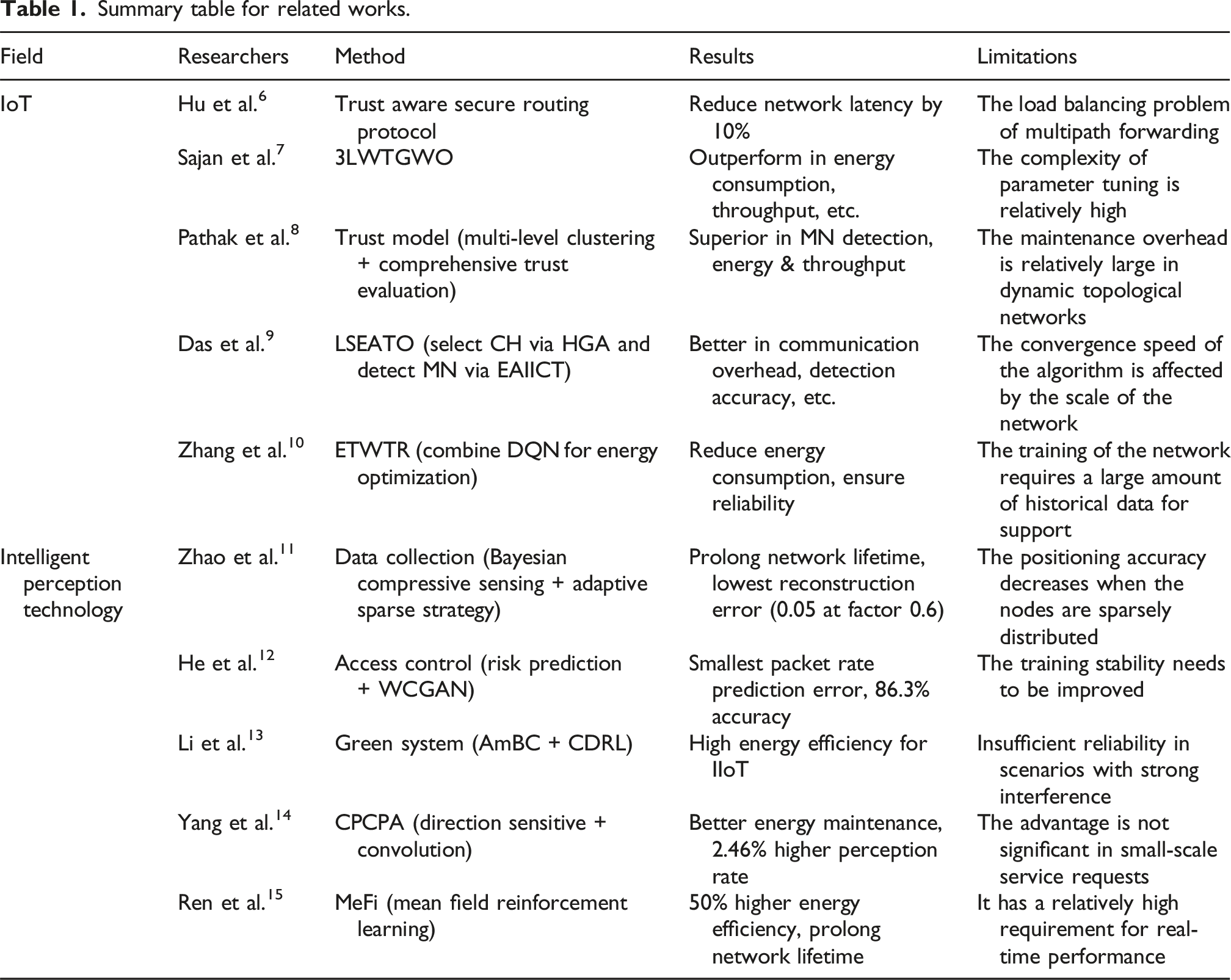
The above research has achieved certain results in fields such as the IoT and intelligent perception technology, but there are still some shortcomings and gaps. The scheme proposed by Hu et al. failed to address multipath load balancing, which may lead to a sharp increase in energy consumption due to overload of some nodes. The algorithm parameter tuning of Sajan et al. was complex, and a large amount of debugging work was required in the actual deployment. The model of Pathak et al. had high maintenance overhead in dynamic topology and was not suitable for highly mobile IoT scenarios. The convergence speed of Das et al.’s algorithm was affected by the scale of the network, and the detection efficiency decreased in large-scale networks. The scheme of Zhang et al. relied on a large amount of historical data and was difficult to be applied quickly in newly deployed networks. The positioning accuracy of Zhao et al.’s method decreased when the nodes were sparse, affecting the accuracy of trust evaluation. The model training stability of He et al. was insufficient, and prediction fluctuations may occur in practical applications. The system of Li et al. had poor reliability under strong interference, and there was a risk of data transmission in the industrial environment. The algorithm of Yang et al. did not have obvious advantages in small-scale scenarios, which limited its application scope. The scheme proposed by Ren et al. had high requirements for real-time performance and its applicability was limited in some delay-sensitive IoT scenarios. Firstly, in the field of the IoT, the issue of trust transmission energy consumption has not been completely resolved. Secondly, in terms of intelligent perception technology, existing research still had certain limitations in solving the energy consumption problem of trust transmission in IoT nodes and improving energy efficiency. 16 In response to the above shortcomings and gaps, this study proposes a distributed trust transmission energy consumption intelligent perception decision-making model based on multi-agent nodes in the IoT. This model improves the performance of IoT systems by implementing distributed trust transmission between multi-agents, reducing network latency and energy consumption. Compared with existing research, this study proposes a distributed trust transmission method based on multi-agent nodes, which enables nodes to trust neighboring nodes more when transmitting data and reduces the energy consumption of trust transmission.
Intelligent perception model of energy consumption based on trust transmission of IoT nodes
The construction of intelligent perception trust models for IoT nodes and energy consumption intelligent perception models based on multi-agent trust transmission plays a crucial role in understanding and improving the trust mechanism and energy management of IoT systems. Firstly, the intelligent perception trust model of IoT nodes was analyzed, including precise calculation, evaluation, and optimization of trust, as well as information exchange and decision-making efficiency in complex environments. Secondly, intelligent perception technology was introduced to analyze how to optimize the efficiency of trust transmission and reduce energy consumption through intelligent perception, thereby improving the overall performance of the IoT system. This study emphasized the key role of intelligent perception trust models for IoT nodes and multi-agent-based trust transmission energy consumption intelligent perception models, providing a unique perspective for understanding and optimizing the trust mechanism and energy management of IoT systems.
Intelligent perception trust model for IoT nodes
In the IoT, the determination of node trust is a key factor in ensuring the security and effectiveness of information transmission. The trust model in IoT nodes is a method for evaluating and managing the level of trust between nodes in a distributed network environment. It evaluates the identity, behavior, historical data, and other aspects of nodes to provide a basis for security decisions. The trust model plays a crucial role in the IoT, as the trust relationship between devices and systems becomes increasingly complex with the widespread application of IoT technology. In this situation, establishing a reliable trust mechanism to ensure data security and device trust interaction has become the key to research. However, due to the complexity and dynamism of the IoT, traditional trust models often cannot meet practical needs. Therefore, introducing intelligent perception technology to build a trust model for IoT nodes can not only accurately calculate and evaluate the trust level of nodes, but also adapt to changes in the IoT environment. The schematic diagram of the software architecture for IoT intelligent perception nodes is shown in Figure 1. Software architecture diagram of IoT intelligent perception node.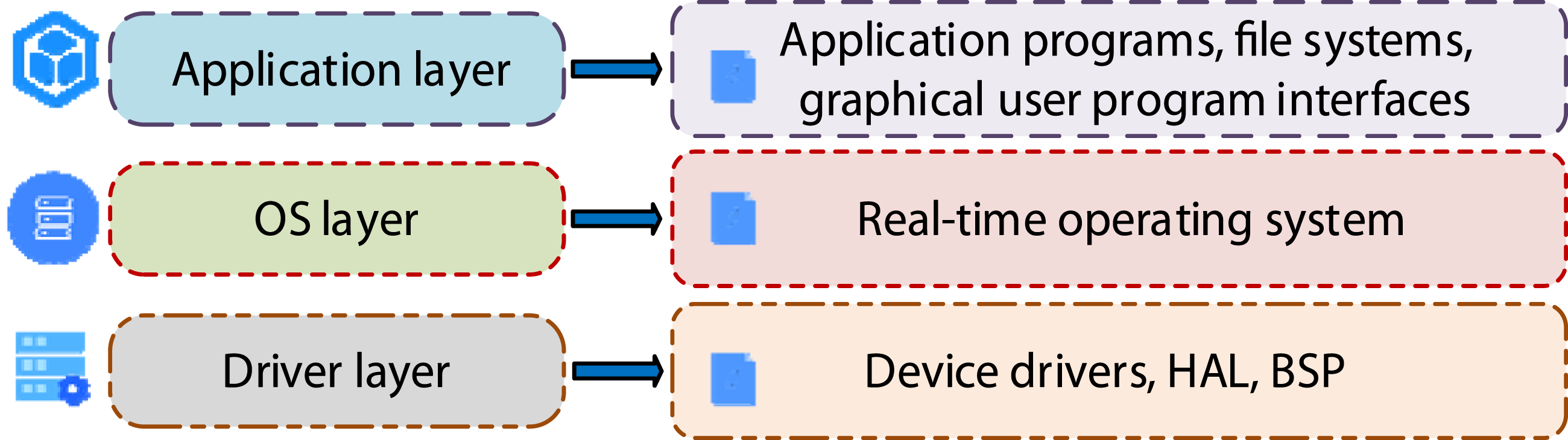
In Figure 1, in the software architecture of the IoT intelligent perception node, the perception layer collects environmental and device data, the network layer realizes data transmission, the processing layer completes data cleaning and analysis, and the application layer connects to specific business scenarios. All layers work together to ensure the realization of node functions.
17
The perception layer collects environmental information and device status data. The network layer enables data transmission and communication. The processing layer processes the collected data, including data cleaning, analysis, and fusion. The application layer applies the processed data to specific business scenarios. The calculation for software reliability is shown in equation (1).
In equation (1), 
In equation (2), IoT trust model based on normal distribution.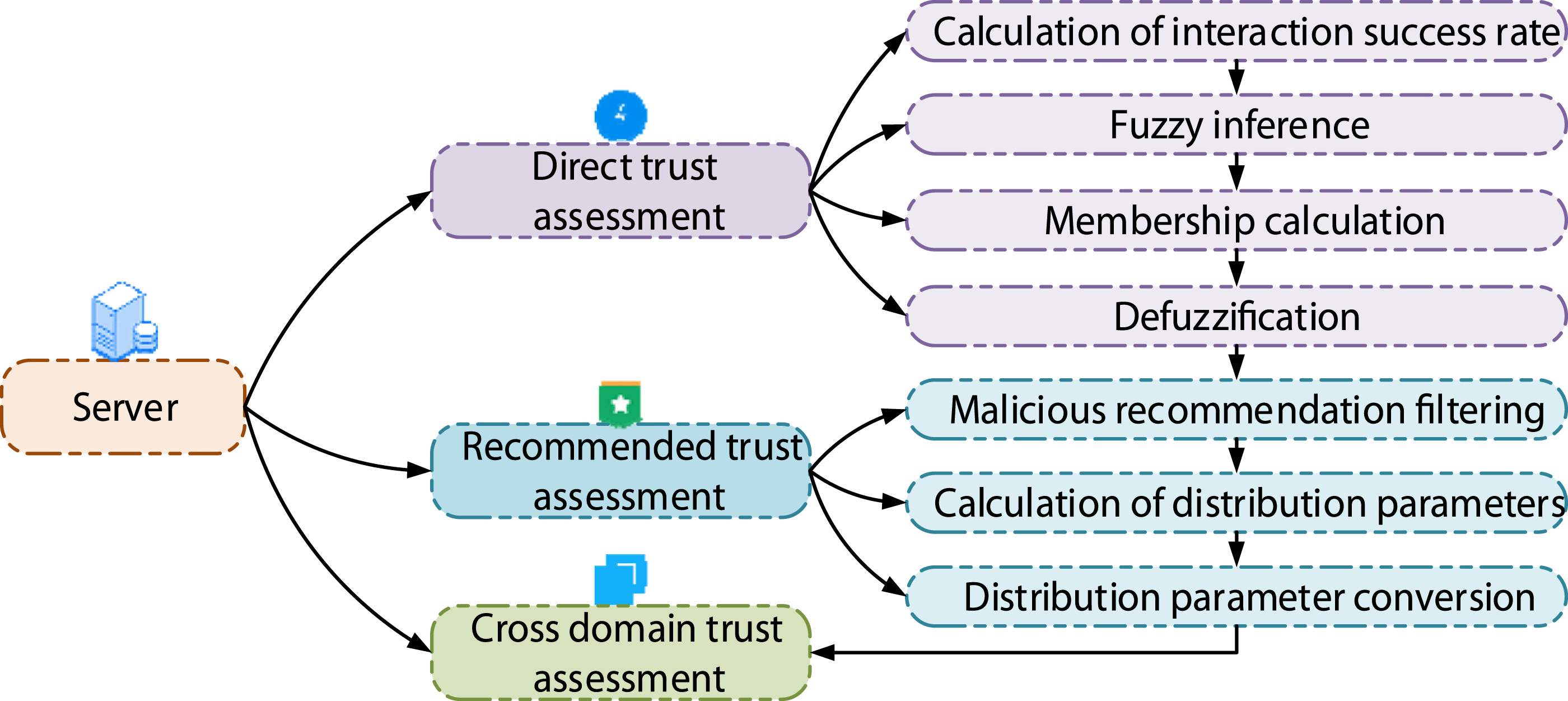
In Figure 2, the trust model of the IoT based on normal distribution relies on historical behavior data of nodes, and calculates and evaluates trust through the probability density function of normal distribution. Among them, the behavior data of nodes with high trust is closer to the peak of normal distribution, while the behavior data of nodes with low trust significantly deviates from this peak. According to the central limit theorem, for independently sampled data with any distribution, the mean and variance of the sample data follow a normal distribution, and the calculation is shown in equation (3).
In equation (3), 
In equation (4), 
In equation (5), IoT trust model flow based on normal distribution.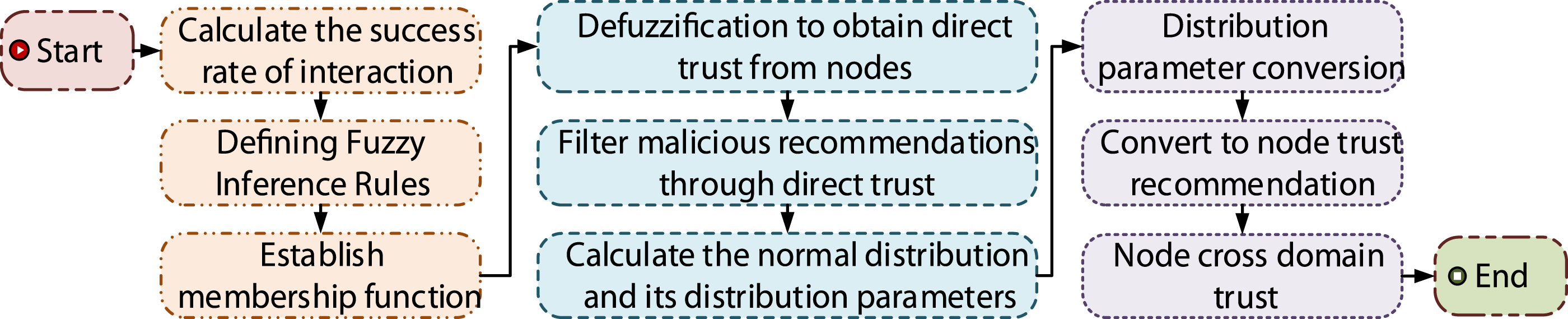
In Figure 3, this process shows the entire chain from data collection to trust decision-making: First, the historical behavioral data (e.g., interaction success rate and data integrity) of the nodes are collected and converted into trust scores (the higher the score, the closer it is to the mean) through a normal distribution function, and then classified into high-, medium-, and low-trust levels based on the scores. Finally, differentiated policies are implemented based on the level (e.g., prioritizing the transmission of high-trust nodes). For example, when the normal distribution peak of the node interaction success rate is 0.85, nodes with scores lower than 0.7 will be marked as low trust. The method for calculating the success rate of node interaction is shown in equation (6).
In equation (6), 
In equation (7),
The implementation of a normally distributed trust model process for the IoT can help improve the security and efficiency of the IoT, especially when facing complex and dynamic network environments. In the process of trust transmission, the specific steps involved include collecting historical behavior data of nodes, converting it into trust scores, analyzing and comparing trust scores to determine node trust levels, and managing and making decisions based on trust levels. Multi-agent systems coordinate and optimize trust transmission while controlling energy consumption, and use intelligent perception technology to achieve trust evaluation between nodes, thereby improving the security and efficiency of the IoT. When facing complex and dynamic network environments, trust models based on normal distribution can help achieve more accurate trust assessment, providing guarantees for the security and efficiency of the IoT.
Construction of an intelligent perception model for trust transmission energy consumption based on multi-agent nodes in the IoT
Based on the intelligent perception trust model of IoT nodes, the concept of multi-agent is introduced. The node trust evaluation results provide a basis for collaborative decision-making of multi-agents, and multi-agents optimize energy consumption by dynamically adjusting the trust transmission strategy. That is, the trust model based on normal distribution provides node credibility evaluation for multi-agent systems. According to this evaluation result, the multi-agent system realizes the optimization of trust transmission paths and energy consumption control with the help of the DDPG algorithm, forming a complete closed loop of “trust evaluation, multi-agent collaboration, and energy consumption perception.”
In the IoT environment, the trust relationship between nodes has a significant impact on information exchange and decision-making. However, the complexity and dynamism of the IoT make transmitting and managing trust relationships a challenge.
19
Therefore, the introduction of the multi-agent concept, combined with the intelligent sensing technology of energy consumption, is targeted to improve the efficiency and accuracy of trust transfer while controlling energy consumption. The decision network architecture based on multi-agent deep deterministic strategy gradient algorithm is shown in Figure 4. Decision network architecture based on multi-agent depth deterministic strategy gradient algorithm.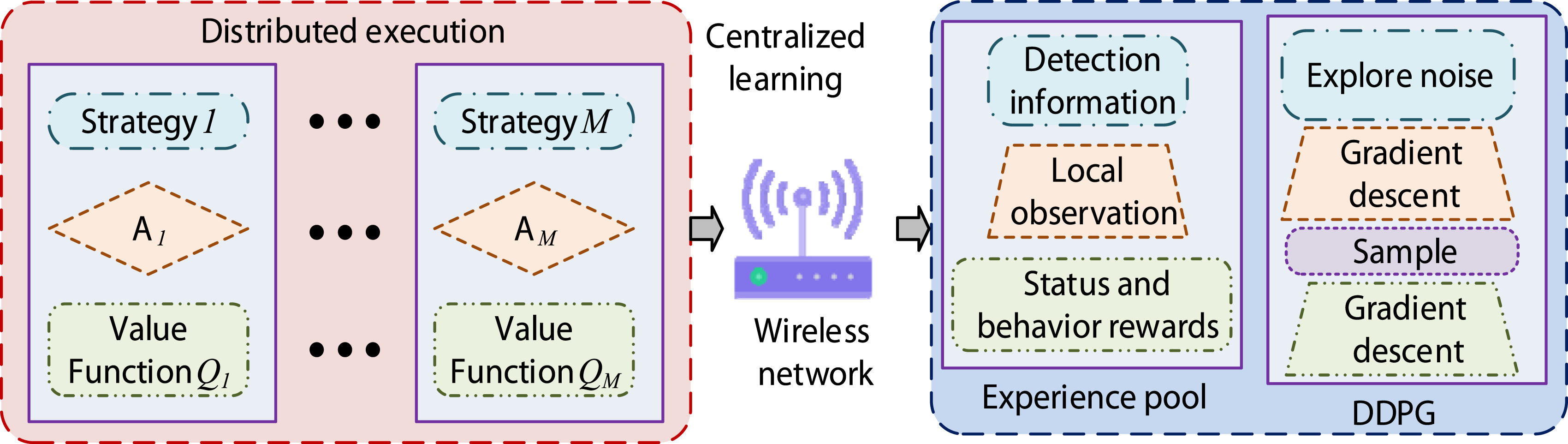
In Figure 4, this decision network architecture is a decision network model that integrates multi-agent concepts and deep learning techniques. Among them, each intelligent agent is able to autonomously learn and make decisions, and the deep deterministic policy gradient algorithm is responsible for optimizing the decision-making strategy of the intelligent agent. By coordinating and optimizing decision-making strategies while maintaining the autonomy of each intelligent agent, the overall efficiency and quality of decision-making can be improved.
20
The DDPG algorithm combines deep neural networks and deterministic policy gradients, and is suitable for handling multi-agent decision-making problems in continuous action spaces. Compared with algorithms such as Q-learning, DDPG converges faster in the high-dimensional state space, can better adapt to the dynamic interaction scenarios of IoT nodes, and achieves policy optimization through the actor critic architecture to meet the requirements of multi-agent cooperative regulation of trust transmission and energy consumption.
21
The training formula for the network in the DDPG algorithm is shown in equation (8).
In equation (8), 
In equation (9), Efficient multi-band perceptual decision architecture.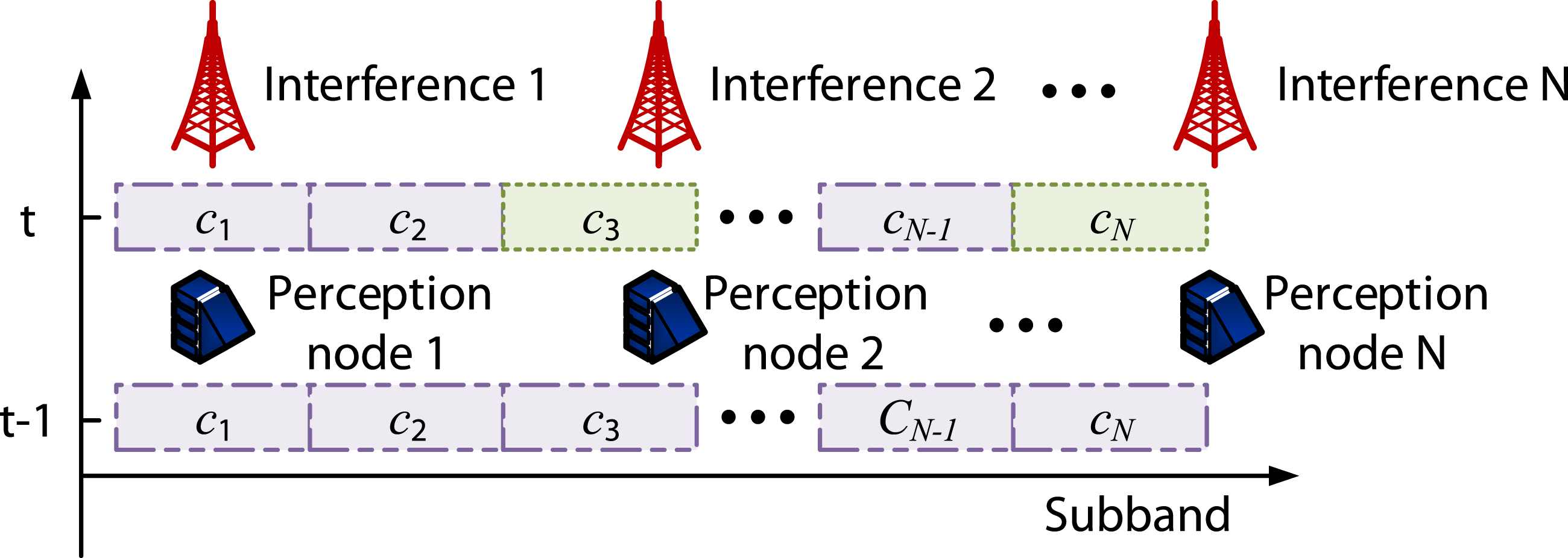
In the architecture shown in Figure 5, multi-band sensing technology is responsible for real-time monitoring and data collection of various frequency bands in the environment, and then sends the data to decision algorithms for processing and analysis to determine the optimal frequency band selection and usage strategy. This architecture enables the system to flexibly respond to dynamic changes in frequency band usage through intelligent perception and decision-making, thereby improving overall system performance and user experience. Due to the independence of each interference behavior, for each sub frequency band, its idle or interference state changes can be modeled using the state transition probability matrix of 2 × 2.
22
The mathematical expression of its channel state transition matrix is shown in equation (10).
In equation (10), 
In equation (11), 
In equation (12), Intelligent perception decision-making model of distributed trust transmission energy consumption based on multi-agent node of IoT.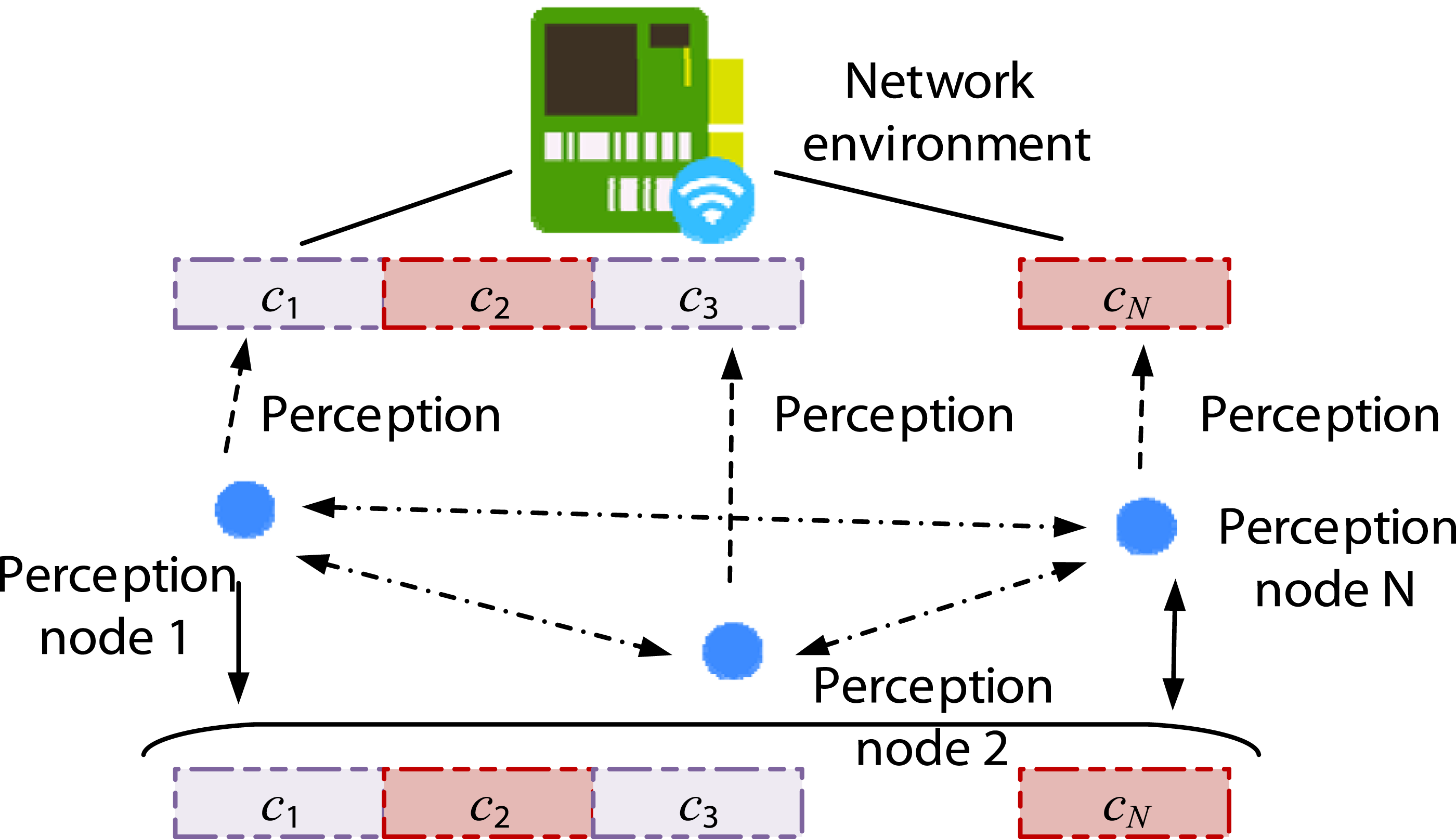
In Figure 6, the model enhances the distributed nature of the system by setting up multiple agents that enable IoT nodes to autonomously transmit trust and make decisions. Simultaneously, an energy consumption intelligent perception mechanism is introduced to control the energy consumption of nodes. In trust transmission, adopting a trust calculation method based on historical behavioral data can effectively manage and control energy consumption while ensuring the security and reliability of the IoT, and improve overall operational efficiency.
When implementing the intelligent perception decision model, the first step is to build a multi-agent system. A multi-agent system consists of multiple entities with certain intelligence and autonomous decision-making capabilities, which can achieve a common goal through collaboration and competition. In the system, there are complex interactions and communication relationships between intelligent agents, which contribute to achieving distributed decision-making and collaborative work. The second step is to introduce a distributed trust transfer mechanism. The distributed trust transmission mechanism allows agents to dynamically adjust trust values during mutual cooperation and communication, thereby achieving trust evaluation of other agents. Next, an energy consumption intelligent perception model is designed. This model can adaptively adjust decision-making strategies based on the current energy consumption status of the system by monitoring energy consumption information in real-time. 24 The energy consumption perception model can provide decision-making basis for intelligent agents based on real-time energy consumption data, enabling them to reduce energy consumption while ensuring system performance.
Performance analysis of energy consumption intelligent perception model based on IoT node trust transmission
This study explored the energy consumption issues of IoT nodes during trust transmission and systematically evaluated intelligent perception optimization strategies. Firstly, the specific effects of optimization measures on reducing energy consumption were revealed through quantitative analysis. Subsequently, a detailed evaluation was conducted on the energy consumption changes caused by the trust transmission mechanism, providing a theoretical basis for the formulation of energy efficiency improvement strategies.
Evaluation of intelligent perception optimization effect
Experimental environmental parameter.

According to Table 2, the system included 100 IoT nodes operating at 2.4 GHz frequency in terms of network, with a maximum communication distance of 100 m and a power of 0.1 W for each node, achieving simulation of a real IoT environment. A powerful, efficient, and real-time IoT simulation environment was set up that effectively supports complex data processing and the implementation of advanced machine learning algorithms. The network topology adopted a star topology structure, which is quite common in scenarios such as smart home and smart office. The central node (such as the gateway) and the surrounding nodes (such as sensors and actuators) formed a centralized management mode, which can reflect the typical networking mode of the IoT system in reality. 2.4 GHz is a commonly used communication frequency band for IoT devices. Technologies such as Wi-Fi and Bluetooth all operated in this frequency band. The maximum communication distance of 100 m conformed to the actual communication range of most indoor and some outdoor IoT applications and could simulate the communication capabilities between nodes in a normal environment. The node power setting of 0.1 W was in line with the characteristics of low-power IoT devices. For instance, various sensors are usually powered by batteries and have relatively low power. This parameter setting is helpful for evaluating the energy consumption control effect of the model in actual low-power devices. The 128-byte data packet size is consistent with the regular data volume collected by the sensor. For example, the transmission data packets of environmental data such as temperature and humidity are usually small. This setting can truly reflect the actual load situation of data transmission in the IoT. The 20% percentage of MNs simulated the security threats that may be faced in the real IoT environment, such as MNs conducting data tampering, false recommendations, and other attack behaviors, which can be used to verify the model’s control ability over trust transmission and energy consumption in actual scenarios with security risks.
The model achieved intelligent perception of distributed trust transmission energy consumption by breaking down the decision-making process into multiple intelligent agent nodes. In the actual IoT environment, model interpretability was mainly reflected in visualizing the trust transmission and energy consumption perception process between various nodes, thereby helping users and systems better understand the decision-making basis and results. Meanwhile, through multi-agent collaboration, the model could achieve adaptive adjustment in dynamic environments, improving the robustness of the system in the face of uncertainty and complexity. Energy consumption, trust value, and detection rate were selected as evaluation indicators to comprehensively evaluate the performance of the intelligent perception optimization model in the trust transmission process of IoT nodes. The energy consumption index reflects the effectiveness of optimization strategies in reducing energy consumption. The trust value indicator measures the stability of trust relationships during the process of trust transmission. The detection rate indicator evaluates the model’s ability to identify MNs. The results of trust changes between honest and MNs under different weights are shown in Figure 7. Trust changes of honest and malicious nodes under different weights. (a) Trust changes of honest nodes under different weights. (b) Trust changes of malicious nodes under different weights.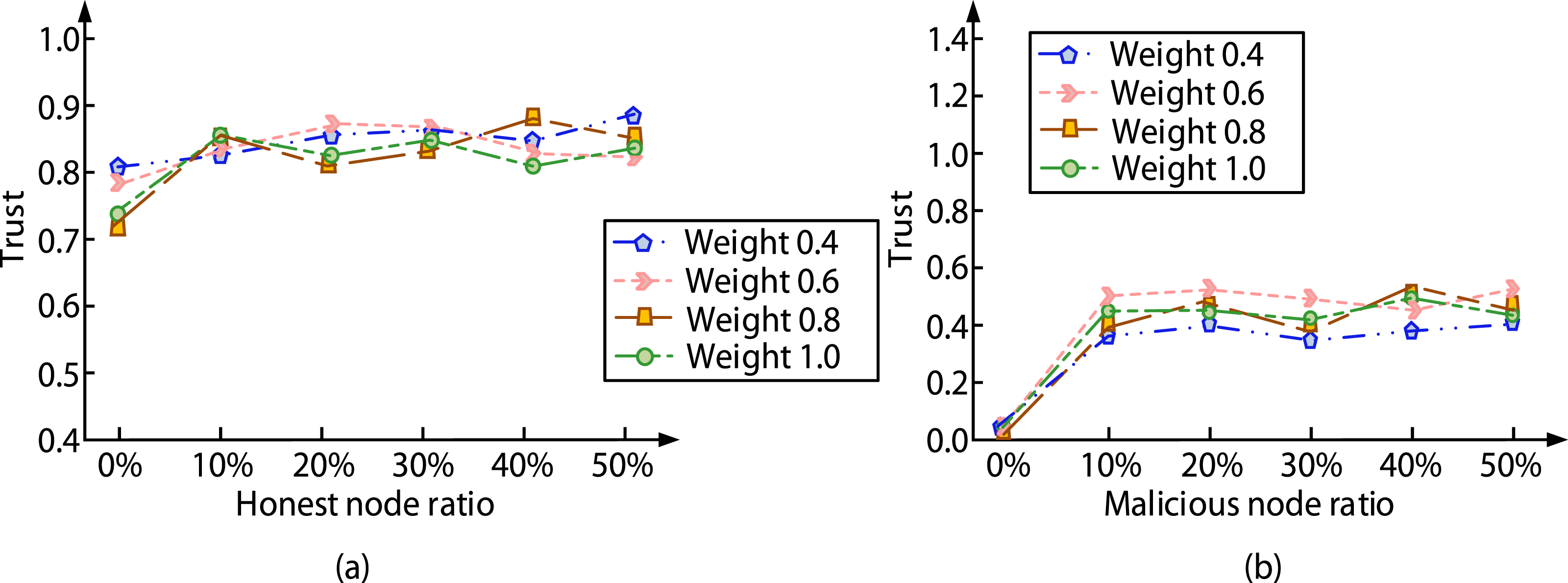
Figure 7 shows that the trust value is positively correlated with the ratio of honest/MNs, and different weights have different sensitivities to the ratio. This indicated that in the design of the trust model, the weights needed to be dynamically adjusted to adapt to the changes in the network environment. For example, when the proportion of honest nodes in the network increased, the direct trust weight could be increased to improve the transmission efficiency. When the number of MNs increased, improving the recommended trust weight enhanced security, providing an experimental basis for the dynamic weight adjustment mechanism in the model, optimizing the trust evaluation strategy, and balancing transmission efficiency and security. In Figure 7(a), the trust values corresponding to each weight at the initial time were 0.81, 0.78, 0.72, and 0.74, respectively. The trust values of these four weights increased to 0.86, 0.77, 0.82, and 0.80, respectively, when the honest ratio was 50%. As the honest ratio increased, the trust values of each weight also showed an upward trend. In Figure 7(b), the initial trust values corresponding to each weight were relatively low, with values of 0.02, 0.01, 0.04, and 0.01, respectively. However, when the malicious rate increased to 50%, the trust values of each weight significantly increased, reaching 0.37, 0.56, 0.45, and 0.41, respectively. The response level of different weights to the malicious ratio varied. From this, there was a positive correlation between the trust value and the ratio, but the sensitivity of the contrast ratio varied with different weights. The changes in different trust attributes under honest and MNs are shown in Figure 8. Changes of different trust attributes in honest and malicious nodes. (a) Honest nodes trust different attributes and result changes. (b) Malicious nodes trust different attributes and result changes.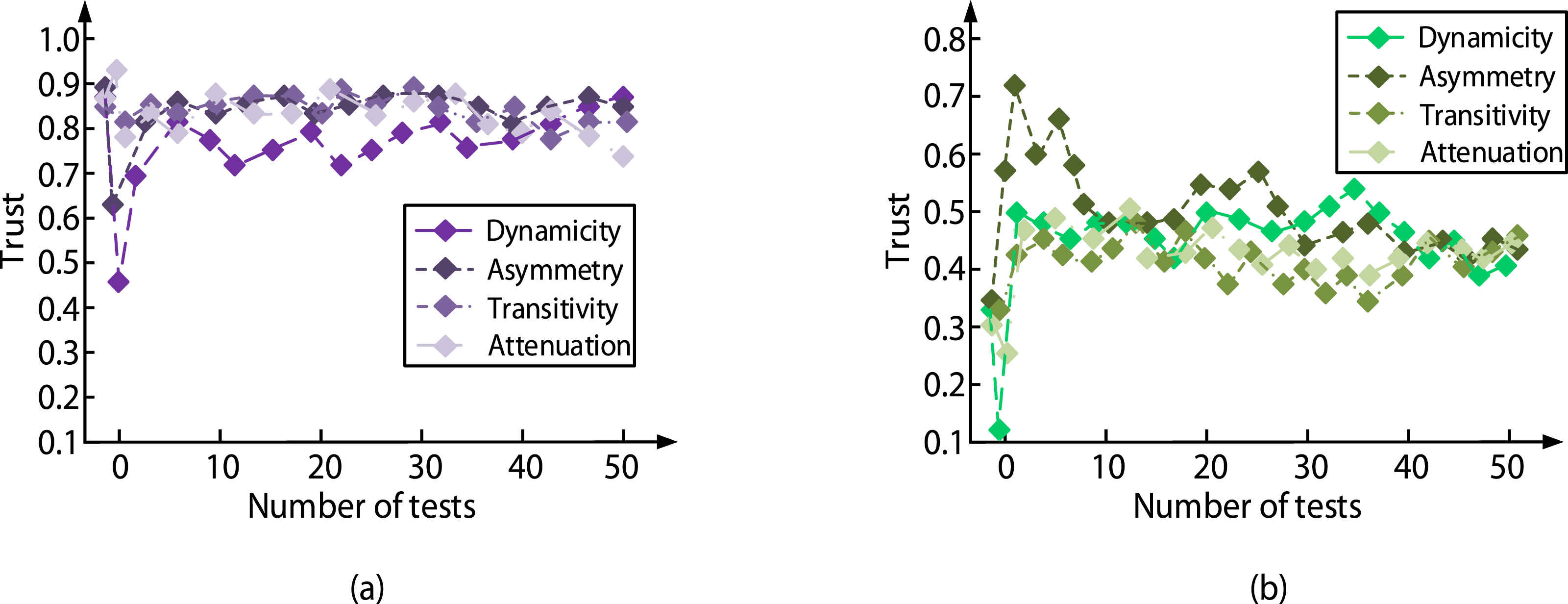
As shown in Figure 8, as the number of tests increased, there was a significant difference in the trust values generated by different trust models. In Figure 8(a), under the honest node, the trust value of the Dynamity trust model changed the most, with an average value of 0.74. This model may have more flexibility and dynamism in trust evaluation. The Transitivity trust model had the smallest change in trust value, with an average value of 0.81, making it more stable and consistent in trust evaluation for honest nodes. In Figure 8(b), under MNs, the trust values of Dynamicity and Asymmetry had the largest fluctuations, with an average of 0.47 and 0.53, respectively. These two models had a greater range of variation and sensitivity in the trust evaluation of MNs. However, the Transitivity trust model had the smallest change in trust value, with an average value of 0.44. The results of honest and MN trust detection rates under DPTM and CDNi-P2P models are shown in Figure 9. Results of honest and malicious node trust detection rates in DPTM and CDNi-P2P models. (a) Comparison of trust detection results between honest and malicious nodes in DPTM model. (b) Comparison of trust detection results between honest and malicious nodes in CDNi-P2P model.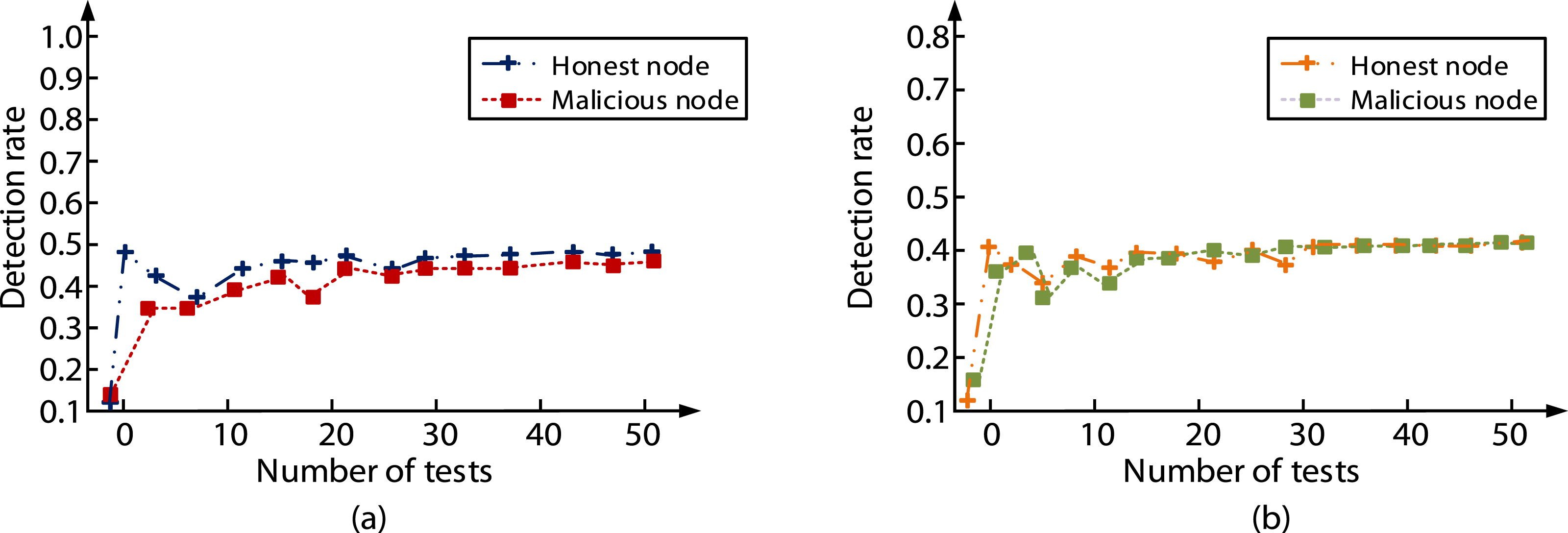
As shown in Figure 9, the number of tests and trust detection gradually stabilized over time. In Figure 9(a), the detection rates for both honest and MNs in the initial stage were 0.11, and then increased to 0.49. When the number of tests reached 29, the detection rate of honest nodes tended to stabilize, as most of the identifiable honest nodes have already been detected at this stage. The detection rate of MNs increased from the initial 0.11 to 0.35, and the detection rate began to stabilize after 30 tests. In Figure 9(b), the detection rates of the initial honest node and MN were 0.11 and 0.16, respectively. After the detection started, the detection rate of honest nodes increased to 0.41 and stabilized after 31 tests. The detection rate of MNs increased from 0.16 to 0.36, and the detection rate began to stabilize when the number of tests reached 32. As the number of tests increased, the accuracy of trust detection also improved, and over time, the detection results gradually stabilized.
The experimental results showed that under different weights, the trust values of honest nodes and MNs showed an upward trend, and the sensitivity of contrast varied with different weights. As the number of tests increased, there were significant differences in the trust values generated by different trust models, and dynamic trust models had greater flexibility and dynamism in trust evaluation. In addition, the detection rate indicator indicated that the accuracy of trust detection gradually improved over time. In the initial stage, the detection rates of honest and MNs were 0.11, and after a certain number of tests, the detection rates tended to stabilize at 0.49 and 0.35, respectively. These experimental results indicated that the proposed intelligent perception optimization model had good performance in reducing energy consumption, improving trust relationship stability, and identifying MNs. In summary, the energy consumption intelligent perception model based on trust transmission of IoT nodes has good performance in experiments, providing strong support for energy consumption optimization and security in the IoT field.
Energy consumption analysis of trust transmission model
The changes in energy consumption performance with the number of cycles under different models are shown in Figure 10. From Figure 10, as the number of tests increased, there was a difference in energy consumption generated by different trust models. In Figure 10(a), both the ours model and the Single CA trust model showed a decreasing trend in energy consumption as the number of rounds increased. The energy consumption of the ours model decreased from the initial 0.56 to 0.24, a decrease of approximately 57%, reflecting its advantage in energy consumption control. The energy consumption of the Single CA trust model decreased from the initial 0.55 to 0.38, a decrease of approximately 31%, and also demonstrated certain energy optimization effects. In Figure 10(b), both the ours model and the Single CA trust model exhibited a decreasing trend in energy consumption as the number of cycles increased. The energy consumption of the ours model decreased from the initial 0.51 to 0.22, a decrease of approximately 57%. The energy consumption of the Single CA trust model decreased from the initial 0.43 to 0.40, a decrease of approximately 7%, demonstrating certain energy optimization effects. A 57% reduction in energy consumption brought significant benefits to practical applications. Taking a typical IoT sensor node (with a battery capacity of 2000 mAh) as an example, the model in this paper could extend the battery life of the node from 15 days to 35 days and reduce the average annual battery replacement cost by 60%. From the perspective of trust accuracy, the model has increased the detection rate of MNs to 92%, reducing redundant data transmission caused by trust misjudgment by 38% compared to traditional models, which was equivalent to saving approximately 12% of traffic costs per month. Statistical verification showed that the energy consumption difference was significant (t-test, p < 0.01), and the improvement of trust accuracy had practical deployment value. The results of energy consumption performance changes with the number of recombinations under different models. (a) Energy consumption varies with the number of rounds under different models. (b) Energy consumption performance varies with the number of cycles under different models.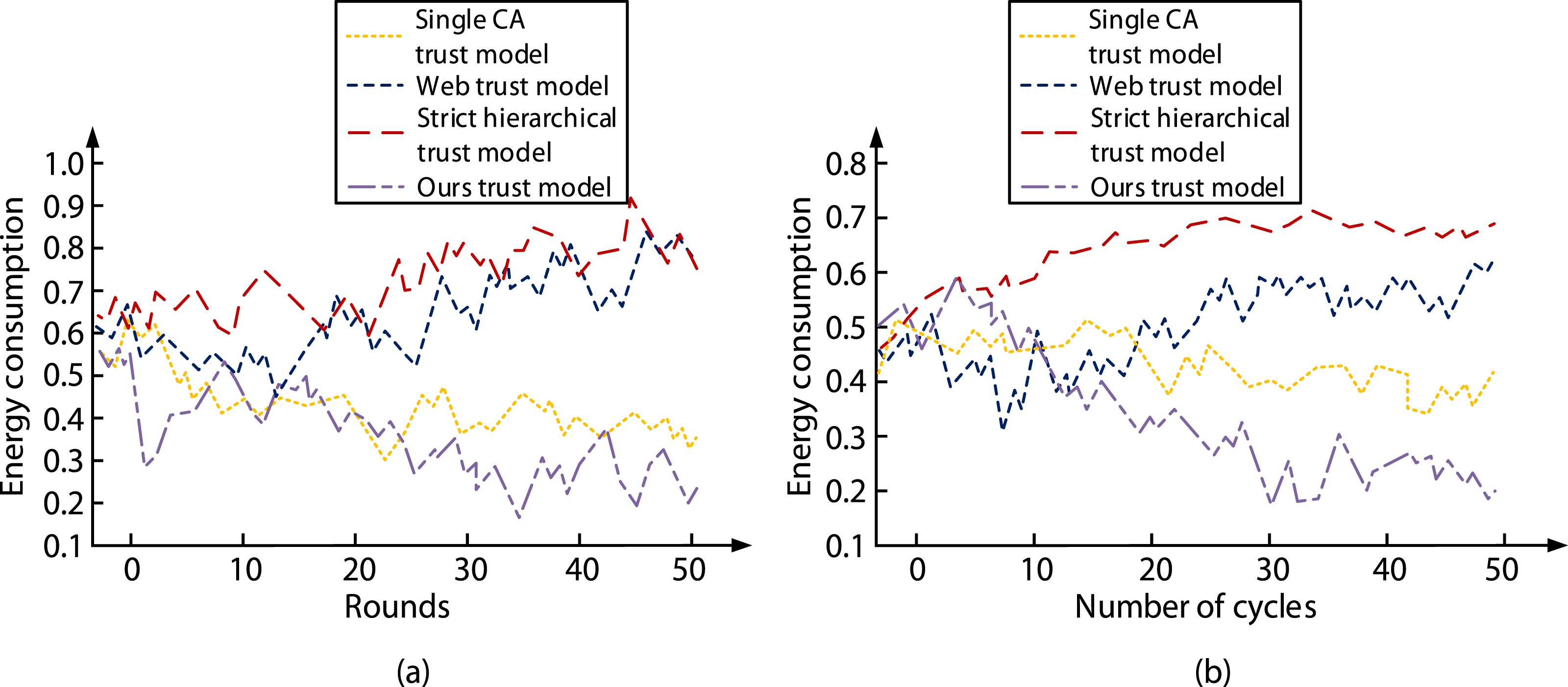
Comparison results of energy consumption generated by different trust models with the number of iterations.
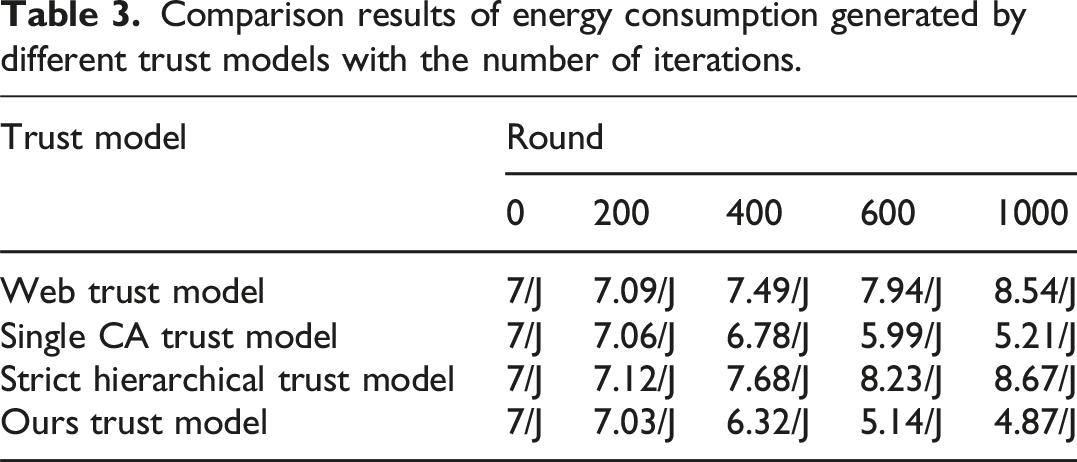
Based on the above experimental results, it can be seen that ours model and Single CA trust model perform well in energy consumption optimization, especially during long-term operation, their energy consumption decline trend is more obvious. This result indicates that these two models have significant advantages in energy consumption control, providing the possibility for further improving system performance and energy efficiency. However, the Web trust model and strict hierarchical trust model perform poorly in energy consumption control, and it may be necessary to optimize the models to improve their energy efficiency.
The performance comparison between the proposed model and the latest advanced model.
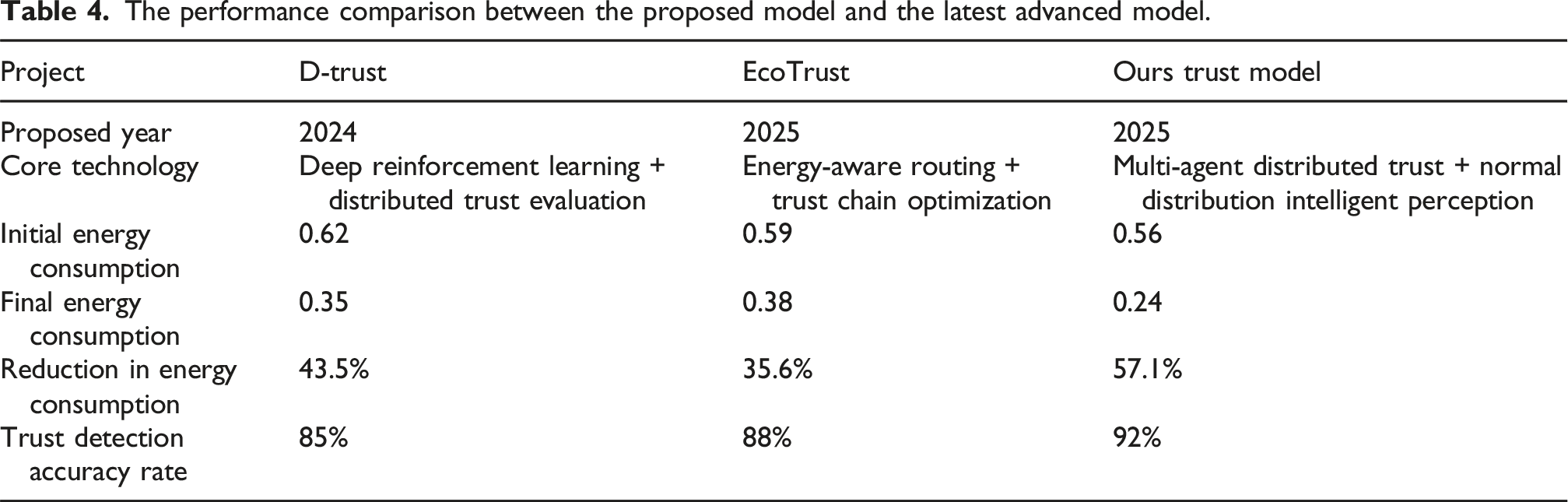
Compared with the deep reinforcement learning Distributed Trust Model (D-Trust) and the energy-Aware Trust Routing model (EcoTrust), D-Trust relied on reinforcement learning and had a slow convergence speed when the node behavior pattern changed drastically. EcoTrust focused on routing optimization and lacked the ability to dynamically adjust trust evaluation. The proposed model, through “multi-agent distributed decision-making + normal distributed intelligent perception,” outperformed D-Trust and EcoTrust in terms of energy consumption reduction and trust detection accuracy, solving the limitations of a single technical path.
The proposed model can be extended to large-scale networks in the following ways. A hierarchical multi-agent architecture was adopted, dividing 1000 nodes into 10 agent clusters. Each cluster had a master agent responsible for local trust management to reduce the computational complexity. Introducing edge computing nodes to preprocess data reduced the energy consumption of cloud transmission. For instance, in the smart city scenario, if one edge agent is configured for every 100 street lamp nodes, the energy consumption optimization efficiency can be maintained at over 55%. Deployment challenges included real-time trust updates in dynamic environments (such as node failure fluctuations in the IIoT), and the update rate could be enhanced through incremental learning algorithms. Meanwhile, in the face of the problem of multi-agent communication overhead, the sparse communication strategy could be adopted to reduce the communication volume.
To improve the adaptability and robustness of the model, the development of adaptive algorithms could be explored from the following approaches. First was to introduce the federated learning mechanism, enabling each agent node to train the trust evaluation model locally and update the global model through the aggregation of encrypted parameters. Second, combined with the incremental learning algorithm, when the behavior pattern of nodes underchanged suddenly (such as abnormal data of industrial sensors due to faults), the proxy nodes could update the mean and variance of the normal distribution in real-time through incremental learning. The third was to design a sparse communication strategy. In multi-agent collaboration, communication was triggered only when the node trust value deviated from the mean by more than 1.5 standard deviations. Fourth, the attention mechanism was integrated. In the decision-making process of the DDPG algorithm, the agent nodes assign higher attention weights for energy-intensive transmission scenarios (e.g., long-distance data relaying).
In terms of real-world IoT applications, the model proposed in this study can be deeply integrated with scenarios such as smart agriculture and industrial monitoring. Take smart agriculture as an example, the sensor nodes distributed in the farmland could dynamically evaluate the credibility of neighboring nodes through a multi-agent distributed trust transmission mechanism. Combined with the normal distribution intelligent perception technology, the data transmission path could be adjusted in real-time. While ensuring the reliability of data transmission such as soil moisture and light, it reduced the energy consumption of nodes and effectively extended the battery replacement cycle. In the industrial monitoring scenario, in the face of the dynamic environment of data transmission such as vibration and temperature of workshop equipment, the model screened high-trust paths through multi-agent collaboration to reduce redundant transmission caused by equipment failure or MNs. In terms of operating system adaptation, the multi-agent decision-making module of the model could be deployed through edge computing nodes, and the transmission strategy could be dynamically optimized by using the DDPG algorithm. For example, this model can be integrated in the smart home gateway. When new devices (such as smart door locks) appeared in the network, the agent nodes could quickly evaluate their trust values based on the normal distribution characteristics of historical interaction data. Adaptive adjustment of data transfer weights enables the co-optimization of energy consumption and reliability in operating systems such as Android or Linux.
Conclusion
The rapid development of the IoT has also brought a series of challenges, one of which is how to effectively manage and control the energy consumption of nodes. Excessive energy consumption may lead to premature failure of nodes, affecting network stability and service quality. Therefore, this study effectively controlled the energy consumption of IoT nodes through trust, to find a way to effectively save energy while maintaining high trust. Therefore, this study proposed a study on intelligent perception of energy consumption through trust transmission among IoT nodes. The experimental results showed that as the ratio increased, the trust values showed an increasing trend. At the initial moment, the trust values corresponding to each weight were 0.81, 0.78, 0.72, and 0.74, respectively. The trust values of these four weights increased to 0.86, 0.77, 0.82, and 0.80, respectively when the honest ratio was 50%. Similarly, when the malicious rate increased to 50%, the trust values of each weight significantly increased, reaching 0.37, 0.56, 0.45, and 0.41, respectively. From this, it can be seen that there was a positive correlation between the trust value and the ratio, but the sensitivity of the contrast ratio varied with different weights. Further testing revealed that as the number of tests increased, there was a significant difference in the trust values generated by different trust models. Under the honest node, the Dynamity trust model had the largest change in trust value, with an average value of 0.74. Under MNs, the trust values of the Dynamicity and Asymmetry models fluctuated the most, with an average of 0.47 and 0.53, respectively. It can be seen that as the number of tests increased, the accuracy of trust detection also improved, and over time, the detection results gradually stabilized. This study is the first to delve into the relationship between reliability and energy consumption in the IoT environment, and its effectiveness has been verified through experiments. The research method has certain scalability. The intelligent perception model can adapt to the needs of different scale IoT scenarios by adjusting the number of agents, model parameters and the weight of trust calculation, and effectively evaluate trust and energy consumption under various experimental Settings. The research contribution lies in proposing a model that integrates multi-agent distributed trust transmission and intelligent perception of energy consumption. By dynamically adjusting the trust value through normal distribution, it achieved a 57% reduction in energy consumption and a 92% accuracy rate in trust detection, providing a new paradigm for energy conservation in the IoT. The limitation of the research lies in the insufficient adaptability of the model in extreme dynamic environments (such as sudden disturbances), and the impact of node hardware differences on energy consumption has not been considered. The future direction will introduce federated learning to optimize multi-agent collaboration and enhance adaptability to complex environments. Meanwhile, combined with the characteristic parameters of hardware energy consumption, a more accurate energy consumption prediction model is constructed. Field validation is carried out in scenarios such as smart agriculture and industrial monitoring to promote engineering applications of the model.
Footnotes

Funding
The author(s) received no financial support for the research, authorship, and/or publication of this article.
Declaration of conflicting interests
The author(s) declared no potential conflicts of interest with respect to the research, authorship, and/or publication of this article.