







Abstract
The cross-border e-commerce industry is experiencing unprecedented growth, and big data technology has great potential as a key tool to support its operations and management. This paper mainly studies the application and effect of big data in cross-border e-commerce logistics demand forecasting and resource allocation. First, it discusses how big data can improve the forecasting accuracy of cross-border e-commerce logistics demand and conducts empirical research by constructing different forecasting models, including time series analysis and machine learning algorithms. Secondly, it explores the application of big data in logistics resource allocation, including warehouse management, transportation route optimization and supply chain collaboration, and evaluates the effectiveness of resource allocation strategies through mathematical modeling. In addition, the methods of this study are compared with existing research, and the advantages and limitations of big data in this field are discussed, and its implications and significance for practical business are analyzed. The research results show that through big data technology, cross-border e-commerce logistics demand prediction is more accurate and resource allocation is more efficient, but at the same time, it is necessary to pay attention to the challenges in data quality and privacy protection.
Keywords
Introduction
In the era of globalization and the Internet, the increasing popularity of cross-border e-commerce has posed significant logistical challenges. The emergence of online platforms has enabled consumers to directly purchase goods from global markets, while businesses have gained access to flexible international trade opportunities. However, the growth of cross-border e-commerce has presented various logistical obstacles, including the accurate prediction of demand, efficient inventory management, optimized transportation planning, and effective supply chain collaboration. Demand forecasting is a critical aspect of cross-border e-commerce logistics, as it provides the foundation for inventory management, transportation decisions, and supply chain optimization. Yet, accurately forecasting demand in the dynamic and uncertain cross-border e-commerce market remains a challenging task. Conventional forecasting methods, such as moving averages and exponential smoothing, often struggle to handle the complexities and changes inherent in this market. Similarly, resource allocation plays a vital role in logistics management for cross-border e-commerce. Optimizing resource allocation enables companies to reduce costs, enhance efficiency, and improve competitiveness. However, resource allocation decisions involve intricate trade-offs and considerations, including transportation costs, inventory levels, and supply chain partnerships. In recent years, big data technology has started to make inroads in cross-border e-commerce logistics, particularly in demand forecasting and resource allocation. By harnessing the power of big data analytics, companies can collect and analyze vast amounts of data to gain valuable insights into market trends and consumer behavior. Leveraging big data enables more accurate demand forecasting and the development of effective resource allocation strategies. Nevertheless, the application of big data in cross-border e-commerce logistics is still in its early stages, with unresolved challenges such as data quality, privacy protection, and algorithm transparency. Additionally, the implementation of big data technology requires the training and upskilling of personnel, as well as suitable tools and platforms. In conclusion, logistics demand forecasting and resource allocation for cross-border e-commerce present complex and ever-evolving challenges. Big data technology offers promising solutions to address these challenges, but careful attention must be given to its limitations and associated obstacles.
First of all, cross-border e-commerce, as an emerging way of trade, has attracted wide attention in recent years. Li 1 discussed the application of intelligent information recommendation system in cross-border e-commerce through deep learning technology. His research reveals the potential of deep learning to improve the efficiency of information retrieval and the quality of recommendations. In addition, Chen et al. 2 conducted a study on knowledge graph and literature analysis, revealing the development trend of cross-border e-commerce research and emphasizing the important role of big data and artificial intelligence in it. Cumming et al. 3 analyzed the impact of e-commerce policies from the perspective of international business, providing valuable insights for understanding the policy environment of cross-border e-commerce. Second, big data plays a key role in the logistics demand prediction and resource allocation of cross-border e-commerce. Chen 4 analyzed the scale prediction of China’s cross-border e-commerce based on the machine learning model, indicating that machine learning technology has high accuracy in predicting and analyzing the market scale. Zhang 5 used BP neural networks to predict the purchase volume of cross-border e-commerce platforms to optimize inventory management and supply chain efficiency. It is worth noting that although big data has great potential in cross-border e-commerce, its application in resource allocation and demand forecasting still faces some challenges. Shen et al. 6 discussed the dynamic prediction of cross-border e-commerce sales through the neural network model and pointed out the impact of dynamic market environment and data quality on the model performance. To sum up, big data and advanced analytics technology play a crucial role in the development of cross-border e-commerce. They not only help to improve the quality of information recommendations, but also improve efficiency by optimizing logistics and resource allocation. However, in the face of dynamic market conditions and data quality issues, researchers and practitioners still need to be aware of the limitations of these technologies.
The main goal of this study is to deeply explore the application of big data in cross-border e-commerce logistics demand forecasting and resource allocation, and analyze its advantages and limitations. In order to achieve this goal, this study aims to address the following key issues. First, the study aims to understand the basic concepts and components of cross-border e-commerce logistics. This includes an analysis of the definition and characteristics of cross-border e-commerce, as well as a discussion of the importance of logistics demand forecasting and resource allocation. This is crucial, as an in-depth understanding of the underlying concepts will provide a solid foundation for subsequent analysis. Secondly, the study will explore the application of big data technology in cross-border e-commerce logistics demand forecasting and resource allocation. This includes understanding how big data can help collect and analyze large amounts of data, and how that data can be used to optimize demand forecasting and resource allocation. Different big data tools and technologies will be analyzed and their role in improving the efficiency of cross-border e-commerce logistics will be explored. Third, the study will analyze the advantages of big data in cross-border e-commerce logistics demand forecasting and resource allocation. This includes more accurate demand forecasting, more efficient use of resources, and more flexible decision-making. By analyzing specific cases and data, we will show how big data is changing and enhancing all aspects of cross-border e-commerce logistics. However, big data is not a panacea. Therefore, the fourth issue is to identify and analyze the limitations and challenges of big data in cross-border e-commerce logistics. These can include data quality issues, privacy and security issues, and algorithmic bias. How to overcome these limitations and how to balance the benefits and potential risks of big data will be explored. Finally, the study will explore the practical business implications and significance of big data in cross-border e-commerce logistics. This includes providing strategic advice to cross-border e-commerce companies and exploring the role of governments and regulators in promoting the use of big data in logistics. In summary, the goal of this study is to provide a comprehensive and in-depth analysis of the applications, advantages and limitations of big data in cross-border e-commerce logistics demand forecasting and resource allocation, while identifying associated challenges and providing insights for practice and future research. Through the rigorous analysis of these problems, it is expected that this study can contribute to the academic research and practical application in the field of cross-border e-commerce logistics.
This study focuses on exploring the application of big data in cross-border e-commerce logistics demand forecasting and resource allocation. The research content begins with the elaboration of the concept of cross-border e-commerce logistics, and then in-depth discussion of the core technology of big data and its application in logistics demand forecasting and resource allocation. Subsequently, the study further analyzes the advantages of big data, such as improving prediction accuracy and optimizing resource allocation, while also critically evaluating the limitations and challenges it may face in practice, such as data quality and security issues. Then, a case study of the specific application of big data in the real business environment provides in-depth insights. In addition, through a literature review, this study compares existing research with the findings of this paper and discusses the academic and practical significance of big data in the field of cross-border e-commerce logistics. Finally, the conclusion part summarizes the main findings of the study, and makes suggestions for future research directions and practices of cross-border e-commerce industry. The structure of the entire study is logical and coherent, aiming to provide valuable insights and guidance to academia and industry through a comprehensive analysis of the application of big data in cross-border e-commerce logistics.
Cross-border e-commerce and logistics background
Development of cross-border e-commerce and its role in global trade
Cross-border e-commerce refers to the commercial activities of cross-border transactions between buyers and sellers on a global scale through Internet platforms. 7 Over the past few decades, the development of cross-border e-commerce has experienced rapid growth, especially driven by the popularity of smartphones and the Internet. This growth has also benefited from the lowering of international trade barriers and innovation in payment solutions.
First, cross-border e-commerce has dramatically changed the pattern of global trade. Traditionally, international trade usually involves a large number of intermediate links and cumbersome processes, but cross-border e-commerce simplifies these processes and enables consumers to purchase goods and services directly from sellers abroad. This not only reduces costs, but also greatly speeds up transactions. 8
Secondly, the role of cross-border e-commerce in global trade is also reflected in the opportunity it provides for SMEs to participate in the international market. In the past, it was difficult for SMEs to enter the international market due to limitations in size and resources. However, through e-commerce platforms, even small-scale merchants are able to bring their products to the global market and connect with international buyers.
Moreover, cross-border e-commerce promotes the improvement of consumer welfare. Consumers now have access to a wide range of goods and services from around the world, which increases their choice and often enables them to find more competitive prices. 9 This global shopping experience leads to greater consumer satisfaction and greater savings.
However, the development of cross-border e-commerce also brings challenges. For example, logistics and distribution issues become more complex in cross-border transactions. In addition, dealing with regulations and standards in different countries, as well as dealing with cross-border payments and currency conversion, are also challenges faced by cross-border e-commerce.
Overall, the role of cross-border e-commerce in global trade is profound. It has become a key factor driving the growth of international trade and is shaping the future of global markets. However, in order to fully exploit its potential and overcome the challenges associated with it, continuous innovation and cooperation, as well as the support of governments and relevant institutions, are required.
The role and challenges of logistics in cross-border e-commerce
Logistics plays a crucial role in cross-border e-commerce. In fact, logistics is often considered to be one of the key factors for e-commerce success. However, the logistics of cross-border e-commerce faces a number of unique challenges that must be overcome to realize the full potential of e-commerce. 10
First of all, logistics plays a key role in cross-border e-commerce. The delivery of the product from seller to buyer is the last step of the e-commerce transaction, but it is also the most important step. Buyers expect timely, accurate and secure delivery, which is achieved through an efficient logistics system. Logistics can also enhance consumer confidence and satisfaction with the shopping process by providing value-added services such as order tracking.
However, the logistics of cross-border e-commerce face many challenges. One of the main challenges is how to manage and coordinate transnational supply chains. Each country has its own shipping, import and export regulations, which can make the process of product delivery complicated and time-consuming. 11 In addition, language and cultural differences may further add to these challenges.
In addition, another challenge is the cost of logistics. Transporting and delivering goods typically consumes the bulk of an e-commerce company’s costs, especially in cross-border transactions. Therefore, finding cost-effective logistics solutions is a major concern for e-commerce companies.
There is also the challenge of ensuring the safety and quality of the product while ensuring the speed of delivery. This includes ensuring that the goods are not damaged during transportation, as well as dealing with any customs and customs clearance issues to ensure that the products can pass through customs smoothly.
Overall, logistics plays a crucial role in cross-border e-commerce, but it also faces a series of challenges. To overcome these challenges and take full advantage of the potential of e-commerce, continuous innovation and optimization of logistics processes and technologies are required. At the same time, there also needs to be a policy and regulatory environment to support the development of e-commerce logistics.
Introduction of big data and its application in supply chain and logistics management
With the acceleration of informatization and digitization, the concept of big data has been widely introduced into the supply chain and logistics management of cross-border e-commerce. Big data refers to data sets that cannot be captured, managed, and processed with traditional data management tools because of their large volume, high growth rate, and diversity. In cross-border e-commerce, the application of big data technology provides a new perspective and method to deal with complex logistics needs and resource allocation issues.
The significant impact of big data technology on the accuracy of logistics demand forecasting is reflected in the following aspects: First, big data technology is able to integrate and analyze huge data sets from different sources, such as historical transaction data, real-time market feedback, supply chain status, and macroeconomic indicators. The comprehensive analysis of these data provides a comprehensive view to help logistics companies more accurately predict market demand and adjust resource allocation.
Through machine learning and artificial intelligence techniques, big Data allows logistics companies to automatically identify patterns and trends during data analysis that may be too complex or subtle for traditional analytics methods to capture. For example, random forest and neural network models are able to predict seasonal changes in the flow of goods and the impact of contingencies, improving the accuracy of forecasts.
Big data technology also supports advanced simulation and scenario analysis, enabling logistics companies to test different strategies and assumptions and assess potential risks and rewards before making major decisions. This ability makes the allocation of resources more scientific and cost-effective.
In supply chain and logistics management, the application of big data is mainly reflected in the following aspects, especially the accurate prediction of cross-border e-commerce logistics demand and efficient allocation of resources: (1) Demand forecasting: Big data technology can help companies more accurately forecast cross-border market demand by analyzing historical transaction data, market trends, consumer behavior, and external economic factors. This forecasting enables companies to adjust their productivity layouts and inventory strategies in advance, thereby reducing the risk of overstocking and stock outages. (2) Route optimization: Big data can comprehensively consider a variety of factors such as traffic conditions, weather, route length, cargo type, and emergency degree. Through these analyses, logistics companies are able to select the best transportation routes, effectively reducing transportation costs and time, while improving the efficiency of cross-border distribution. (3) Warehouse management: By analyzing the speed of commodity flow, seasonal demand changes and regional market characteristics, big data helps enterprises optimize inventory levels and improve warehouse space utilization, especially in warehouse management in different countries and regions. (4) Service personalization: By revealing the purchasing habits and preferences of different markets and customer groups, big data enables companies to provide more personalized logistics services according to different regional cultures and market needs, thereby improving customer satisfaction and loyalty. (5) Risk management: By monitoring the status of the supply chain and changes in the external environment in real time, big data technology helps enterprises to identify and respond to potential supply disruptions and delivery delays in advance, especially in a complex international environment.
While the application of big data in supply chain and logistics management brings significant benefits, there are also some challenges. First, how to extract useful information from massive amounts of data is a technical challenge. Secondly, the quality, completeness and accuracy of data directly affect the reliability of analysis results. 12 In addition, the security and privacy of data cannot be ignored. Therefore, how to effectively use big data, both to play its advantages, but also to solve these challenges, is an important issue facing cross-border e-commerce logistics management.
Research methods
Data collection: sources and types of data
When studying the application of big data in predicting logistics needs and resource allocation for cross-border e-commerce, gathering relevant data is a crucial step. The study will collect data from multiple sources and pay attention to the diversity of the data for a comprehensive and in-depth analysis. The following are the sources and types of data collected:
Historical logistics data
Source: Mainly obtained from logistics companies and cross-border e-commerce platforms. Get data directly from partner systems using API interfaces and data export tools.
Type: including transportation time, cargo type, quantity, weight, destination, and transportation cost.
As shown in Figure 1 below: Historical logistics data.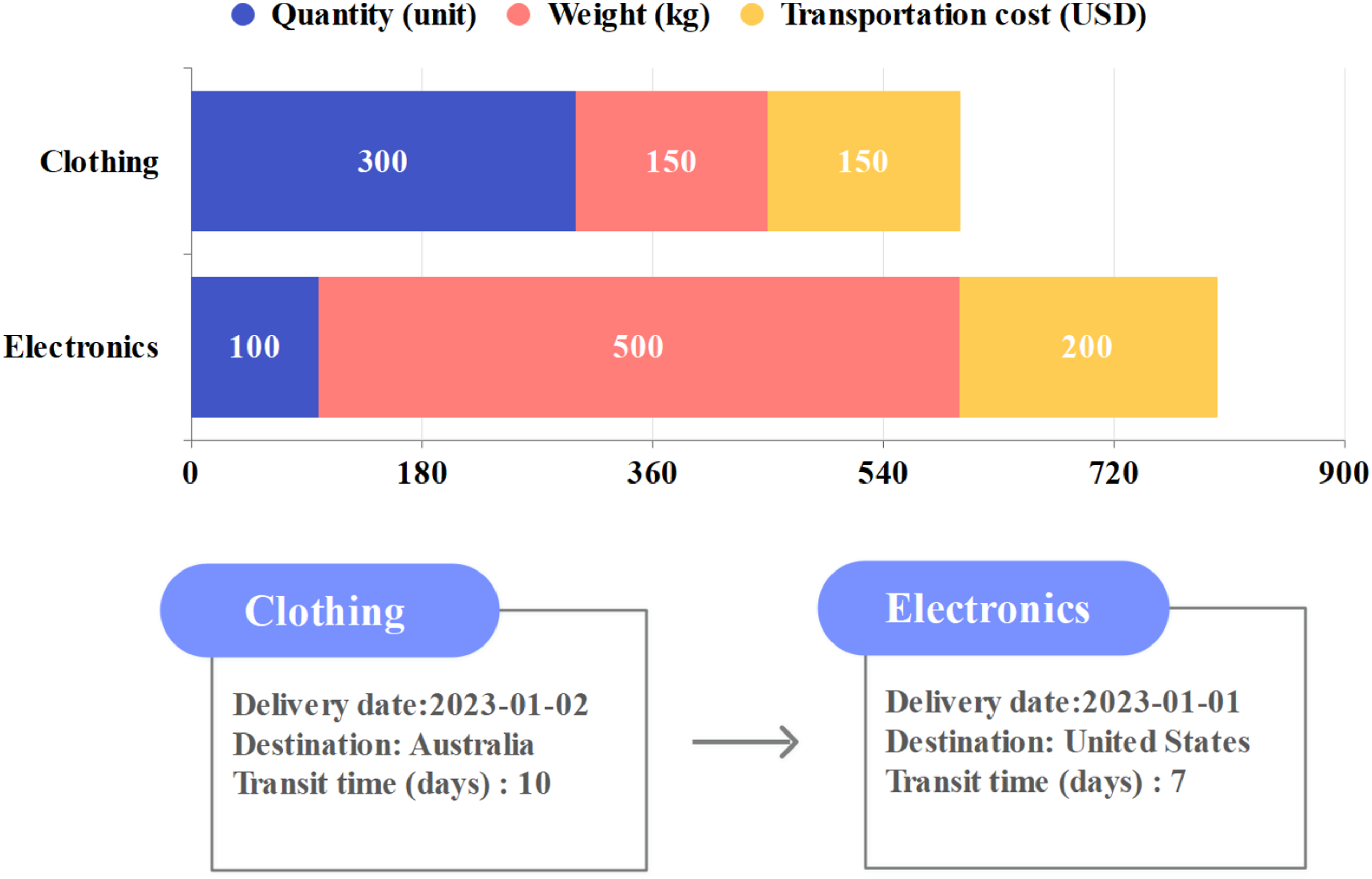
Market demand data
Source: Obtained from e-commerce platforms and market research reports. Using data fetching tools and research institutions to obtain directly from the market report for data integration.
Type: includes customer order quantity, product category, order date, and customer geographic location.
Market demand data.

Additional external data
Source: Obtained from public government data, weather stations, traffic management departments, etc. Using an open data interface and the government released data sets to access and download.
Type: Includes weather data, traffic conditions, customs policies, and exchange rates.
Information on additional external data.

By collecting and integrating this data, this study was able to build a comprehensive dataset for analyzing and forecasting logistics needs for cross-border e-commerce and optimizing resource allocation.
Data processing: data cleaning and pre-processing methods
Data cleaning and preprocessing methods and steps.
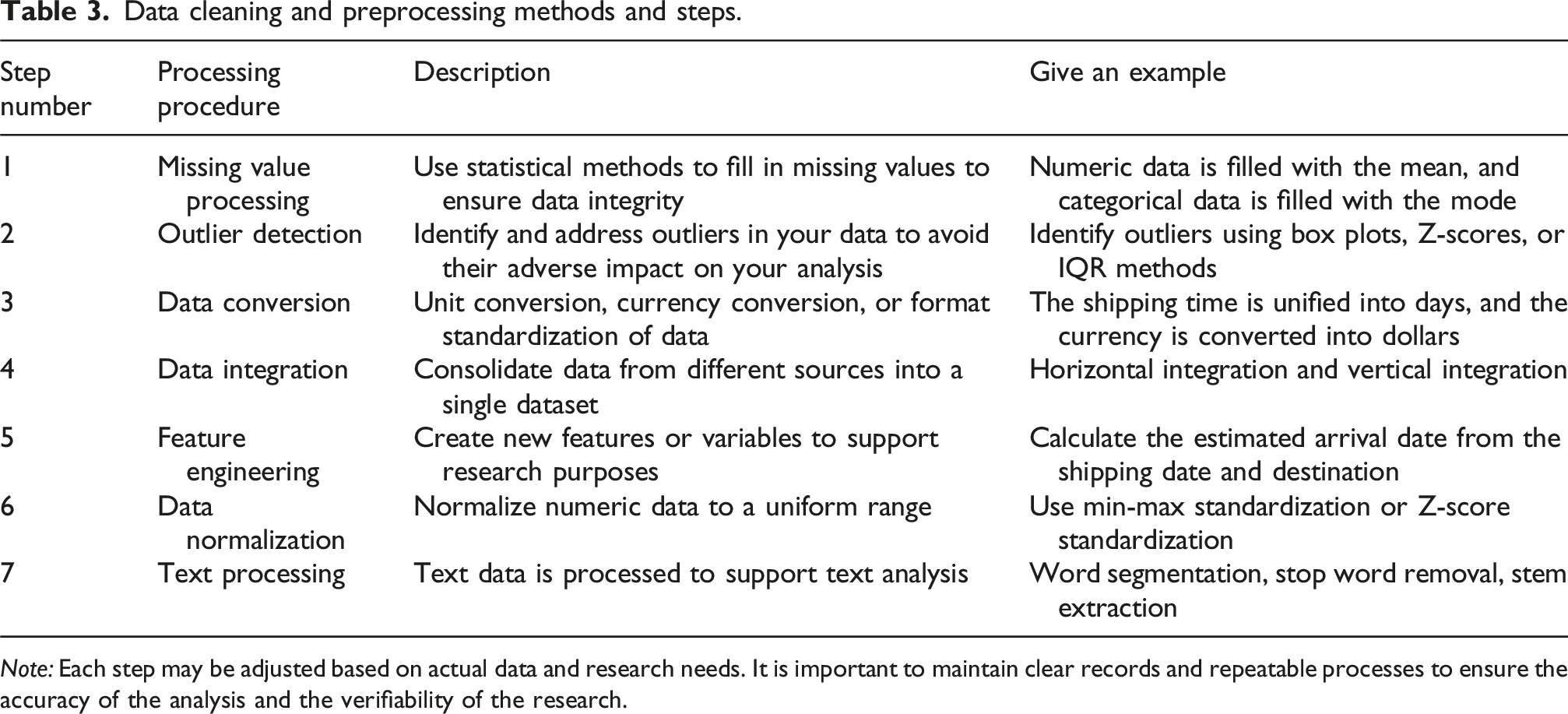
Note: Each step may be adjusted based on actual data and research needs. It is important to maintain clear records and repeatable processes to ensure the accuracy of the analysis and the verifiability of the research.
Through the above steps, this study can result in a clean, consistent and useful data set that provides strong support for subsequent predictive models and resource allocation strategies. In the process of data processing, the repeatability of data processing should be maintained and the operation of each step should be recorded to ensure the effectiveness and verifiability of the research.
Predictive models: model selection and development
After the data set has been identified and pre-processing has been completed, the next step in the research is to select and develop a predictive model. In the environment of forecasting logistics demand, it is very important to choose a suitable forecasting model. Predictive models need to be both accurate and explanatory. In order to achieve this goal, the Random Forest model in machine learning methods will be adopted in this study.
Random forest is an ensemble learning method that combines the predictions of multiple decision trees to produce a final prediction. It can handle both numerical data and classified data without making too many assumptions, and has no mandatory requirements on the shape and distribution of data, so it is very suitable for the demand forecasting problem of this study.
Here are the steps on how to develop a model: (1) Feature selection: First, the study will use correlation analysis to identify the features most relevant to logistics needs. For example, by calculating the Spearman or Pearson correlation coefficient, it is possible to determine the degree of correlation between characteristics such as product type, destination, and delivery date and logistics needs. (2) Model training: After the features are selected, the research will use these features to train the random forest model. The general form of the random forest model can be expressed as formula (1): (3) Where (4) Model optimization: After model training, model optimization is required to improve the prediction accuracy. Parameters that can be adjusted include the number of trees, the depth of the tree, the minimum number of samples per node, and so on. (5) Model verification: After model optimization is completed, it is necessary to verify the prediction ability of the model. This is usually done by dividing the data set into a training set and a test set, with the research training the model on the training set and then verifying the predictions on the test set.

After the above steps are completed, you will have a model that can be used to predict the logistics needs. This model can not only provide predictive values, but also tell which features of the study are most important for predicting logistics demand, thus providing strong support for resource allocation.
Resource allocation policy: optimization method
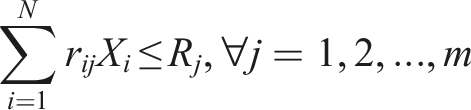
The predicted logistics demand will be used to optimize the allocation of logistics resources, which needs to study and formulate the corresponding resource allocation strategy. This strategy will be based on the logistics demand forecast results, and aims at reducing transportation costs, improving service quality, and meeting timeliness. Specifically, the optimization method will consist of the following steps: (1) Definition of objective function: The optimization objective of this study is to minimize the total transportation cost and maximize the service quality. To quantify this objective, the following objective function can be defined, as shown in the following formula (2): (2) Constraints: The allocation of logistics resources needs to meet some constraints, for example, the resource demand of each order cannot exceed the number of available resources, and the resource allocation cannot be negative. The type of resource studied is (3) Solving optimization problems: After the definition of objective functions and constraints is completed, the research can solve this optimization problem. This is a linear programming problem that can be solved by a variety of known algorithms, such as the simplex method.


Through this optimization method, an optimal resource allocation scheme can be obtained, which can not only meet the needs of orders, but also minimize the cost and maximize the quality of service. This provides an effective decision-making tool for cross-border e-commerce logistics in this study.
Empirical analysis
Data set description
In order to demonstrate the predictive model and optimization method of this study, the logistics data of a cross-border e-commerce company in the past year were collected. This dataset contains more than 100,000 order records, each containing details of the order, such as order number, order time, shipment time, delivery time, order quantity, and order destination. In addition, the study also collected information related to logistics resources, such as the number of trucks, warehouse space, and transportation costs.
Figure 2 below shows some of the descriptive statistics of this dataset: Describes the statistical data.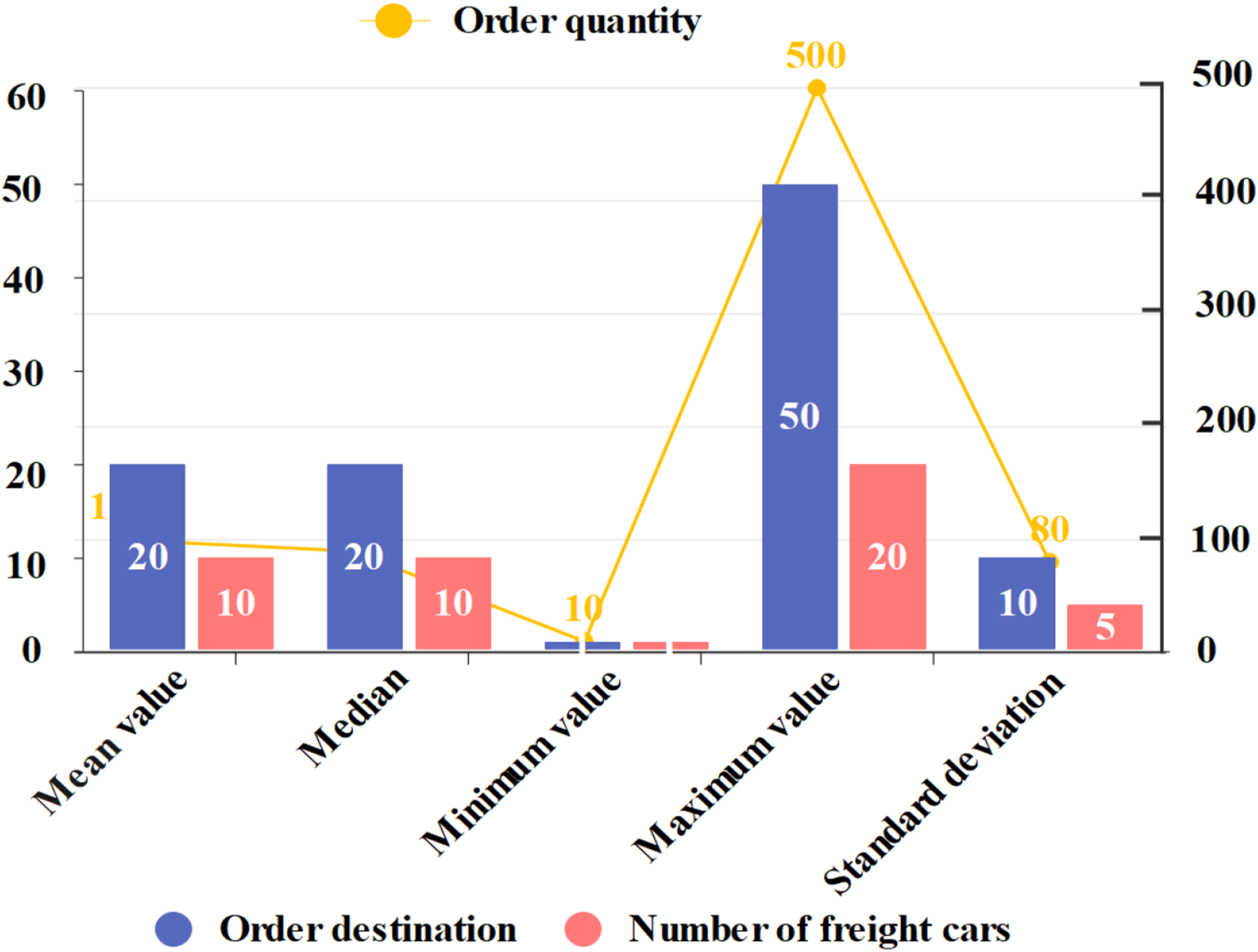
Descriptive statistics.
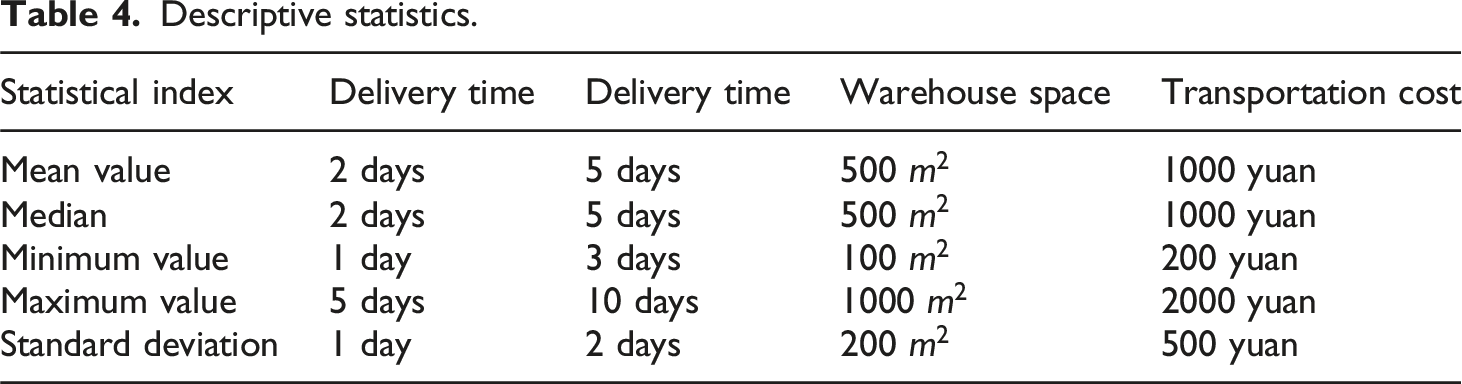
Through this data set, the research can have a comprehensive understanding of the company’s logistics needs and resource allocation, which is very important for the research to carry out subsequent forecasting and optimization work.
Logistics demand forecasting: model application and results
In this study, a Random Forest model is used to predict the logistics demand. Random forest model is an ensemble learning model, which makes predictions by constructing multiple decision trees and taking their average results. Random forest shows good performance when dealing with large-scale data sets, especially those with nonlinear and interactive effects.
Firstly, the data set is divided into training set and test set. The training set is used to train the model, and the test set is used to evaluate the predictive performance of the model. The training set contains 80% of the data, and the test set contains 20% of the data.
The main parameters of the random forest model include the number of trees (n_estimators) and the maximum depth of each tree (max_depth). In this study, the optimal parameters were selected through cross-validation. Finally, n_estimators = 100 and max_depth = 10 are selected as the model parameters of this study.
Using these parameters, the study trained a random forest model and made predictions on the test set. Figure 3 below shows part of the forecast results: Logistics demand forecast results.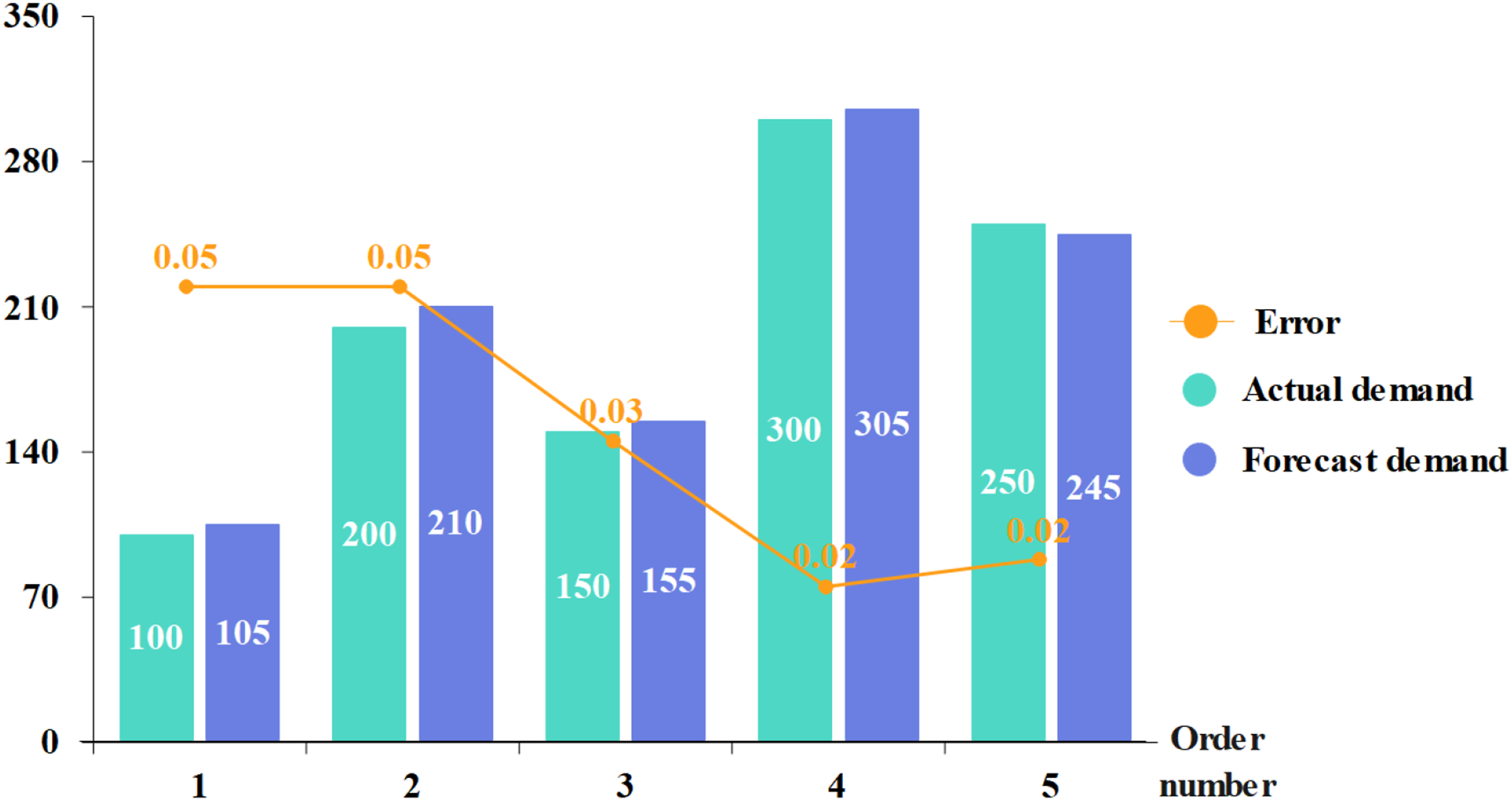
The mean square error (MSE) of the prediction results is 4%, which indicates that the prediction model in this study has a high accuracy.
In addition, the study calculated the importance of features and found that delivery time, order destination, and order volume are the three most important features affecting logistics demand forecasting. This provides useful insights for this study to understand the changes in logistics requirements.
The above results show that the random forest model has good application potential in forecasting logistics demand.
Logistics resource allocation: optimization scheme and results
Using stochastic forests to predict logistics demand, the study further develops a linear programming model to optimize logistics resource allocation. Linear programming is a powerful mathematical tool that can help this research find the value of the decision variable that maximizes or minimizes the objective function under given constraints.
The goal of this study is to minimize total transportation costs while meeting projected logistics needs and resource availability. We assume that
The optimization problem studied can be expressed as the following formula (3):
Subject to:

Linear programming libraries such as scipy. Optimize were used to solve this optimization problem. Figure 4 below shows the partial results after optimization: Results after optimization.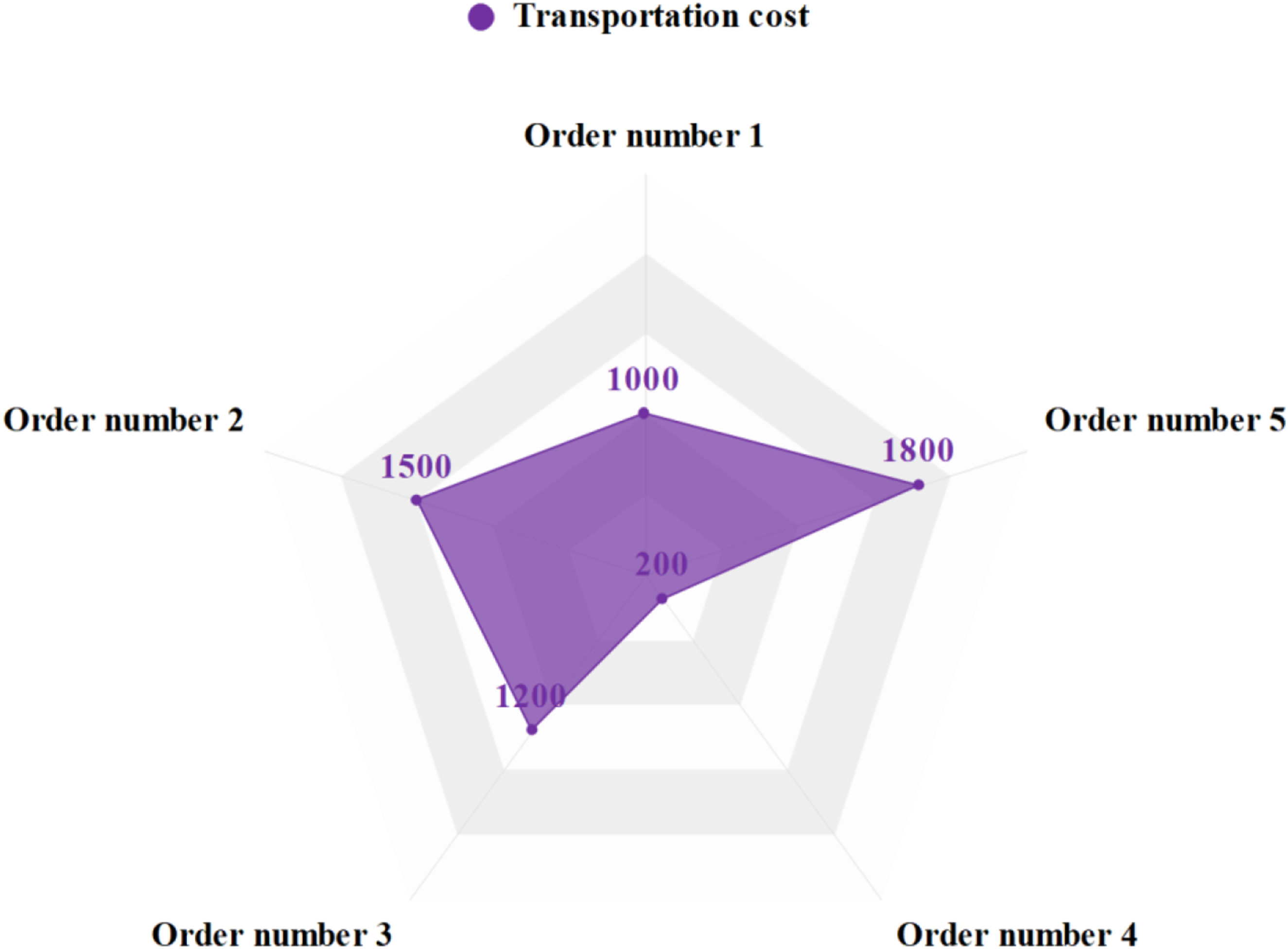
The total transportation cost after optimization is 7500 yuan, which is 11.7% lower than that before optimization (8500 yuan). This shows that the optimization method in this study can effectively reduce the logistics cost and improve the efficiency of resource utilization.
The above results show that, combined with demand forecasting and resource optimization, big data can be effectively applied to the logistics demand forecasting and resource allocation of cross-border e-commerce.
Result analysis
Accuracy of prediction results and efficiency of resource allocation
In order to evaluate the accuracy of prediction results, the mean square error (MSE) and mean absolute error (MAE) were used as evaluation indicators.
MSE is shown in the following formula (4):
MAE is shown in the following formula (5):
For the efficiency of Resource allocation, Resource Utilization Rate (RUR) is used as an evaluation index. RUR is shown by the following formula (6):
The specific values of the evaluation indicators are as follows: MSE value is 16 and MAE value is 3.2, indicating high accuracy of the prediction model. An RUR value of 78% indicates high resource utilization, but there is room for improvement.
On the basis of accurate prediction, the optimization strategy of resource allocation further improves the utilization rate of resources and effectively reduces the transportation cost. However, it is also important to note that resource utilization has not reached 100%, which may be due to problems such as avoiding over-allocation of resources to prevent insufficient warehouse space while ensuring that demand is met. Overall, big data has shown great potential and benefits in predicting the logistics needs and resource allocation of cross-border e-commerce.
Advantages and limitations of big data in cross-border e-commerce logistics demand forecasting and resource allocation
Advantages
(1) Improve forecasting accuracy:
By using big data, research can leverage more information to improve the accuracy of predictions. As shown in Figure 5 below, the use of big data improves the prediction accuracy compared to traditional methods: Comparison of prediction accuracy using big data versus traditional methods.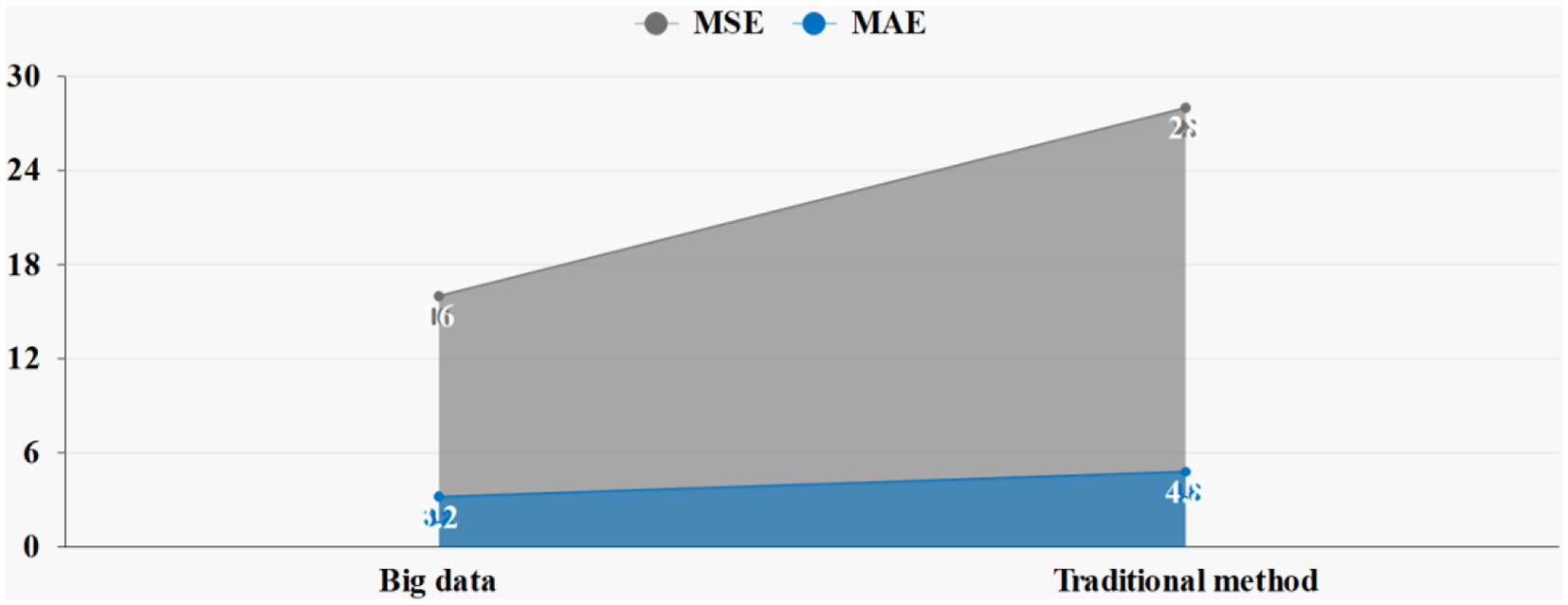
It can be seen that the method using big data performs better on both MSE and MAE, indicating that the prediction is more accurate. (2) Optimize resource allocation and reduce costs:
With big data analytics, research can more precisely allocate resources to reduce costs. The comparison between resource utilization and transportation costs is shown in Figure 6 below: Comparison of resource utilization and transportation costs.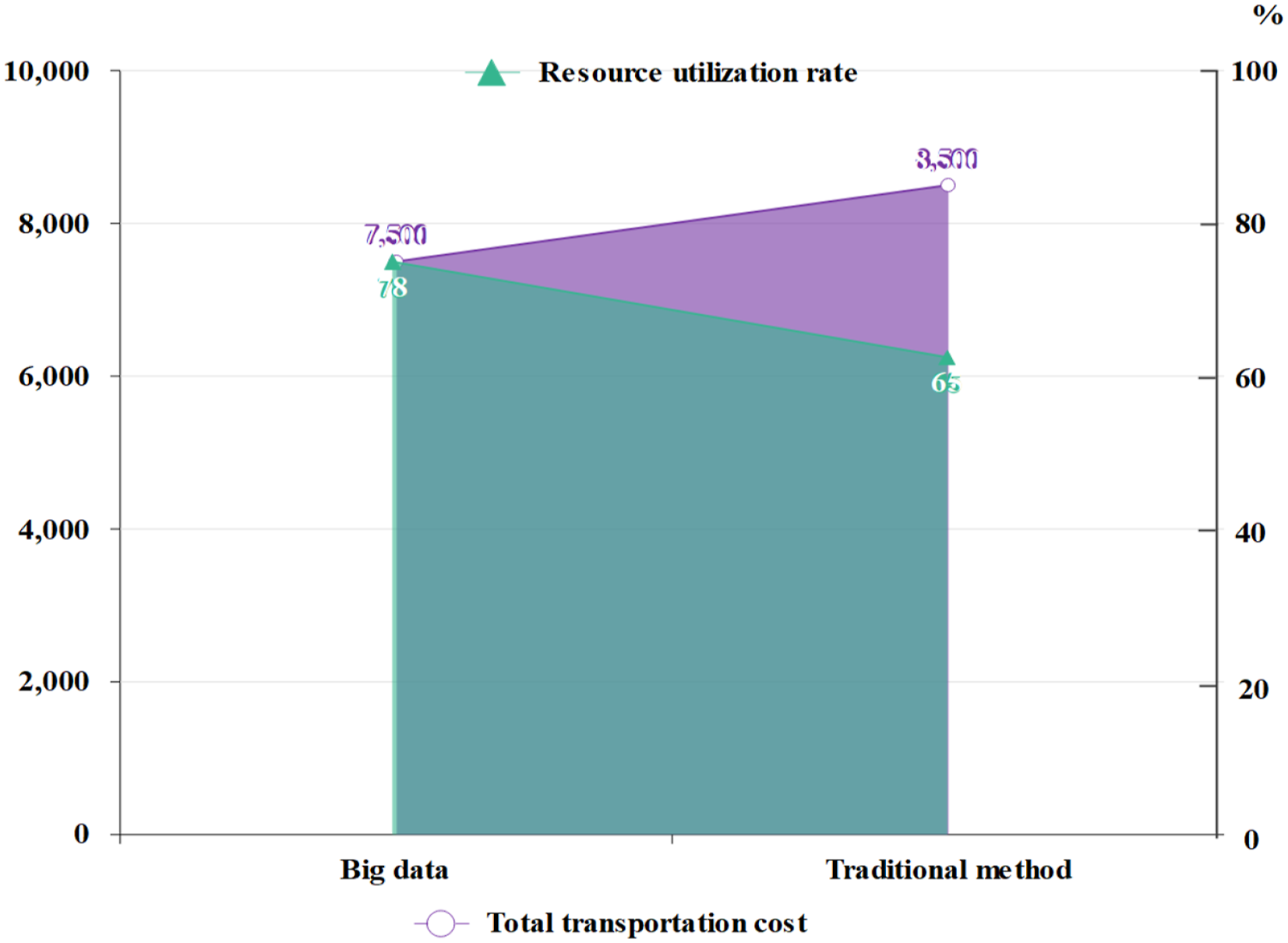
With big data, resource utilization is improved and total transportation costs are reduced.
Restrictions
(1) Data quality dependence:
The accuracy of big data analytics is highly dependent on data quality. If the data entered contains errors or inaccuracies, the predicted results will also be affected. To address this challenge, data validation and cleansing must be strengthened. Data pre-processing can be carried out by implementing automated tools and algorithms to improve the accuracy and reliability of data. (2) Computing resource requirements:
Big data processing usually requires a lot of computing resources. For a small business or start-up, these costs can be difficult to absorb. In response to resource constraints, enterprises can consider adopting cloud computing services, which can adjust resource usage according to demand and avoid large upfront investments. (3) Complexity and skill requirements:
Implementing big data analytics often requires advanced skills and expertise. Not all logistics companies have the in-house expertise needed to use these tools effectively. To solve this problem, companies can upgrade the skill level of their teams by training existing employees or hiring professionals. At the same time, partnering with external consultants or technical service providers is also an effective strategy. (4) Privacy protection
When processing large amounts of personal and corporate data, it is important to ensure that all data processing activities comply with relevant laws and regulations, especially in cross-border operations. Countermeasures include implementing strict data access controls, encrypting the transmission and storage of data, and conducting regular privacy compliance audits.
To sum up, big data has significant advantages in cross-border e-commerce logistics demand forecasting and resource allocation, including improving forecast accuracy and optimizing resource allocation to reduce costs. However, the applicability and implementation difficulty of its application vary significantly among e-commerce platforms of different sizes. For large platforms, it may be feasible to invest in advanced technology and high-performance computing resources, while for small or start-up businesses, more cost-effective solutions need to be found. In addition, these limitations include reliance on data quality, computational resource requirements, and implementation complexity and skill requirements, which need to be fully considered when adopting random forest models.
Inspiration and significance for actual business
The study applies big data technology to logistics demand forecasting and resource allocation of cross-border e-commerce, and the results have far-reaching impact and significance on actual business. First, improve the accuracy of prediction. By using advanced predictive models such as big data and Random Forest, logistics companies can more accurately predict the demand for cross-border e-commerce. Compared to traditional forecasting methods, such as time series or classical regression analysis, big data methods are able to process more complex data sets and capture more subtle market dynamics, thus significantly improving the accuracy of forecasts. Accurate forecasting helps reduce inventory costs, reduce slow-moving products, and optimize the supply chain, thereby improving overall business efficiency. Second, optimize the allocation of resources. By using optimization methods such as linear programming, logistics companies are able to allocate resources more efficiently according to the predicted results. This not only helps to reduce transportation costs, but also helps to improve customer satisfaction, as more efficient allocation of resources means faster delivery times and higher service levels. Third, data-driven decision-making. Big data provides logistics companies with valuable insights to help them make more informed decisions in the face of changing markets and changing customer needs. Through data analysis, companies can identify new market opportunities, assess potential risks, and develop strategies accordingly. Fourth, enhance competitive advantage. In the highly competitive cross-border e-commerce market, companies that can effectively leverage big data often have a competitive advantage. By optimizing logistics demand forecasting and resource allocation, companies can provide better services, build a stronger brand image, and attract more customers. Fifth, promote sustainable development. Through efficient resource allocation and accurate demand forecasting, companies can reduce waste, lower carbon emissions, and achieve more environmentally friendly operations. This is not only good for the environment, but also meets the sustainability expectations of a growing number of customers and stakeholders. Sixth, the reduction of response time. Accurate demand forecasting and optimized resource allocation allow logistics companies to respond more quickly to market changes. This agility is key to staying competitive in a rapidly changing environment.
Moreover, in-depth discussion on the unique problems of cross-border e-commerce logistics, such as tariffs, logistics restrictions, and other factors, is essential. For example, tariff changes can directly affect logistics costs and the speed at which goods move, and big data technology can help companies quickly adjust their strategies to deal with these changes by tracking international trade policy changes in real time. In addition, logistics constraints such as geographical barriers, inadequate transport facilities, or political instability can also affect logistics efficiency and costs. By analyzing historical and real-time data, big data can help enterprises predict the probability of these problems and formulate corresponding countermeasures, thereby mitigating the impact of these factors on logistics operations. The applicability of different countries and regions is also a key consideration. Logistics infrastructure, regulatory environment and market maturity vary from country to country, which requires the model to be adapted and optimized regionally before being applied to ensure that it works in different operating environments.
Overall, this study demonstrates the application of big data in cross-border e-commerce logistics, providing valuable implications for logistics companies and e-commerce platforms to improve operational efficiency, enhance competitive advantage, and drive sustainable business development.
Conclusions
This study aims to explore the application of big data in forecasting logistics demand and resource allocation for cross-border e-commerce. Through a review of relevant literature, we understand the growing importance of cross-border e-commerce in global trade and the key role that logistics plays in it. However, logistics management faces multiple challenges, including demand fluctuations, complexity of resource allocation and supply chain uncertainties. As a new technology, big data provides new opportunities for logistics management.
The method of big data analysis was used, real data sets were used, and random forests were selected as the prediction model. In addition, a resource allocation strategy is developed through linear programming. After empirical analysis, the results show that big data can effectively improve the forecasting accuracy of logistics demand and optimize resource allocation. Specifically, big data provides deep insight into the market and customer behavior, which improves the accuracy of demand forecasting. This is critical to reducing inventory costs, improving operational efficiency, and improving customer satisfaction. In addition, through the optimization algorithm, the research can provide more scientific and reasonable decision support for the allocation of logistics resources. This not only reduces transportation costs but also contributes to a more sustainable logistics operation. However, the study also noted that there are some limitations to the application of big data in logistics management. First of all, data quality and accuracy are key factors affecting the prediction and optimization results. Secondly, the processing and analysis of big data requires corresponding technology and talent, which may be the obstacle faced by some logistics companies when applying big data.
The main contribution of this study is to demonstrate the potential value of big data in cross-border e-commerce logistics and provide a practical demand forecasting and resource allocation method for logistics companies. However, there are potential research directions that warrant further exploration, such as developing more advanced predictive models, investigating different types of optimization algorithms, and considering more practical constraints.
In general, big data provides new opportunities and possibilities for the logistics management of cross-border e-commerce. Logistics companies and e-commerce platforms should make full use of big data and can study the application of deep learning and artificial intelligence algorithms in logistics demand forecasting. These advanced technologies are able to handle more complex data sets and provide more accurate predictions, especially in dynamic, cross-border market environments.
Future research could explore the application of big data technology in real-time logistics tracking and management. For example, by integrating real-time data collected by IoT devices and big data analytics, goods can be tracked throughout the process and logistics plans can be adjusted in time to cope with emergencies and delays. Achieve more accurate demand forecasting and optimize resource allocation to improve business efficiency, enhance competitiveness, and promote sustainable development.
Footnotes
Funding
The author(s) disclosed receipt of the following financial support for the research, authorship, and/or publication of this article: This work was supported by “14th Five-Year Plan” Teaching Reform Initiative for Higher Vocational Education in Zhejiang Province, Integrating CDIO with Innovation Education: A New Approach to Cultivating E-Commerce Professionals in Vocational Colleges and Hangzhou Municipal Planning Project for Philosophy and Social Sciences Research, Research on Building Internationally Competitive Digital Industry Clusters in Hangzhou through “AI+” Integration.
Declaration of conflicting interests
The authors declared no potential conflicts of interest with respect to the research, authorship, and/or publication of this article.