







Abstract
In construction engineering, material procurement costs constitute a significant portion of total project expenditures. Conventional cost optimization approaches often fail to effectively respond to abnormal events such as sudden market price fluctuations and supply chain disruptions, leading to challenges in maintaining controlled cost management. To address this issue, this study introduces a deep learning-based framework utilizing a variational autoencoder (VAE) to enhance cost prediction accuracy and improve optimization strategies under dynamic conditions. The proposed approach begins with the collection and preprocessing of construction material cost data, including the handling of missing values, outliers, and duplicate records. Principal component analysis (PCA) is then applied to extract key features and reduce data dimensionality. A VAE model is subsequently constructed, in which both encoder and decoder networks map high-dimensional data into a compact latent space. Model parameters are optimized through reparameterization techniques using the Adam optimizer to minimize reconstruction error and Kullback–Leibler (KL) divergence.
Keywords
Introduction
The material procurement cost in construction engineering projects accounts for an important proportion of the entire project budget. With the increasing uncertainty of the global economy, the price fluctuations of construction materials are becoming more frequent. Especially when supply chain management is complex and cross-border procurement is in progress, the sudden fluctuations in material prices, market instability, and supply chain disruptions are emerging one after another, making it increasingly difficult for traditional cost optimization methods to cope with the ever-changing cost dynamics in modern construction projects.1–3 Currently, the cost optimization methods commonly used in the construction industry mostly rely on traditional statistical methods such as manual experience, linear regression, and decision trees, etc., which often perform poorly in the face of nonlinear and dynamically changing data.4–6 Furthermore, traditional methods have limited ability to process big data, often ignore potential complex relationships in the data, and lack effective anomaly detection and adaptive response mechanisms. Especially when there is a sudden change in market price, shortage of raw materials or disruption in the supply chain, it is difficult for traditional models to adjust their strategies in time.6–8 A more advanced, flexible cost optimization method that automatically responds to anomalies is urgently needed to solve these problems and to improve the accuracy and responsiveness of cost prediction for construction material procurement.
To address the challenges in construction material cost optimization, researchers have increasingly turned to data-driven approaches for more effective solutions. A significant body of research has focused on leveraging machine learning and deep learning techniques to enhance the accuracy of material cost forecasting. For instance, several studies have applied support vector machines (SVMs) and decision tree-based models to predict fluctuations in material prices. These methods demonstrate promising performance in capturing nonlinear patterns and improving prediction reliability under normal market conditions. However, the limitations of these methods are that they cannot effectively capture the potential complex nonlinear relationships in the data and have weak response capabilities to abnormal situations.9–11 At the same time, other studies explore price fluctuation prediction models based on time series analysis. Such methods can predict the future trend of material prices to a certain extent, but they are still powerless in the face of abnormal situations such as sudden market fluctuations or supply chain disruptions.12,13 Some studies also attempt to optimize the configuration of material costs through genetic algorithms and particle swarm optimization, but these methods still have certain limitations in processing big data and responding to abnormal situations. Therefore, although existing studies have achieved some results, they have failed to completely solve the problems of anomaly detection and response, complex data modeling, etc., in the optimization of construction material costs.14–16 Based on existing research, deep learning technology has gradually become an important tool for solving the problem of construction material cost optimization. In particular, variational autoencoders (VAEs), as an advanced generative model, have been applied to tasks such as data anomaly detection, dimensionality reduction, and feature extraction. Anaissi A et al. (2023) proposed a multi-objective variational autoencoder method based on the reconstruction probability of autoencoder deep neural networks for intelligent infrastructure detection and diagnosis in multi-channel sensor data. 17 Suwa et al. (2023) described the variational autoencoder neural network and proposed a tool state monitoring and change detection method based on VAE. 18 VAE maps data to latent space through its autoencoding characteristics, thereby effectively capturing the complex structure and nonlinear relationship in the data. Related studies have shown that VAE can significantly improve the model’s prediction accuracy and robustness when processing construction material data with high-dimensional and multimodal characteristics.19,20 In addition, VAE also has the ability to detect anomalies and generate new samples, which enables it to identify and respond to abnormal situations (such as supply chain disruptions, drastic price fluctuations, etc.) in a timely manner. However, most VAE models in existing research focus on static data analysis or single factor optimization, lacking multi-level modeling that combines big data, complex market conditions, and supply chain status.21–23 Therefore, this paper applies the application of VAE to construction material cost optimization, and combines big data and reinforcement learning (RL) for dynamic optimization. By multi-dimensional modeling of material cost fluctuations, the ability to identify and respond to abnormal situations is improved, and more precise and automated cost prediction and optimization can be achieved.
This paper aims to solve the problem of anomaly detection and response in the construction engineering material cost optimization. By applying variational autoencoders (VAEs), deep learning modeling of construction material cost data is performed to learn potential laws and identify abnormal patterns.24–26 Through the generation ability of VAE, the cost change trend under different market environments and supply chain states is simulated to provide a more precise prediction basis for construction material procurement decisions. In terms of method implementation, the key features related to material costs are first extracted through data preprocessing and feature selection. Then, the VAE model is constructed, and the encoder and decoder are used to map the data to the latent space for deep learning.27–29 Subsequently, the VAE model is employed to detect abnormal fluctuations in material costs and autonomously adjust price forecasts, procurement strategies, and supply chain operations based on real-time model feedback. Finally, by integrating reinforcement learning (RL), the framework further optimizes material cost decisions, thereby enhancing the intelligence and adaptability of cost management. Through this integrated approach, the proposed method not only significantly improves the accuracy of construction material cost prediction, but also enables automatic identification of conditions and the implementation of responsive adjustments. This work presents a novel intelligent solution for cost control in construction engineering projects, offering enhanced reliability and decision-making capability under dynamic market conditions. 30
Methods
Data preprocessing and feature selection
In the problem of the construction engineering material cost optimization, the quality of data directly affects the performance of the model and the prediction results. Therefore, data preprocessing is a key step to ensure the effectiveness of subsequent analysis. This study first collects raw data related to the cost of construction materials from multiple sources, including procurement records, market price databases, supply chain management systems, construction progress management data, etc.31,32 These data contain a large amount of structured and unstructured information, covering multiple dimensions such as the historical price of construction materials, procurement time, supplier information, transportation costs, project scale, and construction progress.
After data collection, data cleaning is performed. First, for the missing value problem, the mean filling method is used to handle some missing values in numerical features, while for categorical features, the mode filling method is used. For price data with many outliers, the IQR (interquartile range) method is used for outlier detection, and outliers that exceed the set range are eliminated. This ensures the stability of the data during model training and prevents outliers from interfering with the model fitting. In addition, the existence of duplicate data may lead to data redundancy and model bias. Therefore, during the cleaning process, this paper uses a deduplication method based on a unique identifier to ensure the uniqueness of each record.
Feature engineering is a key step to improve model performance, and is particularly important in the optimization of construction material costs. By analyzing the historical procurement data of construction materials and external environmental factors, this study extracts several important features related to cost fluctuations. First, considering that one of the core driving factors of material costs is the change in market prices, the historical price data is analyzed in detail, and the price fluctuation (such as price standard deviation, coefficient of variation, etc.) is calculated as an important feature in the prediction model. In addition, price fluctuations are closely related to various factors in the supply chain, so supply chain-related features are further extracted, including supplier selection (such as supplier credibility, delivery time), transportation and logistics costs, etc. The impact of these factors on material procurement costs is particularly important, especially when there are problems in the supply chain.
In addition, seasonal factors are also a significant factor affecting material cost fluctuations. In the feature selection process, based on historical data analysis, features related to seasonal changes are extracted, such as the impact of different seasons on construction material prices and the potential impact of climate change on material production and transportation.32,33 To more comprehensively grasp the law of cost changes, this study also combines project characteristics such as project scale and construction progress, and believes that these factors may affect the time node and procurement quantity of material procurement, thereby affecting the overall cost. By constructing a multi-dimensional feature vector, the model can make more accurate cost predictions by comprehensively considering multiple influencing factors.
Due to the high dimensionality of the feature space, directly inputting it into the model can bring about dimensional disasters, affecting the model’s training efficiency and effect. Therefore, in the feature selection stage, this study uses the principal component analysis (PCA) method for dimensionality reduction. PCA extracts the direction with the most variance in the data by projecting the original data onto a new coordinate axis, effectively reducing feature redundancy and removing features with high correlation. This not only improves computational efficiency but also prevents multicollinearity problems. In the PCA processing process, this paper selects the principal components that explain more than 90% of the variance to ensure that the model reduces computational complexity while maintaining predictive ability. The data after dimensionality reduction not only retains the information of key features, but also improves the VAE model’s learning ability and robustness on the data.
Figure 1 shows the data distribution after PCA dimensionality reduction. The left figure includes three key features: market price fluctuations, supply chain delays, and seasonal effects. The right side is the data distribution after principal component analysis dimensionality reduction. Two principal components are retained, and the data is projected onto a two-dimensional plane to form a more concentrated distribution. After PCA dimensionality reduction, the complexity of the data is significantly reduced, while retaining most of the variability of the data, simplifying subsequent analysis and model training. Data distribution after PCA dimensionality reduction.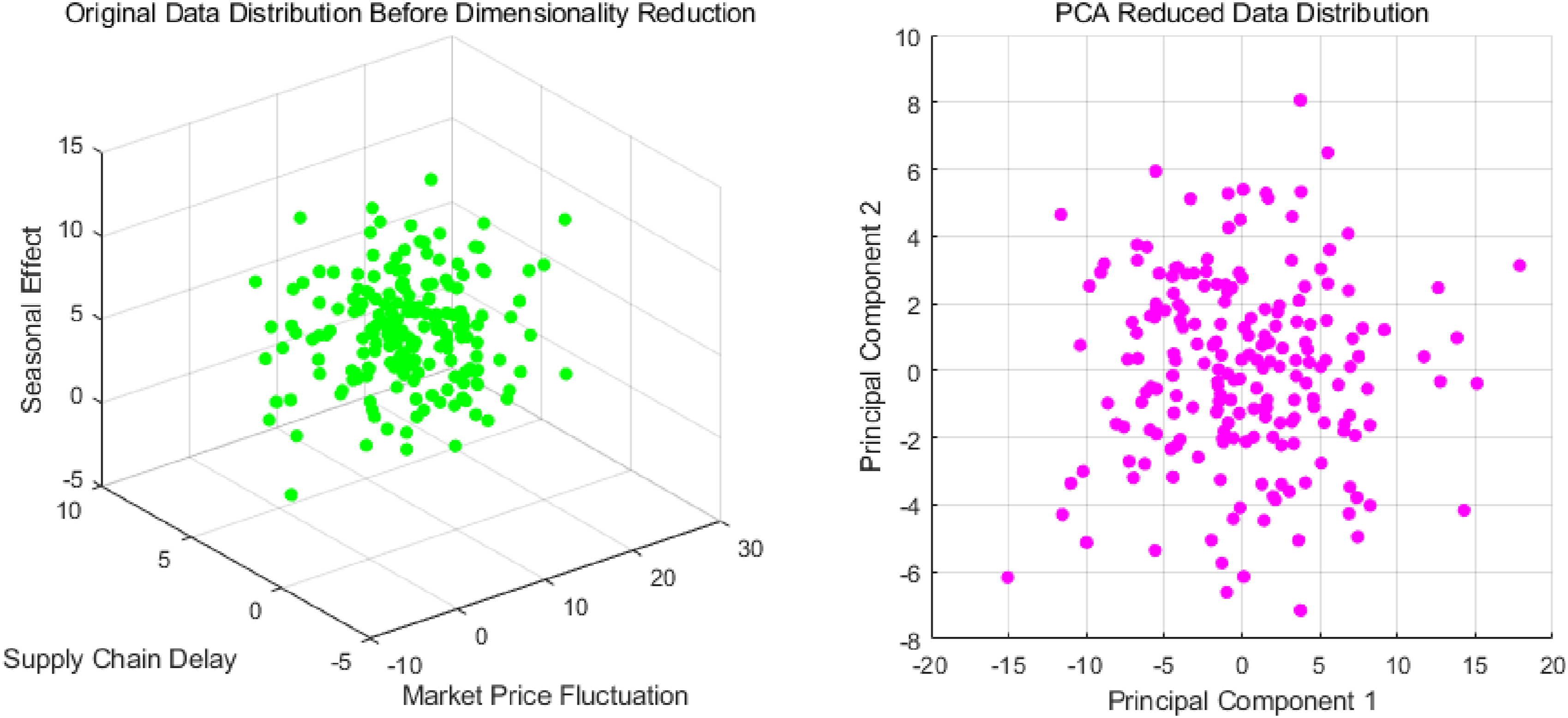
The cleaned data reduces the interference of noise on the model, and the data after PCA dimensionality reduction enables VAE to capture potential regularities and abnormal changes more efficiently, providing more accurate and concise input for subsequent model training.
VAE model construction and training
In this study, a VAE-based deep learning framework is used for predictive modeling of material costs. VAE consists of two parts: an encoder and a decoder. The encoder is responsible for mapping the input high-dimensional data to the latent space, and the decoder reconstructs the original data based on the samples in the latent space. This study designs a multi-layer fully connected neural network architecture. The input of the encoder network is the feature data after data cleaning and dimensionality reduction, and the output is the mean and variance of each latent variable in the latent space. Through these two parameters, the model defines the probability distribution in the latent space, so that the latent variables are regarded as sampled from the distribution.
Specifically, the encoder network consists of multiple fully connected layers, and finally outputs the mean and variance of the latent variables through a fully connected layer. These outputs are used to construct the Gaussian distribution of the latent space. The decoder receives the latent variables through another neural network composed of fully connected layers, maps them back to the original data space, and reconstructs the corresponding construction material cost data. This process utilizes the generative ability of VAE, which not only reconstructs data but also samples in the latent space to generate new data samples.
To ensure the model’s differentiability and avoid the gradient calculation problem caused by the randomness of the latent variables, the reparameterization technique is used. The reparameterization technique expresses the latent variables as a function of the mean and variance and applies the standard normal distribution for sampling, so that the gradient calculation process of the entire model is optimized through back propagation.
In the training process, VAE optimizes the model’s parameters by maximizing the variational lower bound (ELBO, Evidence Lower Bound). The variational lower bound is the core objective function of VAE, which consists of two parts: one is the reconstruction error, and the other is the Kullback–Leibler divergence (KL divergence). The reconstruction error measures the difference between the samples generated by the model in the latent space and the real data, and the KL divergence measures the difference between the distribution of the latent variables and the standard normal distribution. By maximizing ELBO, VAE optimizes the reconstruction error and the distribution of the latent variables at the same time to achieve effective modeling of the data.
This study utilizes the Adam optimizer for parameter optimization in order to train the model. The Adam optimizer has good convergence and robustness when processing large-scale data sets by adaptively adjusting the learning rate. In each iteration, the Adam optimizer automatically adjusts the learning rate of each parameter according to the first-order moment estimate and the second-order moment estimate of the gradient, thereby accelerating the training process and avoiding the oscillation phenomenon that may occur in traditional gradient descent. During the training process, this paper continuously updates the network parameters of the encoder and decoder by minimizing the weighted sum of the reconstruction error and the KL divergence. Through multiple iterations, VAE learns the distribution in the latent space and generates new material cost data based on these distributions.
In the specific implementation, this paper sets relatively strict training parameters, including a batch size of 64 and an initial value of the learning rate of 0.001, and adjusts the learning rate according to the convergence of the model during the training process. In addition, to avoid overfitting, the dropout technique is used to randomly discard a part of the neurons to enhance the generalization ability of the model.
The reconstruction error is used to measure the reconstruction accuracy of the model for the input data. Its calculation formula is the mean squared error between the original data of each sample and the data generated by the model. The smaller the MSE (mean squared error), the better the model reconstructs the data. The KL divergence is used to measure the difference between the distribution of latent variables and the standard normal distribution. The smaller the KL divergence, the closer the distribution of the latent space is to the standard normal distribution, which helps to improve the diversity and stability of model generation.
In Figure 2, three key loss functions in the VAE training process are shown: reconstruction error, KL divergence, and ELBO total loss. First, the reconstruction error gradually decreases as the training progresses, from the initial about 0.8 to close to 0.1, which shows that the model continuously improves the accuracy of data reconstruction during the learning process and better captures the characteristics of construction material cost data. Secondly, the KL divergence gradually decreases from 0.6 to close to 0.01, indicating that the distribution of latent variables in the VAE model gradually approaches the standard normal distribution, and the learning process of the latent space is stable and efficient. Finally, as a comprehensive indicator, ELBO loss also shows a gradual downward trend, indicating that the optimization of reconstruction error and KL divergence promotes the entire model’s performance improvement. In the 200 iterations of training, with the gradual optimization of these three indicators, the VAE model effectively identifies and responds to the potential laws in the material cost data, providing precise prediction basis for subsequent cost optimization decisions. Three key loss functions in the training process of variational autoencoders.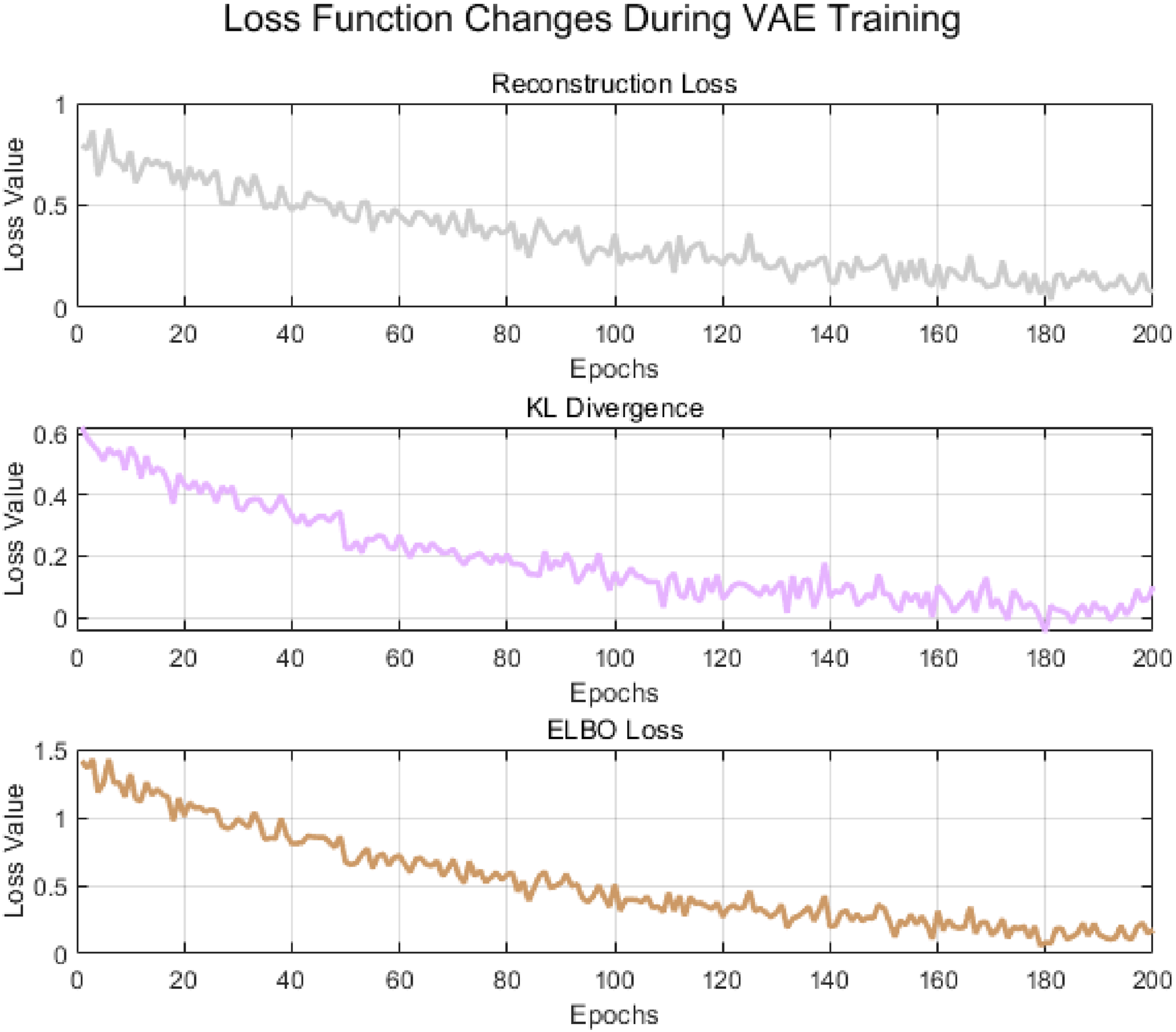
After the model training is completed, this paper processes the data of the training set and the test set through the VAE model to calculate the respective reconstruction errors and KL divergences. In addition, the model’s modeling ability for construction material cost data is further evaluated by visualizing the distribution of the latent space. Through these design and training steps, the VAE model captures the potential patterns in the construction material cost data and generates representative new cost data samples.
Anomaly detection and response mechanism
In engineering material procurement and cost management, abnormal fluctuations have a significant impact on project cost control. This paper uses the variational autoencoder (VAE) model to identify abnormal samples in the latent space that differ from the typical cost.34,35 VAE maps data to the latent space through the encoder and reconstructs the original data through the decoder. When the reproduction error is large or the latent space sample deviates from the typical distribution, the data point may be an anomaly. To identify these anomalies, this paper adopts a two-sample method. First, the reproduction error is calculated. When the error exceeds the preset threshold, it indicates that it may be an anomaly. Second, by calculating the z-score of the latent space sample, samples that deviate from the mean by more than the set standard deviation are also considered anomalies.
In addition, to reduce false positives, the model also compares the similarity of different data points in the latent space for integrated analysis. Using the similarity measurement method based on Euclidean distance, when a data point is far away from other normal samples in the latent space, the system considers the data point to be abnormal. Through the above multiple mechanisms, this paper effectively and automatically identifies possible abnormal fluctuations from the training data, providing a basis for subsequent response measures.
Figure 3 shows the anomaly detection of VAE model in construction material cost data. The reconstruction error distribution diagram shows that the error of normal samples is concentrated between 0.2 and 0.4, while the error of abnormal samples is significantly higher. By the threshold of 0.8, the abnormal data is identified and marked in red. The latent space distribution diagram shows that normal samples are more concentrated near [0,0], while abnormal samples deviate significantly from the normal distribution and are concentrated near [5,5], demonstrating that the VAE model effectively identifies potential abnormal fluctuations. Anomaly detection of VAE model in construction material cost data.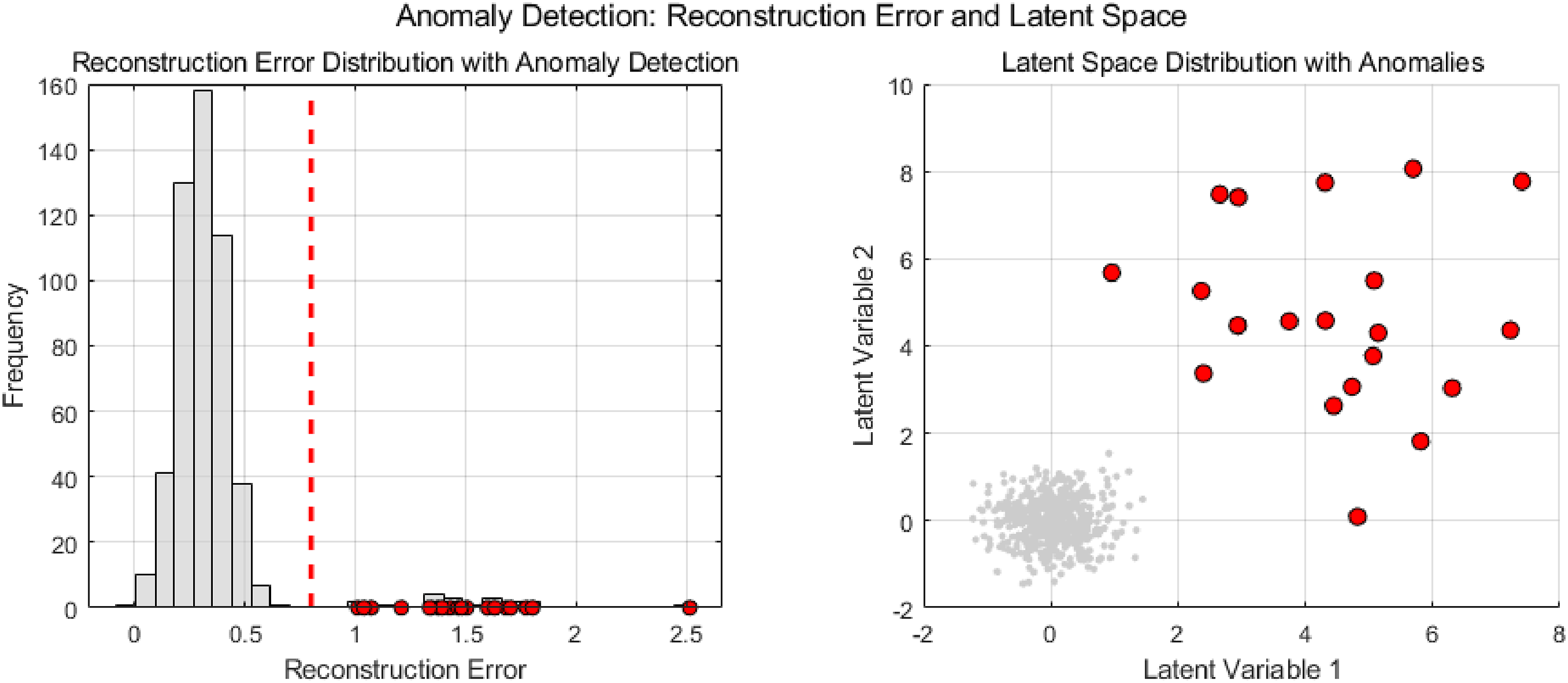
When the system identifies abnormal fluctuations in material costs, the timely response mechanism effectively reduces its impact on the overall procurement cost. This study designs a rapid response framework based on VAE detection of abnormal patterns, covering three major strategies: price prediction adjustment, procurement strategy adjustment, and supply chain optimization. Each strategy is adjusted in combination with the potential variables generated by VAE to ensure the scientificity and effectiveness of the response.
The price prediction adjustment strategy is quickly adjusted based on the latent variables generated by the VAE model. When the system detects abnormal fluctuations, the model first generates future material cost data under different market conditions by sampling samples in the latent space. These data reflect different supply chain environments, market price fluctuations, and the impact of external factors on costs. By re-predicting different sampling points in the latent space, the system dynamically adjusts the predicted value of future material prices and promptly updates the relevant procurement budget and cost estimates to facilitate project managers to make corresponding adjustments. Assuming that the current material cost is

Among them,
Procurement strategy adjustment is to adjust the procurement plan to reduce the impact of cost fluctuations on the project after detecting abnormal fluctuations. For example, when the market price suddenly rises, the system automatically identifies the abnormal pattern of supplier price changes and applies suggestions for adjusting the procurement strategy. Specific measures include selecting suppliers with relatively stable prices, purchasing in advance, and increasing inventory. These adjustments effectively alleviate the cost increase caused by sudden price fluctuations and maintain the liquidity of the project. Assuming that at a certain time point

Among them,
When supply chain disruptions or other abnormal situations occur, the supply chain optimization mechanism automatically triggers relevant optimization algorithms to ensure the stability of material supply. When the system identifies cost fluctuations caused by certain supplier problems or transportation disruptions, it automatically searches for alternative suppliers based on the latent space data provided by the VAE model, evaluates the prices and supply capabilities of alternative suppliers, and adjusts the procurement cycle. In addition, the system also optimizes the procurement plan in real-time based on the predicted material price fluctuations to ensure the elasticity and responsiveness of the supply chain to avoid greater cost fluctuations caused by supply chain problems. Assuming that the current procurement cycle is

Among them,
These response mechanisms effectively respond to cost fluctuations and abnormal situations in construction material procurement through real-time anomaly identification and automatic adjustment strategies. Through the latent variables generated by the VAE model, the system not only identifies abnormal fluctuations in material costs, but also makes precise adjustments according to different scenarios, ultimately achieving optimization of material procurement costs. During this process, the adjustment of price predictions, the flexibility of procurement strategies, and the optimization of supply chains complement each other and jointly ensure the project’s financial control and cost-effectiveness.
Figure 4 shows the response mechanism in material cost management, specifically covering three aspects: price prediction adjustment, purchase strategy adjustment, and supply chain optimization. First, the price prediction adjustment diagram shows the price changes under normal fluctuations and after abnormal fluctuations, and abnormal fluctuations cause the price range to be more drastic. The second figure shows the process of purchase strategy adjustment. When the price fluctuates abnormally, the purchasing volume is adjusted according to the price change. Finally, in the supply chain optimization diagram, the supply chain stability is compared under normal conditions and after optimization. Through optimization, the stability of the supply chain has been improved, and the stability fluctuates around 1.1, which enhances the ability to respond to emergencies. These adjustment measures reflect the practical application of the VAE model in material cost management, respond to market changes in a timely manner, optimize procurement and supply chain strategies, and effectively control cost fluctuations. Anomaly detection and response mechanism based on VAE model.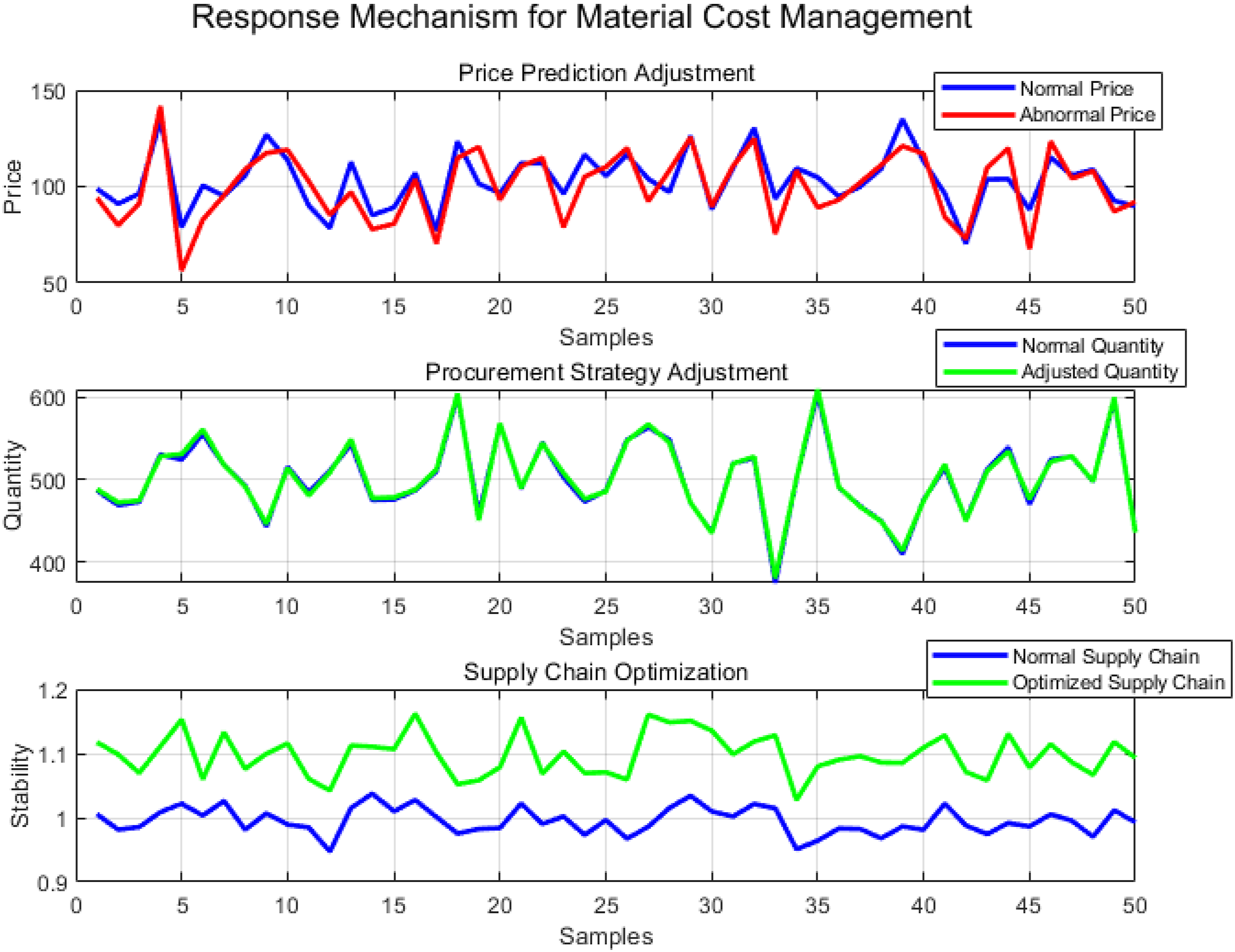
Cost prediction and optimization
Based on the VAE model, generating new material cost data is one of the core tasks of this study. The trained VAE model generates material cost data that meets different market conditions and supply chain states by sampling the latent space. In specific operations, this paper randomly samples latent variables from the latent space and then inputs these latent variables into the decoder to generate new and realistic cost data samples. These generated data reflect material cost fluctuations in different scenarios, including sudden changes in market prices, changes in the supply chain, seasonal fluctuations, and other factors.
By generating samples of different latent variables, VAE simulates various possible market conditions and supply chain states, providing richer and more diverse data for cost prediction. These data can not only predict future cost trends, but also provide sensitivity analysis of cost fluctuations in different scenarios, helping decision makers assess potential risks under different external conditions. The generated cost samples take into account the fluctuations of historical data and possible future change patterns, providing reliable data support for subsequent cost optimization decisions.
In the sample generation process, this paper adopts multiple sampling of latent variables and performs statistical analysis on the generated samples to ensure the diversity and representativeness of the generated data. These data are used for cost predictions, and further combined with the actual environment and business needs to make optimization decisions.
Figure 5 shows material cost data samples generated under three different market scenarios. In the price increase scenario, the generated cost data fluctuates greatly, with a mean of 50 and a standard deviation of about 5, reflecting the sharp fluctuations in market prices; in the price stability scenario, the cost data fluctuates less, with a mean of 30 and a standard deviation of about 2, representing a relatively stable market state; the seasonal fluctuation scenario is between the two. Through these generated data samples, the VAE model captures the material cost fluctuations under different market conditions and provides more diverse support for cost prediction and optimization decisions. Material cost data samples generated under three different market scenarios.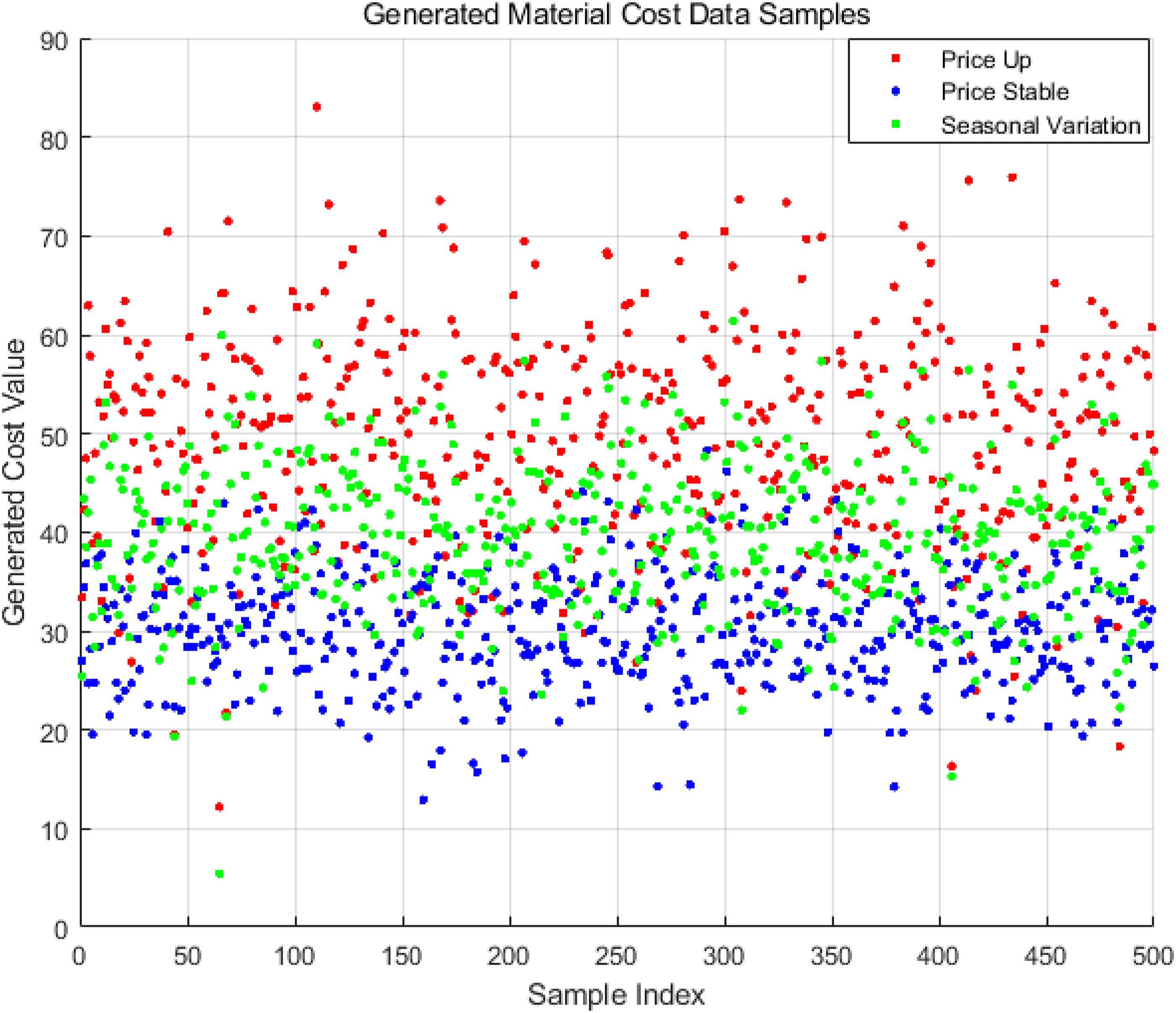
The generated material cost samples provide data support for cost optimization, but how to use these data to make effective optimization decisions is the key issue. This study uses reinforcement learning (RL) to achieve automated optimization of material procurement costs. Reinforcement learning uses trial and error process to continuously adjust strategies by interacting with the environment to maximize long-term benefits. Specifically, this paper designs a reinforcement learning framework in which the agent makes decisions based on the generated material cost samples, with the goal of minimizing procurement costs while ensuring project progress and quality.
The environmental state in this framework includes information such as material cost, supply chain status, and market supply and demand, and the agent’s behavior is to adjust procurement strategies, such as selecting suppliers, adjusting procurement quantities, and optimizing procurement timing. Through the Q learning algorithm, the reinforcement learning model continuously updates the Q value, finds the optimal decision strategy, and adjusts the strategy based on feedback to help the agent reduce costs.
This study sets up a variety of scenario simulations, including price fluctuations, delivery delays, and demand changes, to enhance the model’s adaptability to different market and supply chain environments. By combining VAE to generate samples and reinforcement learning optimization, the system can self-adjust in a dynamically changing market, update optimization strategies in real-time, and reduce cost fluctuations and overall project costs.
After multiple trainings, the reinforcement learning model makes adjustments based on environmental changes, such as optimizing procurement timing, selecting the best supplier, and controlling inventory, thereby minimizing costs under different market conditions. This framework not only improves the accuracy of cost prediction, but also provides intelligent support for material procurement for construction projects.
Method effect evaluation
Mean squared error
A crucial indicator for evaluating the accuracy of VAE model prediction of material costs is the mean squared error (MSE). By squaring these differences, it can check the difference between the model’s predicted cost and the actual cost. If the model’s prediction is closer to the actual cost, the model is more accurate, and the lower the MSE, the more accurate the model. In this study, by comparing the actual material cost of the test group with the prediction of the VAE model, a good MSE value is found. This shows that the VAE model performs well in predicting the material cost of construction projects.
In Figure 6, the left figure shows the relationship between the actual material cost and the VAE prediction data. Most of the data points are close to the diagonal line, indicating that the model’s prediction is relatively accurate. Although there is a small amount of deviation, the overall error is small, which verifies the effectiveness of VAE in material cost prediction. The right figure shows the change of MSE with training iterations. The MSE value gradually decreases to close to 0, indicating that the prediction accuracy of the model gradually improves and the error gradually decreases during the optimization process, proving the effectiveness of the VAE model. Prediction data and MSE trend.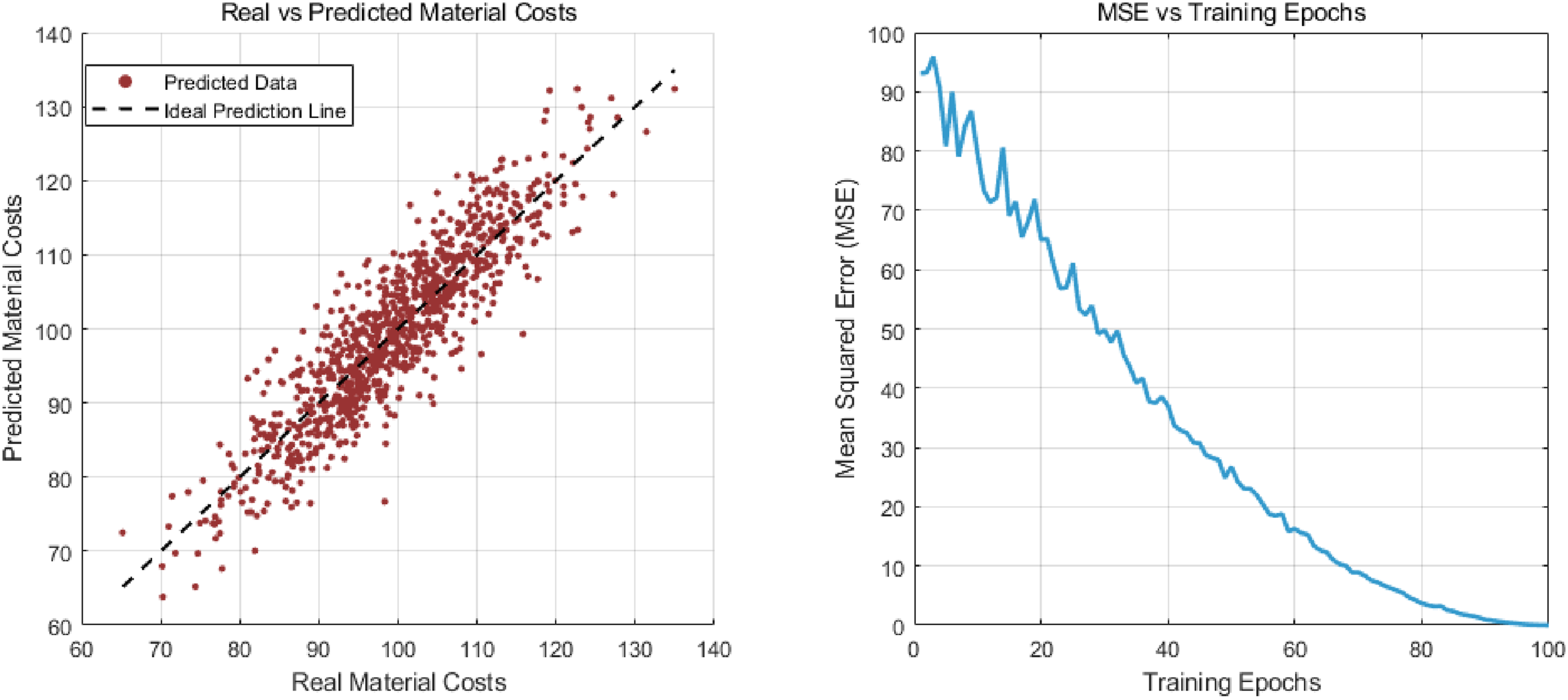
Accuracy
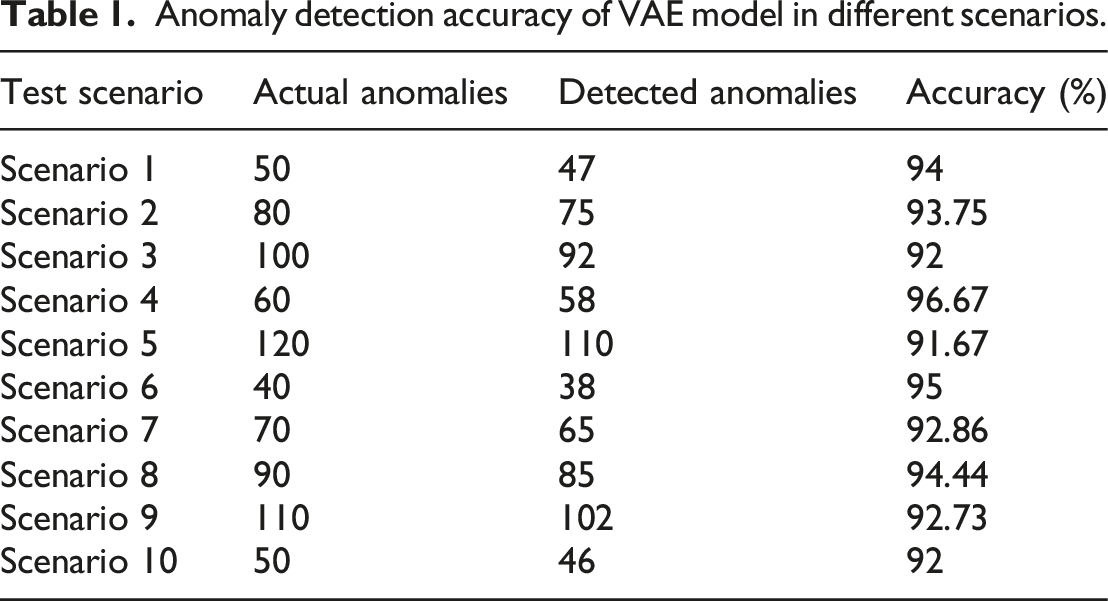
Accuracy is used to evaluate the performance of the VAE model in anomaly detection, reflecting the ratio of anomalies detected by the model to the total anomalies. In the process of purchasing construction materials, abnormal fluctuations may be caused by factors such as market price fluctuations and supply chain disruptions. The higher the accuracy, the stronger the model’s ability to identify abnormal situations. By comparing with the actual labeled data, the VAE model in this paper shows a high accuracy in the anomaly detection task, proving its effectiveness in dynamic material cost prediction and accurately capturing potential abnormal fluctuations.
Anomaly detection accuracy of VAE model in different scenarios.
Anomaly recognition rate
The anomaly recognition rate measures the ability of the VAE model to identify anomalies, and the effect of the model is evaluated by comparing it with manually annotated data. This study uses an annotated anomaly dataset for evaluation, and the findings demonstrate that the VAE model can accurately identify abnormal fluctuations, and the recognition rate is significantly higher than that of traditional cost prediction methods. This presents that VAE effectively identifies price fluctuations and supply chain issues in the material procurement process, providing support for dealing with abnormal fluctuations.
Figure 7 displays the performance of three anomaly detection methods (Z-score, K-means, VAE) in construction material cost fluctuations. The recognition rates of the VAE method are 93% and 94% in June and October, respectively. The recognition rates are high in each month, significantly better than the Z-score method and the K-means method, and the overall recognition rate is generally higher than 80%. VAE significantly improves the accuracy of anomaly recognition by combining complex data features, demonstrating its advantages in material cost fluctuation detection and providing effective support for cost optimization and risk management. Performance of three anomaly detection methods in construction material cost fluctuations.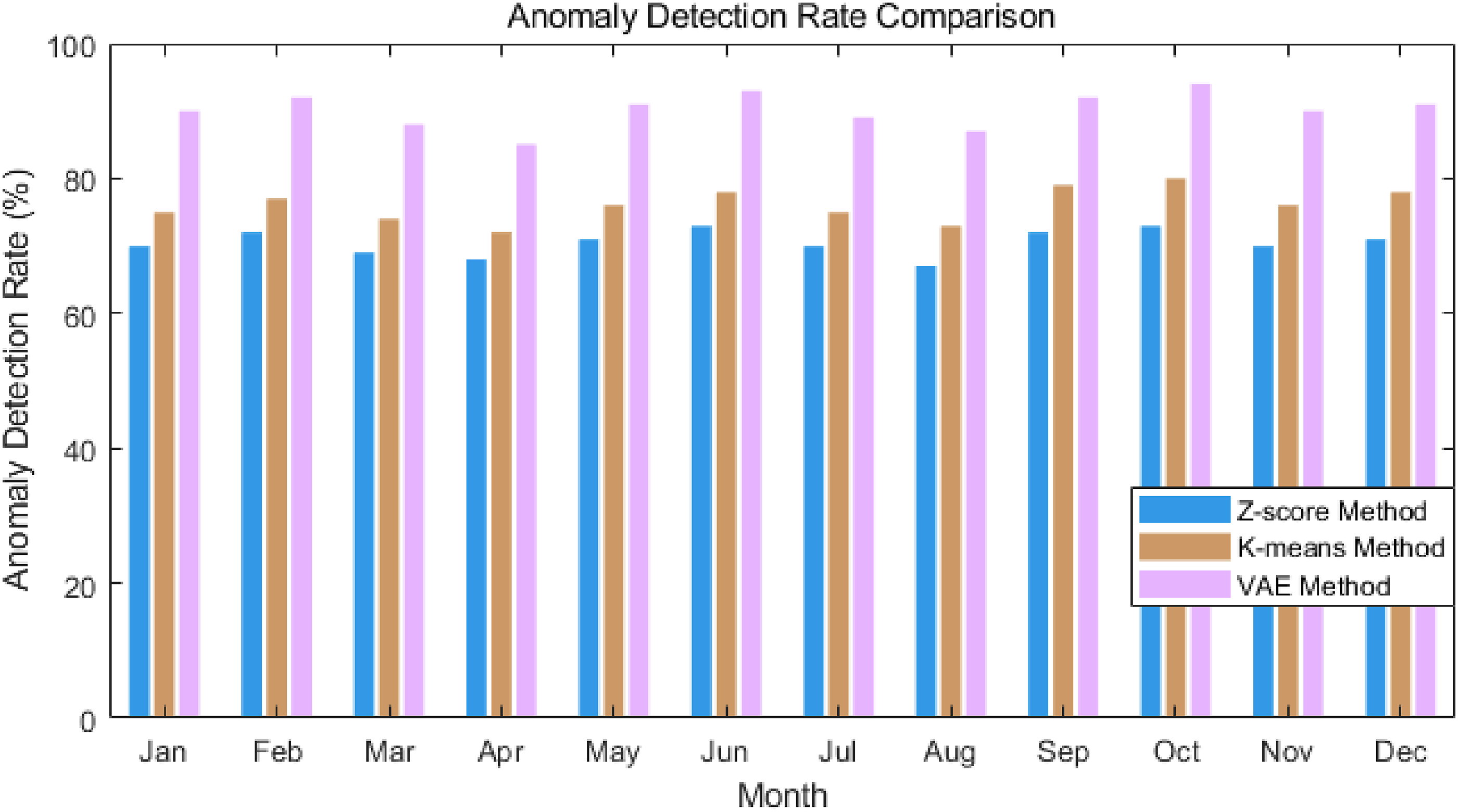
Response time
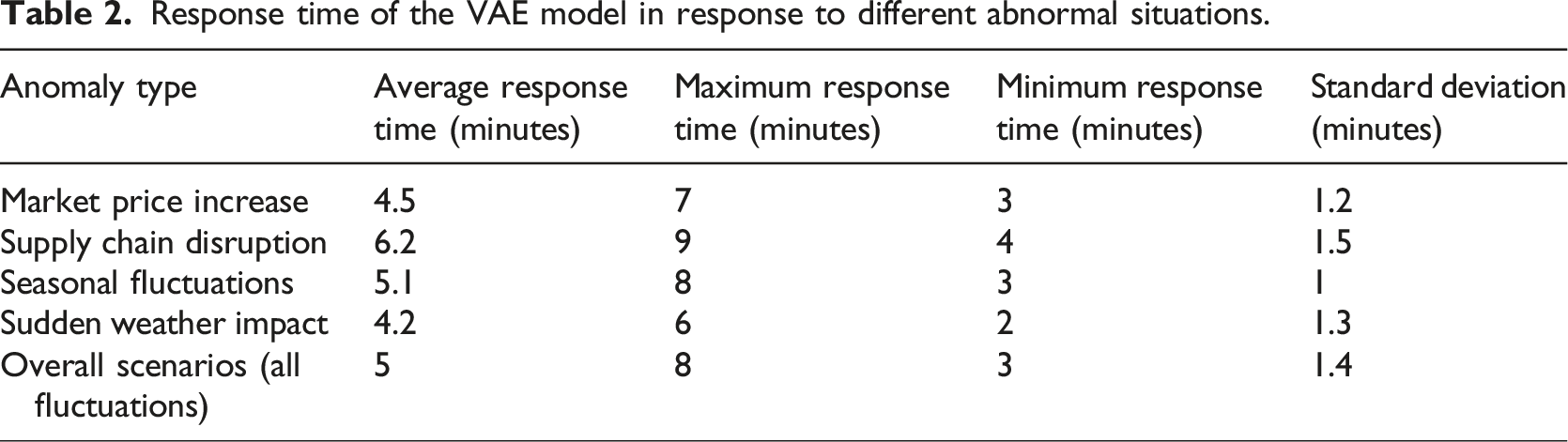
Response time is the average time it takes to evaluate the VAE model to make response adjustments after anomalies are discovered. In the process of purchasing construction materials, timely response to abnormal fluctuations is crucial for cost control. This paper measures the time required from model recognition to the start of anomalies to the system taking response measures (price adjustment, procurement strategy optimization, etc.). By statistically analyzing the response time of different types of anomalies, the results of this paper show that the VAE model responds in a very short time, effectively improving the system’s response speed to sudden cost fluctuations and providing a guarantee for cost control of construction engineering projects.
Response time of the VAE model in response to different abnormal situations.
Cost fluctuation suppression rate
The cost fluctuation suppression rate is a key indicator for evaluating whether the VAE model effectively suppresses the cost fluctuations of construction materials under the action of the anomaly detection and response mechanism. After the system identifies abnormal fluctuations, it effectively reduces the impact of fluctuations on the project’s total cost by quickly adjusting price predictions and optimizing procurement strategies. By comparing the cost fluctuations before and after optimization, this paper finds that with the assistance of the VAE model, the cost fluctuations of construction materials have been significantly suppressed. The high cost fluctuation suppression rate indicates that the model can effectively achieve stable control of material costs in practical applications, thereby improving the budget management level of the overall project.
Figure 8 shows the changes in monthly material cost fluctuations before and after optimization. Before optimization, the cost fluctuations are large, especially at the beginning and end of the year. After optimization, the fluctuations are significantly reduced and tended to be stable overall, indicating that the optimization strategy effectively suppresses cost fluctuations. The suppression rate of cost fluctuations is 9.7103%, which proves the effectiveness of optimization measures in reducing cost fluctuations and improving the stability of fund management. Fluctuations in the cost of construction materials before and after optimization for 12 months.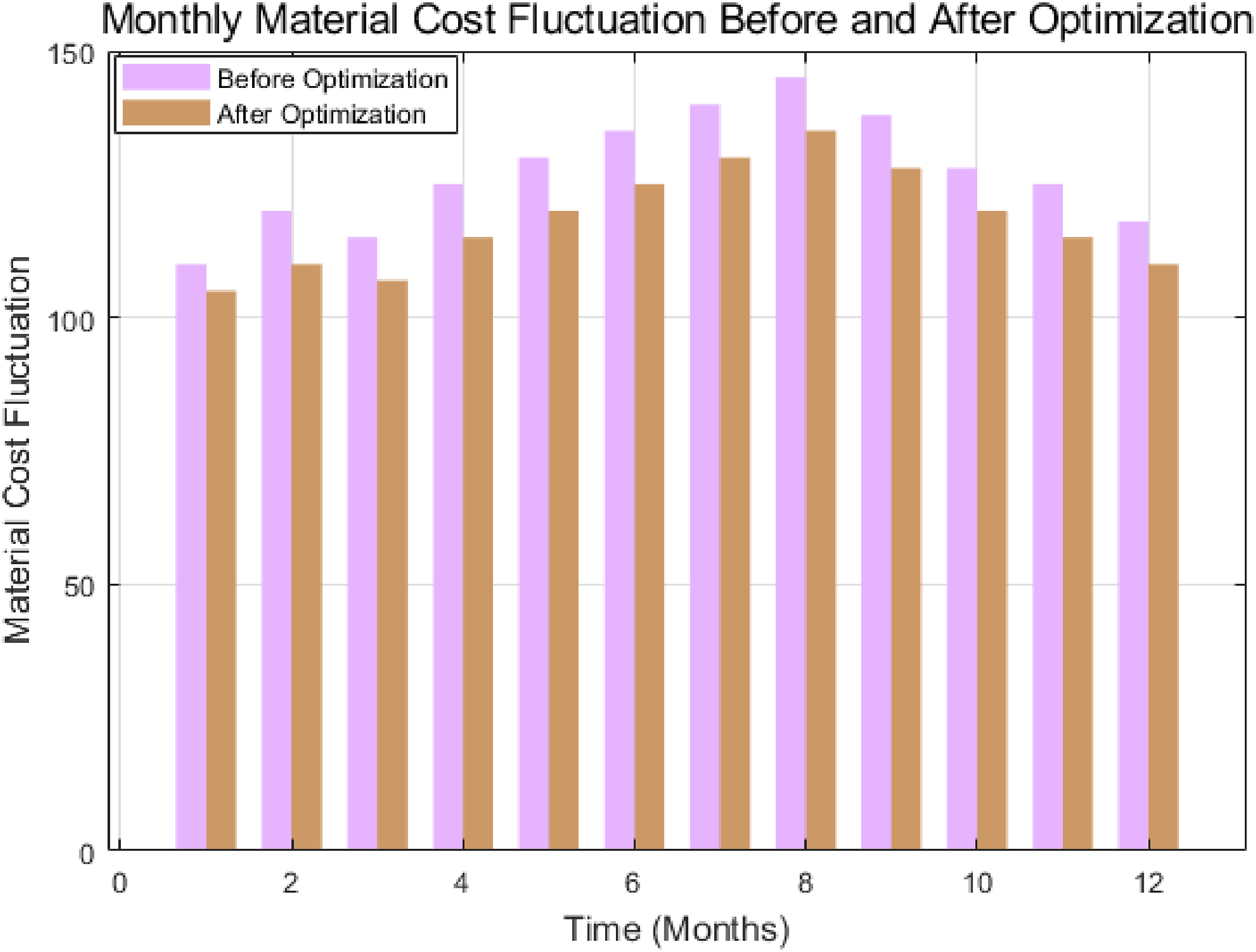
Conclusions
This paper proposes a construction engineering material cost optimization framework based on variational autoencoder (VAE), integrated with big data and deep learning technologies, to address the challenges posed by abnormal fluctuations in traditional cost forecasting and supply chain management. Through data preprocessing and feature selection, historical material cost data are refined to generate synthetic yet realistic cost samples under diverse market conditions and supply chain states, thereby providing accurate and robust data support for subsequent prediction and decision-making. By incorporating reinforcement learning (RL), an automated optimization architecture is developed, enabling dynamic adjustment of material procurement costs through agent-environment interactions. This approach achieves intelligent and adaptive cost management under varying operational scenarios.
Although the proposed model demonstrates promising performance in both design and application stages, potential challenges remain in practical implementation, particularly concerning data quality, scalability, and real-time computational efficiency. Future research directions include improving model training efficiency, incorporating more complex environmental variables, and exploring fine-grained supply chain optimization strategies. These enhancements aim to further strengthen the model’s responsiveness and accuracy in complex and dynamic construction environments, contributing to the advancement of intelligent cost management systems in civil engineering.
Footnotes

Funding
The author received no financial support for the research, authorship, and/or publication of this article.
Declaration of conflicting interests
The author declared no potential conflicts of interest with respect to the research, authorship, and/or publication of this article.