







Abstract
Introduction
Research background
With the rapid development of information technology, big data has driven innovation in many fields, and education is no exception. In the interdisciplinary training of emergency management and linguistics, big data technology shows its unique value. As a new field, emergency linguistics can reduce risks and optimize responses through effective language communication in crisis situations. Under the background of globalization, interdisciplinary education model is conducive to cultivating talents with diversified problem-solving abilities. The traditional emergency language talent training model is limited to experiential teaching, lacks systematic use of big data resources, and fails to make full use of data-driven education methods provided by modern technology.
This study aims to explore how to optimize interdisciplinary emergency language talent training mode through big data technology, combine traditional teaching methods with modern information technology, find more efficient teaching methods, and formulate more accurate education goals. It is of great theoretical and practical significance to explore innovative education models to cope with the current and future complex global emergency challenges and to train high-quality talents who meet the requirements of the new era.
Unlike prior applications of big data in education that emphasize generic adaptive tutoring or administrative dashboards, this study targets the under-explored junction of big data, interdisciplinary teaming, and emergency linguistics. We contribute a closed-loop model that fuses learning analytics with scenario-based linguistic tasks, dynamically reconfigures team roles from interaction traces, and provides immediate, skill-specific feedback under time pressure. Methodologically, we pair cohort-level experimentation with multivariate modeling to isolate the incremental effect of data-driven interventions on emergency language performance and cross-disciplinary collaboration. Substantively, we operationalize “emergency language ability” with authentic tasks and measurable response latencies, offering a replicable template for crisis-communication training that extends beyond conventional language curricula.
Recent crises illustrate the stakes of language breakdowns in emergencies. During large-scale disease outbreaks, multilingual communities reported delayed testing and vaccine uptake where public guidance was inconsistently translated or delivered with unfamiliar terminology, leading to avoidable risk exposure. After major natural disasters and cascading events, mismatches between technical terms and community registers have impeded triage, evacuation compliance, and resource distribution—particularly when alerts were issued in a single language or without plain-language paraphrases. Similar failures appear in wildfire seasons and extreme-weather evacuations, where alert timeliness and linguistic accessibility jointly determine protective action. These cases motivate a training model that treats emergency linguistics as a measurable competence under time pressure and uses data to personalize practice, verify gains, and coordinate team roles in real time.
Interdisciplinary education in this study is grounded in established learning theories. Situated cognition motivates scenario-based tasks that mirror real crisis practice. Social constructivism and cognitive apprenticeship justify structured coaching, modeling, and fading as learners progress through emergency discourse moves. Distributed cognition and team cognition explain why coordination artifacts (checklists, role scripts, shared displays) amplify group performance. Boundary-crossing perspectives highlight how “boundary objects” (plain-language glossaries, incident timelines) align disciplinary viewpoints. Finally, cognitive load principles inform sequencing and scaffolding to preserve fluency under time pressure. These foundations anchor our design choices and clarify why data-informed orchestration should translate into measurable individual and team gains.
Research status
In the current research field, the implementation of interdisciplinary education has gradually become an important trend in educational innovation. Noh pointed out that the local interdisciplinary education model is conducive to the realization of educational innovation, emphasizing the necessity and urgency of interdisciplinary education in the context of regional education. With the rapid development of information technology, big data and cloud computing technology are widely used in the field of education, providing new impetus and possibilities for education. Pan developed a live online education system based on big data, demonstrating how modern technology can optimize the interaction and learning efficiency between teachers and students.
The application of educational technology is not limited to improving teaching efficiency, but also covers the decision support system. The regional education service platform based on big data developed provides effective decision support for education administrators, highlighting the important role of big data in the educational decision-making process. 1
For the complexity of digital learning in multilingual environments, Zhao et al. provide us with an in-depth analysis of the application of WHO’s emergency learning platform in cross-lingual environments, indicating that linguistic and cultural challenges need to be overcome when implementing digital learning solutions on a global scale. 2 These studies demonstrate the use of technology in education, revealing the potential and limits of educational technology in addressing global challenges.
Existing big data approaches in education cluster around three patterns: (i) risk prediction and early-warning systems that flag learners for support, (ii) content-level adaptivity that personalizes item difficulty, and (iii) simulation platforms that improve procedural skills without data-driven teaming. These models rarely (a) formalize emergency linguistics as a first-class learning outcome, (b) optimize team-level collaboration with analytics from communication logs, or (c) connect real-time feedback to experimentally verified gains. Our approach addresses these gaps by: defining crisis-communication competencies with task-embedded metrics; using interaction features to allocate roles and coordinate cross-disciplinary workflows; and validating effects through ANOVA and regression on a balanced sample. This comparison clarifies where our design extends the field—from individual adaptivity toward team-centric, linguistically grounded optimization.
Prior models exhibit four limits we aim to overcome. First, most systems personalize at the individual level but under-model team processes, overlooking coordination costs that surface in real incidents. Second, “language ability” is often proxied by accuracy alone, ignoring response latency and interactional repair—two variables critical under time pressure. Third, simulations rarely connect analytics to role allocation or joint decision-making, leaving collaboration gains unverified. Fourth, generalization beyond monolingual, culturally homogeneous cohorts is weak, with limited experimental controls. Our design addresses these gaps by coupling scenario-embedded metrics for accuracy and latency with analytics-driven team role reconfiguration, validating effects through controlled experimentation, and specifying a portability pathway for multilingual, culturally diverse settings.
Research significance
Academic significance
In terms of academic value, this study has important academic value for understanding and expanding the existing educational theoretical system, and introduces big data technology to provide a new perspective to analyze and solve problems in interdisciplinary education, such as curriculum design, learning effect evaluation, and educational resource optimization. This study systematically evaluates the teaching methods and effects of emergency linguistics, which will help to enrich the understanding of the application of emerging technologies in the field of education and promote the development of educational technology and interdisciplinary education theory.
Practical significance
At the practical level, the educational model proposed in this study will directly affect the formulation of educational policies and teaching practices, especially the language education in response to emergency situations. By developing and implementing teaching strategies based on big data, educational institutions can manage and utilize educational resources more effectively and improve the response speed and quality of educational activities. The findings will also provide a scientific basis for educators to better meet students’ learning needs when designing curricula and activities. The interdisciplinary training model can provide students with a more comprehensive educational experience, enhance their ability to solve complex problems, and cultivate more talents with practical skills and innovative capabilities in a globalized and rapidly evolving society.
To bridge research with practice, we map the findings to policy and curriculum development. At the policy level, the outcome metrics can be embedded into institutional quality frameworks and teacher evaluation standards, guiding investment in simulation facilities, data governance, and multilingual support services. For curriculum design, the competency model translates into syllabi with scaffolded crisis-communication tasks, interdisciplinary studios, and micro-credentials that recognize emergency-language proficiency and team leadership. Professional development modules help instructors interpret dashboards and enact data-informed adjustments. Governance provisions—consent, transparency, and data minimization—ensure ethical deployment at scale. This alignment ties academic evidence to actionable levers in accreditation, funding, and program review.
Conceptual framework
The framework links Data, Analytics, and Pedagogy to measurable Outcomes with continuous feedback.
Data layer: multimodal traces from assessments, scenario responses, team communications, and LMS events; governed by privacy and ethical safeguards.
Analytics layer: feature extraction on linguistic accuracy, response latency, and coordination markers; models for learner profiling, team-role recommendation, and risk detection.
Pedagogy layer: personalized learning paths, scenario-based emergency language tasks, and structured interdisciplinary projects with dynamically adjusted roles and supports.
Outcomes layer: emergency language proficiency and interdisciplinary collaboration indices, reported to instructors and learners via dashboards that trigger targeted interventions.
Feedback loops connect outcomes back to analytics and pedagogy, enabling real-time refinement of tasks, materials, and team composition. This framework makes big data actionable for interdisciplinary emergency language training and underpins the study’s experimental design.
Research questions and hypotheses
Analytics-guided orchestration will yield higher accuracy, faster response, and more effective repair than business-as-usual instruction.
Teams receiving analytics-guided role assignment will exhibit greater coordination efficacy than those without such assignment.
The effect of orchestration on team coordination is partially mediated by gains in emergency linguistic competence.
Theoretical basis
Big data technology
Big data technology is a technology to extract information from diverse, high-speed and complex large-scale data sets, and has played an important role in the field of education. In the education system, big data technology is mainly used in the monitoring of student performance, the optimal allocation of teaching resources, and the support system for educational decision-making.
Big data applications in education include student data analysis, course content optimization, and the design of personalized learning paths. By analyzing students’ learning behaviors, achievements, and feedback, educators can more accurately identify students’ needs and adjust teaching strategies to improve teaching effects. 3 In the vocational education and training system based on blockchain technology developed by Liu et al., through the combination of 5G technology and big data analysis platform, he realized the real-time monitoring and analysis of the teaching process and learning effect. 4
An intelligent education system described by Akhtar utilizes big data technology and artificial intelligence to provide E-learning services to students through electronic devices, including data analysis technology to adjust learning content and evaluate learning outcomes, marking the potential of big data technology in promoting the personalized development of education. 5 The teaching system combining virtual reality and artificial intelligence developed makes use of big data to adjust courses in real time and summarize learning data to support curriculum setting and teaching management. 6 The application of big data technology in the field of education not only enhances the individuation and adaptability of teaching, but also improves the efficiency and scientificity of educational management.
Interdisciplinary education model
The interdisciplinary education model aims to integrate knowledge and skills from multiple subject areas to solve complex real-world problems. This educational model encourages students to consider problems from the perspectives of different disciplines and cultivates their comprehensive thinking ability. In recent years, with the rapid development of science and technology, the interdisciplinary education model has been widely applied and studied in the world. Huang et al. proposed a systematic interdisciplinary engineering and technology model, which demonstrated how to effectively integrate engineering, science and technology education to enhance students’ innovation ability and problem-solving skills by utilizing cutting-edge technologies, especially in STEM education. 7
Ganotice and Chan further validated the positive impact of interdisciplinary education on improving the cognition and perception of pre-school licensing students in the fields of health care and social care by their evaluation of four different interdisciplinary education models. 8 The research of Zhang et al. extended to music education, analyzed the interdisciplinary cooperation models of different higher education institutions in North America, Europe, Oceania, and Asia, and provided diversified strategies and effects of interdisciplinary education implemented on a global scale. 9 In their research on how to develop computational thinking by designing basic learning activities, Wang et al. emphasized the importance of interdisciplinary activity design for cultivating students’ analytical and problem-solving abilities. It shows that interdisciplinary education is not only a simple combination of subject knowledge, but also an educational strategy to promote innovation and critical thinking. 10
Emergency linguistics
Emergency linguistics is the study of the effective use of language for communication and decision-making in emergency situations. Emphasize the importance of clarity, accuracy, and rapid response in emergency situations such as natural disasters and public health crises. Emergency linguistics deals with the direct use of language and also includes the organization, processing, and understanding of information conveyed through language to ensure the effective transmission and reception of information.
In education, there is a growing need for emergency linguistics, especially in the field of public health and safety. Dreisbach and Mendoza-Dreisbach discuss the importance of integration of emergency language services for public health response during the COVID-19 pandemic, pointing out that in crisis situations, language services are essential to ensure the accuracy and timeliness of information delivery. 11 The educational needs of emergency linguistics are also reflected in the development of decision support systems. Ding and Liu proposed a zero-sum game-based emergency decision-making method that uses Pythagorean fuzzy uncertain linguistic variables, demonstrating the application potential of linguistics in complex decision-making processes. 12 Huang et al. further developed this field by integrating regret theory and EDAS method into a new decision-making method in a binary spherical language environment and demonstrated advanced techniques for using linguistic information processing in emergency decision-making. 13 The work of Mo and Qi et al. also highlights the use of probabilistic linguistic term sets and interval-based binary linguistic environments in emergency decision-making, which not only improves the quality of decision-making, but also enhances the accuracy and adaptability of language expression in the decision-making process.14,15
The need for emergency linguistics in education is mainly reflected in improving the ability of future professionals to use language in high-pressure and uncertain environments, ensuring that they can effectively manage information, communicate and make decisions. This requires educators to teach basic skills in the use of language, as well as the ability to apply it in specific emergency situations.
We position emergency linguistics as an emerging field at the intersection of pragmatics, interaction analysis, and risk communication. The domain comprises three levels: (i) lexico-pragmatic resources for clarity and uncertainty management, (ii) interactional organization under time pressure (turn-taking, repair, confirmation), and (iii) institutional alignment with alert protocols and public guidance. This study advances the field by (a) operationalizing competence as a triad of accuracy, latency, and coordination efficacy; (b) introducing team-linguistic adaptivity—a group’s capacity to reconfigure discourse roles as constraints evolve; and (c) providing task-embedded, portable indicators that enable standardized benchmarking across scenarios and cohorts.
Synthesis across disciplines
We integrate big data learning analytics, interdisciplinary pedagogy, and emergency linguistics into a single explanatory account. Data pipelines capture multimodal traces from scenario tasks and team communication; analytic models translate these traces into competence indicators; pedagogy operationalizes indicators via adaptive tasks and dynamic team-role supports. This alignment yields two testable propositions: (H1) data-informed task adaptation reduces linguistic response latency without degrading accuracy; (H2) analytics-guided role allocation improves coordination efficacy in cross-disciplinary teams beyond content-only adaptivity. By linking constructs across fields—measurement (linguistics), mechanism (analytics), and intervention (pedagogy)—the framework explains how micro-level language behaviors scale to team performance under crisis constraints.
Theoretical framework
We specify an integrative model that links big data affordances to pedagogical orchestration and, in turn, to emergency language and team outcomes. Four latent constructs organize the framework: Big Data Affordances (BDA)—availability, granularity, and timeliness of learning traces; Pedagogical Orchestration (PO)—personalized tasking, scenario difficulty control, and analytics-guided role assignment; Emergency Linguistic Competence (ELC)—propositional accuracy, response latency, and repair effectiveness; and Team Coordination Efficacy (TCE)—shared understanding, turn-taking fluency, and decision alignment. The model posits BDA → PO → {ELC, TCE}, with ELC partially mediating PO → TCE. Two contextual moderators shape effects: Task Urgency (TU) intensifies the impact of PO on latency and repair; Cultural-Linguistic Diversity (CLD) moderates transfer from individual competence to team coordination. From this we derive testable propositions: (H1) PO improves ELC; (H2) PO improves TCE; (H3) ELC partially mediates PO → TCE; (H4) TU strengthens PO → latency reduction; (H5) CLD attenuates the ELC → TCE path absent explicit role supports; (H6) BDA’s contribution to outcomes is fully channeled through PO. This framework provides a falsifiable account of how data, pedagogy, and interaction dynamics jointly produce crisis-communication performance.
Research design
Research object
The objects of this study mainly include university students, and 300 students are randomly selected from various disciplinary backgrounds to ensure the representativeness and diversity of the sample. They are at a critical stage in their educational careers and have a high capacity to accept new knowledge and skills. Students at this stage often have the basic academic background knowledge to respond to changes in educational patterns and provide valuable feedback.
Experimental design
In this study, a controlled experimental design was used to evaluate the difference between the interdisciplinary emergency language talent training model based on big data and the traditional interdisciplinary emergency language talent training model. The goal of the experiment is to reveal the potential advantages of the teaching model based on big data in improving students’ emergency language skills and interdisciplinary cooperation ability through systematic comparison. The students in the experimental group received the interdisciplinary emergency language education model based on big data technology, while the students in the control group received the traditional interdisciplinary emergency language education model.
Each group selected 150 students to ensure that the two groups were comparable in age, educational background, and professional direction. Before the experiment, all participants will undergo a pre-test to assess their emergency language skills and interdisciplinary collaboration before starting the experiment. The next two groups of students will receive one semester of instruction in their own mode of education. At the end of the course, all students will take the same post-test, which is designed to assess students’ ability to use emergency language and improve their ability to collaborate across disciplines.
Data collection methods
Questionnaire composition
Questionnaire composition.
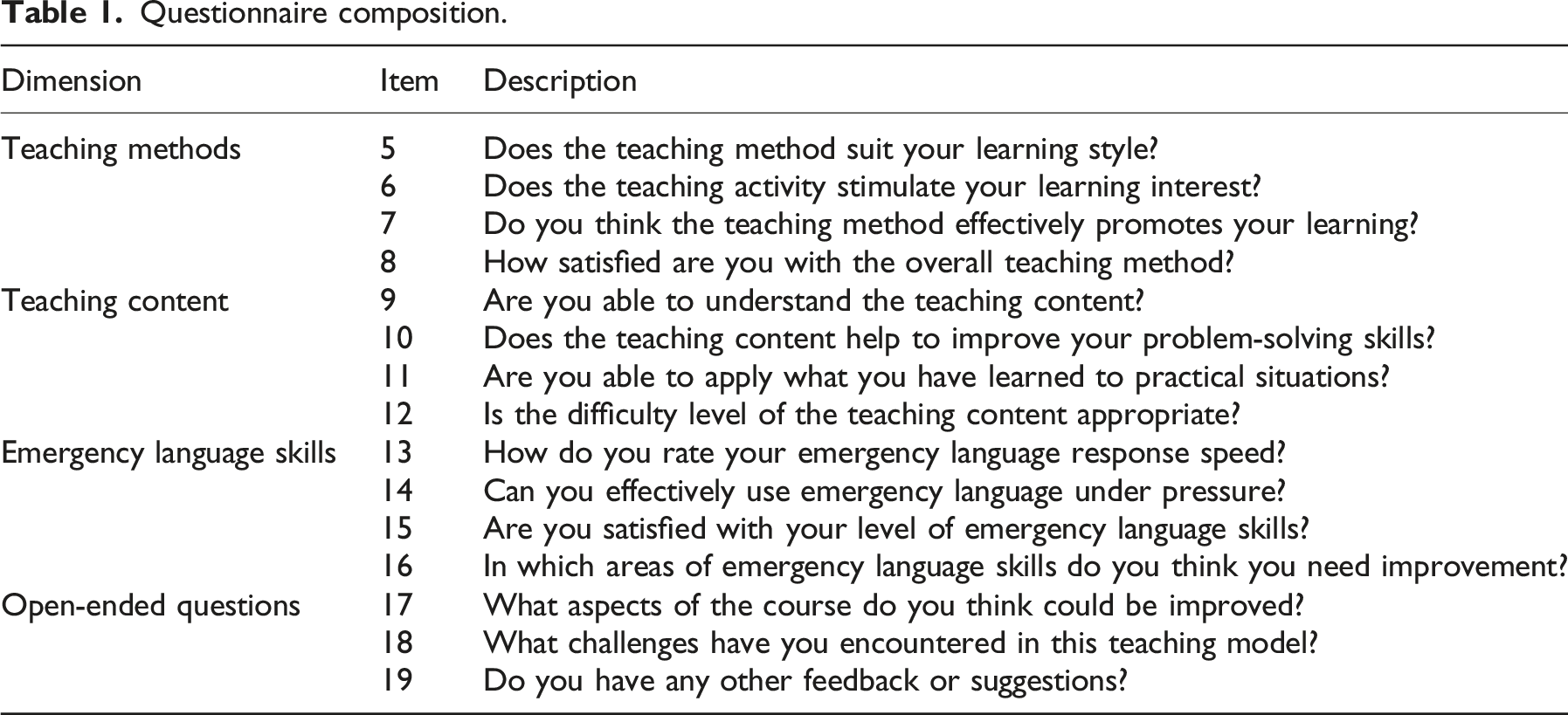
Collection process
Questionnaires were distributed mainly using online survey tools. In the last week of teaching activities, questionnaires were distributed to all students participating in the study. In order to improve the response rate and ensure the integrity of the data, all participants were notified in advance through email and online platform before the questionnaire was distributed, and technical support was provided during the questionnaire filling to solve any filling problems that might arise. During the collection process, the research team closely monitored the return of questionnaires, alerting participants via email who had not yet completed the questionnaires. After the questionnaires were collected, the data were preliminarily screened and incomplete or obviously wrong questionnaires were eliminated. A total of 296 questionnaires were valid, with an effective recovery rate of 98.67%.
Data analysis technology
Data cleaning and integrity check
After the questionnaire was designed, data cleaning and integrity checking were used to ensure the reliability and validity of the research results. Data cleansing focuses on removing duplicate records, correcting obvious input errors, dealing with missing values, and standardizing data formats. Check the age and gender fields in the questionnaire responses for input errors, and decide whether to exclude or use statistical methods such as interpolation to fill in the missing response data according to the situation to ensure the integrity of data analysis. Data integrity check mainly confirms the integrity and consistency of data and ensures that all data sets comply with predefined standards and rules. Perform multiple checks on the data set to verify that all required fields have been completed in all questionnaires, that the data types and formats meet the analysis requirements, and that the data are logically consistent.
Statistical analysis methods
In order to deeply analyze the effect of big data-based interdisciplinary emergency language talent training model on the improvement of students’ ability, this study will use multiple linear regression model and analysis of variance (ANOVA) to evaluate the impact of teaching model on students’ emergency language skills and interdisciplinary cooperation ability.
Multiple linear regression model
The multiple linear regression model can deal with multiple predictors and explore the relationship between variables and students’ ability. This study applied the model to identify and quantify the specific contribution of each variable to students’ emergency language skills, so as to provide a basis for educators to optimize teaching strategies and improve education quality. This model can help us understand which factors are most critical to the improvement of students’ interdisciplinary cooperation ability in practical teaching. The multiple linear regression model can be used to analyze the influence of multiple independent variables on a dependent variable. The model is as follows (Formula 1):
Analysis of variance
The main purpose of using ANOVA is to determine whether there are statistically significant differences in the impact of different teaching modes on students’ emergency language skills and interdisciplinary cooperation ability. Comparing the average scores of the experimental group and the control group, we can determine whether the teaching model based on big data is statistically better than the traditional model, providing a scientific basis for the choice of educational strategies. ANOVA can also help researchers understand how different variables (such as students’ background and learning motivation) affect learning outcomes when implementing new educational technologies.
Analysis of Variance (ANOVA) is used to compare whether differences in the means of two or more groups of data are statistically significant, and in this study, ANOVA will be used to compare the performance of the experimental group (students who received a big data-based education model) and the control group (students who received a traditional education model) on emergency language skills and interdisciplinary competence. The basic form is as follows (Formula 2):
Inter-group variance represents the difference in achievement between different educational modes, and intra-group variance represents the variability of student achievement within the same educational mode.
Result analysis
Descriptive statistics
Basic information of the respondents
Basic information of respondents.
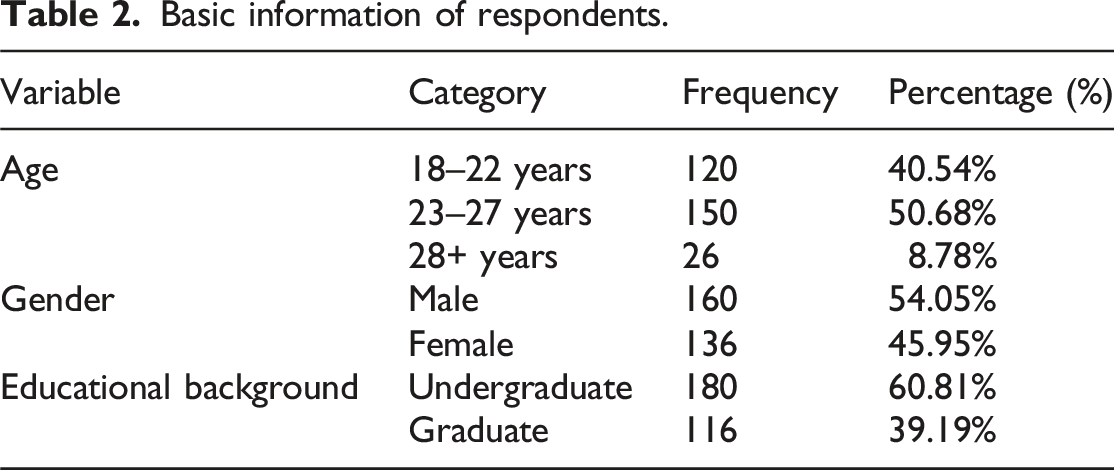
As Figure 1 shows, most participants are concentrated in the 23–27 age group, with a higher proportion of older undergraduate and graduate students in colleges and universities. Students aged 18–22 account for 40.54%, which is mainly the young undergraduate population. There were fewer participants aged 28 and over (8.78%), including some working graduate students or those entering higher education later in life. Age distribution.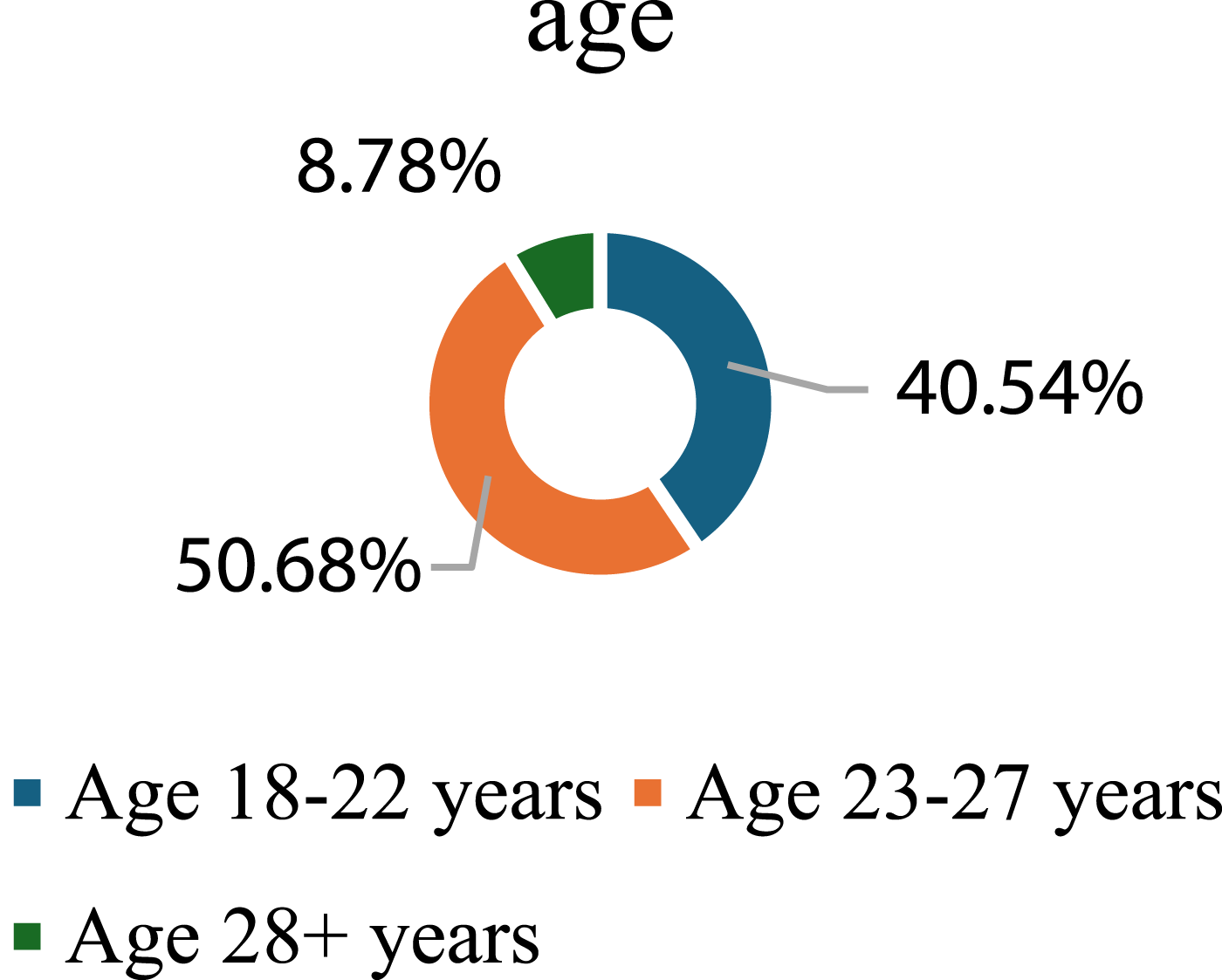
As shown in Figure 2, male students slightly outnumber female students in terms of gender ratio, accounting for 54.05% and 45.95%, respectively. This gender distribution may be related to the background of the subjects chosen to participate in this study, and some subjects may be more common among male students. Gender distribution.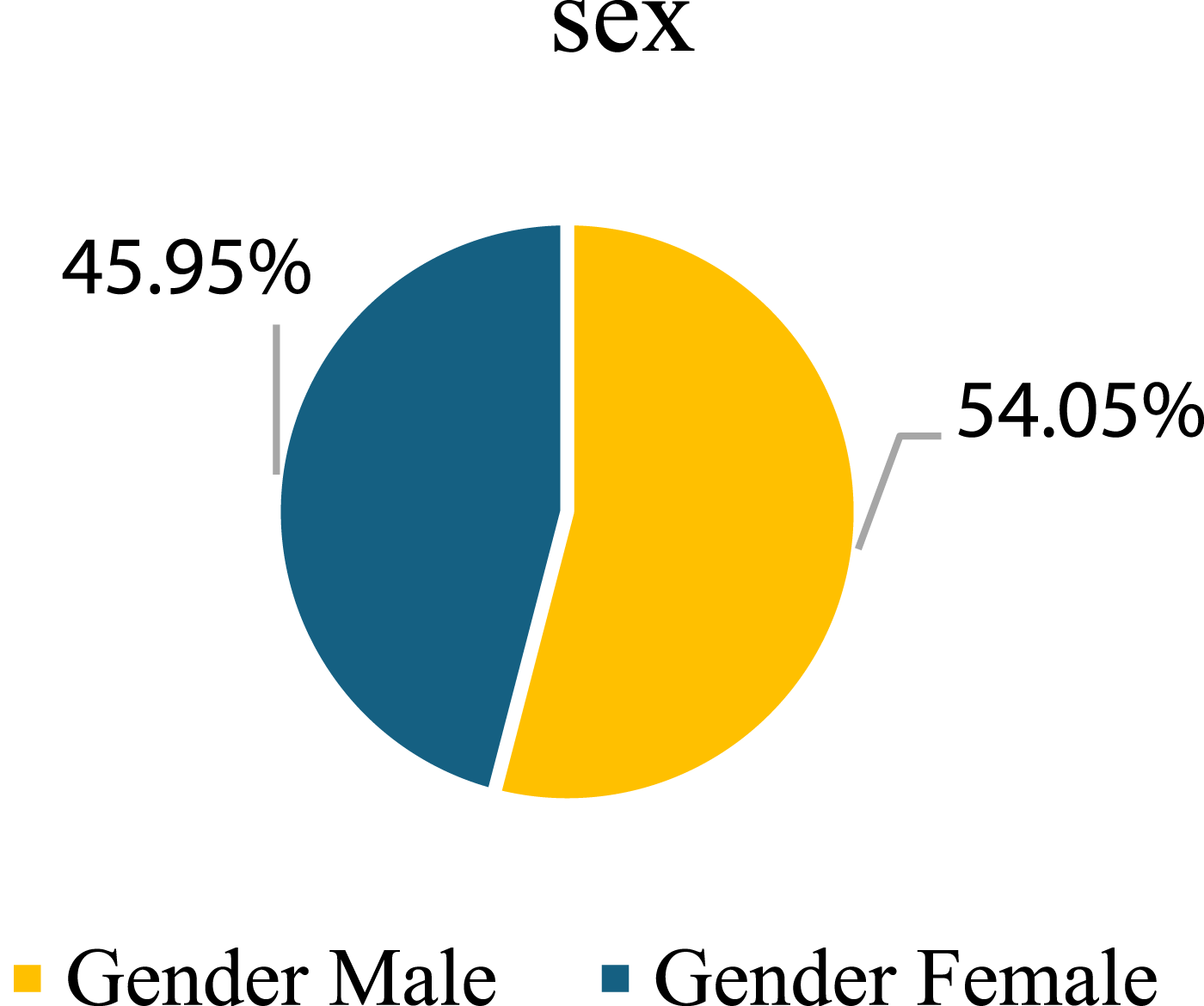
As shown in Figure 3, there is a significant difference in the proportion of undergraduates and postgraduates in terms of educational background, with 60.81% of undergraduates and 39.19% of postgraduates. This indicates that the student group involved in the study has a certain diversity in academic stage, which can provide different levels of insights for the evaluation of educational models. Educational background.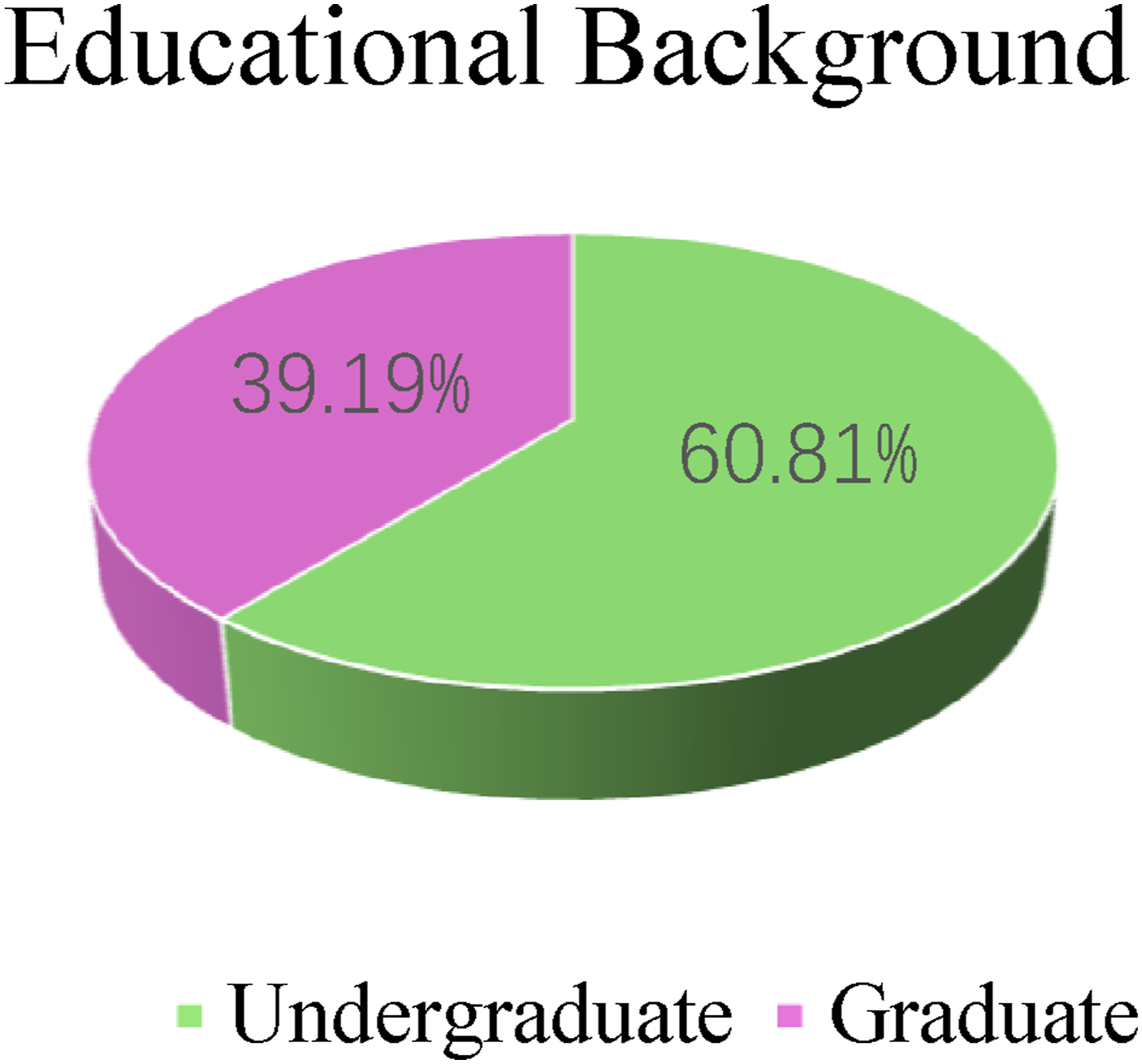
Satisfaction with teaching methods
The satisfaction evaluations of undergraduates and postgraduates in the experimental group and the control group on the teaching methods were analyzed, and the effectiveness of the teaching methods was discussed, as shown in Figure 4 below. Satisfaction with teaching methods.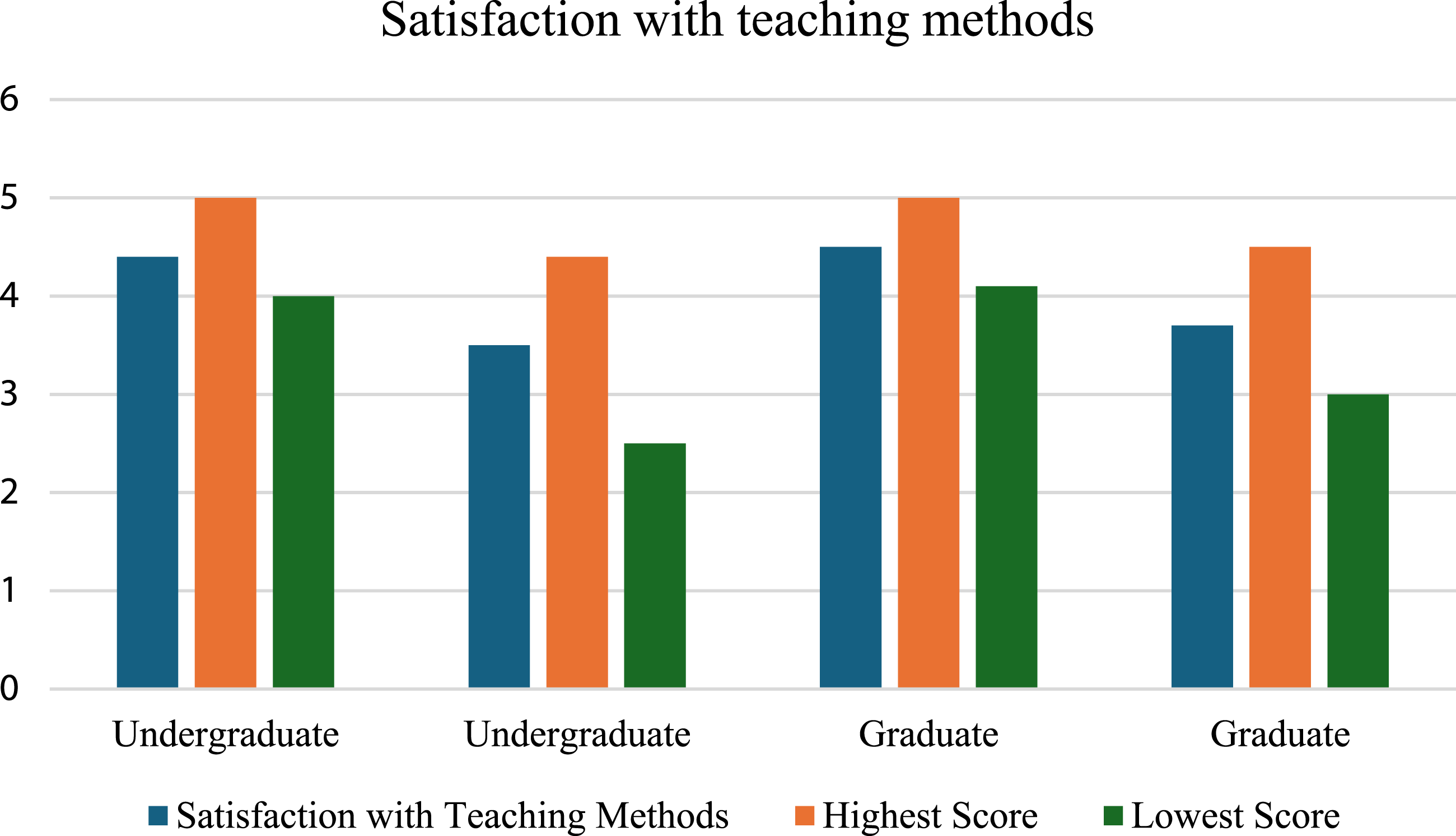
In the experimental group, both undergraduates and postgraduates were significantly more satisfied with teaching methods than the control group. The satisfaction of undergraduates and postgraduates in the experimental group was 4.4 and 4.5, respectively, and that of undergraduates and postgraduates in the control group was 3.5 and 3.7, respectively. It shows that the teaching method based on big data may better meet the learning needs of students at different academic levels and provide more effective teaching support.
There is little difference in satisfaction between undergraduates and postgraduates in the experimental group, indicating that the improved teaching method is effective for students at different levels. The satisfaction of undergraduates in the control group is lower than that of postgraduates, which reflects the limitations of traditional teaching methods in meeting the diversified learning needs of undergraduates. The lowest score of the experimental group is also higher than that of the control group, indicating that middle school students in the experimental group have higher and more consistent evaluation of teaching methods, indicating that the improvement of teaching methods has been widely recognized among students.
Results of multivariate analysis
Results of regression analysis.

The increase of emergency language skills score was positively correlated with the perceived effectiveness of teaching methods, with a coefficient of 0.45. It shows that with the improvement of emergency language skills, students are more likely to feel that the teaching method is effective. The R2 value of this model is 0.65, indicating that 65% of the variation in the effectiveness of teaching methods can be explained by the emergent language skills score. The score of emergency language skills has a positive influence on the understanding and mastery of teaching content, and the coefficient is 0.38. Improved emergency language skills are associated with better understanding and mastery of teaching content. The R2 value is 0.60, indicating that 60% of the variation in the understanding and mastery of the teaching content can be scored by emergency language skills.
Comparison and analysis between experimental group and control group
Comparative statistical results of experimental group and control group
Results of variance analysis.

The average score of emergency language skills in the experimental group (4.2) was significantly higher than that in the control group (3.8), F-value was 5.34, and P-value was 0.022. It shows that the teaching mode based on big data has obvious advantages in improving students’ emergency language skills. The experimental group also showed better results than the control group in the improvement of interdisciplinary cooperation ability, with an average score of 4.5 versus 4.0, F-value of 4.89, and P-value of 0.028. It further confirmed the effectiveness of the teaching model based on big data in promoting students’ interdisciplinary cooperation. Compared with the traditional teaching mode, the teaching mode based on big data can improve students’ emergency language skills and interdisciplinary cooperation ability more effectively.
Interpretation and influencing factors of significant differences in data
Analysis of variance results and significant difference.
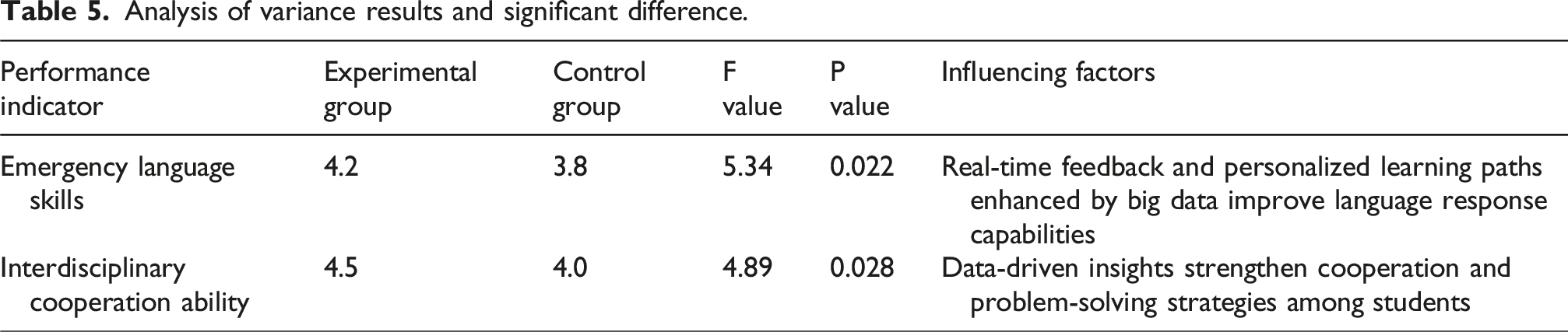
Students in the experimental group scored higher on emergency language skills than those in the control group, indicating that the teaching model based on big data helps students to master and apply emergency language more effectively by providing more real-time interaction and feedback. This model utilizes big data analytics to identify students’ learning weaknesses and quickly improve through customized exercises and feedback, thereby strengthening students’ emergency response capabilities. In terms of improving the ability of interdisciplinary cooperation, the teaching model based on big data also shows better results than the traditional methods. It may be that by analyzing a large amount of student data, this model can more accurately match the role of students in the team, optimize the team configuration, and enhance the efficiency and effect of team collaboration.
Assess students’ mastery of teaching content
The differences in understanding and application of teaching content between middle school students in the experimental group and the control group were analyzed, and the impact of interdisciplinary teaching methods based on big data on different groups was highlighted, as shown in Figure 5 below. Students’ mastery of teaching content.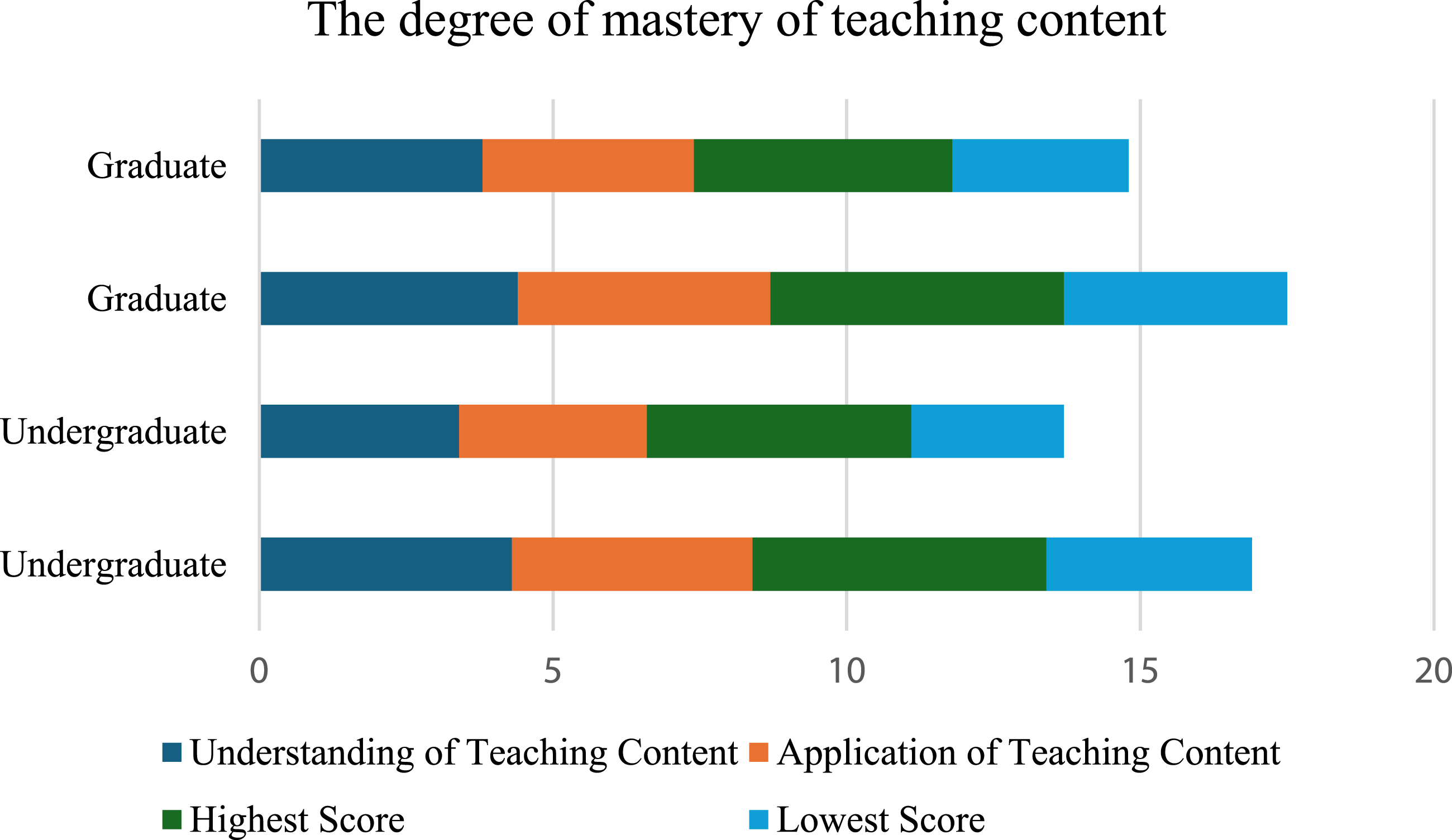
Both undergraduates and postgraduates in the experimental group were significantly better than those in the control group in terms of understanding and application of teaching content. It shows that the interdisciplinary emergency language talent training model has obvious positive influence on improving students’ learning effect. Undergraduate and graduate students’ comprehension scores in the experimental group were 4.3 and 4.4, respectively, higher than those in the control group (3.4 and 3.8). It shows that the new teaching method can help students grasp and understand the teaching content better. The postgraduate group performed slightly better than the undergraduates in understanding score, because the postgraduate students had stronger learning foundation and self-learning ability.
In terms of applied knowledge, undergraduate and graduate students in the experimental group scored 4.1 and 4.3, respectively, compared with 3.2 and 3.6 in the control group. It reflects that the experimental group students can more effectively apply the knowledge to practical problem solving. The improvement of students’ ability to apply knowledge in the experimental group indicates that the teaching mode successfully combines theory with practice and enhances students’ practical operation ability. The experimental group also had higher minimum scores than the control group, suggesting that even the lowest-performing students had better learning outcomes than the average control student. The interdisciplinary emergency language talent training model based on big data is conducive to improving students’ understanding and application of teaching content, and promoting students to transform knowledge into practical ability.
Discussion
Result discussion
According to the results of ANOVA and multiple linear regression, it can be seen that the experimental group performs better than the control group in improving the core ability. The results of ANOVA showed that the average score of students in the experimental group on emergency language skills was 4.2, while that in the control group was 3.8, F-value was 5.34, and P-value was 0.022, indicating statistically significant differences between the two groups. This significant difference is due to the fact that a big data-based teaching model can provide more personalized learning feedback and real-time interaction, helping students adapt more quickly and master the skills to use language in emergency situations. In terms of interdisciplinary cooperation ability, the average score of the experimental group was 4.5, the average score of the control group was 4.0, the F-value was 4.89, and the P-value was 0.028, which was also significant. The teaching model based on big data enhances students’ collaboration and problem-solving skills by using data analytics to optimize team configuration and task allocation.
The teaching method based on big data shows a significant positive impact on emergency language skills and interdisciplinary cooperation ability in the multivariate model. The coefficient of emergency language skills is 0.45, and the coefficient of interdisciplinary cooperation ability is 0.38, both of which have good statistical significance.
The statistical results reveal the theoretical and practical advantages of teaching methods based on big data, pointing to the potential of modern educational technology in improving students’ emergency response and teamwork skills. Educators can further integrate data analytics and learning management systems to enhance students’ personalized learning experiences. The teaching model based on big data provides an effective framework to improve students’ language coping ability in emergency situations and promote their skills in interdisciplinary collaboration.
Beyond immediate learning gains, the model carries long-term educational and societal benefits. Institutions can build resilient pipelines for public health, emergency management, and multilingual services by graduating cohorts with validated crisis-communication skills and team fluency. Data-enabled role allocation and feedback cultivate habits of evidence-based collaboration that transfer to high-stakes workplaces. At system level, standardized emergency language indicators facilitate quality assurance, equitable resource targeting, and rapid skills audits during disruptions. Over time, these capabilities reduce coordination failures, shorten response cycles, and strengthen community trust in risk communication - outcomes that extend the impact of this pedagogy well beyond the classroom.
Interdisciplinary emergency language talent training model innovation strategy
Data-driven personalized learning path design
In modern education, data-driven personalized learning path design is a key strategy for leveraging big data technology to optimize teaching methods and learning experiences. By collecting and analyzing data on students’ learning behaviors, grades, preferences, and feedback, educators can create precisely tailored learning plans to meet the unique needs of each student.
The first step in implementing a personalized learning path is the collection and analysis of data, including data on student online learning platform interactions, assignment grades, discussion engagement, and the results of regular assessments. From this data, machine learning algorithms can be used to identify students’ learning patterns and challenges. If the data shows that a student is performing poorly on a particular emergency language skill, the system can automatically recommend targeted training materials and more frequent opportunities to practice.
Based on the results of data analysis, educators design personalized teaching activities and resources. This includes adjusting the difficulty of the course content, providing multiple forms of learning materials (such as videos, interactive simulations, and gamified learning tools), and setting personalized learning goals and feedback mechanisms. For those students who need to strengthen their language emergency response ability, more exercises can be designed to simulate emergency situations to enhance their improvisation ability. The implementation of personalized learning paths also requires continuous evaluation and adjustment. By continuously tracking student progress and outcomes, educators can adjust teaching strategies in real time to ensure that each student is learning and growing under the most appropriate conditions. This flexibility increases learning efficiency, enhances student motivation and satisfaction, and improves educational outcomes in the long run.
Enhance real-time feedback and interactive teaching methods
Enhanced real-time feedback and interactive teaching methods improve the quality of education and student engagement. In interdisciplinary emergency language education, real-time interaction not only promotes students’ active learning, but also enhances their ability to deal with complex situations. Real-time feedback systems Through integrated learning management systems (LMS) or educational applications, these systems are able to instantly capture student responses and interactions and provide rapid feedback. Teachers can use these systems to provide grades and suggestions immediately after students complete tasks, helping students understand their mistakes and correct them quickly. In addition, the system automatically adjusts the content and difficulty of subsequent learning based on student performance, ensuring that the teaching activities are challenging enough but not frustrating.
Teaching methods that enhance interactivity include real-time discussions and collaborative tasks. In interdisciplinary team projects, students can exchange ideas and strategies in real time through video conferencing or online collaboration platforms to solve problems together. This instant communication and feedback mechanism not only improves students’ communication skills, but also strengthens the spirit of collaboration within the team. Real-time interaction can also be achieved through simulations and gamified learning environments. By creating virtual emergency situations, educators can allow students to practice verbal coping skills and decision-making skills in a low-risk environment. The immediate feedback and interaction of these activities make the learning process more engaging and can effectively improve students’ coping skills in the real world.
Training and practice of interdisciplinary teamwork
The training of interdisciplinary team cooperation and the practice of modern education model are conducive to the training of emergency language talents. Educational strategies help students develop effective communication skills in emergency situations and improve their ability to solve complex problems in multi-domain collaboration.
Collaborate across disciplines to create a diverse and inclusive learning environment in which students bring unique perspectives and skills from their diverse academic backgrounds to complement each other’s abilities in team projects. Teams can include linguistics, psychology, management, and information technology students who work together to solve tasks set for emergency situations, such as crisis communication and emergency response planning. Multidisciplinary exchanges promote understanding and respect among students, but also inspire innovative thinking and collective problem solving.
Educators should design specific programs and activities that simulate real-world emergency situations and require students to apply their language skills and interdisciplinary knowledge to work collaboratively. Through simulation, students can learn in practice how to communicate effectively under pressure, how to assign tasks in a team, and how to pool their respective expertise to quickly respond to unexpected events, through role-playing games or virtual reality technology, which allows students to take on different roles in a controlled environment to deal with various challenges that may arise in a real world emergency situation.
To ensure the effectiveness of this educational model, continuous evaluation and feedback mechanisms are in place. Educators need to regularly evaluate the process and results of teamwork, identify problems and challenges arising from collaboration, and provide targeted guidance and feedback. The evaluation should focus on the quality of the team’s final product or solution, and focus on communication efficiency, conflict resolution, and resource management during team collaboration. Students are encouraged to reflect on their own roles and experiences in teamwork. Through reflection, students gain a better understanding of their strengths and areas for improvement within a team, as well as a deeper understanding of the value and challenges of interdisciplinary collaboration. This process of self-reflection not only enhances the individual’s self-knowledge, but also lays a solid foundation for their future careers in a diverse work environment.
The cultivation and practice of interdisciplinary teamwork can effectively improve students’ emergency language response ability and cross-field collaboration ability and provide strong support for them to cope with the complex challenges brought by globalization. This is an important part of the training of emergency language talents, and it is also an inevitable choice for modern education to cope with the rapidly changing social needs.
Technology integration and resource optimization
In the interdisciplinary emergency language talent training model, technology integration and resource optimization can improve the use efficiency of educational resources, and also greatly enhance the learning experience and teaching effect. By integrating advanced information technologies such as artificial intelligence, big data analytics, cloud computing, and mobile learning tools, educators create a more dynamic and interactive learning environment that effectively supports the needs of interdisciplinary learning.
The use of artificial intelligence technology can realize the personalized customization of teaching content, and automatically adjust the teaching difficulty and content according to the learning progress and ability of students. By analyzing students’ online learning behavior and performance data, the intelligent system can recommend learning materials and exercises suitable for each student, improve learning efficiency and meet individual learning needs. Artificial intelligence-assisted natural language processing technology can also be used to assess students’ emergency language ability by simulating emergency situations to test students’ response ability and language application skills.
Big data analysis capabilities can be used to monitor and evaluate students’ learning outcomes and provide data support for teaching decisions. By collecting and analyzing a large amount of learning data, educators can better understand the overall trends and potential problems in student learning, adjust teaching strategies in a timely manner, and respond to the specific challenges students encounter in interdisciplinary learning. Data analysis can reveal the actual effects of certain learning activities on enhancing students’ ability to collaborate across disciplines, thus helping educators optimize curriculum design and teaching methods.
The application of cloud computing and mobile learning tools makes learning resources richer and easier to access. The cloud platform can support students and teachers to access teaching resources anytime and anywhere, and realize the instant update and sharing of materials. This not only promotes the dynamic update and personalized configuration of teaching materials, but also enables students to learn at any time and place, greatly improving the flexibility and convenience of learning. Technology integration and resource optimization are the key strategies to promote the innovation of interdisciplinary emergency language talent training model. Through the application of these technologies, a more efficient, interactive and personalized learning environment can be built, effectively improving students’ emergency language ability and interdisciplinary collaboration skills.
Innovation of evaluation and feedback mechanism
In the interdisciplinary emergency language talent training model, the innovative evaluation and feedback mechanism ensures the teaching effect and its continuous improvement. With the development of educational technology, especially the application of big data and artificial intelligence, evaluation and feedback mechanisms have enabled more efficient and accurate monitoring and evaluation of learning processes.
Innovative assessment mechanisms should include the combined use of formative and summative assessments, which help students adjust and improve in a timely manner through continuous feedback on learning activities, and summative assessments, which evaluate students’ overall performance and outcomes at the end of the learning cycle. Online platforms are used to collect students’ learning data and interaction records in real time, and data analysis tools are used to continuously monitor students’ progress and provide timely personalized feedback. The immediate feedback not only helps students understand their strengths and weaknesses, but also enables them to receive concrete suggestions for improvement in their urgent language use and interdisciplinary competencies.
Innovative feedback mechanisms should value multi-dimensional input, including evaluation by teachers, peers, and even external experts. Such a multi-source feedback system can provide students with a more comprehensive perspective and help them understand their own learning effectiveness from different perspectives. Using the method of peer review, students evaluate each other’s language application ability in emergency situations. Interaction enhances students’ critical thinking and self-reflection ability, and promotes communication and cooperation among students.
Leveraging big data analytics to optimize the quality and efficiency of feedback is also part of the innovation strategy. By analyzing a large amount of learning data, educators can identify effective teaching methods and learning activities, while pinpointing the bottleneck in the learning process of students. Data-driven feedback is not only based on empirical research, it is also more objective and scientific.
Innovation in assessment and feedback mechanisms should also consider the accessibility and ease of use of technology, ensuring that all students can benefit from it. This includes designing an easy-to-use user interface and providing multilingual support so that students of all backgrounds can effectively receive and use feedback. Through innovative assessment and feedback mechanisms, the interdisciplinary emergency language education model can enhance the adaptability and effectiveness of teaching, and develop students’ self-monitoring and lifelong learning capabilities, providing them with a solid foundation for future challenges in a changing global environment.
Research limitations and future prospects
Research limitations
This study explores the interdisciplinary emergency language talent training model based on big data, and verifies the effectiveness of this education model through the comparative analysis of the experimental group and the control group. Despite the positive results of the study, there are several limitations that may affect the generalizability and depth of the findings.
There are limitations in the selection of research samples. This study was mainly conducted in several universities, and the students involved may have similar academic backgrounds and learning motivations, which limits the wide applicability of the research results. The learning attitudes and abilities of college students may differ significantly from those of other members of a broad social group, and the findings may not fully apply to individuals from other educational or occupational backgrounds. Future studies should consider including a wider range of participants, such as individuals of different age groups, occupations, and cultural backgrounds, to improve the external validity of the study.
In terms of study design, although the method of control experimental group was used to enhance the rigor of the study, the time span and tracking cycle of the experiment were relatively short. It limits our assessment of the long-term effects of educational interventions. The persistence of learning results is an important aspect of educational research, and short-term learning improvement may not be sufficient to reflect long-term educational results. Future research should design long-term follow-up experiments to assess and analyze the impact of instructional interventions on students’ long-term learning and career development.
This study also has some limitations in data collection and analysis methods. Although big data analysis is used to process learning data, it mainly focuses on statistical analysis of quantitative data, which may neglect the qualitative aspects of individual students’ learning experience, emotional response and personalized feedback. These non-quantifiable factors have a significant impact on learning outcomes and student satisfaction. Future research should incorporate qualitative research methods, such as in-depth interviews and case studies, to obtain a more comprehensive assessment of educational impact.
Although big data and artificial intelligence offer new educational possibilities, the complexity of technology implementation, cost issues, and compatibility issues with existing education systems may affect widespread adoption of the technology. The choice of technological tools, the technical proficiency of educators, and the associated support systems are all important factors affecting educational outcomes. Although this study provides valuable insights and findings, further research is needed to strengthen the existing conclusions and optimize the training model of interdisciplinary emergency language talents.
Future outlook
On the basis of the current research, the future exploration and development direction will be more extensive and in-depth, with the aim of enhancing the effect and wide applicability of the interdisciplinary emergency language talent training model through continuous innovation and improvement.
Future studies should expand the sample scope to include learners from different regions, different cultural backgrounds and different education levels, so as to enhance the universality and applicability of research results. Diverse samples can help researchers to deeply understand the specific needs and responses of different groups when receiving interdisciplinary emergency language education, and design more accurate and effective education strategies. Through international cooperation projects, the strength of multinational educational institutions can be gathered to jointly develop and test cross-cultural educational models, which will not only help improve the international applicability of the model, but also enrich the content and methods of the educational model.
Advances in technology will continue to drive innovation in education models, and future research can explore more deeply the application of artificial intelligence, machine learning, and big data analytics in education, especially how these technologies can be harnessed to enable truly personalized learning and real-time feedback. Develop intelligent teaching assistants that can automatically adjust teaching content and difficulty according to students’ learning behaviors and grades, and even predict the difficulties students may encounter and intervene in advance. The application of virtual and augmented reality technologies can provide students with an immersive learning experience, especially in scenarios that simulate complex emergency situations and interdisciplinary collaboration.
Innovation in assessment and feedback mechanisms is also a key direction for future research, and traditional assessment methods may not fully reflect students’ progress in interdisciplinary and emergent language abilities. Future research should develop and validate new assessment tools and indicators that can more fully and accurately measure student improvement and provide timely and effective feedback. By constructing a data-based assessment model, students’ learning trajectory and outcomes can be tracked in real time to provide decision support for educators.
Future research should also consider sustainability issues in education policy and practice. With the rapid development of educational technology, how to ensure that all students have equal access to high-quality educational resources has become an important issue. Exploring how to effectively implement the interdisciplinary emergency language education model under different educational systems and resource conditions will be an important direction for future research.
Through the future research direction, we can continuously optimize and expand the interdisciplinary emergency language talent training model based on big data, improve the quality and effect of education, and bring innovative changes to the global education field. The research will deepen our understanding of educational technology and interdisciplinary learning, and drive educational practice towards a more personalized, intelligent and interactive direction.
Theoretical contributions to emergency linguistics
The study advances emergency linguistics by formalizing competence as a triad—propositional accuracy, response latency, and coordination efficacy—captured with task-embedded, time-bounded measures. We introduce the construct of team-linguistic adaptivity, the capacity of a group to reconfigure discourse roles (initiator, confirmer, summarizer) in response to evolving constraints, and show how analytics make this construct observable. The measurement model links micro-level repair sequences and turn-taking patterns to macro-level task success, extending interactional theories to crisis contexts. By specifying indicators that are portable across scenarios and languages, we provide groundwork for standardized benchmarks and comparative studies, moving the field beyond descriptive case reports toward cumulative, model-based inference.
Conclusion
The model generalizes to diverse cultural and linguistic contexts through a localization pipeline. Scenario corpora are adapted with culturally grounded risk narratives and plain-language equivalents of technical terms; bilingual and code-switch–aware lexicons support automatic feedback; fairness audits monitor differential error rates across language groups; and human-in-the-loop review ensures sensitive phrasing for high-stakes messaging. For low-resource languages, community-sourced parallel texts and federated learning enable privacy-preserving updates without centralizing data. Partnerships with public agencies, NGOs, and broadcasters align curricula with local alert protocols. This pathway extends the benefits observed here—faster, clearer crisis communication and stronger team coordination—while respecting regional norms, legal frameworks, and data-governance requirements.
Theoretical advances in data–pedagogy integration. Beyond empirical gains, the study articulates how big data infrastructures become pedagogically consequential. First, it reframes analytics not as after-the-fact reporting but as control signals for real-time orchestration of scenario difficulty and team roles. Second, it links micro-interaction measures (repair sequences, response latency) to macro-level coordination through a mediation pathway, specifying when and how individual fluency scales to team efficacy. Third, it formalizes team-linguistic adaptivity as a theorized mechanism that explains resilience under crisis constraints. Together these advances turn scattered practices into a coherent model that future work can test, compare, and extend.
Footnotes

Authors’ contributions
Tingting Qin wrote the main manuscript text, prepared figures, tables and equations. Tingting Qin reviewed the manuscript.
Funding
The author received no financial support for the research, authorship, and/or publication of this article.
Declaration of conflicting interests
The author declared no potential conflicts of interest with respect to the research, authorship, and/or publication of this article.
Data Availability Statement
The data used to support the findings of this study are all in the manuscript.