







Abstract
The processes of decentralization, marketization, and globalization of socioeconomic reform in the last few decades have promoted the transformation of local governance in China. City marketing has become one of the most typical local governance activities. This article examines the mechanism of city marketing and urban scaling-up in Xuyi County, which is marketed as “Lobster Capital” for its lobster production and festival, from urban awareness, economy, and governance. It argues that the effective combination of city marketing and local resource endowment is a very important tactic for the development of small- and medium-sized cities. The key point in this combination is the branding of local production. Moving from city marketing to city branding means not only a long-term development strategy but also an endogenous development model. Rather than simply focusing on attracting capital, continuous city marketing based on endogenous sources of power, such as political, economic, and cultural power, can effectively integrate local resource endowment to overcome the shortcomings of externality and the short-term nature of single city marketing and maximize the social benefit of city marketing, which will in the end promote the urban reputation and economic growth. Hence, the continuous city marketing mode can express the urban ability and actual strength in a clearer and better way. Local government and its effective governance system is the core of city marketing, in which the main governor’s impact plays a particularly important role. This is a typical pro-growth model of urban governance in China. This article uses Xuyi as the case of continuous city market to analyze the success of a reasonable local endogenous governance system promoted by the main governor through taking full advantage of local resources.
City marketing and endogenous development
City marketing is the process and activity of effectively packaging and organizing the use of the city resources to attract investments by the city government or local growth coalition (Kotler et al., 1999, 2002; Paddison, 1993). City marketing in China started very late; organized city marketing activities only began in the 1990s in China. With the development of globalization, decentralization, and marketization, the governance model of the entrepreneurial city (Harvey, 1989) has become more and more popular, which has also triggered the boom in city marketing in China. The strategic value of city marketing in attracting investment, tourists, and talent for Chinese local cities is increasingly growing. Moreover, in an era of fierce city competition, city marketing is also considered as an important approach to increase city competitiveness, and has become a typical urban development model in China, especially in the new century. While city marketing in big cities mostly uses Great Events marketing, such as the Olympic Games or World Expos, to pursue senior resources, city marketing in many medium and small cities tends to focus on marketing strategies to attract investment, revive tourism, and get assistance (Yu and Zhang, 2007). Taking festivals, for example, there were more than 8000 various festivals held in Chinese cities in the end of 2009, 40% of which were held in the counties (China Travel Network Media Alliance, 2010).
Although more and more city marketing activities are appearing in China, their qualities and effects are patchy. Because local government occupies the dominant position in the city marketing activities, there are two prevalent problems under the influence of local governance. The first problem is that the strong development demands of local government and its monopolistic control of resources often makes the city marketing activities the local government’s one-man show. On the contrary, due to local government’s pursuit of short-term effects and lack of holistic planning and long-term development strategy, the city marketing is always simplified as a selling of the city. Local government then spends a huge sum of money recklessly hosting a party or promotion to advertise the city, as they think this is enough for marketing. In this case, lots of meaningless activities have emerged (Liu, 2009). City marketing can miss its target due to a lot of negative factors such as the vanity project, duplicated construction, and vicious competition, which have caused a disconnect/fracture between marketing and long-term development (Zhang and Yu, 2007). John Friedmann (2004) pointed out that city marketing is an exogenous development model that promotes urban competitiveness by pursuing short-term political interest, and seems quite competitive, but in reality, it is an unmerciful and unsustainable zero-sum game. Based on these points, he introduced a substitute model, the endogenous development model (Friedmann, 2004) or the quasi city-state model (Friedmann, 2005), arguing that urban development should mainly be based on its own resources and ability rather than external capital, guided by local embedded power and an active government and integrated into globalization through city–region cooperation.
Is the relation between city marketing and endogenous development really an irreconcilable conflict? The key support of successful endogenous development is the target and model of local governance system. If city marketing can continuously combine with local resource endowments and governance models, and get rid of the defect of short-term behavior, is this city marketing still simply the city marketing model or an endogenous city marketing model? With these questions, this article began the research of Xuyi (盱眙, two very rare Chinese characters) county, which is a particularly prominent successful case among lots of unsuccessful city marketing cases. The continuous city marketing transferred Xuyi from a small agricultural county whose name is mispronounced by many people to be the well-known “Lobster Capital” and a Tourist County in eastern China. As a valuable case, the development experience and mechanism of Xuyi is useful for deeply observing the Chinese local pro-growth model of urban governance (Pierre, 1999).
Methodology
Empirical material
Xuyi County is located in western Jiangsu province under the administration of Huai’an, a prefecture-level city. It is about 140 km away from Nanjing, the capital of Jiangsu Province (Figure 1). Before 2000, Xuyi was a typical traditional agricultural county whose level of overall economic development and city construction ranked behind in Jiangsu Province. The local government of Xuyi County consciously began to integrate the local resource to develop local economy by city marketing, such as holding the “China Lobster Festival” since 2001. After 10 years of continuous endeavor and operation, the “China Lobster Festival” has become a famous Chinese festival brand and the first modern festival brand in Jiangsu Province. The operating model of Xuyi Lobster Festival shaped a “Xuyi model” for modern festivals in China and then attracted the attention of lots of media and festival experts.
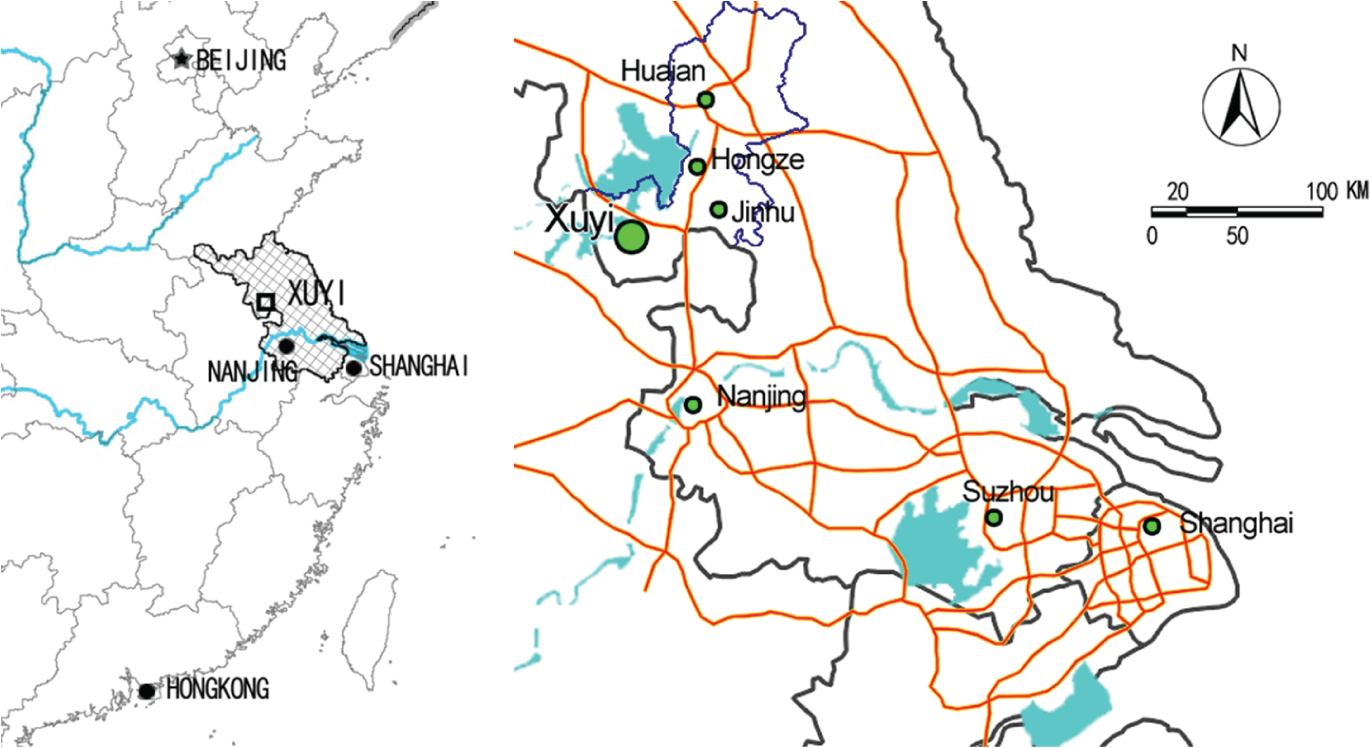
The location of Xuyi County.
The data in this article are from interviews and surveys during 2010 and 2011. The interviewees were the investors or professional managers who were engaged in lobster aquaculture, lobster transport, real estate, traditional manufacturing, and high-tech industries in Xuyi as well as the local government officials who were directly involved in the Lobster Festival. The respondents of the surveys included 50 entrepreneurs in Xuyi (47 valid surveys) and 1200 residents (1029 valid surveys) in Suzhou, Wuxi, Changzhou, Nanjing, Shanghai, and Hangzhou. In addition, the related webpage, newspapers, and government documents and official statistics are also sources of the data.
Research perspective and approach
In order to examine the relationship between urban development and city marketing, this article tries to take scale (Howitt, 2003; Marston et al., 2005; Moore, 2008; Shen, 2007) as the analysis tool and takes scaling-up as the identification standard for the virtuous circle of urban development. It then reveals the mechanism between the continuous city marketing and endogenous urban development of small- and medium-sized cities. In this article, scaling-up is the process from low scale to high scale, such as socioeconomic and governance activity jumping from the local to regional, national, or even global scales (Brenner, 1999, 2001; Howitt, 2003; Smith, 2000).
Scaling-up and urban localized development can constitute the virtuous circle of urban development according to the character of scaling-up. Therefore, we can see the promoting of scaling-up as the identification standard of which city marketing best serves endogenous development. Actually, in an open network, single cities, especially the small- and medium-sized cities, cannot achieve development and self-accumulation depending only on itself; it is necessary to attract and utilize external resources. From this perspective, the endogenous development should be a virtuous circle of city and its context. This means that, on the one hand, endogenous development needs to get scarce resources from the network and combine them with its own resources to achieve positive self-accumulation and urban upgrading; on the other hand, endogenous development can improve the link between the city and its environment and expand its potential resources in the network. From this perspective, scaling-up is also an important way for city marketing to serve for endogenous development. In order to clearly express the comprehensive process and relations of city marketing, scaling-up, and endogenous development, this article has divided the scaling-up into three aspects—urban awareness scaling-up, urban economy scaling-up, and urban governance scaling-up—and then analyzed the process and mechanism of continuous city marketing to promote urban influence, economic development, and governance upgrades in Xuyi County.
The continuous city marketing of Xuyi County in China
The process of continuous city marketing of Xuyi
Periodic festival marketing
Festival marketing is a kind of event marketing. Using “Lobster” as the theme, the “China Lobster Festival” has been held 12 times in Xuyi since 2001 and has become a significant carrier of city marketing of Xuyi County. It won the titles of “Top ten brands of festival in China” and “Most promising destination of festival industry” in 2010, and gained a high reputation in the Yangtze River Delta and even across the whole of China. At the beginning, the celebration activities of the “China Lobster Festival” consisted only of artistic performances by local artists of Xuyi County. However, in recent years, the celebration activities have been progressively enriched with different types of activities, including artistic performances, dining and leisure, academic conferences, business conferences, and press conferences. It has now become a series of cross-regional festivals held in the same period in several different cities, including Xuyi, Nanjing, Shanghai, Ningbo, Beijing, Shenzhen, and so on. With the strong support from local government, this festival now attracts a widespread interest; Jiangsu TV and China Central Television (CCTV) broadcast the festival’s theatrical performance held in Xuyi County to a nationwide audience, and other theatrical performances in other cities are also reported by local mainstream media. Apart from TV media, traditional print media and web portals have opened special columns for the festival as well. The outcome of this variety of activities and media propaganda is that the brand awareness of “Xuyi Lobster” is continually enhanced and channels to recognize Xuyi County for investors and consumers are increased.
Continuous advertisement marketing
In addition to the intensive annual festival marketing, Xuyi County usually continuously markets the city product through a full range of advertising. Marketing used by Xuyi County includes city image promotion, special TV programs, advertising signs, and celebrity endorsement. The advertising content and the collocation of advertising platforms are greatly emphasized to further boost the economic efficiency of advertising. For example, as the Yangtze River Delta is its main source areas of investment, Xuyi County publicizes its service standards and investment environment through advertisements along the Shanghai–Nanjing Expressway and at all the toll stations to attract investment. Another example is that a special edition of Nanjing TV’s travel program was produced to introduce the history and local culture, local festivals, and local products of Xuyi County in detail to draw attention of potential tourists as Nanjing is one of the most important tourist markets for Xuyi County. As to areas outside the Yangtze River Delta, the main purpose of city marketing is to enhance the popularity of Xuyi County and to strengthen brand awareness of Xuyi Lobster (as it carries the most local symbolic value) through publicity films on CCTV and product endorsement by celebrities.
Specialized marketing channels
Channel strategy plays an essential role in city marketing. It is only when convenient channels are provided that customers may change their existing awareness of products into actual consumption or investment behavior. The marketing channel strategy for lobster of Xuyi County has effectively improved the accessibility of products. Approved by the Ocean and Fishery Bureau of Jiangsu Province, local government and lobster companies registered a corporate body (nongovernmental organization (NGO)) named “Xuyi Lobster Association of Jiangsu Province” when the brand value of “Xuyi Lobster” was established and enhanced. Authorized by local government, this association coordinates and manages all lobster bred in standardized breeding bases in Xuyi County, and holds the management of the brand of “Xuyi Lobster.” Both local companies and companies from other cities that meet the criteria set by the association can be accepted as its members. The association gives its members authorization to use the brand of “Xuyi Lobster,” and provides services, including preliminary business planning, culinary skill training, delivery of lobster and spices and other raw materials, food safety insurance, and so on. As members of this association, companies are required to use the special logo of the association (Figure 2), to abide by all the standards of lobster breeding, cooking, serving, and purchasing channels, and accept the supervision of the association. Therefore, the lobster association largely boosts the accessibility of lobster products by making it possible for consumers in other cities to buy quality guaranteed Xuyi lobster without traveling to Xuyi County through the building of its off-site sales network, which establishes an end-to-end connection between local lobster wholesalers and food companies in other cities. Hence, wholesalers are able to deliver lobsters according to orders, which have markedly lessened the time-consuming nature of distribution and turnover.
The unique logo for the member of lobster association.
Investment product launches in key cities
The indirect influences of city marketing activities on investment decisions are real, though city marketing activities can scarcely produce direct and decisive influences on particular investment decisions. As investment relies on urban hardware and software facilities, the decision-making process of investment is much more complicated and cautious compared to consumers’ decision making. However, Xuyi County takes full advantage of the opportunity brought by the Lobster Festival, and organizes investment-promoting conference in key investment promotion target cities, such as Nanjing, Ningbo, Shenzhen, and so on. Xuyi County invites investors that have invested in Xuyi and other potential investors to the conference, through which organizers introduce the investment environment of Xuyi County and invite potential investors to take part in the Lobster Festival and to see the investment environment as well. During the 11th Lobster Festival in 2011, Xuyi County raised 6.13 billion renminbi (RMB) Yuan (approximately US$1 billion) investment through urban service industry promotion conferences in Nanjing City, and signed a new energy industrial park project in Shenzhen, which proves the value of this kind of city promotion.
The process of the city branding of Xuyi
Shaping place dependence of marketing: from lobster produced in Xuyi to the brand of “Xuyi Lobster”
The popularizing of the city produce of Xuyi experienced an evolution from focusing on material construction to brand building: “Xuyi lobster.” Xuyi County is located near Huai River and Hongze Lake and has hundreds of small ponds all over its territory, which are suitable for lobster cultivation. Moreover, compared with other cities in northern Jiangsu Province, Xuyi County is much closer to Nanjing City. Therefore, in the early years of lobster marketing in Xuyi, the key measure was to “bring in” investors and tourists from Nanjing and Southern Jiangsu to Xuyi County to watch artistic shows and taste lobster. In fact, Xuyi Lobster, scientifically named Procambarus clarkii, is common in lower middle reaches of the Yangtze River and is by no means unique to Xuyi County. Thus, although Xuyi County is known as the earliest city cooking and eating lobster, the marketing effects produced by festival activities failed to establish the competitive strength of the Xuyi lobster produce, which could not be easily replaced by the same kind of products from other cities. The Xuyi local government and companies realized the substitutability of their material products, and therefore, they changed the strategy to create the place-dependent brand of “Xuyi Lobster.”
The brand building process can be summed up in three ways. The first is to create identification value through innovating cooking methods, improving the quality of the lobster, and increasing the types of lobster products to intensify product differentiation between local lobsters and those from other cities and thus increase the core value of the local product. The second is to build a local product brand. Xuyi County took the initiative to communicate with the State Intellectual Property Office and secured the first certification mark of origin for animals (Xuyi Lobster) in China. Later, Xuyi County acquired titles such as “Famous Chinese Trademark,” “Green Products,” “China Product of Geographical Indication,” and so on. All these have made “Xuyi” a regional public brand and won a irreplaceable brand value for the city product. The third way is to enhance brand communication and product promotion. Xuyi County continuously promotes and raises brand popularity through the annual Lobster Festival, advertising products and inviting celebrities to endorse products. Meanwhile, it also provides customers outside Xuyi County with multiple approaches to purchase Xuyi lobster, which include authorizing membership to companies from other cities and developing and launching frozen lobster products in large supermarkets and shops in the airports.
Successful branding is the key transition in the 12 years of city marketing of Xuyi County. Local branding makes the geographic concept of “Xuyi” to be the core value of city products and endows city marketing with local embeddedness. In the meantime, because of the increasing market value brought by the brand image, the city successfully builds up a cross-boundary economic network using its city brand as the capital. In this network, Xuyi County is the hub, which finally promotes the scaling-up of Xuyi County.
Increasing the marketing value of the brand: improving city image, urban hardware and software
Although the brand of “Xuyi Lobster” is the most direct and successful outcome of city marketing, the original intention of Xuyi local government was to boost the local economy and find larger investment and consumer markets for both physical infrastructure and the governance culture. The slogan of local government is “Festival is the vehicle, popularization and introduction is the main work, attracting investment is the true target, and development is the final pursuit.” Usually, city products can be divided into three types: investment products, tourism and leisure products, and living products. The first two types are the focal point of external city marketing. Xuyi County began to improve urban infrastructure construction and integrate natural, historical, and ecological resources. The local government also condensed the urban image into a slogan, “Pearl of Huai River, capital of lobster, hometown of emperor, and eco-home of people,” and then spread the slogan through advertisements, songs, and publicity films (Figures 3 and 4). In addition to the annual Lobster Festival, the local government tourism agency opened tourism bus lanes to Xuyi from cities within Yangtze River Delta. Local government continuously invited investors from other cities to take part in festival activities and fostered relationship to increase investment opportunities. Despite being different types of products, the brand of “Xuyi Lobster” and the city image have had impressive influences on each other. The lobster itself has become an important part of the city image, for example, the huge lobster sculpture at the entrance of the freeway and street lamps shaped like lobsters (Figure 3). Furthermore, festivals focused on the lobster have provided good opportunities for advertising the urban hardware and software environment. A good city image and good hardware and software environment could also further enhance the brand of “Xuyi Lobster” and support the development of the lobster industry chain.
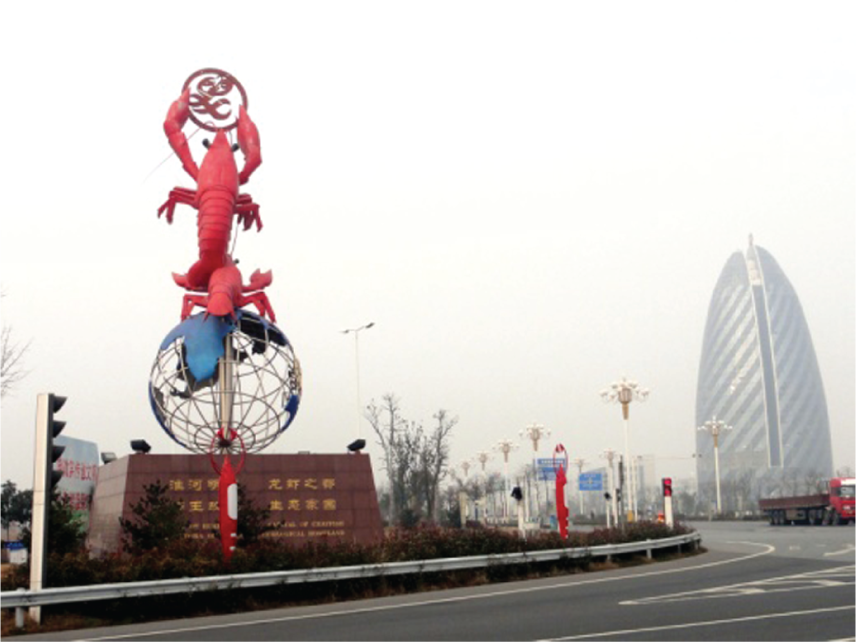
Lobster sculpture at the entrance of freeway in Xuyi.
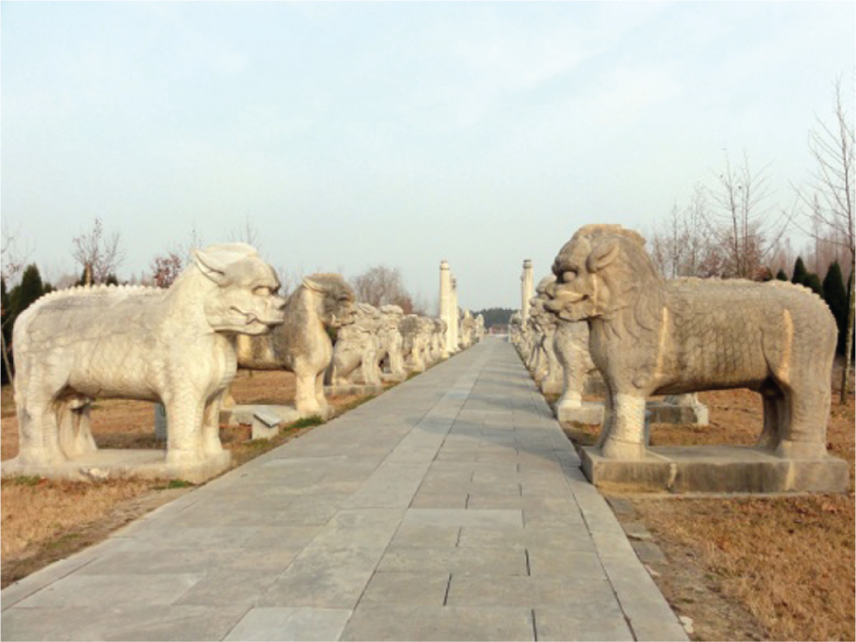
Ming emperors’ mausoleum for ancestors in Xuyi.
Urban scaling-up promoted by continuous city marketing
Urban awareness scaling-up promoted by continuous city marketing
Enlarging the awareness range of the city outside its territory
The awareness of Xuyi County outside its territory has been largely improved by city marketing. In order to show the changes in awareness, this research selected Jinhu County and Hongze County as comparative research cases. The two counties adjacent to Xuyi County are also administrated by Huai’an city (Figure 1) and are similar to Xuyi County in various aspects. The research data use the searching reports provided by the largest Chinese search engine, http://www.baidu.com. 1 The comparison of user attention to these three counties from 2009 to 2011 indicates that Xuyi County shows a clearer growth trend than the other two counties at both the provincial scale and the national scale (Figures 5 and 6). User attention among residents of the top 10 cities on both the provincial and national scales also show that Xuyi County gains much more attention than the other two counties, especially in the cities outside Jiangsu Province, such as Shanghai, Beijing, Hangzhou, Tianjin, and Shenzhen (Figures 7 and 8). This result is highly consistent with what we get from our/the survey of urban residents in the Yangtze River Delta. The survey shows that people who “never heard” or “heard of but do not understand Xuyi” occupy only 12.2% of the total population, which is notably lower than the percentage of Jinhu County (61.2%). In order to further prove that city marketing is the powerful promoting force of the urban awareness, this research also used “Xuyi Lobster” and “Xuyi” as keywords to search in the same time. The search result shows high relativity between the two words.
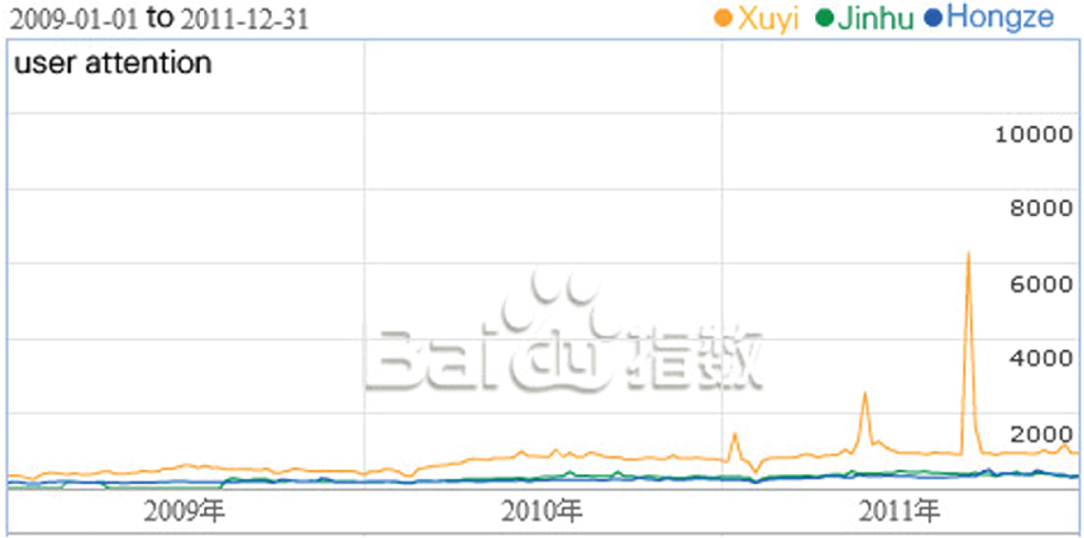
The nationwide trends of user attention to the three counties in 2009–2011.
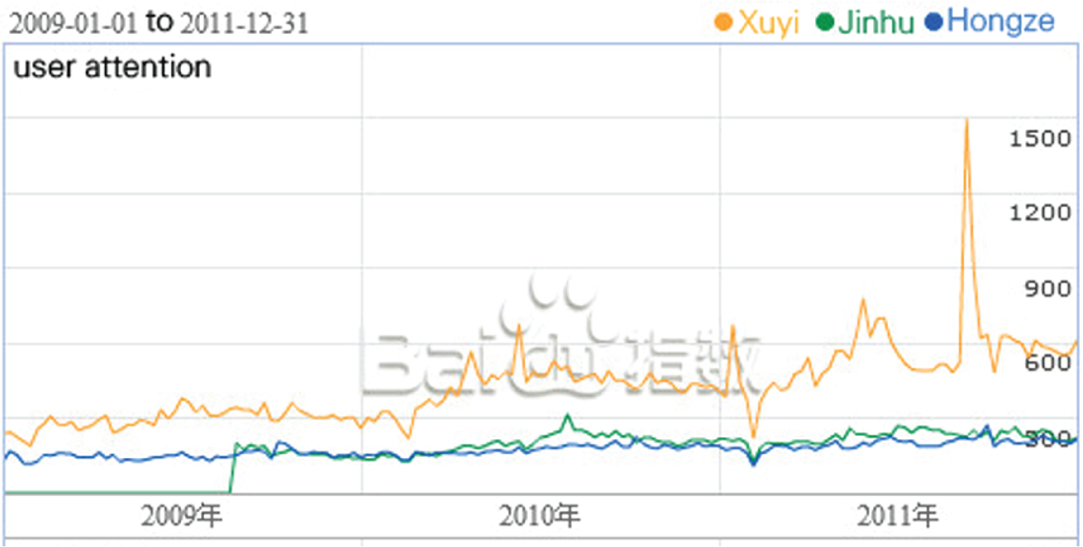
The trends of user attention to the three counties in Jiangsu province in 2009–2011.
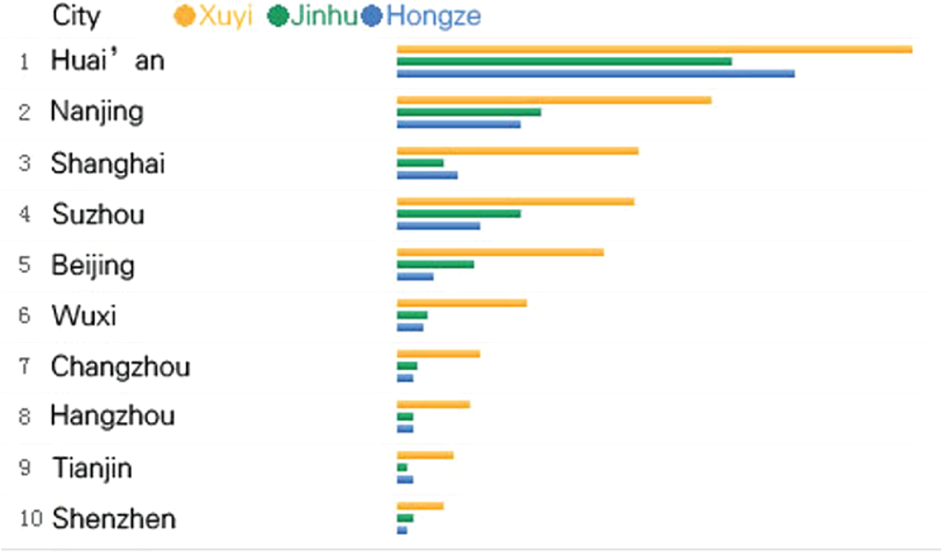
The city comparison of web attention to the three counties in China.
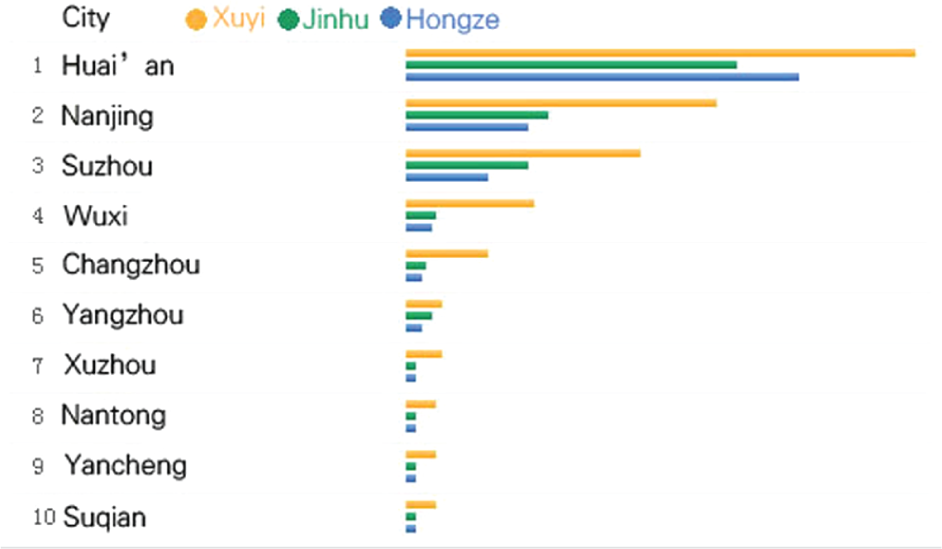
The city comparison of web attention to the three counties in Jiangsu province.
Continuously increasing the value of the city brand based on local resources
This continuous city marketing continuously increases the value of the Xuyi city brand. According to the result of our survey of urban residents in the Yangtze River Delta, 32.7% of interviewees took “Xuyi Lobster” as the key cognitive point for Xuyi county, and 36.7% of interviewees took both “Xuyi Lobster” and the Lobster Festival as the key cognitive points. Together, this is 69.4% of all interviewees. These figures not only show the influence of city marketing on the scaling-up of urban awareness but also indicate that festival marketing successfully changes the local resource to be a representative brand image. Another survey aiming at consumer preferences shows that more than half of the total consumers would take the brand of “Xuyi Lobster” as the essential reference in consumption activities. The 2010 Value Report of Regional Public Agricultural Brands in China, co-edited by Ministry of Agriculture and Center of Agricultural Brand Research of Zhejiang University, shows that the brand value of “Xuyi Lobster” is about 6.5 billion RMB Yuan, ranking first in domestic freshwater brands (Yangtze Evening Post, 2011). In this case, the city brand of Xuyi has scaled up from a local brand to a national well-known brand.
Urban economy scaling-up promoted by continuous city marketing
Establish cross-regional economic network around “Xuyi Lobster”
The continuous increase in customer loyalty and brand value of Xuyi Lobster promotes the scaling-up of the lobster industry. It is mainly reflected in the following aspects: (1) the industrial chain extends vertically, from traditional pond fishing to many upstream and downstream fields, including matching seeds, artificial culture, seasoning production, wholesale and retail sales, chef training, and so on; (2) because of the deep development of the industrial chain, the economic effects and the employment scale are highly enhanced. From the year 2005 to 2009, the average growth rate per year of the gross output of lobster industry was 58.7%, and the average increase in employee numbers per year was approximately 24,000, which shows that the development of the lobster industrial chain has become an important driver in promoting the economy and employment of Xuyi County; and (3) the brand effect increases the product’s added value and expands consumer demands, which provides financial security and market impetus to upgrade and standardize the production. Through seeking cooperation with domestic and overseas experts, Xuyi County overcame the technology bottleneck of cultivation and widely spread the cultivation in the county. From year 2005 to 2009, the area of lobster cultivation expanded about 7 times, while the proportion of cultivation to the total trading volume of aquaculture production increased by 14 percentage points, which paves the way for technology spillovers.
Xuyi County has established a downstream economic network of the lobster industry outside its territory through the lobster association. Through the member communication list provided by the lobster association, we can see the nationwide distribution of lobster restaurants in three typical years. The data indicate that the total membership of the lobster association expanded by about 3 times from the year 2003 to 2010, and the scale expanded from the earlier 13 cities to 68 cities by the current day. Moreover, the number of member companies had surpassed 10 in Nanjing and Shanghai from the year 2005 and the distribution of companies expanded from Xuyi and its surrounding areas to most areas in Jiangsu and Zhejiang provinces. They also have expanded in some Chinese central cities such as Beijing and Shenzhen. Because the live lobster and culinary seasoning used by member companies are all supplied from Xuyi, the expansion of the sales network has obviously promoted the urban economic development. According to the survey result of typical companies, the present lobster sales network has covered almost all prefecture-level cities in Jiangsu and Zhejiang province and the northern cities such as Beijing, Shenyang, Tsitsihar, and the southern cities, such as Shenzhen, Guangzhou, Xiamen, Fuzhou, Quanzhou, and so on.
City marketing directly promotes urban tourism and leisure products
The development of the urban tourism and leisure products is mainly reflected though the tourist arrivals and tourism revenue. Xuyi county only received about 0.45 million tourists and got about 40 million RMB Yuan tourism revenue in 2000, but the numbers rose rapidly to 2.88 million tourists and 1.71 billion RMB Yuan in 2009. The average rate of increase per year for each criterion was about 20% and 45%, respectively, higher than the average rates of Jiangsu province, which were 8% and 20% per year. In addition to the substantial growth of tourist arrivals and income, the market penetration of Xuyi tourism and leisure products rose substantially. Xuyi County has successfully applied for four National AAAA Tourist Attractions from 2009 to 2011, and is ranked first in the county-level city in Jiangsu. The scaling-up of city awareness promoted by city marketing is the fundamental reason for the rapid development of Xuyi tourism and leisure products. The survey of residents in the Yangtze River Delta showed that 84.3% of interviewees are willing to travel to Xuyi. The annual Lobster Festival is the peak of Xuyi’s tourism industry, while the tourism product named “Gourmet and Leisure,” which relies on Lobster festivals is the first choice of many foreign tourists.
Marketing channel strategy indirectly promotes the investment agglomeration
City marketing does not directly promote the agglomeration of investment, but indirectly increases the attractiveness to investment. Usually for investors, the cost factor is still the main factor to choose an investment location. However, the urban reputation and a pro-business environment often play a critical role in the competition given equal cost. The continuous city marketing of Xuyi County has played such a role. First, city marketing broadens the investment channels. In the annual Lobster Festival, the local government of Xuyi County will organize investment promotion conferences in key investment promotion target cities, and introduce the investment environment of Xuyi to local government and business leaders in order to increase the understanding channels of Xuyi. From our survey, about 17% of entrepreneurs were initially introduced to Xuyi through this channel. Second, city marketing improves the efficiency of existing channels. The entrepreneurs investing in Xuyi is regarded as important resources by the local government, and therefore, they and their families will be invited to participate in the annual Lobster Festival. They are also encouraged to bring their friends with investment intentions to visit Xuyi. According to our survey, about 23% of entrepreneurs were introduced to Xuyi through the introduction of their friends. The Xuyi government often invites entrepreneurs who have invested in Xuyi to the investment promotion conferences to outline their own experiences to convince the other entrepreneurs. In one interview, a Zhejiang entrepreneur discussed how he has introduced three friends to invest in Xuyi and has been invited to the investment promotion conference by the government for several times, which also helped him establish good cooperative relations with local government. About 35.8% of entrepreneurs surveyed consider that the expansion of human relationships is the greatest contribution of the Lobster Festival to Xuyi, while about 17% of entrepreneurs admitted that the Lobster Festival can increase investment opportunities.
Urban governance scaling-up promoted by continuous city marketing
Public–private partnerships of multiple scales during the Lobster Festival
After 10 years of continuous city marketing, Xuyi has succeeded in getting rid of the marketing model, which was led only by the local government. In particular, successful city branding has meant the formation of multiscale public–private partnerships, containing four types of participants (the government, the core enterprise, the peripheral enterprise, and the media), and including three levels (local, regional, and national) (Table 1). The details are as follows:
The main source of festival funds comes from the private sector. For example, in 2010, the 10th Lobster Festival got 19 million RMB Yuan of advertising sponsorship and 8.36 million RMB Yuan from tickets income, which had been the basic support for running the Lobster Festival. Hence, the local government basically had zero financial input in running this event. The core enterprises in the lobster industry chain of Xuyi, such as catering enterprises, condiment processing enterprises, and lobster breeding enterprises, which have very close economic relations with the city marketing (especially after the successful branding of Xuyi lobster), have made great contributions to the Lobster Festival. In 2010, local enterprises related to lobsters provided 1.15 million RMB Yuan in sponsorship, while the other local enterprises that were not in the chain of lobster industry provided 6.84 million RMB Yuan in sponsorship in order to get advertisement space to introduce themselves. However, the enthusiasm for participation among enterprises outside Xuyi and its surrounding area is relatively lower. The main participating enterprises are the liquor and tobacco industries with large range of products in order to build partnerships with the lobster catering hotels widely distributed in this region.
The main organizer of the Lobster Festival is the local government, whose market operation ability is rising. In the 3 months before the 10th Lobster Festival in 2010, county government transferred staff from the institutions directly under the government to establish a professional preparation system called “one office and six branches.” There are four types of key functions of this system: the core function is the routine leadership and basic logistics, the other two are publicity and market development function. Among these, the provision of publicity across different channels was taken by the news and communication departments, which were in charge of liaising with the joint unit and the cooperation agency, managing the website of the Lobster Festival and publicizing the festival activities, while focusing on the domestic and international festival research and evaluation organizations, universities, social institutions, and so on as these organizations can give more authoritative evaluation to highlight the governor’s performance. The function of market development was taken by the market operation and investment promotion departments, which were in charge of sponsorship negotiation, raising funds, inviting sponsors, organizing investment promotion activities, customer service, lobster brand maintenance, and so on.
Relevant functional departments of the provincial government play the role of supervisors in the marketing activity. The Department of Environmental Protection and the Ocean and Fishery Bureau of Jiangsu province are included in the organizers list, which can be regarded as an affirmation of the city marketing by high-level government. The provincial departments also play a big role in monitoring product quality and improving the legitimacy of the activity. In the crisis caused by “Haff disease” breaking out in 2010, provincial agencies mentioned above both initiated quality checks and published the results in a timely fashion, which to the maximum extent possible reduced the impact on the lobster brand.
Public media is an important guarantee for the propagation of marketing activity. Regional and national media participating in the organization of the festival do help the festival’s influence go beyond the local level to get more popularity for Xuyi County. The Yangtze Evening Post (http://www.yangtse.com), which is the biggest print media in Jiangsu Province and has a strong influence in the Yangtze River Delta, was the first media to cooperate with Xuyi County government. The strong influence of the Yangtze Evening Post has played an important role in promoting the Xuyi Lobster Festival when it was in the early stages and not well-known in Jiangsu Province. The later participation of Jiangsu Radio and Television Group and CCTV is the result of marketing scaling-up, by which Xuyi has been broadcast to a wider audience.
Types of organizers and co-organizers.
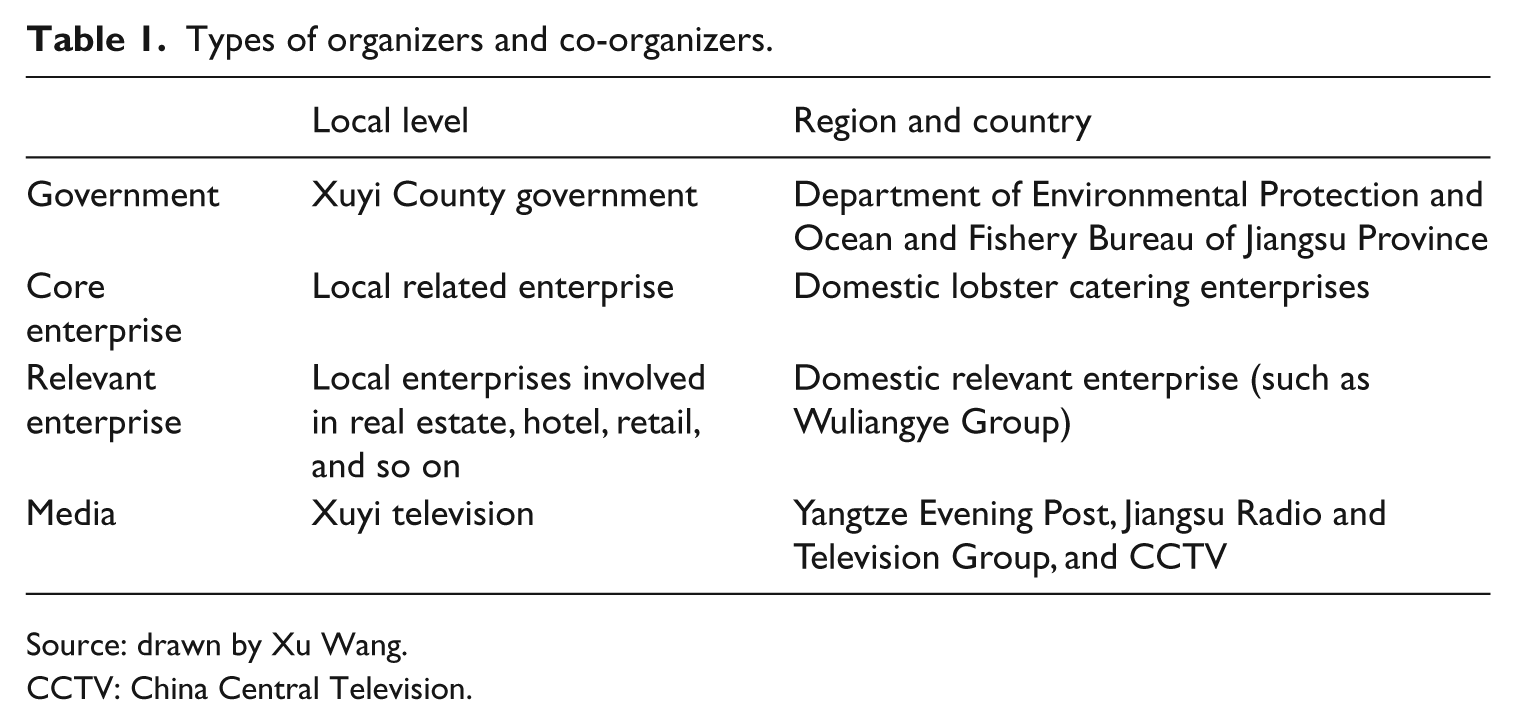
Source: drawn by Xu Wang.
CCTV: China Central Television.
The permanent governance organization deriving from management of the city brand
The cooperation during Lobster Festival is complementary, for the private sector only has the opportunity of advertising products instead of involving in decision making. However, the collaboration between government and enterprises remains after the festival activities, and it has led to a permanent governance organization, the Xuyi Lobster Association, which engages in city brand managing. This association is a social organization in the status of independent corporate body. It is an obvious third party in the collaboration between government and enterprise. The organization consists of chairman, secretary-general, director, and members (Figure 9). The county governor is the chairman, and the leader of the county people’s political consultative conference is the vice-chairman. The leader of Industry and Commerce Administration of the County is the secretary-general working on daily management. The directors are the leaders of major government sectors and the owners of influential enterprises related to lobster. Members are all the owners of the member enterprises in the lobster association. Under this system, the Lobster Association represents the wills of both government and enterprise in both function and operational mechanisms. In the early stage of brand making, promoting development was a mutual goal of government and enterprise. After the “Haff disease” crisis in 2010, the most important aim of the association was strengthening supervision and maintaining image of the brand. The association instantly re-examined the enterprises in terms of its membership and required them to apply unified logistics and processing standards and use a unified lobster trademark. Local government commissioned the Jiangsu Xuyi Lobster Corporation (the owner of “Xuyi Lobster” brand), invested by the Lobster Association, to cover insurance for the quality of members’ products and established the Brand Protection Bureau to cooperate with the Lobster Association. While the government makes requests to the enterprises, the enterprises also can use the platform of the Lobster Association to express their suggestions to the government. In the early 2010, the Xuyi local government planned to change Lobster Festival from a year-term event to a 3-year-term event. However, after the crisis of “Haff disease” in the summer, the first-line enterprises thought that to continue the Lobster Festival in 2011 was of significant importance to stabilize the market and enhance consumer confidence. Therefore, they asked the government to hold the festival as usual, or even in advance. Through the director general meeting, the suggestion was reported to the government and adopted. With the effort of local government, Xuyi has established a permanent governance organization of public–private cooperation and uses flexible market-oriented measures and administrative means to reinforce the governance ability of the lobster economic network in order to cope with changes and risks. All of these consolidate and scale-up the city’s economic position as the hub of its economic network.
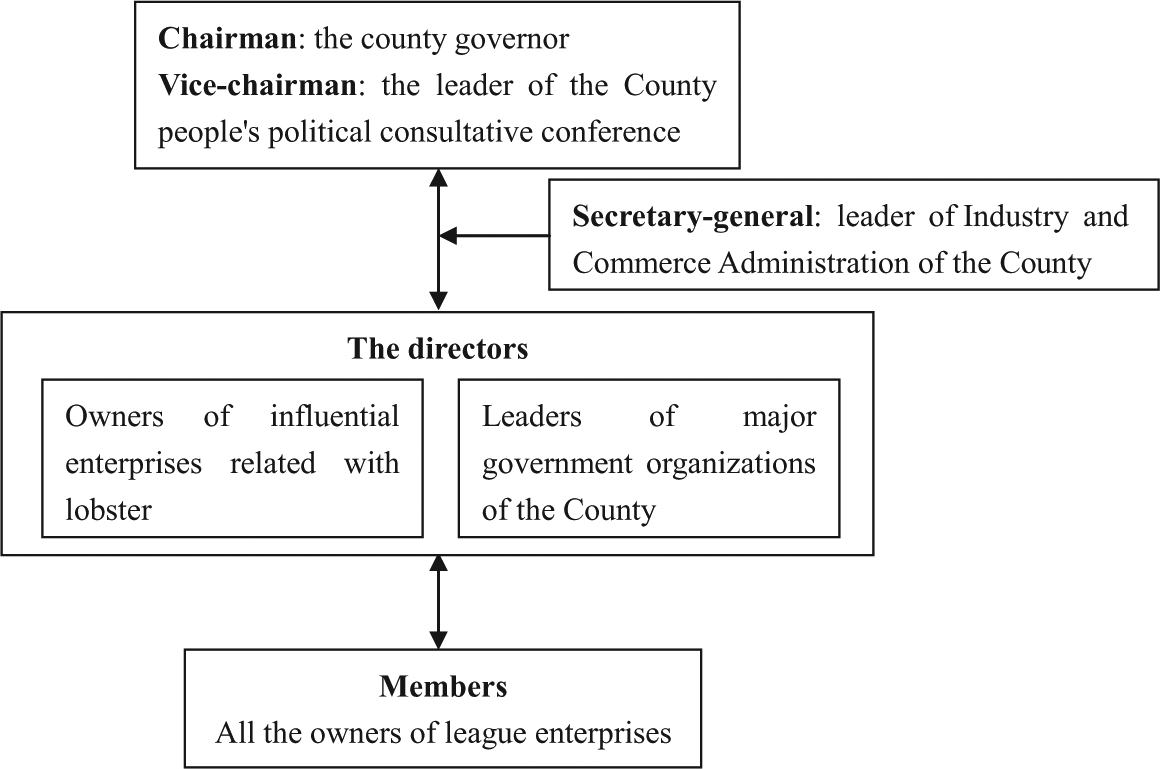
Lobster Association consititution.
Conclusion and discussion
The effective combination of city marketing and local resources is a very important way for small- and medium-sized cities to achieve their own development. The key point in this combination is the branding of local production. To move from city marketing to city branding is not only a long-term development strategy but also an endogenous development model. While the city marketing in developed countries prefers the main theme to be some comprehensive vision such as becoming the creative city (Marguerite, 2012), the stage of Chinese urbanization and economic development means that the theme of city marketing in China is still about specific entities such as food. It is well known that China is a country with the tradition of loving delicacies. Hence, delicious food is undoubtedly the most attractive product in the themes of much city marketing. Lobster is a very characteristic local fancy food in Xuyi.
From this case study, it can be seen that Xuyi has effectively extended the industrial chain to upstream and downstream industries and established a cross-regional economic network around the brand of “Xuyi Lobster” and has further become the hub of managing, researching, and selling lobster. With the expansion of the lobster industry, the continuous city marketing directly promotes urban economic growth. As brands are in the center of marketing (Keller, 1998; Kotler, 1997; Kotler et al., 2002; Rainisto, 2003), branding can also be a natural starting point for place marketing. Thus, choosing a local embedded resource, especially that which can be mass consumed, and creating a typical city brand by marketing, is the key step in city marketing. A main problem in lots of unsuccessful city marketing is the irrational choosing and branding of products.
City scaling-up promoted by continuous city marketing can stimulate urban endogenous development. Continuous city marketing based on multiple sources of endogenous power such as political, economic, and cultural power can promote the urban reputation and economic growth. It can effectively integrate some kinds of local resources to overcome the defects of externality and short-term nature of single city marketing and maximize the whole social efficiency. Unlike the simple city marketing models that focus on attracting capital, this model can better express the urban abilities and actual strength. In the virtuous cycle between the city marketing field and city development, the city uses flexible methods to build up cross-regional economic networks around local resources, promotes the interactive development between city and region, and then promotes the economic scaling-up based on the awareness advantage. In the process of developing cross-regional economic networks, seeking public–private cooperation and improving governance ability by a combination of market and administration are the important ways to deal with the risks in using such networks to promote the governance scaling-up. Furthermore, the city (can? should?) optimize the brand management based on the governance scaling-up and expand the marketing of these products based on extensive external communication. All of these can finally provide the city with financial and organizational guarantees, which will then enlarge the brand awareness and promote the city into the next cycle. In the virtuous cycle between nonmarketing field and the city development, the city coordinates the internal and external development power. In the aspect of culture, the external strategy is to create brands and raise awareness, while the internal strategy is to shape recognition and foster entrepreneurship. In the economic aspect, the main strategy is to promote investment, attract advantaged resources to support the local construction, including the living environment and infrastructure, and promote scaling-up in nonmarketing fields. The joint action of internal and external power will increase the city’s self-accumulation capability and expand the city’s area of influence, which will finally promote the development of the city to move away from the dependence on city marketing and enter into a wider range of the virtuous circle.
Local government and its effective governance system is the core of city marketing. The impact of the main governor is particularly important. This is a typical pro-growth model of urban governance (Pierre, 1999). The combination of pragmatic and diligent local government and smart market elites is the guarantee of continuous city marketing and also a guarantee to promote urban endogenous development. There are no exceptional models in Chinese urban development. This is largely because the contribution of local government is significant in the current decentralized Chinese governance environment, especially the contribution of the chief leader in the local government. Because of this decentralization and the Chinese long-term tradition of the rule of man, the foresight and courage of the main governor plays a very important role in the constitution and initial operation of the governance system. Although short-term behavior and vanity projects can be found everywhere under the pro-growth urban governance in China, the excellent leaders who dare to transcend common practice, such as the main leader in Xuyi County, still exist. To conclude, the mechanism of the success of Xuyi, the local endogenous reasonable governance system promoted by main governor, takes full advantage of local resource endowment through continuous city marketing.
Footnotes
Funding
This study was funded by the Natural Science Foundation of China (Nos. 40901082 and 41171134).