







Abstract
Despite the appearance of a range of opportunities for formal participation in environmental decision-making in Aotearoa New Zealand, postpolitics is very much present, annulling dissent, upholding dominant neoliberal ideals and delegitimising other voices. Through our analysis of a consent decision about a proposed coal mine on the West Coast of Aotearoa New Zealand and the experiences of opposing environmentalists, we offer empirical evidence that illustrates the fluid shifts between antagonism and agonism (after Mouffe) throughout this ‘democratic’ process. We argue that while aspirations for agonism should remain, it is important that planning theory pays attention to the role that power and hegemony play in what could otherwise be considered agonistic planning. Antagonism, the undesirable in Mouffe’s radical democracy, has a critical role in neoliberal contexts, rupturing postpolitics and creating spaces of dissent so that agonistic contestation can provide for robust and rigorous debate in environmental decision-making.
Keywords
Introduction
On the surface, it would appear that environmental and urban planning decision-making in Western democracies has increasingly recognised the value of participatory elements. Albeit speaking in very general terms, many decision-makers, operating within formal planning processes, tend to acknowledge that values relating to the environment and nature are highly contested and that decisions made on environmental issues are far reaching. People have a right to be involved in the decisions that affect them. That is the normative rationale for democratic processes in environmental management. However, political theorists, geographers and other critical ‘leftist’ scholars argue that with the merging of the political left and right into the centre, the rising hegemony of neoliberal globalisation and increasing threats (environmental and social) to the very possibility of continued economic growth, opportunities for contestatory or dissenting democratic involvement has been squeezed (Allmendinger and Haughton, 2012; Mouffe, 2000, 2005; Oosterlynck and Swyngedouw, 2010; Rancière, 1999; Swyngedouw, 2011; Wilson and Swyngedouw, 2014; Žižek, 1999). Postpolitics describe processes that, perhaps under the guise of participation or public involvement, protect the status quo in which progress equates to increased economic growth. Here, dissent is annulled, delegitimised, likened to background noise to ensure progress continues along these lines.
Why is this of concern? Because it enhances the hegemony of neoliberal global capitalism, sedimenting it further into everyday commonsense even though the current capitalist conjuncture is the very system that is largely responsible for contemporary social and ecological crises such as climate change, biodiversity loss and growing social inequalities. Chantal Mouffe (2000, 2005) argues that what is needed is a robust contestatory democracy whereby spaces in which antagonisms are always already inherent are legitimised through an agonistic pluralism. These arguments have been taken up in planning theory (Bäcklund and Mäntysalo, 2010; Beaumont and Loopmans, 2008; Bond, 2011; Gunder, 2003; Hillier, 2003; Kapoor, 2002; McClymont, 2011; Pløger, 2004; Purcell, 2009). Despite the uptake of these arguments by planning theorists and geographers, there is little empirical material that explores how, in the context of what has been described as the postpolitical, such an agonistic democracy might take place. Indeed, some have argued that its form becomes akin to deliberative or communicative forms of democracy (against which agonistic radical democracy was in part formulated). Thus, it has been subject to the same critiques: co-opted by consensus-based processes (Purcell, 2009), lacking a normative dimension, and unable to fully account for the power relations that remain inevitable in the public sphere (see Bond, 2011). In this article, we contribute to addressing this gap through an exploration of the antagonistic and agonistic moments in the consenting process for a coal mine on the West Coast of the South Island of Aotearoa New Zealand.
The research involved 16 qualitative in-depth interviews with environmentalists, council staff and a commissioner, all of whom were directly involved in the process. In addition, secondary sources (such as decision reports and material relating to the consent process, submissions, and media coverage) were also analysed. The value of the approach taken here and the questions asked lies in how it exposes the nexus between both institutionalised forms of participation under a planning regime and informal activist engagement, to highlight the nature of contestation and the power plays inherent to it. Our argument is thus twofold. First, in relation to planning practice, the value of a range of different forms of engagement is vital to opening up spaces of debate. Practitioners have some agency in this process. However, they are also subject to wider discursive, institutional and legal pressures that shape their actions. It is increasingly crucial that planners are aware of the disciplining effects of these wider pressures in order that they do not perpetuate the kinds of democratic closure that is central to postpoliticised planning practice and to work towards creating space for debate even within the constrained frameworks within which they operate. Second, we make a theoretical argument that highlights the value of both agonism and antagonism, suggesting that the antagonistic moments can provide the conditions of possibility for more agonistic engagements.
The following section sets out the conceptual terrain we have drawn on, followed by the institutional context of the case and the Escarpment Mine process. The third section then explores the shifts that took place between agonism and antagonism, setting the platform to argue in the fourth section for a keen awareness of the role of hegemonic discourses that underpin a much more widespread antagonism. Finally, we conclude with a discussion on the role of antagonism and agonism in the context of postpoliticising planning processes.
Conceptual terrain: antagonism, agonism and hegemony
Understanding Mouffe’s concept of agonism requires situating her work in the context of her collaboration with Ernesto Laclau in Hegemony and Socialist Strategy first published in 1985. This sets out their ontological claims and, significantly for present purposes, their understanding of antagonism. Laclau and Mouffe’s (2001) ontology is anti-foundational, informed by poststructuralism, Marxism and Lacanian psychoanalysis. Their ontology is fundamentally an ontology of lack. The social order (and meanings that constitute it) is only ever temporarily fixed through discourse and power. This means that there is always a high degree of uncertainty and contingency as there is no foundation and things can always be different. Discourses fix meanings which are held in place through power relations to provide for certainty and the sense of a foundation. Therefore, the array of discourses that constitute the way we understand the world can always change and be ruptured. For Laclau and Mouffe, social antagonisms disrupt the discourses that hold in place the dominant understandings of how society is and how identities are placed within society. Here, antagonism is not conflict between identities over competing interests as in liberal democracy. Antagonism, for Laclau and Mouffe, emerges when some event threatens the temporary stability of meanings and divides the social–political space into two sides, each drawing in a range of subject positions that identify themselves as antithetical to one another – as enemies (Laclau and Mouffe, 2001; Mouffe, 2005; Torfing, 1999).
Based on the ontological framing sketched above, hegemony has a specific meaning. Laclau and Mouffe (2001) extend Gramsci’s class-oriented formulation to one based on how meanings construct a particular order for any given state or time. Mouffe (2005) summarises this conceptualisation of hegemony as follows:
… every order is political and based on some form of exclusion. There are always other possibilities that have been repressed and that can be reactivated. The articulatory practices through which a certain order is established and the meaning of social institutions is fixed are ‘hegemonic practices’. Every hegemonic order is susceptible [to] being challenged by counter-hegemonic practices, i.e., practices which will attempt to disarticulate the existing order so as to install another form of hegemony. (p. 18)
In other words, hegemony is the sedimented outcome of antagonistic processes (comprising hegemonic and counter-hegemonic practices) which vie for dominance to order the social. Building on this ontological foundation, in which all social relations have the inherent potential to become antagonistic – that is to negate the other – Mouffe’s work after Hegemony and Socialist Strategy articulates a form of radical democracy. Here she argues that, to avoid the tendency for antagonistic relations to erupt into violence, a vibrant contestatory politics involves taming antagonism into agonism. The antagonistic us/them relation between enemies shifts from one that may result in violence and/or paralysis, to one between adversaries or friendly enemies. Adversaries in this framing respect the underlying principles of democratic engagement even as they continue to disagree because they hold different discursive meanings associated with whatever caused the antagonism (Mouffe, 2005, 2013).
Mouffe (2013) argues that the key components for an agonistic democracy are adherence to common democratic values of liberty and equality even though their precise interpretation might be contested – that is, adversaries ‘do not put into question the legitimacy of their opponent’s right to fight for the victory of their position’ (p. 7). However, sharing such ethico-political values requires an institutional framework that enables and legitimises the right to make a claim, be heard and to disagree. Finally, because antagonism is, in Mouffe’s understanding, conflict ‘that cannot have a rational solution’ and is ontological, it has more recently been described as a ‘politics of passions’. Again, distinguishing herself from liberal democracy, Mouffe (2014) argues that passions are ‘a certain type of common affects, those that are mobilized in the political domain in the formation of the we/they forms of identifications’ (p. 155). By this she means passions are an integral part of how, why and in what forms antagonism and agonism are mobilised and sustained because they are part of the very identities that comprise the collective identity in the antagonistic sphere. It is this dimension that provides the clear distinction between what might be seen as ‘good old fashioned liberal democracy’ at work within the contemporary postpolitical conjuncture, in which politics is reduced to competition between stakeholders and diverse interests within particular institutional norms and practices (also see Metzger et al., 2015). While Mouffe (2013) stresses that the conception of adversary here is not the same as a liberal definition of adversary as a competitor operating against competing interests in a neutral terrain, there remains a risk that Mouffe’s formulation of agonism (at least superficially) can appear to be just that (see Bond, 2011; Purcell, 2009). We argue that by paying attention to both the ethico-political values and the hegemonic and counter-hegemonic power plays underpinning contestation, we deepen the specificity of agonistic pluralism in planning theory and can be more attuned to the nature and effects of politics in environmental governance processes.
To bring this to life a little more clearly, we begin to tie these abstract concepts into the Escarpment Mine case and the context of Aotearoa New Zealand. We have already suggested that the current conjuncture is a postpolitical one, in which spaces for both agonism and the expression of antagonism are squeezed by the sedimentation and hegemonic nature of particular sets of ideological, economic and political practices often associated with neoliberalism. While we understand the specific form of neoliberalism to be shaped and to shape the specific context in which it arises (see Larner, 2003; Peck, 2010), it is characterised by a specific shift that began to emerge in the 1980s across Western democratic states, away from the Welfare State and towards a more market-led, light touch, devolved, deregulated and privatised form of governance. What is significant here, and suggests the co-evolving nature of both postpolitics and neoliberalism, is the tension between neoliberalism and notions of democracy as a form of collective rule. Mirowski (2009) documents the ‘Neoliberal Thought Collective’ who were the early instigators of the (then) counter-hegemonic project in the 1950s that later became known as neoliberalism. The Collective themselves recognised the incompatibility of democracy with a market-led form of political economy. To enable the principles of neoliberalism to be enacted, governments needed to take a strong hand to create and support the conditions required for neoliberalism to unfold. Such strong government was anathema in the context of the atrocities of the Second World War, and so the seductive qualities of (economic) freedom, individualism and competition were promoted in order to hide the corrosive effects of such an ideology on democracy (see Thomas and Bond, 2016). Drawing on Rancière, Swyngedouw (2009) refers to this as postpolitics, defined as a ‘consensual mode of governance’ that takes two paths (p. 610). It either forces conflict to violence because there is no other avenue for dissent, which is then utterly suppressed by the state, or it narrows the space of disagreement to one that includes
different opinions on anything imaginable (as long as it does not question fundamentally the existing state of the neo-liberal political-economic configuration) in arrangements of impotent participation and consensual ‘good’ techno-managerial governance. (Swyngedouw, 2009: 610)
Postpolitics and neoliberalism are clearly entwined in complicated ways that have historically reinforced and maintained each other. We understand both as processes situated in time and place, that adhere to overarching tendencies to maintain a business-as-usual approach to governance in pursuit of exponential economic growth.
As has been noted overseas, post-politicisations are becoming evident in planning processes (Deas, 2014; Imrie, 2013; Raco, 2014; Raco and Lin, 2012). Moreover, in Aotearoa New Zealand under the current (conservative) Government, there have been a number of events that have suggested postpolitics are alive and well. 1 It is therefore timely to explore how postpoliticising processes manifest in the planning system in Aotearoa New Zealand and to understand what its modalities and effects are, including the ability of antagonism to rupture postpoliticisations.
The Resource Management Act 1991, the Escarpment Mine and contestation
In Aotearoa New Zealand, the Resource Management Act 1991 (RMA) is the primary piece of planning and environmental legislation. It sets the legislative framework for local authorities (in theory at least) to sustainably manage the environmental effects of activities in relation to land-use, air, biodiversity, water and the coastal environment. Developers engaging in activities that have adverse effects on the environment must, in their resource consent application to a local authority, avoid, remedy or mitigate such effects. The RMA provides scope for members of the public to be involved in decisions 2 that are about larger scale or controversial developments by way of a formal submission on the proposed development. All submitters then gain an opportunity to present that submission to a ‘hearing’ that is run by a hearings panel of Counsellors or independent commissioners appointed by the local authority. The hearings panel decide on whether and under what conditions consent to operate should be granted.
The RMA has been both lauded for the potential it has to protect the environment and criticised for the ways in which it operates to support economic development and well-resourced ‘big players’ (e.g. Gunder and Mouat, 2002; Jackson and Dixon, 2007). Perhaps because of the latter tendency, there are often informal social actions and protest that occur simultaneously with formal participation processes, particularly in relation to large developments with significant social and/or environmental effects. The Escarpment Mine proposal for an open-cast coal mine on the Denniston Plateau on the West Coast of the South Island of Aotearoa New Zealand exemplifies such a project (see Figures 1 and 2).
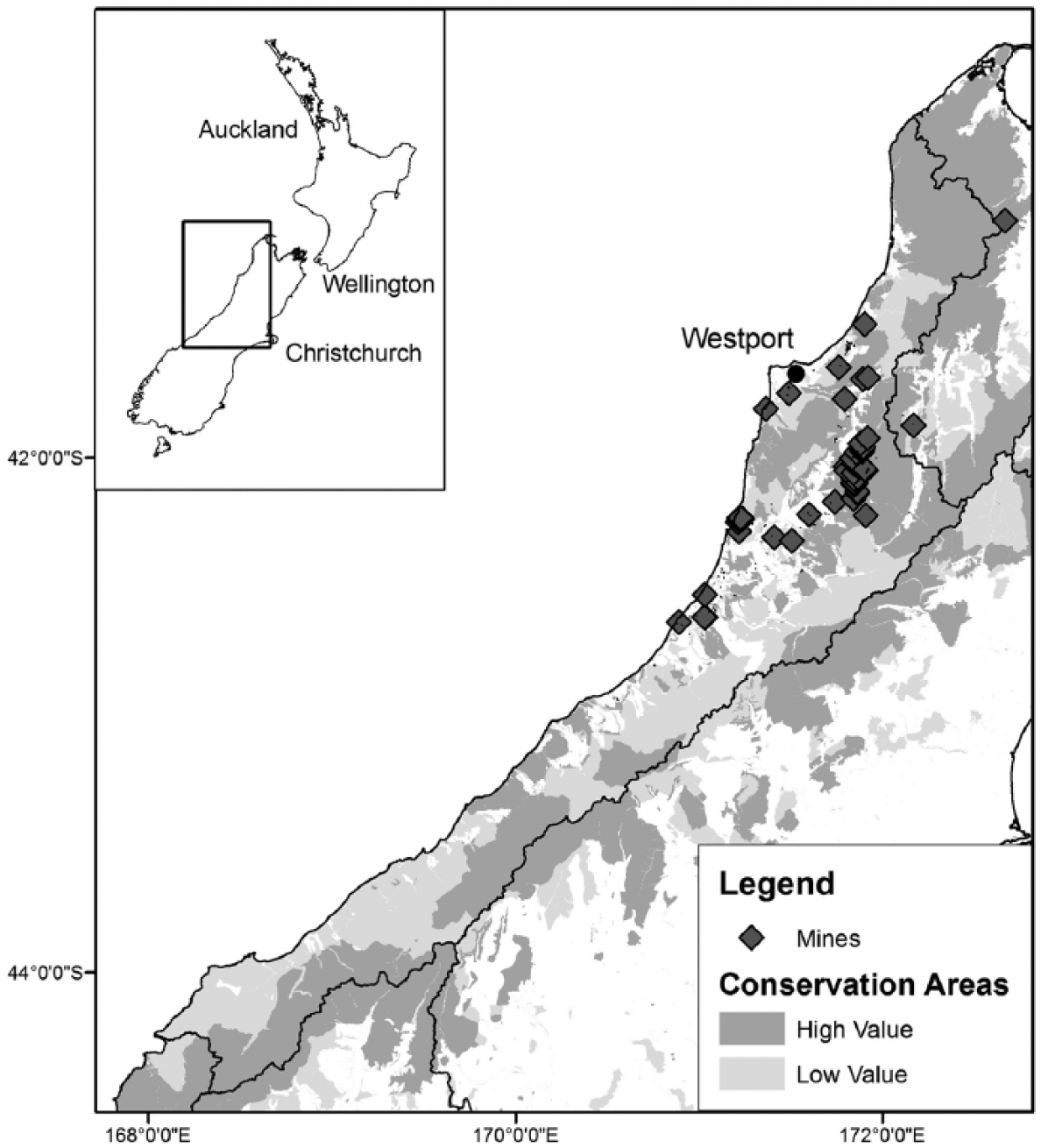
A map showing the location of the Denniston Plateau on the West Coast of the South Island, conservation land and other mining activities within the region.
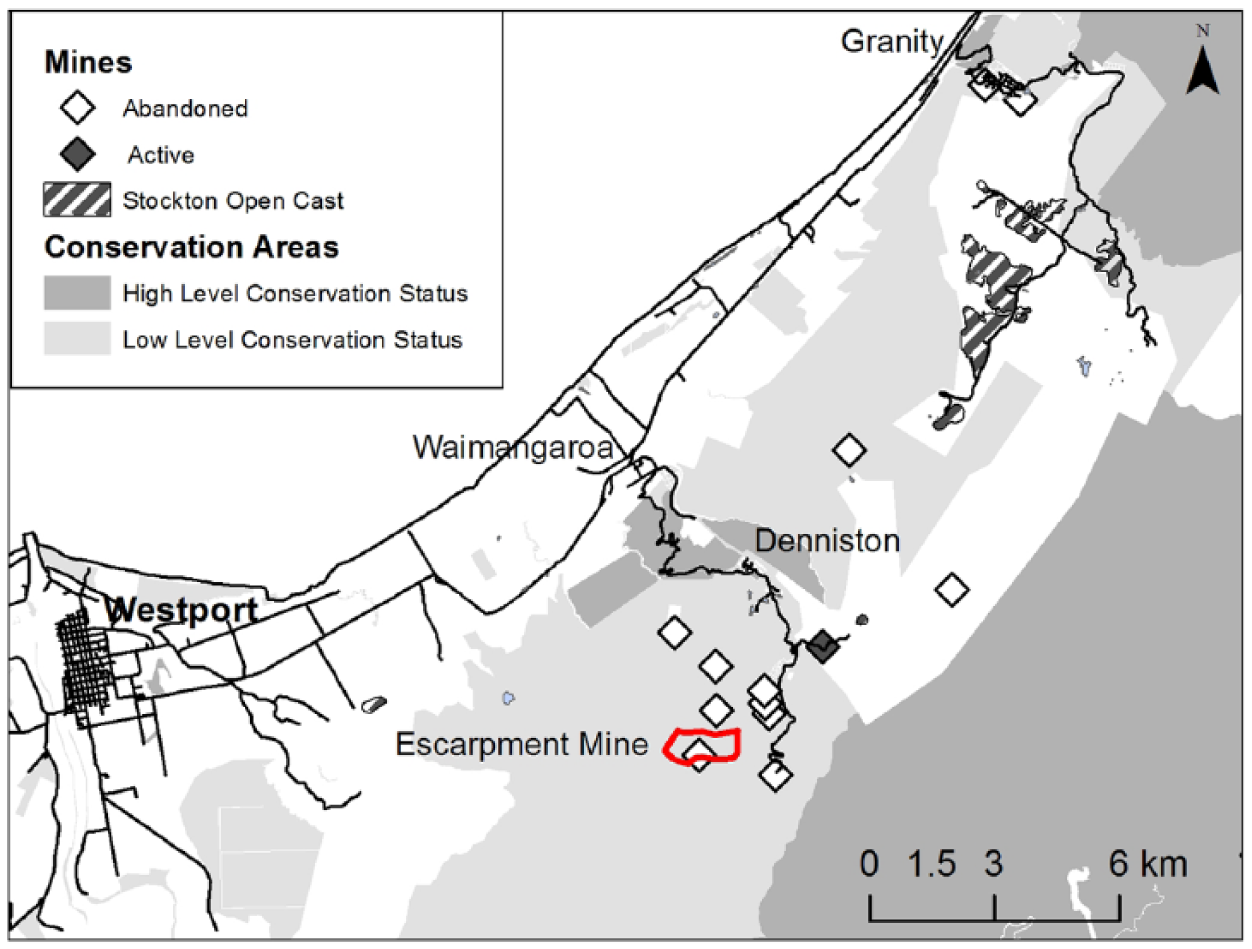
A more detailed map showing the Denniston Plateau and the mining site in relation to Westport, the nearest town.
Bathurst Resources Limited, 3 an Australian Mining company, bought the mining licence for the Denniston Plateau and applied for the relevant consents under the RMA for the mine and associated coal processing plant (Bohannan, 2011). The area is publicly owned and categorised as stewardship (‘low value’ 4 ) conservation land, but it is also a wetland at altitude and home to native flora and fauna, including kiwi (New Zealand’s most famous threatened native bird), tussock and numerous endemic invertebrates (Forest and Bird, 2012b; West Coast Environment Network, 2011). Figure 3 shows the terrain on which the mine is proposed.
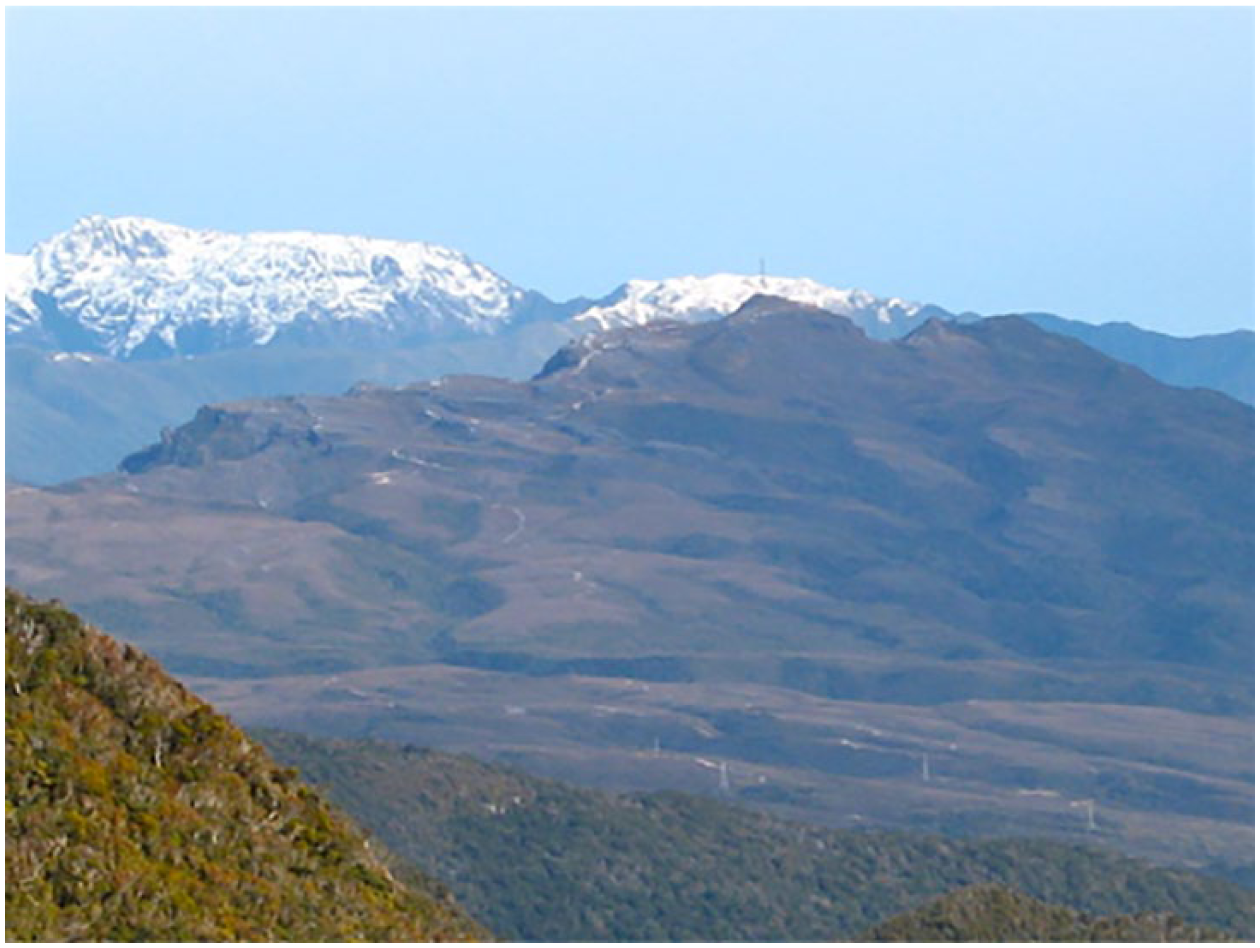
The Denniston Plateau, as seen from the north, from Stockton Mine. The plateau runs from the peak with the metal tower, to far below, with the pylons. Photo taken on 4 July 2012 (Author’s own).
In October 2010, the West Coast Regional Council and Buller District Council invited the public to make submissions on the Escarpment Mine application (Ridge and Inwood, 2011). Figure 4 shows a timeline of the wider process, both under the RMA and the informal action that various environmental activists and environmental groups engaged in. Several groups were involved in both submitting and informal action. Forest and Bird, Coal Action Network Aotearoa (CANA), the West Coast Environment Network and the Buller Conservation Group, 5 among other passionate individuals (see CANA, 2012, 2013; Forest and Bird, 2011, 2012b; Martin, 2011; West Coast Environment Network, 2011), submitted on the proposal (Ridge and Inwood, 2011). 6 The council hearing followed in June and July 2011, presided over by council-appointed commissioners (in accordance with the RMA). At the hearing, Bathurst and submitters were invited to present evidence, including expert witnesses to support their arguments (Archer et al., 2011). Bathurst had 27 experts supporting their application. In contrast, one representative from each opposing environmental group presented their submissions, with the exception of Forest and Bird, who had two representatives and one ecologist as an expert witness (Archer et al., 2011). After some weeks of deliberating, the council-appointed commissioners granted consent for Bathurst’s application.
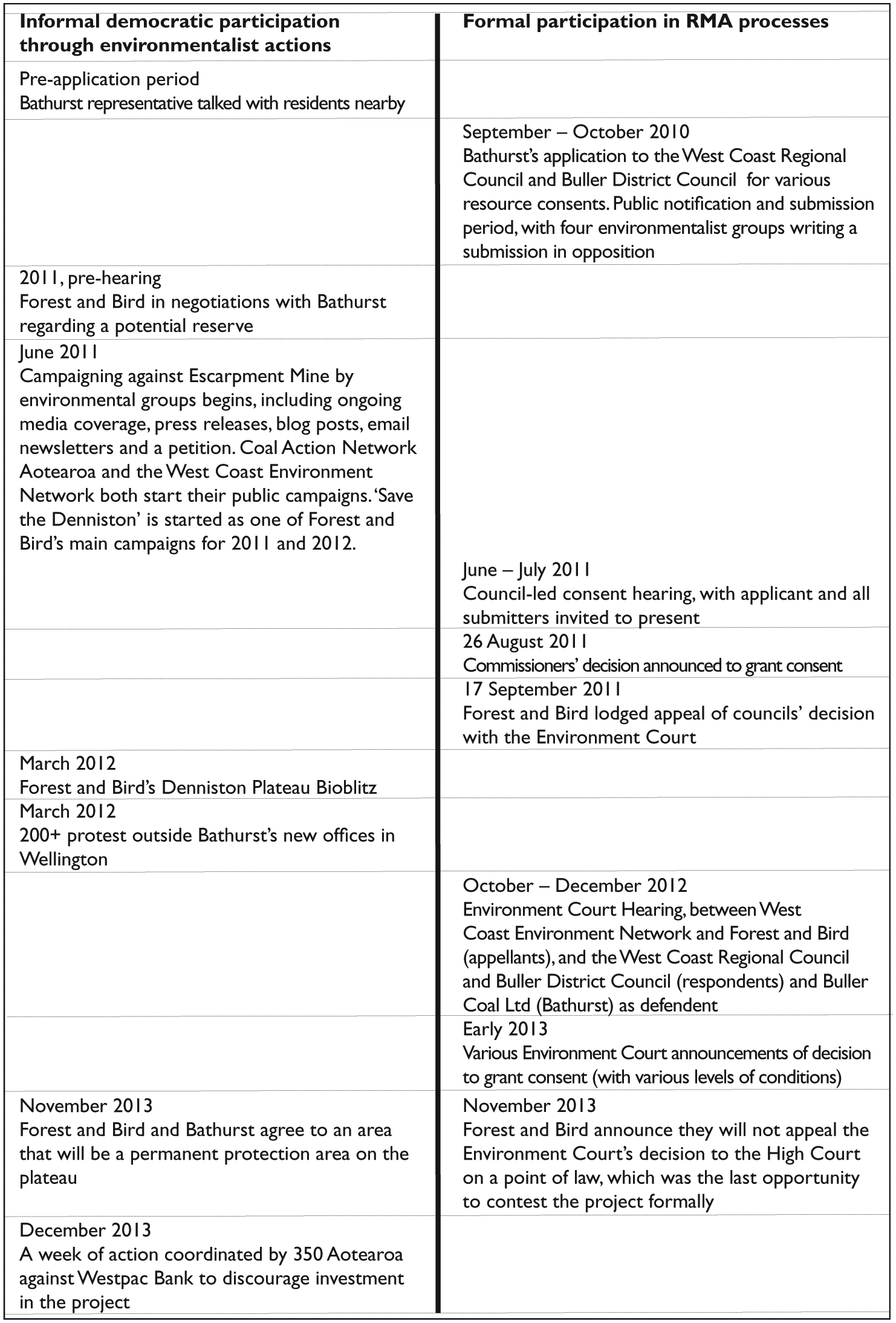
Timeline of environmentalist participation in the case of Escarpment Mine, through both informal participation and activism on the left and formal participation under the RMA on the right.
From the time submissions were invited until after the decision was announced, various groups and individuals engaged in informal actions including media releases, newsletters, a petition, letters to newspapers and blogs. One particular slogan that was used in campaigns against coal mining across Aotearoa New Zealand was ‘keep the coal in the hole’. The most significant forms of action were the Denniston Plateau Bioblitz and protests in March 2012. The Bioblitz, led by Forest and Bird over 2 days involved over 100 volunteers and a number of Aotearoa New Zealand’s top experts collecting data on the ecosystems and species present on the plateau (Forest and Bird, 2012b). In addition, protests occurred at the Wellington offices of Bathurst, with over 200 people protesting the mine (Rutherford, 2012).
Clearly, this is a conflictual space. The question remains as to the nature of that antagonism. If, as many radical democrats insist, dissent is the very essence of a healthy functioning democratic sphere (Mouffe, 2005; Rancière, 1999; Swyngedouw, 2011; Žižek, 1999), then to what extent is dissent enabled or shut down in the Escarpment Mine process? What is the nature of the dissent? And perhaps more significantly, the normative question is, ‘What form should that dissent take to constitute democratic environmental politics?’ As noted in the previous section, Mouffe (2005) argues for institutional frameworks that facilitate the transformation of antagonism between enemies to agonism between ‘friendly enemies’ or adversaries who may disagree, but nevertheless respect the right to voice. The planning system can provide that institutional framework (see McClymont, 2011, in relation to the United Kingdom). Arguably, under the RMA, space is created for debate through the submission and hearings process. Anyone who has submitted might be conceived of as a legitimate adversary. Moreover, there is a right to protest within the law, and the right to free speech within Aotearoa New Zealand, that (again arguably) legitimises environmental activists’ informal action.
While we recognise the importance of these broader institutions and the democratic principles and goals that underlie them, our research demonstrates that power relations beyond the planning frameworks (in the form of hegemonic practices in particular) and agents operating within them shape the nature of dissent irrespective of what form that dissent takes – agonistic or antagonistic or indeed some other form of politics. Power relations shape what is deemed legitimate or not. Moreover, the hegemonic status of neoliberal practices which in turn privilege a form of pragmatic realism and techno-managerialism close down the space for a politics of passion to be articulated. We argue that these power relations go well beyond the immediate process and have a significant effect on what is legitimised, and therefore how antagonistic politics can become agonistic. If the goal in disagreement is to transform antagonism between enemies into agonistic debate between adversaries or friendly enemies (after Mouffe), then we suggest that there is still a need to explore how in specific cases, hegemonic practices shape the nature of dissent. Here, we argue that where agonistic pluralism is applied in the context of planning, it is crucial to stay close to Mouffe’s arguments about the role of discourse and hegemony – an area that appears to have been left behind as agonistic planning has emerged in planning theory. In the following, we demonstrate these arguments as they relate to the Escarpment Mine process as we set up the underlying antagonism and highlight moments of agonism that emerged within the divided political space. We then move into the penultimate section to explore the limits to agonism.
The fluid and shifting nature of agonism/antagonism
The underlying antagonism divided the political space creating a clear us and them logic. Proponents of the mine argued that it would provide much needed jobs for the region, that biodiversity offsetting and state-of-the-art conservation measures would appropriately mitigate any negative environmental effects and that the process was democratic. Opponents to the proposal argued primarily that there should be no further expansion to fossil fuel extraction operations because of its contribution to carbon emissions and that it is not possible to restore or remediate effects to ecosystems once the land has been open cast mined. The conflicting arguments about rehabilitation of the site drew on different discourses of the environment and indeed what mitigation of adverse effects to and rehabilitation of the environment means. The applicant and the decision-makers favoured the view that adverse effects to ecosystems could be mitigated through biodiversity offsetting – protection in one area in exchange for damage or destruction in another area. Those opposed argue that the degradation simply should not happen in the first place, particularly in this site given its rare ecosystems. When these arguments on rehabilitation and climate justice underpin the opponents position, there is no way to bring the two sides together – each position is antithetical to the other. Both positions invoke discourses mobilised by passions that are collectively articulated. Nevertheless, there were moments throughout when that divide between enemies shifted to one between adversaries. Figure 5 provides a schematic of the political space, which is dominated by this ‘Mine the Plateau’/‘Save the Plateau’ division. The dominant discourses shown by each position are listed on the left in blue and red, while the ovals demonstrate how in certain moments that antagonism was transformed into agonism. Interestingly, the most antagonistic moments were those shaped primarily by the formalised process – the council hearing and the Environment Court hearing. These are picked up on in the next section. Here, we focus on three particular agonistic moments: the Bioblitz and the two moments in which conservation became common ground.
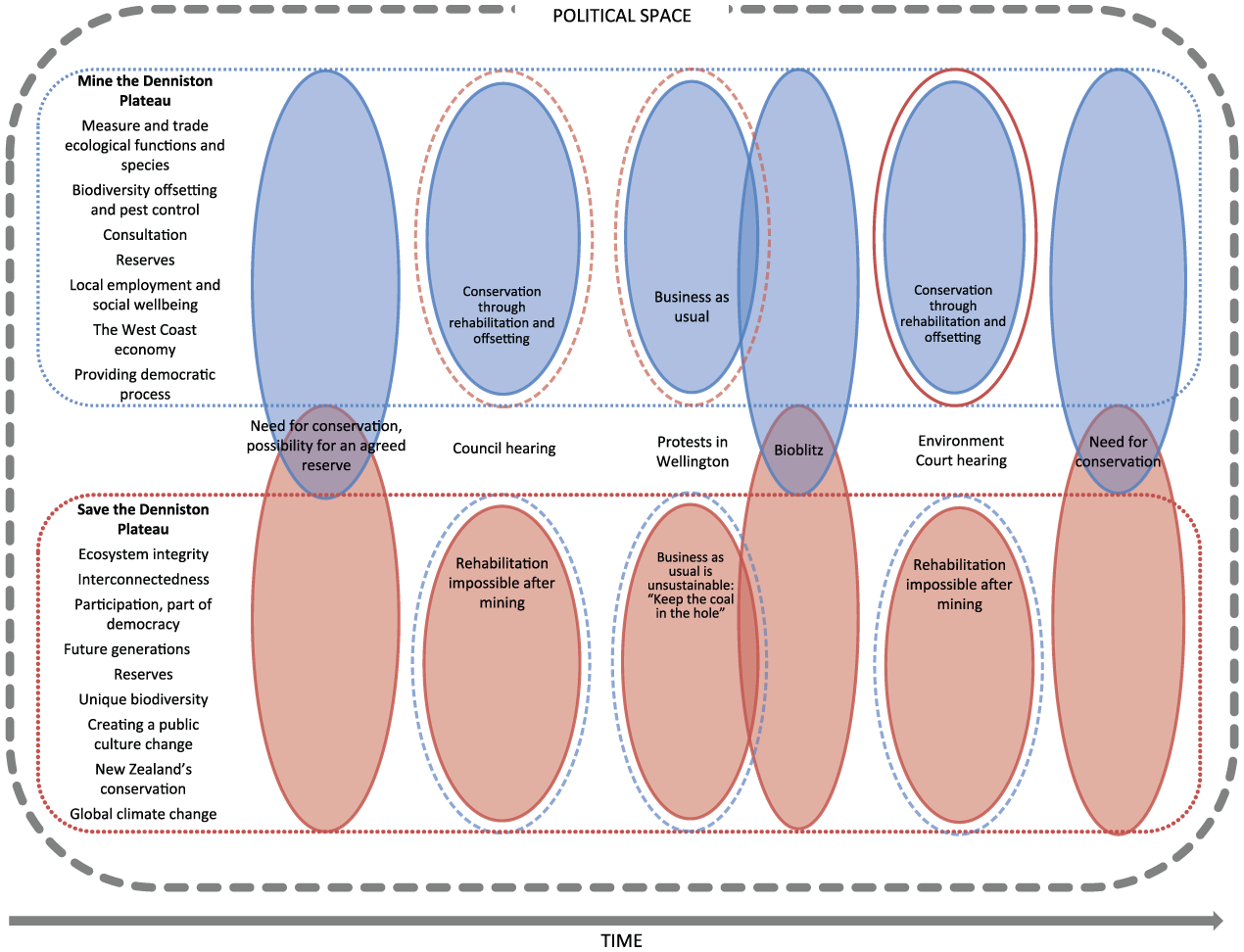
Diagram of the discourses of those for and against Escarpment Mine and the fluid nature of agonism and antagonism during the decision-making process.
The Denniston Plateau Bioblitz was an activist response to highlight and address a lack of ecological knowledge about the plateau. Over 100 people comprised teams of volunteers led by scientists who surveyed diverse parts of the plateau for flora and fauna. Being a widely advertised public event on public land, some Bathurst representatives also attended the day. Bathurst were not interviewed as part of this research, 7 so it is unclear what their intentions were in attending, but environmentalists suggested that it was a strategic move on Bathurst’s part. Nevertheless, Bathurst’s engagement in the event and the following statements by other research participants suggest there was a reciprocal relationship of ‘friendly enemies’ and a willingness to engage in each others’ different positions (see Mouffe, 2005).
One interviewee said,
the mining company had [asked] Forest and Bird [if] they could come and help at the Blitz, which was interesting, quite strategic of them, I should think … But I think it put them [Forest and Bird] in quite a difficult position, because either they say no, in which case the company says, ‘oh well, it’s not a public survey of biology then’, or they say yes, in which case they’ve got the mining company helping them and all their conservation members trying to protect this precious place from being a huge open cast pit. (Participant 11)
Another interviewee suggested that
I think this was a goodwill gesture if you like, … but I spoke to him [a Bathurst representative] and he started to tell me how wonderful mining was, so I had to tell him I knew a thing or two and that he was bullshitting, [but] he was quite a pleasant guy [laughs]. (Participant 13)
Both environmentalists interviewed who mentioned this situation demonstrated respect for the Bathurst representatives. While the underlying conflict and the outcomes of the conflict didn’t change, the right to run the Bioblitz, the information gathered and the right of Bathurst to be involved and to ‘care’ even were legitimised. There was a respectful dialogue between opposing parties as adversaries. Yet at the same time as this more agonistic engagement, antagonism persisted in Wellington, Aotearoa New Zealand’s capital city, where there were protests outside Bathurst’s offices led by various environmental non-governmental organisations (NGOs) in opposition to the proposed mine. There were over 200 people there, and while there was no violence, the general feeling of the protest was antagonistic. Protestors yelled and booed at a government Minister arriving to meet with Bathurst and NGOs gave speeches that clearly negated Barthurt’s position, indicating that opening a new coal mine was fundamentally wrong given the current environmental and social context.
The second example involves early negotiations where conservation goals became common ground in relation to setting aside an ecological reserve free from mining, which also illustrates the fluidity between agonism and antagonism. Prior to the RMA consent hearing in 2011 (see timeline in Figure 4), a participant from an environmental NGO engaged in discussions with Bathurst with a view to agreeing on an area of the plateau that would remain a protected conservation reserve (participant 2). However, while she was initially open to reaching some kind of agreement, she said, ‘it became apparent in that process that what they meant by a reserve and what was an ecologically sound reserve … was poles apart’, despite the willingness on her part for ‘a bit of give and take’ (participant 2). So here, initially there was agreement that a reserve would be one approach to conservation while also developing the proposal. The disagreement that followed was about how that should take place: the representative from the NGO indicated that the mine and associated infrastructure would ‘ruin the integrity of that whole area’ and that the small reserve that Bathurst was proposing was a futile pretence at conservation.
As a result of these engagements, the NGO publicly proposed a conservation site for the whole of the plateau, exceeding the proposed mine area. The action signified a shift in the nature of the engagement between the NGO and Bathurst. The relationship no longer suggested that the NGO respected the underlying right of Bathurst to disagree. Rather, the NGO actively sought to undermine the company’s entire enterprise in the area. But similarly, Bathurst’s proposal did not allow or incorporate the environmentalists’ conservation concerns, despite Bathurst’s application including rehabilitation and replanting plans of the site (which was deemed insufficient by environmentalists). Both groups relied on different discourses of nature and conservation. This antagonism occurred simultaneously within the formal hearing process under the RMA. However, it was the informal negotiations and discussions that on the surface, at least, had more elements of agonism.
Just over 2 years later, when the formal decision-making processes allowed for the mine to go ahead in late 2013, Bathurst and the NGO mentioned above reached an agreement for a permanent protected area on the plateau (Forest and Bird, 2013). It is important to note that this area was not in the location of the proposed mine, but in another part of the plateau where Bathurst had the mining licences to propose mining in future. So the first attempt at agonism led to antagonistic views and then shifted again to a more agonistic relationship, but where one party (Bathurst, having been granted consent) clearly had significant power over the other. Not only does this example point to the fluid, shifting nature and changing contexts of agonism and antagonism, it also points to how groups shift their relationships to seek particular outcomes at particular moments within the context of power relations groups find themselves operating in. Moreover, it points to the role of antagonism, as not just destructive, but potentially generative of alternatives – a point we pick up on later. Figure 5 shows how, in these particular agonistic moments, there is a common ground between the parties that underpins a recognition of each party’s right to object – this is presented by an overlap in the discourse each ‘side’ is enrolled in. These are temporary political moments. In the last example about a protected area in particular, the agonistic moment is fleeting, and shifts back and forth between agonism and antagonism quickly. Here, the political space is divided, and the discourses are defined as the total antithesis of the other (Laclau and Mouffe, 2001; Torfing, 1999).
A central critique of the uptake of agonistic practices in planning theory has been its inability to reliably achieve decisions (see Bond, 2011). However, here we see that the shifting nature of agonism and antagonism pushes groups towards an outcome in any case. Nevertheless, some arguments were deemed more legitimate than others, highlighting the necessity to always be attuned to the role of power and hegemony in determining the extent to which conflictual moments might be agonistic or antagonistic and the effects of those moments.
Underlying antagonism: power and legitimacy
One might expect the formal process, where the institutional framework is clear and well established, to be the site where agonistic debate is more likely to occur. Submitters have the right to submit, and be heard in a neutral terrain. However, this is precisely the kind of forum that Mouffe (2014) suggests characterises liberal democracy, rather than an agonistic pluralism. Her ontological starting point – that all such spaces are utterly entangled in power relations that result from the interactions of hegemonic and counter-hegemonic practices – means that such a neutral sphere is an impossibility. Where power relations are denied, the underlying antagonism becomes delegitimised because there is no space to acknowledge its presence and the opposition with less power remains invisible. In relation to the Escarpment Mine, this manifests in two ways – first, through constraints placed on what could be considered under the RMA consenting process and, second, through privileging expertise over passions. Both these, we suggest, perpetuate the postpolitical present and limit the possibilities for taming antagonism into agonism.
Limits to agonism: constraining debate under the RMA
There are two particular areas where what could be legitimately considered in the resource consent decision under the RMA was limited – the extent of effects of the particular activity proposed (despite future proposals planned) and, in addition, arguments that drew on climate change. It is of course inevitable that in a planning framework, policy and the law will shape what can and cannot be considered in granting planning permission and will guide decision-makers. However, the nature of those ‘guides’ will always have particular effects and reflect certain discourses.
The RMA, developed in the 1980s, is an effects-based regime, and is permissive in nature, in that activities are permitted providing they do not have significant adverse effects. Rules in District and Regional Plans are drafted so as to identify the kinds of activities that are likely to need regulating to ‘avoid, remedy or mitigate’ adverse effects to the environment, under the overarching purpose of the RMA. Section 3 of the Act defines effects as including those which are positive, adverse, temporary, permanent, past or future, and ‘any cumulative effect which arises over time or in combination with other effects’.
Despite this wide definition, the way in which effects are assessed in decision-making depends on the regulatory provisions of relevant district plans. Several participants suggested that this approach to how different effects were considered was fragmented and narrowly focused on the specific kinds of consent required by different activities within the whole proposal – effects in relation to discharges to air or water, effects on specific species in relation to land-use consents – rather than cumulative effects and their interactions (participants 1, 2, 8 and 10; also see Ridge and Inwood, 2011). Although cumulative effects are noted in the definition in the RMA, the ‘cumulative’ effects considered were in relation to this project proposal alone and restricted to matters listed in the policy documents (Ridge and Inwood, 2011; also participants 2, 3, 5, 8, 10, 12 and 13). Because of this restriction, neither the adverse effects of past or present mines or related future mining proposals nor the effects of coal extraction on carbon emissions were considered. One environmentalist argued that
it’s destruction by the salami slice syndrome … I feel like ripping up the evidence where people say, … ‘it’s only 5% of this nationally endangered population, there’s still 95% of it out there’, well they’ll cut out that 5% and then they’ll still be, ‘oh it’s only another 5% so we’ll cut another [bit] …’, until you’ve pushed it down to a critical level. (Participant 2)
In addition, the fragmented approach prevents arguments about the whole ecosystem. Environmental groups argued that the rehabilitation methods proposed by Bathurst, to replant the areas destroyed by the open cast coal mine and/or to offset biodiversity loss through projects located elsewhere, did not consider the wider implications of mining. They stated that fundamental changes to the bedrock would occur, thereby irreversibly altering the ecosystem in ways that would be difficult to predict and almost impossible to reverse (participants 2, 8). One council officer noted that ‘you can propose all the rehabilitation under the sun, but we’re also talking about a very unique environment, and all the specialists [agreed] … you can’t restore that back to its original condition’ (participant 5). These participants took a more holistic and interconnected view of ecosystems.
In contrast, both the company and the commissioners perceived the effects to the environment in a more compartmentalised way. This fragmented understanding of the environment was demonstrated further through the treatment of environmentalists’ arguments about the broader effects of coal on climate change. Several submissions and environmental groups interviewed argued that the inevitable burning of extracted coal and resultant carbon dioxide emissions were a significant adverse environmental effect that would contribute to climate change (Forest and Bird, 2012b; participants 1, 2, 3, 8, 9, 10, 11, 13, 14 and 15). The commissioners decided they were unable to consider arguments that drew on climate change as an effect because of provisions in the RMA that restricted the consideration of the effects of discharges to air on climate change. This clause forms part of a suite of legislation that gives effect to State-level obligations under the Kyoto Protocol and implemented an emissions trading scheme. The policy approach to addressing those obligations is at the level of individual carbon emitting sectors of the economy. Therefore, climate change effects are (theoretically) being mitigated at central, not local government level, barring them from consideration on individual resource consents under the RMA.
8
In addition, the difficulty of quantifying future emissions of burning coal extracted from the Plateau added weight to this decision, especially as the coal mined was intended for export and thus would be outside of Aotearoa New Zealand jurisdiction. The commissioners stated,
We cannot say that we disagree with any of the sentiments concerning climate change and its potential danger … but it is our opinion that the effects of burning coal on global ‘climate change’ as such is not a matter that we can properly consider. (Archer et al., 2011: 75)
Furthermore, they stated that the submitters did not supply sufficient evidence to ascertain the exact significance of effects that the Escarpment Mine’s coal will have on climate change: ‘the effects of the contribution of the EMP [Escarpment Mine Project] coal to the world climate change problem caused by greenhouse gas emissions must be trivial and mere bagatelle’ (Archer et al., 2011: 77).
While there is no question that it is extremely difficult to quantify the extent of the effects of coal extraction on climate change, for the decision-makers to claim such effects are not just beyond the scope of consideration but are also ‘trivial and bagatelle’ immediately delegitimises mine opponents who argued this point. It also simultaneously points to the political nature of the commissioners’ roles even as they are deemed rational objective decision-makers trained to consider the matters according to relevant law and policy in order to reach an evaluative opinion. That is not to say that we are accusing the commissioners here of being biased. What we are pointing to is the impossibility of any objective stance. As Mouffe (2005) reminds us, any decision is political – there is always an alternative course of action that could be taken. Similarly, Brand and Gaffikin (2007) sum this position up by suggesting that ‘agonism recognises that knowledge is always partial, and sometimes partisan, and that the search for enhanced knowledge is endless rather than exhaustive’ (p. 293). But here, there is an obvious closing down of the position of one party – an explicit delegitimisation of their argument as beyond consideration, as mere trivia. In this case, the acknowledgement of partiality appears to only go one way, which we suggest is an effect of the hegemonic status of neoliberal economic growth arguments and the way in which these are implicated in anthropogenic climate change, and the central and historic role that extractive industry has taken on the West Coast.
Limits to agonism: hegemonic effects and ‘commonsense’
The assumption of neutrality within the process is pervasive and provides a level of authority and legitimacy that is not accorded to those considered ideological or biased. Within the RMA process, the council officers, the commissioners and expert witnesses are all deemed to be impartial, presenting their professional objective knowledge in assessing the effects of the proposed mine. 9 A council officer interviewed indicated local authorities need to ‘be seen by the public to be objective and [with] no sort of agendas or bias one way or the other’ (participant 5). Yet at the same time, the officer implicitly revealed the impossibility of remaining completely impartial. Not only did they comment generally that the council had a ‘generous view of what constitutes a conflict [of interest]’ but they also recognised that different commissioners have different perspectives. They noted that one of the commissioners in this case was ‘very middle of the road’ and that ‘he’s not like, you know, what a lot of people would perceive as a West Coaster – for mining’ (participant 5). The officer also pointed out that local authorities tend not to employ commissioners that they have not worked with before ‘because it’s a real unknown quantity; you don’t want to have somebody that then goes left field and turns out to be totally anti-mining [laughs] and has got their own sort of views on it’ (participant 5).
Not surprisingly, several environmentalists interviewed were stronger in their statements that indicated the impossibility of achieving such impartiality (participants 3, 5, 8, 12 and 16). For example, one suggested this commissioner had ‘always been very anti-green, very pro-development, so I mean, we know [he] is always going to say yes’ to developments (participant 8). The important point here is not whether or not there was bias or a conflict of interest, but that despite the importance of an appearance of and claim to objectivity, there is recognition that commissioners in their roles can never be neutral. Moreover, the statement concerning the selection of ‘appropriate’ commissioners above not only acknowledges the impossibility of impartiality, but it implies the commonsense of a mainstream view as pro-mining, whereas to be anti-mining is ‘left-field’. In line with this perception, four participants felt that decisions by the two Authorities involved in the case were often pre-determined (2, 8, 9 and 14) and that hearing panels can be structured to favour certain elements of a proposal (participant 2). One environmentalist said,
… it seems that often the decision is pre-determined. Like, it doesn’t actually matter what you say in your submission, the decision is never going to go your way … and partly that’s because [of] who the commissioners often are … [and] councillors who have been elected on a platform of being pro-mining. (Participant 14)
The role of local authorities in selecting commissioners, known for their consistent and certain approach to development proposals that perhaps ‘fit’ with broader council agendas, is clear.
Similarly, points were made by interview participants in regard to the role of expert evidence within the hearing process. There is an automatic power differential between NGOs and large corporates applying for consent when expert evidence is relied on so heavily (participants 10 and 14; also see Gleeson, 1995). As noted earlier, Bathurst had 27 expert witnesses to support their proposal in the council hearing. In contrast, Forest and Bird had one ecologist expert witness and other NGOs had none. Various interview participants noted how difficult it was for submitters to provide expert evidence for all aspects of a large project, given the costs involved (participants 2, 3, 5, 10, 13 and 14). Despite some funding available for not-for-profit groups in Environment Court cases through the Government’s environmental legal assistance fund, one participant who had used it noted it was ‘a very small portion of what it costs to run a good case’ (participant 2), providing support for one expert and no lawyers. Even a council officer suggested that ‘expert evidence carries the day’ (participant 5). They suggested it would be unusual for the commissioners to rely on the lay-person’s ‘emotional’ or ‘perceived concerns’ and ‘emotive stuff’ as reliable evidence, ‘unless that particular lay person submitter can come along with … an expert to refute [the expert evidence of the applicant]’ (participant 5).
The effect of this prioritisation of expertise is twofold. First, it fails to acknowledge that, just as commissioners might be chosen for their ‘reliability’ in not being ‘left-field’, experts can similarly be chosen for their willingness to present evidence in a way that supports the applicants’ case. They are, after all, engaged by the applicant, even though according to a council officer, they are perceived as objective experts in their field with a reputation to uphold (participant 6). Participants noted that experts tend to be chosen ‘for their ability to push their judgments one way or another’ (participant 10) or to ‘massage their facts’ (participant 8). Another environmentalist stated that she had found information under the Official Information Act 1982 (OIA) on previous cases to suggest that
an expert will write the evidence and then someone working for the company will try and rewrite it to kind of just reword it in their favour and … it’s not factually incorrect, but they’re picking up on points that … [are] kinda selective. (Participant 2)
Second, there is a suggestion that the applicant’s experts were deemed more objective and therefore more legitimate than submitters who may be overly emotional, concerned and be advocates for a certain position. One senior council officer suggested that the legitimacy of the submitter depends on addressing questions such as
is the submitter being an advocate or is the person speaking on behalf of a submission or on a submission giving objective balanced viewpoints? … Because you can get people who are highly qualified, but if they’re advocating a position, then, ah, [pause] their objectivity is at question. … For example, if someone’s come up who’s said ‘oh, you know we’re opposed to any form of coal mining’, then you would have to question whether the evidence they were providing was objective. (Participant 7)
This quote illustrates the contradictory nature of the submission process. While making a submission clearly requires the submitter to advocate a position, if one is seen to be advocating a position that is deemed even remotely ideological, or subjective, or passionate, or, as we suggest in relation to this case, contrary to the mainstream or hegemonic view, one’s credibility in the process is diminished. Here, the role of the applicant’s evidence is clearly deemed objective – never mind that of course they want their project to be approved. This is not perceived as advocating for a position – it is simply presenting objective facts about the effects of the application. In contrast, environmentalist submitters have to work doubly hard (with fewer resources) to establish the objectivity of their arguments to counter the applicants’ ‘facts’ or they will be immediately delegitimised as being ideological, emotional, or advocating for a position. The articulation of the objectivity of Bathurst’s experts served to undermine environmentalists’ evidence and ignored the constructed nature of knowledge that all parties involved in the process are engaged in.
One environmentalist heavily involved in this case was aware of the perceptions of environmentalists as advocates and how it disadvantaged them in the submission process. She said,
I get so frustrated, where I’ve got experts that are so willing to speak out against something, but because they’re [presenting evidence in formal RMA processes], they dare not speak out [even outside the RMA process]. And I’m just like, I need them to speak out! … But the lawyers are saying don’t let them talk because if they talk and if they are out in the media as making a statement of advocacy, that’s it, their independence is gone. (Participant 2)
She argued that the RMA ‘fails to recognise that experts actually naturally of right should and can be advocates’ (participant 2). In upholding the apparent neutrality of experts, commissioners and the council, the power relations that are inherent in the process regarding these players become invisible, thereby depoliticising particular positions in the process. In turn, this closes down the space available for the passions that shape the underlying antagonism to be exposed and heard, limiting the possibility for an agonistic politics to emerge from the always already present antagonism. This reflects what Swyngedouw (2011) describes as ‘technocratic managerialism’, whereby managers, experts and consultants are privileged in order to ensure that the economic sphere remains separate from politics. In local government in Aotearoa New Zealand, the economic dimension of governance has become increasingly important as regions compete for employment opportunities, investment and associated economic growth (Grundy and Gleeson, 1996; Jackson and Dixon, 2007). On one hand, the hegemonic position within neoliberalised Aotearoa New Zealand is that economic growth is good – it is good for communities because it provides full employment, and it is good for regional and national economies. The argument the mine proponents put forth was that it would create an estimated ‘additional 424 jobs and $138 million per year of added value, including $41 million per year of wages and salaries’ (Butcher, 2011: 11–12) over the 5-year cycle of the mine. Such arguments already buy into the dominant discourses and histories of the regional economy of the West Coast which has been reliant on extraction of natural resources, from gold mining in the mid-19th century, turning to coal in the early 20th, along with forestry and fishing (Conradson and Pawson, 2009; Walton, 2007). The hegemony of economic growth is reflected further in the commissioner’s final decision:
We have decided to grant this application, but not without some considerable reservations and anguish. The most and almost overwhelming factor that we had to consider is the enormous financial benefit that the mine will bring to the Buller district and the West Coast region … The real issue with this application is whether the cost is worth paying for the benefits that will be derived. It is the classic development/environment conundrum. (Archer et al., 2011: 102)
On the other hand, the partiality and constructed nature of knowledge is associated with the counter-hegemonic position. Like Swyngedouw, Žižek (2008) and Raco and Lin (2012) argue (after Agamben and Rancière) that there is increasingly a mode of politics that privileges technocratic expertise and ‘objectivity’ and that this is presented as beyond the subjective construction of knowledge – beyond ideology. The dominance of the hegemonic position annihilates the opposition by claiming that it is ideological. By dismissing the other position as beyond the scope of discussion because it is trivial, emotional, subjective or advocating a position, it invalidates the argument and thereby the subject positions that those opposing the mine hold. There is no acknowledgement within this institutionalised space that an alternative framework for thinking is possible – it must be objective and neutral and thereby fails to acknowledge that the very claim to objectivity is not and never can be neutral.
It is not an explicit annihilation, but a subtle and pervasive one that perpetuates and enables the postpolitical order by denying the possibility for any counter-hegemonic project to gain purchase. Yes the RMA process in this case facilitated the postpolitical tendency to reify economic growth through a form of technocratic managerialism, but this sits within another wider hegemonic position within the West Coast that supports economic growth through extractive industries. Here, neoliberalism’s hegemony illustrates the tendency that McCarthy and Prudham (2004) characterise as ‘the ways in which profoundly political and ideological projects have successfully masqueraded as a set of objective, natural and technocratic truisms’ (p. 276). Measurable knowledges that are perceived to be objective are privileged under neoliberal decision-making processes. Such knowledges are considered apolitical and ‘commonsense’, creating the hegemonic neoliberal discourse that supersedes other knowledges (Gunder, 2010; McCarthy and Prudham, 2004; Peck and Tickell, 2002; Purcell, 2009). And perhaps tellingly, the uncertainty surrounding the project – exemplified in redundancies at Bathurst, delays and downscaling the whole project because of the falling coal market (Smellie, 2014) – undermines the core argument on which the decision giving consent to mine was made.
Consequently, underlying the agonistic moments that occurred throughout the process (discussed in the previous section), there remained a clear antagonism that pitched two (ideological) positions against one another – pro-mining, economic development versus anti-mining, climate change mitigation, conservation and ‘keep the coal in the hole’. Moreover, the more agonistic moments, however fleeting, primarily occurred outside of the formal RMA process. The question lingers as to what this means for the possibility of an agonistic pluralism in the context of the kind of postpolitical processes that were encountered in this case and are, we believe, becoming increasingly pervasive globally.
Agonism, antagonism and postpolitics
Clearly in this case, there is evidence that suggests postpolitics features strongly in the environmental planning regime in Aotearoa New Zealand. Although this case can be seen as a classic example of a conflict that pitches the economy against the environment, the very fact that it is highlights the need to acknowledge the dominance of hegemonic practices that continue to privilege the economic dimensions of such contestations. The discussion above suggests that the delegitimisation of dissent occurs at a broader hegemonic level, reinforced both by dominant discourses of neoliberal economic growth and by the institutional framework of the RMA itself, in its technocratic managerialism. There is a risk of course that such an interpretation posits existing forms of neoliberal environmental management as all encompassing and monolithic (see Larner, 2003) – that is not our intention. Institutional frameworks exist that could have facilitated a properly agonistic space (see Lewis, 2009). Indeed, the brief moments of agonistic democracy that occurred outside the institutional frameworks of the RMA – the Bioblitz and discussions about a reserve – were much more organic and creative and conducted under the commonly held understandings associated with free speech and democratic freedoms. Nevertheless, on a deeper analysis into the nature of that conflictual space, various factors limited the kind of agonistic politics that emerged (see Figure 5). The fluidity of the nature of dissent was underpinned throughout by a fundamental division in the political space: the Escarpment Mine for economic gain, or save the Denniston Plateau and keep the coal in the hole. The ways in which arguments against mining were delegitimised suggest that the hegemonic ground that holds arguments for the economic development gains of extractive industries as an irrefutable commonsense reinforces this process.
The question then is what can be done in the face of such far-reaching postpoliticising processes that systematically undermine dissent but that are the product of hegemonic practices. If we are to argue for agonistic processes here, there is a risk that without a deeper understanding of the hegemonic nature of the discourses that result in such depoliticisation, the deeper underlying antagonism will be missed. This is particularly so if agonism and antagonism are read as a duality rather than as two forms of conflict that are dynamic, fluid and indeed might co-exist within a conflictual space. Is it appropriate in the current conjuncture to argue for agonism? To do so without paying attention to the effects of hegemonic power relations might result in legitimising postpolitical processes that close down the opportunities for meaningful dissent rather than opening them up, as might be intended.
What we suggest is that while agonistic pluralism is a goal to aspire to, there is a place for antagonism in creating the conditions of possibility for agonistic spaces. Moreover, we argue that activism is a necessary form of disagreement because the formal RMA processes tend to ensure that any form of participation in decision-making either conforms to dominant discourses (positively affirms the hegemonic view) or excludes it as a value-driven biased, ideological argument (see also Catney and Doyle, 2011; Jönsson, 2014; Oosterlynck and Swyngedouw, 2010). The competition between different interests, typical of many planning regimes that rely on public hearings and that characterised the formal processes in this case, did not annihilate the underlying antagonism, but rather silenced it within that space, forcing it into informal spaces. As McClymont (2011) suggests, ‘[e]xcluding a view does not eliminate it, but removes it from the arena of debate’ (p. 251). Activism as political action outside the formal process becomes a crucial response where activists’ disagreeing voices have already been excluded from formal channels (Ganesh and Zoller, 2012). Activism, however antagonistic, challenges the constraints of formal participation, opens the agenda for debate and disrupts the postpolitics found in environmental decision-making processes, re-politicising postpolitical processes once more. Ironically then, in this case there is a reciprocity between the constrained spaces within the formal RMA process and the organic, informal actions that occurred outside it – both of which, underpinned by antagonism, opened spaces of debate and provided some possibilities for generative solutions. Such antagonistic activism can be a way for society to prepare for dialogue, and antagonism can create possibilities or imaginings for political associations and contestation that might not have occurred otherwise (Fung, 2005; Ganesh and Zoller, 2012).
As Bond (2008) suggests, the conflict between identities in antagonism is key to forming political identities, and ‘it is through antagonism that the limits of discourse are made visible’ (p. 61). Here, antagonistic relationships simultaneously form new identities and threaten opposing ones (Howarth, 2000). Formal decision-making processes often work within dominant discourses that are made to be ‘common-sense’ or naturalised. Mouffe’s taming of antagonism privileges the agonistic moment. But overlooking the role of antagonism in creating the possibility for moments of agonism and for highlighting the nature of power relations that are the result of broader hegemonic discourses and practices is shortsighted. As such, activism as both agonistic and antagonistic has a role in overcoming the privilege accorded neoliberal knowledges that form the dominant order. While all such action is situated, it is the acknowledgement of the underlying antagonism in this case (the ontological differences between those arguing for an alternative fossil free future and those who envisage something akin to business as usual) that sets the stage for something new to emerge beyond a competition between interest groups.
Nevertheless, the present case re-affirms Pløger’s (2004) suggestion that it is often the very practices within planning systems themselves that limit the democratic potential of an agonistic pluralism. Public authorities may not have the willingness, resources or legal mandate to invest in the different methods and frameworks that agonism would require. However, we suggest that planning systems do not operate in a vacuum. Here, it is clear that wider hegemonic discourses are at play in perpetuating and supporting postpoliticising processes within planning and limiting the possibility for democratic dissent. Nonetheless, we prefer to be a little hopeful. The agonistic moments in this case suggest that while activism may not have immediate effects on a decision, it is still incredibly important in the long term in garnering public support in creating the possibility for change both to decision-making processes and the values underpinning decisions. Mouffe’s antagonism provides a useful tool for highlighting the role of activism in public debate, and in particular in relation to environmental decision-making. In many respects, given the sedimented power plays involved, this is a struggle for legitimacy that requires antagonism. Agonism within postpolitical processes is not going to emerge otherwise. So we argue that it is necessary to recognise the value of antagonism in creating spaces of agonistic dissent. Moreover, there are ways in which planners might influence or shape how such antagonistic and agonistic spaces emerge. Within formal planning processes, Bond (2011) proposes mechanisms for rethinking agonism in planning practice, such as reconsidering
how meetings are run, agendas are set and who takes part in the group … holding them in different places, in a workshop or small discussion group style, as walking tours of development sites, thus drawing in groups who would not normally visit the town hall even when meetings are open to the public. (p. 179)
These arguments are not new – in many respects for planning theory, this is old ground that planning theory has sought to address since technological rational comprehensive planning was called into question. Yet, in the current conjuncture, where postpolitical processes are systematically closing down possibilities for alternatives, there is a need to push back against the techno-managerial tendencies of contemporary planning practice. Activism has a role here, both in the Escarpment Mine process and in theory, in making alternative worldviews and discourses prominent in the public eye – coal’s link to climate change, an ecological systems approach to conservation – and creating possibilities for cleaving open dominant ways of knowing and inserting alternative imaginaries.
Footnotes
Acknowledgements
The primary research for this article was undertaken as part of a Masters of Environmental Studies at Victoria University of Wellington, Aotearoa New Zealand. We would also like to thank Sarah Mager for helping immensely (and patiently) with maps and Ros Day for checking our interpretations of planning practice conventions in Aotearoa New Zealand.
Funding
The author(s) disclosed receipt of the following financial support for the research, authorship, and/or publication of this article: We would like to acknowledge the School of Geography, Environment and Earth Sciences at Victoria University of Wellington for their support in the writing of this manuscript, as well as the Todd Foundation who financially contributed to the research.